

Weight Reduction with GLP-1 Agonists and Paths for Discontinuation While Maintaining Weight Loss
Open accessThe DOI matches its Crossref record; 306 of the 306 references it cites were found in a registry or an index.
Abstract
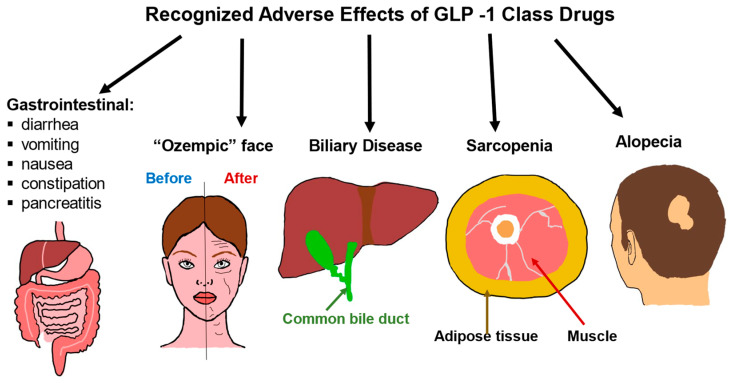
Worldwide, nearly 40% of adults are overweight and 13% are obese. Health consequences of excess weight include cardiovascular diseases, type 2 diabetes, dyslipidemia, and increased mortality. Treating obesity is challenging and calorie restriction often leads to rebound weight gain. Treatments such as bariatric surgery create hesitancy among patients due to their invasiveness. GLP-1 medications have revolutionized weight loss and can reduce body weight in obese patients by between 15% and 25% on average after about 1 year. Their mode of action is to mimic the endogenous GLP-1, an intestinal hormone that regulates glucose metabolism and satiety. However, GLP-1 drugs carry known risks and, since their use for weight loss is recent, may carry unforeseen risks as well. They carry a boxed warning for people with a personal or family history of medullary thyroid carcinoma or multiple endocrine neoplasia syndrome type 2. Gastrointestinal adverse events (nausea, vomiting, diarrhea) are fairly common while pancreatitis and intestinal obstruction are rarer. There may be a loss of lean body mass as well as premature facial aging. A significant disadvantage of using these medications is the high rate of weight regain when they are discontinued. Achieving success with pharmacologic treatment and then weaning to avoid future negative effects would be ideal.
Overview
The claims and statistics of this paper haven’t been checked yet.
Free: it reads the open-access text and checks the first 5 claims that cite a source we can check. Create a free account to check every claim.
Integrity signals
Registry
Cites
Statistics
Figures
Verification
Claims the paper makes
The claims and statistics of this paper haven’t been checked yet.
Free: it reads the open-access text and checks the first 5 claims that cite a source we can check. Create a free account to check every claim.
Claims other papers make about this one
Each is checked against this paper’s own text: does it say what the citing paper says it does?
The source backs part of the claim, not all of it — or backs it for a different population, condition or comparison.
In the citing paper
“Our results show pleiotropic anti-inflammatory and antioxidant effects that may mechanistically underlie the cardiovascular, hepatic, and renal protection consistently seen in large-scale cardiovascular outcome studies (45, 46), in addition to their well-established benefits on glycemic control and weight reduction (47, 48).”
From Inflammatory biomarker response to GLP-1 receptor agonists versus other glucose-lowering medications in patients with type 2 diabetes: a systematic review and meta-analysis (2026) · cites this paper as [47]
Experimental — accuracy not yet measuredThe cited source says what the claim attributes to it.
In the citing paper
“Even highly efficacious GLP-1 agonists face challenges, including variable response rates, gastrointestinal side effects, and weight regain after discontinuation.”
From The Triple‐Agonist Revolution: Retatrutide and the Paradigm Shift in Multi‐Hormonal Pharmacotherapy for Obesity and Cardiometabolic Comorbidities (2026) · cites this paper as [35]
In the citing paper
“Symptoms such as reduced appetite, early satiety, and nausea may limit dietary variety and protein intake, leading to muscle loss [63,64,65].”
From Nutrition and Physical Activity in Optimizing Weight Loss and Lean Mass Preservation in the Incretin-Based Medications Era: A Narrative Review (2025) · cites this paper as [64]
Self-check
Percentages, sums and reported differences re-computed from the paper’s own numbers.
The self-check needs the paper’s full text.
Citations
Cites
Once-Weekly Semaglutide in Adults with Overweight or Obesity
Wilding, J. P. H., Batterham, R. L., Calanna, S., Davies, M., Van Gaal, L. F., Lingvay, I., McGowan, B. M., Rosenstock, J., Tran, M. T. D., Wadden, T. A., et al. (2021) · New England Journal of Medicine · doi:10.1056/nejmoa2032183 · Cited by 5,205 · cited 4×
“Similarly, the subcutaneously once weekly formulation of the GLP-1 receptor agonist semaglutide showed equally promising results for weight maintenance [132].”
InfluentialTirzepatide Once Weekly for the Treatment of Obesity
Jastreboff, A. M., Aronne, L. J., Ahmad, N. N., Wharton, S., Connery, L., Alves, B., Kiyosue, A., Zhang, S., Liu, B., Bunck, M. C., et al. (2022) · New England Journal of Medicine · doi:10.1056/nejmoa2206038 · Cited by 3,838 · cited 5×
“Recent studies have now demonstrated the strongest weight loss effect with the dual agonist for GLP-1 and GIP, upwards of 22% over 1 year [134].”
InfluentialSemaglutide and Cardiovascular Outcomes in Obesity without Diabetes
Lincoff, A. M., Brown-Frandsen, K., Colhoun, H. M., Deanfield, J., Emerson, S. S., Esbjerg, S., Hardt-Lindberg, S., Hovingh, G. K., Kahn, S. E., Kushner, R. F., et al. (2023) · New England Journal of Medicine · doi:10.1056/nejmoa2307563 · Cited by 3,236 · cited 2×
“For instance, the SELECT trial demonstrated the cardiovascular benefit of the GLP-1 receptor agonist semaglutide beyond that of weight loss [125].”
Chooi, Y. C., Ding, C., & Magkos, F. (2019) · Metabolism · doi:10.1016/j.metabol.2018.09.005 · Cited by 2,737 · cited 1×
“Therefore, although BMI is appreciated for its simplicity in categorizing subjects, it should be used with caution as a diagnostic tool and might be better used as a screening aid [10]. a non-communicable pandemic that continues to expand and a ff ect over 1 globally [11–14].”
A Randomized, Controlled Trial of 3.0 mg of Liraglutide in Weight Management
Pi-Sunyer, X., Astrup, A., Fujioka, K., Greenway, F., Halpern, A., Krempf, M., Lau, D. C. W., le Roux, C. W., Violante Ortiz, R., Jensen, C. B., et al. (2015) · New England Journal of Medicine · doi:10.1056/nejmoa1411892 · Cited by 2,724 · cited 1×
“The Satiety and Clinical Adiposity Liraglutide Evidence (SCALE) trial demonstrated one-third of patients lost 10% of their body weight in 1 year with sustained weight loss demonstrated at 2 years [149,150].”
Mechanisms of Action and Therapeutic Application of Glucagon-like Peptide-1
Drucker, D. J. (2018) · Cell Metabolism · doi:10.1016/j.cmet.2018.03.001 · Cited by 2,170
Effects of Semaglutide on Chronic Kidney Disease in Patients with Type 2 Diabetes.
Perkovic, V., Tuttle, K. R., Rossing, P., Mahaffey, K. W., Mann, J. F. E., Bakris, G., Baeres, F. M. M., Idorn, T., Bosch-Traberg, H., Lausvig, N. L., et al. (2024) · New England Journal of Medicine · doi:10.1056/nejmoa2403347 · Cited by 2,099 · cited 1×
“While there are newer and even more potent anti-obesity drugs on the horizon, semaglutide still garners attention for its non-diabetic and non-obesity benefits, specifically cardiovascular risk reduction, as well as improving renal outcomes [125,153].”
Obesity Phenotypes, Diabetes, and Cardiovascular Diseases
Piché, M.-E., Tchernof, A., & Després, J.-P. (2020) · Circulation Research · doi:10.1161/circresaha.120.316101 · Cited by 1,986 · cited 1×
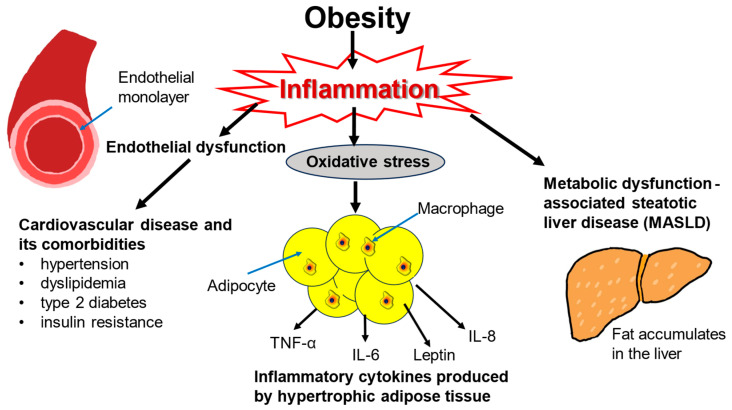
“…proin fl ammatory cytokines and adi-pokines The inflammatory environment incites endothelial dysfunction further contributing to cardiovascular risk and hypertension [22–24]. in fl ammatory environment incites endothelial dysfunction further contributing cardiovascular risk and hypertension [22–24].”
Comparison of Weight-Loss Diets with Different Compositions of Fat, Protein, and Carbohydrates
Sacks, F. M., Bray, G. A., Carey, V. J., Smith, S. R., Ryan, D. H., Anton, S. D., McManus, K., Champagne, C. M., Bishop, L. M., Laranjo, N., et al. (2009) · New England Journal of Medicine · doi:10.1056/nejmoa0804748 · Cited by 1,966 · cited 2×
“However, over the years, many studies have shown no differences in achieving weight loss from a variety of macronutrient approaches [45] and calorie reduction is likely the more successful approach for weight loss maintenance [250,251].”
Cited by
Uti, D. E., Omang, W. A., Alum, E. U., Ugwu, O. P.-C., Wokoma, M. A., Oplekwu, I. R., Atangwho, I. J., & Egbung, G. E. (2025) · International Journal of Nanomedicine · doi:10.2147/ijn.s529250 · Cited by 31
Sabatella, L., Ortega, P., Valentí, V., Rotellar, F., Pagola, A. U., Ahmed, A., Purkayastha, S., Tuero, C., Blanco, N., & Landecho, M. F. (2025) · Obesity · doi:10.1002/oby.70100 · Cited by 33
“This phenomenon has been clearly demonstrated in recent extension studies and real-world cohorts, underscoring the need for either continuous therapy or adjunctive strategies to sustain outcomes [46–48].”
GLP-1-derived therapies and sarcopenia: plea for a specific focus on at risk special populations
Scheen, A. J. (2025) · Diabetes & Metabolism · doi:10.1016/j.diabet.2025.101708 · Cited by 28
Sallam, M., Snygg, J., Ghandour, S. E., & Sallam, M. (2025) · Obesities · doi:10.3390/obesities5020026 · Cited by 21
Barana, L., De Fano, M., Cavallo, M., Manco, M., Prete, D., Fanelli, C. G., Porcellati, F., & Pippi, R. (2025) · Nutrients · doi:10.3390/nu18010131 · Cited by 13
The Impact of Glucagon-like Peptide-1 Receptor Agonists on Erectile Function: Friend or Foe?
Kounatidis, D. C., Vallianou, N. G., Rebelos, E., Vallianou, K., Diakoumopoulou, E., Makrilakis, K., & Tentolouris, N. (2025) · Biomolecules · doi:10.3390/biom15091284 · Cited by 16
“A modest increase in heart rate has also been observed, although current evidence does not support an increased risk of arrhythmia [86].”
Ganamurali, N., & Sabarathinam, S. (2026) · Clinical Pharmacology in Drug Development · doi:10.1002/cpdd.70001 · Cited by 8
Thermogenesis in Adipose Tissue: Adrenergic and Non-Adrenergic Pathways
Hossain, M. A., Poojari, A., & Rabiee, A. (2026) · Cells · doi:10.3390/cells15020131 · Cited by 10
“GLP-1 agonists are well known for weight loss with minimal side effects, showing 15–25% weight reduction over a year [248].”
Lempesis, I. G., & Dalamaga, Μ. (2026) · Metabolism Open · doi:10.1016/j.metop.2026.100463 · Cited by 8
“The remarkable success of glucagon-like peptide-1 (GLP-1) receptor agonists (GLP-1RAs) has transformed the therapeutic landscape for obesity, achieving levels of weight loss previously considered attainable only with bariatric surgery [2,14 – 22].”
Zambrano-Villacres, R., Campuzano-Donoso, M., Reytor-González, C., Rossetti, G., Cobellis, L., Cobellis, F., Pilone, V., Simancas‐Racines, D., & Schiavo, L. (2026) · Nutrients · doi:10.3390/nu18111751 · Cited by 9
“These effects support weight loss, but they may also create nutrition-management challenges when patients lack structured guidance on meal composition, portioning, hydration, symptom recognition, and body-composition risk [17,31–33].”
Damen, J. A., Idema, D. L., Vernooij, R. W. M., Veld, L. F. H. I. ’., Kusters, M. P. T., Lokerse, M. E., de Kanter, E., Spijker, R., van der Braak, K., Jenniskens, K., et al. (2026) · Annals of Internal Medicine · doi:10.7326/annals-24-03764 · Cited by 9
Mind the Plateau: A Mathematical Modeling Analysis of Long-Term GLP-1 Receptor Agonist Treatment
Hubert, P. A., Coleman, C. D., Grosicki, G. J., Kiel, J., Shepherd, M., Lofton, H. F., Heymsfield, S. B., Thomas, J. G., Dhurandhar, N. V., & Jonnalagadda, S. S. (2026) · Journal of the Academy of Nutrition and Dietetics · doi:10.1016/j.jand.2026.156366 · Cited by 6
Alrasheed, T., Mostafa, M. E. A., Madkhali, M. A., & Khairy, H. A. (2026) · Frontiers in Endocrinology · doi:10.3389/fendo.2025.1734549 · Cited by 4
Emergence of “ozempic face”: addressing unintended consequences of rapid weight loss
Jodata, Z., Shahzad, K., Younasc, M., Afridi, H., & Mahato, R. K. (2025) · Annals of Medicine and Surgery · doi:10.1097/ms9.0000000000004254 · Cited by 4
“GLP-1 drugs are being used for weight reduction and, after a year or so, can help obese people lose an average of 15%–25% of their body weight [ 2 ] .”
Obesity and Systemic Inflammation: Pathophysiological Mechanisms and Management Strategies
Raoof, A. A. (2025) · Oral Sphere Journal of Dental and Health Sciences · doi:10.63150/osjdhs.2026.07 · Cited by 4
Chadwick, J., Sivamani, C., Lakshmi, S., Vishali, B., Swathi, N. L., Ayyasamy, L., Ganeshkumar, P., & Bagepally, B. S. (2026) · Obesity Surgery · doi:10.1007/s11695-026-08508-5 · Cited by 5
“The use of GLP-1 RAs including tirzepatide shows 15–25% weight reduction after one year of therapy, however weight regain also reported after discontinuation of medication [21].”
Obesity during pregnancy: contemporary evidence and clinical implications
Agrawal, R., & Lathia, T. B. (2025) · Current Opinion in Endocrinology Diabetes and Obesity · doi:10.1097/med.0000000000000936 · Cited by 4
Landau, J., Tiram, Y., & Ilan, Y. (2025) · Biomedicines · doi:10.3390/biomedicines13112645 · Cited by 4
“A higher baseline BMI was linked to greater reductions in both BMI and body weight following treatment with GLP-1 receptor agonists [133].”
Zheng, Y., Guo, Z., Jeong, E., Xu, S., Samuels, J. M., Dawwas, G. K., Tao, R., Srivastava, G., Chen, Y., & Yu, D. (2025) · Diabetes Research and Clinical Practice · doi:10.1016/j.diabres.2025.113041 · Cited by 3
Hageen, A. W., Gadelmawla, A. F., Saleh, A. O., Abdallfatah, A., Reyad, M., El‐Nemr, A. F., Maihoub, O., Elsekhary, A., Eladawi, S., Ayalew, B. D., et al. (2026) · Endocrinology Diabetes & Metabolism · doi:10.1002/edm2.70222 · Cited by 4
Den, J., Vaghjiani, R. G., Hutter, M., & Klimberg, V. S. (2026) · Annals of Surgery · doi:10.1097/sla.0000000000007121 · Cited by 3
Simancas‐Racines, D., Campuzano-Donoso, M., Rossetti, G., Cobellis, L., Pilone, V., Fascì-Spurio, F., Gavilanes, D. J., Soria, C., Reytor-González, C., & Schiavo, L. (2026) · Obesity Pillars · doi:10.1016/j.obpill.2026.100290 · Cited by 3
“Importantly, the magnitude of these effects appears to scale with the degree of weight loss achieved [99].”
Giordano, S. A., Salval, A., Summa, P. G. D., & Oranges, C. M. (2025) · Surgeries · doi:10.3390/surgeries6020042 · Cited by 4
Evolving Role of GLP-1 Therapies in Liver Disease
Lindsay, M., Arndt, G., Wieland, A. C., & Jensen, T. (2025) · Current Gastroenterology Reports · doi:10.1007/s11894-025-00988-2 · Cited by 3
Saad, B., Rahima, K., Mourad, M. M., Vankayalapati, D. K., Segun-Omosehin, O., Sulaiman, H. O., Burns, J. W. F., Nakanishi, H., Than, C. A., Syed, A. A., et al. (2025) · Surgery for Obesity and Related Diseases · doi:10.1016/j.soard.2025.09.003 · Cited by 3
Kim, J. H., Lee, S. S., Lee, S. H., Bang, K. H., Yu, J., Kim, Y. G., Kim, S. H., Lee, I. S., & Yoo, Y. C. (2026) · Phytomedicine · doi:10.1016/j.phymed.2026.158054 · Cited by 2
GLP-1 Receptor Agonists: Therapeutic Potential and Emerging Concerns
Nowak, K., Łupina, K., Kalisz, A., Ilkiewicz, Ł., & Janczura, J. (2026) · Current Pharmacology Reports · doi:10.1007/s40495-026-00459-w · Cited by 2
Semaglutide and weight management in the Arab countries: Focus on the United Arab Emirates
Semiz, S. (2025) · Health Sciences Review · doi:10.1016/j.hsr.2025.100244 · Cited by 2
Meng, Y., Jin, T., Ren, L., Thompson, M. L., & Wang, Y. (2025) · Journal of Clinical Question · doi:10.69854/jcq.2025.0033 · Cited by 1
Rakhat, Y., Banno, S., Zhantleu, D., Tsunekawa, S., Yabe, D., Seino, Y., Iwasaki, Y., & Yada, T. (2026) · Nutrients · doi:10.3390/nu18040707 · Cited by 2
“Thus, D-Allulose could respond to the need for the path for GLP-1RA discontinuation while maintaining weight loss [53].”
Lista, S., Ballerio, M., López‐Ortiz, S., Khoramipour, K., Imbimbo, B. P., Santos‐Lozano, A., Minoretti, P., & Emanuele, E. (2026) · Pharmacology Biochemistry and Behavior · doi:10.1016/j.pbb.2026.174217 · Cited by 1
Alanazi, M., Al‐kuraishy, H. M., Mohamed, A. A., Abass, S. A., Shokr, M. M., Alruwaili, M., & Batiha, G. E. (2026) · Current Nutrition Reports · doi:10.1007/s13668-026-00773-1 · Cited by 1
“This indirect pathway contrasts with DPP-4 inhibitors, which may more directly affect microbial DPP-4-like enzymes [92].”
InfluentialUnravelling obesity: from leptin to glucagon-like peptide-1 receptor agonists
Idowu, T. O., & Chmurzyńska, A. (2026) · Journal of Applied Genetics · doi:10.1007/s13353-026-01084-5 · Cited by 1
Pérez, S. E. M., & Pérez, I. M. M. (2026) · Rheumato · doi:10.3390/rheumato6030016 · Cited by 1
Dhali, A., Maity, R., Khan, F., Biswas, J., & Faisal, A. R. (2026) · BMC Gastroenterology · doi:10.1186/s12876-026-05125-5 · Cited by 2
Ruga, S., Matarese, E., Bava, R., Lombardi, C., Dimatteo, T., Miscio, L., Raponi, M., Giordano, A., Sansone, C., Liguori, G., et al. (2026) · Pharmaceuticals · doi:10.3390/ph19081230 · Cited by 1
Beyond Weight Loss: The Challenge of Stopping Obesity Management Medications
Kermansaravi, M., & COHEN, R. V. (2026) · Diabetes Obesity and Metabolism · doi:10.1111/dom.71317 · Cited by 1
Pearson, J. R., Bartley, J. M., Ferrando, A. A., & Church, D. D. (2025) · Current Opinion in Clinical Nutrition & Metabolic Care · doi:10.1097/mco.0000000000001159 · Cited by 1
Einfluss von GLP-1-Analoga auf die Mikronährstoffversorgung
Kerlikowsky, F., Krämer, K., Eggersdorfer, M., & Hahn, A. (2025) · Ernährung & Medizin · doi:10.1055/a-2492-9615
“Die Applikation von Semaglutid (2,4 mg wöchentlich, sub-kutan) führte bei Adipositas zu durchschnittlichen Ge-wichtsverlusten von ca. 15–17 %, ein Plateau wurde nach etwa 68 Wochen erreicht und blieb bis zum Ende der 104-wöchigen Therapie konstant [6, 16].”
PLEIOTROPIC EFFECTS OF GLP-1 RECEPTOR AGONISTS: A LITERATURE REVIEW
Marzec, W., Maruchniak, H., Biedroń, P., Skrzypek, A., Hutkowski, M., Zbrożek, M., Chwostek, Z., Kosiarski, B., Markowicz, P., & Biłyk, K. (2026) · International Journal of Innovative Technologies in Social Science · doi:10.31435/ijitss.1(49).2026.4911
Complete radiologic and clinical reversal of lumbar spinal epidural lipomatosis via GLP-1 agonist
Wurm, L. M., Koch, P., Ertel, W., & Laue, D. (2026) · Journal of Surgical Case Reports · doi:10.1093/jscr/rjag052
“Crucially for weight loss, they delay gastric emptying and act on hypothalamic receptors to increase satiety and reduce appetite, leading to reduced caloric intake [7, 8].”
Oliveira-Gomes, D. D., de Majo, A. M., Ardila-Delgado, A. D., Inglis, S. S., Mandras, S. A., Loro-Ferrer, J. F., & daSilva‐deAbreu, A. (2026) · Current Atherosclerosis Reports · doi:10.1007/s11883-026-01395-2
Gdańska, A., Jurys, T., Nowak, B., & Grajek, M. K. (2026) · Health Problems of Civilization · doi:10.29316/hpc/217969
“However, in some cases (especially in larger populations), significant reductions in lean mass were observed, with losses of up to 40% of total weight loss, highlighting the need for caution regarding potential adverse effects on muscle mass and physical function [16,17].”
Мамедов, М. Н., Друк, И. В., & Akhundova, H. R. (2026) · Russian Journal of Cardiology · doi:10.15829/1560-4071-2026-6812
Elmezayen, Z. W., Qrareya, F., Abdallah, A., Salameh, H., & Qaisi, W. (2026) · Clinical Medicine Insights Endocrinology and Diabetes · doi:10.1177/11795514261443862
Li, J., Ding, Z., Xu, P., Chen, Y., Zhang, Y., Li, Y., & Wang, X. (2026) · American Journal of Translational Research · doi:10.62347/yhrj9206
Jain, A., Shrivastav, Y., Manocha, N., Baraskar, G., Bisht, R., Bhawsar, D., & Retrekar, N. (2026) · International Journal of Drug Delivery Technology · doi:10.25258/ijddt.16.30s.55
“This complex intervention on central and peripheral physiological mechanisms highlights their efficacy in inducing considerable and long-term weight reduction in various populations [32-35].”
Effects of salivary amylase gene copy number on metabolic health
Devarakonda, S. L. S., Hanlon, K., Loinard-González, A. P., Cummings, B. P., & Poole, A. C. (2026) · Frontiers in Nutrition · doi:10.3389/fnut.2026.1815044
English, K. J., & Kumar, K. A. (2026) · World Journal of Methodology · doi:10.5662/wjm.121475
Surgery on Patients Taking Glucagon-Like Peptide-1 Receptor Agonists
Rosen, C. B., & Gee, D. W. (2026) · Advances in Surgery · doi:10.1016/j.yasu.2026.03.011
Peripheral targets for neuropathic pain
Afsharipour, A., Ciotu, C. I., Resch, F. J., & Fischer, M. J. M. (2026) · British Journal of Pharmacology · doi:10.1111/bph.70553
Shil, K. K. (2026) · European journal of medical research · doi:10.1186/s40001-026-04862-3
“It includes gradual dose tapering, structured dietary interventions, adjunctive or sequential pharma-cotherapy, and the integration of resistance and aerobic physical activity to preserve lean mass and support long-term weight maintenance [16, 17].”
Alshahrani, S. D., Areef, R. F. S. A., Aloqaybi, R. A. S., Almuawi, F. G. A., Almaeawi, A. M., Alshahrani, R. S. S., Abuliat, A. A. S., Alharthi, M. A., Alharthi, A. O. G., Alghamdi, S. S. A., et al. (2026) · F1000Research · doi:10.12688/f1000research.185053.1
Natania, S. A. (2026) · Comprehensive physiology · doi:10.1002/cph4.70239
Kavsara, H. K. (2026) · Journal of Medical Topics and Updates · doi:10.58651/jomtu.1980569
Nascimento, G. L. M., da Silva, B. W. V., de Souza, F. V., Corrêa, S. B. P., Machado, V. D. F., SILVA, I. R. D., Lopatiuk, C. E., SILVA, T. O. D., Andrade, A. N. D., & Castro, M. A. D. A. (2026) · Aracê. · doi:10.56238/arev8n8-136
Pineño, O. (2026) · Food Quality and Preference · doi:10.1016/j.foodqual.2026.106111
Biluco, N. F., Caus, A., Milani, G. A., Pagnusati, J. P. P., Tessaro, J., & Milani, R. A. (2026) · Arquivos Catarinenses de Medicina · doi:10.63845/v5b8wq09
Cross-Najafi, A. A., Benavidez, M. C., No, J. J., Ngo, K. C., Redpath, S., Nin, D. Z., Schimpke, S. W., Myers, J. A., Omotosho, P. A., Torquati, A., et al. (2026) · Journal of Surgical Research · doi:10.1016/j.jss.2026.08.047
Waselewski, M. E., Waselewski, E., Oshman, L. D., Hatch, K., & Chang, T. (2026) · JMIR Formative Research · doi:10.2196/89459
Effects of Zinc Leachate on the Structure and Activity of SemaglutidePreprint
Doran, E. K., Su, R., & Wang, Y. (2026) · ChemRxiv · doi:10.26434/chemrxiv.15009850/v1
Zhou, Z., Cheng, Z., Jin, P., Yang, G., Wang, H., Shi, B., Dong, Q., Shi, X., Shi, X., Shu, H., et al. (2026) · Cell Metabolism · doi:10.1016/j.cmet.2026.09.021 · Cited by 1
Obesity Management in Autistic Adults: Toward a Neurodiversity-Informed Approach
Rao, N. P., & Wadford, A. M. (2026) · Autism in Adulthood · doi:10.1177/25739581261497850
Niu, H., Yao, R., Chi, L., Niu, Y., Pan, H., Xu, J., & Pang, Z. (2026) · Current Issues in Molecular Biology · doi:10.3390/cimb48111161
Vaishnavi Attili, B. S., & Kwon, S. (2026) · Current Oncology Reports · doi:10.1007/s11912-026-01862-8
Jacuńska, J., Chmielewska, M., Wojno, A., Lenkiewicz, P., Noszczak, Ł., & Popowczak, M. (2026) · Applied Sciences · doi:10.3390/app162110949
Metadata
- Authors
- Reiss, A. B., Gulkarov, S., Lau, R., Klek, S. P., Srivastava, A., Renna, H. A., & De Leon, J.
- Affiliations
- NYU Grossman Long Island School of Medicine (US)
- Department of Medicine, NYU Grossman Long Island School of Medicine, Mineola, NY 11501, USA
- Corresponding author
- Reiss, Allison B.
- Venue
- Biomolecules
- Publisher
- MDPI AG
- Published
- 2025-03-13
- Volume
- 15
- Issue
- 3
- Pages
- 408
- ISSN
- 2218-273X (ISSN-L)
- PMC
- PMC11940170
- OpenAlex
- W4408387882
- Semantic Scholar
- afb045c76cb862647622228026132eedba8d8b95
- Cited by
- 58
- References
- 304
- Citations by year
- 2026: 41 · 2025: 17
- FWCI
- 7.87
- Type
- journal article
- Language
- en
- Open access
- gold
- doi.org
- Licence
- Locations
- Biomolecules (publishedVersion, cc-by)
- PubMed Central (publishedVersion, cc-by)
- PubMed (publishedVersion)
- DOAJ (DOAJ: Directory of Open Access Journals) (submittedVersion, cc-by-sa)
- Topics
- Health Sciences › Medicine › Pharmacology (medical) › Pharmacology and Obesity Treatment
- Health Sciences › Medicine › Endocrinology, Diabetes and Metabolism › Diabetes Treatment and Management
- Health Sciences › Medicine › Surgery › Bariatric Surgery and Outcomes
- Keywords
- GLP-1 receptor agonists, obesity, weight loss, weight regain, drug discontinuation, satiety, multiple endocrine neoplasia type 2, gastrointestinal adverse effects, pancreatitis, intestinal obstruction, lean mass loss, facial aging
- MeSH terms
- Diabetes Mellitus, Type 2, Humans, Obesity, Weight Loss, Glucagon-Like Peptide 1
About these checks
Registry, retraction, Cites and statistics results are computed, not judged, with one exception: a printed reference that no index lists is read once by a model before it counts as a citation error. Claims are extracted by a model and kept only when their quote appears verbatim in the text; each cited source is then checked, with a model’s help, for whether it says what the claim relies on. Those verdicts can be wrong — read the claim’s quote and the cited source before relying on one.
Statistics and arithmetic are recomputed, not judged.
Confidence bands are shown only for fields calibrated on our annotated test set. None is calibrated yet, so no band is shown.
What counts as a claim ›How we measure confidence ›How we check this ›
Are you an author, or do you see a problem with this page? Request a review
Data sources
Bibliographic data: Semantic Scholar, OpenAlex, Crossref.
Contains information from the Semantic Scholar Academic Graph Datasets, made available under the ODC Attribution License (ODC-BY 1.0).
Semantic Scholar’s data is described in: Kinney, R., et al. (2023). The Semantic Scholar Open Data Platform. arXiv:2301.10140.
