

The DOI matches its Crossref record; 107 of the 110 references it cites were found in a registry or an index.
DOT1L and H3K79 Methylation in Transcription and Genomic Stability
Open accessAbstract
The organization of eukaryotic genomes into chromatin provides challenges for the cell to accomplish basic cellular functions, such as transcription, DNA replication and repair of DNA damage. Accordingly, a range of proteins modify and/or read chromatin states to regulate access to chromosomal DNA. Yeast Dot1 and the mammalian homologue DOT1L are methyltransferases that can add up to three methyl groups to histone H3 lysine 79 (H3K79). H3K79 methylation is implicated in several processes, including transcription elongation by RNA polymerase II, the DNA damage response and cell cycle checkpoint activation. DOT1L is also an important drug target for treatment of mixed lineage leukemia (MLL)-rearranged leukemia where aberrant transcriptional activation is promoted by DOT1L mislocalisation. This review summarizes what is currently known about the role of Dot1/DOT1L and H3K79 methylation in transcription and genomic stability.
Overview
The claims and statistics of this paper haven’t been checked yet.
Run the check — free, no account needed. It reads the open-access text and checks the sources it cites.
Integrity signals
Registry
Cites
Statistics
Figures
Verification
Claims the paper makes
The claims and statistics of this paper haven’t been checked yet.
Run the check — free, no account needed. It reads the open-access text and checks the sources it cites.
Claims other papers make about this one
Each is checked against this paper’s own text: does it say what the citing paper says it does?
In the citing paper
“Although it is undeniable that histone modifications robustly modulate key cellular processes and there is compelling evidence for the role of histone methylation in DNA processes, as outlined above, it is difficult to formally prove a direct causative role of any histone modification in mammalian cells (see REF. 35 for discussion).”
From The roles of DNA, RNA and histone methylation in ageing and cancer (2019) · cites this paper as [35]
Self-check
Percentages, sums and reported differences re-computed from the paper’s own numbers.
The self-check needs the paper’s full text.
Citations
Cites
Crystal structure of the nucleosome core particle at 2.8 Å resolution
Luger, K., Mäder, A. W., Richmond, R. K., Sargent, D. F., & Richmond, T. J. (1997) · Nature · doi:10.1038/38444 · Cited by 9,466
The Role of Chromatin during Transcription
Li, B., Carey, M., & Workman, J. L. (2007) · Cell · doi:10.1016/j.cell.2007.01.015 · Cited by 3,503 · cited 1×
“These covalent modifications influence chromatin structure and function directly, by altering the interactions between nucleosomes, and indirectly, by affecting the recruitment of non-histone effector proteins, such as transcription factors, chromatin remodellers and DNA binding proteins to particular regions of chrom…”
BackgroundElective induction versus spontaneous labor after sonographic diagnosis of fetal macrosomia.
Combs, C. A., Singh, N. B., & Khoury, J. C. (1993) · PubMed · Cited by 2,463
Combinatorial patterns of histone acetylations and methylations in the human genome
Wang, Z., Zang, C., Rosenfeld, J. A., Schones, D. E., Barski, A., Cuddapah, S., Cui, K., Roh, T.-Y., Peng, W., Zhang, M. Q., et al. (2008) · Nature Genetics · doi:10.1038/ng.154 · Cited by 2,331 · cited 1×
“In human CD4+ T cells, chromatin immunoprecipitation followed by high-throughput sequencing (ChIP-Seq) studies have demonstrated that H3K79me2/me3 are strongly correlated with gene activity [40], while in Drosophila melanogaster chromatin immunoprecipitation followed by DNA microarray (ChIP-chip) has also demonstrated…”
BackgroundThe diverse functions of histone lysine methylation
Martin, C., & Zhang, Y. (2005) · Nature Reviews Molecular Cell Biology · doi:10.1038/nrm1761 · Cited by 2,157 · cited 2×
“One well-studied covalent histone modification is the methylation of lysine residue by histone lysine methyltransferases (KMTs) [6].”
BackgroundTwenty-Five Years of the Nucleosome, Fundamental Particle of the Eukaryote Chromosome
Kornberg, R. D., & Lorch, Y. (1999) · Cell · doi:10.1016/s0092-8674(00)81958-3 · Cited by 1,833
Genome Regulation by Polycomb and Trithorax Proteins
Schuettengruber, B., Chourrout, D., Vervoort, M., Leblanc, B., & Cavalli, G. (2007) · Cell · doi:10.1016/j.cell.2007.02.009 · Cited by 1,418 · cited 1×
“Polycomb and Trithorax are protein complexes involved in transcriptional regulation of numerous developmental genes [42], indicating that H3K79 methylation influences developmentally-regulated gene expression in metazoa.”
BackgroundConnecting microRNA Genes to the Core Transcriptional Regulatory Circuitry of Embryonic Stem Cells
Marson, A., Levine, S. S., Cole, M. F., Frampton, G. M., Brambrink, T., Johnstone, S. E., Guenther, M. G., Johnston, W. K., Wernig, M., Newman, J. J., et al. (2008) · Cell · doi:10.1016/j.cell.2008.07.020 · Cited by 1,405 · cited 1×
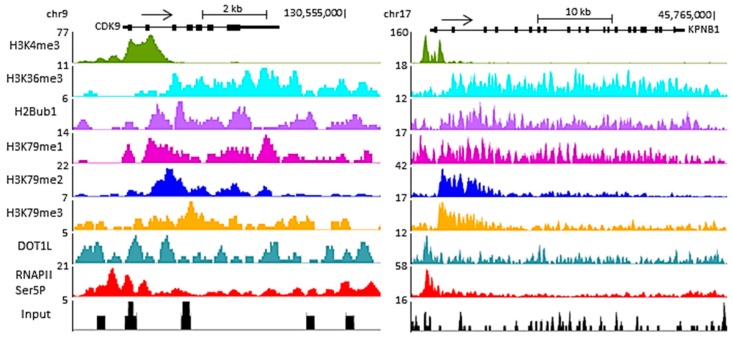
“H3K79me2 and H3K79me3 levels are highest immediately downstream of the transcription start site (TSS) and decrease gradually within the first intron [55,56].”
BackgroundJmjC-domain-containing proteins and histone demethylation
Klose, R. J., Kallin, E. M., & Zhang, Y. (2006) · Nature Reviews Genetics · doi:10.1038/nrg1945 · Cited by 1,290
MLL translocations, histone modifications and leukaemia stem-cell development
Krivtsov, A. V., & Armstrong, S. A. (2007) · Nature reviews. Cancer · doi:10.1038/nrc2253 · Cited by 1,290 · cited 1×
“As a result of chromosomal translocations, the N-terminus of MLL becomes fused in-frame to one of approximately 70 translocation partners [98].”
Background
Cited by
Sorted by citations
The roles of DNA, RNA and histone methylation in ageing and cancer
Michalak, E. M., Burr, M. L., Bannister, A. J., & Dawson, M. A. (2019) · Nature Reviews Molecular Cell Biology · doi:10.1038/s41580-019-0143-1 · Cited by 549
Targeting Transcription Factors for Cancer Treatment
Lambert, M., Jambon, S., Depauw, S., & David‐Cordonnier, M. (2018) · Molecules · doi:10.3390/molecules23061479 · Cited by 359
Emerging role of PI3K/AKT in tumor-related epigenetic regulation
Yang, Q., Jiang, W., & Hou, P. (2019) · Seminars in Cancer Biology · doi:10.1016/j.semcancer.2019.04.001 · Cited by 210
Structural Basis of Dot1L Stimulation by Histone H2B Lysine 120 Ubiquitination
Valencia‐Sánchez, M. I., Ioannes, P. D., Wang, M., Vasilyev, N., Chen, R., Nudler, E., Armache, J., & Armache, K. (2019) · Molecular Cell · doi:10.1016/j.molcel.2019.03.029 · Cited by 150
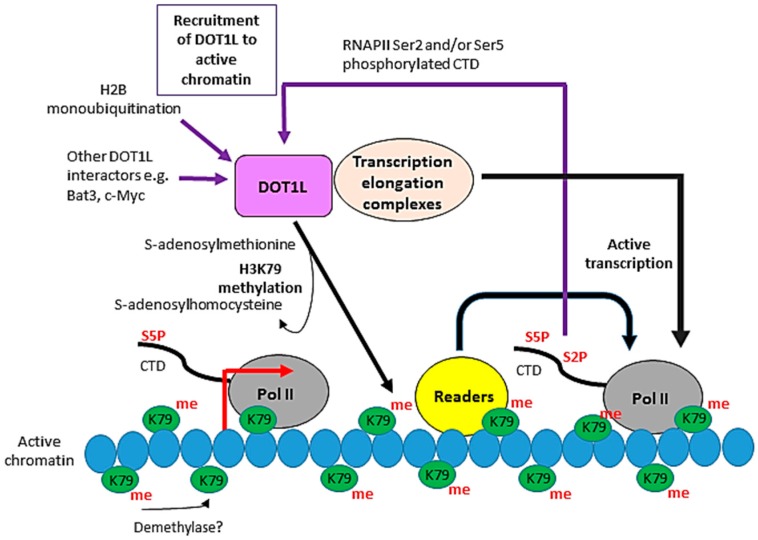
“Dot1L associates with proteins involved in transcription elongation, as well as RNA pol II, and transcription elongation rates are positively correlated with H3K79 methylation (Bitoun et al., 2007; Kim et al., 2012; Kouskouti and Talianidis, 2005; Krogan et al., 2003; Mohan et al., 2010; Mueller et al., 2007; Steger e…”
Sundaram, M. K., Hussain, A., Haque, S., Raina, R., & Afroze, N. (2019) · Journal of Cellular Biochemistry · doi:10.1002/jcb.29147 · Cited by 142
Structural Basis for Recognition of Ubiquitylated Nucleosome by Dot1L Methyltransferase
Spangler, C. J., Baird, M. R., Hsu, A. L., Barbour, E. H., Koyama, Y., Borgnia, M. J., & McGinty, R. K. (2019) · Cell Reports · doi:10.1016/j.celrep.2019.01.058 · Cited by 134
“several transcriptional elongation complexes (Wood et al., 2018), Dot1L can bind to and methylate H3K79 in nucleosomes in isolation (Feng et al.”
Histone Modifications and their Role in Colorectal Cancer (Review)
Qin, J., Wen, B., Liang, Y., Yu, W., & Li, H. (2019) · Pathology & Oncology Research · doi:10.1007/s12253-019-00663-8 · Cited by 132
“There are six sites of lysine methylation that have been extensively studied such as H3K9, H3K27, H3K36, H3K79, and H4K20 [23] (Table 1).”
BackgroundInfluentialThe Molecular Basis and Therapeutic Aspects of Cisplatin Resistance in Oral Squamous Cell Carcinoma
Cheng, Y., Li, S., Gao, L., Zhi, K., & Ren, W. (2021) · Frontiers in Oncology · doi:10.3389/fonc.2021.761379 · Cited by 130
Regulation of the Dot1 histone H3K79 methyltransferase by histone H4K16 acetylation
Valencia‐Sánchez, M. I., Ioannes, P. D., Wang, M., Truong, D. M., Lee, R., Armache, J., Boeke, J. D., & Armache, K. (2021) · Science · doi:10.1126/science.abc6663 · Cited by 112
Moritz, L., & Hammoud, S. S. (2022) · Frontiers in Endocrinology · doi:10.3389/fendo.2022.895502 · Cited by 92
CRISPR-Cas9 screens identify regulators of antibody–drug conjugate toxicity
Tsui, C. K., Barfield, R. M., Fischer, C. R., Morgens, D. W., Li, A., Smith, B. A. H., Gray, M. A., Bertozzi, C. R., Rabuka, D., & Bassik, M. C. (2019) · Nature Chemical Biology · doi:10.1038/s41589-019-0342-2 · Cited by 85
BRCA1/BARD1 site-specific ubiquitylation of nucleosomal H2A is directed by BARD1
Witus, S. R., Burrell, A. L., Farrell, D. P., Kang, J., Wang, M., Hansen, J. M., Pravat, A., Tuttle, L. M., Stewart, M. D., Brzović, P. S., et al. (2021) · Nature Structural & Molecular Biology · doi:10.1038/s41594-020-00556-4 · Cited by 85
Broad domains of histone H3 lysine 4 trimethylation in transcriptional regulation and disease
Park, S., Kim, G. W., Kwon, S. H., & Lee, J. (2020) · FEBS Journal · doi:10.1111/febs.15219 · Cited by 88
Targeting epigenetic regulators for inflammation: Mechanisms and intervention therapy
Zhang, S., Meng, Y., Zhou, L., Qiu, L., Wang, H., Su, D., Zhang, B., Chan, K. M., & Han, J. (2022) · MedComm · doi:10.1002/mco2.173 · Cited by 85
H3K36 trimethylation-mediated biological functions in cancer
Xiao, C., Fan, T., Tian, H., Zheng, Y., Zhou, Z., Li, S., Li, C., & He, J. (2021) · Clinical Epigenetics · doi:10.1186/s13148-021-01187-2 · Cited by 63
“For example, mutations in methyltransferase EZH2 [131], SETD2, and DOT1L [132] are common in tumors, and their corresponding histone sites are H3K27, H3K36, and H3K79, separately.”
BackgroundInfluentialThe Chromatin Response to Double-Strand DNA Breaks and Their Repair
Aleksandrov, R., Hristova, R. H., Stoynov, S., & Gospodinov, A. G. (2020) · Cells · doi:10.3390/cells9081853 · Cited by 79
Role of Epigenomics in Bone and Cartilage Disease
van Meurs, J. B. J., Boer, C. G., López-Delgado, L., & Riancho, J. A. (2019) · Journal of Bone and Mineral Research · doi:10.1002/jbmr.3662 · Cited by 75
“For example, DOT1L is not only essential for chondrogenesis and cartilage homeostasis((99)) but also for telomere silencing, meiotic checkpoint control, and DNA damage response.((105,106)) Murine knockout models of DOT1L show multiple developmental abnormalities, not only restricted to skeletal abnormalities.”
BackgroundMenin “reads” H3K79me2 mark in a nucleosomal context
Lin, J., Wu, Y., Tian, G., Yu, D., Yang, E., Lam, W. H., Liu, Z., Jing, Y., Dang, S., Bao, X., et al. (2023) · Science · doi:10.1126/science.adc9318 · Cited by 71
DOT1L modulates the senescence-associated secretory phenotype through epigenetic regulation of IL1A
Leon, K. E., Buj, R., Lesko, E., Dahl, E. S., Chen, C.-W., Tangudu, N. K., Imamura-Kawasawa, Y., Kossenkov, A. V., Hobbs, R. P., & Aird, K. M. (2021) · Journal of Cell Biology · doi:10.1083/jcb.202008101 · Cited by 70
“Another histone mark that may have a role in senescence is H3K79 (Kim et al., 2012; Wang et al., 2010), which is associated with active transcription (Wood et al., 2018).”
InfluentialDirect and Indirect Targeting of HOXA9 Transcription Factor in Acute Myeloid Leukemia
Lambert, M., Alioui, M., Jambon, S., Depauw, S., SEUNINGEN, I. V., & David‐Cordonnier, M. (2019) · Cancers · doi:10.3390/cancers11060837 · Cited by 73
An Insight into Reprogramming Barriers to iPSC Generation
Haridhasapavalan, K. K., Raina, K., Dey, C., Adhikari, P., & Thummer, R. P. (2019) · Stem Cell Reviews and Reports · doi:10.1007/s12015-019-09931-1 · Cited by 70
“In contrast, where H3K79 methylation represents transcriptional activation [183, 184], Onder and co-workers observed that inhibition of DOT1L, SUV39H1 (an H3K9 methyltransferase) and YY1 (a context-dependent repressor or activator of transcription), improved reprogramming of fibroblasts.”
BackgroundAntecedent chromatin organization determines cGAS recruitment to ruptured micronuclei
MacDonald, K. M., Nicholson-Puthenveedu, S., Tageldein, M. M., Khasnis, S., Arrowsmith, C. H., & Harding, S. M. (2023) · Nature Communications · doi:10.1038/s41467-023-36195-8 · Cited by 66
Small-Molecule Inhibition of the Acyl-Lysine Reader ENL as a Strategy against Acute Myeloid Leukemia
Liu, Y., Li, Q., Alikarami, F., Barrett, D. R., Mahdavi, L., Li, H., Tang, S., Khan, T. A., Michino, M., Hill, C., et al. (2022) · Cancer Discovery · doi:10.1158/2159-8290.cd-21-1307 · Cited by 60
Sahu, A., Köse, K., Kraehenbuehl, L., Byers, C., Holland, A., Tembo, T., Santella, A., Alfonso, A., Li, M., Cordova, M. A., et al. (2022) · Nature Communications · doi:10.1038/s41467-022-32738-7 · Cited by 65
Lung Cancer Therapy Targeting Histone Methylation: Opportunities and Challenges
Chen, Y., Liu, X., Li, Y., Quan, C., Zheng, L., & Huang, K. (2018) · Computational and Structural Biotechnology Journal · doi:10.1016/j.csbj.2018.06.001 · Cited by 62
“For instance, until now, H3K79-specific KDMs have not been reported yet [182].”
BackgroundDOT1L complex regulates transcriptional initiation in human erythroleukemic cells
Wu, A., Zhi, J., Tian, T., Cihan, A., Cevher, M. A., Liu, Z., David, Y., Muir, T. W., Roeder, R. G., & Yu, M. (2021) · Proceedings of the National Academy of Sciences · doi:10.1073/pnas.2106148118 · Cited by 59
“The ENL and AF9 paralogues are shared subunits between the DOT1L and SEC complexes, and are each capable of facilitating recruitment of the two complexes to chromatin through interactions of their YEATS domains with acetylated H3 residues (24, 25).”
BackgroundInfluentialÁlvarez‐Álvarez, M. M., Biayna, J., & Supek, F. (2022) · Nature Communications · doi:10.1038/s41467-022-32285-1 · Cited by 60
Histone post-translational modification and the DNA damage response
Song, H., Shen, R., Liu, X., Yang, X., Xie, K., Guo, Z., & Wang, D. (2022) · Genes & Diseases · doi:10.1016/j.gendis.2022.04.002 · Cited by 54
Wang, S., Sheng, H., Zheng, F., & Zhang, F. (2021) · Phytomedicine · doi:10.1016/j.phymed.2021.153499 · Cited by 53
SETD2: from chromatin modifier to multipronged regulator of the genome and beyond
Molenaar, T. M., & van Leeuwen, F. (2022) · Cellular and Molecular Life Sciences · doi:10.1007/s00018-022-04352-9 · Cited by 56
Genistein Modulates Signaling Pathways and Targets Several Epigenetic Markers in HeLa Cells
Sundaram, M. K., Pramodh, S., Somvanshi, P., Bhardwaj, T., Mandal, R. K., Hussain, A., & Haque, S. (2019) · Genes · doi:10.3390/genes10120955 · Cited by 51
Histone methyltransferase DOT1L controls state-specific identity during B cell differentiation
Aslam, M. A., Alemdehy, M. F., Kwesi‐Maliepaard, E. M., Cagánová, M., Pardieck, I. N., van den Brand, T., Muhaimin, F. I., van Welsem, T., de Rink, I., Song, J., et al. (2021) · EMBO Reports · doi:10.15252/embr.202051184 · Cited by 43
“H3K79me is associated with active transcription, but its function in gene regulation remains unclear (Steger et al , 2008; Vlaming & van Leeuwen, 2016; Wood et al , 2018).”
Kwesi‐Maliepaard, E. M., Aslam, M. A., Alemdehy, M. F., van den Brand, T., McLean, C. M., Vlaming, H., van Welsem, T., Korthout, T., Lancini, C., Hendriks, S., et al. (2020) · Proceedings of the National Academy of Sciences · doi:10.1073/pnas.1920372117 · Cited by 46
“Although the association with gene activity is strong, how H3K79 methylation affects transcription is still unclear and repressive functions have also been proposed (11, 13).”
Histone variant-specific post-translational modifications
Joseph, F. M., & Young, N. L. (2022) · Seminars in Cell and Developmental Biology · doi:10.1016/j.semcdb.2022.02.012 · Cited by 44
Ferrari, F., Arrigoni, L., Franz, H., Izzo, A., Butenko, L., Trompouki, E., Vogel, T., & Manke, T. (2020) · Nature Communications · doi:10.1038/s41467-020-19001-7 · Cited by 44
Histone methyltransferase DOT1L is essential for self-renewal of germline stem cellsPreprint
Lin, H., Cheng, K., KUBOTA, H. Y., Lan, Y., Riedel, S. S., Kakiuchi, K., Sasaki, K., Bernt, K. M., Bartolomei, M. S., Luo, M., et al. (2022) · Genes & Development · doi:10.1101/gad.349550.122 · Cited by 43
“Notably, DMRT1 and PRAMEF12 are essential for themaintenance of spermatogonia (Takashimaet al. 2013; Zhang et al. 2016; Wang et al. 2019).”
BackgroundVlaming, H., McLean, C. M., Korthout, T., Alemdehy, M. F., Hendriks, S., Lancini, C., Palit, S. A. L., Klarenbeek, S., Kwesi‐Maliepaard, E. M., Molenaar, T. M., et al. (2019) · The EMBO Journal · doi:10.15252/embj.2019101564 · Cited by 40
“These interactions target DOT1L to transcribed chromatin and provide an explanation for the aberrant recruitment of DOT1L by oncogenic MLL fusion proteins (Deshpande et al , 2014; Li et al , 2014; Chen et al , 2015; Kuntimaddi et al , 2015; Wood et al , 2018).”
Szczepanek, J., & Tretyn, A. (2023) · Biomolecules · doi:10.3390/biom13111590 · Cited by 43
Liu, L., Zou, J., Guan, Y. A., Zhang, Y., Zhang, W., Zhou, X., Xiong, C., Tolbert, E. M., Zhao, T. C., Bayliss, G. P., et al. (2019) · The FASEB Journal · doi:10.1096/fj.201801861r · Cited by 39
“To date, DOT1L is the only known methyltransferase catalyzing mono-, di-, and trimethylation of H3K79 (32).”
BackgroundInfluentialNew Potent DOT1L Inhibitors for in Vivo Evaluation in Mouse
Stauffer, F., Weiss, A., Scheufler, C., Möbitz, H., Ragot, C., Beyer, K. S., Calkins, K., Guthy, D. A., Kiffe, M., Eerdenbrugh, B. V., et al. (2019) · ACS Medicinal Chemistry Letters · doi:10.1021/acsmedchemlett.9b00452 · Cited by 40
The histone methyltransferase DOT1L is a new epigenetic regulator of pulmonary fibrosis
Yang, D., Xu, P., Su, H., Zhong, W., Xu, J., Su, Z., & Liu, X. (2022) · Cell Death and Disease · doi:10.1038/s41419-021-04365-5 · Cited by 39
Histone Modifications and the Maintenance of Telomere Integrity
Jezek, M., & Green, E. M. (2019) · Cells · doi:10.3390/cells8020199 · Cited by 41
Role of Histone Methylation in Maintenance of Genome Integrity
Mushtaq, A., Mir, U. S., Hunt, C. R., Pandita, S., Tantray, W. W., Bhat, A., PANDITA, R. K., Altaf, M., & Pandita, T. K. (2021) · Genes · doi:10.3390/genes12071000 · Cited by 45
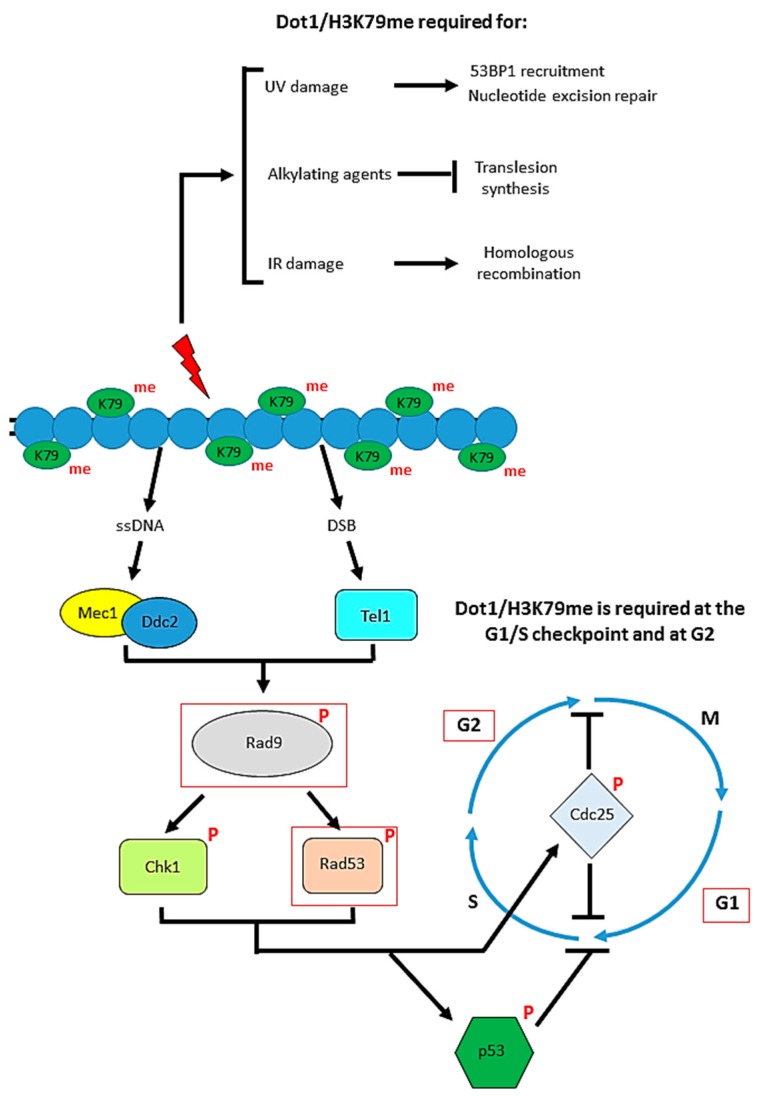
“In budding yeast, recruit ent of Rad9 by H3K79me3 is important to G2 phase DNA damage repair because it limits ssDNA production during non-homologous end joining [96].”
BackgroundWillemsen, L., Prange, K. H. M., Neele, A. E., van Roomen, C. P. A. A., Gijbels, M. J., Griffith, G. R., den Toom, M., Beckers, L., Siebeler, R., Spann, N. J., et al. (2022) · Cell Reports · doi:10.1016/j.celrep.2022.111703 · Cited by 36
Liao, Q., Yang, J., Ge, S., Chai, P., Fan, J., & Jia, R. (2022) · Journal of Pharmaceutical Analysis · doi:10.1016/j.jpha.2022.11.009 · Cited by 35
“DOT1L is implicated in several processes, including transcription elongation by RNA polymerase II, DNA damage repair, and cell cycle checkpoint activation [45].”
BackgroundSadhu, R. K., Luciano, M., Xi, W., Martinez-Torres, C., Schröder, M., Blum, C., Tarantola, M., Villa, S., Penič, S., Iglič, A., et al. (2024) · Proceedings of the National Academy of Sciences · doi:10.1073/pnas.2306818121 · Cited by 31
Chava, S., Wajapeyee, N., Edwards, Y. J. K., & Gupta, R. (2021) · Oncogenesis · doi:10.1038/s41389-021-00339-6 · Cited by 31
The role of DOT1L in the proliferation and prognosis of gastric cancer
Song, Z., Wei, Z., Wang, Q., Zhang, X., Tao, X., Wu, N., Liu, X., & Qian, J. (2020) · Bioscience Reports · doi:10.1042/bsr20193515 · Cited by 30
RetractedComprehensive map of ribosomal 2′-O-methylation and C/D box snoRNAs in Drosophila melanogaster
Sklias, A., Cruciani, S., Marchand, V., Spagnuolo, M., Lavergne, G., Bourguignon‐Igel, V., Brambilla, A., Dreos, R., Marygold, S. J., Novoa, E. M., et al. (2024) · Nucleic Acids Research · doi:10.1093/nar/gkae139 · Cited by 29
Dysregulated Transcriptional Control in Prostate Cancer
Baumgart, S. J., Nevedomskaya, E., & Haendler, B. (2019) · International Journal of Molecular Sciences · doi:10.3390/ijms20122883 · Cited by 30
Park, P. H., Yamamoto, T. M., Li, H., Alcivar, A. L., Xia, B., Wang, Y., Bernhardy, A. J., Turner, K. M., Kossenkov, A. V., Watson, Z. L., et al. (2019) · Molecular Cancer Therapeutics · doi:10.1158/1535-7163.mct-17-0256 · Cited by 30
How Protein Methylation Regulates Steroid Receptor Function
Malbeteau, L., Pham, T. H., Eve, L., Stallcup, M. R., Poulard, C., & Romancer, M. L. (2021) · Endocrine Reviews · doi:10.1210/endrev/bnab014 · Cited by 29
“For a long time, its unique substrate was H3K79, the methylation of which contributes to activating the transcription of genes involved in DNA damage response and cell cycle regulation (185), but also in immune response (186, 187).”
BackgroundGut bacterial L-lysine alters metabolism and histone methylation to drive dendritic cell tolerance
Tang, Q., Fan, G., Peng, X., Sun, X., Kong, X., Zhang, L., Zhang, C., Liu, Y., Yang, J., Yu, K., et al. (2024) · Cell Reports · doi:10.1016/j.celrep.2024.115125 · Cited by 29
Rahe, D. P., & Hobert, O. (2019) · G3 Genes Genomes Genetics · doi:10.1534/g3.119.400328 · Cited by 28
Gibbons, G. S., Chakraborty, A., Grigsby, S. M., Umeano, A. C., Liao, C., Moukha‐Chafiq, O., Pathak, V., Mathew, B., Lee, Y., Dou, Y., et al. (2020) · European Journal of Medicinal Chemistry · doi:10.1016/j.ejmech.2019.112023 · Cited by 28
Chemical biology and pharmacology of histone lysine methylation inhibitors
Barghout, S. H., Machado, R. A. C., & Baršytė-Lovejoy, D. (2022) · Biochimica et Biophysica Acta (BBA) - Gene Regulatory Mechanisms · doi:10.1016/j.bbagrm.2022.194840 · Cited by 29
Characterizing crosstalk in epigenetic signaling to understand disease physiology
Lempiäinen, J. K., & Garcia, B. A. (2023) · Biochemical Journal · doi:10.1042/bcj20220550 · Cited by 29
Wang, X., Wang, H., Xu, B., Jiang, D., Huang, S. H., Yu, H., Wu, Z., & Wu, Q. (2019) · Europe PMC (PubMed Central) · Cited by 26
Gsell, C., Richly, H., Coin, F., & Naegeli, H. (2019) · Nucleic Acids Research · doi:10.1093/nar/gkz1229 · Cited by 26
Lysosomes signal through the epigenome to regulate longevity across generations
Zhang, Q., Dang, W., & Wang, M. C. (2025) · Science · doi:10.1126/science.adn8754 · Cited by 26
Nullifying epigenetic writer DOT1L attenuates neointimal hyperplasia
Huang, Y., Urabe, G., Zhang, M., Li, J., Özer, H. G., Wang, B., Kent, K. C., & Guo, L. (2020) · Atherosclerosis · doi:10.1016/j.atherosclerosis.2020.06.002 · Cited by 23
Non-canonical H3K79me2-dependent pathways promote the survival of MLL-rearranged leukemia
Richter, W. F., Shah, R. N., & Ruthenburg, A. (2020) · bioRxiv · doi:10.7554/elife.64960 · Cited by 16
Spangler, C. J., Yadav, S. P., Li, D., Geil, C. N., Smith, C. B., Wang, G. G., Lee, T.-H., & McGinty, R. K. (2022) · Cell Reports · doi:10.1016/j.celrep.2022.110369 · Cited by 22
“H3K79 methylation is predominantly observed in gene bodies, and levels are highly correlated with transcriptional activity (Wood et al., 2018).”
BackgroundThe Role of DOT1L in Normal and Malignant Hematopoiesis
Arnold, O., Barbosa, K., Deshpande, A. J., & Zhu, N. (2022) · Frontiers in Cell and Developmental Biology · doi:10.3389/fcell.2022.917125 · Cited by 24
“DOT1L is believed to be involved in transcription elongation (reviewed in (Nguyen and Zhang, 2011; Wood et al., 2018).”
BackgroundChromatin Structure and Dynamics: Focus on Neuronal Differentiation and Pathological Implication
Nothof, S., Magdinier, F., & Van‐Gils, J. (2022) · Genes · doi:10.3390/genes13040639 · Cited by 26
PARP1-DOT1L transcription axis drives acquired resistance to PARP inhibitor in ovarian cancer
Liu, C., Li, J., Xu, F., Chen, L., Ni, M., Wu, J., Zhao, H., Wu, Y., Li, J., Wu, X., et al. (2024) · Molecular Cancer · doi:10.1186/s12943-024-02025-8 · Cited by 22
“DOT1L, as an H3K79me1/2/3 methylase, mediated H3K79me2 methylation, which has been identified as a transcription active maker in gene expression regulation [40, 41].”
BackgroundDai, S., Horton, J. R., Wilkinson, A. W., Gozani, O., Zhang, X., & Cheng, X. (2020) · Journal of Biological Chemistry · doi:10.1074/jbc.ra119.012319 · Cited by 21
Zhao, C., Zhang, Y., & Zheng, H. (2021) · Frontiers in Immunology · doi:10.3389/fimmu.2021.717540 · Cited by 21
“In general, H3K79 methylation strongly correlates with active gene transcription (138, 139), but exceptions are also reported (140, 141).”
BackgroundWeinzapfel, E. N., Fedder-Semmes, K. N., Sun, Z., & Keogh, M. (2024) · Biochemical Journal · doi:10.1042/bcj20230342 · Cited by 23
Werner, M., Trauner, M., Schauer, T., Ummethum, H., Márquez-Gómez, E., Lalonde, M., Lee, C. S. K., Tsirkas, I., Sajid, A., Murriello, A. C., et al. (2025) · Nucleic Acids Research · doi:10.1093/nar/gkaf109 · Cited by 20
“While known to be associated with transcription elongation and found in various transcription elongation complexes [ 77 ], the exact function of H3K79me2 / 3 in transcription regulation remains unclear.”
Han, H., Chen, G., Zhang, Y., Liu, C., Wang, Y., Zhao, D., Huang, J., & Gong, Z. (2025) · Oncogene · doi:10.1038/s41388-025-03550-6 · Cited by 20
“…an important epigenetic protein, to promote H3K79me3 enrichment in these regions, heightening the accessibility of the STAT1 DNA in chromatin, which upregulates STAT1 content in HCC, enhancing the activity of the STAT1 signaling pathway and increasing PD-L1 in HCC to drive tumor immune evasion.”
Mao, Y., Sun, Y., Wu, Z., Zheng, J., Zhang, J., Zeng, J., Lee, C., & Kim, J. K. (2021) · Cell Death and Disease · doi:10.1038/s41419-021-04431-y · Cited by 20
“response and repair [12, 18, 19, 27], combined treatments of EPZ5676 with other genotoxic agents were expected to potentiate the anticancer effects of the DNA-damaging agents.”
BackgroundActivating the Anaphase Promoting Complex to Enhance Genomic Stability and Prolong Lifespan
Harkness, T. A. A. (2018) · International Journal of Molecular Sciences · doi:10.3390/ijms19071888 · Cited by 22
“H3K9Ac is important for transcriptional activation [117,118], H3K56Ac is involved in ist e e siti a re air [74,119], hile 3 79 is re ire f r a ariet f activities incl i transcri ti al elo gation, DNA repair, and cell cycle checkpoints [120,121].”
BackgroundDOT1L-mediated RAP80 methylation promotes BRCA1 recruitment to elicit DNA repair
Tang, H., Lu, Y.-F., Zeng, R., Liu, C., Shu, Y., Wu, Y., Su, J., Di, L., Qian, J., Zhang, J., et al. (2024) · Proceedings of the National Academy of Sciences · doi:10.1073/pnas.2320804121 · Cited by 21
“DOT1L regulates numerous biological processes in both an H3K79 methylation - dependent and - independent manner ( 28 – 31 ); thus, unsur prisingly, DOT1L dysregulation has been linked to various diseases, such as leukemia and heart disorders ( 32 , 33 ).”
Basu, S., Nandy, A., & Biswas, D. (2020) · Biochimica et Biophysica Acta. Gene Regulatory Mechanisms · doi:10.1016/j.bbagrm.2020.194563 · Cited by 20
Szulik, M. W., Davis, K., Bakhtina, A. A., Azarcon, P., Bia, R. D., Horiuchi, E., & Franklin, S. (2020) · American Journal of Physiology-Heart and Circulatory Physiology · doi:10.1152/ajpheart.00382.2020 · Cited by 19
Jeusset, L. M., & McManus, K. J. (2021) · Seminars in Cancer Biology · doi:10.1016/j.semcancer.2021.12.007 · Cited by 19
BMP4 drives primed to naïve transition through PGC-like state
Yu, S., Zhou, C., He, J., Yao, Z., Huang, X., Rong, B., Zhu, H., Wang, S., Chen, S., Wang, X., et al. (2022) · Nature Communications · doi:10.1038/s41467-022-30325-4 · Cited by 20
DOT1L bridges transcription and heterochromatin formation at mammalian pericentromeres
Malla, A. B., Yu, H., Farris, D., Kadimi, S., Lam, T. T., Cox, A. L., Smith, Z. D., & Lesch, B. J. (2023) · EMBO Reports · doi:10.15252/embr.202256492 · Cited by 18
“…of the promoter region at actively transcribed genes, and DOT1L interacts directly with the C-terminal domain of RNA Polymerase II (PolII) and with several PolII-associated elongation complexes (Mohan et al , 2010; Kim et al , 2012; Jonkers et al , 2014; Veloso et al , 2014; Wood et al , 2018).”
Structural Basis of Nucleosome Recognition and Modulation
Sundaram, R., & Vasudevan, D. (2020) · BioEssays · doi:10.1002/bies.201900234 · Cited by 20
Dot1l interacts with Zc3h10 to activate Ucp1 and other thermogenic genes
Yi, D., Nguyen, H. P., Dinh, J., Viscarra, J. A., Xie, Y., Lin, F., Zhu, M., Dempersmier, J. M., Wang, Y., & Sul, H. S. (2020) · eLife · doi:10.7554/elife.59990 · Cited by 18
AAontology: An Ontology of Amino Acid Scales for Interpretable Machine Learning
Breimann, S., Kamp, F., Steiner, H., & Frishman, D. (2024) · Journal of Molecular Biology · doi:10.1016/j.jmb.2024.168717 · Cited by 15
Epigenetic Regulation of Nucleotide Excision Repair
Li, W., Jones, K., Burke, T. J., Hossain, M. A., & Lariscy, L. (2022) · Frontiers in Cell and Developmental Biology · doi:10.3389/fcell.2022.847051 · Cited by 17
“Besides its role in NER, DOT1L is also critical for transcription elongation, DNA damage response, normal development, and formation of heterochromatin (Wysocki et al., 2005; Wood et al., 2018; Ljungman et al., 2019).”
BackgroundNunes, V. S., Moretti, N. S., da Silva, M. S., Elias, M. C., Janzen, C. J., & Schenkman, S. (2020) · Biochimica et Biophysica Acta (BBA) - Molecular Cell Research · doi:10.1016/j.bbamcr.2020.118694 · Cited by 16
Yang, Y., Wu, C.-Y., Wang, X., Deng, J., Cao, W.-J., Tang, Y.-Z., Wan, C.-C., Chen, Z.-T., Zhan, W.-Y., Shan, H., et al. (2022) · Molecular Therapy · doi:10.1016/j.ymthe.2022.09.019 · Cited by 16
An emerging maestro of immune regulation: how DOT1L orchestrates the harmonies of the immune system
Kealy, L. C., Runting, J., Thiele, D., & Scheer, S. (2024) · Frontiers in Immunology · doi:10.3389/fimmu.2024.1385319 · Cited by 15
A machine learning-based framework for modeling transcription elongation
Feng, P., Xiao, A., Fang, M., Wan, F., Li, S., Peng, L., Zhao, D. Y., & Zeng, J. (2021) · Proceedings of the National Academy of Sciences · doi:10.1073/pnas.2007450118 · Cited by 16
“Among these histone modifications with significant change, H3K79me2 had been previously verified to activate transcription and regulate transcription elongation through the methyltransferase DOT1L of H3K79 (51, 52).”
BackgroundInfluentialDOT1L Regulates Thermogenic Adipocyte Differentiation and Function via Modulating H3K79 Methylation
Shuai, L., Li, B., Jiang, H., Duan, Y.-N., Yang, L., Li, J., & Li, J. (2020) · Diabetes · doi:10.2337/db20-1110 · Cited by 15
Chemical Control System of Epigenetics
Vaijayanthi, T., Pandian, G. N., & Sugiyama, H. (2018) · The Chemical Record · doi:10.1002/tcr.201800067 · Cited by 15
de Cristoforis, A. G., Ferrari, F., Clotman, F., & Vogel, T. (2020) · Molecular Brain · doi:10.1186/s13041-020-00623-3 · Cited by 15
Bozdemir, N., Kablan, T., Biyikli, E., Cinar, O., & Uysal, F. (2025) · Histochemistry and Cell Biology · doi:10.1007/s00418-025-02398-x · Cited by 14
“Disruptor of telomeric silencing 1-like (DOT1L), which methylates lysine 79 on histone H3 (H3K79), is an example of a non-SET PKMT, and its modification has been connected to the regulation of gene expression, DNA repair, and cell cycle progression (Wood et al. 2018).”
Roles of Chromatin Remodelling and Molecular Heterogeneity in Therapy Resistance in Glioblastoma
Chen, H., Nikolić, A., Singhal, D., & Gallo, M. (2022) · Cancers · doi:10.3390/cancers14194942 · Cited by 16
Barsoum, M., Stenzel, A. T., Bochyńska, A., Kuo, C., Tsompanidis, A., Sayadi-Boroujeni, R., Bussmann, P., Lüscher‐Firzlaff, J., Costa, I. G., & Lüscher, B. (2022) · Scientific Reports · doi:10.1038/s41598-022-25881-0 · Cited by 15
Nil, Z., Deshwar, A. R., Huang, Y., Barish, S., Zhang, X., Choufani, S., Stabej, P. L. Q., Hayes, I., Yap, P., Haldeman‐Englert, C. R., et al. (2023) · The American Journal of Human Genetics · doi:10.1016/j.ajhg.2023.09.009 · Cited by 14
CRISPR/Cas9 system is a suitable gene targeting editing tool to filamentous fungus Monascus pilosus
Gong, Y., Li, S., Liu, Q., Chen, F., & Shao, Y. (2024) · Applied Microbiology and Biotechnology · doi:10.1007/s00253-023-12865-x · Cited by 14
“Published researches have demonstrated that the Dot1-mediated H3K79me was required for proper DDR in fungi (Liang et al. 2017; Wood et al. 2018).”
Sutter, P. A., Karki, S., Crawley, I., Singh, V., Bernt, K. M., Rowe, D. W., Crocker, S. J., Bayarsaihan, D., & Guzzo, R. M. (2020) · Bone · doi:10.1016/j.bone.2020.115677 · Cited by 15
“Dot1L function has been linked to a range of cellular processes including transcriptional activation, resumption of transcription after DNA damage, and cell cycle progression (25, 27, 67).”
BackgroundEpigenetic Regulation of Methylation in Determining the Fate of Dental Mesenchymal Stem Cells
Zhang, H., Fu, H. E., Fang, H., Deng, Q., Huang, H., Hou, D., Wang, M., Yao, Q., Si, Q., Chen, R., et al. (2022) · Stem Cells International · doi:10.1155/2022/5015856 · Cited by 13
“The yeast Dot1 and the mammalian homolog telomeric silencing 1 like (DOT1L) catalyze lysine methylation [78, 79].”
BackgroundMalla, A. B., Rainsford, S. R., Smith, Z. D., & Lesch, B. J. (2023) · Development · doi:10.1242/dev.201497 · Cited by 15
Trans-tail regulation-mediated suppression of cryptic transcription
Choi, J., Ryoo, Z. Y., Cho, D., Lee, H., & Ryu, H. (2021) · Experimental & Molecular Medicine · doi:10.1038/s12276-021-00711-x · Cited by 14
Sherill-Rofe, D., Raban, O., Findlay, S., Rahat, D., Unterman, I., Samiei, A., Yasmeen, A., Kaiser, Z., Kuasne, H., Park, M., et al. (2022) · NAR Cancer · doi:10.1093/narcan/zcac013 · Cited by 12
“Integrating 24 distinct datasets (41–45), including our phylogenetic co-evolution profiling approach CladePP (15), into a unique database (HRbase), revealed the central role of the spliceosome in the repair of DSBs, in particular the HR pathway.”
BackgroundInfluential
Metadata
- Authors
- Wood, K., Tellier, M., & Murphy, S.
- Affiliations
- University of Manchester (GB)
- University of Oxford (GB)
- Corresponding author
- Tellier, Michael
- Murphy, Shona
- Venue
- Biomolecules
- Publisher
- MDPI AG
- Published
- 2018-02-27
- Volume
- 8
- Issue
- 1
- Pages
- 11
- ISSN
- 2218-273X (ISSN-L)
- PMC
- PMC5871980
- OpenAlex
- W2791712220
- Cited by
- 209
- References
- 110
- Citations by year
- 2026: 18 · 2025: 23 · 2024: 23 · 2023: 18 · 2022: 34 · 2021: 33 · 2020: 27 · 2019: 28 · 2018: 5
- FWCI
- 2.33
- Type
- journal article
- Language
- en
- Open access
- gold
- doi.org
- Licence
- Locations
- Biomolecules (publishedVersion, cc-by)
- Europe PMC (PubMed Central) (publishedVersion, cc-by)
- PubMed Central (publishedVersion, cc-by)
- PubMed (publishedVersion)
- DOAJ (DOAJ: Directory of Open Access Journals) (submittedVersion, cc-by-sa)
- Funders
- Wellcome Trust (WT106134AIA)
- Topics
- Life Sciences › Biochemistry, Genetics and Molecular Biology › Molecular Biology › Genomics and Chromatin Dynamics
- Life Sciences › Biochemistry, Genetics and Molecular Biology › Molecular Biology › Epigenetics and DNA Methylation
- Life Sciences › Biochemistry, Genetics and Molecular Biology › Molecular Biology › Cancer-related gene regulation
- Keywords
- DOT1L, H3K79 methylation, histone methyltransferase, chromatin organization, transcription elongation, RNA polymerase II, DNA damage response, cell cycle checkpoints, genome stability, MLL-rearranged leukemia, histone modifications
- MeSH terms
- Animals, Histones, Humans, Histone-Lysine N-Methyltransferase, Yeasts, Histone Code, Genomic Instability, Transcription Elongation, Genetic
About these checks
Registry, retraction, Cites and statistics results are computed, not judged, with one exception: a printed reference that no index lists is read once by a model before it counts as a citation error. Claims are extracted by a model and kept only when their quote appears verbatim in the text; each cited source is then checked, with a model’s help, for whether it says what the claim relies on. Those verdicts can be wrong — read the claim’s quote and the cited source before relying on one.
Statistics and arithmetic are recomputed, not judged.
Confidence bands are shown only for fields calibrated on our annotated test set. None is calibrated yet, so no band is shown.
What counts as a claim ›How we measure confidence ›How we check this ›
Are you an author, or do you see a problem with this page? Request a review
