

Long-chain Omega-3 Polyunsaturated Fatty Acids in Natural Ecosystems and the Human Diet: Assumptions and Challenges
Open accessThe DOI matches its Crossref record; 141 of the 143 references it cites were found in a registry or an index.
Abstract
Over the past three decades, studies of essential biomolecules, long-chain polyunsaturated fatty acids of the omega-3 family (LC-PUFAs), namely eicosapentaenoic acid (20:5n-3, EPA) and docosahexaenoic acid (22:6n-3, DHA), have made considerable progress, resulting in several important assumptions. However, new data, which continue to appear, challenge these assumptions. Based on the current literature, an attempt is made to reconsider the following assumptions: 1. There are algal classes of high and low nutritive quality. 2. EPA and DHA decrease with increasing eutrophication in aquatic ecosystems. 3. Animals need EPA and DHA. 4. Fish are the main food source of EPA and DHA for humans. 5. Culinary treatment decreases EPA and DHA in products. As demonstrated, some of the above assumptions need to be substantially specified and changed.
Overview
The claims and statistics of this paper haven’t been checked yet.
Free: it reads the open-access text and checks the first 5 claims that cite a source we can check. Create a free account to check every claim.
Integrity signals
Registry
Cites
Statistics
Figures
Verification
Claims the paper makes
The claims and statistics of this paper haven’t been checked yet.
Free: it reads the open-access text and checks the first 5 claims that cite a source we can check. Create a free account to check every claim.
Claims other papers make about this one
Each is checked against this paper’s own text: does it say what the citing paper says it does?
The source backs part of the claim, not all of it — or backs it for a different population, condition or comparison.
In the citing paper
“As already stated above, humans or top predators cannot synthesize de novo n-3 PUFAs or produce them from their precursors in large enough quantities. They thus have to obtain them from their diet [96,97].”
From Microalgae n-3 PUFAs Production and Use in Food and Feed Industries (2021) · cites this paper as [96]
Experimental — accuracy not yet measuredThe source backs part of the claim, not all of it — or backs it for a different population, condition or comparison.
In the citing paper
“The percentage of 20:5n-3 and 22:6n-3 varies with microalgae species and depends on the productivity rate and the growth conditions imposed [96].”
From Microalgae n-3 PUFAs Production and Use in Food and Feed Industries (2021) · cites this paper as [96]
Experimental — accuracy not yet measuredThe source backs part of the claim, not all of it — or backs it for a different population, condition or comparison.
In the citing paper
“For other taxa such as Cyanobacteria or Chlorophytes, long chain n-3 PUFA production can be assumed negligible [96], and only certain levels of PUFAs such as ALA and stearidonic acid (SDA—18:4n-3) can be found and play a subsiding role in consumer development, namely Chlorella vulgaris [97].”
From Microalgae n-3 PUFAs Production and Use in Food and Feed Industries (2021) · cites this paper as [96]
Experimental — accuracy not yet measuredThe cited source says what the claim attributes to it.
In the citing paper
“Although some microalgae produce lower levels of ω-3 FA, these amounts can be increased by manipulating growing conditions [39], since the production of ω-3 FA is also dependent on the surrounding environment [40].”
From Microalgae as Sustainable Bio-Factories of Healthy Lipids: Evaluating Fatty Acid Content and Antioxidant Activity (2021) · cites this paper as [39]
The cited source says what the claim attributes to it.
In the citing paper
“It is well accepted that the main sources of LC-PUFAs are microalgae.”
From Microalgae n-3 PUFAs Production and Use in Food and Feed Industries (2021) · cites this paper as [96]
2 more claims about this paper
Create a free account to see every claim other papers make about this one.
Self-check
Percentages, sums and reported differences re-computed from the paper’s own numbers.
The self-check needs the paper’s full text.
Citations
Cites
Fat deposition, fatty acid composition and meat quality: A review
Wood, J. D., Enser, M., Fisher, A. V., Nute, G. R., Sheard, P. R., Richardson, R. I., Hughes, S. I., & Whittington, F. M. (2008) · Meat Science · doi:10.1016/j.meatsci.2007.07.019 · Cited by 2,666 · cited 1×
“Herbivorous terrestrial vertebrates that consume green parts of plants can satisfy their physiological needs for EPA and DHA through the conversion of ALA [5,15,73].”
Nutritional composition and safety aspects of edible insects
Rumpold, B. A., & Schlüter, O. K. (2013) · Molecular Nutrition & Food Research · doi:10.1002/mnfr.201200735 · Cited by 1,796
Algae as nutritional and functional food sources: revisiting our understanding.
Wells, M. L., Potin, P., Craigie, J. S., Raven, J. A., Merchant, S. S., Helliwell, K. E., Smith, A. G., Camire, M. E., & Brawley, S. H. (2017) · Journal of Applied Phycology · doi:10.1007/s10811-016-0974-5 · Cited by 1,562 · cited 1×
“50% of the total fatty acids, but because of their very low total lipid contents, at realistic daily consumption levels, they cannot satisfy the LC-PUFA requirements of humans [126].”
Lauritzen, L. (2001) · Progress in Lipid Research · doi:10.1016/s0163-7827(00)00017-5 · Cited by 1,063 · cited 3×
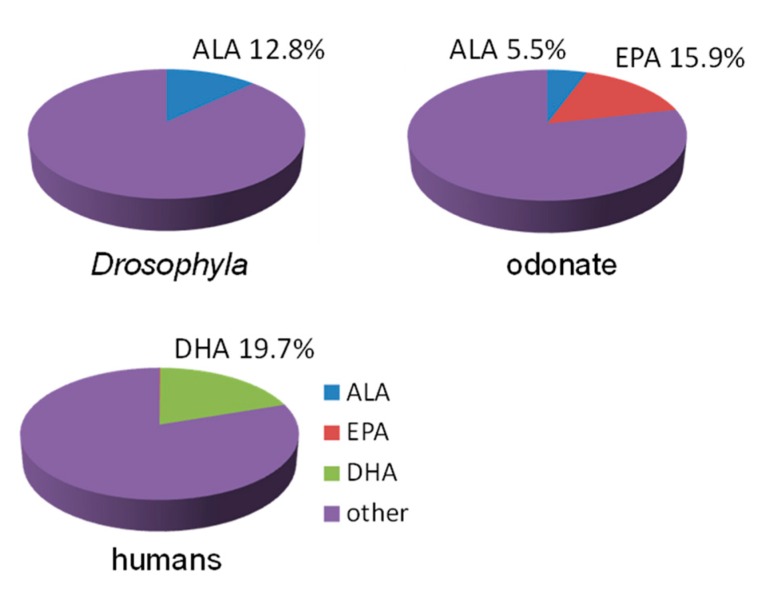
“Levels (% of total fatty acids) of alpha-linolenic (ALA), eicosapentaenoic (EPA) and docosahexaenoic (DHA) acids in the heads of Drosophila [67], the eyes of odonates [68] and human retinas [3].”
Nutritional properties of microalgae for mariculture
Brown, M. R., Jeffrey, S. W., Volkman, J. K., & Dunstan, G. A. (1997) · Aquaculture · doi:10.1016/s0044-8486(96)01501-3 · Cited by 1,039 · cited 1×
“Indeed, EPA levels (as a percent of total FA) in 17 marine diatom species used in aquaculture ranged from 5 to 30% [38].”
Dyall, S. C. (2015) · Frontiers in Aging Neuroscience · doi:10.3389/fnagi.2015.00052 · Cited by 943
The role of omega-3 long-chain polyunsaturated fatty acids in health and disease of the retina
SanGiovanni, J. P., & Chew, E. Y. (2005) · Progress in Retinal and Eye Research · doi:10.1016/j.preteyeres.2004.06.002 · Cited by 874 · cited 1×
“As mentioned above, DHA is the main component of the phospholipids of the cell membranes of vertebrate neural tissues, including retinal photoreceptors [3,4,65,66] (Figure 3).”
Omega-3/6 fatty acids: Alternative sources of production
Ward, O. P., & Singh, A. (2005) · Process Biochemistry · doi:10.1016/j.procbio.2005.02.020 · Cited by 770
Human Requirement for N-3 Polyunsaturated Fatty Acids
Simopoulos, A. P. (2000) · Poultry Science · doi:10.1093/ps/79.7.961 · Cited by 695 · cited 1×
“Many important findings have been summarized in several keynote statements [1,2,6,12,22], and a number of assumptions have appeared.”
Insect meal as renewable source of food for animal feeding: a review
Sánchez-Muros, M.-J., Barroso, F. G., & Manzano-Agugliaro, F. (2014) · Journal of Cleaner Production · doi:10.1016/j.jclepro.2013.11.068 · Cited by 663
Research works printed but not linked: 1
- Claustre H. Marty J.C. Cassiani L. Dagaut J. Fatty acid dynamics in phytoplankton and microzooplankton communities during a spring bloom in the coastal Ligurian Sea: Ecological implications Mar. Microb. Food Webs 1989 3 51 66
Cited by
Microalgae n-3 PUFAs Production and Use in Food and Feed Industries
Remize, M., Brunel, Y., Silva, J. L., Berthon, J.-Y., & Filaire, E. (2021) · Marine Drugs · doi:10.3390/md19020113 · Cited by 214
“The percentage of 20:5n-3 and 22:6n-3 varies with microalgae species and depends on the productivity rate and the growth conditions imposed [96].”
BackgroundInfluentialAlgae: Critical Sources of Very Long-Chain Polyunsaturated Fatty Acids
Harwood, J. (2019) · Biomolecules · doi:10.3390/biom9110708 · Cited by 171
“Gladyshev and Sushchik have reviewed ecosystems, with regard to VLCPUFA [48].”
BackgroundInfluentialConde, T. A., Neves, B. F., Couto, D., Melo, T., Neves, B., Costa, M., Silva, J., Domingues, P., & Domingues, M. R. (2021) · Marine Drugs · doi:10.3390/md19070357 · Cited by 147
“Although some microalgae produce lower levels of ω-3 FA, these amounts can be increased by manipulating growing conditions [39], since the production ofω-3 FA is also dependent on the surrounding environment [40].”
BackgroundPilecky, M., Závorka, L., Arts, M. T., & Kainz, M. J. (2021) · Biological reviews/Biological reviews of the Cambridge Philosophical Society · doi:10.1111/brv.12747 · Cited by 121
“This is beneficial for higher consumers that prey on these animals, with especially their liver and brain tissues providing a source of LC-PUFA for carnivorous animals (Stark, Crawford & Reifen, 2008; Gladyshev & Sushchik, 2019).”
BackgroundPromising Sources of Plant-Derived Polyunsaturated Fatty Acids: A Narrative Review
Rizzo, G., Baroni, L., & Lombardo, M. (2023) · International Journal of Environmental Research and Public Health · doi:10.3390/ijerph20031683 · Cited by 106
“As mentioned above, humans have a limited ability to convert precursors into LCPUFAs; however, this limit is also shared by other mammals and many fishes [176,177].”
BackgroundDíaz, M., Mesa-Herrera, F., & Marín, R. (2021) · Antioxidants · doi:10.3390/antiox10060907 · Cited by 84
“, sulforaphane from broccoli and curcumin from turmeric [108,109]; ergothioneine, polyphenols and flavonoids from a variety of edible mushrooms [110,111] and DHA (but not arachidonic acid, the most abundant n-6 LCPUFA, or eicosapentaenoic acid, EPA, the second important n-3 LCPUFA) from different sources, mainly marin…”
BackgroundClimate change and n-3 LC-PUFA availability
Tan, K., Zhang, H., & Zheng, H. (2022) · Progress in Lipid Research · doi:10.1016/j.plipres.2022.101161 · Cited by 62
Bláhová, Z., Harvey, T. N., Pšenička, M., & Mráz, J. (2020) · Biomolecules · doi:10.3390/biom10020206 · Cited by 45
“Various strategies of human populations regarding EFA metabolism have been shown by Gladyshev and Sushchik this year [22].”
MethodSun, S., Ren, T., Li, X., Cao, X., & Gao, J. (2020) · Biochemical and Biophysical Research Communications · doi:10.1016/j.bbrc.2020.08.074 · Cited by 48
Swetha, N., & Mathanghi, S. K. (2024) · Food Chemistry Advances · doi:10.1016/j.focha.2023.100603 · Cited by 43
Chari, L. D., Richoux, N. B., Moyo, S., & Villet, M. H. (2020) · Food Webs · doi:10.1016/j.fooweb.2020.e00152 · Cited by 33
Gladyshev, M. I., Makhrov, A. A., Baydarov, I. V., Safonova, S. S., Golod, V. M., Alekseyev, S. S., Глущенко, Л. А., Rudchenko, A. E., Karpov, V. A., & Sushchik, N. N. (2022) · Biomolecules · doi:10.3390/biom12010144 · Cited by 32
“Regarding the threshold of EPA+DHA content in edible fish biomass of 1 mg·g−1 WW [18,22], fish of genus Salvelinus are the valuable product for human nutrition, but their nutritive value was found to vary ~14-fold.”
BackgroundSelf-citationMerdzhanova, A., Panayotova, V., Dobreva, D. A., & Peycheva, K. (2021) · Biomolecules · doi:10.3390/biom11111661 · Cited by 25
“It is known that marine fish are very good sources of PUFAs [4], which is confirmed by the presented results.”
ResultSushchik, N. N., Makhutova, O. N., Rudchenko, A. E., Глущенко, Л. А., Shulepina, S. P., Kolmakova, A. A., & Gladyshev, M. I. (2020) · Biomolecules · doi:10.3390/biom10030419 · Cited by 31
“Contents of omega-3 LC-PUFA in muscle tissue of diverse fish species greatly vary, approximately ~400-fold [22].”
BackgroundSelf-citationFan, C., Wen, L., & Cao, X. (2020) · Journal of Chromatography A · doi:10.1016/j.chroma.2020.460872 · Cited by 22
Masese, F. O., Wanderi, E. W., Dalu, T., Chari, L. D., & McClain, M. E. (2024) · Elsevier eBooks · doi:10.1016/b978-0-443-23898-7.00020-8 · Cited by 18
Omega-3 fatty acids accelerate fledging in an avian marine predator: a potential role of cognition
Lamarre, J., Cheema, S. K., Robertson, G. J., & Wilson, D. R. (2021) · Journal of Experimental Biology · doi:10.1242/jeb.235929 · Cited by 22
Sardenne, F., Puccinelli, E., Vagner, M., Pecquerie, L., Bideau, A., Grand, F. L., & Soudant, P. (2021) · Food Chemistry · doi:10.1016/j.foodchem.2021.129828 · Cited by 26
Eutrophication effects on fatty acid profiles of seston and omnivorous fish in tropical reservoirs
Gomes, A. D., Gomes, F. R., Gücker, B., Tolussi, C. E., Figueredo, C. C., Boëchat, I. G., Maruyama, L. S., Oliveira, L. C., Muñoz-Peñuela, M., Pompêo, M. L. M., et al. (2021) · The Science of The Total Environment · doi:10.1016/j.scitotenv.2021.146649 · Cited by 21
Terrestrial Sources of Polyunsaturated Fatty Acids for Aquaculture
Gladyshev, M. I. (2021) · Journal of Ichthyology · doi:10.1134/s0032945221030036 · Cited by 19
Self-citationBella, G. D., Litrenta, F., Pino, S., Tropea, A., Potortì, A. G., Nava, V., & Turco, V. L. (2022) · European Food Research and Technology · doi:10.1007/s00217-022-04043-6 · Cited by 17
Gladyshev, M. I., Makhrov, A. A., Sushchik, N. N., Makhutova, O. N., Rudchenko, A. E., Balashov, D., Vinogradov, E. V., & Artamonova, V. S. (2022) · Aquaculture · doi:10.1016/j.aquaculture.2022.738265 · Cited by 16
Self-citationEffects of severe winter on the lipid nutritional quality and supply of edible bivalves
Tan, K., Zhu, W., Zhang, H., Lim, L., & Zheng, H. (2022) · Aquaculture · doi:10.1016/j.aquaculture.2022.738537 · Cited by 14
Keva, O., Kiljunen, M., Hämäläinen, H., Jones, R. I., Kahilainen, K. K., Kankaala, P., Laine, M. B., Schilder, J., Strandberg, U., Vesterinen, J., et al. (2022) · The Science of The Total Environment · doi:10.1016/j.scitotenv.2022.155982 · Cited by 12
Sadhu, T., Lahiri, S. K., Roy, J., Bhattacharjee, A., & Chakrabarty, J. (2022) · Journal of Multi-Criteria Decision Analysis · doi:10.1002/mcda.1799 · Cited by 12
Jadhav, H. B., Choudhary, P., Deshmukh, N. D., Singh, D. K., Das, M., Das, A., Sai, N. C. S., Muthusamy, G., Annapure, U. S., Ramniwas, S., et al. (2024) · Food Chemistry X · doi:10.1016/j.fochx.2024.101694 · Cited by 12
“Like the lipid content, the percentage of EPA, DHA, and ALA also varies in the microalgae and depends on the growing conditions and type of microalgal species (Gladyshev & Sushchik, 2019).”
BackgroundFatty Acids: Essential Nutrients and Important Biomarkers
Gladyshev, M. I. (2022) · Biomolecules · doi:10.3390/biom12091250 · Cited by 9
“These challenges are described in [1], which was published in the first Special Issue of Biomolecules, entitled “Fatty Acids in Natural Ecosystems and Human Nutrition”.”
BackgroundSelf-citationForaging on anthropogenic food predicts problem-solving skills in a seabird
Lamarre, J., Cheema, S. K., Robertson, G. J., & Wilson, D. R. (2022) · The Science of The Total Environment · doi:10.1016/j.scitotenv.2022.157732 · Cited by 11
Almeyda, M. D., Bilbao, P., Sanchez-Puerta, M. V., Constenla, D. T., & Leonardi, P. I. (2023) · Journal of Applied Phycology · doi:10.1007/s10811-023-02943-y · Cited by 8
“In addition, according to Gladyshev and Sushchik (2019) a daily personal consumption of 0.5–1.0 g of EPA + DHA is recommended by the World Health Organization to obtain health benefits.”
BackgroundInfluentialBashinskiy, I. W., Dgebuadze, Y. Y., Sushchik, N. N., Osipov, V. V., & Gladyshev, M. I. (2023) · The Science of The Total Environment · doi:10.1016/j.scitotenv.2023.162819 · Cited by 8
Self-citationEffect of Metal Ions on BSA Adsorption and Tribofilm Formation
Liu, H., Chen, J., Kuang, J., & Yan, Y. J. (2023) · Tribology Letters · doi:10.1007/s11249-023-01721-8 · Cited by 6
Курашов, Е. А., Krylova, J. V., Чернова, А. М., Khodonovich, V. V., & Yavid, E. Y. (2024) · Inland Water Biology · doi:10.1134/s1995082924700585 · Cited by 5
“…since, in addition to cyanobacteria, which develop mainly in summer, there are also other algal groups that can highly develop in the cold season; at the same time, the relative content of PUFAs per unit of seston organic carbon or fish biomass decreases in this case (Gladyshev and Sushchik, 2019).”
Makhutova, O. N., Mashonskaya, Y. O., Borisova, E. V., Kislitsina, N. I., & Shulepina, S. P. (2025) · Aquatic Sciences · doi:10.1007/s00027-025-01164-4 · Cited by 5
“…namely eicosapentaenoic acid (EPA; 20:5n-3) and docosahexaenoic acid (DHA; 22:6n-3), which have high physiological value for most animals (Lands 2009; Gla-dyshev et al. 2013; Gladyshev and Sushchik 2019), and alpha-linolenic (18:3n-3) and linoleic (LA; 18:2n-6) acids (Makhutova et al. 2022).”
Elements and omega-3 fatty acids in fishes along a large, dammed river
Velichka, J., Kidd, K. A., Munkittrick, K. R., Shanmuganathan, M., Britz‐McKibbin, P., & Curry, R. A. (2023) · Environmental Pollution · doi:10.1016/j.envpol.2023.122375 · Cited by 5
The Ratio of Omega-6/Omega-3 Fatty Acid: Implications and Application as a Marker to Diabetes
Shetty, S. S., Kumari, S., & Varadarajan, R. (2022) · Biomarkers in disease · doi:10.1007/978-3-031-08014-2_23 · Cited by 9
Experimental Identification of Thermal Steam Pressure Sensitivity of ω-3 Fatty Acids in Fish
Kılıç, A. (2022) · Journal of Culinary Science & Technology · doi:10.1080/15428052.2022.2051661 · Cited by 5
“Because ω-3 fatty acids are very sensitive to oxidation, cooking methods, which is one of the fish processing steps, are very important for ω-3 stability (Gladyshev & Sushchik, 2019; Sardenne et al., 2021).”
BackgroundTlusty, M. F. (2021) · Foods · doi:10.3390/foods10081816 · Cited by 6
“There are some terrestrial sources of LCn-3s, as well as human populations that have an increased ability to elongate short omega-3 to LCn-3 [16].”
BackgroundPonomareva, N. M., Popova, O. N., & Yurlova, N. I. (2022) · Contemporary Problems of Ecology · doi:10.1134/s1995425522060117 · Cited by 4
Polyunsaturated Fatty Acid Content in the Muscles of Alien Fish Species of the Rybinsk Reservoir
Dgebuadze, Y. Y., Сущик, Н. Н., Gerasimov, Y. V., Solomatin, Y. I., & Gladyshev, M. I. (2023) · Journal of Ichthyology · doi:10.1134/s0032945223010046 · Cited by 4
Self-citationMarine antioxidants from microalgae
Khavari, F., Asadi, F., Nouri, F., Taheri, M., Mohammadi, F., Mohammadi, M., Habibi, P., & Asghari, B. (2023) · Elsevier eBooks · doi:10.1016/b978-0-323-95086-2.00009-6 · Cited by 4
Kuznetsova, N. A., Makhutova, O. N., Potapov, M. B., & Gladyshev, M. (2025) · Food Webs · doi:10.1016/j.fooweb.2025.e00388 · Cited by 2
Self-citationProkopenko, E. V., Орлова, С. В., & Никитина, Е. А. (2022) · Medical alphabet · doi:10.33667/2078-5631-2022-16-93-101 · Cited by 3
Ahmad, N. I., & Sham, N. M. (2024) · Journal of Food Quality · doi:10.1155/2024/4805298 · Cited by 2
The Ratio of Omega-6/Omega-3 Fatty Acid: Implications and Application as a Marker to Diabetes
Shetty, S. S., Kumari, S., & Varadarajan, R. (2022) · Biomarkers in disease · doi:10.1007/978-3-030-81303-1_23-1 · Cited by 4
Short-term dietary changes are reflected in the cerebral content of adult ring-billed gulls
Lamarre, J., & Wilson, D. R. (2024) · Royal Society Open Science · doi:10.1098/rsos.240616 · Cited by 2
Content of Docosahexaenoic Acid in Pectoral Muscles of Birds Correlates with Wing Beat Frequency
Gladyshev, M. I. (2022) · Doklady Biochemistry and Biophysics · doi:10.1134/s1607672922340075 · Cited by 2
Self-citationChakraborty, N., Gautam, A., Muhie, S. Y., Miller, S., Meyerhoff, J. L., Sowe, B., Jett, M., & Hammamieh, R. (2023) · The Journal of Nutritional Biochemistry · doi:10.1016/j.jnutbio.2023.109309 · Cited by 3
Sun, S., Chen, J., Gao, J., Jiang, J., Sun, L., Li, Q., & Guo, J. (2025) · Aquaculture Reports · doi:10.1016/j.aqrep.2025.103251 · Cited by 1
Patel, A. S., Brahmbhatt, M. N., Bariya, A. R., Nayak, J. B., & Singh, V. K. (2025) · Applied Food Research · doi:10.1016/j.afres.2025.101620 · Cited by 1
Yiğitkurt, S., & Sarıdayı, S. (2026) · Aquaculture International · doi:10.1007/s10499-026-02538-7 · Cited by 1
“Long-chain omega-3 fatty acids (DHA and EPA) are synthesized predominantly by microalgae, the main component of phytoplankton (Gladyshev and Sushchik 2019; Harwood 2019).”
Zugravu, C., Petre, M., & Constantin, C. (2026) · Nutrients · doi:10.3390/nu18091448 · Cited by 1
“Traditional diets often include sources of long-chain polyunsaturated fatty acids, such as arachidonic acid from terrestrial animal foods and long-chain omega-3 fatty acids from marine environments, which contribute to membrane function and metabolic regulation [117].”
Malaguarnera, L., Sortino, V., Surdo, S., & Piro, S. (2026) · Nutrients · doi:10.3390/nu18091437 · Cited by 1
“Among lipid-derived nutritional factors, long-chain omega-3 polyunsaturated fatty acids and ketone bodies have received particular attention for their ability to modulate metabolic flexibility, inflammatory tone, and mitochondrial function [32].”
Klain, A., Indolfi, C., Ciprandi, G., Martelli, A., Brunese, F. P., Cascone, S., Cattivera, V., Cresta, L., Dinardo, G., Fabiano, C., et al. (2026) · Nutrients · doi:10.3390/nu18132072 · Cited by 1
“2019 [34].”
Lipids in human health: Importance of n-3 long-chain and CLA
Popova, T. L., Lorenzo, J. M., Franco, D., & López‐Pedrouso, M. (2022) · Elsevier eBooks · doi:10.1016/b978-0-12-823371-9.00001-0 · Cited by 1
Arctic char Salvelinus alpinus (Salmonidae) Pyasinsky Bay
Zadelenov, V. A., Четвертакова, Е. В., Алексеева, Е. А., & Заделенова, А. В. (2023) · Fisheries · doi:10.37663/0131-6184-2023-4-53-60 · Cited by 1
Experience of breeding char (genus Salvelinus) under industrial fish harvedy farming conditions
Заделенова, А. В., Zadelenov, V. A., Четвертакова, Е. В., Алексеева, Е. А., & Nuss, A. V. (2024) · Rybovodstvo i rybnoe hozjajstvo (Fish Breeding and Fisheries) · doi:10.33920/sel-09-2402-05 · Cited by 1
Andrushchenko, S. V., Shulepina, S. P., Andrushchenko, P. Y., & Gladyshev, M. I. (2024) · Contemporary Problems of Ecology · doi:10.1134/s1995425524700550 · Cited by 1
“The main producers of EPA and DHA in the biosphere are some groups of microalgae, from which these PUFA are transferred through trophic webs to organisms of higher trophic levels—zooplankton and zoobenthos (Gladyshev and Sushchik, 2019).”
Self-citationProduction of Polyunsaturated Fatty Acids (PUFAs) and Their Biomedical Application
Adeyomoye, O., Olaniyan, O. T., & Adetunji, C. O. (2023) · Wiley eBooks · doi:10.1002/9781119857860.ch5 · Cited by 1
Truth and Reality in Science: Defining What Is and Is Not Science
Selvaggi, R. (2023) · Open Journal of Philosophy · doi:10.4236/ojpp.2024.141001
Effects of Smoking Habits on Omega-3 Food Intake in Adults
Lorensia, A., Aditama, I. G. A. S., Suryadinata, R. V., & Raharjo, D. N. (2023) · Indonesian Journal of Human Nutrition · doi:10.21776/ub.ijhn.2023.010.02.6
Mekky, A. E., Al-dhubiea, O., Abdelbary, S., & Suleiman, W. B. (2023) · Al-Azhar Journal of Agricultural Research · doi:10.21608/ajar.2024.215274.1163 · Cited by 1
“So, if you're trying to meet the growing market demand for PUFAs, you might run into some issues with the amount and quality of these conventional sources (Gladyshev & Sushchik, 2019).”
BackgroundPolyunsaturated Fatty Acid Content in the Muscles of Alien Fish Species of the Rybinsk Reservoir
Dgebuadze, Y. Y., Сущик, Н. Н., Gerasimov, Y. V., Solomatin, Y. I., & Gladyshev, M. I. (2023) · Journal of Ichthyology · doi:10.31857/s0042875223010058
Self-citationCONTENT OF DOCOSAHEXAENOIC ACID IN PECTORAL MUSCLES OF BIRDS CORRELATES WITH WING BEAT FREQUENCY
Gladyshev, M. I. (2023) · Доклады Российской академии наук Науки о жизни · doi:10.31857/s2686738922600741
Self-citationde Oliveira, J. L. (2024) · Digital Library of Theses and Dissertations (Universidade de São Paulo) · doi:10.11606/d.41.2024.tde-07052024-115736
Курашов, Е. А., Krylova, J. V., Чернова, А. М., Khodonovich, V. V., & Yavid, E. Y. (2024) · Inland Water Biology · doi:10.31857/s0320965224050168
Warming plants and cooling essential fatty acids
Brenna, J. T. (2025) · American Journal of Clinical Nutrition · doi:10.1016/j.ajcnut.2024.12.010
Lima, J., Moreira, R. G., Branco, G. S., Araújo, B. C., Zaminhan‐Hassemer, M., Guerreiro, A. D. S., Honji, R. M., Marques, V. H., & Gomes, A. D. (2025) · SSRN Electronic Journal · doi:10.2139/ssrn.5396816
Sun, S., Guo, L., Tang, S., Lu, S., & Gao, J. (2025) · European Journal of Lipid Science and Technology · doi:10.1002/ejlt.70057
Lima, J., Moreira, R. G., Branco, G. S., Araújo, B. C., Zaminhan‐Hassemer, M., Guerreiro, A. D. S., Honji, R. M., Marques, V. H., & Gomes, A. D. (2025) · SSRN Electronic Journal · doi:10.2139/ssrn.5394233
Biosynthesis of long-chain omega-3 fatty acids by the nestlings of a generalist seabird
Lamarre, J., & Wilson, D. R. (2025) · Journal of Experimental Biology · doi:10.1242/jeb.250429
“Consequently, n3-LCPUFAs are abundant in the tissues of aquatic autotrophs (Colombo et al., 2016; Gladyshev and Sushchik, 2019; Hixson et al., 2015).”
Gladyshev, M. I., & Andrushchenko, S. V. (2025) · Russian Journal of Biological Invasions · doi:10.1134/s2075111725050029
“…the productivity of EPA and DHA (mg m –2 day –1 ), that is, the amount of these PUFAs coming from the lower to the upper trophic level, as part of biological products, or obtained by humans in catches (Borisova et al., 2016; Glady-shev, 2018; Gladyshev and Sushchik, 2019; Dge-buadze et al., 2023).”
Self-citationGladyshev, M. I., Guseynova, V. E., & Сущик, Н. Н. (2026) · Contemporary Problems of Ecology · doi:10.1134/s1995425525700854
Self-citationOninku, B., & Ozbay, G. (2026) · Journal of Marine Science and Engineering · doi:10.3390/jmse14131155 · Cited by 2
Tan, K., Wu, Z., & Ding, C. (2026) · Food Chemistry · doi:10.1016/j.foodchem.2026.150600
Introduction to omega-3 and omega-6 polyunsaturated fatty acids: sources and natural occurrence
Mirmohammadmakki, F., Gharachorloo, M., Ghavami, M., & Banerjee, R. (2026) · Elsevier eBooks · doi:10.1016/b978-0-443-43810-3.00002-6
LC-PUFA Biosynthesis in Aquatic Animals: A Hybrid Bibliometric and Thematic Review
Gohar, F., Chao, B., Xue, Y., Yuan, Y., Ikhwanuddin, M., & Ma, H. (2026) · Biology · doi:10.3390/biology15201840 · Cited by 1
“…to humans, this perspective overlooks confounding variables including production efficiencies and harvesting practices, raising fundamental questions about whether ecosystem-based governance can successfully reconcile biodiversity conservation priorities with human nutritional requirements [4].”
Metadata
- Authors
- Gladyshev, M. I., & Sushchik, N. N.
- Affiliations
- Russian Academy of Sciences (RU)
- Corresponding author
- Gladyshev, Michail I.
- Venue
- Biomolecules
- Publisher
- MDPI AG
- Published
- 2019-09-12
- Volume
- 9
- Issue
- 9
- Pages
- 485
- ISSN
- 2218-273X (ISSN-L)
- PMC
- PMC6770104
- OpenAlex
- W2973027535
- Cited by
- 77
- References
- 143
- Citations by year
- 2026: 9 · 2025: 10 · 2024: 10 · 2023: 16 · 2022: 16 · 2021: 10 · 2020: 5 · 2019: 1
- FWCI
- 1.09
- Type
- journal article
- Language
- en
- Open access
- gold
- doi.org
- Licence
- Locations
- Biomolecules (publishedVersion, cc-by)
- Europe PMC (PubMed Central) (publishedVersion, cc-by)
- PubMed Central (publishedVersion, cc-by)
- PubMed (publishedVersion)
- DOAJ (DOAJ: Directory of Open Access Journals) (submittedVersion, cc-by-sa)
- SibFU Digital Repository (Siberian Federal University) (submittedVersion)
- Funders
- Russian Science Foundation (16-14-10001)
- Topics
- Health Sciences › Nursing › Nutrition and Dietetics › Fatty Acid Research and Health
- Life Sciences › Agricultural and Biological Sciences › Aquatic Science › Aquaculture Nutrition and Growth
- Life Sciences › Agricultural and Biological Sciences › Food Science › Food Industry and Aquatic Biology
- Keywords
- n-3 long-chain polyunsaturated fatty acids, eicosapentaenoic acid, docosahexaenoic acid, eutrophication, aquatic ecosystems, human diet
- MeSH terms
- Animals, Diet, Docosahexaenoic Acids, Eutrophication, Fishes, Humans, Nutritive Value, Eicosapentaenoic Acid, Ecosystem
About these checks
Registry, retraction, Cites and statistics results are computed, not judged, with one exception: a printed reference that no index lists is read once by a model before it counts as a citation error. Claims are extracted by a model and kept only when their quote appears verbatim in the text; each cited source is then checked, with a model’s help, for whether it says what the claim relies on. Those verdicts can be wrong — read the claim’s quote and the cited source before relying on one.
Statistics and arithmetic are recomputed, not judged.
Confidence bands are shown only for fields calibrated on our annotated test set. None is calibrated yet, so no band is shown.
What counts as a claim ›How we measure confidence ›How we check this ›
Are you an author, or do you see a problem with this page? Request a review
Data sources
Bibliographic data: Semantic Scholar, OpenAlex, Crossref.
Contains information from the Semantic Scholar Academic Graph Datasets, made available under the ODC Attribution License (ODC-BY 1.0).
Semantic Scholar’s data is described in: Kinney, R., et al. (2023). The Semantic Scholar Open Data Platform. arXiv:2301.10140.
