

Comparative Transcriptome Analysis Reveals That Exendin-4 Improves Steatosis in HepG2 Cells by Modulating Signaling Pathways Related to Lipid Metabolism
Open accessThe DOI matches its Crossref record; 73 of the 73 references it cites were found in a registry or an index.
Abstract
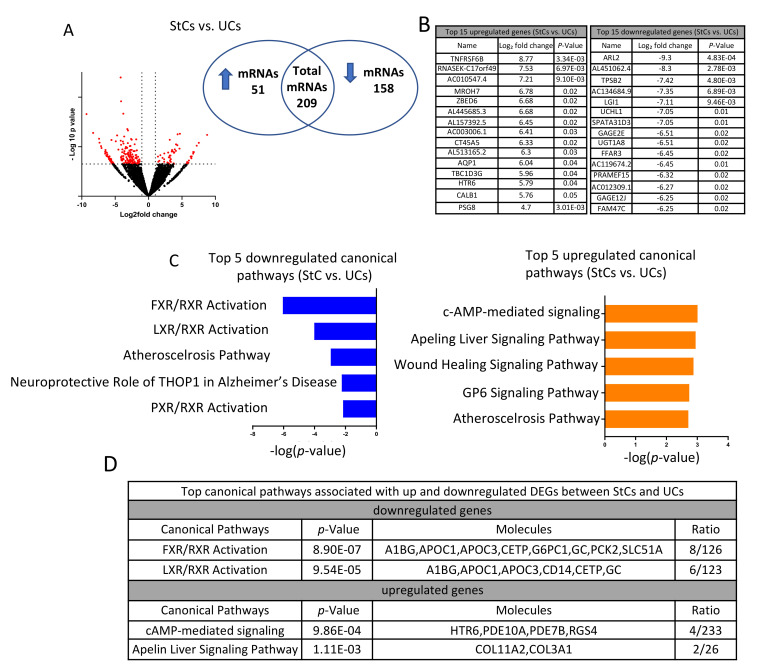
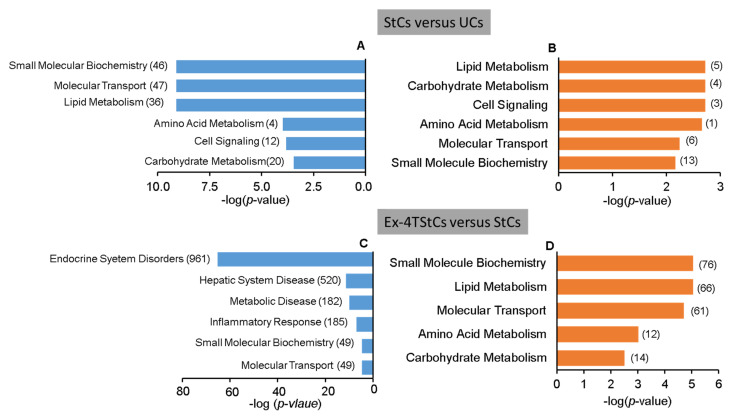
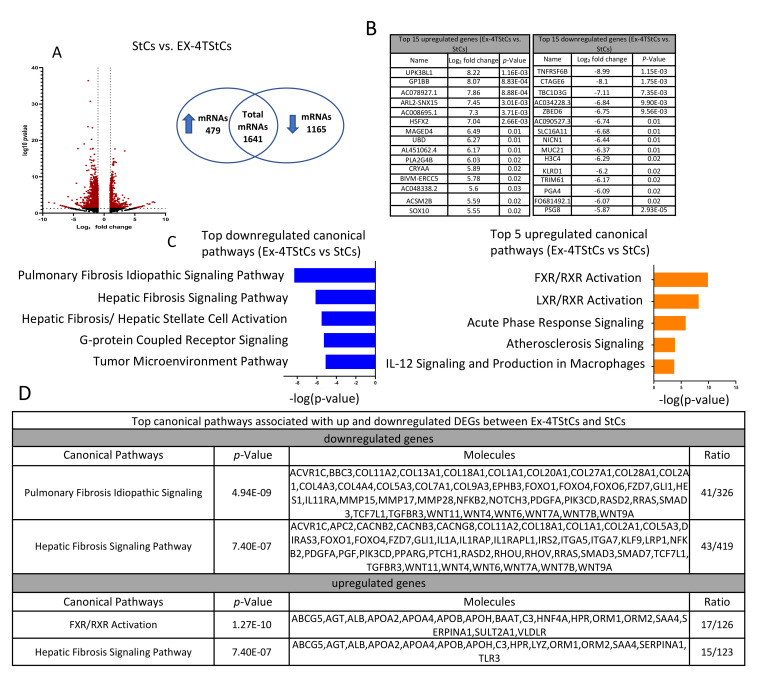
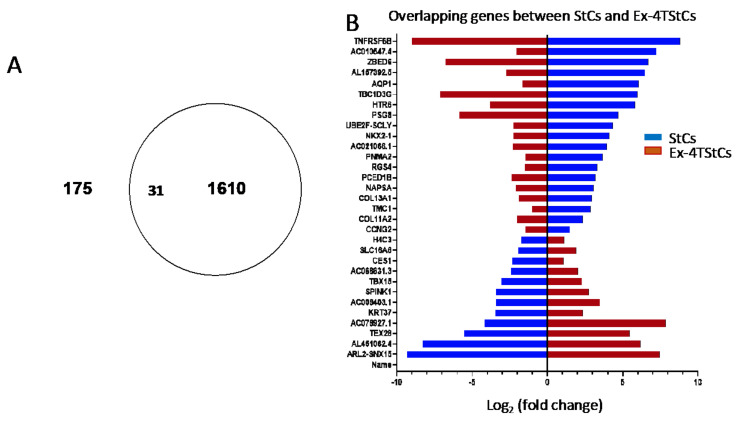
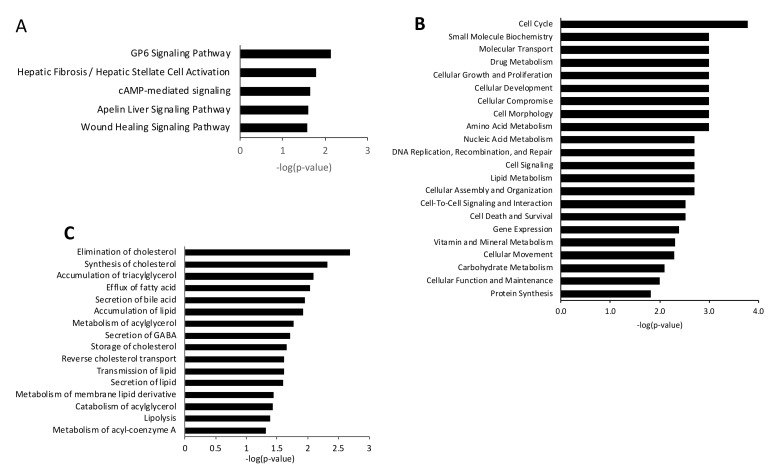
No therapy exists for non-alcoholic fatty liver disease (NAFLD). However, glucagon-like peptide receptor agonists (GLP-1RAs) showed a beneficial effect on NAFLD, although the underpinning mechanisms remain unclear due to their pleiotropic effects. We examined the implicated signaling pathways using comparative transcriptomics in a cell model of steatosis to overcome pleiotropy. We treated steatotic HepG2 cells with the GLP-1RA Exendin-4 (Ex-4). We compared the transcriptome profiles of untreated steatotic, and Ex-4-treated steatotic cells, and used Ingenuity Pathway Analysis (IPA) to identify the signaling pathways and associated genes involved in the protective effect of Ex-4. Ex-4 treatment significantly reduces steatosis. RNA-seq analysis revealed 209 differentially expressed genes (DEGs) between steatotic and untreated cells, with farnesoid X receptor/retinoid X receptor (FXR/RXR) (p = 8.9 × 10⁻⁷) activation being the top regulated canonical pathway identified by IPA. Furthermore, 1644 DEGs were identified between steatotic cells and Ex-4-treated cells, with liver X receptor/retinoid X receptor (LXR/RXR) (p = 2.02 × 10⁻⁷) and FXR/RXR (p = 3.28 × 10⁻⁷) activation being the two top canonical pathways. The top molecular and cellular functions between untreated and steatotic cells were lipid metabolism, molecular transport, and small molecular biochemistry, while organismal injury and abnormalities, endocrine system disorders, and gastrointestinal disease were the top three molecular and cellular functions between Ex-4-treated and steatotic cells. Genes overlapping steatotic cells and Ex-4-treated cells were associated with several lipid metabolism processes. Unique transcriptomic differences exist between steatotic cells and Ex-4-treated steatotic cells, providing an important resource for understanding the mechanisms that underpin the protective effect of GLP-1RAs on NAFLD and for the identification of novel therapeutic targets for NAFLD.
Overview
The claims and statistics of this paper haven’t been checked yet.
Free: it reads the open-access text and checks the first 5 claims that cite a source we can check. Create a free account to check every claim.
Integrity signals
Registry
Cites
Statistics
Figures
Verification
Claims the paper makes
The claims and statistics of this paper haven’t been checked yet.
Free: it reads the open-access text and checks the first 5 claims that cite a source we can check. Create a free account to check every claim.
Claims other papers make about this one
Each is checked against this paper’s own text: does it say what the citing paper says it does?
The source backs part of the claim, not all of it — or backs it for a different population, condition or comparison.
In the citing paper
“in steatosis via FXR, the activation of the liver X receptor/retinoid X receptor (LXR/RXR) pathway using GLP-1 RAs would account for the lower degree of liver inflammation [117].”
From GLP-1 Receptor Agonists in Non-Alcoholic Fatty Liver Disease: Current Evidence and Future Perspectives (2023) · cites this paper as [117]
Experimental — accuracy not yet measured
Self-check
Percentages, sums and reported differences re-computed from the paper’s own numbers.
The self-check needs the paper’s full text.
Citations
Cites
SREBPs: activators of the complete program of cholesterol and fatty acid synthesis in the liver
Horton, J. D., Goldstein, J. L., & Brown, M. S. (2002) · Journal of Clinical Investigation · doi:10.1172/jci15593 · Cited by 4,794
SREBPs: activators of the complete program of cholesterol and fatty acid synthesis in the liver
Horton, J. D., Goldstein, J. L., & Brown, M. S. (2002) · Journal of Clinical Investigation · doi:10.1172/jci0215593 · Cited by 4,092
Drucker, D. J., & Nauck, M. A. (2006) · The Lancet · doi:10.1016/s0140-6736(06)69705-5 · Cited by 3,896 · cited 2×
“Nevertheless, due to its fast inactivation by the dipeptidyl peptidase 4 (DDP4) [27], the native GLP-1 has a relatively short half-life of 1.5 min [28], making its use as a therapeutic drug impracticable as patients would require a 24-h administration [29].”
BackgroundInfluentialYounossi, Z. M., Golabi, P., de Avila, L., Paik, J. M., Srishord, M., Fukui, N., Qiu, Y., Burns, L., Afendy, A., & Nader, F. (2019) · Journal of Hepatology · doi:10.1016/j.jhep.2019.06.021 · Cited by 2,235 · cited 1×
“NAFLD affects an estimated 24% of the world’s population [3]; NASH is one of the leading causes of hepatocellular carcinoma and liver transplantation [4].”
BackgroundA Placebo-controlled trial of subcutaneous semaglutide in nonalcoholic steatohepatitis
Newsome, P. N., Buchholtz, K., Cusi, K., Linder, M., Okanoue, T., Ratziu, V., Sanyal, A. J., Sejling, A.-S., & Harrison, S. A. (2021) · New England Journal of Medicine · doi:10.1056/nejmoa2028395 · Cited by 2,039 · cited 1×
“However, according to recent research, GLP-1R agonists (GLP-1RAs) may help with NAFLD [38,39].”
BackgroundMolecular mechanisms of hepatic lipid accumulation in non-alcoholic fatty liver disease
Ipsen, D. H., Lykkesfeldt, J., & Tveden-Nyborg, P. (2018) · Cellular and Molecular Life Sciences · doi:10.1007/s00018-018-2860-6 · Cited by 1,471 · cited 1×
“In mammalian cells, fatty acid oxidation (FAO), mediated by β-oxidation in mitochondria and peroxisomes and ω-oxidation in cytochromes, plays a significant role in energy generation, especially in periods of low circulating glucose concentrations [62].”
BackgroundTreatment of NAFLD with diet, physical activity and exercise
Romero-Gómez, M., Zelber-Sagi, S., & Trenell, M. (2017) · Journal of Hepatology · doi:10.1016/j.jhep.2017.05.016 · Cited by 1,347 · cited 1×
“Indeed, some studies associate GLP-1RAs’ beneficial effect on NAFLD with their weight-loss effect, known to reduce liver fat content [40].”
BackgroundAdams, L. A., Anstee, Q. M., Tilg, H., & Targher, G. (2017) · Gut · doi:10.1136/gutjnl-2017-313884 · Cited by 1,174
Liver X receptors as integrators of metabolic and inflammatory signaling
Zelcer, N. (2006) · Journal of Clinical Investigation · doi:10.1172/jci27883 · Cited by 978 · cited 1×
“that play an essential role in inflammatory control as well as in the regulation of fatty acid, cholesterol, and glucose metabolism [65].”
BackgroundNon alcoholic fatty liver disease and metabolic syndrome.
Paschos, P., & Paletas, K. (2009) · PubMed Central · Cited by 718
Mouries, J., Brescia, P., Silvestri, A., Spadoni, I., Sorribas, M., Wiest, R., Mileti, E., Galbiati, M., Invernizzi, P., Adorini, L., et al. (2019) · Journal of Hepatology · doi:10.1016/j.jhep.2019.08.005 · Cited by 688 · cited 1×
“GLP-1 is a multifunctional hormone produced by the L-cells of the small intestine [23].”
BackgroundTargher, G., Tilg, H., & Byrne, C. D. (2021) · The Lancet Gastroenterology & Hepatology · doi:10.1016/s2468-1253(21)00020-0 · Cited by 586 · cited 1×
“Non-alcoholic fatty liver disease (NAFLD), a disease marked by an abnormal accumulation of triglycerides in ≥5% of hepatocytes independently of alcohol consumption and other competing liver disorders [1], has become a global health burden, primarily due to the ongoing global rise in sedentary lifestyle and obesity rat…”
BackgroundDing, X., Saxena, N. K., Lin, S., Gupta, N., & Anania, F. A. (2006) · Hepatology · doi:10.1002/hep.21006 · Cited by 557
Gupta, N. A., Mells, J., Dunham, R. M., Grakoui, A., Handy, J., Saxena, N. K., & Anania, F. A. (2010) · Hepatology · doi:10.1002/hep.23569 · Cited by 532
Increased Hepatic CD36 Expression Contributes to Dyslipidemia Associated With Diet-Induced Obesity
Koonen, D. P. Y., Jacobs, R. L., Febbraio, M., Young, M. E., Soltys, C.-L. M., Ong, H., Vance, D. E., & Dyck, J. R. B. (2007) · Diabetes · doi:10.2337/db07-0907 · Cited by 511
Wilson, C. G., Tran, J. L., Erion, D. M., Vera, N. B., Febbraio, M., & Weiss, E. J. (2016) · Endocrinology · doi:10.1210/en.2015-1866 · Cited by 463
Vilsbøll, T., Agersø, H., Krarup, T., & Holst, J. J. (2003) · The Journal of Clinical Endocrinology & Metabolism · doi:10.1210/jc.2002-021053 · Cited by 444 · cited 1×
“5 min [28], making its use as a therapeutic drug impracticable as patients would require a 24-h administration [29].”
BackgroundNonalcoholic fatty liver disease: molecular mechanisms for the hepatic steatosis
Koo, S.-H. (2013) · Clinical and Molecular Hepatology · doi:10.3350/cmh.2013.19.3.210 · Cited by 421
Svegliati‐Baroni, G., Saccomanno, S., Rychlicki, C., Agostinelli, L., De Minicis, S., Candelaresi, C., Faraci, G., Pacetti, D., Vivarelli, M., Nicolini, D., et al. (2011) · Liver International · doi:10.1111/j.1478-3231.2011.02462.x · Cited by 405
Glucagon-Like Peptide 1 Receptor Agonists for Type 2 Diabetes
Hinnen, D. (2017) · Diabetes Spectrum · doi:10.2337/ds16-0026 · Cited by 394 · cited 1×
“Because of this impracticality, various longer-acting GLP-1RAs were developed, and some are now licensed for the treatment of T2D, including exenatide (taken twice daily), liraglutide (provided once daily), and the once-weekly agents albiglutide and dulaglutide [30].”
BackgroundYounossi, Z. M., Loomba, R., Rinella, M. E., Bugianesi, E., Marchesini, G., Neuschwander‐Tetri, B. A., Serfaty, L., Negro, F., Caldwell, S. H., Ratziu, V., et al. (2018) · Hepatology · doi:10.1002/hep.29724 · Cited by 357
Non-Alcoholic Fatty Liver Disease and the Metabolic Syndrome
Najjar, S. M. (2011) · Metabolic Basis of Obesity · doi:10.1007/978-1-4419-1607-5_12 · Cited by 354
Pettinelli, P., & Videla, L. A. (2011) · The Journal of Clinical Endocrinology & Metabolism · doi:10.1210/jc.2010-2129 · Cited by 351
Pleiotropic Effects of GLP-1 and Analogs on Cell Signaling, Metabolism, and Function
Rowlands, J., Heng, J., Newsholme, P., & Carlessi, R. (2018) · Frontiers in Endocrinology · doi:10.3389/fendo.2018.00672 · Cited by 302 · cited 2×
“Due to the widespread expression of its receptor (GLP-1R), GLP-1 has pleiotropic functions [24].”
BackgroundMantovani, A., Petracca, G., Beatrice, G., Csermely, A., Lonardo, A., & Targher, G. (2021) · Metabolites · doi:10.3390/metabo11020073 · Cited by 299
Ard, J., Fitch, A., Fruh, S., & Herman, L. (2021) · Advances in Therapy · doi:10.1007/s12325-021-01710-0 · Cited by 297
Regulation of Glucose Homeostasis by GLP-1
Nadkarni, P., Chepurny, O. G., & Holz, G. G. (2014) · Progress in Molecular Biology and Translational Science · doi:10.1016/b978-0-12-800101-1.00002-8 · Cited by 287 · cited 1×
“Among other functions, GLP1 controls glycemia by stimulating glucosedependent insulin release, decreasing glucagon secretion, potentiating pancreatic β-cell proliferation, and reducing β-cell apoptosis [25].”
BackgroundEffect of green-Mediterranean diet on intrahepatic fat: the DIRECT PLUS randomised controlled trial
Yaskolka Meir, A., Rinott, E., Tsaban, G., Zelicha, H., Kaplan, A., Rosen, P., Shelef, I., Youngster, I., Shalev, A., Blüher, M., et al. (2021) · Gut · doi:10.1136/gutjnl-2020-323106 · Cited by 287
Ito, A., Hong, C., Rong, X., Zhu, X., Tarling, E. J., Hedde, P. N., Gratton, E., Parks, J., & Tontonoz, P. (2015) · eLife · doi:10.7554/elife.08009 · Cited by 281 · cited 1×
“LXR activation also inhibits toll-like receptor (TLR) ligand-dependent inflammatory pathway through ATP-binding cassette 1 (ABCA1) induction [71].”
BackgroundLiver X receptors link lipid metabolism and inflammation
Schulman, I. G. (2017) · FEBS Letters · doi:10.1002/1873-3468.12702 · Cited by 244 · cited 1×
“It was also reported that LXR agonist treatment reduces inflammation via the suppression of proinflammatory genes such as cyclooxygenase-2 and inducible nitric oxide synthase [70].”
BackgroundNonalcoholic Fatty Liver Disease and Type 2 Diabetes Mellitus
Dharmalingam, M., & Yamasandhi, P. (2018) · Indian Journal of Endocrinology and Metabolism · doi:10.4103/ijem.ijem_585_17 · Cited by 239
Deane, A. M., Nguyen, N. Q., Stevens, J. E., Fraser, R. J. L., Holloway, R. H., Besanko, L. K., Burgstad, C., Jones, K. L., Chapman, M. J., Rayner, C. K., et al. (2010) · The Journal of Clinical Endocrinology & Metabolism · doi:10.1210/jc.2009-1503 · Cited by 238
Central obesity and nonalcoholic fatty liver disease risk after adjusting for body mass index
Pang, Q. (2015) · World Journal of Gastroenterology · doi:10.3748/wjg.v21.i5.1650 · Cited by 210
Biomarkers and subtypes of deranged lipid metabolism in non-alcoholic fatty liver disease
Mato, J. M., Alonso, C., Noureddin, M., & Lu, S. C. (2019) · World Journal of Gastroenterology · doi:10.3748/wjg.v25.i24.3009 · Cited by 199
Farnesoid X receptor: a master regulator of hepatic triglyceride and glucose homeostasis
Jiao, Y., Lu, Y., & Li, X.-Y. (2015) · Acta Pharmacologica Sinica · doi:10.1038/aps.2014.116 · Cited by 198
Peroxisomal β-Oxidation and Steatohepatitis
Rao, M. S., & Reddy, J. K. (2001) · Seminars in Liver Disease · doi:10.1055/s-2001-12928 · Cited by 193
(2015) · Journal of Clinical and Translational Hepatology · doi:10.14218/jcth.2014.00037 · Cited by 178
Non-alcoholic fatty liver disease in lean individuals
Albhaisi, S., Chowdhury, A., & Sanyal, A. J. (2019) · JHEP Reports · doi:10.1016/j.jhepr.2019.08.002 · Cited by 174
Larsen, J., Hylleberg, B., Ng, K., & Damsbo, P. (2001) · Diabetes Care · doi:10.2337/diacare.24.8.1416 · Cited by 171
Synthetic FXR Agonist GW4064 Prevents Diet-Induced Hepatic Steatosis and Insulin Resistance
Ma, Y., Huang, Y., Yan, L., Gao, M., & Liu, D. (2013) · Pharmaceutical Research · doi:10.1007/s11095-013-0986-7 · Cited by 165
The Emerging Role of Glucagon-like Peptide-1 Receptor Agonists for the Management of NAFLD
Patel Chavez, C., Cusi, K., & Kadiyala, S. (2022) · The Journal of Clinical Endocrinology & Metabolism · doi:10.1210/clinem/dgab578 · Cited by 162
FXR in liver physiology: Multiple faces to regulate liver metabolism
Panzitt, K., & Wagner, M. (2021) · Biochimica et Biophysica Acta (BBA) - Molecular Basis of Disease · doi:10.1016/j.bbadis.2021.166133 · Cited by 157
Lima-Cabello, E., García-Mediavilla, M. V., Miquilena-Colina, M. E., Vargas-Castrillón, J., Lozano-Rodríguez, T., Fernández-Bermejo, M., Olcoz, J. L., González-Gallego, J., García-Monzón, C., & Sánchez-Campos, S. (2011) · Clinical Science · doi:10.1042/cs20100387 · Cited by 144
Current and emerging pharmacological options for the treatment of nonalcoholic steatohepatitis
Polyzos, S. A., Kang, E. S., Boutari, C., Rhee, E.-J., & Mantzoros, C. S. (2020) · Metabolism · doi:10.1016/j.metabol.2020.154203 · Cited by 135
Non-alcoholic fatty liver disease and hypertension: coprevalent or correlated?
Oikonomou, D., Georgiopoulos, G., Katsi, V., Kourek, C., Tsioufis, C., Alexopoulou, A., Koutli, E., & Tousoulis, D. (2018) · European Journal of Gastroenterology & Hepatology · doi:10.1097/meg.0000000000001191 · Cited by 123
Reversal of metabolic disorders by pharmacological activation of bile acid receptors TGR5 and FXR
Jadhav, K., Xu, Y., Xu, Y., Li, Y., Xu, J., Zhu, Y., Adorini, L., Lee, Y. K., Kasumov, T., Yin, L., et al. (2018) · Molecular Metabolism · doi:10.1016/j.molmet.2018.01.005 · Cited by 119
Li, L., Fu, J., Liu, D., Sun, J., Hou, Y., Chen, C., Shao, J., Wang, L., Wang, X., Zhao, R., et al. (2020) · Redox Biology · doi:10.1016/j.redox.2019.101412 · Cited by 117
A review of non‐alcoholic fatty liver disease in non‐obese and lean individuals
Ahadi, M., Molooghi, K., Masoudifar, N., Namdar, A. B., Vossoughinia, H., & Farzanehfar, M. (2020) · Journal of Gastroenterology and Hepatology · doi:10.1111/jgh.15353 · Cited by 110
Wouters, K., van Bilsen, M., van Gorp, P. J., Bieghs, V., Lütjohann, D., Kerksiek, A., Staels, B., Hofker, M. H., & Shiri-Sverdlov, R. (2010) · FEBS Letters · doi:10.1016/j.febslet.2010.01.046 · Cited by 109 · cited 1×
“[68] demonstrated that pharmacologic LXRα activation, although it doubles hepatic steatosis, reverses hepatic inflammation in parallel with reversing hepatic cholesterol levels in a high-fat, high-cholesterol-induced NASH mouse model.”
BackgroundGao, Q., Jia, Y., Yang, G., Zhang, X., Boddu, P. C., Petersen, B., Narsingam, S., Zhu, Y.-J., Thimmapaya, B., Kanwar, Y. S., et al. (2015) · The American Journal of Pathology · doi:10.1016/j.ajpath.2015.01.018 · Cited by 93
Shi, Y., Wang, Q., Sun, Y., Zhao, X., Kong, Y., Ou, X., Jia, J., Wu, S., & You, H. (2020) · Journal of Clinical Gastroenterology · doi:10.1097/mcg.0000000000001270 · Cited by 88
Wong, C., Lee, M. H., Yaow, C. Y. L., Chin, Y. H., Goh, X. L., Ng, C. H., Lim, A. Y. L., Muthiah, M. D., & Khoo, C. M. (2021) · Frontiers in Endocrinology · doi:10.3389/fendo.2021.609110 · Cited by 86
Why weight loss maintenance is difficult
Evert, A. B., & Franz, M. J. (2017) · Diabetes Spectrum · doi:10.2337/ds017-0025 · Cited by 63
Montandon, S. A., Somm, E., Loizides‐Mangold, U., Vito, C. D., Dibner, C., & Jornayvaz, F. R. (2019) · Scientific Reports · doi:10.1038/s41598-019-53346-4 · Cited by 59
Hajri, T., Zaiou, M., Fungwe, T. V., Ouguerram, K., & Besong, S. A. (2021) · Cells · doi:10.3390/cells10061355 · Cited by 58
van den Hoek, A. M., de Jong, J. C. B. C., Worms, N., van Nieuwkoop, A., Voskuilen, M., Menke, A. L., Lek, S., Caspers, M. P. M., Verschuren, L., & Kleemann, R. (2021) · Metabolism · doi:10.1016/j.metabol.2021.154873 · Cited by 53
Katsagoni, C. N., Papachristou, E., Sidossis, A. C., & Sidossis, L. S. (2020) · Nutrients · doi:10.3390/nu12092864 · Cited by 51
Insulin Resistance and NAFLD: A Dangerous Liaison beyond the Genetics
Manco, M. (2017) · Children · doi:10.3390/children4080074 · Cited by 45
ALKHATATBEH, M. J., LINCZ, L. F., & THORNE, R. F. (2016) · Experimental and Therapeutic Medicine · doi:10.3892/etm.2016.3069 · Cited by 44 · cited 1×
“The oleic acid (OA) was prepared as in [36] and no diluent was used to dissolve it.”
MethodDecara, J., Arrabal, S., Beiroa, D., Rivera, P., Vargas, A., Serrano, A., Pavón, F. J., Ballesteros, J., Dieguez, C., Nogueiras, R., et al. (2016) · BioFactors · doi:10.1002/biof.1295 · Cited by 42 · cited 1×
“Furthermore, in diet-induced obese rats, the GLP1R agonist liraglutide was demonstrated to lower hepatic fat content via decreasing hepatic fatty acid flow via a decrease in PPARγ expression in the liver, implying a restoration of lipid homeostasis [56].”
BackgroundKhalifa, O., AL-Akl, N. S., Errafii, K., & Arredouani, A. (2022) · Scientific Reports · doi:10.1038/s41598-022-06143-5 · Cited by 42
Self-citationExendin-4 Inhibits Hepatic Lipogenesis by Increasing β-Catenin Signaling
Seo, M. H., Lee, J., Hong, S.-W., Rhee, E.-J., Park, S. E., Park, C. Y., Oh, K. W., Park, S. W., & Lee, W.-Y. (2016) · PLOS ONE · doi:10.1371/journal.pone.0166913 · Cited by 37 · cited 1×
“Interestingly, in an in vitro cell model of steatosis, similar to the one we used in this study, Seo and colleagues [41] recently showed that Ex-4 treatment significantly reduced the expression of both PPARγ and SREBP-1c.”
Lyu, J., Imachi, H., Fukunaga, K., Sato, S., Kobayashi, T., Dong, T., Saheki, T., Matsumoto, M., Iwama, H., Zhang, H., et al. (2020) · Molecular Metabolism · doi:10.1016/j.molmet.2019.12.015 · Cited by 36
Bile acid activated receptors are targets for regulation of integrity of gastrointestinal mucosa
Distrutti, E., Santucci, L., Cipriani, S., Renga, B., Schiaroli, E., Ricci, P., Donini, A., & Fiorucci, S. (2015) · Journal of Gastroenterology · doi:10.1007/s00535-015-1041-8 · Cited by 35
Liu, Y., Han, X., Bian, Z., Peng, Y., You, Z., Wang, Q., Chen, X., Qiu, D., & Ma, X. (2012) · Digestive Diseases and Sciences · doi:10.1007/s10620-011-1902-9 · Cited by 35 · cited 1×
“Moreover, LXR activation also attenuates liposaccharides-induced liver injury in murine NAFLD by inhibiting the pro-inflammatory activity of macrophages [69].”
BackgroundYokomori, H., & Ando, W. (2020) · BMJ Open Gastroenterology · doi:10.1136/bmjgast-2019-000370 · Cited by 33
Glucagon-like peptide-1 receptor agonists in non-alcoholic fatty liver disease: An update
Sofogianni, A., Filippidis, A., Chrysavgis, L., Tziomalos, K., & Cholongitas, E. (2020) · World Journal of Hepatology · doi:10.4254/wjh.v12.i8.493 · Cited by 33 · cited 1×
“On the other hand, other studies claim that GLP-1RAs ameliorate NAFLD by directly activating the hepatic GLP-1Rs and the downstream signaling pathways, resulting in the modulation of lipid metabolism pathways and the lowering of hepatic fat content [22,33].”
BackgroundNon-alcoholic fatty liver disease–a chronic disease of the 21st century
Metrakos, P. P., & Tommy, N. (2017) · Journal of Biomedical Research · doi:10.7555/jbr.31.20160153 · Cited by 29
Cho, E. J., Yu, S. J., Jung, G. C., Kwak, M., Yang, J. I., Yim, J. Y., & Chung, G. E. (2021) · Scientific Reports · doi:10.1038/s41598-021-93883-5 · Cited by 22
The Role of Life Style Modifications in Comprehensive Non‐Alcoholic Fatty Liver Disease Treatment
Viveiros, K. (2021) · Clinical Liver Disease · doi:10.1002/cld.1007 · Cited by 21
Friesen, C. S., Hosey, C. M., Chan, S. S., Csanaky, I. L., Wagner, J. B., Sweeney, B. R., Friesen, A., Fraser, J. D., & Shakhnovich, V. (2021) · Frontiers in Endocrinology · doi:10.3389/fendo.2021.663351 · Cited by 18
Xiao, Y., Han, J., Wang, Q., Mao, Y., Wei, M., Jia, W., & Wei, L. (2017) · Journal of Cellular Biochemistry · doi:10.1002/jcb.26207 · Cited by 16
Errafii, K., Al-Akl, N. S., Khalifa, O., & Arredouani, A. (2021) · Journal of Translational Medicine · doi:10.1186/s12967-021-02885-4 · Cited by 12
Self-citation
Cited by
Nevola, R., Epifani, R., Imbriani, S., Tortorella, G., Aprea, C., Galiero, R., Rinaldi, L., Marfella, R., & Sasso, F. C. (2023) · International Journal of Molecular Sciences · doi:10.3390/ijms24021703 · Cited by 286
“Together with the reduction in steatosis via FXR, the activation of the liver X receptor/retinoid X receptor (LXR/RXR) pathway using GLP-1 RAs would account for the lower degree of liver inflammation [117].”
BackgroundHavranek, B., Loh, R., Torre, B., Redfield, R. L., & Halegoua-DeMarzio, D. L. (2025) · Scientific Reports · doi:10.1038/s41598-025-89408-z · Cited by 51
Effect of Isoquercitrin on Free Fatty Acid-Induced Lipid Accumulation in HepG2 Cells
Kim, S. H., Yun, C., Kwon, D., Lee, Y., Kwak, J., & Jung, Y. (2023) · Molecules · doi:10.3390/molecules28031476 · Cited by 26
GLP-1 receptor agonism: a transformative approach for managing type-2 diabetes and obesity
Alharbi, A. (2025) · Saudi Pharmaceutical Journal · doi:10.1007/s44446-025-00038-y · Cited by 36
Research Progress on the GIP/GLP-1 Receptor Coagonist Tirzepatide, a Rising Star in Type 2 Diabetes
Ma, Z., Jin, K., Yue, M., Chen, X., & Chen, J. (2023) · Journal of Diabetes Research · doi:10.1155/2023/5891532 · Cited by 30
Metadata
- Authors
- Errafii, K., Khalifa, O., Al-Akl, N. S., & Arredouani, A.
- Affiliations
- College of Health and Life Sciences, Hamad Bin Khalifa University, Qatar Foundation, Doha P.O. Box 34110, Qatar
- Hamad bin Khalifa University (QA)
- Corresponding author
- Arredouani, Abdelilah
- Venue
- Biomedicines
- Publisher
- MDPI AG
- Published
- 2022-04-28
- Volume
- 10
- Issue
- 5
- Pages
- 1020
- ISSN
- 2227-9059 (ISSN-L)
- PMC
- PMC9138370
- OpenAlex
- W4225115625
- Semantic Scholar
- 9ff520612a31ebe7c19a78be54e2a8e5e950c49d
- Cited by
- 17
- References
- 73
- Citations by year
- 2026: 4 · 2025: 4 · 2024: 4 · 2023: 5
- FWCI
- 2.35
- Type
- journal article
- Language
- en
- Open access
- gold
- doi.org
- Licence
- Locations
- Biomedicines (publishedVersion, cc-by)
- PubMed Central (publishedVersion, cc-by)
- PubMed (publishedVersion)
- DOAJ (DOAJ: Directory of Open Access Journals) (submittedVersion, cc-by-sa)
- Figshare (submittedVersion, cc-by)
- Funders
- Qatar Biomedical Research Institute (VR93)
- Topics
- Health Sciences › Medicine › Hepatology › Liver Disease Diagnosis and Treatment
- Health Sciences › Medicine › Hepatology › Liver physiology and pathology
- Life Sciences › Pharmacology, Toxicology and Pharmaceutics › Pharmacology › Drug-Induced Hepatotoxicity and Protection
- Keywords
- exendin-4, non-alcoholic fatty liver disease, hepatic steatosis, GLP-1 receptor agonists, HepG2 cells, lipid metabolism, differentially expressed genes, transcriptome, therapeutic target
About these checks
Registry, retraction, Cites and statistics results are computed, not judged, with one exception: a printed reference that no index lists is read once by a model before it counts as a citation error. Claims are extracted by a model and kept only when their quote appears verbatim in the text; each cited source is then checked, with a model’s help, for whether it says what the claim relies on. Those verdicts can be wrong — read the claim’s quote and the cited source before relying on one.
Statistics and arithmetic are recomputed, not judged.
Confidence bands are shown only for fields calibrated on our annotated test set. None is calibrated yet, so no band is shown.
What counts as a claim ›How we measure confidence ›How we check this ›
Are you an author, or do you see a problem with this page? Request a review
Data sources
Bibliographic data: Semantic Scholar, OpenAlex, Crossref.
Contains information from the Semantic Scholar Academic Graph Datasets, made available under the ODC Attribution License (ODC-BY 1.0).
Semantic Scholar’s data is described in: Kinney, R., et al. (2023). The Semantic Scholar Open Data Platform. arXiv:2301.10140.
