

Multiplexing AAV Serotype-Specific Neutralizing Antibodies in Preclinical Animal Models and Humans
Open accessThe DOI matches its Crossref record; 96 of the 96 references it cites were found in a registry or an index.
Abstract
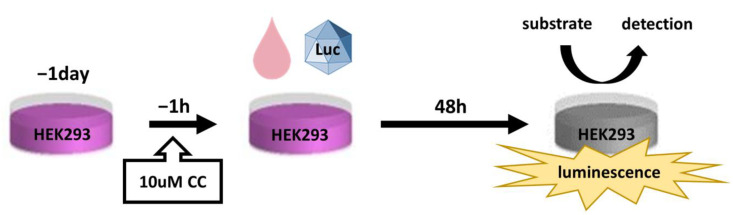
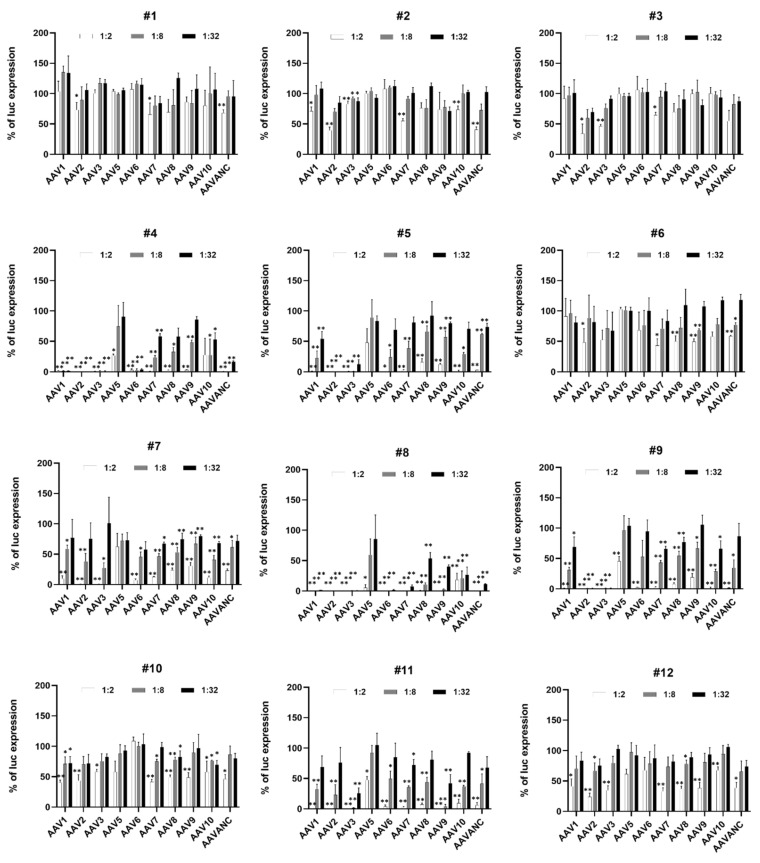
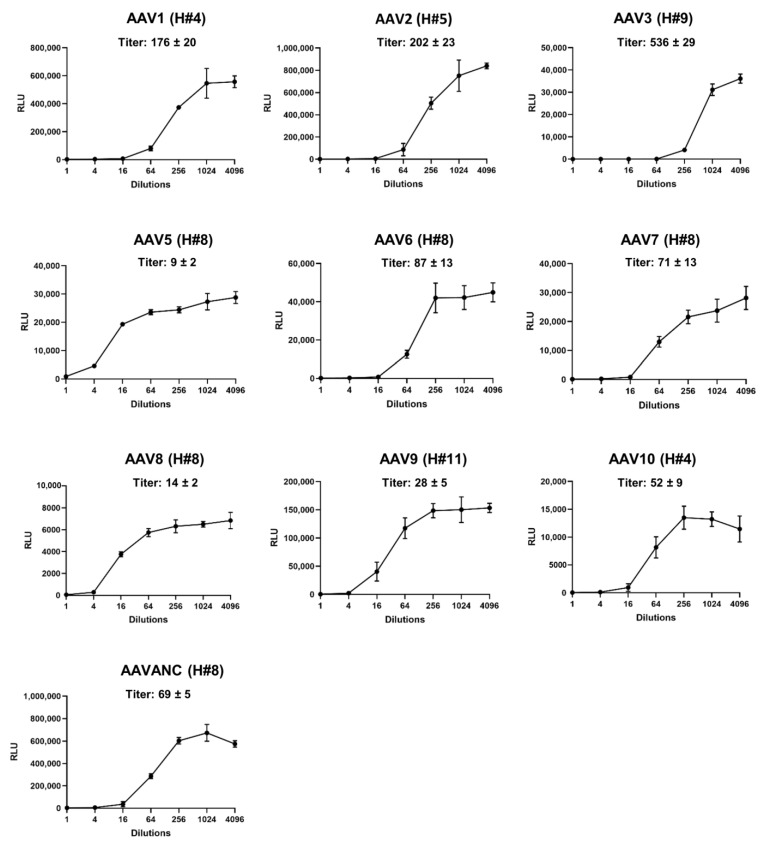
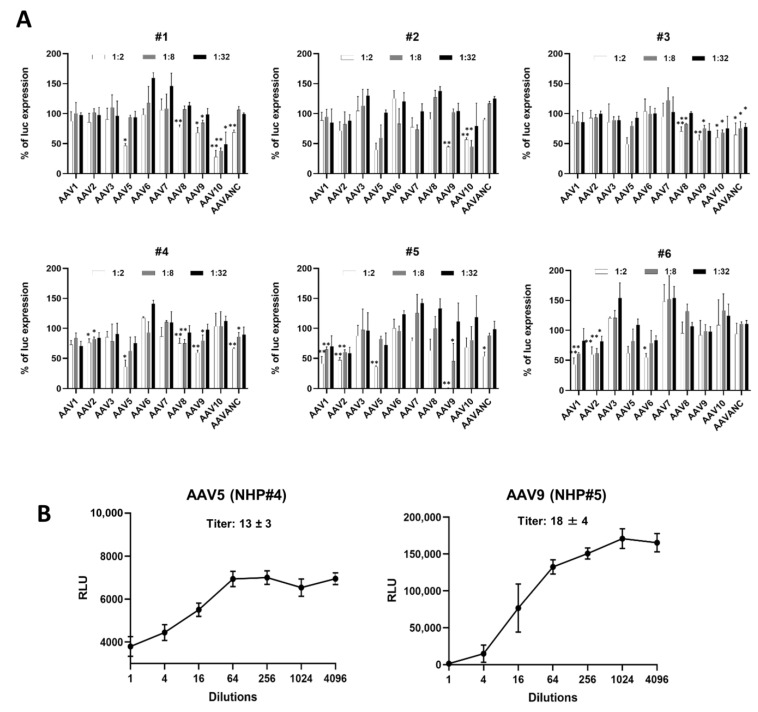
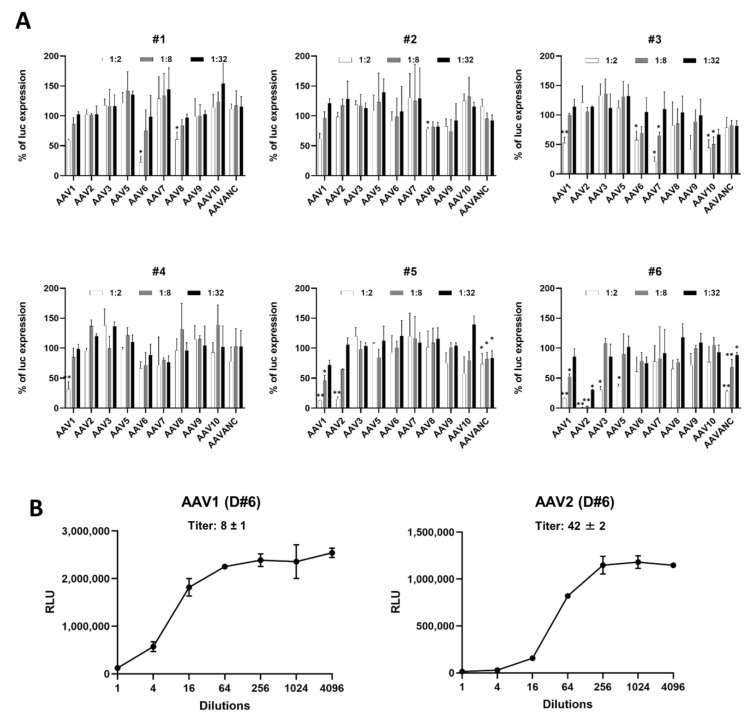
The accurate assessment of AAV-specific pre-existing humoral immunity due to natural viral infection is critical for the efficient use of clinical gene therapy. The method described in the present study applies equivalent infection conditions to each AAV serotype (AAV1, AAV2, AAV3, AAV5, AAV6, AAV7, AAV8, AAV9, AAV10, and AAVAnc80L65). In the current study, we validated the assay by assessing AAV-neutralizing antibody titers in a limited cohort of random human donors and well-established preclinical large animal models, including dogs and non-human primates (NHPs). We achieved a rapid and accurate evaluation of neutralizing titers for each individual subject that can be used for clinical enrollment based on specific AAV serotypes and individualized selection of the most suitable AAV serotype for each specific patient.
Overview
The claims and statistics of this paper haven’t been checked yet.
Free: it reads the open-access text and checks the first 5 claims that cite a source we can check. Create a free account to check every claim.
Integrity signals
Registry
Cites
Statistics
Figures
Verification
Claims the paper makes
The claims and statistics of this paper haven’t been checked yet.
Free: it reads the open-access text and checks the first 5 claims that cite a source we can check. Create a free account to check every claim.
Claims other papers make about this one
Each is checked against this paper’s own text: does it say what the citing paper says it does?
The cited source says what the claim attributes to it.
In the citing paper
“It is also worth noting that the seroprevalence against AAVs is influenced by the antibody assay used and the definition of seropositivity in different trials [42].”
From Characterization of anti-AAV2 neutralizing antibody levels in sheep prior to and following intravitreal AAV2.7m8 injection (2024) · cites this paper as [42]
Self-check
Percentages, sums and reported differences re-computed from the paper’s own numbers.
The self-check needs the paper’s full text.
Citations
Cites
Manno, C. S., Pierce, G. F., Arruda, V. R., Glader, B., Ragni, M., Rasko, J. J. E., Ozelo, M. C., Hoots, K., Blatt, P., Konkle, B., et al. (2006) · Nature Medicine · doi:10.1038/nm1358 · Cited by 2,163 · cited 1×
“Since the presence of NABs even at low titers can affect gene therapy efficiency, NAB titers are a major exclusion criterion for AAV-based clinical studies [77].”
BackgroundThe Path to Personalized Medicine
Hamburg, M. A., & Collins, F. S. (2010) · New England Journal of Medicine · doi:10.1056/nejmp1006304 · Cited by 1,970
Adenovirus-Associated Virus Vector–Mediated Gene Transfer in Hemophilia B
Nathwani, A. C., Tuddenham, E. G. D., Rangarajan, S., Rosales, C., McIntosh, J., Linch, D. C., Chowdary, P., Riddell, A., Pie, A. J., Harrington, C., et al. (2011) · New England Journal of Medicine · doi:10.1056/nejmoa1108046 · Cited by 1,864
Long-Term Safety and Efficacy of Factor IX Gene Therapy in Hemophilia B
Nathwani, A. C., Reiss, U. M., Tuddenham, E. G. D., Rosales, C., Chowdary, P., McIntosh, J., Della Peruta, M., Lheriteau, E., Patel, N., Raj, D., et al. (2014) · New England Journal of Medicine · doi:10.1056/nejmoa1407309 · Cited by 1,273
Boutin, S., Monteilhet, V., Veron, P., Leborgne, C., Benveniste, O., Montus, M. F., & Masurier, C. (2010) · Human Gene Therapy · doi:10.1089/hum.2009.182 · Cited by 970 · cited 1×
“Our data are in agreement with several independent evaluations of NABs against AAV5, which is considered to have the lowest rate of pre-existing NABs, with as low as approximately 20–30% of tested humans being seropositive, and also has the potential to target a larger number of patients in the development of AAV5-bas…”
ResultTherapeutic in vivo gene transfer for genetic disease using AAV: Progress and challenges
Mingozzi, F., & High, K. A. (2011) · Nature Reviews Genetics · doi:10.1038/nrg2988 · Cited by 893
Emerging issues in AAV-mediated in vivo gene therapy
Colella, P., Ronzitti, G., & Mingozzi, F. (2018) · Molecular Therapy - Methods & Clinical Development · doi:10.1016/j.omtm.2017.11.007 · Cited by 881 · cited 1×
“At the same time, pre-existing immunity has a profound effect on liver-directed AAV gene therapy, and NAB titers as low as 1:5 completely block hepatocyte transduction, which leads to far more rigorous criteria for patient enrollment compared to muscle-directed gene transfer [14,78].”
BackgroundWorldwide epidemiology of neutralizing antibodies to adeno-associated viruses
Calcedo, R., Vandenberghe, L. H., Gao, G., Lin, J., & Wilson, J. M. (2009) · The Journal of Infectious Diseases · doi:10.1086/595830 · Cited by 808
Engineering adeno-associated viruses for clinical gene therapy
Kotterman, M. A., & Schaffer, D. V. (2014) · Nature Reviews Genetics · doi:10.1038/nrg3742 · Cited by 761
AAV Vector Immunogenicity in Humans: A Long Journey to Successful Gene Transfer
Costa Verdera, H., Kuranda, K., & Mingozzi, F. (2020) · Molecular Therapy · doi:10.1016/j.ymthe.2019.12.010 · Cited by 641
Cited by
Therapeutic Application and Structural Features of Adeno-Associated Virus Vector
Matsuzaka, Y., & Yashiro, R. (2024) · Current Issues in Molecular Biology · doi:10.3390/cimb46080499 · Cited by 16
Molina, E., Tejero, M., Duzenli, O. F., Kuoch, H., Caine, C., Krotova, K. Y., Paulaitis, M. E., & Aslanidi, G. (2024) · Molecular Therapy — Methods & Clinical Development · doi:10.1016/j.omtm.2024.101358 · Cited by 8
Self-citationTejero, M., Duzenli, O. F., Caine, C., Kuoch, H., & Aslanidi, G. (2023) · Genes · doi:10.3390/genes14101866 · Cited by 5
Self-citationRoss, M., Sade, K., Obolensky, A., Averbukh, E., Desrosiers, M., Rosov, A., Dvir, H., Gootwine, E., Banin, E., Dalkara, D., et al. (2024) · Gene Therapy · doi:10.1038/s41434-024-00495-5 · Cited by 3
Preclinical study of an optimized AAV cancer vaccine in a spontaneous canine model of oral melanoma
Ghersa, F., Yung, C., Molina, E., Kuoch, H., Caine, C., Krotova, K. Y., Borgatti, A., & Aslanidi, G. (2026) · Molecular Therapy Oncology · doi:10.1016/j.omton.2026.201282
Self-citation
Metadata
- Authors
- Kuoch, H., Krotova, K., Graham, M. L., Brantly, M. L., & Aslanidi, G.
- Affiliations
- University of Minnesota (US)
- University of Florida (US)
- Corresponding author
- Aslanidi, George
- Venue
- Biomedicines
- Publisher
- MDPI AG
- Published
- 2023-02-11
- Volume
- 11
- Issue
- 2
- Pages
- 523
- ISSN
- 2227-9059 (ISSN-L)
- PMC
- PMC9953293
- OpenAlex
- W4320491185
- Semantic Scholar
- 6cf7e6f7e33365689dda6b59884acad570db2390
- Cited by
- 5
- References
- 96
- Citations by year
- 2026: 1 · 2024: 3 · 2023: 1
- FWCI
- 0.83
- Type
- journal article
- Language
- en
- Open access
- gold
- doi.org
- Licence
- Locations
- Biomedicines (publishedVersion, cc-by)
- PubMed Central (publishedVersion, cc-by)
- PubMed (publishedVersion)
- DOAJ (DOAJ: Directory of Open Access Journals) (submittedVersion, cc-by-sa)
- Funders
- NIH (R01HL131586, FD007483)
- FDA/CEBR (R01HL131586, FD007483)
- Topics
- Life Sciences › Biochemistry, Genetics and Molecular Biology › Genetics › Virus-based gene therapy research
- Life Sciences › Biochemistry, Genetics and Molecular Biology › Molecular Biology › RNA Interference and Gene Delivery
- Health Sciences › Medicine › Hematology › Hemophilia Treatment and Research
- Keywords
- adeno-associated virus, AAV serotypes, neutralizing antibodies, humoral immunity, pre-existing immunity, gene therapy, AAV8, AAV9, non-human primates, dogs
About these checks
Registry, retraction, Cites and statistics results are computed, not judged, with one exception: a printed reference that no index lists is read once by a model before it counts as a citation error. Claims are extracted by a model and kept only when their quote appears verbatim in the text; each cited source is then checked, with a model’s help, for whether it says what the claim relies on. Those verdicts can be wrong — read the claim’s quote and the cited source before relying on one.
Statistics and arithmetic are recomputed, not judged.
Confidence bands are shown only for fields calibrated on our annotated test set. None is calibrated yet, so no band is shown.
What counts as a claim ›How we measure confidence ›How we check this ›
Are you an author, or do you see a problem with this page? Request a review
Data sources
Bibliographic data: Semantic Scholar, OpenAlex, Crossref.
Contains information from the Semantic Scholar Academic Graph Datasets, made available under the ODC Attribution License (ODC-BY 1.0).
Semantic Scholar’s data is described in: Kinney, R., et al. (2023). The Semantic Scholar Open Data Platform. arXiv:2301.10140.
