

MDM2 Inhibition in the Treatment of Glioblastoma: From Concept to Clinical Investigation
Open accessThe DOI matches its Crossref record; 156 of the 157 references it cites were found in a registry or an index.
Abstract
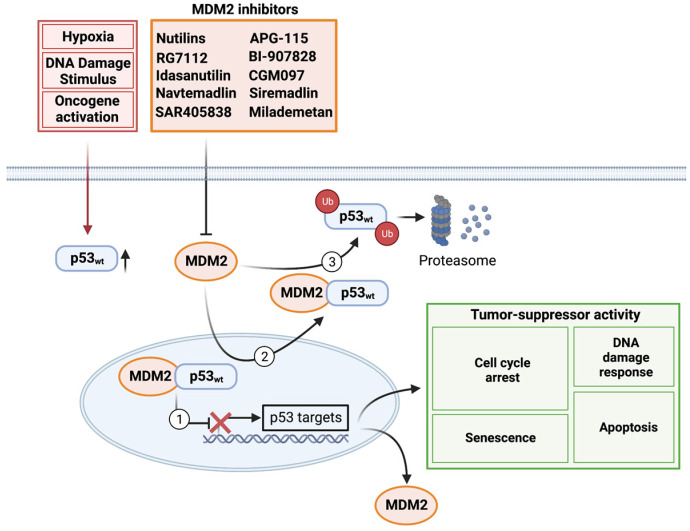
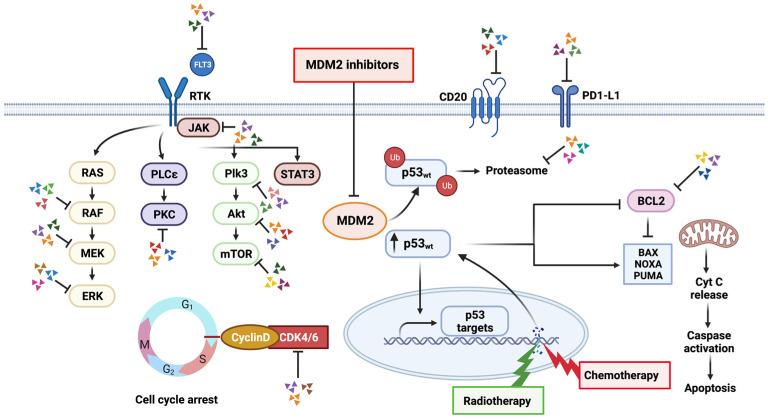
Inhibition of the interaction between MDM2 and p53 has emerged as a promising strategy for combating cancer, including the treatment of glioblastoma (GBM). Numerous MDM2 inhibitors have been developed and are currently undergoing rigorous testing for their potential in GBM therapy. Encouraging results from studies conducted in cell culture and animal models suggest that MDM2 inhibitors could effectively treat a specific subset of GBM patients with wild-type TP53 or functional p53. Combination therapy with clinically established treatment modalities such as radiation and chemotherapy offers the potential to achieve a more profound therapeutic response. Furthermore, an increasing array of other molecularly targeted therapies are being explored in combination with MDM2 inhibitors to increase the effects of individual treatments. While some MDM2 inhibitors have progressed to early phase clinical trials in GBM, their efficacy, alone and in combination, is yet to be confirmed. In this article, we present an overview of MDM2 inhibitors currently under preclinical and clinical investigation, with a specific focus on the drugs being assessed in ongoing clinical trials for GBM patients.
Overview
The claims and statistics of this paper haven’t been checked yet.
Free: it reads the open-access text and checks the first 5 claims that cite a source we can check. Create a free account to check every claim.
Integrity signals
Registry
Cites
Statistics
Figures
Verification
Claims the paper makes
The claims and statistics of this paper haven’t been checked yet.
Free: it reads the open-access text and checks the first 5 claims that cite a source we can check. Create a free account to check every claim.
Claims other papers make about this one
Each is checked against this paper’s own text: does it say what the citing paper says it does?
The cited source says what the claim attributes to it.
In the citing paper
“and the latter three drugs have reached early-phase clinical trials in GBM (reviewed in ref. 2).”
From Preclinical Modeling of Navtemadlin Pharmacokinetics, Pharmacodynamics, and Efficacy in IDH–Wild-type Glioblastoma (2025) · cites this paper as [2]
The cited source says what the claim attributes to it.
In the citing paper
“Small-molecule MDM2 inhibitors are the most clinically advanced therapeutics targeting this pathway, and there are numerous clinical trials evaluating this class of drugs across various malignancies.2,3”
From Pharmacokinetic-pharmacodynamic-efficacy modeling of the MDM2 inhibitor brigimadlin in glioblastoma patient-derived xenografts (2026) · cites this paper as [3]
Self-check
Percentages, sums and reported differences re-computed from the paper’s own numbers.
The self-check needs the paper’s full text.
Citations
Cites
1 retracted
Daniele, S., Costa, B., Zappelli, E., Pozzo, E. D., Sestito, S., Nesi, G., Campiglia, P., Marinelli, L., Novellino, E., Rapposelli, S., et al. (2015) · Scientific Reports · doi:10.1038/srep09956 · Cited by 102
RetractedRadiotherapy Plus Concomitant and Adjuvant Temozolomide for Glioblastoma
Stupp, R., Mason, W. P., van den Bent, M. J., Weller, M., Fisher, B., Taphoorn, M. J. B., Belanger, K., Brandes, A. A., Marosi, C., Bogdahn, U., et al. (2005) · New England Journal of Medicine · doi:10.1056/nejmoa043330 · Cited by 21,807
Cerami, E., Gao, J., Dogrusoz, U., Gross, B. E., Sumer, S. O., Aksoy, B. A., Jacobsen, A., Byrne, C. J., Heuer, M. L., Larsson, E., et al. (2012) · Cancer Discovery · doi:10.1158/2159-8290.cd-12-0095 · Cited by 17,455
Integrative Analysis of Complex Cancer Genomics and Clinical Profiles Using the cBioPortal
Gao, J., Aksoy, B. A., Dogrusoz, U., Dresdner, G., Gross, B., Sumer, S. O., Sun, Y., Jacobsen, A., Sinha, R., Larsson, E., et al. (2013) · Science Signaling · doi:10.1126/scisignal.2004088 · Cited by 15,160
Ostrom, Q. T., Gittleman, H., Farah, P., Ondracek, A., Chen, Y., Wolinsky, Y., Stroup, N. E., Kruchko, C., & Barnholtz-Sloan, J. S. (2013) · Neuro-Oncology · doi:10.1093/neuonc/not151 · Cited by 11,994
Comprehensive genomic characterization defines human glioblastoma genes and core pathways
The Cancer Genome Atlas Research Network (2008) · Nature · doi:10.1038/nature07385 · Cited by 7,735 · cited 4×
“According to The Cancer Genome Atlas Program (TCGA), TP53 is mutated in up to 30% of GBMs [28,35].”
BackgroundMethodInfluentialStupp, R., Hegi, M. E., Mason, W. P., van den Bent, M. J., Taphoorn, M. J., Janzer, R. C., Ludwin, S. K., Allgeier, A., Fisher, B., Belanger, K., et al. (2009) · The Lancet Oncology · doi:10.1016/s1470-2045(09)70025-7 · Cited by 7,668 · cited 1×
“The last FDA-approved drug for newly diagnosed GBM was temozolomide (TMZ), which extended the median survival by only 2 months [6,7].”
BackgroundVogelstein, B., Lane, D., & Levine, A. J. (2000) · Nature · doi:10.1038/35042675 · Cited by 6,607
The Somatic Genomic Landscape of Glioblastoma
Brennan, C. W., Verhaak, R. G. W., McKenna, A., Campos, B., Noushmehr, H., Salama, S. R., Zheng, S., Chakravarty, D., Sanborn, J. Z., Berman, S. H., et al. (2013) · Cell · doi:10.1016/j.cell.2013.09.034 · Cited by 5,016 · cited 1×
“According to The Cancer Genome Atlas Program (TCGA), TP53 is mutated in up to 30% of GBMs [28,35].”
MethodIn Vivo Activation of the p53 Pathway by Small-Molecule Antagonists of MDM2
Vassilev, L. T., Vu, B. T., Graves, B., Carvajal, D., Podlaski, F., Filipovic, Z., Kong, N., Kammlott, U., Lukacs, C., Klein, C., et al. (2004) · Science · doi:10.1126/science.1092472 · Cited by 4,661 · cited 3×
“This can lead to enhanced activation of the p53 pathway in response to sustained damage without repair, leading to apoptosis [56].”
Background
Research works printed but not linked: 1
- Fernandes C. Costa A. Osório L. Lago R.C. Linhares P. Carvalho B. Caeiro C. Current Standards of Care in Glioblastoma Therapy Glioblastoma Codon Publications Brisbane, Australia 2017 197 241 29251860
Cited by
Glioblastoma Therapy: Past, Present and Future
Obrador, E., Moreno-Murciano, P., Oriol-Caballo, M., López-Blanch, R., Pineda, B., Gutiérrez-Arroyo, J., Loras, A., Gonzalez-Bonet, L., Martinez-Cadenas, C., Estrela, J., et al. (2024) · International Journal of Molecular Sciences · doi:10.3390/ijms25052529 · Cited by 271
Wu, B., Xiao, Q., Zhu, L., Tang, H., & Peng, W. (2024) · Free Radical Biology and Medicine · doi:10.1016/j.freeradbiomed.2024.08.031 · Cited by 83
Ellagic Acid and Cancer Hallmarks: Insights from Experimental Evidence
Čižmáriková, M., Michalková, R., Mirossay, L., Mojžišová, G., Zigová, M., Bardelčíková, A., & Mojžíš, J. (2023) · Biomolecules · doi:10.3390/biom13111653 · Cited by 85
Unraveling the impact of miR-21 on apoptosis regulation in glioblastoma
Shaikh, M. A. J., Altamimi, A. S. A., Afzal, M., Gupta, G., Singla, N., Gilhotra, R., almalki, W. H., Kazmi, I., Alzarea, S. I., Prasher, P., et al. (2024) · Pathology - Research and Practice · doi:10.1016/j.prp.2024.155121 · Cited by 37
It’s all downstream from here: RTK/Raf/MEK/ERK pathway resistance mechanisms in glioblastoma
Yakubov, R., Kaloti, R., Persaud, P., McCracken, A., Zadeh, G. M., & Bunda, S. (2025) · Journal of Neuro-Oncology · doi:10.1007/s11060-024-04930-w · Cited by 36
Transcription Factors and Methods for the Pharmacological Correction of Their Activity
Guryanova, S. V., Maksimova, T. V., & Мухамедовна, А. М. (2025) · International Journal of Molecular Sciences · doi:10.3390/ijms26136394 · Cited by 27
“However, combination therapy (p53 activation plus inhibition of tumor survival pathways) is considered a promising direction in oncology [142–144].”
Tang, G., Cao, X., Chen, J., Hui, F., Xu, N., Jiang, Y., Lu, H., Xiao, H., Liang, X., Ma, M., et al. (2025) · Cell Death and Disease · doi:10.1038/s41419-025-07770-2 · Cited by 20
“Results from preclinical or clinical studies demonstrate the potential of RG7388 as a novel therapy for solid and hematologic malignancies [64], which is now undergoing one new clinical testing (NCT04589845).”
Stefàno, E., Castro, F. D., Ciccarese, A., Muscella, A., Marsigliante, S., Benedetti, M., & Fanizzi, F. P. (2024) · International Journal of Molecular Sciences · doi:10.3390/ijms25168568 · Cited by 15
“The E3 ubiquitin ligase MDM2 directly binds to p53 and promotes its nuclear export and pro-teasomal degradation, thus suppressing p53’s transcriptional activity [222].”
BackgroundMDM2 in Tumor Biology and Cancer Therapy: A Review of Current Clinical Trials
Russano, F., Sturlese, M., Dall’Olmo, L., Callegarin, F., Brugnolo, D., Fiore, P. D., Patti, V., Purpura, A. H.-S., Moro, S., Rastrelli, M., et al. (2025) · International Journal of Molecular Sciences · doi:10.3390/ijms27010099 · Cited by 17
“Preclinical studies in cell cultures and animal models have shown encouraging results, suggesting that MDM2 inhibitors may be effective for a specific group of GBM patients who have a wild-type (non-mutated) TP53 gene [45].”
The MDM2–p53 Axis Represents a Therapeutic Vulnerability Unique to Glioma Stem Cells
Nakagawa-Saito, Y., Mitobe, Y., Togashi, K., Suzuki, S., Sugai, A., Takenouchi, S., Nakamura, K., Sonoda, Y., Kitanaka, C., & Okada, M. (2024) · International Journal of Molecular Sciences · doi:10.3390/ijms25073948 · Cited by 7
“13 of 18 Several clinical trials are underway to evaluate MDM2 inhibitors in patients with glioblastoma [53]. order to fully appreciate their therapeutic potential, MDM2 inhibitors may need to be used in the treatment of glioblastoma patients with a minimal residual tumor burden, whose survival is…”
BackgroundEsperante, D., Galicia, K. D., Rivas-Cuervo, K. G., Díaz, B. C., Trejo‐Becerril, C., Taja‐Chayeb, L., Aboud, O., Carlos-Escalante, J. A., & Wegman-Ostrosky, T. (2024) · Frontiers in Neurology · doi:10.3389/fneur.2024.1490246 · Cited by 9
Cellular Senescence in Diffuse Gliomas: From Physiopathology to Possible Treatments
Ordóñez-Rubiano, E. G., Cómbita, A. L., Baldoncini, M., Payán‐Gómez, C., Gómez-Amarillo, D. F., Hakim, F., Camargo, J., Zorro-Sepúlveda, V., Luzzi, S., Zorro, Ó., et al. (2024) · World Neurosurgery · doi:10.1016/j.wneu.2024.08.060 · Cited by 6
Diagnostic challenges in complicated case of glioblastoma
Aghová, T., Lhotská, H., Lizcová, L., Svobodová, K., Hodanova, L., Janečkova, K., Vučinić, K., Gregor, M., Konečná, D., Kramář, F., et al. (2024) · Pathology & Oncology Research · doi:10.3389/pore.2024.1611875 · Cited by 7
Spigarelli, R., Spisni, E., Magalhães, M., Cabral, C., Gonçalves, A. C., Saracino, I. M., Botti, G., Dalpiaz, A., Beggiato, S., & Valerii, M. C. (2024) · International Journal of Molecular Sciences · doi:10.3390/ijms26010238 · Cited by 7
Ortega, M. A., Fraile‐Μartinez, O., Boaru, D. L., León-Oliva, D. D., Castro-Martinez, P. D., García-Montero, C., García-González, B., Pérez-González, I., Alhaddadin, M. N. M., Barrena-Blázquez, S., et al. (2026) · Cellular and Molecular Neurobiology · doi:10.1007/s10571-025-01642-1 · Cited by 5
Parvez, A., Rahman, M. A., Shimki, A. I., Biswas, P., Hasan, M. H., Imtiaz, M., Sultana, A., Islam, S., Faraque, A., Amin, M. F., et al. (2025) · Chemistry & Biodiversity · doi:10.1002/cbdv.202501413 · Cited by 5
Histone modification inhibitors: An emerging frontier in thyroid Cancer therapy
Wang, Q., Sun, S. W., Sun, G., Han, B., Zhang, S., Zheng, X., & Chen, L. (2025) · Cellular Signalling · doi:10.1016/j.cellsig.2025.111703 · Cited by 5
Vaubel, R. A., Zhang, W., Oh, J.-H., Mladek, A. C., Pasa, T. I., Gantchev, J. K., Waller, K. L., Baquer, G., Stopka, S. A., Regan, M. S., et al. (2025) · Clinical Cancer Research · doi:10.1158/1078-0432.ccr-25-0244 · Cited by 2
Self-citationMitobe, Y., Suzuki, S., Nakamura, K., Nakagawa-Saito, Y., Takenouchi, S., Togashi, K., Sugai, A., Sonoda, Y., Kitanaka, C., & Okada, M. (2024) · International Journal of Molecular Sciences · doi:10.3390/ijms25179473 · Cited by 2
“…in the majority of cases [15–17], p53 is negatively regulated by MDM2 and MDM4 in wild-type p53 cancer [18,19], and methods to enhance the IR sensitivity of GBM cells, with the aim of promoting the activation of p53 by the combined use of MDM2/MDM4 inhibitors, are currently being evaluated [20,21].”
BackgroundCellular signaling in glioblastoma: A molecular and clinical perspective
Ghosh, D., Pryor, B., & Jiang, N. (2024) · International review of cytology · doi:10.1016/bs.ircmb.2024.01.007 · Cited by 2
Hartanto, R. A., Malueka, R. G., Tamba, D. A., Lukito, P. P., Silvano, F., & Sutarni, S. (2025) · Neurosurgical FOCUS · doi:10.3171/2025.5.focus25304 · Cited by 1
Illuminati, D., Foschi, R., Marchetti, P., Zanirato, V., Fantinati, A., Trapella, C., Voltan, R., & Cristofori, V. (2025) · Molecules · doi:10.3390/molecules30193908 · Cited by 1
“Some strategies have also included the incorporation of hydrophilic groups, such as PEGylation, and the development of nanoparticles delivery [36,43,44].”
Narasimhachar, B. C., Nagaraja, O., Ahn, K. S., Yang, M. H., Harish, K. K., Madegowda, M., Bender, A., Basappa, B., & Chandrashekara, P. G. (2026) · International Journal of Biological Macromolecules · doi:10.1016/j.ijbiomac.2026.151392 · Cited by 1
The role of e3 ubiquitin ligases and deubiquitinating enzymes in hepatocellular carcinoma
Wang, L., Zhang, H., Hu, Y., Li, X., Liu, J., & Liang, Y. (2026) · Cell Biology and Toxicology · doi:10.1007/s10565-026-10192-1 · Cited by 1
Suppressing the Aging Phenotype of Mesenchymal Stromal Cells: Are We Ready for Clinical Translation?
Roato, I., Visca, M., & Mussano, F. D. (2024) · Biomedicines · doi:10.3390/biomedicines12122811 · Cited by 1
Vaubel, R. A., Zhang, W., Karbhari, N., Oh, J.-H., Waller, K. L., Mladek, A., Jain, S., Burgenske, D. M., Decker, P. A., Kosel, M. L., et al. (2026) · Neuro-Oncology Advances · doi:10.1093/noajnl/vdaf259
Self-citationRNA interference of the genes associated with the invasion of brain tumor cells
Dymova, M. A., Kartina, O. A., Drokov, D. V., Kuligina, E. V., & Richter, V. A. (2025) · Acta Naturae · doi:10.32607/actanaturae.27657
A comprehensive outline of glioblastoma and molecular chemotherapy
Mishra, N., Soni, A., Rathod, A. V., & Singh, S. K. (2025) · Elsevier eBooks · doi:10.1016/b978-0-443-33910-3.00013-3
Characterising Triflupromazine as a potential agent to treat glioblastoma multiforme
Abualetham, N. J. (2025) · ERA · doi:10.7488/era/6027
Geltar, A., & Škof, E. (2024) · DiRROS repository (University of Maribor)
Fatima, M., Riaz, R., Naseeb, I. K., Saeed, A., & Abbas, S. R. (2026) · Scientific Reports · doi:10.1038/s41598-025-33422-8
“Therefore, the observed binding affinity of amygdalin with Bcl-2 suggests that it may mimic or augment the activity of these inhibitors, indicating a potential role in overcoming apoptotic resistance mechanisms in GBM. Similarly, docking analysis of amygdalin with MDM-2 revealed a binding energy of − 7 .0 kcal/mol, in…”
InfluentialEjlali, A., Motalleb, G., & sancholi, N. (2025) · International journal of basic science in medicine · doi:10.34172/ijbsm.50712
Werner, J., Alizada, S., Leung, C. H., Lin, H. K., Msherghi, A. A. A., Campbell, E., Wathoo, C., Ene, C., Gubbiotti, M. A., Puduvalli, V. K., et al. (2026) · Acta Neuropathologica Communications · doi:10.1186/s40478-026-02328-5
“On the other hand, emerging data from Phase I trials suggest that MDM2 inhibitors, including Navtemadlin and Idasanutlin, may elicit pharmacodynamic and clinical responses in GBM patients with wild-type TP53 [33, 36, 46].”
Bu, F., Zeng, S., Ma, C., & Zhang, M. (2026) · Drug Design Development and Therapy · doi:10.2147/dddt.s509447
Dnevi internistične onkologije 2024
(2024) · DiRROS repository (University of Maribor)
Metadata
- Authors
- Pellot Ortiz, K. I., Rechberger, J. S., Nonnenbroich, L. F., Daniels, D. J., & Sarkaria, J. N.
- Affiliations
- Department of Radiation Oncology, Mayo Clinic, Rochester, MN 55905, USA
- Mayo Clinic (US)
- Corresponding author
- Sarkaria, Jann N.
- Venue
- Biomedicines
- Publisher
- MDPI AG
- Published
- 2023-07-02
- Volume
- 11
- Issue
- 7
- Pages
- 1879
- ISSN
- 2227-9059 (ISSN-L)
- PMC
- PMC10377337
- OpenAlex
- W4382940837
- Cited by
- 30
- References
- 157
- Citations by year
- 2026: 4 · 2025: 13 · 2024: 12 · 2023: 1
- FWCI
- 0.97
- Type
- journal article
- Language
- en
- Open access
- gold
- doi.org
- Licence
- Locations
- Biomedicines (publishedVersion, cc-by)
- PubMed Central (publishedVersion, cc-by)
- PubMed (publishedVersion)
- DOAJ (DOAJ: Directory of Open Access Journals) (submittedVersion, cc-by-sa)
- Funders
- National Cancer Institute (U19CA264362)
- Topics
- Health Sciences › Medicine › Oncology › Cancer-related Molecular Pathways
- Health Sciences › Medicine › Oncology › Glioma Diagnosis and Treatment
- Life Sciences › Biochemistry, Genetics and Molecular Biology › Cancer Research › Cancer Mechanisms and Therapy
- Keywords
- MDM2 inhibitors, glioblastoma, p53, p53-MDM2 interaction, wild-type p53, combination therapy, radiotherapy, chemotherapy, targeted therapy, clinical trials, preclinical drug development
About these checks
Registry, retraction, Cites and statistics results are computed, not judged, with one exception: a printed reference that no index lists is read once by a model before it counts as a citation error. Claims are extracted by a model and kept only when their quote appears verbatim in the text; each cited source is then checked, with a model’s help, for whether it says what the claim relies on. Those verdicts can be wrong — read the claim’s quote and the cited source before relying on one.
Statistics and arithmetic are recomputed, not judged.
Confidence bands are shown only for fields calibrated on our annotated test set. None is calibrated yet, so no band is shown.
What counts as a claim ›How we measure confidence ›How we check this ›
Are you an author, or do you see a problem with this page? Request a review
Data sources
Bibliographic data: Semantic Scholar, OpenAlex, Crossref.
Contains information from the Semantic Scholar Academic Graph Datasets, made available under the ODC Attribution License (ODC-BY 1.0).
Semantic Scholar’s data is described in: Kinney, R., et al. (2023). The Semantic Scholar Open Data Platform. arXiv:2301.10140.
