

The DOI matches its Crossref record; 3 of the 3 references it cites were found in a registry or an index.
Role of rs873601 Polymorphisms in Prognosis of Lung Cancer Patients Treated with Platinum-Based Chemotherapy
Open accessPublished version of a preprint
Abstract
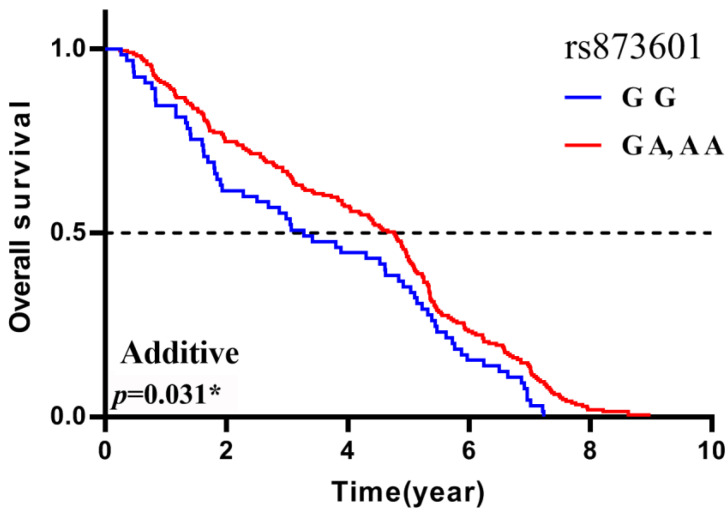
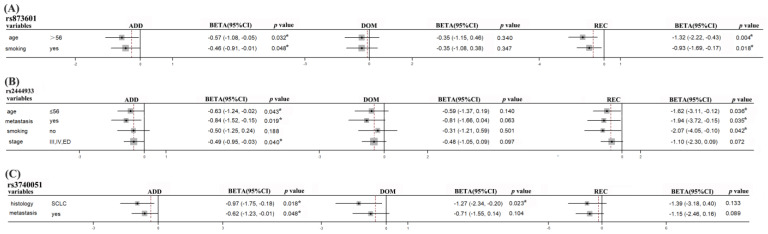
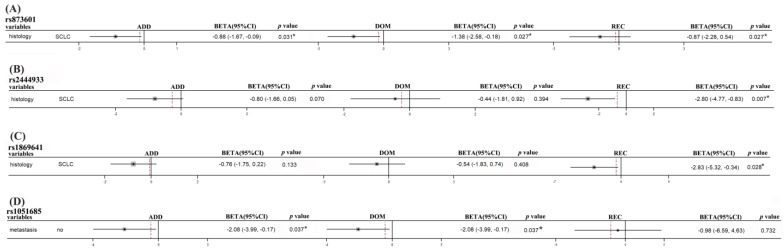
Background: Lung cancer is still the most lethal malignancy in the world, according to the report of Cancer Statistics in 2021. Platinum-based chemotherapy combined with immunotherapy is the first-line treatment in lung cancer patients. However, the 5-year survival rate is always affected by the adverse reactions and drug resistance caused by platinum-based chemotherapy. DNA damage and repair system is one of the important mechanisms that can affect the response to chemotherapy and clinical outcomes in lung cancer patients. Objective: The objective of this study is to find the relationship between the polymorphisms of DNA repair genes with the prognosis of platinum-based chemotherapy in lung cancer patients. Patients and Methods: We performed genotyping in 17 single nucleotide polymorphisms (SNPs) of Excision Repair Cross-Complementation group (ERCC) genes and X-ray Repair Cross-Complementing (XRCC) genes of 345 lung cancer patients via Sequenom MassARRAY. We used Cox proportional hazard models, state, and plink to analyze the associations between SNPs and the prognosis of lung cancer patients. Results: We found that the ERCC5 rs873601 was associated with the overall survival time in lung cancer patients treated with platinum-based chemotherapy (p = 0.031). There were some polymorphisms that were related to the prognosis in specific subgroups of lung cancer. Rs873601 showed a great influence on the prognosis of patients more than 55 years, Small Cell Lung Cancer (SCLC), and smoking patients. Rs2444933 was associated with prognosis in age less than 55 years, SCLC, metastasis, and stage III/IV/ED patients. Rs3740051 played an important role in the prognosis of SCLC and metastasis patients. Rs1869641 was involved in the prognosis of SCLC patients. Rs1051685 was related to the prognosis in non-metastasis patients. Conclusion: The ERCC5 rs873601 (G>A) was a valuable biomarker for predicting the prognosis in lung cancer patients treated with platinum-based chemotherapy.
Overview
The claims and statistics of this paper haven’t been checked yet.
Run the check — free, no account needed. It reads the open-access text and checks the sources it cites.
Integrity signals
Registry
Cites
Statistics
Figures
Verification
Claims the paper makes
The claims and statistics of this paper haven’t been checked yet.
Run the check — free, no account needed. It reads the open-access text and checks the sources it cites.
Self-check
Percentages, sums and reported differences re-computed from the paper’s own numbers.
The self-check needs the paper’s full text.
Citations
Cites
The central role of DNA damage in the ageing process
Schumacher, B., Pothof, J., Vijg, J., & Hoeijmakers, J. H. J. (2021) · Nature · doi:10.1038/s41586-021-03307-7 · Cited by 907
Mayr, C. (2019) · Cold Spring Harbor Perspectives in Biology · doi:10.1101/cshperspect.a034728 · Cited by 519
Alternative 3′ UTRs act as scaffolds to regulate membrane protein localization
Berkovits, B. D., & Mayr, C. (2015) · Nature · doi:10.1038/nature14321 · Cited by 474
Research works printed but not linked: 56
- Siegel, 2022, Cancer statistics, 2022, CA Cancer J. Clin., 72, 7, 10.3322/caac.21708 · DOI · Paper page
- 2021, Molecular Pathology of Lung Cancer, Surg. Pathol. Clin., 14, 369, 10.1016/j.path.2021.05.002 · DOI
- Vrana, 2021, Advances in the therapy of small cell lung cancer, Klin. Onkol., 34, 66, 10.48095/ccko2021S66 · DOI
- Miller, 2021, Advances in systemic therapy for non-small cell lung cancer, BMJ, 375, n2363, 10.1136/bmj.n2363 · DOI
- Schulz, 2021, Advances in Lung Cancer Treatment, Dtsch. Med. Wochenschr., 146, 1283
- Park, 2019, DNA Damage Response and Repair Pathway Alteration and Its Association with Tumor Mutation Burden and Platinum-Based Chemotherapy in SCLC, J. Thorac. Oncol., 14, 1640, 10.1016/j.jtho.2019.05.014 · DOI
- Ge, 2021, Lung cancer risk in patients with multiple sclerosis: A Mendelian randomization analysis, Mult. Scler. Relat. Disord., 51, 102927, 10.1016/j.msard.2021.102927 · DOI
- Zou, 2016, Rho GTPases: RAC1 polymorphisms affected platinum-based chemotherapy toxicity in lung cancer patients, Cancer Chemother. Pharmacol., 78, 249, 10.1007/s00280-016-3072-0 · DOI
- Yin, 2018, eIF3a: A new anticancer drug target in the eIF family, Cancer Lett., 412, 81, 10.1016/j.canlet.2017.09.055 · DOI
- He, 2021, The Effects of WISP1 Polymorphisms on the Prognosis of Lung Cancer Patients with Platinum-Based Chemotherapy, Pharmacogenom. Pers. Med., 14, 1193
- Ashour, 2021, Mechanisms of damage tolerance and repair during DNA replication, Nucleic Acids Res., 49, 3033, 10.1093/nar/gkab101 · DOI
- Kay, 2019, Inflammation-induced DNA damage, mutations and cancer, DNA Repair, 83, 102673, 10.1016/j.dnarep.2019.102673 · DOI
- Paull, 2021, DNA damage and regulation of protein homeostasis, DNA Repair, 105, 103155, 10.1016/j.dnarep.2021.103155 · DOI
- Dai, C.H., Li, J., Chen, P., Jiang, H.G., Wu, M., and Chen, Y.C. (2015). RNA interferences targeting the Fanconi anemia/BRCA pathway upstream genes reverse cisplatin resistance in drug-resistant lung cancer cells. J. Biomed. Sci., 22. · DOI
- Pilger, 2021, Interfaces between cellular responses to DNA damage and cancer immunotherapy, Genes Dev., 35, 602, 10.1101/gad.348314.121 · DOI
- Gorbunova, 2007, Changes in DNA repair during aging, Nucleic Acids Res., 35, 7466, 10.1093/nar/gkm756 · DOI · Paper page
- Theil, 2022, XPG: A multitasking genome caretaker, Cell. Mol. Life Sci., 79, 166, 10.1007/s00018-022-04194-5 · DOI
- Kiyohara, 2007, Genetic polymorphisms in the nucleotide excision repair pathway and lung cancer risk: A meta-analysis, Int. J. Med. Sci., 4, 59, 10.7150/ijms.4.59 · DOI
- Lan, 2022, The Association of ERCC1 and ERCC5 Polymorphisms with Lung Cancer Risk in Han Chinese, J. Cancer, 13, 517, 10.7150/jca.59277 · DOI
- Liu, 2014, Role of XRCC1 and ERCC5 polymorphisms on clinical outcomes in advanced non-small cell lung cancer, Genet. Mol. Res., 13, 3100, 10.4238/2014.April.17.6 · DOI
- Pradhan, 2019, Investigation of the probable homo-dimer model of the Xeroderma pigmentosum complementation group A (XPA) protein to represent the DNA-binding core, J. Biomol. Struct. Dyn., 37, 3322, 10.1080/07391102.2018.1517051 · DOI
- Yuan, 2020, Association of human XPA rs1800975 polymorphism and cancer susceptibility: An integrative analysis of 71 case-control studies, Cancer Cell Int., 20, 164, 10.1186/s12935-020-01244-5 · DOI
- Mei, 2014, Polymorphisms in DNA repair genes of XRCC1, XPA, XPC, XPD and associations with lung cancer risk in Chinese people, Thorac. Cancer, 5, 232, 10.1111/1759-7714.12073 · DOI
- Song, 2017, Single nucleotide polymorphisms of nucleotide excision repair pathway are significantly associated with outcomes of platinum-based chemotherapy in lung cancer, Sci. Rep., 7, 11785, 10.1038/s41598-017-08257-7 · DOI
- Su, 2015, DNA Repair Gene Polymorphisms in Relation to Non-Small Cell Lung Cancer Survival, Cell. Physiol. Biochem., 36, 1419, 10.1159/000430307 · DOI
- Chen, 2016, Effect of transporter and DNA repair gene polymorphisms to lung cancer chemotherapy toxicity, Tumor Biol., 37, 2275, 10.1007/s13277-015-4048-0 · DOI
- Mladinov, 2019, Low ERCC1 expression is a good predictive marker in lung adenocarcinoma patients receiving chemotherapy based on platinum in all TNM stages—A single-center study, Diagn. Pathol., 14, 105, 10.1186/s13000-019-0885-2 · DOI
- Grenda, 2020, Promoter polymorphisms of TOP2A and ERCC1 genes as predictive factors for chemotherapy in non-small cell lung cancer patients, Cancer Med., 9, 605, 10.1002/cam4.2743 · DOI
- Huang, 2017, XPG gene polymorphisms and cancer susceptibility: Evidence from 47 studies, Oncotarget, 8, 37263, 10.18632/oncotarget.16146 · DOI
- Liutkeviciene, R., Vilkeviciute, A., Morkunaite, G., Glebauskiene, B., and Kriauciuniene, L. (2019). SIRT1 (rs3740051) role in pituitary adenoma development. BMC Med. Genet., 20. · DOI
- Wang, Y., Yin, J.Y., Li, X.P., Chen, J., Qian, C.Y., Zheng, Y., Fu, Y.L., Chen, Z.Y., Zhou, H.H., and Liu, Z.Q. (2014). The association of transporter genes polymorphisms and lung cancer chemotherapy response. PLoS ONE, 9. · DOI
- Cibeira, 2011, Impact on response and survival of DNA repair single nucleotide polymorphisms in relapsed or refractory multiple myeloma patients treated with thalidomide, Leuk. Res., 35, 1178, 10.1016/j.leukres.2011.02.009 · DOI
- Zou, 2020, The Association Between Heat-Shock Protein Polymorphisms and Prognosis in Lung Cancer Patients Treated With Platinum-Based Chemotherapy, Front. Pharmacol., 11, 1029, 10.3389/fphar.2020.01029 · DOI
- Qin, 2014, XRCC3 Thr241Met polymorphism and gastric cancer susceptibility: A meta-analysis, Clin. Res. Hepatol. Gastroenterol., 38, 226, 10.1016/j.clinre.2013.10.011 · DOI
- Du, 2022, Perspectives of ERCC1 in early-stage and advanced cervical cancer: From experiments to clinical applications, Front. Immunol., 13, 1065379, 10.3389/fimmu.2022.1065379 · DOI
- Rasekhian, 2021, The Role of 3’UTR of RNA Viruses on mRNA Stability and Translation Enhancement, Mini-Rev. Med. Chem., 21, 2389, 10.2174/1389557521666210217092305 · DOI
- Xu, 2014, RNA-binding protein RBM24 regulates p63 expression via mRNA stability, Mol. Cancer Res., 12, 359, 10.1158/1541-7786.MCR-13-0526 · DOI
- Gu, 2016, Functional SNP in 3′-UTR MicroRNA-Binding Site of ZNF350 Confers Risk for Age-Related Cataract, Hum. Mutat., 37, 1223, 10.1002/humu.23073 · DOI
- Li, 2012, The association between polymorphisms in the DNA nucleotide excision repair genes and RRM1 gene and lung cancer risk, Thorac. Cancer, 3, 239, 10.1111/j.1759-7714.2012.00115.x · DOI
- Bhat, 2021, Genetic evaluation of the variants using MassARRAY in non-small cell lung cancer among North Indians, Sci. Rep., 11, 11291, 10.1038/s41598-021-90742-1 · DOI
- Minina, 2019, Polymorphisms in DNA repair genes in lung cancer patients living in a coal-mining region, Eur. J. Cancer Prev., 28, 522, 10.1097/CEJ.0000000000000504 · DOI
- Molina, 2017, Contribution of genetic factors to platinum-based chemotherapy sensitivity and prognosis of non-small cell lung cancer, Mutat. Res. Rev. Mutat. Res., 771, 32, 10.1016/j.mrrev.2016.11.003 · DOI
- He, 2013, Role of ERCC5 promoter polymorphisms in response to platinum-based chemotherapy in patients with advanced non-small-cell lung cancer, Anticancer Drugs, 24, 300, 10.1097/CAD.0b013e32835bd6ce · DOI
- Zhang, L., Gao, G., Li, X., Ren, S., Li, A., Xu, J., Zhang, J., and Zhou, C. (2012). Association between single nucleotide polymorphisms (SNPs) and toxicity of advanced non-small-cell lung cancer patients treated with chemotherapy. PLoS ONE, 7. · DOI
- Landi, 2013, HER2 and lung cancer, Expert Rev. Anticancer. Ther., 13, 1219, 10.1586/14737140.2013.846830 · DOI
- Leonetti, 2019, Resistance mechanisms to osimertinib in EGFR-mutated non-small cell lung cancer, Br. J. Cancer, 121, 725, 10.1038/s41416-019-0573-8 · DOI
- Sharma, 2018, Phosphatidylserine: A cancer cell targeting biomarker, Semin. Cancer Biol., 52, 17, 10.1016/j.semcancer.2017.08.012 · DOI
- Diao, 2021, Clinical Characteristics and Prognosis of HER2 Gene Phenotype in Patients with Non-Small Cell Lung Cancer, Int. J. Gen. Med., 14, 9153, 10.2147/IJGM.S328908 · DOI
- Baraibar, 2020, Novel drugs targeting EGFR and HER2 exon 20 mutations in metastatic NSCLC, Crit. Rev. Oncol. Hematol., 148, 102906, 10.1016/j.critrevonc.2020.102906 · DOI
- Abdalkhalek, 2022, Variants of ERCC5 and the outcome of platinum-based regimens in non-small cell lung cancer: A prospective cohort study, Med. Oncol., 39, 152, 10.1007/s12032-022-01741-9 · DOI
- Zienolddiny, 2006, Polymorphisms of DNA repair genes and risk of non-small cell lung cancer, Carcinogenesis, 27, 560, 10.1093/carcin/bgi232 · DOI
- Shi, L., Han, X., Liu, C., Li, X., Lu, S., Jiang, Q., and Yao, J. (2022). Long Non-Coding RNA PNKY Modulates the Development of Choroidal Neovascularization. Front. Cell Dev. Biol., 10. · DOI
- Liu, 2020, Toll/IL-1 receptor-containing proteins STIR-1, STIR-2 and STIR-3 synergistically assist Yersinia ruckeri SC09 immune escape, Fish Shellfish Immunol., 103, 357, 10.1016/j.fsi.2020.05.007 · DOI
- Fan, 2021, Gene expression and prognosis of x-ray repair cross-complementing family members in non-small cell lung cancer, Bioengineered, 12, 6210, 10.1080/21655979.2021.1964193 · DOI
- Zhang, 2021, The roles of risk model based on the 3-XRCC genes in lung adenocarcinoma progression, Transl. Cancer Res., 10, 4413, 10.21037/tcr-21-1431 · DOI
- Saviozzi, 2009, Non-small cell lung cancer exhibits transcript overexpression of genes associated with homologous recombination and DNA replication pathways, Cancer Res., 69, 3390, 10.1158/0008-5472.CAN-08-2981 · DOI
Metadata
- Authors
- Zou, T., Liu, J.-Y., Qin, Q., Guo, J., Zhou, W.-Z., Li, X.-P., Zhou, H.-H., Chen, J., & Liu, Z.-Q.
- Affiliations
- Central South University (CN)
- Department of Orthopaedics, Xiangya Hospital, Central South University, Changsha 410008, China
- Department of Pharmacy, National Institution of Drug Clinical Trial, Xiangya Hospital, Central South University, Changsha 410008, China
- Department of Clinical Pharmacology, Hunan Key Laboratory of Pharmacogenetics, Xiangya Hospital, Central South University, Changsha 410078, China
- Corresponding author
- Chen, Juan
- Venue
- Biomedicines
- Publisher
- MDPI AG
- Published
- 2023-11-24
- Volume
- 11
- Issue
- 12
- Pages
- 3133
- ISSN
- 2227-9059 (ISSN-L)
- PMC
- PMC10741124
- OpenAlex
- W4388969272
- Cited by
- 10
- References
- 3
- Citations by year
- 2026: 4 · 2025: 1 · 2024: 4 · 2023: 1
- FWCI
- 1.83
- Type
- journal article
- Language
- en
- Open access
- gold
- doi.org
- Licence
- Locations
- Biomedicines (publishedVersion, cc-by)
- Preprints.org (acceptedVersion, cc-by)
- PubMed Central (publishedVersion, cc-by)
- PubMed (publishedVersion)
- DOAJ (DOAJ: Directory of Open Access Journals) (submittedVersion, cc-by-sa)
- Funders
- National Natural Science Foundation of China (82173901, 2021 JC0002, kq2208408, kh2003010)
- Major Project of Natural Science Foundation of Hunan Province (82173901, 2021 JC0002, kq2208408, kh2003010)
- Changsha Municipal Natural Science Foundation (82173901, 2021 JC0002, kq2208408, kh2003010)
- Major Science and Technology Program of Changsha (82173901, 2021 JC0002, kq2208408, kh2003010)
- Topics
- Health Sciences › Medicine › Pulmonary and Respiratory Medicine › Lung Cancer Treatments and Mutations
- Health Sciences › Medicine › Oncology › Lung Cancer Research Studies
- Life Sciences › Biochemistry, Genetics and Molecular Biology › Genetics › Genetic Associations and Epidemiology
- Keywords
- lung cancer, single nucleotide polymorphisms, DNA repair genes, platinum-based chemotherapy, prognosis, small cell lung cancer, smoking, metastasis, prognostic factors
About these checks
Registry, retraction, Cites and statistics results are computed, not judged, with one exception: a printed reference that no index lists is read once by a model before it counts as a citation error. Claims are extracted by a model and kept only when their quote appears verbatim in the text; each cited source is then checked, with a model’s help, for whether it says what the claim relies on. Those verdicts can be wrong — read the claim’s quote and the cited source before relying on one.
Statistics and arithmetic are recomputed, not judged.
Confidence bands are shown only for fields calibrated on our annotated test set. None is calibrated yet, so no band is shown.
What counts as a claim ›How we measure confidence ›How we check this ›
Are you an author, or do you see a problem with this page? Request a review
