

The DOI matches its Crossref record; 57 of the 57 references it cites were found in a registry or an index.
Redefining Radiation Metrics: Evaluating Actual Doses in Computed Tomography Scans
Open accessAbstract
Background: Computed tomography (CT) contributes significantly to the collective dose from medical sources, raising concerns about potential health risks. However, existing radiation dose estimation tools, such as volume computed tomography dose index (CTDIvol), dose-length product (DLP), effective dose (ED), and size-specific dose estimate (SSDE), have limitations in accurately reflecting patient exposure. This study introduces a new parameter, size-specific dose-length product (DLPss), aiming to enhance the precision of radiation dose estimation in real-life scenarios. Methods: A retrospective analysis of 134 chest CT studies was conducted. Relationships between CTDIvol and anthropometric parameters were examined, and SSDE was calculated based on effective diameter. Additionally, the novel parameter, DLPss, was introduced, considering scan length and cross-sectional dimensions. Results: Analysis reveals variations in scan length, effective diameter, and CTDIvol between genders. Strong correlations were observed between CTDIvol and effective diameter, particularly in men. The average CTDIvol for the entire group was 7.83 ± 2.92 mGy, with statistically significant differences between women (7.38 ± 3.23 mGy) and men (8.30 ± 2.49 mGy). SSDE values showed significant gender differences, with men exhibiting higher values. The average SSDE values for women and men were 9.15 ± 2.5 mGy and 9.6 ± 2.09 mGy, respectively, with a statistically significant difference (p = 0.03). The newly introduced DLPss values ranged around 343.90 ± 81.66 mGy·cm for the entire group, with statistically significant differences between women (323.53 ± 78.69 mGy·cm) and men (364.89 ± 79.87 mGy·cm) (p < 0.05), providing a comprehensive assessment of total radiation dose. Conclusion: The study highlights the need for accurate radiation dose estimation, emphasizing the impact of CT examination parameters on dose variability. The proposed DLPss parameter offers a promising approach to enhancing precision in assessing radiation risk during CT scans. Further research is warranted to explore additional parameters for a comprehensive understanding of radiation exposure and to optimize imaging protocols for patient safety.
Overview
The claims and statistics of this paper haven’t been checked yet.
Run the check — free, no account needed. It reads the open-access text and checks the sources it cites.
Integrity signals
Registry
Cites
Statistics
Figures
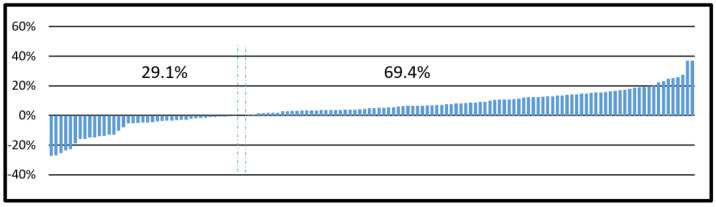
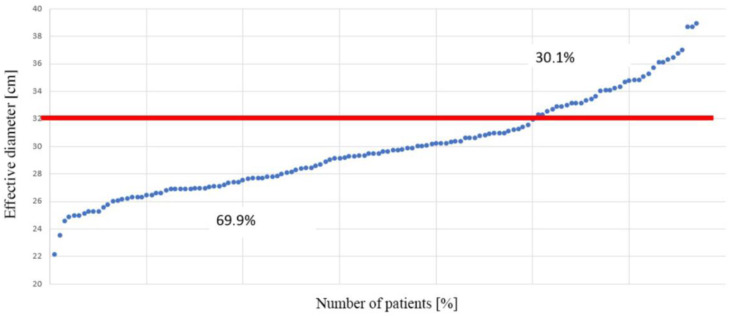
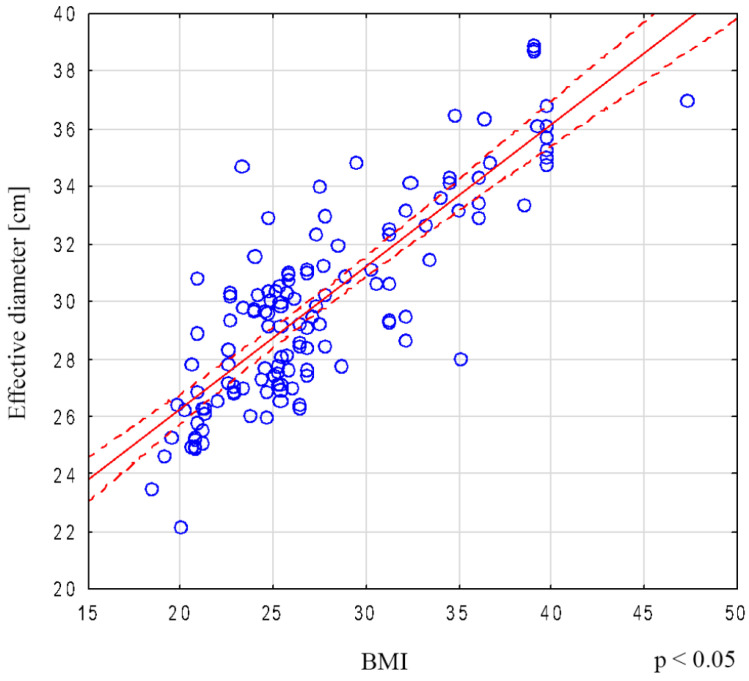
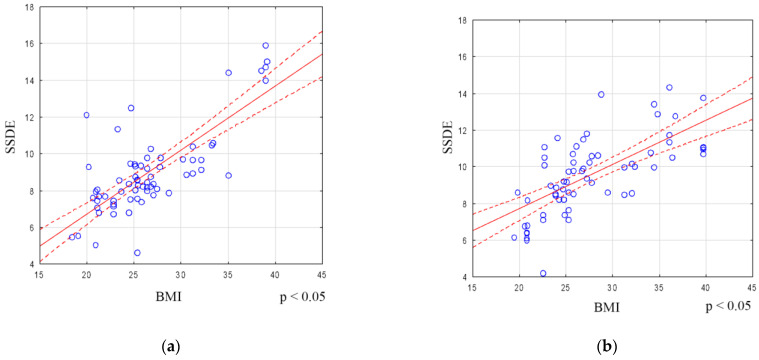
Verification
Claims the paper makes
The claims and statistics of this paper haven’t been checked yet.
Run the check — free, no account needed. It reads the open-access text and checks the sources it cites.
Claims other papers make about this one
Each is checked against this paper’s own text: does it say what the citing paper says it does?
The cited source says what the claim attributes to it.
In the citing paper
“While CTDIvol is not a direct indicator of the radiation received by the patient or tailored to specific anatomy, it is nonetheless a crucial comparison parameter among scanners and procedures.89”
From Computed Tomography Diagnostic Reference Levels Worldwide and in Jordan: Implications for Patient Dose Reduction (2026) · cites this paper as [89]
Self-check
Percentages, sums and reported differences re-computed from the paper’s own numbers.
The self-check needs the paper’s full text.
Citations
Cites
Computed Tomography — An Increasing Source of Radiation Exposure
Brenner, D. J., & Hall, E. J. (2007) · New England Journal of Medicine · doi:10.1056/nejmra072149 · Cited by 8,738
Sources and effects of ionizing radiation
United Nations Scientific Committee on the Effects of Atomic Radiation (2018) · Report of the United Nations Scientific Committee on the Effects of Atomic Radiation · doi:10.18356/f48d655d-en · Cited by 3,981
Health Risks from Exposure to Low Levels of Ionizing Radiation:: BEIR VII Phase 2
Earth, D. O. (2006) · CERN Document Server (European Organization for Nuclear Research) · Cited by 2,190
Preface, Executive Summary and Glossary
(2007) · Annals of the ICRP · doi:10.1016/j.icrp.2007.10.003 · Cited by 2,116
Size-Specific Dose Estimates (SSDE) in Pediatric and Adult Body CT Examinations
Boone, J. M., Strauss, K. J., CODY, D. D., et al. (2011) · doi:10.37206/143 · Cited by 554
McCollough, C. H., Bakalyar, D., Bostani, M., Brady, S. L., Boedeker, K., Boone, J. M., Chen‐Mayer, H. H., Christianson, O. I., Leng, S., Li, B., et al. (2014) · PubMed · Cited by 269
Radiation Exposure From Medical Imaging
Brenner, D. J., & Hricak, H. (2010) · JAMA · doi:10.1001/jama.2010.973 · Cited by 209
CT scanning: A major source of radiation exposure
Wiest, P. W., Locken, J. A., Heintz, P. H., & Mettler, F. A. (2002) · Seminars in Ultrasound CT and MRI · doi:10.1016/s0887-2171(02)90011-9 · Cited by 173
McCollough, C. H., Bakalyar, D., Bostani, M., et al. (2014) · doi:10.37206/146 · Cited by 171
Verdun, F. R., Gutiérrez, D., Vader, J. P., Aroua, A., Alamo, L., Bochud, F. O., & Gudinchet, F. (2008) · European Radiology · doi:10.1007/s00330-008-0963-4 · Cited by 169
Research works printed but not linked: 3
- Andersson, J., Pavlicek, W., Al-Senan, R., Bolch, W., Bosmans, H., Cody, D., Dixon, R., Colombo, P., Dong, F., and Edyvean, S. (2023, September 27). Estimating Patient Organ Dose with Computed Tomography: A Review of Present Methodology and Required DICOM Information a Joint Report of AAPM Task Group 246 and the European Federation of Organizations for Medical Physics (EFOMP). AAPM Raport. Available online: https://www.aapm.org/pubs/reports/RPT_246.pdf.
- Damilakis, J., Frija, G., Jaschke, W., Paulo, G., Repussard, J., Schegerer, A., Tsapaki, V., Clark, J., and Hierath, M. (2023, September 18). European Study on Clinical Diagnostic Reference Levels for X-ray Medical Imaging—EUCLID, Publications Office of the European Union. Available online: https://www.eurosafeimaging.org/wp/wp-content/uploads/2021/03/20210325_D5.3-EUCLID-Workshop-Report-FINAL_with-updates_for-website.pdf.
- The 2007 Recommendations of the International Commission on Radiological Protection (2007). ICRP Publication 103. Ann. ICRP, 37, 1–332. Available online: https://journals.sagepub.com/doi/pdf/10.1177/ANIB_37_2-4. · DOI
Cited by
Sorted by citations
Oglat, A., Shdaifat, S., Sayah, M., Abukonna, A., & Khogali, W. (2026) · Drug, Healthcare and Patient Safety · doi:10.2147/dhps.s595721
“89 The DLP, expressed in mGy·cm, is determined by multiplying CTDIvol by the scan duration.”
Metadata
- Authors
- Sabiniewicz-Ziajka, D., Szarmach, A., Grzywińska, M., Gać, P., & Piskunowicz, M.
- Affiliations
- Gdańsk Medical University (PL)
- Wroclaw Medical University (PL)
- Corresponding author
- Szarmach, Arkadiusz
- ORCID
- Venue
- Biomedicines
- Publisher
- MDPI AG
- Published
- 2024-03-07
- Volume
- 12
- Issue
- 3
- Pages
- 600
- ISSN
- 2227-9059 (ISSN-L)
- PMC
- PMC10967789
- OpenAlex
- W4392562802
- Cited by
- 8
- References
- 57
- Citations by year
- 2026: 5 · 2025: 3
- FWCI
- 2.03
- Type
- journal article
- Language
- en
- Open access
- gold
- doi.org
- Licence
- Locations
- Biomedicines (publishedVersion, cc-by)
- PubMed Central (publishedVersion, cc-by)
- PubMed (publishedVersion)
- DOAJ (DOAJ: Directory of Open Access Journals) (submittedVersion)
- Topics
- Health Sciences › Medicine › Radiology, Nuclear Medicine and Imaging › Radiation Dose and Imaging
- Physical Sciences › Physics and Astronomy › Radiation › Advanced Radiotherapy Techniques
- Health Sciences › Medicine › Radiology, Nuclear Medicine and Imaging › Digital Radiography and Breast Imaging
- Keywords
- computed tomography radiation dose, CTDIvol, effective dose, size-specific dose estimate, dose-length product, chest CT, anthropometric factors, effective diameter, sex differences in radiation dose, radiation risk, patient safety
About these checks
Registry, retraction, Cites and statistics results are computed, not judged, with one exception: a printed reference that no index lists is read once by a model before it counts as a citation error. Claims are extracted by a model and kept only when their quote appears verbatim in the text; each cited source is then checked, with a model’s help, for whether it says what the claim relies on. Those verdicts can be wrong — read the claim’s quote and the cited source before relying on one.
Statistics and arithmetic are recomputed, not judged.
Confidence bands are shown only for fields calibrated on our annotated test set. None is calibrated yet, so no band is shown.
What counts as a claim ›How we measure confidence ›How we check this ›
Are you an author, or do you see a problem with this page? Request a review
