

Drug-Metabolizing Gene Expression Identity: Comparison Across Liver Tissues and Model Cell Lines
Open accessThe DOI matches its Crossref record; 61 of the 61 references it cites were found in a registry or an index.
Abstract
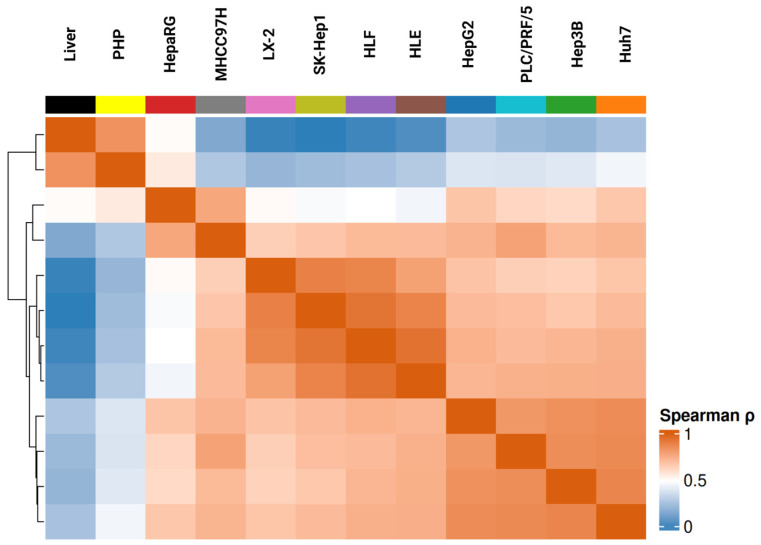
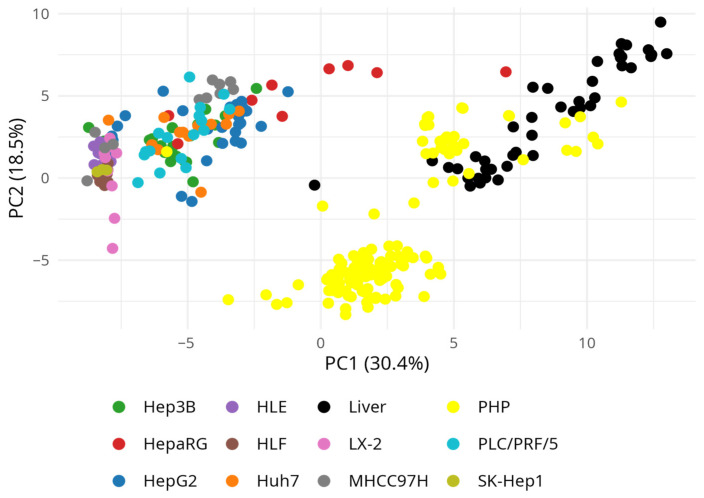
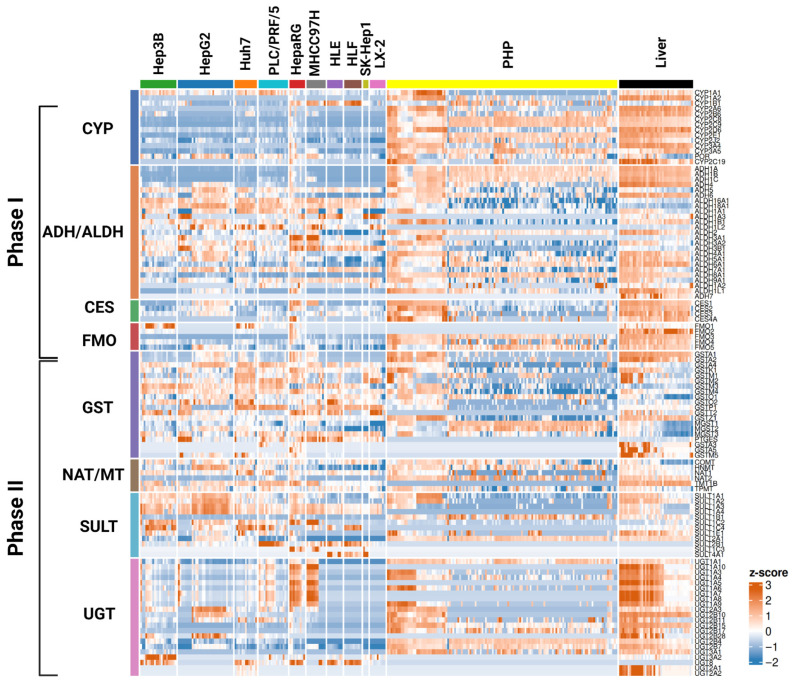
Background: Human cell lines underpin modern biomedical research, offering reproducibility, standardisation, and unrestricted access to biological material. Among the 1206 human lines documented in the Human Protein Atlas, in vitro systems overcome the ethical and technical constraints of primary tissues. The liver is an organ of intricate structure, diverse physiological roles, and limited in vitro viability. Liver-derived cell lines are increasingly used to address the growing burden of liver disease and to accelerate pharmaceutical development, yet their capacity to replicate native hepatic functions remains uncertain. The mutational profiles and expression patterns of hepatocyte-characteristic genes provide critical benchmarks for their suitability for pharmacology and toxicology. Methods: Here, we systematically compare ten widely used hepatic cell lines (HepG2, Huh7, Hep3B, LX-2, HepaRG, HLF, HLE, MHCC97H, SK-Hep1, PLC/PRF/5) with primary hepatocytes and liver tissue, focusing on drug-metabolizing enzyme (DME) gene expression. Beyond literature synthesis, we analysed pre-processed RNA-seq expression data. Results: Overall, among the models examined, the HepaRG cell line shows the greatest similarity to liver and primary hepatocytes, most faithfully reproducing the expression patterns of DME genes. HepG2, Hep3B, and Huh7 form a cluster that retains only a subset of hepatic characteristics. Other models display more pronounced deviations from the reference profile and are generally used for specialized applications. Thus, no universal cell line exists that can fully substitute for the liver. Each model has its own limitations and biases in the expression profile of DME genes, which must be carefully considered when selecting an appropriate system for specific research objectives.
Overview
The claims and statistics of this paper haven’t been checked yet.
Free: it reads the open-access text and checks the first 5 claims that cite a source we can check. Create a free account to check every claim.
Integrity signals
Registry
Cites
Statistics
Figures
Verification
Claims the paper makes
The claims and statistics of this paper haven’t been checked yet.
Free: it reads the open-access text and checks the first 5 claims that cite a source we can check. Create a free account to check every claim.
Claims other papers make about this one
Each is checked against this paper’s own text: does it say what the citing paper says it does?
The source backs part of the claim, not all of it — or backs it for a different population, condition or comparison.
In the citing paper
“Previous studies have shown that primary cell cultures maintain greater genomic and transcriptomic integrity, particularly with respect to the expression of drug-metabolizing enzymes, compared with immortalized cell lines.”
From Primary cell cultures versus immortalized cell lines: critical comparative insights into biological fidelity and translational applications (2026) · cites this paper as Arzumanian et al. (2025)
Experimental — accuracy not yet measuredThe source backs part of the claim, not all of it — or backs it for a different population, condition or comparison.
In the citing paper
“Thus, in HepG2, Phase II biotransformation is partially preserved and, on average, better than Phase I, but it is qualitatively shifted.”
From The HepG2 Cell Line as a Model for Studying Metabolic Dysfunction-Associated Steatotic Liver Disease (2026) · cites this paper as [108]
Experimental — accuracy not yet measuredThe cited source says what the claim attributes to it.
In the citing paper
“In line with these findings, Arzumanian et al. (2025) showed that no immortalized hepatic cell lines, including HepG2, Huh7, Hep3B, LX-2, HepaRG, HLF, HLE, MHCC97H, SK-Hep1, and PLC/PRF/5, could fully replicate the expression of drug-metabolizing enzymes observed in primary hepatocytes.”
From Primary cell cultures versus immortalized cell lines: critical comparative insights into biological fidelity and translational applications (2026) · cites this paper as Arzumanian et al. (2025)
Self-check
Percentages, sums and reported differences re-computed from the paper’s own numbers.
The self-check needs the paper’s full text.
Citations
Cites
Leek, J. T., Johnson, W. E., Parker, H. S., Jaffe, A. E., & Storey, J. D. (2012) · Bioinformatics · doi:10.1093/bioinformatics/bts034 · Cited by 6,231 · cited 1×
“To minimize potential technical variability introduced by different sequencing platforms, batch-effect correction was performed using the ComBat method implemented in the sva package, applied to log 2 -transformed data as log2(TPM+1) [9].”
Zanger, U. M., & Schwab, M. (2013) · Pharmacology & Therapeutics · doi:10.1016/j.pharmthera.2012.12.007 · Cited by 4,169
Aninat, C., Piton, A., Glaise, D., Le Charpentier, T., Langouët, S., Morel, F., Guguen-Guillouzo, C., & Guillouzo, A. (2006) · Drug Metabolism and Disposition · doi:10.1124/dmd.105.006759 · Cited by 703
Gerets, H. H. J., Tilmant, K., Gerin, B., Chanteux, H., Depelchin, B. O., Dhalluin, S., & Atienzar, F. A. (2012) · Cell Biology and Toxicology · doi:10.1007/s10565-011-9208-4 · Cited by 698
Human carboxylesterases: a comprehensive review
Wang, D., Zou, L., Jin, Q., Hou, J., Ge, G., & Yang, L. (2018) · Acta Pharmaceutica Sinica B · doi:10.1016/j.apsb.2018.05.005 · Cited by 543
The Curious Case of the HepG2 Cell Line: 40 Years of Expertise
Arzumanian, V. A., Kiseleva, O. I., & Poverennaya, E. V. (2021) · International Journal of Molecular Sciences · doi:10.3390/ijms222313135 · Cited by 387 · cited 2×
“The set of cell lines analyzed was adapted from Arzumanian et al. (2021) [8].”
Self-citationAnalysis of the glutathione S-transferase (GST) gene family
Nebert, D. W., & Vasiliou, V. (2004) · Human Genomics · doi:10.1186/1479-7364-1-6-460 · Cited by 387
Pharmacogenomics of Drug Metabolizing Enzymes and Transporters: Relevance to Precision Medicine
Ahmed, S., Zhou, Z., Zhou, J., & Chen, S.-Q. (2016) · Genomics, Proteomics & Bioinformatics · doi:10.1016/j.gpb.2016.03.008 · Cited by 371
Li, Y., Tang, Z.-Y., Ye, S.-L., Liu, Y.-K., Chen, J., Xue, Q., Chen, J., Gao, D.-M., & Bao, W.-H. (2001) · World Journal of Gastroenterology · doi:10.3748/wjg.v7.i5.630 · Cited by 359
Guo, L., Dial, S., Shi, L., Branham, W., Liu, J., Fang, J.-L., Green, B., Deng, H., Kaput, J., & Ning, B. (2011) · Drug Metabolism and Disposition · doi:10.1124/dmd.110.035873 · Cited by 348 · cited 8×
“Hep3B and Huh7 also show a significant ~2-fold increase in SULT1A3 , whereas SK-Hep1 shows no such change [24,31].”
InfluentialHep G2 is a hepatoblastoma-derived cell line
López-Terrada, D., Cheung, S. W., Finegold, M. J., & Knowles, B. B. (2009) · Human Pathology · doi:10.1016/j.humpath.2009.07.003 · Cited by 329
Hart, S. N., Li, Y., Nakamoto, K., Subileau, E.-A., Steen, D., & Zhong, X.-B. (2010) · Drug Metabolism and Disposition · doi:10.1124/dmd.109.031831 · Cited by 296
Hedgehog/GLI Signaling Pathway: Transduction, Regulation, and Implications for Disease
Sigafoos, A. N., Paradise, B. D., & Fernandez-Zapico, M. E. (2021) · Cancers · doi:10.3390/cancers13143410 · Cited by 239
Taimr, P., Higuchi, H., Kocova, E., Rippe, R. A., Friedman, S., & Gores, G. J. (2003) · Hepatology · doi:10.1053/jhep.2003.50002 · Cited by 227
Jennen, D. G. J., Magkoufopoulou, C., Ketelslegers, H. B., van Herwijnen, M. H. M., Kleinjans, J. C. S., & van Delft, J. H. M. (2010) · Toxicological Sciences · doi:10.1093/toxsci/kfq026 · Cited by 220
Clinically Relevant Genetic Variations in Drug Metabolizing Enzymes
Pinto, N. R., & Dolan, M. E. (2011) · Current Drug Metabolism · doi:10.2174/138920011795495321 · Cited by 172
Zhou, Y., & Lauschke, V. M. (2022) · The Pharmacogenomics Journal · doi:10.1038/s41397-022-00288-2 · Cited by 144
Carboxylesterase 1 and Precision Pharmacotherapy: Pharmacogenetics and Nongenetic Regulators
Her, L., & Zhu, H. (2019) · Drug Metabolism and Disposition · doi:10.1124/dmd.119.089680 · Cited by 131
Zhang, Y., Wang, Z., Wang, Y., Jin, W., Zhang, Z., Jin, L., Qian, J., & Zheng, L. (2024) · PeerJ · doi:10.7717/peerj.18636 · Cited by 127 · cited 3×
“Given their functional specificity, hepatic cell models are of particular importance, as the liver is responsible for the metabolism of nearly 50% of all prescribed drugs [2].”
Functional expression, inhibition and induction of CYP enzymes in HepaRG cells
Turpeinen, M., Tolonen, A., Chesné, C., Guillouzo, A., Uusitalo, J., & Pelkonen, O. (2009) · Toxicology in Vitro · doi:10.1016/j.tiv.2009.03.008 · Cited by 125
Trends in Hepatocellular Carcinoma Mortality Rates in the US and Projections Through 2040
Qiu, S., Cai, J., Yang, Z., He, X., Xing, Z., Zu, J., Xie, E., Henry, L. L., Chong, C. R., John, E. M., et al. (2024) · JAMA Network Open · doi:10.1001/jamanetworkopen.2024.45525 · Cited by 116
Impact of Cytochrome P450 Enzymes on the Phase I Metabolism of Drugs
Iacopetta, D., Ceramella, J., Catalano, A. A., Scali, E., Scumaci, D., PELLEGRINO, M. A., Aquaro, S., Saturnino, C., & Sinicropi, M. S. (2023) · Applied Sciences · doi:10.3390/app13106045 · Cited by 99
Dubois‐Pot‐Schneider, H., Fekir, K., Coulouarn, C., Glaise, D., Aninat, C., Jarnouen, K., Le Guével, R., Kubo, T., Ishida, S., Morel, F., et al. (2014) · Hepatology · doi:10.1002/hep.27353 · Cited by 98
Clinical Pharmacology and Pharmacogenetics in a Genomics Era: The DMET Platform
Sissung, T. M., English, B. C., Venzon, D. J., Figg, W. D., & Deeken, J. F. (2009) · Pharmacogenomics · doi:10.2217/pgs.09.154 · Cited by 97
Jarrar, Y. B., & Lee, S. (2021) · Journal of Personalized Medicine · doi:10.3390/jpm11060554 · Cited by 82
Genetic Characteristics of the Human Hepatic Stellate Cell Line LX-2
Weiskirchen, R., Weimer, J., Meurer, S. K., Kron, A., Seipel, B., Vater, I., Arnold, N., Siebert, R., Xu, L., Friedman, S. L., et al. (2013) · PLoS ONE · doi:10.1371/journal.pone.0075692 · Cited by 76
He, M., Zhao, M., Shen, B., Prise, K. M., & Shao, C. (2011) · Oncogene · doi:10.1038/onc.2010.567 · Cited by 74
Salman, E. D., Kadlubar, S. A., & Falany, C. N. (2009) · Drug Metabolism and Disposition · doi:10.1124/dmd.108.025767 · Cited by 69
Liu, X., Yang, J., Zhang, Y., Fang, Y., Wang, F., Wang, J., Zheng, X., & Yang, J. (2016) · Scientific Reports · doi:10.1038/srep22811 · Cited by 63
Sajadian, S. O., Tripura, C., Samani, F. S., Ruoss, M., Dooley, S., Baharvand, H., & Nussler, A. K. (2016) · Clinical Epigenetics · doi:10.1186/s13148-016-0213-6 · Cited by 61
HuH-7 reference genome profile: complex karyotype composed of massive loss of heterozygosity
Kasai, F., Hirayama, N., Ozawa, M., Satoh, M., & Kohara, A. (2018) · Human Cell · doi:10.1007/s13577-018-0212-3 · Cited by 51
Kiamehr, M., Heiskanen, L., Laufer, T., Düsterloh, A., Kahraman, M., Käkelä, R., Laaksonen, R., & Aalto-Setälä, K. (2019) · International Journal of Molecular Sciences · doi:10.3390/ijms20122910 · Cited by 45
Drug Transporter Expression and Activity in Human Hepatoma HuH-7 Cells
Jouan, E., Vée, M. L., Denizot, C., Parmentier, Y., & Fardel, O. (2016) · Pharmaceutics · doi:10.3390/pharmaceutics9010003 · Cited by 43
Sulfotransferase gene copy number variation: pharmacogenetics and function
Hebbring, S. J., Moyer, A. M., & Weinshilboum, R. M. (2008) · Cytogenetic and Genome Research · doi:10.1159/000184710 · Cited by 42
Gao, J., Zhou, J., He, X.-P., Zhang, Y., Gao, N., Tian, X., Fang, Y., Wen, Q., Jia, L.-J., Jin, H., et al. (2016) · Oncotarget · doi:10.18632/oncotarget.8704 · Cited by 42
Harada, K., Ohashi, R., Naito, K., & Kanki, K. (2020) · International Journal of Molecular Sciences · doi:10.3390/ijms21093126 · Cited by 38
Localization of Human Flavin-Containing Monooxygenase GenesFMO2andFMO5to Chromosome 1q
McCombie, R. R., Dolphin, C. T., Povey, S., Phillips, I. R., & Shephard, E. A. (1996) · Genomics · doi:10.1006/geno.1996.0308 · Cited by 35
Miao, J., Chen, G. G., Chun, S.-Y., Yun, J., Chak, E. C. W., Ho, R. L. K., & Lai, P. B. S. (2006) · International Journal of Cancer · doi:10.1002/ijc.22040 · Cited by 32
PLC/PRF/5 (Alexander) hepatoma cell line: further characterization and studies of infectivity
Daemer, R. J., Feinstone, S. M., Alexander, J. J., Tully, J. G., London, W. T., Wong, D. C., & Purcell, R. H. (1980) · Infection and Immunity · doi:10.1128/iai.30.2.607-611.1980 · Cited by 31 · cited 1×
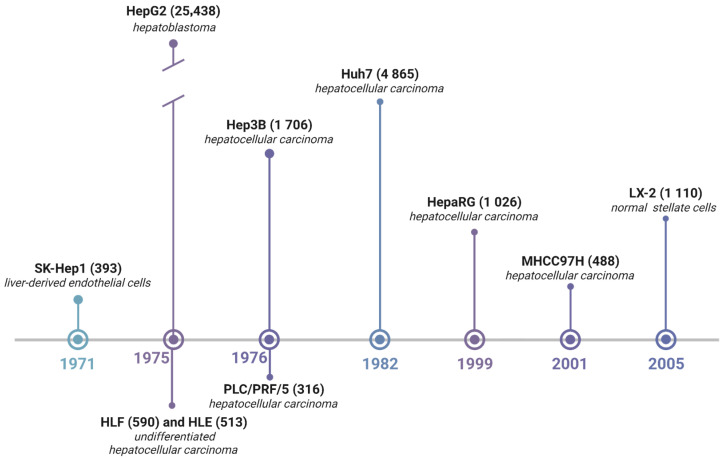
“One year later, in 1976, the PLC/PRF/5 cell line, also known as the Alexander hepatoma cell line, was established [17,18].”
Zhao, P., Yang, X., Qi, S., Liu, H., Jiang, H., Hoppmann, S., Cao, Q., Chua, M., So, S. K., & Cheng, Z. (2013) · BioMed Research International · doi:10.1155/2013/759057 · Cited by 30
Chen, C., Kraemer, B. R., Lee, L., & Mochly‐Rosen, D. (2021) · Biomolecules · doi:10.3390/biom11101423 · Cited by 30
Dorr, C. R., Remmel, R. P., Muthusamy, A., Fisher, J., Moriarity, B. S., Yasuda, K., Wu, B., Guan, W., Schuetz, E. G., Oetting, W. S., et al. (2017) · Drug Metabolism and Disposition · doi:10.1124/dmd.117.076307 · Cited by 29
Duivenvoorde, L. P. M., Louisse, J., Pinckaers, N. E. T., Nguyen, T., & van der Zande, M. (2021) · Scientific Reports · doi:10.1038/s41598-021-89710-6 · Cited by 29
Watari, R., Kakiki, M., Oshikata, A., Takezawa, T., Yamasaki, C., Ishida, Y., Tateno, C., Kuroda, Y., Ishida, S., & Kusano, K. (2018) · The Journal of Toxicological Sciences · doi:10.2131/jts.43.521 · Cited by 27
Dopamine-induced SULT1A3/4 promotes EMT and cancer stemness in hepatocellular carcinoma
Zou, J., Li, H., Huang, Q., Liu, X.-M., Qi, X., Wang, Y., Lu, L., & Liu, Z. (2017) · Tumor Biology · doi:10.1177/1010428317719272 · Cited by 26
Copy number variation profiling in pharmacogenetics CYP-450 and GST genes in Colombian population
Ramírez, B., Niño-Orrego, M. J., Cárdenas, D., Ariza, K. E., Quintero, K., Bravo, N. C. C., Tamayo-Agudelo, C., González, M. A., Laissue, P., & Fonseca, D. J. (2019) · BMC Medical Genomics · doi:10.1186/s12920-019-0556-x · Cited by 24
Heintze, T., Klein, K., Hofmann, U., & Zanger, U. M. (2021) · Scientific Reports · doi:10.1038/s41598-020-79952-1 · Cited by 23
Satoh, D., Iwado, S., Abe, S., Kazuki, K., Wakuri, S., Oshimura, M., & Kazuki, Y. (2017) · PLoS ONE · doi:10.1371/journal.pone.0187072 · Cited by 21
Comparative Transcriptomic Analysis of Three Common Liver Cell Lines
Arzumanian, V. A., Pyatnitskiy, M. A., & Poverennaya, E. V. (2023) · International Journal of Molecular Sciences · doi:10.3390/ijms24108791 · Cited by 21
Self-citationEvolution and multiple functions of sulfonation and cytosolic sulfotransferases across species
Kurogi, K., Suiko, M., & Sakakibara, Y. (2024) · Bioscience Biotechnology and Biochemistry · doi:10.1093/bbb/zbae008 · Cited by 21
Heterologous expression of human cytochrome P450 2E1 in HepG2 cell line
Zhuge, J. (2003) · World Journal of Gastroenterology · doi:10.3748/wjg.v9.i12.2732 · Cited by 19
Kawaguchi, K., Honda, M., Yamashita, T., Shirota, Y., & Kaneko, S. (2005) · Biochemical and Biophysical Research Communications · doi:10.1016/j.bbrc.2005.01.128 · Cited by 16
Drug Metabolism and Pharmacokinetics
Rudrapal, M. (2023) · Pharmaceutical science. · doi:10.5772/intechopen.111605 · Cited by 13
Erk phosphorylation reduces the thymoquinone toxicity in human hepatocarcinoma
Zhang, B., Ting, W., Gao, J., Kang, Z., Huang, C., & Weng, Y.-J. (2021) · Environmental Toxicology · doi:10.1002/tox.23317 · Cited by 12
Wakizaka, K., Kamiyama, T., Kakisaka, T., Orimo, T., Nagatsu, A., Aiyama, T., Shichi, S., & Taketomi, A. (2023) · Annals of Surgical Oncology · doi:10.1245/s10434-023-14402-6 · Cited by 11
Štancl, P., Gršković, P., Držaić, S., Vičić, A., Karlić, R., & Korać, P. (2024) · Genes · doi:10.3390/genes15111460 · Cited by 10
Transgenic HepaRG cells expressing CYP2D6 as an improved model of primary human hepatocytes
Okuyama, S., Mine, A., Nakamura, T., Ohasi, Y., Seto, M., & Tada, M. (2022) · Pharmacology Research & Perspectives · doi:10.1002/prp2.939 · Cited by 8
Generation of αGal-enhanced bifunctional tumor vaccine
He, J. W., Huo, Y., Zhang, Z., Luo, Y., Liu, X., Chen, Q., Wu, P., Shi, W., Wu, T., Tang, C. K., et al. (2022) · Acta Pharmaceutica Sinica B · doi:10.1016/j.apsb.2022.03.002 · Cited by 7
Voulgaridou, G.-P., Theologidis, V., Xanthis, V., Papagiannaki, E., Tsochantaridis, I., Fadouloglou, V. E., & Pappa, A. (2023) · Frontiers in Molecular Biosciences · doi:10.3389/fmolb.2023.1161111 · Cited by 6
Molecular Profile of the HepG2 Tumor Cell Line
Arzumanian, V. A., Pyatnitsky, M., Vakhrushev, I. V., Ptitsyn, K. G., Radko, S. P., Zgoda, V. G., Kiseleva, O. I., & Poverennaya, E. V. (2024) · Biomedical Chemistry Research and Methods · doi:10.18097/bmcrm00239 · Cited by 3
Self-citationPharmacogenetics of First-Line Antitubercular Drugs: An Update
Manca, A., Calcagno, A., D’Avolio, A., & Cusato, J. (2025) · Therapeutic Drug Monitoring · doi:10.1097/ftd.0000000000001378 · Cited by 3
Research works printed but not linked: 5
- National Center for Biotechnology Information PubMed Available online: https://pubmed.ncbi.nlm.nih.gov/ (accessed on 1 September 2025)
- Tai Y. Gao J.-H. Zhao C. Tong H. Zheng S.-P. Huang Z.-Y. Liu R. Tang C.-W. Li J. SK-Hep1: Not Hepatocellular Carcinoma Cells but a Cell Model for Liver Sinusoidal Endothelial Cells Int. J. Clin. Exp. Pathol. 2018 11 2931 2938 31938418 PMC6958242
- Dor I. Namba M. Sato J. Establishment and Some Biological Characteristics of Human Hepatoma Cell Lines Gann 1975 66 385 392 52570
- Alexander J.J. Bey E.M. Geddes E.W. Lecatsas G. Establishment of a Continuously Growing Cell Line from Primary Carcinoma of the Liver S. Afr. Med. J. Suid-Afr. Tydskr. Vir Geneeskd. 1976 50 2124 2128 63998
- Edenberg H.J. The Genetics of Alcohol Metabolism: Role of Alcohol Dehydrogenase and Aldehyde Dehydrogenase Variants Alcohol Res. Health 2007 30 5 13 17718394 PMC3860432
Cited by
The HepG2 Cell Line as a Model for Studying Metabolic Dysfunction-Associated Steatotic Liver Disease
Kotlyarova, A., Iskrina, A., & Kotlyarov, S. (2026) · International journal of molecular sciences · doi:10.3390/ijms27083399 · Cited by 10
Duclos, M., Marzougui, Z., Saleh, M., Corlu, A., Massart, J., & Ferron, P. (2026) · Current Protocols · doi:10.1002/cpz1.70294 · Cited by 3
Suali, L., Chia, Y., Rustin, C., Lem, F. F., Ching, X. J., Mansur, M. A. B., Henry, Z. A., Chan, M. K. S., Wong, M. B. F., & Pan, S. Y. (2026) · Biotechnic & Histochemistry · doi:10.1080/10520295.2026.2714776 · Cited by 2
“In line with these findings, Arzumanian et al. (2025) showed that no immortalized hepatic cell lines, including HepG2, Huh7, Hep3B, LX-2, HepaRG, HLF, HLE, MHCC97H, SK-Hep1, and PLC/PRF/5, could fully replicate the expression of drug-metabolizing enzymes observed in primary hepatocytes.”
Kimura, M., Saiki, Y., Iwata, K., Murakami, K., & Furukawa, T. (2026) · Scientific Reports · doi:10.1038/s41598-026-35118-z · Cited by 2
Mustapha, L., Thorel, H., & Herpe, Y.-É. (2026) · Pharmacological Research - Reports · doi:10.1016/j.prerep.2026.100084 · Cited by 1
Metadata
- Authors
- Arzumanian, V. A., Timofeeva, E. V., Kiseleva, O. I., & Poverennaya, E. V.
- Affiliations
- Institute of Biomedical Chemistry (RU)
- Sechenov University (RU)
- Corresponding author
- Arzumanian, Viktoriia A.
- Venue
- Biomedicines
- Publisher
- MDPI AG
- Published
- 2025-11-06
- Volume
- 13
- Issue
- 11
- Pages
- 2722
- ISSN
- 2227-9059 (ISSN-L)
- PMC
- PMC12650171
- OpenAlex
- W4415967507
- Semantic Scholar
- 9c09b39fca8d290c0591387fcc4d4b5fc6498b54
- Cited by
- 11
- References
- 61
- Citations by year
- 2026: 11
- FWCI
- 10.67
- Type
- journal article
- Language
- en
- Open access
- gold
- doi.org
- Licence
- Locations
- Biomedicines (publishedVersion, cc-by)
- PubMed (publishedVersion)
- DOAJ (DOAJ: Directory of Open Access Journals) (submittedVersion, cc-by-sa)
- Funders
- RSF (24-14-00006)
- Topics
- Life Sciences › Pharmacology, Toxicology and Pharmaceutics › Pharmacology › Pharmacogenetics and Drug Metabolism
- Life Sciences › Pharmacology, Toxicology and Pharmaceutics › Pharmacology › Drug-Induced Hepatotoxicity and Protection
- Health Sciences › Medicine › Oncology › Drug Transport and Resistance Mechanisms
- Keywords
- drug-metabolizing enzymes, hepatic cell lines, primary hepatocytes, liver tissue, gene expression profiling, HepG2 cells, Huh7 cells, Hep3B cells, HLF, PLC/PRF/5, in vitro liver models, model selection, RNA-seq
About these checks
Registry, retraction, Cites and statistics results are computed, not judged, with one exception: a printed reference that no index lists is read once by a model before it counts as a citation error. Claims are extracted by a model and kept only when their quote appears verbatim in the text; each cited source is then checked, with a model’s help, for whether it says what the claim relies on. Those verdicts can be wrong — read the claim’s quote and the cited source before relying on one.
Statistics and arithmetic are recomputed, not judged.
Confidence bands are shown only for fields calibrated on our annotated test set. None is calibrated yet, so no band is shown.
What counts as a claim ›How we measure confidence ›How we check this ›
Are you an author, or do you see a problem with this page? Request a review
Data sources
Bibliographic data: Semantic Scholar, OpenAlex, Crossref.
Contains information from the Semantic Scholar Academic Graph Datasets, made available under the ODC Attribution License (ODC-BY 1.0).
Semantic Scholar’s data is described in: Kinney, R., et al. (2023). The Semantic Scholar Open Data Platform. arXiv:2301.10140.
