

Neuroinflammation in Alzheimer’s Disease
Open accessThe DOI matches its Crossref record; 521 of the 525 references it cites were found in a registry or an index.
Abstract
Alzheimer’s disease (AD) is a neurodegenerative disease associated with human aging. Ten percent of individuals over 65 years have AD and its prevalence continues to rise with increasing age. There are currently no effective disease modifying treatments for AD, resulting in increasingly large socioeconomic and personal costs. Increasing age is associated with an increase in low-grade chronic inflammation (inflammaging) that may contribute to the neurodegenerative process in AD. Although the exact mechanisms remain unclear, aberrant elevation of reactive oxygen and nitrogen species (RONS) levels from several endogenous and exogenous processes in the brain may not only affect cell signaling, but also trigger cellular senescence, inflammation, and pyroptosis. Moreover, a compromised immune privilege of the brain that allows the infiltration of peripheral immune cells and infectious agents may play a role. Additionally, meta-inflammation as well as gut microbiota dysbiosis may drive the neuroinflammatory process. Considering that inflammatory/immune pathways are dysregulated in parallel with cognitive dysfunction in AD, elucidating the relationship between the central nervous system and the immune system may facilitate the development of a safe and effective therapy for AD. We discuss some current ideas on processes in inflammaging that appear to drive the neurodegenerative process in AD and summarize details on a few immunomodulatory strategies being developed to selectively target the detrimental aspects of neuroinflammation without affecting defense mechanisms against pathogens and tissue damage.
Overview
The claims and statistics of this paper haven’t been checked yet.
Free: it reads the open-access text and checks the first 5 claims that cite a source we can check. Create a free account to check every claim.
Integrity signals
Registry
Cites
Statistics
Figures
Verification
Claims the paper makes
The claims and statistics of this paper haven’t been checked yet.
Free: it reads the open-access text and checks the first 5 claims that cite a source we can check. Create a free account to check every claim.
Claims other papers make about this one
Each is checked against this paper’s own text: does it say what the citing paper says it does?
The source backs part of the claim, not all of it — or backs it for a different population, condition or comparison.
In the citing paper
“Activated microglia and astrocytes can phagocytize Aβ through multiple receptors to protect neurons,33,34 but failure to clear the aggregates leads to persistent chronic inflammation and the release of a variety of proinflammatory and toxic products, including cytokines, chemokines, reactive oxygen species (ROS) and nitric oxide (NO), which amplify immune responses and lead to neurotoxicity.35”
From Role of neuroinflammation in neurodegeneration development (2023) · cites this paper as [34]
Experimental — accuracy not yet measuredThe cited source says what the claim attributes to it.
In the citing paper
“Astrocyte and microglial activation and inflammatory factor production are associated with chronic inflammatory responses within the AD brain, hampering the environment around neurons and leading to neuronal damage (Onyango et al., 2021).”
From Picroside II Alleviates the Progression of Alzheimer’s Disease via the NLRP3/Caspase-1/GSDMD Pathway (2025) · cites this paper as Onyango et al., 2021
Self-check
Percentages, sums and reported differences re-computed from the paper’s own numbers.
The self-check needs the paper’s full text.
Citations
Cites
López-Otín, C., Blasco, M. A., Partridge, L., Serrano, M., & Kroemer, G. (2013) · Cell · doi:10.1016/j.cell.2013.05.039 · Cited by 14,982 · cited 1×
“Aging is characterized by dysregulated immune [1] and metabolic homeostasis [2,3] where there is chronic sterile low-grade inflammation or inflammaging [4] that involves cellular senescence [5,6], immunosenescence [7–10], mitochondrial dysfunction [11,12], defective autophagy [13,14] and mitophagy [15,16], dysregulati…”
BackgroundCorder, E. H., Saunders, A. M., Strittmatter, W. J., Schmechel, D. E., Gaskell, P. C., Small, G. W., Roses, A. D., Haines, J. L., & Pericak-Vance, M. A. (1993) · Science · doi:10.1126/science.8346443 · Cited by 9,429 · cited 1×
“LOAD, however, comprises most AD cases (>95%) where the greatest risk factor is advanced age [51], while the common genetic risk factor is an allelic variation in apolipoprotein E (Apo E) [52].”
BackgroundNeurotoxic reactive astrocytes are induced by activated microglia
Liddelow, S. A., Guttenplan, K. A., Clarke, L. E., Bennett, F. C., Bohlen, C. J., Schirmer, L., Bennett, M. L., Münch, A. E., Chung, W.-S., Peterson, T. C., et al. (2017) · Nature · doi:10.1038/nature21029 · Cited by 7,971
Neuroinflammation in Alzheimer's disease
Heneka, M. T., Carson, M. J., Khoury, J. E., Landreth, G. E., Brosseron, F., Feinstein, D. L., Jacobs, A. H., Wyss-Coray, T., Vitorica, J., Ransohoff, R. M., et al. (2015) · The Lancet Neurology · doi:10.1016/s1474-4422(15)70016-5 · Cited by 6,226 · cited 4×
“These collectively play an integral role in the onset and progression of the disease [88,90,91].”
BackgroundInfluentialThe amyloid hypothesis of Alzheimer's disease at 25 years
Selkoe, D. J., & Hardy, J. (2016) · EMBO Molecular Medicine · doi:10.15252/emmm.201606210 · Cited by 6,164
Inflamm‐aging: An Evolutionary Perspective on Immunosenescence
FRANCESCHI, C., BONAFÈ, M., VALENSIN, S., OLIVIERI, F., DE LUCA, M., OTTAVIANI, E., & DE BENEDICTIS, G. (2000) · Annals of the New York Academy of Sciences · doi:10.1111/j.1749-6632.2000.tb06651.x · Cited by 5,358 · cited 2×
“The chronic sterile low-grade inflammation elicited [4] may culminate in immunosenescence [209] and compromise neuronal function [32].”
BackgroundThe senescence-associated secretory phenotype: the dark side of tumor suppression
Coppé, J.-P., Desprez, P.-Y., Krtolica, A., & Campisi, J. (2010) · Annual Review of Pathology: Mechanisms of Disease · doi:10.1146/annurev-pathol-121808-102144 · Cited by 5,206
The NLRP3 inflammasome: molecular activation and regulation to therapeutics
Swanson, K. V., Deng, M., & Ting, J. P.-Y. (2019) · Nature Reviews Immunology · doi:10.1038/s41577-019-0165-0 · Cited by 4,884
Inflammation and Alzheimer’s disease
Akiyama, H. (2000) · Neurobiology of Aging · doi:10.1016/s0197-4580(00)00124-x · Cited by 4,514
Cellular senescence: when bad things happen to good cells
Campisi, J., & d'Adda di Fagagna, F. (2007) · Nature Reviews Molecular Cell Biology · doi:10.1038/nrm2233 · Cited by 4,441
Research works printed but not linked: 2
- Xia S. Shen Y. Yu W. Inflamm-aging related genes expression in aged rat hippocampus and Icariin intervention outcome Geriatr. Health Care 2008 14 340 344
- Han G. Zhang C. Qian C. Na M. Ding Y. Zhao H. Total Flavonoids of Epimedium Reduce Inflammatory Reaction via AMPK/SIRT1/NFκB Signaling Pathway in Testes of Natural Aging Rats Nat. Prod. Res. Dev. 2018 30 1489 1493
Cited by
Items 101–200 of 352
Whole Blood Expression Pattern of Inflammation and Redox Genes in Mild Alzheimer’s Disease
Milanesi, E., Dobre, M., Cucos, C. A., Rojo, A. I., Jiménez-Villegas, J., Capetillo-Zarate, E., Matute, C., Piñol-Ripoll, G., Manda, G., & Cuadrado, A. (2021) · Journal of Inflammation Research · doi:10.2147/jir.s334337 · Cited by 19
Honey and Alzheimer’s Disease—Current Understanding and Future Prospects
Shaikh, A., Ahmad, F., Teoh, S. L., Kumar, J., & Yahaya, M. F. (2023) · Antioxidants · doi:10.3390/antiox12020427 · Cited by 19
Are cytoskeleton changes observed in astrocytes functionally linked to aging?
Villablanca, C., Vidal, R. L., & González-Billault, C. E. (2023) · Brain Research Bulletin · doi:10.1016/j.brainresbull.2023.03.007 · Cited by 20
“a significant risk factor for aging-associated neurodegenerative diseases (Franceschi and Campisi, 2014; Wander et al., 2020; Onyango et al., 2021).”
BackgroundTolédano, A., Rodríguez‐Casado, A., Álvarez, M., & Toledano‐Díaz, A. (2024) · Brain Sciences · doi:10.3390/brainsci14111101 · Cited by 21
Immunogenomics Parameters for Patient Stratification in Alzheimer’s Disease
Huda, T. I., Diaz, M. J., Gozlan, E. C., Chobrutskiy, A., Chobrutskiy, B. I., & Blanck, G. (2022) · Journal of Alzheimer s Disease · doi:10.3233/jad-220119 · Cited by 18
Combination Therapy for the Treatment of Alzheimer’s Disease: Recent Progress and Future Prospects
Shirbhate, E., Patel, V. K., Tiwari, P., Kore, R., Veerasamy, R., Mishra, A., & Rajak, H. (2022) · Current Topics in Medicinal Chemistry · doi:10.2174/1568026622666220907114443 · Cited by 18
Soladogun, A. S., & Li, Z. (2024) · Antioxidants · doi:10.3390/antiox13121441 · Cited by 23
Ratne, N., Jari, S., Tadas, M., Katariya, R., Kale, M. B., Kotagale, N. R., Madia, D., Umekar, M. J., & Taksande, B. G. (2025) · Ageing Research Reviews · doi:10.1016/j.arr.2025.102687 · Cited by 19
Schreiner, T. G., Menéndez‐González, M., & Popescu, B. O. (2022) · Biomedicines · doi:10.3390/biomedicines10071509 · Cited by 20
Guo, Y., Zhao, J., Liu, X., Lu, P., Liang, F., Wang, X., Wu, J., & Hai, Y. (2025) · Journal of Neuroimmune Pharmacology · doi:10.1007/s11481-024-10165-3 · Cited by 17
“Neuroinflammation, defined by the accumulation of Aβ and the hyperphosphorylation of tau protein, represents a pivotal pathological feature of AD (Onyango et al. 2021; Zhang et al. 2021).”
Godos, J., Micek, A., Carota, G., Venuta, C. D., Mauro, A. D., Furnari, F., Balzano, R., Giorgio, J. D., Leonardi, A., Caruso, G., et al. (2025) · Mediterranean Journal of Nutrition and Metabolism · doi:10.1177/1973798x251360765 · Cited by 24
Wang, R., Zhang, R., Zhou, J., & Ran, J. (2025) · Pharmacology & Therapeutics · doi:10.1016/j.pharmthera.2025.108934 · Cited by 20
Contribution of hyperglycemia-induced changes in microglia to Alzheimer’s disease pathology
Rodríguez, M. H., Flores‐Clemente, C., Macías-Pérez, M. E., Rodríguez-Fonseca, R. A., Nicolás‐Vázquez, M. I., Martínez, J. O., Miranda, R., Rosas, M., & Jiménez, E. M. (2022) · Pharmacological Reports · doi:10.1007/s43440-022-00405-9 · Cited by 19
Kuang, Y., Zhu, M., Gu, H., Tao, Y., Huang, H., & Chen, L. (2024) · Journal of Ethnopharmacology · doi:10.1016/j.jep.2024.118273 · Cited by 18
Khan, B., Iqbal, M. K., Khan, M. A., Khan, H. R., Kiyani, M. M., Bashir, S., & Li, S. (2025) · Journal of Molecular Neuroscience · doi:10.1007/s12031-025-02337-4 · Cited by 17
“In double-transgenic mice and animals with AD-like pathology, the therapeutic immunization potential of the APP/PS1dE9 vaccine was examined and revealed that the immune response produced against the peptide evoked clearance of Aβ plaques (Onyango et al. 2021).”
Regulation of Neuroinflammatory Signaling by PPARγ Agonist in Mouse Model of Diabetes
Piątkowska‐Chmiel, I., Herbet, M., Gawrońska‐Grzywacz, M., & Dudka, J. (2022) · International Journal of Molecular Sciences · doi:10.3390/ijms23105502 · Cited by 21
Wang, C., Jiang, H., Liu, H., Chen, S., Guo, H., Ma, S., Han, W., Li, Y., & Wang, D. (2023) · Food Science and Human Wellness · doi:10.1016/j.fshw.2023.02.035 · Cited by 16
Qaid, E. Y. A., Abdullah, Z., Zakaria, R., & Long, I. (2023) · Neurological Research · doi:10.1080/01616412.2023.2296754 · Cited by 17
“It is known that the hyperphosphorylated state promotes the aggregation of tau in NFTs, resulting in the destabilisa-tion of microtubules, membrane degeneration, and neuronal injury [3] in several brain regions, particularly the hippocampus [4,5].”
BackgroundCamellia oleifera oil: unveiling health benefits and exploring novel applications
Xu, P., Cai, Y., Chen, K., You, R., & Lu, Y. (2025) · Critical Reviews in Food Science and Nutrition · doi:10.1080/10408398.2025.2519688 · Cited by 15
“C. oleifera oil contains bioactive compounds that exhibit therapeutic properties targeting these factors, suggesting the potential utility of C. oleifera oil as a natural remedy for preventing Alzheimer’s disease (Onyango et al. 2021).”
Multifaceted role of oxidative stress in neurological disorders
Singh, A., Tiwari, V., & Roy, S. (2025) · Molecular Biology Reports · doi:10.1007/s11033-025-10760-4 · Cited by 15
“This disruption of synaptic plasticity is a key feature of neurodegenerative diseases such as Alzheimer’s and Parkinson’s, where sustained oxidative damage exacerbates cognitive decline [ 40].”
Salminen, A. (2024) · European Journal of Neuroscience · doi:10.1111/ejn.16450 · Cited by 15
“Neuroinflammation is a common hallmark of AD pathology (Onyango et al., 2021).”
Elmers, J., Colzato, L. S., Akgün, K., Ziemssen, T., & Beste, C. (2023) · Ageing Research Reviews · doi:10.1016/j.arr.2023.102037 · Cited by 18
Rlip76: An Unexplored Player in Neurodegeneration and Alzheimer’s Disease?
Hindle, A., Singh, S. P., Pradeepkiran, J. A., Bose, C., Vijayan, M., Kshirsagar, S., Sawant, N. A., & Reddy, P. H. (2022) · International Journal of Molecular Sciences · doi:10.3390/ijms23116098 · Cited by 14
Rao, Y. L., Ganaraja, B., Suresh, P. K., Joy, T., Ullal, S. D., Manjrekar, P., Murlimanju, B. V., & Sharma, B. G. (2023) · 3 Biotech · doi:10.1007/s13205-023-03743-4 · Cited by 14
Hosseini, A., Sheibani, M., & Valipour, M. (2024) · Phytotherapy Research · doi:10.1002/ptr.8329 · Cited by 14
Gutierre, R. C., Rocha, P. R. M., Graciani, A. L., Ribeiro, A. A. C. M., & Arida, R. M. (2024) · Brain Research · doi:10.1016/j.brainres.2024.149419 · Cited by 17
Scuderi, C., & Golini, L. (2021) · Animals · doi:10.3390/ani11092584 · Cited by 14
Fu, X., Liu, J., Xie, J., Chen, G., Zhang, H., Meng, F., Wu, M., Li, Q., Liu, Y., Wang, W., et al. (2022) · Brain Research · doi:10.1016/j.brainres.2022.147983 · Cited by 13
Diagnostic Model for Alzheimer’s Disease Based on PANoptosis-Related Genes
Zhang, E., Dai, F., Chen, T., Tao, L., & Shen, X. (2023) · Journal of Alzheimer s Disease · doi:10.3233/jad-231103 · Cited by 12
Gautam, A. S., Panda, E. S., Balki, S., Pandey, S. K., Tiwari, A., & Singh, R. K. (2025) · Food & Function · doi:10.1039/d4fo05278a · Cited by 13
Exosomes and non-coding RNAs: bridging the gap in Alzheimer’s pathogenesis and therapeutics
Chunhui, G., You, Y., Chen, J., Luo, N., & Li, F. (2025) · Metabolic Brain Disease · doi:10.1007/s11011-024-01520-7 · Cited by 13
“Pathological neuroinflammation is one of the foundations of central nervous system diseases, including AD (Onyango et al. 2021 ).”
The Potential of a Stratified Approach to Drug Repurposing in Alzheimer’s Disease
Anderson, C., Bucholc, M., McClean, P. L., & Zhang, S. (2023) · Biomolecules · doi:10.3390/biom14010011 · Cited by 16
“Over time, chronic inflammation results in structural changes in neurons, eventually leading to neuronal degeneration, and the inflammation both facilitates and exacerbates the development of plaques and tangles [9,31].”
BackgroundBartra, C., Irisarri, A., Villoslada, A., Corpas, R., Aguirre, S., García-Lara, E., Sunol, C. E., Pallàs, M., Griñán‐Ferré, C., & Sanfeliu, C. (2022) · International Journal of Molecular Sciences · doi:10.3390/ijms232315151 · Cited by 13
Clementi, M. E., Sampaolese, B., Sante, G. D., Ria, F., Liddo, R. D., Spica, V. R., & Michetti, F. (2023) · International Journal of Molecular Sciences · doi:10.3390/ijms24065213 · Cited by 14
Recent Progress in the Treatment Strategies for Alzheimer’s Disease
Kumar, V., & Roy, K. (2023) · Neuromethods · doi:10.1007/978-1-0716-3311-3_1 · Cited by 13
Wang, L., Yuan, X., Cai, Q., Chen, Y., Jia, Z., Mai, Q., Liu, J., & Liu, Y. (2024) · Colloids and Surfaces B Biointerfaces · doi:10.1016/j.colsurfb.2024.114244 · Cited by 16
BCL2 interacting protein 3 as a potential biomarker for Alzheimer’s disease: an observational study
Zheng, P., Huang, X., Pang, X., Sun, Y., Zeng, Z., Li, W., Gao, C., & Pang, C.-Y. (2024) · NeuroMarkers. · doi:10.1016/j.neumar.2024.100005 · Cited by 12
Gautam, A. S., Pandey, S. K., Balki, S., Panda, E. S., & Singh, R. K. (2025) · Journal of Neuroimmune Pharmacology · doi:10.1007/s11481-025-10192-8 · Cited by 12
“Alzheimer’s disease (AD) is a cognitive deficit condition represents the neuroinflammation as the key player of the AD pathology (Onyango et al. 2021 ).”
The aggregation propensity of Tau and amyloid-β in Alzheimer’s disease
Chinnathambi, S., Kumarappan, M., Chandrshekar, M., & Malik, S. (2025) · Advances in protein chemistry and structural biology · doi:10.1016/bs.apcsb.2024.10.004 · Cited by 19
Turgut, G. Ç., Pepe, N. A., Ekiz, Y. C., Şenol, H., & Şen, A. (2025) · Chemistry & Biodiversity · doi:10.1002/cbdv.202500269 · Cited by 15
Hughes, F. M., Allkanjari, A., Odom, M. R., Jin, H., & Purves, J. T. (2022) · Experimental Biology and Medicine · doi:10.1177/15353702211067465 · Cited by 12
Griñán‐Ferré, C., Jarné‐Ferrer, J., Bellver‐Sanchís, A., Ribalta‐Vilella, M., Barroso, E., Salvador, J. M., Jurado-Aguilar, J., Palomer, X., Vázquez‐Carrera, M., & Pallàs, M. (2024) · International Journal of Molecular Sciences · doi:10.3390/ijms25052595 · Cited by 11
“Furthermore, these neuropathological accumulations are accompanied by a neuroin-flammatory response, mitochondrial dysfunction, apoptosis, and autophagy, among others [9,10].”
BackgroundHeat shock protein 70 in Alzheimer's disease and other dementias: A possible alternative therapeutic
Valle-Medina, A., Calzada‐Mendoza, C. C., Ocharan-Hernández, M. E., Jiménez‐Zamarripa, C. A., & Juárez‐Cedillo, T. (2025) · Journal of Alzheimer s Disease Reports · doi:10.1177/25424823241307021 · Cited by 12
Wang, J., Yu, N., Wang, D.-Z., Guo, L., Yang, S., Zheng, B., Guo, F., & Wang, J. (2023) · Journal of Alzheimer s Disease · doi:10.3233/jad-221112 · Cited by 13
Bioactivities of β-mangostin and its new glycoside derivatives synthesized by enzymatic reactions
Le, T. T., Trang, N. T., Pham, V. T. T., Quang, Đ. N., & Hoa, L. T. P. (2023) · Royal Society Open Science · doi:10.1098/rsos.230676 · Cited by 11
Use of Complementary and Integrative Medicine for Alzheimer’s Disease and Cognitive Decline
Nguyen, S. A., Oughli, H. A., & Lavretsky, H. (2023) · Journal of Alzheimer s Disease · doi:10.3233/jad-230710 · Cited by 14
Alterations of mRNAs and Non-coding RNAs Associated with Neuroinflammation in Alzheimer’s Disease
Hernández-Contreras, K. A., Martínez-Díaz, J. A., Hernández‐Aguilar, M. E., Herrera‐Covarrubias, D., Rojas-Durán, F., Chi-Castañeda, D., García, L. I., & Aranda-Abreu, G. E. (2024) · Molecular Neurobiology · doi:10.1007/s12035-023-03908-5 · Cited by 11
“Comple-mentarily, it has been suggested that pathological processes involving neuroinflammation represent a risk factor for the development of AD, suggesting that the relationship between AD and neuroinflammation is bidirectional [12].”
McKenzie, J., Barghash, R. F., Alsaggaf, A. T., Kulkarni, O., Boudreau, K., Ménard, F., Neeland, E. G., & Klegeris, A. (2019) · Cells · doi:10.3390/cells8070655 · Cited by 12
Integrative Multiomics Insights into the Genetic and Epigenetic Architecture of Alzheimer’s Disease
Mishra, A. K., & Jain, S. (2025) · ACS Chemical Neuroscience · doi:10.1021/acschemneuro.5c00750 · Cited by 13
Molecular mechanisms of aging in the pathogenesis of Alzheimer’s disease
Kakkar, A., Singh, H., Singh, B. K., Chauhan, K., Chopra, S., Chopra, H., & Mishra, A. K. (2026) · Discover Neuroscience · doi:10.1186/s13064-026-00243-y · Cited by 12
“All these neurodegenerative changes related to aging and neuroinflammation processes can aggravate the underlying pathological cascade of AD, with potential effects on synaptic loss and neuronal death [107].”
Phyllodulcin improves hippocampal long-term potentiation in 5XFAD mice
Cho, E., Jeon, S. J., Jeon, J., Yi, J. H., Kwon, H., Kwon, H.-J., Kwon, K. J., Moon, M., Shin, C. Y., & Kim, D. H. (2023) · Biomedicine & Pharmacotherapy · doi:10.1016/j.biopha.2023.114511 · Cited by 10
Koppula, S., Wankhede, N. L., Sammeta, S. S., Shende, P. V., Pawar, R. S., Chimthanawala, N. M. A., Umare, M. D., Taksande, B. G., Upaganlawar, A. B., Umekar, M. J., et al. (2024) · Ageing Research Reviews · doi:10.1016/j.arr.2024.102389 · Cited by 11
Mechanistic Approach to Immunity and Immunotherapy of Alzheimer’s Disease: A Review
Islam, M. R., Rabbi, M. A., Hossain, T., Sultana, S., & Uddin, S. (2024) · ACS Chemical Neuroscience · doi:10.1021/acschemneuro.4c00360 · Cited by 16
The Endocannabinoid System in Alzheimer's Disease: A Network Meta‐Analysis
Liu, Y., Xing, H., Zhang, Y., & Song, Y. (2024) · Journal of Neuroscience Research · doi:10.1002/jnr.25380 · Cited by 12
“…and astrocytes, and plays a role in regulating neuroinflammation and immune responses within the CNS. Neuroinflammation is a prominent feature of AD and is characterized by activated microglia, increased production of pro-inflammatory cytokines, and chronic immune activation (Onyango et al. 2021).”
Kubicová, L., Bachmann, G., Weckwerth, W., & Chobot, V. (2022) · Cells · doi:10.3390/cells11060958 · Cited by 10
Tian, C., Ao, Z., Cerneckis, J., Cai, H., Chen, L., Niu, H., Takayama, K., Kim, J., Shi, Y., Gu, M., et al. (2025) · Science Advances · doi:10.1126/sciadv.adu2708 · Cited by 24
Yuan, Q., & Yang, Z.-K. (2024) · Advances in Clinical and Experimental Medicine · doi:10.17219/acem/175049 · Cited by 10
Puranik, N., & Song, M. (2025) · CNS & Neurological Disorders - Drug Targets · doi:10.2174/0118715273355336250226055826 · Cited by 10
Makkapati, M., Ramesha, G. B., Krishna, K. L., Ambika, M. S., Nadig, A. P. R., Pathak, S., & Jalawadi, P. (2026) · Brain Research · doi:10.1016/j.brainres.2026.150226 · Cited by 9
Effects of Probiotics on Colitis-Induced Exacerbation of Alzheimer’s Disease in AppNL-G-F Mice
Sahu, B., Johnson, L. M., Sohrabi, M., Usatii, A. A., Craig, R. M. J., Kaelberer, J. B., Chandrasekaran, S. P., Kaur, H., Nookala, S., & Combs, C. K. (2023) · International Journal of Molecular Sciences · doi:10.3390/ijms241411551 · Cited by 10
Current trends and updates in the treatment of Alzheimer's disease
Parikh, N. H., Parikh, P. K., Rao, H. J., Shah, K., Dave, B. P., & Prajapati, B. G. (2024) · Elsevier eBooks · doi:10.1016/b978-0-443-13205-6.00014-5 · Cited by 9
Gupta, M., & Weaver, D. F. (2021) · Biophysical Chemistry · doi:10.1016/j.bpc.2021.106718 · Cited by 12
Pomilio, A. B., Vitale, A. A., & Lazarowski, A. (2022) · Current Pharmaceutical Design · doi:10.2174/1381612828666220413094918 · Cited by 9
(2024) · Advances in Protein Chemistry and Structural Biology · doi:10.1016/bs.apcsb.2023.11.005 · Cited by 9
Rodriguez, J. J., Gardenal, E., Zallo, F., Arrúe, A., Cabot, J., & Busquets, X. (2023) · Acta Histochemica · doi:10.1016/j.acthis.2023.152131 · Cited by 9
Zhang, K., Yang, K., Yu, G., & Shi, B. (2024) · Current Alzheimer Research · doi:10.2174/0115672050353736241218054012 · Cited by 8
Rocchi, D., González, J. F., Martín-Cámara, O., Perrone, M. G., Miciaccia, M., Scilimati, A., Decouty‐Pérez, C., Parada, E., Egea, J., & Menéndez, J. C. (2023) · Molecules · doi:10.3390/molecules28145374 · Cited by 9
Fraile-Ramos, J., Reig, J., & Giménez‐Llort, L. (2024) · International Journal of Molecular Sciences · doi:10.3390/ijms25116112 · Cited by 9
“Apart from the classical brain, structural and functional alterations in the onset of the disease [55], a more integrated vision of AD has already allowed for consideration of other hallmarks, such as neuroinflammation [56,57] and impaired brain bioenergetics [58].”
BackgroundMoadab, A., Khorramdelazad, H., Javar, M. T. A., Rostami‐Nejad, M., Mirzaie, S., Hatami, S., Mahdavi, N., Ghaffari, S., & Yazdian, F. A. (2025) · Journal of Neuroimmune Pharmacology · doi:10.1007/s11481-025-10206-5 · Cited by 7
“At the molecular level, sustained activation of microglia and astrocytes, pro-inflammatory cytokine release, and a dysfunctional Aβ clearance mechanisms underlie chronic neuroinflammation in AD (Botella Lucena and Heneka 2024; Uddin et al. 2022; Onyango et al. 2021; Mazzarella et al. 2019).”
Asadi, K., Radha, K., Satarker, S., & Gurram, P. C. (2025) · Molecular Neurobiology · doi:10.1007/s12035-025-05264-y · Cited by 10
Kim, B. H., Shin, D., Kang, S. H., Jang, H., Yun, J., Park, Y., Zetterberg, H., Blennow, K., González‐Ortiz, F., Ashton, N. J., et al. (2025) · Scientific Reports · doi:10.1038/s41598-025-14200-y · Cited by 9
“Neuroinflammation plays a critical role in AD pathophysiology 20–22 contributing to both microstructural disruptions and downstream macrostructural changes.”
Chen, J., Zhang, X., Sun, J., Zhi, Y., Xie, Z., Guan, Y., Zhang, Z., & Wu, C. (2025) · Journal of Nanobiotechnology · doi:10.1186/s12951-025-03709-z · Cited by 8
“A significant number of epidemiological and genetic evidence has shown that neuroinflammation plays an important role in the pathogenesis of AD [51, 52].”
Li, H., Xie, Z., Tian, Y., Zhou, R., Yang, Y., Lin, B., Chen, S., Wu, J., Deng, Z., Li, J., et al. (2025) · Molecular Psychiatry · doi:10.1038/s41380-025-03318-0 · Cited by 7
Abduljawad, A. A., Alkinani, K. B., Zaakan, A., AlGhamdi, A. S., Hamdoon, A. A. E., Alshanbari, B. H., Alshehri, A. A., Alluhaybi, B. B., Alqashi, S. O. I., & Abduljawad, R. A. (2025) · Pharmaceuticals · doi:10.3390/ph18111731 · Cited by 9
“Neuroinflammation is among the key drivers of AD pathology, primarily mediated by microglial and astrocytes activation causing the release of pro-inflammatory cytokines and chemokine’s [35].”
Sharma, A., & Singh, T. G. (2025) · Brain Research · doi:10.1016/j.brainres.2025.150047 · Cited by 8
Vera, D. M., López-Gambero, A. J., Verheul-Campos, J., Navarro, J. A., Morelli, L., Galeano, P., Suárez, J., Sanjuan, C., Pacheco-Sánchez, B., Rivera, P., et al. (2024) · Nutrients · doi:10.3390/nu16234186 · Cited by 8
Chatzikostopoulos, A., Μoraitou, D., Papaliagkas, V. T., & Tsolaki, M. (2025) · Diagnostics · doi:10.3390/diagnostics15091082 · Cited by 9
Using Optogenetics to Model Cellular Effects of Alzheimer’s Disease
Tiwari, P., & Tolwinski, N. S. (2023) · International Journal of Molecular Sciences · doi:10.3390/ijms24054300 · Cited by 8
Scheidemantel, L. P., Lopes, K. D. P., Gaiteri, C., Menon, V., Jager, P. L. D., Schneider, J. A., Buchman, A. S., Wang, Y., Tasaki, S., Raittz, R. T., et al. (2026) · Cell Reports · doi:10.1016/j.celrep.2026.117235 · Cited by 7
Li, W., Han, Y., Wang, P., & Qiao, S. (2025) · Alzheimer s & Dementia · doi:10.1002/alz.70803 · Cited by 7
Molecular Dialogues in the Mitochondria–Microbiome Crosstalk: Metabolites, Signaling, and Immunity
Tenchov, R. (2026) · Comprehensive physiology · doi:10.1002/cph4.70164 · Cited by 6
“…and Theiss 2020; Mottawea et al. 2016; Bourgonje et al. 2020; Novak and Mollen 2015), Alzheimer's and Parkinson's diseases (Guo et al. 2022; Calabrese et al. 2018; Onyango et al. 2021) are highly cited (Donohoe et al. 2011; Ferrucci and Fabbri 2018; Jiang et al. 2015; Buzzetti et al. 2016).”
Mahajan, K. D., Sharma, S., Gautam, R. K., Goyal, R., Mishra, D. K., & Singla, R. K. (2024) · Journal of Alzheimer s Disease · doi:10.1177/13872877241296557 · Cited by 7
Let-7 Family as a Mediator of Exercise on Alzheimer’s Disease
Ke, S., Liu, Z., & Wan, Y. (2025) · Cellular and Molecular Neurobiology · doi:10.1007/s10571-025-01559-9 · Cited by 7
“In the development of AD, neuroinflammation has an important part and is frequently triggered by the accumulation of Aβ (Thakur et al. 2023; Onyango et al. 2021).”
Chen, X., Chen, S., Chen, L., Zheng, H., Nie, J., Yang, L., Li, X., & Ju, K. (2025) · RSC Advances · doi:10.1039/d5ra02993g · Cited by 6
Kordi, R., Andrews, T. J., & Hicar, M. D. (2025) · Virology · doi:10.1016/j.virol.2025.110523 · Cited by 7
Hejazi, M. S., Jafari, S., Montazersaheb, S., Molavi, O., Hosseini, V., Talebi, M., & Nikanfar, M. (2024) · Bioimpacts · doi:10.34172/bi.30264 · Cited by 9
Depletion of MGO or Its Derivatives Ameliorate CUMS-Induced Neuroinflammation
Liu, B., Dong, K., Zhao, Y. F., Wang, X., Sun, Z., Xie, F., & Qian, L. (2025) · Cells · doi:10.3390/cells14060397 · Cited by 5
Wang, C., Bu, X., Cao, M., Lian, Y., Ling, H., You, M., Yi, J., Gao, X., Wu, D., & Li, Y. (2025) · BMC Neuroscience · doi:10.1186/s12868-025-00965-5 · Cited by 5
Rao, R., Verma, H., Gangwar, P., Yadav, A., Yadav, B., Patel, A., Kaur, S., Dhiman, M., & Mantha, A. K. (2025) · Molecular Neurobiology · doi:10.1007/s12035-025-05435-x · Cited by 6
“This phenomenon may impact the neurodegenerative process related to AD [10].”
Rice, M., Nuovo, G. J., Sawant, D. B., Mishra, A., & Tili, E. (2023) · Molecular Neurobiology · doi:10.1007/s12035-023-03822-w · Cited by 5
“TLR2 and TLR4 have been documented to clear senile plaques and aid in the preservation of cognitive function [2, 5, 13, 15, 17, 18, 45, 46] highlighting their ability to have both a neuro-protective and neurotoxic effect.”
Synthesis and Characterization of Thiazole Derivatives as Cholinesterase Inhibitors
Zhang, Z., Han, S., Mingyu, W., Zien, Y., Hu, P., He, R., Cao, Y., & Shi, D. (2025) · ChemistrySelect · doi:10.1002/slct.202500051 · Cited by 5
Chaudhary, S., Rawat, S., Mathur, S., Perveen, A., Hafeez, A., Bilgrami, A. L., & Ashraf, G. M. (2025) · Neurodegenerative Disease Management · doi:10.1080/17582024.2025.2520707 · Cited by 8
“All of these are essential to the early stages and development of the disorder [57].”
Elmers, J., Colzato, L. S., Ziemssen, F., Ziemssen, T., & Beste, C. (2024) · Ageing Research Reviews · doi:10.1016/j.arr.2024.102280 · Cited by 6
“This is in line with findings reporting elevated amyloid beta deposition and the up-regulation of inflammatory responses (i.e., “ inflammaging ” ) in normal aging (Lim et al., 2013; Onyango et al., 2021; Rodrigue et al., 2009; Tangestani Fard and Stough, 2019).”
Navigating the Role and Approach of Gut Microbiota in Addressing Alzheimer's Disease Pathogenesis
Jazuli, I., Jazeel, A., Selvaratnam, L., Alex, D., & Kumari, Y. (2024) · Progress In Microbes & Molecular Biology · doi:10.36877/pmmb.a0000454 · Cited by 10
Womersley, J. S., Spies, G., Tromp, G., Seedat, S., & Hemmings, S. M. J. (2021) · Journal of NeuroVirology · doi:10.1007/s13365-021-01009-4 · Cited by 6
Feng, T., Hu, X., Fukui, Y., Bian, Z., Bian, Y., Sun, H., Takemoto, M., Yunoki, T., Nakano, Y., Morihara, R., et al. (2022) · Journal of Alzheimer s Disease · doi:10.3233/jad-215246 · Cited by 5
Speers, A. B., Wright, K. M., Brandes, M. S., Kedjejian, N. E., Matthews, D. G., Caruso, M. A., Harris, C., Koike, S., Nguyen, T. T. M., Quinn, J. F., et al. (2024) · Frontiers in Neuroscience · doi:10.3389/fnins.2024.1277626 · Cited by 6
“The neuroinflammatory pathway is mediated by several cell types in the brain (e.g., microglia and astrocytes) (Leng and Edison, 2021; Onyango et al., 2021) and has crosstalk with other pathways relevant to disease progression, including those involved in mitochondrial dysfunction and oxidative…”
BackgroundInfluentialZhou, J., Sun, X., Wang, K., Shen, M., Yu, J., Yao, Q., Hong, H. S., Tang, C., & Wang, Q. (2025) · Neuroscience Bulletin · doi:10.1007/s12264-025-01399-z · Cited by 4
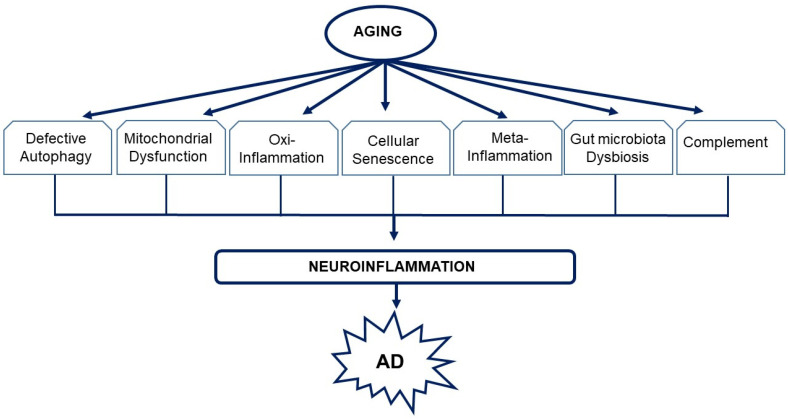
“AD pathogenesis involves complex interactions between aging and neuroinflammation, and is influenced by impaired autophagy, mitochondrial dysfunction, oxidative and metabolic inflammation, gut dysbiosis, and complement activation [42].”
Krick, K. E., Weekman, E. M., Johnson, S. N., Sudduth, T. L., Rogers, C. B., Nicolayson, E. J., Kleinhenz, M. T., & Wilcock, D. M. (2025) · Neurobiology of Disease · doi:10.1016/j.nbd.2025.107013 · Cited by 5
Exploring the role of multi-pathogen infections in Alzheimer’s disease: A case–control study
García-Bustos, V., Cabañero-Navalón, M. D., Lloret-Sos, C., Gómez, M., Baquero, M., Ibanez-Barcelo, S., Lodares, J. G., & Cháfer‐Pericás, C. (2025) · Virulence · doi:10.1080/21505594.2025.2560904 · Cited by 5
Metadata
- Authors
- Onyango, I. G., Jauregui, G. V., Čarná, M., Bennett, J. P., & Stokin, G. B.
- Affiliations
- University Hospital Brno (CZ)
- Centre for Translational Medicine International Clinical Research Centre, St. Anne’s University Hospital, CZ-65691 Brno, Czech Republic
- Neurodegeneration Therapeutics, 3050A Berkmar Drive, Charlottesville, VA 22901, USA
- Mayo Clinic (US)
- Corresponding author
- Onyango, Isaac G.
- Stokin, Gorazd B.
- Venue
- Biomedicines
- Publisher
- MDPI AG
- Published
- 2021-05-07
- Volume
- 9
- Issue
- 5
- Pages
- 524
- ISSN
- 2227-9059 (ISSN-L)
- PMC
- PMC8150909
- OpenAlex
- W3159907306
- Semantic Scholar
- ec1964c7f178295bd9a6264537a2067d46eaf19c
- Cited by
- 330
- References
- 525
- Citations by year
- 2026: 54 · 2025: 83 · 2024: 66 · 2023: 70 · 2022: 43 · 2021: 13
- FWCI
- 5.61
- Type
- journal article
- Language
- en
- Open access
- gold
- doi.org
- Licence
- Locations
- Biomedicines (publishedVersion, cc-by)
- PubMed Central (publishedVersion, cc-by)
- PubMed (publishedVersion)
- DOAJ (DOAJ: Directory of Open Access Journals) (submittedVersion, cc-by-sa)
- Funders
- European Regional Development Fund- Project ENOCH 750 (CZ.02.1.01/0.0/0.0/16_019/0000868)
- Topics
- Life Sciences › Neuroscience › Neurology › Neuroinflammation and Neurodegeneration Mechanisms
- Life Sciences › Neuroscience › Cellular and Molecular Neuroscience › Alzheimer's disease research and treatments
- Life Sciences › Neuroscience › Neurology › Neurological Disease Mechanisms and Treatments
- Keywords
- Alzheimer's disease, neuroinflammation, inflammaging, reactive oxygen and nitrogen species, cellular senescence, pyroptosis, blood-brain barrier, immune privilege, peripheral immune cell infiltration, meta-inflammation, gut dysbiosis, immunomodulatory therapy, cognitive impairment
About these checks
Registry, retraction, Cites and statistics results are computed, not judged, with one exception: a printed reference that no index lists is read once by a model before it counts as a citation error. Claims are extracted by a model and kept only when their quote appears verbatim in the text; each cited source is then checked, with a model’s help, for whether it says what the claim relies on. Those verdicts can be wrong — read the claim’s quote and the cited source before relying on one.
Statistics and arithmetic are recomputed, not judged.
Confidence bands are shown only for fields calibrated on our annotated test set. None is calibrated yet, so no band is shown.
What counts as a claim ›How we measure confidence ›How we check this ›
Are you an author, or do you see a problem with this page? Request a review
Data sources
Bibliographic data: Semantic Scholar, OpenAlex, Crossref.
Contains information from the Semantic Scholar Academic Graph Datasets, made available under the ODC Attribution License (ODC-BY 1.0).
Semantic Scholar’s data is described in: Kinney, R., et al. (2023). The Semantic Scholar Open Data Platform. arXiv:2301.10140.
