

Neuroinflammation in Alzheimer’s Disease
Open accessThe DOI matches its Crossref record; 521 of the 525 references it cites were found in a registry or an index.
Abstract
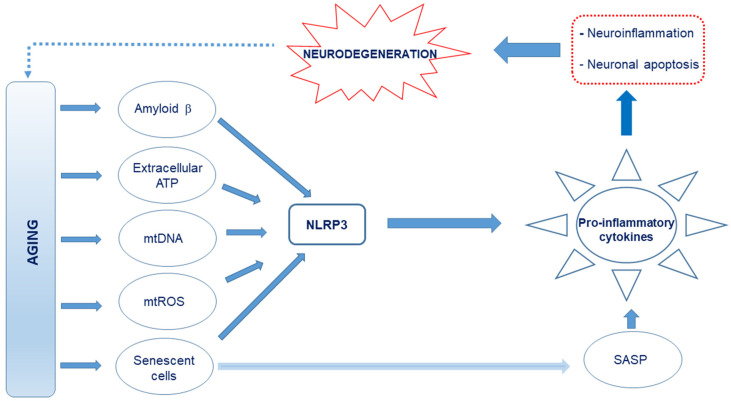
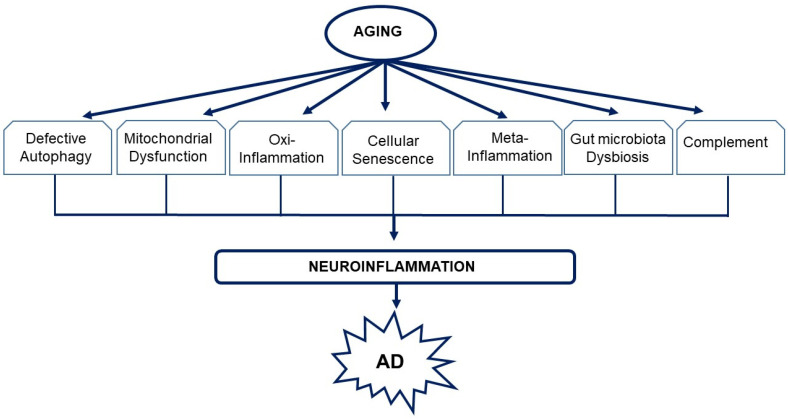
Alzheimer’s disease (AD) is a neurodegenerative disease associated with human aging. Ten percent of individuals over 65 years have AD and its prevalence continues to rise with increasing age. There are currently no effective disease modifying treatments for AD, resulting in increasingly large socioeconomic and personal costs. Increasing age is associated with an increase in low-grade chronic inflammation (inflammaging) that may contribute to the neurodegenerative process in AD. Although the exact mechanisms remain unclear, aberrant elevation of reactive oxygen and nitrogen species (RONS) levels from several endogenous and exogenous processes in the brain may not only affect cell signaling, but also trigger cellular senescence, inflammation, and pyroptosis. Moreover, a compromised immune privilege of the brain that allows the infiltration of peripheral immune cells and infectious agents may play a role. Additionally, meta-inflammation as well as gut microbiota dysbiosis may drive the neuroinflammatory process. Considering that inflammatory/immune pathways are dysregulated in parallel with cognitive dysfunction in AD, elucidating the relationship between the central nervous system and the immune system may facilitate the development of a safe and effective therapy for AD. We discuss some current ideas on processes in inflammaging that appear to drive the neurodegenerative process in AD and summarize details on a few immunomodulatory strategies being developed to selectively target the detrimental aspects of neuroinflammation without affecting defense mechanisms against pathogens and tissue damage.
Overview
The claims and statistics of this paper haven’t been checked yet.
Free: it reads the open-access text and checks the first 5 claims that cite a source we can check. Create a free account to check every claim.
Integrity signals
Registry
Cites
Statistics
Figures
Verification
Claims the paper makes
The claims and statistics of this paper haven’t been checked yet.
Free: it reads the open-access text and checks the first 5 claims that cite a source we can check. Create a free account to check every claim.
Claims other papers make about this one
Each is checked against this paper’s own text: does it say what the citing paper says it does?
The source backs part of the claim, not all of it — or backs it for a different population, condition or comparison.
In the citing paper
“Activated microglia and astrocytes can phagocytize Aβ through multiple receptors to protect neurons,33,34 but failure to clear the aggregates leads to persistent chronic inflammation and the release of a variety of proinflammatory and toxic products, including cytokines, chemokines, reactive oxygen species (ROS) and nitric oxide (NO), which amplify immune responses and lead to neurotoxicity.35”
From Role of neuroinflammation in neurodegeneration development (2023) · cites this paper as [34]
Experimental — accuracy not yet measuredThe cited source says what the claim attributes to it.
In the citing paper
“Astrocyte and microglial activation and inflammatory factor production are associated with chronic inflammatory responses within the AD brain, hampering the environment around neurons and leading to neuronal damage (Onyango et al., 2021).”
From Picroside II Alleviates the Progression of Alzheimer’s Disease via the NLRP3/Caspase-1/GSDMD Pathway (2025) · cites this paper as Onyango et al., 2021
Self-check
Percentages, sums and reported differences re-computed from the paper’s own numbers.
The self-check needs the paper’s full text.
Citations
Cites
López-Otín, C., Blasco, M. A., Partridge, L., Serrano, M., & Kroemer, G. (2013) · Cell · doi:10.1016/j.cell.2013.05.039 · Cited by 14,982 · cited 1×
“Aging is characterized by dysregulated immune [1] and metabolic homeostasis [2,3] where there is chronic sterile low-grade inflammation or inflammaging [4] that involves cellular senescence [5,6], immunosenescence [7–10], mitochondrial dysfunction [11,12], defective autophagy [13,14] and mitophagy [15,16], dysregulati…”
BackgroundCorder, E. H., Saunders, A. M., Strittmatter, W. J., Schmechel, D. E., Gaskell, P. C., Small, G. W., Roses, A. D., Haines, J. L., & Pericak-Vance, M. A. (1993) · Science · doi:10.1126/science.8346443 · Cited by 9,429 · cited 1×
“LOAD, however, comprises most AD cases (>95%) where the greatest risk factor is advanced age [51], while the common genetic risk factor is an allelic variation in apolipoprotein E (Apo E) [52].”
BackgroundNeurotoxic reactive astrocytes are induced by activated microglia
Liddelow, S. A., Guttenplan, K. A., Clarke, L. E., Bennett, F. C., Bohlen, C. J., Schirmer, L., Bennett, M. L., Münch, A. E., Chung, W.-S., Peterson, T. C., et al. (2017) · Nature · doi:10.1038/nature21029 · Cited by 7,971
Neuroinflammation in Alzheimer's disease
Heneka, M. T., Carson, M. J., Khoury, J. E., Landreth, G. E., Brosseron, F., Feinstein, D. L., Jacobs, A. H., Wyss-Coray, T., Vitorica, J., Ransohoff, R. M., et al. (2015) · The Lancet Neurology · doi:10.1016/s1474-4422(15)70016-5 · Cited by 6,226 · cited 4×
“These collectively play an integral role in the onset and progression of the disease [88,90,91].”
BackgroundInfluentialThe amyloid hypothesis of Alzheimer's disease at 25 years
Selkoe, D. J., & Hardy, J. (2016) · EMBO Molecular Medicine · doi:10.15252/emmm.201606210 · Cited by 6,164
Inflamm‐aging: An Evolutionary Perspective on Immunosenescence
FRANCESCHI, C., BONAFÈ, M., VALENSIN, S., OLIVIERI, F., DE LUCA, M., OTTAVIANI, E., & DE BENEDICTIS, G. (2000) · Annals of the New York Academy of Sciences · doi:10.1111/j.1749-6632.2000.tb06651.x · Cited by 5,358 · cited 2×
“The chronic sterile low-grade inflammation elicited [4] may culminate in immunosenescence [209] and compromise neuronal function [32].”
BackgroundThe senescence-associated secretory phenotype: the dark side of tumor suppression
Coppé, J.-P., Desprez, P.-Y., Krtolica, A., & Campisi, J. (2010) · Annual Review of Pathology: Mechanisms of Disease · doi:10.1146/annurev-pathol-121808-102144 · Cited by 5,206
The NLRP3 inflammasome: molecular activation and regulation to therapeutics
Swanson, K. V., Deng, M., & Ting, J. P.-Y. (2019) · Nature Reviews Immunology · doi:10.1038/s41577-019-0165-0 · Cited by 4,884
Inflammation and Alzheimer’s disease
Akiyama, H. (2000) · Neurobiology of Aging · doi:10.1016/s0197-4580(00)00124-x · Cited by 4,514
Cellular senescence: when bad things happen to good cells
Campisi, J., & d'Adda di Fagagna, F. (2007) · Nature Reviews Molecular Cell Biology · doi:10.1038/nrm2233 · Cited by 4,441
Research works printed but not linked: 2
- Xia S. Shen Y. Yu W. Inflamm-aging related genes expression in aged rat hippocampus and Icariin intervention outcome Geriatr. Health Care 2008 14 340 344
- Han G. Zhang C. Qian C. Na M. Ding Y. Zhao H. Total Flavonoids of Epimedium Reduce Inflammatory Reaction via AMPK/SIRT1/NFκB Signaling Pathway in Testes of Natural Aging Rats Nat. Prod. Res. Dev. 2018 30 1489 1493
Cited by
Items 201–300 of 352
Synaptic Plasticity in Neurodegenerative Diseases: Impact of Exercise as Promising Therapeutic Tool
Farina, G., Fenili, G., Paronetto, M. P., & Crescioli, C. (2026) · Cells · doi:10.3390/cells15020197 · Cited by 6
Saad, H. M., Atef, E., Aboushouk, A. A., Waheeb, T. S., Elsayed, A., & Mohammed, S. A. A. (2026) · Journal of Neuropathology & Experimental Neurology · doi:10.1093/jnen/nlag014 · Cited by 5
Toward nanomedicine-enabled RNA therapeutics for Alzheimer’s disease
Kara, G., & Villapol, S. (2026) · Molecular Neurodegeneration Advances · doi:10.1186/s44477-026-00026-z · Cited by 4
Liu, E., Jia, J., Qi, L., Li, C., Li, S., & Cai, T. (2026) · Frontiers in Microbiology · doi:10.3389/fmicb.2026.1874222 · Cited by 5
“Comprehensive reviews have explicitly identified immunosenescence, mitochondrial dysfunction, and gut dysbiosis as the bridges linking aging to Alzheimer’s disease and Parkinson’s disease (Chen et al., 2025; Onyango et al., 2021).”
Chakraborty, S., & Sinha, A. (2023) · Asian Journal of Pharmaceutical Research and Development · doi:10.22270/ajprd.v11i4.1302 · Cited by 4
Golipoor, M., Rafat, Z., Saberi, A., Roostaei, D., & Shabanpour, A.-M. (2024) · Frontiers in Cellular and Infection Microbiology · doi:10.3389/fcimb.2024.1477230 · Cited by 5
Pathophysiology of Alzheimer’s Disease: Focus on H3 Receptor Modulators and Their Implications
Bandaru, N., Bukke, S. P. N., Pedapati, V. M. D., Sowjanaya, G., Suggu, V. S., Nalla, S., Dudhe, P. B., Ezeonwumelu, J. O. C., Alagbonsi, A. I., & Onohuean, H. (2025) · Drugs and Drug Candidates · doi:10.3390/ddc4020022 · Cited by 4
“…[43,44], NE3107 [45,46], Semaglutide [47], AL002 [48], Bacillus Calmette-Guerin [49], Baricitinib [50,51], Canakinumab [52], Daratumumab [53–55], Lenalido-mide [56], Montelukast [57,58], Pepinemab [59], Proleukin [60,61], Rapamycin [62,63], Sargramostim [64,65], Senicapoc [66], TB006 [67],…”
Exploring LRP-1 in the liver-brain axis: implications for Alzheimer’s disease
Sharma, V. (2025) · Molecular Biology Reports · doi:10.1007/s11033-025-10980-8 · Cited by 7
Gerlikhman, L., Das, U., & Sarkar, D. K. (2023) · NeuroImmune Pharmacology and Therapeutics · doi:10.1515/nipt-2023-0003 · Cited by 4
Ren, W.-J., Li, X., Wang, T., Liu, Y., Dai, X., Huo, Q., Wang, S., Zheng, Q., & Sun, Y. (2024) · Pharmacognosy Magazine · doi:10.1177/09731296241246632 · Cited by 4
“According to recent research, inflammation might be a third crucial element that, once malfunction arises, could accelerate the course of the illness (Onyango et al., 2021).”
Parab, S. B., & Kaur, G. (2024) · Brain Research · doi:10.1016/j.brainres.2024.149236 · Cited by 4
Neuroinflammation in Alzheimer's disease
Agrawal, M., Singhal, M., Prajapati, B. G., Chaudhary, H., Jasoria, Y., Kumar, B., Arora, M. K., & Sahoo, J. (2024) · Elsevier eBooks · doi:10.1016/b978-0-443-13205-6.00003-0 · Cited by 5
Sharma, S., Wahl, D., Risen, S. J., Gilberto, V. S., Chatterjee, A., Moreno, J. A., LaRocca, T. J., & Nagpal, P. (2024) · bioRxiv (Cold Spring Harbor Laboratory) · doi:10.1101/2024.03.07.583991 · Cited by 4
Picroside II Alleviates the Progression of Alzheimer’s Disease via the NLRP3/Caspase-1/GSDMD Pathway
Li, S., Gao, Y., Zhang, Y., Zhang, J., Zhao, Y., Chang, C., Gao, X., Zhang, J., & Yang, G. (2025) · NeuroMolecular Medicine · doi:10.1007/s12017-025-08889-3 · Cited by 5
“Astrocyte and micro-glial activation and inflammatory factor production are associated with chronic inflammatory responses within the AD brain, hampering the environment around neurons and leading to neuronal damage (Onyango et al., 2021).”
Systemic infections alter cortical transcriptional signatures in Alzheimer’s disease
Pegoraro, G., MacBean, L. F., Smith, A. R., Soanes, D. M., Smith, R. G., Imm, J. L., Harvey, J., Kouhsar, M. P., Laroche, V., Weymouth, L. S., et al. (2026) · Neurobiology of Aging · doi:10.1016/j.neurobiolaging.2026.06.010 · Cited by 4
Rahmati‐Dehkordi, F., Zahedi, E., Adeli, S., Sahrayi, H., & Karimian, S. M. (2025) · Biomedicine & Pharmacotherapy · doi:10.1016/j.biopha.2025.118834 · Cited by 3
Hu, M., Li, A. Z., Fleming, P., Gralla, J., Terón, K. I. N., Zhou, Y., Miller, E. J., Beyett, T. S., Wen, Z., Du, Y., et al. (2025) · Journal of Medicinal Chemistry · doi:10.1021/acs.jmedchem.5c01425 · Cited by 3
Ge, L., Sun, H., Zhang, J., Xu, L., Ma, L., & Jin, Z. (2026) · Frontiers in Nutrition · doi:10.3389/fnut.2025.1733469 · Cited by 4
“…cytokines in the peripheral circulation can penetrate the central nervous system through alterations in blood–brain barrier permeability or by activating resident microglia in the brain, thereby initiating and sustaining a chronic inflammatory cascade within the cerebral environment (31–33).”
Alfateh, M., Vasconcelos, C., Choker, A. H., & Mohammadaein, H. (2026) · International Journal of Biological Macromolecules · doi:10.1016/j.ijbiomac.2026.151774 · Cited by 3
Nada, H., Yuan, S., Gaamouch, F. E., Cho, S., & Gabr, M. T. (2026) · European Journal of Medicinal Chemistry Reports · doi:10.1016/j.ejmcr.2026.100354 · Cited by 4
Immune Mechanisms in Alzheimer’s Disease: The Role of Toll-Like Receptors Signalling
Sharma, D., Manjunatha, P. M., Babu, T. H., Dhungel, A., Swaraj, S., Janadari, S., Sharma, U., Surendra, V., Taj, N., & Gayathri, S. V. (2024) · Current Pharmacology Reports · doi:10.1007/s40495-024-00376-w · Cited by 4
Nisha, A. V., Rajasekaran, M. P., Rajeev, S. K., Wilson, A., Sunil, S., & Soorya, M. (2024) · International Conference on Sustainable Expert Systems (ICSES) · doi:10.1109/icses63445.2024.10763380 · Cited by 3
Azargoonjahromi, A., Nasiri, H., & Initiative, A. D. N. (2025) · Journal of Alzheimer s Disease Reports · doi:10.1177/25424823251362483 · Cited by 3
Liu, T., & Li, X. (2025) · Journal of Biochemical and Molecular Toxicology · doi:10.1002/jbt.70460 · Cited by 5
Jongbae, K., Mokhtari, M., Aloulou, H., Abdulrazak, B., & Seungbok, L. (2023) · Lecture notes in computer science · doi:10.1007/978-3-031-43950-6 · Cited by 3
Azhir, M., Gazmeh, S., Elyasi, L., Jahanshahi, M., & Bazrafshan, B. (2023) · Yādgār. · doi:10.61186/jcbr.7.4.15 · Cited by 4
“Other inflammatory processes have also been suggested to play a role in AD pathogenesis and are used as therapeutic targets (15).”
Nada, H., Yuan, S., Gaamouch, F. E., Cho, S., & Gabr, M. T. (2026) · doi:10.64898/2026.01.19.700278 · Cited by 3
Jiang, H., Zhao, T., He, C., Liu, B., Ai, W., Chen, Y., & Moriyama, H. (2025) · GeroScience · doi:10.1007/s11357-025-01717-3 · Cited by 2
Duckhorn, J. C., Kim, D. K., & Huang, Y. A. (2025) · Neural Regeneration Research · doi:10.4103/nrr.nrr-d-25-00243 · Cited by 2
Glutamate Signaling and NMDA Receptor Dynamics in Healthy Aging and Alzheimer’s Disease
Baig, A., Tanveer, J., Rubeen, R., Shakoor, S., Khan, K. M., & Fatima-Shad, K. (2025) · IntechOpen eBooks · doi:10.5772/intechopen.1011417 · Cited by 2
Advancing Alzheimer's disease treatment: A literature review on senolytic intervention
Onuh, V. C. (2025) · Journal of Alzheimer s Disease · doi:10.1177/13872877251376540 · Cited by 2
Taşci, H., Sağlık, B. N., Tunçel, Ş. T., Baysal, İ., Tozkoparan, B., Doğan, İ., & Kelekçi, N. G. (2025) · Polycyclic aromatic compounds · doi:10.1080/10406638.2025.2571572 · Cited by 1
Luo, Y., Zhao, C., Ren, J., Tian, L., & Pan, Y. (2025) · Life Sciences · doi:10.1016/j.lfs.2025.124061 · Cited by 3
Shaikh, A. A., Wilkhoo, H. S., Pillai, A., Thomas, S., Singh, B., & Nair, N. (2025) · Exploration of Neuroprotective Therapy · doi:10.37349/ent.2025.1004120 · Cited by 3
Yue, C., Chen, B., Chen, L., Xiong, L., Gong, C., Wang, Z., Liu, G., Li, W., Wang, R., & Tang, Y. (2025) · Chinese Journal of Natural Medicines · doi:10.1016/s1875-5364(25)60980-0 · Cited by 5
Takahashi, M., Kitaura, H., Nakahara, A., Kakita, A., Watanabe, K., Kakihana, T., Hara, T., Katsuragi, Y., Yoshita‐Takahashi, M., Anisimov, S., et al. (2025) · Molecular and Cellular Biology · doi:10.1080/10985549.2025.2575950 · Cited by 2
“18 This chronic inflammatory state is not merely a consequence of the disease but may significantly contribute to its progression and exacerbate neurodegeneration.”
Bhatia, N., Khan, M. M. U., Masih, D., & Srinivas, U. (2025) · Current Behavioral Neuroscience Reports · doi:10.1007/s40473-025-00318-w · Cited by 2
Sahu, P., Satapathy, A., Satapathy, A., & Satapathy, T. (2025) · International Journal of Peptide Research and Therapeutics · doi:10.1007/s10989-025-10797-w · Cited by 2
“Both MOTS-c and humanin improve insulin receptor signaling and promote glucose uptake in meta-bolically active tissues such as skeletal muscle and liver, thereby counteracting insulin resistance, a fundamental hallmark of metabolic aging (Shen et al., 2025; Onyango et al. 2021).”
Nitzan, K., Bentulila, Z., Bregman-Yemini, N., Ayalon, N., David, D., Break, E. P., Sarne, Y., & Doron, R. (2026) · Biology of Sex Differences · doi:10.1186/s13293-025-00815-3 · Cited by 2
“Many changes have been identified in the AD brain, such as mitochondrial dysfunction [2], modification in the neurotrophic system [3], neuronal loss [4] and most notably – neuroinflammation [5, 6].”
Wang, Y., Zhang, G., Wang, L., Cheng, Z., & Zhao, Z. (2026) · Biological Trace Element Research · doi:10.1007/s12011-025-04928-z · Cited by 2
Cabot, J., Soriano, J. B., Alonso-Fernández, A., Rodríguez, J. J., Merino, J. J., Cànaves‐Gómez, L., Gayà-Caro, N., & Busquets, X. (2026) · Sleep And Breathing · doi:10.1007/s11325-026-03651-w · Cited by 2
“…to these neuronal mechanisms, astrocytes have emerged as key players in AD pathophysiology, acting both as modulators of Aβ plaque dynamics and as sources of neu - roinflammatory and oxidative responses [ 12, 13] contributing to cortical atrophy, neuroinflammation, and neuronal death [ 9, 14, 15].”
Xu, R., Song, W., & Zhang, X. (2026) · Frontiers in Aging Neuroscience · doi:10.3389/fnagi.2026.1767927 · Cited by 3
“…tangles, and neuroinflammation driven by activated microglia and astrocytes releasing pro-inflammatory cytokines, with emerging evidence highlighting the pivotal role of both innate and adaptive immune systems in disease progression (Liu et al., 2022; Onyango et al., 2021; Jorfi et al., 2023a).”
Martino, P., Bonet, J. L., Cervigni, M., de Bortoli, M. Á., Gallegos, M., & Politis, D. G. (2023) · Revista Ecuatoriana de Neurologia · doi:10.46997/revecuatneurol32200075 · Cited by 4
Mishra, S., Kaur, S., Bansal, G., & Bansal, Y. (2024) · European Journal of Medicinal Chemistry Reports · doi:10.1016/j.ejmcr.2024.100180 · Cited by 4
Beneficial effects of Docosahexaenoic acid consumption on brain health: A mini-review
Silva, J. R., Prescilio, I. C., Yamaguchi, K. K. L., Silva, E. J. A., & Souza, A. D. O. (2024) · Journal of Food Bioactives · doi:10.31665/jfb.2024.18375 · Cited by 2
Alzheimer’s Disease from Modeling to Mechanism Research
Sun, X., & Zhang, W. (2024) · Advances in neurobiology · doi:10.1007/978-3-031-69188-1_7 · Cited by 2
Heterogeneous treatment effects of BCG vaccine on Alzheimer's disease risk
Chaudhuri, I., & Das, S. (2025) · Journal of Alzheimer s Disease Reports · doi:10.1177/25424823251317955 · Cited by 2
Alzheimer's Disease Detection and Classification Using Modified Hybrid CNN-LSTM Network
Nisha, A. V., Rajeev, S. K., Soorya, M., & Shaheer, S. (2025) · International Conference on Mobile Computing and Sustainable Informatics (ICMCSI) · doi:10.1109/icmcsi64620.2025.10883098 · Cited by 2
Association of the HLA-DQB1*02 allele with lower tauopathy in Alzheimer's disease
Huda, T. I., Fawcett, T. J., Green, A. J., & Blanck, G. (2025) · Archives of Gerontology and Geriatrics · doi:10.1016/j.archger.2025.105802 · Cited by 2
Nutraceuticals in mental diseases — Bridging the gap between traditional use and modern pharmacology
Regenthal, R., Rong, P., & Krügel, U. (2021) · Current Opinion in Pharmacology · doi:10.1016/j.coph.2021.08.017 · Cited by 2
Jadhav, D., Saraswat, N., Vyawahare, N. S., & Shirode, D. S. (2023) · Current Nutraceuticals · doi:10.2174/0126659786275281231207115631 · Cited by 3
Constructing a prognostic risk model for Alzheimer’s disease based on ferroptosis
Wang, X., Zhai, R.-Q., Li, Z., Li, H.-Q., Lei, Y.-T., Zhao, F.-F., Hao, X.-X., Wang, S., & Wu, Y. (2023) · Frontiers in Aging Neuroscience · doi:10.3389/fnagi.2023.1168840 · Cited by 1
“Increasing age is associated with an increase in low-grade chronic inflammation, which contributes to the neurodegenerative process in AD (Onyango et al., 2021), and assessment of the extent of immune infiltration is a good indicator of the severity of inflammation.”
BackgroundCharacteristics of SIM-A9 Microglia Cells: New Data
Shaposhnikova, D., Moskaleva, E., Syomochkina, Y. P., Vysotskaya, O., Komova, O., Nasonova, E., & Koshlan, I. (2023) · Cell and Tissue Biology · doi:10.1134/s1990519x23050127 · Cited by 1
“Chronic activation of microglia under the action of endogenous factors accompanied by longterm neuroinflammation underlies the pathogenesis of many neurodegenerative diseases, including Alzheimer’s disease (Onyango et al., 2021).”
BackgroundA comprehensive study of Alzheimer’s disease biomarkers in plasma and cerebrospinal fluid
Minochkin, A. K., Lobzin, V. Y., Emelin, А. Y., Kopteva, Y. P., Клиценко, О. А., Апалько, С. В., & Shcherbak, S. G. (2025) · S S Korsakov Journal of Neurology and Psychiatry · doi:10.17116/jnevro202512504243 · Cited by 2
Recht, G. O., Lima-Cooper, G., Buddenbaum, C. V., Sweeney, S. H., Bellini, Z. S., Newman, S. D., Datta, D., & Kawata, K. (2025) · Neurotrauma Reports · doi:10.1177/08977151251362101 · Cited by 2
Yadav, R., Mani, R. J., SHARMA, A. K., KUMAR, A., & Katare, D. P. (2026) · International Journal of Applied Pharmaceutics · doi:10.22159/ijap.2026v18i1.56212 · Cited by 1
Abdel‐Aal, R. A., Meligy, F. Y., Kamel, G., & Ashry, I. E.-S. M. (2026) · European Journal of Pharmacology · doi:10.1016/j.ejphar.2026.178581 · Cited by 1
Waghmare, A., Rahangdale, S. R., Khare, K., Taksande, B. G., Umekar, M. J., & Mangrulkar, S. V. (2026) · Molecular and Cellular Neuroscience · doi:10.1016/j.mcn.2026.104075 · Cited by 2
The Double-Edged Sword Effect of the Fibrinolytic System in Alzheimer’s Disease
Tang, M., Liang, M., Zhang, X., Hong, C., & Ye, L. (2026) · Cellular and Molecular Neurobiology · doi:10.1007/s10571-026-01699-6 · Cited by 1
“It is widely acknowledged that acetylcholine (ACh) is an essential neurotransmitter for proper central nervous sys-tem function (Grünewald and Siefert 2019 ; Onyango et al. 2021).”
Tripathi, P., & Shah, J. (2026) · Neurochemical Research · doi:10.1007/s11064-026-04721-x · Cited by 1
Khozani, M. S., Palizvan, M. R., Mosayebi, G., Ganji, A., & Ghazavi, A. (2026) · Inflammopharmacology · doi:10.1007/s10787-026-02163-z · Cited by 3
“Chitosan-curcumin nanoparticles have been shown to modulate NF-κB and PPARγ signaling, reduce microglial activation, and upregulate BDNF, col - lectively mitigating cognitive decline and neuronal damage (Poudel and Park 2022 ; Onyango et al. 2021).”
Do, E., Puro, D., & Hansda, S. (2026) · Biology · doi:10.3390/biology15141106 · Cited by 1
“Two hallmark pathologies drive disease progression: accumulation of neurotoxic amyloid-β (A β ), which contributes to neuronal dysfunction, and aggregation of hyperphosphorylated tau into insoluble neurofibrillary tangles that disrupt synaptic signaling [65].”
Sánchez-Melgar, A., Izquierdo-Ramírez, P. J., Palomera‐Ávalos, V., Pallàs, M., Albasanz, J. L., & Martín, M. (2021) · Nutrients · doi:10.3390/nu13093040 · Cited by 1
Xiong, L., & Wang, Z. (2023) · Neuroscience Letters · doi:10.1016/j.neulet.2023.137159 · Cited by 1
Top Edible Wild Plants of Eastern Mediterranean Region Part II: Anti-inflammatory Activity
Azab, A. (2023) · European Journal of Medicinal Plants · doi:10.9734/ejmp/2023/v34i91155 · Cited by 1
The role of α7 nicotinic acetylcholine receptors in post-acute sequelae of covid-19
Skok, M. (2024) · The International Journal of Biochemistry & Cell Biology · doi:10.1016/j.biocel.2024.106519 · Cited by 1
Microglia Cell Line SIM-A9 Features – New Data
Shaposhnikova, D., Moskaleva, E., Semochkina, Y., Vysotskaya, O., Komova, O., Nasonova, E., & Koshlan, I. (2023) · Tsitologiya · doi:10.31857/s0041377123030082 · Cited by 1
Sex Differences in Alzheimer’s Disease Pathogenesis
Jung, E. S., & Mook‐Jung, I. (2024) · Springer eBooks · doi:10.1007/978-981-97-0130-8_24 · Cited by 2
Impact and Significance of Viral Vectors for siRNA Delivery in the Treatment of Alzheimer’s Disease
Aundhia, C. J., Parmar, G. R., Talele, C., Trivedi, R., Kumari, M., & Chudasama, J. M. (2025) · Current Pharmaceutical Biotechnology · doi:10.2174/0113892010334094241112190337 · Cited by 2
Special Issue “Mitochondria and Brain Disease”
Cardoso, S. (2022) · Biomedicines · doi:10.3390/biomedicines10081854 · Cited by 1
Cell type specific transcriptomic characterization of myelin abnormalities
Sun, T. (2022) · eDiss (Georg-August-Universität Göttingen) · doi:10.53846/goediss-9413 · Cited by 1
The role of immune cells in brain injuries and diseases
Shi, Y., Stowe, A. M., & Hu, X. (2023) · Neurobiology of Disease · doi:10.1016/j.nbd.2023.106340 · Cited by 1
Iturria‐Medina, Y., Poole, V. N., Zammit, A. R., Yu, L., Tasaki, S., Hong, J. H., Lopes, K. D. P., Batalha, C. M. P. F., Ridwan, A. R., Vialle, R. A., et al. (2025) · bioRxiv (Cold Spring Harbor Laboratory) · doi:10.1101/2025.03.20.644323 · Cited by 2
Systemic administration of PD-L1 blocking antibodies leads to removal of senescent microgliaPreprint
Androsova, Y., Kertser, A., Partney, H., Nathansohn, B., Ibraheem, A., Abellanas, M. A., Croese, T., Salame, T., Akiva, H., Krizhanovsky, V., et al. (2025) · bioRxiv (Cold Spring Harbor Laboratory) · doi:10.64898/2025.12.22.695923 · Cited by 1
The Mitochondria-Microbiome Crosstalk: A Bidirectional Dialogue in Health and DiseasePreprint
Tenchov, R. (2026) · ChemRxiv · doi:10.26434/chemrxiv-2026-x0zjd · Cited by 1
Screening Immunotherapy Targets to Counter Radiation-Induced NeuroinflammationPreprint
Sharma, S., Fallgren, C. M., Weil, M. M., Chatterjee, A., & Nagpal, P. (2022) · bioRxiv (Cold Spring Harbor Laboratory) · doi:10.1101/2022.08.23.505001
A neuroinflamação da Doença de Alzheimer e sua correlação anatômica
Netto, F. D. F., Santos, A. A., Gesser, G. T., Perreto, L., Pironatto, M. L. D. M., Andreassa, P. S., & Batista, T. Y. (2023) · Brazilian Journal of Health Review · doi:10.34119/bjhrv6n1-133 · Cited by 2
Brain, Gut, and Immune Interconnections in Psychiatric Disorders: Implications for Treatment
Kverno, K. S., & Ramos-Marcuse, F. (2023) · Journal of Psychosocial Nursing and Mental Health Services · doi:10.3928/02793695-20230215-02
Huan, S., Gao, J., & Guoping, Y. I. N. (2023) · Research Square · doi:10.21203/rs.3.rs-2822676/v1
Deriving Physiological Information from PET Images Using Machine Learning
Gassara, O., Chikhaoui, B., Mabrouk, R., & Wang, S. (2023) · Lecture notes in computer science · doi:10.1007/978-3-031-43950-6_3
The α7 Nicotinic Acetylcholine Receptor: a Key Molecule in Post-COVID Syndrome?Preprint
Skok, M. (2023) · Qeios · doi:10.32388/dta98l
Harmatina, O. Y., Rozova, K. V., Voznesenska, T. Y., Vasylenko, M., Lapikova-Bryhinska, T., & Portnychenko, A. G. (2023) · Regulatory Mechanisms in Biosystems · doi:10.15421/10.15421/022350
Sanadgol, N., Feriz, A. M., Ravanjoo, L., Haddadi, M., Beyer, C., Zendedel, A., & Safarpour, H. (2024) · Research Square · doi:10.21203/rs.3.rs-3796551/v1
Shafi, O., Rajpar, R., Yaqoob, Ú., Rahman, I. A., Savanti, Madhwani, M., Haseeb, M., & Raveena (2024) · Research Square · doi:10.21203/rs.3.rs-3982517/v1
Protective effects of levosimendan in scopolamineinduced mice model of Alzheimer's disease
Alwaeli, N. L., Al-Zubaidy, A. A., & Sadiq, M. H. (2024) · Romanian Journal of Neurology · doi:10.37897/rjn.2024.2.14
Role of microglia, mitochondria, and inflammatory events in Alzheimer's disease
Gupta, P., & Gopenath, T. S. (2024) · Elsevier eBooks · doi:10.1016/b978-0-443-15540-6.00010-0
Murshid, N. M., Sahardi, N. F. N. M., & Makpol, S. (2024) · International Journal of Molecular Sciences · doi:10.3390/ijms26010241 · Cited by 1
“Furthermore, neuroinflammation contributes significantly to the complex interplay between the central nervous system and the immune system in the pathophysiology of AD [79,80].”
Vints, W. A. J. (2025) · Research Publications (Maastricht University) · doi:10.26481/dis.20250522wv
Okafor, C. P. (2025) · International Journal of Research Publication and Reviews · doi:10.55248/gengpi.6.0625.2014
Azimi, S. M., Elhaie, M., Abedi, I., & Salehi, H. (2025) · Advanced Biomedical Research · doi:10.4103/abr.abr_224_24
Regulated cell death and inflammaging in neurodegenerative disorders
Liu, H., Wen, S., Gao, X., Wu, C., Lai, B., Zhu, J., & Kong, E. (2025) · Elsevier eBooks · doi:10.1016/b978-0-443-32852-7.00009-7 · Cited by 2
Physical Activity and the Myokine Irisin in Non-pharmacological Treatment of Alzheimer Disease
Gibizov, Y. A., Vagapova, L. B., Aguzarova, A. O., Nazarova, J. V., Zotkina, Y. A., Atamanyuk, E. A., Rodikova, M. M., Timergaleev, R. N., Kupriyanov, A. M., Chuprina, A. A., et al. (2025) · Russian Journal of Physiotherapy Balneology and Rehabilitation · doi:10.17816/rjpbr677844 · Cited by 1
A Comprehensive Study of Alzheimer’s Disease Biomarkers in Plasma and Cerebrospinal Fluid
Minochkin, A. K., Lobzin, V. Y., Emelin, А. Y., Kopteva, Y. P., Клиценко, О. А., Апалько, С. В., & Sherbak, S. G. (2025) · Neuroscience and Behavioral Physiology · doi:10.1007/s11055-025-01881-1
Computational Insights into Resveratrol’s (rsv) Mechanism of Action Against aβ1-42 Aggregation"
Adil, R., Afshan, H., Inam, J., Afzal, W., & Khurshid, B. (2025) · Physical Education Health and Social Sciences · doi:10.63163/jpehss.v3i2.688
Xi, Z., Wang, J., Wang, D., Yan, G., Ge, X., & Ma, Y. (2025) · Food Science and Human Wellness · doi:10.26599/fshw.2025.9250718
Abd-Alkareem, M. A.-A., Jasim, R. H., Mashaan, A. O., & Suleiman, A. A. (2025) · Current Alzheimer Research · doi:10.2174/0115672050410268250919050955
The Potential of Exhaled Breath Analysis for Alzheimer’s Disease Monitoring (mini review)
Patsiris, S., Exarchos, T., & Vlamos, P. (2025) · Advances in experimental medicine and biology · doi:10.1007/978-3-032-03398-7_15
Yukti, Sharma, A., Dhar, S., Ojha, R., & Prajapati, V. K. (2025) · Advances in protein chemistry and structural biology · doi:10.1016/bs.apcsb.2025.11.004
Regulación del inflamasoma NLRP3 por compuestos naturales en células del sistema nervioso central
Departamento de Química, C. U. D. C. E. E. I., Corona-España, A. M., Díaz., L. A., Centro Universitario de Ciencias Exactas e Ingenierías, U. D. G., Pérez, P. A. Z., Centro Universitario de Ciencias Exactas e Ingenierías, U. D. G., Carbajal, C. L., Centro Universitario de Ciencias Exactas e Ingenierías, U. D. G., Ortega, E., & Centro Universitario de Ciencias Exactas e Ingenierías, U. D. G. (2025) · Quimiofilia · doi:10.56604/qflasc2025425154
Time-Restricted Feeding as a Circadian Therapeutic Strategy for Alzheimer’s Disease
Fan, Z. (2025) · MedScien · doi:10.61173/1fs4g940
Metadata
- Authors
- Onyango, I. G., Jauregui, G. V., Čarná, M., Bennett, J. P., & Stokin, G. B.
- Affiliations
- University Hospital Brno (CZ)
- Centre for Translational Medicine International Clinical Research Centre, St. Anne’s University Hospital, CZ-65691 Brno, Czech Republic
- Neurodegeneration Therapeutics, 3050A Berkmar Drive, Charlottesville, VA 22901, USA
- Mayo Clinic (US)
- Corresponding author
- Onyango, Isaac G.
- Stokin, Gorazd B.
- Venue
- Biomedicines
- Publisher
- MDPI AG
- Published
- 2021-05-07
- Volume
- 9
- Issue
- 5
- Pages
- 524
- ISSN
- 2227-9059 (ISSN-L)
- PMC
- PMC8150909
- OpenAlex
- W3159907306
- Semantic Scholar
- ec1964c7f178295bd9a6264537a2067d46eaf19c
- Cited by
- 330
- References
- 525
- Citations by year
- 2026: 54 · 2025: 83 · 2024: 66 · 2023: 70 · 2022: 43 · 2021: 13
- FWCI
- 5.61
- Type
- journal article
- Language
- en
- Open access
- gold
- doi.org
- Licence
- Locations
- Biomedicines (publishedVersion, cc-by)
- PubMed Central (publishedVersion, cc-by)
- PubMed (publishedVersion)
- DOAJ (DOAJ: Directory of Open Access Journals) (submittedVersion, cc-by-sa)
- Funders
- European Regional Development Fund- Project ENOCH 750 (CZ.02.1.01/0.0/0.0/16_019/0000868)
- Topics
- Life Sciences › Neuroscience › Neurology › Neuroinflammation and Neurodegeneration Mechanisms
- Life Sciences › Neuroscience › Cellular and Molecular Neuroscience › Alzheimer's disease research and treatments
- Life Sciences › Neuroscience › Neurology › Neurological Disease Mechanisms and Treatments
- Keywords
- Alzheimer's disease, neuroinflammation, inflammaging, reactive oxygen and nitrogen species, cellular senescence, pyroptosis, blood-brain barrier, immune privilege, peripheral immune cell infiltration, meta-inflammation, gut dysbiosis, immunomodulatory therapy, cognitive impairment
About these checks
Registry, retraction, Cites and statistics results are computed, not judged, with one exception: a printed reference that no index lists is read once by a model before it counts as a citation error. Claims are extracted by a model and kept only when their quote appears verbatim in the text; each cited source is then checked, with a model’s help, for whether it says what the claim relies on. Those verdicts can be wrong — read the claim’s quote and the cited source before relying on one.
Statistics and arithmetic are recomputed, not judged.
Confidence bands are shown only for fields calibrated on our annotated test set. None is calibrated yet, so no band is shown.
What counts as a claim ›How we measure confidence ›How we check this ›
Are you an author, or do you see a problem with this page? Request a review
Data sources
Bibliographic data: Semantic Scholar, OpenAlex, Crossref.
Contains information from the Semantic Scholar Academic Graph Datasets, made available under the ODC Attribution License (ODC-BY 1.0).
Semantic Scholar’s data is described in: Kinney, R., et al. (2023). The Semantic Scholar Open Data Platform. arXiv:2301.10140.
