

Neuroinflammation in Alzheimer’s Disease
Open accessThe DOI matches its Crossref record; 521 of the 525 references it cites were found in a registry or an index.
Abstract
Alzheimer’s disease (AD) is a neurodegenerative disease associated with human aging. Ten percent of individuals over 65 years have AD and its prevalence continues to rise with increasing age. There are currently no effective disease modifying treatments for AD, resulting in increasingly large socioeconomic and personal costs. Increasing age is associated with an increase in low-grade chronic inflammation (inflammaging) that may contribute to the neurodegenerative process in AD. Although the exact mechanisms remain unclear, aberrant elevation of reactive oxygen and nitrogen species (RONS) levels from several endogenous and exogenous processes in the brain may not only affect cell signaling, but also trigger cellular senescence, inflammation, and pyroptosis. Moreover, a compromised immune privilege of the brain that allows the infiltration of peripheral immune cells and infectious agents may play a role. Additionally, meta-inflammation as well as gut microbiota dysbiosis may drive the neuroinflammatory process. Considering that inflammatory/immune pathways are dysregulated in parallel with cognitive dysfunction in AD, elucidating the relationship between the central nervous system and the immune system may facilitate the development of a safe and effective therapy for AD. We discuss some current ideas on processes in inflammaging that appear to drive the neurodegenerative process in AD and summarize details on a few immunomodulatory strategies being developed to selectively target the detrimental aspects of neuroinflammation without affecting defense mechanisms against pathogens and tissue damage.
Overview
The claims and statistics of this paper haven’t been checked yet.
Free: it reads the open-access text and checks the first 5 claims that cite a source we can check. Create a free account to check every claim.
Integrity signals
Registry
Cites
Statistics
Figures
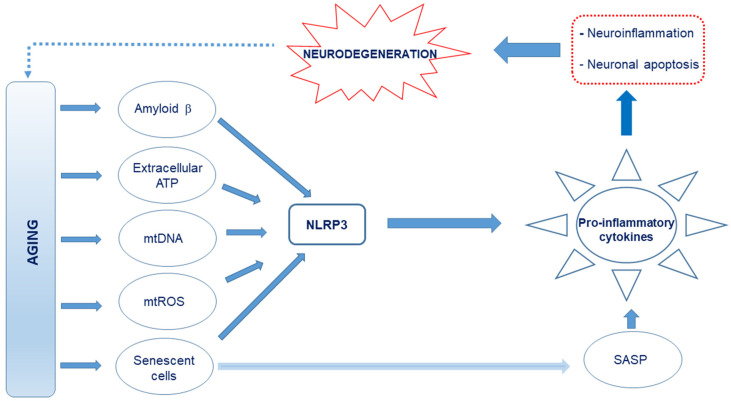
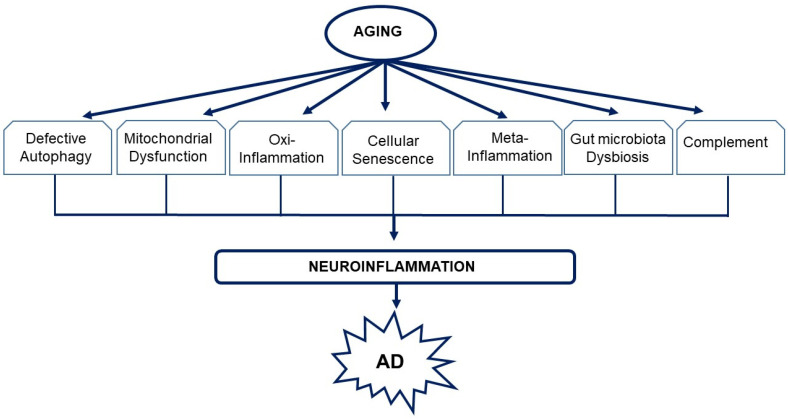
Verification
Claims the paper makes
The claims and statistics of this paper haven’t been checked yet.
Free: it reads the open-access text and checks the first 5 claims that cite a source we can check. Create a free account to check every claim.
Claims other papers make about this one
Each is checked against this paper’s own text: does it say what the citing paper says it does?
The source backs part of the claim, not all of it — or backs it for a different population, condition or comparison.
In the citing paper
“Activated microglia and astrocytes can phagocytize Aβ through multiple receptors to protect neurons,33,34 but failure to clear the aggregates leads to persistent chronic inflammation and the release of a variety of proinflammatory and toxic products, including cytokines, chemokines, reactive oxygen species (ROS) and nitric oxide (NO), which amplify immune responses and lead to neurotoxicity.35”
From Role of neuroinflammation in neurodegeneration development (2023) · cites this paper as [34]
Experimental — accuracy not yet measuredThe cited source says what the claim attributes to it.
In the citing paper
“Astrocyte and microglial activation and inflammatory factor production are associated with chronic inflammatory responses within the AD brain, hampering the environment around neurons and leading to neuronal damage (Onyango et al., 2021).”
From Picroside II Alleviates the Progression of Alzheimer’s Disease via the NLRP3/Caspase-1/GSDMD Pathway (2025) · cites this paper as Onyango et al., 2021
Self-check
Percentages, sums and reported differences re-computed from the paper’s own numbers.
The self-check needs the paper’s full text.
Citations
Cites
López-Otín, C., Blasco, M. A., Partridge, L., Serrano, M., & Kroemer, G. (2013) · Cell · doi:10.1016/j.cell.2013.05.039 · Cited by 14,982 · cited 1×
“Aging is characterized by dysregulated immune [1] and metabolic homeostasis [2,3] where there is chronic sterile low-grade inflammation or inflammaging [4] that involves cellular senescence [5,6], immunosenescence [7–10], mitochondrial dysfunction [11,12], defective autophagy [13,14] and mitophagy [15,16], dysregulati…”
BackgroundCorder, E. H., Saunders, A. M., Strittmatter, W. J., Schmechel, D. E., Gaskell, P. C., Small, G. W., Roses, A. D., Haines, J. L., & Pericak-Vance, M. A. (1993) · Science · doi:10.1126/science.8346443 · Cited by 9,429 · cited 1×
“LOAD, however, comprises most AD cases (>95%) where the greatest risk factor is advanced age [51], while the common genetic risk factor is an allelic variation in apolipoprotein E (Apo E) [52].”
BackgroundNeurotoxic reactive astrocytes are induced by activated microglia
Liddelow, S. A., Guttenplan, K. A., Clarke, L. E., Bennett, F. C., Bohlen, C. J., Schirmer, L., Bennett, M. L., Münch, A. E., Chung, W.-S., Peterson, T. C., et al. (2017) · Nature · doi:10.1038/nature21029 · Cited by 7,971
Neuroinflammation in Alzheimer's disease
Heneka, M. T., Carson, M. J., Khoury, J. E., Landreth, G. E., Brosseron, F., Feinstein, D. L., Jacobs, A. H., Wyss-Coray, T., Vitorica, J., Ransohoff, R. M., et al. (2015) · The Lancet Neurology · doi:10.1016/s1474-4422(15)70016-5 · Cited by 6,226 · cited 4×
“These collectively play an integral role in the onset and progression of the disease [88,90,91].”
BackgroundInfluentialThe amyloid hypothesis of Alzheimer's disease at 25 years
Selkoe, D. J., & Hardy, J. (2016) · EMBO Molecular Medicine · doi:10.15252/emmm.201606210 · Cited by 6,164
Inflamm‐aging: An Evolutionary Perspective on Immunosenescence
FRANCESCHI, C., BONAFÈ, M., VALENSIN, S., OLIVIERI, F., DE LUCA, M., OTTAVIANI, E., & DE BENEDICTIS, G. (2000) · Annals of the New York Academy of Sciences · doi:10.1111/j.1749-6632.2000.tb06651.x · Cited by 5,358 · cited 2×
“The chronic sterile low-grade inflammation elicited [4] may culminate in immunosenescence [209] and compromise neuronal function [32].”
BackgroundThe senescence-associated secretory phenotype: the dark side of tumor suppression
Coppé, J.-P., Desprez, P.-Y., Krtolica, A., & Campisi, J. (2010) · Annual Review of Pathology: Mechanisms of Disease · doi:10.1146/annurev-pathol-121808-102144 · Cited by 5,206
The NLRP3 inflammasome: molecular activation and regulation to therapeutics
Swanson, K. V., Deng, M., & Ting, J. P.-Y. (2019) · Nature Reviews Immunology · doi:10.1038/s41577-019-0165-0 · Cited by 4,884
Inflammation and Alzheimer’s disease
Akiyama, H. (2000) · Neurobiology of Aging · doi:10.1016/s0197-4580(00)00124-x · Cited by 4,514
Cellular senescence: when bad things happen to good cells
Campisi, J., & d'Adda di Fagagna, F. (2007) · Nature Reviews Molecular Cell Biology · doi:10.1038/nrm2233 · Cited by 4,441
Research works printed but not linked: 2
- Xia S. Shen Y. Yu W. Inflamm-aging related genes expression in aged rat hippocampus and Icariin intervention outcome Geriatr. Health Care 2008 14 340 344
- Han G. Zhang C. Qian C. Na M. Ding Y. Zhao H. Total Flavonoids of Epimedium Reduce Inflammatory Reaction via AMPK/SIRT1/NFκB Signaling Pathway in Testes of Natural Aging Rats Nat. Prod. Res. Dev. 2018 30 1489 1493
Cited by
Items 301–352 of 352
The effect of matrix mechanics on Aβ-induced microglial cell activation
Klostermeier, S. (2024) · doi:10.25593/open-fau-1179
Wei, L., Yang, X., Wang, J., Wang, Z., Wang, Q., Ding, Y., & Yu, A. (2023) · Figshare · doi:10.6084/m9.figshare.24124008
Wei, L., Yang, X., Wang, J., Wang, Z., Wang, Q., Ding, Y., & Yu, A. (2023) · Figshare · doi:10.6084/m9.figshare.24124011
Use of olive oil polyphenols to counteract neuroinflammation and neurodegenerative diseases
Risola, D. D. (2023) · IRIS Research product catalog (Sapienza University of Rome) · Cited by 2
Characterising the role of ADAM17 in neuronal development in the context of Alzheimers disease
SENGUPTA, M. (2023) · Open Repository and Bibliography (University of Luxembourg)
Valerio, R. R. (2023) · Arca - Repositório Institucional da Fiocruz
Leminie, A. A. (2026) · Preprints.org · doi:10.20944/preprints202603.0482.v1
A Preventive Neurology Perspective on Promoting Brain Health and Preventing Cardiovascular Disease
Murray, S., Akiyoshi, K., Isaacson, R., Dayspring, T. D., & Niotis, K. (2026) · Clinics in Geriatric Medicine · doi:10.1016/j.cger.2025.12.009
Plasma proteomic trajectories before the onset of neurodegenerative diseases
Zhang, Z., Fan, R., Jing, S., Liu, S., Liu, L., Que, W., Lu, D., Gan, Y., & Xiao, F. (2026) · Neurodegenerative Disease Management · doi:10.1080/17582024.2026.2646760
Application of machine learning to blood‐based biomarkers of Alzheimer's disease in Down syndrome
Luckett, P. H., Petersen, M. E., O’Bryant, S. E., Mapstone, M. E., Christian, B. T., Handen, B. L., Head, E., & Ances, B. M. (2026) · Alzheimer s & Dementia Diagnosis Assessment & Disease Monitoring · doi:10.1002/dad2.70325
Kumar, I., Rani, D., & Pathania, K. (2026) · Current Trends in Pharmacy and Pharmaceutical Chemistry · doi:10.18231/j.ctppc.39626.1776405949
R1, R. R. R., Sandhya, D. S. M. S. D. S. M., & Dharan, S. S. (2025) · International Journal of Pharmaceutical Science Invention · doi:10.35629/6718-14050115
Natural Products and Phytochemicals in Alzheimer’s Management
Tyagi, S., Tyagi, A., Ilma, B., & Shekhar, N. (2026) · BENTHAM SCIENCE PUBLISHERS eBooks · doi:10.2174/9798898814953126010009
Sathya, M., Sangeetha, P., Selvi, V. S., & Rekha, K. (2026) · Indian Journal of Clinical Biochemistry · doi:10.1007/s12291-026-01420-w
Crew, L. A. (2025) · Digital Scholarship - UNLV (University of Nevada Reno) · doi:10.34917/40245729
Kailash, S., Gokulavani, L., Pandi Prabha, S., & Karthik, C. (2026) · Molecular Biology Reports · doi:10.1007/s11033-026-11929-1
Stem cell-mediated alleviation of pyroptosis in cerebral injuries
Masri, J. E., Masri, D. E., Saleh, M., Chaar, S. A., Machaalani, M., Bahmad, H. F., & Abou-Kheir, W. G. (2026) · Elsevier eBooks · doi:10.1016/b978-0-443-40471-9.00004-5
Functional Pathological Features and Molecular Markers in Alzheimer’s Disease
Park, M.-N., Kim, H. W., Hong, J., Kim, J. K., Lee, S.-B., Baek, H. S., Kwak, S., Kwon, Y. J., Park, K., Jeon, J., et al. (2026) · International Journal of Molecular Sciences · doi:10.3390/ijms27114720
Ju, S., Shin, J., Lee, H., Jeon, G. J., Han, D., & Kim, S. K. (2026) · Pharmaceuticals · doi:10.3390/ph19060818
“Neuroinflammation has been identified as one of the major pathological mechanisms underlying neurodegenerative diseases, and effective regulation of this inflammatory response is therefore considered a key strategy for disease prevention and treatment [4,5].”
Gothwal, A., Muolokwu, C. E., Belin, M. A. F., Tagoe, B., Frey, W. H., Zhao, J., Parsons, T. M., Kanekiyo, T., & Singh, J. (2026) · International Journal of Biological Macromolecules · doi:10.1016/j.ijbiomac.2026.152803
Yang, L., Zeng, J., Luwen, H., & Li, L. (2026) · Journal of Alzheimer s Disease · doi:10.1177/13872877261460745 · Cited by 1
Jain, S., Kaur, R., & Singh, S. (2025) · Neurophysiology · doi:10.1007/s11062-026-10022-4
Villegas, L. M. (2025) · Univalle Digital Repository (University of Valle)
The neuro-immune axis of Tau pathology in Alzheimer’s disease
Chinnathambi, S., & Karthikeyan, K. (2026) · Advances in pharmacology · doi:10.1016/bs.apha.2026.06.008
Gohar, N., Abbas, M., Masaud, S. M., Zulfiqar, I., Jabeen, H., Malik, N. S., & Nadeem, H. (2026) · ACS Omega · doi:10.1021/acsomega.6c01108
“16 These pathological changes are interlinked, producing a cascade that culminates in synaptic dysfunction and neuronal death.”
Wu, H., Xia, J., Shi, Z., Zhang, C., Chen, S., Dai, L., & He, L. (2026) · Neurochemical Research · doi:10.1007/s11064-026-04831-6
“While serving as an essential defence mechanism against pathogens, infection, and brain injury that typically resolves rapidly, persistent exposure to unresolved toxic stimuli leads to chronic neuroinflammation and sustained neuronal damage [26].”
Kaushik, S., Fatima, J. E., Raheem, A., Barbhuiya, M. A., Thirupathi, A. T., Singh, L. P., Khan, P. A., Aparna, T. N., Pramanik, S., & Shahid, M. A. A. (2026) · Inflammopharmacology · doi:10.1007/s10787-026-02329-9 · Cited by 1
“Immunomodu - latory strategies are being developed to target neuroinflam - mation (Onyango et al. 2021).”
Mechanisms, Biomarkers and Therapeutic Implications of Neuroinflammation in Alzheimer's Disease
Papelian, S. (2026) · International Journal of Developmental Neuroscience · doi:10.1002/jdn.70168
“Genome-wide association studies (GWAS) have identified numerous AD risk variants, including TREM2, CD33, CR1, CLU, BIN1 and MS4A6A, predominantly or exclusively expressed by microglia and other immune cells (Heneka et al. 2024; Onyango et al. 2021).”
Yuan, R., Liao, G., Su, S., Shan, J., & Tang, S. (2026) · Journal of Alzheimer s Disease · doi:10.1177/13872877261477008
Oxytocin as regulator of stress and inflammation in aging
Wright, K. D., Horta, M., Hayes, A., & Ebner, N. C. (2026) · Neuroscience & Biobehavioral Reviews · doi:10.1016/j.neubiorev.2026.106924
Transcriptomic signatures as biomarkers for the progression of mild cognitive impairment
Yang, J., Li, J., 毛柳元, Ren, H., Li, Q., Geng, X., Lu, Q., Peng, C., Zhang, J., Liu, X., et al. (2026) · Frontiers in Aging Neuroscience · doi:10.3389/fnagi.2026.1901264
“These findings align with growing evidence that sustained peripheral and 10.3389/fnagi.2026.1901264 Frontiers in Aging Neuroscience 08 frontiersin.org central immune activation distinguishes rapid progressors from those with stable MCI (Dhapola et al., 2021; Onyango et al., 2021).”
InfluentialCell Reporter-Based Analysis of Anti-Inflammasome Activities of Flavonoids with Distinct Structures
Pierce, N., Schulman, C., Yechoor, V. K., Ma, K., Goo, Y., & Paul, A. (2026) · Molecules · doi:10.3390/molecules31183176
“Tissue dysfunction and stress stimuli across diverse physiological systems can initiate an inflammatory response, as evidenced by persistent inflammation associated with conditions such as atherosclerosis, cancer, insulin resistance, and Alzheimer’s disease [2–5].”
Hu, P., Zhang, Z., Han, S., Qi, C., Ding, B., He, R., Cao, Y., Li, T.-T., & Shi, D. (2026) · New Journal of Chemistry · doi:10.1039/d6nj01794k
Cheng, H., Narayan, N. S., Wang, Y., Wang, Y., Huang, Y., Yang, H., Tokala, R., Yan, J., Downey, J. W., Siewko, A., et al. (2026) · Materials Today Bio · doi:10.1016/j.mtbio.2026.103682
Genetic and molecular evidence linking CTSH to Alzheimer's disease pathophysiology
Picard, C., Aumont‐Rodrigue, G., Sarty, I. M., Loncke, J., Savard, M., Bruneau, L. M., & Poirier, J. (2026) · Alzheimer s & Dementia · doi:10.1002/alz.71833
Cafferata, E. A., Schwarz, F., Díaz‐Zúñiga, J., & Kantarcı, A. (2026) · Periodontology 2000 · doi:10.1111/prd.70075
Exploring the role of infectious pathogens in Alzheimer’s disease neuroinflammation
Vaiasicca, S., Mangiaterra, G., Citterio, B., Piccioni, G., Orlando, F., Giorgetti, B., Cianfruglia, L., Giacconi, R., Fumarola, S., Cardelli, M., et al. (2026) · Frontiers in Cellular and Infection Microbiology · doi:10.3389/fcimb.2026.1919289
Zhou, B., Zhong, Y., Meng, X., Xu, B., & Jia, L. (2026) · Pharmaceuticals · doi:10.3390/ph19101512
“Neuroinflammation, oxidative stress, mitochondrial dysfunction, metabolic disturbance, and progressive neuronal loss all contribute to disease onset and progression [4–7].”
Hasan, A., Asfour, A. A. R., Qaba, H., AL-Sharabi, A. A., ASFOOR, A., Sarhan ONDOKUZ MAYIS UNIVERSITY MOHAMMED, Al-Adhreai, A., Güner, S., & Saeedy, M. A. (2026) · Molecular Neurobiology · doi:10.1007/s12035-026-06173-4
“…involve the buildup of extraneuronal amyloid-beta (Aβ) protein aggregates, the formation of intraneuronal hyperphosphorylated tau tangles and neurofibrillary tangles (NFT), synaptic dysfunction, vascular dysfunction, neuroinflammatory pathways, and mitochondrial and oxidative stress [111].”
Scipioni, L. (n.d.) · Archivio Istituzionale della Ricerca - Università degli Studi dell Aquila
Anticoagulant Therapy for Alzheimer's Disease: A Review of Recent Research
-, V. M., Teli, S., Hiremath, S., Chatter, V., -, G. S., Kulkarni, A., Khombare, B., & Shalavadi, M. H. (2025) · International Journal of Convergent Research
Gogu, M.-R., Costăchescu, I., Stanciu, G. D., Tamba, B.-I., Ciorpac, M., & Gorgan, L. (2026) · Pharmaceuticals · doi:10.3390/ph19101603
Wu, S.-J., & Gao, S. (2026) · Food & medicine homology. · doi:10.26599/fmh.2027.9420172
Matei, C., Palade, N. A., Dobri, A.-M., Dumitriu, D. O., Mutu, C., Popescu, A., Pintea, A. L., & Atasie, D. (2026) · Life · doi:10.3390/life16101749
Luo, Z., Manavis, J., Yu, W., & 孙宝飞 (2026) · Human Brain · doi:10.15302/hb.2026.0009
Alzheimer’s disease: targeted nanomedicine to mitigate neuroinflammation
Vashist, A., & Lakshmana, M. K. (2026) · Nanomedicine · doi:10.1080/17435889.2026.2754961
Liu, J., Shan, X., Li, S., Li, X., Wang, C., Gu, L., & Zhang, X. (2026) · Frontiers in Pharmacology · doi:10.3389/fphar.2026.1983598
CD8+ T cells drive neuroinflammation and cognitive decline in Alzheimer’s disease
Xie, Z., Lu, Y., Qiu, Y., Deng, Q., Zhang, J., Zhou, H., & Zhang, X. (2026) · Frontiers in Immunology · doi:10.3389/fimmu.2026.1990281
张, 梦., Zhang, H., Fu, B., & Xu, D. (2026) · Ageing Research Reviews · doi:10.1016/j.arr.2026.103442
Metadata
- Authors
- Onyango, I. G., Jauregui, G. V., Čarná, M., Bennett, J. P., & Stokin, G. B.
- Affiliations
- University Hospital Brno (CZ)
- Centre for Translational Medicine International Clinical Research Centre, St. Anne’s University Hospital, CZ-65691 Brno, Czech Republic
- Neurodegeneration Therapeutics, 3050A Berkmar Drive, Charlottesville, VA 22901, USA
- Mayo Clinic (US)
- Corresponding author
- Onyango, Isaac G.
- Stokin, Gorazd B.
- Venue
- Biomedicines
- Publisher
- MDPI AG
- Published
- 2021-05-07
- Volume
- 9
- Issue
- 5
- Pages
- 524
- ISSN
- 2227-9059 (ISSN-L)
- PMC
- PMC8150909
- OpenAlex
- W3159907306
- Semantic Scholar
- ec1964c7f178295bd9a6264537a2067d46eaf19c
- Cited by
- 330
- References
- 525
- Citations by year
- 2026: 54 · 2025: 83 · 2024: 66 · 2023: 70 · 2022: 43 · 2021: 13
- FWCI
- 5.61
- Type
- journal article
- Language
- en
- Open access
- gold
- doi.org
- Licence
- Locations
- Biomedicines (publishedVersion, cc-by)
- PubMed Central (publishedVersion, cc-by)
- PubMed (publishedVersion)
- DOAJ (DOAJ: Directory of Open Access Journals) (submittedVersion, cc-by-sa)
- Funders
- European Regional Development Fund- Project ENOCH 750 (CZ.02.1.01/0.0/0.0/16_019/0000868)
- Topics
- Life Sciences › Neuroscience › Neurology › Neuroinflammation and Neurodegeneration Mechanisms
- Life Sciences › Neuroscience › Cellular and Molecular Neuroscience › Alzheimer's disease research and treatments
- Life Sciences › Neuroscience › Neurology › Neurological Disease Mechanisms and Treatments
- Keywords
- Alzheimer's disease, neuroinflammation, inflammaging, reactive oxygen and nitrogen species, cellular senescence, pyroptosis, blood-brain barrier, immune privilege, peripheral immune cell infiltration, meta-inflammation, gut dysbiosis, immunomodulatory therapy, cognitive impairment
About these checks
Registry, retraction, Cites and statistics results are computed, not judged, with one exception: a printed reference that no index lists is read once by a model before it counts as a citation error. Claims are extracted by a model and kept only when their quote appears verbatim in the text; each cited source is then checked, with a model’s help, for whether it says what the claim relies on. Those verdicts can be wrong — read the claim’s quote and the cited source before relying on one.
Statistics and arithmetic are recomputed, not judged.
Confidence bands are shown only for fields calibrated on our annotated test set. None is calibrated yet, so no band is shown.
What counts as a claim ›How we measure confidence ›How we check this ›
Are you an author, or do you see a problem with this page? Request a review
Data sources
Bibliographic data: Semantic Scholar, OpenAlex, Crossref.
Contains information from the Semantic Scholar Academic Graph Datasets, made available under the ODC Attribution License (ODC-BY 1.0).
Semantic Scholar’s data is described in: Kinney, R., et al. (2023). The Semantic Scholar Open Data Platform. arXiv:2301.10140.
