

Neutrophil-to-Lymphocyte, Platelet-to-Lymphocyte and Monocyte-to-Lymphocyte Ratio in Bipolar Disorder
Open accessThe DOI matches its Crossref record; 52 of the 54 references it cites were found in a registry or an index; 1 of the 8 sources its claims cite were checked for support.
Abstract
Background: Several inflammatory hypotheses have been suggested to explain the etiopathogenesis of bipolar disorder (BD) and its different phases. Neutrophil-to-lymphocyte (NLR), platelet-to-lymphocyte (PLR), and monocyte-to-lymphocyte (MLR) ratios have been proposed as potential peripheral biomarkers of mood episodes. Methods: We recruited 294 patients affected by BD, of which 143 were experiencing a (hypo)manic episode and 151 were in a depressive phase. A blood sample was drawn to perform a complete blood count. NLR, PLR, and MLR were subsequently calculated. A t-test was performed to evaluate differences in blood cell counts between depressed and (hypo)manic patients and a regression model was then computed. Results: Mean values of neutrophils, platelets, mean platelet volume, NLR, PLR, and MLR were significantly higher in (hypo)manic than depressed individuals. Logistic regression showed that PLR may represent an independent predictor of (hypo)mania. Conclusions: Altered inflammatory indexes, particularly PLR, may explain the onset and recurrence of (hypo)manic episodes in patients with BD. As inflammatory ratios represent economical and accessible markers of inflammation, further studies should be implemented to better elucidate their role as peripheral biomarkers of BD mood episodes.
Overview
CoChat Summary
TL;DR
In 294 bipolar inpatients, neutrophil, platelet, NLR, PLR, and MLR values were significantly higher during (hypo)manic than depressive episodes. After adjustment for age and sex, PLR was the only independent predictor of (hypo)mania.
Key findings
- (Hypo)manic patients had higher neutrophils (4.87 ± 1.89 vs. 4.37 ± 1.56, p = 0.014) and platelets (261.25 ± 68.80 vs. 234.73 ± 58.97, p < 0.001) than depressed patients.
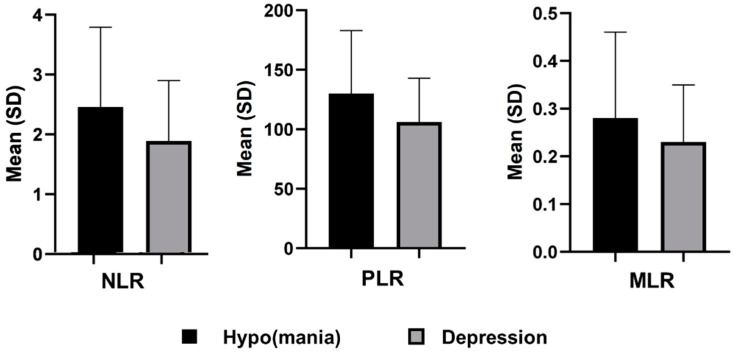
- NLR (2.46 ± 1.33 vs. 1.89 ± 1.01, p < 0.001), PLR (130.13 ± 52.84 vs. 106.05 ± 36.79, p < 0.001), and MLR (0.28 ± 0.18 vs. 0.23 ± 0.12, p = 0.008) were significantly higher in the (hypo)manic group; effect sizes were medium for NLR and PLR (Cohen’s d = 0.41 and 0.48) and small-to-medium for MLR (d = 0.33).
- In binary logistic regression, only PLR was significantly associated with (hypo)manic illness phase after correcting for age and sex (OR = 1.12, p = 0.03); the model was marginally significant (R² Nagelkerke = 0.32, p = 0.05).
Methods
- Cross-sectional study of 294 inpatients with a primary diagnosis of bipolar disorder consecutively referred to two Italian university hospitals (Genoa and Catania) from January 2017 to December 2019; 143 were experiencing a (hypo)manic episode and 151 a major depressive episode.
- Inclusion criteria were current (hypo)manic or major depressive episode, age ≥18 years, and written informed consent; exclusions included pregnancy/recent childbirth, severe/acute medical comorbidities, clozapine within six months, current substance use disorder, acute neurological injury, and inability/refusal to consent.
- Blood samples were drawn in the morning of the first hospitalization day after 12 h fasting, processed within 30 min by flow cytometry; analyses used Student’s t-test, Cohen’s d, and binary logistic regression correcting for age and gender, with p < 0.05.
Limitations
- The paper states it did not analyze symptom severity, included only inpatients, did not measure cytokines or CRP, did not consider physiological or pathological conditions potentially affecting inflammatory status as covariates, and did not include euthymic BD patients or healthy controls.
- Evident from the text: the cross-sectional design cannot establish temporal or causal relationships between inflammatory ratios and mood episodes.
- Evident from the text: the regression model corrected only for age and sex, despite most patients taking multiple medications (mean 3.81 ± 1.22 medications; 85.6% on antipsychotics), so medication effects were not adjusted for.
Model-written summary. Check it against the paper before relying on it.
Integrity signals
Registry
Cites
Statistics
Figures
Verification
Claims the paper makes
0 Valid · 1 Not valid · 5 Not checked · 16 Own results and interpretations
A result the paper reports from its own data — it cites no other source for it, so there is none to check. The quote shows it is in the paper.
In the paper
“bipolar patients experiencing a current (hypo)manic episode had a higher number of neutrophils (4.87 ± 1.89 vs. 4.37 ± 1.56, p = 0.014)”
§ Neutrophil-to-Lymphocyte, Platelet-to-Lymphocyte and Monocyte-to-Lymphocyte Ratio in Bipolar Disorder > 3. Results > 3.2. Complete Blood Count and Inflammatory Ratios: Differences between Major Depressive and (Hypo)manic Episode
plainstates an association- Asserted: passes — The authors put it forward as true.
- Checkable: passes — It can be checked against evidence.
- Load-bearing: passes — The paper’s conclusions depend on it.
- Based: passes — The paper gives a reason why it holds.
A result the paper reports from its own data — it cites no other source for it, so there is none to check. The quote shows it is in the paper.
In the paper
“NLR (2.46 ± 1.33 vs. 1.89 ± 1.01, p < 0.001), PLR (130.13 ± 52.84 vs. 106.05 ± 36.79, p < 0.001), and MLR (0.28 ± 0.18 vs. 0.23 ± 0.12, p = 0.008) were significantly higher in the (hypo)manic than depressed group.”
§ Neutrophil-to-Lymphocyte, Platelet-to-Lymphocyte and Monocyte-to-Lymphocyte Ratio in Bipolar Disorder > 3. Results > 3.2. Complete Blood Count and Inflammatory Ratios: Differences between Major Depressive and (Hypo)manic Episode
plainstates an association- Asserted: passes — The authors put it forward as true.
- Checkable: passes — It can be checked against evidence.
- Load-bearing: passes — The paper’s conclusions depend on it.
- Based: passes — The paper gives a reason why it holds.
A result the paper reports from its own data — it cites no other source for it, so there is none to check. The quote shows it is in the paper.
In the paper
“Specifically, effect size was medium for NLR and PLR (Cohen’s d = 0.41 and 0.48, respectively), and small-to-medium for MLR (d = 0.33).”
§ Neutrophil-to-Lymphocyte, Platelet-to-Lymphocyte and Monocyte-to-Lymphocyte Ratio in Bipolar Disorder > 3. Results > 3.2. Complete Blood Count and Inflammatory Ratios: Differences between Major Depressive and (Hypo)manic Episode
plain- Asserted: passes — The authors put it forward as true.
- Checkable: passes — It can be checked against evidence.
- Load-bearing: unclear — It is unclear whether the paper’s conclusions depend on it.
- Based: passes — The paper gives a reason why it holds.
A result the paper reports from its own data — it cites no other source for it, so there is none to check. The quote shows it is in the paper.
In the paper
“and platelets (261.25 ± 68.80 vs. 234.73 ± 58.97, p < 0.001) compared to bipolar patients with a current major depressive episode.”
§ Neutrophil-to-Lymphocyte, Platelet-to-Lymphocyte and Monocyte-to-Lymphocyte Ratio in Bipolar Disorder > 3. Results > 3.2. Complete Blood Count and Inflammatory Ratios: Differences between Major Depressive and (Hypo)manic Episode
plainstates an association- Asserted: passes — The authors put it forward as true.
- Checkable: passes — It can be checked against evidence.
- Load-bearing: passes — The paper’s conclusions depend on it.
- Based: passes — The paper gives a reason why it holds.
8 more claims
Create a free account to see all 22 claims and every source verdict.
- Probably not a substantial claim. 6
- It may state two separate claims as one. 6
Claims other papers make about this one
Each is checked against this paper’s own text: does it say what the citing paper says it does?
The cited source says what the claim attributes to it.
In the citing paper
“some studies also pointed out differences in these markers according to the specific affective disorder (i.e., BD vs. MDD) [50] and/or mood episode (manic vs. depressive) [51,52,53,54]”
From Immune Cell Ratios Are Higher in Bipolar Affective than Unipolar Depressive Disorder and Modulated by Mood Episode: A Retrospective, Cross-Sectional Study (2023) · cites this paper as [52]
In the citing paper
“Partially in line with previous reports (56) that N/L ratio is higher in BDM than in BDD or MDD”
From Are serum levels of inflammatory markers associated with the severity of symptoms of bipolar disorder? (2023) · cites this paper as [56]
In the citing paper
“These biomarkers appear to be associated with mood disorders, supporting the inflammatory hypothesis underlying the etiopathogenesis of these conditions40,42.”
From Optimizing multi-domain hematologic biomarkers and clinical features for the differential diagnosis of unipolar depression and bipolar depression (2023) · doi:10.1038/s44184-023-00024-z · cites this paper as [42]
Self-check
Percentages, sums and reported differences re-computed from the paper’s own numbers.
Rated minor: it would not touch a result — a value no result rests on, a p-value that stays on the same side of the significance level, or a conflict that is clerical, resolved elsewhere in the paper, or outside its own findings.
In the paper
“One-hundred fifty-one (53.4%) were females”
§ Neutrophil-to-Lymphocyte, Platelet-to-Lymphocyte and Monocyte-to-Lymphocyte Ratio in Bipolar Disorder > 3. Results > 3.1. General Characteristics of the Sample
Reported 53.4 · recomputed 51.360544
Citations
Cites
Diagnostic and Statistical Manual of Mental Disorders
American Psychiatric Association (2013) · doi:10.1176/appi.books.9780890425596 · Cited by 116,369
From inflammation to sickness and depression: when the immune system subjugates the brain
Dantzer, R., O'Connor, J. C., Freund, G. G., Johnson, R. W., & Kelley, K. W. (2008) · Nature Reviews Neuroscience · doi:10.1038/nrn2297 · Cited by 7,395
Zahorec, R. (2001) · Bratislava Medical Journal · doi:10.1007/bf03656390 · Cited by 1,601 · cited 1×
“Of note, NLR was originally developed by intensivists to provide a suitable parameter that could reflect the intensity of stress and/or systemic inflammation in critically ill patients [41], and the cytokine cascade following systemic inflammation appears notably associated with mood disorders [42,43].”
BackgroundNeuroinflammation and psychiatric illness
Najjar, S., Pearlman, D. M., Alper, K., Najjar, A., & Devinsky, O. (2013) · Journal of Neuroinflammation · doi:10.1186/1742-2094-10-43 · Cited by 733
Depression and sickness behavior are Janus-faced responses to shared inflammatory pathways
Maes, M., Berk, M., Goehler, L., Song, C., Anderson, G., Gałecki, P., & Leonard, B. (2012) · BMC Medicine · doi:10.1186/1741-7015-10-66 · Cited by 629 · cited 1×
“Indeed, immunity and inflammatory imbalance may affect mental functioning from the earliest stages of neural development [5,6].”
BackgroundKim, Y.-K., Na, K.-S., Myint, A.-M., & Leonard, B. E. (2016) · Progress in Neuro-Psychopharmacology and Biological Psychiatry · doi:10.1016/j.pnpbp.2015.06.008 · Cited by 620 · cited 1×
“Of note, NLR was originally developed by intensivists to provide a suitable parameter that could reflect the intensity of stress and/or systemic inflammation in critically ill patients [41], and the cytokine cascade following systemic inflammation appears notably associated with mood disorders [42,43].”
BackgroundThe effects of serotonin in immune cells
Herr, N., Bode, C., & Duerschmied, D. (2017) · Frontiers in Cardiovascular Medicine · doi:10.3389/fcvm.2017.00048 · Cited by 497
Rao, J. S., Harry, G. J., Rapoport, S. I., & Kim, H. W. (2010) · Molecular Psychiatry · doi:10.1038/mp.2009.47 · Cited by 432 · cited 1×
“Of note, alterations in the inflammatory pathways are not limited to peripheral markers, as the presence of brain excitotoxicity and inflammation in patients with BD has been detected both in vivo [14] and post mortem [15].”
BackgroundComparison of cytokine levels in depressed, manic and euthymic patients with bipolar disorder
Brietzke, E., Stertz, L., Fernandes, B. S., Kauer-Sant’Anna, M., Mascarenhas, M., Escosteguy Vargas, A., Chies, J. A., & Kapczinski, F. (2009) · Journal of Affective Disorders · doi:10.1016/j.jad.2008.12.001 · Cited by 423
Preoperative neutrophil-lymphocyte ratio and outcome from coronary artery bypass grafting
Gibson, P. H., Croal, B. L., Cuthbertson, B. H., Small, G. R., Ifezulike, A. I., Gibson, G., Jeffrey, R. R., Buchan, K. G., El-Shafei, H., & Hillis, G. S. (2007) · American Heart Journal · doi:10.1016/j.ahj.2007.06.043 · Cited by 382 · cited 1×
“Importantly, these parameters seem less affected by exercise, catecholamine release, and other confounding conditions than single leukocyte parameters or other commonly used markers of inflammation [52].”
Background
Cited by
Neutrophil-lymphocyte ratios as inflammatory biomarkers in psychiatric patients
Bhikram, T., & Sandor, P. (2022) · Brain, Behavior, and Immunity · doi:10.1016/j.bbi.2022.07.006 · Cited by 103
Dionisie, V., Filip, G. A., Manea, M. C., Movileanu, R. C., Moisa, E., Manea, M., Riga, S., & Ciobanu, A. M. (2021) · Journal of Clinical Medicine · doi:10.3390/jcm10091924 · Cited by 82
Catatonia: demographic, clinical and laboratory associations
Rogers, J. P., Pollak, T. A., Begum, N., Griffin, A., Carter, B., Pritchard, M., Broadbent, M., Kolliakou, A., Ke, J., Stewart, R. J., et al. (2021) · Psychological Medicine · doi:10.1017/s0033291721004402 · Cited by 76
Puangsri, P., & Ninla-aesong, P. (2021) · Psychiatry Research · doi:10.1016/j.psychres.2021.114216 · Cited by 62
Wei, Y., Feng, J., Ma, J., Chen, D., & Chen, J. (2022) · Journal of Affective Disorders · doi:10.1016/j.jad.2022.04.092 · Cited by 56
Dadouli, K., Janho, M. B., Hatziefthimiou, A., Voulgaridi, I., Piaha, K., Anagnostopoulos, L., Ntellas, P., Mouchtouri, V. A., Bonotis, K., Christodoulou, N., et al. (2022) · Brain Sciences · doi:10.3390/brainsci12081034 · Cited by 57
Amitai, M., Kaffman, S., Kroizer, E., Lebow, M., Magen, I., Benaroya-Milshtein, N., Fennig, S., Weizman, A., Apter, A., & Chen, A. (2022) · Brain, Behavior, and Immunity · doi:10.1016/j.bbi.2022.04.018 · Cited by 51
Wei, Y., Feng, J., Ma, J., Chen, D., Xu, H., Yin, L., & Chen, J. (2022) · BMC Psychiatry · doi:10.1186/s12888-022-03775-9 · Cited by 48
“Previous studies showed that neutrophils were significantly higher in patients experiencing a manic episode than in depressed individuals, and the lymphocyte levels did not differ between the two groups [42], which is consistent with the results of our study.”
ResultArbănași, E. M., Mureșan, A. V., Coșarcă, C. M., Kaller, R., Bud, T. I., Hosu, I., Voidăzan, S. T., Arbănași, E. M., & Arbănași, E. M. (2022) · Life · doi:10.3390/life12060822 · Cited by 46
Fusar‐Poli, L., Gabbiadini, A., Ciancio, A., Vozza, L., Signorelli, M. S., & Aguglia, E. (2021) · Critical Reviews in Food Science and Nutrition · doi:10.1080/10408398.2021.1920570 · Cited by 46
Self-citationEpigenetic GrimAge acceleration and cognitive impairment in bipolar disorder
Lima, C. N. D. C., Suchting, R., Scaini, G., Cuellar, V. A., Favero-Campbell, A. D., Walss‐Bass, C., Soares, J. C., Quevedo, J., & Fries, G. R. (2022) · European Neuropsychopharmacology · doi:10.1016/j.euroneuro.2022.06.007 · Cited by 44
Neutrophil-to-Lymphocyte Ratio Predicts in-Hospital Mortality in Intracerebral Hemorrhage
Li, L., Zhang, H., & Feng, G. (2022) · Journal of Stroke and Cerebrovascular Diseases · doi:10.1016/j.jstrokecerebrovasdis.2022.106611 · Cited by 32
Zheng, Q., Liu, J., Ji, Y., Zhang, Y., Chen, X., & Liu, B. (2022) · BMC Psychiatry · doi:10.1186/s12888-022-04260-z · Cited by 26
Fusar‐Poli, L., Amerio, A., Cimpoesu, P., Filioli, P. G., Natale, A., Zappa, G., Aguglia, E., Amore, M., Serafini, G., & Aguglia, A. (2021) · Brain Sciences · doi:10.3390/brainsci11030363 · Cited by 28
Self-citationWu, X., Chen, Z., Liao, Y., Yang, Z., Liang, X., Guan, N., & Gan, Z. (2023) · Frontiers in Psychiatry · doi:10.3389/fpsyt.2022.1063479 · Cited by 23
“Partially in line with previous reports (56) that N/L ratio is higher in BDM than in BDD or MDD, our study finds that N/L ratio is significantly higher in severe BDM than in HC, suggesting an imbalance in favor of innate immunity (57).”
ResultKorkmaz, Ş. A., Kızgın, S., Oğuz, E. F., Neşelioğlu, S., & Erel, Ö. (2023) · Journal of Affective Disorders · doi:10.1016/j.jad.2023.07.079 · Cited by 24
Xu, D., Liu, G., Zhao, M., Wan, X., Qu, Y., Murayama, R., & Hashimoto, K. (2024) · Journal of Affective Disorders · doi:10.1016/j.jad.2024.08.222 · Cited by 23
Lengvenytė, A., Strumila, R., Belzeaux-R, R., Aouizerate, B., Dubertret, C., Haffen, É., Llorca, P., Roux, P., Polosan, M., Schwan, R., et al. (2022) · Brain Behavior and Immunity · doi:10.1016/j.bbi.2022.12.002 · Cited by 21
Chumakov, E. M., Dorofeikova, M., Александровна, Ц. К., & Petrova, N. (2022) · Frontiers in Psychiatry · doi:10.3389/fpsyt.2022.943869 · Cited by 20
Juchnowicz, D., Dzikowski, M., Róg, J., Waszkiewicz, N., Karakuła, K. H., Zalewska, A., Maciejczyk, M., & Karakuła‐Juchnowicz, H. (2023) · PLoS ONE · doi:10.1371/journal.pone.0292756 · Cited by 15
Postolache, T. T., Medoff, D. R., Brown, C. H., Fang, L., Upadhyaya, S. K., Lowry, C. A., Miller, M. J., & Kreyenbuhl, J. A. (2021) · Pteridines · doi:10.1515/pteridines-2020-0028 · Cited by 12
Khalil, R. B., Risch, N., Sleilaty, G., Richa, S., Sénèque, M., Lefebvre, P., Sultan, A., Avignon, A., Maïmoun, L., Renard, É., et al. (2022) · Eating and Weight Disorders - Studies on Anorexia Bulimia and Obesity · doi:10.1007/s40519-022-01372-z · Cited by 18
Bipolar Disorder and Polysubstance Use Disorder: Sociodemographic and Clinical Correlates
Aguglia, A., Natale, A., Fusar‐Poli, L., Amerio, A., Bruno, E., Placenti, V., Vai, E., Costanza, A., Serafini, G., Aguglia, E., et al. (2022) · Frontiers in Psychiatry · doi:10.3389/fpsyt.2022.913965 · Cited by 18
Self-citationXu, H., Zheng, L., Wang, L., Gao, H., Wei, Y., & Chen, J. (2023) · Neuropsychiatric Disease and Treatment · doi:10.2147/ndt.s423399 · Cited by 13
Gorbunova, A. P., Rukavishnikov, G. V., Kasyanov, E. D., & Mazo, G. E. (2024) · V M BEKHTEREV REVIEW OF PSYCHIATRY AND MEDICAL PSYCHOLOGY · doi:10.31363/2313-7053-2024-794 · Cited by 20
Villegas García, L., Patró, E., Barbero, J. D., Esteve-Valverde, E., Palao, D. J., Soria, V., Labad, J., & Cobo, J. (2025) · Psychoneuroendocrinology · doi:10.1016/j.psyneuen.2024.107209 · Cited by 15
(2022) · doi:10.1101/2022.04.26.22274241 · Cited by 12
Tan, Y., Yu, S., Cao, Y., Guo, X., Tang, W., Zou, X., Jia, X., & Wang, C. (2024) · Journal of Affective Disorders · doi:10.1016/j.jad.2024.08.179 · Cited by 12
The association between gamma-aminobutyric acid levels and suicidal behavior in depression
Shao, Q., Geng, M., Ji, Z., Dong, J., Wang, H., Yang, Z., & Wang, C. (2025) · BMC Psychiatry · doi:10.1186/s12888-025-07056-z · Cited by 12
(2023) · doi:10.1038/s44184-023-00024-z · Cited by 12
Rau, C., Wu, S., Tsai, C., Chou, S.-E., Su, W.-T., Hsu, S.-Y., & Hsieh, C. (2022) · Healthcare · doi:10.3390/healthcare10081384 · Cited by 14
Xue, L., Lewis, E. T., Bocharova, M., Young, A. H., & Aarsland, D. (2025) · Brain Behavior and Immunity · doi:10.1016/j.bbi.2025.01.029 · Cited by 12
Blood cell ratios in mood and cognitive outcomes following electroconvulsive therapy
Ryan, K. M., Lynch, M., & McLoughlin, D. M. (2022) · Journal of Psychiatric Research · doi:10.1016/j.jpsychires.2022.11.016 · Cited by 12
Safari, H., & Mashayekhan, S. (2023) · Current Pharmaceutical Design · doi:10.2174/0113816128251883231031054700 · Cited by 14
Investigation of peripheral inflammatory biomarkers in association with violence in schizophrenia
Yu, T., Pei, W., Xu, C., Zhang, X., & Deng, C. (2024) · BMC Psychiatry · doi:10.1186/s12888-024-05966-y · Cited by 13
Koureta, A., Asimakopoulos, L. O., Bozikas, V. P., & Agorastos, A. (2023) · Brain Sciences · doi:10.3390/brainsci13030448 · Cited by 12
“found higher immune ratios in mania compared to depression in individuals with BD [52], while Dadouli et al.”
ResultNguyen, K. D., Amerio, A., Aguglia, A., Magnani, L., Parise, A., Conio, B., Serafini, G., Amore, M., & Costanza, A. (2023) · Cells · doi:10.3390/cells12162099 · Cited by 14
Self-citationMojadadi, M., Mahjour, M., Fahimi, H., Raoofi, A., & Shobeiri, S. S. (2023) · Behavioural Brain Research · doi:10.1016/j.bbr.2023.114807 · Cited by 12
Xu, H., Li, R., Wang, L., Wang, T., Luo, Y., Wei, Y., & Chen, J. (2023) · Journal of Affective Disorders · doi:10.1016/j.jad.2022.11.017 · Cited by 9
Huang, J., Hou, X., Li, M., Xue, Y., An, J., Wen, S., Wang, Z., Cheng, M., & Yue, J. (2023) · BMC Psychiatry · doi:10.1186/s12888-023-05204-x · Cited by 11
Su, L., Shuai, Y., Mou, S., Shen, Y., Shen, X., Shen, Z., & Zhang, X. (2022) · Frontiers in Psychiatry · doi:10.3389/fpsyt.2022.1017888 · Cited by 10
Ota, K., Shinzato, H., Otsuka, N., Zamami, Y., Kurihara, K., Futenma, K., Kondo, T., & Takaesu, Y. (2025) · Scientific Reports · doi:10.1038/s41598-025-92437-3 · Cited by 10
Zhang, J., Liu, C., Hu, Y., Yang, A., Zhang, Y., & Hong, Y. (2023) · Frontiers in Neurology · doi:10.3389/fneur.2023.1189898 · Cited by 11
Esposito, C. M., Barkin, J. L., Ceresa, A., Nosari, G., Paolo, M. D., Legnani, F., Cirella, L., Surace, T., Tagliabue, I., Capuzzi, E., et al. (2023) · Journal of Clinical Medicine · doi:10.3390/jcm12185902 · Cited by 7
Matsuo, K., Watanabe, M., Inamine, S., Matsushima, T., Kyuragi, S., Maeda, Y., Katsuki, R., Ohgidani, M., Yamasaki, R., Isobe, N., et al. (2025) · Dialogues in Clinical Neuroscience · doi:10.1080/19585969.2025.2452842 · Cited by 7
Dirani, E., Khalil, R. B., Raad, G., & Richa, S. (2022) · Journal of Dual Diagnosis · doi:10.1080/15504263.2022.2090650 · Cited by 5
Liu, X., Li, Y., Yang, W., Chen, X., Li, F., Chen, N., Yin, H., & Cui, J. (2025) · Journal of Affective Disorders · doi:10.1016/j.jad.2025.02.040 · Cited by 7
Clinical Markers of Physical Violence in Patients with Bipolar Disorder in Manic States
Li, X., Gao, Y., Liu, Y., Wang, Y., & Wu, Q. (2023) · Risk Management and Healthcare Policy · doi:10.2147/rmhp.s403170 · Cited by 6
Impact of electroconvulsive therapy on inflammatory markers in patients with severe mental disorders
Balcioglu, S. S. K., Kılıçtutan, A., Özer, D., Güçlü, O., & Namli, M. N. (2025) · Journal of Psychiatric Research · doi:10.1016/j.jpsychires.2025.01.036 · Cited by 11
Paniagua, G., González-Blanco, L., Sáiz, P. A., Moya-Lacasa, C., Gutiérrez, L., Martínez-Botía, P., Santo, F. D., Jiménez-Treviño, L., García‐Portilla, M. P., & Bobes, J. (2023) · Revista de Psiquiatría y Salud Mental · doi:10.1016/j.sjpmh.2023.03.002 · Cited by 11
Gender Differences in Clinical and Biochemical Variables of Patients Affected by Bipolar Disorder
Piccirilli, L., Capuzzi, E., Legnani, F., Paolo, M. D., Pan, A., Ceresa, A., Esposito, C. M., Cirella, L., Surace, T., Tagliabue, I., et al. (2025) · Brain Sciences · doi:10.3390/brainsci15020214 · Cited by 8
Bidirectional causal effects between bipolar disorder and immune cell traits
Du, J., Baranova, A. V., & Zhang, F. (2025) · Journal of Affective Disorders · doi:10.1016/j.jad.2025.04.146 · Cited by 5
Mengelkoch, S., Alley, J. C., Cole, S. W., & Slavich, G. M. (2024) · Journal of Affective Disorders · doi:10.1016/j.jad.2024.11.024 · Cited by 5
Inflammatory Hematological Ratios in Adolescents with Mental Disorders: A Scoping Review
Popov, M. Y., Popov, Y. V., Kosterin, D. N., & Lepik, O. V. (2024) · Consortium Psychiatricum · doi:10.17816/cp15514 · Cited by 12
Drapisz, A., Avrahami, M., Dor, D. H. B., Bustan, Y., Mekori‐Domachevsky, E., Weizman, A., & Barzilay, R. (2022) · International Clinical Psychopharmacology · doi:10.1097/yic.0000000000000412 · Cited by 5
Meta-analysis of the association between gut microbiota and postpartum depression
Guo, Y., & Chen, W. (2025) · Journal of Psychosomatic Obstetrics & Gynecology · doi:10.1080/0167482x.2025.2548567 · Cited by 5
Gui, L., Yu, H., Wei, Y., Huang, Q., Liu, Y., & Fu, Y. (2025) · The European Journal of Psychiatry · doi:10.1016/j.ejpsy.2025.100308 · Cited by 4
Herpes simplex reactivation triggers symptom exacerbation in patients with major depressive disorder
Anis, E., Smart, L., Capan, C. D., Forton, C., Galvis, M. L. E., Sha, Q., Achtyes, E. D., & Brundin, L. (2024) · Journal of Affective Disorders Reports · doi:10.1016/j.jadr.2024.100838 · Cited by 3
Tunç, A. E. B., Çelik, H. E. A., Kendirlioglu, B. K., Kaymakçı, E. Ç., Çiftçi, H. B., DEMİR, Ş., & Küçükgöncü, S. (2025) · Bakirkoy Tip Dergisi / Medical Journal of Bakirkoy · doi:10.4274/bmj.galenos.2024.2024.3-4 · Cited by 6
Zhu, H., Qu, Y., Zhou, Q., Du, Z., Zhou, Z., & Jiang, Y. (2024) · Journal of Psychopharmacology · doi:10.1177/02698811241282613 · Cited by 3
Emelina, D. A., Кравченко, И. В., Makarov, I. V., Gasanov, R. F., & Prokhorenko, E. S. (2024) · Вопросы современной педиатрии · doi:10.15690/vsp.v23i4.2780 · Cited by 3
Bai, Y., Fang, Z., Dai, H., Zhang, Q., & You, P. (2025) · Frontiers in Psychiatry · doi:10.3389/fpsyt.2025.1580151 · Cited by 8
Huang, M., Chen, M., Tu, P., Bai, Y., Su, T., Chan, Y. E., & Li, C. (2025) · CNS Spectrums · doi:10.1017/s1092852925000227 · Cited by 4
Cavaleri, D., Crocamo, C., Riboldi, I., Guzzi, P., Bartoli, F., & Carrà, G. (2026) · European Archives of Psychiatry and Clinical Neuroscience · doi:10.1007/s00406-025-02129-2 · Cited by 2
Zheng, Q., Liu, J., Ji, Y., et al. (2022) · Research Square · doi:10.21203/rs.3.rs-1679507/v1 · Cited by 2
Inflammatory chemokines in adolescents’ suicide state with depressive disorders
Zheng, H., Liu, W., Chen, B., Hu, S., Mo, D., Guo, P., Jiang, X., Yang, R. Z., Wang, S., & Zhong, H. (2025) · Annals of General Psychiatry · doi:10.1186/s12991-025-00571-z · Cited by 3
Evaluation of MMP-9 enzyme in drug-induced suicide cases admitted to the emergency room
Elveren, F., Öztürk, N., & Gür, S. T. A. (2024) · Journal of Psychiatric Research · doi:10.1016/j.jpsychires.2024.10.006 · Cited by 3
Lorenzo, R. D., Scala, C., Reami, M., Rovesti, S., & Ferri, P. (2024) · BMC Public Health · doi:10.1186/s12889-024-20450-8 · Cited by 4
Zhu, J., Shao, J., Wang, P., Liu, Y., Cheng, G., Zhou, Q., Li, Z., Li, J., Wang, M., Zhang, Z., et al. (2025) · Brain Behavior & Immunity - Health · doi:10.1016/j.bbih.2025.101015 · Cited by 2
Fusar‐Poli, L., Aguglia, A., & Albert, U. (2023) · Frontiers in Psychiatry · doi:10.3389/fpsyt.2023.1144943 · Cited by 2
Self-citationFocus on Peripheral Biomarkers of Mental Disorders
Bartoli, F., & Carrà, G. (2022) · Brain Sciences · doi:10.3390/brainsci12060756 · Cited by 1
Ayhan, M. G., INANLI, I., & Erdal, H. (2026) · Journal of Investigative Medicine · doi:10.1177/10815589261448844 · Cited by 2
Effect of Probiotics on the Traumatic Brain Injury
KARAKAYALI, E. M., Kocamaz, E., Alpay, Ş., Önal, T., Öztatlıcı, M., DURUŞMA, R., Özel, H. F., Mete, M., Kutlu, N., & Tuğlu, M. İ. (2022) · Forbes Journal of Medicine · doi:10.4274/forbes.galenos.2022.48658 · Cited by 1
Jeannin, J., Romeo, B. G. P., Lestra, V., Martelli, C., Amirouche, A., Benyamina, A., & Hamdani, N. (2026) · Journal of Psychiatric Research · doi:10.1016/j.jpsychires.2026.02.041 · Cited by 2
Ren, L. (2025) · BMC Psychiatry · doi:10.1186/s12888-025-07247-8 · Cited by 1
Cytokines, Chemokines, and Inflammatory Indicators in Bipolar Disorder
Poletti, S., Dallaspezia, S., & Spadini, S. (2024) · Springer eBooks · doi:10.1007/978-3-031-32035-4_22-1
Vaziri-harami, R., Keyvanfar, A., Semnani, Y., & Najafiarab, H. (2024) · Medical Journal of the Islamic Republic of Iran · doi:10.47176/mjiri.38.53 · Cited by 1
High Mobility Group Box 1 Levels as an Inflammatory Mediator in Bipolar Mania
Kara, A., Balaban, Ö. D., Çınar, B., Oluğ, S. T., Kılıç, C., & Karamustafalıoğlu, N. (2023) · Nöro Psikiyatri Arşivi · doi:10.29399/npa.28599 · Cited by 4
Cytokines, Chemokines, and Inflammatory Indicators in Bipolar Disorder
Poletti, S., Dallaspezia, S., & Spadini, S. (2025) · Springer eBooks · doi:10.1007/978-3-031-73368-0_22
Psychological Autopsy Protocols – A Selective Narrative Review
Sanz‐Gómez, S., Alacreu‐Crespo, A., Vega, D., Perea-González, M. I., Guija, J. A., & Giner, L. (2026) · Current Psychiatry Reports · doi:10.1007/s11920-026-01716-x
Tonyalı, A., Ocakoğlu, B. K., Koç, E. B., Guney, O., Demirci, S., Soykut, A. E., Şallı, B., Şükret, A. L. E. V., & Karaçetin, G. (2026) · Bozok Tıp Dergisi · doi:10.16919/bozoktip.1785971
Neurostructural Differences Associated With Prodromal Mania Symptoms in Children
Archer, C., Milewski, A., Jeong, H. J., Reimann, G. E., Durham, E. L., & Kaczkurkin, A. N. (2025) · Brain and Behavior · doi:10.1002/brb3.70894
Lymphocyte-to-Monocyte Ratio is a Good Marker of Adhesive Capsulitis in Rotator Cuff Tears
Çelik, H., Çeli̇k, İ., Ayanoğlu, T., Arikan, E., & Kayış, S. A. (2023) · Acta Medica Alanya · doi:10.30565/medalanya.1376796
Oxidative stress markers in at-risk individuals for psychosis: A systematic review and meta-analysis
Al-Suleh, M. H., Abunawas, M. J., Jarrar, G., & Arat-Çelik, H. E. (2025) · Journal of Psychiatric Research · doi:10.1016/j.jpsychires.2025.05.060
Júnior, J. I. R. N., Aires, R., Cutrim, T. A. D. S., Vasquez, E. C., Pereira, T. D. M. C., & Campagnaro, B. P. (2025) · Pharmacological Reports · doi:10.1007/s43440-024-00690-6 · Cited by 2
Aslan, M., Paltun, S. C., Ergelen, M., Durmuş, Z., & Baykara, S. (2026) · The American Journal of Drug and Alcohol Abuse · doi:10.1080/00952990.2026.2619091
Grigorian, A., Zou, Y., Kennedy, K. G., Dimick, M. K., MacIntosh, B. J., & Goldstein, B. I. (2025) · Journal of Psychiatry and Neuroscience · doi:10.1503/jpn.250019
Saghir, H. (2024) · Journal of Islamic International Medical College · doi:10.57234/jiimc.december23.1739
(2025) · doi:10.1007/s00406-025-02033-9 · Cited by 1
Yang, M., Fu, Y., Jiang, C., Chen, J., Liu, M., & Liu, J. (2025) · Scientific Reports · doi:10.1038/s41598-025-11460-6 · Cited by 3
Efe, A., & Tok, A. (2023) · Journal of Clinical Psychiatry · doi:10.5505/kpd.2023.23471
Fedai, Ü. A., & Çetin, S. B. (2025) · Çukurova medical journal (Online)/Çukurova medical journal · doi:10.17826/cumj.1733754 · Cited by 1
Metadata
- Authors
- Fusar-Poli, L., Natale, A., Amerio, A., Cimpoesu, P., Grimaldi Filioli, P., Aguglia, E., Amore, M., Serafini, G., & Aguglia, A.
- Affiliations
- Psychiatry Unit, Department of Clinical and Experimental Medicine, University of Catania, 95124 Catania, Italy
- University of Catania (IT)
- Tufts University (US)
- Ospedale Policlinico San Martino (IT)
- Department of Neuroscience, Rehabilitation, Ophthalmology, Genetics, Maternal and Child Health, Section of Psychiatry, University of Genoa, 16126 Genoa, Italy
- Corresponding author
- Aguglia, Andrea
- ORCID
- Venue
- Brain Sciences
- Publisher
- MDPI AG
- Published
- 2021-01-06
- Volume
- 11
- Issue
- 1
- Pages
- 58
- ISSN
- 2076-3425 (ISSN-L)
- PMC
- PMC7825034
- OpenAlex
- W3119807283
- Cited by
- 93
- References
- 54
- Citations by year
- 2026: 7 · 2025: 25 · 2024: 15 · 2023: 18 · 2022: 21 · 2021: 7
- FWCI
- 10.94
- Type
- journal article
- Language
- en
- Open access
- gold
- doi.org
- Licence
- Locations
- Brain Sciences (publishedVersion, cc-by)
- Europe PMC (PubMed Central) (publishedVersion, other-oa)
- PubMed Central (publishedVersion, cc-by)
- PubMed (publishedVersion)
- DOAJ (DOAJ: Directory of Open Access Journals) (submittedVersion, cc-by-sa)
- CINECA IRIS Institutial Research Information System (University of Genoa) (submittedVersion)
- CINECA IRIS Institutial Research Information System (University of Genoa) (submittedVersion, other-oa)
- Funders
- Ministero dell’Istruzione, dell’Università e della Ricerca (LAW 232/2016, 20182022, MIUR 2018-2022, 232/2016)
- Topics
- Health Sciences › Medicine › Psychiatry and Mental health › Bipolar Disorder and Treatment
- Health Sciences › Medicine › Oncology › Inflammatory Biomarkers in Disease Prognosis
- Life Sciences › Neuroscience › Biological Psychiatry › Tryptophan and brain disorders
- Keywords
- bipolar disorder, neutrophil-to-lymphocyte ratio, platelet-to-lymphocyte ratio, monocyte-to-lymphocyte ratio, inflammatory markers, hypomania, depression, mood episodes, peripheral biomarkers, inflammation, mean platelet volume
About these checks
Registry, retraction, Cites and statistics results are computed, not judged, with one exception: a printed reference that no index lists is read once by a model before it counts as a citation error. Claims are extracted by a model and kept only when their quote appears verbatim in the text; each cited source is then checked, with a model’s help, for whether it says what the claim relies on. Those verdicts can be wrong — read the claim’s quote and the cited source before relying on one.
The claim verdicts this report counts are experimental: their accuracy is not yet measured.
A language model drew the claims from the paper on 2026-10-10, under version 3 of the claim definition (model deepseek-v4.1-flash, prompt extract-v3).
A second model labelled each claim on 2026-10-10 (model jev-1.13-20260917, definition revision gold-guideline-v0.2).
Statistics and arithmetic are recomputed, not judged.
Confidence bands are shown only for fields calibrated on our annotated test set. None is calibrated yet, so no band is shown.
What counts as a claim ›How we measure confidence ›How we check this ›
Are you an author, or do you see a problem with this page? Request a review
Data sources
Bibliographic data: Semantic Scholar, OpenAlex, Crossref.
Contains information from the Semantic Scholar Academic Graph Datasets, made available under the ODC Attribution License (ODC-BY 1.0).
Semantic Scholar’s data is described in: Kinney, R., et al. (2023). The Semantic Scholar Open Data Platform. arXiv:2301.10140.
