

TLR-Mediated Signal Transduction and Neurodegenerative Disorders
Open accessThe DOI matches its Crossref record; 62 of the 63 references it cites were found in a registry or an index.
Abstract
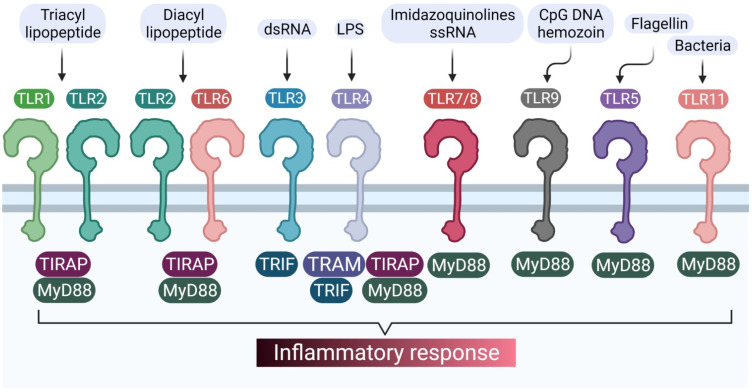
A special class of proteins called Toll-like receptors (TLRs) are an essential part of the innate immune system, connecting it to the adaptive immune system. There are 10 different Toll-Like Receptors that have been identified in human beings. TLRs are part of the central nervous system (CNS), showing that the CNS is capable of the immune response, breaking the long-held belief of the brain’s “immune privilege” owing to the blood–brain barrier (BBB). These Toll-Like Receptors are present not just on the resident macrophages of the central nervous system but are also expressed by the neurons to allow them for the production of proinflammatory agents such as interferons, cytokines, and chemokines; the activation and recruitment of glial cells; and their participation in neuronal cell death by apoptosis. This study is focused on the potential roles of various TLRs in various neurodegenerative diseases such as Parkinson’s disease (PD) and Alzheimer’s disease (AD), namely TLR2, TLR3, TLR4, TLR7, and TLR9 in AD and PD in human beings and a mouse model.
Overview
The claims and statistics of this paper haven’t been checked yet.
Free: it reads the open-access text and checks the first 5 claims that cite a source we can check. Create a free account to check every claim.
Integrity signals
Registry
Cites
Statistics
Figures
Verification
Claims the paper makes
The claims and statistics of this paper haven’t been checked yet.
Free: it reads the open-access text and checks the first 5 claims that cite a source we can check. Create a free account to check every claim.
Claims other papers make about this one
Each is checked against this paper’s own text: does it say what the citing paper says it does?
The cited source says what the claim attributes to it.
In the citing paper
“TLRs are widely expressed in neural cells, including microglia, astrocytes, oligodendrocytes, neurons and so on.281”
From Role of neuroinflammation in neurodegeneration development (2023) · cites this paper as [281]
Self-check
Percentages, sums and reported differences re-computed from the paper’s own numbers.
The self-check needs the paper’s full text.
Citations
Cites
1 retracted
RETRACTED ARTICLE: miR-599 inhibits proliferation and invasion of glioma by targeting periostin
Zhang, T., Ma, G., Zhang, Y., Huo, H., & Zhao, Y. (2017) · Biotechnology Letters · doi:10.1007/s10529-017-2365-7 · Cited by 25
RetractedDefective LPS Signaling in C3H/HeJ and C57BL/10ScCr Mice: Mutations in Tlr4 Gene
Poltorak, A., He, X., Smirnova, I., Liu, M.-Y., Huffel, C. V., Du, X., Birdwell, D., Alejos, E., Silva, M., Galanos, C., et al. (1998) · Science · doi:10.1126/science.282.5396.2085 · Cited by 7,631
Takeda, K., Kaisho, T., & Akira, S. (2003) · Annual Review of Immunology · doi:10.1146/annurev.immunol.21.120601.141126 · Cited by 6,143
Role of Adaptor TRIF in the MyD88-Independent Toll-Like Receptor Signaling Pathway
Yamamoto, M., Sato, S., Hemmi, H., Hoshino, K., Kaisho, T., Sanjo, H., Takeuchi, O., Sugiyama, M., Okabe, M., Takeda, K., et al. (2003) · Science · doi:10.1126/science.1087262 · Cited by 3,235
Toll-Like Receptor Signaling Pathways
Kawasaki, T., & Kawai, T. (2014) · Frontiers in Immunology · doi:10.3389/fimmu.2014.00461 · Cited by 3,233
Structure of an IκBα/NF-κB Complex
Jacobs, M. D., & Harrison, S. C. (1998) · Cell · doi:10.1016/s0092-8674(00)81698-0 · Cited by 821
An unconventional role for miRNA: let-7 activates toll-like receptor 7 and causes neurodegeneration
Lehmann, S. M., Krüger, C., Park, B., Derkow, K., Rosenberger, K., Baumgart, J., Trimbuch, T., Eom, G., Hinz, M., Kaul, D., et al. (2012) · Nature Neuroscience · doi:10.1038/nn.3113 · Cited by 786
What is immune privilege (not)?
Galea, I., Bechmann, I., & Perry, V. H. (2007) · Trends in Immunology · doi:10.1016/j.it.2006.11.004 · Cited by 768 · cited 1×
“This regulation process is indispensable for damage limitation and mitigation in this sensitive organ [20].”
BackgroundToll‐like receptor 4 is required for α‐synuclein dependent activation of microglia and astroglia
Fellner, L., Irschick, R., Schanda, K., Reindl, M., Klimaschewski, L., Poewe, W., Wenning, G. K., & Stefanova, N. (2013) · Glia · doi:10.1002/glia.22437 · Cited by 697
MyD88: a central player in innate immune signaling
Deguine, J., & Barton, G. M. (2014) · F1000Prime Reports · doi:10.12703/p6-97 · Cited by 692 · cited 1×
“MyD88 is a pivotal molecule in the modulation of the innate immune response because it is the adaptor known to transduce the signal from TLRs by activation of IL-1 receptor associated kinases (IRAKs) via homotypic protein–protein interaction, which eventually leads to the activation of nuclear factor-kappa B (NFκB), m…”
Background
Cited by
Role of neuroinflammation in neurodegeneration development
Zhang, W., Xiao, D., Mao, Q., & Xia, H. (2023) · Signal Transduction and Targeted Therapy · doi:10.1038/s41392-023-01486-5 · Cited by 1,668
“TLRs are widely expressed in neural cells, including microglia, astrocytes, oligodendrocytes, neurons and so on.(281) It has been reported that TLRs are upregulated in the brains of patients with neurodegenerative diseases.”
BackgroundAllicin, an Antioxidant and Neuroprotective Agent, Ameliorates Cognitive Impairment
Nadeem, M. S., Kazmi, I. A., Ullah, I., Muhammad, K., & Anwar, F. (2021) · Antioxidants · doi:10.3390/antiox11010087 · Cited by 157
“The toll like receptors (TLRs) are important components of immune system that recognize foreign ligands and induce inflammation by the activation of corresponding signaling molecules [112,113].”
BackgroundToll-like receptor-mediated neuroinflammation: relevance for cognitive dysfunctions
Squillace, S., & Salvemini, D. (2022) · Trends in Pharmacological Sciences · doi:10.1016/j.tips.2022.05.004 · Cited by 117
Saber, M. M., Monir, N., Awad, A. S., Elsherbiny, M. E., & Zaki, H. F. (2022) · Life Sciences · doi:10.1016/j.lfs.2022.120874 · Cited by 64
Mitochondrial DNA and Inflammation in Alzheimer’s Disease
Galizzi, G., & Carlo, M. D. (2023) · Current Issues in Molecular Biology · doi:10.3390/cimb45110540 · Cited by 44
“The activation of the TLR9/NF-κ B pathway promotes inflammation by inducing the expression of TNF-α [140,141], IFN-I, and pro-inflammatory cytokines [142,143] (Figure 2).”
BackgroundNeuroinflammaging: A Tight Line Between Normal Aging and Age-Related Neurodegenerative Disorders
Soraci, L., Corsonello, A., Paparazzo, E., Montesanto, A., Piacenza, F., Olivieri, F., Gambuzza, M. E., Savedra, E. V., Marino, S., Lattanzio, F., et al. (2024) · Aging and Disease · doi:10.14336/ad.2023.1001 · Cited by 81
“Similarly, prolonged activation of astrocyte TLR2 and TLR4 has been observed in AD and PD pathology [122, 123].”
BackgroundYang, R., Wang, R., Xu, A., Zhang, J., & Ma, J. (2024) · Frontiers in Pharmacology · doi:10.3389/fphar.2024.1425731 · Cited by 41
Intermittent fasting and neurodegenerative diseases: Molecular mechanisms and therapeutic potential
Lv, R., Liu, B., Jiang, Z., Zhou, R., Liu, X., Lu, T., Bao, Y., Huang, C., Zou, G., Zhang, Z., et al. (2024) · Metabolism · doi:10.1016/j.metabol.2024.156104 · Cited by 37
Ha, Y., Jo, H.-S., Kwon, T. W., Jeon, S. H., Moon, S., Jung, J. H., Kim, M. S., Nah, S.-Y., Lee, J. K., & Cho, I. (2025) · Journal of Ginseng Research · doi:10.1016/j.jgr.2025.02.002 · Cited by 29
“The phagocytic activity of microglia towards A β appears to be influenced by TLR2 activation, as A β acts as an agonist for microglial TLR2 [52].”
Effects of quercetin in preclinical models of Parkinson's disease: A systematic review
Vian, C. D. O., Marinho, M. A. G., Marques, M. D. S., Hort, M. A., Cordeiro, M. F., & Horn, A. P. (2024) · Basic & Clinical Pharmacology & Toxicology · doi:10.1111/bcpt.14011 · Cited by 29
“76,79 QUE was also reported to worsen PD symptoms under certain conditions, as loss of dopaminergic neurons and PD symptoms were aggravated in a LC-induced PD model.”
BackgroundZou, H., Chen, X., Lu, J., Zhou, W., Zou, X., Wu, H., Li, Z., & Zhou, X. (2023) · Neurochemistry International · doi:10.1016/j.neuint.2023.105625 · Cited by 25
Jadhav, V. S., & Khatri, D. K. (2025) · Ageing Research Reviews · doi:10.1016/j.arr.2025.102872 · Cited by 24
Viruses and neurodegeneration: a growing concern
Shouman, S., Hesham, N., & Salem, T. Z. (2025) · Journal of Translational Medicine · doi:10.1186/s12967-024-06025-6 · Cited by 21
“Although TLRs are expressed mostly on monocyte ‒ macrophages and dendritic cells (DCs) [37], they are also expressed on astrocytes, microglia, oligodendrocytes, and neurons [38].”
Unique Features of the Immune Response in BTBR Mice
Mutovina, A., Ayriyants, K. A., Mezhlumyan, E. V., Ryabushkina, Y. A., Litvinova, E. A., Bondar, N. P., Khantakova, J. N., & Reshetnikov, V. V. (2022) · International Journal of Molecular Sciences · doi:10.3390/ijms232415577 · Cited by 15
“Furthermore, a proinflammatory response of cells to the induction of various types of TLRs strongly depends on the sequence of treatments with various agents and the time interval between Int.”
BackgroundInfluentialIntestinal-pulmonary axis: a ‘Force For Good’ against respiratory viral infections
Zhu, J., Huang, Z., Lin, Y., Zhu, W., Zeng, B., & Tang, D. (2025) · Frontiers in Immunology · doi:10.3389/fimmu.2025.1534241 · Cited by 22
Regulation of inflammation and immunity in sepsis by E3 ligases
Shao, S., Zhou, D., Feng, J., Liu, Y., Baturuhu, Yin, H., & Zhan, D. (2023) · Frontiers in Endocrinology · doi:10.3389/fendo.2023.1124334 · Cited by 14
Yang, Z., Chen, J., Zhang, C., & Peng, H. (2024) · Frontiers in Microbiology · doi:10.3389/fmicb.2024.1512233 · Cited by 17
Temporal profiling and validation of oxidative stress-related genes in spinal cord injury
Liu, G., Deng, B., Huo, L., Jiang, S., Fan, X. L., Mo, Y., Ren, J., Zhao, Y., Xu, L., & Mu, X. (2023) · Brain Research Bulletin · doi:10.1016/j.brainresbull.2023.110832 · Cited by 9
“They can modulate OS through multiple signaling pathways [46, 47], with Tlr2 being implicated in the pathological mechanisms of neurodegenerative disorders [48].”
BackgroundCheng, N., Cheng, X., Tan, F., Liang, Y., Xu, L., Wang, J., & Tan, J. (2024) · Acupuncture in Medicine · doi:10.1177/09645284231211600 · Cited by 9
Ma, Z., Yang, F., Fan, J., Li, X., Liu, Y., Chen, W., Sun, H., Ma, T., Wang, Q., Maihaiti, Y., et al. (2022) · Frontiers in Aging Neuroscience · doi:10.3389/fnagi.2022.968190 · Cited by 8
“Another TLR family member, TLR4, induces a pro-inflammatory response to Aβ by stimulating the activation of microglia, uptake and clearance of Aβ, and neuronal apoptosis (Adhikarla et al., 2021).”
BackgroundYan, X., Li, Q., Wu, S., Jie, L., Li, Y., Zhang, T., Chen, D., & Pan, X. (2023) · Food and Chemical Toxicology · doi:10.1016/j.fct.2023.113775 · Cited by 6
Zhou, Q., Luo, H., Wang, X., Li, P., Kong, H., & He, B. (2022) · Neuropsychiatric Disease and Treatment · doi:10.2147/ndt.s371950 · Cited by 5
“6 After TLR4 activation, the nuclear factor kappa B (NF-κB) participates in the transcriptional regulation of apoptotic genes by regulating downstream proteins, ultimately leading to the activation of caspase-3.”
BackgroundArreguín-Cano, J. A., Santana-Delgado, S. A., Villegas‐Mercado, C. E., Orozco-Molina, G. G., Gonzalez-Acosta, A., & Bermúdez, M. (2026) · Frontiers in Clinical Diabetes and Healthcare · doi:10.3389/fcdhc.2026.1791782 · Cited by 7
“TLR2 signaling has been linked not only to AD but also to PD and other neurodegenerative disorders (72).”
Chen, L., Xiong, S., Zhou, X., & Fu, Q. (2024) · Immunity Inflammation and Disease · doi:10.1002/iid3.1320 · Cited by 5
“…Therefore, TLR4 is widely involved in a variety of neurological diseases, such as cerebral infarction, 23 cerebral hemorrhage, 24 neurodegeneration, 25 and mood disorders, including depression, 26 and TLR4 ‐ deficient mice exhibit improvements in neurological and/or behavioral outcomes in various…”
BackgroundJúnior, O. V. R., Silveira, J. S., Gusso, D., Prauchner, G. R. K., Deniz, B. F., de Almeida, W., Pereira, L. O., & Wyse, Â. T. D. S. (2024) · Chemico-Biological Interactions · doi:10.1016/j.cbi.2024.111260 · Cited by 5
Cnpy3 mice reveal neuronal expression of Cnpy3 in the brain
Islam, M. M., Mutoh, H., Aoto, K., Belal, H., & Saitsu, H. (2022) · Journal of Neuroscience Methods · doi:10.1016/j.jneumeth.2022.109730 · Cited by 5
New Insights into Molecular Mechanisms Underlying Neurodegenerative Disorders
Villa, C., Paudel, Y. N., & Piperi, C. (2022) · Brain Sciences · doi:10.3390/brainsci12091190 · Cited by 4
“A critical evaluation of several studies from animal models and humans highlights the important role of TLR2, TLR3, TLR4, TLR7, and TLR9 in Parkinson’s disease (PD) and Alzheimer’s disease (AD) [1].”
BackgroundSelf-citationLet-7 Family as a Mediator of Exercise on Alzheimer’s Disease
Ke, S., Liu, Z., & Wan, Y. (2025) · Cellular and Molecular Neurobiology · doi:10.1007/s10571-025-01559-9 · Cited by 7
“Let-7 indirectly modulates this pathway by altering cytokine profiles (Adhikarla et al. 2021; Fiebich et al. 2018).”
Parkinson’s disease: exploring the systemic immune mechanisms through molecular investigations
Mohan, M., Mannan, A., & Singh, T. G. (2025) · Inflammopharmacology · doi:10.1007/s10787-025-01816-9 · Cited by 3
“Other studies showed that TLR2, TLR3, TLR4, TLR7, and TLR9 contribute to immune responses in PD, with neurons and glia producing pro-inflammatory cytokines, linking TLR signaling to neurodegeneration (Adhikarla et al. 2021).”
Association between genetic variants of TLR2, TLR4, TLR9 and schizophrenia
Ayari, F., Chaaben, A. B., Abaza, H., Mihoub, O., Ouni, N., Boukouaci, W., Kharrat, M., Leboyer, M., Guémira, F., Tamouza, R., et al. (2023) · L Encéphale · doi:10.1016/j.encep.2023.05.004 · Cited by 4
Maruko, A., Ito, N., Oshima, K., Nishi, A., Kobayashi, Y., & Okada, N. (2025) · Frontiers in Pharmacology · doi:10.3389/fphar.2025.1600176 · Cited by 4
“Although all of these factors may have detrimental effects on the CNS (Cho, 2019; Luo et al., 2019; Adhikarla et al., 2021), Kampo formulas may restore imbalances in microglial function in SAMP8 mice.”
Oyovwi, M. O., Emojevwe, V. O., Ben‐Azu, B., & Jeroh, E. (2025) · Molecular Neurobiology · doi:10.1007/s12035-025-05446-8 · Cited by 3
“Defects in TLR9 signaling have been implicated in neurodegenerative diseases such as Alzheimer's disease and Parkinson's disease [32].”
Wei, X.-Y., Ding, Y., Wang, L., Zhang, Q., Wang, C., Chen, C., You, S., Wu, M.-M., & Kuang, F. (2023) · Neuroreport · doi:10.1097/wnr.0000000000001939 · Cited by 2
Kinin B1 receptor and TLR4 interaction in inflammatory response
Batista, C., Cruz, J. V. R., Stipursky, J., Mendes, F. A., & Pesquero, J. B. (2024) · Inflammation Research · doi:10.1007/s00011-024-01909-1 · Cited by 2
A neurotrophin functioning with a Toll regulates structural plasticity in a dopaminergic circuit
Sun, J., Rojo-Cortés, F., Ulian-Benitez, S., Forero, M. G., Li, G., Singh, D. N., Wang, X., Cachero, S., Moreira, M., Kavanagh, D. P. J., et al. (2024) · eLife · doi:10.7554/elife.102222.3 · Cited by 12
Rosales, J. J., Brunner, M. B., Marin, M. S., & Pérez, S. (2025) · Veterinary Microbiology · doi:10.1016/j.vetmic.2025.110424 · Cited by 2
PM2.5 produced during cooking triggers impairments in the olfactory system of mice
Zhu, N., Xu, T., Wei, S., Wang, L., Wang, H., Cao, M., Song, Y., & Yin, D. (2025) · Journal of Environmental Sciences · doi:10.1016/j.jes.2025.03.066 · Cited by 2
Chen, Y., Li, C., Yao, Y., & Yazhen, S. (2025) · Current Medicinal Chemistry · doi:10.2174/0109298673378809250707043350 · Cited by 2
Research Progress of Toll-Like Receptors in Neurosystem-Related Diseases
梁, 欣. (2024) · Advances in Clinical Medicine · doi:10.12677/acm.2024.1492513 · Cited by 1
Liu, B., Zhu, L., Zhang, C., Wang, D., Liu, H., Liu, J., Sun, J., Feng, X., & Yang, W. (2025) · International Journal of Molecular Sciences · doi:10.3390/ijms26178533 · Cited by 3
“Notably, MYD88, a key adaptor molecule for TLR and IL-1R signaling, promotes NF-κ B activation and inflammasome priming, thereby indirectly amplifying pyroptosis through synergistic overactivation of the TNF-α and NLRP3 pathways [31,32].”
A neurotrophin functioning with a Toll regulates structural plasticity in a dopaminergic circuitPreprint
Sun, J., Rojo-Cortés, F., Ulian-Benitez, S., Forero, M. G., Li, G., Singh, D. N., Wang, X., Cachero, S., Moreira, M., Kavanagh, D. P. J., et al. (2024) · eLife · doi:10.7554/elife.102222.1 · Cited by 1
SR-B1 receptor targeting in CNS disorders
Soni, R., Modi, A., Khairnar, A., & Shah, J. (2024) · Elsevier eBooks · doi:10.1016/b978-0-443-23841-3.00010-8
Venediktov, A. A., Kuzmin, E. A., Pokidova, K., Oganesyan, D., Stepanian, A. T., Boronikhina, T. V., Piavchenko, G. A., & Kuznetsov, S. L. (2024) · Molekulyarnaya Meditsina (Molecular medicine) · doi:10.29296/24999490-2024-05-02 · Cited by 1
A neurotrophin functioning with a Toll regulates structural plasticity in a dopaminergic circuitPreprint
Sun, J., Rojo-Cortés, F., Ulian-Benitez, S., Forero, M. G., Li, G., Singh, D. N., Wang, X., Cachero, S., Moreira, M., Kavanagh, D. P. J., et al. (2024) · eLife · doi:10.7554/elife.102222.2 · Cited by 1
Honda, K., & Awazu, A. (2025) · PLoS ONE · doi:10.1371/journal.pone.0313733
“…bacteria was reported to play a role in causing AD [62,63], Toll-like receptors were found to participate in neuronal cell death by apoptosis [64,65], MHC class II-expressing cells were suggested to be involved in the degradation of neurons [66], vitamins were reported to affect the…”
Anti-inflammatory and immunomodulating agents
Britten, J. L. (2025) · Elsevier eBooks · doi:10.1016/b978-0-443-30008-0.00014-4
Mukherjee, A. G., & Gopalakrishnan, A. V. (2026) · Human Gene · doi:10.1016/j.humgen.2026.201544
Let-7a-5p/SHIP-1 Axis Drives SARS-CoV-2 Spike-1-Induced Microglial Pyroptosis
Pawar, P., Ratnakar, S., & Saxena, V. (2026) · International Journal of Molecular Sciences · doi:10.3390/ijms27177870
“Given that dysregulated TLR3 activation has been linked to neurodegenerative disorders [26,27], its potential role in COVID-19-associated neuronal damage needs to be examined.”
Zhao, G., Yang, X., Li, Y., Li, M., Song, S., Wang, J., Liu, C., Dong, Z., Gong, Z., & Liu, J. (2026) · Viruses · doi:10.3390/v18090985
“Among these PRRs, TLRs can initiate acute immune responses and induce, coordinate, and regulate the quality of adaptive immune responses [39].”
Metadata
- Authors
- Adhikarla, S. V., Jha, N. K., Goswami, V. K., Sharma, A., Bhardwaj, A., Dey, A., Villa, C., Kumar, Y., & Jha, S. K.
- Affiliations
- University of Delhi (IN)
- Sharda University (IN)
- Delhi Technological University (IN)
- Presidency University (IN)
- University of Milano-Bicocca (IT)
- Corresponding author
- Kumar, Yatender
- Jha, Saurabh Kumar
- ORCID
- Venue
- Brain Sciences
- Publisher
- MDPI AG
- Published
- 2021-10-20
- Volume
- 11
- Issue
- 11
- Pages
- 1373
- ISSN
- 2076-3425 (ISSN-L)
- PMC
- PMC8615980
- OpenAlex
- W3205342976
- Cited by
- 50
- References
- 63
- Citations by year
- 2026: 4 · 2025: 14 · 2024: 16 · 2023: 8 · 2022: 7 · 2021: 1
- FWCI
- 0.94
- Type
- journal article
- Language
- en
- Open access
- gold
- doi.org
- Licence
- Locations
- Brain Sciences (publishedVersion, cc-by)
- PubMed Central (publishedVersion, cc-by)
- PubMed (publishedVersion)
- Strathprints: The University of Strathclyde institutional repository (University of Strathclyde) (acceptedVersion)
- BOA (University of Milano-Bicocca) (submittedVersion, cc-by)
- DOAJ (DOAJ: Directory of Open Access Journals) (submittedVersion, cc-by-sa)
- Topics
- Life Sciences › Neuroscience › Neurology › Neuroinflammation and Neurodegeneration Mechanisms
- Life Sciences › Immunology and Microbiology › Immunology › Immune Response and Inflammation
- Life Sciences › Neuroscience › Cellular and Molecular Neuroscience › Alzheimer's disease research and treatments
- Keywords
- Toll-like receptors, neurodegenerative diseases, Parkinson's disease, Alzheimer's disease, innate immunity, blood-brain barrier, neuroinflammation, TLR2, TLR3, TLR4, TLR7, TLR9, glial activation, apoptosis, central nervous system
About these checks
Registry, retraction, Cites and statistics results are computed, not judged, with one exception: a printed reference that no index lists is read once by a model before it counts as a citation error. Claims are extracted by a model and kept only when their quote appears verbatim in the text; each cited source is then checked, with a model’s help, for whether it says what the claim relies on. Those verdicts can be wrong — read the claim’s quote and the cited source before relying on one.
Statistics and arithmetic are recomputed, not judged.
Confidence bands are shown only for fields calibrated on our annotated test set. None is calibrated yet, so no band is shown.
What counts as a claim ›How we measure confidence ›How we check this ›
Are you an author, or do you see a problem with this page? Request a review
Data sources
Bibliographic data: Semantic Scholar, OpenAlex, Crossref.
Contains information from the Semantic Scholar Academic Graph Datasets, made available under the ODC Attribution License (ODC-BY 1.0).
Semantic Scholar’s data is described in: Kinney, R., et al. (2023). The Semantic Scholar Open Data Platform. arXiv:2301.10140.
