

The DOI matches its Crossref record, with a small difference in title or year; 49 of the 55 references it cites were found in a registry or an index.
The “Id” Knows More than the “Ego” Admits: Neuropsychoanalytic and Primal Consciousness Perspectives on the Interface Between Affective and Cognitive Neuroscience
Open accessAbstract
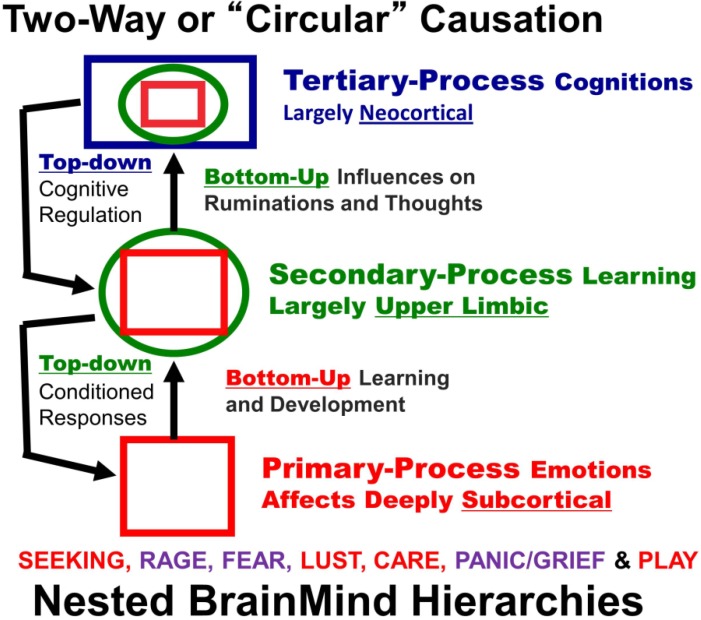
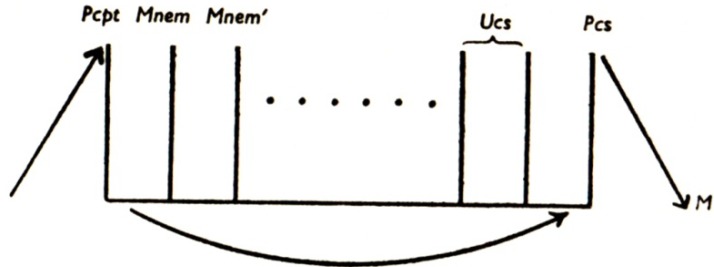
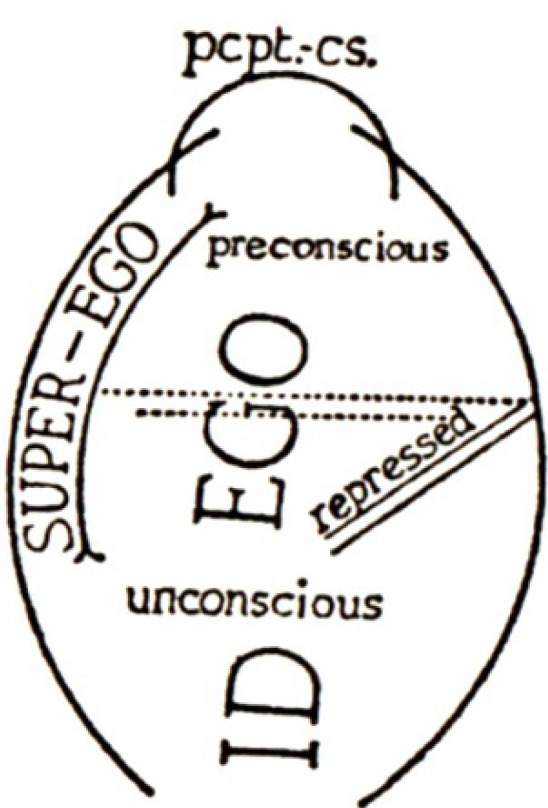
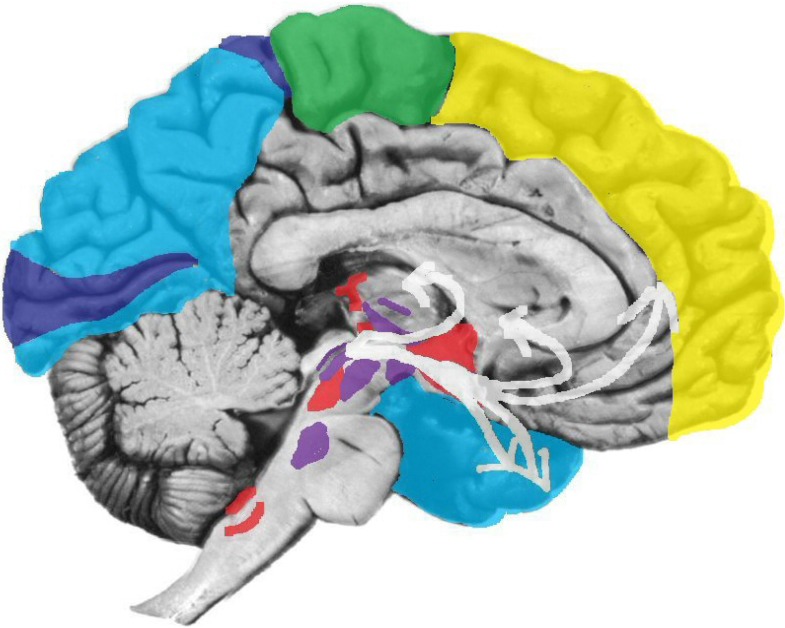
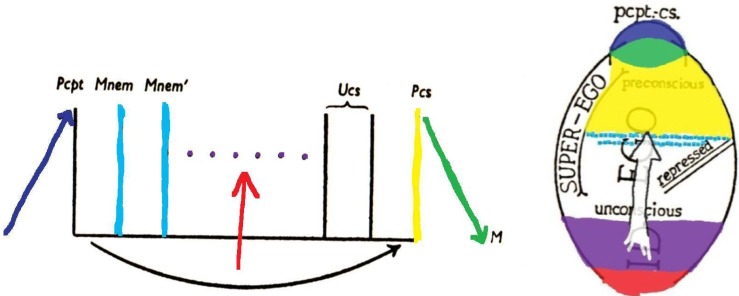
It is commonly believed that consciousness is a higher brain function. Here we consider the likelihood, based on abundant neuroevolutionary data that lower brain affective phenomenal experiences provide the “energy” for the developmental construction of higher forms of cognitive consciousness. This view is concordant with many of the theoretical formulations of Sigmund Freud. In this reconceptualization, all of consciousness may be dependent on the original evolution of affective phenomenal experiences that coded survival values. These subcortical energies provided a foundation that could be used for the epigenetic construction of perceptual and other higher forms of consciousness. From this perspective, perceptual experiences were initially affective at the primary-process brainstem level, but capable of being elaborated by secondary learning and memory processes into tertiary-cognitive forms of consciousness. Within this view, although all individual neural activities are unconscious, perhaps along with secondary-process learning and memory mechanisms, the primal sub-neocortical networks of emotions and other primal affects may have served as the sentient scaffolding for the construction of resolved perceptual and higher mental activities within the neocortex. The data supporting this neuro-psycho-evolutionary vision of the emergence of mind is discussed in relation to classical psychoanalytical models.
Overview
The claims and statistics of this paper haven’t been checked yet.
Run the check — free, no account needed. It reads the open-access text and checks the sources it cites.
Integrity signals
Registry
Cites
Statistics
Figures

Verification
Claims the paper makes
The claims and statistics of this paper haven’t been checked yet.
Run the check — free, no account needed. It reads the open-access text and checks the sources it cites.
Claims other papers make about this one
Each is checked against this paper’s own text: does it say what the citing paper says it does?
The cited source says what the claim attributes to it.
In the citing paper
“Cortex evidently provides “random-access memory” space (Solms and Panksepp, 2012, Ellis and Solms, 2018).”
From The Hard Problem of Consciousness and the Free Energy Principle (2019) · cites this paper as Solms and Panksepp, 2012
Self-check
Percentages, sums and reported differences re-computed from the paper’s own numbers.
The self-check needs the paper’s full text.
Citations
Cites
How do you feel — now? The anterior insula and human awareness
(Bud) Craig, A. D. (2009) · Nature Reviews Neuroscience · doi:10.1038/nrn2555 · Cited by 6,657 · cited 3×
“According to Craig’s view [34], this patient should lack subjective, affective”
BackgroundThe feeling of what happens: body and emotion in the making of consciousness
(2000) · Choice Reviews Online · doi:10.5860/choice.37-6553 · Cited by 6,001
Freud, S. (2015) · Psychoanalysis and History · doi:10.3366/pah.2015.0169 · Cited by 5,286
Episodic memory: from mind to brain
Tulving, E. (2002) · Annual Review of Psychology · doi:10.1146/annurev.psych.53.100901.135114 · Cited by 4,950
Affective Neuroscience: The Foundations of Human and Animal Emotions
Panksepp, J. (1998) · doi:10.1093/oso/9780195096736.001.0001 · Cited by 4,428
Self-citationBrain stem reticular formation and activation of the EEG
Moruzzi, G., & Magoun, H. W. (1949) · Electroencephalography and Clinical Neurophysiology · doi:10.1016/0013-4694(49)90219-9 · Cited by 4,307
EPILEPSY AND THE FUNCTIONAL ANATOMY OF THE HUMAN BRAIN
Penfield, W., & Jasper, H. (1954) · Southern Medical Journal · doi:10.1097/00007611-195407000-00024 · Cited by 4,092
(1998) · Cited by 4,012
Self-citationKapur, S. (2003) · American Journal of Psychiatry · doi:10.1176/appi.ajp.160.1.13 · Cited by 2,813
Freud, S., Ragg-Kirkby, H., & Bowie, M. (1938) · Medical Entomology and Zoology · Cited by 1,914
Research works printed but not linked: 7
- Freud, 1915, The Unconscious, Standard Edition of the Complete Psychological Works of Sigmund Freud, volume 14, 166
- Freud, S. (1900). Standard Edition of the Complete Psychological Works of Sigmund Freud, Hogarth.
- Freud, 1917, A Metapsychological Supplement to the Theory of Dreams, Standard Edition of the Complete Psychological Works of Sigmund Freud, volume 14, 222
- Freud, 1923, The Ego and the Id, Standard Edition of the Complete Psychological Works of Sigmund Freud, volume 19, 12
- Freud, 1915, Instincts and Their Vicissitudes, Standard Edition of the Complete Psychological Works of Sigmund Freud, volume 14, 117
- Freud, S. (1916–1917). Standard Edition of the Complete Psychological Works of Sigmund Freud, Hogarth.
- Freud, 1933, Introductory Lectures in Psychoanalysis, Standard Edition of the Complete Psychological Works of Sigmund Freud, volume 22, 5
Cited by
Sorted by citations
Lane, R. D., Ryan, L., Nadel, L., & Greenberg, L. S. (2014) · Behavioral and Brain Sciences · doi:10.1017/s0140525x14000041 · Cited by 611
Bodily selves in relation: embodied simulation as second-person perspective on intersubjectivity
Gallese, V. (2014) · Philosophical Transactions of the Royal Society B Biological Sciences · doi:10.1098/rstb.2013.0177 · Cited by 328
Toward a cross-species understanding of empathy
Panksepp, J., & Panksepp, J. B. (2013) · Trends in Neurosciences · doi:10.1016/j.tins.2013.04.009 · Cited by 309
Self-citationSolms, M. (2013) · Neuropsychoanalysis · doi:10.1080/15294145.2013.10773711 · Cited by 284
Self-citationThe neural basis of one's own conscious and unconscious emotional states
Smith, R. S., & Lane, R. D. (2015) · Neuroscience & Biobehavioral Reviews · doi:10.1016/j.neubiorev.2015.08.003 · Cited by 253
Metadata
- Authors
- Solms, M., & Panksepp, J.
- Affiliations
- University of Cape Town (ZA)
- Washington State University (US)
- Corresponding author
- Solms, Mark
- ORCID
- Solms, Mark
- Venue
- Brain Sciences
- Publisher
- MDPI AG
- Published
- 2012-04-17
- Volume
- 2
- Issue
- 2
- Pages
- 147-175
- ISSN
- 2076-3425 (ISSN-L)
- PMC
- PMC4061793
- OpenAlex
- W1968799970
- Cited by
- 254
- References
- 55
- Citations by year
- 2026: 13 · 2025: 18 · 2024: 13 · 2023: 14 · 2022: 15 · 2021: 16 · 2020: 17 · 2019: 27 · 2018: 17 · 2017: 17 · 2016: 22 · 2015: 23 · 2014: 24 · 2013: 15 · 2012: 3
- FWCI
- 27.90
- Type
- journal article
- Language
- en
- Open access
- gold
- doi.org
- Licence
- Locations
- Brain Sciences (publishedVersion, cc-by)
- Europe PMC (PubMed Central) (publishedVersion, cc-by)
- PubMed Central (publishedVersion, cc-by)
- PubMed (publishedVersion)
- DOAJ (DOAJ: Directory of Open Access Journals) (submittedVersion)
- Topics
- Social Sciences › Arts and Humanities › Philosophy › Philosophy and Theoretical Science
- Social Sciences › Psychology › Clinical Psychology › Psychoanalysis and Psychopathology Research
- Life Sciences › Neuroscience › Cognitive Neuroscience › Cognitive Science and Education Research
- Keywords
- consciousness, affective consciousness, neuropsychoanalysis, Sigmund Freud, psychoanalytic theory, neuroevolution, emotions, emergence of mind, cognitive consciousness, perceptual consciousness, epigenetic development
About these checks
Registry, retraction, Cites and statistics results are computed, not judged, with one exception: a printed reference that no index lists is read once by a model before it counts as a citation error. Claims are extracted by a model and kept only when their quote appears verbatim in the text; each cited source is then checked, with a model’s help, for whether it says what the claim relies on. Those verdicts can be wrong — read the claim’s quote and the cited source before relying on one.
Statistics and arithmetic are recomputed, not judged.
Confidence bands are shown only for fields calibrated on our annotated test set. None is calibrated yet, so no band is shown.
What counts as a claim ›How we measure confidence ›How we check this ›
Are you an author, or do you see a problem with this page? Request a review
