

The DOI matches its Crossref record, with a small difference in title or year; 49 of the 55 references it cites were found in a registry or an index.
The “Id” Knows More than the “Ego” Admits: Neuropsychoanalytic and Primal Consciousness Perspectives on the Interface Between Affective and Cognitive Neuroscience
Open accessAbstract
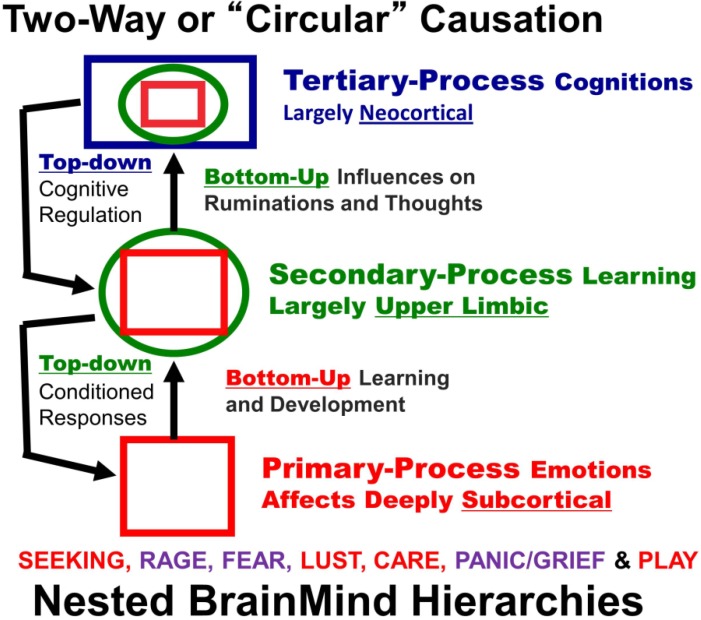
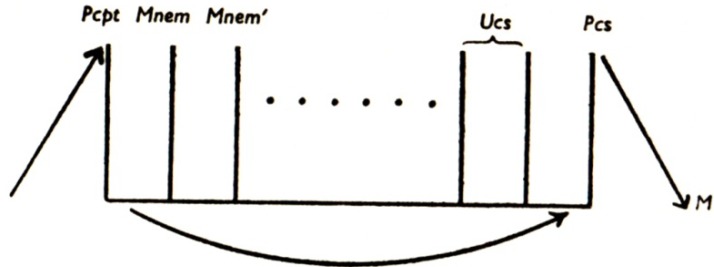
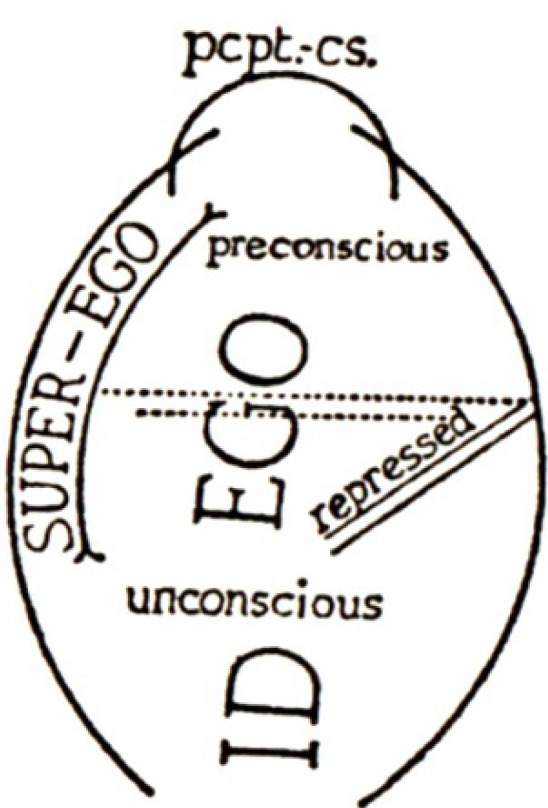
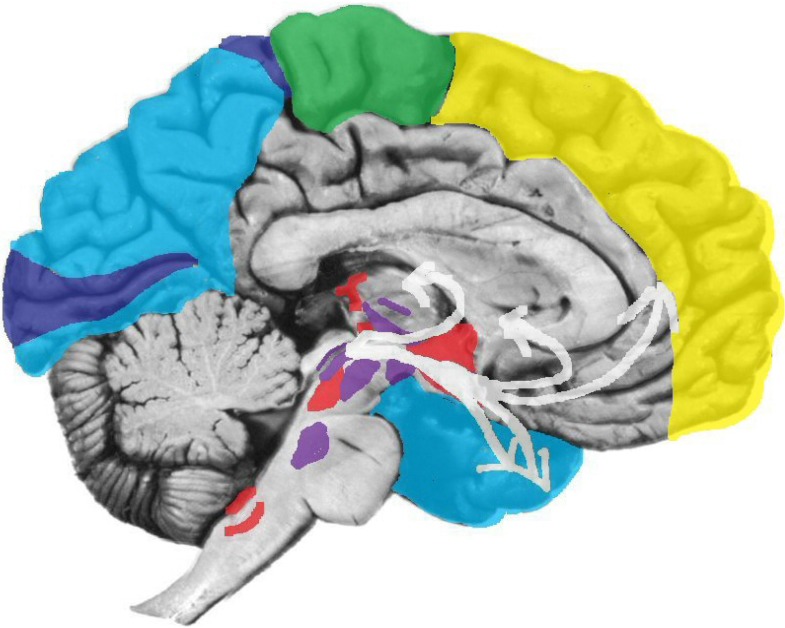
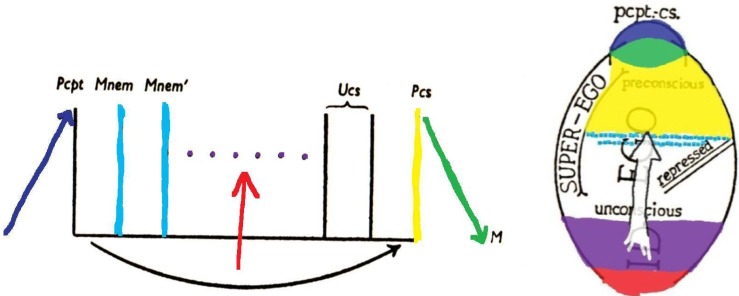
It is commonly believed that consciousness is a higher brain function. Here we consider the likelihood, based on abundant neuroevolutionary data that lower brain affective phenomenal experiences provide the “energy” for the developmental construction of higher forms of cognitive consciousness. This view is concordant with many of the theoretical formulations of Sigmund Freud. In this reconceptualization, all of consciousness may be dependent on the original evolution of affective phenomenal experiences that coded survival values. These subcortical energies provided a foundation that could be used for the epigenetic construction of perceptual and other higher forms of consciousness. From this perspective, perceptual experiences were initially affective at the primary-process brainstem level, but capable of being elaborated by secondary learning and memory processes into tertiary-cognitive forms of consciousness. Within this view, although all individual neural activities are unconscious, perhaps along with secondary-process learning and memory mechanisms, the primal sub-neocortical networks of emotions and other primal affects may have served as the sentient scaffolding for the construction of resolved perceptual and higher mental activities within the neocortex. The data supporting this neuro-psycho-evolutionary vision of the emergence of mind is discussed in relation to classical psychoanalytical models.
Overview
The claims and statistics of this paper haven’t been checked yet.
Run the check — free, no account needed. It reads the open-access text and checks the sources it cites.
Integrity signals
Registry
Cites
Statistics
Figures

Verification
Claims the paper makes
The claims and statistics of this paper haven’t been checked yet.
Run the check — free, no account needed. It reads the open-access text and checks the sources it cites.
Claims other papers make about this one
Each is checked against this paper’s own text: does it say what the citing paper says it does?
The cited source says what the claim attributes to it.
In the citing paper
“Cortex evidently provides “random-access memory” space (Solms and Panksepp, 2012, Ellis and Solms, 2018).”
From The Hard Problem of Consciousness and the Free Energy Principle (2019) · cites this paper as Solms and Panksepp, 2012
Self-check
Percentages, sums and reported differences re-computed from the paper’s own numbers.
The self-check needs the paper’s full text.
Citations
Cites
How do you feel — now? The anterior insula and human awareness
(Bud) Craig, A. D. (2009) · Nature Reviews Neuroscience · doi:10.1038/nrn2555 · Cited by 6,657 · cited 3×
“According to Craig’s view [34], this patient should lack subjective, affective”
BackgroundThe feeling of what happens: body and emotion in the making of consciousness
(2000) · Choice Reviews Online · doi:10.5860/choice.37-6553 · Cited by 6,001
Freud, S. (2015) · Psychoanalysis and History · doi:10.3366/pah.2015.0169 · Cited by 5,286
Episodic memory: from mind to brain
Tulving, E. (2002) · Annual Review of Psychology · doi:10.1146/annurev.psych.53.100901.135114 · Cited by 4,950
Affective Neuroscience: The Foundations of Human and Animal Emotions
Panksepp, J. (1998) · doi:10.1093/oso/9780195096736.001.0001 · Cited by 4,428
Self-citationBrain stem reticular formation and activation of the EEG
Moruzzi, G., & Magoun, H. W. (1949) · Electroencephalography and Clinical Neurophysiology · doi:10.1016/0013-4694(49)90219-9 · Cited by 4,307
EPILEPSY AND THE FUNCTIONAL ANATOMY OF THE HUMAN BRAIN
Penfield, W., & Jasper, H. (1954) · Southern Medical Journal · doi:10.1097/00007611-195407000-00024 · Cited by 4,092
(1998) · Cited by 4,012
Self-citationKapur, S. (2003) · American Journal of Psychiatry · doi:10.1176/appi.ajp.160.1.13 · Cited by 2,813
Freud, S., Ragg-Kirkby, H., & Bowie, M. (1938) · Medical Entomology and Zoology · Cited by 1,914
Research works printed but not linked: 7
- Freud, 1915, The Unconscious, Standard Edition of the Complete Psychological Works of Sigmund Freud, volume 14, 166
- Freud, S. (1900). Standard Edition of the Complete Psychological Works of Sigmund Freud, Hogarth.
- Freud, 1917, A Metapsychological Supplement to the Theory of Dreams, Standard Edition of the Complete Psychological Works of Sigmund Freud, volume 14, 222
- Freud, 1923, The Ego and the Id, Standard Edition of the Complete Psychological Works of Sigmund Freud, volume 19, 12
- Freud, 1915, Instincts and Their Vicissitudes, Standard Edition of the Complete Psychological Works of Sigmund Freud, volume 14, 117
- Freud, S. (1916–1917). Standard Edition of the Complete Psychological Works of Sigmund Freud, Hogarth.
- Freud, 1933, Introductory Lectures in Psychoanalysis, Standard Edition of the Complete Psychological Works of Sigmund Freud, volume 22, 5
Cited by
Sorted by citations
Lane, R. D., Ryan, L., Nadel, L., & Greenberg, L. S. (2014) · Behavioral and Brain Sciences · doi:10.1017/s0140525x14000041 · Cited by 611
Bodily selves in relation: embodied simulation as second-person perspective on intersubjectivity
Gallese, V. (2014) · Philosophical Transactions of the Royal Society B Biological Sciences · doi:10.1098/rstb.2013.0177 · Cited by 328
Toward a cross-species understanding of empathy
Panksepp, J., & Panksepp, J. B. (2013) · Trends in Neurosciences · doi:10.1016/j.tins.2013.04.009 · Cited by 309
Self-citationSolms, M. (2013) · Neuropsychoanalysis · doi:10.1080/15294145.2013.10773711 · Cited by 284
Self-citationThe neural basis of one's own conscious and unconscious emotional states
Smith, R. S., & Lane, R. D. (2015) · Neuroscience & Biobehavioral Reviews · doi:10.1016/j.neubiorev.2015.08.003 · Cited by 253
The Hard Problem of Consciousness and the Free Energy Principle
Solms, M. (2019) · Frontiers in Psychology · doi:10.3389/fpsyg.2018.02714 · Cited by 239
Self-citationAutism as a developmental disorder in intentional movement and affective engagement
Trevarthen, C., & Delafield‐Butt, J. T. (2013) · Frontiers in Integrative Neuroscience · doi:10.3389/fnint.2013.00049 · Cited by 234
Lane, R. D., Weihs, K. L., Herring, A. M., Hishaw, A., & Smith, R. S. (2015) · Neuroscience & Biobehavioral Reviews · doi:10.1016/j.neubiorev.2015.06.007 · Cited by 220
Emotion Elicitation: A Comparison of Pictures and Films
Uhrig, M. K., Trautmann, N., Baumgärtner, U., Treede, R.-D., Henrich, F., Hiller, W., & Marschall, S. (2016) · Frontiers in Psychology · doi:10.3389/fpsyg.2016.00180 · Cited by 184
Panksepp, J., Lane, R. D., Solms, M., & Smith, R. S. (2016) · Neuroscience & Biobehavioral Reviews · doi:10.1016/j.neubiorev.2016.09.010 · Cited by 182
Self-citationWright, J. S., & Panksepp, J. (2012) · Neuropsychoanalysis · doi:10.1080/15294145.2012.10773683 · Cited by 172
Self-citationThe ontogenesis of narrative: from moving to meaning
Delafield‐Butt, J. T., & Trevarthen, C. (2015) · Frontiers in Psychology · doi:10.3389/fpsyg.2015.01157 · Cited by 180
Malloch, S. N., & Trevarthen, C. (2018) · Frontiers in Psychology · doi:10.3389/fpsyg.2018.01680 · Cited by 126
Gallese, V., & Guerra, M. (2019) · doi:10.1093/oso/9780198793533.001.0001 · Cited by 130
Unconscious emotion: A cognitive neuroscientific perspective
Smith, R. S., & Lane, R. D. (2016) · Neuroscience & Biobehavioral Reviews · doi:10.1016/j.neubiorev.2016.08.013 · Cited by 118
Bottom-Up and Top-Down Paradigms for Psychopathology: A Half-Century Odyssey
Achenbach, T. M. (2020) · Annual Review of Clinical Psychology · doi:10.1146/annurev-clinpsy-071119-115831 · Cited by 113
LSD Increases Primary Process Thinking via Serotonin 2A Receptor Activation
Krähenmann, R., Pokorný, D., Aicher, H., Preller, K. H., Pokorny, T., Bosch, O. G., Seifritz, E., & Vollenweider, F. X. (2017) · Frontiers in Pharmacology · doi:10.3389/fphar.2017.00814 · Cited by 116
Evolutionary aspects of self- and world consciousness in vertebrates
Fabbro, F., Aglioti, S. M., Bergamasco, M., Clarici, A., & Panksepp, J. (2015) · Frontiers in Human Neuroscience · doi:10.3389/fnhum.2015.00157 · Cited by 94
Self-citationAlcaro, A., Carta, S. M., & Panksepp, J. (2017) · Frontiers in Psychology · doi:10.3389/fpsyg.2017.01424 · Cited by 96
Self-citationSensorimotor intentionality: The origins of intentionality in prospective agent action
Delafield‐Butt, J. T., & Gangopadhyay, N. (2013) · Developmental Review · doi:10.1016/j.dr.2013.09.001 · Cited by 98
Self across time: the diachronic unity of bodily existence
Fuchs, T. A. E. (2016) · Phenomenology and the Cognitive Sciences · doi:10.1007/s11097-015-9449-4 · Cited by 83
When is emotional contagion adaptive?
Nakahashi, W., & Ohtsuki, H. (2015) · Journal of Theoretical Biology · doi:10.1016/j.jtbi.2015.06.014 · Cited by 66
The Emergence of Primary Anoetic Consciousness in Episodic Memory
Vandekerckhove, M. M. P., Bulnes, L. C., & Panksepp, J. (2014) · Frontiers in Behavioral Neuroscience · doi:10.3389/fnbeh.2013.00210 · Cited by 68
Self-citationFuchshuber, J., Hiebler-Ragger, M., Kresse, A., Kapfhammer, H.-P., & Unterrainer, H. F. (2019) · Frontiers in Psychiatry · doi:10.3389/fpsyt.2019.00643 · Cited by 62
Montag, C., Elhai, J. D., & Davis, K. L. (2021) · Neuroscience & Biobehavioral Reviews · doi:10.1016/j.neubiorev.2021.02.019 · Cited by 68
Cross-Species Neuroaffective Parsing of Primal Emotional Desires and Aversions in Mammals
Panksepp, J. (2013) · Emotion Review · doi:10.1177/1754073913477515 · Cited by 58
Self-citationPanksepp, J. (2016) · The Journal of Comparative Neurology · doi:10.1002/cne.23969 · Cited by 61
Self-citationA neuropsychoanalytical approach to the hard problem of consciousness
Solms, M. (2014) · Journal of Integrative Neuroscience · doi:10.1142/s0219635214400032 · Cited by 49
Self-citationThe Experience of Pleasure: A Perspective Between Neuroscience and Psychoanalysis
Moccia, L., Mazza, M., Nicola, M. D., & Janiri, L. (2018) · Frontiers in Human Neuroscience · doi:10.3389/fnhum.2018.00359 · Cited by 48
Affective Neuroscience Strategies for Understanding and Treating Depression
Panksepp, J., Wright, J. S., Döbrössy, M. D., Schlaepfer, T. E., & Coenen, V. A. (2014) · Clinical Psychological Science · doi:10.1177/2167702614535913 · Cited by 50
Self-citationNeuroimaging Helps to Clarify Brain Affective Processing Without Necessarily Clarifying Emotions
Walla, P., & Panksepp, J. (2013) · InTech eBooks · doi:10.5772/51761 · Cited by 43
Self-citationPrimal emotional-affective expressive foundations of human facial expression
Montag, C., & Panksepp, J. (2016) · Motivation and Emotion · doi:10.1007/s11031-016-9570-x · Cited by 48
Self-citationEgo, drives, and the dynamics of internal objects
Boag, S. (2014) · Frontiers in Psychology · doi:10.3389/fpsyg.2014.00666 · Cited by 45
An Investigation of the Free Energy Principle for Emotion Recognition
Demekas, D., Parr, T., & Friston, K. J. (2020) · Frontiers in Computational Neuroscience · doi:10.3389/fncom.2020.00030 · Cited by 44
Neindre, P. L., Bernard, É., Boissy, A., Boivin, X., Calandreau, L., Delon, N., Deputte, B. L., Desmoulin‐Canselier, S., Dunier, M., Faivre, N., et al. (2017) · EFSA Supporting Publications · doi:10.2903/sp.efsa.2017.en-1196 · Cited by 56
The developmental psychology and neuropsychology of emotion in language
Trevarthen, C. (2015) · Consciousness & emotion book series · doi:10.1075/ceb.10.01tre · Cited by 39
Fischmann, T., Russ, M. O., & Leuzinger‐Bohleber, M. (2013) · Frontiers in Human Neuroscience · doi:10.3389/fnhum.2013.00877 · Cited by 39
From the Intrinsic Motive Pulse of Infant Actions to the Life Time of Cultural Meanings
Trevarthen, C. (2015) · Springer eBooks · doi:10.1007/978-3-319-22195-3_12 · Cited by 36
The human nature of culture and education
Trevarthen, C., Gratier, M., & Osborne, N. (2014) · Wiley Interdisciplinary Reviews Cognitive Science · doi:10.1002/wcs.1276 · Cited by 35
Rabeyron, T., & Massicotte, C. (2020) · Frontiers in Psychology · doi:10.3389/fpsyg.2020.00366 · Cited by 34
Scalabrini, A., Mucci, C., & Northoff, G. (2022) · Frontiers in Human Neuroscience · doi:10.3389/fnhum.2022.980353 · Cited by 35
An Evolutionary Outlook on Motivation: Implications for the Clinical Dialogue
Cortina, M., & Liotti, G. (2014) · Psychoanalytic Inquiry · doi:10.1080/07351690.2014.968060 · Cited by 33
The Neuropsychoanalytic Approach: Using Neuroscience as the Basic Science of Psychoanalysis
Johnson, B., & Mosri, D. F. (2016) · Frontiers in Psychology · doi:10.3389/fpsyg.2016.01459 · Cited by 33
Phylostratigraphic Profiles in Zebrafish Uncover Chordate Origins of the Vertebrate Brain
Šestak, M. S., & Domazet‐Lošo, T. (2014) · Molecular Biology and Evolution · doi:10.1093/molbev/msu319 · Cited by 29
Panksepp, J. (2014) · Emotion Review · doi:10.1177/1754073914554788 · Cited by 33
Self-citationParvizi-Wayne, D., Sandved-Smith, L., Pitliya, R. J., Limanowski, J., Tufft, M. R. A., & Friston, K. J. (2024) · Frontiers in Psychology · doi:10.3389/fpsyg.2024.1354719 · Cited by 37
Doll, A., Sorg, C., Manoliu, A., Wöller, A. A., Meng, C., Förstl, H., Zimmer, C., Wohlschläger, A. M., & Riedl, V. (2013) · Frontiers in Human Neuroscience · doi:10.3389/fnhum.2013.00677 · Cited by 30
Dolce, P., Marocco, ., Maldonato, M. N., & Sperandeo, R. (2020) · Frontiers in Psychology · doi:10.3389/fpsyg.2020.00446 · Cited by 30
Alcaro, A., Brennan, A., & Conversi, D. (2021) · Frontiers in Human Neuroscience · doi:10.3389/fnhum.2021.635932 · Cited by 30
Fuchshuber, J., Hiebler‐Ragger, M., Kresse, A. E., Kapfhammer, H., & Unterrainer, . (2018) · Frontiers in Psychiatry · doi:10.3389/fpsyt.2018.00318 · Cited by 30
Buchborn, T., Kettner, H., Kärtner, L., & Meinhardt, M. W. (2023) · Frontiers in Neuroscience · doi:10.3389/fnins.2023.1232459 · Cited by 30
Panksepp, J. (2015) · Dialogues in Clinical Neuroscience · doi:10.31887/dcns.2015.17.4/jpanksepp · Cited by 27
Self-citationFuchshuber, J., & Unterrainer, H. (2020) · Frontiers in Psychiatry · doi:10.3389/fpsyt.2020.00531 · Cited by 32
Anderson, J. (2019) · South African Journal of Philosophy · doi:10.1080/02580136.2019.1697569 · Cited by 25
Hypnosis and Hypnotic ability between old beliefs and new evidences: An epistemological reflection
Facco, E. (2021) · American Journal of Clinical Hypnosis · doi:10.1080/00029157.2020.1863181 · Cited by 28
Educational inclusion and critical neuroscience: friends or foes?
Billington, T. (2017) · International Journal of Inclusive Education · doi:10.1080/13603116.2017.1283717 · Cited by 23
Feelings as agents of selection: putting Charles Darwin back into (extended neo-) Darwinism
Packard, A., & Delafield‐Butt, J. T. (2014) · Biological Journal of the Linnean Society · doi:10.1111/bij.12225 · Cited by 22
Affective Features Underlying Depression in Addiction: Understanding What It Feels Like
Mosri, D. F. (2019) · Frontiers in Psychology · doi:10.3389/fpsyg.2019.02318 · Cited by 22
Alcaro, A., & Carta, S. M. (2019) · Frontiers in Human Neuroscience · doi:10.3389/fnhum.2018.00522 · Cited by 24
Le Neindre, P., Dunier, M., Larrere, R., & Prunet, P. (2018) · doi:10.35690/978-2-7592-2871-3 · Cited by 21
On the Nature of the Mother-Infant Tie and Its Interaction With Freudian Drives
Kirsch, M., & Buchholz, M. B. (2020) · Frontiers in Psychology · doi:10.3389/fpsyg.2020.00317 · Cited by 23
Vos, J. D., & Pluth, E. (2015) · Routledge eBooks · doi:10.4324/9781315714189 · Cited by 85
Music, G. (2014) · Journal of Child Psychotherapy · doi:10.1080/0075417x.2014.883125 · Cited by 20
Clinical Applications of Neuropsychoanalysis: Hypotheses Toward an Integrative Model
Mosri, D. F. (2021) · Frontiers in Psychology · doi:10.3389/fpsyg.2021.718372 · Cited by 22
Awareness of Infants: What Do They, and We, Seek?
Trevarthen, C. (2015) · Psychoanalytic Inquiry · doi:10.1080/07351690.2015.1022488 · Cited by 19
Are Freud’s “Erogenous Zones” Sources or Objects of Libidinal Drive?
Solms, M. (2012) · Neuropsychoanalysis · doi:10.1080/15294145.2012.10773688 · Cited by 18
Self-citationChildhood Trauma and Dissociative Disorders
Şar, V. (2020) · Springer eBooks · doi:10.1007/978-3-030-49414-8_16 · Cited by 22
Investigating the network ties between affect, attachment, and psychopathology
Fuchshuber, J., Senra, H., Löffler‐Stastka, H., Alexopolos, J., Roithmeier, L., Prandstätter, T., & Unterrainer, H. (2024) · Journal of Affective Disorders · doi:10.1016/j.jad.2024.08.219 · Cited by 17
Infant research and neuroscience at work in psychotherapy: expanding the clinical repertoire
Music, G. (2013) · Psychoanalytic Psychotherapy · doi:10.1080/02668734.2013.841052 · Cited by 17
Panksepp, J., Clarici, A., Vandekerckhove, M. M. P., & Yovell, Y. (2019) · Psychoanalytic Inquiry · doi:10.1080/07351690.2019.1549910 · Cited by 16
Self-citationAn evidence-based critical review of the mind-brain identity theory
Masi, M. (2023) · Frontiers in Psychology · doi:10.3389/fpsyg.2023.1150605 · Cited by 18
The Brain Emotional Systems in Addictions: From Attachment to Dominance/Submission Systems
Giacolini, T., Conversi, D., & Alcaro, A. (2021) · Frontiers in Human Neuroscience · doi:10.3389/fnhum.2020.609467 · Cited by 19
Reconsolidation: Turning consciousness into memory
Solms, M. (2015) · Behavioral and Brain Sciences · doi:10.1017/s0140525x14000296 · Cited by 17
Self-citationAffective neuroscience, emotional regulation, and international relations
Gammon, E. (2020) · International Theory · doi:10.1017/s1752971919000253 · Cited by 14
Time and sequence as key dimensions of joint action development
Fantasia, V., & Delafield‐Butt, J. T. (2023) · Developmental Review · doi:10.1016/j.dr.2023.101091 · Cited by 13
Panksepp, J. (2017) · Wiley eBooks · doi:10.1002/9781119132363.ch10 · Cited by 15
Self-citationFacco, E. (2020) · OBM Integrative and Complementary Medicine · doi:10.21926/obm.icm.2003032 · Cited by 13
Re-enacting the Bodily Self on Stage: Embodied Cognition Meets Psychoanalysis
Scorolli, C. (2019) · Frontiers in Psychology · doi:10.3389/fpsyg.2019.00492 · Cited by 12
Disruption to embodiment in autism, and its repair
Delafield‐Butt, J. T., Dunbar, P., & Trevarthen, C. (2021) · Elsevier eBooks · doi:10.1016/b978-0-323-85031-5.00018-9 · Cited by 12
Bodily Self, Affect, Consciousness, and the Cortex
Gallese, V. (2013) · Neuropsychoanalysis · doi:10.1080/15294145.2013.10773717 · Cited by 12
Arousal coherence, uncertainty, and well-being: an active inference account
Biddell, H., Solms, M., Slagter, H. A., & Laukkonen, R. (2024) · Neuroscience of Consciousness · doi:10.1093/nc/niae011 · Cited by 17
Self-citationClassic psychedelics: the special role of the visual system
Császár-Nagy, N., Kapócs, G., & Bókkon, I. (2019) · Reviews in the Neurosciences · doi:10.1515/revneuro-2018-0092 · Cited by 12
Panksepp, J., & Wilson, C. G. (2016) · Studies in neuroscience, psychology and behavioral economics · doi:10.1007/978-3-642-35923-1_13 · Cited by 12
Self-citationThe significance of consilience: psychoanalysis, attachment, neuroscience, and evolution
Hopkins, J. (2018) · Routledge eBooks · doi:10.4324/9780429478734-2 · Cited by 10
Watson, J. (2023) · International Journal of Speech-Language Pathology · doi:10.1080/17549507.2023.2187331 · Cited by 10
Pain, the unknown: epistemological issues and related clinical implications
Facco, E. (2021) · Minerva Anestesiologica · doi:10.23736/s0375-9393.21.15920-6 · Cited by 12
Salas, C., Radovic, D., Castro, O., & Turnbull, O. H. (2015) · Frontiers in Psychology · doi:10.3389/fpsyg.2015.00101 · Cited by 10
Gallese, V. (2013) · Vandenhoeck & Ruprecht eBooks · doi:10.13109/9783666451300.75 · Cited by 10
Toward an Understanding of the Constitution of Consciousness Through the Laws of Affect
Panksepp, J. (2013) · Neuropsychoanalysis · doi:10.1080/15294145.2013.10773723 · Cited by 10
Self-citationSmith, M. (2019) · Oxford University Press eBooks · doi:10.1093/oso/9780198793533.002.0009 · Cited by 10
Lane, R. D., Nadel, L., Greenberg, L. S., & Ryan, L. (2015) · Behavioral and Brain Sciences · doi:10.1017/s0140525x15000011 · Cited by 10
Disruption to the Core Self in Autism, and Its Care
Delafield‐Butt, J. T., Dunbar, P., & Trevarthen, C. (2022) · Psychoanalytic Inquiry · doi:10.1080/07351690.2022.2007031 · Cited by 9
The Contribution of the Cerebellum in the Hierarchial Development of the Self
Ceylan, M. E., Dönmez, A., & Ünsalver, B. Ö. (2015) · The Cerebellum · doi:10.1007/s12311-015-0675-7 · Cited by 8
Panksepp, J., & Wright, J. S. (2012) · Neuropsychoanalysis · doi:10.1080/15294145.2012.10773690 · Cited by 8
Self-citationThe buzz trap: Speeded-up lives, distractedness, impulsiveness and decreasing empathy
Music, G. (2014) · Psychodynamic Practice · doi:10.1080/14753634.2014.916840 · Cited by 8
On the Abilities of Unconscious Freudian Motivational Drives to Evoke Conscious Emotions
Kirsch, M. (2019) · Frontiers in Psychology · doi:10.3389/fpsyg.2019.00470 · Cited by 11
Dual-Brain Psychology: A novel theory and treatment based on cerebral laterality and psychopathology
Schiffer, F. (2022) · Frontiers in Psychology · doi:10.3389/fpsyg.2022.986374 · Cited by 7
Kirsch, M., Dimitrijević, A., & Buchholz, M. B. (2022) · Frontiers in Psychology · doi:10.3389/fpsyg.2022.941328 · Cited by 8
The neuroevolutionary sources of mind
Panksepp, J. (2015) · Advances in consciousness research · doi:10.1075/aicr.92.09pan · Cited by 7
Self-citationEden Benumbed: A Critique of Panqualityism and the Disclosure View of Consciousness
Shani, I. (2021) · Philosophia · doi:10.1007/s11406-021-00377-9 · Cited by 7
Metadata
- Authors
- Solms, M., & Panksepp, J.
- Affiliations
- University of Cape Town (ZA)
- Washington State University (US)
- Corresponding author
- Solms, Mark
- ORCID
- Solms, Mark
- Venue
- Brain Sciences
- Publisher
- MDPI AG
- Published
- 2012-04-17
- Volume
- 2
- Issue
- 2
- Pages
- 147-175
- ISSN
- 2076-3425 (ISSN-L)
- PMC
- PMC4061793
- OpenAlex
- W1968799970
- Cited by
- 254
- References
- 55
- Citations by year
- 2026: 13 · 2025: 18 · 2024: 13 · 2023: 14 · 2022: 15 · 2021: 16 · 2020: 17 · 2019: 27 · 2018: 17 · 2017: 17 · 2016: 22 · 2015: 23 · 2014: 24 · 2013: 15 · 2012: 3
- FWCI
- 27.90
- Type
- journal article
- Language
- en
- Open access
- gold
- doi.org
- Licence
- Locations
- Brain Sciences (publishedVersion, cc-by)
- Europe PMC (PubMed Central) (publishedVersion, cc-by)
- PubMed Central (publishedVersion, cc-by)
- PubMed (publishedVersion)
- DOAJ (DOAJ: Directory of Open Access Journals) (submittedVersion)
- Topics
- Social Sciences › Arts and Humanities › Philosophy › Philosophy and Theoretical Science
- Social Sciences › Psychology › Clinical Psychology › Psychoanalysis and Psychopathology Research
- Life Sciences › Neuroscience › Cognitive Neuroscience › Cognitive Science and Education Research
- Keywords
- consciousness, affective consciousness, neuropsychoanalysis, Sigmund Freud, psychoanalytic theory, neuroevolution, emotions, emergence of mind, cognitive consciousness, perceptual consciousness, epigenetic development
About these checks
Registry, retraction, Cites and statistics results are computed, not judged, with one exception: a printed reference that no index lists is read once by a model before it counts as a citation error. Claims are extracted by a model and kept only when their quote appears verbatim in the text; each cited source is then checked, with a model’s help, for whether it says what the claim relies on. Those verdicts can be wrong — read the claim’s quote and the cited source before relying on one.
Statistics and arithmetic are recomputed, not judged.
Confidence bands are shown only for fields calibrated on our annotated test set. None is calibrated yet, so no band is shown.
What counts as a claim ›How we measure confidence ›How we check this ›
Are you an author, or do you see a problem with this page? Request a review
