

Does the Brain Drain Effect Really Exist? A Meta-Analysis
Open accessThe DOI matches its Crossref record; 28 of the 28 references it cites were found in a registry or an index.
Abstract
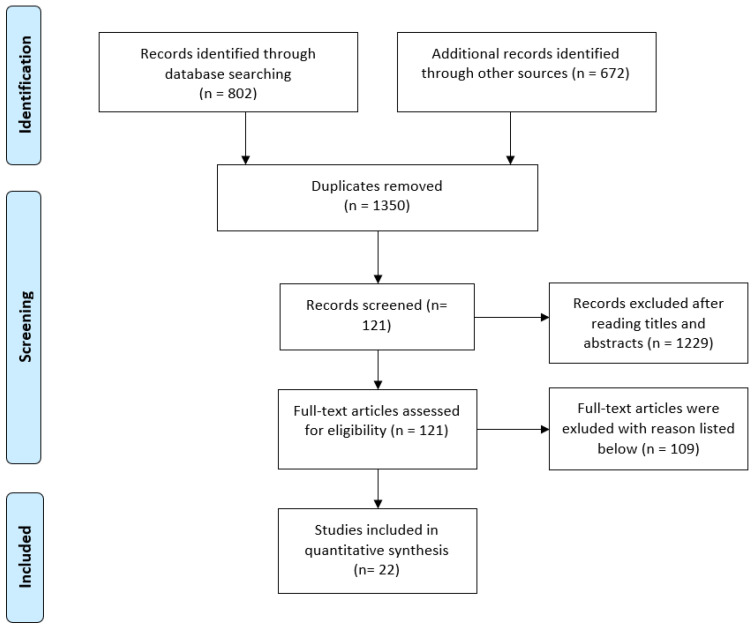
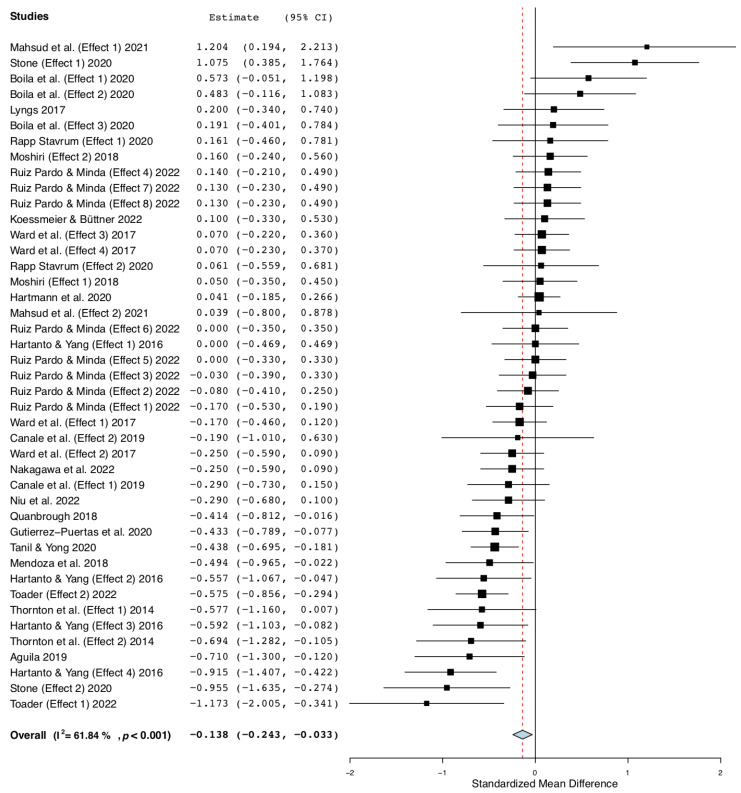
Smartphones have become an indispensable part of everyday life. Given the current debate about the use of smartphones in classrooms and schools, it seems appropriate to examine their effects on aspects of cognitive performance in more detail. Ward and colleagues not only demonstrated the negative effect of smartphones on cognitive performance but also showed that the mere presence of these devices can have this effect—this is known as the Brain Drain effect. In the present article, a meta-analytic approach was adopted in order to verify these findings. Here we show a significant overall negative effect of smartphone use and presence. In a database search we identified 22 studies with a total of 43 relevant effects that could be assigned to the categories “memory”, “attention”, and “general cognitive performance”. A subgroup analysis suggests that not all cognitive domains are equally affected by the negative effect of smartphones. The heterogeneity of the effects reinforces this finding. The nationality of the test subjects or the origin of the studies was identified as a further key variable. Our findings also indicate that the distracting effect of smartphones varies on the area studies and further research is necessary. In view of the present research results, it seems important that people in general, and especially children and adolescents in schools and classrooms, learn how to deal with the distracting potential of smartphones.
Overview
The claims and statistics of this paper haven’t been checked yet.
Free: it reads the open-access text and checks the first 5 claims that cite a source we can check. Create a free account to check every claim.
Integrity signals
Registry
Cites
Statistics
Figures
Verification
Claims the paper makes
The claims and statistics of this paper haven’t been checked yet.
Free: it reads the open-access text and checks the first 5 claims that cite a source we can check. Create a free account to check every claim.
Claims other papers make about this one
Each is checked against this paper’s own text: does it say what the citing paper says it does?
The cited source says what the claim attributes to it.
In the citing paper
“The presence of smartphones can have a negative impact on cognitive performance [6,7].”
From To Ban or Not to Ban? A Rapid Review on the Impact of Smartphone Bans in Schools on Social Well-Being and Academic Performance (2024) · cites this paper as [7]
Self-check
Percentages, sums and reported differences re-computed from the paper’s own numbers.
The self-check needs the paper’s full text.
Citations
Cites
Working Memory Capacity as Executive Attention
Engle, R. W. (2002) · Current Directions in Psychological Science · doi:10.1111/1467-8721.00160 · Cited by 2,507
Psychological Predictors of Problem Mobile Phone Use
Bianchi, A., & Phillips, J. G. (2005) · CyberPsychology & Behavior · doi:10.1089/cpb.2005.8.39 · Cited by 1,514 · cited 1×
“Studies on smartphone-related addiction [10], the effects of electromagnetic fields on the human brain and its functioning [11], or effects on social skills and emotions [12] or the like, were not included.”
Brain Drain: The Mere Presence of One’s Own Smartphone Reduces Available Cognitive Capacity
Ward, A. F., Duke, K., Gneezy, A., & Bos, M. W. (2017) · Journal of the Association for Consumer Research · doi:10.1086/691462 · Cited by 787 · cited 4×
“Studies such as that by Ward and colleagues indicate that the mere presence of smartphones has negative effects on learning performance and attention [3].”
InfluentialApproaches to heterogeneity in meta‐analysis
Petitti, D. B. (2001) · Statistics in Medicine · doi:10.1002/sim.1091 · Cited by 464 · cited 1×
“In dealing with this heterogeneity, we applied the steps proposed by Petitti [34].”
The attentional cost of receiving a cell phone notification.
Stothart, C., Mitchum, A., & Yehnert, C. (2015) · Journal of Experimental Psychology: Human Perception and Performance · doi:10.1037/xhp0000100 · Cited by 346 · cited 1×
“Interfering with automatic attentional processes demands attentional resources.”
Thornton, B., Faires, A., Robbins, M., & Rollins, E. (2014) · Social Psychology · doi:10.1027/1864-9335/a000216 · Cited by 282 · cited 1×
“For example, some study designs used “Raven’s Standard Progressive Matrices Test” or the “Spanboard Test” [16], while others used a “trail making test” or a test to capture “digit cancellations” [30].”
Mendoza, J. S., Pody, B. C., Lee, S., Kim, M., & McDonough, I. M. (2018) · Computers in Human Behavior · doi:10.1016/j.chb.2018.04.027 · Cited by 275
George, M. J., & Odgers, C. L. (2015) · Perspectives on Psychological Science · doi:10.1177/1745691615596788 · Cited by 266 · cited 2×
“…effects of smartphones on cognitive performance. the primary studies listed in Appendix A Studies on smartphone-related addiction [10], the effects of electromagnetic fields on the human brain and its functioning [11], or effects on social skills and emotions [12] or the like, were not included.”
Jackson, D., Bowden, J., & Baker, R. (2010) · Journal of Statistical Planning and Inference · doi:10.1016/j.jspi.2009.09.017 · Cited by 226 · cited 2×
“vary feasible to address potential biases in small samples, consequently yielding a more consistent and method [13].”
Is the smartphone a smart choice? The effect of smartphone separation on executive functions
Hartanto, A., & Yang, H. (2016) · Computers in Human Behavior · doi:10.1016/j.chb.2016.07.002 · Cited by 164 · cited 1×
“Another study focused on the “stroop effect” and the “switch-cost effect” [21].”
Research works printed but not linked: 4
- Stone, J. (2020). Smartphones, Stress, and the Reduction of Cognitive Ressources. [Master’s Thesis, Southern University].
- Lyngs, U. (2017). CHI’17 Extended Abstracts, Association for Computing Machinery.
- Quanbrough, J. (2018). Brain Drain Revisited: Smartphone Presence and Its Effects on Cognitive Performance in the Light of Smartphone Attachment and Fear of Missing out. [Master’s Thesis, University of Basel].
- Baulig, 2015, Meta-Analysen und Forest Plot—Mehrere Studien wissen mehr als ein, Dtsch. Ärzte-Verl., 31, 158
Cited by
Böttger, T., & Zierer, K. (2024) · Education Sciences · doi:10.3390/educsci14080906 · Cited by 60
“The presence of smartphones can have a negative impact on cognitive performance [6,7].”
BackgroundSelf-citationCastelo, N., Kushlev, K., Ward, A. F., Esterman, M. S., & Reiner, P. B. (2025) · PNAS Nexus · doi:10.1093/pnasnexus/pgaf017 · Cited by 69
Wei, Z., Guo, Y., Tsang, M. H. L., Montag, C., Becker, B., & Kou, J. (2024) · Computers in Human Behavior · doi:10.1016/j.chb.2024.108258 · Cited by 33
Socol, A., & Iuga, I. C. (2024) · Kybernetes · doi:10.1108/k-03-2024-0629 · Cited by 26
Laumann, D., Krause, M., Kremer, F. E., Leibrock, B., Ubben, M. S., Forthmann, B., Janzik, R., Masemann, D., Reer, F., Denz, C., et al. (2024) · Education and Information Technologies · doi:10.1007/s10639-024-13213-w · Cited by 28
“Based on a study by Ward et al. (2017), numerous studies according to a meta-analysis by Böttger et al. (2023) showed that even the mere presence of a personal smartphone can have a negative impact on learning.”
Did increasing brain size place early humans at risk of extinction?
Stibel, J. M. (2025) · Brain and Cognition · doi:10.1016/j.bandc.2025.106336 · Cited by 9
“…(Barr, et al., 2015; B ¨ ottger et al., 2023; Gerlich, 2025; Kosmyna et al., 2025; Stadler et al., 2024; Ward et al., 2017), including attention span (B ¨ ottger et al., 2023; Ward et al., 2017), fluid intelligence (B ¨ ottger et al., 2023; Skowronek et al., 2023; Ward et al., 2017), and working…”
InfluentialThe brain digitalization: it's all happening so fast!
Boulos, L. (2024) · Frontiers in Human Dynamics · doi:10.3389/fhumd.2024.1475438 · Cited by 11
When smartphones take over: a mixed methods study of phubbing in child and adolescent psychiatry
Büber, A., Lu, B., Başay, B. K., & Martin, A. (2025) · Child and Adolescent Psychiatry and Mental Health · doi:10.1186/s13034-025-00950-0 · Cited by 6
“Further, they can have distracting effects and a negative impact on memory [6].”
Rafka, H. E., Elahi, C., Vaughan, K. A., Nico, E., Giraldo, J. P., Agwu, C., Roofeh, G. N., Attebery, J. E., Wilson, D. A., Kaur, R., et al. (2025) · Neurosurgery · doi:10.1227/neu.0000000000003434 · Cited by 2
Digital media balance and mental health: effects of a school-based program
Guath, M., Nutley, S. B., & Thorell, L. B. (2026) · Child and Adolescent Psychiatry and Mental Health · doi:10.1186/s13034-026-01131-3 · Cited by 3
“Digital media habits such as keeping a smart-phone within reach during study sessions have been shown to reduce attention and working memory capacity, thereby impairing learning [40].”
Figl, K., Walser, R. S., Weber, M., & Remus, U. (2025) · Behaviour and Information Technology · doi:10.1080/0144929x.2025.2574368 · Cited by 5
“Recent meta-analyses highlight these contradictions and call for research into the conditions under which the mere presence effect occurs (Böttger, Poschik, and Zierer 2023; Parry 2023).”
Digitale Ressourcen im Psychologieunterricht
Brucks, T., & Buhl, H. M. (2025) · Springer eBooks · doi:10.1007/978-3-662-69481-7_8 · Cited by 1
Sie stehlen unsere Aufmerksamkeit!
Schaab, R. (2024) · BIBLIOTHEK Forschung und Praxis · doi:10.1515/bfp-2024-0006
Does the mere presence of smartphones impact cognition in the high school classroom?
Roux, D., Parry, D. A., & Feldman, J. (2025) · Cyberpsychology Journal of Psychosocial Research on Cyberspace · doi:10.5817/cp2025-4-1 · Cited by 4
Dorosz, A., Gawłowski, I., Harbut, P., Walczak, D., Nowak, W. E., Kruk, A., Jakubowska, K., Miśta, A., Białoń, A., & Jurczenko, L. (2025) · International Journal of Innovative Technologies in Social Science · doi:10.31435/ijitss.4(48).2025.4462 · Cited by 1
Association of Internet use disorder and the use of traditional watches
Wickord, L.-C., Bischof, A., Kannen, C., Löchner, D., Salbach, H., Mößle, T., Zumrode, L., Wölfling, K., Rumpf, H., & Montag, C. (2026) · Addictive Behaviors Reports · doi:10.1016/j.abrep.2026.100685 · Cited by 4
“While individual studies in this field have yielded heterogeneous results, a meta -analysis by B ¨ ottger et al. (2023) confirmed its overall significance, concluding that the device ’ s presence can indeed impair cognitive functions (but small effect size).”
Gökmuharremoğlu, Ö. Ö., & Taskin, A. (2026) · Neuropsychiatric Disease and Treatment · doi:10.2147/ndt.s597802
Brain rot in the digital age: Sleep loss, circadian disruption, and neurocognitive vulnerability
Ekici, F., Atılgan, M. C., Kaya, S., & Selvı, Y. (2026) · Chronobiology International · doi:10.1080/07420528.2026.2686763
“A recent meta-analysis concluded that the “brain drain” effect is detectable overall, but not uniformly large, while a direct replication of Ward et al. failed to reproduce the original effect under the same task structure (Böttger et al. 2023; Ruiz Pardo and Minda 2022).”
Leśniak, M., Polanowska, K., & Malinowska, E. (2026) · Journal of Social and Clinical Psychology · doi:10.1521/jscp.2026.45.3.275
Mercer, T. (2026) · Springer eBooks · doi:10.1007/978-3-031-52643-5_291-1
A scoping review of the negative effects of digital technology on cognition
Žnidarič, U., Štrumbelj, E., & Machidon, O. M. (2026) · Computers in Human Behavior Reports · doi:10.1016/j.chbr.2026.101326 · Cited by 11
“Meta-analytic syntheses report small-to-moderate deficits in working and long-term memory under conditions of active smartphone use (Böttger et al., 2023; Amalakanti et al., 2024; Liebherr et al., 2020), though recent meta-analyses indicate that the passive "brain drain" effect of mere smartphone…”
Metadata
- Authors
- Böttger, T., Poschik, M., & Zierer, K.
- Affiliations
- University of Augsburg (DE)
- Corresponding author
- Zierer, Klaus
- Venue
- Behavioral Sciences
- Publisher
- MDPI AG
- Published
- 2023-09-11
- Volume
- 13
- Issue
- 9
- Pages
- 751
- ISSN
- 2076-328X (ISSN-L)
- PMC
- PMC10525686
- OpenAlex
- W4386608124
- Cited by
- 21
- References
- 28
- Citations by year
- 2026: 7 · 2025: 8 · 2024: 6
- FWCI
- 1.07
- Type
- journal article
- Language
- en
- Open access
- gold
- doi.org
- Licence
- Locations
- Behavioral Sciences (publishedVersion, cc-by)
- PubMed Central (publishedVersion, cc-by)
- PubMed (publishedVersion)
- OPUS (Augsburg University) (submittedVersion, cc-by)
- DOAJ (DOAJ: Directory of Open Access Journals) (submittedVersion, cc-by-sa)
- Topics
- Social Sciences › Sociology and Political Science › Impact of Technology on Adolescents
- Social Sciences › Decision Sciences › Information Systems and Management › Personal Information Management and User Behavior
- Social Sciences › Communication › Digital Media and Philosophy
- Keywords
- smartphones, cognitive performance, distraction, memory, attention, children and adolescents
About these checks
Registry, retraction, Cites and statistics results are computed, not judged, with one exception: a printed reference that no index lists is read once by a model before it counts as a citation error. Claims are extracted by a model and kept only when their quote appears verbatim in the text; each cited source is then checked, with a model’s help, for whether it says what the claim relies on. Those verdicts can be wrong — read the claim’s quote and the cited source before relying on one.
Statistics and arithmetic are recomputed, not judged.
Confidence bands are shown only for fields calibrated on our annotated test set. None is calibrated yet, so no band is shown.
What counts as a claim ›How we measure confidence ›How we check this ›
Are you an author, or do you see a problem with this page? Request a review
Data sources
Bibliographic data: Semantic Scholar, OpenAlex, Crossref.
Contains information from the Semantic Scholar Academic Graph Datasets, made available under the ODC Attribution License (ODC-BY 1.0).
Semantic Scholar’s data is described in: Kinney, R., et al. (2023). The Semantic Scholar Open Data Platform. arXiv:2301.10140.
