

Lenvatinib as an Initial Treatment in Patients with Intermediate-Stage Hepatocellular Carcinoma Beyond Up-To-Seven Criteria and Child–Pugh A Liver Function: A Proof-Of-Concept Study
Open accessPublished version of a preprint
The DOI matches its Crossref record; 47 of the 48 references it cites were found in a registry or an index.
Abstract
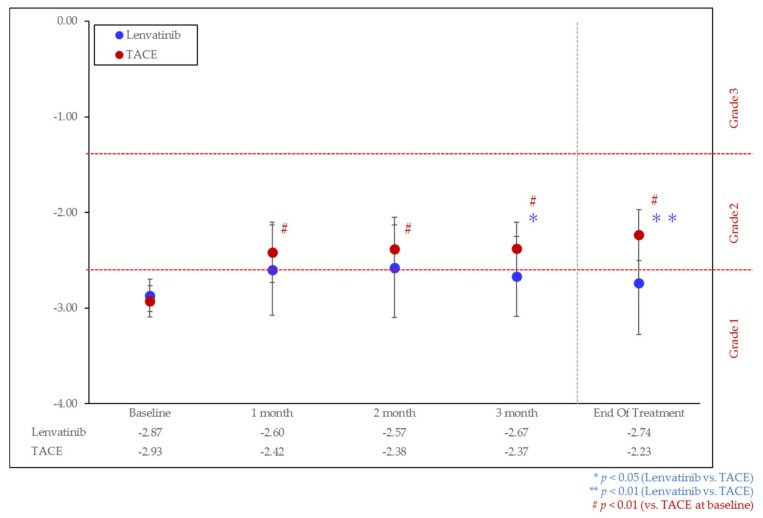
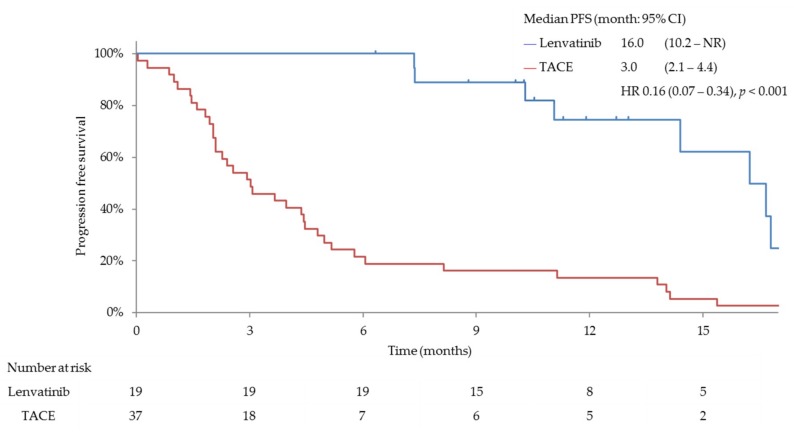
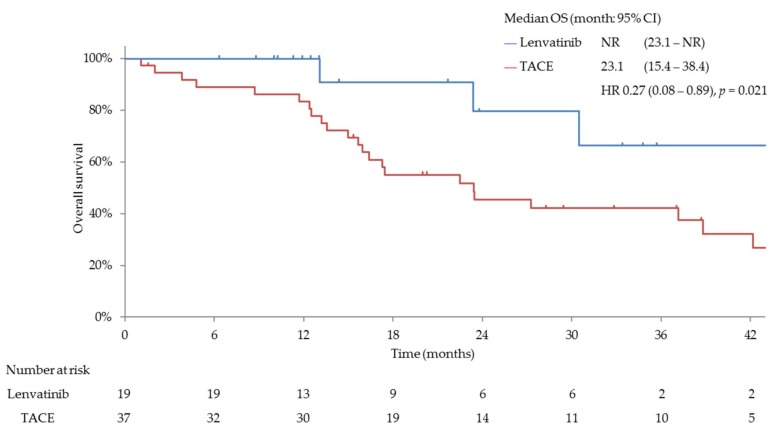
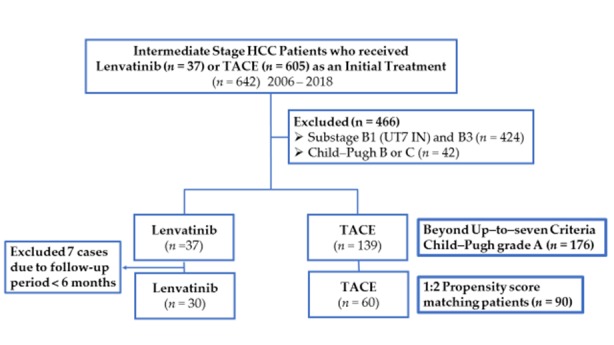
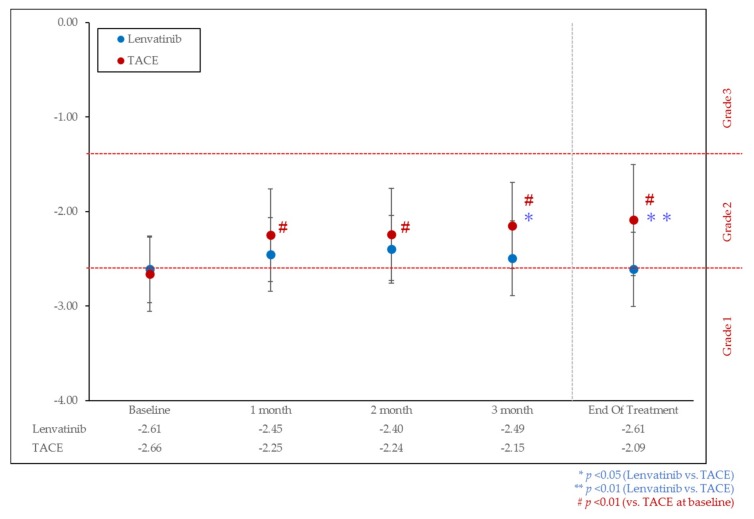
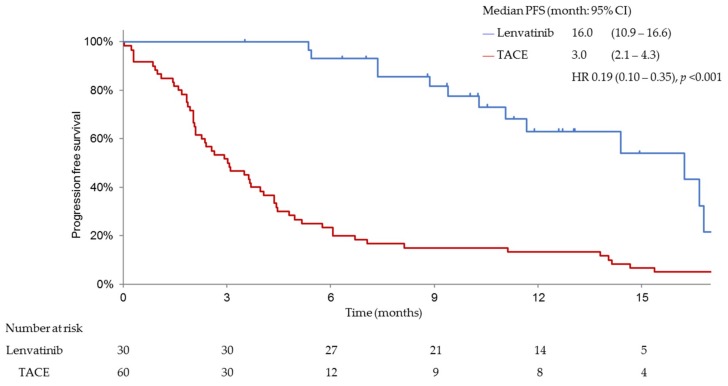
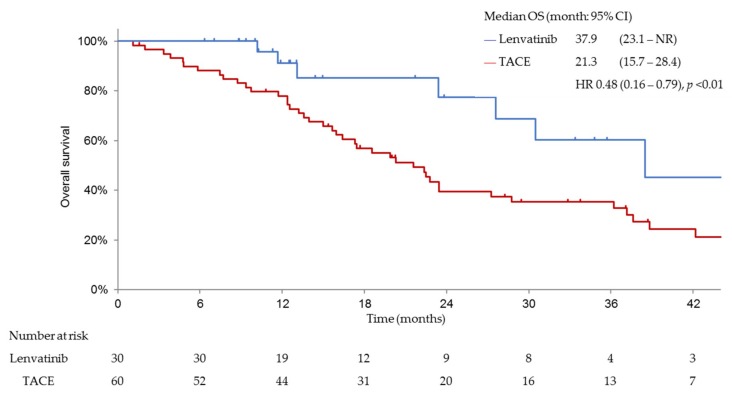
Although transcatheter arterial chemoembolization (TACE) is the standard of care for intermediate-stage hepatocellular carcinoma (HCC), this is a largely heterogeneous disease that includes a subgroup of patients who do not benefit from TACE. The treatment strategy for this subgroup of patients currently remains an unmet need in clinical practice. Here, we performed a proof-of-concept study that lenvatinib may be a more favorable treatment option over TACE as an initial treatment in intermediate-stage HCC patients with large or multinodular tumours exceeding the up-to-seven criteria. This proof-of-concept study included 642 consecutive patients with HCC initially treated with lenvatinib or conventional TACE (cTACE) between January 2006 and December 2018. Of these patients, 176 who received lenvatinib or cTACE as an initial treatment and met the eligibility criteria (unresectable, beyond the up-to-seven criteria, no prior TACE/systemic therapy, no vascular invasion, no extrahepatic spread and Child–Pugh A liver function) were selected for the study. Propensity score matching was used to adjust for patient demographics. After propensity-score matching, the outcome of 30 patients prospectively treated with lenvatinib (14 in clinical trials, one in an early access program and 15 in real world settings) and 60 patients treated with cTACE as the initial treatment was compared. The change of albumin-bilirubin (ALBI) score from baseline to the end of treatment were −2.61 to −2.61 for 30 patients in the lenvatinib group (p = 0.254) and −2.66 to −2.09 in the cTACE group (p < 0.01), respectively. The lenvatinib group showed a significantly higher objective response rate (73.3% vs. 33.3%; p < 0.001) and significantly longer median progression-free survival than the cTACE group (16.0 vs. 3.0 months; p < 0.001). Overall survival was significantly longer in the lenvatinib group than in the cTACE group (37.9 vs. 21.3 months; hazard ratio: 0.48, p < 0.01). In patients with large or multinodular intermediate-stage HCC exceeding the up-to-seven criteria with Child–Pugh A liver function, who usually do not benefit from TACE, lenvatinib provides a more favorable outcome than TACE.
Overview
The claims and statistics of this paper haven’t been checked yet.
Free: it reads the open-access text and checks the first 5 claims that cite a source we can check. Create a free account to check every claim.
Integrity signals
Registry
Cites
Statistics
Figures
Verification
Claims the paper makes
The claims and statistics of this paper haven’t been checked yet.
Free: it reads the open-access text and checks the first 5 claims that cite a source we can check. Create a free account to check every claim.
Claims other papers make about this one
Each is checked against this paper’s own text: does it say what the citing paper says it does?
The cited source says what the claim attributes to it.
In the citing paper
“those with a large intrahepatic tumour burden (such as bilobar multifocal disease) might be considered unsuitable for TACE and therefore as candidates for systemic therapies, given a lower likelihood of objective responses and a higher risk of liver injury with embolic therapies147.”
From Adjuvant and neoadjuvant immunotherapies in hepatocellular carcinoma (2024) · cites this paper as [147]
Self-check
Percentages, sums and reported differences re-computed from the paper’s own numbers.
The self-check needs the paper’s full text.
Citations
Cites
Cancer incidence and mortality worldwide: Sources, methods and major patterns in GLOBOCAN 2012
Ferlay, J., Soerjomataram, I., Dikshit, R., Eser, S., Mathers, C., Rebelo, M., Parkin, D. M., Forman, D., & Bray, F. (2015) · International Journal of Cancer · doi:10.1002/ijc.29210 · Cited by 28,766
EASL Clinical Practice Guidelines: Management of hepatocellular carcinoma
Galle, P. R., Forner, A., Llovet, J. M., Mazzaferro, V., Piscaglia, F., Raoul, J.-L., Schirmacher, P., & Vilgrain, V. (2018) · Journal of Hepatology · doi:10.1016/j.jhep.2018.03.019 · Cited by 11,406
Angiogenesis in cancer and other diseases
Carmeliet, P., & Jain, R. K. (2000) · Nature · doi:10.1038/35025220 · Cited by 9,070 · cited 1×
“That is, giving TACE to intermediate-stage HCC patients with up-to-seven criteria out leads to a spike in the intra-tumoral concentration of VEGF, FGF or PDGF, suggesting that blockade of these receptors may prevent the effects of a surge in proangiogenic factors [39,40].”
BackgroundA New Era of Systemic Therapy for Hepatocellular Carcinoma with Regorafenib and Lenvatinib
Kudo, M. (2017) · Liver Cancer · doi:10.1159/000462153 · Cited by 5,936
Self-citationNormalization of Tumor Vasculature: An Emerging Concept in Antiangiogenic Therapy
Jain, R. K. (2005) · Science · doi:10.1126/science.1104819 · Cited by 5,527 · cited 1×
“In addition, as is very well known, antiangiogenic agents play a very important role in the normalization of tumor vasculature [44] and in the enhancement of the effective, homogeneous delivery of anticancer agents (including lipiodol and gelatin sponge) into tumor tissues [45], resulting in improved responses to TACE…”
BackgroundKudo, M., Finn, R. S., Qin, S., Han, K.-H., Ikeda, K., Piscaglia, F., Baron, A., Park, J.-W., Han, G., Jassem, J., et al. (2018) · The Lancet · doi:10.1016/s0140-6736(18)30207-1 · Cited by 5,497 · cited 4×
“Of 30 lenvatinib-treated patients, 15 were treated in prospective clinical trials followed by commercially available lenvatinib after the data cut off (one from the phase II trial [26] of lenvatinib started in 2006 and 13 from the phase III REFLECT trial [15]), one patient was treated in the early access program and 1…”
BackgroundMethodResultInfluentialSelf-citationHepatocellular Carcinoma: Epidemiology and Molecular Carcinogenesis
El–Serag, H. B., & Rudolph, K. L. (2007) · Gastroenterology · doi:10.1053/j.gastro.2007.04.061 · Cited by 5,415 · cited 1×
“Hepatocellular carcinoma (HCC) is the third leading cause of cancer-related death worldwide and an important health concern[1-3].”
BackgroundMarrero, J. A., Kulik, L. M., Sirlin, C. B., Zhu, A. X., Finn, R. S., Abecassis, M. M., Roberts, L. R., & Heimbach, J. K. (2018) · Hepatology · doi:10.1002/hep.29913 · Cited by 4,539 · cited 2×
“Up to now, there has been no report on the efficacy of initial treatment with lenvatinib for intermediate-stage HCC without prior TACE since it is not recommended by worldwide guidelines such as the European Association for the Study of the Liver (EASL) [5], American Association for the Study of Liver Diseases (AASLD)…”
MethodModified RECIST (mRECIST) Assessment for Hepatocellular Carcinoma
Lencioni, R., & Llovet, J. (2010) · Seminars in Liver Disease · doi:10.1055/s-0030-1247132 · Cited by 4,329 · cited 1×
“Treatment response in both groups was evaluated by dynamic CT in accordance with modified Response Evaluation Criteria in Solid Tumor (mRECIST) [31].”
MethodOmata, M., Cheng, A.-L., Kokudo, N., Kudo, M., Lee, J. M., Jia, J., Tateishi, R., Han, K.-H., Chawla, Y. K., Shiina, S., et al. (2017) · Hepatology International · doi:10.1007/s12072-017-9799-9 · Cited by 2,171 · cited 1×
“Up to now, there has been no report on the efficacy of initial treatment with lenvatinib for intermediate-stage HCC without prior TACE since it is not recommended by worldwide guidelines such as the European Association for the Study of the Liver (EASL) [5], American Association for the Study of Liver Diseases (AASLD)…”
MethodSelf-citation
Cited by
Items 101–200 of 307
Up to seven criteria in selection of systemic therapy for hepatocellular carcinoma
Silk, T., Silk, M. T., & Wu, J. J. (2022) · World Journal of Gastroenterology · doi:10.3748/wjg.v28.i23.2561 · Cited by 19
Shimose, S., Iwamoto, H., Tanaka, M., Niizeki, T., Kajiwara, M., Itano, S., Moriyama, E., Shirono, T., Noda, Y., Kamachi, N., et al. (2022) · Cancers · doi:10.3390/cancers14174284 · Cited by 19
“001, Figure S4), indicating that our results were in accordance with those of previous reports treated with systemic therapy [27,28,31].”
ResultZhou, C., Chang, B., Xiang, Z., Li, Z., Wu, C. T., Bai, M., Jiang, Z., Huang, M., & Chen, J. (2024) · Academic Radiology · doi:10.1016/j.acra.2024.04.045 · Cited by 19
Lenvatinib: established and promising drug for the treatment of advanced hepatocellular carcinoma
Catalano, M., Gardini, A. C., Vannini, G., Campani, C., Marra, F., Mini, E., & Roviello, G. (2021) · Expert Review of Clinical Pharmacology · doi:10.1080/17512433.2021.1958674 · Cited by 21
“(p 0.001) compared with conventional TACE [72].”
BackgroundInfluentialChen, J., Chen, Y., Jiang, N., Xu, J., Liang, Z., Bai, M., Xing, Y., Liu, Z., Wu, X.-Y., & Li, X. (2021) · The Oncologist · doi:10.1002/onco.13743 · Cited by 18
“Meanwhile, systematic treatment using lenvatinib seemed to present superior prognosis for than TACE in selected patients [5, 6].”
BackgroundXue, M., Wu, Y., Zhu, B., Zou, X., Fan, W., & Li, J. (2021) · PubMed Central · Cited by 23
Transarterial chemoembolization failure/refractoriness: A scientific concept or pseudo-proposition
Zhang, S., Zhong, B., Zhang, L., Wang, W., & Ni, C. (2022) · World Journal of Gastrointestinal Surgery · doi:10.4240/wjgs.v14.i6.528 · Cited by 18
Moriguchi, M., Kataoka, S., & Itoh, Y. (2024) · Cancers · doi:10.3390/cancers16132387 · Cited by 19
Integrating Genomics Into Clinical Practice in Hepatocellular Carcinoma: The Challenges Ahead
Pillai, A. A., Ahn, J. C., & Kulik, L. (2020) · The American Journal of Gastroenterology · doi:10.14309/ajg.0000000000000843 · Cited by 21
Redefining Intermediate-Stage HCC Treatment in the Era of Immune Therapies
Brar, G. S., Kesselman, A. J., Malhotra, A., & Shah, M. A. (2021) · JCO Oncology Practice · doi:10.1200/op.21.00227 · Cited by 19
Chi, C., Lee, I., Lee, R., Hung, Y., Su, C., Hou, M., Chao, Y., & Huang, Y. (2021) · Cancers · doi:10.3390/cancers13174325 · Cited by 17
“Taking together, high tumor burden is agreed to be an important parameter to select TACE unsuitable patients [13,51,52].”
BackgroundAsano, K., Kageyama, K., Yamamoto, A., Jogo, A., Uchida‐Kobayashi, S., Sohgawa, E., Murai, K., Kawada, N., & Miki, Y. (2023) · Liver Cancer · doi:10.1159/000530441 · Cited by 17
Current Therapeutic Strategies for Hepatocellular Carcinoma in Japan
Kudo, M. (2023) · Liver Cancer · doi:10.1159/000534304 · Cited by 21
Self-citationZarlashat, Y., Mushtaq, H., Pham, L., Abbas, W., & Sato, K. (2024) · International Journal of Molecular Sciences · doi:10.3390/ijms25136830 · Cited by 19
“A previous pilot study included 30 patients with intermediate-stage HCC who were treated with lenvatinib 8 mg daily, while another group of 60 intermediate-stage HCC patients received TACE [70].”
MethodInfluentialWorldwide management of hepatocellular carcinoma during the COVID-19 pandemic
Inchingolo, R., Acquafredda, F., Tedeschi, M., Laera, L., Surico, G., Surgo, A., Fiorentino, A., Spiliopoulos, S., de’Angelis, N., & Memeo, R. (2021) · World Journal of Gastroenterology · doi:10.3748/wjg.v27.i25.3780 · Cited by 17
Khaled, N. B., Mörtl, B., Beier, D., Reiter, F. P., Pawlowska-Phelan, D., Teufel, A., Rössler, D. C., Schwade, D. F., Philipp, A. B., Kubisch, I., et al. (2023) · European Journal of Cancer · doi:10.1016/j.ejca.2023.113248 · Cited by 21
Wang, D., Zhang, J., Zhang, L., Niu, M., Jiang, H., Jia, F., & Feng, S. (2022) · Hepatobiliary & pancreatic diseases international · doi:10.1016/j.hbpd.2022.11.005 · Cited by 15
Chen, S., Shuangyan, T., Shi, F., Cai, H., Wu, Z., Wang, L., Ma, P., Zhou, Y.-M., Mai, Q., Wang, F., et al. (2024) · Frontiers in Immunology · doi:10.3389/fimmu.2024.1430571 · Cited by 25
Kudo, M. (2022) · Liver Cancer · doi:10.1159/000527404 · Cited by 21
Self-citationZarlashat, Y., Ghaffar, A., Guerra, F., & Picca, A. (2025) · International Journal of Molecular Sciences · doi:10.3390/ijms26167836 · Cited by 21
“In comparison to the TACE group, the lenvatinib group demonstrated superior therapeutic potential for intermediate-stage HCC patients, as evidenced by a longer median PFS (16.0 vs. 3.0 months), and a significantly improved OS (37.9 vs. 21.3 months) [135].”
InfluentialXia, D., Bai, W., Wang, Q., Chung, J. W., Adhoute, X., Kloeckner, R., Zhang, H., Zeng, Y., Sripongpun, P., Nie, C., et al. (2024) · JHEP Reports · doi:10.1016/j.jhepr.2024.101216 · Cited by 17
“4,9 As mentioned above, the notorious heterogeneity of intermediate-stage HCC might account for the wide range of survival outcomes.”
Perera, S., Kelly, D., & O'Kane, G. M. (2020) · Current Oncology · doi:10.3747/co.27.7159 · Cited by 14
Endo, K., Kuroda, H., Abe, T., Sato, H., Kooka, Y., Oikawa, T., Sato, A., Nishiya, M., Sugai, T., & Takikawa, Y. (2021) · Hepatology Research · doi:10.1111/hepr.13665 · Cited by 14
Sugama, Y., Miyanishi, K., Osuga, T., Tanaka, S., Hamaguchi, K., Ito, R., Sakamoto, H., Kubo, T., Ohnuma, H., Murase, K., et al. (2021) · JGH Open · doi:10.1002/jgh3.12676 · Cited by 14
Wang, F., Numata, K., Komiyama, S., Miwa, H., Sugimori, K., Ogushi, K., Moriya, S., Nozaki, A., Chuma, M., Ruan, L., et al. (2022) · Frontiers in Oncology · doi:10.3389/fonc.2022.843680 · Cited by 14
Kudo, M. (2023) · Liver Cancer · doi:10.1159/000533493 · Cited by 19
“Upfront LEN followed by TACE was also associated with better preservation of liver function than TACE alone, suggesting that LEN preceded by TACE is an ef fi cient treatment option for up-to-seven criteria OUT patients who are not suitable for TACE [15].”
BackgroundMethodInfluentialSelf-citationLocoregional therapy in hepatocellular carcinoma: when to start and when to stop and when to revisit
Lee, J. J. X., Tai, D. W.-M., & Choo, S. P. (2021) · ESMO Open · doi:10.1016/j.esmoop.2021.100129 · Cited by 14
“In Japan, a proof-of-concept retrospective study comparing lenvatinib versus TACE as initial treatment in patients with intermediate-stage HCC beyond up-to-7 criteria showed better overall survival and lesser deterioration in liver function among patients given upfront lenvatinib.(43) Aside from lenvatinib, the sequen…”
ResultHIDAKA, M., Hara, T., Soyama, A., Sasaki, R., Matsushima, H., Tanaka, T., Hamada, T., Imamura, H., Adachi, T., Kanetaka, K., et al. (2022) · Anticancer Research · doi:10.21873/anticanres.15791 · Cited by 13
Cheung, T. T., Yu, S. C. H., Chan, S. L., Poon, R. T. P., Kwok, P. C. H., Lee, A., Tai, A., Tam, D., Cheung, C., Lai, T.-W., et al. (2022) · HepatoBiliary Surgery and Nutrition · doi:10.21037/hbsn-21-405 · Cited by 13
Self-citationAdvances and challenges of immunocheckpoint inhibitors in the treatment of primary liver cancer
Hu, M. X., Yao, W., & Shen, Q. (2022) · Frontiers in Genetics · doi:10.3389/fgene.2022.1005658 · Cited by 16
“The results showed that the median disease-free survival (DFS) time of patients in the combination group was significantly longer than that in the TACE group (12.0 vs. 8.0 m, p < 0.05); HR = 0.5,p = 0.0359) (Kudo et al., 2019).”
BackgroundInfluentialSystemic Treatment in Intermediate Stage (Barcelona Clinic Liver Cancer-B) Hepatocellular Carcinoma
Karagiannakis, D. S. (2023) · Cancers · doi:10.3390/cancers16010051 · Cited by 14
“According to the studies of Kudo et al. and Kobayashi et al., lenvatinib might offer better ORR and PFS compared to TACE in BCLC-B2 stages [45,52].”
BackgroundResultInfluentialThornton, L. M., Abi‐Jaoudeh, N., Lim, H. J., Malagari, K. S., Spieler, B. O., Kudo, M., Finn, R. S., Lencioni, R. A., White, S. B., Kokabi, N., et al. (2024) · Journal of Vascular and Interventional Radiology · doi:10.1016/j.jvir.2024.02.017 · Cited by 13
Self-citationMuraishi, N., Kawamura, Y., Akuta, N., Shindoh, J., Matsumura, M., Okubo, S., Fujiyama, S., Hosaka, T., Saitoh, S., Sezaki, H., et al. (2022) · Oncology · doi:10.1159/000526976 · Cited by 13
Kawamura, Y., Akuta, N., Shindoh, J., Matsumura, M., Okubo, S., Tominaga, L., Fujiyama, S., Hosaka, T., Saitoh, S., Sezaki, H., et al. (2023) · Cancers · doi:10.3390/cancers15153789 · Cited by 13
Minamiguchi, K., Nishiofuku, H., Saito, N., Sato, T. A., Taiji, R., Matsumoto, T., Maeda, S., Chanoki, Y., Tachiiri, T., Kunichika, H., et al. (2023) · Cancers · doi:10.3390/cancers15041238 · Cited by 13
“9 months in patients with beyond up-to-7 criteria who were treated with initial lenvatinib with or without additional TACE [52].”
BackgroundTada, T., Kumada, T., Hiraoka, A., Hirooka, M., Kariyama, K., Tani, J., Atsukawa, M., Takaguchi, K., Itobayashi, E., Fukunishi, S., et al. (2023) · Liver International · doi:10.1111/liv.15753 · Cited by 15
Self-citationPersano, M., Gardini, A. C., Tada, T., Suda, G., Shimose, S., Kudo, M., Rossari, F., Yoo, C., Cheon, J., Finkelmeier, F., et al. (2024) · Oncology · doi:10.1159/000541018 · Cited by 17
Self-citationInfluence of NOS3 rs2070744 genotypes on hepatocellular carcinoma patients treated with lenvatinib
Azuma, S., Uojima, H., Chuma, M., Shao, X., Hidaka, H., Nakazawa, T., Kondo, M., Numata, K., Iwabuchi, S., Kako, M., et al. (2020) · Scientific Reports · doi:10.1038/s41598-020-73930-3 · Cited by 12
Yamamoto, M., Kobayashi, T., Hashimoto, M., Kuroda, S., Kawaoka, T., Aikata, H., Chayama, K., & Ohdan, H. (2021) · BMC Cancer · doi:10.1186/s12885-021-08421-3 · Cited by 13
Kobayashi, S., Fukushima, T., Ueno, M., Moriya, S., Chuma, M., Numata, K., Tsuruya, K., Hirose, S., Kagawa, T., Hattori, N., et al. (2022) · BMC Cancer · doi:10.1186/s12885-022-09625-x · Cited by 12
“They analyzed albumin-bilirubin scores, OS, ORR, PFS, and safety and showed the superiority of LEN over TACE as first-line treatment for patients with intermediatestage HCC [16].”
BackgroundSelf-citationNew Opportunities to Individualize Frontline Therapy in Advanced Stages of Hepatocellular Carcinoma
Gordan, J. D., Keenan, B. P., Lim, H. C., Yarchoan, M. M., & Kelley, R. K. (2023) · Drugs · doi:10.1007/s40265-023-01907-3 · Cited by 16
“Prospective studies of systemic therapy versus TACE, including a study of atezolizumab plus bevacizumab versus TACE in intermediate stage HCC with tumor burden exceeding the Milan criteria (ABC-HCC), will better define the use of systemic therapy in intermediate stage HCC.”
BackgroundInfluentialImpact of LEAP-012 and EMERALD-1 in the management of HCC
Singal, A. G., Garcia-Reyes, K., Kelley, R. K., & Kim, E. (2025) · JHEP Reports · doi:10.1016/j.jhepr.2025.101664 · Cited by 17
“22 Patients treated with lenvatinib had a higher objective response rate (ORR) (73.3% vs. 33.3”
InfluentialHu, L., Zheng, Y., Lin, J., Shi, X., & Wang, A. (2022) · Clinics and Research in Hepatology and Gastroenterology · doi:10.1016/j.clinre.2022.102061 · Cited by 12
Development and validation of prognostic nomograms for large hepatocellular carcinoma after HAIC
Yao, W., Wei, R., Jia, J., Li, W., Zuo, M., Zhuo, S., Shi, G., Wu, P., & An, C. (2023) · Therapeutic Advances in Medical Oncology · doi:10.1177/17588359231163845 · Cited by 11
Saito, N., Nishiofuku, H., Sato, T. A., Maeda, S., Minamiguchi, K., Taiji, R., Matsumoto, T., Chanoki, Y., Tachiiri, T., Kunichika, H., et al. (2023) · Cancers · doi:10.3390/cancers15092609 · Cited by 11
“In a proof-of-concept study, Kudo et al. reported that the MST and ORR of TACE 21.3 months and 33.3% respectively [12].”
BackgroundInfluentialKudo, M., Finn, R. S., Morimoto, M., Rau, K., Ikeda, M., Yen, C., Galle, P. R., Llovet, J. M., Daniele, B., Lim, H. Y., et al. (2021) · Liver Cancer · doi:10.1159/000516605 · Cited by 12
Self-citationSelective Internal Radiation Therapy Approval for Early HCC: What Comes Next?
Iñarrairaegui, M., & Sangro, B. (2021) · Hepatology · doi:10.1002/hep.32054 · Cited by 11
“Weak evidenceSubstantial evidence Pr oc ed ur e D is ea se Good liver functional reserve (Child A, ALBI 1) Portal vein invasion High MAA uptake (hypervascular tumors) Limited burden of disease (single, 8 cm) BCLC-B2 substage Disease control with contralateral hypertrophy Same-day procedure Personalized dosimetry Combi…”
BackgroundLIU, Y.-C., Huang, B.-H., Chung, J., LIU, W.-L., Hsu, F., & Lin, S. (2021) · Anticancer Research · doi:10.21873/anticanres.14757 · Cited by 10
Guo, Y., Chai, B., Zhang, H., Chai, X., Chen, Y., Xu, J., Qin, L., & Chai, Y. (2024) · Biology Direct · doi:10.1186/s13062-024-00459-0 · Cited by 12
“In inter-mediate-phase HCC patients with tumors exceeding the up-to-seven criteria, and for whom TACE is ineffective, lenvatinib can considerably increase overall survival (37.9 vs. 21.3 months) and progression-free survival (16.0 vs. 3.0 months) [8].”
BackgroundInfluentialTada, T., Kumada, T., Hiraoka, A., Michitaka, K., Atsukawa, M., Hirooka, M., Tsuji, K., Ishikawa, T., Takaguchi, K., Kariyama, K., et al. (2021) · Oncology · doi:10.1159/000515896 · Cited by 10
Hiraoka, A., Kumada, T., Kariyama, K., Toyoda, H., Yasuda, S., Tsuji, K., Hatanaka, T., Kakizaki, S., Naganuma, A., Ishikawa, T., et al. (2021) · Oncology · doi:10.1159/000520292 · Cited by 12
Liu, Y., Qiao, Y., Zhou, M., Guo, J., Lin, Y., Li, W., An, C., & Li, C. (2022) · Cancer Medicine · doi:10.1002/cam4.5366 · Cited by 10
Xie, Q., Huang, L., Gao, F., Liu, D.-Q., Wang, X., Jiang, K., Gong, J., Zhao, X., Gao, B., & Lei, Z. (2022) · Frontiers in Pharmacology · doi:10.3389/fphar.2022.965770 · Cited by 10
“(Kudo, 2019).”
BackgroundZhang, Z.-Y., Zhang, E., Zhang, B., Chen, X., & Zhang, W. (2021) · World Journal of Gastrointestinal Surgery · doi:10.4240/wjgs.v13.i8.796 · Cited by 10
Lee, I., Wang, H.-W., Teng, W., Lin, T., Chen, C.-H., Lai, H., Lee, T., Chang, C.-W., Hung, C., Dai, C., et al. (2025) · Clinical and Molecular Hepatology · doi:10.3350/cmh.2025.0724 · Cited by 14
Current and future perspective on targeted agents and immunotherapies in hepatocellular carcinoma
Ferrarese, A., Sciarrone, S. S., Pellone, M., Shalaby, S., Battistella, S., Zanetto, A., Germani, G., Russo, F. P., Senzolo, M., Burra, P., et al. (2021) · Minerva Gastroenterology · doi:10.23736/s2724-5985.20.02775-0 · Cited by 10
Takaya, H., Namisaki, T., Takeda, S., Kaji, K., Ogawa, H., Ishida, K., Tsuji, Y., Takagi, H., Ozutsumi, T., Fujinaga, Y., et al. (2021) · Journal of Clinical Medicine · doi:10.3390/jcm10214838 · Cited by 9
Systemic Therapies for Hepatocellular Carcinoma in India
Jahagirdar, V., Rama, K., Habeeb, M., Sharma, M., Rao, P. N., Reddy, D. N., Singal, A. G., & Kulkarni, A. V. (2024) · Journal of Clinical and Experimental Hepatology · doi:10.1016/j.jceh.2024.101440 · Cited by 9
Transarterial Chemoembolization for Hepatocellular Carcinoma: Current Role and Techniques
Tanaka, T. (2024) · Interventional Radiology · doi:10.22575/interventionalradiology.2024-0016 · Cited by 14
Chong, L., Cao, T., Tang, M., Pu, W., & Lei, P. (2025) · European Journal of Radiology · doi:10.1016/j.ejrad.2025.112060 · Cited by 9
Kudo, M., Ueshima, K., Tsuchiya, K., Yamashita, T., Shimose, S., Numata, K., Kodama, Y., Itoh, S., Tanaka, Y., Kuroda, H., et al. (2025) · Liver Cancer · doi:10.1159/000546899 · Cited by 17
“In support of the concept of TACE unsuitability, a recent study found that lenvatinib as an initial treatment improved progression-free survival (PFS) and OS compared to TACE in Child-Pugh A patients with HCC beyond up-to-seven criteria, while preserving hepatic functional reserve [14].”
Self-citationCheng, K.-L., Cheng, Y., Chan, C., & Wang, C. (2023) · Digestive Diseases and Sciences · doi:10.1007/s10620-023-07984-4 · Cited by 8
“also reported lenvatinib provided longer overall survival and progression free survival than TACE in patients meeting the criteria of “up-to-seven out” [18].”
BackgroundVentura, C., Junco, M., Valtierra, F. X. S., Gooz, M. B., Ye, Z., Townsend, D. M., Woster, P. M., & Maldonado, E. N. (2023) · European Journal of Pharmacology · doi:10.1016/j.ejphar.2023.176034 · Cited by 10
Yuan, G., Li, W., Zang, M., Li, R., Li, Q., Hu, X., Zhang, Q., Huang, W., Ruan, J., Pang, H., et al. (2024) · Discover Oncology · doi:10.1007/s12672-024-00917-1 · Cited by 10
“[13–15] In addition, TACE results in necrosis of the tumor tissue and releases tumor antigens which may promote tumor-specific immune responses.”
BackgroundChen, W., Yan, H., Zhang, J.-X., Zhou, C., Liu, J., Liu, S., Shi, H., Cheng, Y., & Zu, Q. (2024) · Annals of Medicine · doi:10.1080/07853890.2024.2419993 · Cited by 8
“…cancer (Bclc) B-stage hcc [6–8], and the efficacy of tace alone is unsatisfactory for hcc patients meeting the beyond the up-to-seven criteria [9, 10]. the objective response rate (ORR) was 37.8% in patients treated with tace alone [10]. tace refractoriness also occurred earlier in patients…”
BackgroundInfluentialTanahashi, Y., Kubota, K., Nomura, T., Ikeda, T., Kutsuna, M., Funayama, S., Kobayashi, T., Ozaki, K., Ichikawa, S., & Goshima, S. (2024) · Japanese Journal of Radiology · doi:10.1007/s11604-024-01614-3 · Cited by 8
“The indications for TACE for inter-mediate-stage HCC have changed during the past decade because of marked developments in systemic therapy [1–7].”
BackgroundSingal, A. G., Agopian, V. G., Dawson, L. A., El-Khoueiry, A., Finn, R. S., Halazun, K., Heimbach, J. K., Kelley, R. K., Kim, E., Kulik, L., et al. (2026) · Hepatology · doi:10.1097/hep.0000000000001834 · Cited by 7
Zhang, X., Ruidong, W., Yuhan, D., Li, Q., Xiong, F., Ren, H., Zhang, J., & Li, W. (2024) · Frontiers in Immunology · doi:10.3389/fimmu.2024.1422784 · Cited by 8
Yamauchi, Y., Saeki, I., Yamasaki, T., Sasaki, R., Tanabe, N., Oono, T., Matsuda, T., Hisanaga, T., Matsumoto, T., Hidaka, I., et al. (2020) · Applied Sciences · doi:10.3390/app10165403 · Cited by 9
“transcatheter arterial chemoembolization (cTACE) markedly improved OS compared with initial therapy of cTACE in patients with intermediate-stage HCC beyond up-to-seven criteria [30].”
BackgroundDecraecker, M., Toulouse, C., & Blanc, J. (2021) · Cancers · doi:10.3390/cancers13246310 · Cited by 8
“A proof-of-concept retrospective study with a propensity matching score showed that lenvatinib could be more beneficial than TACE in HCC beyond up-to-seven criteria [80].”
BackgroundImmune checkpoint inhibitors for hepatocellular carcinoma – A game changer in treatment landscape
Liu, T., Shen, Y., & Cheng, A. (2022) · Journal of the Formosan Medical Association · doi:10.1016/j.jfma.2022.03.017 · Cited by 7
Chen, R., Li, L., Li, Y., Song, K., Shen, C., Ma, P., & Wang, Z. K. (2022) · Journal of Gastrointestinal Oncology · doi:10.21037/jgo-22-525 · Cited by 6
Kudo, M., Finn, R. S., Morimoto, M., Rau, K., Ikeda, M., Yen, C., Galle, P. R., Llovet, J. M., Daniele, B., Lim, H. Y., et al. (2020) · Journal of Clinical Oncology · doi:10.1200/jco.2020.38.4_suppl.549 · Cited by 7
Self-citationChang, P.-Y., Lee, R., Liang, P., Liu, Y., Chuang, V. P., Wu, D., Cheng, Y., Huang, J.-I., Tseng, H., Hung, C., et al. (2023) · Frontiers in Oncology · doi:10.3389/fonc.2023.1186674 · Cited by 6
Tan, K., He, X., Yuan, H., Zhao, S., Gong, C., Zhao, Y., Nan, H., Zang, L., Luo, Z., & Du, X. (2023) · iLiver · doi:10.1016/j.iliver.2023.08.003 · Cited by 9
Liu, J., Yan, S., Zhang, G., Yang, L., Wei, S., & Yi, P. (2023) · Oncology Letters · doi:10.3892/ol.2023.14094 · Cited by 9
Vinutha, M., Sharma, U., Swamy, G., Rohini, S., Vada, S., Janandri, S., Haribabu, T. E., Taj, N., Gayathri, S. V., Jyotsna, S., et al. (2024) · Life Sciences · doi:10.1016/j.lfs.2024.123022 · Cited by 11
Imamura, A., Taguchi, H., Takano, H., Funatsu, H., Nakamura, K., Arimitsu, H., & Chiba, S. (2021) · Japanese Journal of Radiology · doi:10.1007/s11604-020-01078-1 · Cited by 6
“Lenvatinib is associated with better OS and better preservation of liver function than TACE in patients with HCC beyond the up-to-seven criteria with Child–Pugh A liver function [11].”
BackgroundSynergizing liver systemic treatments with interventional oncology: friend or foe?
Jost, R., Alshatti, N., Ghosn, M., Bonnet, B., Champiat, S., Deschamps, F., Gelli, M., Boige, V., Danlos, F., Susini, S., et al. (2022) · British Journal of Radiology · doi:10.1259/bjr.20220548 · Cited by 6
Kawamura, Y., Akuta, N., Shindoh, J., Matsumura, M., Okubo, S., Tominaga, L., Fujiyama, S., Hosaka, T., Saitoh, S., Sezaki, H., et al. (2022) · Clinical Journal of Gastroenterology · doi:10.1007/s12328-022-01723-4 · Cited by 7
Persano, M., Gardini, A. C., Burgio, V., Scartozzi, M., Cascinu, S., & Rimini, M. (2022) · Expert Review of Anticancer Therapy · doi:10.1080/14737140.2023.2156340 · Cited by 6
Wong, J. K., Lim, H. J., Tam, V. C., Burak, K. W., Dawson, L. A., Chaudhury, P. K., Abraham, R. J., Meyers, B. M., Sapisochín, G., Valenti, D. A., et al. (2023) · Cancer Treatment Reviews · doi:10.1016/j.ctrv.2023.102526 · Cited by 7
Persano, M., Rimini, M., Tada, T., Suda, G., Shimose, S., KUDO, M., Cheon, J., Finkelmeier, F., Lim, H. Y., Presa, J., et al. (2023) · Anticancer Research · doi:10.21873/anticanres.16310 · Cited by 6
Self-citationLu, C.-Y., Hsiao, C., Peng, P.-J., Huang, S.-C., Chuang, M., Su, H.-J., & Huang, K. (2023) · Cancers · doi:10.3390/cancers15184465 · Cited by 6
Shibata, O., Kamimura, K., Ko, M., Sakai, N., Abé, H., Morita, S., Mizusawa, T., Sato, H., Sakamaki, A., & Terai, S. (2020) · Internal Medicine · doi:10.2169/internalmedicine.6580-20 · Cited by 6
“With the increase in the number of HCC cases treated with LEN (1, 6, 35), randomized trials based on the FGFR expressions in the target tumors and its inhibitor will guide our management of HCC cases in a more precise manner (36).”
BackgroundHoshiai, S., Irie, T., Mori, K., Hasegawa, N., Fukuda, K., Ishige, K., Mori, K., Arai, H., Takahashi, N., & Nakajima, T. (2021) · Journal of Vascular and Interventional Radiology · doi:10.1016/j.jvir.2021.10.015 · Cited by 6
Sho, T., Morikawa, K., Kubo, A., Tokuchi, Y., Kitagataya, T., Yamada, R., Shigesawa, T., Kimura, M., Nakai, M., Suda, G., et al. (2021) · World Journal of Gastrointestinal Oncology · doi:10.4251/wjgo.v13.i12.2076 · Cited by 8
Debates and progress in the management of intermediate-stage (BCLC stage B) hepatocellular carcinoma
Jiang, J., Cao, Y., Gao, S., Hu, Y., Yang, S., & Tang, H. (2025) · iLiver · doi:10.1016/j.iliver.2025.100187 · Cited by 6
“78 This synergistic effect 113 is believed to result from lenvatinib's ability to normalize the tumor vasculature, thereby enhancing the intratumoral distribution of chemotherapeutic agents during TACE.”
InfluentialHuang, C.-T., Chu, Y.-L., Su, T., Huang, S., Tseng, T., Hsu, S., Liao, S., Hong, C., Liu, C., Yang, H., et al. (2023) · Liver Cancer · doi:10.1159/000529143 · Cited by 5
“…unresectable HCC, receiving systemic treatment such as lenvatinib as the initial therapy was associated with longer OS, longer progression-free survival, higher objective response rate, and more stationary liver function compared with the patients receiving the standard-of-care of TACE [38, 39].”
ResultLi, H., Kang, W., & Rong, P. (2024) · Quantitative Imaging in Medicine and Surgery · doi:10.21037/qims-23-963 · Cited by 6
“Repeated TACE therapy is associated with increased angiogenesis and embolization-related liver injury, and may even counteract the benefits achieved by TACE therapy in tumors and adversely affect overall survival (16,17).”
Advances in Systemic Therapy for Hepatocellular Carcinoma and Future Prospects
Sugimoto, R., Kurokawa, M., Tanaka, Y., Senju, T., Kohjima, M., & Tanaka, M. (2025) · Current Oncology · doi:10.3390/curroncol32090490 · Cited by 8
“A retrospective analysis by Kudo et al. compared groups that received lenvatinib therapy and those that underwent TACE in a propensity-matched control analysis of a group where TACE was expected to be ineffective and reported that lenvatinib was more effective in terms of OS and PFS [66].”
Xia, W.-L., Xu, S., Guo, Y., Zhao, X., Hu, H., Zhao, Y., Yao, Q.-J., Zheng, L., Zhang, D., Guo, C., et al. (2022) · Frontiers in Oncology · doi:10.3389/fonc.2022.1014653 · Cited by 5
Oura, K., Morishita, A., Takuma, K., Nakahara, M., Tadokoro, T., Fujita, K., Mimura, S., Tani, J., Ono, M., Himoto, T., et al. (2023) · Cancer Medicine · doi:10.1002/cam4.6783 · Cited by 4
“48 Furthermore, other studies have indicated that sequential therapy with lenvatinib and TACE has better clinical outcomes than lenvatinib monotherapy.”
BackgroundTang, L., Hou, Y., Huang, Z., & Huang, J. (2024) · Academic Radiology · doi:10.1016/j.acra.2024.01.015 · Cited by 5
Kawamura, Y., Kobayashi, M., Shindoh, J., Kobayashi, Y., Okubo, S., Muraishi, N., Iritani, S., Fujiyama, S., Hosaka, T., Saitoh, S., et al. (2021) · Oncology · doi:10.1159/000516565 · Cited by 5
Hao, J., Peng, Q., Wang, K., Yu, G., Pan, Y., Du, X., Hu, N., Zhang, X., Qin, Y., & Li, H. (2021) · BioMed Research International · doi:10.1155/2021/6613439 · Cited by 5
“Lenvatinib has been efficacious in patients with intermediate-stage HCC by reducing tumor size, who became TACE failures [16, 17].”
BackgroundDeng, J., & Wen, F. (2022) · Frontiers in Oncology · doi:10.3389/fonc.2022.824799 · Cited by 5
A novel VEGFR inhibitor ZLF-095 with potent antitumor activity and low toxicity
Li, X., Wang, J., Wang, Q., Luo, T., Song, X., Wan, G., Feng, Z., He, X., Lei, Q., Xu, Y., et al. (2023) · Heliyon · doi:10.1016/j.heliyon.2023.e15152 · Cited by 5
Hashimoto, K., Kawaoka, T., Emori, T., Tanaka, A., Shirane, Y., Miura, R., Fujii, Y., Nakahara, H., Yamaoka, K., Uchikawa, S., et al. (2025) · Liver Cancer · doi:10.1159/000549979 · Cited by 6
Vitiello, F., Tada, T., Suda, G., Shimose, S., Kudo, M., Cheon, J., Finkelmeier, F., Lim, H. Y., Presa, J., Masi, G., et al. (2025) · Seminars in Oncology · doi:10.1016/j.seminoncol.2025.152348 · Cited by 4
Self-citation
Metadata
- Authors
- Kudo, M., Ueshima, K., Chan, S., Minami, T., Chishina, H., Aoki, T., Takita, M., Hagiwara, S., Minami, Y., Ida, H., Takenaka, M., Sakurai, T., Watanabe, T., Morita, M., Ogawa, C., Wada, Y., Ikeda, M., Ishii, H., Izumi, N., & Nishida, N.
- Affiliations
- Kindai University (JP)
- Chinese University of Hong Kong (HK)
- Takamatsu Red Cross Hospital (JP)
- National Kyushu Medical Center (JP)
- National Cancer Center Hospital East (JP)
- Chiba Cancer Center (JP)
- Musashino Red Cross Hospital (JP)
- Corresponding author
- Kudo, Masatoshi
- ORCID
- Venue
- Cancers
- Publisher
- MDPI AG
- Published
- 2019-07-31
- Volume
- 11
- Issue
- 8
- Pages
- 1084
- ISSN
- 2072-6694 (ISSN-L)
- PMC
- PMC6721438
- OpenAlex
- W2953756046
- Cited by
- 309
- References
- 48
- Citations by year
- 2026: 16 · 2025: 34 · 2024: 43 · 2023: 56 · 2022: 62 · 2021: 59 · 2020: 35 · 2019: 2
- FWCI
- 25.19
- Type
- journal article
- Language
- en
- Open access
- gold
- dx.doi.org
- Licence
- Locations
- Cancers (publishedVersion, cc-by)
- Preprints.org (acceptedVersion, cc-by)
- PubMed Central (publishedVersion, cc-by)
- PubMed (publishedVersion)
- DOAJ (DOAJ: Directory of Open Access Journals) (submittedVersion)
- Funders
- Bristol-Myers Squibb
- Eli Lilly and Company
- Eisai
- Smoking Research Foundation
- Kobayashi Foundation for Cancer Research
- SENSHIN Medical Research Foundation
- Yakult Bio-Science Foundation
- Chugai Pharmaceutical
- Japan Society for the Promotion of Science (18K07922)
- Topics
- Health Sciences › Medicine › Hepatology › Hepatocellular Carcinoma Treatment and Prognosis
- Health Sciences › Medicine › Oncology › Colorectal Cancer Treatments and Studies
- Health Sciences › Medicine › Oncology › Renal cell carcinoma treatment
- Keywords
- lenvatinib, hepatocellular carcinoma, intermediate-stage HCC, transarterial chemoembolization, up-to-seven criteria, initial treatment, objective response rate, progression-free survival, overall survival, albumin-bilirubin score, real-world evidence, tyrosine kinase inhibitors, unmet medical needs
About these checks
Registry, retraction, Cites and statistics results are computed, not judged, with one exception: a printed reference that no index lists is read once by a model before it counts as a citation error. Claims are extracted by a model and kept only when their quote appears verbatim in the text; each cited source is then checked, with a model’s help, for whether it says what the claim relies on. Those verdicts can be wrong — read the claim’s quote and the cited source before relying on one.
Statistics and arithmetic are recomputed, not judged.
Confidence bands are shown only for fields calibrated on our annotated test set. None is calibrated yet, so no band is shown.
What counts as a claim ›How we measure confidence ›How we check this ›
Are you an author, or do you see a problem with this page? Request a review
Data sources
Bibliographic data: Semantic Scholar, OpenAlex, Crossref.
Contains information from the Semantic Scholar Academic Graph Datasets, made available under the ODC Attribution License (ODC-BY 1.0).
Semantic Scholar’s data is described in: Kinney, R., et al. (2023). The Semantic Scholar Open Data Platform. arXiv:2301.10140.
