

Regulation of Src Family Kinases during Colorectal Cancer Development and Its Clinical Implications
Open accessThe DOI matches its Crossref record; 211 of the 215 references it cites were found in a registry or an index.
Abstract
Src family kinases (SFKs) are non-receptor kinases that play a critical role in the pathogenesis of colorectal cancer (CRC). The expression and activity of SFKs are upregulated in patients with CRC. Activation of SFKs promotes CRC cell proliferation, metastases to other organs and chemoresistance, as well as the formation of cancer stem cells (CSCs). The enhanced expression level of Src is associated with decreased survival in patients with CRC. Src-mediated regulation of CRC progression involves various membrane receptors, modulators, and suppressors, which regulate Src activation and its downstream targets through various mechanisms. This review provides an overview of the current understanding of the correlations between Src and CRC progression, with a special focus on cancer cell proliferation, invasion, metastasis and chemoresistance, and formation of CSCs. Additionally, this review discusses preclinical and clinical strategies to improve the therapeutic efficacy of drugs targeting Src for treating patients with CRC.
Overview
The claims and statistics of this paper haven’t been checked yet.
Free: it reads the open-access text and checks the first 5 claims that cite a source we can check. Create a free account to check every claim.
Integrity signals
Registry
Cites
Statistics
Figures
Verification
Claims the paper makes
The claims and statistics of this paper haven’t been checked yet.
Free: it reads the open-access text and checks the first 5 claims that cite a source we can check. Create a free account to check every claim.
Claims other papers make about this one
Each is checked against this paper’s own text: does it say what the citing paper says it does?
The source backs part of the claim, not all of it — or backs it for a different population, condition or comparison.
In the citing paper
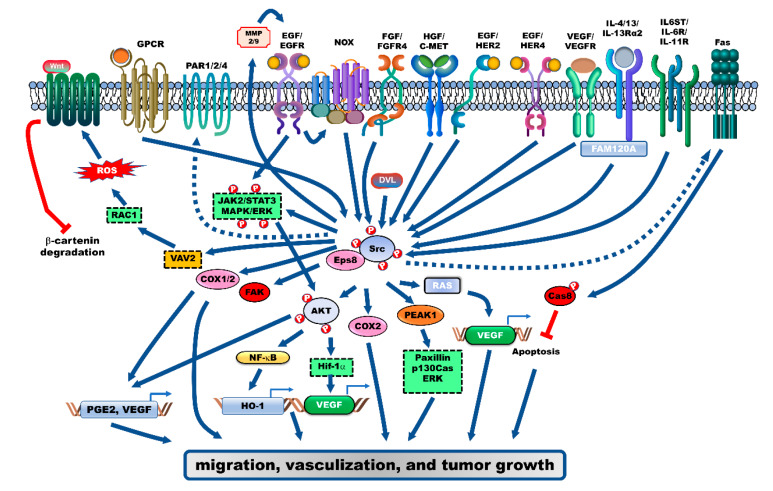
“In response signaling from a variety of RTKs (including EGFR, HER2, HER4, PDGFR, VEGFR, FGFR4, GPCR, C-MET, IL-4/IL13/IL-13Rα2, IL-6ST/IL-6R/IL-11R), SRC has been reported to mediate diverse cell signaling pathways including RAS/MAPK (proliferation), PI3K/AKT (survival), FAK (adhesion/migration/EMT), and STAT3 (angiogenesis) [17, 49, 50].”
From An integrative gene expression signature analysis identifies CMS4 KRAS-mutated colorectal cancers sensitive to combined MEK and SRC targeted therapy (2022) · cites this paper as [50]
Experimental — accuracy not yet measured
Self-check
Percentages, sums and reported differences re-computed from the paper’s own numbers.
The self-check needs the paper’s full text.
Citations
Cites
New insights into the mechanisms of epithelial–mesenchymal transition and implications for cancer
Dongre, A., & Weinberg, R. A. (2019) · Nature Reviews Molecular Cell Biology · doi:10.1038/s41580-018-0080-4 · Cited by 3,876 · cited 1×
“This transition is closely associated with tumor malignancy and chemoresistance [120,121].”
BackgroundEMT, CSCs, and drug resistance: the mechanistic link and clinical implications
Shibue, T., & Weinberg, R. A. (2017) · Nature Reviews Clinical Oncology · doi:10.1038/nrclinonc.2017.44 · Cited by 2,539 · cited 4×
“The cell surface glycoprotein, CD44, is one of the CSC-specific cell surface markers in various cancers, including CRC [121,173].”
BackgroundInfluentialThe role of MicroRNAs in human cancer
Peng, Y., & Croce, C. M. (2016) · Signal Transduction and Targeted Therapy · doi:10.1038/sigtrans.2015.4 · Cited by 2,483 · cited 1×
“MicroRNAs (miRNAs) are small non-coding RNAs that play an essential role in the regulation of biological processes during tumor progression [102].”
BackgroundYeatman, T. J. (2004) · Nature Reviews Cancer · doi:10.1038/nrc1366 · Cited by 1,113 · cited 1×
“The purification of v-Src (pp60src) from Rous sarcoma virus (RSV), which activates the insulin receptor, led to the identification of various Src family kinases (SFKs) [1,2], such as Src, Fyn, Yes, Yrk, Fgr, Hck, Blk, lymphocyte-specific protein tyrosine kinase (Lck), and Lyn.”
BackgroundKinase inhibitors: the road ahead
Ferguson, F. M., & Gray, N. S. (2018) · Nature Reviews Drug Discovery · doi:10.1038/nrd.2018.21 · Cited by 1,009
Pai, R., Soreghan, B., Szabo, I. L., Pavelka, M., Baatar, D., & Tarnawski, A. S. (2002) · Nature Medicine · doi:10.1038/nm0302-289 · Cited by 836 · cited 1×
“Prostaglandin E2 (PGE2), a bioactive lipid molecule produced by cyclooxygenase enzymes (COX-1 and COX-2), promotes the activation of EGFR through matrix metalloproteinase (MMP)-2 and MMP-9 activation, which results in the activation of Src/MAPK/ERK signaling pathway [36].”
Backgroundβ-Catenin-Driven Cancers Require a YAP1 Transcriptional Complex for Survival and Tumorigenesis
Rosenbluh, J., Nijhawan, D., Cox, A. G., Li, X., Neal, J. T., Schafer, E. J., Zack, T. I., Wang, X., Tsherniak, A., Schinzel, A. C., et al. (2012) · Cell · doi:10.1016/j.cell.2012.11.026 · Cited by 757
Src kinases as therapeutic targets for cancer
Kim, L. C., Song, L., & Haura, E. B. (2009) · Nature Reviews Clinical Oncology · doi:10.1038/nrclinonc.2009.129 · Cited by 700 · cited 1×
“preclinical and clinical trials, using monotherapy or combination therapy with other neoplastic drugs, have revealed that the kinase inhibitors exert a synergistic effect for inhibiting tumor progression and prolonging the survival of patients with tumors, including CRC [3,207].”
BackgroundA Phosphatase Associated with Metastasis of Colorectal Cancer
Saha, S., Bardelli, A., Buckhaults, P., Velculescu, V. E., Rago, C., Croix, B. S., Romans, K. E., Choti, M. A., Lengauer, C., Kinzler, K. W., et al. (2001) · Science · doi:10.1126/science.1065817 · Cited by 648 · cited 1×
“CRC cells were reported to exhibit upregulated expression of PRL-3 when compared to non-metastatic CRC cells or normal colon epithelium [61].”
BackgroundClaudin-1 regulates cellular transformation and metastatic behavior in colon cancer
Dhawan, P. (2005) · Journal of Clinical Investigation · doi:10.1172/jci24543 · Cited by 566 · cited 1×
“CLDN1 activates Src and PI3K by forming the CLDN1/Src complex, which increases tumor growth and liver metastasis in vivo by promoting EMT [162,163].”
Background
Cited by
Poh, A. R., & Ernst, M. (2023) · Oncogene · doi:10.1038/s41388-023-02701-x · Cited by 60
Kharkar, P. S. (2020) · Journal of Medicinal Chemistry · doi:10.1021/acs.jmedchem.0c01336 · Cited by 51
Pathogenic nsSNPs that increase the risks of cancers among the Orang Asli and Malays
Khoruddin, N. A., Noorizhab, M. N. F., Teh, L. K., Yusof, F. Z. M., & Salleh, M. Z. (2021) · Scientific Reports · doi:10.1038/s41598-021-95618-y · Cited by 34
Src Family Tyrosine Kinases in Intestinal Homeostasis, Regeneration and Tumorigenesis
Sirvent, A., Mevizou, R., Naim, D., Lafitte, M., & Roche, S. (2020) · Cancers · doi:10.3390/cancers12082014 · Cited by 35
Zhang, W., Pan, R., Lu, M., Zhang, Q., Lin, Z., Qin, Y., Wang, Z., Gong, S., Lin, H., Chong, S., et al. (2021) · Oncogene · doi:10.1038/s41388-021-02029-4 · Cited by 36
Targeting Senescence as a Therapeutic Opportunity for Triple-Negative Breast Cancer
de Paula, B., Kieran, R., Koh, S. S. Y., Crocamo, S., Abdelhay, E. S. F. W., & Muñoz‐Espín, D. (2023) · Molecular Cancer Therapeutics · doi:10.1158/1535-7163.mct-22-0643 · Cited by 36
“It can be activated by signal transduction from several membrane receptor ligands, including the abundant EGFR receptors in TNBC (58).”
BackgroundZheng, W., Guo, Y., Zhang, G., Bai, J., Song, Y., Song, X., Zhu, Q., Bao, X., Wu, G., & Zhang, C. (2023) · PLoS ONE · doi:10.1371/journal.pone.0287133 · Cited by 31
“The tyrosine kinase Src is dysregulated in more than 80% of CRC cases, and increased expression of Src is related to a poor prognosis and can induce CRC cell growth, invasion, and drug resistance [19, 20, 38].”
BackgroundTargeting SRC Kinase Signaling in Pancreatic Cancer Stem Cells
Alcalá, S., Mayoral-Varo, V., Ruíz-Cañas, L., López-Gil, J. C., Heeschen, C., Martín-Pérez, J., & Sáinz, B. (2020) · International Journal of Molecular Sciences · doi:10.3390/ijms21207437 · Cited by 29
DEAD-Box RNA Helicases DDX3X and DDX5 as Oncogenes or Oncosuppressors: A Network Perspective
Secchi, M., Lodola, C., Garbelli, A., Bione, S., & Maga, G. (2022) · Cancers · doi:10.3390/cancers14153820 · Cited by 30
Shi, X., Li, Y., Pan, S., Liu, X., Ke, Y., Guo, W., Wang, Y., Ruan, Q., Zhang, X., & Ma, H. (2022) · Scientific Reports · doi:10.1038/s41598-022-05922-4 · Cited by 27
Yang, M., Davis, T. B., Pflieger, L., Nebozhyn, M. V., Loboda, A., Wang, H., Schell, M. J., Thota, R., Pledger, W. J., & Yeatman, T. J. (2022) · BMC Cancer · doi:10.1186/s12885-022-09344-3 · Cited by 22
“In response signaling from a variety of RTKs (including EGFR, HER2, HER4, PDGFR, VEGFR, FGFR4, GPCR, C-MET, IL-4/IL13/IL-13Rα2, IL-6ST/ IL-6R/IL-11R), SRC has been reported to mediate diverse cell signaling pathways including RAS/MAPK (proliferation), PI3K/AKT (survival), FAK (adhesion/migration/ EMT), and STAT3 (angi…”
BackgroundBeyond chemotherapy: Exploring 5-FU resistance and stemness in colorectal cancer
Singh, U., Kokkanti, R. R., & Patnaik, S. (2025) · European Journal of Pharmacology · doi:10.1016/j.ejphar.2025.177294 · Cited by 31
Neuromedin U induces an invasive phenotype in CRC cells expressing the NMUR2 receptor
Przygodzka, P., Sochacka, E., Soboska, K., Pacholczyk, M., Papiewska‐Pająk, I., Przygodzki, T., Płociński, P., Ballet, S., Prins, A. D., & Boncela, J. (2021) · Journal of Experimental & Clinical Cancer Research · doi:10.1186/s13046-021-02073-8 · Cited by 21
Role of Nrf2, STAT3, and Src as Molecular Targets for Cancer Chemoprevention
Ahsan, H., Islam, S. U., Ahmed, M. B., & Lee, Y. S. (2022) · Pharmaceutics · doi:10.3390/pharmaceutics14091775 · Cited by 22
Ding, Y., Niu, W., Zheng, X., Zhou, C., Wang, G., Feng, Y., & Yu, B. (2022) · Journal of Gastrointestinal Oncology · doi:10.21037/jgo-22-1215 · Cited by 25
“They are the major factors causing poor prognosis and the main causes of clinical anti-tumor therapy failure and subsequent patient deaths (14).”
The ‘Yin and Yang’ of Cancer Cell Growth and Mechanosensing
Amer, M., Shi, L., & Wolfenson, H. (2021) · Cancers · doi:10.3390/cancers13194754 · Cited by 25
Ephrin B Activate Src Family Kinases in Fibroblasts Inducing Stromal Remodeling in Prostate Cancer
Kakarla, M., ChallaSivaKanaka, S., Dufficy, M. F., Gil, V., Filipovich, Y., Vickman, R. E., Crawford, S. E., Hayward, S. W., & Franco, O. E. (2022) · Cancers · doi:10.3390/cancers14092336 · Cited by 23
“Loss of SFKs causes VEGF downregulation in colon cancer cells [48].”
BackgroundZhang, H., Shen, Z., Zhou, Y., Zhang, Z., Wang, Q., Zhang, M., Jiang, K., Wang, S., Ye, Y., & Wang, B. (2020) · Frontiers in Genetics · doi:10.3389/fgene.2020.577948 · Cited by 20
“Meanwhile, SRC was elevated and activated in CRC cell lines and CRC tissue, thereby contributing to its malignant behavior (Tan et al., 2019; Jin, 2020).”
BackgroundJeong, K., Park, M., Sim, J. J., & Kim, H. M. (2020) · Molecules · doi:10.3390/molecules25225299 · Cited by 16
“Further, the interaction between FAK and Src plays an important role in facilitating the intracellular signaling pathways for migration and invasion by inducing epithelial-mesenchymal transition [11,12,14].”
BackgroundJiang, Y., & Xun, Y. (2024) · Drug Design Development and Therapy · doi:10.2147/dddt.s443102 · Cited by 18
Qu, M., Li, J., & Yuan, L. (2021) · Bioengineered · doi:10.1080/21655979.2021.2012626 · Cited by 15
BCL2L11 Induction Mediates Sensitivity to Src and MEK1/2 Inhibition in Thyroid Cancer
Rose, M. M., Espinoza, V. L., Hoff, K. J., Pike, L. A., Sharma, V., Hofmann, M.-C. C., Tan, A. C., Pozdeyev, N. V., & Schweppe, R. E. (2023) · Cancers · doi:10.3390/cancers15020378 · Cited by 16
The potent role of Src kinase-regulating glucose metabolism in cancer
Shao, W., Liu, L., Zheng, F., Ma, Y., & Zhang, J. (2022) · Biochemical Pharmacology · doi:10.1016/j.bcp.2022.115333 · Cited by 15
Stany, B. K., Mishra, S., & Rao, K. V. B. (2024) · Medical Oncology · doi:10.1007/s12032-024-02406-5 · Cited by 17
“Strategies targeting Src present potential therapeutic avenues in CRC, warranting exploration in preclinical and clinical contexts [14].”
c‐Src promotes tumor progression through downregulation of microRNA‐129‐1‐3p
Okuzaki, D., Yamauchi, T., Mitani, F., Miyata, M., Ninomiya, Y., Watanabe, R., Akamatsu, H., & Oneyama, C. (2020) · Cancer Science · doi:10.1111/cas.14269 · Cited by 16
Hon, K. W., Nag, S., Stany, B. K., Mishra, S., & Naidu, R. (2025) · Food Bioscience · doi:10.1016/j.fbio.2025.106313 · Cited by 15
Mu, B.-X., Li, Y., Ye, N., Liu, S., Zou, X., Qian, J., Wu, C., Zhuang, Y., Chen, M., & Zhou, J. (2023) · Journal of Ethnopharmacology · doi:10.1016/j.jep.2023.117342 · Cited by 19
Dawson, J. C., Munro, A. F., Macleod, K., Muir, M., Timpson, P., Williams, R. J., Frame, M. C., Brunton, V. G., & Carragher, N. O. (2021) · Molecular Oncology · doi:10.1002/1878-0261.13151 · Cited by 13
“SRC has been a target for 53 drug discovery projects for decades with multiple small molecule ATP-competitive inhibitors being 54 tested in clinical trials (2, 5-11).”
Ding, H., Jiang, M., Lau, C. W., Luo, J., Chan, A. M.-L., Wang, L., & Huang, Y. (2022) · British Journal of Pharmacology · doi:10.1111/bph.16007 · Cited by 12
“Previous studies showed that phosphorylation of Src is regulated by a number of ligand-receptor complexes (Jin, 2020).”
BackgroundThe molecular and clinical role of Tensin 1/2/3 in cancer
Mainsiouw, L., Ryan, M. E., Hafizi, S., & Fleming, J. C. (2023) · Journal of Cellular and Molecular Medicine · doi:10.1111/jcmm.17714 · Cited by 14
Jiang, Y., Xing, M., Sun, J., Zeng, X., Brennan, C. S., Chandrapala, J., Majzoobi, M., & Sun, B. (2024) · Food Chemistry · doi:10.1016/j.foodchem.2024.139296 · Cited by 11
Dual drug targeting to kill colon cancers
Corona, S. P., Walker, F., Weinstock, J., Lessene, G., Faux, M., & Burgess, A. W. (2022) · Cancer Medicine · doi:10.1002/cam4.4641 · Cited by 8
Zhang, W., Wang, Y., Yu, H., Jin, Z., Yuan, Y., Liu, L., & Zhou, J. (2024) · Journal of Ethnopharmacology · doi:10.1016/j.jep.2024.117945 · Cited by 10
Zou, H., Tan, Y., Ren, X., Zhu, L., & Liu, Y. (2025) · Toxics · doi:10.3390/toxics13060480 · Cited by 10
“Based on these findings, it can be hypothesized that SRC may increase susceptibility to colorectal cancer [24].”
Therapeutic Potential of Protein Tyrosine Kinase 6 in Colorectal Cancer
Jerin, S., Harvey, A., & Lewis, A. (2023) · Cancers · doi:10.3390/cancers15143703 · Cited by 10
Gong, L., Chen, Z., Feng, K., Luo, L., Zhang, J., Ji, Y., Ren, Y., Wang, Y., Zheng, X., & Li, Q. (2024) · Journal of Nanobiotechnology · doi:10.1186/s12951-024-02361-3 · Cited by 11
“Hyper-activated of Src is found in a wide range of cancers, including lung [13], breast [14], pancreatic [15], colorectal [16], and prostate cancers [17] and is involved in the regulation of multiple tumor processes, such as cell proliferation, tumorigenesis, migration and resistance to…”
BackgroundKhan, M. R. U. Z., & Trivedi, V. (2023) · Journal of Biomolecular Structure and Dynamics · doi:10.1080/07391102.2023.2220036 · Cited by 9
“Src family of kinases are undoubtedly related to the pathogenesis of cancer progression in CRC (W. Jin, 2020). c-Src itself is a non-receptor protein tyrosine kinase which are involved in a variety of cellular processes such as proliferation, motility, differentiation and migration (S. Zhang & Yu,…”
BackgroundSailah, I., Tallei, T. E., Safitri, L., Tamala, Y., Halimatushadyah, E., Ekatanti, D., Maulydia, N. B., & Çelik, İ. (2024) · Narra J · doi:10.52225/narra.v4i3.1016 · Cited by 10
“SRC plays a role in managing oxidative stress and inflammation by controlling antioxidant defense systems and the production of reactive oxygen species (ROS) [46,47].”
BackgroundSaha, P., Ravanan, P., & Talwar, P. (2025) · Biology Direct · doi:10.1186/s13062-025-00654-7 · Cited by 9
Anoikis and NETosis in colorectal cancer liver metastasis: the relationship and perspectives
Zhang, R., Tan, Y., Jiang, D., Kong, D., Liu, M., Liang, J., Wu, A., & Wang, L. (2025) · Biochimica et Biophysica Acta (BBA) - Reviews on Cancer · doi:10.1016/j.bbcan.2025.189401 · Cited by 12
Wang, T., Zhang, W., Fang, C., Wang, N., Zhuang, Y., & Gao, S. (2023) · Current Computer - Aided Drug Design · doi:10.2174/1573409919666230607103721 · Cited by 9
Lu, Y.-W., Hou, X.-L., Koo, H. M., & Chao, W. (2023) · Heliyon · doi:10.1016/j.heliyon.2023.e23501 · Cited by 10
“Recently, Src has been considered for therapeutic applications in RAS/RAF-mutated colon cancer with limited treatments [27,28]; however, the mechanism of its efficacy in colon cancer remains unclear and needs to be investigated.”
BackgroundHsieh, Y.-C., Dai, Y., Cheng, K., Yang, W., Ramani, M. V., Subbaraju, G. V., Chen, Y., & Chang, C. (2023) · Biomedicines · doi:10.3390/biomedicines11092530 · Cited by 9
Liu, Y., Edrisi, M., Yan, Z., Ogilvie, H. A., & Nakhleh, L. K. (2024) · Algorithms for Molecular Biology · doi:10.1186/s13015-024-00264-4 · Cited by 10
“The association of these mutations with colorectal cancer has been identified at the level of RNA expression changes [62–65].”
BackgroundPrinciotto, S., Musso, L., Manetti, F., Marcellini, V., Maga, G., Crespan, E., Perini, C., Zaffaroni, N., Beretta, G. L., & Dallavalle, S. (2022) · Journal of Enzyme Inhibition and Medicinal Chemistry · doi:10.1080/14756366.2022.2117317 · Cited by 8
“…11 , PDGFR 12 , ERBB 13 , FGFR 12 , and HGF 14 ) promotes the disruption of the closed conformation and exacerbates the activation of c-Src; such a condition is widely observed in glioblastoma 15 , breast 16 , lung 17 , thyroid 18 , bones 19,20 , colon 21 , pancreas 22 , and prostate cancers 23 .”
Yunlong, Z., Xie, L. X., Liu, B., Deng, Y., Li, P., Dai, Y., Liu, J., & Yi, C. (2025) · Biochemical and Biophysical Research Communications · doi:10.1016/j.bbrc.2025.151970 · Cited by 6
Muthyalaiah, Y. S., Arockiasamy, S., & Abhinand, P. A. (2023) · Journal of Biomolecular Structure and Dynamics · doi:10.1080/07391102.2023.2258993 · Cited by 6
“The predicted functional interactions also show the inter-connections of CAL (yellow and red nodes) with CRC and AGE-RAGE network.”
InfluentialRecent Advances in Fluorescent Chemosensors for Protein Kinases
Hu, J., & Gao, L. (2022) · Chemistry - An Asian Journal · doi:10.1002/asia.202200182 · Cited by 7
AD80, a multikinase inhibitor, as a potential drug candidate for colorectal cancer therapy
de Almeida, L. C., Carlos, J. A. E. G., Teixeira, P. R., Machado‐Neto, J. A., & Costa-Lotufo, L. V. (2022) · Life Sciences · doi:10.1016/j.lfs.2022.120911 · Cited by 6
Targeting the Src N-terminal regulatory element in cancer
Mezquita, B., Reyes‐Farias, M., & Pons, M. (2023) · Oncotarget · doi:10.18632/oncotarget.28434 · Cited by 7
Tang, Y.-C., Ou, J., Hsu, S.-C., Huang, C., Lin, L.-M., Chang, H.-H., Wang, Y.-H., Huang, Z.-T., Sun, M., Liu, K.-J., et al. (2024) · Pharmacological Research · doi:10.1016/j.phrs.2024.107556 · Cited by 5
Cai, X., Yang, H., Pan, Y., Wen, Y., Huang, C., & Li, R. (2023) · Arab Journal of Gastroenterology · doi:10.1016/j.ajg.2023.02.001 · Cited by 4
Olukunle, O. F., Omoboyede, V., & Chukwuemeka, P. O. (2023) · Journal of Biomolecular Structure and Dynamics · doi:10.1080/07391102.2023.2220823 · Cited by 6
“SRC is a non-receptor protein tyrosine kinase that has been implicated in the development of CRC, its ability to metasta-size, and its resistance to therapeutics (Gargalionis et al., 2014; Jin, 2020).”
BackgroundPandiyan, S. M., Shanmugaraj, P., Manoharan, J. P., & Vidyalakshmi, S. (2021) · Journal of Biomolecular Structure and Dynamics · doi:10.1080/07391102.2021.1990130 · Cited by 5
“The genes AR, ABCC1 and SRC were found to be involved in controlling cellular proliferation (Huang et al., 2015) and hence considered to be attractive candidates for tailored chemotherapy in CRC (Kunick a & Sou cek, 2014; Jin, 2020).”
BackgroundHou, H.-P., Liu, X., Liu, W., Zhang, P., & Zhou, B. (2025) · Medical Oncology · doi:10.1007/s12032-025-02699-0 · Cited by 3
“(4) Studies have demonstrated that Src expression levels in CRC patients are, on average, 2.4 times higher compared to those observed in normal mucosal tissue [42].”
InfluentialBerberine: a promising strategy to combat cetuximab-resistance in colorectal cancer
Ye, J., Sun, B., Xia, F., Wang, G., Liu, H., Ding, J., & Tong, M. (2025) · BMC Cancer · doi:10.1186/s12885-025-15013-y · Cited by 3
“Src , a membrane-anchored tyrosine kinase is activated by a large number of extracellular stimuli, including growth factors and components of extracellular matrix and transmit intracellular signals that promote cell proliferation, survival, migration and angiogenesis [16, 17].”
Faizo, N., Narasimhulu, C. A., Forsman, A., Yooseph, S., & Parthasarathy, S. (2021) · Applied Sciences · doi:10.3390/app11062678 · Cited by 3
“LOOHs, which are by-products of pre- or auto-oxidation of polyunsaturated fatty acids (PUFAs), have been implicated in various diseases including atherosclerosis [1,2], neurodegenerative disease [3,4], rheumatoid arthritis [5], inflammatory bowel disease [6,7], and colorectal cancer (CRC) [8].”
BackgroundInfluentialYao, D., Deng, Y., Zhang, S., Liang, L., Zhang, L., Weng, S., & Chen, S. (2023) · Frontiers in Bioscience-Landmark · doi:10.31083/j.fbl2805090 · Cited by 4
“…in SKFs protein expression and/or kinase activity are related to the development of multiple types of cancer [10,11], such as colorectal cancer [12], breast cancer [13], gastric cancer [14], melanoma [15], ovarian cancer [16], lung cancer [17], hematological malignancies [18] and…”
BackgroundPredictive value analysis of the interaction network of Tks4 scaffold protein in colon cancer
Tilajka, Á., Kurilla, A., László, L., Lovrics, A., Novák, J., Takács, T., Buday, L., & Vas, V. (2024) · Frontiers in Molecular Biosciences · doi:10.3389/fmolb.2024.1414805 · Cited by 7
“Moreover, extrahepatic colorectal metastases exhibit more than a tenfold upregulation in SRC expression levels relative to normal mucosa (Jin, 2020).”
BackgroundTherapeutic Intervention of Signaling Pathways in Colorectal Cancer
Chandra, V., Tiwari, A., Singh, R. P., & Desai, K. V. (2022) · Springer eBooks · doi:10.1007/978-3-030-72702-4_8 · Cited by 2
Ji, S. H., Kim, H. B., Song, Y., Chung, H. W., Lee, D., Jung, C., Ko, Y., & Han, S. (2024) · Bioorganic & Medicinal Chemistry Letters · doi:10.1016/j.bmcl.2024.129645 · Cited by 2
Javali, P. S., & Thirumurugan, K. (2026) · Frontiers in Oncology · doi:10.3389/fonc.2026.1711079 · Cited by 3
“Besides inherited mutations, many cancers result from genetic alterations in BRAF, KRAS, PI3KCA, growth factors (EGF, VEGF, IGF-1) (6, 7), growth factor receptors, kinases (8), cytokines (TNF, IL-1, IL-6) (9), and other transcription factors such as NF-kB, APC1, STAT3 and PARP (10).”
Saskova, K., Landfors, M., Hlaváč, V., Šeborová, K., Brůha, J., Hoňková, K., Tomášová, K., Selvi, S., Drábová, J., Hackenhaar, F. S., et al. (2026) · Mutagenesis · doi:10.1093/mutage/geag010 · Cited by 1
Cosentini, I., Barresi, V., Condorelli, D. F., Ferro, A., Pulvirenti, A., & Alaimo, S. (2023) · Studies in computational intelligence · doi:10.1007/978-3-031-21127-0_21 · Cited by 2
Khan, M. R. U. Z., & Trivedi, V. (2023) · Pharmacognosy Research · doi:10.5530/pres.15.4.076 · Cited by 1
Recent updates on c-Src kinase and Src-Abl nonreceptor tyrosine kinases inhibitors
Navneesh, Pandey, S., Shakya, R., Pasricha, S., Kurmi, B. D., & Patel, P. (2024) · Elsevier eBooks · doi:10.1016/b978-0-323-96121-9.00005-x · Cited by 2
Yang, Y., Tang, N., Liu, Y., Choi, W., Kim, J. H., Kim, H. G., Yu, T., & Cho, J. Y. (2024) · Chemico-Biological Interactions · doi:10.1016/j.cbi.2024.111252 · Cited by 1
Pathway profiling of a novel SRC inhibitor, AZD0424, in combination with MEK inhibitorsPreprint
Dawson, J. C., Munro, A. F., Macleod, K., Muir, M., Timpson, P., Williams, R. J., Frame, M. C., Brunton, V. G., & Carragher, N. O. (2021) · bioRxiv (Cold Spring Harbor Laboratory) · doi:10.1101/2021.08.27.457893 · Cited by 1
N-VEGF, the autoregulatory arm of VEGF-APreprint
Katsman, M., Azriel, A., Horev, G., Reizel, Y., & Levi, B.-Z. (2021) · bioRxiv (Cold Spring Harbor Laboratory) · doi:10.1101/2021.07.25.453721
“Our data add new molecular insight to the pros and cons balance in the consideration of using Src and Ras inhibitors in colon cancer (for review see [60]).”
BackgroundWu, J., Qiu, Z., Wei, P., Guo, M., Shen, X., Liu, Y., & Huang, J. (2021) · Journal of Physics Conference Series · doi:10.1088/1742-6596/2004/1/012010
“PIK3R1 is most common in ovarian cancer, and PIK3R1 deletion renders ovarian cancer cells susceptible to AKT or JAK2/STAT3 inhibition([11]).”
BackgroundMechanisms of non-apoptotic TRAIL signalling in NSCLC
de Looff, M. (2022) · University of Groningen research database (University of Groningen / Centre for Information Technology) · doi:10.33612/diss.222500491
Lee, H.-S., Lee, I.-H., Park, S., Jung, M., Yang, S. G., Kwon, T.-W., & Lee, D.-Y. (2022) · Natural Product Communications · doi:10.1177/1934578x221126964
CXCR4 is Involved in the Regulation of the Functions of c-Src in RCC Development
Yan, R., Pang, Q., Chen, J., Shi, J., Gan, X., & Wang, L.-G. (2022) · Austin Journal of Cancer and Clinical Research · doi:10.26420/austinjcancerclinres.2022.1099
Data from Targeting Senescence as a Therapeutic Opportunity for Triple-Negative Breast Cancer
de Paula, B., Kieran, R., Koh, S. S. Y., Crocamo, S., Abdelhay, E. S. F. W., & Muñoz‐Espín, D. (2023) · doi:10.1158/1535-7163.c.6597340.v1
Zhao, Z., Chen, J., Jiang, Y., & Lü, Y. (2023) · Heliyon · doi:10.1016/j.heliyon.2023.e23690
Yang, Y., Zhao, T., & Liu, Z. (2025) · World Chinese Journal of Digestology · doi:10.11569/wcjd.v33.i3.225
Liu, Y., Edrisi, M., Yan, Z., A Ogilvie, H., & Nakhleh, L. K. (2024) · Figshare · doi:10.6084/m9.figshare.26714266
Parvez, A., Sweety, N. N., Rouf, A. S. M. A., Rahman, M. M., Noman, A. A., Sharma, P., Haque, E., & Mamun, M. A. (2026) · ChemistrySelect · doi:10.1002/slct.202504703
Libera, K. D., Adamowicz, E. M., Muehlbauer, A. L., Priya, S., Alazizi, A., Luca, F., & Blekhman, R. (2026) · bioRxiv (Cold Spring Harbor Laboratory) · doi:10.64898/2026.01.26.700635
Caractérisation des cellules tumorales portant la mutation BRAFV600E dans le cancer colorectal, CRC
Villeronce, O. (2020) · theses.fr (ABES) · doi:10.70675/2b388c73z5e24z4b1dz9f36z0d04cd8125dd
Hu, H., Yuan, L., Feng, J., Zhang, Y., Zhang, Z., Zhang, J., Jin, L., Wu, H., You, L., Wang, X., et al. (2026) · Journal of Ginseng Research · doi:10.1016/j.jgr.2026.101051
“As a non-receptor tyrosine kinase, Src links extracellular stimuli to multiple intracellular signaling pathways [31].”
Yang, X., Chen, R., Chen, L., Ren, M., Wu, L., Zhou, Y., Li, S., Wan, J., Lin, S., Xie, B., et al. (2026) · Bioorganic Chemistry · doi:10.1016/j.bioorg.2026.110205
Yadav, R. K., Shrestha, P., Jha, P. K., Poudel, S., Shekh, M. U., Sah, R. K., Khanal, S., Bhandari, R., Gyawali, A., Jamarkattel‐Pandit, N., et al. (2026) · Natural Product Communications · doi:10.1177/1934578x261489046
“66,67 67-69 It is frequently deregulated in solid tumors, including breast, colon, lung, and pancreatic cancers.”
Yadav, R., Shah, F. I., Abbas, A., Weiskirchen, R., Jha, P., Tiwari, A., Alamri, A., Khanal, S., Kohar, D. K., Alsabih, A. O., et al. (2026) · Research Square · doi:10.21203/rs.3.rs-10971306/v1
Amos, Y., Nsengimaana, B., Faleyimu, M. B., Olorundunsi, A. P., Lawal, A. A., Kenou, O. M., Martin, D. R., Jawali, A., & Awe, O. I. (2026) · Beni-Suef University Journal of Basic and Applied Sciences · doi:10.1186/s43088-026-00840-0
“Hub genes identified, including PIK3CA, SRC, and members of the GNAI family, are central regulators of proliferation, survival, and metastatic signaling in CRC [75, 76].”
Metadata
- Authors
- Jin, W.
- Affiliations
- Gachon University (KR)
- Corresponding author
- Jin, Wook
- ORCID
- Jin, Wook
- Venue
- Cancers
- Publisher
- MDPI AG
- Published
- 2020-05-23
- Volume
- 12
- Issue
- 5
- Pages
- 1339
- ISSN
- 2072-6694 (ISSN-L)
- PMC
- PMC7281431
- OpenAlex
- W3026270876
- Cited by
- 86
- References
- 215
- Citations by year
- 2026: 9 · 2025: 10 · 2024: 13 · 2023: 20 · 2022: 16 · 2021: 11 · 2020: 6
- FWCI
- 2.03
- Type
- journal article
- Language
- en
- Open access
- gold
- dx.doi.org
- Licence
- Locations
- Cancers (publishedVersion, cc-by)
- PubMed Central (publishedVersion, cc-by)
- PubMed (publishedVersion)
- DOAJ (DOAJ: Directory of Open Access Journals) (submittedVersion, cc-by-sa)
- Funders
- National Research Foundation of Korea (2020R1A2C1012484)
- Topics
- Life Sciences › Biochemistry, Genetics and Molecular Biology › Cancer Research › Cancer Mechanisms and Therapy
- Life Sciences › Biochemistry, Genetics and Molecular Biology › Molecular Biology › Protein Kinase Regulation and GTPase Signaling
- Health Sciences › Medicine › Oncology › Cancer Cells and Metastasis
- Keywords
- Src family kinases, colorectal cancer, tumor progression, cell proliferation, metastasis, chemoresistance, cancer stem cells, Src kinase inhibitor, non-receptor tyrosine kinase, patient survival
About these checks
Registry, retraction, Cites and statistics results are computed, not judged, with one exception: a printed reference that no index lists is read once by a model before it counts as a citation error. Claims are extracted by a model and kept only when their quote appears verbatim in the text; each cited source is then checked, with a model’s help, for whether it says what the claim relies on. Those verdicts can be wrong — read the claim’s quote and the cited source before relying on one.
Statistics and arithmetic are recomputed, not judged.
Confidence bands are shown only for fields calibrated on our annotated test set. None is calibrated yet, so no band is shown.
What counts as a claim ›How we measure confidence ›How we check this ›
Are you an author, or do you see a problem with this page? Request a review
Data sources
Bibliographic data: Semantic Scholar, OpenAlex, Crossref.
Contains information from the Semantic Scholar Academic Graph Datasets, made available under the ODC Attribution License (ODC-BY 1.0).
Semantic Scholar’s data is described in: Kinney, R., et al. (2023). The Semantic Scholar Open Data Platform. arXiv:2301.10140.
