

Regulation of Src Family Kinases during Colorectal Cancer Development and Its Clinical Implications
Open accessThe DOI matches its Crossref record; 211 of the 215 references it cites were found in a registry or an index.
Abstract
Src family kinases (SFKs) are non-receptor kinases that play a critical role in the pathogenesis of colorectal cancer (CRC). The expression and activity of SFKs are upregulated in patients with CRC. Activation of SFKs promotes CRC cell proliferation, metastases to other organs and chemoresistance, as well as the formation of cancer stem cells (CSCs). The enhanced expression level of Src is associated with decreased survival in patients with CRC. Src-mediated regulation of CRC progression involves various membrane receptors, modulators, and suppressors, which regulate Src activation and its downstream targets through various mechanisms. This review provides an overview of the current understanding of the correlations between Src and CRC progression, with a special focus on cancer cell proliferation, invasion, metastasis and chemoresistance, and formation of CSCs. Additionally, this review discusses preclinical and clinical strategies to improve the therapeutic efficacy of drugs targeting Src for treating patients with CRC.
Overview
The claims and statistics of this paper haven’t been checked yet.
Free: it reads the open-access text and checks the first 5 claims that cite a source we can check. Create a free account to check every claim.
Integrity signals
Registry
Cites
Statistics
Figures
Verification
Claims the paper makes
The claims and statistics of this paper haven’t been checked yet.
Free: it reads the open-access text and checks the first 5 claims that cite a source we can check. Create a free account to check every claim.
Claims other papers make about this one
Each is checked against this paper’s own text: does it say what the citing paper says it does?
The source backs part of the claim, not all of it — or backs it for a different population, condition or comparison.
In the citing paper
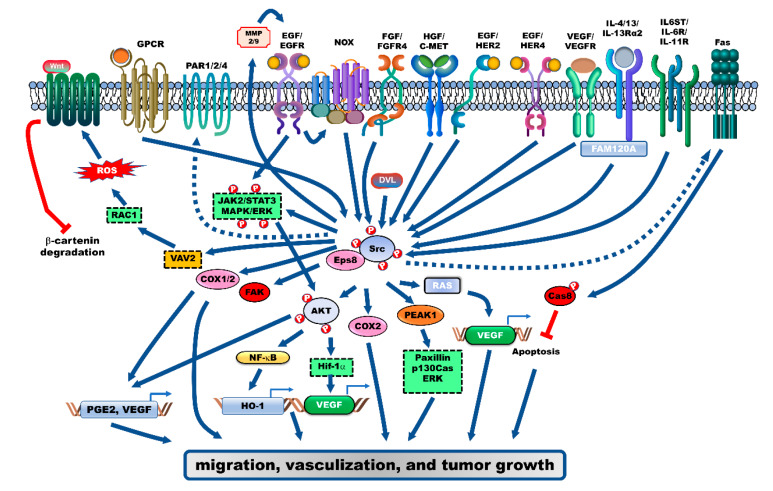
“In response signaling from a variety of RTKs (including EGFR, HER2, HER4, PDGFR, VEGFR, FGFR4, GPCR, C-MET, IL-4/IL13/IL-13Rα2, IL-6ST/IL-6R/IL-11R), SRC has been reported to mediate diverse cell signaling pathways including RAS/MAPK (proliferation), PI3K/AKT (survival), FAK (adhesion/migration/EMT), and STAT3 (angiogenesis) [17, 49, 50].”
From An integrative gene expression signature analysis identifies CMS4 KRAS-mutated colorectal cancers sensitive to combined MEK and SRC targeted therapy (2022) · cites this paper as [50]
Experimental — accuracy not yet measured
Self-check
Percentages, sums and reported differences re-computed from the paper’s own numbers.
The self-check needs the paper’s full text.
Citations
Cites
New insights into the mechanisms of epithelial–mesenchymal transition and implications for cancer
Dongre, A., & Weinberg, R. A. (2019) · Nature Reviews Molecular Cell Biology · doi:10.1038/s41580-018-0080-4 · Cited by 3,876 · cited 1×
“This transition is closely associated with tumor malignancy and chemoresistance [120,121].”
BackgroundEMT, CSCs, and drug resistance: the mechanistic link and clinical implications
Shibue, T., & Weinberg, R. A. (2017) · Nature Reviews Clinical Oncology · doi:10.1038/nrclinonc.2017.44 · Cited by 2,539 · cited 4×
“The cell surface glycoprotein, CD44, is one of the CSC-specific cell surface markers in various cancers, including CRC [121,173].”
BackgroundInfluentialThe role of MicroRNAs in human cancer
Peng, Y., & Croce, C. M. (2016) · Signal Transduction and Targeted Therapy · doi:10.1038/sigtrans.2015.4 · Cited by 2,483 · cited 1×
“MicroRNAs (miRNAs) are small non-coding RNAs that play an essential role in the regulation of biological processes during tumor progression [102].”
BackgroundYeatman, T. J. (2004) · Nature Reviews Cancer · doi:10.1038/nrc1366 · Cited by 1,113 · cited 1×
“The purification of v-Src (pp60src) from Rous sarcoma virus (RSV), which activates the insulin receptor, led to the identification of various Src family kinases (SFKs) [1,2], such as Src, Fyn, Yes, Yrk, Fgr, Hck, Blk, lymphocyte-specific protein tyrosine kinase (Lck), and Lyn.”
BackgroundKinase inhibitors: the road ahead
Ferguson, F. M., & Gray, N. S. (2018) · Nature Reviews Drug Discovery · doi:10.1038/nrd.2018.21 · Cited by 1,009
Pai, R., Soreghan, B., Szabo, I. L., Pavelka, M., Baatar, D., & Tarnawski, A. S. (2002) · Nature Medicine · doi:10.1038/nm0302-289 · Cited by 836 · cited 1×
“Prostaglandin E2 (PGE2), a bioactive lipid molecule produced by cyclooxygenase enzymes (COX-1 and COX-2), promotes the activation of EGFR through matrix metalloproteinase (MMP)-2 and MMP-9 activation, which results in the activation of Src/MAPK/ERK signaling pathway [36].”
Backgroundβ-Catenin-Driven Cancers Require a YAP1 Transcriptional Complex for Survival and Tumorigenesis
Rosenbluh, J., Nijhawan, D., Cox, A. G., Li, X., Neal, J. T., Schafer, E. J., Zack, T. I., Wang, X., Tsherniak, A., Schinzel, A. C., et al. (2012) · Cell · doi:10.1016/j.cell.2012.11.026 · Cited by 757
Src kinases as therapeutic targets for cancer
Kim, L. C., Song, L., & Haura, E. B. (2009) · Nature Reviews Clinical Oncology · doi:10.1038/nrclinonc.2009.129 · Cited by 700 · cited 1×
“preclinical and clinical trials, using monotherapy or combination therapy with other neoplastic drugs, have revealed that the kinase inhibitors exert a synergistic effect for inhibiting tumor progression and prolonging the survival of patients with tumors, including CRC [3,207].”
BackgroundA Phosphatase Associated with Metastasis of Colorectal Cancer
Saha, S., Bardelli, A., Buckhaults, P., Velculescu, V. E., Rago, C., Croix, B. S., Romans, K. E., Choti, M. A., Lengauer, C., Kinzler, K. W., et al. (2001) · Science · doi:10.1126/science.1065817 · Cited by 648 · cited 1×
“CRC cells were reported to exhibit upregulated expression of PRL-3 when compared to non-metastatic CRC cells or normal colon epithelium [61].”
BackgroundClaudin-1 regulates cellular transformation and metastatic behavior in colon cancer
Dhawan, P. (2005) · Journal of Clinical Investigation · doi:10.1172/jci24543 · Cited by 566 · cited 1×
“CLDN1 activates Src and PI3K by forming the CLDN1/Src complex, which increases tumor growth and liver metastasis in vivo by promoting EMT [162,163].”
BackgroundCSK: a protein-tyrosine kinase involved in regulation of src family kinases.
Okada, M., Nada, S., Yamanashi, Y., Yamamoto, T., & Nakagawa, H. (1991) · Journal of Biological Chemistry · doi:10.1016/s0021-9258(18)54220-4 · Cited by 508 · cited 5×
“CSK also inhibits the activation of Lyn and Fyn by promoting Tyr508 phosphorylation in Fyn and Lyn [94].”
BackgroundInfluentialTwist1-Induced Invadopodia Formation Promotes Tumor Metastasis
Eckert, M. A., Lwin, T. M., Chang, A. T., Kim, J., Danis, E., Ohno-Machado, L., & Yang, J. (2011) · Cancer Cell · doi:10.1016/j.ccr.2011.01.036 · Cited by 476
Buchanan, F. G., Wang, D., Bargiacchi, F., & DuBois, R. N. (2003) · Journal of Biological Chemistry · doi:10.1074/jbc.m302474200 · Cited by 463
The molecular basis of JAK/STAT inhibition by SOCS1
Liau, N. P. D., Laktyushin, A., Lucet, I. S., Murphy, J. M., Yao, S., Whitlock, E., Callaghan, K., Nicola, N. A., Kershaw, N. J., & Babon, J. J. (2018) · Nature Communications · doi:10.1038/s41467-018-04013-1 · Cited by 456 · cited 6×
“The suppressors of cytokine signaling (SOCS)-1 inhibit JAK/STAT3 pathways by inhibiting the phosphorylation of JAK, through direct binding with the substrate-binding groove of JAK [167].”
BackgroundInfluentialSignificance of CD44 gene products for cancer diagnosis and disease evaluation
Matsumura, Y., & Tarin, D. (1992) · The Lancet · doi:10.1016/0140-6736(92)93077-z · Cited by 450 · cited 1×
“The expression of CD44 variants is markedly upregulated in patients with CRC, and is closely correlated with poor survival [174,175].”
BackgroundCell transformation and activation of pp60c-src by overexpression of a protein tyrosine phosphatase
Zheng, X. M., Wang, Y., & Fallen, C. J. (1992) · Nature · doi:10.1038/359336a0 · Cited by 449 · cited 1×
“RPTPα activates Src by interacting with the SH2 domain [158].”
BackgroundIncrease in activity and level of pp60c-src in progressive stages of human colorectal cancer.
Talamonti, M. S., Roh, M. S., Curley, S. A., & Gallick, G. E. (1993) · Journal of Clinical Investigation · doi:10.1172/jci116200 · Cited by 399 · cited 1×
“7-fold) when compared to those in the normal mucosa [5,6].”
BackgroundThe RUNX family: developmental regulators in cancer
Ito, Y., Bae, S.-C., & Chuang, L. S. H. (2015) · Nature Reviews Cancer · doi:10.1038/nrc3877 · Cited by 399 · cited 1×
“Moreover, the loss of Runt domain transcription factor 3 (RUNX3), which acts as a tumor suppressor, blocks the apoptosis of tumors by downregulating the expression of p21, ARF and p53 [118].”
BackgroundDowning, K. H. (2000) · Annual Review of Cell and Developmental Biology · doi:10.1146/annurev.cellbio.16.1.89 · Cited by 382 · cited 1×
“Colchicine inhibits the formation of microtubules and disrupts microtubules [202].”
BackgroundPhospho-caveolin-1 mediates integrin-regulated membrane domain internalization
del Pozo, M. A., Balasubramanian, N., Alderson, N. B., Kiosses, W. B., Grande-García, A., Anderson, R. G. W., & Schwartz, M. A. (2005) · Nature Cell Biology · doi:10.1038/ncb1293 · Cited by 379 · cited 1×
“Additionally, the increased extracellular pressure enhances integrin-binding affinity, by activating β1-integrin at threonine 788/789, which is mediated by the interaction between CAV-1 and Src kinases [138,139].”
BackgroundTumor Cell Invadopodia: Invasive Protrusions that Orchestrate Metastasis
Eddy, R. J., Weidmann, M. D., Sharma, V. P., & Condeelis, J. S. (2017) · Trends in Cell Biology · doi:10.1016/j.tcb.2017.03.003 · Cited by 375
Phosphotyrosine-binding domains in signal transduction
Yaffe, M. B. (2002) · Nature Reviews Molecular Cell Biology · doi:10.1038/nrm759 · Cited by 366
Src-induced de-regulation of E-cadherin in colon cancer cells requires integrin signalling
Avizienyte, E., Wyke, A. W., Jones, R. J., McLean, G. W., Westhoff, M. A., Brunton, V. G., & Frame, M. C. (2002) · Nature Cell Biology · doi:10.1038/ncb829 · Cited by 362 · cited 1×
“Additionally, the integrin-mediated activation of Src enhances the assembly of adhesion complexes, and tumor growth of CRC [154,155].”
BackgroundWeis, S., Shintani, S., Weber, A., Kirchmair, R., Wood, M., Cravens, A., McSharry, H., Iwakura, A., Yoon, Y.-S., Himes, N., et al. (2004) · Journal of Clinical Investigation · doi:10.1172/jci200420702 · Cited by 353 · cited 1×
“The upregulation of Src induces the phosphorylation of β-catenin/E-cadherin, which promotes the dissociation of β-catenin/E-cadherin and reduces cell–cell adhesion [122,123].”
BackgroundRisk of malignancy among patients with rheumatic conditions
Thomas, E., Brewster, D. H., Black, R. J., & Macfarlane, G. J. (2000) · International Journal of Cancer · doi:10.1002/1097-0215(20001101)88:3<497::aid-ijc27>3.0.co;2-j · Cited by 332
Fukuda, R., Kelly, B., & Semenza, G. L. (2003) · PubMed · Cited by 329
Cancer progression and tumor cell motility are associated with the FGFR4 Arg(388) allele.
Bange, J., Prechtl, D., Cheburkin, Y. V., Specht, K., Harbeck, N., Schmitt, M., Knyazeva, T., Müller, S., Gärtner, S., Sures, I., et al. (2002) · PubMed · Cited by 312
Geiszt, M., Lekstrom, K., Witta, J., & Leto, T. L. (2003) · Journal of Biological Chemistry · doi:10.1074/jbc.m301289200 · Cited by 280 · cited 1×
“The activated NoxA1 interacts with Tks4 and Tks5, which are invadopodia components and Src adaptors, and induces the formation of invadopodia by inducing ROS generation [151,152].”
BackgroundAbe, J.-I., Takahashi, M., Ishida, M., Lee, J.-D., & Berk, B. C. (1997) · Journal of Biological Chemistry · doi:10.1074/jbc.272.33.20389 · Cited by 273 · cited 4×
“These results demonstrate that the Src kinase family may be involved in the acquisition of CSC traits of CRC, via activation of the YAP1/MEK5/ERK5 signaling pathway.”
BackgroundInfluentialJoshi, B., Strugnell, S. S., Goetz, J. G., Kojic, L. D., Cox, M. E., Griffith, O. L., Chan, S. K., Jones, S. J., Leung, S.-P., Masoudi, H., et al. (2008) · Cancer Research · doi:10.1158/0008-5472.can-08-0343 · Cited by 256 · cited 1×
“The Rho/ROCK signaling and Src-dependent CAV-1 tyrosine phosphorylation promote the metastatic potential and focal adhesion dynamics of CRC cells [141].”
BackgroundActivation of Src kinase in primary colorectal carcinoma: An indicator of poor clinical prognosis
Allgayer, H., Boyd, D. D., Heiss, M. M., Abdalla, E. K., Curley, S. A., & Gallick, G. E. (2002) · Cancer · doi:10.1002/cncr.10221 · Cited by 251 · cited 1×
“The enhanced expression of u-PAR is associated with low survival of patients with CRC [80].”
BackgroundKakugawa, Y., Wada, T., Yamaguchi, K., Yamanami, H., Ouchi, K., Sato, I., & Miyagi, T. (2002) · Proceedings of the National Academy of Sciences · doi:10.1073/pnas.152597199 · Cited by 242
Drugging Wnt signalling in cancer
Polakis, P. (2012) · The EMBO Journal · doi:10.1038/emboj.2012.126 · Cited by 228 · cited 1×
“Adenomatous polyposis coli (APC), a negative regulator of the Wnt/β-catenin signaling pathway, functions as a tumor suppressor by directly interacting with β-catenin and decreasing its stability [32].”
BackgroundIRE1α-XBP1s pathway promotes prostate cancer by activating c-MYC signaling
Sheng, X., Nenseth, H. Z., Qu, S., Kuzu, O. F., Frahnow, T., Simon, L., Greene, S., Zeng, Q., Fazli, L., Rennie, P. S., et al. (2019) · Nature Communications · doi:10.1038/s41467-018-08152-3 · Cited by 228 · cited 1×
“A previous study demonstrated that the activation of IRE1α induces cell growth of prostate cancer by activating the c-MYC signaling pathway [165].”
BackgroundSrc activation regulates anoikis in human colon tumor cell lines
Windham, T. C., Parikh, N. U., Siwak, D. R., Summy, J. M., McConkey, D. J., Kraker, A. J., & Gallick, G. E. (2002) · Oncogene · doi:10.1038/sj.onc.1205989 · Cited by 217 · cited 2×
“Subsequently, this promotes apoptosis, by inhibiting adherent-independent growth through the loss of cell detachment to the ECM [128,129].”
BackgroundBrunton, V. G., Avizienyte, E., Fincham, V. J., Serrels, B., Metcalf, C. A., Sawyer, T. K., & Frame, M. C. (2005) · Cancer Research · doi:10.1158/0008-5472.can-04-1949 · Cited by 213 · cited 1×
“The Src SH2 domain-dependent phosphorylation site (Tyr925) of FAK promotes the formation of integrin-induced focal adhesion, by increasing the protrusion motility of cells [156].”
BackgroundProtease-activated Receptor 2 in Colon Cancer
Darmoul, D., Gratio, V., Devaud, H., & Laburthe, M. (2004) · Journal of Biological Chemistry · doi:10.1074/jbc.m401430200 · Cited by 208 · cited 10×
“Additionally, Src-mediated ERK1/2 activation suppresses apoptosis of CRC cells through ubiquitin-mediated degradation of Bik, a death accelerator [57].”
BackgroundInfluentialSrc kinase phosphorylates Caspase‐8 on Tyr380: a novel mechanism of apoptosis suppression
Cursi, S., Rufini, A., Stagni, V., Condò, I., Matafora, V., Bachi, A., Bonifazi, A. P., Coppola, L., Superti‐Furga, G., Testi, R., et al. (2006) · The EMBO Journal · doi:10.1038/sj.emboj.7601085 · Cited by 205 · cited 1×
“6% of patients with CRC, respectively, [18].”
Ellis, L. M., Staley, C. A., Liu, W., Fleming, R. Y. D., Parikh, N. U., Bucana, C. D., & Gallick, G. E. (1998) · Journal of Biological Chemistry · doi:10.1074/jbc.273.2.1052 · Cited by 203 · cited 1×
“The loss of Src downregulates VEGF expression and subsequently suppresses vascularization of CRC [25].”
BackgroundMao, W., Irby, R., Coppola, D., Fu, L., Wloch, M., Turner, J., Yu, H., Garcia, R., Jove, R., & Yeatman, T. J. (1997) · Oncogene · doi:10.1038/sj.onc.1201496 · Cited by 200 · cited 1×
“The activated Src upregulates the expression of c-Met [15–17], while EGF promotes the interaction between human epidermal growth factor receptor 2 (HER2) and Src in the CRC cells [15].”
BackgroundCD 155, an onco‐immunologic molecule in human tumors
Gao, J., Zheng, Q., Xin, N., Wang, W., & Zhao, C. (2017) · Cancer Science · doi:10.1111/cas.13324 · Cited by 199 · cited 1×
“CD155, which promotes metastatic potential, is associated with poor prognosis in various types of cancer [76,77].”
BackgroundXu, J.-W., Ikeda, K., & Yamori, Y. (2004) · Hypertension · doi:10.1161/01.hyp.0000135868.38343.c6 · Cited by 197
Birner, P., Gatterbauer, B., Oberhuber, G., Schindl, M., Rössler, K., Prodinger, A., Budka, H., & Hainfellner, J. A. (2001) · Cancer · doi:10.1002/1097-0142(20010701)92:1<165::aid-cncr1305>3.0.co;2-f · Cited by 195
Bates, R. C., Edwards, N. S., Burns, G. F., & Fisher, D. E. (2001) · PubMed · Cited by 188
Chemosensitivity of solid tumor cells in vitro is related to activation of the CD95 system
Fulda, S., Łoś, M., Friesen, C., & Debatin, K. (1998) · International Journal of Cancer · doi:10.1002/(sici)1097-0215(19980330)76:1<105::aid-ijc17>3.0.co;2-b · Cited by 182
Nam, J., Ino, Y., Sakamoto, M., & Hirohashi, S. (2002) · PubMed · Cited by 175
Krabbe, G., Matyash, V., Pannasch, U., Mamer, L., Boddeke, H. W. G. M., & Kettenmann, H. (2012) · Brain, Behavior, and Immunity · doi:10.1016/j.bbi.2011.12.002 · Cited by 174 · cited 1×
“Moreover, c-Yes promotes the migration of CRC cells without affecting the proliferation of CRC cells [11].”
BackgroundDirect reprogramming of stem cell properties in colon cancer cells by CD44
Su, Y., Lai, H., Chang, Y., Chen, G., & Lee, J. (2011) · The EMBO Journal · doi:10.1038/emboj.2011.211 · Cited by 174 · cited 1×
“CD44 promotes the proliferation and stemness through CD44–Src–integrin axis-mediated suppression of anoikis during sphere formation [177].”
BackgroundTargeting PVR (CD155) and its receptors in anti-tumor therapy
Kučan Brlić, P., Lenac Roviš, T., Cinamon, G., Tsukerman, P., Mandelboim, O., & Jonjić, S. (2019) · Cellular & Molecular Immunology · doi:10.1038/s41423-018-0168-y · Cited by 171 · cited 1×
“CD155, which promotes metastatic potential, is associated with poor prognosis in various types of cancer [76,77].”
BackgroundPTP1B Contributes to the Oncogenic Properties of Colon Cancer Cells through Src Activation
Zhu, S., Bjorge, J. D., & Fujita, D. J. (2007) · Cancer Research · doi:10.1158/0008-5472.can-06-4338 · Cited by 168 · cited 1×
“PTP1B inhibitors decrease the metastatic potential and tumor growth by inhibiting Src activation [58].”
BackgroundRac1 Function Is Required for Src-induced Transformation
Servitja, J.-M., Marinissen, M. J., Sodhi, A., Bustelo, X. R., & Gutkind, J. S. (2003) · Journal of Biological Chemistry · doi:10.1074/jbc.m302960200 · Cited by 166 · cited 2×
“Vav2 and Tiam1 activate Rac1, a monomeric G-protein, which subsequently activates multiple signaling pathways that regulate gene expression and promote cell transformation [52].”
BackgroundBarderas, R., Bartolomé, R. A., Fernandez-Aceñero, M. J., Torres, S., & Casal, J. I. (2012) · Cancer Research · doi:10.1158/0008-5472.can-11-4090 · Cited by 163 · cited 1×
“Additionally, FAM120A enhances liver metastases and viability of CRC cells in vivo (Figure 1) [30,31].”
BackgroundSASH1: a candidate tumor suppressor gene on chromosome 6q24.3 is downregulated in breast cancer
Zeller, C., Hinzmann, B., Seitz, S., Prokoph, H., Burkhard-Goettges, E., Fischer, J., Jandrig, B., Schwarz, L. E., Rosenthal, A., & Scherneck, S. (2003) · Oncogene · doi:10.1038/sj.onc.1206474 · Cited by 162 · cited 1×
“SAM and SH3 domain containing 1 (SASH1) is a tumor suppressor whose expression is downregulated in breast cancer and CRC [170].”
BackgroundKopetz, S., Lesslie, D. P., Dallas, N. A., Park, S. I., Johnson, M., Parikh, N. U., Kim, M. P., Abbruzzese, J. L., Ellis, L. M., Chandra, J., et al. (2009) · Cancer Research · doi:10.1158/0008-5472.can-08-2246 · Cited by 160 · cited 1×
“The treatment combination of dasatinib and oxaliplatin markedly suppresses cell proliferation and tumor growth in vivo and in vitro, through synergistic inhibition of VEGF expression and c-Src activation [187].”
BackgroundThamilselvan, V., Craig, D. H., & Basson, M. D. (2007) · The FASEB Journal · doi:10.1096/fj.06-6545com · Cited by 158 · cited 1×
“Src-mediated activation and translocation of PI3K lead to enhanced cell adhesion by promoting the formation of FAK, a regulatory (p85) subunit of PI3K/integrin β1 [87].”
BackgroundProtease-activated receptors (PARs)—biology and role in cancer invasion and metastasis
Wojtukiewicz, M. Z., Hempel, D., Sierko, E., Tucker, S. C., & Honn, K. V. (2015) · Cancer and Metastasis Reviews · doi:10.1007/s10555-015-9599-4 · Cited by 157 · cited 1×
“Protease-activated receptors (PARs), which are GPCRs activated by proteases, contribute to the progression of cancer through extracellular matrix degradation [41].”
BackgroundHellmich, M. R., Rui, X., Hellmich, H. L., Fleming, R., Evers, B. M., & Townsend, C. M. (2000) · Journal of Biological Chemistry · doi:10.1074/jbc.m005754200 · Cited by 154 · cited 1×
“CCK2R, which is reported to be involved in the pathogenesis of human colon and pancreatic cancers [47], activates Src.”
BackgroundKraker, A. J., Hartl, B. G., Amar, A. M., Barvian, M. R., Showalter, H. D., & Moore, C. W. (2000) · Biochemical Pharmacology · doi:10.1016/s0006-2952(00)00405-6 · Cited by 149 · cited 1×
“Pyrido[2,3-d]pyrimidines, which are highly specific inhibitors of Src kinase, effectively inhibit CRC cell proliferation by arresting the cell cycle at G2/M [199].”
BackgroundTremblay, P.-L., Auger, F. A., & Huot, J. L. (2006) · Oncogene · doi:10.1038/sj.onc.1209664 · Cited by 147 · cited 2×
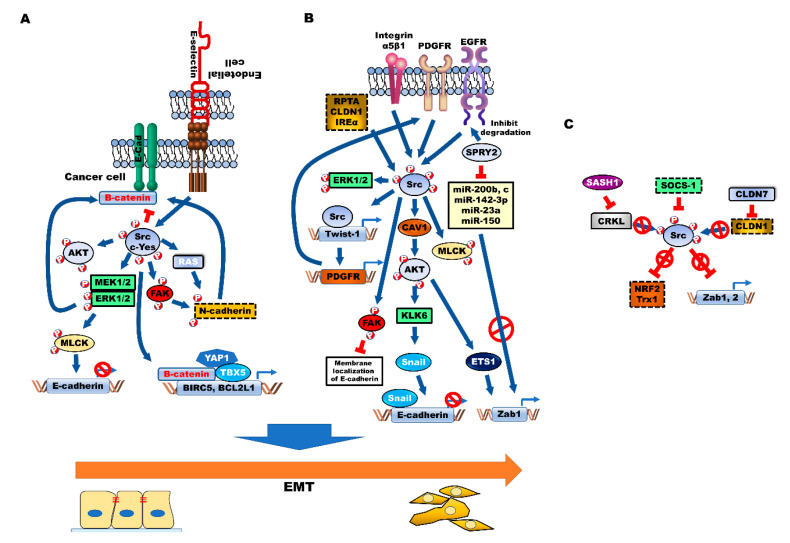
“E-selectin-mediated ERK activation leads to the dissociation of the E-cadherin/β-catenin complex, which is mediated by activated Src [132].”
BackgroundThe bimodal regulation of epidermal growth factor signaling by human Sprouty proteins
Egan, J. E., Hall, A. B., Yatsula, B. A., & Bar-Sagi, D. (2002) · Proceedings of the National Academy of Sciences · doi:10.1073/pnas.052090899 · Cited by 141 · cited 1×
“SPRY2 promotes tumor growth and metastasis by enhancing the activation of AKT and MAPK/ERK, through the upregulation of c-MET expression and inhibition of EGFR degradation [145,146].”
BackgroundOrganization of plasma membrane functional rafts upon T cell activation
Tuosto, L., Parolini, I., Schröder, S., Sargiacomo, M., Lanzavecchia, A., & Viola, A. (2001) · European Journal of Immunology · doi:10.1002/1521-4141(200102)31:2<345::aid-immu345>3.0.co;2-l · Cited by 138
SKI-606, a Src/Abl Inhibitor with In vivo Activity in Colon Tumor Xenograft Models
Golas, J. M., Lucas, J., Etienne, C., Golas, J., Discafani, C., Sridharan, L., Boghaert, E., Arndt, K., Ye, F., Boschelli, D. H., et al. (2005) · Cancer Research · doi:10.1158/0008-5472.can-04-2484 · Cited by 134 · cited 1×
“Bosutinib inhibits the tumor growth of CRC in vivo, without affecting the bodyweight or causing cancer cell death, by inhibiting the phosphorylation of tyrosine in Src [189].”
BackgroundGianni, D., Bohl, B., Courtneidge, S. A., & Bokoch, G. M. (2008) · Molecular Biology of the Cell · doi:10.1091/mbc.e08-02-0138 · Cited by 129
Lesslie, D. P., Summy, J. M., Parikh, N. U., Fan, F., Trevino, J. G., Sawyer, T. K., Metcalf, C. A., Shakespeare, W. C., Hicklin, D. J., Ellis, L. M., et al. (2006) · British Journal of Cancer · doi:10.1038/sj.bjc.6603143 · Cited by 127 · cited 1×
“However, treatment with IMC-18F1, a VEGFR-1 inhibitor, suppresses the migration of CRC cells without affecting cell proliferation [26].”
BackgroundThamilselvan, V., & Basson, M. D. (2003) · Gastroenterology · doi:10.1053/j.gastro.2003.10.078 · Cited by 125 · cited 1×
“Increased extracellular pressure associated with CRC stimulates integrin-mediated cancer cell adhesion and cell growth through Src activation [136,137].”
BackgroundIrby, R., & Yeatman, T. J. (2002) · PubMed · Cited by 125
Hu, H. X., Han, T., Zhuo, M., Wu, L., Yuan, C., Wu, L., Wang, L., Jiao, F., & Wang, L. (2017) · Scientific Reports · doi:10.1038/s41598-017-00288-4 · Cited by 119
Laird, A., Li, G., Moss, K. G., Blake, R. A., Broome, M. A., Cherrington, J. M., & Mendel, D. B. (2003) · PubMed · Cited by 118
Leroy, C., Fialin, C., Sirvent, A., Simon, V., Urbach, S., Poncet, J., Robert, B., Jouin, P., & Roche, S. (2009) · Cancer Research · doi:10.1158/0008-5472.can-08-2354 · Cited by 114 · cited 1×
“These proteins increase the invasion of cells [79].”
BackgroundAvizienyte, E., Fincham, V. J., Brunton, V. G., & Frame, M. C. (2004) · Molecular Biology of the Cell · doi:10.1091/mbc.e03-12-0879 · Cited by 114 · cited 2×
“The Src SH2 nd SH3 domains promote the mesenchymal-like phenotype, by upregulating the expression of vimentin and MLC, and downregulating the expression of E-cadherin [131].”
BackgroundNox1-dependent superoxide production controls colon adenocarcinoma cell migration
Sadok, A., Bourgarel‐Rey, V., Gattacceca, F., Penel, C., Lehmann, M., & Kovacic, H. (2007) · Biochimica et Biophysica Acta (BBA) - Molecular Cell Research · doi:10.1016/j.bbamcr.2007.10.010 · Cited by 114 · cited 2×
“Src-mediated ROS generation promotes the Nox1mediated surface expression of α2β1 integrin, which increases the migration of CRC cells [55].”
BackgroundGianni, D., Taulet, N., DerMardirossian, C., & Bokoch, G. M. (2010) · Molecular Biology of the Cell · doi:10.1091/mbc.e10-08-0685 · Cited by 112
Curcumin enhances dasatinib‐induced inhibition of growth and transformation of colon cancer cells
Nautiyal, J., Banerjee, S., Kanwar, S. S., Yu, Y., Patel, B. B., Sarkar, F. H., & Majumdar, A. P. N. (2011) · International Journal of Cancer · doi:10.1002/ijc.25410 · Cited by 111 · cited 1×
“The combination of curcumin and dasatinib exerts a synergistic inhibitory effect on the growth of CRC cells and intestinal adenomas of mice by inhibiting the activation of EGFR, IGF1R and c-Src [204].”
BackgroundLiao, C., Sang, S., Ho, C., & Lin, J. (2005) · Journal of Cellular Biochemistry · doi:10.1002/jcb.20540 · Cited by 111 · cited 1×
“This decreases the proliferation and invasion of CRC cells, by inducing apoptosis through suppression of Src-mediated AKT and ERK activation [194,195].”
BackgroundPseudopodium-enriched atypical kinase 1 regulates the cytoskeleton and cancer progression
Wang, Y., Kelber, J. A., Cao, H. S. T., Cantin, G. T., Lin, R., Wang, W., Kaushal, S., Bristow, J. M., Edgington, T. S., Hoffman, R. M., et al. (2010) · Proceedings of the National Academy of Sciences · doi:10.1073/pnas.0914776107 · Cited by 110 · cited 1×
“PEAK1 promotes cell proliferation, migration, and tumor growth by activating paxillin (PXN), p130Cas and ERK [22].”
BackgroundA crucial role for Nox 1 in redox‐dependent regulation of Wnt‐β‐catenin signaling
Kajla, S., Mondol, A. S., Nagasawa, A., Zhang, Y., Kato, M., Matsuno, K., Yabe‐Nishimura, C., & Kamata, T. (2012) · The FASEB Journal · doi:10.1096/fj.11-196360 · Cited by 109 · cited 2×
“Increased ROS production inactivates nucleoredoxin (NRX) by enhancing NRX oxidation, which inhibits NRX-Dvl complex-mediated β-catenin degradation, and consequently activates the Wnt-β-catenin signaling pathway [53,54].”
BackgroundDarmoul, D., Gratio, V., Devaud, H., Peiretti, F., & Laburthe, M. (2004) · Molecular Cancer Research · doi:10.1158/1541-7786.514.2.9 · Cited by 109 · cited 10×
“Additionally, Src-mediated ERK1/2 activation suppresses apoptosis of CRC cells through ubiquitin-mediated degradation of Bik, a death accelerator [57].”
BackgroundInfluentialSite-Specific Differences in pp60c-src Activity in Human Colorectal Metastases
Termuhlen, P. M., Curley, S. A., Talamonti, M. S., Saboorian, M. H., & Gallick, G. E. (1993) · Journal of Surgical Research · doi:10.1006/jsre.1993.1046 · Cited by 108 · cited 1×
“7-fold) when compared to those in the normal mucosa [5,6].”
BackgroundTiam1 regulates cell adhesion, migration and apoptosis in colon tumor cells
Minard, M. E., Ellis, L. M., & Gallick, G. E. (2006) · Clinical & Experimental Metastasis · doi:10.1007/s10585-006-9040-z · Cited by 108 · cited 2×
“Subsequently, this promotes apoptosis, by inhibiting adherent-independent growth through the loss of cell detachment to the ECM [128,129].”
BackgroundClinical Significance of Human Kallikrein Gene 6 Messenger RNA Expression in Colorectal Cancer
Ogawa, K., Utsunomiya, T., Mimori, K., Tanaka, F., Inoue, H., Nagahara, H., Murayama, S., & Mori, M. (2005) · Clinical Cancer Research · doi:10.1158/1078-0432.ccr-04-2281 · Cited by 107 · cited 1×
“The expression of KLK6 is reported to be markedly upregulated in 90% of patients with CRC, and to be correlated with poor survival [142,143].”
BackgroundBhat, A. A., Pope, J. L., Smith, J. J., Ahmad, R., Chen, X., Washington, M. K., Beauchamp, R. D., Singh, A. B., & Dhawan, P. (2014) · Oncogene · doi:10.1038/onc.2014.385 · Cited by 99 · cited 1×
“CLDN7 is closely associated with improved survival of patients with CRC [169].”
BackgroundRACK1 Regulates G1/S Progression by Suppressing Src Kinase Activity
Mamidipudi, V., Zhang, J., Lee, K. C., & Cartwright, C. A. (2004) · Molecular and Cellular Biology · doi:10.1128/mcb.24.15.6788-6798.2004 · Cited by 97
Bartolomé, R. A., García‐Palmero, I., Torres, S., López-Lucendo, M. F., Balyasnikova, I. V., & Casal, J. I. (2015) · Cancer Research · doi:10.1158/0008-5472.can-14-3650 · Cited by 95 · cited 1×
“Additionally, FAM120A enhances liver metastases and viability of CRC cells in vivo (Figure 1) [30,31].”
BackgroundERBB4 is over-expressed in human colon cancer and enhances cellular transformation
Williams, C. S., Bernard, J. K., Demory Beckler, M., Almohazey, D., Washington, M. K., Smith, J. J., & Frey, M. R. (2015) · Carcinogenesis · doi:10.1093/carcin/bgv049 · Cited by 95 · cited 1×
“Additionally, the activation of Src and EGFR by Erb-B2 Receptor Tyrosine Kinase (ERBB4), which was reported to be upregulated in 43% of patients with CRC, results in the upregulation of cyclooxygenase 2 (COX2) expression, which enhances the proliferation of CRC cells [19,20].”
BackgroundYAP–IL-6ST autoregulatory loop activated on APC loss controls colonic tumorigenesis
Taniguchi, K., Moroishi, T., de Jong, P. R., Krawczyk, M., Grebbin, B. M., Luo, H., Xu, R.-H., Golob-Schwarzl, N., Schweiger, C., Wang, K., et al. (2017) · Proceedings of the National Academy of Sciences · doi:10.1073/pnas.1620290114 · Cited by 94 · cited 1×
“The treatment combination of the SFK inhibitor (PP2 and AZD0530) and Janus-activated kinase (JAK) inhibitor (ruxolitinib) effectively decreases the tumor number and size, as well as the growth of CRC cells [33].”
BackgroundXie, G., Peng, Z., & Raufman, J.-P. (2012) · American Journal of Physiology-Gastrointestinal and Liver Physiology · doi:10.1152/ajpgi.00427.2011 · Cited by 93 · cited 1×
“Subsequently, this promotes the proliferation of CRC cells by activating COX2 and ERK1/2 through Src-mediated EGFR activation [56].”
BackgroundJu, S.-Y., Chiou, S.-H., & Su, Y. (2014) · Stem Cell Research · doi:10.1016/j.scr.2013.09.011 · Cited by 92 · cited 1×
“miR-203 inhibits proliferation and stemness of cancer [176].”
BackgroundT-LAK cell-originated protein kinase (TOPK): an emerging target for cancer-specific therapeutics
Herbert, K. J., Ashton, T. M., Prevo, R., Pirovano, G., & Higgins, G. S. (2018) · Cell Death and Disease · doi:10.1038/s41419-018-1131-7 · Cited by 92 · cited 1×
“The expression of T-LAK cell-originated protein kinase (TOPK), which is reported to be involved in the progression of cancer, is upregulated in various cancers, including CRC, and is associated with poor clinical outcomes [88].”
Backgroundp140Cap protein suppresses tumour cell properties, regulating Csk and Src kinase activity
Stefano, P. D., Damiano, L., Cabodi, S., Aramu, S., Tordella, L., Praduroux, A., Piva, R., Cavallo, F., Forni, G., Silengo, L., et al. (2007) · The EMBO Journal · doi:10.1038/sj.emboj.7601724 · Cited by 89
PRL-3 Initiates Tumor Angiogenesis by Recruiting Endothelial Cells In vitro and In vivo
Guo, K., Li, J., Wang, H., Osato, M., Tang, J. P., Quah, S. Y., Gan, B. Q., & Zeng, Q. (2006) · Cancer Research · doi:10.1158/0008-5472.can-06-0726 · Cited by 87 · cited 1×
“The expression of PRL-3 in CRC cells promotes angiogenesis in vivo and in vitro by recruiting human umbilical vascular endothelial cells (HUVECs) [62].”
BackgroundMi, L., Zhu, F., Yang, X., Lu, J., Zheng, Y., Zhao, Q., Wen, X., Lu, A., Wang, M., Zheng, M., et al. (2017) · Oncogene · doi:10.1038/onc.2017.74 · Cited by 87 · cited 1×
“However, N-myc downstream-regulated gene 1 (NDRG1), a tumor suppressor, inhibits the pathogenesis of CRC through CAV-1 degradation-mediated inhibition of EMT [140].”
BackgroundRACK1 inhibits colonic cell growth by regulating Src activity at cell cycle checkpoints
Mamidipudi, V., Dhillon, N. K., Parman, T., Miller, L. D., Lee, K. C., & Cartwright, C. A. (2006) · Oncogene · doi:10.1038/sj.onc.1210091 · Cited by 86
Claudin-1 expression confers resistance to anoikis in colon cancer cells in a Src-dependent manner
Singh, A. B., Sharma, A. K., & Dhawan, P. (2012) · Carcinogenesis · doi:10.1093/carcin/bgs275 · Cited by 85 · cited 1×
“CLDN1 activates Src and PI3K by forming the CLDN1/Src complex, which increases tumor growth and liver metastasis in vivo by promoting EMT [162,163].”
BackgroundBhat, A. A., Ahmad, R., Uppada, S. B., Singh, A. B., & Dhawan, P. (2016) · Experimental Cell Research · doi:10.1016/j.yexcr.2016.10.005 · Cited by 85 · cited 1×
“TNF-α-mediated upregulation of CLDN1 activates the Src/ERK1/2 signaling pathway, and promotes cell viability and migration, by promoting EMT [164].”
BackgroundMaa, M., Lee, J., Chen, Y.-J., Chen, Y., Lee, Y.-C., Wang, S., Huang, C.-C., Chow, N.-H., & Leu, T. (2007) · Journal of Biological Chemistry · doi:10.1074/jbc.m610280200 · Cited by 83 · cited 1×
“The proliferation of CRC cells is also regulated by Eps8-mediated activation of the signal transducer and activator of transcription 3 (STAT3) and mTOR, which upregulate the expression of FAK [24].”
BackgroundSingh, P. K., Kashyap, A., & Silakari, O. (2018) · Biomedicine & Pharmacotherapy · doi:10.1016/j.biopha.2018.10.002 · Cited by 82 · cited 1×
“Lck, a member of the SFK family, plays a vital role in the activation and maturation of developing T-cells [12].”
BackgroundZeng, M., Kikuchi, H., Pino, M. S., & Chung, D. C. (2010) · PLoS ONE · doi:10.1371/journal.pone.0010966 · Cited by 81 · cited 2×
“Moreover, the upregulation of VEGF by Src-mediated K-Ras activation, under hypoxic conditions, enhances vascularization and cell proliferati n of CRC [27].”
BackgroundJones, R. J., Avizienyte, E., Wyke, A. W., Owens, D. W., Brunton, V. G., & Frame, M. C. (2002) · British Journal of Cancer · doi:10.1038/sj.bjc.6600594 · Cited by 80 · cited 1×
“Additionally, the integrin-mediated activation of Src enhances the assembly of adhesion complexes, and tumor growth of CRC [154,155].”
BackgroundCD 155 knockdown promotes apoptosis via AKT /Bcl‐2/Bax in colon cancer cells
Zheng, Q., Wang, B., Gao, J., Xin, N., Wang, W., Song, X., Shao, Y., & Zhao, C. (2017) · Journal of Cellular and Molecular Medicine · doi:10.1111/jcmm.13301 · Cited by 80 · cited 1×
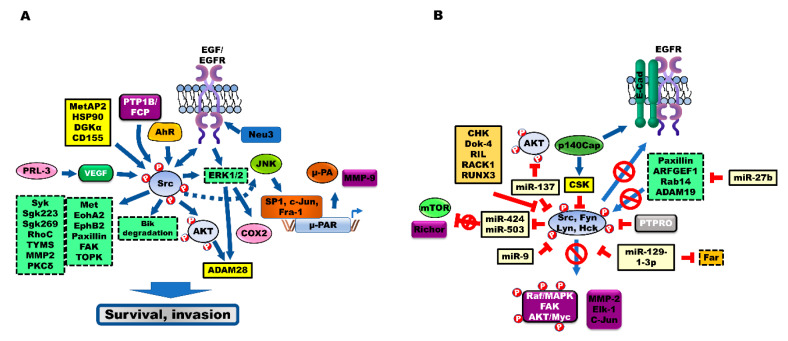
“6% of patients with CRC, and that CD155 induces proliferation, migration, and invasion of CRC cells in vivo and in vitro by upregulating the expression of MMP2, FAK and Src (Figure 2A) [78].”
BackgroundDown‐regulation of sialidase NEU4 may contribute to invasive properties of human colon cancers
Yamanami, H., Shiozaki, K., Wada, T., Yamaguchi, K., Uemura, T., Kakugawa, Y., Hujiya, T., & Miyagi, T. (2007) · Cancer Science · doi:10.1111/j.1349-7006.2007.00403.x · Cited by 77 · cited 1×
“EGF-induced activation of Src suppresses Neu4 expression by activated Wwox-mediated inhibition of p73 and AP2γ activities [73].”
BackgroundCraig, D., Haimovich, B., & Basson, M. D. (2007) · American Journal of Physiology-Cell Physiology · doi:10.1152/ajpcell.00118.2007 · Cited by 76 · cited 1×
“α-actinin-1/Src/FAK complex and subsequently facilitates focal adhesion formation by phosphorylating Tyr397 and Tyr576 in FAK [157].”
BackgroundPKCδ acts as a growth and tumor suppressor in rat colonic epithelial cells
Perletti, G. P., Marras, E., Concari, P., Piccinini, F., & Tashjian, A. H. (1999) · Oncogene · doi:10.1038/sj.onc.1202408 · Cited by 75
FGFR4 Role in Epithelial-Mesenchymal Transition and Its Therapeutic Value in Colorectal Cancer
Peláez‐García, A., Barderas, R., Torres, S., Hernández-Varas, P., Teixidó, J., Bonilla, F., de Herreros, A. G., & Casal, J. I. (2013) · PLoS ONE · doi:10.1371/journal.pone.0063695 · Cited by 74 · cited 1×
“Knockdown of FGFR4 or treatment with TKI258, an FGFR inhibitor, markedly inhibits Src activation, which results in the loss of metastatic potential, epithelial–mesenchymal transition (EMT) induction, and tumor growth in vivo [28,29].”
BackgroundBoumber, Y., Kondo, Y., Chen, X., Shen, L., Gharibyan, V., Konishi, K., Estey, E. H., Kantarjian, H. M., Garcia‐Manero, G., & Issa, J. J. (2007) · Cancer Research · doi:10.1158/0008-5472.can-06-3093 · Cited by 74 · cited 1×
“RIL induces the dephosphorylation of Src through the formation of a RIL/pY419 and c-Src/PTPL1 complex, which inhibits cell growth and colony formation of CRC cells [112,113].”
BackgroundTranscriptional Induction of the Urokinase Receptor Gene by a Constitutively Active Src
Allgayer, H., Wang, H., Gallick, G. E., Crabtree, A., Mazar, A., Jones, T., Kraker, A. J., & Boyd, D. D. (1999) · Journal of Biological Chemistry · doi:10.1074/jbc.274.26.18428 · Cited by 72 · cited 1×
“The activation of Src promotes the transcriptional activation of u-PAR, through Src-induced binding of Sp1 to the promoter region −152/−135 of u-PAR, which enhances u-PAR expression and facilitates u-PAR-mediated degradation of the extracellular matrix [81].”
BackgroundMiR-424/503-Mediated Rictor Upregulation Promotes Tumor Progression
Oneyama, C., Kito, Y., Asai, R., Ikeda, J., Yoshida, T., Okuzaki, D., Kokuda, R., Kakumoto, K., Takayama, K., Inoue, S., et al. (2013) · PLoS ONE · doi:10.1371/journal.pone.0080300 · Cited by 71 · cited 1×
“Subsequently, this leads to Src-mediated downregulation of miR-424/miR-503, which suppresses invasive potential and tumor growth in vivo and in vitro [104].”
BackgroundMicroRNA-mediated upregulation of integrin-linked kinase promotes Src-induced tumor progression
Oneyama, C., Morii, E., Okuzaki, D., Takahashi, Y., Ikeda, J., Wakabayashi, N., Akamatsu, H., Tsujimoto, M., Nishida, T., Aozasa, K., et al. (2011) · Oncogene · doi:10.1038/onc.2011.367 · Cited by 70 · cited 1×
“miR-542-3p suppresses the pathogenesis of CRC by reducing the metastatic potential and tumor growth of CRC in vivo and in vitro [106].”
BackgroundSirvent, A., Bénistant, C., Pannequin, J., Veracini, L., Simon, V, Bourgaux, J.-F., Hollande, F., Cruzalegui, F., & Roche, S. (2010) · Oncogene · doi:10.1038/onc.2009.450 · Cited by 69 · cited 1×
“Phosphoproteins associated with the glycosphingolipid-enriched microdomain (PAG)-induced membrane localization of CSK markedly inhibit the invasion of CRC cells [95].”
BackgroundHarashima, N., Tanaka, K., Sasatomi, T., Shimizu, K., Miyagi, Y., Yamada, A., Tamura, M., Yamana, H., Itoh, K., & Shichijo, S. (2001) · European Journal of Immunology · Cited by 69
Chong, Y., Mulhern, T. D., Zhu, H., Fujita, D. J., Bjorge, J. D., Tantiongco, J.-P., Sotirellis, N., Lio, D. S. S., Scholz, G. M., & Cheng, H. (2004) · Journal of Biological Chemistry · doi:10.1074/jbc.m309865200 · Cited by 68 · cited 1×
“A CSK-homologous kinase (CHK), a serine/threonine kinase, inhibits SFK activation, without affecting phosphorylation, through non-catalytic mechanisms, which involve direct interaction with the SFK members, including Hck, Lyn, and Src [109].”
BackgroundHolgren, C., Dougherty, U., Edwin, F., Cerasi, D., Taylor, I., Fichera, A., Joseph, L., Bissonnette, M., & Khare, S. (2010) · Oncogene · doi:10.1038/onc.2010.264 · Cited by 66 · cited 1×
“SPRY2 promotes tumor growth and metastasis by enhancing the activation of AKT and MAPK/ERK, through the upregulation of c-MET expression and inhibition of EGFR degradation [145,146].”
BackgroundMamidipudi, V., & Cartwright, C. A. (2009) · Oncogene · doi:10.1038/onc.2009.293 · Cited by 66
Ahn, J.-Y., Lee, J., Min, H., & Lee, H. (2015) · Oncotarget · doi:10.18632/oncotarget.5327 · Cited by 65 · cited 1×
“However, treatment with 17-AAG, an HSP90 inhibitor, and dasatinib, an Src inhibitor, markedly decreased the growth and lung metastasis of 5-FU-resistant CRC tumors in vivo [74].”
BackgroundLopez, J., Hesling, C., Prudent, J., Popgeorgiev, N., Gadet, R., Mikaélian, I., Rimokh, R., Gillet, G., & Gonzalo, P. (2012) · Cell Death and Differentiation · doi:10.1038/cdd.2012.21 · Cited by 65 · cited 1×
“Additionally, Src-mediated ERK1/2 activation suppresses apoptosis of CRC cells through ubiquitin-mediated degradation of Bik, a death accelerator [57].”
BackgroundCD44/CD133-Positive Colorectal Cancer Stem Cells are Sensitive to Trifluridine Exposure
Tsunekuni, K., Konno, M., Haraguchi, N., Koseki, J., Asai, A., Matsuoka, K., Kobunai, T., Takechi, T., Doki, Y., Mori, M., et al. (2019) · Scientific Reports · doi:10.1038/s41598-019-50968-6 · Cited by 64 · cited 1×
“The cell surface glycoprotein, CD44, is one of the CSC-specific cell surface markers in various cancers, including CRC [121,173].”
Background(1996) · PubMed · Cited by 63
Damiano, L., Stefano, P. D., Leal, M. D. P. C., Barba, M., Mainiero, F., Cabodi, S., Tordella, L., Sapino, A., Castellano, I., Canel, M., et al. (2010) · Oncogene · doi:10.1038/onc.2010.128 · Cited by 62 · cited 1×
“Subsequently, this inhibits the EGF-mediated activation of ERK1/2, which inhibits the proliferation and migration of CRC cells [99].”
BackgroundZimmerman, M. W., McQueeney, K. E., Isenberg, J. S., Pitt, B. R., Wasserloos, K., Homanics, G. E., & Lazo, J. S. (2014) · Journal of Biological Chemistry · doi:10.1074/jbc.m113.480038 · Cited by 61 · cited 1×
“The loss of PRL-3 inhibits VEGF-mediated Src activation and decreases the vascular cell invasiveness, which affects the tumor vasculature in a CRC mouse model [63].”
BackgroundWatanabe, K., Meyer, M. J., Strizzi, L., Lee, J. M., Gonzales, M., Bianco, C., Nagaoka, T., Farid, S. S., Margaryan, N. V., Hendrix, M. J. C., et al. (2010) · Stem Cells · doi:10.1002/stem.463 · Cited by 60 · cited 1×
“Increasing the Cripto-1 (CR-1)-expressing subpopulation by activin/nodal signaling enhances tumor-forming ability by promoting self-renewal potential [181].”
BackgroundFerrand, A., Bertrand, C., Portolan, G., Cui, G., Carlson, J. E., Pradayrol, L., Fourmy, D., Dufresne, M., Wang, T. C., & Seva, C. (2005) · Cancer Research · doi:10.1158/0008-5472.can-04-0978 · Cited by 60
Overexpression of the csk gene suppresses tumor metastasis in vivo
Nakagawa, T., Tanaka, S., Suzuki, H., Takayanagi, H., Miyazaki, T., Nakamura, K., & Tsuruo, T. (2000) · International Journal of Cancer · doi:10.1002/1097-0215(20001101)88:3<384::aid-ijc10>3.3.co;2-2 · Cited by 59
Su, Y.-J., Lin, W., Chang, Y., Wei, K., Liang, C.-L., Chen, S., & Lee, J.-L. (2015) · Oncotarget · doi:10.18632/oncotarget.5703 · Cited by 58 · cited 1×
“Subsequently, this leads to the enhanced self-renewal ability of sphere-forming and side population (SP) cells through activation of the β-catenin-dependent transcriptional activity [179].”
BackgroundDynamic regulation of the cancer stem cell compartment by Cripto-1 in colorectal cancer
Francescangeli, F., Contavalli, P., De Angelis, M. L., Baiocchi, M., Gambara, G., Pagliuca, A., Fiorenzano, A., Prezioso, C., Boe, A., Todaro, M., et al. (2015) · Cell Death & Differentiation · doi:10.1038/cdd.2015.19 · Cited by 57 · cited 1×
“CR1 promotes the tumor growth of colorectal CSC/progenitors in vivo and in vitro, by activating the Glypican/Src/AKT pathway and inducing CD44 expression [182].”
BackgroundHigh Expression of Methionine Aminopeptidase 2 in Human Colorectal Adenocarcinomas
Selvakumar, P., Lakshmikuttyamma, A., Kanthan, R., Kanthan, S. C., Dimmock, J. R., & Sharma, R. K. (2004) · Clinical Cancer Research · doi:10.1158/1078-0432.ccr-03-0218 · Cited by 57 · cited 1×
“One study reported that the expression of MetAP2 was upregulated in 100% of patients with CRC [67], whereas another study reported that MetAP2 expression was upregulated in 66% [68] of patients with CRC.”
BackgroundElevated c-Src protein expression is an early event in colonic neoplasia.
Iravani, S., Mao, W., Fu, L., Karl, R. C., Yeatman, T., Jove, R., & Coppola, D. (1998) · PubMed · Cited by 57
Rengifo-Cam, W., Konishi, A., Morishita, N., Matsuoka, H., Yamori, T., Nada, S., & Okada, M. (2004) · Oncogene · doi:10.1038/sj.onc.1207041 · Cited by 56 · cited 1×
“The overexpression of CSK negative mutant in the CRC cells induces a mesenchymal cell-like phenotype, cell proliferation and metastatic ability, through the activation of SFK, which activates the integrin-SFK-mediated cell adhesion signaling [97].”
BackgroundNguyen, Q.-D., Faivre, S., Bruyneel, E., Rivat, C., Seto, M., Endo, T., Mareel, M., Emami, S., & Gespach, C. (2002) · The FASEB Journal · doi:10.1096/fj.01-0525com · Cited by 55 · cited 1×
“However, the formation of the PAR-1/Gα12/Gα13 complex promotes cell invasion through the activation of Src, which is mediated by the activation of the RhoA/Rho-associated kinase (ROCK)-dependent signaling pathway [43].”
BackgroundTorres‐Ayuso, P., Daza-Martín, M., Martín-Pérez, J., Ávila‐Flores, A., & Mérida, I. (2014) · Oncotarget · doi:10.18632/oncotarget.2344 · Cited by 54 · cited 1×
“However, the treatment combination of R59949, a DGK inhibitor, and PP2, an Src inhibitor, markedly enhances apoptosis when compared to the individual treatments (Figure 2A) [75].”
BackgroundLien, G.-S., Wu, M.-S., Bien, M.-Y., Chen, C.-H., Lin, C.-H., & Chen, B.-C. (2014) · PLoS ONE · doi:10.1371/journal.pone.0104891 · Cited by 54
Tucker, L. A., Zhang, Q., Sheppard, G. S., Lou, P., Jiang, F., McKeegan, E. M., Lesniewski, R., Davidsen, S. K., Bell, R. L., & Wang, J. (2008) · Oncogene · doi:10.1038/onc.2008.14 · Cited by 54 · cited 3×
“Treatment with the NC2213, a MetAP2 inhibitor, markedly inhibited the activation of Src, a target of MetAP2 in CRC cells (Figure 2A) [68,69].”
BackgroundRack1 promotes epithelial cell–cell adhesion by regulating E-cadherin endocytosis
Swaminathan, G., & Cartwright, C. A. (2011) · Oncogene · doi:10.1038/onc.2011.242 · Cited by 54 · cited 17×
“Src and HGF induce endocytosis of E-cadherin, which leads to the E3 ligase Hakai-mediated degradation of E-cadherin.”
BackgroundInfluentialFaivre, S. J., Régnauld, K., Bruyneel, E. A., Nguyen, Q., Mareel, M., Emami, S., & Gespach, C. P. (2001) · Molecular Pharmacology · doi:10.1124/mol.60.2.363 · Cited by 54
Franke, F. C., Müller, J., Abal, M., Domínguez, E., Nitsche, U., Weidmann, H., Chardonnet, S., Ninio, E., & Janssen, K. (2018) · Cellular and Molecular Gastroenterology and Hepatology · doi:10.1016/j.jcmgh.2018.08.007 · Cited by 53 · cited 1×
“SASH1 suppresses the aggressiveness of CRC cells and poor survival of patients with CRC, through the inhibition of EMT by CRKL-mediated Src activation [172].”
BackgroundBcl-2 stabilization by paxillin confers 5-fluorouracil resistance in colorectal cancer
Wu, D., Huang, C.-C., Chang, S.-W., Chen, T. H., & Lee, H. (2014) · Cell Death and Differentiation · doi:10.1038/cdd.2014.170 · Cited by 52 · cited 1×
“The treatment combination of 5-FU and IPA-3, a PAK1 inhibitor, strongly inhibits tumor formation by 5-FU-resistant CRC cells [85].”
BackgroundCaveolin-1-Mediated Expression and Secretion of Kallikrein 6 in Colon Cancer Cells
Henkhaus, R. S., Roy, U. K. B., Cavallo‐Medved, D., Sloane, B. F., Gerner, E. W., & Ignatenko, N. A. (2008) · Neoplasia · doi:10.1593/neo.07817 · Cited by 52 · cited 1×
“The expression of KLK6 is reported to be markedly upregulated in 90% of patients with CRC, and to be correlated with poor survival [142,143].”
BackgroundLiang, F.-P., Lin, C., Kuo, C., Chao, H., & Fu, S.-L. (2007) · Journal of Biological Chemistry · doi:10.1074/jbc.m705877200 · Cited by 52 · cited 1×
“Andrographolide decreases the invasion ability of cells by suppressing the induction of EMT in the CRC cells [198].”
BackgroundXie, Y., Liu, C., Qin, Y., Chen, J., & Fang, J. S. (2019) · The International Journal of Biochemistry & Cell Biology · doi:10.1016/j.biocel.2019.105572 · Cited by 50 · cited 1×
“Treatment with the inhibitor of IRE1α blocks the migration of CRC cells [166].”
BackgroundKrndija, D., Schmid, H., Eismann, J., Lother, U., Adler, G., Oswald, F., Seufferlein, T. T. W., & von Wichert, G. (2010) · Oncogene · doi:10.1038/onc.2010.25 · Cited by 49 · cited 1×
“RPTPα induces the formation of contractility-mediated adhesion sites and stress fibers by enhancing the expression of Src downstream targets, such as MLCK, in focal adhesions [159,160].”
BackgroundEmpereur, S., Djelloul, S., Di Gioia, Y., Bruyneel, E., Mareel, M., Van Hengel, J., Van Roy, F., Comoglio, P., Courtneidge, S., Paraskeva, C., et al. (1997) · British Journal of Cancer · doi:10.1038/bjc.1997.40 · Cited by 49
Micro RNA ‐27b suppresses tumor progression by regulating ARFGEF 1 and focal adhesion signaling
Matsuyama, R., Okuzaki, D., Okada, M., & Oneyama, C. (2015) · Cancer Science · doi:10.1111/cas.12834 · Cited by 49 · cited 1×
“However, the expression of miR-27b is downregulated upon the activation of the PI3K/AKT pathway [107].”
BackgroundKuo, C.-T., Chang, C., & Lee, W. (2015) · Scientific Reports · doi:10.1038/srep11187 · Cited by 49 · cited 1×
“The folic acid treatment induces the activation of the folate receptor alpha (FRα)/SRC/ERK1/2/NFκB signaling pathway, which upregulates TP53 and suppresses cell proliferation and tumor growth in vivo and in vitro, by upregulating the levels of CDKN1A and CDKN1B [205].”
BackgroundCraig, D. H., Owen, C. R., Conway, W. C., Walsh, M. F., Downey, C., & Basson, M. D. (2008) · Journal of Clinical Investigation · doi:10.1172/jci34279 · Cited by 48 · cited 1×
“Additionally, colchicine inhibits extracellular pressure-mediated tumor cell adhesion and peritoneal metastases, and markedly decreases the survival of the xenograft tumor by inhibiting the activation of Src, FAK and AKT [203].”
BackgroundInvolvement of c-Src in diperoxovanadate-induced endothelial cell barrier dysfunction
Shi, S., Garcia, J. G. N., Roy, S., Parinandi, N. L., & Natarajan, V. (2000) · American Journal of Physiology-Lung Cellular and Molecular Physiology · doi:10.1152/ajplung.2000.279.3.l441 · Cited by 48 · cited 1×
“However, Src activation enhances the permeability of endothelial cells [126,127].”
BackgroundReversion-induced LIM interaction with Src reveals a novel Src inactivation cycle
Zhang, Y., Tu, Y., Zhao, J., Chen, K., & Wu, C. (2009) · The Journal of Cell Biology · doi:10.1083/jcb.200810155 · Cited by 48 · cited 1×
“RIL induces the dephosphorylation of Src through the formation of a RIL/pY419 and c-Src/PTPL1 complex, which inhibits cell growth and colony formation of CRC cells [112,113].”
BackgroundBarbáchano, A., Fernández‐Barral, A., Pereira, F., Segura, M. F., Ordóñez‐Morán, P., Pau, E. C. D. S., González‐Sancho, J. M., Hanniford, D., Martínez, N., Costales‐Carrera, A., et al. (2015) · Oncogene · doi:10.1038/onc.2015.366 · Cited by 48 · cited 1×
“SPRY2 induces EMT by upregulating the expression of Zab1, which is mediated by enhanced expression of the ETS1 transcription factor and decreased expression of miRNAs that target Zeb1, such as miR-200b, 200c and miR-150 [147].”
BackgroundMEK5/ERK5 activation regulates colon cancer stem-like cell properties
Pereira, D. M., Gomes, S. E., Borralho, P. M., & Rodrigues, C. M. P. (2019) · Cell Death Discovery · doi:10.1038/s41420-019-0150-1 · Cited by 48 · cited 1×
“NF-κB-induced IL-8 expression, by activation of MEK5/ERK5 signaling, is required for the acquisition of CSC properties and chemoresistance of CRC [185].”
BackgroundGratio, V., Walker, F., Lehy, T., Laburthe, M., & Darmoul, D. (2008) · International Journal of Cancer · doi:10.1002/ijc.24070 · Cited by 47 · cited 2×
“The activated Src upregulates the expression of c-Met [15–17], while EGF promotes the interaction between human epidermal growth factor receptor 2 (HER2) and Src in the CRC cells [15].”
BackgroundIrby, R., Mao, W., Coppola, D., Jove, R., Gamero, A. M., Cuthbertson, D. D., Fujita, D. J., & Yeatman, T. J. (1997) · PubMed · Cited by 47
Fogelman, D., Cubillo, A., García‐Alfonso, P., Mirón, M. L. L., Nemunaitis, J., Flora, D., Borg, C., Mineur, L., Vieitez, J. M., Cohn, A., et al. (2018) · Cancer Medicine · doi:10.1002/cam4.1703 · Cited by 47
Shiozaki, K., Yamaguchi, K., Sato, I., & Miyagi, T. (2009) · Cancer Science · doi:10.1111/j.1349-7006.2008.01080.x · Cited by 46
Colorectal cancer prognosis and expression of exon-v6-containing CD44 proteins
Finke, L. H., Terpe, H., Zörb, C., Haensch, W., Schlag, P. M., & Parker, D. (1995) · The Lancet · doi:10.1016/s0140-6736(95)90491-3 · Cited by 46 · cited 1×
“The expression of CD44 variants is markedly upregulated in patients with CRC, and is closely correlated with poor survival [174,175].”
BackgroundFoss, F. M., Veillette, A., Sartor, O. A., Rosen, N., & Bolen, J. B. (1989) · PubMed · Cited by 45
Boyd, D. D., Wang, H., Avila, H., Parikh, N. U., Kessler, H., Magdolen, V., & Gallick, G. E. (2004) · Clinical Cancer Research · doi:10.1158/1078-0432.ccr-1565-02 · Cited by 44 · cited 1×
“16, a u-PAR antagonist, effectively inhibits the invasion of CRC cells [186].”
BackgroundSpecific Oncogenic Activity of the Src-Family Tyrosine Kinase c-Yes in Colon Carcinoma Cells
Sancier, F., Dumont, A., Sirvent, A., Paquay de Plater, L., Edmonds, T., David, G., Jan, M., de Montrion, C., Cogé, F., Léonce, S., et al. (2011) · PLoS ONE · doi:10.1371/journal.pone.0017237 · Cited by 43 · cited 1×
“c-Yes suppresses apoptosis of CRC cells and increases tumor growth and liver metastases in vivo by promoting cell migration [134].”
BackgroundFiordalisi, J. J., Dewar, B. J., Graves, L. M., Madigan, J. P., & Cox, A. D. (2013) · PLoS ONE · doi:10.1371/journal.pone.0064309 · Cited by 42 · cited 1×
“Moreover, the phosphorylation of Tyr53 in PRL-3 by platelet-derived growth factor (PDGF)-activated Src is essential for the activated RhoC-mediated invasion of CRC [64].”
BackgroundAn alternative pathway for expression of p56lck from type I promoter transcripts in colon carcinoma
McCracken, S. A., Kim, C. S., Xu, Y., Minden, M. D., & Miyamoto, N. G. (1997) · Oncogene · doi:10.1038/sj.onc.1201474 · Cited by 42 · cited 1×
“In addition to the CRC cells, the expression of Lck was reported to be upregulated in 78% of patients with CRC [13,14].”
BackgroundKostyniuk, C. L., Dehm, S. M., Batten, D., & Bonham, K. (2002) · Oncogene · doi:10.1038/sj.onc.1205787 · Cited by 42 · cited 14×
“VEGF promotes the activation of SFKs, including Src and Yes, by promoting the form tion of the VEGFR-1/SFK complex.”
BackgroundInfluentialWalsh, M. F., Woo, R. K. ‐., Gomez, R., & Basson, M. D. (2004) · Cell Proliferation · doi:10.1111/j.1365-2184.2004.00324.x · Cited by 41 · cited 1×
“Treatment with tyrosine kinase and PKC inhibitors, such as genistein and calphostin, inhibits pressure-induced CRC proliferation [200].”
BackgroundThamilselvan, V., & Basson, M. D. (2005) · Carcinogenesis · doi:10.1093/carcin/bgi135 · Cited by 41 · cited 6×
“Garcinol, a polyisoprenylated benzophenone HDAC inhibitor, inhibits the interaction between Src and FAK or the p85 subunit of PI3K, by inhibiting the activation of Src.”
BackgroundInfluentialValproic acid enhances bosutinib cytotoxicity in colon cancer cells
Mologni, L., Cleris, L., Magistroni, V., Piazza, R., Boschelli, F., Formelli, F., & Gambacorti-Passerini, C. B. (2009) · International Journal of Cancer · doi:10.1002/ijc.24158 · Cited by 40 · cited 1×
“The treatment combination of VPA and bosutinib (an Src inhibitor) markedly inhibits the proliferation of CRC cells and tumor formation via xenografts [196].”
BackgroundBedirian, A., Baldwin, C., Abe, J., Takano, T., & Lemay, S. (2004) · Journal of Biological Chemistry · doi:10.1074/jbc.m310689200 · Cited by 40 · cited 1×
“Dok-4 inhibits the Fyn-mediated transcriptional activation of Elk-1 and c-Jun [111].”
BackgroundPorquet, N., Poirier, A., Houle, F., Pin, A.-L., Gout, S., Tremblay, P.-L., Paquet, É. R., Klinck, R., Auger, F. A., & Huot, J. (2011) · BMC Cancer · doi:10.1186/1471-2407-11-285 · Cited by 40 · cited 1×
“This indicates that the CRC cells shift the functional role of DR3 toward survival [133].”
BackgroundXiao, J., Duan, Q., Wang, Z., Yan, W., Sun, H., Xue, P., Fan, X., Zeng, X., Chen, J., Shao, C., et al. (2016) · Oncotarget · doi:10.18632/oncotarget.8231 · Cited by 40 · cited 1×
“Src-induced TOPK stability promotes tumor growth in vivo and in vitro [89].”
Cam, W. R., Masaki, T., Shiratori, Y., Kato, N., Ikenoue, T., Okamoto, M., Igarashi, K., Sano, T., & Omata, M. (2001) · Cancer · doi:10.1002/1097-0142(20010701)92:1<61::aid-cncr1292>3.0.co;2-d · Cited by 40
YAP promotes myogenic differentiation via the MEK5‐ERK5 pathway
Chen, T., Chen, C., Wen, H., Chang, C., Wang, H., Chuu, C., & Chang, C. (2017) · The FASEB Journal · doi:10.1096/fj.201601090r · Cited by 39 · cited 1×
“Src is identified as an upstream kinase of the MEKK3/MEK5/ERK5 pathway in YAP-mediated myogenic differentiation [183], and it regulates the generation of ROS via activation of ERK5 [184].”
BackgroundLeupold, J. H., Asangani, I. A., Maurer, G. D., Lengyel, E. R., Post, S., & Allgayer, H. (2007) · Molecular Cancer Research · doi:10.1158/1541-7786.mcr-06-0211 · Cited by 38 · cited 1×
“The activation of Src is markedly correlated with AP-1 binding and u-PAR expression in patients with CRC [82].”
BackgroundCetuximab-Induced MET Activation Acts as a Novel Resistance Mechanism in Colon Cancer Cells
Song, N., Liu, S., Zhang, J., Liu, J., Xu, L., Liu, Y., & Qu, X. (2014) · International Journal of Molecular Sciences · doi:10.3390/ijms15045838 · Cited by 37
Wang, J., Tucker, L. A., Stavropoulos, J. A., Zhang, Q., Wang, Y., Bukofzer, G. T., Niquette, A. L., Meulbroek, J. A., Barnes, D. M., Shen, J., et al. (2008) · Proceedings of the National Academy of Sciences · doi:10.1073/pnas.0708766105 · Cited by 37 · cited 1×
“A-800141, the sulfonamide MetAP2 inhibitor, suppresses 70% of tumor growth by upregulating the expression of p21 and p53 and the formation of GAPDH variants with unprocessed N-terminal methionine [197].”
BackgroundAsbagh, L. A., Vázquez, I., Vecchione, L., Budínská, E., de Vriendt, V., Baietti, M. F., Steklov, M. Y., Jacobs, B., Hoe, N., Singh, S., et al. (2014) · Oncotarget · doi:10.18632/oncotarget.2458 · Cited by 36 · cited 1×
“The formation of the PTPRO/EGFR complex inhibits Tyr845 phosphorylation in EGFR by directly dephosphorylating Src at Tyr416, which inhibits the progression and drug resistance of CRC cells [100].”
BackgroundRegulation of paxillin-p130-PI3K-AKT signaling axis by Src and PTPRT impacts colon tumorigenesis
Zhao, Y., Scott, A. J., Zhang, P., Hao, Y., Feng, X., Somasundaram, S., Khalil, A. M., Willis, J. E., & Wang, Z. (2016) · Oncotarget · doi:10.18632/oncotarget.10654 · Cited by 36 · cited 1×
“However, Src-induced phosphorylation of PXN at Tyr38 increases the dasatinib resistance of tumor cells by activating the p130cas/PI3K/AKT signaling pathway [101].”
BackgroundSun, G., Cheng, S. Y. S., Chen, M., Lim, C. J., & Pallen, C. J. (2012) · Molecular and Cellular Biology · doi:10.1128/mcb.00214-12 · Cited by 35 · cited 1×
“RPTPα induces the formation of contractility-mediated adhesion sites and stress fibers by enhancing the expression of Src downstream targets, such as MLCK, in focal adhesions [159,160].”
BackgroundRegorafenib as second-line therapy in hepatocellular carcinoma
Duffy, A. G., & Greten, T. F. (2017) · Nature Reviews Gastroenterology & Hepatology · doi:10.1038/nrgastro.2017.7 · Cited by 34
Olszewska-Pazdrak, B., Townsend, C. M., & Hellmich, M. R. (2004) · Journal of Biological Chemistry · doi:10.1074/jbc.c400208200 · Cited by 33 · cited 2×
“contrast to CCK2R, the third intracellular loop (3il) domain of CCK2i4svR activates Src and FAK by forming a complex with Src [48].”
BackgroundChen, Y.-C., Ou, M.-C., Fang, C.-W., Lee, T., & Tzeng, S. (2019) · Cells · doi:10.3390/cells8040326 · Cited by 33
Lee, J., Maa, M., Yu, H., Wang, J., Yen, C., Wang, S., Chen, Y., Liu, Y., Jin, Y., & Leu, T. (2005) · Molecular Carcinogenesis · doi:10.1002/mc.20117 · Cited by 31 · cited 1×
“Butyrate decreases cell proliferation, anchorage-independent growth, and expression of alkaline phosphatase, a colon epithelial differentiation enzyme [190,191].”
BackgroundBurgess, J. T., Bolderson, E., Saunus, J. M., Zhang, S., Reid, L., McNicol, A. M., Lakhani, S. R., Cuff, K. E., Richard, K., Richard, D. J., et al. (2016) · Oncotarget · doi:10.18632/oncotarget.12020 · Cited by 31 · cited 1×
“The expression of SASH1 is inversely correlated with poor survival of patients with breast cancer [171].”
BackgroundParticipation of p97Eps8 in Src-mediated Transformation
Leu, T., Yeh, H.-H., Huang, C.-C., Chuang, Y.-C., Su, S. L., & Maa, M. (2004) · Journal of Biological Chemistry · doi:10.1074/jbc.m309884200 · Cited by 30 · cited 1×
“Moreover, TSA suppresses cell proliferation by downregulating Eps8 expression without affecting Src activation in the v-Src-transformed cells [193].”
BackgroundKunte, D. P., Wali, R. K., Koetsier, J. L., Hart, J. A. L., Kostjukova, M. N., Kilimnik, A. Y., Pyatkin, I. G., Strelnikova, S. R., & Roy, H. K. (2005) · FEBS Letters · doi:10.1016/j.febslet.2005.05.030 · Cited by 30 · cited 1×
“The inhibition of CSK enhances the Src-mediated activation of the Raf/MAPK signaling pathway, which promotes the proliferation of CRC cells [93].”
Backgroundvan Zyp, J. V. D. V., Thamilselvan, V., Walsh, M. F., Polin, L., & Basson, M. D. (2004) · The American Journal of Surgery · doi:10.1016/j.amjsurg.2004.07.005 · Cited by 28 · cited 1×
“Increased extracellular pressure associated with CRC stimulates integrin-mediated cancer cell adhesion and cell growth through Src activation [136,137].”
BackgroundNC2213: a novel methionine aminopeptidase 2 inhibitor in human colon cancer HT29 cells
Selvakumar, P., Lakshmikuttyamma, A., Das, U., Pati, H. N., Dimmock, J. R., & Sharma, R. K. (2009) · Molecular Cancer · doi:10.1186/1476-4598-8-65 · Cited by 28 · cited 2×
“Treatment with the NC2213, a MetAP2 inhibitor, markedly inhibited the activation of Src, a target of MetAP2 in CRC cells (Figure 2A) [68,69].”
BackgroundFianco, G., Cenci, C., & Barilà, D. (2016) · Experimental Cell Research · doi:10.1016/j.yexcr.2016.07.013 · Cited by 28 · cited 1×
“Additionally, Src induces transformation and resistance to anoikis in CRC cells by phosphorylating Tyr380 in caspase-8 [130].”
BackgroundDecreased CHK protein levels are associated with Src activation in colon cancer cells
Zhu, S., Bjorge, J. D., Cheng, H., & Fujita, D. (2007) · Oncogene · doi:10.1038/sj.onc.1210838 · Cited by 27 · cited 1×
“CHK inhibits Src activation, which markedly reduces the metastatic potential of CRC cells [110].”
BackgroundErbB4 promotes cyclooxygenase-2 expression and cell survival in colon epithelial cells
Frey, M. R., Hilliard, V. C., Mullane, M. T., & Polk, D. B. (2010) · Laboratory Investigation · doi:10.1038/labinvest.2010.117 · Cited by 27 · cited 1×
“Additionally, the activation of Src and EGFR by Erb-B2 Receptor Tyrosine Kinase (ERBB4), which was reported to be upregulated in 43% of patients with CRC, results in the upregulation of cyclooxygenase 2 (COX2) expression, which enhances the proliferation of CRC cells [19,20].”
BackgroundActivation of Src and transformation by an RPTPα splice mutant found in human tumours
Huang, J., Yao, L., Xu, R., Wu, H., Wang, M., White, B. S., Shalloway, D., & Zheng, X. (2011) · The EMBO Journal · doi:10.1038/emboj.2011.212 · Cited by 27 · cited 1×
“RPTPα245-mediated dephosphorylation and activation of Src transformed the REF in vitro and in vivo [60].”
BackgroundVitale, S., Avizienyte, E., Brunton, V. G., & Frame, M. C. (2008) · European Journal of Cell Biology · doi:10.1016/j.ejcb.2008.04.002 · Cited by 27
Selvakumar, P., Lakshmikuttyamma, A., Lawman, Z., Bonham, K., Dimmock, J. R., & Sharma, R. K. (2004) · Biochemical and Biophysical Research Communications · doi:10.1016/j.bbrc.2004.08.021 · Cited by 26 · cited 1×
“MetAP2 is reported to be a therapeutic target for cancer and obesity [65,66].”
BackgroundHirsch, C. L., Smith‐Windsor, E. L., & Bonham, K. (2006) · International Journal of Cancer · doi:10.1002/ijc.21383 · Cited by 26 · cited 1×
“This decreases the proliferation and invasion of CRC cells, by inducing apoptosis through suppression of Src-mediated AKT and ERK activation [194,195].”
BackgroundCraig, D. H., Gayer, C. P., Schaubert, K. L., Wei, Y., Li, J., Laouar, Y., & Basson, M. D. (2009) · American Journal of Physiology-Cell Physiology · doi:10.1152/ajpcell.00355.2008 · Cited by 26 · cited 1×
“Additionally, the increased extracellular pressure enhances integrin-binding affinity, by activating β1-integrin at threonine 788/789, which is mediated by the interaction between CAV-1 and Src kinases [138,139].”
BackgroundSchoenherr, C., Serrels, B., Proby, C. M., Cunningham, D. L., Findlay, J. E., Baillie, G. S., Heath, J. K., & Frame, M. C. (2014) · Journal of Cell Science · doi:10.1242/jcs.157560 · Cited by 25 · cited 1×
“Epidermal growth factor receptor kinase substrate 8 (Eps8), which is an adaptor protein of tyrosine kinase receptors, including EGFR, is reported to be involved in the pathogenesis of cancer [23].”
BackgroundAhmed, N., Oliva, K., Wang, Y., Quinn, M. A., & Rice, G. E. (2003) · PROTEOMICS · doi:10.1002/pmic.200390042 · Cited by 25 · cited 1×
“However, the downregulation of u-PAR expression suppresses the progression of CRC, by inhibiting the activation of Src and ERK/MAP kinase, the secretion of u-PA and MMP-9, and the plasminogen-dependent extra matrix proteolysis [83].”
BackgroundJung, S., Kim, S., & Lee, C. (2016) · Oncotarget · doi:10.18632/oncotarget.11537 · Cited by 24 · cited 1×
“This leads to the upregulation of nuclear factor erythroid 2-related factor 2 (NRF2) and thioredoxin 1 (Trx1), which is a regulator of antioxidant defense mechanism, inhibits the migration and survival of CRC cells by inhibiting EMT induction [168].”
BackgroundJia, J., Starodub, A., Cushman, I., Liu, Y., Marshall, D. J., Hurwitz, H. I., & Nixon, A. B. (2012) · Anti-Cancer Drugs · doi:10.1097/cad.0b013e32835d29fd · Cited by 23 · cited 2×
“The treatment combination of intetumumab, an integrin inhibitor, and dasatinib effectively inhibits Cancers 2020, 12, 1339 14 of 26 the migration and proliferation of dasatinib-resistant CRC cells, by suppressing the activation of FAK, PXN and Src [188].”
BackgroundYamamoto, K., Takahashi, K., Shiozaki, K., Yamaguchi, K., Moriya, S., Hosono, M., Shima, H., & Miyagi, T. (2015) · PLoS ONE · doi:10.1371/journal.pone.0120578 · Cited by 20
Prognostic relevance of Src activation in stage II-III colon cancer
Martínez-Pérez, J., Lopez-Calderero, I., Saez, C., Benavent, M., Limon, M. L., Gonzalez-Exposito, R., Soldevilla, B., Riesco-Martínez, M. C., Salamanca, J., Carnero, A., et al. (2017) · Human Pathology · doi:10.1016/j.humpath.2017.05.025 · Cited by 20 · cited 1×
“One study reported that moderate and high expression levels of Src are observed in 21% and 9% of patients with CRC, respectively, and that enhanced Src expression is closely associated with poor survival [8].”
BackgroundSchmidt, R., Streit, M., Kaiser, R., Herzberg, F., Schirner, M., Schramm, K., Kaufmann, C. M., Henneken, M., Schäfer‐Korting, M., Thiel, E., et al. (1998) · International Journal of Cancer · Cited by 20
Kang, K. A., Piao, M. J., Ryu, Y. S., Maeng, Y. H., & Hyun, J. W. (2016) · Journal of Cellular Physiology · doi:10.1002/jcp.25746 · Cited by 17 · cited 3×
“(B) Cell proliferation and metastasis of CRC cells are inhibited by inhibiting the activation of Src by multiple intracellular regulators, including C-terminal Src Kinase (CSK), protein tyrosine phosphatases (PTPRs), protein tyrosine phosphatase receptor type O (PTPRO), protein tyrosine phosphatase receptor type T (PT…”
BackgroundChen, H., Sells, E., Pandey, R., Abril, E. R., Hsu, C., Krouse, R. S., Nagle, R. B., Pampalakis, G., Sotiropoulou, G., & Ignatenko, N. A. (2019) · Oncotarget · doi:10.18632/oncotarget.27153 · Cited by 17 · cited 17×
“Src and HGF induce endocytosis of E-cadherin, which leads to the E3 ligase Hakai-mediated degradation of E-cadherin.”
BackgroundInfluentialExtracellular pressure stimulates tumor cell adhesion in vitro by paxillin activation
van Zyp, J. R. N. V. D. V., Conway, W. C., Craig, D. H., van Zyp, N. V. D. V., Thamilselvan, V., & Basson, M. D. (2006) · Cancer Biology & Therapy · doi:10.4161/cbt.5.9.3002 · Cited by 16 · cited 1×
“Src-mediated activation of PXN results in the activation of FAK, which enhances extracellular pressure and promotes cell adhesion to type I collagen [86].”
BackgroundCell Transformation by PTP1B Truncated Mutants Found in Human Colon and Thyroid Tumors
Mei, W., Wang, K., Huang, J. J., & Zheng, X. (2016) · PLoS ONE · doi:10.1371/journal.pone.0166538 · Cited by 14 · cited 2×
“Receptor PTPα (RPTPα), which is required for the Src-mediated survival of CRC cells, activates Src. RPTPα splice variants (RPTPα245 and 445), which lack the D2 domain and contain additional Cancers 2020, 12, 1339 6 of 26 spurious residues, were detected in patients with CRC. RPTPα245-mediated dephosphorylation and act…”
BackgroundRole of paxillin in colorectal carcinoma and its relationship to clinicopathological features
Hongfang, Y., Quanwen, Z., Xin, W., Li, T., Yuanlian, W., Yucun, L., & Zhu, J. (2014) · Chinese Medical Journal · doi:10.3760/cma.j.issn.0366-6999.20121360 · Cited by 13 · cited 1×
“One study reported that the expression of PXN is upregulated in 65% of patients with CRC, and that PXN expression is closely correlated with the recurrence of CRC [84].”
Background
Cited by
Poh, A. R., & Ernst, M. (2023) · Oncogene · doi:10.1038/s41388-023-02701-x · Cited by 60
Kharkar, P. S. (2020) · Journal of Medicinal Chemistry · doi:10.1021/acs.jmedchem.0c01336 · Cited by 51
Pathogenic nsSNPs that increase the risks of cancers among the Orang Asli and Malays
Khoruddin, N. A., Noorizhab, M. N. F., Teh, L. K., Yusof, F. Z. M., & Salleh, M. Z. (2021) · Scientific Reports · doi:10.1038/s41598-021-95618-y · Cited by 34
Src Family Tyrosine Kinases in Intestinal Homeostasis, Regeneration and Tumorigenesis
Sirvent, A., Mevizou, R., Naim, D., Lafitte, M., & Roche, S. (2020) · Cancers · doi:10.3390/cancers12082014 · Cited by 35
Zhang, W., Pan, R., Lu, M., Zhang, Q., Lin, Z., Qin, Y., Wang, Z., Gong, S., Lin, H., Chong, S., et al. (2021) · Oncogene · doi:10.1038/s41388-021-02029-4 · Cited by 36
Metadata
- Authors
- Jin, W.
- Affiliations
- Gachon University (KR)
- Corresponding author
- Jin, Wook
- ORCID
- Jin, Wook
- Venue
- Cancers
- Publisher
- MDPI AG
- Published
- 2020-05-23
- Volume
- 12
- Issue
- 5
- Pages
- 1339
- ISSN
- 2072-6694 (ISSN-L)
- PMC
- PMC7281431
- OpenAlex
- W3026270876
- Cited by
- 86
- References
- 215
- Citations by year
- 2026: 9 · 2025: 10 · 2024: 13 · 2023: 20 · 2022: 16 · 2021: 11 · 2020: 6
- FWCI
- 2.03
- Type
- journal article
- Language
- en
- Open access
- gold
- dx.doi.org
- Licence
- Locations
- Cancers (publishedVersion, cc-by)
- PubMed Central (publishedVersion, cc-by)
- PubMed (publishedVersion)
- DOAJ (DOAJ: Directory of Open Access Journals) (submittedVersion, cc-by-sa)
- Funders
- National Research Foundation of Korea (2020R1A2C1012484)
- Topics
- Life Sciences › Biochemistry, Genetics and Molecular Biology › Cancer Research › Cancer Mechanisms and Therapy
- Life Sciences › Biochemistry, Genetics and Molecular Biology › Molecular Biology › Protein Kinase Regulation and GTPase Signaling
- Health Sciences › Medicine › Oncology › Cancer Cells and Metastasis
- Keywords
- Src family kinases, colorectal cancer, tumor progression, cell proliferation, metastasis, chemoresistance, cancer stem cells, Src kinase inhibitor, non-receptor tyrosine kinase, patient survival
About these checks
Registry, retraction, Cites and statistics results are computed, not judged, with one exception: a printed reference that no index lists is read once by a model before it counts as a citation error. Claims are extracted by a model and kept only when their quote appears verbatim in the text; each cited source is then checked, with a model’s help, for whether it says what the claim relies on. Those verdicts can be wrong — read the claim’s quote and the cited source before relying on one.
Statistics and arithmetic are recomputed, not judged.
Confidence bands are shown only for fields calibrated on our annotated test set. None is calibrated yet, so no band is shown.
What counts as a claim ›How we measure confidence ›How we check this ›
Are you an author, or do you see a problem with this page? Request a review
Data sources
Bibliographic data: Semantic Scholar, OpenAlex, Crossref.
Contains information from the Semantic Scholar Academic Graph Datasets, made available under the ODC Attribution License (ODC-BY 1.0).
Semantic Scholar’s data is described in: Kinney, R., et al. (2023). The Semantic Scholar Open Data Platform. arXiv:2301.10140.
