

Obesity and Breast Cancer: A Case of Inflamed Adipose Tissue
Open accessThe DOI matches its Crossref record; 188 of the 188 references it cites were found in a registry or an index.
Abstract
Obesity is associated with an increased risk of estrogen receptor-positive breast cancer in postmenopausal women and a worse prognosis for all major breast cancer subtypes regardless of menopausal status. While the link between obesity and the pathogenesis of breast cancer is clear, the molecular mechanism of this association is not completely understood due to the complexity of both obesity and breast cancer. The aim of this review is to highlight the association between obesity and breast cancer and discuss the literature, which indicates that this association is due to chronic adipose tissue inflammation. We will discuss the epidemiological data for the association between breast cancer incidence and progression as well as the potential molecular mechanisms for this association. We will focus on the role of inflammation within the adipose tissue during the pathogenesis of breast cancer. A better understanding of how obesity and adipose tissue inflammation affects the pathogenesis of breast cancer will lead to new strategies to reduce breast cancer risk and improve patient outcomes for obese patients.
Overview
The claims and statistics of this paper haven’t been checked yet.
Free: it reads the open-access text and checks the first 5 claims that cite a source we can check. Create a free account to check every claim.
Integrity signals
Registry
Cites
Statistics
Figures
Verification
Claims the paper makes
The claims and statistics of this paper haven’t been checked yet.
Free: it reads the open-access text and checks the first 5 claims that cite a source we can check. Create a free account to check every claim.
Claims other papers make about this one
Each is checked against this paper’s own text: does it say what the citing paper says it does?
The source backs part of the claim, not all of it — or backs it for a different population, condition or comparison.
In the citing paper
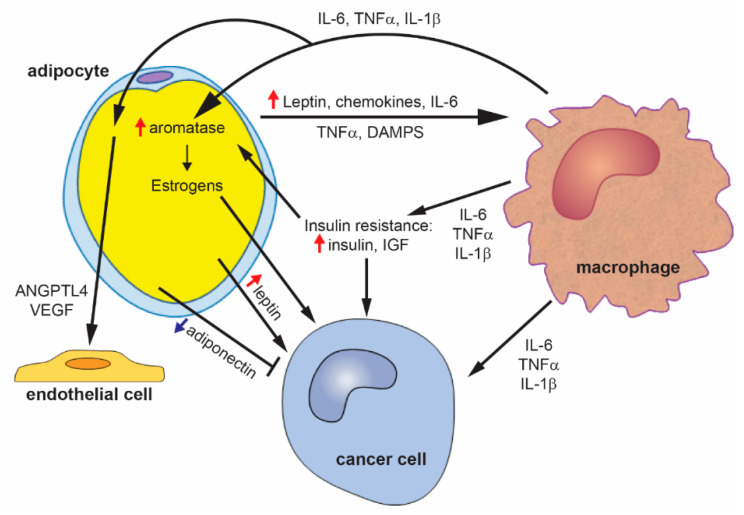
“Inflammatory cytokines secreted by hypertrophic breast tissue in individuals with obesity appear to exacerbate aromatase production and thus local estrogen production (198).”
From Metabolic impact of endogenously produced estrogens by adipose tissue in females and males across the lifespan (2025) · cites this paper as [198]
Experimental — accuracy not yet measured
Self-check
Percentages, sums and reported differences re-computed from the paper’s own numbers.
The self-check needs the paper’s full text.
Citations
Cites
Child abuse: Adolescent records vs. adult recall
Femina, D. D., Yeager, C. A., & Lewis, D. O. (1990) · Child Abuse & Neglect · doi:10.1016/0145-2134(90)90033-p · Cited by 8,820
The metabolic phenotype in obesity: Fat mass, body fat distribution, and adipose tissue function
Goossens, G. H. (2017) · Obesity Facts · doi:10.1159/000471488 · Cited by 8,481
Overweight, obesity, and mortality from cancer in a prospectively studied cohort of U.S. Adults
Calle, E. E., Rodriguez, C., Walker-Thurmond, K., & Thun, M. J. (2003) · New England Journal of Medicine · doi:10.1056/nejmoa021423 · Cited by 7,696 · cited 1×
“8% of cancer-related mortality attributed to obesity in men and women, respectively [17,18].”
BackgroundMechanisms linking obesity to insulin resistance and type 2 diabetes
Kahn, S. E., Hull, R. L., & Utzschneider, K. M. (2006) · Nature · doi:10.1038/nature05482 · Cited by 5,448
Renehan, A. G., Tyson, M., Egger, M., Heller, R. F., & Zwahlen, M. (2008) · The Lancet · doi:10.1016/s0140-6736(08)60269-x · Cited by 5,219
The global obesity pandemic: shaped by global drivers and local environments
Swinburn, B. A., Sacks, G., Hall, K. D., McPherson, K., Finegood, D. T., Moodie, M. L., & Gortmaker, S. L. (2011) · The Lancet · doi:10.1016/s0140-6736(11)60813-1 · Cited by 4,888
Prospective Studies Collaboration (2009) · The Lancet · doi:10.1016/s0140-6736(09)60318-4 · Cited by 4,807 · cited 1×
“Studies have indicated that every 5 point increase in BMI over 25 results in a 29% increase in overall mortality, a 210% increase in diabetes-associated mortality, and a 41% increase in mortality related to the cardiovascular system [7,8].”
Inflammatory Mechanisms in Obesity
Gregor, M. F., & Hotamisligil, G. S. (2011) · Annual Review of Immunology · doi:10.1146/annurev-immunol-031210-101322 · Cited by 3,754
European Guidelines for Obesity Management in Adults
Yumuk, V., Tsigos, C., Fried, M., Schindler, K., Busetto, L., Micic, D., & Toplak, H. (2015) · Obesity Facts · doi:10.1159/000442721 · Cited by 3,432
Byrne, C. D., & Targher, G. (2015) · Journal of Hepatology · doi:10.1016/j.jhep.2014.12.012 · Cited by 3,042
Cited by
Łukasiewicz, S., Czeczelewski, M., Forma, A., Baj, J., Sitarz, R., & Stanisławek, A. (2021) · Cancers · doi:10.3390/cancers13174287 · Cited by 1,960
“Yet, independently to menopausal status, obese women achieve poorer clinical outcomes [92].”
BackgroundAlmansour, N. M. (2022) · Frontiers in Molecular Biosciences · doi:10.3389/fmolb.2022.836417 · Cited by 397
“Epidemiologically, estrogen receptor-positive breast cancer develops in obese women in the postmenopausal period (Kolb and Zhang, 2020).”
The ambiguous role of obesity in oncology by promoting cancer but boosting antitumor immunotherapy
Assumpção, J. A. F., Pasquarelli-do-Nascimento, G., Viegas, M. S., Bonamino, M., & Magalhães, K. G. (2022) · Journal of Biomedical Science · doi:10.1186/s12929-022-00796-0 · Cited by 103
Stress and coping in women with breast cancer:unravelling the mechanisms to improve resilience
Borgi, M., Collacchi, B., Ortona, E., & Cirulli, F. (2020) · Neuroscience & Biobehavioral Reviews · doi:10.1016/j.neubiorev.2020.10.011 · Cited by 90
Anti-Cancer Potential of Edible/Medicinal Mushrooms in Breast Cancer
Gariboldi, M. B., Marras, E., Ferrario, N., Vivona, V., Prini, P., Vignati, F., & Perletti, G. (2023) · International Journal of Molecular Sciences · doi:10.3390/ijms241210120 · Cited by 60
“Ultra-processed food is rich in sodium, fat, and sugar, which subsequently predispose to obesity, recognized as another factor of BC risk [15].”
BackgroundNatural and Synthetic Estrogens in Chronic Inflammation and Breast Cancer
Maharjan, C. K., Mo, J., Wang, L. A., Kim, M., Wang, S., Borcherding, N. C., Vikas, P., & Zhang, W. (2021) · Cancers · doi:10.3390/cancers14010206 · Cited by 76
“Inflammation is a key feature associated with obese adipose tissue [70,71] and could be one of the important contributors to obesity-associated estrogen production.”
BackgroundSelf-citationObesity and endocrine therapy resistance in breast cancer: Mechanistic insights and perspectives
Barone, I., Caruso, A., Gelsomino, L., Giordano, C., Bonofiglio, D., Catalano, S., & Andò, S. (2021) · Obesity Reviews · doi:10.1111/obr.13358 · Cited by 69
“, adipocytes) as well as from immune cells within those tissues.(145) Indeed, excessive caloric intake during obesity results in adipose tissue expansion, characterized by white adipocyte hyperplasia and/or hypertrophy, that leads to”
BackgroundInfluentialMultiple aspects of matrix stiffness in cancer progression
Mancini, A., Gentile, M. T., Pentimalli, F., Cortellino, S., Grieco, M., & Giordano, A. (2024) · Frontiers in Oncology · doi:10.3389/fonc.2024.1406644 · Cited by 63
“Concomitantly, growing evidence show that the in fl ammation of adipose tissue is a key driver of estrogen production and other pro-in fl ammatory factors in obese postmenopausal women, which plays an important role in ER+ breast cancer (94).”
BackgroundBreast Cancer Stem Cells: Signaling Pathways, Cellular Interactions, and Therapeutic Implications
Wang, L., Jin, Z., Master, R. P., Maharjan, C. K., Carelock, M. E., Reccoppa, T. B. A., Kim, M., Kolb, R. H., & Zhang, W. (2022) · Cancers · doi:10.3390/cancers14133287 · Cited by 51
Self-citationSun, J. Y., Sun, C., Tang, Y.-X., Liu, T.-C., & Lu, C.-J. (2023) · Healthcare · doi:10.3390/healthcare11142000 · Cited by 55
“BMI was the fifth most influential factor identified when averaged across both age groups, which is supported by abundant literature demonstrating obesity as one of the leading modifiable risk factors in the development of breast cancer [50,51].”
BackgroundKalezic, A., Udicki, M., Srdić, B., Aleksic, M., Korać, A., Janković, A., & Korać, B. (2021) · Cancers · doi:10.3390/cancers13112731 · Cited by 56
“Mammary adipose tissue functions previously associated with breast cancer progression and obesity, such as lipolysis, secretion of growth factors, adipokines, and proinflammatory cytokines, were mainly studied in vitro [73,74] or were associated with age, menopausal status, and insulin resistance in vivo [75].”
BackgroundGupta, R. D., Tamanna, N., Siddika, N., Haider, S. S., Apu, E. H., & Haider, M. R. (2023) · Epidemiologia · doi:10.3390/epidemiologia4020017 · Cited by 57
“Adiposity is known to increase inflammation, and increases the risk of cancer [42].”
BackgroundAl-Mhanna, S. B., Batrakoulis, A., Norhayati, M. N., Mohamed, M., Drenowatz, C. J., Irekeola, A. A., Afolabi, H. A., Gülü, M., Alkhamees, N. H., & Ghazali, W. S. W. (2024) · Journal of Sports Science and Medicine · doi:10.52082/jssm.2024.366 · Cited by 54
“Obesity is associated with BC due to chronic adipose tissue inflammation, and thus BC patients with excess weight are likely to demonstrate high inflammatory markers (Kolb and Zhang, 2020).”
BackgroundConner, S. J., Borges, H. B., Guarin, J. R., Gerton, T. J., Yui, A., Salhany, K. J., Mensah, D. N., Hamilton, G. A., Le, G. H., Lew, K. C., et al. (2024) · Cancer Research · doi:10.1158/0008-5472.can-23-2526 · Cited by 47
Current Landscape: The Mechanism and Therapeutic Impact of Obesity for Breast Cancer
Zhao, C., Hu, W., Xu, Y., Wang, D., Wang, Y., Lv, W., Xiong, M., Yi, Y., Wang, H., Zhang, Q., et al. (2021) · Frontiers in Oncology · doi:10.3389/fonc.2021.704893 · Cited by 35
Oxidative Stress Linking Obesity and Cancer: Is Obesity a ‘Radical Trigger’ to Cancer?
Jovanović, M., Kovačević, S., Brkljačić, J. M., & Djordjevic, A. D. (2023) · International Journal of Molecular Sciences · doi:10.3390/ijms24098452 · Cited by 44
“…an increased metabolic burden in adipocytes, consequently inducing a state of chronic inflammation, the release of transcription factors (e.g., NF κ B, STAT3, HIF1 α ) and inflammatory cytokines (e.g., TNF α , Il-6, Il-8), subsequently leading to oxidative stress in breast fat tissue [85,110].”
BackgroundPapakonstantinou, Ε., Piperigkou, Z., Karamanos, N. K., & Zolota, V. (2022) · Cancers · doi:10.3390/cancers14174139 · Cited by 33
“Obese BMI is also a robust risk factor for inflammatory breast carcinoma, independently from menopausal and estrogen receptor status [8].”
BackgroundLee, A. A., & Den Hartigh, L. J. (2025) · Frontiers in Endocrinology · doi:10.3389/fendo.2025.1682231 · Cited by 32
Obesity modulates the immune macroenvironment associated with breast cancer development
Núñez-Ruiz, A., Sánchez-Brena, F., López-Pacheco, C. P., Acevedo-Dominguez, N. A., & Soldevila, G. (2022) · PLoS ONE · doi:10.1371/journal.pone.0266827 · Cited by 27
Choi, Y., Nagel, E., Kharoud, H., Johnson, K. E., Gallagher, T. T., Duncan, K. M., Kharbanda, E. O., Fields, D. A., Gale, C. A., Jacobs, K., et al. (2022) · Nutrients · doi:10.3390/nu14030667 · Cited by 26
“Diabetes is a condition associated with chronic low-grade inflammation characterized by elevated infiltration and activation of innate and adaptive immune cells and eventually induces the development of adipose tissue (including mammary adipose tissue) inflammation, insulin resistance, and endothelial dysfunction [31,…”
BackgroundObesity and breast cancer: Preventive and therapeutic possibilities for bariatric surgery
Crafts, T. D., Tonneson, J. E., Wolfe, B. M., & Stroud, A. (2022) · Obesity · doi:10.1002/oby.23369 · Cited by 24
Bariatric Surgery and Breast Cancer Incidence: a Population-Based, Matched Cohort Study
Doumouras, A. G., Lovrics, O., Paterson, J. M., Sutradhar, R., Paszat, L. F., Sivapathasundaram, B., Tarride, J., & Anvari, M. (2022) · Obesity Surgery · doi:10.1007/s11695-022-05946-9 · Cited by 23
“These results support previous findings of a strong association between bariatric surgery and reduced breast cancer risk, and further elucidate the effects on tumor characteristics [4, 5, 31, 32].”
Resultde Miranda, F. S., Guimarães, J. P. T., Menikdiwela, K. R., Mabry, B., Dhakal, R., Rahman, R. L., Moussa, H. M., & Moustaïd‐Moussa, N. (2021) · Molecular and Cellular Endocrinology · doi:10.1016/j.mce.2021.111245 · Cited by 24
Reytor-González, C., Simancas‐Racines, D., Román-Galeano, N. M., Campuzano-Donoso, M., Am, C., Zambrano-Villacres, R., Teresa, M., Coppola, L., Marchetti, M., Galasso, M., et al. (2025) · Food and Agricultural Immunology · doi:10.1080/09540105.2025.2521270 · Cited by 24
“Numerous studies have demonstrated that higher BMI at diagnosis correlates with increased risk of cancer recurrence, both locoregional and distant, and decreased overall and disease-free survival (García-Estévez et al., 2025; Kolb & Zhang, 2020; Picon-Ruiz et al., 2017).”
Mechanisms underlying obesity-malignancy connection: a systematic narrative review
Sultana, A., & Rana, S. (2025) · Journal of Physiology and Biochemistry · doi:10.1007/s13105-025-01084-9 · Cited by 29
“The aetiology of obesity is multifactorial and it has driven the global epidemic due to a combination of factors such as poor diet, lack of physical activity, genetic, and environmental influences [101, 105, 126].”
Current mechanisms in obesity and tumor progression
Fosam, A. E., & Perry, R. J. (2020) · Current Opinion in Clinical Nutrition & Metabolic Care · doi:10.1097/mco.0000000000000690 · Cited by 23
“obesity [6], but these mechanisms are not well defined in other cancer types.”
BackgroundPersonalized Nutrition as a Key Contributor to Improving Radiation Response in Breast Cancer
Shastri, A. A., Lombardo, J. F., Okere, S. C., Higgins, S., Smith, B. C., DeAngelis, T., Palagani, A., Hines, K., Monti, D., Volpe, S. L., et al. (2021) · International Journal of Molecular Sciences · doi:10.3390/ijms23010175 · Cited by 18
“Fatty acid oxidation in CD8+ T-effector cells decreased their antitumor function, resulting in T cells with an exhausted phenotype [71], thereby promoting breast tumorigenesis [72].”
BackgroundOrlandini, L. F., Pimentel, F. F., de Andrade, J. M., dos Reis, F. J. C., Mattos‐Arruda, L. D., & Tiezzi, D. G. (2021) · Brazilian Journal of Medical and Biological Research · doi:10.1590/1414-431x2021e11409 · Cited by 19
“A recent review described the mechanisms whereby chronic adipose tissue inflammation, with altered levels of adipokines and upregulation of cytokines (IL-1b, IL-6, and TNF-a), plays an important role in breast cancer prognosis (10).”
BackgroundInfluentialObesity as a Risk Factor for Breast Cancer—The Role of miRNA
Hanusek, K., Karczmarski, J., Litwiniuk, A., Urbańska, K., Ambrożkiewicz, F., Kwiatkowski, A., Martyńska, L., Domańska, A., Bik, W., & Paziewska, A. (2022) · International Journal of Molecular Sciences · doi:10.3390/ijms232415683 · Cited by 20
Triple Negative Breast Cancer (TNBC): Signalling pathways-Role of plant-based inhibitors
Malabadi, R. B., Sadiya, M. R., Kolkar, K. P., Mammadova, S. S., CHALANNAVAR, R. K., Baijnath, H., Lavanya, L. M., & Munhoz, A. N. R. (2024) · Open Access Research Journal of Biology and Pharmacy · doi:10.53022/oarjbp.2024.10.2.0013 · Cited by 57
GPX4 in triple-negative breast cancer: A key regulator of ferroptosis and therapeutic target
Baskar, G. (2025) · Cancer Genetics · doi:10.1016/j.cancergen.2025.06.009 · Cited by 17
Son, D., Done, K. A., Son, J., Izban, M. G., Virgous, C. K., Lee, E.-S., & Adunyah, S. E. (2024) · Nutrients · doi:10.3390/nu16132101 · Cited by 19
“…like IF may provide optimistic prospects to improve prognosis and survival in obesity-associated TNBC, reducing obesity and potentially, the mortality burden of TNBC. Additional evidence is needed to validate these potential benefits in patients with TNBC, including through human clinical trials.”
BackgroundDoes Gut-breast Microbiota Axis Orchestrates Cancer Progression?
Marino, M. M., Nastri, B. M., D’Agostino, M., Risolo, R., Angelis, A. D., Settembre, G., Rienzo, M., D’Esposito, V., Abbondanza, C., Formisano, P., et al. (2022) · Endocrine Metabolic & Immune Disorders - Drug Targets · doi:10.2174/1871530322666220331145816 · Cited by 14
The Adipokine Visfatin Modulates Cancer Stem Cell Properties in Triple-Negative Breast Cancer
Chiang, Y., Huang, K., Chen, H.-Y., Huang, T., Ali, M. K., Chang, H., Shieh, T., Shih, Y.-H., Wang, K.-L., Huang, Y., et al. (2023) · Biomedicines · doi:10.3390/biomedicines11020297 · Cited by 13
“An elevated BMI increases the risk factors for breast cancer, including inflammatory effects and metastasis ability [4].”
BackgroundBlyth, R. R. R., Birts, C. N., & Beers, S. A. (2023) · Breast Cancer Research · doi:10.1186/s13058-023-01700-w · Cited by 15
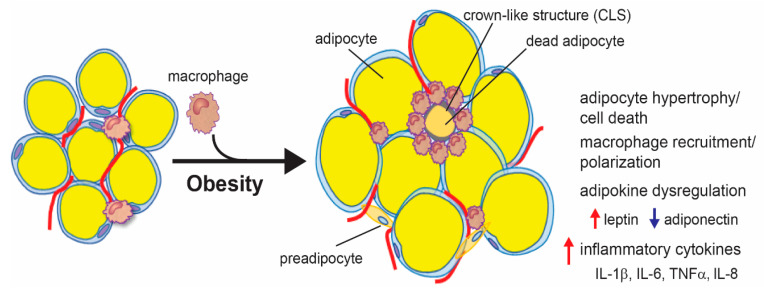
“Increased frequencies of CLS in individuals with obesity have been shown to negatively influence BC recurrence rates, survival, and therapy response [32, 35, 36].”
BackgroundGremke, N., Griewing, S., Kostev, K., Wagner, U. A. G., & Kalder, M. (2023) · Breast Cancer Research and Treatment · doi:10.1007/s10549-023-06944-w · Cited by 13
“Recent studies support the hypothesis that obesity-related inflammation is a major contributor to this association [10].”
ResultLi, X.-C., Li, J., Hu, Q., Zhang, X., & Chen, F. (2023) · Breast Cancer Research and Treatment · doi:10.1007/s10549-023-07139-z · Cited by 14
Wang, M.-F., Cai, J.-R., Xia, H., & Chu, X.-F. (2024) · Scientific Reports · doi:10.1038/s41598-024-63318-y · Cited by 14
Resistin and omentin in breast cancer: A systematic review and meta-analysis
Zoroddu, S., Lorenzo, B. D., Paliogiannis, P., Mangoni, A. A., Carru, C., & Zinellu, A. (2024) · Clinica Chimica Acta · doi:10.1016/j.cca.2024.119838 · Cited by 12
Exploring the multifaceted role of obesity in breast cancer progression
Kakkat, S., Suman, P., Herrera, E. A. T., Singh, S., Chakroborty, D., & Sarkar, C. (2024) · Frontiers in Cell and Developmental Biology · doi:10.3389/fcell.2024.1408844 · Cited by 17
“Excess nutrients in obesity result in a hypoxic and pro-in fl ammatory environment (Deng et al., 2016; Kolb and Zhang, 2020), leading to the polarization of M2 adipose tissue macrophages (ATM) to M1 type and the formation of “ crown-like structures ” (CLS), which is considered as a distinctive…”
BackgroundReam, M. E., Saez-Flores, E., Taub, C. J., Diaz, A., Frasca, D., Blomberg, B. B., & Antoni, M. H. (2022) · Frontiers in Bioscience-Landmark · doi:10.31083/j.fbl2705148 · Cited by 11
“The relationship between obesity and BC has been attributed to chronic adipose tissue inflammation which leads to a microenvironment favorable to cancer growth [21,22].”
BackgroundDevericks, E. N., Brosnan, B. H., Ho, A. N., Glenny, E. M., Malian, H. M., Teegarden, D., Wendt, M. K., Coleman, M. F., & Hursting, S. D. (2025) · Cancer & Metabolism · doi:10.1186/s40170-025-00380-8 · Cited by 13
“Oxidative stress and inflammation share several biological signaling pathways, frequently co-occur, and have emerged as key mediators of both obesity and breast cancer [5, 6].”
Júnior, J. C. O., Miola, T. M., Roman, S. M., Oliart-Guzmán, H., Oliveira, V. S., Souza, J. D. O., Makdissi, F. B. A., & Bitencourt, A. G. V. (2022) · Radiologia Brasileira · doi:10.1590/0100-3984.2022.0022 · Cited by 10
“especially after menopause, and is associated with a poorer prognosis in breast cancer patients((2,3)).”
BackgroundBreast cancer: Risk factors and prevention strategies
Das, D. (2022) · World Journal of Biology Pharmacy and Health Sciences · doi:10.30574/wjbphs.2022.12.3.0253 · Cited by 13
Metabolite Predictors of Breast and Colorectal Cancer Risk in the Women’s Health Initiative
Navarro, S. L., Williamson, B. D., Huang, Y., Gowda, G. A. N., Raftery, D., Tinker, L. F., Zheng, C., Beresford, S. A. A., Purcell, H. J., Djukovic, D., et al. (2024) · Metabolites · doi:10.3390/metabo14080463 · Cited by 8
“Associations between lipids and BC align with accumulating evidence associating excess adiposity, especially after menopause, with increased BC risk [2,5,44].”
BackgroundThe impact of the tumor microenvironment in the dual burden of obesity-cancer link
Sagliocchi, S., Acampora, L., Barone, B., Crocetto, F., & Dentice, M. (2025) · Seminars in Cancer Biology · doi:10.1016/j.semcancer.2025.03.001 · Cited by 9
Genc, F., ATABEY, U. Ş., Serttas, R., & Erdoğan, S. (2022) · Anti-Cancer Agents in Medicinal Chemistry · doi:10.2174/1871520622666220426095257 · Cited by 10
Breast adipose regulation of premenopausal breast epithelial phenotype involves interleukin 10
Alhallak, I., Wolter, K. G., Munoz, A. C., Simmen, F. A., Ward, R. J., Petty, S. A., Li, L., & Simmen, R. C. M. (2021) · Journal of Molecular Endocrinology · doi:10.1530/jme-21-0100 · Cited by 8
Bettariga, F., Taaffe, D. R., Borsati, A., Avancini, A., Pilotto, S., Lazzarini, S. G., López, P., Maestroni, L., Crainich, U., Bandini, E., et al. (2025) · Journal of Cancer Survivorship · doi:10.1007/s11764-025-01873-7 · Cited by 11
“BMI, as a general indicator of body anthropometry, has been associated with inflammatory responses, although it does not distinguish between LM and FM [52, 53].”
Artificial tumor matrices and bioengineered tools for tumoroid generation
Liu, Y., Chen, P., Chang, R., Liu, X., Jhang, J.-W., Enkhbat, M., Chen, S., Wang, H., Deng, C., & Wang, P. (2024) · Biofabrication · doi:10.1088/1758-5090/ad2534 · Cited by 8
“Adipocytes may also be included to represent obesity-related breast cancers [98].”
BackgroundNutritional Regulation of Mammary Tumor Microenvironment
Thakkar, N., Shin, Y. B., & Sung, H. (2022) · Frontiers in Cell and Developmental Biology · doi:10.3389/fcell.2022.803280 · Cited by 7
“Obesity induces mammary WAT expansion and is coupled with an accumulation of immune cells, specifically macrophages (Kolb and Zhang, 2020; Colleluori et al., 2021).”
BackgroundMiller, K. N., Thomas, S. M., Sergesketter, A. R., Rosenberger, L. H., DiLalla, G. A., van den Bruele, A. B., Hwang, E. S., & Plichta, J. K. (2022) · Annals of Surgical Oncology · doi:10.1245/s10434-022-12313-6 · Cited by 7
“The association between obesity and breast cancer, in particular postmenopausal breast cancer, is evident, yet the molecular reasoning is not completely understood.(19) It has been suggested that the inflammatory cytokines and mediators produced from adipose tissues, which are increased in obese individuals, creates a…”
BackgroundThe Complex Connection between Obesity and Cancer: Signaling Pathways and Therapeutic Implications
El‐Tanani, M., Rabbani, S. A., Aljabali, A. A. A., Matalka, I. I., El‐Tanani, Y., Rizzo, M., & Tambuwala, M. M. (2024) · Nutrition and Cancer · doi:10.1080/01635581.2024.2361964 · Cited by 9
“Genetic factors contribute to the development of breast cancer, although obesity predominantly affects the risk through hormonal and inflammatory mechanisms (11, 28).”
Complex Interplay Between Obesity and BRCA1/2‐Associated Breast Cancer: An Overview
Giordano, C., Puzzo, M., Malivindi, R., Cristofaro, D., Gelsomino, L., Bonofiglio, D., Capalbo, C., Andò, S., Barone, I., & Catalano, S. (2025) · Obesity Reviews · doi:10.1111/obr.13969 · Cited by 7
Rieth, K. K. S., Campbell, E., Peppone, L. J., Netherby-Winslow, C., Culakova, E., McGuire, J., Sun, H., & Campbell, T. M. (2025) · The Oncologist · doi:10.1093/oncolo/oyaf294 · Cited by 6
Moradpanah, S., Forouzin, S., Nasab, F. S., Amirlatifi, S., Shirkosh, P., Marashi, S. M., & Khodakarim, N. (2025) · Clinical Breast Cancer · doi:10.1016/j.clbc.2025.09.003 · Cited by 6
Fajardo-Espinoza, F. S., Cabrera-Nieto, S. A., Espadas-Vargas, A. L., Pérez-Camargo, D. A., Mohar, A., & Cruz‐Ramos, M. (2024) · Nutrition · doi:10.1016/j.nut.2024.112524 · Cited by 7
Padang, O. S., Septiman, S., Prihantono, P., Soraya, G. V., Pieter, J., Syamsu, S. A., Sampepajung, E., & Faruk, M. (2021) · Breast Disease · doi:10.3233/bd-219011 · Cited by 6
“Furthermore, chemokines and cytokines produced by adipocytes in obese patients increase the risk of breast cancer [41].”
Leptin Drives Breast Cancer Aggressiveness Acting Through the Activation of the NCOA1/STAT3 Pathway
Ayed, K., Gorrab, A., Bouguerra, H., Akrout, R., Sami, Z., Almawi, W. Y., Boughriba, R., Choukri, K., Bacha, D., Pagano, A., et al. (2026) · Medical Sciences · doi:10.3390/medsci14010032 · Cited by 4
Reytor-González, C., Sarno, G., Montalván, M., Verde, L., Annunziata, G., Barrea, L., Muscogiuri, G., & Simancas‐Racines, D. (2026) · Nutrients · doi:10.3390/nu18040685 · Cited by 7
“Adipose tissue is not only an energy reservoir but an active endocrine and immunometabolic organ; when expanded and inflamed, it can amplify hormone-dependent signaling relevant to carcinogenesis, particularly in hormonally responsive sites such as the breast and endometrium [69–71].”
Sulikovska, I., Georgieva, A. K., Djeliova, V. L., Todorova, K. S., Vasileva, A., Ivanov, I., & Dimitrova, M. (2025) · Current Issues in Molecular Biology · doi:10.3390/cimb47040215 · Cited by 4
Gohar, L., Riaz, B., Nadeem, M. S., Abbas, S., Afsar, T., Razak, S., Muccee, F., Husain, F. M., & Shafique, H. (2024) · BMC Women s Health · doi:10.1186/s12905-024-02929-z · Cited by 9
“Interestingly, studies indicated that premenopausal obesity defends against breast cancer, however postmenopausal obesity intensifies the risk [9].”
BackgroundEffects of BMI on prognosis, disease-free survival and overall survival of breast cancer
Zangouri, V., Balaneji, S. S., Golmoradi, R., Kafili, E., Bologhi, S., Mousavi, S. A., Hesar, A. A., & Amestejani, M. (2025) · BMC Cancer · doi:10.1186/s12885-025-13638-7 · Cited by 6
Mitigating Breast Cancer Disparities by Addressing the Obesity Epidemic
Elreda, L., Kim, A., & Malik, M. (2022) · Current Breast Cancer Reports · doi:10.1007/s12609-022-00460-4 · Cited by 4
Koemel, N. A., Shah, S., Senior, A. M., Severi, G., Mancini, F. R., Gill, T. P., Simpson, S. J., Raubenheimer, D., Boutron‐Ruault, M., Laouali, N., et al. (2024) · European Journal of Nutrition · doi:10.1007/s00394-024-03379-x · Cited by 4
“Previous evidence shows that consuming foods high in fat may increase visceral adi - posity, low-grade systemic inflammation, and subsequently increase postmenopausal BC risk [ 63, 64 ].”
How Does Obesity Cause Cancer?
Hoehn, K. L. (2021) · Cancers · doi:10.3390/cancers13215330 · Cited by 4
Ma, L., Liu, A., Gao, J., & Zhao, H. (2023) · Open Life Sciences · doi:10.1515/biol-2022-0748 · Cited by 6
“Studies have reported that obesity is associated with an increased risk and a negative outcome for breast cancer [4,5].”
BackgroundDiets Differently Regulate Tumorigenesis in Young E0771 Syngeneic Breast Cancer Mouse Model
Thangavel, H., Lizardo, K., Dhanyalayam, D., de Assis, S., & Nagajyothi, J. F. (2023) · Journal of Clinical Medicine · doi:10.3390/jcm12020413 · Cited by 4
“Many studies have shown that obesity induced proinflammatory cytokines promote metastasis in post-menopausal breast cancer [47,48].”
BackgroundYing, T., Lin, T.-C., Kim, Y., Chung, S., & Liu, Z. (2023) · Current Oncology · doi:10.3390/curroncol30040320 · Cited by 4
“Antibodies for cytokines (TNF-α, IL-6, CCL2, and MCP-1) and metabolic hormones (Insulin, Leptin, and VEGF-A) were coated on the bottom of the 96-well plates.”
BackgroundInfluentialWong, T. X., Chen, S. T., Ong, S. H., Shyam, S., Palayan, K., & Chee, W. S. S. (2021) · Trials · doi:10.1186/s13063-021-05716-5 · Cited by 3
Hubungan Obesitas dengan Usia, Jenis Kelamin, Genetik, Asupan Makanan dan Kebiasaan di Dusun Bangkan
Risdayani, E., & Makmun, A. (2021) · Indonesian Journal of Health · doi:10.33368/inajoh.v2i1.38 · Cited by 13
The Role of Body Mass Index in Breast Cancer-Associated Lymphedema
Rockson, S. G. (2020) · Lymphatic Research and Biology · doi:10.1089/lrb.2020.29095.sr · Cited by 3
Multidimensional risk impact of obesity on breast cancer incidence, treatment, and prognosis
Liu, Y., Xu, S., Yang, H., & Wang, Y. (2026) · International Journal of Obesity · doi:10.1038/s41366-025-02008-9 · Cited by 5
Fracture risk in breast cancer: Does obesity have an effect? A scoping review
Duong, H., & Maugham, M. (2022) · Journal of bone oncology · doi:10.1016/j.jbo.2022.100449 · Cited by 2
Malhab, L. J. B., Nair, V. A., Qaisar, R., Pintus, G., & Abdel‐Rahman, W. M. (2024) · Cells · doi:10.3390/cells13020174 · Cited by 2
Tripathi, A., Pandey, V. K., Mishra, H., Dar, A. H., Singh, G., Rustagi, S., Sulaiman, G. M., & Jha, A. K. (2024) · Food Bioscience · doi:10.1016/j.fbio.2024.105266 · Cited by 3
The Effect of Bitter Melon Extract (Momordica Charantia) On CASPASE-9 and Bcl-2 Proteins Expression
Rahmasari, D., Sumarawati, T., & Trisnadi, S. (2023) · INTERNATIONAL JOURNAL OF MULTIDISCIPLINARY RESEARCH AND ANALYSIS · doi:10.47191/ijmra/v6-i9-40 · Cited by 2
Adipocytokine imbalance and breast cancer in obese women
Qteishat, A. A., Aringazina, R. A., Ermakov, D., & Demianenko, E. V. (2023) · Journal of Cancer Research and Therapeutics · doi:10.4103/jcrt.jcrt_2566_22 · Cited by 2
ENDEAVORING THE ROLE OF OBESITY IN EXTRACELLULAR MATRIX DEGRADATION LEADING TO METASTASIS
Jain, A., & Roy, P. (2024) · Journal of Biological Systems · doi:10.1142/s0218339024500153 · Cited by 2
Ennour‐Idrissi, K., Laforest, S., Tchernof, A., Durocher, F., & Diorio, C. (2025) · International Journal of Obesity · doi:10.1038/s41366-025-01814-5 · Cited by 1
“Excess adiposity is associated with higher risk of developing breast cancer, particularly in postmenopausal women, and with worse disease outcome for women of all ages [1 – 7].”
Rao, Y., Wang, S., Liu, X., Shao, C., & Li, H. (2025) · Discover Oncology · doi:10.1007/s12672-025-03838-9 · Cited by 1
“This leads to adipose tissue dysfunction due to factors such as mechanical stress and increased local oxygen demand, resulting in the increased release of chemo-kines and inflammatory factors [55–57].”
Senescent obesity signature in breast cancer: a paradigm of reverse cardio-oncology
Carbone, F., Scuricini, A., Cabri, M., Liberale, L., Montecucco, F., Catalán, V., Longo, V. D., & Frühbeck, G. (2026) · European Heart Journal · doi:10.1093/eurheartj/ehag144 · Cited by 1
Rana, M. S., Marinovich, M. L., Houssami, N., Cavenagh, D., Byles, J. E., Rahman, M. M., & Yu, X. Q. (2026) · BMJ Open · doi:10.1136/bmjopen-2025-105193 · Cited by 2
Literature Review: Pengaruh Asupan Buah dan Sayur Terhadap Kanker Payudara
Amalialjinan, N., Rismanika, A. S., Kurniawan, W. N., & Ariestiningsih, A. D. (2021) · NUTRIRE DIAITA · doi:10.47007/nut.v13i2.4257 · Cited by 1
Trabaquini, L. G., Manzan, V., & Gasparin, F. G. M. (2022) · Enciclopédia Biosfera · doi:10.18677/encibio_2022b1 · Cited by 1
Triple Negative Breast Cancer (TNBC): Cannabis sativa-Role of Phytocannabinoids
Malabadi, R. B., Kolkar, K. P., Sadiya, M. R., Veena Sharada, B., Mammadova, S. S., CHALANNAVAR, R. K., Baijnath, H., Nalini, S., Nandini, S., & Munhoz, A. N. R. (2024) · World Journal of Biology Pharmacy and Health Sciences · doi:10.30574/wjbphs.2024.17.3.0113 · Cited by 36
The Microbiome: A New Frontier in Overcoming Drug Resistance in Breast Cancer
Luvhengo, T. E., Miya, T. V., Basera, A., Fadebi, O. O., Mehrotra, R., & Dlamini, Z. (2024) · Springer eBooks · doi:10.1007/978-3-031-52860-6_11 · Cited by 1
Association between obesity and triple-negative breast cancer: a systematic qualitative review
Iervolino, L. L., de Moraes, S. R., Filassi, J. R., Baracat, E. C., & Masili-Oku, S. M. (2024) · Mastology · doi:10.29289/2594539420230035 · Cited by 2
“This condition leads to angiogenesis and progression of breast cancer 19 .”
BackgroundMcCauley, C. R., Fischer, T. R., Cullen, N. M., Hawes, M. L., Salim, K., Roeming, D. R., Wright, J. F., Mayer, O., Hoang, V. T., Martin, E. C., et al. (2025) · Frontiers in Bioscience-Landmark · doi:10.31083/fbl36599 · Cited by 1
Adipose Compounds in Breast Tumor Extracellular Matrix
Piccioni, F., & Luca, P. D. (2022) · Biology of extracellular matrix · doi:10.1007/978-3-030-99708-3_12 · Cited by 1
Camejo, N., Amarillo, D., Ceriani, F., Manfrú, L. D. L., Olea, F. D., Díaz, M., Donato, F., Suarez, A., Tamborindeguy, R., Castillo, C., et al. (2023) · Revista Peruana de Investigación en Salud · doi:10.35839/repis.7.3.1824 · Cited by 1
Orlandini, L. F. (2021) · Digital Library of Theses and Dissertations (Universidade de São Paulo) · doi:10.11606/t.17.2021.tde-11062021-083252 · Cited by 6
Wong, T. X., Chen, S. T., Ong, S. H., Shyam, S., Palayan, K., & Chee, W. S. S. (2021) · Research Square · doi:10.21203/rs.3.rs-211825/v1
Novelli, I. R. (2022) · Digital Library of Theses and Dissertations (Universidade de São Paulo) · doi:10.11606/t.6.2022.tde-10032023-144402 · Cited by 1
Phosphorylated P53 (TP53) in Cancer Patients Undergoing Radiotherapy
(2023) · Journal of Pharmaceutical Research and Development · doi:10.47485/2694-5614.1018
Palma, M. R., Tebar, W. R., Beretta, V. S., Vanderlei, L. C. M., Fregonesi, C. E. P. T., Ribeiro, F. E., Caldeira, D. T., Ramos, E. M. C., Cucato, G. G., Ferrari, G., et al. (2024) · Women & Health · doi:10.1080/03630242.2024.2305342
“In addition, excess fat is associated with treatment resistance and inflammation (Kolb and Zhang 2020).”
BackgroundInflammation in Carcinogenesis
Kuckhahn, O. K., & Schwertfeger, K. L. (2024) · Elsevier eBooks · doi:10.1016/b978-0-323-95488-4.00169-8
Rahmadhani, H. S., Ferdinandus, E. D., & Djuari, L. (2024) · HEARTY · doi:10.32832/hearty.v12i4.17049
Boulin, T., & Moody, H. L. (2025) · doi:10.71450/37646284
Rana, M. S., Marinovich, M. L., Houssami, N., Cavenagh, D., Byles, J., Rahman, M. M., & Yu, X. Q. (2025) · SSRN Electronic Journal · doi:10.2139/ssrn.5172838
Metadata
- Authors
- Kolb, R., & Zhang, W.
- Affiliations
- University of Florida Cancer Hospital (US)
- Corresponding author
- Kolb, Ryan
- Venue
- Cancers
- Publisher
- MDPI AG
- Published
- 2020-06-25
- Volume
- 12
- Issue
- 6
- Pages
- 1686
- ISSN
- 2072-6694 (ISSN-L)
- PMC
- PMC7352736
- OpenAlex
- W3037816974
- Cited by
- 119
- References
- 188
- Citations by year
- 2026: 14 · 2025: 24 · 2024: 23 · 2023: 15 · 2022: 22 · 2021: 17 · 2020: 4
- FWCI
- 1.56
- Type
- journal article
- Language
- en
- Open access
- gold
- dx.doi.org
- Licence
- Locations
- Cancers (publishedVersion, cc-by)
- PubMed Central (publishedVersion, cc-by)
- PubMed (publishedVersion)
- DOAJ (DOAJ: Directory of Open Access Journals) (submittedVersion, cc-by-sa)
- Funders
- National Institutes of Health (CA203834, CA200673)
- Congressionally Directed Medical Research Programs (BC180227)
- Topics
- Health Sciences › Medicine › Oncology › Cancer Risks and Factors
- Health Sciences › Medicine › Endocrinology, Diabetes and Metabolism › Adipokines, Inflammation, and Metabolic Diseases
- Life Sciences › Biochemistry, Genetics and Molecular Biology › Cancer Research › Cancer, Lipids, and Metabolism
- Keywords
- obesity, breast cancer, adipose tissue inflammation, chronic inflammation, estrogen receptor-positive breast cancer, postmenopausal women, breast cancer risk, breast cancer prognosis, breast cancer pathogenesis, molecular mechanisms
About these checks
Registry, retraction, Cites and statistics results are computed, not judged, with one exception: a printed reference that no index lists is read once by a model before it counts as a citation error. Claims are extracted by a model and kept only when their quote appears verbatim in the text; each cited source is then checked, with a model’s help, for whether it says what the claim relies on. Those verdicts can be wrong — read the claim’s quote and the cited source before relying on one.
Statistics and arithmetic are recomputed, not judged.
Confidence bands are shown only for fields calibrated on our annotated test set. None is calibrated yet, so no band is shown.
What counts as a claim ›How we measure confidence ›How we check this ›
Are you an author, or do you see a problem with this page? Request a review
Data sources
Bibliographic data: Semantic Scholar, OpenAlex, Crossref.
Contains information from the Semantic Scholar Academic Graph Datasets, made available under the ODC Attribution License (ODC-BY 1.0).
Semantic Scholar’s data is described in: Kinney, R., et al. (2023). The Semantic Scholar Open Data Platform. arXiv:2301.10140.
