

Mechanisms of Taxane Resistance
Open accessThe DOI matches its Crossref record; 495 of the 503 references it cites were found in a registry or an index.
Abstract
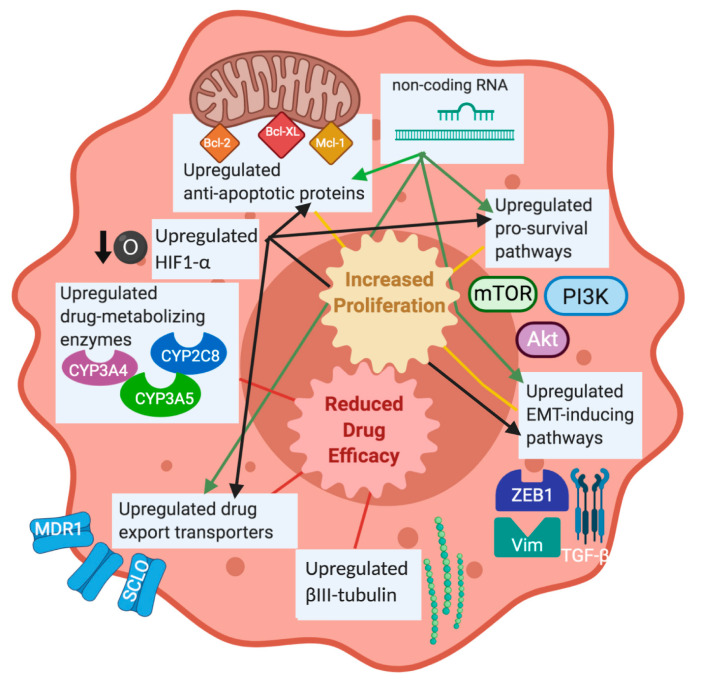
The taxane family of chemotherapy drugs has been used to treat a variety of mostly epithelial-derived tumors and remain the first-line treatment for some cancers. Despite the improved survival time and reduction of tumor size observed in some patients, many have no response to the drugs or develop resistance over time. Taxane resistance is multi-faceted and involves multiple pathways in proliferation, apoptosis, metabolism, and the transport of foreign substances. In this review, we dive deeper into hypothesized resistance mechanisms from research during the last decade, with a focus on the cancer types that use taxanes as first-line treatment but frequently develop resistance to them. Furthermore, we will discuss current clinical inhibitors and those yet to be approved that target key pathways or proteins and aim to reverse resistance in combination with taxanes or individually. Lastly, we will highlight taxane response biomarkers, specific genes with monitored expression and correlated with response to taxanes, mentioning those currently being used and those that should be adopted. The future directions of taxanes involve more personalized approaches to treatment by tailoring drug-inhibitor combinations or alternatives depending on levels of resistance biomarkers. We hope that this review will identify gaps in knowledge surrounding taxane resistance that future research or clinical trials can overcome.
Overview
The claims and statistics of this paper haven’t been checked yet.
Free: it reads the open-access text and checks the first 5 claims that cite a source we can check. Create a free account to check every claim.
Integrity signals
Registry
Cites
Statistics
Figures
Verification
Claims the paper makes
The claims and statistics of this paper haven’t been checked yet.
Free: it reads the open-access text and checks the first 5 claims that cite a source we can check. Create a free account to check every claim.
Claims other papers make about this one
Each is checked against this paper’s own text: does it say what the citing paper says it does?
The source backs part of the claim, not all of it — or backs it for a different population, condition or comparison.
In the citing paper
“However, nearly all tumors eventually develop resistance to taxanes, mediated by mutations in tubulin, decreased microtubule bundling, and development of drug efflux pumps (e.g. P-glycoprotein)16,17.”
From The evolving landscape of antibody-drug conjugates (ADCs) for treatment of prostate cancer (2025) · cites this paper as [16]
Experimental — accuracy not yet measured
Self-check
Percentages, sums and reported differences re-computed from the paper’s own numbers.
The self-check needs the paper’s full text.
Citations
Cites
3 retracted
Items 201–400 of 495
Pathways of chemotherapy resistance in castration-resistant prostate cancer
Mahon, K. L., Henshall, S. M., Sutherland, R. L., & Horvath, L. G. (2011) · Endocrine Related Cancer · doi:10.1530/erc-10-0343 · Cited by 102
Roles of Multidrug Resistance Genes in Breast Cancer Chemoresistance
Kuo, M. T. (2007) · Advances in experimental medicine and biology · doi:10.1007/978-0-387-74039-3_2 · Cited by 102
Azarenko, O., Smiyun, G., Mah, J. M., Wilson, L., & Jordan, M. A. (2014) · Molecular Cancer Therapeutics · doi:10.1158/1535-7163.mct-14-0265 · Cited by 102
Long non‐coding RNA FTH 1P3 activates paclitaxel resistance in breast cancer through miR‐206/ ABCB 1
Wang, R., Zhang, T., Yang, Z., Jiang, C., & Jingjing, S. (2018) · Journal of Cellular and Molecular Medicine · doi:10.1111/jcmm.13679 · Cited by 102
Neoadjuvant Therapy as a Platform for Drug Development and Approval in Breast Cancer
Bardia, A., & Baselga, J. (2013) · Clinical Cancer Research · doi:10.1158/1078-0432.ccr-13-0916 · Cited by 101
Dumontet, C., Isaac, S., Souquet, P.-J., Bejui-Thivolet, F., Pachéco, Y., Peloux, N., Frankfurter, A. J., Ludueña, R. F., & Pérol, M. (2005) · PubMed · Cited by 101
Cyclin E as a potential therapeutic target in high grade serous ovarian cancer
Kanska, J. E., Zakhour, M., Taylor‐Harding, B., Karlan, B. Y., & Wiedemeyer, W. R. (2016) · Gynecologic Oncology · doi:10.1016/j.ygyno.2016.07.111 · Cited by 100
Prediction of response to docetaxel by CYP3A4 mRNA expression in breast cancer tissues
Miyoshi, Y., Ando, A., Takamura, Y., Taguchi, T., Tamaki, Y., & Noguchi, S. (2001) · International Journal of Cancer · doi:10.1002/ijc.1568 · Cited by 100
Mechanisms of Resistance to Cabazitaxel
Durán, G. E., Wang, Y. C., Francisco, E. B., Rose, J. C., Martinez, F. J., Coller, J., Brassard, D., Vrignaud, P., & Sikic, B. I. (2014) · Molecular Cancer Therapeutics · doi:10.1158/1535-7163.mct-14-0155 · Cited by 100
Tumor suppressor miRNA-204-5p promotes apoptosis by targeting BCL2 in prostate cancer cells
Lin, Y., Lin, J., Tsai, T., Chou, K., Chen, H., & Hwang, T. I. (2016) · Asian Journal of Surgery · doi:10.1016/j.asjsur.2016.07.001 · Cited by 100
Brozovic, A., Duran, G. E., Wang, Y. C., Francisco, E. B., & Sikic, B. I. (2015) · Molecular Oncology · doi:10.1016/j.molonc.2015.04.015 · Cited by 98
The role of HIF-1α in chemo-/radioresistant tumors
Xia, Y., Jiang, L., & Zhong, T. (2018) · OncoTargets and Therapy · doi:10.2147/ott.s158206 · Cited by 98
Notte, A., Ninane, N., Arnould, T., & Michiels, C. (2013) · Cell Death & Disease · doi:10.1038/cddis.2013.167 · Cited by 96
Zhao, Z., Zhang, L., Huang, C., Ma, S., Bu, L., Liu, J., Yu, G., Liu, B., Gutkind, J. S., Kulkarni, A. B., et al. (2016) · Scientific Reports · doi:10.1038/srep24704 · Cited by 96
Progress toward Overcoming Hypoxia-Induced Resistance to Solid Tumor Therapy
Reginato, M., & Karakashev, S. (2015) · Cancer Management and Research · doi:10.2147/cmar.s58285 · Cited by 95 · cited 3×
“Although there is reduced apoptosis and decreased Bcl-2 expression in hypoxic cells, it is not clear if there is a direct protein:protein interaction between HIF1-α and Bcl-2, or if the altered expression comes from a downstream effector, like JNK. Specifically, JNK is activated upon PTX treatment in normoxia and hypo…”
BackgroundMarkers predicting clinical benefit in breast cancer from microtubule-targeting agents
Pusztai, L. (2007) · Annals of Oncology · doi:10.1093/annonc/mdm534 · Cited by 95
The Histone H3 Lysine 4 Presenter WDR5 as an Oncogenic Protein and Novel Epigenetic Target in Cancer
Lu, K., Tao, H., Si, X., & Chen, Q. (2018) · Frontiers in Oncology · doi:10.3389/fonc.2018.00502 · Cited by 93
Filho, C. M. C. C., Mendes, D. C. C., Carvalho, K. C., Maciel, G. A. R., Ricci, M. D., Torres, A. P., Filassi, J. R., & Baracat, E. C. (2014) · Tumor Biology · doi:10.1007/s13277-014-2025-7 · Cited by 93
MiR-125a promotes paclitaxel sensitivity in cervical cancer through altering STAT3 expression
Fan, Z., Cui, H., Yu, H., Ji, Q., Kang, L., Han, B., Wang, J., Dong, Q., Li, Y., Yan, Z., et al. (2016) · Oncogenesis · doi:10.1038/oncsis.2016.1 · Cited by 93
UCA1 confers paclitaxel resistance to ovarian cancer through miR-129/ABCB1 axis
Wang, J., Ye, C., Liu, J., & Hu, Y. (2018) · Biochemical and Biophysical Research Communications · doi:10.1016/j.bbrc.2018.05.104 · Cited by 93
Taxane resistance in castration-resistant prostate cancer: mechanisms and therapeutic strategies
Bumbaca, B., & Li, W. (2018) · Acta Pharmaceutica Sinica B · doi:10.1016/j.apsb.2018.04.007 · Cited by 92
Dasatinib induces autophagic cell death in human ovarian cancer
Le, X., Mao, W., Lu, Z., Carter, B. Z., & Bast, R. C. (2010) · Cancer · doi:10.1002/cncr.25426 · Cited by 92
Androgen receptor splice variants circumvent AR blockade by microtubule-targeting agents
Zhang, G., Liu, X., Li, J., Ledet, E., Alvarez, X., Qi, Y., Fu, X., Sartor, O., Dong, Y., & Zhang, H. (2015) · Oncotarget · doi:10.18632/oncotarget.4396 · Cited by 91
CYP1B1 enhances the resistance of epithelial ovarian cancer cells to paclitaxel in vivo and in vitro
Zhu, Z.-Y., Mu, Y., Qi, C., Wang, J., Xi, G., Guo, J., Ruoran, M., & ZHAO, F. (2014) · International Journal of Molecular Medicine · doi:10.3892/ijmm.2014.2041 · Cited by 91
Chen, Y.-M., Liu, Y., Wei, H.-Y., Lv, K., & Fu, P. (2016) · Tumor Biology · doi:10.1007/s13277-016-4909-1 · Cited by 90
He, L.-Y. (2012) · Oncology Letters · doi:10.3892/ol.2012.572 · Cited by 90
Thériault, B. L., Pajovic, S., Bernardini, M. Q., Shaw, P. A., & Gallie, B. L. (2011) · International Journal of Cancer · doi:10.1002/ijc.26189 · Cited by 89
Microtubules Regulate Hypoxia-inducible Factor-1α Protein Trafficking and Activity
Carbonaro, M., Escuín, D., O’Brate, A., Thadani‐Mulero, M., & Giannakakou, P. (2012) · Journal of Biological Chemistry · doi:10.1074/jbc.m112.345587 · Cited by 89
MGMT-activated DUB3 stabilizes MCL1 and drives chemoresistance in ovarian cancer
Wu, X., Luo, Q., Zhao, P., Chang, W., Wang, Y., Shu, T., Ding, F., Li, B., & Liu, Z. (2019) · Proceedings of the National Academy of Sciences · doi:10.1073/pnas.1814742116 · Cited by 89
Organic Anion Transporting Polypeptides: Emerging Roles in Cancer Pharmacology
Schulte, R. R., & Ho, R. H. (2019) · Molecular Pharmacology · doi:10.1124/mol.118.114314 · Cited by 89
Chen, J., Lu, L., Feng, Y., Wang, H., Dai, L., Li, Y., & Zhang, P. (2010) · Cancer Letters · doi:10.1016/j.canlet.2010.09.005 · Cited by 89
AR function in promoting metastatic prostate cancer
Augello, M. A., Den, R. B., & Knudsen, K. E. (2014) · Cancer and Metastasis Reviews · doi:10.1007/s10555-013-9471-3 · Cited by 88
Guthrie, A. R., Chow, H. ‐. S., & Martinez, J. A. (2017) · Pharmacology Research & Perspectives · doi:10.1002/prp2.294 · Cited by 88
Orchestration of the spindle assembly checkpoint by CDK1‐cyclin B1
Hayward, D., Alfonso‐Pérez, T., & Gruneberg, U. (2019) · FEBS Letters · doi:10.1002/1873-3468.13591 · Cited by 88
The Multifarious Link between Cytochrome P450s and Cancer
Alzahrani, A. M., & Rajendran, P. (2020) · Oxidative Medicine and Cellular Longevity · doi:10.1155/2020/3028387 · Cited by 88
Kuhn, E., Wang, T., Doberstein, K., Bahadirli-Talbott, A., Ayhan, A., Sehdev, A. E. S., Drapkin, R., Kurman, R. J., & Shih, I. (2016) · Modern Pathology · doi:10.1038/modpathol.2016.101 · Cited by 87
The Hippo pathway in chemotherapeutic drug resistance
Zhao, Y., & Yang, X. (2015) · International Journal of Cancer · doi:10.1002/ijc.29293 · Cited by 86
Arima, Y., Hayashi, N., Hayashi, H., Sasaki, M., Kai, K., Sugihara, E., Abe, E., Yoshida, A., Mikami, S., Nakamura, S., et al. (2011) · International Journal of Cancer · doi:10.1002/ijc.26271 · Cited by 85
Enzalutamide therapy for advanced prostate cancer: efficacy, resistance and beyond
Linder, S., van der Poel, H. G., Bergman, A. M., Zwart, W. T., & Preković, S. (2018) · Endocrine Related Cancer · doi:10.1530/erc-18-0289 · Cited by 85
Martin, S. K., Pu, H., Penticuff, J. C., Cao, Z., Horbinski, C., & Kyprianou, N. (2016) · Cancer Research · doi:10.1158/0008-5472.can-15-2078 · Cited by 85
Antonarakis, E. S., Tagawa, S. T., Galletti, G., Worroll, D., Ballman, K. V., Vanhuyse, M., Sonpavde, G., North, S. A., Albany, C., Tsao, C., et al. (2017) · Journal of Clinical Oncology · doi:10.1200/jco.2017.72.4138 · Cited by 85
PD-1/PD-L1 axis regulation in cancer therapy: The role of long non-coding RNAs and microRNAs
Ashrafizadeh, M., Zarrabi, A., Hushmandi, K., Zarrin, V., Moghadam, E. R., Zabolian, A., Tavakol, S., Samarghandian, S., & Najafi, M. (2020) · Life Sciences · doi:10.1016/j.lfs.2020.117899 · Cited by 84
Inhibition of cytochrome P450 enzymes and biochemical aspects of mechanism-based inactivation (MBI)
Kamel, A. M., & Harriman, S. P. (2012) · Drug Discovery Today Technologies · doi:10.1016/j.ddtec.2012.09.011 · Cited by 83
Down-regulation of miR-24-3p in colorectal cancer is associated with malignant behavior
Gao, Y., Liu, Y., Du, L., Li, J., Qu, A., Zhang, X., Wang, L., & Wang, C. (2014) · Medical Oncology · doi:10.1007/s12032-014-0362-4 · Cited by 83
Posner, M. R., Haddad, R. I., Wirth, L. J., Norris, C. M., Goguen, L. A., Mahadevan, A., Sullivan, C. A., & Tishler, R. B. (2004) · Seminars in Oncology · doi:10.1053/j.seminoncol.2004.09.007 · Cited by 82
Therapeutic Inducers of Apoptosis in Ovarian Cancer
Binju, M., Amaya-Padilla, M. A., Wan, G., Gunosewoyo, H., Rahmanto, Y. S., & Yu, Y. (2019) · Cancers · doi:10.3390/cancers11111786 · Cited by 82
Tumor suppressor genes and their underlying interactions in paclitaxel resistance in cancer therapy
Xu, J., Hu, S., Shen, G., & Shen, G. (2016) · Cancer Cell International · doi:10.1186/s12935-016-0290-9 · Cited by 81
Zheng, P., Dong, L., Zhang, B., Dai, J., Zhang, Y., Wang, Y., & Qin, S. (2019) · Histochemistry and Cell Biology · doi:10.1007/s00418-019-01794-4 · Cited by 81
Tamaki, H., Harashima, N., Hiraki, M., Arichi, N., Nishimura, N., Shiina, H., Naora, K., & Harada, M. (2014) · Oncotarget · doi:10.18632/oncotarget.2550 · Cited by 80
βIII-Tubulin: A novel mediator of chemoresistance and metastases in pancreatic cancer
McCarroll, J. A., Sharbeen, G., Liu, J., Youkhana, J., Goldstein, D., McCarthy, N., Limbri, L. F., Dischl, D., Ceyhan, G. O., Erkan, M., et al. (2014) · Oncotarget · doi:10.18632/oncotarget.2946 · Cited by 80
Role of Akt signaling in resistance to DNA-targeted therapy
Avan, A., Narayan, R. S., Giovannetti, E., & Peters, G. J. (2016) · World Journal of Clinical Oncology · doi:10.5306/wjco.v7.i5.352 · Cited by 80
MiR-1307 promotes ovarian cancer cell chemoresistance by targeting the ING5 expression
Chen, W., Yang, Y.-J., Zhang, Z., An, Q., Li, N., Liu, W., & Yang, B. (2017) · Journal of Ovarian Research · doi:10.1186/s13048-016-0301-4 · Cited by 80
Establishment and characterization of multidrug-resistant gastric cancer cell lines.
Zhang, X., Yashiro, M., Qiu, H., Nishii, T., Matsuzaki, T., & Hirakawa, K. (2010) · PubMed · Cited by 79
Thibault, B., Genre, L., Naour, A. L., Broca, C., Mery-Lamarche, E., Vuagniaux, G., Delord, J. P., Wiedemann, N., & Couderc, B. C. (2018) · Scientific Reports · doi:10.1038/s41598-018-35860-z · Cited by 79
Src family kinases and paclitaxel sensitivity
Le, X.-F., & Bast, Jr. (2011) · Cancer Biology & Therapy · doi:10.4161/cbt.12.4.16430 · Cited by 79 · cited 2×
“These TBCC overexpressing variants showed increased PTX sensitivity, potentially caused by lower levels of MT dynamicity and the increase in target cells (cells in G2-M) for anti-proliferative drugs [85,86].”
BackgroundMicroRNAs and Drug Resistance in Prostate Cancers
Li, F., & Mahato, R. I. (2014) · Molecular Pharmaceutics · doi:10.1021/mp500099g · Cited by 78
Zhang, B., Zhao, R., He, Y., Fu, X., Fu, L., Zhu, Z., Fu, L., & Dong, J. (2015) · Oncotarget · doi:10.18632/oncotarget.6790 · Cited by 78
Fekete, J. T., Ősz, Á., Pete, I., Nagy, G., Vereczkey, I., & Győrffy, B. (2020) · Gynecologic Oncology · doi:10.1016/j.ygyno.2020.01.006 · Cited by 77
Hypoxia-Induced Modulation of Apoptosis and BCL-2 Family Proteins in Different Cancer Cell Types
Sermeus, A., Genin, M., Maincent, A., Fransolet, M., Notte, A., Leclere, L., Riquier, H., Arnould, T., & Michiels, C. (2012) · PLoS ONE · doi:10.1371/journal.pone.0047519 · Cited by 76
Ranasinghe, W. K. B., Xiao, L., Kovac, S., Chang, M., Michiels, C., Bolton, D., Shulkes, A., Baldwin, G. S., & Patel, O. (2013) · PLoS ONE · doi:10.1371/journal.pone.0054251 · Cited by 76
ABCB1 Mediates Cabazitaxel–Docetaxel Cross-Resistance in Advanced Prostate Cancer
Lombard, A. P., Liu, C., Armstrong, C. M., Cucchiara, V., Gu, X., Lou, W., Evans, C. P., & Gao, A. C. (2017) · Molecular Cancer Therapeutics · doi:10.1158/1535-7163.mct-17-0179 · Cited by 76
Zhang, H., Ruan, L., Zheng, L., Whyte, D. B., Tzeng, C., & Zhou, X.-W. (2012) · Lung Cancer · doi:10.1016/j.lungcan.2012.01.005 · Cited by 76
Loss of SLCO1B3 drives taxane resistance in prostate cancer
de Morrée, E. S., Böttcher, R., van Soest, R. J., Aghai, A., de Ridder, C. M., Gibson, A. A., Mathijssen, R. H. J., Burger, H., Wiemer, E. A. C., Sparreboom, A., et al. (2016) · British Journal of Cancer · doi:10.1038/bjc.2016.251 · Cited by 76
Gómez-Miragaya, J., Palafox, M., Paré, L., Yoldi, G., Ferrer, I., Vila, S., Galván, P., Pellegrini, P., Pérez-Montoyo, H., Igea, A., et al. (2017) · Stem Cell Reports · doi:10.1016/j.stemcr.2017.03.026 · Cited by 75
Chew, S.-C., Singh, O., Chen, X., Ramasamy, R. D., Kulkarni, T., Lee, E. J. D., Tan, E.-H., Lim, W., & Chowbay, B. (2011) · Cancer Chemotherapy and Pharmacology · doi:10.1007/s00280-011-1625-9 · Cited by 75
The role of Tau protein in resistance to paclitaxel
Smoter, M., Bodnar, L., Duchnowska, R., Stec, R., Grala, B., & Szczylik, C. (2011) · Cancer Chemotherapy and Pharmacology · doi:10.1007/s00280-011-1696-7 · Cited by 74
Dual PI3K/mTOR Inhibitor NVP-BEZ235 Sensitizes Docetaxel in Castration Resistant Prostate Cancer
Yasumizu, Y., Miyajima, A., Kosaka, T., Miyazaki, Y. J., Kikuchi, E., & Oya, M. (2013) · The Journal of Urology · doi:10.1016/j.juro.2013.07.101 · Cited by 74
Zhu, Y., Liu, C., Armstrong, C. M., Lou, W., Sandher, A., & Gao, A. C. (2015) · Clinical Cancer Research · doi:10.1158/1078-0432.ccr-15-0269 · Cited by 74
Epithelial-mesenchymal-transition regulators in prostate cancer: Androgens and beyond
Nakazawa, M., & Kyprianou, N. (2016) · The Journal of Steroid Biochemistry and Molecular Biology · doi:10.1016/j.jsbmb.2016.05.007 · Cited by 74
Zervantonakis, I. K., Iavarone, C., Chen, H., Selfors, L. M., Palakurthi, S. S., Liu, J. F., Drapkin, R., Matulonis, U. A., Leverson, J. D., Sampath, D., et al. (2017) · Nature Communications · doi:10.1038/s41467-017-00263-7 · Cited by 74
Arai, S., Jonas, O., Whitman, M. A., Corey, E., Balk, S. P., & Chen, S. (2018) · Clinical Cancer Research · doi:10.1158/1078-0432.ccr-18-0549 · Cited by 74
Functional Roles of Src and Fgr in Ovarian Carcinoma
Kim, H.-S., Han, H. D., Armaiz-Pena, G. N., Stone, R. L., Nam, E. J., Lee, J.-W., Shahzad, M. M. K., Nick, A. M., Lee, S. J., Roh, J.-W., et al. (2011) · Clinical Cancer Research · doi:10.1158/1078-0432.ccr-10-2081 · Cited by 74
Aurora kinase inhibitors synergize with paclitaxel to induce apoptosis in ovarian cancer cells
Scharer, C. D., Laycock, N., Osunkoya, A. O., Logani, S., McDonald, J. F., Benigno, B. B., & Moreno, C. S. (2008) · Journal of Translational Medicine · doi:10.1186/1479-5876-6-79 · Cited by 74
Hypoxia induced paclitaxel resistance in human ovarian cancers via hypoxia-inducible factor 1α
Huang, L., Ao, Q., Zhang, Q., Yang, X., Xing, H., Li, F., Chen, G., Zhou, J., Wang, S., Xu, G., et al. (2009) · Journal of Cancer Research and Clinical Oncology · doi:10.1007/s00432-009-0675-4 · Cited by 74
CLDN6 promotes chemoresistance through GSTP1 in human breast cancer
Yang, M., Li, Y., Shen, X., Ruan, Y., Lü, Y., Jin, X., Song, P., Guo, Y., Zhang, X., Qu, H., et al. (2017) · Journal of Experimental & Clinical Cancer Research · doi:10.1186/s13046-017-0627-9 · Cited by 74
Silencing Survivin Splice Variant 2B Leads to Antitumor Activity in Taxane-Resistant Ovarian Cancer
Vivas-Mejia, P. E., Rodriguez-Aguayo, C., Han, H.-D., Shahzad, M. M. K., Valiyeva, F., Shibayama, M., Chavez-Reyes, A., Sood, A. K., & Lopez-Berestein, G. (2011) · Clinical Cancer Research · doi:10.1158/1078-0432.ccr-11-0233 · Cited by 72
Overcoming doxorubicin resistance of cancer cells by Cas9-mediated gene disruption
Ha, J. S., Byun, J., & Ahn, D. (2016) · Scientific Reports · doi:10.1038/srep22847 · Cited by 71
Ao, X., Nie, P., Wu, B., Xu, W. G., Zhang, T., Wang, S., Chang, H., & Zou, Z. (2016) · Cell Death and Disease · doi:10.1038/cddis.2016.367 · Cited by 71
The UCA1/miR-204/Sirt1 axis modulates docetaxel sensitivity of prostate cancer cells
Wang, X., Yang, B. Y., & Ma, B. (2016) · Cancer Chemotherapy and Pharmacology · doi:10.1007/s00280-016-3158-8 · Cited by 70
Zhao, Y., Chen, S., Jiao, J.-W., Sun, K.-X., & Zong, Z.-H. (2015) · Drug Design, Development and Therapy · doi:10.2147/dddt.s87526 · Cited by 69
Paller, C. J., Pu, H., Begemann, D. E., Wade, C. A., Hensley, P. J., & Kyprianou, N. (2018) · The Prostate · doi:10.1002/pros.23708 · Cited by 69
Centrosome separation: respective role of microtubules and actin filaments
Uzbekov, R. E., Kireev, I. I., & Prigent, C. (2002) · Biology of the Cell · doi:10.1016/s0248-4900(02)01202-9 · Cited by 68
Taxanes: Old drugs, new oral formulations
Jibodh, R. A., Lagas, J. S., Nuijen, B., Beijnen, J. H., & Schellens, J. H. M. (2013) · European Journal of Pharmacology · doi:10.1016/j.ejphar.2013.02.058 · Cited by 67
PIOTROWSKA, H., Myszkowski, K., Ziółkowska, A., Kulcenty, K. I., Wierzchowski, M., Kaczmarek, M., Murias, M., Kwiatkowska-Borowczyk, E. P., & Jodynis‐Liebert, J. (2012) · Toxicology and Applied Pharmacology · doi:10.1016/j.taap.2012.05.023 · Cited by 67
Cui, Y., She, K., Tian, D., Zhang, P., & Xin, X. (2016) · Oncology Research Featuring Preclinical and Clinical Cancer Therapeutics · doi:10.3727/096504016x14562725373798 · Cited by 67
Li, X., Han, X., Wei, P., Yang, J., & Sun, J. (2020) · Cancer Biology & Therapy · doi:10.1080/15384047.2020.1727700 · Cited by 67
Huang, P., Li, F., Li, L., You, Y., Luo, S., Dong, Z., Gao, Q., Wu, S., Brünner, N., & Stenvang, J. (2018) · Scientific Reports · doi:10.1038/s41598-018-36231-4 · Cited by 66
Li, Z., Qing, Y., Guan, W., Li, M., Peng, Y., Shiheng, Z., Xiong, Y., & Wang, D. (2014) · Cancer Chemotherapy and Pharmacology · doi:10.1007/s00280-014-2562-1 · Cited by 66
Smoter, M., Bodnar, L., Grala, B., Stec, R., Zieniuk, K., Kozłowski, W., & Szczylik, C. A. (2013) · Journal of Experimental & Clinical Cancer Research · doi:10.1186/1756-9966-32-25 · Cited by 66
Manna, T. K., Thrower, D., Miller, H. P., Curmi, P. A., & Wilson, L. (2005) · Journal of Biological Chemistry · doi:10.1074/jbc.m510661200 · Cited by 65
MicroRNA-200a confers chemoresistance by antagonizing TP53INP1 and YAP1 in human breast cancer
Yu, S.-J., Liu, Y., Qi, H., Kuang, X.-Y., Di, G., & Shao, Z.-M. (2018) · BMC Cancer · doi:10.1186/s12885-017-3930-0 · Cited by 65
Abiraterone in the treatment of metastatic castration-resistant prostate cancer
Mostaghel, E. A. (2014) · Cancer Management and Research · doi:10.2147/cmar.s39318 · Cited by 64
Iusuf, D., Hendrikx, J. J. M. A., van Esch, A., van de Steeg, E., Wagenaar, E., Rosing, H., Beijnen, J. H., & Schinkel, A. H. (2014) · International Journal of Cancer · doi:10.1002/ijc.28970 · Cited by 64
Kosaka, T., Miyajima, A., Shirotake, S., Suzuki, E., Kikuchi, E., & Oya, M. (2011) · The Journal of Urology · doi:10.1016/j.juro.2011.02.016 · Cited by 64
XIE, Z., CAO, L., & ZHANG, J. (2013) · Oncology Letters · doi:10.3892/ol.2013.1432 · Cited by 63
Secord, A. A., Teoh, D. K., Barry, W. T., Yu, M., Broadwater, G., Havrilesky, L. J., Lee, P. S., Berchuck, A., Lancaster, J., & Wenham, R. M. (2012) · Clinical Cancer Research · doi:10.1158/1078-0432.ccr-12-0507 · Cited by 63
Regulating the BCL2 Family to Improve Sensitivity to Microtubule Targeting Agents
Whitaker, R. H., & Placzek, W. J. (2019) · Cells · doi:10.3390/cells8040346 · Cited by 63
Johnatty, S. E., Beesley, J., Gao, B., Chen, X., Lu, Y., Law, M. H., Henderson, M. J., Russell, A. J., Hedditch, E. L., Emmanuel, C., et al. (2013) · Gynecologic Oncology · doi:10.1016/j.ygyno.2013.07.107 · Cited by 63
Ly, S., Zhang, Y., Wang, W., Sui, X., Liu, S.-K., Wang, T., & Zhang, H. (2016) · PubMed · Cited by 63
Perez‐Stable, C. (2005) · Cancer Letters · doi:10.1016/j.canlet.2005.01.018 · Cited by 62
Xu, R., Sato, N., Yanai, K., Akiyoshi, T., Nagai, S., 和田, 純., Koga, K., Mibu, R., Nakamura, M., & Katano, M. (2009) · PubMed · Cited by 62
Large, T. Y. S. L., Hassouni, B. E., Funel, N., Kok, B., Piersma, S. R., Pham, T. V., Olive, K. P., Kazemier, G., van Laarhoven, H. W. M., Jiménez, C. R., et al. (2019) · Therapeutic Advances in Medical Oncology · doi:10.1177/1758835919841233 · Cited by 62
Advances in paclitaxel combinations for treating cervical cancer
Corte, L. D., Barra, F., Foreste, V., Giampaolino, P., Evangelisti, G., Ferrero, S., & Bifulco, G. (2020) · Expert Opinion on Pharmacotherapy · doi:10.1080/14656566.2020.1724284 · Cited by 62
Role of microRNAs in the resistance of prostate cancer to docetaxel and paclitaxel
Kopczyńska, E. (2015) · Współczesna Onkologia · doi:10.5114/wo.2015.56648 · Cited by 61
Minireview: SLCO and ABC Transporters: A Role for Steroid Transport in Prostate Cancer Progression
Cho, E., Montgomery, R. B., & Mostaghel, E. A. (2014) · Endocrinology · doi:10.1210/en.2014-1337 · Cited by 60
Lohiya, V., Aragon-Ching, J. B., & Sonpavde, G. (2016) · Clinical Medicine Insights: Oncology · doi:10.4137/cmo.s34535 · Cited by 60
Xu, Y., Wang, S., Chan, H. F., Lu, H., Lin, Z., He, C., & Chen, M. (2017) · Scientific Reports · doi:10.1038/srep46060 · Cited by 60
TUBB3 Reverses Resistance to Docetaxel and Cabazitaxel in Prostate Cancer
Sekino, Y., Han, X., Kawaguchi, T., Babasaki, T., Goto, K., Inoue, S., Hayashi, T., Teishima, J., Shiota, M., Yasui, W., et al. (2019) · International Journal of Molecular Sciences · doi:10.3390/ijms20163936 · Cited by 60
Schilder, R. J., Brady, W. E., Lankes, H. A., Fiorica, J. V., Shahin, M. S., Zhou, X. C., Mannel, R. S., Pathak, H. B., Hu, W., Alpaugh, R. K., et al. (2012) · Gynecologic Oncology · doi:10.1016/j.ygyno.2012.06.009 · Cited by 60
BUBR1 and Closed MAD2 (C-MAD2) Interact Directly to Assemble a Functional Mitotic Checkpoint Complex
Tipton, A. R., Wang, K., Link, L., Bellizzi, J. J., Huang, H., Yen, T., & Liu, S.-T. (2011) · Journal of Biological Chemistry · doi:10.1074/jbc.m111.238543 · Cited by 59
Pan, Y., Pan, Y., Cheng, Y., Yang, F., Yao, Z., & Wang, O. (2018) · Cell & Bioscience · doi:10.1186/s13578-018-0207-5 · Cited by 59
Taxane resistance in prostate cancer is mediated by decreased drug-target engagement
Gjyrezi, A., Xie, F., Voznesensky, O. S., Khanna, P., Calagua, C., Bai, Y., Kung, J. W., Wu, J. S., Corey, E., Montgomery, B., et al. (2020) · Journal of Clinical Investigation · doi:10.1172/jci132184 · Cited by 59
Saggar, J. K., & Tannock, I. F. (2014) · International Journal of Cancer · doi:10.1002/ijc.28595 · Cited by 58
The expression and function of miRNA-451 in non-small cell lung cancer
Wang, X., Tian, L.-L., Jiang, X., Wang, Y., Li, D., She, Y., Chang, J., & Meng, A. (2011) · Cancer Letters · doi:10.1016/j.canlet.2011.07.026 · Cited by 58
CCL2 induces resistance to the antiproliferative effect of cabazitaxel in prostate cancer cells
Natsagdorj, A., Izumi, K., Hiratsuka, K., Machioka, K., Iwamoto, H., Naito, R., Makino, T., Kadomoto, S., Shigehara, K., Kadono, Y., et al. (2018) · Cancer Science · doi:10.1111/cas.13876 · Cited by 58
Du, J., Li, B., Fang, Y., Liu, Y., Wang, Y., Li, J., Zhou, W., & Wang, X. (2015) · BMC Cancer · doi:10.1186/s12885-015-1553-x · Cited by 57
Zhu, Y., He, D., Bo, H., Liu, Z., Xiao, M., Xiang, L., Zhou, J., Liu, Y., Liu, X., Gong, L., et al. (2019) · Oncogene · doi:10.1038/s41388-019-0858-7 · Cited by 57
Parrondo, R., de las Pozas, A., Reiner, T., & Perez-Stable, C. (2013) · PeerJ · doi:10.7717/peerj.144 · Cited by 56
Campos-Parra, A. D., Cuamani-Mitznahuatl, G., Pedroza‐Torres, A., Romo, R., Porras-Reyes, F. I., López–Urrutia, E., & Pérez‐Plasencia, C. (2017) · International Journal of Molecular Sciences · doi:10.3390/ijms18061182 · Cited by 56
Liu, X., Luo, X., Wu, Y., Xia, D., Chen, W., Fang, Z., Deng, J., Hao, Y., Yang, X., Zhang, T., et al. (2018) · Cellular Physiology and Biochemistry · doi:10.1159/000494004 · Cited by 56
microRNAs identified in prostate cancer: Correlative studies on response to ionizing radiation
Labbé, M., Hoey, C., Ray, J., Potiron, V. A., Supiot, S., Liu, S. K., & Fradin, D. (2020) · Molecular Cancer · doi:10.1186/s12943-020-01186-6 · Cited by 56
on behalf of the Belgian and Luxembourg Gynaecological Oncology Group (BGOG), Lambrechts, S., Lambrechts, D., Despierre, E., Nieuwenhuysen, E. V., Smeets, D., Debruyne, P. R., Renard, V., Vroman, P., Luyten, D., et al. (2015) · BMC Pharmacology and Toxicology · doi:10.1186/s40360-015-0001-5 · Cited by 56
Hour, T., Chung, S., Kang, W.-Y., Lin, Y., Chuang, S.-J., Huang, A., Wu, W., Huang, S., Huang, C., & Pu, Y. (2014) · Archives of Toxicology · doi:10.1007/s00204-014-1275-x · Cited by 55
Comparing PI3K/Akt Inhibitors Used in Ovarian Cancer Treatment
Wu, Y., Huang, Y.-F., Chen, C., Huang, C., & Chou, C.-Y. (2020) · Frontiers in Pharmacology · doi:10.3389/fphar.2020.00206 · Cited by 55
Kato, T., Fujita, Y., Nakane, K., Kojima, T., 義則, 野., Deguchi, T., & Ito, M. (2011) · Biochemical and Biophysical Research Communications · doi:10.1016/j.bbrc.2011.12.047 · Cited by 54
Long Non-Coding RNAs as New Master Regulators of Resistance to Systemic Treatments in Breast Cancer
Campos-Parra, A. D., López–Urrutia, E., Moreno, L. T. O., López‐Camarillo, C., Meza‐Menchaca, T., Figueroa‐González, G., Bustamante-Montes, L. P., & Pérez‐Plasencia, C. (2018) · International Journal of Molecular Sciences · doi:10.3390/ijms19092711 · Cited by 54
Targeting mitotic exit with hyperthermia or APC/C inhibition to increase paclitaxel efficacy
Giovinazzi, S., Bellapu, D., Morozov, V. M., & Ishov, A. M. (2013) · Cell Cycle · doi:10.4161/cc.25591 · Cited by 54
Prostate tumor neuroendocrine differentiation via EMT: The road less traveled
Dicken, H., Hensley, P. J., & Kyprianou, N. (2018) · Asian journal of urology · doi:10.1016/j.ajur.2018.11.001 · Cited by 54
Peng, Y., Liu, Y., Gao, Y., Yuan, B., Qi, X., Fu, Y., Zhu, Q., Cao, T., Zhang, S., Yin, L., et al. (2019) · Journal of Experimental & Clinical Cancer Research · doi:10.1186/s13046-019-1457-8 · Cited by 54 · cited 10×
“Studies have shown that inhibiting PLK1 in the presence of PTX [201,216] resensitized ovarian cancer cells to PTX and reduced cell proliferation, as well as inducing apoptosis in HGSOC cells with CCNE1 amplification.”
BackgroundInfluentialLong Non-coding RNAs Involved in Resistance to Chemotherapy in Ovarian Cancer
Abildgaard, C., do Canto, L. M., Steffensen, K. D., & Rogatto, S. R. (2020) · Frontiers in Oncology · doi:10.3389/fonc.2019.01549 · Cited by 54
Grieve, S., Hao, Y., & Yang, X. (2011) · Oncogene · doi:10.1038/onc.2011.318 · Cited by 53
Qian, J. X., Shen, S., Chen, W., & Chen, N. (2018) · BioMed Research International · doi:10.1155/2018/4174232 · Cited by 53
Critical roles of LGN/GPSM2 phosphorylation by PBK/TOPK in cell division of breast cancer cells
Fukukawa, C., Ueda, K., Nishidate, T., Katagiri, T., & Nakamura, Y. (2010) · Genes Chromosomes and Cancer · doi:10.1002/gcc.20795 · Cited by 53
Šeborová, K., Václavíková, R., Souček, P., Elsnerová, K., Bartáková, A., Černaj, P., Bouda, J., Rob, L., Hruda, M., & Dvořák, P. (2019) · Cancer Medicine · doi:10.1002/cam4.1964 · Cited by 53
Gilmore, P. M., McCabe, N., Quinn, J. E., Kennedy, R. D., Gorski, J. J., Andrews, H. N., McWilliams, S., Carty, M., Mullan, P. B., Duprex, W. P., et al. (2004) · Cancer Research · doi:10.1158/0008-5472.can-03-4080 · Cited by 52
ABCC4 Decreases docetaxel and not cabazitaxel efficacy in prostate cancer cells in vitro.
Oprea‐Lager, D. E., Bijnsdorp, I. V., van Moorselaar, R. J. A., van den Eertwegh, A. J. M., Hoekstra, O. S., & Geldof, A. A. (2013) · PubMed · Cited by 52
Expression of CYP1A1, CYP1B1 and MnSOD in a panel of human cancer cell lines
PIOTROWSKA, H., Kucińska, M., & Murias, M. (2013) · Molecular and Cellular Biochemistry · doi:10.1007/s11010-013-1758-8 · Cited by 52
Circulating microRNA-451 as a predictor of resistance to neoadjuvant chemotherapy in breast cancer
Gu, X., Xue, J.-Q., Han, S.-J., Qian, S.-Y., & Zhang, W.-H. (2016) · Cancer Biomarkers · doi:10.3233/cbm-160578 · Cited by 51
He, J., Sun, M., Geng, H., & Tian, S. (2019) · Biology of the Cell · doi:10.1111/boc.201800054 · Cited by 51
Roque, D. M., Buza, N., Glasgow, M. A., Bellone, S., Bortolomai, I., Gasparrini, S., Cocco, E., Ratner, E., Silasi, D.-A., Azodi, M., et al. (2013) · Clinical & Experimental Metastasis · doi:10.1007/s10585-013-9614-5 · Cited by 51
Lin, X., Yu, T., Zhang, L., Chen, S., Chen, X., Liao, Y., Long, D., & Shen, F. (2016) · Basic & Clinical Pharmacology & Toxicology · doi:10.1111/bcpt.12633 · Cited by 51
Sun, S., Cai, J., Yang, Q., Zhu, Y., Zhao, S., & Wang, Z. (2016) · PLOS ONE · doi:10.1371/journal.pone.0166058 · Cited by 51
MicroRNA-216b-5p Functions as a Tumor-suppressive RNA by Targeting TPT1 in Pancreatic Cancer Cells
You, Y., Tan, J., Gong, Y., Dai, H., Chen, H., Xu, X., Yang, A., Zhang, Y., & Bie, P. (2017) · Journal of Cancer · doi:10.7150/jca.18931 · Cited by 51
Bida, O., Gidoni, M., Ideses, D., Efroni, S., & Ginsberg, D. (2015) · Oncotarget · doi:10.18632/oncotarget.4944 · Cited by 50
Miyoshi, Y., Taguchi, T., Kim, S. J., Tamaki, Y., & Noguchi, S. (2005) · Breast Cancer · doi:10.2325/jbcs.12.11 · Cited by 50
Long non-coding RNA HOXD-AS1 in cancer
Li, L., Wang, Y., Zhang, X., Huang, Q., Diao, Y., Yin, H., & Liu, H. (2018) · Clinica Chimica Acta · doi:10.1016/j.cca.2018.10.002 · Cited by 50
Stover, E. H., Baco, M. B., Cohen, O., Li, Y. Y., Christie, E. L., Bagul, M., Goodale, A., Lee, Y., Pantel, S., Rees, M. G., et al. (2019) · Molecular Cancer Research · doi:10.1158/1541-7786.mcr-18-1243 · Cited by 49 · cited 2×
“Utilizing siRNA to knockdown Bcl-XL decreases cell survival and resensitizes to chemotherapy [153,229,233].”
BackgroundLee, H., Lee, T., Lee, N., Yang, E. G., Lee, C., Lee, J., Moon, E., Ha, J., & Park, H. (2011) · Carcinogenesis · doi:10.1093/carcin/bgr034 · Cited by 49
Habata, S., Iwasaki, M., 杉尾, 明., Suzuki, M., Tamate, M., Satohisa, S., Tanaka, R., & Saito, T. (2016) · International Journal of Oncology · doi:10.3892/ijo.2016.3494 · Cited by 49
Yang, H., Mao, W., Rodriguez‐Aguayo, C., Mangala, L. S., Bartholomeusz, G. A., Iles, L. R., Jennings, N. B., Ahmed, A. A., Sood, A. K., Lopez‐Berestein, G., et al. (2018) · Clinical Cancer Research · doi:10.1158/1078-0432.ccr-18-0504 · Cited by 49
Nab-paclitaxel: A flattering facelift
Viúdez, A., Ramírez, N., Hernández-García, I., Carvalho, F. L. F., Vera, R., & Hidalgo, M. M. (2014) · Critical Reviews in Oncology/Hematology · doi:10.1016/j.critrevonc.2014.06.001 · Cited by 48
Petrucci, E., Pasquini, L., Bernabei, M., Saulle, E., Biffoni, M., Accarpio, F., Sibio, S., Giorgio, A. D., Donato, V. D., Casorelli, A., et al. (2012) · PLoS ONE · doi:10.1371/journal.pone.0035073 · Cited by 48
Huang, J., Chen, Y., Li, J., Zhang, K., Chen, J., Chen, D., Feng, B., Song, H., Feng, J., Wang, R., et al. (2016) · Molecular Therapy — Nucleic Acids · doi:10.1038/mtna.2016.82 · Cited by 48
Durán, G. E., Wang, Y. C., Moisan, F., Francisco, E. B., & Sikic, B. I. (2017) · British Journal of Cancer · doi:10.1038/bjc.2017.102 · Cited by 48
Cancer-Related Functions and Subcellular Localizations of Septins
Poüs, C., Klipfel, L., & Baillet, A. (2016) · Frontiers in Cell and Developmental Biology · doi:10.3389/fcell.2016.00126 · Cited by 47
LINC01118 Modulates Paclitaxel Resistance of Epithelial Ovarian Cancer by Regulating miR-134/ABCC1
Shi, C., & Wang, M. (2018) · Medical Science Monitor · doi:10.12659/msm.910932 · Cited by 47
MicroRNAs as potential therapeutics to enhance chemosensitivity in advanced prostate cancer
Lin, H., Nikolić, I., Yang, J., Castillo, L. E., Deng, N., Chan, C., Yeung, N. K., Dodson, E., Elsworth, B., Spielman, C., et al. (2018) · Scientific Reports · doi:10.1038/s41598-018-26050-y · Cited by 46
miRNA-186 inhibits prostate cancer cell proliferation and tumor growth by targeting YY1 and CDK6
Lu, S., Wang, M.-S., Chen, P., Ren, Q., & Bai, P. (2017) · Experimental and Therapeutic Medicine · doi:10.3892/etm.2017.4387 · Cited by 46
APC selectively mediates response to chemotherapeutic agents in breast cancer
VanKlompenberg, M. K., Bedalov, C. O., Soto, K. F., & Prosperi, J. R. (2015) · BMC Cancer · doi:10.1186/s12885-015-1456-x · Cited by 45
Self-citationCyclin A1 expression and paclitaxel resistance in human ovarian cancer cells
Huang, K., Yang, J., Ng, M. C., Ng, S., Welch, W. R., Muto, M. G., Berkowitz, R. S., & Ng, S. (2016) · European Journal of Cancer · doi:10.1016/j.ejca.2016.08.007 · Cited by 45
Eoh, K. J., Lee, S. H., Kim, H. J., Lee, J., Kim, S., Kim, S. W., Kim, Y. T., & Nam, E. J. (2018) · Biochemical and Biophysical Research Communications · doi:10.1016/j.bbrc.2018.02.062 · Cited by 45
Contribution of Hepatic Organic Anion-Transporting Polypeptides to Docetaxel Uptake and Clearance
Lee, H. H., Leake, B. F., Teft, W. A., Tirona, R. G., Kim, R. B., & Ho, R. H. (2015) · Molecular Cancer Therapeutics · doi:10.1158/1535-7163.mct-14-0547 · Cited by 44
Liu, S., Zou, B., Tian, T., Luo, X., Mao, B., Zhang, X., & Lei, H. (2018) · Journal of Cellular Biochemistry · doi:10.1002/jcb.28032 · Cited by 44
Ogura, T., Tanaka, Y., Tamaki, H., & Harada, M. (2016) · International Journal of Oncology · doi:10.3892/ijo.2016.3482 · Cited by 44
Raab, M., Sanhaji, M., Zhou, S., Rödel, F., El‐Balat, A., Becker, S., & Strebhardt, K. (2019) · Neoplasia · doi:10.1016/j.neo.2019.01.007 · Cited by 43
A Phase I Study of Everolimus and Docetaxel in Patients With Castration-Resistant Prostate Cancer
Courtney, K. D., Manola, J. B., Elfiky, A. A., Ross, R. W., Oh, W. K., Yap, J. T., den Abbeele, A. D. V., Ryan, C. W., Beer, T. M., Loda, M. F., et al. (2014) · Clinical Genitourinary Cancer · doi:10.1016/j.clgc.2014.08.007 · Cited by 43
Liu, J. J., Yoon, S. M., Lee, H. W., Baik, M., Kim, O., Choi, Y. J., & Hur, S. Y. (2019) · International Journal of Molecular Sciences · doi:10.3390/ijms20143383 · Cited by 43
Mimeault, M., Johansson, S. L., & Batra, S. K. (2013) · British Journal of Cancer · doi:10.1038/bjc.2012.484 · Cited by 42
Understanding taxanes in prostate cancer; importance of intratumoral drug accumulation
de Morrée, E. S., van Soest, R. J., Aghai, A., de Ridder, C., de Bruijn, P., Moghaddam-Helmantel, I. M. G., Burger, H., Mathijssen, R. H. J., Wiemer, E. A. C., de Wit, R., et al. (2016) · The Prostate · doi:10.1002/pros.23182 · Cited by 42
Targa, B., Klipfel, L., Cantaloube, I., Salameh, J., Benoit, B., Poüs, C., & Baillet, A. (2019) · Cell Death and Disease · doi:10.1038/s41419-019-1318-6 · Cited by 42
The individualization of cancer therapy: the unexpected role of p53.
Hait, W. N., & Yang, J. (2006) · PubMed Central · Cited by 42
Resistance to paclitaxel is associated with a variant of the gene BCL2 in multiple tumor types
Ben‐Hamo, R., Zilberberg, A., Cohen, H., Bahar‐Shany, K., Wachtel, C., Korach, J., Aviel‐Ronen, S., Barshack, I., Barash, D., Levanon, K., et al. (2019) · npj Precision Oncology · doi:10.1038/s41698-019-0084-3 · Cited by 42
Ovarian Primary and Metastatic Tumors Suppressed by Survivin Knockout or a Novel Survivin Inhibitor
Zhao, G., Wang, Q., Wu, Z., Tian, X., Yan, H., Wang, B., Dong, P., Watari, H., Pfeffer, L. M., Guo, Y., et al. (2019) · Molecular Cancer Therapeutics · doi:10.1158/1535-7163.mct-19-0118 · Cited by 42
Identification of PLK1 as a New Therapeutic Target in Mucinous Ovarian Carcinoma
Affatato, R., Carrassa, L., Chilà, R., Lupi, M., Restelli, V., & Damia, G. L. M. (2020) · Cancers · doi:10.3390/cancers12030672 · Cited by 42
Roberts, M. S., Sahni, J. M., Schrock, M. S., Piemonte, K. M., Weber-Bonk, K. L., Seachrist, D. D., Avril, S., Anstine, L. J., Singh, S., Sizemore, S. T., et al. (2020) · Cancer Research · doi:10.1158/0008-5472.can-19-3466 · Cited by 42
Hara, T., Ushio, K., Nishiwaki, M., Kouno, J., Araki, H., Hikichi, Y., Hattori, M., Imai, Y., & Yamaoka, M. (2009) · Cell Biology International · doi:10.1042/cbi20090030 · Cited by 41
Teoh, D. K., Ayeni, T. A., Rubatt, J. M., Adams, D. J., Grace, L. A., Starr, M. D., Barry, W. T., Berchuck, A., Murphy, S. K., & Secord, A. A. (2011) · Gynecologic Oncology · doi:10.1016/j.ygyno.2010.11.017 · Cited by 41
Tao, W., Shi, J., Zhang, Q., Xue, B., Sun, Y., & Li, C. (2013) · Biomedicine & Pharmacotherapy · doi:10.1016/j.biopha.2013.01.001 · Cited by 41
Yan, S., Ren, L., Xie, B., Liang, Z. C., & Chen, J. (2017) · Oncotarget · doi:10.18632/oncotarget.21960 · Cited by 41
Argirion, I., Zarins, K. R., Defever, K., Suwanrungruang, K., Chang, J. T., Pongnikorn, D., Chitapanarux, I., Sriplung, H., Vatanasapt, P., & Rozek, L. S. (2019) · Journal of Global Oncology · doi:10.1200/jgo.18.00219 · Cited by 41
Gu, M., Zheng, W., Zhang, M., Dong, X., Zhao, Y., Wang, S., Jiang, H., & Zheng, X. (2020) · Journal of Cancer · doi:10.7150/jca.39463 · Cited by 41
Whole-genome studies identify solute carrier transporters in cellular susceptibility to paclitaxel
Njiaju, U. O., Gamazon, E. R., Gorsic, L. K., Delaney, S. M., Wheeler, H. E., Im, H. K., & Dolan, M. E. (2012) · Pharmacogenetics and Genomics · doi:10.1097/fpc.0b013e328352f436 · Cited by 40
Wang, C., Huang, S.-B., Yang, M.-C., Lin, Y.-T., Chu, I.-H., Shen, Y.-N., Chiu, Y.-H., Hung, S.-H., Kang, L., Hong, Y.-R., et al. (2015) · PLOS ONE · doi:10.1371/journal.pone.0120913 · Cited by 40
Regulation of β‐tubulin isotypes by micro‐RNA 100 in MCF7 breast cancer cells
Lobert, S., Jefferson, B., & Morris, K. (2011) · Cytoskeleton · doi:10.1002/cm.20517 · Cited by 40
Parmakhtiar, B., Burger, R. A., Kim, J.-H., & Fruehauf, J. P. (2019) · Molecular Cancer Research · doi:10.1158/1541-7786.mcr-18-1109 · Cited by 40
Asmarinah, A., Paradowska‐Dogan, A., Kodariah, R., TANUHARDJA, B., Waliszewski, P., Mochtar, C. A., Budiningsih, Y., Weidner, W., & Hinsch, E. (2014) · International Journal of Oncology · doi:10.3892/ijo.2014.2576 · Cited by 39
Zheng, X., Andruska, N. D., Lambrecht, M. J., He, S., Parissenti, A. M., Hergenrother, P. J., Nelson, E. R., & Shapiro, D. J. (2016) · Oncotarget · doi:10.18632/oncotarget.10819 · Cited by 39
Lombard, A. P., Liu, L., Cucchiara, V., Liu, C., Armstrong, C. M., Zhao, R., Yang, J. C., Lou, W., Evans, C. P., & Gao, A. C. (2018) · Molecular Cancer Therapeutics · doi:10.1158/1535-7163.mct-17-1269 · Cited by 39
The role of microRNAs in prostate cancer progression.
Lo, U., Yang, D., & Hsieh, J. (2013) · PubMed Central · doi:10.3978/j.issn.2223-4683.2013.08.01 · Cited by 38
Gréen, H., Khan, M. S., Falk, I. J., Åvall-Lundqvist, E. H., & Peterson, C. O. (2011) · Journal of Pharmaceutical Sciences · doi:10.1002/jps.22680 · Cited by 38
Gao, B., Russell, A. J., Beesley, J., Chen, X. Q., Healey, S. C., Henderson, M. J., Wong, M. K., Emmanuel, C., Galletta, L., Johnatty, S. E., et al. (2014) · Scientific Reports · doi:10.1038/srep04669 · Cited by 38
Sánchez, C., Mercado, A., Contreras, H. R., Mendoza, P., Cabezas, J., Acevedo, C., Huidobro, C., & Castellón, E. A. (2011) · The Prostate · doi:10.1002/pros.21398 · Cited by 38
Zhang, X., Zhong, S., Xu, Y., Yu, D., Ma, T., Chen, L., Zhao, Y., Chen, X., Yang, S., Wu, Y., et al. (2016) · PLoS ONE · doi:10.1371/journal.pone.0153194 · Cited by 38
Nakamura, K., Sawada, K., Miyamoto, M., Kinose, Y., Yoshimura, A., Ishida, K., Kobayashi, M., Shimizu, A., Nakatsuka, E., Hashimoto, K., et al. (2019) · Oncotarget · doi:10.18632/oncotarget.26586 · Cited by 38
Gurler, H., Yu, Y., Choi, J., Kajdacsy-Balla, A., & Barbolina, M. (2015) · International Journal of Molecular Sciences · doi:10.3390/ijms16023419 · Cited by 37
Establishment and characterization of two cabazitaxel-resistant prostate cancer cell lines
Machioka, K., Izumi, K., Kadono, Y., Iwamoto, H., Naito, R., Makino, T., Kadomoto, S., Natsagdorj, A., Keller, E. T., Zhang, J., et al. (2018) · Oncotarget · doi:10.18632/oncotarget.24609 · Cited by 37
Long Non-Coding RNAs in Drug Resistance of Breast Cancer
Du, T., Shi, Y., Xu, S., Wan, X., Sun, H., & Liu, B. (2020) · OncoTargets and Therapy · doi:10.2147/ott.s255226 · Cited by 37
Noack, S., Raab, M., Matthess, Y., Sanhaji, M., Krämer, A., Győrffy, B., Kaderali, L., El‐Balat, A., Becker, S., & Strebhardt, K. (2018) · Oncotarget · doi:10.18632/oncotarget.25386 · Cited by 36
Understanding and Targeting Apoptotic Pathways in Ovarian Cancer
Al-Alem, L., Baker, A. T., Pandya, U. M., Eisenhauer, E. L., & Rueda, B. R. (2019) · Cancers · doi:10.3390/cancers11111631 · Cited by 36
Dasatinib enhances antitumor activity of paclitaxel in ovarian cancer through Src signaling
Xiao, J., Xu, M., Hou, T., Huang, Y., Yang, C., & LI, J. (2015) · Molecular Medicine Reports · doi:10.3892/mmr.2015.3784 · Cited by 36
Research works printed but not linked: 1
- Jiang J. Huang H. Targeting the androgen receptor by taxol in castration-resistant prostate cancer Mol. Cell Pharmacol. 2010 2 1 5 20419056 PMC2858463
Cited by
Sousa‐Pimenta, M., Estevinho, L. M., Szopa, A., Basit, M., Khan, K., Armaghan, M., Ibrayeva, M., Gürer, E. S., Călina, D. C., Hano, C., et al. (2023) · Frontiers in Pharmacology · doi:10.3389/fphar.2023.1157306 · Cited by 143
Amyloid-beta and tau protein beyond Alzheimer’s disease
Abyadeh, M., Gupta, V., Paulo, J. A., Mahmoudabad, A. G., Shadfar, S., Mirshahvaladi, S., Gupta, V. B., Nguyen, C. T. O., Finkelstein, D. I., You, Y., et al. (2023) · Neural Regeneration Research · doi:10.4103/1673-5374.386406 · Cited by 133
Curcumin as an Enhancer of Therapeutic Efficiency of Chemotherapy Drugs in Breast Cancer
Farghadani, R., & Naidu, R. (2022) · International Journal of Molecular Sciences · doi:10.3390/ijms23042144 · Cited by 133
Mechanisms of chemotherapy resistance in ovarian cancer
Ortiz, M. M. O., Wabel, E., Mitchell, K., & Horibata, S. (2022) · Cancer Drug Resistance · doi:10.20517/cdr.2021.147 · Cited by 157
Ren, Y., Wang, Y., Li, G., Zhang, Z., Ma, L., Cheng, B., & Chen, J. (2021) · Journal of Medicinal Chemistry · doi:10.1021/acs.jmedchem.0c01837 · Cited by 112
Metadata
- Authors
- Maloney, S., Spring, C., Morejon-Lasso, L., & Prosperi, J.
- Affiliations
- Indiana University South Bend (US)
- University of Notre Dame (US)
- Corresponding author
- Prosperi, Jenifer
- Venue
- Cancers
- Publisher
- MDPI AG
- Published
- 2020-11-10
- Volume
- 12
- Issue
- 11
- Pages
- 3323
- ISSN
- 2072-6694 (ISSN-L)
- PMC
- PMC7697134
- OpenAlex
- W3101097745
- Semantic Scholar
- 68de0bf1f469a190a76270b69b32ffe791e7b704
- Cited by
- 198
- References
- 503
- Citations by year
- 2026: 27 · 2025: 32 · 2024: 42 · 2023: 32 · 2022: 45 · 2021: 19 · 2020: 1
- FWCI
- 2.60
- Type
- journal article
- Language
- en
- Open access
- gold
- doi.org
- Licence
- Locations
- Cancers (publishedVersion, cc-by)
- PubMed Central (publishedVersion, cc-by)
- PubMed (publishedVersion)
- DOAJ (DOAJ: Directory of Open Access Journals) (submittedVersion, cc-by-sa)
- IUScholarWorks (Indiana University) (submittedVersion, cc-by)
- Funders
- American Cancer Society (RSG TBG – 133116)
- Ralph W. and Grace M. Showalter Research Trust (NA)
- Topics
- Health Sciences › Medicine › Oncology › Cancer Treatment and Pharmacology
- Health Sciences › Medicine › Oncology › Drug Transport and Resistance Mechanisms
- Life Sciences › Biochemistry, Genetics and Molecular Biology › Cell Biology › Microtubule and mitosis dynamics
- Keywords
- taxane resistance, taxanes, chemotherapy resistance mechanisms, apoptosis, drug metabolism, drug transport, precision oncology, epithelial tumors
About these checks
Registry, retraction, Cites and statistics results are computed, not judged, with one exception: a printed reference that no index lists is read once by a model before it counts as a citation error. Claims are extracted by a model and kept only when their quote appears verbatim in the text; each cited source is then checked, with a model’s help, for whether it says what the claim relies on. Those verdicts can be wrong — read the claim’s quote and the cited source before relying on one.
Statistics and arithmetic are recomputed, not judged.
Confidence bands are shown only for fields calibrated on our annotated test set. None is calibrated yet, so no band is shown.
What counts as a claim ›How we measure confidence ›How we check this ›
Are you an author, or do you see a problem with this page? Request a review
Data sources
Bibliographic data: Semantic Scholar, OpenAlex, Crossref.
Contains information from the Semantic Scholar Academic Graph Datasets, made available under the ODC Attribution License (ODC-BY 1.0).
Semantic Scholar’s data is described in: Kinney, R., et al. (2023). The Semantic Scholar Open Data Platform. arXiv:2301.10140.
