

The Evolutionary Landscape of Treatment for BRAFV600E Mutant Metastatic Colorectal Cancer
Open accessThe DOI matches its Crossref record; 79 of the 79 references it cites were found in a registry or an index.
Abstract
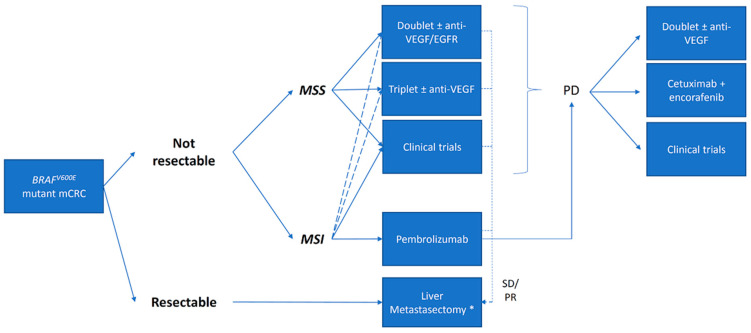
The BRAFV600E mutation is found in 8–10% of metastatic colorectal cancer (mCRC) patients and it is recognized as a poor prognostic factor with a median overall survival inferior to 20 months. At present, besides immune checkpoint inhibitors (CPIs) for those tumors with concomitant MSI-H status, recommended treatment options include cytotoxic chemotherapy + anti-VEGF in the first line setting, and a combination of EGFR and a BRAF inhibitor (cetuximab plus encorafenib) in second line. However, even with the latter targeted approach, acquired resistance limits the possibility of more than an incremental benefit and survival is still dismal. In this review, we discuss current treatment options for this subset of patients and perform a systematic review of ongoing clinical trials. Overall, we identified six emerging strategies: targeting MAPK pathway (monotherapy or combinations), targeting MAPK pathway combined with cytotoxic agents, intensive cytotoxic regimen combinations, targeted agents combined with CPIs, oxidative stress induction, and cytotoxic agents combined with antiangiogenic drugs and CPIs. In the future, the integration of new therapeutic strategies targeting key players in the BRAFV600E oncogenic pathways with current treatment approach based on cytotoxic chemotherapy and surgery is likely to redefine the treatment landscape of these CRC patients.
Overview
The claims and statistics of this paper haven’t been checked yet.
Free: it reads the open-access text and checks the first 5 claims that cite a source we can check. Create a free account to check every claim.
Integrity signals
Registry
Cites
Statistics
Figures
Verification
Claims the paper makes
The claims and statistics of this paper haven’t been checked yet.
Free: it reads the open-access text and checks the first 5 claims that cite a source we can check. Create a free account to check every claim.
Claims other papers make about this one
Each is checked against this paper’s own text: does it say what the citing paper says it does?
In the citing paper
“Multiple clinical trials reported in recent years have noted significantly improved survival using precision therapeutic approaches that target some of the deadliest mCRC sub-types, including BRAFV600E mutations [13].”
From Recent Advances in Therapeutic Strategies to Improve Colorectal Cancer Treatment (2024) · cites this paper as [13]
Self-check
Percentages, sums and reported differences re-computed from the paper’s own numbers.
The self-check needs the paper’s full text.
Citations
Cites
Preferred Reporting Items for Systematic Reviews and Meta-Analyses: the PRISMA statement
Moher, D., Liberati, A., Tetzlaff, J., Altman, D. G., & for the PRISMA Group (2009) · BMJ · doi:10.1136/bmj.b2535 · Cited by 83,823
Preferred reporting items for systematic reviews and meta-analyses: the PRISMA Statement.
(2009) · PubMed Central · Cited by 44,859
Siegel, R. L., Miller, K. D., & Jemal, A. (2019) · CA: A Cancer Journal for Clinicians · doi:10.3322/caac.21551 · Cited by 20,160
Preferred Reporting Items for Systematic Reviews and Meta-Analyses: The PRISMA Statement
Moher, D., Liberati, A., Tetzlaff, J., & Altman, D. G. (2009) · Journal of Clinical Epidemiology · doi:10.1016/j.jclinepi.2009.06.005 · Cited by 19,575
Mutations of the BRAF gene in human cancer
Davies, H., Bignell, G. R., Cox, C., Stephens, P., Edkins, S., Clegg, S., Teague, J., Woffendin, H., Garnett, M. J., Bottomley, W., et al. (2002) · Nature · doi:10.1038/nature00766 · Cited by 10,674 · cited 1×
“Particularly, BRAF mutations account for 8–10% of mCRCs and more than 90% are missense mutations occurring in codon 600, leading to an aminoacidic substitution of a valine for a glutamic acid (V600E) [6].”
BackgroundPD-1 Blockade in Tumors with Mismatch-Repair Deficiency
Le, D. T., Uram, J. N., Wang, H., Bartlett, B. R., Kemberling, H., Eyring, A. D., Skora, A. D., Luber, B. S., Azad, N. S., Laheru, D., et al. (2015) · New England Journal of Medicine · doi:10.1056/nejmoa1500596 · Cited by 9,377
Improved survival with vemurafenib in melanoma with BRAF V600E mutation
Chapman, P. B., Hauschild, A., Robert, C., Haanen, J. B., Ascierto, P., Larkin, J., Dummer, R., Garbe, C., Testori, A., Maio, M., et al. (2011) · New England Journal of Medicine · doi:10.1056/nejmoa1103782 · Cited by 7,720
ESMO consensus guidelines for the management of patients with metastatic colorectal cancer
Van Cutsem, E., Cervantes, A., Adam, R., Sobrero, A., Van Krieken, J. H., Aderka, D., Aranda Aguilar, E., Bardelli, A., Benson, A., Bodoky, G., et al. (2016) · Annals of Oncology · doi:10.1093/annonc/mdw235 · Cited by 3,421 · cited 4×
“However, a recent meta-analysis, showing no benefit from FOLFOXIRI plus bevacizumab if compared to standard cytotoxic doublets plus bevacizumab in BRAFV600E mutant mCRC, will lead to reconsider current clinical guidelines recommendations [3,4,53].”
BackgroundMethodInfluentialPembrolizumab in Microsatellite-Instability-High Advanced Colorectal Cancer
André, T., Shiu, K.-K., Kim, T. W., Jensen, B. V., Jensen, L. H., Punt, C., Smith, D., Garcia-Carbonero, R., Benavides, M., Gibbs, P., et al. (2020) · New England Journal of Medicine · doi:10.1056/nejmoa2017699 · Cited by 3,099 · cited 3×
“In addition, the recent phase III trial KEYNOTE-177 demonstrated the superiority of pembrolizumab in first-line setting over standard regimens in MSI mCRC, independently from BRAF status (Table S1) [35].”
BackgroundOverman, M. J., McDermott, R., Leach, J. L., Lonardi, S., Lenz, H.-J., Morse, M. A., Desai, J., Hill, A., Axelson, M., Moss, R. A., et al. (2017) · The Lancet Oncology · doi:10.1016/s1470-2045(17)30422-9 · Cited by 2,836 · cited 2×
“Overall response rate (ORR) and disease control rate (DCR) were 31 and 69% in BRAF wild-type mCRCs and 25 and 75% in BRAFV600E mutant mCRCs [36].”
Background
Cited by
Crisafulli, G., Bianchi, A. S., Lazzari, L., Pietrantonio, F., Amatu, A., Macagno, M., Barault, L., Cassingena, A., Bartolini, A., Luraghi, P., et al. (2022) · Cancer Discovery · doi:10.1158/2159-8290.cd-21-1434 · Cited by 147
Self-citationHarnessing the predictive power of preclinical models for oncology drug development
Honkala, A., Malhotra, S. V., Kummar, S., & Junttila, M. R. (2022) · Nature Reviews Drug Discovery · doi:10.1038/s41573-021-00301-6 · Cited by 121
Strategies to tackle RAS-mutated metastatic colorectal cancer
Patelli, G., Tosi, F., Amatu, A., Mauri, G., Curaba, A., Patanè, D. A., Pani, A., Scaglione, F., Siena, S., & Sartore-Bianchi, A. (2021) · ESMO Open · doi:10.1016/j.esmoop.2021.100156 · Cited by 86
Self-citationAl-Joufi, F., Setia, A., Salem-Bekhit, M. M., Sahu, R. K., Alqahtani, F. Y., Widyowati, R., & Aleanizy, F. (2022) · Nanomaterials · doi:10.3390/nano12010169 · Cited by 94
“People with BRAF mutation and microsatellite instability-high (MSI-H) tumours had a better overall prognosis than people with BRAF mutation and microsatellite stable (MSS) illness, and it turns out, using MSI to screen for Lynch syndrome and identify patients who could benefit from immunotherapy is becoming increasing…”
BackgroundRecent Advances in Therapeutic Strategies to Improve Colorectal Cancer Treatment
Gmeiner, W. H. (2024) · Cancers · doi:10.3390/cancers16051029 · Cited by 78
Targeted Therapy for Colorectal Cancer
Sakata, S., & Larson, D. W. (2022) · Surgical Oncology Clinics of North America · doi:10.1016/j.soc.2021.11.006 · Cited by 95
Comprehensive analysis of oncogenic determinants across tumor types via multi-omics integration
Ubaid, S., Kushwaha, R., Kashif, M., & Singh, V. K. (2025) · Cancer Genetics · doi:10.1016/j.cancergen.2025.08.010 · Cited by 86
Amodio, V., Mauri, G., Reilly, N. M., Bianchi, A. S., Siena, S., Bardelli, A., & Germano, G. (2021) · Cancers · doi:10.3390/cancers13112638 · Cited by 74
Self-citationTabernero, J., Van Cutsem, E., Garralda, E., Tai, D., De Braud, F., Geva, R., van Bussel, M. T. J., Fiorella Dotti, K., Elez, E., de Miguel, M. J., et al. (2023) · The Oncologist · doi:10.1093/oncolo/oyad007 · Cited by 59
“Mean (SD) 29 (21) 21 (12) 26 (16) 26 (17)”
Prognostic and Predictive Molecular Biomarkers in Advanced Colorectal Cancer
Martelli, V., Pastorino, A., & Sobrero, A. F. (2022) · Pharmacology & Therapeutics · doi:10.1016/j.pharmthera.2022.108239 · Cited by 73
The role of heavy metals in the development of colorectal cancer
Li, Y., Lou, J., Hong, S., Hou, D., Lv, Y., Guo, Z., Wang, K., Xu, Y., Zhai, Y., & Liu, H. (2023) · BMC Cancer · doi:10.1186/s12885-023-11120-w · Cited by 46
Martinelli, E., Cremolini, C., Mazard, T., Vidal, J., Virchow, I., Tougeron, D., Cuyle, P., Chibaudel, B., Kim, S. C. H., Ghanem, I., et al. (2022) · ESMO Open · doi:10.1016/j.esmoop.2022.100603 · Cited by 42
“Further ongoing clinical trials in BRAF-mutant CRC evaluate different treatment combinations.(41,42) For example, the phase III BREAKWATER trial (NCT04607421) is assessing encorafenib in combination with cetuximab in BRAFmutant, treatment-naive patients with or without chemotherapy.”
MethodHajjafari, A., Sadr, S., Rahdar, A., Bayat, M., Lotfalizadeh, N., Dianaty, S., Rezaei, A., Moghaddam, S. P., Hajjafari, K., Simab, P. A., et al. (2024) · Inorganic Chemistry Communications · doi:10.1016/j.inoche.2024.112409 · Cited by 39
Amatu, A., Mauri, G., Tosi, F., Bencardino, K. B., Bonazzina, E. F., Gori, V., Ruggieri, L., Arena, S., Bardelli, A., Marsoni, S., et al. (2022) · Cancers · doi:10.3390/cancers14051197 · Cited by 37
Self-citationZhang, Y., Wen, X.-D., Guo, X., Huang, S.-Q., Wang, T., Zhou, P., Li, W., Zhou, L., & Hu, Y. (2021) · Oncology Reports · doi:10.3892/or.2021.8046 · Cited by 29
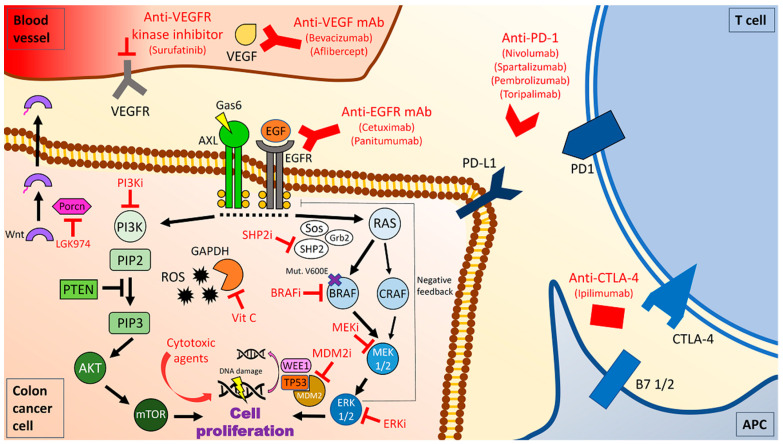
“Through triggering a variety of molecular responses leading to cell proliferation in CRC, the mitogen activated protein kinase (MAPK) pathway has recently been proposed to be involved in apoptosis and cell cycle regulation by various compounds (18).”
BackgroundBiopsy Techniques for Musculoskeletal Tumors: Basic Principles and Specialized Techniques
Mavrogenis, A. F., Altsitzioglou, P., Tsukamoto, S., & Errani, C. (2024) · Current Oncology · doi:10.3390/curroncol31020067 · Cited by 29
“Three basic categories of actionable biological ctDNA,”
BackgroundDang, Q., Zuo, L., Hu, X., Zhou, Z., Chen, S., Liu, S., Ba, Y., Zuo, A., Xu, H., Weng, S., et al. (2024) · Cancer Medicine · doi:10.1002/cam4.70041 · Cited by 32
“13 It is also applied in patient stratification, biomarker-drug co-development, etc.”
BackgroundChira, S., Nutu, A. M., Isachesku, E., Bica, C., Pop, L., Ciocan, C. A., & Berindan‐Neagoe, I. (2022) · Cells · doi:10.3390/cells11182781 · Cited by 27
“Such strategy might also prove to be useful for targeting this mutation in other types of malignant disorders, such as colorectal cancer [63].”
BackgroundHu, F., Wang, J., Zhang, M., Wang, S., Zhao, L., Yang, H., Wu, J., & Cui, B. (2021) · Frontiers in Cell and Developmental Biology · doi:10.3389/fcell.2021.758776 · Cited by 27
“Many studies have shown that genetic alterations in driver genes contribute to colon cancer development and malignant progression (Nakayama and Oshima, 2019).”
BackgroundDiscovery of BRAF/HDAC Dual Inhibitors Suppressing Proliferation of Human Colorectal Cancer Cells
Li, Y., Huang, Y., Cheng, H., Xu, F. L., Qi, R., Dai, B., Yang, Y., Tu, Z., Peng, L., & Zhang, Z. (2022) · Frontiers in Chemistry · doi:10.3389/fchem.2022.910353 · Cited by 19
“However, almost all patients displayed intrinsical resistance or secondary resistance to these drugs although they also harbor BRAFV600E mutation (Mauri et al., 2021).”
BackgroundExpert consensus on the diagnosis and treatment of solid tumors with BRAF mutations
Wang, W., Lian, B., Xu, C., Wang, Q., Li, Z., Zheng, N., Liu, A., Yu, J., Zhong, W., Wang, Z., et al. (2024) · The Innovation · doi:10.1016/j.xinn.2024.100661 · Cited by 14
Udagawa, S., Ooki, A., Shinozaki, E., Fukuda, K., Yamaguchi, K., & Osumi, H. (2023) · Cancers · doi:10.3390/cancers15051473 · Cited by 14
Liquid biopsies in primary and secondary bone cancers
Ucci, A., Rucci, N., & Ponzetti, M. (2022) · Cancer Drug Resistance · doi:10.20517/cdr.2022.17 · Cited by 19
Harrold, E. C., Keane, F., Walch, H. S., Chou, J. F., Sinopoli, J. C., Palladino, S., Al-Rawi, D. H., Chadalavada, K., Manca, P., Chalasani, S. B., et al. (2024) · Clinical Cancer Research · doi:10.1158/1078-0432.ccr-23-4005 · Cited by 13
Cancanelli, L., Rivano, M., Spazio, L. D., Chiumente, M., Mengato, D., & Messori, A. (2021) · Cureus · doi:10.7759/cureus.19893 · Cited by 14
“For example, the BRAF-V600E mutation, which is found in 8%-10% of metastatic colorectal cancer patients, is recognized to be a poor prognostic factor [21].”
BackgroundHuang, C., Yi, H., Zhou, Y., Zhang, Q. H., & Yao, X. (2022) · Cancers · doi:10.3390/cancers14153735 · Cited by 14
Chapdelaine, A. G., Ku, G. C., Sun, G., & Ayrapetov, M. K. (2023) · Cancers · doi:10.3390/cancers15245805 · Cited by 16
“The BRAF V600E mutation accounts for approximately 10% of all colorectal cancer [5], 2% of non-small cell lung cancer [6], 15.7% of all breast cancers [7], 50% of cutaneous melanoma and thyroid cancer [2], 6% of brain cancers [8], and 100% of hairy cell leukemia [9].”
BackgroundInfluentialApplication of histology-agnostic treatments in metastatic colorectal cancer
Bianchi, A. S., Agostara, A. G., Patelli, G., Mauri, G., Pizzutilo, E. G., & Siena, S. (2022) · Digestive and Liver Disease · doi:10.1016/j.dld.2022.05.013 · Cited by 13
Self-citationKlein‐Scory, S., Baraniskin, A., Schmiegel, W., Mika, T., Schroers, R., Held, S., Heinrich, K., Tougeron, D., Modest, D. P., Schwaner, I., et al. (2024) · Molecular Oncology · doi:10.1002/1878-0261.13778 · Cited by 12
Data mining identifies novel RNA-binding proteins involved in colon and rectal carcinomas
García-Cárdenas, J. M., Armendáriz‐Castillo, I., García-Cárdenas, N., Pesantez-Coronel, D., López‐Cortés, A., Indacochea, A., & Guerrero, S. X. (2023) · Frontiers in Cell and Developmental Biology · doi:10.3389/fcell.2023.1088057 · Cited by 12
“For example, metastatic COREAD patients, harboring BRAFV600E mutation, have now better treatment options (Mauri et al., 2021).”
BackgroundPatterns of recurrence after curative intent hepatic resection for colorectal liver metastasis
Kung, H., Shubert, C. R., Wilbur, H. C., Burns, W. R., Burkhart, R. A., Hidalgo, M., Azad, N. S., Lee, V., Chung, H., Le, D. T., et al. (2024) · Journal of Gastrointestinal Surgery · doi:10.1016/j.gassur.2024.09.026 · Cited by 10
Wang, L., Zhang, G., Shen, J., Shen, Y., & Cai, G. (2022) · Applied Bionics and Biomechanics · doi:10.1155/2022/8666724 · Cited by 9
“, bevacizumab, cetuximab), and BRAF V600E/K-mutant targeted therapy, more patients survive after CRC treatment [4, 5].”
BackgroundRetractedYu, X., Lin, H., Li, J., & Wu, J. (2024) · Scientific Reports · doi:10.1038/s41598-023-49954-w · Cited by 9
Cheng, B., Xu, L., Zhang, Y., Yang, H.-M., Liu, S., Ding, S., Zhao, H., Sui, Y., Wang, C., Quan, L., et al. (2024) · Heliyon · doi:10.1016/j.heliyon.2024.e29299 · Cited by 8
“However, questions remain about the efficacy of immune checkpoint inhibitor treatment for MSI-H patients with a BRAF V600E mutation and metastatic CRC [44].”
BackgroundDuan, J., Zhu, L., Shi, Y., Wang, W., Wang, T., Ning, T., Zhang, L., Bai, M., Li, H., Liu, R., et al. (2024) · BMC Cancer · doi:10.1186/s12885-024-12072-5 · Cited by 9
“The development of medical therapies in mCRC patients has not been so transformative as in other malignancies, mainly because the number of patients who can benefit from targeted therapy or immunotherapy is relatively limited [2].”
BackgroundPranteda, A., Piastra, V., Serra, M., Bernardini, R., Sardo, F. L., Carpano, S., Diodoro, M. G., Bartolazzi, A., Milella, M., Blandino, G., et al. (2023) · Biomedicine & Pharmacotherapy · doi:10.1016/j.biopha.2023.115480 · Cited by 8
Predictive and prognostic biomarkers in gastrointestinal tract tumours
Nowak, K. M., & Chetty, R. (2024) · Pathology · doi:10.1016/j.pathol.2023.12.412 · Cited by 7
Pan-RAS inhibitors and polo-like kinase 1: promising targets in colorectal cancer
Jayachandran, P., Elliott, A., Soni, S., Battaglin, F., Mittal, P., Algaze, S. D., Lo, J. H., Yang, Y., Ashouri, K., Torres, E. T. R., et al. (2025) · Oncogene · doi:10.1038/s41388-025-03484-z · Cited by 6
Dutta, S., Ghosh, S., Mishra, A. B., & Ghosh, R. (2022) · Journal of Proteins and Proteomics · doi:10.1007/s42485-022-00100-6 · Cited by 7
Kong, L., Zhang, Q., Mao, J., Cheng, L., Shi, X., Yu, L., Hu, J. Y., Yang, M., Li, L., Liu, B., et al. (2021) · Journal of Gastrointestinal Oncology · doi:10.21037/jgo-21-467 · Cited by 6
“Recently, scientists have provided many ideas for reversing the resistance of anti-EGFR therapies, including targeting downstream pathways of EGFR, enhancing the use of cytotoxic drugs, combining anti-angiogenic drugs, inducing oxidative stress, and combining checkpoint inhibitors (23).”
BackgroundBi, L., Zhou, Y., Zhang, Y., & Zhang, X. (2024) · Cellular and Molecular Biology · doi:10.14715/cmb/2024.70.1.20 · Cited by 6
“BRAF V600E mutation has been found as a poor prognostic factor for metastatic CRC patients [15].”
BackgroundBRAFV600E mutation promoted the growth and chemoresistance of colorectal cancer.
(2023) · PubMed Central · Cited by 6
Zhang, R., Wang, Z., Wang, H., Li, L., Dong, L., Ding, L., Li, Q., Zhu, L., Zhang, T., Zhu, Y., et al. (2024) · Biomolecules and Biomedicine · doi:10.17305/bb.2024.10397 · Cited by 6
Damato, A., Rotolo, M., Caputo, F., Borghi, E., Iachetta, F., & Pinto, C. (2022) · Life · doi:10.3390/life12081137 · Cited by 6
“BRAF- therapies combined with other anti-EGFRs, MEK inhibitors, or PI3K inhibitors seem promising [47,48].”
BackgroundMauri, G., Patelli, G., Gori, V., Lauricella, C., Mussolin, B., Amatu, A., Bencardino, K. B., Tosi, F., Bonazzina, E. F., Bonoldi, E., et al. (2022) · Frontiers in Oncology · doi:10.3389/fonc.2022.1030232 · Cited by 5
“Accumulating evidence also suggests BRAF mutations being a resistance mechanism to anti-EGFR MoAbs, even though treatment is allowed as per label (4).”
BackgroundSelf-citationWhitmer, R. D., Sepulveda, J., Gandhi, J., Puri, I., & Gupta, R. V. (2026) · Journal of Personalized Medicine · doi:10.3390/jpm16030132 · Cited by 4
“When a BRAF V600 inhibitor is used as monotherapy, it suppresses MAPK signaling temporarily, removing negative feedback loops and ultimately causing rapid feedback reactivation of EGFR, which ultimately leads to the bypassing of the BRAF blockade [34,35].”
Cancer Genetics and Genomics – Part 2
Brothwell, M., & Barnett, G. C. (2022) · Clinical Oncology · doi:10.1016/j.clon.2022.02.014 · Cited by 3
MacDonald, W. J., Verschleiser, B., Carlsen, L., Huntington, K. E., Zhou, L., & El‐Deiry, W. S. (2023) · PubMed Central · Cited by 9
Immune Checkpoint Inhibitors in BRAF -Mutated Advanced Colorectal Cancer
Kassab, R., Khalil, M. A., Kassab, J. T., & Kourié, H. R. (2023) · Future Oncology · doi:10.2217/fon-2022-0978 · Cited by 3
Zafar, A., Khalid, M., Alsaidan, O. A., & Mujtaba, M. A. (2025) · Pathology - Research and Practice · doi:10.1016/j.prp.2025.155956 · Cited by 3
Nachweis der BRAF-V600E-Mutation beim metastasierten kolorektalen Karzinom: Ein QuIP-Ringversuch
Jöhrens, K., Fischer, J., Möbs, M., Junker, K., Kirfel, J., Perner, S., Laßmann, S., Werner, M., Borgmann, V., Bläker, H., et al. (2021) · Der Pathologe · doi:10.1007/s00292-021-01022-8 · Cited by 2
Heterogeneous Tumour Modeling Using PhysiCell and Its Implications in Precision Medicine
Savić, M., Kurbalija, V., Balaž, I., & Ivanović, M. D. (2022) · Emergence, complexity and computation · doi:10.1007/978-3-031-04379-6_7 · Cited by 2
The choice of treatment for chemorefractory colon cancer
Cheporova, M. S., Валентинович, Ч. С., & Tryakin, A. A. (2023) · Malignant tumours · doi:10.18027/2224-5057-2023-13-3-56-63 · Cited by 3
Hamdani, S., Allali, H., & Bouchentouf, S. (2024) · Current Drug Discovery Technologies · doi:10.2174/0115701638282497240124102345 · Cited by 2
Concurrent NRAS-BRAF variants in metastatic colorectal cancer: a Tunisian case report
Douik, H., Sahraoui, G., Jèmaà, M., Doghri, R., Charfi, L., & Mrad, K. (2024) · Anti-Cancer Drugs · doi:10.1097/cad.0000000000001586 · Cited by 2
“BRAF V600E is one of the major mutations associated with aggressive clinical features, including high tumour grade, peritoneal involvement and resistance to therapy, including EGFR-targeted inhibitors [7].”
BackgroundPharmacotherapy for unresectable metastatic colorectal cancer
Rogers, J. E., & Dasari, A. N. (2021) · Expert Opinion on Pharmacotherapy · doi:10.1080/14656566.2021.1982895 · Cited by 2
Editorial: The impact of genetics on CRC therapy: from adaptive mutability to drug resistance
Crisafulli, G., & Siravegna, G. (2023) · Frontiers in Oncology · doi:10.3389/fonc.2023.1260158 · Cited by 2
Updates in BRAF V600E-Mutated Metastatic Colorectal Cancer
Scott, B. (2024) · EMJ Oncology · doi:10.33590/emjoncol/jdxk9403 · Cited by 2
“45,46 Patients with BRAF V600E-mutated CRC should be closely and regularly monitored, to ensure disease progression is identified immediately, and to enable clinicians to offer new lines of therapy as soon as progression is observed.”
Zhao, Y., Li, L., Zhang, B., Li, B., & Zhou, W. (2026) · Advances in Clinical and Experimental Medicine · doi:10.17219/acem/208178 · Cited by 1
Shi, C.-Y., Li, Y., Wei, R.-Q., Deng, J., Zou, Q.-L., Yang, S., Piao, C., & Jin, M. (2023) · Research Square · doi:10.21203/rs.3.rs-3691348/v1 · Cited by 1
Research Progress of BRAF V600E Gene Mutation in Papillary Thyroid Carcinoma
刘, 延. (2022) · Advances in Clinical Medicine · doi:10.12677/acm.2022.1291227
Poggi, A. D., Matis, S., & Benelli, R. (2022) · Cancers · doi:10.3390/cancers14246086
“The presence of one or more of these pathological markers confers on the tumor a different aggressiveness and therapeutic response [2,3].”
BackgroundBRAFV600E Metastatic Colorectal Cancer: Perspective from a Patient, a Caregiver, and an Oncologist
Gourdin, G., Chotel, L., & de la Fouchardière, C. (2023) · Advances in Therapy · doi:10.1007/s12325-023-02552-8
“Other emerging strategies for the treatment of BRAF mCRC have been previously discussed [10, 11].”
BackgroundInitial Investigation and Dialogue on the Function and Mechanism of ETFDH Gene in CRC
冯, 瑶. (2024) · Advances in Clinical Medicine · doi:10.12677/acm.2024.1451477
Transplantation for metastatic colorectal cancer to liver
Gogna, S., Goyal, P., Hawksworth, J. S., & He, A. R. (2024) · Elsevier eBooks · doi:10.1016/b978-0-443-21901-6.00005-7
Duan, J., Zhu, L., Shi, Y., Wang, W., wang, T., Ning, T., Zhang, L., Bai, M., Li, H., Liu, R., et al. (2024) · Figshare · doi:10.6084/m9.figshare.25347160
Duan, J., Zhu, L., Shi, Y., Wang, W., wang, T., Ning, T., Zhang, L., Bai, M., Li, H., Liu, R., et al. (2024) · Figshare · doi:10.6084/m9.figshare.26689433
Duan, J., Zhu, L., Shi, Y., Wang, W., wang, T., Ning, T., Zhang, L., Bai, M., Li, H., Liu, R., et al. (2024) · Figshare · doi:10.6084/m9.figshare.25347276
Non-invasive monitoring of metastatic colorectal cancer in Circulating Tumor DNA and Exosomal RNA
Bonito, N. (2023) · Portuguese National Funding Agency for Science, Research and Technology (RCAAP Project by FCT) · doi:10.34626/2348-ce13
Duan, J., Zhu, L., Shi, Y., Wang, W., wang, T., Ning, T., Zhang, L., Bai, M., Li, H., Liu, R., et al. (2024) · Figshare · doi:10.6084/m9.figshare.26689436
Duan, J., Zhu, L., Shi, Y., Wang, W., wang, T., Ning, T., Zhang, L., Bai, M., Li, H., Liu, R., et al. (2024) · Figshare · doi:10.6084/m9.figshare.26689442
Duan, J., Zhu, L., Shi, Y., Wang, W., wang, T., Ning, T., Zhang, L., Bai, M., Li, H., Liu, R., et al. (2024) · Figshare · doi:10.6084/m9.figshare.26689439
Hamdani, S. (2024) · Dépôt Institutionnel de lUniversité de Tlemcen
Luo, S., Cai, Y., Wang, X., Lan, H., Yang, L., Lin, S., Huang, X., Weng, X., & Xu, X. (2026) · The Pharmacogenomics Journal · doi:10.1038/s41397-026-00417-1
Metadata
- Authors
- Mauri, G., Bonazzina, E., Amatu, A., Tosi, F., Bencardino, K., Gori, V., Massihnia, D., Cipani, T., Spina, F., Ghezzi, S., Siena, S., & Sartore-Bianchi, A.
- Affiliations
- University of Milan (IT)
- Azienda Socio Sanitaria Territoriale Grande Ospedale Metropolitano Niguarda (IT)
- Niguarda Cancer Center, Grande Ospedale Metropolitano Niguarda, 20162 Milano, Italy
- ORCID
- Venue
- Cancers
- Publisher
- MDPI AG
- Published
- 2021-01-04
- Volume
- 13
- Issue
- 1
- Pages
- 137
- ISSN
- 2072-6694 (ISSN-L)
- PMC
- PMC7795863
- OpenAlex
- W3119715349
- Cited by
- 73
- References
- 79
- Citations by year
- 2026: 1 · 2025: 3 · 2024: 25 · 2023: 14 · 2022: 20 · 2021: 10
- FWCI
- 2.09
- Type
- journal article
- Language
- en
- Open access
- gold
- doi.org
- Licence
- Locations
- Cancers (publishedVersion, cc-by)
- Europe PMC (PubMed Central) (publishedVersion, other-oa)
- PubMed Central (publishedVersion, cc-by)
- PubMed (publishedVersion)
- Archivio Istituzionale della Ricerca (Universita Degli Studi Di Milano) (submittedVersion, other-oa)
- DOAJ (DOAJ: Directory of Open Access Journals) (submittedVersion, cc-by-sa)
- Funders
- Fondazione Regionale Ricerca Biomedica Regione Lombardia (Project CP 12/2018 IANG CRC)
- H2020 grant agreement MoTriColor (no. 635342-2)
- AIRC IG (no. 20685)
- Terapia Molecolare Tumori by Fondazione Oncologia Niguarda Onlus (NA)
- FONDAZIONE AIRC under 5 per Mille 2018 (ID. 21091 program)
- Topics
- Health Sciences › Medicine › Oncology › Colorectal Cancer Treatments and Studies
- Health Sciences › Medicine › Oncology › Colorectal Cancer Surgical Treatments
- Health Sciences › Medicine › Pulmonary and Respiratory Medicine › Lung Cancer Treatments and Mutations
- Keywords
- BRAF V600E mutation, metastatic colorectal cancer, MAPK signaling, cetuximab, encorafenib, immune checkpoint inhibitors, acquired drug resistance, anti-VEGF therapy, cytotoxic chemotherapy, oxidative stress, antiangiogenic drugs, combination therapy, clinical trials
About these checks
Registry, retraction, Cites and statistics results are computed, not judged, with one exception: a printed reference that no index lists is read once by a model before it counts as a citation error. Claims are extracted by a model and kept only when their quote appears verbatim in the text; each cited source is then checked, with a model’s help, for whether it says what the claim relies on. Those verdicts can be wrong — read the claim’s quote and the cited source before relying on one.
Statistics and arithmetic are recomputed, not judged.
Confidence bands are shown only for fields calibrated on our annotated test set. None is calibrated yet, so no band is shown.
What counts as a claim ›How we measure confidence ›How we check this ›
Are you an author, or do you see a problem with this page? Request a review
Data sources
Bibliographic data: Semantic Scholar, OpenAlex, Crossref.
Contains information from the Semantic Scholar Academic Graph Datasets, made available under the ODC Attribution License (ODC-BY 1.0).
Semantic Scholar’s data is described in: Kinney, R., et al. (2023). The Semantic Scholar Open Data Platform. arXiv:2301.10140.
