

Drug Resistance in Colorectal Cancer: From Mechanism to Clinic
Open accessThe DOI matches its Crossref record; 350 of the 350 references it cites were found in a registry or an index; 78 of the 379 sources its claims cite were checked for support.
Abstract
Colorectal cancer (CRC) is one of the leading causes of death worldwide. The 5-year survival rate is 90% for patients with early CRC, 70% for patients with locally advanced CRC, and 15% for patients with metastatic CRC (mCRC). In fact, most CRC patients are at an advanced stage at the time of diagnosis. Although chemotherapy, molecularly targeted therapy and immunotherapy have significantly improved patient survival, some patients are initially insensitive to these drugs or initially sensitive but quickly become insensitive, and the emergence of such primary and secondary drug resistance is a significant clinical challenge. The most direct cause of resistance is the aberrant anti-tumor drug metabolism, transportation or target. With more in-depth research, it is found that cell death pathways, carcinogenic signals, compensation feedback loop signal pathways and tumor immune microenvironment also play essential roles in the drug resistance mechanism. Here, we assess the current major mechanisms of CRC resistance and describe potential therapeutic interventions.
Overview
CoChat Summary
TL;DR
This narrative review surveys the molecular mechanisms by which colorectal cancer (CRC) develops primary and secondary resistance to chemotherapy, molecularly targeted therapy, and immunotherapy, spanning drug metabolism, transport, target alteration, downstream and bypass signaling, cell death pathways, and the tumor microenvironment. It catalogs preclinical and clinical strategies proposed to reverse resistance, concluding that most evidence remains preclinical and that combination therapy warrants further clinical testing.
Key findings
- CRC prognosis is stage-dependent: 5-year survival is 90% for early CRC, 70% for locally advanced CRC, and 15% for metastatic CRC (mCRC); most patients are diagnosed at an advanced stage.
- Resistance arises from aberrant drug metabolism/transport/targets, but also from cell death pathways, oncogenic and compensatory feedback signaling, and the tumor immune microenvironment.
- Specific resistance drivers cited include: KRAS mutations in ~40% of mCRC; BRAF V600E prevalence of 8–10% in mCRC (occurring only in KRAS-WT tumors, with 130- to 700-fold increased BRAF kinase activity); HER2 somatic mutation/amplification in 7% of CRC (TCGA); HER3 mutations in 5.7–11% of CRC; and PI3K/AKT/mTOR pathway activation in ~20% of CRC patients.
- Clinical reversal strategies show mixed results: necitumumab plus mFOLFOX6 improved ORR (63.6% vs. 41%) and OS (22.5 m vs. 19.2 m) versus mFOLFOX6 alone in a historical comparison; Sym004 targeted EGFR ECD-mutant cells but did not improve OS in a Phase II trial; adding PI3K inhibitors to cetuximab did not improve PFS, ORR, or OS; atezolizumab plus cobimetinib did not improve response or survival in a Phase III trial.
Methods
- Design: narrative review of preclinical and clinical literature on CRC drug resistance mechanisms, organized by mechanism (drug metabolism, drug transport, drug targets, downstream signaling, alternative receptors, oncogenic/bypass signaling, cell death pathways, tumor microenvironment).
- Data: no systematic search strategy, databases, or inclusion criteria are reported; evidence is drawn from cited preclinical studies (cell lines, mouse models, PDX/CDX) and clinical trials of varying phases.
- Main analysis: qualitative synthesis, with two summary tables — Table 1 (promising strategies for reversing resistance in preclinical studies) and Table 2 (promising strategies in clinical trials, listing regimen, target, subpopulation, setting, and efficacy where reported).
Limitations
- Stated by the paper: "most of the data are based on limited preclinical data," and larger, multi-institutional preclinical and clinical studies are needed to assess the clinical significance of the potential therapeutic targets; further clinical studies are urgently needed to evaluate combination therapy.
- Stated by the paper: several areas remain controversial or unresolved — blocking Wnt for immune regulation "is still controversial at present," and TAM density shows contradictory associations with chemotherapy response (attributed partly to CD68 not subclassifying TAM).
- Evident from the text: as a narrative review without a described systematic search or quality appraisal, selection of cited studies may be non-exhaustive, and several clinical efficacy figures are drawn from single-arm or cross-trial comparisons rather than randomized head-to-head data.
Model-written summary. Check it against the paper before relying on it.
Integrity signals
Registry
Cites
Statistics
Figures
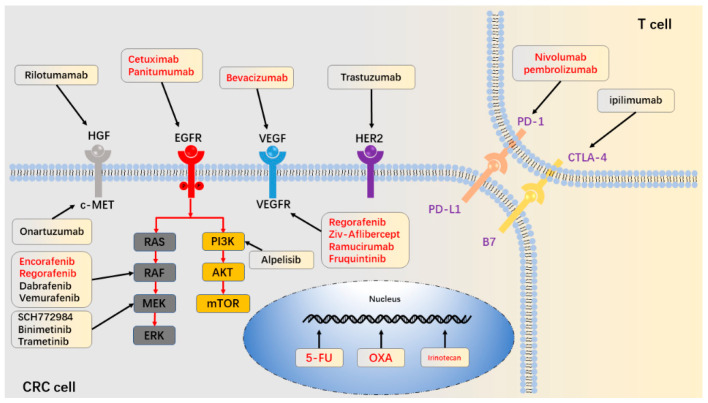
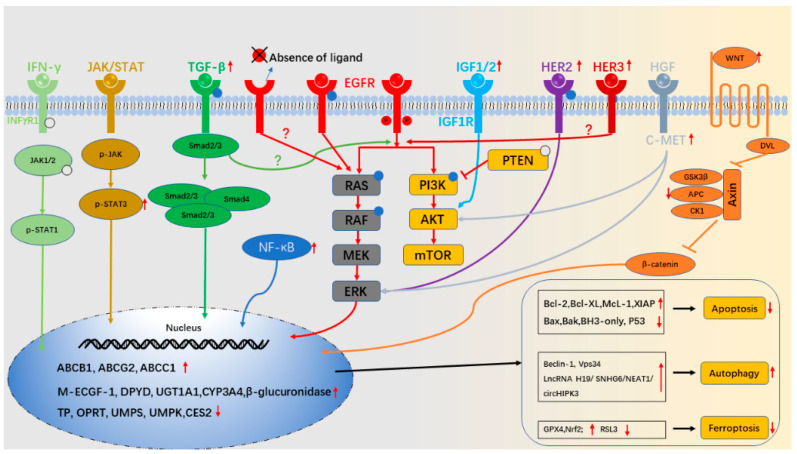
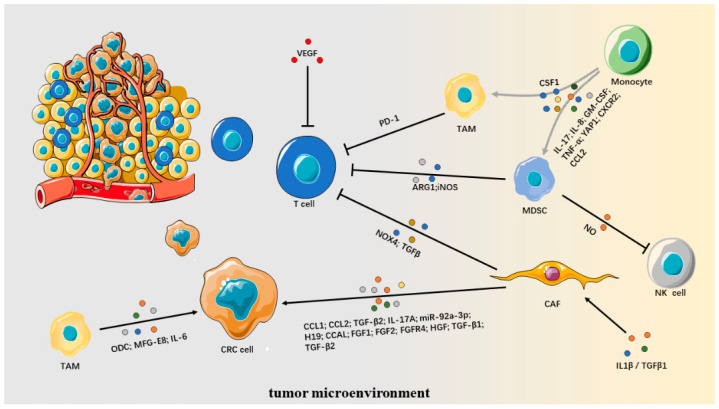
Verification
Claims the paper makes
54 Valid · 7 Not valid · 215 Not checked · 44 Own results and interpretations
Some cited sources support this claim and some don’t — read each source’s verdict below.
In the paper
“Methimazole (CYP3A inhibitor) [108], neomycin (β-glucuronidase inhibitor) [109] and amoxapine (β-glucuronidase inhibitor) [110] have been shown to reduce SN-38 degradation effectively.”
§ Drug Resistance in Colorectal Cancer: From Mechanism to Clinic > 2. Drug Metabolism > 2.2. Increased Drug Inactivation
What the sources say
- Disputedcites [108] van der Bol J.M. Visser T.J. Loos W.J. de Jong F.A. Wiemer E.A.C. van Aken M.O. Planting A.S. Schellens J.H. Verweij J. Mathijssen R.H.J. Effects of methimazole on the elimination of irinotecan Cancer Chemother. Pharmacol. 2011 67 231 236 10.1007/s00280-010-1414-x 20680278 PMC3016232 sourceExperimental — accuracy not yet measured
This source is cited for methimazole, not for neomycin or amoxapine. Its Results report a 47% increase in the SN-38 glucuronidation rate with methimazole, and the Discussion describes increased transformation of SN-38 into inactive SN-38G—not reduced SN-38 degradation. (LLM, conf=0.88)
Checked by a reasoning model — may be wrong.
- Not checked yetcites [109] Kehrer D.F. Sparreboom A. Verweij J. de Bruijn P. Nierop C.A. van de Schraaf J. Ruijgrok E.J. de Jonge M.J. Modulation of irinotecan-induced diarrhea by cotreatment with neomycin in cancer patients Clin. Cancer Res. 2001 7 1136 1141 11350876
- Partly supportedcites [110] Kong R. Liu T. Zhu X. Ahmad S. Williams A.L. Phan A.T. Zhao H. Scott J.E. Yeh L.-A. Wong S.T.C. Old drug new use—Amoxapine and its metabolites as potent bacterial β-glucuronidase inhibitors for alleviating cancer drug toxicity Clin. Cancer Res. 2014 20 3521 3530 10.1158/1078-0432.CCR-14-0395 24780296 PMC4079752 sourceExperimental — accuracy not yet measured
The Results identify amoxapine as a potent bacterial β-glucuronidase inhibitor, supporting its identification in the citing sentence. But the Introduction and Discussion describe the inhibited process as regeneration of SN-38 from SN-38G, not degradation of SN-38; the Discussion says β-glucuronidase inhibitors do not act on SN-38 already present in the gut. This paper does not establish the claimed reduction in SN-38 degradation. (LLM, conf=0.86)
plainstates a cause- Asserted: passes — The authors put it forward as true.
- Checkable: passes — It can be checked against evidence.
- Load-bearing: passes — The paper’s conclusions depend on it.
- Based: passes — The paper gives a reason why it holds.
- Disputed
Some cited sources support this claim and some don’t — read each source’s verdict below.
In the paper
“Extensive data suggest that aberrant HER3 in mCRC may also reduce the efficacy of anti-EGFR therapy [172,182].”
§ Drug Resistance in Colorectal Cancer: From Mechanism to Clinic > 6. Aberrant Activations of Alternative Receptors > 6.2. HER2 and HER3
What the sources say
- Supportedcites [172] Scartozzi M. Giampieri R. Maccaroni E. Mandolesi A. Giustini L. Silva R. Zaniboni A. Biscotti T. Biagetti S. Galizia E. Analysis of HER-3, insulin growth factor-1, nuclear factor-kB and epidermal growth factor receptor gene copy number in the prediction of clinical outcome for K-RAS wild-type colorectal cancer patients receiving irinotecan-cetuximab Ann. Oncol. 2012 23 1706 1712 10.1093/annonc/mdr558 22112971 source
The HER-3 expression results (p. 3) report that in metastatic colorectal cancer patients treated with irinotecan-cetuximab, HER-3-positive tumours had a partial response rate of 25% versus 50% in HER-3-negative tumours (P = 0.01), median PFS 3 versus 7 months (P = 0.0001) and median OS 11 versus 25 months (P = 0.0004); the multivariate analysis (p. 3) and abstract (p. 1) confirm HER-3 negativity as an independent predictor of higher response and longer survival. The introduction (p. 2) and discussion (p. 6) frame HER-3 positivity as a marker of resistance to anti-EGFR monoclonal antibodies. The citing sentence is hedged ('may reduce the efficacy of anti-EGFR therapy') and thus is stated at or below the confidence of the source; the only narrower detail in the source is that the analysis concerned K-RAS wild-type patients, which the claim does not assert. (LLM, conf=0.90)
- Disputedcites [182] Seligmann J.F. Hatch A.J. Richman S.D. Elliott F. Jacobs B. Brown S. Hurwitz H. Barrett J.H. Quirke P. Nixon A.B. Association of Tumor HER3 Messenger RNA Expression With Panitumumab Efficacy in Advanced Colorectal Cancer JAMA Oncol. 2018 4 564 568 10.1001/jamaoncol.2017.3168 29075780 PMC5933356 sourceExperimental — accuracy not yet measured
Our copy of Seligmann et al. (2018) concludes the opposite of the claim: the Discussion states 'We found no evidence for HER3 as a prognostic marker but found HER3 overexpression to be significantly associated with benefit from panitumumab,' and the Abstract's Conclusions and Relevance report that high HER3 expression identified RAS-wt patients who gained markedly from panitumumab (PFS HR 0.33 in high vs 0.96 in low expressers; interaction P = .002). The negative direction the claim asserts appears in this paper only as background credited elsewhere — two smaller series (references 9, Richman et al. 2016, and 10, Scartozzi et al. 2011) in which HER3 overexpression was associated with inferior anti-EGFR outcomes, and a preclinical escape hypothesis (references 8, Sergina et al. 2007) — framed as one of two competing hypotheses that the PICCOLO analysis resolved against. Attributing 'aberrant HER3 reduces anti-EGFR efficacy' to this trial analysis therefore conflicts with its stated finding. (LLM, conf=0.80)
Checked by a reasoning model — may be wrong.
hedgedstates a possible cause- Asserted: passes — The authors put it forward as true.
- Checkable: passes — It can be checked against evidence.
- Load-bearing: passes — The paper’s conclusions depend on it.
- Based: passes — The paper gives a reason why it holds.
- Supported
The sources with a verdict support this claim; the rest weren’t checked yet, have no full text we could read, or their verdicts aren’t rated yet.
In the paper
“Multiple preclinical studies have shown that selectively increasing the activity of CES in CRC by viruses can improve the efficacy of irinotecan [91,92,93].”
§ Drug Resistance in Colorectal Cancer: From Mechanism to Clinic > 2. Drug Metabolism > 2.1. Reduced Drug Activation
What the sources say
- Not checked yetcites [91] Uchino J. Takayama K. Harada A. Sone T. Harada T. Curiel D.T. Kuroki M. Nakanishi Y. Tumor targeting carboxylesterase fused with anti-CEA scFv improve the anticancer effect with a less toxic dose of irinotecan Cancer Gene Ther. 2008 15 94 100 10.1038/sj.cgt.7701100 18157147 source
- Supportedcites [92] Oosterhoff D. Overmeer R.M. de Graaf M. van der Meulen I.H. Giaccone G. van Beusechem V.W. Haisma H.J. Pinedo H.M. Gerritsen W.R. Adenoviral vector-mediated expression of a gene encoding secreted, EpCAM-targeted carboxylesterase-2 sensitises colon cancer spheroids to CPT-11 Br. J. Cancer 2005 92 882 887 10.1038/sj.bjc.6602362 15756257 PMC2361903 source
The Abstract and Results of our copy report exactly this: a replication-deficient adenoviral vector (Ad.C28-sCE2) expressing a secreted, EpCAM-targeted human liver carboxylesterase-2 made colon carcinoma spheroids (Colo205, SW1398) fully sensitive to CPT-11/irinotecan, with growth inhibition comparable to SN-38 (Abstract; Results 'CPT-11 activation and antiproliferative effects in Ad.C28-sCE2-transduced cells', p. 5; Discussion). The selectivity element is also in our copy — EpCAM targeting so the enzyme accumulates in tumour and leakage into the circulation is minimised (Abstract; Discussion). This is an in vitro preclinical study, consistent with the citing sentence's pooled 'multiple preclinical studies' framing; the only mild difference is the paper's own hedge that the construct 'holds promise' for GDEPT in patients. (LLM, conf=0.88)
- Not checked yetcites [93] Wierdl M. Morton C.L. Weeks J.K. Danks M.K. Harris L.C. Potter P.M. Sensitization of human tumor cells to CPT-11 via adenoviral-mediated delivery of a rabbit liver carboxylesterase Cancer Res. 2001 61 5078 5082 11431344
plainstates a cause- Asserted: passes — The authors put it forward as true.
- Checkable: passes — It can be checked against evidence.
- Load-bearing: unclear — It is unclear whether the paper’s conclusions depend on it.
- Based: passes — The paper gives a reason why it holds.
The cited sources support only part of this claim — read each source’s verdict below.
In the paper
“In addition, it has been reported that genetically engineered human neural stem cells can increase CES activity in other tumors [94,95,96].”
§ Drug Resistance in Colorectal Cancer: From Mechanism to Clinic > 2. Drug Metabolism > 2.1. Reduced Drug Activation
What the sources say
- Not checked yetcites [94] Gutova M. Najbauer J. Chen M.Y. Potter P.M. Kim S.U. Aboody K.S. Therapeutic targeting of melanoma cells using neural stem cells expressing carboxylesterase, a CPT-11 activating enzyme Curr. Stem Cell Res. Ther. 2010 5 273 276 10.2174/157488810791824421 19951251 source
- Partly supportedcites [95] Yi B.-R. Kim S.U. Choi K.-C. Co-treatment with therapeutic neural stem cells expressing carboxyl esterase and CPT-11 inhibit growth of primary and metastatic lung cancers in mice Oncotarget 2014 5 12835 12848 10.18632/oncotarget.2547 25544747 PMC4350335 sourceExperimental — accuracy not yet measured
The Results report that engineered human neural stem cells expressed a CE gene, migrated to lung tumors, and enhanced the effect of CPT-11. The Discussion explains that CE converts CPT-11 to its active form, but the paper does not report a direct measurement of increased CES activity in the tumors. (LLM, conf=0.83)
- Partly supportedcites [96] Choi S.S. Yoon K. Choi S.-A. Yoon S.-B. Kim S.U. Lee H.J. Tumor-specific gene therapy for pancreatic cancer using human neural stem cells encoding carboxylesterase Oncotarget 2016 7 75319 75327 10.18632/oncotarget.12173 27659534 PMC5342743 sourceExperimental — accuracy not yet measured
The Introduction and Discussion (pages not provided) describe carboxylesterase-engineered human neural stem cells used against several other tumors, with reported therapeutic effects. The Results confirm carboxylesterase activity in the engineered cells in this pancreatic-cancer study, but do not show increased CES activity measured in those other tumors. (LLM, conf=0.83)
plainstates a cause- Asserted: passes — The authors put it forward as true.
- Checkable: passes — It can be checked against evidence.
- Load-bearing: unclear — It is unclear whether the paper’s conclusions depend on it.
- Based: passes — The paper gives a reason why it holds.
The cited sources support only part of this claim — read each source’s verdict below.
In the paper
“Therefore, UGT1A1 promoter methylation and subsequent inhibition of UGT1A1-related metabolic pathways participate in the retention of active SN-38 in CRC, enhancing the therapeutic effect of irinotecan [112].”
§ Drug Resistance in Colorectal Cancer: From Mechanism to Clinic > 2. Drug Metabolism > 2.2. Increased Drug Inactivation
What the sources say
- Partly supportedcites [112] Bélanger A.-S. Tojcic J. Harvey M. Guillemette C. Regulation of UGT1A1 and HNF1 transcription factor gene expression by DNA methylation in colon cancer cells BMC Mol. Biol. 2010 11 9 10.1186/1471-2199-11-9 20096102 PMC2835698 sourceExperimental — accuracy not yet measured
The Discussion proposes that UGT1A1 promoter methylation could reduce glucuronidation, retain active SN-38 in colon cancer cells, and increase sensitivity to irinotecan. The citing sentence presents this proposed mechanism as established; the Conclusions say further studies are required to examine the hypothesis. (LLM, conf=0.88)
plainstates a cause- Asserted: passes — The authors put it forward as true.
- Checkable: passes — It can be checked against evidence.
- Load-bearing: passes — The paper’s conclusions depend on it.
- Based: passes — The paper gives a reason why it holds.
- Partly supported
212 more claims · 40 with their cited sources checked
Create a free account to see all 320 claims and to verify the 301 references still open.
- Probably not a substantial claim. 17
- It may state two separate claims as one. 92
Claims other papers make about this one
Each is checked against this paper’s own text: does it say what the citing paper says it does?
The source backs part of the claim, not all of it — or backs it for a different population, condition or comparison.
In the citing paper
“Cytokines secreted by CRC cells recruit MDSCs to the tumor site and confer resistance to immunotherapies like ICIs [41].”
From Mechanisms and Strategies to Overcome Drug Resistance in Colorectal Cancer (2025) · cites this paper as [41]
Experimental — accuracy not yet measuredThe source backs part of the claim, not all of it — or backs it for a different population, condition or comparison.
In the citing paper
“CAFs are a significant component of the CRC tumor stroma and secrete ECM proteins like collagen and other factors that promote resistance to various treatments, including chemotherapy, anti-EGFR therapy, and immunotherapy [41].”
From Mechanisms and Strategies to Overcome Drug Resistance in Colorectal Cancer (2025) · cites this paper as [41]
Experimental — accuracy not yet measuredThe source backs part of the claim, not all of it — or backs it for a different population, condition or comparison.
In the citing paper
“Acquired resistance, on the other hand, develops during treatment and can involve secondary mutations, alterations in drug transport or signaling pathways, upregulation of DNA repair, and various other molecular mechanisms.”
From Mechanisms and Strategies to Overcome Drug Resistance in Colorectal Cancer (2025) · cites this paper as [41]
Experimental — accuracy not yet measuredThe source backs part of the claim, not all of it — or backs it for a different population, condition or comparison.
In the citing paper
“Intrinsic resistance is often linked to genetic mutations present before treatment, which can render certain therapies ineffective, or may be a feature of some tumor cell subpopulations.”
From Mechanisms and Strategies to Overcome Drug Resistance in Colorectal Cancer (2025) · cites this paper as [41]
Experimental — accuracy not yet measuredThe source backs part of the claim, not all of it — or backs it for a different population, condition or comparison.
In the citing paper
“For instance, increased expression of thymidylate synthase or reduced expression of the topoisomerase in response to therapy can induce resistance to chemotherapy drugs 5-FU or irinotecan, respectively, and potentially contribute to MDR [41].”
From Mechanisms and Strategies to Overcome Drug Resistance in Colorectal Cancer (2025) · cites this paper as [41]
Experimental — accuracy not yet measured
14 more claims about this paper
Create a free account to see every claim other papers make about this one.
Self-check
Percentages, sums and reported differences re-computed from the paper’s own numbers.
Each contradiction between two passages listed here was confirmed by an independent check.
Rated minor: it would not touch a result — a value no result rests on, a p-value that stays on the same side of the significance level, or a conflict that is clerical, resolved elsewhere in the paper, or outside its own findings.
In the paper
“ORR: (30%)SD: (90%)”
§ Drug Resistance in Colorectal Cancer: From Mechanism to Clinic > 2. Drug Metabolism > 2.1. Reduced Drug Activation
Reported 90 · recomputed 60
Rated minor: it would not touch a result — a value no result rests on, a p-value that stays on the same side of the significance level, or a conflict that is clerical, resolved elsewhere in the paper, or outside its own findings.
In the paper
§ Drug Resistance in Colorectal Cancer: From Mechanism to Clinic > 2. Drug Metabolism > 2.1. Reduced Drug Activation
“| Apoptotic inhibitors | ABT-263 + selumetinib | Bax, Bak | BRAF(V600E) or RAS mutant | Cell | [40] |”
§ Drug Resistance in Colorectal Cancer: From Mechanism to Clinic > 8. Pathway of Cell Death > 8.1. Apoptosis
“ABT-737 and its oral derivative ABT-263 (navitoclax) can target anti-apoptotic proteins and promote the pro-apoptotic ability of Bax and Bak [245].”
Rated minor: it would not touch a result — a value no result rests on, a p-value that stays on the same side of the significance level, or a conflict that is clerical, resolved elsewhere in the paper, or outside its own findings.
In the paper
§ Drug Resistance in Colorectal Cancer: From Mechanism to Clinic > 2. Drug Metabolism > 2.1. Reduced Drug Activation
“| New anti-MEK mAbs | SCH772984 | MEK | KRAS or BRAF mutant | PDX | [25] |”
§ Drug Resistance in Colorectal Cancer: From Mechanism to Clinic > 5. Aberration in Downstream Signaling Pathways > 5.1. RAS/RAF/MEK/ERK
“SCH772984, a novel ERK inhibitor, effectively inhibited MAPK signaling and cell proliferation”
Citations
Cites
Sung, H., Ferlay, J., Siegel, R. L., Laversanne, M., Soerjomataram, I., Jemal, A., & Bray, F. (2021) · CA: A Cancer Journal for Clinicians · doi:10.3322/caac.21660 · Cited by 108,699
Ferroptosis: An Iron-Dependent Form of Nonapoptotic Cell Death
Dixon, S. J., Lemberg, K. M., Lamprecht, M. R., Skouta, R., Zaitsev, E. M., Gleason, C. E., Patel, D. N., Bauer, A. J., Cantley, A. M., Yang, W. S., et al. (2012) · Cell · doi:10.1016/j.cell.2012.03.042 · Cited by 18,691
Comprehensive molecular characterization of human colon and rectal cancer
The Cancer Genome Atlas Network (2012) · Nature · doi:10.1038/nature11252 · Cited by 8,499
Oncology meets immunology: the cancer-immunity cycle.
Chen, D. S., & Mellman, I. (2013) · Immunity · doi:10.1016/j.immuni.2013.07.012 · Cited by 6,929
Myeloid-derived-suppressor cells as regulators of the immune system
Gabrilovich, D. I., & Nagaraj, S. (2009) · Nature Reviews Immunology · doi:10.1038/nri2506 · Cited by 6,753
Wnt/β-Catenin Signaling in Development and Disease
Clevers, H. (2006) · Cell · doi:10.1016/j.cell.2006.10.018 · Cited by 5,568
TGFβ attenuates tumour response to PD-L1 blockade by contributing to exclusion of T cells
Mariathasan, S., Turley, S. J., Nickles, D., Castiglioni, A., Yuen, K., Wang, Y., Kadel III, E. E., Koeppen, H., Astarita, J. L., Cubas, R., et al. (2018) · Nature · doi:10.1038/nature25501 · Cited by 5,400
5-Fluorouracil: mechanisms of action and clinical strategies
Longley, D. B., Harkin, D. P., & Johnston, P. G. (2003) · Nature Reviews Cancer · doi:10.1038/nrc1074 · Cited by 5,332
De Cillà, S. D., Farruggio, S., Vujosevic, S., Raina, G., Filippini, D., Gatti, V., Clemente, N., Mary, D., Vezzola, D., Casini, G., et al. (2017) · Cellular Physiology and Biochemistry · doi:10.1159/000479441 · Cited by 5,136
In Vivo Activation of the p53 Pathway by Small-Molecule Antagonists of MDM2
Vassilev, L. T., Vu, B. T., Graves, B., Carvajal, D., Podlaski, F., Filipovic, Z., Kong, N., Kammlott, U., Lukacs, C., Klein, C., et al. (2004) · Science · doi:10.1126/science.1092472 · Cited by 4,661
Cited by
Stimuli-responsive ferroptosis for cancer therapy
Kang, N., Son, S., Min, S., Hong, H., Kim, C., An, J., Kim, J. S., & Kang, H. (2023) · Chemical Society Reviews · doi:10.1039/d3cs00001j · Cited by 228
Multi drug resistance in Colorectal Cancer- approaches to overcome, advancements and future success
Ashique, S., Bhowmick, M., Pal, R., Khatoon, H., Kumar, P., Sharma, H., Garg, A., Kumar, S., & Das, U. (2024) · Advances in Cancer Biology - Metastasis · doi:10.1016/j.adcanc.2024.100114 · Cited by 139
Mechanisms and Strategies to Overcome Drug Resistance in Colorectal Cancer
Haynes, J., & Manogaran, P. (2025) · International Journal of Molecular Sciences · doi:10.3390/ijms26051988 · Cited by 82
“…or activating mutations, or MET gene amplification can lead to persistent RAS/MAPK signaling, thereby reducing the efficacy of anti-EGFR therapies [41]. activation of oncogenic/bypass signaling pathways, like Wnt/ β -catenin, Finally, the chronic activation of oncogenic/bypass signaling pathways,…”
InfluentialThe Cytokine Network in Colorectal Cancer: Implications for New Treatment Strategies
Braumüller, H., Mauerer, B., Andris, J., Berlin, C., Wieder, T., & Kesselring, R. (2022) · Cells · doi:10.3390/cells12010138 · Cited by 90
“All these therapeutic options are successful in early stages; in the case of metastatic CRC they are no longer effective, as seen by the 5-year survival rate of only 15% [227].”
BackgroundTargeting PI3K/AKT/mTOR signaling to overcome drug resistance in cancer
Tufail, M., Wan, W., Jiang, C., & Li, N. (2024) · Chemico-Biological Interactions · doi:10.1016/j.cbi.2024.111055 · Cited by 81
Resveratrol as sensitizer in colorectal cancer plasticity
Brockmueller, A., Sajeev, A., Koklesová, L., Samuel, S. M., Kubatka, P., Büsselberg, D., Kunnumakkara, A. B., & Shakibaei, M. (2023) · Cancer and Metastasis Reviews · doi:10.1007/s10555-023-10126-x · Cited by 65
Xu, H., Zhang, D., Wei, R., Zhou, Y. Y., Dai, G., Li, J., Sun, Y., Li, F., & Xi, L. (2022) · Cancers · doi:10.3390/cancers14225505 · Cited by 55
“However, CRC chemotherapy treatment is still not ideal due to an unsatisfactory response rate and serious side effects [4,5].”
BackgroundCheng, X., Zhao, F., Ke, B., Chen, D., & Liu, F. (2023) · Cancers · doi:10.3390/cancers15215209 · Cited by 44
“The mechanisms underlying drug resistance in CRC are complex and multifactorial, encompassing genetic alterations, activation of survival signaling pathways, and disruptions in drug metabolism and efflux [4,5].”
BackgroundComprehensive review of the resistance mechanisms of colorectal cancer classified by therapy type
Oh, J. M., Kim, S. W., Tsung, C., Kent, E. W., Jain, A., Ruff, S. M., & Zhang, H. (2025) · Frontiers in Immunology · doi:10.3389/fimmu.2025.1571731 · Cited by 56
Huang, C., Zhou, Y., Tong, Q., Duan, Q.-J., Zhang, Q. H., Du, J., & Yao, X. (2022) · Biomaterials · doi:10.1016/j.biomaterials.2022.121827 · Cited by 40
Tang, Y., & Fan, Y. (2024) · BMC Cancer · doi:10.1186/s12885-024-12776-8 · Cited by 49
“Consequently, the emergence of drug resistance poses a significant obstacle to improving the prognosis of CRC [19].”
BackgroundSamant, C., Kale, R. R., Pai, K. S. R., Nandakumar, K., & Bhonde, M. (2024) · Biochemical and Biophysical Research Communications · doi:10.1016/j.bbrc.2024.150348 · Cited by 39
Lei, Z., Albadari, N. G., Teng, Q., Rahman, H., Wang, J., Wu, Z., Ma, D., Ambudkar, S. V., Wurpel, J. N. D., Pan, Y., et al. (2024) · Drug Resistance Updates · doi:10.1016/j.drup.2024.101065 · Cited by 38
MSC-NPRA loop drives fatty acid oxidation to promote stemness and chemoresistance of gastric cancer
Chen, Z., Xu, P., Wang, X., Li, Y., Yang, J., Xia, Y., Wang, S., Liu, H., Xu, Z., & Li, Z. (2023) · Cancer Letters · doi:10.1016/j.canlet.2023.216235 · Cited by 36
Merhi, M., Ahmad, F., Taib, N., Inchakalody, V. P., Shahab Uddin, M. S., Shablak, A., & Dermime, S. (2023) · Seminars in Cancer Biology · doi:10.1016/j.semcancer.2023.01.001 · Cited by 42
Wang, Q., Shen, X., Chen, G., & Du, J. (2023) · International Journal of Cancer · doi:10.1002/ijc.34464 · Cited by 38
“M1 is responsible for enhancing anti-tumor immune responses by secreting cytokines (IL-1, IL-6, IL-12 and TNF-α) and upregulating antigen-presenting genes and co-stimulatory factors.(65,66) In the tumor environment, cancer cells JAK1 JAK2 IFN-γ IFNGRs PD-1 CTLA-4 LAG-3 IDO-1 T cell”
BackgroundAlbadari, N. G., Xie, Y., & Li, W. (2024) · Frontiers in Pharmacology · doi:10.3389/fphar.2023.1340401 · Cited by 38
Chalcones and Gastrointestinal Cancers: Experimental Evidence
Michalková, R., Kello, M., Čižmáriková, M., Bardelčíková, A., Mirossay, L., & Mojžíš, J. (2023) · International Journal of Molecular Sciences · doi:10.3390/ijms24065964 · Cited by 38
The emerging role of neutrophil extracellular traps in cancer: from lab to ward
Zhong, W., Wang, Q., Shen, X., & Du, J. (2023) · Frontiers in Oncology · doi:10.3389/fonc.2023.1163802 · Cited by 26
Colorectal Cancer at the Crossroads: The Good, the Bad, and the Future of Platinum-Based Drugs
Kee, J. X., Yau, J. N. N., Muthuramalingam, R. P. K., Wang, X., Chng, W. H., Lopez‐Sanchez, A., Tay, K. K. W., Deng, L., Gibson, D., Bertrand, H. C., et al. (2025) · Chemical Reviews · doi:10.1021/acs.chemrev.5c00041 · Cited by 35
Valente, R., Cordeiro, S. Z., Luz, A., Melo, M. C., Roma‐Rodrigues, C., Baptista, P. V., & Fernandes, A. R. (2023) · Frontiers in Cell and Developmental Biology · doi:10.3389/fcell.2023.1310397 · Cited by 29
“However, we may not discard that when exposed to 8 µM or particularly 120 µM of Dox, HCT116-DoxR cells might trigger additional resistance mechanisms (ef fl ux independent) that might allow higher accumulation of Dox without cytotoxicity (Wang et al., 2022).”
BackgroundChallenges in validation of combination treatment strategies for CRC using patient-derived organoids
Benboubker, V., Ramzy, G. M., Jacobs, S., & Nowak-Sliwinska, P. M. (2024) · Journal of Experimental & Clinical Cancer Research · doi:10.1186/s13046-024-03173-x · Cited by 32
“These intrinsic or acquired resistance are mainly due to changes in tumor-drug metabolism, cellular transportation or target, as reviewed by others [43–45].”
BackgroundHon, K. W., & Naidu, R. (2024) · Antioxidants · doi:10.3390/antiox13070815 · Cited by 30
“More importantly, the development of drug resistance continues to be a major obstacle in the management of CRC, often leading to treatment failure and disease recurrence [7].”
BackgroundCarmignani, A., Battaglini, M., Marino, A., Pignatelli, F., & Ciofani, G. (2024) · ACS Applied Bio Materials · doi:10.1021/acsabm.3c01203 · Cited by 27
Mathur, S., Srivastava, P., Srivastava, A., Rai, N. K., Abbas, S., Kumar, A., Tiwari, M., & Sharma, L. K. (2024) · BMC Cancer · doi:10.1186/s12885-024-12064-5 · Cited by 19
“Although early therapeutic intervention is the key to improving response rate and patient survival, drug resistance and adaptation to carcinogenic insult by cancer cells remain a major challenge in regulating CRC metastatic progression [23].”
BackgroundThe Role of Tumor Stem Cells in Colorectal Cancer Drug Resistance
Chen, Z., Wang, G., Guo, M., Zhu, N., Chen, X., Yan, Y., Li, N., & Yu, W. (2024) · Cancer Control · doi:10.1177/10732748241274196 · Cited by 25
“9,26 The main mechanisms of CRC drug resistance are described below (Figure 1).”
BackgroundDang, Q., Zuo, L., Hu, X., Zhou, Z., Chen, S., Liu, S., Ba, Y., Zuo, A., Xu, H., Weng, S., et al. (2024) · Cancer Medicine · doi:10.1002/cam4.70041 · Cited by 32
“93, 94 In this context, researchers are constantly looking for better therapeutic strategies for CRC cases.”
BackgroundWu, F., An, X., Li, S., Qiu, C., Zhu, Y., Ye, Z., Song, S., Wang, Y., Shen, D., Di, X., et al. (2024) · Asian Journal of Pharmaceutical Sciences · doi:10.1016/j.ajps.2024.100993 · Cited by 19
Weighty matters: Unraveling the impact of obesity on colorectal cancer and nutritional interventions
Simancas‐Racines, D., Reytor-González, C., Frías-Toral, E., Katsanos, C. S., & Hidalgo, R. (2025) · Seminars in Cancer Biology · doi:10.1016/j.semcancer.2025.06.004 · Cited by 21
FTO facilitates colorectal cancer chemoresistance via regulation of NUPR1-dependent iron homeostasis
Xu, C., Shen, T., Feng, L., Wang, L., Li, S., Ding, R., Geng, Z., Fan, M., Xiao, T., Zheng, J., et al. (2025) · Redox Biology · doi:10.1016/j.redox.2025.103647 · Cited by 22
“While extensive research is underway to elucidate the molecular mechanisms behind drug resistance, the specific pathways involved are not yet fully understood [31].”
Herbal Medicine for Colorectal Cancer Treatment: Molecular Mechanisms and Clinical Applications
Su, Z., Li, Y., Zhou, Z., Feng, B. C., Chen, H., & Zheng, G. (2025) · Cell Proliferation · doi:10.1111/cpr.70065 · Cited by 26
Unveiling the tumor microenvironment in colorectal cancer therapeutic resistance
Han, J., Liang, W., & Li, K. (2026) · Frontiers in Cell and Developmental Biology · doi:10.3389/fcell.2025.1753180 · Cited by 21
Myeloid-derived suppressor cells in colorectal cancer: prognostic biomarkers and therapeutic targets
Al-Mterin, M. A., & Elkord, E. (2022) · Exploration of Targeted Anti-tumor Therapy · doi:10.37349/etat.2022.00097 · Cited by 25
“Some of the immune suppressive factors in the TME must be eliminated for cancer immunotherapy to be more effective [6, 69, 70].”
BackgroundProtein post-translational modifications: A key factor in colorectal cancer resistance mechanisms
Bi, B., Qiu, M., Liu, P. F., Wang, Q., Wen, Y., Li, Y., Li, B., Li, Y., He, Y., & Zhao, J. (2023) · Biochimica et Biophysica Acta (BBA) - Gene Regulatory Mechanisms · doi:10.1016/j.bbagrm.2023.194977 · Cited by 19
Oncogene SCARNA12 as a potential diagnostic biomarker for colorectal cancer
Zhang, H., Liu, X., Zhang, W., Deng, J., Lin, C., Qi, Z., Li, Y., Gu, Y., Wang, Q., Shen, L., et al. (2023) · Molecular Biomedicine · doi:10.1186/s43556-023-00147-x · Cited by 16
“The 5-year survival rate is estimated to be as high as 91% for patients with early-stage CRC, compared to only 15% for patients with metastatic CRC [4].”
BackgroundRen, S.-N., Zhang, Z.-Y., Guo, R.-J., Wang, D., Chen, F., Chen, X., & Fang, X. (2023) · World Journal of Gastroenterology · doi:10.3748/wjg.v29.i13.1911 · Cited by 22
Circular RNAs in gynecologic cancers: mechanisms and implications for chemotherapy resistance
Qin, M., Zhang, C., & Yang, L. (2023) · Frontiers in Pharmacology · doi:10.3389/fphar.2023.1194719 · Cited by 15
Repurposing anti-mesothelin CAR-NK immunotherapy against colorectal cancer
Torchiaro, E., Cortese, M., Petti, C., Basiricò, M., Invrea, F., D'Andrea, A., Franco, L., Sangiolo, D., & Médico, E. (2024) · Journal of Translational Medicine · doi:10.1186/s12967-024-05851-y · Cited by 16
“However, a poor 5-years survival rate remains at the metastatic stage, mostly because of primary and acquired resistance to treatments [4], including immune checkpoint block-ade-based immunotherapy [5].”
Li, J., Li, Z., & Wang, K. (2025) · Frontiers in Immunology · doi:10.3389/fimmu.2025.1550752 · Cited by 16
“These tumor-speci fi c alterations may prevent anti-angiogenic therapies from achieving the desired therapeutic effect (63).”
Willie, Y. B. A., Gunawan, M., Hadad, Y., Ramadon, D., Saputri, F. C., Jansook, P., Boonkanokwong, V., & Iswandana, R. (2025) · Journal of Drug Delivery Science and Technology · doi:10.1016/j.jddst.2025.107319 · Cited by 12
Chanu, K. D., Devi, S. T., Kar, A., Mukherjee, P. K., Radhakrishnanand, P., Parmar, K., & Sharma, N. (2023) · Journal of Ethnopharmacology · doi:10.1016/j.jep.2023.117591 · Cited by 12
Hussen, B. M., Abdullah, S. R., Mohammed, A. A., Rasul, M. F., Hussein, A. M., Eslami, S., Glassy, M. C., & Taheri, M. N. (2024) · Pathology - Research and Practice · doi:10.1016/j.prp.2024.155402 · Cited by 16
Hadeethi, S. A., El‐Baba, C., Araji, K., Hayar, B., Cheikh, I. A., El‐Khoury, R., Usta, J. A., & Darwiche, N. (2023) · Cancers · doi:10.3390/cancers15082268 · Cited by 27
“The five-year survival rate declines from 90% to 70% in early CRC cases and in locally advanced CRC cases to reach 15% in metastatic CRC cases [3].”
BackgroundVarlı, M., Kim, E., Oh, S., Pulat, S., Zhou, R., Gamage, C. D. B., Gökalsın, B., Sesal, N. C., Kim, K. K., Paik, M., et al. (2024) · Cancer Cell International · doi:10.1186/s12935-024-03434-x · Cited by 12
“Although these treatments have been clinically used and improved patient outcomes in recent years, the development of drug resistance necessitates the need for new and alternative treatments for CRC [57].”
BackgroundThe reactive stroma response regulates the immune landscape in prostate cancer
Thomas, R., Jerome, J. M., Krieger, K. L., Ashraf, N., & Rowley, D. R. (2024) · Journal of Translational Genetics and Genomics · doi:10.20517/jtgg.2024.15 · Cited by 14
Chakraborty, A., Midde, A., Chakraborty, P., Adhikary, S., Kumar, S., Arri, N., Das, N. C., Gupta, P. S. S., Banerjee, A., & Mukherjee, S. (2024) · Journal of Cellular Biochemistry · doi:10.1002/jcb.30654 · Cited by 15
“Increasing reports of chemoresistance to current anti ‐ CRC drugs [65] and their toxicity on nontargeted cells and tissues [66] have created a demand for new and effective alternatives.”
Li, Y., Chen, X., Huang, H., Liao, L., Chong, H., Li, G., Yuan, T., Lu, W., Deng, S., & Huang, Q. Y. (2022) · Cancer Science · doi:10.1111/cas.15697 · Cited by 10
Fatfat, Z., Hussein, M. M., Fatfat, M., & Gali‐Muhtasib, H. U. (2025) · Molecules and Cells · doi:10.1016/j.mocell.2025.100200 · Cited by 12
“In addition, although available therapies such as chemotherapy, immunotherapy, and targeted therapy increase patient survival, drug resistance for patients who are insensitive or become insensitive to these drugs limits their therapeutic potency (Wang et al., 2022a).”
Yimsoo, T., Taychaworaditsakul, W., Chansakaow, S., Kongkiatpaiboon, S., Tayana, N., Chewonarin, T., Khonsung, P., & Sireeratawong, S. (2025) · International Journal of Molecular Sciences · doi:10.3390/ijms26146826 · Cited by 11
“Therefore, the development of new targeted therapies with improved efficacy and reduced side effects is essential for improving the outcomes of colon cancer [5].”
Agüera-Sánchez, A., Ros, E. P., Martínez‐Martínez, I., & García-Molina, F. (2026) · Journal of Personalized Medicine · doi:10.3390/jpm16010048 · Cited by 11
“Amid the ongoing search for biomarkers that account for resistance mechanisms surpassing those attributable to RAS and BRAF , a spectrum of emerging molecular and microenvironmental biomarkers has been increasingly implicated in driving therapeutic failure [145] (Table 2, Figure 4).”
Yue, Y., She, X., Wenbo, D., Chen, S., Xiao, Q., Pan, B., Zhou, L., Yin, Y., Li, Y., Wang, S., et al. (2024) · International Immunopharmacology · doi:10.1016/j.intimp.2024.112197 · Cited by 9
Lee, Y., & Pham, U. N. T. (2023) · Chemical Engineering Journal · doi:10.1016/j.cej.2023.141819 · Cited by 8
Marinescu, R. A., Marinescu, D., Preda, D., Ciurea, A.-M., Popa, P., Boldeanu, L., Bică, M., Boldeanu, M. V., Pătraşcu, Ş., & Șurlin, M. V. (2026) · Life · doi:10.3390/life16030424 · Cited by 10
Proteomic Profiling of Chemotherapy Responses in FOLFOX-Resistant Colorectal Cancer Cells
Tam, S. Y., Khan, M. Z. I., Chen, J., Yip, J. H.-Y., Yan, H.-Y., Tam, T.-Y., & Law, H. (2023) · International Journal of Molecular Sciences · doi:10.3390/ijms24129899 · Cited by 11
“Various chemotherapy drug resistance mechanisms including tumor-dependent and tumorindependent mechanisms have been proposed, yet most of the drug-resistance mechanisms remain elusive and anti-chemoresistance drug tests still largely remain in the preclinical stage [8].”
BackgroundInfluentialLysosomes and LAMPs as Autophagy Drivers of Drug Resistance in Colorectal Cancer
Ivanova, T., Sbirkov, Y., Kazakova, M., & Sarafian, V. S. (2025) · Cells · doi:10.3390/cells14080574 · Cited by 9
“The poor prognosis is due not only to the high percentage of late-diagnosed cases but also to the resistance acquired by tumor cells to chemo-and radiotherapy [36].”
An updated landscape on nanopharmaceutical delivery for mitigation of colon cancer
Shahzad, M., Hameed, H., Amjad, A., Khan, M. A., Qureshi, I. S., Hameed, A., Saeed, A., & Munir, R. (2025) · Naunyn-Schmiedeberg's Archives of Pharmacology · doi:10.1007/s00210-024-03482-0 · Cited by 7
Sengupta, A., Singh, S. K., & Kumar, R. (2024) · ACS Omega · doi:10.1021/acsomega.4c01195 · Cited by 16
“2 Even though this strategic shift toward combination therapy has been useful in many CRC treatments, other strategies need to be introduced continuously to combat CRC. 3 The mechanism of drug resistance is being studied widely and many mechanisms have been recently identified.”
BackgroundCzęścik, U., Gryglas, M., Szterk, A., & Flis, S. (2026) · Oncology Research Featuring Preclinical and Clinical Cancer Therapeutics · doi:10.32604/or.2025.067449 · Cited by 11
“This resistance is strongly associated with tumor repopulation and disease relapse [27,33].”
Lasota, J. P., Kaczorowski, M., Chłopek, M., Miłek-Krupa, J., Szczepaniak, M., Ylaya, K., Chodyna, M., Iżycka‐Świeszewska, E., Scherping, A. K., Czapiewski, P., et al. (2025) · Human Pathology · doi:10.1016/j.humpath.2025.105717 · Cited by 8
“The latter is often hampered by che-moresistance and a lack of drug delivery across the blood-brain barrier (BBB) [4,5].”
Farombi, E. O., Ajayi, B. O., Ajeigbe, O. F., Maruf, O. R., Anyebe, D., Opafunso, I. T., & Adedara, I. A. (2024) · Toxicology Mechanisms and Methods · doi:10.1080/15376516.2024.2381798 · Cited by 9
“…approaches have improved patient outcomes, they still face limitations, such as adverse effects and the development of resistance to chemotherapy (Wang et al. 2022). chemotherapy, in particular, is associated with various side effects ranging from fatigue, gastrointestinal toxicity and…”
Targeting drug resistant colorectal cancer with apigenin nanoarchitectures
Goleij, P., Ferdousmakan, S., Tabari, M. A. K., Amini, A., Larsen, D. S., Daglia, M., Javan, A., Li, T., Khan, H., & Xu, Y. (2025) · Translational Oncology · doi:10.1016/j.tranon.2025.102455 · Cited by 8
Zhou, X., Zhang, Q., Zhu, H., Zhao, J., & Cai, Y. (2024) · Journal of Gastrointestinal Oncology · doi:10.21037/jgo-23-1016 · Cited by 6
“Despite advancements in treatments such as surgery, chemotherapy, radiation, targeted, and immunotherapy, issues like drug resistance and side effects persist (6-8) .”
BackgroundOrganic nanoplatforms for metallodrugs delivery: Current advances in colorectal cancer
Neto, Í., Rocha, J. P., Gaspar, M. M., & Reis, C. P. (2026) · Biochimica et Biophysica Acta (BBA) - Reviews on Cancer · doi:10.1016/j.bbcan.2026.189547 · Cited by 7
Voor, S. F., Cooper, A. J. L., & Pinto, J. T. (2025) · Analytical Biochemistry · doi:10.1016/j.ab.2025.115989 · Cited by 6
Chrzan, J., Drabczyk, A. K., Siemińska, I., et al. (2025) · Molecules · doi:10.3390/molecules30112437 · Cited by 5
Nishizawa, N., Kurasaka, C., Ogino, Y., & Sato, A. (2022) · FASEB BioAdvances · doi:10.1096/fba.2022-00099 · Cited by 5
Rong, Y., Zhang, G., Ye, W., Qi, L., Hao, X., Li, X., Zhang, W., Chao, Y., & Gu, S. (2025) · Cancer Medicine · doi:10.1002/cam4.70813 · Cited by 6
“In fact, the majority of CRC patients in clinical practice have already been at intermediate to advanced stages of the disease when they received a diagnosis [6].”
Zamani, M., Safari, F., Siri, M., Igder, S., khatami, N., Dastghaib, S., & Mokarram, P. (2024) · Journal of Cancer Research and Clinical Oncology · doi:10.1007/s00432-024-05982-1 · Cited by 4
“Due to the role of autophagy in the maintenance and self-renewal of cancer stem cells, autophagy modulation with small molecules may also enhance the survival of cancer stem cells and therapeutic resistance (Wang et al. 2022b ).”
BackgroundMartín‐Encinas, E., Fuertes, M., Masdeu, C., Selas, A., & Alonso, C. (2025) · Expert Opinion on Investigational Drugs · doi:10.1080/13543784.2025.2532447 · Cited by 5
“P-gp represents a major factor of multidrug resistant (MDR) in CRC [27], as clinically used IRN (and its active metabolite SN-38) [28], TPT and belotecan [29] are excellent substrates of P-gp which causes efflux of the drug from the cells and systemic clearance, thus decreasing treatment efficacy.”
Milutinović, M. G., Ristanović, F., Radenković, N., Cvetković, D. M., Radenković, S., Stanković, M. S., & Nikodijević, D. D. (2025) · Pharmaceuticals · doi:10.3390/ph18040494 · Cited by 5
“Diamidino-2-phenylindole (DAPI), a secondary antibody conjugated with Cy3, and the primary antibody P-gp were bought from Thermo Fisher Scientific, Waltham, USA.”
Harmych, S. J., Hasaka, T. P., Sievers, C. K., Kang, S. W., Ramirez, M. A., Jones, V. T., Zhao, Z., Kovtun, O., Wahoski, C. C., Liu, Q., et al. (2025) · Communications Biology · doi:10.1038/s42003-025-08699-0 · Cited by 4
“Treatment resistance is a major clinical concern in cancer, including CRC 32 – 34 .”
Afrăsânie, V. A., Marinca, M. V., Gafton, B., Rusu, A., Froicu, E.-M., Sur, D. G., Lungulescu, C. V., Popa, R. C., Afrăsânie, I., Ivanov, A. V., et al. (2025) · Frontiers in Oncology · doi:10.3389/fonc.2025.1557609 · Cited by 6
Ding, C., Yao, R., Wang, Y., Liu, H., Li, C., & Xie, H. (2025) · Frontiers in Pharmacology · doi:10.3389/fphar.2025.1656372 · Cited by 7
“Although previous reviews have revealed several potential mechanisms associated with acquired anti-EGFR resistance (Wang et al., 2022; Albadari et al., 2023), several novel perspectives, such as non-coding RNAs, post-transcriptional modi fi cations, and exosome-mediated intracellular communication,…”
Zeren, S., Şeker, S., Akkaş, G., Okur, E., & Yerlikaya, A. (2023) · Medical Oncology · doi:10.1007/s12032-023-02173-9 · Cited by 4
“Although a number of scientific reports have revealed different mechanisms of resistance [9, 15, 16], it is hypothesized here that the differentially expressed proteome of cancer cells is critical for CRC carcinogenesis as well as for the development of resistance during intensive chemotherapeutic treatments.”
BackgroundLiu, T., Chen, X., Khan, S. N., Li, X., Kong, B., Zhou, Y., Li, Y., Ge, Y., Chen, G., & Deng, X. (2025) · Journal of Medicinal Chemistry · doi:10.1021/acs.jmedchem.5c02567 · Cited by 4
Li, X., Chen, Z., Yin, J., Shen, X., & Li, H. (2025) · BMC Cancer · doi:10.1186/s12885-025-14639-2 · Cited by 4
“This grim situation is related to tumor microenvironment (TME) complexity, molecular heterogeneity, and acquired resistance to conventional therapies [3].”
Huai, Y., Lai, L., Ren, Y., Yang, B., Yu, S., Wang, S., & Mei, J. (2023) · Journal of Gastrointestinal Oncology · doi:10.21037/jgo-23-412 · Cited by 3
Steigert, S., Brouwers, J., Vanuytsel, T., Verbandt, S., Tejpar, S., Oswald, S., & Augustijns, P. (2025) · International Journal of Pharmaceutics · doi:10.1016/j.ijpharm.2025.125216 · Cited by 4
Lettau, K., Forchhammer, S., Fehrenbacher, B., Mahmutovic, L., Scharpf, M. O., Blumenstock, G., Schaller, M., Bonzheim, I., Khozooei, S., & Toulany, M. (2025) · Molecular Oncology · doi:10.1002/1878-0261.70060 · Cited by 3
“Furthermore, it has been shown that YB-1 interacts with TOP-1 and enhances its activity [62,63].”
Abdelrazik, N. M., Patel, A., Conn, A., Sutton, C. W., Kantamneni, S., & Shnyder, S. D. (2025) · Cells · doi:10.3390/cells14120929 · Cited by 7
Tong, Q., & Zhou, J. (2024) · International Journal of Hyperthermia · doi:10.1080/02656736.2023.2290913 · Cited by 4
HOXC11-mediated regulation of mitochondrial function modulates chemoresistance in colorectal cancer
Chu, S., Ren, X., Cao, L., Ma, C., & Wang, K. (2024) · BMC Cancer · doi:10.1186/s12885-024-12698-5 · Cited by 3
“While chemotherapy has demonstrated efficacy in CRC management, the emergence of drug resistance poses a significant challenge [4–6].”
BackgroundWitkowski, J., Polak, S., Pawelec, D., & Rogulski, Z. (2023) · International Journal of Molecular Sciences · doi:10.3390/ijms24032239 · Cited by 3
Aydın, E., Tokat, Ü. M., Adibi, A., Özgü, E., Bilgiç, Ş. N., & Demiray, M. (2024) · PubMed Central · doi:10.3389/fonc.2024.1405170 · Cited by 4
“For instance, alterations in the tumor microenvironment, such as hypoxia and stromal interactions, can promote a survival advantage for cancer cells under therapeutic pressure (2).”
BackgroundGhule, R. J., Jadhav, P. N., Sanap, Y. N., Pache, M. M., & Darekar, A. B. (2025) · Asian Journal of Research in Pharmaceutical Sciences · doi:10.52711/2231-5659.2025.00055 · Cited by 3
Role of ETS2 gene in inflammatory bowel disease: A narrative review
Aakash, F., Kumar, S., Kumari, A., Shweta, F., Rumela, F. N. U., Partab, F., Singla, S., & Perveen, A. (2025) · Medicine · doi:10.1097/md.0000000000044234 · Cited by 3
Liu, G., Zhao, Q., Li, Y., Zhu, D., & Peng, H. (2025) · Molecular and Cellular Probes · doi:10.1016/j.mcp.2025.102017 · Cited by 1
Fruquintinib for Adult Patients With Metastatic Colorectal Cancer
Do, D., Dedic, C., Pinderi, V., Cooper, M. R., Ciurescu, D., & Dima, L. (2025) · American Journal of Therapeutics · doi:10.1097/mjt.0000000000001962 · Cited by 2
Mitophagy in gastrointestinal tumors: mechanisms and new targets for immunotherapy
Zhang, T., Ren, Z., Tang, B., Man, R., Wang, L., Wang, Q., Peng, J., & Yu, Y. (2026) · Frontiers in Oncology · doi:10.3389/fonc.2025.1717138 · Cited by 4
Pastor, P. G., Gonzalez, N. S., Salvà, F., Ros, J., Baraibar, I., Rodríguez-Castells, M., de Torres, C. S., García, A., Alcaráz, A., Vaghi, C., et al. (2026) · Genes · doi:10.3390/genes17040460 · Cited by 4
van Megesen, K., Stefan, A., Kieboom, M. M., Amico, R., Jansen, A. M. L., Rinkes, I. H. M. B., & Kranenburg, O. (2026) · British Journal of Cancer · doi:10.1038/s41416-025-03310-z · Cited by 2
Souza, P. F. N., Zelaya, E. A. E., da Silva, E. L., de Oliveira, L. L. B., de Oliveira, F. L., de Moraes, M. E. A., Montenegro, R. C., & Mesquita, F. P. (2025) · International Journal of Biological Macromolecules · doi:10.1016/j.ijbiomac.2025.140204 · Cited by 2
Huang, W., Wu, K., Chen, C., Chang, S., Lee, D.-Y., & Lee, K. (2024) · Biology · doi:10.3390/biology13100821 · Cited by 2
“Unusual activity and upregulation of EGF, EGFR, VEGF, and other angiogenic factors have also been proposed as causes of drug resistance development [6–8].”
BackgroundZhao, Z., Zhao, M., Meng, L., Li, K., Zhang, H., & Dang, C. (2025) · European journal of medical research · doi:10.1186/s40001-025-03760-4 · Cited by 3
“Metastatic tumors are not only geographically distant; they often exhibit more aggressive biological characteristics, such as higher proliferation rates, increased genomic instability, and acquired drug resistance [25].”
Parigger, T., Gassner, F. J., Drothler, S., Scherhäufl, C., Hödlmoser, A., Schultheis, L., Bakar, A. A., Huemer, F., Greil, R., Geisberger, R., et al. (2024) · Technology in Cancer Research & Treatment · doi:10.1177/15330338241252706 · Cited by 2
Lin, H., Fu, H., Sun, S., Yin, H., Yuan, J., & Liao, J. (2024) · Heliyon · doi:10.1016/j.heliyon.2024.e30985 · Cited by 4
Investigation of Exome-Wide Tumor Heterogeneity on Colorectal Tissue-Based Single Cells
Szakállas, N., Kalmár, A., Barták, B. K., Nagy, Z. B., Valcz, G., Linkner, T. R., Rada, K. R., Takács, I., & Molnár, B. (2025) · International Journal of Molecular Sciences · doi:10.3390/ijms26020737 · Cited by 2
Metadata
- Authors
- Wang, Q., Shen, X., Chen, G., & Du, J.
- Affiliations
- Shanxi Medical University (CN)
- Nanjing Drum Tower Hospital (CN)
- Chinese PLA General Hospital (CN)
- Corresponding author
- Chen, Gang
- Du, Junfeng
- Venue
- Cancers
- Publisher
- MDPI AG
- Published
- 2022-06-14
- Volume
- 14
- Issue
- 12
- Pages
- 2928
- ISSN
- 2072-6694 (ISSN-L)
- PMC
- PMC9221177
- OpenAlex
- W4282941681
- Cited by
- 160
- References
- 319
- Citations by year
- 2026: 39 · 2025: 49 · 2024: 41 · 2023: 24 · 2022: 7
- FWCI
- 3.70
- Type
- journal article
- Language
- en
- Open access
- gold
- doi.org
- Licence
- Locations
- Cancers (publishedVersion, cc-by)
- PubMed Central (publishedVersion, cc-by)
- PubMed (publishedVersion)
- DOAJ (DOAJ: Directory of Open Access Journals) (submittedVersion, cc-by-sa)
- Funders
- National Natural Science Foundation of China (81970500, 81870393)
- Topics
- Health Sciences › Medicine › Oncology › Colorectal Cancer Treatments and Studies
- Health Sciences › Medicine › Oncology › Drug Transport and Resistance Mechanisms
- Health Sciences › Medicine › Oncology › Cancer Cells and Metastasis
- Keywords
- colorectal cancer, drug resistance, metastatic colorectal cancer, chemoresistance, targeted therapy, immunotherapy resistance, drug metabolism, drug transport, cell death pathways, compensatory signaling pathways, tumor immune microenvironment, therapeutic interventions
About these checks
Registry, retraction, Cites and statistics results are computed, not judged, with one exception: a printed reference that no index lists is read once by a model before it counts as a citation error. Claims are extracted by a model and kept only when their quote appears verbatim in the text; each cited source is then checked, with a model’s help, for whether it says what the claim relies on. Those verdicts can be wrong — read the claim’s quote and the cited source before relying on one.
The claim verdicts this report counts are experimental: their accuracy is not yet measured.
A language model drew the claims from the paper on 2026-10-06, under version 3 of the claim definition (model deepseek-v4.1-flash, prompt extract-v3).
A second model labelled each claim on 2026-10-06 (model jev-1.13-20260917, definition revision gold-guideline-v0.2).
Cited sources are checked with a language model’s help (gpt-6-sol and qwen3.8-omni-flash).
Statistics and arithmetic are recomputed, not judged.
Confidence bands are shown only for fields calibrated on our annotated test set. None is calibrated yet, so no band is shown.
What counts as a claim ›How we measure confidence ›How we check this ›
Are you an author, or do you see a problem with this page? Request a review
Data sources
Bibliographic data: Semantic Scholar, OpenAlex, Crossref.
Contains information from the Semantic Scholar Academic Graph Datasets, made available under the ODC Attribution License (ODC-BY 1.0).
Semantic Scholar’s data is described in: Kinney, R., et al. (2023). The Semantic Scholar Open Data Platform. arXiv:2301.10140.
