

The DOI matches its Crossref record; 6 of the 6 references it cites were found in a registry or an index.
Small Activating RNAs: Towards the Development of New Therapeutic Agents and Clinical Treatments
Abstract
Small double-strand RNA (dsRNA) molecules can activate endogenous genes via an RNA-based promoter targeting mechanism. RNA activation (RNAa) is an evolutionarily conserved mechanism present in diverse eukaryotic organisms ranging from nematodes to humans. Small activating RNAs (saRNAs) involved in RNAa have been successfully used to activate gene expression in cultured cells, and thereby this emergent technique might allow us to develop various biotechnological applications, without the need to synthesize hazardous construct systems harboring exogenous DNA sequences. Accordingly, this thematic issue aims to provide insights into how RNAa cellular machinery can be harnessed to activate gene expression leading to a more effective clinical treatment of various diseases.
Overview
The claims and statistics of this paper haven’t been checked yet.
Run the check — free, no account needed. It reads the open-access text and checks the sources it cites.
Integrity signals
Registry
Cites
Statistics
Figures
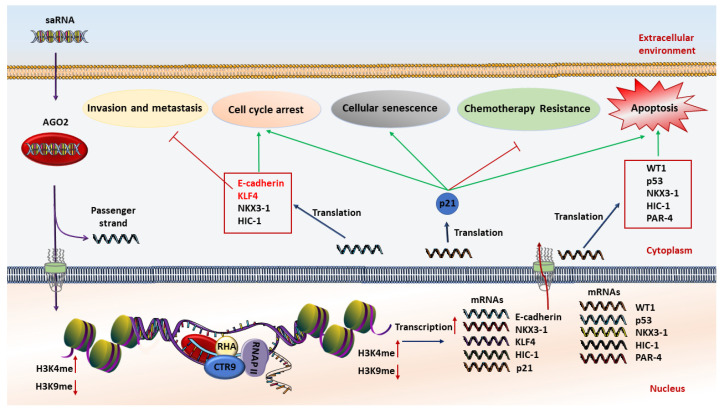
Verification
Claims the paper makes
The claims and statistics of this paper haven’t been checked yet.
Run the check — free, no account needed. It reads the open-access text and checks the sources it cites.
Claims other papers make about this one
Each is checked against this paper’s own text: does it say what the citing paper says it does?
In the citing paper
“Risk enrichments for schizophrenia, bipolar disorder, and autism spectrum disorder30,31 were most enriched in 5’-Del iGLUT neurons and 3’-Del iGABA neurons (Extended Data Fig. 2).”
From Phenotypic complexities of rare heterozygous neurexin-1 deletions (2025) · cites this paper as [31]
Self-check
Percentages, sums and reported differences re-computed from the paper’s own numbers.
The self-check needs the paper’s full text.
Citations
Cites
COVID-19 vaccine BNT162b1 elicits human antibody and TH1 T cell responses
Sahin, U., Muik, A., Derhovanessian, E., Vogler, I., Kranz, L. M., Vormehr, M., Baum, A., Pascal, K., Quandt, J., Maurus, D., et al. (2020) · Nature · doi:10.1038/s41586-020-2814-7 · Cited by 1,977
The current state and future directions of RNAi-based therapeutics
Setten, R. L., Rossi, J. J., & Han, S.-P. (2019) · Nature Reviews Drug Discovery · doi:10.1038/s41573-019-0017-4 · Cited by 1,443
Mending broken hearts: cardiac development as a basis for adult heart regeneration and repair
Xin, M., Olson, E. N., & Bassel-Duby, R. (2013) · Nature Reviews Molecular Cell Biology · doi:10.1038/nrm3619 · Cited by 514
Prelimbic cortical BDNF is required for memory of learned fear but not extinction or innate fear
Choi, D. C., Maguschak, K. A., Ye, K., Jang, S.-W., Myers, K. M., & Ressler, K. J. (2010) · Proceedings of the National Academy of Sciences · doi:10.1073/pnas.0909359107 · Cited by 212
Lipid-based nanoparticle formulations for small molecules and RNA drugs
Ickenstein, L. M., & Garidel, P. (2019) · Expert Opinion on Drug Delivery · doi:10.1080/17425247.2019.1669558 · Cited by 193
In vivo delivery of RNAi with lipid-based nanoparticles
Huang, L., & Liu, Y. (2011) · Annual Review of Biomedical Engineering · doi:10.1146/annurev-bioeng-071910-124709 · Cited by 174
Research works printed but not linked: 109
- Aghamiri, 2019, Nanoparticle-siRNA: A potential strategy for ovarian cancer therapy?, Nanomedicine, 14, 2083, 10.2217/nnm-2018-0379 · DOI
- Bajan, S., and Hutvagner, G. (2020). RNA-Based Therapeutics: From Antisense Oligonucleotides to miRNAs. Cells, 9. · DOI
- Dana, 2017, Molecular Mechanisms and Biological Functions of siRNA, Int. J. Biomed Sci., 13, 48, 10.59566/IJBS.2017.13048 · DOI
- Sun, 2015, Molecular Properties, Functional Mechanisms, and Applications of Sliced siRNA, Mol. Ther. Nucleic Acids, 4, e221, 10.1038/mtna.2014.73 · DOI
- Holoch, 2015, RNA-mediated epigenetic regulation of gene expression, Nat. Rev. Genet., 16, 71, 10.1038/nrg3863 · DOI
- Volpe, 2011, RNA interference and heterochromatin assembly, Cold Spring Harb. Perspect. Biol., 3, a003731, 10.1101/cshperspect.a003731 · DOI
- Czech, 2011, Small RNA sorting: Matchmaking for Argonautes, Nat. Rev. Genet., 12, 19, 10.1038/nrg2916 · DOI · Paper page
- Weng, 2019, RNAi therapeutic and its innovative biotechnological evolution, Biotechnol. Adv., 37, 801, 10.1016/j.biotechadv.2019.04.012 · DOI
- Kosaka, 2012, Targeted p21WAF1/CIP1 Activation by RNAa Inhibits Hepatocellular Carcinoma Cells, Nucleic Acid Ther., 22, 335, 10.1089/nat.2012.0354 · DOI
- Meng, 2016, Small activating RNA binds to the genomic target site in a seed-region-dependent manner, Nucleic Acids Res., 44, 2274, 10.1093/nar/gkw076 · DOI
- Wang, J., Place, R.F., Portnoy, V., Huang, V., Kang, M.R., Kosaka, M., Ho, M.K.C., and Li, L.C. (2015). Inducing gene expression by targeting promoter sequences using small activating RNAs. J. Biol. Methods, 2. · DOI
- Portnoy, 2011, Small RNA and transcriptional upregulation, Wiley Interdiscip. Rev. RNA, 2, 748, 10.1002/wrna.90 · DOI
- Modarresi, 2012, Inhibition of natural antisense transcripts in vivo results in gene-specific transcriptional upregulation, Nat. Biotechnol., 30, 453, 10.1038/nbt.2158 · DOI
- Ghanbarian, 2017, Small RNA-directed epigenetic programming of embryonic stem cell cardiac differentiation, Sci. Rep., 7, 41799, 10.1038/srep41799 · DOI
- Ghanbarian, 2011, A Network of Regulations by Small Non-Coding RNAs: The P-TEFb Kinase in Development and Pathology, Front. Genet., 2, 95, 10.3389/fgene.2011.00095 · DOI
- Lin, S., Zhang, L., Luo, W., and Zhang, X. (2015). Characteristics of Antisense Transcript Promoters and the Regulation of Their Activity. Int. J. Mol. Sci., 17. · DOI
- Faghihi, 2009, Regulatory roles of natural antisense transcripts, Nat. Rev. Mol. Cell Biol., 10, 637, 10.1038/nrm2738 · DOI
- Faghihi, 2010, RNAi screen indicates widespread biological function for human natural antisense transcripts, PLoS ONE, 5, e13177, 10.1371/journal.pone.0013177 · DOI
- Kim, 2008, MicroRNA-directed transcriptional gene silencing in mammalian cells, Proc. Natl. Acad. Sci. USA, 105, 16230, 10.1073/pnas.0808830105 · DOI
- Kuwabara, 2004, A small modulatory dsRNA specifies the fate of adult neural stem cells, Cell, 116, 779, 10.1016/S0092-8674(04)00248-X · DOI · Paper page
- Fimiani, 2016, RNA activation of haploinsufficient Foxg1 gene in murine neocortex, Sci. Rep., 6, 39311, 10.1038/srep39311 · DOI
- Burns, 2009, Stem cells for ischemic brain injury: A critical review, J. Comp. Neurol., 515, 125, 10.1002/cne.22038 · DOI
- Diodato, 2013, Promotion of cortico-cerebral precursors expansion by artificial pri-miRNAs targeted against the Emx2 locus, Curr. Gene Ther., 13, 152, 10.2174/1566523211313020009 · DOI
- Guerrini, 2012, Epilepsy in Rett syndrome, and CDKL5- and FOXG1-gene-related encephalopathies, Epilepsia, 53, 2067, 10.1111/j.1528-1167.2012.03656.x · DOI
- Ortega, 2010, BDNF/MAPK/ERK-induced BMP7 expression in the developing cerebral cortex induces premature radial glia differentiation and impairs neuronal migration, Cereb. Cortex, 20, 2132, 10.1093/cercor/bhp275 · DOI
- Antal, 2010, Brain-derived neurotrophic factor (BDNF) gene polymorphisms shape cortical plasticity in humans, Brain Stimul., 3, 230, 10.1016/j.brs.2009.12.003 · DOI
- Castillo, 2011, A role for MAPK and PI-3K signaling pathways in brain-derived neurotrophic factor modification of conditioned taste aversion retention, Behav. Brain Res., 217, 248, 10.1016/j.bbr.2010.10.013 · DOI
- Nikolakopoulou, 2010, Synaptic maturation of the Xenopus retinotectal system: Effects of brain-derived neurotrophic factor on synapse ultrastructure, J. Comp. Neurol., 518, 972, 10.1002/cne.22258 · DOI
- Chapleau, 2009, Modulation of dendritic spine development and plasticity by BDNF and vesicular trafficking: Fundamental roles in neurodevelopmental disorders associated with mental retardation and autism, J. Neurodev. Disord., 1, 185, 10.1007/s11689-009-9027-6 · DOI
- Sumner, 2015, Spinal Muscular Atrophy Therapeutics: Where do we Stand?, Neurotherapeutics, 12, 303, 10.1007/s13311-015-0337-y · DOI
- Lefebvre, 1995, Identification and characterization of a spinal muscular atrophy-determining gene, Cell, 80, 155, 10.1016/0092-8674(95)90460-3 · DOI
- Lorson, 1999, A single nucleotide in the SMN gene regulates splicing and is responsible for spinal muscular atrophy, Proc. Natl. Acad. Sci. USA, 96, 6307, 10.1073/pnas.96.11.6307 · DOI
- Lefebvre, 1997, Correlation between severity and SMN protein level in spinal muscular atrophy, Nat. Genet., 16, 265, 10.1038/ng0797-265 · DOI
- Ramos, 2017, The Antisense Transcript SMN-AS1 Regulates SMN Expression and Is a Novel Therapeutic Target for Spinal Muscular Atrophy, Neuron, 93, 66, 10.1016/j.neuron.2016.11.033 · DOI
- Turunen, M.P., Husso, T., Musthafa, H., Laidinen, S., Dragneva, G., Laham-Karam, N., Honkanen, S., Paakinaho, A., Laakkonen, J.P., and Gao, E. (2014). Epigenetic upregulation of endogenous VEGF-A reduces myocardial infarct size in mice. PLoS ONE, 9. · DOI
- Chen, 2011, Up-regulation of VEGF by small activator RNA in human corpus cavernosum smooth muscle cells, J. Sex Med., 8, 2773, 10.1111/j.1743-6109.2011.02412.x · DOI
- Husso, 2014, A New Gene Therapy Approach for Cardiovascular Disease by Non-coding RNAs Acting in the Nucleus, Mol. Ther. Nucleic Acids, 3, e197, 10.1038/mtna.2014.48 · DOI
- Lin, 2002, P-TEFb containing cyclin K and Cdk9 can activate transcription via RNA, J. Biol. Chem., 277, 16873, 10.1074/jbc.M200117200 · DOI
- Marshall, 1995, Purification of P-TEFb, a transcription factor required for the transition into productive elongation, J. Biol. Chem., 270, 12335, 10.1074/jbc.270.21.12335 · DOI
- Price, 2000, P-TEFb, a cyclin-dependent kinase controlling elongation by RNA polymerase II, Mol. Cell Biol., 20, 2629, 10.1128/MCB.20.8.2629-2634.2000 · DOI
- Leucci, 2007, The role of the Cdk9/Cyclin T1 complex in T cell differentiation, J. Cell Physiol., 212, 411, 10.1002/jcp.21032 · DOI
- Malumbres, 2008, CDK inhibitors in cancer therapy: What is next?, Trends Pharmacol. Sci., 29, 16, 10.1016/j.tips.2007.10.012 · DOI
- Kaichi, 2011, Cyclin-dependent kinase 9 forms a complex with GATA4 and is involved in the differentiation of mouse ES cells into cardiomyocytes, J. Cell Physiol., 226, 248, 10.1002/jcp.22336 · DOI
- Tarhriz, 2018, CDK9 Regulates Apoptosis of Myoblast Cells by Modulation of microRNA-1 Expression, J. Cell Biochem., 119, 547, 10.1002/jcb.26213 · DOI
- Wagner, 2008, RNA induction and inheritance of epigenetic cardiac hypertrophy in the mouse, Dev. Cell, 14, 962, 10.1016/j.devcel.2008.03.009 · DOI
- Sayed, 2007, MicroRNAs play an essential role in the development of cardiac hypertrophy, Circ. Res., 100, 416, 10.1161/01.RES.0000257913.42552.23 · DOI
- Peterlin, 2012, 7SK snRNA: A noncoding RNA that plays a major role in regulating eukaryotic transcription, Wiley Interdiscip. Rev. RNA, 3, 92, 10.1002/wrna.106 · DOI
- Mattick, J.S. (2018). The State of Long Non-Coding RNA Biology. Noncoding RNA, 4. · DOI
- Mattick, 2015, Discovery and annotation of long noncoding RNAs, Nat. Struct. Mol. Biol., 22, 5, 10.1038/nsmb.2942 · DOI
- Zhang, 2014, The role of antisense long noncoding RNA in small RNA-triggered gene activation, RNA, 20, 1916, 10.1261/rna.043968.113 · DOI
- Li, 2006, Small dsRNAs induce transcriptional activation in human cells, Proc. Natl. Acad. Sci. USA, 103, 17337, 10.1073/pnas.0607015103 · DOI
- Matsui, 2010, Activation of LDL receptor expression by small RNAs complementary to a noncoding transcript that overlaps the LDLR promoter, Chem. Biol., 17, 1344, 10.1016/j.chembiol.2010.10.009 · DOI
- Werner, A. (2013). Biological functions of natural antisense transcripts. BMC Biol., 11. · DOI
- Chen, 2008, Antitumor effect of dsRNA-induced p21(WAF1/CIP1) gene activation in human bladder cancer cells, Mol. Cancer Ther., 7, 698, 10.1158/1535-7163.MCT-07-2312 · DOI
- Place, 2012, Formulation of Small Activating RNA Into Lipidoid Nanoparticles Inhibits Xenograft Prostate Tumor Growth by Inducing p21 Expression, Mol. Ther. Nucleic Acids, 1, e15, 10.1038/mtna.2012.5 · DOI
- Wei, J., Zhao, J., Long, M., Han, Y., Wang, X., Lin, F., Ren, J., He, T., and Zhang, H. (2010). p21WAF1/CIP1 gene transcriptional activation exerts cell growth inhibition and enhances chemosensitivity to cisplatin in lung carcinoma cell. BMC Cancer, 10. · DOI
- Wu, 2011, Anti-cancer effects of p21WAF1/CIP1 transcriptional activation induced by dsRNAs in human hepatocellular carcinoma cell lines, Acta Pharmacol. Sin., 32, 939, 10.1038/aps.2011.28 · DOI
- Frixen, 1991, E-cadherin-mediated cell-cell adhesion prevents invasiveness of human carcinoma cells, J. Cell Biol., 113, 173, 10.1083/jcb.113.1.173 · DOI
- Richards, 1999, Germline E-cadherin gene (CDH1) mutations predispose to familial gastric cancer and colorectal cancer, Hum. Mol. Genet., 8, 607, 10.1093/hmg/8.4.607 · DOI
- Zandsalimi, 2020, Antimicrobial peptides: A promising strategy for lung cancer drug discovery?, Expert Opin. Drug Discov., 15, 1343, 10.1080/17460441.2020.1791080 · DOI
- Sarker, 2020, MTL-CEBPA, a Small Activating RNA Therapeutic Upregulating C/EBP-α, in Patients with Advanced Liver Cancer: A First-in-Human, Multicenter, Open-Label, Phase I Trial, Clin. Cancer Res., 26, 3936, 10.1158/1078-0432.CCR-20-0414 · DOI
- Kramer, 2020, Granulocytic Myeloid-Derived Suppressor Cells as Negative Regulators of Anticancer Immunity, Front. Immunol., 11, 1963, 10.3389/fimmu.2020.01963 · DOI
- Zhang, 2012, Up-regulation of p21WAF1/CIP1 by small activating RNA inhibits the in vitro and in vivo growth of pancreatic cancer cells, Tumori, 98, 804, 10.1177/030089161209800620 · DOI
- Yang, 2008, Up-regulation of p21WAF1/Cip1 by saRNA induces G1-phase arrest and apoptosis in T24 human bladder cancer cells, Cancer Lett., 265, 206, 10.1016/j.canlet.2008.02.014 · DOI
- Qin, 2012, RNAa-mediated overexpression of WT1 induces apoptosis in HepG2 cells, World J. Surg. Oncol., 10, 11, 10.1186/1477-7819-10-11 · DOI
- Mao, 2010, Suppression of migration and invasion of PC3 prostate cancer cell line via activating E-cadherin expression by small activating RNA, Cancer Investig., 28, 1013, 10.3109/07357900802620844 · DOI
- Mao, 2008, Up-regulation of E-cadherin by small activating RNA inhibits cell invasion and migration in 5637 human bladder cancer cells, Biochem. Biophys. Res. Commun., 375, 566, 10.1016/j.bbrc.2008.08.059 · DOI
- Junxia, 2010, Double strand RNA-guided endogeneous E-cadherin up-regulation induces the apoptosis and inhibits proliferation of breast carcinoma cells in vitro and in vivo, Cancer Sci., 101, 1790, 10.1111/j.1349-7006.2010.01594.x · DOI
- Wang, 2010, Prognostic value and function of KLF4 in prostate cancer: RNAa and vector-mediated overexpression identify KLF4 as an inhibitor of tumor cell growth and migration, Cancer Res., 70, 10182, 10.1158/0008-5472.CAN-10-2414 · DOI
- Lin, 2017, Enhanced wild-type p53 expression by small activating RNA dsP53-285 induces cell cycle arrest and apoptosis in pheochromocytoma cell line PC12, Oncol. Rep., 38, 3160, 10.3892/or.2017.5993 · DOI
- Zhao, F., Pan, S., Gu, Y., Guo, S., Dai, Q., Yu, Y., and Zhang, W. (2014). Small activating RNA restores the activity of the tumor suppressor HIC-1 on breast cancer. PLoS ONE, 9. · DOI
- Yang, 2013, Promoter-targeted double-stranded small RNAs activate PAWR gene expression in human cancer cells, Int. J. Biochem. Cell Biol., 45, 1338, 10.1016/j.biocel.2013.03.022 · DOI
- Ren, 2013, Targeted induction of endogenous NKX3-1 by small activating RNA inhibits prostate tumor growth, Prostate, 73, 1591, 10.1002/pros.22709 · DOI
- Zeng, 2018, SaRNA-mediated activation of TRPV5 reduces renal calcium oxalate deposition in rat via decreasing urinary calcium excretion, Urolithiasis, 46, 271, 10.1007/s00240-017-1004-z · DOI
- Kang, 2018, Small activating RNA induced expression of VHL gene in renal cell carcinoma, Int. J. Biochem. Cell Biol., 97, 36, 10.1016/j.biocel.2018.02.002 · DOI
- Xia, 2016, Small activating RNA upregulates NIS expression: Promising potential for hepatocellular carcinoma endoradiotherapy, Cancer Gene Ther., 23, 333, 10.1038/cgt.2016.36 · DOI
- Kang, 2012, Intravesical delivery of small activating RNA formulated into lipid nanoparticles inhibits orthotopic bladder tumor growth, Cancer Res., 72, 5069, 10.1158/0008-5472.CAN-12-1871 · DOI
- Reebye, 2014, Novel RNA oligonucleotide improves liver function and inhibits liver carcinogenesis in vivo, Hepatology, 59, 216, 10.1002/hep.26669 · DOI
- Huan, H., Wen, X., Chen, X., Wu, L., Liu, W., Habib, N.A., Bie, P., and Xia, F. (2016). C/EBPα Short-Activating RNA Suppresses Metastasis of Hepatocellular Carcinoma through Inhibiting EGFR/β-Catenin Signaling Mediated EMT. PLoS ONE, 11. · DOI
- Wang, 2017, Tumor-selective lipopolyplex encapsulated small active RNA hampers colorectal cancer growth in vitro and in orthotopic murine, Biomaterials, 141, 13, 10.1016/j.biomaterials.2017.06.029 · DOI
- Yoon, 2016, Targeted Delivery of C/EBPα -saRNA by Pancreatic Ductal Adenocarcinoma-specific RNA Aptamers Inhibits Tumor Growth In Vivo, Mol. Ther., 24, 1106, 10.1038/mt.2016.60 · DOI
- Li, 2016, Enhancing DPYSL3 gene expression via a promoter-targeted small activating RNA approach suppresses cancer cell motility and metastasis, Oncotarget, 7, 22893, 10.18632/oncotarget.8290 · DOI
- Wang, 2013, saRNA guided iNOS up-regulation improves erectile function of diabetic rats, J. Urol., 190, 790, 10.1016/j.juro.2013.03.043 · DOI
- Ma, 2020, Mechanism of Notch1-saRNA-1480 reversing androgen sensitivity in human metastatic castration-resistant prostate cancer, Int. J. Mol. Med., 46, 265
- Huang, 2020, Liver Activation of Hepatocellular Nuclear Factor-4α by Small Activating RNA Rescues Dyslipidemia and Improves Metabolic Profile, Mol. Ther. Nucleic Acids, 19, 361, 10.1016/j.omtn.2019.10.044 · DOI
- Zhu, 2020, Upregulation of FHIT gene expression in endometrial carcinoma by RNA activation, Int. J. Clin. Exp. Pathol., 13, 1372
- Wahlestedt, 2013, Targeting long non-coding RNA to therapeutically upregulate gene expression, Nat. Rev. Drug Discov., 12, 433, 10.1038/nrd4018 · DOI
- Poller, 2013, Cardiovascular RNA interference therapy: The broadening tool and target spectrum, Circ. Res., 113, 588, 10.1161/CIRCRESAHA.113.301056 · DOI
- Hedman, 2011, Progress and prospects: Hurdles to cardiovascular gene therapy clinical trials, Gene Ther., 18, 743, 10.1038/gt.2011.43 · DOI
- Cotrim, 2008, Gene therapy: Some history, applications, problems, and prospects, Toxicol. Pathol., 36, 97, 10.1177/0192623307309925 · DOI
- Phillips, 2001, The challenge of gene therapy and DNA delivery, J. Pharm. Pharmacol., 53, 1169, 10.1211/0022357011776603 · DOI
- Jafarlou, 2016, An overview of the history, applications, advantages, disadvantages and prospects of gene therapy, J. Biol. Regul. Homeost Agents, 30, 315
- Aldosari, B.N., Alfagih, I.M., and Almurshedi, A.S. (2021). Lipid Nanoparticles as Delivery Systems for RNA-Based Vaccines. Pharmaceutics, 13. · DOI
- Owens, 2006, Opsonization, biodistribution, and pharmacokinetics of polymeric nanoparticles, Int. J. Pharm., 307, 93, 10.1016/j.ijpharm.2005.10.010 · DOI · Paper page
- Kaczmarek, 2016, Polymer-Lipid Nanoparticles for Systemic Delivery of mRNA to the Lungs, Angew. Chem. Int. Ed. Engl., 55, 13808, 10.1002/anie.201608450 · DOI
- Watts, 2010, Effect of chemical modifications on modulation of gene expression by duplex antigene RNAs that are complementary to non-coding transcripts at gene promoters, Nucleic Acids Res., 38, 5242, 10.1093/nar/gkq258 · DOI
- Wahlestedt, 2000, Potent and nontoxic antisense oligonucleotides containing locked nucleic acids, Proc. Natl. Acad. Sci. USA, 97, 5633, 10.1073/pnas.97.10.5633 · DOI · Paper page
- Veedu, 2009, Locked nucleic acid as a novel class of therapeutic agents, RNA Biol., 6, 321, 10.4161/rna.6.3.8807 · DOI
- Zhang, 2011, Down-modulation of cancer targets using locked nucleic acid (LNA)-based antisense oligonucleotides without transfection, Gene Ther., 18, 326, 10.1038/gt.2010.133 · DOI
- Mook, 2010, In vivo efficacy and off-target effects of locked nucleic acid (LNA) and unlocked nucleic acid (UNA) modified siRNA and small internally segmented interfering RNA (sisiRNA) in mice bearing human tumor xenografts, Artif. DNA PNA XNA, 1, 36, 10.4161/adna.1.1.12204 · DOI
- Fluiter, 2003, In vivo tumor growth inhibition and biodistribution studies of locked nucleic acid (LNA) antisense oligonucleotides, Nucleic Acids Res., 31, 953, 10.1093/nar/gkg185 · DOI
- Dirin, 2013, Influence of diverse chemical modifications on the ADME characteristics and toxicology of antisense oligonucleotides, Expert Opin. Biol. Ther., 13, 875, 10.1517/14712598.2013.774366 · DOI
- Bennett, 2010, RNA targeting therapeutics: Molecular mechanisms of antisense oligonucleotides as a therapeutic platform, Annu. Rev. Pharmacol. Toxicol., 50, 259, 10.1146/annurev.pharmtox.010909.105654 · DOI
- Shim, 2010, Efficient and targeted delivery of siRNA in vivo, FEBS J., 277, 4814, 10.1111/j.1742-4658.2010.07904.x · DOI
- Juliano, 2013, Receptors, endocytosis, and trafficking: The biological basis of targeted delivery of antisense and siRNA oligonucleotides, J. Drug Target., 21, 27, 10.3109/1061186X.2012.740674 · DOI
- Aghamiri, 2020, Delivery of genome editing tools: A promising strategy for HPV-related cervical malignancy therapy, Expert Opin. Drug Deliv., 17, 753, 10.1080/17425247.2020.1747429 · DOI
- Yee, 1994, Cellular uptake of intracerebroventricularly administered biotin- or digoxigenin-labeled antisense oligodeoxynucleotides in the rat, Cell Mol. Neurobiol., 14, 475, 10.1007/BF02088832 · DOI
- Rigo, 2012, Antisense-based therapy for the treatment of spinal muscular atrophy, J. Cell Biol., 199, 21, 10.1083/jcb.201207087 · DOI
- Vogel, A.B., Kanevsky, I., Che, Y., Swanson, K.A., Muik, A., Vormehr, M., Kranz, L.M., Walzer, K.C., Hein, S., and Güler, A. (2021). Immunogenic BNT162b vaccines protect rhesus macaques from SARS-CoV-2. Nature. · DOI · Paper page
Cited by
Phenotypic complexities of rare heterozygous neurexin-1 deletions
Fernando, M. B., Fan, Y., Zhang, Y., Tokolyi, A., Murphy, A. N., Kammourh, S., Deans, P. J. M., Ghorbani, S., Onatzevitch, R., Pero, A., et al. (2025) · Nature · doi:10.1038/s41586-025-08864-9 · Cited by 30
Metadata
- Authors
- Ghanbarian, H., Aghamiri, S., Eftekhary, M., Wagner, N., & Wagner, K.-D.
- Venue
- Cells
- Publisher
- MDPI AG
- Published
- 2021-03-08
- Volume
- 10
- Issue
- 3
- Pages
- 591
- ISSN
- 2073-4409
- PMC
- PMC8001863
- Cited by
- 47
- References
- 6
- Language
- en
About these checks
Registry, retraction, Cites and statistics results are computed, not judged, with one exception: a printed reference that no index lists is read once by a model before it counts as a citation error. Claims are extracted by a model and kept only when their quote appears verbatim in the text; each cited source is then checked, with a model’s help, for whether it says what the claim relies on. Those verdicts can be wrong — read the claim’s quote and the cited source before relying on one.
Statistics and arithmetic are recomputed, not judged.
Confidence bands are shown only for fields calibrated on our annotated test set. None is calibrated yet, so no band is shown.
What counts as a claim ›How we measure confidence ›How we check this ›
Are you an author, or do you see a problem with this page? Request a review
Data sources
Bibliographic data: Semantic Scholar, OpenAlex, Crossref.
Contains information from the Semantic Scholar Academic Graph Datasets, made available under the ODC Attribution License (ODC-BY 1.0).
Semantic Scholar’s data is described in: Kinney, R., et al. (2023). The Semantic Scholar Open Data Platform. arXiv:2301.10140.
