

COVID-19 and Alzheimer’s Disease Share Common Neurological and Ophthalmological Manifestations: A Bidirectional Risk in the Post-Pandemic Future
Open accessThe DOI matches its Crossref record; 278 of the 278 references it cites were found in a registry or an index; none of the 236 sources its claims cite is checked for support yet.
Abstract
A growing body of evidence indicates that a neuropathological cross-talk takes place between the coronavirus disease 2019 (COVID-19) -the pandemic severe pneumonia that has had a tremendous impact on the global economy and health since three years after its outbreak in December 2019- and Alzheimer’s Disease (AD), the leading cause of dementia among human beings, reaching 139 million by the year 2050. Even though COVID-19 is a primary respiratory disease, its causative agent, the so-called Severe Acute Respiratory Syndrome coronavirus 2 (SARS-CoV-2), is also endowed with high neuro-invasive potential (Neurocovid). The neurological complications of COVID-19, resulting from the direct viral entry into the Central Nervous System (CNS) and/or indirect systemic inflammation and dysregulated activation of immune response, encompass memory decline and anosmia which are typically associated with AD symptomatology. In addition, patients diagnosed with AD are more vulnerable to SARS-CoV-2 infection and are inclined to more severe clinical outcomes. In the present review, we better elucidate the intimate connection between COVID-19 and AD by summarizing the involved risk factors/targets and the underlying biological mechanisms shared by these two disorders with a particular focus on the Angiotensin-Converting Enzyme 2 (ACE2) receptor, APOlipoprotein E (APOE), aging, neuroinflammation and cellular pathways associated with the Amyloid Precursor Protein (APP)/Amyloid beta (Aβ) and tau neuropathologies. Finally, the involvement of ophthalmological manifestations, including vitreo-retinal abnormalities and visual deficits, in both COVID-19 and AD are also discussed. Understanding the common physiopathological aspects linking COVID-19 and AD will pave the way to novel management and diagnostic/therapeutic approaches to cope with them in the post-pandemic future.
Overview
CoChat Summary
TL;DR
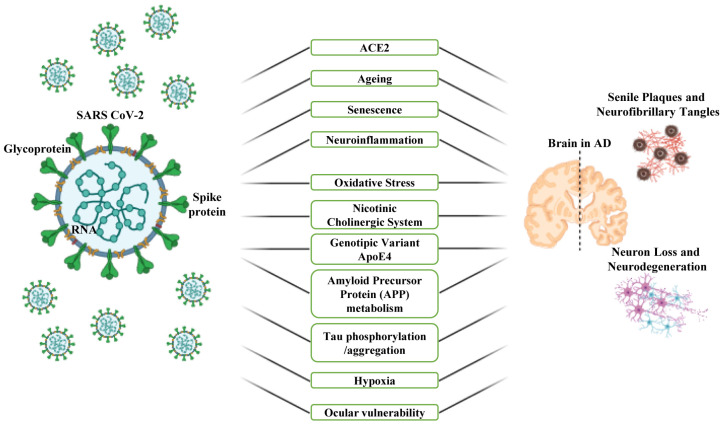
This narrative review argues that COVID-19 and Alzheimer's disease (AD) share neurological and ophthalmological manifestations and that the relationship is bidirectional: AD patients are more vulnerable to severe SARS-CoV-2 infection, while COVID-19 survivors appear at greater risk of AD-like cognitive decline. It catalogs shared risk factors and mechanisms—ACE2, APOE4, aging/senescence, neuroinflammation, oxidative stress, hypoxia, serotonin, and APP/Aβ and tau pathways—plus ocular involvement in both conditions.
Key findings
- A bidirectional association is documented: elderly AD patients show increased chance of severe COVID-19 complications and mortality, while people who have experienced COVID-19 are at greater risk of AD with reduced attention and executive/visuospatial function.
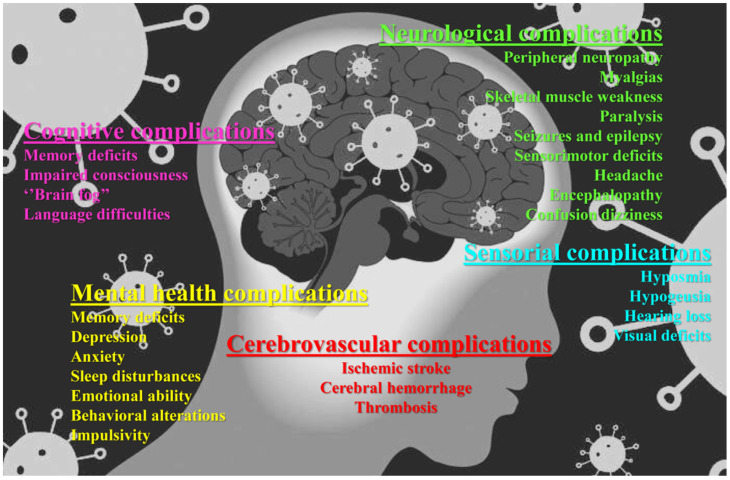
- Neurological complications persisting more than 2 years after acute infection include memory deficits (73%) and cognitive impairment/"brain fog" (85%), occurring at similar rates in hospitalized and non-hospitalized adults.
- ACE2 expression is significantly increased in brain tissue of AD subjects versus healthy controls, correlating with dementia severity and neuropathological parameters (dystrophic neurite density, Aβ plaques, NFT accumulation); Aβ1-42 (but not Aβ1-40) binds both the viral S1 protein and ACE2.
- Shared mechanisms include APOE4 (increased BBB permeability, pro-inflammatory cytokines, elevated SARS-CoV-2 infectivity in neurons/astrocytes, downregulated ACE2), NLRP3 inflammasome activation, α7nAChR impairment by the S1 glycoprotein, HIF-1α/hypoxia-driven AβPP processing, and tau hyperphosphorylation at AD-like epitopes (e.g., pSer262, pSer214, pSer356, pSer199/202) in COVID-19 brains.
- Ocular involvement is proposed as a shared feature: ACE2/neuropilin-1 in cornea, conjunctiva, retina and RPE; SARS-CoV-2 RNA detected in retina, cornea, conjunctiva, lacrimal sacs and tears; and Aβ/pTau deposits found in AD retinas, sometimes before clinical cognitive symptoms.
Methods
- Narrative review (no primary data collection); the authors synthesize clinical, epidemiological, molecular, histological and experimental literature on COVID-19 and AD.
- Evidence cited spans autopsy/CSF studies, iPSC and brain organoid models, animal models (hACE2 mice, Syrian golden hamsters, MHV-1 mice, 3xTg-AD mice), transcriptomic/interactomic profiling, and clinical follow-up cohorts.
- The review is organized around shared risk factors/mechanisms (ACE2 and aging, neuroinflammation/oxidative stress/cholinergic system, APOE and signaling pathways, hypoxia, serotonin) and a dedicated section on neuro-ophthalmic complications.
Limitations
- Stated by the paper: whether SARS-CoV-2 is actually present in the brain remains debated—some studies identify direct neuroinvasion while others find no viral RNA or particles in human tissues and CSF, or only very low levels, suggesting neuropathology may be mediated by systemic cytokines; not all inoculated animals show neurological complications or full-blown CNS infection.
- Stated by the paper: whether the reciprocal SARS-CoV-2/AD association reflects direct causality or chronic systemic inflammation remains to be determined, and how post-infection sequelae affect memory processes needs clarification; clinical follow-up studies in large cohorts and further organoid work are called for.
- Evident from the text: as a narrative review it presents no systematic search strategy, inclusion criteria, or quantitative synthesis, and several cited mechanisms (e.g., kynurenine pathway, serotonin, hyperbaric oxygen) rest on small or preliminary studies; the authors also note that some proposed links (e.g., the "infection hypothesis of AD") are hypotheses rather than established findings.
Model-written summary. Check it against the paper before relying on it.
Integrity signals
Registry
Cites
Statistics
Figures
Verification
Claims the paper makes
0 Valid · 3 Not valid · 94 Not checked · 8 Own results and interpretations
None of the sources cited for this claim have been checked yet.
In the paper
“the neurotropism and the replication capacity of SARS-CoV-2 have been confirmed in neuronal cultures, brain organoids, mice and human brain autopsies”
§ COVID-19 and Alzheimer’s Disease Share Common Neurological and Ophthalmological Manifestations: A Bidirectional Risk in the Post-Pandemic Future > 1. Introduction
What the sources say
- Not checked yetcites [14] Ackermann M. Verleden S.E. Kuehnel M. Haverich A. Welte T. Laenger F. Vanstapel A. Werlein C. Stark H. Tzankov A. Pulmonary vascular endothelialitis, thrombosis, and angiogenesis in COVID-19 N. Engl. J. Med. 2020 383 120 128 10.1056/NEJMoa2015432 32437596 PMC7412750 source
- Not checked yetcites [15] Chu H. Chan J.F. Yuen T.T. Shuai H. Yuan S. Wang Y. Hu B. Yip C.C.-Y. Tsang J.O.-L. Huang X. Comparative tropism, replication kinetics, and cell damage profiling of SARS-CoV-2 and SARS-CoV with implications for clinical manifestations, transmissibility, and laboratory studies of COVID-19: An observational study Lancet Microbe 2020 1 e14 e23 10.1016/S2666-5247(20)30004-5 32835326 PMC7173822 source
- Not checked yetcites [16] Sun S.-H. Chen Q. Gu H.-J. Yang G. Wang Y.-X. Huang X.-Y. Liu S.-S. Zhang N.-N. Li X.-F. Xiong R. A Mouse Model of SARS-CoV-2 Infection and Pathogenesis Cell Host Microbe 2020 28 124 133.e4 10.1016/j.chom.2020.05.020 32485164 PMC7250783 source
- Not checked yetcites [17] Von Weyhern C.H. Kaufmann I. Neff F. Kremer M. Early evidence of pronounced brain involvement in fatal COVID-19 outcomes Lancet 2020 395 e109 10.1016/S0140-6736(20)31282-4 32505222 PMC7272176 source
- Not checked yetcites [18] Zhang B.-Z. Chu H. Han S. Shuai H. Deng J. Hu Y.-F. Gong H.-R. Lee A.C.-Y.K. Zou Z. Yau T. SARS-CoV-2 infects human neural progenitor cells and brain organoids Cell Res. 2020 30 928 931 10.1038/s41422-020-0390-x 32753756 PMC7399356 source
plain- Asserted: passes — The authors put it forward as true.
- Checkable: passes — It can be checked against evidence.
- Load-bearing: passes — The paper’s conclusions depend on it.
- Based: passes — The paper gives a reason why it holds.
A conclusion the paper draws from its own results — it cites no other source for it, so there is none to check. The quote shows it is in the paper.
In the paper
“A growing body of evidence indicates that a neuropathological cross-talk takes place between the coronavirus disease 2019 (COVID-19) -the pandemic severe pneumonia that has had a tremendous impact on the global economy and health since three years after its outbreak in December 2019- and Alzheimer’s Disease (AD)”
§ COVID-19 and Alzheimer’s Disease Share Common Neurological and Ophthalmological Manifestations: A Bidirectional Risk in the Post-Pandemic Future > Abstract
hedgedstates an association- Asserted: passes — The authors put it forward as true.
- Checkable: passes — It can be checked against evidence.
- Load-bearing: passes — The paper’s conclusions depend on it.
- Based: unclear — It is unclear why the paper says it holds.
None of the sources cited for this claim have been checked yet.
In the paper
“the definite evidence of SARS-CoV-2’s presence in the nervous system is a matter of debate since neither viral RNA nor particles have been found in human tissues and CSFs by other researchers”
§ COVID-19 and Alzheimer’s Disease Share Common Neurological and Ophthalmological Manifestations: A Bidirectional Risk in the Post-Pandemic Future > 2. Neuroinvasive Mechanisms of SARS-CoV-2 and Neurological Manifestations of COVID-19
What the sources say
- Not checked yetcites [39] Kremer S. Lersy F. Anheim M. Merdji H. Schenck M. Oesterlé H. Bolognini F. Messie J. Khalil A. Gaudemer A. Neurologic and neuroimaging findings in patients with COVID-19: A retrospective multicenter study Neurology 2020 95 e1868 e1882 10.1212/WNL.0000000000010112 32680942 source
- Not checked yetcites [40] Edén A. Kanberg N. Gostner J. Fuchs D. Hagberg L. Andersson L.-A. Lindh M. Price R.W. Zetterberg H. Gisslén M. CSF Biomarkers in Patients with COVID-19 and Neurologic Symptoms: A Case Series Neurology 2021 96 e294 e300 10.1212/WNL.0000000000012530 33004602
- Not checked yetcites [41] Destras G. Bal A. Escuret V. Morfin F. Lina B. Josset L. COVID-Diagnosis HCL Study Group. Systematic SARS-CoV-2 screening in cerebrospinal fluid during the COVID-19 pandemic Lancet Microbe 2020 1 e149 10.1016/S2666-5247(20)30066-5 32835345 PMC7289579 source
- Not checked yetcites [42] Espíndola O.M. Siqueira M. Soares C.N. Lima M.A.S.D. Leite A.C.C.B. Araujo A.Q.C. Brandão C.O. Silva M.T.T. Patients with COVID-19 and neurological manifestations show undetectable SARS-CoV-2 RNA levels in the cerebrospinal fluid Int. J. Infect. Dis. 2020 96 567 569 10.1016/j.ijid.2020.05.123 32505878 PMC7271861 source
- Not checked yetcites [43] Lee M.H. Perl D.P. Steiner J. Pasternack N. Li W. Maric D. Safavi F. Horkayne-Szakaly I. Jones R. Stram M.N. Neurovascular injury with complement activation and inflammation in COVID-19 Brain 2022 145 2555 2568 10.1093/brain/awac151 35788639 PMC9278212 source
hedged- Asserted: passes — The authors put it forward as true.
- Checkable: passes — It can be checked against evidence.
- Load-bearing: unclear — It is unclear whether the paper’s conclusions depend on it.
- Based: passes — The paper gives a reason why it holds.
None of the sources cited for this claim have been checked yet.
In the paper
“a strong bidirectional relationship existing between the COVID-19 infection and AD development has been clearly documented”
§ COVID-19 and Alzheimer’s Disease Share Common Neurological and Ophthalmological Manifestations: A Bidirectional Risk in the Post-Pandemic Future > 3. Bidirectional Relationships between Long COVID-19 and AD
What the sources say
- Not checked yetcites [69] Ferini-Strambi L. Salsone M. COVID-19 and neurological disorders: Are neurodegenerative or neuroimmunological diseases more vulnerable? J. Neurol. 2021 268 409 419 10.1007/s00415-020-10070-8 32696341 PMC7372546 source
- Not checked yetcites [70] Daroische R. Hemminghyth M.S. Eilertsen T.H. Breitve M.H. Chwiszczuk L.J. Cognitive Impairment after COVID-19—A Review on Objective Test Data Front. Neurol. 2021 12 699582 10.3389/fneur.2021.699582 34393978 PMC8357992 source
boostedstates an association- Asserted: passes — The authors put it forward as true.
- Checkable: passes — It can be checked against evidence.
- Load-bearing: passes — The paper’s conclusions depend on it.
- Based: passes — The paper gives a reason why it holds.
The paper states this without a source or data behind it here, so there is nothing to check it against. The quote shows it is in the paper.
In the paper
“its causative agent, the so-called Severe Acute Respiratory Syndrome coronavirus 2 (SARS-CoV-2), is also endowed with high neuro-invasive potential (Neurocovid).”
§ COVID-19 and Alzheimer’s Disease Share Common Neurological and Ophthalmological Manifestations: A Bidirectional Risk in the Post-Pandemic Future > Abstract
boosted- Asserted: passes — The authors put it forward as true.
- Checkable: passes — It can be checked against evidence.
- Load-bearing: passes — The paper’s conclusions depend on it.
- Based: unclear — It is unclear why the paper says it holds.
54 more claims
Create a free account to see all 105 claims and to verify the 236 references still open.
- It may state two separate claims as one. 37
- Probably not a substantial claim. 9
Citations
Cites
Items 201–278 of 278
ACUTE VISION LOSS IN A PATIENT WITH COVID-19Preprint
Selvaraj, V., Sacchetti, D. C., Finn, A., & Dapaah-Afriyie, K. (2020) · medRxiv · doi:10.1101/2020.06.03.20112540 · Cited by 45
Cognitive Impairment after Post-Acute COVID-19 Infection: A Systematic Review of the Literature
Perrottelli, A., Sansone, N., Giordano, G. M., Caporusso, E., Giuliani, L., Melillo, A., Pezzella, P., Bucci, P., Mucci, A., & Galderisi, S. (2022) · Journal of Personalized Medicine · doi:10.3390/jpm12122070 · Cited by 43
Visual signs and symptoms in patients with the visual variant of Alzheimer disease
Kaeser, P.-F., Ghika, J., & Borruat, F.-X. (2015) · BMC Ophthalmology · doi:10.1186/s12886-015-0060-9 · Cited by 43
Cytokine Storm in COVID19: A Neural Hypothesis
Anoop, U. R., & Verma, K. (2020) · ACS Chemical Neuroscience · doi:10.1021/acschemneuro.0c00346 · Cited by 43
Mostafavi, E., Dubey, A. K., Teodori, L., Ramakrishna, S., & Kaushik, A. (2022) · MedComm · doi:10.1002/mco2.119 · Cited by 43
Bowirrat, A. (2022) · Journal of Personalized Medicine · doi:10.3390/jpm12111817 · Cited by 42
Neuroinflammation in Alzheimer’s Disease: Microglia, Molecular Participants and Therapeutic Choices
Wang, H., Shen, Y., Chuang, H., Chiu, C., Ye, Y., & Zhao, L. (2019) · Current Alzheimer Research · doi:10.2174/1567205016666190503151648 · Cited by 41
Inflammation: A Major Target for Compounds to Control Alzheimer’s Disease
Maccioni, R. B., Navarrete, L. P., González, A., González-Canacer, A., Guzmán-Martínez, L., & Cortés, N. (2020) · Journal of Alzheimer's Disease · doi:10.3233/jad-191014 · Cited by 40
Szczęśniak, M., & Brydak-Godowska, J. E. (2021) · Medical Science Monitor · doi:10.12659/msm.931863 · Cited by 40
COVID-19 as a Risk Factor for Alzheimer’s Disease
Golzari-Sorkheh, M., Weaver, D. F., & Reed, M. A. (2023) · Journal of Alzheimer's Disease · doi:10.3233/jad-220800 · Cited by 39
Long-Term Sequelae of COVID-19 in Experimental Mice
Paidas, M. J., Cosio, D. S., Ali, S., Kenyon, N. S., & Jayakumar, A. R. (2022) · Molecular Neurobiology · doi:10.1007/s12035-022-02932-1 · Cited by 39
del Ser, T., Fernández-Blázquez, M. A., Valentí, M., Zea-Sevilla, M. A., Frades, B., Alfayate, E., Saiz, L., Calero, O., García-López, F. J., Rábano, A., et al. (2021) · Gerontology · doi:10.1159/000513182 · Cited by 38
Harch, P. G., & Fogarty, E. (2018) · Medical Gas Research · doi:10.4103/2045-9912.248271 · Cited by 38
Jana, S., Heaven, M. R., Stauft, C. B., Wang, T. T., Williams, M. C., D’Agnillo, F., & Alayash, A. I. (2022) · International Journal of Molecular Sciences · doi:10.3390/ijms24010558 · Cited by 37
Neurological sequela and disruption of neuron-glia homeostasis in SARS-CoV-2 infection
Savelieff, M. G., Feldman, E. L., & Stino, A. M. (2022) · Neurobiology of Disease · doi:10.1016/j.nbd.2022.105715 · Cited by 37
Long-term cognitive impairments following COVID-19: A possible impact of hypoxia
Dondaine, T., Ruthmann, F., Vuotto, F., Carton, L., Gelé, P., Faure, K., Deplanque, D., & Bordet, R. (2022) · Journal of Neurology · doi:10.1007/s00415-022-11077-z · Cited by 37
Severe COVID-19 in Alzheimer’s disease: APOE4′s fault again?
Xiong, N., Schiller, M. R., Li, J., Chen, X., & Lin, Z. (2021) · Alzheimer's Research & Therapy · doi:10.1186/s13195-021-00858-9 · Cited by 36
Multiple biochemical deficits in both gray and white matter of Alzheimer brains
Gottfries, C.-G., Bartfai, T., Carlsson, A., Eckerkäs, S., & Svennerholm, L. (1986) · Progress in Neuro-Psychopharmacology and Biological Psychiatry · doi:10.1016/0278-5846(86)90014-x · Cited by 35
Latina, V., Giacovazzo, G., Cordella, F., Balzamino, B. O., Micera, A., Varano, M., Marchetti, C., Malerba, F., Florio, R., Ercole, B. B., et al. (2021) · Acta Neuropathologica Communications · doi:10.1186/s40478-021-01138-1 · Cited by 34
Self-citationSARS-CoV-2 Targeting the Retina: Host-virus Interaction and Possible Mechanisms of Viral Tropism
de Figueiredo, C. S., Raony, Í., & Giestal-de-Araujo, E. (2020) · Ocular Immunology and Inflammation · doi:10.1080/09273948.2020.1799037 · Cited by 32
Potential of Ocular Transmission of SARS-CoV-2: A Review
Barnett, B. P., Wahlin, K., Krawczyk, M., Spencer, D., Welsbie, D., Afshari, N., & Chao, D. (2020) · Vision · doi:10.3390/vision4030040 · Cited by 32
Vascular and Nonvascular Mechanisms of Cognitive Impairment and Dementia
Kara, B., Gordon, M. N., Gifani, M., Dorrance, A. M., & Counts, S. E. (2023) · Clinics in Geriatric Medicine · doi:10.1016/j.cger.2022.07.006 · Cited by 31
Spike Protein Fragments Promote Alzheimer’s Amyloidogenesis
Cao, S., Song, Z., Rong, J., Andrikopoulos, N., Liang, X., Wang, Y., Peng, G., Ding, F., & Ke, P. C. (2023) · ACS Applied Materials & Interfaces · doi:10.1021/acsami.3c09815 · Cited by 31
Ma, G., Zhang, D.-F., Zou, Q.-C., Xie, X., Xu, L., Feng, X.-L., Li, X., Han, J.-B., Yu, D., Deng, Z.-H., et al. (2022) · Cell Discovery · doi:10.1038/s41421-022-00458-3 · Cited by 30 · cited 1×
“…Angiotensin-Converting Enzyme 2 (hACE2) suggest novel insights by showing, for the first time, that the SARS-CoV-2 spike protein S2 subunit is able per se to enhance the A β production via direct binding to and the modulation of the processing enzymatic activity of the γ -secretase complex [191].”
Backgroundde Erausquin, G. A., Snyder, H. M., Brugha, T. S., Seshadri, S. S., Carrillo, M. C., Sagar, R., Huang, Y., Newton, C. R. J. C., Tartaglia, M. C., Teunissen, C. E., et al. (2022) · Alzheimer s & Dementia Translational Research & Clinical Interventions · doi:10.1002/trc2.12348 · Cited by 30
MacLean, M. A., Kamintsky, L., Leck, E., & Friedman, A. (2020) · Fluids and Barriers of the CNS · doi:10.1186/s12987-020-00216-1 · Cited by 30
Update on overview of ocular manifestations of COVID-19
Akbari, M., & Dourandeesh, M. (2022) · Frontiers in Medicine · doi:10.3389/fmed.2022.877023 · Cited by 30
Disorders of the Cholinergic System in COVID-19 Era—A Review of the Latest Research
Kopańska, M., Batoryna, M., Bartman, P., Szczygielski, J., & Banaś-Ząbczyk, A. (2022) · International Journal of Molecular Sciences · doi:10.3390/ijms23020672 · Cited by 29
Di Primio, C., Quaranta, P., Mignanelli, M., Siano, G., Bimbati, M., Scarlatti, A., Piazza, C. R., Spezia, P. G., Perrera, P., Basolo, F., et al. (2023) · PNAS Nexus · doi:10.1093/pnasnexus/pgad282 · Cited by 29
Pathogenesis of Olfactory Disorders in COVID-19
Ziuzia-Januszewska, L., & Januszewski, M. (2022) · Brain Sciences · doi:10.3390/brainsci12040449 · Cited by 28
Optic neuropathies post-Covid 19 - review
State, S.-E. A.-S., Sfredel, V., Mocanu, C. L., Albu, C. V., & Bălășoiu, A.-T. (2022) · Romanian Journal of Ophthalmology · doi:10.22336/rjo.2022.54 · Cited by 28
Regional Cerebral Blood Flow Correlates of Visuospatial Tasks in Alzheimer’s Disease
TIPPETT, W. J., & BLACK, S. E. (2008) · Journal of the International Neuropsychological Society · doi:10.1017/s1355617708081241 · Cited by 27
Unilateral inferior altitudinal visual field defect related to COVID-19
Sharma, A., Kudchadkar, U. S., Shirodkar, R., Usgaonkar, U., & Naik, A. (2021) · Indian Journal of Ophthalmology · doi:10.4103/ijo.ijo_3666_20 · Cited by 27
Tu, L., Lv, X., Fan, Z., Zhang, M., Wang, H., & Yu, X. (2020) · Frontiers in Neuroscience · doi:10.3389/fnins.2020.586330 · Cited by 26
Reveret, L., Leclerc, M., Emond, V., Tremblay, C., Loiselle, A., Bourassa, P., Bennett, D. A., Hébert, S. S., & Calon, F. (2023) · Acta Neuropathologica Communications · doi:10.1186/s40478-023-01647-1 · Cited by 26
Sodagar, A., Javed, R., Tahir, H., Razak, S. I. A., Shakir, M., Naeem, M., Yusof, A. H. A., Sagadevan, S., Hazafa, A., Uddin, J., et al. (2022) · Biomolecules · doi:10.3390/biom12070971 · Cited by 26
Chung, S. J., Chang, Y., Jeon, J., Shin, J. I., Song, T.-J., & Kim, J. (2022) · Journal of Alzheimer's Disease · doi:10.3233/jad-220031 · Cited by 25
Plangár, I., Zádori, D., Klivényi, P., Toldi, J., & Vécsei, L. (2011) · Journal of Alzheimer's Disease · doi:10.3233/jad-2011-110131 · Cited by 24
Is Telomere Length Shortening a Risk Factor for Neurodegenerative Disorders?
Yu, H.-J., & Koh, S. (2022) · Dementia and Neurocognitive Disorders · doi:10.12779/dnd.2022.21.3.83 · Cited by 23
Kujawska, M., Mostafavi, E., & Kaushik, A. (2023) · Neural Regeneration Research · doi:10.4103/1673-5374.346486 · Cited by 23
Choe, K., Park, H. Y., Ikram, M., Lee, H. J., Park, T. J., Ullah, R., & Kim, M. O. (2022) · Cells · doi:10.3390/cells11081298 · Cited by 22
Apolipoprotein E4 allele in subjects with COVID-19
Hubacek, J. A., Dlouha, L., Dusek, L., Majek, O., & Adamkova, V. (2021) · Gerontology · doi:10.1159/000516200 · Cited by 22
Villaume, W. A. (2022) · Medical Hypotheses · doi:10.1016/j.mehy.2022.110842 · Cited by 21
Aβ Deposits in the Neocortex of Adult and Infant Hypoxic Brains, Including in Cases of COVID-19
Priemer, D. S., Rhodes, C. H., Karlovich, E., Perl, D. P., & Goldman, J. E. (2022) · Journal of Neuropathology & Experimental Neurology · doi:10.1093/jnen/nlac095 · Cited by 20
Leitzke, M. (2023) · Bioelectronic Medicine · doi:10.1186/s42234-023-00104-7 · Cited by 20
Dong, J., Chen, R., Zhao, H., & Zhu, Y. (2023) · Advances in Ophthalmology Practice and Research · doi:10.1016/j.aopr.2022.11.001 · Cited by 20
Association of apolipoprotein e polymorphism with SARS-CoV-2 infection
Al-Jaf, S. M. A., Niranji, S. S., Ali, H. N., & Mohammed, O. A. (2021) · Infection, Genetics and Evolution · doi:10.1016/j.meegid.2021.105043 · Cited by 20
Covid-19 and its relation to the human eye: transmission, infection, and ocular manifestations
Eissa, M., Abdelrazek, N. A., & Saady, M. (2022) · Graefe s Archive for Clinical and Experimental Ophthalmology · doi:10.1007/s00417-022-05954-6 · Cited by 20
The impact of COVID-19 lockdown on brain metabolism
Guedj, E., Campion, J., Horowitz, T., Barthelemy, F., Cammilleri, S., & Ceccaldi, M. (2022) · Human Brain Mapping · doi:10.1002/hbm.25673 · Cited by 20
Tau protein aggregation associated with SARS-CoV-2 main protease
Eberle, R. J., Coronado, M. A., Gering, I., Sommerhage, S., Korostov, K., Stefanski, A., Stühler, K., Kraemer‐Schulien, V., Blömeke, L., Bannach, O., et al. (2023) · PLoS ONE · doi:10.1371/journal.pone.0288138 · Cited by 19
Motaghinejad, M., & Gholami, M. (2020) · International Journal of Preventive Medicine · doi:10.4103/ijpvm.ijpvm_114_20 · Cited by 19
Pathogenesis of Vascular Retinal Manifestations in COVID-19 Patients: A Review
D’Alessandro, E., Kawasaki, A., & Eandi, C. M. (2022) · Biomedicines · doi:10.3390/biomedicines10112710 · Cited by 18
Neurological involvement in the respiratory manifestations of COVID-19 patients
Tan, B., Liu, J., Gui, Y., Wu, S., Suo, J., & Li, Y. (2021) · Aging · doi:10.18632/aging.202665 · Cited by 18
COVID‐19 and the impact on Alzheimer's disease pathology
Furman, S., Green, K., & Lane, T. E. (2023) · Journal of Neurochemistry · doi:10.1111/jnc.15985 · Cited by 16
Immunosenescence and Inflammaging in COVID-19
Asghari, F., Asghary, A., Majidi Zolbanin, N., Faraji, F., & Jafari, R. (2023) · Viral Immunology · doi:10.1089/vim.2023.0045 · Cited by 16
Gonzalez-Fernandez, E., & Huang, J. (2023) · Current Neurology and Neuroscience Reports · doi:10.1007/s11910-023-01286-y · Cited by 14
Wang, S.-M., Park, S. H., Kim, N.-Y., Kang, D. W., Na, H.-R., Um, Y. H., Han, S., Park, S.-S., & Lim, H. K. (2021) · Psychiatry Investigation · doi:10.30773/pi.2021.0064 · Cited by 13
Durand, D., Olivera, E., Sáez, A., Carniglia, L., Caruso, C., & Lasaga, M. (2023) · Neural Regeneration Research · doi:10.4103/1673-5374.360273 · Cited by 12
Impact of the COVID-19 Pandemic on Chronic Neurological Disorders: Focus on Patients with Dementia
Irrera, N., Barbieri, M. A., Bagnato, G., Ioppolo, C., & Versace, A. G. (2022) · CNS & Neurological Disorders - Drug Targets · doi:10.2174/1871527321666220111124928 · Cited by 11
Li, M., Yang, Y., He, T., Wei, R., Shen, Y., Qi, T., Han, T., Song, Z., Zhu, Z., Ma, X., et al. (2021) · Annals of Translational Medicine · doi:10.21037/atm-20-6026 · Cited by 10
APOE4: A Culprit for the Vulnerability of COVID-19 in Alzheimer’s Patients
Agrawal, N., Goyal, A., Kushwah, P. S., & Pathak, S. (2023) · Current Neurovascular Research · doi:10.2174/1567202620666230202140612 · Cited by 9
Β-Amyloid Deposits in Young COVID Patients
Rhodes, C. H., Priemer, D. S., Karlovich, E., Perl, D. P., & Goldman, J. (2022) · SSRN Electronic Journal · doi:10.2139/ssrn.4003213 · Cited by 8
Vitreoretinal abnormalities in corona virus disease 2019 patients: What we know so far
Sutandi, N., & Lee, F. (2021) · Taiwan Journal of Ophthalmology · doi:10.4103/tjo.tjo_30_21 · Cited by 8
Visual perception alterations in COVID-19: a preliminary study
Coco-Martín, M. B., Alcoceba-Herrero, I., Molina‐Martín, A., Sáiz, D. D. F., Cobija, M. J. L., Dueñas, C., Arenillas, J. F., & Pinero, D. P. (2022) · International Journal of Ophthalmology · doi:10.18240/ijo.2023.01.01 · Cited by 8
Sivagurunathan, N., & Calivarathan, L. (2024) · CNS & Neurological Disorders - Drug Targets · doi:10.2174/1871527322666230418114446 · Cited by 7
Kim, Y.-J., Jee, Y., Park, S., Ha, E.-H., Jo, I., Lee, H. W., & Song, M. S. (2021) · Dementia and Geriatric Cognitive Disorders · doi:10.1159/000519466 · Cited by 7
Insights on the possibility of SARS-CoV-2 transmission through the eyes
Zhu, R., & Han, L. G. (2022) · International Journal of Ophthalmology · doi:10.18240/ijo.2022.11.18 · Cited by 6
Ramachandran, A. K., Das, S., Shenoy, G. G., Mudgal, J., & Joseph, A. (2024) · CNS & Neurological Disorders - Drug Targets · doi:10.2174/1871527322666221226145141 · Cited by 6
Selective serotonin reuptake inhibitor use, age-related neuropathology and cognition in late-life
Sood, A., Wilson, R. S., Yu, L., Wang, T., Schneider, J. A., Honer, W. G., & Bennett, D. A. (2023) · Psychiatry Research · doi:10.1016/j.psychres.2023.115471 · Cited by 6
Olfactory system measurements in COVID-19: A systematic review and meta-analysis
Mohammadi, S., Gouravani, M., Salehi, M. A., Harandi, H., Moosaie, F., Dehghani Firouzabadi, F., & Yousem, D. M. (2023) · Neuroradiology · doi:10.1007/s00234-022-03014-8 · Cited by 6
SARS-CoV-2 Neuroinvasion, Inflammatory Neurodegeneration and Alzheimer’s Disease
Zhao, Y., & Lukiw, W. J. (2022) · Frontiers in Cellular Neuroscience · doi:10.3389/fncel.2022.937961 · Cited by 6
Vandersteen, C., Plonka, A., Manera, V., Sawchuk, K., Lafontaine, C., Galéry, K., Rouaud, O., Bengaied, N., Launay, C. P., Guérin, O., et al. (2023) · Frontiers in Aging Neuroscience · doi:10.3389/fnagi.2023.1206123 · Cited by 6
Association of ApoE isoforms with COVID-19 outcomes: A world-wide epidemiological study
Dhangadamajhi, G., Mishra, S., & Mukherjee, P. (2021) · Human Cell · doi:10.1007/s13577-021-00596-y · Cited by 5
Tau protein aggregation associated with SARS-CoV-2 main protease
Eberle, R. J., Coronado, M. A., Gering, I., Korostov, K., Stefanski, A., Stühler, K., Kraemer-Schulien, V., Blömeke, L., Bannach, O., & Willbold, D. (2023) · doi:10.1101/2023.03.04.531078 · Cited by 3
Using EM data to understand COVID-19 pathophysiology
Dolhnikoff, M., Duarte‐Neto, A. N., Saldiva, P. H. N., & Caldini, E. T. E. G. (2021) · The Lancet · doi:10.1016/s0140-6736(21)00034-9 · Cited by 3
Ophthalmic Presentations and Manifestations of COVID-19: A Systematic Review of Global Observations
Pace, J. L., Richard, D., Khachik, A., Mistry, M., Singh, G., Mostaghni, N., & Yazdanmehr, S. (2023) · Cureus · doi:10.7759/cureus.40695 · Cited by 3
Author Response: CSF Biomarkers in Patients With COVID-19 and Neurologic Symptoms: A Case Series
Edén, A. (2021) · Neurology · doi:10.1212/wnl.0000000000012530 · Cited by 2
(2019) · doi:10.1684/pnv.2019.0815
Cited by
Gusev, E., & Sarapultsev, A. (2024) · International Journal of Molecular Sciences · doi:10.3390/ijms25126389 · Cited by 46
Maggiore, A., Latina, V., D’Erme, M., Amadoro, G., & Coccurello, R. (2024) · Ageing Research Reviews · doi:10.1016/j.arr.2024.102578 · Cited by 27
Self-citationLi, J., KONG, X., Liu, T., Xian, M., & Wei, J. (2024) · International Journal of Molecular Sciences · doi:10.3390/ijms25189960 · Cited by 20
Pulliam, L., Sun, B., McCafferty, E., Soper, S. A., Witek, M. A., Hu, M., Ford, J. M., Song, S., Kapogiannis, D., Glesby, M. J., et al. (2024) · International Journal of Molecular Sciences · doi:10.3390/ijms25073830 · Cited by 18
Ilić, I., Jakovljevic, V. L., Mačužić, I. Ž., Ravić‐Nikolić, A., Ilić, M., Šorak, M., & Milicic, V. M. (2024) · Medicina · doi:10.3390/medicina60111783 · Cited by 18
Metadata
- Authors
- Amadoro, G., Latina, V., Stigliano, E., & Micera, A.
- Affiliations
- Istituto di Farmacologia Traslazionale (IT)
- Università Cattolica del Sacro Cuore (IT)
- Fondazione G.B. Bietti (IT)
- Corresponding author
- Amadoro, Giuseppina
- Micera, Alessandra
- Venue
- Cells
- Publisher
- MDPI AG
- Published
- 2023-11-10
- Volume
- 12
- Issue
- 22
- Pages
- 2601
- ISSN
- 2073-4409 (ISSN-L)
- PMC
- PMC10670749
- OpenAlex
- W4388636296
- Cited by
- 22
- References
- 274
- Citations by year
- 2026: 4 · 2025: 6 · 2024: 12
- FWCI
- 0.77
- Type
- journal article
- Language
- en
- Open access
- gold
- doi.org
- Licence
- Locations
- Cells (publishedVersion, cc-by)
- PubMed Central (publishedVersion, cc-by)
- PubMed (publishedVersion)
- DOAJ (DOAJ: Directory of Open Access Journals) (submittedVersion)
- Funders
- Regione Lazio, POR FESR Lazio 2014–2020 (T0002E0001 G04014_13_04_2021, 971925, RF-2021-12374301, FOE D.M865/2019)
- “Progetti di Gruppi di Ricerca 2020” (Determinazione dirigenziale n.G08487 del 19 luglio 2020) Project (T0002E0001 G04014_13_04_2021, 971925, RF-2021-12374301, FOE D.M865/2019)
- Alzheimer’s Association Research Grant (T0002E0001 G04014_13_04_2021, 971925, RF-2021-12374301, FOE D.M865/2019)
- Ministry of Health (T0002E0001 G04014_13_04_2021, 971925, RF-2021-12374301, FOE D.M865/2019)
- PNRR (National Plan for Recovery and Resilience Next Generation EU) (T0002E0001 G04014_13_04_2021, 971925, RF-2021-12374301, FOE D.M865/2019)
- Fondo Ordinario Enti (T0002E0001 G04014_13_04_2021, 971925, RF-2021-12374301, FOE D.M865/2019)
- Fondazione Roma and Italian Ministry of Health (Ricerca Corrente) (Italy) (T0002E0001 G04014_13_04_2021, 971925, RF-2021-12374301, FOE D.M865/2019)
- Topics
- Health Sciences › Medicine › Clinical Neurology › Long-Term Effects of COVID-19
- Life Sciences › Neuroscience › Cellular and Molecular Neuroscience › Alzheimer's disease research and treatments
- Health Sciences › Medicine › Infectious Diseases › COVID-19 Clinical Research Studies
- Keywords
- COVID-19 pandemic, Alzheimer's disease, SARS-CoV-2, neuroinvasion, ACE2 receptor, apolipoprotein E, aging, neuroinflammation, amyloid-beta, tau pathology, ocular manifestations, anosmia, memory decline, dementia risk
- MeSH terms
- COVID-19, SARS-CoV-2, Alzheimer Disease, Humans, Nervous System Diseases, Amyloid beta-Peptides, Pandemics
About these checks
Registry, retraction, Cites and statistics results are computed, not judged, with one exception: a printed reference that no index lists is read once by a model before it counts as a citation error. Claims are extracted by a model and kept only when their quote appears verbatim in the text; each cited source is then checked, with a model’s help, for whether it says what the claim relies on. Those verdicts can be wrong — read the claim’s quote and the cited source before relying on one.
A language model drew the claims from the paper on 2026-11-26, under version 3 of the claim definition (model deepseek-v4.1-flash, prompt extract-v3).
A second model labelled each claim on 2026-11-26 (model jev-1.13-20260917, definition revision gold-guideline-v0.2).
Statistics and arithmetic are recomputed, not judged.
Confidence bands are shown only for fields calibrated on our annotated test set. None is calibrated yet, so no band is shown.
What counts as a claim ›How we measure confidence ›How we check this ›
Are you an author, or do you see a problem with this page? Request a review
Data sources
Bibliographic data: Semantic Scholar, OpenAlex, Crossref.
Contains information from the Semantic Scholar Academic Graph Datasets, made available under the ODC Attribution License (ODC-BY 1.0).
Semantic Scholar’s data is described in: Kinney, R., et al. (2023). The Semantic Scholar Open Data Platform. arXiv:2301.10140.
