

Vitamin D and Calcium in Osteoporosis, and the Role of Bone Turnover Markers: A Narrative Review of Recent Data from RCTs
Open accessThe DOI matches its Crossref record; 94 of the 96 references it cites were found in a registry or an index.
Abstract
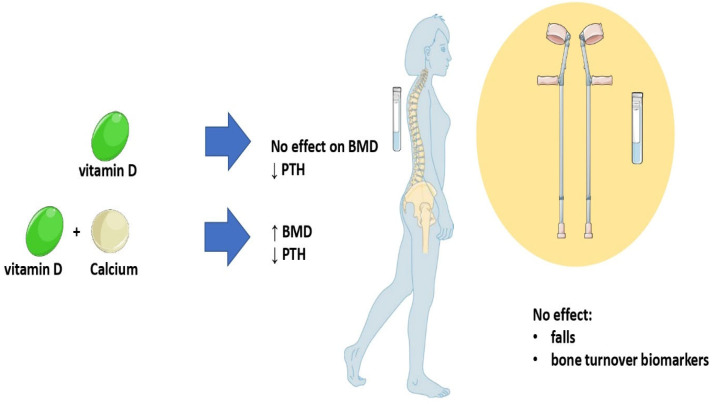
Osteoporosis is a common disease, defined primarily by a low measured bone density, which is associated with an increased risk of fragility fractures. Low calcium intake and vitamin D deficiency seem to be positively correlated with the prevalence of osteoporosis. Although they are not suitable for the diagnosis of osteoporosis, the biochemical markers of bone turnover can be measured in serum and/or urine, enabling the assessment of the dynamic bone activity and the short-term effectiveness of the osteoporosis treatment. Calcium and vitamin D are essential for maintaining bone health. The aim of this narrative review is to summarize the effects of vitamin D and calcium supplementation separately and in combination, on bone density and circulating serum and blood plasma vitamin D, calcium, parathyroid hormone levels, markers of bone metabolism concentrations, and clinical outcomes, such as falls and osteoporotic fractures. We searched the PubMed online database to find clinical trials from the last five years (2016-April 2022). A total of 26 randomized clinical trials (RCTs) were included in this review. The present reviewed evidence suggests that vitamin D alone or in combination with calcium increases circulating 25(OH)D. Calcium with concomitant vitamin D supplementation, but not vitamin D alone, leads to an increase in BMD. In addition, most studies did not detect significant changes in circulating levels of plasma bone metabolism markers, nor in the incidence of falls. Instead, there was a decrease in blood serum PTH levels in the groups receiving vitamin D and/or Ca supplementation. The plasma vitamin D levels at the beginning of the intervention, and the dosing regimen followed, may play a role in the observed parameters. However, further study is needed to determine an appropriate dosing regimen for the treatment of osteoporosis and the role of bone metabolism markers.
Overview
The claims and statistics of this paper haven’t been checked yet.
Free: it reads the open-access text and checks the first 5 claims that cite a source we can check. Create a free account to check every claim.
Integrity signals
Registry
Cites
Statistics
Figures
Verification
Claims the paper makes
The claims and statistics of this paper haven’t been checked yet.
Free: it reads the open-access text and checks the first 5 claims that cite a source we can check. Create a free account to check every claim.
Claims other papers make about this one
Each is checked against this paper’s own text: does it say what the citing paper says it does?
The source backs part of the claim, not all of it — or backs it for a different population, condition or comparison.
In the citing paper
“Long-term inadequate Ca intake leads to bone-related complications, such as osteopenia, osteoporosis, and bone fracture (8, 9).”
From Impacts of people at-risk of either cow milk allergies or lactose intolerance on their daily calcium intake and bone mineral density (2024) · cites this paper as [8]
Experimental — accuracy not yet measuredIn the citing paper
“Ca supplements have been shown to help increase bone density and slow bone loss even in postmenopausal women.”
From The Effects of Calcium and Glutamine Co-supplementation on Body Composition and Bone Mineral Density in Young Female Athletes: A Randomized Clinical Trial (2026) · cites this paper as [14]
Self-check
Percentages, sums and reported differences re-computed from the paper’s own numbers.
The self-check needs the paper’s full text.
Citations
Cites
Holick, M. F., Binkley, N. C., Bischoff-Ferrari, H. A., Gordon, C. M., Hanley, D. A., Heaney, R. P., Murad, M. H., & Weaver, C. M. (2011) · The Journal of Clinical Endocrinology & Metabolism · doi:10.1210/jc.2011-0385 · Cited by 10,538 · cited 2×
“While there is an agreement that values of 25(OH)D < 10 ng/mL (=25 nmol/l) represent a state of severe deficiency, there is no consensus on what would be considered as a “normal” value [10,11].”
European guidance for the diagnosis and management of osteoporosis in postmenopausal women
Kanis, J. A., McCloskey, E. V., Johansson, H., Cooper, C., Rizzoli, R., Reginster, J.-Y., & on behalf of the Scientific Advisory Board of the European Society for Clinical and Economic Aspects of Osteoporosis and Osteoarthritis (ESCEO) and the Committee of Scientific Advisors of the International Osteoporosis Foundation (IOF) (2013) · Osteoporosis International · doi:10.1007/s00198-012-2074-y · Cited by 2,948
European guidance for the diagnosis and management of osteoporosis in postmenopausal women
on behalf of the Scientific Advisory Board of the European Society for Clinical and Economic Aspects of Osteoporosis (ESCEO) and the Committees of Scientific Advisors and National Societies of the International Osteoporosis Foundation (IOF), Kanis, J. A., Cooper, C., Rizzoli, R., & Reginster, J.-Y. (2019) · Osteoporosis International · doi:10.1007/s00198-018-4704-5 · Cited by 1,900
Fracture Prevention With Vitamin D Supplementation: A Meta-analysis of Randomized Controlled Trials
Bischoff-Ferrari, H. A., Willett, W. C., Wong, J. B., Giovannucci, E., Dietrich, T., & Dawson-Hughes, B. (2005) · JAMA · doi:10.1001/jama.293.18.2257 · Cited by 1,530 · cited 1×
“Our results are similar to a meta-analysis that concluded that vitamin D had no effect on the total fractures, hip fractures, or falls [55], while several meta-analysis have shown that the combination of calcium and vitamin D significantly reduced the fractures risk [12,65,68].”
Weaver, C. M., Gordon, C. M., Janz, K. F., Kalkwarf, H. J., Lappe, J. M., Lewis, R., O’Karma, M., Wallace, T. C., & Zemel, B. S. (2016) · Osteoporosis International · doi:10.1007/s00198-015-3440-3 · Cited by 1,378 · cited 3×
“Diet and physical activity are the primary modifiable factors associated with bone health, although other lifestyle and environmental factors may also play an important role [16].”
InfluentialEpidemiology, etiology, and diagnosis of osteoporosis
Lane, N. E. (2006) · American Journal of Obstetrics and Gynecology · doi:10.1016/j.ajog.2005.08.047 · Cited by 1,293
Trivedi, D. P., Doll, R., & Khaw, K. T. (2003) · BMJ · doi:10.1136/bmj.326.7387.469 · Cited by 1,270 · cited 1×
“In addition, concomitant calcium supplementation may reduce compliance with vitamin D, due to calcium-induced digestive problems, which probably supported the decision in some trials to try vitamin D supplementation alone [89].”
Salari, N., Ghasemi, H., Mohammadi, L., Behzadi, M. H., Rabieenia, E., Shohaimi, S., & Mohammadi, M. (2021) · Journal of Orthopaedic Surgery and Research · doi:10.1186/s13018-021-02772-0 · Cited by 1,020
SCOPE 2021: a new scorecard for osteoporosis in Europe
Kanis, J. A., Norton, N., Harvey, N. C., Jacobson, T., Johansson, H., Lorentzon, M., McCloskey, E. V., Willers, C., & Borgström, F. (2021) · Archives of Osteoporosis · doi:10.1007/s11657-020-00871-9 · Cited by 714
Effects of vitamin D supplements on bone mineral density: A systematic review and meta-analysis
Reid, I. R., Bolland, M. J., & Grey, A. (2014) · The Lancet · doi:10.1016/s0140-6736(13)61647-5 · Cited by 678 · cited 1×
“Studies were conducted in the USA [32,35,36], Canada [41,42], Brazil [18,34], European countries [33,37,38,40,46], New Zealand [45], and Asia [43,44].”
Cited by
The multi-faceted nature of age-associated osteoporosis
Smit, A. E., Meijer, O. C., & Winter, E. M. (2024) · Bone Reports · doi:10.1016/j.bonr.2024.101750 · Cited by 94
Ashraf, S. A. (2025) · Discover Food · doi:10.1007/s44187-025-00512-5 · Cited by 82
The Brain–Gut–Bone Axis in Neurodegenerative Diseases: Insights, Challenges, and Future Prospects
Li, R., Miao, Z., Liu, Y., Chen, X., Wang, H., Su, J., & Chen, J. (2024) · Advanced Science · doi:10.1002/advs.202307971 · Cited by 65
Vitamin D Deficiency as a Risk Factor of Preeclampsia during Pregnancy
Giourga, C., Papadopoulou, S. Κ., Voulgaridou, G., Karastogiannidou, C., Giaginis, C., & Pritsa, A. A. (2023) · Diseases · doi:10.3390/diseases11040158 · Cited by 48
“The simultaneous administration of calcium and vitamin D has been linked to enhanced bone mineral density (BMD) [66].”
BackgroundSelf-citationUkrainian Consensus on Diagnosis and Management of Vitamin D Deficiency in Adults
Grygorieva, N. V., Tronko, M. D., Коваленко, В. Н., Комісаренко, С. В., Татарчук, Т. Ф., Dedukh, N. V., Veliky, M. M., Strafun, S. S., Komisarenko, I., Калашніков, А. В., et al. (2024) · Nutrients · doi:10.3390/nu16020270 · Cited by 48
“The combined use of cholecalciferol and calcium has been shown to increase bone mineral density and reduce the risk of osteoporotic fractures as well as osteoma-lacia [79,99,100].”
BackgroundMagnesium: Health Effects, Deficiency Burden, and Future Public Health Directions
Sarić, M. M., Sorić, T., Kasap, Ž. J., Šikić, N. L., Mavar, M., Andruškienė, J., & Sarić, A. (2025) · Nutrients · doi:10.3390/nu17223626 · Cited by 39
“Optimal bone strength depends on the coordinated action of magnesium, calcium, and vitamin D, which together regulate bone mineralization and remodeling [215,216].”
Fatima, N., Yaqoob, S., Rana, L., Imtiaz, A., Iqbal, M. J., Bashir, Z., Shaukat, A., Naveed, H., Sultan, W., Afzal, M. K., et al. (2025) · Frontiers in Nutrition · doi:10.3389/fnut.2025.1476672 · Cited by 36
Lee, K. I.-R., Chen, J.-H., & Chen, K.-H. (2026) · International Journal of Molecular Sciences · doi:10.3390/ijms27020641 · Cited by 33
“The interplay between underlying genetic architecture and modifiable lifestyle-related influences highlights the multifactorial nature of PMOP and underscores the need for comprehensive risk assessment and individualized prevention strategies [77,78].”
Osei, E. D., Amotoe‐Bondzie, A., Pokuah, A. A., Laar, W. S., Afoakwah, N. A., & Ivanišová, E. (2025) · Food Science & Nutrition · doi:10.1002/fsn3.70185 · Cited by 31
“Calcium is crucial for improving bone health and lowering systolic blood pressure (Prentice et al. 2024; Voulgaridou et al. 2023) and potassium is vital for supporting muscle development and regulating blood pressure (de Freitas et al. 2023).”
Osteoporosis: Spotlight on current approaches to pharmacological treatment
Sindel, D. (2023) · Turkish Journal of Physical Medicine and Rehabilitation · doi:10.5606/tftrd.2023.13054 · Cited by 26
Exploring the impact of vitamin D on tendon health: a comprehensive review
Tarantino, D., Mottola, R., Sirico, F., Corrado, B., Ruosi, C., Saggini, R., & Pellegrino, R. (2024) · Journal of Basic and Clinical Physiology and Pharmacology · doi:10.1515/jbcpp-2024-0061 · Cited by 20
Yang, M., Sun, N., Lai, X., Zhao, X., & Zhou, W. (2023) · Biosensors · doi:10.3390/bios14010017 · Cited by 19
“Additionally, ambient light interference can impact the accuracy of the readings [76].”
BackgroundAssociation between Vitamin D and Short-Term Functional Outcomes in Acute Ischemic Stroke
Kim, M., Lee, J. S., Chung, S. J., & Soh, Y. (2023) · Nutrients · doi:10.3390/nu15234957 · Cited by 18
“Vitamin D (Vit D), also known as calciferol, is a fat-soluble compound that acts as a steroid hormone to regulate calcium homeostasis and bone metabolism [6].”
BackgroundSiregar, M. F. G., Jabbar, F., Effendi, I. H., Alhair, T., Prabudi, M. O., & Faradina, D. (2024) · Narra J · doi:10.52225/narra.v4i1.452 · Cited by 18
“Post-menopausal women have low estradiol levels which are more vulnerable to vitamin D deficiency [13-16].”
BackgroundImpact of Vitamin D Deficiency on Ischemic Stroke Severity: Insights from a Prospective Study
Simon, J., Sriharsha, T., Kumaresan, A. P., Chand, U., & Bose, S. (2024) · Cureus · doi:10.7759/cureus.69376 · Cited by 16
“Once produced or ingested, vitamin D binds to the vitamin D receptor (VDR), initiating a cascade of biological processes critical for maintaining health [3].”
BackgroundAkbar, A., Zaheer, A., Kharal, M. M., Komel, A., Khan, M. H., Ahsan, A., & Singh, A. K. (2025) · Medicine · doi:10.1097/md.0000000000041605 · Cited by 16
Deniz, K. N., & Aksoy, M. K. (2025) · BMC Musculoskeletal Disorders · doi:10.1186/s12891-025-08578-z · Cited by 16
“Most studies included in the review found no significant effect of interventions with vitamin D on BTMs. Interventions with vitamin D and calcium supplements showed increases, decreases, or no significant changes [35].”
Vitamin D in Parkinson's disease: A systematic review of randomized controlled trials
Detopoulou, P., Voulgaridou, G., Saridaki, A., Pylarinou, I., Argyris, E.-M., Dedes, V., Giaginis, C., Panoutsopoulos, G. I., & Papadopoulou, S. Κ. (2023) · Clinical Nutrition Open Science · doi:10.1016/j.nutos.2023.09.005 · Cited by 16
Self-citationBone Loss and Fractures in Post-Menopausal Women Living with HIV: A Narrative Review
Jamshaid, M., Heidari, A., Hassan, A. M., Mital, D., Pearce, O., Panourgia, M. P., & Ahmed, M. H. (2024) · Pathogens · doi:10.3390/pathogens13090811 · Cited by 15
“Vitamin D is crucial in calcium absorption in the gut, which maintains normal bone homeostasis [106].”
Li, J., Zhou, X., Wen, J., Liu, S., & Fan, X. (2024) · Scientific Reports · doi:10.1038/s41598-024-56127-w · Cited by 14
“The imbalance of calcium in the body affects bone density and metabolism, leading to bone loss and increasing the risk of developing DOP 33 .”
BackgroundMancin, S., Cangelosi, G., Matteucci, S., Palomares, S. M., Parozzi, M., Sandri, E., Sguanci, M. E., & Piredda, M. (2024) · Nutrients · doi:10.3390/nu16172976 · Cited by 14
“In osteoporosis, in particular, the recommended doses depend on several factors such as age, gender, and the presence of other concomitant medical conditions [43].”
BackgroundBarroso, T. L. C. T., Ferreira, V. C., Castro, L. E. N., da Rosa, R. G., de Souza, L. G. A., Goldbeck, R., & Forster‐Carneiro, T. (2024) · Biofuels Bioproducts and Biorefining · doi:10.1002/bbb.2718 · Cited by 13
“72 A study by Patra et al .”
Dietary interventions and nutritional strategies for menopausal health: a mini review
Liu, Y.-C., & Guo, Z.-Q. (2025) · Frontiers in Nutrition · doi:10.3389/fnut.2025.1702105 · Cited by 11
Kongpharm, K., Nakklay, P., Kongtong, C., Tanapumchai, P., Prapkree, L., Rueangsri, N., & Singhato, A. (2024) · Frontiers in Nutrition · doi:10.3389/fnut.2024.1421275 · Cited by 10
Comprehensive High-Spatial-Resolution Imaging Metabolomics Workflow for Heterogeneous Tissues
Diao, X., Wang, J., Xie, C., Chen, L., Lam, T. K. Y., Zhu, L., & Cai, Z. (2025) · Analytical Chemistry · doi:10.1021/acs.analchem.4c05410 · Cited by 10
Rico-González, M., Gómez‐Carmona, C. D., González-Devesa, D., Ardigò, L. P., & Moreno-Villanueva, A. (2025) · Nutrients · doi:10.3390/nu17172878 · Cited by 9
“However, the co-administration of calcium with vitamin D supplementation leads to significant improvements in bone mineral density [10,11].”
Zhang, Y., Zhang, Y., Yan, Y., Kong, X., & Su, S. (2024) · Frontiers in Aging Neuroscience · doi:10.3389/fnagi.2024.1420885 · Cited by 9
“Moreover, the decrease in BMD in PD patients is associated not only with malnutrition and reduced muscle strength but also potentially with long-term levodopa use.”
BackgroundInfluentialMartiniaková, M., Kováčová, V., Bíro, R., Mondočková, V., Šarocká, A., Pénzes, N., Folwarczna, J., & Omelka, R. (2025) · Biomedicine & Pharmacotherapy · doi:10.1016/j.biopha.2025.118063 · Cited by 9
Vitamin D deficiency and disease conditions relevant to: Orthopaedic translation
Mudiyanselage, D. E., Ouyang, C. E., Jin, R. D., Velmurugan, S., Jiang, Y., Sun, J., & Ma, D. (2026) · Journal of Orthopaedic Translation · doi:10.1016/j.jot.2026.101061 · Cited by 8
“Calcium and vitamin D co-supplementation has also been shown to elevate bone mineral density in osteoporosis patients [138].”
Kuo, S.-J., Chen, C.-L., Chen, S.-H., & Ko, J.-Y. (2023) · Life · doi:10.3390/life13071438 · Cited by 7
“Calcium phosphate homeostasis is mainly regulated by vitamin D, iPTH and fibroblast growth factor 23 [15].”
BackgroundSilva, A. N. A., Nunes, G. P., Domingues, D. V. A. D. P., de Toledo, P. T. A., Akinsomisoye, O. S., Florencio‐Silva, R., & Cerri, P. S. (2025) · Pharmaceuticals · doi:10.3390/ph18081172 · Cited by 7
“Furthermore, it is worth noting that co-supplementation with vitamin D and calcium may enhance the effects of LYC, as these nutrients contribute to improved mineral absorption and increased bone mineral density [67].”
Duangjai, A., Srivilai, J., Nangola, S., & Amornlerdpison, D. (2025) · Clinics and Practice · doi:10.3390/clinpract15090168 · Cited by 7
“Most studies did not detect significant changes in circulating levels of plasma bone metabolism marker after supplementation, especially bone formation markers including P1NP, osteocalcin, and BAP [15] and serum calcium level [16].”
Bai, J., Huang, W., Yan, R., & Du, X. (2025) · Nutrients · doi:10.3390/nu17243866 · Cited by 6
“While supplementation can correct serum 25(OH)D deficiency [9], it does not stimulate bone formation in the absence of an anabolic signal such as exercise.”
Liu, T., Yao, M., Zhao, Y., Zhao, S., Chen, R., & Yang, F. (2023) · Journal of Orthopaedic Surgery and Research · doi:10.1186/s13018-023-04264-9 · Cited by 6
“A recent narrative review found that compared to taking vitamin D supplements alone, simultaneous supplementation with vitamin D and calcium was more effective in improving BMD [9].”
Mohamed, Z. A., Bai, M., Dong, H., Yang, X., Jia, F., & Feng, J. (2025) · Nutrition Journal · doi:10.1186/s12937-025-01112-w · Cited by 6
“Adequate vitamin D₃ levels are crucial not only for bone health [34], but also for immune regulation [35], and neurodevelopment [36].”
Knowledge about Vitamin D among General Population in Baghdad City
Ghazi, H. F., Taher, T. M. J., & Hasan, T. N. (2024) · Rwanda Journal of Medicine and Health Sciences · doi:10.4314/rjmhs.v7i1.7 · Cited by 5
“[ 36] The effect of vitamin D in the prevention of osteoporosis was detected by 81.6 % of Jordanian adult people and 78% of them thought that its deficiency may lead to pain in bones and joints.”
MethodInfluentialGlenn, E. R., Zhu, A. R., O’Connell, E. M., Mao, E., & Srikumaran, U. (2025) · JSES International · doi:10.1016/j.jseint.2025.01.010 · Cited by 5
“25,30,44 In orthopedic surgery, current literature reports 30%-47% of patients have insuf fi cient vitamin D levels.”
Sukkho, T., Khanongnuch, C., Lumyong, S., Ruangsuriya, J., Apichai, S., Surh, Y., Pattananandecha, T., & Saenjum, C. (2025) · Antioxidants · doi:10.3390/antiox14030252 · Cited by 5
“Osteocalcin (OC), produced by mature osteoblasts, is key in matrix mineralization and calcium ion balance [12].”
Barrea, L., Caprio, M., Perrini, S., Camajani, E., Crafa, A., Gangitano, E., Gorini, S., Sciacca, L., Verde, L., Albertelli, M., et al. (2025) · Journal of Endocrinological Investigation · doi:10.1007/s40618-025-02589-2 · Cited by 5
“Supplementation with calcium and vitamin D may be beneficial in preventing osteoporosis, a prevalent complication in this population [ 171 ].”
Vitamin D and Diabetes: Exploring the Link, Prevention, and Management
Bjørklund, G., Butnariu, M., Gurgas, L., & Hangan, T. (2025) · Current Medicinal Chemistry · doi:10.2174/0109298673360987250621042131 · Cited by 4
Importancia de una alimentación saludable en mexicanos
Díaz-López, K. D. J., López, V. A. Q., Díaz, C. I. B., & Mejía-León, M. E. (2025) · Ediciones Comunicación Científica eBooks · doi:10.52501/cc.321 · Cited by 4
Manjula, S., & Krishna Kumar, M. (2024) · International Journal of Research in Orthopaedics · doi:10.18203/issn.2455-4510.intjresorthop20240420 · Cited by 5
Kelly, D. C., Fan, M. J. M., Langton, R. S., & Stahlman, S. L. (2024) · PubMed Central · Cited by 4
Gomes, B., & Vale, N. (2025) · Current Oncology · doi:10.3390/curroncol32060305 · Cited by 4
“Conversely, nutritional deficiencies, particularly in older adults or individuals with a lower genetic predisposition for osteoporosis, may accelerate bone loss, thereby increasing the risk of fractures and other related complications [41,44].”
Antonescu, O. R., Silişteanu, S. C., Venter, A. C., Racheriu, M., Antonescu, I. E., & Nemes-Nagy, E. (2024) · Balneo and PRM Research Journal · doi:10.12680/balneo.2024.756 · Cited by 4
“…values for vitamin D and PTH showed weak and moderate negative correlations with DXA, these results are in line with other studies that have observed that vitamin D deficiency and secondary hyperparathyroidism are common in patients with osteoporosis and contribute to decreased bone density [28].”
Osteoporosis Evaluation by Radiofrequency Echographic Multispectrometry (REMS) in Primary Healthcare
Vieira, A., & Santos, R. M. (2025) · Diagnostics · doi:10.3390/diagnostics15070808 · Cited by 4
“The literature review by Voulgaridou et al. (2023) indicated that combined vitamin D and calcium supplementation improves BMD and decreases PTH activity, preventing the risk of fractures [45].”
Park, J. Y., Chung, Y., Kim, J.-H., & Song, J. (2025) · Medicina · doi:10.3390/medicina61050805 · Cited by 5
“Vitamin D is an essential nutrient that facilitates calcium absorption and regu‑ lates bone formation, playing a crucial role in the prevention and treatment of osteoporo‑ sis [13].”
Zhu, Z., Li, Y., Chen, J., Su, S., Tao, R., & Wang, D. (2026) · Global Spine Journal · doi:10.1177/21925682261418701 · Cited by 3
“20 The present fi ndings are consistent with these reports, 22 further strengthening the robustness of the evidence.”
InfluentialAkshay, A., Sharma, R. M., Singh, N., Sharma, N., Awasthi, O. P., Sethi, S., Rana, V. S., Jha, S. K., Sharma, V. K., Shivran, M., et al. (2026) · Horticulturae · doi:10.3390/horticulturae12050530 · Cited by 3
“Mineral-specific disorders, such as anaemia (iron deficiency), osteoporosis (calcium deficiency), and hypokalaemia (potassium deficiency), can lead to severe acute malnutrition [2–4].”
Shende, S., & Rathored, J. (2026) · Journal of Clinical Medicine · doi:10.3390/jcm15124742 · Cited by 3
“Vitamin D was historically confined to skeletal biology, primarily associated with calcium–phosphate homeostasis and the prevention of rickets, osteomalacia, and osteoporosis [11].”
Knowledge and Predictors of Vitamin D Awareness Among Greek Women: A Cross-Sectional Study
Voulgaridou, G., Athanassiou, F., Kravvariti, E., Doulgeraki, S., Papadopoulou, S. Κ., & Kokokiris, L. E. (2025) · Diseases · doi:10.3390/diseases13020058 · Cited by 3
“Adequate vitamin D intake, particularly when combined with calcium, is well established to increase bone mineral density, reducing the risk of fractures and falls [2].”
Self-citationSringari, S., Vijaykumar, S. D., Sherkane, M., Venkatesh, M., Gupta, S., Lomore, K., & Venkatesh, K. V. (2025) · Frontiers in Nutrition · doi:10.3389/fnut.2025.1519756 · Cited by 3
“These gains were driven by the combined intake of protein, calcium, vitamin D, and zinc, which improved serum nutrient levels and contributed to the observed increases in FFM and BMC (40–42).”
Nasraldin, K., Diab, A. A., AbdElkhalek, A. S., Talaat, S. N., Hossameldin, S., Tawfik, F. S., Ghaith, N. K., & Said, A. (2025) · Journal of Molecular Histology · doi:10.1007/s10735-025-10483-7 · Cited by 3
“Our results are consistent with clinical studies demonstrating the adverse effects of high-dose vita - min D supplementation, such as the increased fracture risk observed in osteoporosis trials (Voulgaridou et al. 2023).”
Kusuma, B. W. A., Dwiningsih, S. R., As’adi, A., & Wahyuningsih, S. P. A. (2025) · The Indonesian Biomedical Journal · doi:10.18585/inabj.v17i5.3796 · Cited by 3
Scarpina, F., Cattaldo, S., Prina, E., Piterà, P., Brusa, F., Priano, L., Mendolicchio, L., & Mauro, A. (2024) · Nutrients · doi:10.3390/nu16223902 · Cited by 2
Ruotsalainen, T., Panfilov, E., Thevenot, J., Tiulpin, A., Saarakkala, S. S., Niinimäki, J. L., Lehenkari, P. P., & Valkealahti, M. (2025) · Archives of Osteoporosis · doi:10.1007/s11657-025-01542-3 · Cited by 2
Post-stroke Bone Fragility: Early Bone Loss, Risk Factors, and Recovery Considerations
Osman, A., Maya, T., Doshi, N., Abbas, H., Marquez, T., Hasana, Z., Morgan, S., Chelton, A., & Rasmussen, J. (2025) · Cureus · doi:10.7759/cureus.89282 · Cited by 2
“Higher levels of health literacy and social support have been correlated to better health outcomes and quality of life in post-stroke patients [42,43].”
Sharma, A. K., Juyal, A. K., & Priyadarshi, H. (2025) · Cureus · doi:10.7759/cureus.94199 · Cited by 2
“Elderly individuals are particularly vulnerable due to factors such as reduced sun exposure, impaired skin synthesis, poor nutrition, and decreased hepatic and renal conversion of vitamin D [8].”
Askarian, M., Baloochi, A., Vizeshfar, F., Mohammadizadeh, F., Mottahedi, M., & Abaszadeh, F. (2025) · BMC Public Health · doi:10.1186/s12889-025-25697-3 · Cited by 2
“Evidence supports the role of adequate calcium and vitamin D intake [13], regular weight-bearing exercise [14], and avoidance of smoking [15] and limiting excessive alcohol consumption [16] in preserving bone health.”
TERAPIAS HORMONAIS: COMPROVAÇÃO CIENTÍFICA BASEADA EM EVIDÊNCIAS E O USO INDISCRIMINADO
Oliveira, K. C., Sousa, G. F. L., & Maciel, J. B. (2025) · Revista de Geopolítica · doi:10.56238/revgeov16n5-222 · Cited by 2
Osteoporosis: definition, diagnosis, and considerations prior to starting treatment
Vidal, M., & Lane, N. E. (2026) · Exploration of Endocrine and Metabolic Diseases · doi:10.37349/eemd.2026.101456 · Cited by 2
Khalil, M. H., Khan, M. A., Akram, M. A. A., & Khalil, M. H. (2026) · Developmental medico-life-sciences · doi:10.69750/dmls.03.03.0197 · Cited by 2
Ligotti, M. E., Scalia, E., Scilabra, S. D., Pinto, M. L., Gallo, A., Vazzana, R., Cuscino, N., Re, O. L., Pipia, C., Amico, G., et al. (2026) · Stem Cell Reviews and Reports · doi:10.1007/s12015-026-11122-8 · Cited by 2
“Hormonal decline (e.g., estrogen and testosterone deficiency), nutritional imbalances, and reduced mechanical loading further accelerate osteochondral degeneration by impairing bone remodelling and chondrocyte metabolism [8– 10].”
Aparicio‐Bautista, D. I., Jiménez-Ortega, R. F., Becerra‐Cervera, A., Aquino‐Gálvez, A., de León-Suárez, V. P., Casas-Ávila, L., Salmerón, J., Hidalgo‐Bravo, A., Rivera‐Paredez, B., & Velázquez‐Cruz, R. (2024) · Frontiers in Endocrinology · doi:10.3389/fendo.2024.1392063 · Cited by 2
“Vitamin D has been shown to play a fundamental role in calcium and phosphate homeostasis, furthermore, serum levels of vitamin D are positively correlated with BMD values (40).”
BackgroundOsteoporotic vertebral fracture: Our Experience and update
Sharma, K. K., Bhattachan, M., Bhatta, R. K., & Singh, P. K. (2024) · Eastern Green Neurosurgery · doi:10.3126/egn.v5i01.68444 · Cited by 2
An In-Depth Assessment of Dietary Methods and Nutritional Treatments to Improve Female Athletes
Reyed, R. M., & Prabhakar, P. K. (2024) · Advances in medical diagnosis, treatment, and care (AMDTC) book series · doi:10.4018/979-8-3693-6317-1.ch002 · Cited by 2
Correlation of serum calcium, phosphorus, and Vitamin D in osteoporosis: An observational study
Medhi, S., Das, C., Lahon, D., Bora, M., & Deb, R. (2025) · IP International Journal of Orthopaedic Rheumatology · doi:10.18231/j.ijor.2024.016 · Cited by 2
Jiba, U., Adil, M., Rafiya, K., Hasan, N., Ahmad, F. J., & Amin, S. (2025) · Journal of Drug Delivery Science and Technology · doi:10.1016/j.jddst.2025.107470 · Cited by 2
Shi, Z., Chen, J., & Xue, L. (2025) · International Journal of General Medicine · doi:10.2147/ijgm.s543209 · Cited by 3
“148,149 Given that immune system activation in SS may enhance bone resorption, comprehensive bone metabolism tests are vital for these patients as they facilitate the detection of early bone loss and enable timely intervention.”
Abdulrahman, N. M., & Ali, S. H. (2025) · Iraqi Journal of Pharmaceutical Sciences · doi:10.31351/vol34iss2pp175-183 · Cited by 1
Ibsen, D. B., Kobayashi, R., Bruun, J. M., & Drouin‐Chartier, J. (2025) · American Journal of Clinical Nutrition · doi:10.1016/j.ajcnut.2025.07.040 · Cited by 1
Iqbal, S., Abuajlan, M., Alktheri, A., Malik, Z. I., Ahmad, A. M. R., Qudah, T., & AbuMweis, S. S. (2025) · Archives of Osteoporosis · doi:10.1007/s11657-025-01611-7 · Cited by 1
“Many studies have been conducted on vitamin D supplements and their role in preventing osteoporosis [9].”
Curtis, M., Kim, Y., Patil, R., Zhang, X., Jayatilake, M. M., Bulgin, O., Lialios, P., Surrency, S., Tarrah, S., Lazaris, A. K., et al. (2025) · Advanced Healthcare Materials · doi:10.1002/adhm.202502606 · Cited by 1
Nkeck, J. R., Tchotsoua, D. T., Noubet, R. E. Y., Essama, D. B., Fojo, B., Nganou, W., Tamko, W. C., Amazia, F., Moor, V. J. A., & Ngandeu-Singwé, M. (2025) · BMC Research Notes · doi:10.1186/s13104-025-07466-y · Cited by 1
“In young people, vitamin D deficiency can hinder the building of adequate bone capital, which is crucial for bone mass in adulthood, and is a risk factor for osteoporosis, which may affect men earlier than in old age [10, 11].”
Einspieler, H., Klimpfinger, H., Xue, S., Debeljkovic, A., Reiterits, B., Hennig, B., Hacker, M., & Karanikas, G. (2025) · Cancers · doi:10.3390/cancers17213462 · Cited by 1
New insights into the pathogenesis and treatment of senile osteoporosis: a narrative review
Kocaj, K., Łukawska-Tatarczuk, M. M., Franek, E., & Walicka, M. (2025) · Endokrynologia Polska · doi:10.5603/ep.105953 · Cited by 1
Sallakhi, A., Andresen, J. R., Schröder, G., & Schober, H. (2026) · Diagnostics · doi:10.3390/diagnostics16020297 · Cited by 1
“Moreover, combined supplementation has been shown to contribute to improvements in bone mineral density [36].”
Femoral Neck Bone Marrow Edema During Isotretinoin Therapy: A Case Report
Oktay, K. N. K., Uysal, M., & Külcü, D. G. (2025) · American Journal of Physical Medicine & Rehabilitation · doi:10.1097/phm.0000000000002911 · Cited by 1
Role of calcium, magnesium, and zinc in the management of hypocalcemia: A review
Chavan, M. S., Ansarkhan, P. S., Sudam, J. T., Darade, J. S., & Sanap, G. (2026) · Journal of Pharmacognosy and Phytochemistry · doi:10.22271/phyto.2026.v15.i1c.15728 · Cited by 1
Dietary Intake of Macronutrients and Micronutrients in Women with Functional Hypothalamic Amenorrhea
Uddenberg, E. R., Safwan, N., Castaneda, R., Saadedine, M., Maughan, J., Andrade, M. D. H., Faubion, S. S., Pisarska, M. D., Berga, S. L., Manson, J. E., et al. (2026) · Journal of Women s Health · doi:10.1177/15409996261428013 · Cited by 1
“36 Without adequate vitamin D, calcium absorption may be impaired, limiting the skeletal bene fi ts of dietary calcium intake.”
Wang, S. H., Chang, Y., Cheng, Y., & Wang, C. C. (2026) · Advances in digestive medicine · doi:10.1002/aid2.70017 · Cited by 1
Mubashir, M., Naz, S., Shabbir, M., Zehra, N., Majid, H., Jafri, L., Habib, A., & Iqbal, R. (2026) · BMJ Open · doi:10.1136/bmjopen-2025-111121 · Cited by 1
Furci, F., Scaramozzino, M. U., Furci, A., Chello, C., Parisella, F. R., Pelaia, C., Caruso, C., & Tammaro, A. (2026) · Biologics · doi:10.3390/biologics6020013 · Cited by 1
Hesari, E., Hajivalizadeh, S., Mansourzadeh, M. J., Khalagi, K., Fahimfar, N., Sanjari, M., Cheraghi, Z., Gharibzadeh, S., Tanha, K., Khashayar, P., et al. (2026) · Journal of Diabetes & Metabolic Disorders · doi:10.1007/s40200-026-01945-0 · Cited by 1
Boda, N. R., Kadri, A. S., Desai, S. V., Ramani, K. V., & Parasannanavar, D. J. (2026) · Current Research in Nutrition and Food Science Journal · doi:10.12944/crnfsj.14.special-issue-june.04 · Cited by 1
Qin, Z., Liao, J., Peng, X., Teng, Y., Wan, B., & Zong, S. (2026) · Frontiers in Endocrinology · doi:10.3389/fendo.2026.1950298 · Cited by 1
“This accelerated bone loss is superimposed on age-related changes, such as decreased intestinal calcium absorption, secondary hyper-parathyroidism, and reduced osteoblast function, collectively contributing to the development of osteoporosis (15, 16) Figure 1A.”
Agustina, L., & Fayasari, A. (2025) · ARGIPA (Arsip Gizi dan Pangan) · doi:10.22236/argipa.v10i2.20047 · Cited by 1
Khasawneh, R. R., Al-Soudi, H. S. A., Abu‐El‐Rub, E., Alzu’bi, A., & Al‐Zoubi, R. M. (2024) · Irish Journal of Medical Science (1971 -) · doi:10.1007/s11845-024-03709-2 · Cited by 1
“Studies showed a reduction in the osteoporotic fractures between 25 and 70% with a daily intake of approximately 1000 mg/day of elemental calcium [27, 28].”
BackgroundPreparing Titanium Dioxide Nanofibers for Bacterial & Fungal Selectivity
Hassan, T. A. A. (2024) · MINAR International Multidisciplinary Congress · doi:10.47832/minarcongress12-22 · Cited by 1
Hu, H., Huang, R., Li, X., Liu, P., Ren, S., & Shen, Y. (2025) · Medicine · doi:10.1097/md.0000000000042487 · Cited by 1
“[8] Vitamin D plays a pivotal role in calcium homeostasis by promoting calcium absorption in the intestines and enhancing calcium deposition in bone.”
Hertig-Godeschalk, A., Flueck, J. L., Perret, C., Scheel‐Sailer, A., Brinkhof, M. W. G., & Verma, R. K. (2025) · Spinal Cord · doi:10.1038/s41393-025-01145-2 · Cited by 2
Association of vitamin D levels with bone density in patients with osteoporosisPreprint
Abbasifard, M., Jafarizadeh, K., Taghipoor, M., & Bagheri‐Hosseinabadi, Z. (2024) · Research Square · doi:10.21203/rs.3.rs-4930139/v1 · Cited by 1
Goodarzizadeh, N., Shahrjerdi, A., Begum, K., & Amani, R. (2026) · International Journal of Preventive Medicine · doi:10.4103/ijpvm.ijpvm_114_23
The evaluation of tear production and dry eye symptoms in patients with osteoporosis
Küçük, E. B., & Küçük, E. (2023) · Journal of Health Sciences and Medicine · doi:10.32322/jhsm.1362476
“18 It is reported that deficiency in vitamin D could be a risk factor for the development of dry eye syndrome and deficiency in vitamin D could impair tear production.”
BackgroundStanciu, M., Şandru, F., Carşote, M., Ciuche, A., Sima, O.-C., Popa, F. L., Iliescu, M. G., Ciufu, N., & Nistor, C. (2023) · Balneo and PRM Research Journal · doi:10.12680/balneo.2023.642
“Despite controversies related to the specific anti-fracture intervention of single vitamin D supplementation, this represents a key element to be associated with anti-osteoporotic drugs (single or in addition to calcium supplements) [34-37].”
BackgroundCase Report: The Effect of Ajwa Dates on Calcium Levels in Perimenopausal Women
Rahma, M., Mappaware, N. A., & Diana, A. (2024) · Journal La Medihealtico · doi:10.37899/journallamedihealtico.v5i2.1265
Talbot, V. (2024) · PDXScholar (Portland State University) · doi:10.15760/honors.1544
Măsuri profilactice în osteoporoza postmenopauzală
Nutrition, E. T. R. J. O. (2024) · The Romanian Journal of Nutrition. · doi:10.26416/journutri.2.2.2024.9757
A Single Center Observational Study on 25-hydroxyvitamin D levels in Meniscus Injury PatientsPreprint
Hu, S., Zhang, D., & Cong, R. (2024) · medRxiv · doi:10.1101/2024.08.13.24311955
“Vitamin D deficiency is widespread globally and has been associated with several musculoskeletal disorders, such as osteoporosis and muscle weakness [13-15], potentially increasing the risk and severity of meniscus injuries.”
BackgroundMejía-Barradas, C. M., Amador-Martínez, A. C., Lara‐Padilla, E., Cárdenas‐Rodríguez, N., Ignacio‐Mejía, I., Martínez-López, V., Ibáñez-Cervantes, G., Picado-Garcia, O. D. J., Domínguez, B., & Bandala, C. (2024) · Cancers · doi:10.3390/cancers16162891
Metadata
- Authors
- Voulgaridou, G., Papadopoulou, S. K., Detopoulou, P., Tsoumana, D., Giaginis, C., Kondyli, F. S., Lymperaki, E., & Pritsa, A.
- Affiliations
- International Hellenic University (GR)
- Department of Nutritional Sciences and Dietetics, School of Health Sciences, International Hellenic University, 57400 Thessaloniki, Greece
- University of Peloponnese (GR)
- University of the Aegean (GR)
- Corresponding author
- Pritsa, Agathi
- Venue
- Diseases
- Publisher
- MDPI AG
- Published
- 2023-02-08
- Volume
- 11
- Issue
- 1
- Pages
- 29
- ISSN
- 2079-9721 (ISSN-L)
- PMC
- PMC9944083
- OpenAlex
- W4319787241
- Cited by
- 135
- References
- 96
- Citations by year
- 2026: 43 · 2025: 54 · 2024: 29 · 2023: 9
- FWCI
- 6.13
- Type
- journal article
- Language
- en
- Open access
- gold
- doi.org
- Licence
- Locations
- Diseases (publishedVersion, cc-by)
- PubMed Central (publishedVersion, cc-by)
- PubMed (publishedVersion)
- DOAJ (DOAJ: Directory of Open Access Journals) (submittedVersion, cc-by-sa)
- Topics
- Health Sciences › Medicine › Endocrinology, Diabetes and Metabolism › Vitamin D Research Studies
- Health Sciences › Medicine › Orthopedics and Sports Medicine › Bone health and osteoporosis research
- Health Sciences › Nursing › Nutrition and Dietetics › Vitamin K Research Studies
- Keywords
- osteoporosis, vitamin D supplementation, calcium supplementation, bone turnover markers, bone mineral density, 25-hydroxyvitamin D, parathyroid hormone, osteoporotic fractures, falls, bone metabolism
About these checks
Registry, retraction, Cites and statistics results are computed, not judged, with one exception: a printed reference that no index lists is read once by a model before it counts as a citation error. Claims are extracted by a model and kept only when their quote appears verbatim in the text; each cited source is then checked, with a model’s help, for whether it says what the claim relies on. Those verdicts can be wrong — read the claim’s quote and the cited source before relying on one.
Statistics and arithmetic are recomputed, not judged.
Confidence bands are shown only for fields calibrated on our annotated test set. None is calibrated yet, so no band is shown.
What counts as a claim ›How we measure confidence ›How we check this ›
Are you an author, or do you see a problem with this page? Request a review
Data sources
Bibliographic data: Semantic Scholar, OpenAlex, Crossref.
Contains information from the Semantic Scholar Academic Graph Datasets, made available under the ODC Attribution License (ODC-BY 1.0).
Semantic Scholar’s data is described in: Kinney, R., et al. (2023). The Semantic Scholar Open Data Platform. arXiv:2301.10140.
