

Extrusive Luxation Injuries in Young Patients: A Retrospective Study with 5-Year Follow-Up
Open accessThe DOI matches its Crossref record; 52 of the 58 references it cites were found in a registry or an index, and 1 are not checked yet; 5 of the 84 sources its claims cite were checked for support.
Abstract
(1) Background: The purpose of this study was to analyze the influence of the chosen diagnostic and therapeutic approach (repositioning and splinting methods) on the risk, frequency and timing of the onset of pulp canal obliteration and pulp necrosis following extrusive luxation in young patients with permanent dentition. (2) Methods: From an initial sample of 50 subjects affected by extrusive luxation, were selected the clinical data of 13 patients presenting extrusive luxation but no other type of injury to the dental hard tissue. All teeth were examined according to a standardized protocol. Follow-up examinations were performed at regular intervals for 5 years. Statistical associations between pulp consequences and several covariates were assessed using the Mann-Whitney test and Fisher's exact test. (3) Results: Among the 13 studied teeth, only 1 healed completely, whereas 9 showed pulp obliteration and 3 developed pulp necrosis. No tooth with obliteration developed pulp necrosis. The average time to treatment was 11.9 h. The treatment approaches used were manual repositioning, orthodontic repositioning and stabilization splinting. "Time to treatment" was the only covariate that showed a weak statistical association with the onset of pulp consequences. (4) Conclusions: There is still uncertainty over the most appropriate therapeutic approach to adopt in young patients with extrusive luxation injuries, particularly for repositioning of the injured tooth. Extruded teeth should be treated as soon as possible after the traumatic event. This study highlighted the value of orthodontic repositioning of the extruded tooth, which does not seem to aggravate the conditions of the dental pulp. In addition, the study confirmed that prophylactic endodontic treatment is not appropriate for immature teeth affected by extrusive luxation injuries, given the extreme rarity of pulp necrosis in teeth already affected by pulp obliteration.
Verified 2026-11-22 · 1 reference not checked yet
Overview
CoChat Summary
## TL;DR
This retrospective study followed 13 extruded permanent incisors in 10 patients aged 8–16 years for 5 years to assess pulp canal obliteration (PCO), pulp necrosis (PN), and related factors. Most teeth developed PCO or PN, and the paper concludes that earlier treatment and manual repositioning are preferred, while orthodontic repositioning did not appear to worsen pulp outcomes.
## Key findings
- Among the 13 analyzed teeth, 9 showed PCO, 3 developed PN, and 1 healed physiologically; no tooth with PCO developed PN during follow-up.
- The average time to treatment was 11.9 h; time to treatment was the only covariate with a weak statistical association with pulp consequences (p = 0.060).
- Severity of extrusion was not significantly associated with pulp consequences (p = 0.634), and type of splinting was not significantly associated with pulp consequences (p = 0.345).
- PCO was observed in 7 immature and 2 mature teeth; PN occurred in 1 open-apex and 2 closed-apex teeth.
## Methods
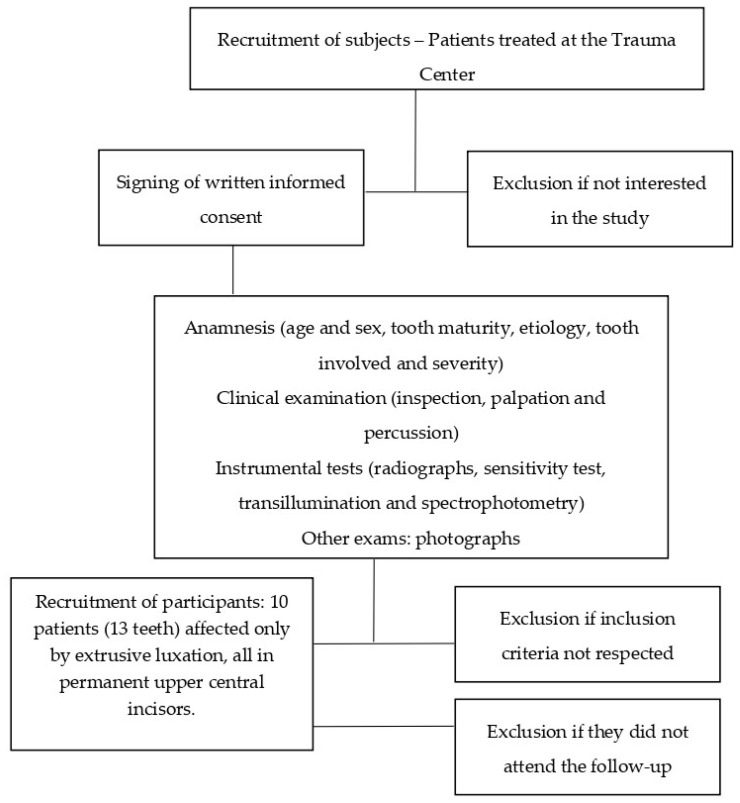
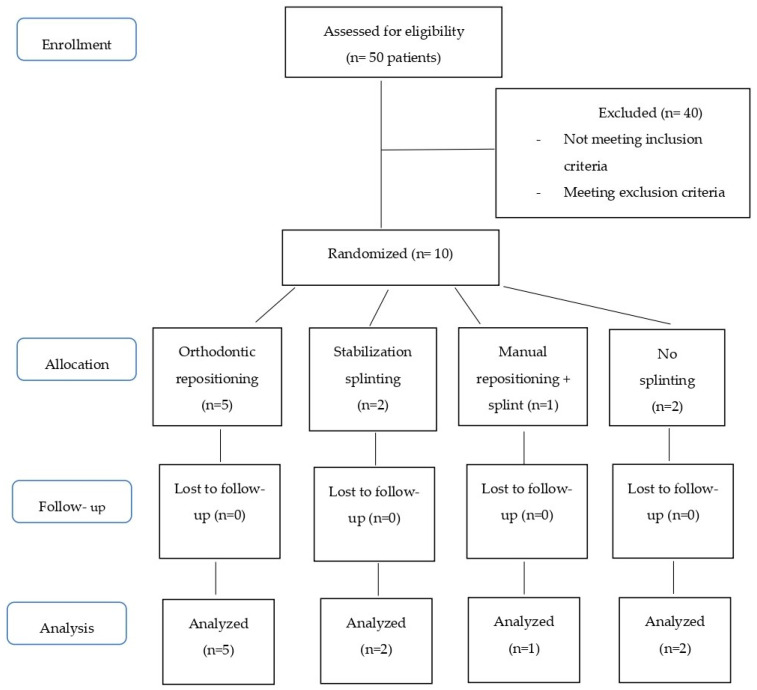
- Retrospective observational study at the Dental Traumatology Centre, University of Cagliari, using records from 50 patients treated between 2008 and 2015; strict criteria yielded 10 patients / 13 teeth with isolated extrusive luxation of permanent incisors and at least 5 years of follow-up.
- Data collected included age, sex, etiology, tooth involved, extrusion severity, time to treatment, root apex maturity, treatment type, pulp sensitivity, radiographs, and crown color changes; follow-up occurred at 2 weeks, 4 weeks, 6–8 weeks, 6 months, 1 year, and annually for 5 years.
- Associations between pulp consequences and covariates were tested with Mann–Whitney tests and Fisher exact tests (significance set at p < 0.05).
## Limitations
- The paper explicitly notes the small sample size and says that not all variables could be analyzed statistically.
- The study is retrospective and from a single center with only 13 teeth, which the text makes evident as a limitation (inferred from the design and sample size).
- The authors state that the scarcity of extrusion-specific literature and limited evidence on management mean the findings should be interpreted cautiously; they also call for a larger sample and future meta-analyses.
Model-written summary. Check it against the paper before relying on it.
Integrity signals
Registry
Cites
Statistics
Figures
Verification
Claims the paper makes
4 Valid · 1 Not valid · 42 Not checked · 52 Own results and interpretations
The sources with a verdict support this claim; the rest weren’t checked yet, have no full text we could read, or their verdicts aren’t rated yet.
In the paper
“since they can arise weeks, months or years after the trauma, long-term follow-up is essential [11,13,14]”
§ Extrusive Luxation Injuries in Young Patients: A Retrospective Study with 5-Year Follow-Up > 1. Introduction
What the sources say
- Supportedcites [11] Bourguignon C. Cohenca N. Lauridsen E. Flores M.T. O’Connell A.C. Day P.F. Tsilingaridis G. Abbott P.V. Fouad A. Hicks L. International Association of Dental Traumatology guidelines for the management of traumatic dental injuries: 1. Fractures and luxations Dent. Traumatol. 2020 36 314 330 10.1111/edt.12578 32475015 source
The ‘Follow-ups and detection of post-traumatic complications’ section says follow-ups are mandatory and identifies pulp and periodontal complications to monitor. The treatment tables schedule checks after weeks and months, then yearly for at least five years, supporting the need for long-term follow-up, although the paper does not state the onset window in those exact words (page numbers unavailable). (LLM, conf=0.86)
- Not checked — no full text of the sourcecites [13] Andreasen F.M. Pedersen B.V. Prognosis of luxated permanent teeth--the development of pulp necrosis Endod. Dent. Traumatol. 1985 1 207 220 10.1111/j.1600-9657.1985.tb00583.x 3867505 source
- Not checked — no full text of the sourcecites [14] Hecová H. Tzigkounakis V. Merglova V. Netolický J. A retrospective study of 889 injured permanent teeth Dent. Traumatol. 2010 26 466 475 10.1111/j.1600-9657.2010.00924.x 20946344 source
plainstates a cause- Asserted: passes — The authors put it forward as true.
- Checkable: passes — It can be checked against evidence.
- Load-bearing: passes — The paper’s conclusions depend on it.
- Based: passes — The paper gives a reason why it holds.
- Supported
The cited sources support only part of this claim — read each source’s verdict below.
In the paper
“PN, when it arises after an extrusion injury, often occurs within the first year of the traumatic event [13,18].”
§ Extrusive Luxation Injuries in Young Patients: A Retrospective Study with 5-Year Follow-Up > 4. Discussion > 4.2. Onset Times and Frequency of PN and PCO with Respect to the Severity of the Extrusion
What the sources say
- Not checked — no full text of the sourcecites [13] Andreasen F.M. Pedersen B.V. Prognosis of luxated permanent teeth--the development of pulp necrosis Endod. Dent. Traumatol. 1985 1 207 220 10.1111/j.1600-9657.1985.tb00583.x 3867505 source
- Partly supportedcites [18] Lin S. Pilosof N. Karawani M. Wigler R. Kaufman A.Y. Teich S.T. Occurrence and timing of complications following traumatic dental injuries: A retrospective study in a dental trauma department J. Clin. Exp. Dent. 2016 8 e429 e436 10.4317/jced.53022 27703612 PMC5045691 sourceExperimental — accuracy not yet measured
The Discussion says that most pulp necrosis in the study occurred within the first year after trauma. It does not give that timing specifically for extrusion injuries, so the claim applies a general finding to a narrower injury type. (LLM, conf=0.85)
plainstates an association- Asserted: passes — The authors put it forward as true.
- Checkable: passes — It can be checked against evidence.
- Load-bearing: unclear — It is unclear whether the paper’s conclusions depend on it.
- Based: passes — The paper gives a reason why it holds.
A result the paper reports from its own data — it cites no other source for it, so there is none to check. The quote shows it is in the paper.
In the paper
“No statistically significant association was found between the severity of the extrusion and the PCs (p = 0.634; Table 1).”
§ Extrusive Luxation Injuries in Young Patients: A Retrospective Study with 5-Year Follow-Up > 3. Results > 3.2. Severity of the Extrusion
plain- Asserted: passes — The authors put it forward as true.
- Checkable: passes — It can be checked against evidence.
- Load-bearing: unclear — It is unclear whether the paper’s conclusions depend on it.
- Based: passes — The paper gives a reason why it holds.
A result the paper reports from its own data — it cites no other source for it, so there is none to check. The quote shows it is in the paper.
In the paper
“No tooth with obliteration developed pulp necrosis.”
§ Extrusive Luxation Injuries in Young Patients: A Retrospective Study with 5-Year Follow-Up > Abstract (1) Background: The purpose of this study was to analyze the influence of the chosen diagnostic and therapeutic approach (repositioning and splinting methods) on the risk, frequency and timing of the onset of pulp canal obliteration and pulp necrosis following extrusive luxation in young patients with permanent dentition. (2) Methods: From an initial sample of 50 subjects affected by extrusive luxation, were selected the clinical data of 13 patients presenting extrusive luxation but no other type of injury to the dental hard tissue. All teeth were examined according to a standardized protocol. Follow-up examinations were performed at regular intervals for 5 years. Statistical associations between pulp consequences and several covariates were assessed using the Mann–Whitney test and Fisher’s exact test. (3) Results: Among the 13 studied teeth, only 1 healed completely, whereas 9 showed pulp obliteration and 3 developed pulp necrosis. No tooth with obliteration developed pulp necrosis. The average time to treatment was 11.9 h. The treatment approaches used were manual repositioning, orthodontic repositioning and stabilization splinting. “Time to treatment” was the only covariate that showed a weak statistical association with the onset of pulp consequences. (4) Conclusions: There is still uncertainty over the most appropriate therapeutic approach to adopt in young patients with extrusive luxation injuries, particularly for repositioning of the injured tooth. Extruded teeth should be treated as soon as possible after the traumatic event. This study highlighted the value of orthodontic repositioning of the extruded tooth, which does not seem to aggravate the conditions of the dental pulp. In addition, the study confirmed that prophylactic endodontic treatment is not appropriate for immature teeth affected by extrusive luxation injuries, given the extreme rarity of pulp necrosis in teeth already affected by pulp obliteration.
plainn = 13- Asserted: passes — The authors put it forward as true.
- Checkable: passes — It can be checked against evidence.
- Load-bearing: passes — The paper’s conclusions depend on it.
- Based: passes — The paper gives a reason why it holds.
A result the paper reports from its own data — it cites no other source for it, so there is none to check. The quote shows it is in the paper.
In the paper
“The average time to treatment was 11.9 h.”
- Also stated in: § 3.3. Time to Treatment · plain
“The average time to treatment in this sample (calculated considering the 10 patients) was 11.9 h.”
§ Extrusive Luxation Injuries in Young Patients: A Retrospective Study with 5-Year Follow-Up > Abstract (1) Background: The purpose of this study was to analyze the influence of the chosen diagnostic and therapeutic approach (repositioning and splinting methods) on the risk, frequency and timing of the onset of pulp canal obliteration and pulp necrosis following extrusive luxation in young patients with permanent dentition. (2) Methods: From an initial sample of 50 subjects affected by extrusive luxation, were selected the clinical data of 13 patients presenting extrusive luxation but no other type of injury to the dental hard tissue. All teeth were examined according to a standardized protocol. Follow-up examinations were performed at regular intervals for 5 years. Statistical associations between pulp consequences and several covariates were assessed using the Mann–Whitney test and Fisher’s exact test. (3) Results: Among the 13 studied teeth, only 1 healed completely, whereas 9 showed pulp obliteration and 3 developed pulp necrosis. No tooth with obliteration developed pulp necrosis. The average time to treatment was 11.9 h. The treatment approaches used were manual repositioning, orthodontic repositioning and stabilization splinting. “Time to treatment” was the only covariate that showed a weak statistical association with the onset of pulp consequences. (4) Conclusions: There is still uncertainty over the most appropriate therapeutic approach to adopt in young patients with extrusive luxation injuries, particularly for repositioning of the injured tooth. Extruded teeth should be treated as soon as possible after the traumatic event. This study highlighted the value of orthodontic repositioning of the extruded tooth, which does not seem to aggravate the conditions of the dental pulp. In addition, the study confirmed that prophylactic endodontic treatment is not appropriate for immature teeth affected by extrusive luxation injuries, given the extreme rarity of pulp necrosis in teeth already affected by pulp obliteration.
plainn = 10- Asserted: passes — The authors put it forward as true.
- Checkable: passes — It can be checked against evidence.
- Load-bearing: unclear — It is unclear whether the paper’s conclusions depend on it.
- Based: passes — The paper gives a reason why it holds.
- Rests on an assumption not shown here.
- Also stated in: § 3.3. Time to Treatment · plain
25 more claims
Create a free account to see all 99 claims and to verify the 10 references still open.
- Probably not a substantial claim. 34
- It may state two separate claims as one. 44
Self-check
Percentages, sums and reported differences re-computed from the paper’s own numbers.
Each contradiction between two passages listed here was confirmed by an independent check.
Rated minor: it would not touch a result — a value no result rests on, a p-value that stays on the same side of the significance level, or a conflict that is clerical, resolved elsewhere in the paper, or outside its own findings.
In the paper
§ Extrusive Luxation Injuries in Young Patients: A Retrospective Study with 5-Year Follow-Up > Abstract
“From an initial sample of 50 subjects affected by extrusive luxation, were selected the clinical data of 13 patients presenting extrusive luxation but no other type of injury to the dental hard tissue.”
§ Extrusive Luxation Injuries in Young Patients: A Retrospective Study with 5-Year Follow-Up > 2. Materials and Methods
“Application of these strict criteria yielded a final sample of 10 patients (5 males and 5 females), with a total of 13 teeth, all permanent upper central incisors, affected only by extrusive luxation.”
Rated minor: it would not touch a result — a value no result rests on, a p-value that stays on the same side of the significance level, or a conflict that is clerical, resolved elsewhere in the paper, or outside its own findings.
In the paper
§ Extrusive Luxation Injuries in Young Patients: A Retrospective Study with 5-Year Follow-Up > Abstract
“Among the 13 studied teeth, only 1 healed completely, whereas 9 showed pulp obliteration and 3 developed pulp necrosis.”
§ Extrusive Luxation Injuries in Young Patients: A Retrospective Study with 5-Year Follow-Up > 2. Materials and Methods
“Application of these strict criteria yielded a final sample of 10 patients (5 males and 5 females), with a total of 13 teeth, all permanent upper central incisors, affected only by extrusive luxation.”
Citations
Cites
Landis, J. R., & Koch, G. G. (1977) · Biometrics · doi:10.2307/2529786 · Cited by 4,332 · cited 1×
“The kappa test was run to evaluate the level of agreement between these experts, and it was found to be “moderate” (Landis and Koch, 1977) [26].”
MethodAge Variation of Formation Stages for Ten Permanent Teeth
Moorrees, C. F. A., Fanning, E. A., & Hunt, E. E. (1963) · Journal of Dental Research · doi:10.1177/00220345630420062701 · Cited by 2,215 · cited 2×
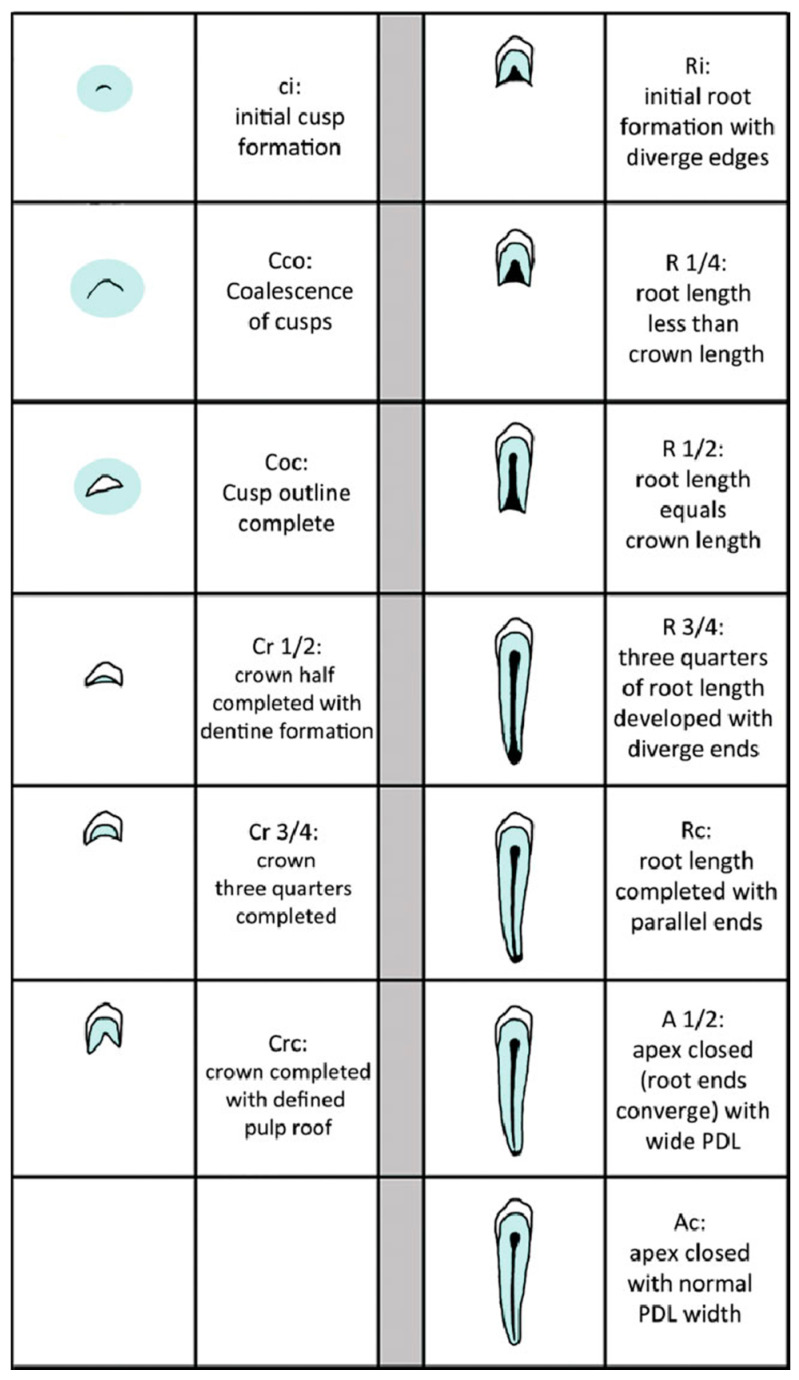
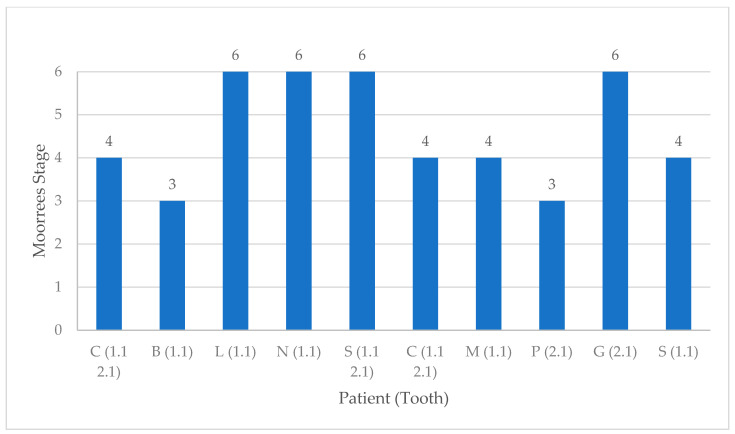
“The stage of root development at the time of injury was established using the classification system introduced by Moorrees [30].”
MethodTextbook and Color Atlas of Traumatic Injuries to the Teeth
J.O. Andreasen, F. M. A. O. L. A., & Aas, A.-L. M. (2008) · Den norske tannlegeforenings Tidende · doi:10.56373/2008-1-28 · Cited by 831
Bourguignon, C., Cohenca, N., Lauridsen, E., Flores, M. T., O'Connell, A. C., Day, P. F., Tsilingaridis, G., Abbott, P. V., Fouad, A. F., Hicks, L., et al. (2020) · Dental Traumatology · doi:10.1111/edt.12578 · Cited by 803 · cited 9×
“Radiographically, the apical and lateral parts of the socket appear empty [11] and, overall, the periodontal ligament space is enlarged [5,6].”
BackgroundMethodInfluentialDiAngelis, A. J., Andreasen, J. O., Ebeleseder, K. A., Kenny, D. J., Trope, M., Sigurdsson, A., Andersson, L., Bourguignon, C., Flores, M. T., Hicks, M. L., et al. (2012) · Dental Traumatology · doi:10.1111/j.1600-9657.2011.01103.x · Cited by 597
Etiology and pathogenesis of traumatic dental injuries A clinical study of 1,298 cases
ANDREASEN, J. O. (1970) · European Journal of Oral Sciences · doi:10.1111/j.1600-0722.1970.tb02080.x · Cited by 562
Prognosis of luxated permanent teeth--the development of pulp necrosis
Andreasen, F. M., & Pedersen, B. V. (1985) · Dental Traumatology · doi:10.1111/j.1600-9657.1985.tb00583.x · Cited by 419 · cited 6×
“This should be followed by long-term monitoring of the tooth [11,13,14].”
BackgroundInfluentialPulp canal obliteration: An endodontic diagnosis and treatment challenge
McCabe, P. S., & Dummer, P. M. H. (2012) · International Endodontic Journal · doi:10.1111/j.1365-2591.2011.01963.x · Cited by 403 · cited 2×
“The development of PN following PCO is uncommon (reported in between 1 and 27% of cases) [48].”
BackgroundAndreasen, J. O., Andreasen, F. M., Skeie, A., Hjørting‐Hansen, E., & Schwartz, O. (2002) · Dental Traumatology · doi:10.1034/j.1600-9657.2002.00079.x · Cited by 354
Flores, M. T., Andersson, L., Andreasen, J. O., Bakland, L. K., Malmgren, B., Barnett, F., Bourguignon, C., DiAngelis, A., Hicks, L., Sigurdsson, A., et al. (2007) · Dental Traumatology · doi:10.1111/j.1600-9657.2007.00592.x · Cited by 351
Glendor, U., Halling, A., Andersson, L., & Eilert-Petersson, E. (1996) · PubMed · Cited by 342
ANDREASEN, J. O. (1970) · European Journal of Oral Sciences · doi:10.1111/j.1600-0722.1970.tb02074.x · Cited by 312 · cited 7×
“Clinically, the tooth appears elongated and often displaced palatally [5]; occlusion and mastication are painful, and spontaneous pain, if present, is only mild [10].”
BackgroundMethodInfluentialA retrospective study of 889 injured permanent teeth
Hecova, H., Tzigkounakis, V., Merglova, V., & Netolicky, J. (2010) · Dental Traumatology · doi:10.1111/j.1600-9657.2010.00924.x · Cited by 256 · cited 9×
“[14]) concerning 191 teeth repositioned after extrusions, of which not all parameters have been indicated (e.”
BackgroundResultInfluentialOccurrence of pulp canal obliteration after luxation injuries in the permanent dentition
Andreasen, F. M., Zhjie, Y., Thomsen, B. L., & Andersen, P. K. (1987) · Dental Traumatology · doi:10.1111/j.1600-9657.1987.tb00611.x · Cited by 256 · cited 8×
“Physiological healing (without pulp modifications) is another possible outcome, which occurs more frequently in teeth with open apex [12].”
BackgroundInfluentialRoot Resorption due to Dental Trauma
Trope, M. (2002) · Endodontic Topics · doi:10.1034/j.1601-1546.2002.10106.x · Cited by 235 · cited 1×
“Radiographically it appears as areas of resorption (radiolucent areas) on the root surface [38].”
BackgroundPrevalence and risk factors related to traumatic dental injuries in Brazilian schoolchildren
Soriano, E. P., Caldas, A. D. F., Carvalho, M. V. D. D., & Amorim Filho, H. D. A. (2007) · Dental Traumatology · doi:10.1111/j.1600-9657.2005.00426.x · Cited by 172
Andreasen, F. M., & Andreasen, J. O. (1985) · Dental Traumatology · doi:10.1111/j.1600-9657.1985.tb00651.x · Cited by 171 · cited 3×
“Extrusive luxation injuries are caused by the action of an oblique force, and they are characterized by high mobility and partial dislocation of the tooth outside its socket [6].”
BackgroundMethodIntentional replantation of teeth
Grossman, L. I. (1966) · The Journal of the American Dental Association · doi:10.14219/jada.archive.1966.0125 · Cited by 169 · cited 2×
“Surgical repositioning, or intentional replantation [20], involves the extraction of the extruded tooth followed by irrigation and gentle cleaning of the socket.”
BackgroundTraebert, J., Bittencourt, D. D., Peres, K. G., Peres, M. A., De Lacerda, J. T., & Marcenes, W. (2006) · Dental Traumatology · doi:10.1111/j.1600-9657.2006.00359.x · Cited by 158 · cited 2×
“Sports accidents, road accidents, falls, domestic accidents and, increasingly frequently, assault are the most common causes of traumatic dental injuries [1,2,14,39] According to the literature, the teeth most frequently involved in traumatic dental injury are the upper central incisors, followed by the upper lateral…”
BackgroundDental trauma: an overview of its influence on the management of orthodontic treatment. Part 1
Kindelan, S. A., Day, P. F., Kindelan, J. D., Spencer, J. R., & Duggal, M. S. (2008) · Journal of Orthodontics · doi:10.1179/146531207225022482 · Cited by 148 · cited 1×
“To date, there is insufficient evidence of an increased risk of PN in previously traumatized teeth undergoing orthodontic tooth movement, compared with those without previous dental trauma [45].”
BackgroundPrevalence of traumatic injuries to the permanent incisors in candidates for orthodontic treatment
Bauss, O., Röhling, J., & Schwestka‐Polly, R. (2004) · Dental Traumatology · doi:10.1111/j.1600-4469.2004.00230.x · Cited by 131 · cited 1×
“Sports accidents, road accidents, falls, domestic accidents and, increasingly frequently, assault are the most common causes of traumatic dental injuries [1,2,14,39] According to the literature, the teeth most frequently involved in traumatic dental injury are the upper central incisors, followed by the upper lateral…”
BackgroundResponses of the pulp, periradicular and soft tissues following trauma to the permanent teeth
Yu, C., & Abbott, P. V. (2016) · Australian Dental Journal · doi:10.1111/adj.12397 · Cited by 131
Clinical outcomes for permanent incisor luxations in a pediatric population. II. Extrusions
Lee, R., Barrett, E. J., & Kenny, D. J. (2003) · Dental Traumatology · doi:10.1034/j.1600-9657.2003.00208.x · Cited by 124
Changes in blood circulation in teeth and supporting tissues incident to experimental tooth movement
Vandevska-Radunovic, V., Kristiansen, A. B., Heyeraas, K. J., & Kvinnsland, S. (1994) · The European Journal of Orthodontics · doi:10.1093/ejo/16.5.361 · Cited by 101
Effect of experimental tooth movement on periodontal and pulpal blood flow
Kvinnsland, S., Heyeraas, K., & Øfjord, E. S. (1989) · European Journal of Orthodontics · doi:10.1093/oxfordjournals.ejo.a035986 · Cited by 100
An evidence‐based appraisal of splinting luxated, avulsed and root‐fractured teeth
Kahler, B., & Heithersay, G. S. (2008) · Dental Traumatology · doi:10.1111/j.1600-9657.2006.00480.x · Cited by 98 · cited 1×
“This is a slow, gradual process that can help to safeguard dental pulp vitality, prevent ankylosis and promote periodontal healing, especially in healthy young subjects [41,42].”
BackgroundAngiogenesis in Human Dental Pulp Following Orthodontic Tooth Movement
Derringer, K. A., Jaggers, D. C., & Linden, R. W. A. (1996) · Journal of Dental Research · doi:10.1177/00220345960750100901 · Cited by 92
Lauridsen, E., Hermann, N. V., Gerds, T. A., Ahrensburg, S. S., Kreiborg, S., & Andreasen, J. O. (2012) · Dental Traumatology · doi:10.1111/j.1600-9657.2011.01100.x · Cited by 91 · cited 8×
“Also termed partial avulsions [5,7], they can disrupt the vascular supply to the pulp [8,9].”
BackgroundInfluentialClinical Approach to Pulp Canal Obliteration: A Case Series.
de Toubes, K. M. P. S., de Oliveira, P. A. D., Machado, S. N., Pelosi, V., Nunes, E. D. C., & Silveira, F. F. (2017) · Iranian endodontic Journal/Iranian endodontic journal. · doi:10.22037/iej.v12i4.18006 · Cited by 78
Late complications of luxation injuries to teeth
Oikarinen, K., Gundlach, K. K. H., & Pfeifer, G. (1987) · Dental Traumatology · doi:10.1111/j.1600-9657.1987.tb00638.x · Cited by 75 · cited 2×
“Diagnosis of PN was based on the absence of pulp sensitivity, together with other clinical signs—a grey-colored crown, periapical radiolucency on radiographic examination and tenderness to percussion [15].”
BackgroundDiagnosis of acute dental trauma: the importance of standardized documentation: a review
Andreasen, F. M., & Kahler, B. (2015) · Dental Traumatology · doi:10.1111/edt.12187 · Cited by 74 · cited 3×
“in addition to repeating the above, the following aspects were recorded: the presence/absence of fistulae, gingivitis, gingival retraction and gingival sulcus depth [27].”
BackgroundThe Effect of Pulp Obliteration on Pulpal Vitality of Orthodontically Intruded Traumatized Teeth
Bauss, O., Röhling, J., Rahman, A., & Kiliaridis, S. (2008) · Journal of Endodontics · doi:10.1016/j.joen.2008.01.006 · Cited by 71
Pulp canal obliteration after traumatic injuries in permanent teeth – scientific fact or fiction?
Bastos, J. V., & Côrtes, M. I. D. S. (2018) · Brazilian Oral Research · doi:10.1590/1807-3107bor-2018.vol32.0075 · Cited by 69 · cited 2×
“This radiographic evidence, when associated with a lack of response to electrical and thermal tests and yellow discoloration of the crown, points to full-blown PCO [37].”
BackgroundSplints made of wire and composite: an investigation of lateral tooth mobility in vivo
Ebeleseder, K. A., Glockner, K., Pertl, C., & Städtler, P. (1995) · Dental Traumatology · doi:10.1111/j.1600-9657.1995.tb00506.x · Cited by 58 · cited 1×
“For greater stability, the orthodontic repositioning splint always included at least two healthy teeth, one on either side of the injured tooth [35].”
BackgroundThe Case Against Intentional Replantation
Weine, F. S. (1980) · The Journal of the American Dental Association · doi:10.14219/jada.archive.1980.0227 · Cited by 54 · cited 1×
“The tooth is then reinserted into the socket as quickly as possible [31].”
Lin, S., Pilosof, N., Karawani, M., Wigler, R., Kaufman, A., & Teich, S. (2016) · Journal of Clinical and Experimental Dentistry · doi:10.4317/jced.53022 · Cited by 54 · cited 3×
“In the literature, post-extrusion PN has a prevalence of between 43 and 56% [9,17], and it is considered the most common post-traumatic complication [14,18].”
BackgroundSchatz, J., Hakeberg, M., Ostini, E., & Kiliaridis, S. (2013) · Dental Traumatology · doi:10.1111/j.1600-9657.2012.01150.x · Cited by 53 · cited 1×
“In 18–33% [3,4] of cases there is damage to pulp and/or supporting tissue.”
BackgroundSpinas, E., Mameli, A., & Giannetti, L. (2018) · The Open Dentistry Journal · doi:10.2174/1874210601812010001 · Cited by 40 · cited 1×
“In addition, it included a clinical description of the lesion, information on pulp sensitivity test responses, radiographic and photographic investigations, type of treatment and details of the long-term follow-up [27,28].”
Self-citationPost-traumatic Complications of Severe Luxations and replanted Teeth
Lima, T. F. R., Nagata, J. Y., de Souza-Filho, F. J., & de Jesus Soares, A. (2015) · The Journal of Contemporary Dental Practice · doi:10.5005/jp-journals-10024-1628 · Cited by 39 · cited 1×
“This approach allows better control of post-traumatic complications and increases the chances of survival of the tooth and supporting tissues [19].”
BackgroundDental pulp response to traumatic injuries – a retrospective analysis with case reports
Feiglin, B. (1996) · Dental Traumatology · doi:10.1111/j.1600-9657.1996.tb00087.x · Cited by 36
Orthodontic management of traumatized teeth: A national survey of UK orthodontists
Sandler, C., Barry, S. M., Littlewood, S., Al‐Musfir, T., & Nazzal, H. (2019) · Dental Traumatology · doi:10.1111/edt.12476 · Cited by 36 · cited 2×
“[47] highlighted the need for additional training and national guidelines, while Van Gorp et al.”
BackgroundSpinas, E., Deias, M., Mameli, A., & Giannetti, L. (2021) · PubMed · doi:10.23804/ejpd.2021.22.01.10 · Cited by 35
Self-citationOrthodontic Procedures after Trauma
Fields, H. W., & Christensen, J. R. (2013) · Journal of Endodontics · doi:10.1016/j.joen.2012.10.030 · Cited by 33
Diagnosis and Management of Sports-Related Injuries to the Teeth
Camp, J. H. (1991) · Dental Clinics of North America · doi:10.1016/s0011-8532(22)00838-2 · Cited by 30 · cited 8×
“To avoid the increased risk of IRR [32], no teeth in the sample were treated with surgical repositioning.”
BackgroundInfluentialElbay, Ü. Ş., Baysal, A., Elbay, M., & Sarıdağ, S. (2014) · Operative Dentistry · doi:10.2341/13-116-s · Cited by 24 · cited 1×
“Table 5 summarizes the most recent information regarding orthodontic repositioning treatment [21,42,44].”
BackgroundDelayed tooth replantation and inflammatory root resorption in childhood and adolescence.
Spinas, E., Generali, L., Mameli, A., Demontis, C., Martinelli, D., & Giannetti, L. (2019) · PubMed · Cited by 23
Self-citationDental injuries in young athletes, a five-year follow-up study.
(2018) · PubMed · doi:10.23804/ejpd.2018.19.03.4 · Cited by 18
Self-citationGorp, G. V., Bormans, N., Vanham, I., Willems, G., & Declerck, D. (2019) · International Journal of Paediatric Dentistry · doi:10.1111/ipd.12603 · Cited by 17
Dental injuries in young athletes, a five-year follow-up study.
Spinas, E., Giannetti, L., Mameli, A., & Re, D. (2018) · European Journal of Paediatric Dentistry · doi:10.23804/ejpd.2018.19.03.04 · Cited by 17
Self-citation(2013) · PubMed · Cited by 14
Treatment of extrusive luxation in permanent teeth: Literature review with systematic criteria
Okamoto, R., de Faria, L. P., Amaral, M. F., de Almeida, M. M., Brandini, D. A., & Poi, W. R. (2017) · The Journal of Contemporary Dental Practice · doi:10.5005/jp-journals-10024-2024 · Cited by 14 · cited 2×
“Furthermore, there is no univocal therapeutic approach to the management of pulp reactive processes [22], while the current guidelines, deriving from animal studies, case studies and clinical experience, are not based on strong evidence [23].”
BackgroundA biological conservative approach to complex traumatic dento-alveolar lesions
Spinas, E. (2004) · Journal of Clinical Pediatric Dentistry · doi:10.17796/jcpd.28.1.j43v728110388548 · Cited by 12 · cited 1×
“The wire, generating light forces of up to 40gr, produced a gentle and gradual movement of the extruded tooth in the socket [34].”
BackgroundSelf-citationDelayed multidisciplinary management of an extrusively luxated maxillary central incisor
Sübay, R. K., Kayataş, M., & Caniklioğlu, C. (2007) · Dental Traumatology · doi:10.1111/j.1600-9657.2005.00377.x · Cited by 10 · cited 2×
“Table 5 summarizes the most recent information regarding orthodontic repositioning treatment [21,42,44].”
Background
Cited by
Hu, S., Wang, S., He, Q., Li, D., Xin, L., Xu, C., Zhu, X., Li, M., Cannon, R. D., Ji, P., et al. (2023) · Advanced Science · doi:10.1002/advs.202206450 · Cited by 50
Use of Orthodontic Methods in the Treatment of Dental Luxations: A Scoping Review
Spinas, E., Pipi, L., Mezzena, S., & Giannetti, L. (2021) · Dentistry Journal · doi:10.3390/dj9020018 · Cited by 27
Self-citationRoot Fracture and Extrusive Luxation in Primary Teeth and Their Management: A Case Report
Giorgio, G. D., Zumbo, G., Saccucci, M., Luzzi, V., Ierardo, G., Biagi, R., & Bossù, M. (2021) · Dentistry Journal · doi:10.3390/dj9090107 · Cited by 13
Abreu, M. G. L., Fernandes, T. D. O., Antunes, L. S., Antunes, L. A. A., & Maia, L. C. (2024) · Brazilian Oral Research · doi:10.1590/1807-3107bor-2024.vol38.0092 · Cited by 17
Bardini, G., Musu, D., Mezzena, S., Dettori, C., & Cotti, E. (2021) · Dentistry Journal · doi:10.3390/dj9040039 · Cited by 8
Self-citation
Metadata
- Authors
- Spinas, E., Pipi, L., & Dettori, C.
- Affiliations
- University of Cagliari (IT)
- Corresponding author
- Pipi, Laura
- Venue
- Dentistry Journal
- Publisher
- MDPI AG
- Published
- 2020-12-16
- Volume
- 8
- Issue
- 4
- Pages
- 136
- ISSN
- 2304-6767 (ISSN-L)
- PMC
- PMC7765625
- OpenAlex
- W3113345538
- Cited by
- 15
- References
- 58
- Citations by year
- 2026: 1 · 2025: 4 · 2024: 2 · 2023: 2 · 2022: 2 · 2021: 4
- FWCI
- 1.87
- Type
- journal article
- Language
- en
- Open access
- gold
- doi.org
- Licence
- Locations
- Dentistry Journal (publishedVersion, cc-by)
- PubMed Central (publishedVersion, cc-by)
- PubMed (publishedVersion)
- DOAJ (DOAJ: Directory of Open Access Journals) (submittedVersion, cc-by-sa)
- UNICA IRIS Institutional Research Information System (University of Cagliari) (submittedVersion, other-oa)
- Topics
- Health Sciences › Dentistry › General Dentistry › Dental Trauma and Treatments
- Health Sciences › Medicine › Surgery › Facial Trauma and Fracture Management
- Health Sciences › Dentistry › Oral Surgery › Endodontics and Root Canal Treatments
- Keywords
- extrusive luxation, dental trauma, pulp canal obliteration, pulp necrosis, manual repositioning, time to treatment, immature permanent teeth, endodontic treatment, young patients
About these checks
Registry, retraction, Cites and statistics results are computed, not judged, with one exception: a printed reference that no index lists is read once by a model before it counts as a citation error. Claims are extracted by a model and kept only when their quote appears verbatim in the text; each cited source is then checked, with a model’s help, for whether it says what the claim relies on. Those verdicts can be wrong — read the claim’s quote and the cited source before relying on one.
The claim verdicts this report counts are experimental: their accuracy is not yet measured.
A language model drew the claims from the paper on 2026-10-10, under version 3 of the claim definition (model deepseek-v4.1-flash, prompt extract-v3).
A second model labelled each claim on 2026-10-10 (model jev-1.13-20260917, definition revision gold-guideline-v0.2).
Cited sources are checked with a language model’s help (gpt-6-sol).
Statistics and arithmetic are recomputed, not judged.
Confidence bands are shown only for fields calibrated on our annotated test set. None is calibrated yet, so no band is shown.
What counts as a claim ›How we measure confidence ›How we check this ›
Are you an author, or do you see a problem with this page? Request a review
Data sources
Bibliographic data: Semantic Scholar, OpenAlex, Crossref.
Contains information from the Semantic Scholar Academic Graph Datasets, made available under the ODC Attribution License (ODC-BY 1.0).
Semantic Scholar’s data is described in: Kinney, R., et al. (2023). The Semantic Scholar Open Data Platform. arXiv:2301.10140.
