

Marginal Agricultural Land Low-Input Systems for Biomass Production
Open accessThe DOI matches its Crossref record; 129 of the 129 references it cites were found in a registry or an index.
Abstract
This study deals with approaches for a social-ecological friendly European bioeconomy based on biomass from industrial crops cultivated on marginal agricultural land. The selected crops to be investigated are: Biomass sorghum, camelina, cardoon, castor, crambe, Ethiopian mustard, giant reed, hemp, lupin, miscanthus, pennycress, poplar, reed canary grass, safflower, Siberian elm, switchgrass, tall wheatgrass, wild sugarcane, and willow. The research question focused on the overall crop growth suitability under low-input management. The study assessed: (i) How the growth suitability of industrial crops can be defined under the given natural constraints of European marginal agricultural lands; and (ii) which agricultural practices are required for marginal agricultural land low-input systems (MALLIS). For the growth-suitability analysis, available thresholds and growth requirements of the selected industrial crops were defined. The marginal agricultural land was categorized according to the agro-ecological zone (AEZ) concept in combination with the marginality constraints, so-called ‘marginal agro-ecological zones’ (M-AEZ). It was found that both large marginal agricultural areas and numerous agricultural practices are available for industrial crop cultivation on European marginal agricultural lands. These results help to further describe the suitability of industrial crops for the development of social-ecologically friendly MALLIS in Europe.
Overview
The claims and statistics of this paper haven’t been checked yet.
Free: it reads the open-access text and checks the first 5 claims that cite a source we can check. Create a free account to check every claim.
Integrity signals
Registry
Cites
Statistics
Figures
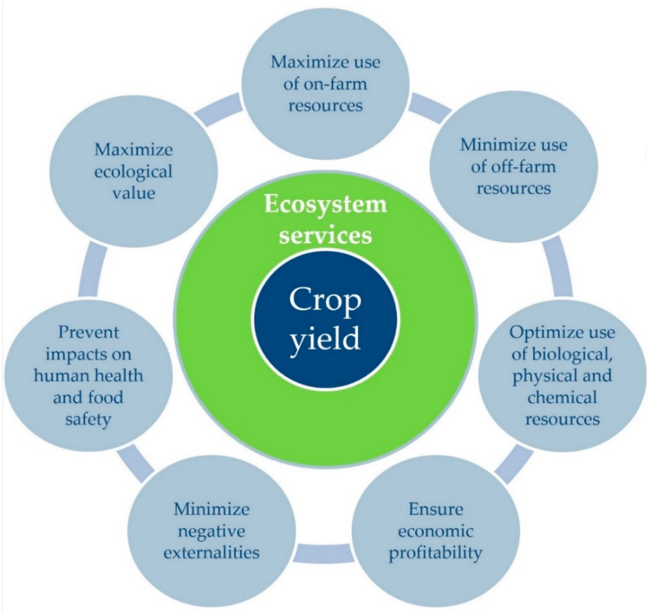
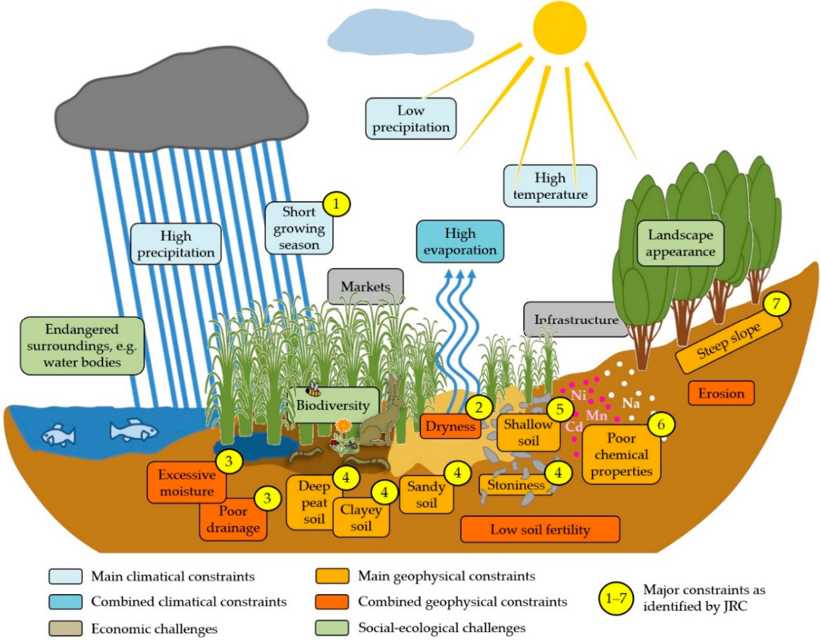
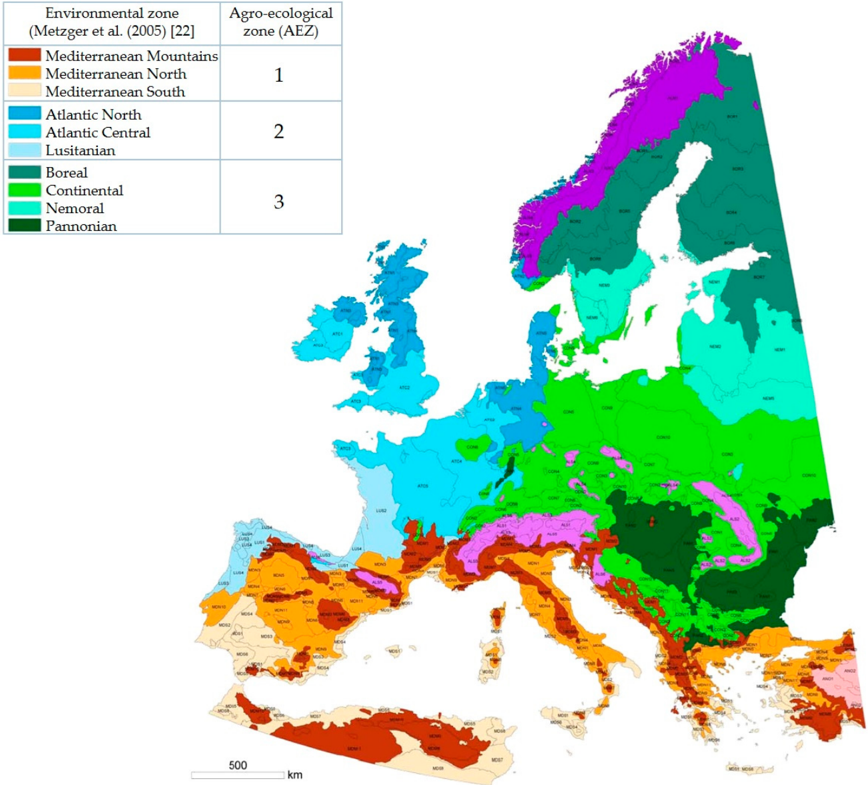
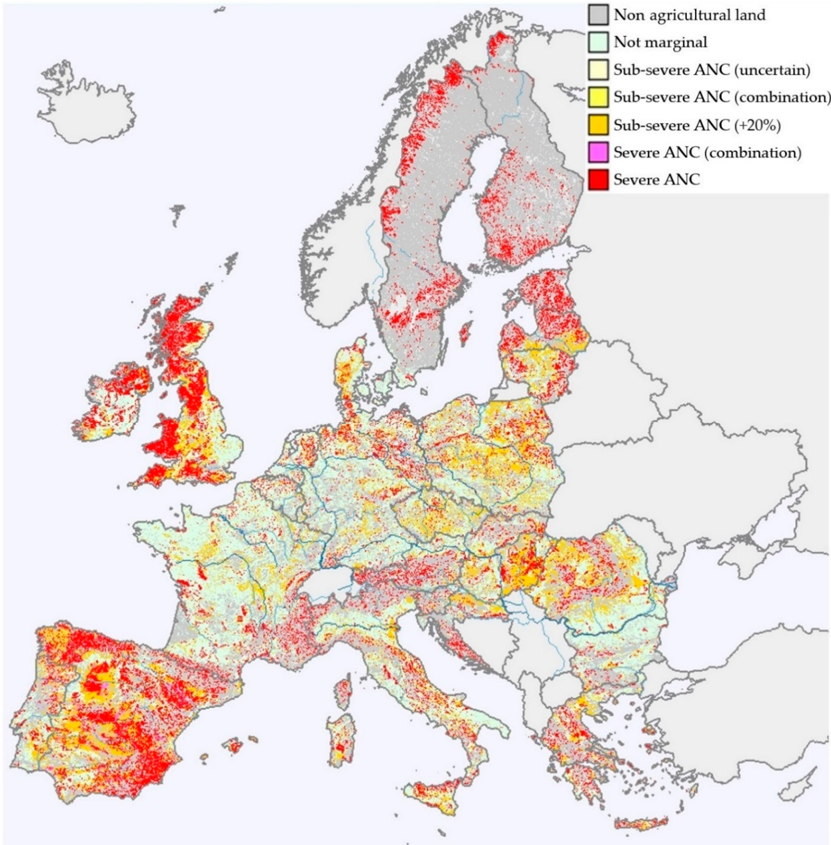
Verification
Claims the paper makes
The claims and statistics of this paper haven’t been checked yet.
Free: it reads the open-access text and checks the first 5 claims that cite a source we can check. Create a free account to check every claim.
Claims other papers make about this one
Each is checked against this paper’s own text: does it say what the citing paper says it does?
The source backs part of the claim, not all of it — or backs it for a different population, condition or comparison.
In the citing paper
“Giant miscanthus can be cultivated on low-quality soils that are not suitable for growing food or fodder crops [9].”
From Life Cycle Assessment of Giant Miscanthus: Production on Marginal Soil with Various Fertilisation Treatments (2020) · cites this paper as [9]
Experimental — accuracy not yet measuredThe cited source says what the claim attributes to it.
In the citing paper
“Those areas are typically characterized to be low agricultural productive”
From Assessing the future prospects of emerging technologies for shipping and aviation biofuels: A critical review (2024) · cites this paper as [66]
Self-check
Percentages, sums and reported differences re-computed from the paper’s own numbers.
The self-check needs the paper’s full text.
Citations
Cites
RESILIENCE: THE EMERGENCE OF A PERSPECTIVE FOR SOCIAL-ECOLOGICAL SYSTEMS ANALYSES
Folke, C. (2006) · Global Environmental Change · doi:10.1016/j.gloenvcha.2006.04.002 · Cited by 7,749 · cited 1×
“It would reduce the risk of further degradation through erosion, and thus help maintain or even improve the resilience of the given agroecosystem [14,141,142].”
BackgroundBiochar effects on soil biota – A review
Lehmann, J., Rillig, M. C., Thies, J., Masiello, C. A., Hockaday, W. C., & Crowley, D. (2011) · Soil Biology and Biochemistry · doi:10.1016/j.soilbio.2011.04.022 · Cited by 5,074 · cited 1×
“Such practices include the implementation of appropriate crop rotations, pasture management, manure application, soil management that maintains or improves soil organic matter, and other land-use practices, as well as conservation tillage practices [8,37,48].”
Backgroundde Groot, R. S., Wilson, M. A., & Boumans, R. M. J. (2002) · Ecological Economics · doi:10.1016/s0921-8009(02)00089-7 · Cited by 4,809 · cited 2×
“Furthermore, low N fertilization levels help improve the ecosystem services of miscanthus cultivation, such as groundwater protection, environmental protection [26,80,120], while maintaining the soil nitrogen balance [125].”
BackgroundBiochar as a sorbent for contaminant management in soil and water: A review
Ahmad, M., Rajapaksha, A. U., Lim, J. E., Zhang, M., Bolan, N., Mohan, D., Vithanage, M., Lee, S. S., & Ok, Y. S. (2014) · Chemosphere · doi:10.1016/j.chemosphere.2013.10.071 · Cited by 4,662
Regime Shifts, Resilience, and Biodiversity in Ecosystem Management
Folke, C., Carpenter, S., Walker, B., Scheffer, M., Elmqvist, T., Gunderson, L., & Holling, C. S. (2004) · Annual Review of Ecology, Evolution, and Systematics · doi:10.1146/annurev.ecolsys.35.021103.105711 · Cited by 3,847 · cited 1×
“It would reduce the risk of further degradation through erosion, and thus help maintain or even improve the resilience of the given agroecosystem [14,141,142].”
BackgroundLandscapes and Riverscapes: The Influence of Land Use on Stream Ecosystems
Allan, J. D. (2004) · Annual Review of Ecology, Evolution, and Systematics · doi:10.1146/annurev.ecolsys.35.120202.110122 · Cited by 3,626
More than 75 percent decline over 27 years in total flying insect biomass in protected areas
Hallmann, C. A., Sorg, M., Jongejans, E., Siepel, H., Hofland, N., Schwan, H., Stenmans, W., Müller, A., Sumser, H., Hörren, T., et al. (2017) · PLOS ONE · doi:10.1371/journal.pone.0185809 · Cited by 3,499 · cited 1×
“However, the recent (alarming) decrease in pollinator abundances across Central European landscapes [23,25] may induce changes in the priorities for crop selection, and thus the development of MALLIS in the future.”
BackgroundWatson, R., Albritton, D. L., Barker, T., Baskmakov, I., Canziani, O. F., Christ, R., Ulrich Cubasch, B., Davidson, O., Gitay, H., Griggs, D., et al. (2001) · Cited by 3,473
The ecological role of biodiversity in agroecosystems
Altieri, M. A. (1999) · Agriculture, Ecosystems & Environment · doi:10.1016/s0167-8809(99)00028-6 · Cited by 2,561 · cited 1×
“Diversity in crop rotations is a way to reduce reliance on synthetic chemicals, control weeds and pests, maintain soil fertility and reduce soil erosion, prevent soil-borne diseases, leading to the reduction of off-farm inputs [54].”
BackgroundScheid-Cook, T. L., & Leopold, A. (1993) · Teaching Sociology · doi:10.2307/1319034 · Cited by 2,141
Research works printed but not linked: 2
- Biala, K.; Terres, J.M.; Pointereau, P.; Paracchini, M.L. Low Input Farming Systems: An opportunity to develop sustainable agriculture. Proc. JRC Summer Univ. Ranco. 2007, 2-5. [CrossRef]
- Mangold, A.; Winkler, B.; Von Cossel, M.; Iqbal, Y.; Kiesel, A.; Lewandowski, I. Implementing miscanthus into sustainable farming systems: A review on agronomic practices, capital and labor demand. Review article, under review, unpublished. 121.
Cited by
Camelina, an ancient oilseed crop actively contributing to the rural renaissance in Europe. A review
Zanetti, F., Alberghini, B., Marjanović Jeromela, A., Grahovac, N., Rajković, D., Kiprovski, B., & Monti, A. (2021) · Agronomy for Sustainable Development · doi:10.1007/s13593-020-00663-y · Cited by 165
Self-citationLand use for bioenergy: Synergies and trade-offs between sustainable development goals
Vera, I., Wicke, B., Lamers, P., Cowie, A., Repo, A., Heukels, B., Zumpf, C. R., Styles, D., Parish, E. S., Cherubini, F., et al. (2022) · Renewable and Sustainable Energy Reviews · doi:10.1016/j.rser.2022.112409 · Cited by 157
Prospects of Bioenergy Cropping Systems for A More Social-Ecologically Sound Bioeconomy
von Cossel, M., Wagner, M., Lask, J., Magenau, E., Bauerle, A., Cossel, V. V., Warrach‐Sagi, K., Elbersen, B. S., Staritsky, I. G., van Eupen, M., et al. (2019) · Agronomy · doi:10.3390/agronomy9100605 · Cited by 148
“This holds true for annual bioenergy crops such as camelina (Figure 1b) and crambe (Crambe abyssinica Hochst Ex Re Fries), because (i) they are not very demanding and suitable for several types of marginal agricultural land [51], and (ii) they produce nectar and pollen.”
BackgroundInfluentialSelf-citationBattaglia, M. L., Thomason, W. E., Fike, J. H., Evanylo, G. K., von Cossel, M., Babür, E., Iqbal, Y., & Diatta, A. A. (2020) · GCB Bioenergy · doi:10.1111/gcbb.12774 · Cited by 123
Self-citationWinkler, B., Mangold, A., von Cossel, M., Clifton-Brown, J., Pogrzeba, M., Lewandowski, I., Iqbal, Y., & Kiesel, A. (2020) · Renewable and Sustainable Energy Reviews · doi:10.1016/j.rser.2020.110053 · Cited by 94
Self-citationScordia, D., Papazoglou, E. G., Kotoula, D., Gallego, M. S., Ciria, C. S., Pérez, J., Maliarenko, O., Prysiazhniuk, О. I., von Cossel, M., Greiner, B. E., et al. (2022) · GCB Bioenergy · doi:10.1111/gcbb.12935 · Cited by 75
“Marginal arable lands in this zone account for the 26% of the total European marginal agricultural area and for the 27% is represented by adverse rooting conditions and unfavorable texture (Von Cossel et al., 2019a).”
BackgroundInfluentialSelf-citationGiupponi, L., Leoni, V., Carrer, M., Ceciliani, G., Sala, S., Panseri, S., Pavlović, R., & Giorgi, A. (2020) · Italian Journal of Agronomy · doi:10.4081/ija.2020.1552 · Cited by 75
Low Indirect Land Use Change (ILUC) Energy Crops to Bioenergy and Biofuels—A Review
Abreu, M., Silva, L. R., Ribeiro, B., Ferreira, A., Alves, L., Paixão, S. M., Gouveia, L., Moura, P., Carvalheiro, F., Duarte, L. C., et al. (2022) · Energies · doi:10.3390/en15124348 · Cited by 85
Self-citationArias, A., Nika, C.-E., Vasilaki, V., Feijoo, G., Moreira, M. T., & Katsou, E. (2024) · Renewable and Sustainable Energy Reviews · doi:10.1016/j.rser.2024.114427 · Cited by 62
Perennial biomass cropping and use: Shaping the policy ecosystem in European countries
Clifton‐Brown, J., Hastings, A., von Cossel, M., Murphy‐Bokern, D., McCalmont, J. P., Whitaker, J., Alexopoulou, E., Amaducci, S., Andronic, L., Ashman, C., et al. (2023) · GCB Bioenergy · doi:10.1111/gcbb.13038 · Cited by 67
Self-citationPlant Feedstocks and their Biogas Production Potentials
Kulichkova, G. I., Ivanova, T. S., Köttner, M., Volodko, O. I., Spivak, S. I., Tsygankov, S. P., & Blume, Y. B. (2020) · The Open Agriculture Journal · doi:10.2174/1874331502014010219 · Cited by 70
“In the framework of the MAGIC project Table 2, the concept of marginal agricultural land low-input systems for industrial crop cultivation was introduced [46] as sets of agricultural low-input practices to form viable cropping systems on marginal agricultural lands under specific climatic conditions.”
BackgroundWillow bark and wood as a source of bioactive compounds and bioenergy feedstock
Warmiński, K., Stolarski, M. J., Gil, Ł., & Krzyżaniak, M. (2021) · Industrial Crops and Products · doi:10.1016/j.indcrop.2021.113976 · Cited by 62
Dubis, B., Jankowski, K. J., Załuski, D., & Sokólski, M. M. (2020) · Energy · doi:10.1016/j.energy.2020.118189 · Cited by 54
Angelini, L. G., Chehade, L. A., Foschi, L., & Tavarini, S. (2020) · Agronomy · doi:10.3390/agronomy10121929 · Cited by 48
A New Insight on Cardoon: Exploring New Uses besides Cheese Making with a View to Zero Waste
Barbosa, C. H., Andrade, M. A., Vilarinho, F., Castanheira, I. P., Fernando, A. L. A. D. C., Loizzo, M. R., & Sanches-Silva, A. T. (2020) · Foods · doi:10.3390/foods9050564 · Cited by 56
“Due to its natural habitat, cardoon can grow in adverse climate conditions, with high temperatures, severe drought, and in thin unproductive and stony soils [1,14,25,26].”
BackgroundSelf-citationvon Cossel, M., Amarysti, C. D., Wilhelm, H., Priya, N., Winkler, B., & Hoerner, L. (2020) · Biofuels Bioproducts and Biorefining · doi:10.1002/bbb.2084 · Cited by 56
Extraction of High-Purity Lignins via Catalyst-free Organosolv Pulping from Low-Input Crops
Rumpf, J., Do, X. T., Burger, R., Monakhova, Y. B., & Schulze, M. (2020) · Biomacromolecules · doi:10.1021/acs.biomac.0c00123 · Cited by 47
Comparative environmental sustainability assessment of biohydrogen production methods
Goren, A. Y., Dinçer, İ., & Khalvati, A. (2023) · The Science of The Total Environment · doi:10.1016/j.scitotenv.2023.166613 · Cited by 45
Lask, J., Guajardo, A. M., Weik, J., von Cossel, M., Lewandowski, I. M., & Wagner, M. (2020) · GCB Bioenergy · doi:10.1111/gcbb.12715 · Cited by 44
Self-citationSuitability evaluation of potential arable land in the Mediterranean region
Zhu, X., Xiao, G., & Wang, S. (2022) · Journal of Environmental Management · doi:10.1016/j.jenvman.2022.115011 · Cited by 40
Ecosystem Services at the Farm Level—Overview, Synergies, Trade‐Offs, and Stakeholder Analysis
Morizet-Davis, J., Vidaurre, N. A. M., Reinmuth, E., Rezaei‐Chiyaneh, E., Schlecht, V., Schmidt, S., Singh, K., Vargas‐Carpintero, R., Wagner, M., & von Cossel, M. (2023) · Global Challenges · doi:10.1002/gch2.202200225 · Cited by 46
Kozak, M., & Pudełko, R. (2021) · Agriculture · doi:10.3390/agriculture11020148 · Cited by 41
Haberzettl, J., Hilgert, P., & von Cossel, M. (2021) · Agronomy · doi:10.3390/agronomy11122397 · Cited by 42
“From an economic perspective, this review only considers low-and medium-input cultivation practices on marginal land [13] and thus excludes high-input cropping systems. essential for societal, political and economic decision-making, as well as for the development, adaption and refinement of climate…”
BackgroundVera, I., Hoefnagels, R., Junginger, M., & van der Hilst, F. (2021) · GCB Bioenergy · doi:10.1111/gcbb.12867 · Cited by 44
“There is also a lower risk for biomass to compete with other land- based services (Von Cossel et al., 2019).”
Backgroundvon Cossel, M., Winkler, B., Mangold, A., Lask, J., Wagner, M., Lewandowski, I. M., Elbersen, B. S., van Eupen, M., Mantel, S., & Kiesel, A. (2020) · Earth s Future · doi:10.1029/2020ef001478 · Cited by 39
Self-citationStolarski, M. J., Warmiński, K., & Krzyżaniak, M. (2020) · Energies · doi:10.3390/en13061495 · Cited by 32
Höller, M., Lunze, A., Wever, C., Deutschle, A. L., Stücker, A., Frase, J. N., Pestsova, E. G., Spieß, A. C., Westhoff, P., & Pude, R. (2021) · Industrial Crops and Products · doi:10.1016/j.indcrop.2021.113548 · Cited by 33
Alasmary, Z., TODD, T. C., Hettiarachchi, G. M., Stefanovska, T., Pidlisnyuk, V. V., Roozeboom, K., Erickson, L. E., Davis, L. C., & Жуков, О. В. (2020) · Agronomy · doi:10.3390/agronomy10111727 · Cited by 30
von Cossel, M. (2020) · Advanced Sustainable Systems · doi:10.1002/adsu.202000037 · Cited by 31
Krzyżaniak, M., Stolarski, M. J., & Warmiński, K. (2020) · Energies · doi:10.3390/en13081931 · Cited by 26
“Giant miscanthus can be cultivated on low-quality soils that are not suitable for growing food or fodder crops [9].”
BackgroundReinhardt, J., Hilgert, P., & von Cossel, M. (2021) · Biofuels Bioproducts and Biorefining · doi:10.1002/bbb.2314 · Cited by 36
Green biohydrogen production from renewable plant-based resources: A comparative evaluation
Goren, A. Y., Dinçer, İ., & Khalvati, A. (2024) · Process Safety and Environmental Protection · doi:10.1016/j.psep.2024.03.056 · Cited by 30
Cleaner production of biohydrogen using poplar leaves: Experimental and optimization studies
Goren, A. Y., Kenez, M. C., Dinçer, İ., & Khalvati, A. (2023) · Journal of Cleaner Production · doi:10.1016/j.jclepro.2023.140080 · Cited by 25
Crambe – Energy efficiency of biomass production and mineral fertilization. A case study in Poland
Jankowski, K. J., Sokólski, M. M., Szatkowski, A., & Kozak, M. (2022) · Industrial Crops and Products · doi:10.1016/j.indcrop.2022.114918 · Cited by 26
Nadakuduti, S. S., Laforest, L. C., Tachev, M., Decker, A. N., Egesa, A. O., Shirazi, A. S., Begcy, K., Sarnoski, P. J., & Buell, C. R. (2023) · Frontiers in Plant Science · doi:10.3389/fpls.2023.1284573 · Cited by 35
“…crop production areas due to its ability to grow in semi-arid and drought prone areas with relatively infertile soils and minimal agricultural inputs (Vollmann and Eynck, 2015; Bansal and Durrett, 2016; Malik et al., 2018; Cappelli et al., 2019; Von Cossel et al., 2019; Zanetti et al., 2021).”
BackgroundPérez, P. V., Greiner, B. E., & von Cossel, M. (2022) · Earth · doi:10.3390/earth3020038 · Cited by 31
Burland, A., & von Cossel, M. (2023) · Agronomy · doi:10.3390/agronomy13061651 · Cited by 28
Schröder, P., Mench, M. J., Povilaitis, V., Rineau, F., Rutkowska, B., Schloter, M., Szulc, W., Žydelis, R., & Loit, E. (2021) · The Science of The Total Environment · doi:10.1016/j.scitotenv.2021.149844 · Cited by 24
Stefanoni, W., Latterini, F., Malkogiannidis, V., Salpiggidis, V., Alexopoulou, E., & Pari, L. (2022) · Energies · doi:10.3390/en15092999 · Cited by 24
“However, the cultivation of industrial crops causes concerns regarding land use and the consequent competition between food and non-food cultivation [6], and the possibility to cultivate industrial crops on marginal lands can represent the best compromise to meet the future EU energy goals without reducing land availa…”
BackgroundSelf-citationStolarski, M. J., & Stachowicz, P. (2022) · Industrial Crops and Products · doi:10.1016/j.indcrop.2022.116197 · Cited by 25
Schillaci, C., Perego, A., Acutis, M., Botta, M., Tadiello, T., Gabbrielli, M., Barsali, T., Tozzi, F., Chiaramonti, D., & Jones, A. (2023) · Agriculture Ecosystems & Environment · doi:10.1016/j.agee.2023.108677 · Cited by 25
Camelina and Crambe Oil Crops for Bioeconomy—Straw Utilisation for Energy
Krzyżaniak, M., Stolarski, M. J., Graban, Ł., Lajszner, W., & Kuriata, T. (2020) · Energies · doi:10.3390/en13061503 · Cited by 22
Deciphering Substrate-Specific Methane Yields of Perennial Herbaceous Wild Plant Species
von Cossel, M., Pereira, L. A. G., & Lewandowski, I. M. (2021) · Agronomy · doi:10.3390/agronomy11030451 · Cited by 24
“Rusby) [13,17] have been intensively researched worldwide for decades [18].”
BackgroundSelf-citationCircular Bioeconomy: An Introduction
Nagarajan, D., Lee, D., & Chang, J. (2021) · Elsevier eBooks · doi:10.1016/b978-0-12-821878-5.00006-4 · Cited by 27
Panoutsou, C., von Cossel, M., Ciria, P., Ciria, C. S., Baraniecki, P., Monti, A., Zanetti, F., & Dubois, J. (2022) · Biofuels Bioproducts and Biorefining · doi:10.1002/bbb.2376 · Cited by 23
Self-citationWild Miscanthus Germplasm in a Drought-Affected Area: Physiology and Agronomy Appraisals
Scordia, D., Scalici, G., Brown, J. C., Robson, P. R. H., Patanè, C., & Cosentino, S. L. (2020) · Agronomy · doi:10.3390/agronomy10050679 · Cited by 20
Self-citationCiria, C. S., Sastre, C. M., Carrasco, J. E., & Ciria, P. (2020) · Industrial Crops and Products · doi:10.1016/j.indcrop.2020.112184 · Cited by 23
Self-citationSwitchgrass and Giant Reed Energy Potential when Cultivated in Heavy Metals Contaminated Soils
Gomes, L., Costa, J., Moreira, J., Cumbane, B., Abias, M., Santos, F., Zanetti, F., Monti, A., & Fernando, A. L. (2022) · Energies · doi:10.3390/en15155538 · Cited by 18
Self-citationChiodi, C., Zardinoni, G., Stevanato, P., Giagnoni, L., Carletti, P., Oustriere, N., Sæbø, A., Persson, T., Szulc, W., Rutkowska, B., et al. (2025) · Chemical and Biological Technologies in Agriculture · doi:10.1186/s40538-025-00810-1 · Cited by 24
Weed Management Practices to Improve Establishment of Selected Lignocellulosic Crops
Gazoulis, I., Kanatas, P. J., Papastylianou, P. T., Tataridas, A., Alexopoulou, E., & Travlos, I. S. (2021) · Energies · doi:10.3390/en14092478 · Cited by 23
“This is quite important given that this perennial grass is one of those crops representing the concept of developing low-input cultivation systems in marginal lands [9].”
BackgroundSelf-citationLiu, Y., Chen, S., von Cossel, M., Xu, B., Gao, H., Jiang, R., & Faaij, A. P. C. (2021) · GCB Bioenergy · doi:10.1111/gcbb.12865 · Cited by 19
“2.2.3 | Soil pH Soil pH plays an important role in plant growth by controlling the chemical forms of the different nutrients and influencing the chemical reactions they undergo (Von Cossel et al., 2019).”
BackgroundInfluentialA Review of Industrial Crop Yield Performances on Unfavorable Soil Types
Reinhardt, J., Hilgert, P., & von Cossel, M. (2021) · Agronomy · doi:10.3390/agronomy11122382 · Cited by 24
“For this purpose, the advanced search function was used in Scopus® using a complex search sequence including Boolean operators [23].”
MethodResultSokólski, M. M., Załuski, D., & Jankowski, K. J. (2020) · Agronomy · doi:10.3390/agronomy10091436 · Cited by 19
Winter oilseed rape: Agronomic management in different tillage systems and energy balance
Jankowski, K. J., Sokólski, M. M., & Załuski, D. (2023) · Energy · doi:10.1016/j.energy.2023.127590 · Cited by 16
Ciria, C. S., Barro, R., Gallego, M. S., & Ciria, P. (2020) · Agronomy · doi:10.3390/agronomy10071051 · Cited by 17
“This experiment could be replicated in more than 10 million ha located in Europe that have been categorized as marginal land [13], and where Agropyron spp.”
BackgroundMethodSelf-citationZine, H., Ibrahimi, M., Loqman, S., Papazoglou, E. G., Ouhaddou, S., Elgadi, S., Ouhdouch, Y., Hakkou, R., Adnani, M. E., & Ouhammou, A. (2021) · Agronomy · doi:10.3390/agronomy11020362 · Cited by 17
Self-citationvon Cossel, M., Lebendig, F., Müller, M., Hieber, C., Iqbal, Y., Cohnen, J., & Jablonowski, N. D. (2022) · Renewable and Sustainable Energy Reviews · doi:10.1016/j.rser.2022.112814 · Cited by 16
Self-citationvon Cossel, M., Druecker, H., & Hartung, E. (2019) · Sensors · doi:10.3390/s19235280 · Cited by 15
Janusch, C., Lewin, E., Battaglia, M. L., Rezaei‐Chiyaneh, E., & von Cossel, M. (2021) · Renewable and Sustainable Energy Reviews · doi:10.1016/j.rser.2021.111257 · Cited by 17
Exploring Cynara cardunculus L. by-products potential: Antioxidant and antimicrobial properties
Barbosa, C. H., Duarte, M. P., Andrade, M. A., Mateus, A. R. S., Vilarinho, F., Fernando, A. L. A. D. C., & Sanches-Silva, A. T. (2024) · Industrial Crops and Products · doi:10.1016/j.indcrop.2024.119559 · Cited by 14
Self-citationvon Cossel, M., Iqbal, Y., & Lewandowski, I. M. (2019) · Agriculture · doi:10.3390/agriculture9090194 · Cited by 16
Self-citationBiomass partitioning and nutrient fluxes in Silphium perfoliatum and silage maize cropping systems
Ruf, T., & Emmerling, C. (2022) · Nutrient Cycling in Agroecosystems · doi:10.1007/s10705-022-10242-0 · Cited by 17
Perspectives on challenges to bioenergy use in the EU
Proskurina, S., & Vakkilainen, E. K. (2024) · Biofuels Bioproducts and Biorefining · doi:10.1002/bbb.2639 · Cited by 16
“30,59,60 Use of production residues, waste, and energy crops grown on marginal land can bring measurable effects in the volume of biomass obtained, and thus bioenergy produced.”
Peroni, P., Liu, Q., Lizarazu, W. Z., Xue, S., Yi, Z., von Cossel, M., Mastroberardino, R., Papazoglou, E. G., Monti, A., & Iqbal, Y. (2024) · Plants · doi:10.3390/plants13131866 · Cited by 18
“The Plants 2024 , 13 , 1866 2 of 23 use of contaminated land for growing lignocellulosic crops can therefore offer multiple opportunities: the possibility of sustainable biomass production for the biobased industry and in the long term to progressively remediate the soil [3–6].”
BackgroundSelf-citationBioeconomy—A Systematic Literature Review on Spatial Aspects and a Call for a New Research Agenda
Grossauer, F., & Stoeglehner, G. (2023) · Land · doi:10.3390/land12010234 · Cited by 19
Peni, D., Stolarski, M. J., & Dębowski, M. (2022) · Industrial Crops and Products · doi:10.1016/j.indcrop.2022.115026 · Cited by 15
Monetizing ecosystem services of perennial wild plant mixtures for bioenergy
Kiefer, K., Kremer, J., Zeitner, P., Winkler, B., Wagner, M., & von Cossel, M. (2023) · Ecosystem Services · doi:10.1016/j.ecoser.2023.101529 · Cited by 12
Is switchgrass good for carbon savings? Long‐term results in marginal land
Zegada‐Lizarazu, W., Zanetti, F., Virgilio, N. D., & Monti, A. (2022) · GCB Bioenergy · doi:10.1111/gcbb.12944 · Cited by 14
Self-citationRossi, A., Clemente, C., Tavarini, S., & Angelini, L. G. (2022) · Agronomy · doi:10.3390/agronomy13010045 · Cited by 12
Energy Value of Yield and Biomass Quality in a 7-Year Rotation of Willow Cultivated on Marginal Soil
Stolarski, M. J., Szczukowski, S., Krzyżaniak, M., & Tworkowski, J. (2020) · Energies · doi:10.3390/en13092144 · Cited by 14
Schulze, M., Bergs, M., Monakhova, Y., Diehl, B. W. K., Konow, C., Völkering, G., & Pude, R. (2021) · Molecules · doi:10.3390/molecules26040842 · Cited by 14
“Very recently, the first thirty tons of miscanthus grass were enzymatically processed into lignocellulosic sugar and ethanol in a pre-commercial lignocellulose biorefinery [1-3].”
Backgroundvon Cossel, M., Mangold, A., Iqbal, Y., & Lewandowski, I. M. (2019) · Energies · doi:10.3390/en12244680 · Cited by 12
Self-citationAudu, V., Ruf, T., Vogt-Kaute, W., & Emmerling, C. (2022) · Biological Agriculture & Horticulture · doi:10.1080/01448765.2022.2040589 · Cited by 13
“According to Von Cossel et al. (2019), marginal agricultural soils have limiting features that are unfavourable for sustained agricultural use and CONTACT V. Audu audu@uni-trier.de Faculty of Regional and Environmental Sciences, Department of Soil Science, University of Trier, Campus II,…”
BackgroundGhidoli, M., Frazzini, S., Benedetti, S. D., Sangiorgio, S., Landoni, M., Scarafoni, A., Rossi, L., & Pilu, R. (2023) · Agronomy · doi:10.3390/agronomy13061562 · Cited by 10
Zannopoulos, S., Gazoulis, I., Kokkini, M., Antonopoulos, N., Kanatas, P. J., Kanetsi, M., & Travlos, I. S. (2024) · Agronomy · doi:10.3390/agronomy14061192 · Cited by 14
The energy efficiency of Virginia fanpetals biomass production for solid biofuel
Kwiatkowski, J., Graban, Ł., & Stolarski, M. J. (2022) · Energy · doi:10.1016/j.energy.2022.126180 · Cited by 12
Ruf, T., & Emmerling, C. (2022) · Biomass and Bioenergy · doi:10.1016/j.biombioe.2022.106438 · Cited by 9
Field assessment of organic amendments and spring barley to phytomanage a Cu/PAH-contaminated soil
Mench, M. J., Matin, S., Szulc, W., Rutkowska, B., Persson, T., Sæbø, A., Burges, A., & Oustriere, N. (2022) · Environmental Geochemistry and Health · doi:10.1007/s10653-022-01269-x · Cited by 11
Martinho, V. J. P. D., & Rodrigues, R. N. (2024) · Heliyon · doi:10.1016/j.heliyon.2024.e26267 · Cited by 10
“…[70] 521 524 Miao Xl, 2006 [71] 521 524 Minowa T, 1995 [72] 521 524 Beringer T, 2011 [73] 306 522 Werner C, 2012 [74] 522 522 Von Cossel M, 2019 [75] 521 521 Rosso L, 2013 [76] 519 519 Abreu M, 2020 [77] 517 517 Ahmad M, 2011 [78] 517 517 Ahmad T, 2019 [79] 517 517 Akanksha K, 2016 [80] 517 517…”
Iqbal, Y., Dai, Y., Xue, S., Yi, Z., Chen, Z., Li, M., & von Cossel, M. (2024) · Agronomy · doi:10.3390/agronomy14071389 · Cited by 9
Self-citationAdapting Syntropic Permaculture for Renaturation of a Former Quarry Area in the Temperate Zone
von Cossel, M., Ludwig, H., Cichocki, J., Fesani, S., Guenther, R., Thormaehlen, M., Angenendt, J., Braunstein, I., Buck, M.-L., Kunle, M., et al. (2020) · Agriculture · doi:10.3390/agriculture10120603 · Cited by 9
Latterini, F., Stefanoni, W., Sebastiano, S., Baldi, G. M., & Pari, L. (2020) · Agronomy · doi:10.3390/agronomy10121981 · Cited by 12
Optimization of agricultural practices for crambe in Europe
Berzuini, S., Zanetti, F., Christou, M., Alexopoulou, E., Krzyżaniak, M., Stolarski, M. J., Ferioli, F., & Monti, A. (2021) · Industrial Crops and Products · doi:10.1016/j.indcrop.2021.113880 · Cited by 8
Self-citationStolarski, M. J., Krzyżaniak, M., & Olba–Zięty, E. (2022) · Industrial Crops and Products · doi:10.1016/j.indcrop.2022.114752 · Cited by 10
von Cossel, M., Bauerle, A., Boob, M., Thumm, U., Elsaesser, M., & Lewandowski, I. M. (2019) · Agriculture · doi:10.3390/agriculture9090199 · Cited by 10
“However, the importance of higher species diversity for the resilience [69] of the grassland system is currently the subject of controversy [8,70], especially in view of the expected severe effects of climate change on agriculture [62,63,71,72].”
BackgroundSelf-citationBrilli, F., Pignattelli, S., Baraldi, R., Neri, L., Pollastri, S., Gonnelli, C., Giovannelli, A., Loreto, F., & Cocozza, C. (2022) · International Journal of Molecular Sciences · doi:10.3390/ijms23084311 · Cited by 8
Iacono, R., Slavov, G. T., Davey, C. L., Brown, J. C., Allison, G. G., & Bosch, M. (2023) · Frontiers in Plant Science · doi:10.3389/fpls.2023.1155188 · Cited by 8
Microbial Activity and Diversity in Soil Sown with Zea mays and Triticosecale
Komorek, D., Wyszkowska, J., Borowik, A., & Zaborowska, M. (2024) · Agriculture · doi:10.3390/agriculture14071070 · Cited by 8
Alexopoulou, E., Zanetti, F., Papazoglou, E. G., Iordanoglou, K., & Monti, A. (2020) · Agronomy · doi:10.3390/agronomy10070923 · Cited by 12
Self-citationSupply costs, energy use, and GHG emissions of biomass from marginal lands in Brittany, France
Djomo, S. N., Staritsky, I. G., Elbersen, B. S., Annevelink, B., & Gabrielle, B. (2023) · Renewable and Sustainable Energy Reviews · doi:10.1016/j.rser.2023.113244 · Cited by 14
Self-citationReinhardt, J., Hilgert, P., & von Cossel, M. (2021) · Agronomy · doi:10.3390/agronomy11071296 · Cited by 9
“As little as is known about the performance of herbaceous and woody industrial crops on marginal agricultural land characterized by LRD [1,22], it can already be seen that there are very different specialists among the known herbaceous and woody industrial crops [23], which means that suitable biomass production syste…”
BackgroundResultInfluentialWillow, Poplar, and Black Locust Debarked Wood as Feedstock for Energy and Other Purposes
Stolarski, M. J., Gil, Ł., Krzyżaniak, M., Olba–Zięty, E., & Wu, A. (2024) · Energies · doi:10.3390/en17071535 · Cited by 7
Schlecht, V., Vargas‐Carpintero, R., von Cossel, M., & Lewandowski, I. M. (2025) · GCB Bioenergy · doi:10.1111/gcbb.70034 · Cited by 8
“…yields of industrial crops cultivated on marginal land as they vary depending on soil properties (e.g., nutrient levels, water-holding capacity), marginality constraints (e.g., salinity), management (e.g., fertilisation), previous land use and crop type (Blanco-Canqui 2016; von Cossel et al. 2019).”
InfluentialSelf-citationDam, T. H. T., Grundmann, P., Orozco, R., & Reyhani, M. N. (2025) · Sustainable Production and Consumption · doi:10.1016/j.spc.2025.08.005 · Cited by 15
Pairing energy crops and root biostimulants for phytomanaging a former landfill
Peroni, P., Zegada‐Lizarazu, W., Facciolla, E., Parenti, A., Mench, M. J., & Monti, A. (2025) · Industrial Crops and Products · doi:10.1016/j.indcrop.2025.121706 · Cited by 7
Self-citationFidelis, M., Tienaho, J., Brännström, H., Korpinen, R. I., Pihlava, J., Hellström, J., Jylhä, P., Liimatainen, J., Möttönen, V., Maunuksela, J., et al. (2023) · RSC Sustainability · doi:10.1039/d3su00255a · Cited by 9
Hazrati, S., Rostami, N., Mohammadi, H., & Ebadi, M. (2024) · Journal of Agriculture and Food Research · doi:10.1016/j.jafr.2024.101160 · Cited by 13
Ferdini, S., von Cossel, M., Wulfmeyer, V., & Warrach‐Sagi, K. (2023) · GCB Bioenergy · doi:10.1111/gcbb.13033 · Cited by 8
Valorisation of marginal agricultural land in the bioeconomy
Kiesel, A., von Cossel, M., Clifton‐Brown, J., & Lewandowski, I. M. (2023) · GCB Bioenergy · doi:10.1111/gcbb.13105 · Cited by 7
“…et al. (2017), is estimated to represent a very large land resource of 38–53.5 million ha in the EU and the United Kingdom (Gerwin et al., 2018; von Cossel, Lewandowski, et al., 2019) and climate warming impacts are likely to speed up degradation of arable into marginal land (European…”
BackgroundInfluentialSelf-citationSustainable bioenergy production
Andrade, D. S., Gavilanes, F. Z., da Silva, H. R., de Castro, G. H. L., & Telles, T. S. (2020) · Elsevier eBooks · doi:10.1016/b978-0-12-819597-0.00019-2 · Cited by 10
Metadata
- Authors
- Von Cossel, M., Lewandowski, I., Elbersen, B., Staritsky, I., Van Eupen, M., Iqbal, Y., Mantel, S., Scordia, D., Testa, G., Cosentino, S. L., Maliarenko, O., Eleftheriadis, I., Zanetti, F., Monti, A., Lazdina, D., Neimane, S., Lamy, I., Ciadamidaro, L., Sanz, M., Esteban Carrasco, J., Ciria, P., McCallum, I., Trindade, L. M., Van Loo, E. N., Elbersen, W., Fernando, A. L., Papazoglou, E. G., & Alexopoulou, E.
- Affiliations
- Biobased Products and Energy Crops, Institute of Crop Science, University of Hohenheim, Fruwirthstr. 23, 70599 Stuttgart, Germany
- University of Hohenheim (DE)
- Wageningen University & Research (NL)
- Team Earth Informatics, Wageningen Environmental Research, P.O. Box 47, 6700 AA Wageningen, The Netherlands
- Hunan Agricultural University (CN)
- ISRIC - World Soil Information (NL)
- University of Catania (IT)
- National Academy of Agrarian Sciences of Ukraine (UA)
- Center for Renewable Energy Sources and Saving (GR)
- University of Bologna (IT)
- Latvian State Forest Research Institute SILAVA, 2169 Salaspils, Latvia
- Latvian State Forest Research Institute "Silava" (LV)
- Université Paris-Saclay (FR)
- Centro de Investigaciones Energeticas, Medioambientales y Tecnologicas-CIEMAT, 28040 Madrid, Spain
- Centro de Investigaciones Energéticas, Medioambientales y Tecnológicas (ES)
- International Institute for Applied Systems Analysis (AT)
- Wageningen Plant Research, Plant Breeding, 6708 PB Wageningen, The Netherlands
- Faculdade de Ciências e Tecnologia, Universidade Nova de Lisboa, 2829-516 Caparica, Portugal
- Agricultural University of Athens (GR)
- ORCID
- Von Cossel, Moritz
- Lewandowski, Iris
- Elbersen, Berien
- Staritsky, Igor
- Iqbal, Yasir
- Scordia, Danilo
- Testa, Giorgio
- Cosentino, Salvatore Luciano
- Maliarenko, Oksana
- Zanetti, Federica
- Monti, Andrea
- Lazdina, Dagnija
- Neimane, Santa
- Lamy, Isabelle
- Ciadamidaro, Lisa
- Sanz, Marina
- Ciria, Pilar
- McCallum, Ian
- Trindade, Luisa M.
- Elbersen, Wolter
- Fernando, Ana Luisa
- Papazoglou, Eleni G.
- Alexopoulou, Efthymia
- Venue
- Energies
- Publisher
- MDPI AG
- Published
- 2019-08-14
- Volume
- 12
- Issue
- 16
- Pages
- 3123
- ISSN
- 1996-1073 (ISSN-L)
- OpenAlex
- W2968924165
- Cited by
- 186
- References
- 129
- Citations by year
- 2026: 15 · 2025: 17 · 2024: 31 · 2023: 25 · 2022: 33 · 2021: 27 · 2020: 33 · 2019: 5
- FWCI
- 34.42
- Type
- journal article
- Language
- en
- Open access
- gold
- doi.org
- Licence
- Locations
- Energies (publishedVersion, cc-by)
- IIASA PURE (International Institute of Applied Systems Analysis) (acceptedVersion)
- Socio-Environmental Systems Modeling (acceptedVersion, cc-by)
- HAL (submittedVersion, cc-by)
- Portuguese National Funding Agency for Science, Research and Technology (RCAAP Project by FCT) (submittedVersion, other-oa)
- HAL (submittedVersion)
- RePEc: Research Papers in Economics (submittedVersion)
- Archivio istituzionale della ricerca (Alma Mater Studiorum Università di Bologna) (submittedVersion, cc-by)
- DOAJ (DOAJ: Directory of Open Access Journals) (submittedVersion)
- Data Archiving and Networked Services (DANS) (submittedVersion, cc-by)
- Funders
- Horizon 2020 Framework Programme (727698)
- Topics
- Life Sciences › Agricultural and Biological Sciences › Agronomy and Crop Science › Bioenergy crop production and management
- Life Sciences › Agricultural and Biological Sciences › General Agricultural and Biological Sciences › Bioeconomy and Sustainability Development
- Life Sciences › Agricultural and Biological Sciences › Agronomy and Crop Science › Agricultural Productivity and Crop Improvement
- Keywords
- marginal agricultural land, low-input agriculture, industrial crops, energy crops, bioeconomy, agro-ecological zones, Miscanthus, switchgrass, Camelina sativa, poplar, reed canary grass, hemp, safflower, Saccharum spontaneum, willow
About these checks
Registry, retraction, Cites and statistics results are computed, not judged, with one exception: a printed reference that no index lists is read once by a model before it counts as a citation error. Claims are extracted by a model and kept only when their quote appears verbatim in the text; each cited source is then checked, with a model’s help, for whether it says what the claim relies on. Those verdicts can be wrong — read the claim’s quote and the cited source before relying on one.
Statistics and arithmetic are recomputed, not judged.
Confidence bands are shown only for fields calibrated on our annotated test set. None is calibrated yet, so no band is shown.
What counts as a claim ›How we measure confidence ›How we check this ›
Are you an author, or do you see a problem with this page? Request a review
Data sources
Bibliographic data: Semantic Scholar, OpenAlex, Crossref.
Contains information from the Semantic Scholar Academic Graph Datasets, made available under the ODC Attribution License (ODC-BY 1.0).
Semantic Scholar’s data is described in: Kinney, R., et al. (2023). The Semantic Scholar Open Data Platform. arXiv:2301.10140.
