

The DOI matches its Crossref record.
Status and Evolution of the Community Energy Sector in Italy
Abstract
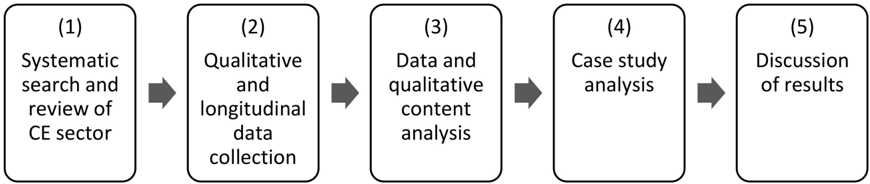
Community energy (CE) initiatives have been progressively spreading across Europe and are increasingly proposed as innovative and alternative approaches to guarantee higher citizen participation in the transition toward cleaner energy systems. This paper focuses the attention on Italy, a Southern European country characterized by relatively low CE sector development. It fills a gap in the literature by eliciting and presenting novel and comprehensive evidence on recent Italian CE sector developments. Through a stepwise approach it systematically maps and reviews Italian CE initiatives, to then focus the attention on three specific case studies to further explore conditions for development as well as of success within the Italian energy system. The analysis presents an Italian CE sector still at its niche level, characterized by small initiatives largely dependent on national photovoltaics (PV) policy support. It also points out how only larger initiatives, able to operate at national scale, developing multiple projects and differentiating their activities have managed to continue growing at the time of discontinuity of policy support and contraction of the national renewable energy market. Recent EU and national legislative development might support revived development of CE initiatives in Italy.
Overview
The claims and statistics of this paper haven’t been checked yet.
Run the check — free, no account needed. It reads the open-access text and checks the sources it cites.
Integrity signals
Registry
Cites
Statistics
Figures
Verification
Claims the paper makes
The claims and statistics of this paper haven’t been checked yet.
Run the check — free, no account needed. It reads the open-access text and checks the sources it cites.
Claims other papers make about this one
Each is checked against this paper’s own text: does it say what the citing paper says it does?
In the citing paper
“Nevertheless, they suffer from a lack of awareness and acceptance among the general public [69,70] or unfavourable institutional conditions to operate in the energy market, leading to an unequal geographical distribution of REScoops in Europe [71,72].”
From Smart, circular and renewable: The role of cooperative governance in accelerating a sustainable energy transition (2025) · cites this paper as [71]
Self-check
Percentages, sums and reported differences re-computed from the paper’s own numbers.
The self-check needs the paper’s full text.
Citations
Cites
No references could be resolved yet.
Research works printed but not linked: 34
- EU Commission (2020, April 02). Directive 2009/28/EC of the European Parliament and of the Council of 23 April 2009 on the promotion of the use of energy from renewable sources and amending and subsequently repealing Directives 2001/77/EC and 2003/30/EC. Official Journal of the European Union. Available online: https://eur-lex.europa.eu/legal-content/EN/ALL/?uri=CELEX%3A32009L0028.
- EU Commission (2020, April 02). Directive 2012/27/EU of the European Parliament and of the Council of 25 October 2012 on energy efficiency, amending Directives 2009/125/EC and 2010/30/EU and repealing Directives 2004/8/EC and 2006/32/EC. Official Journal of the European Union. Available online: https://eur-lex.europa.eu/legal-content/en/TXT/?uri=celex%3A32012L0027.
- Hall, 2016, Financing the civic energy sector: How financial institutions affect ownership models in Germany and the United Kingdom, Energy Res. Soc. Sci., 12, 5, 10.1016/j.erss.2015.11.004 · DOI
- Lavrijssen, S., and Arturo, C.P. (2017). Radical Prosumer Innovations in the Electricity Sector and the Impact on Prosumer Regulation. Sustainability, 9. · DOI
- 2018, European Law on the Energy Communities: A Long Way to a Direct Legal Framework, Eur. Energy Environ. Law Rev., 27, 60, 10.54648/EELR2018006 · DOI
- Scholtens, 2015, Power to the people: Local community initiatives and the transition to sustainable energy, Renew. Sustain. Energy Rev., 43, 666, 10.1016/j.rser.2014.10.089 · DOI
- Creamer, 2019, Community renewable energy: What does it do? Walker and Devine-Wright (2008) ten years on, Energy Res. Soc. Sci., 57, 101223, 10.1016/j.erss.2019.101223 · DOI
- Walker, 2008, Community renewable energy: What should it mean?, Energy Policy, 36, 497, 10.1016/j.enpol.2007.10.019 · DOI
- Yildiz, 2015, Renewable energy cooperatives as gatekeepers or facilitators? Recent developments in Germany and a multidisciplinary research agenda, Energy Res. Soc. Sci., 6, 59, 10.1016/j.erss.2014.12.001 · DOI · Paper page
- 2018, Renewable Energy Cooperatives as an instrument towards the energy transition in Spain, Energy Policy, 123, 215, 10.1016/j.enpol.2018.08.064 · DOI
- Yildiz, 2014, Financing renewable energy infrastructures via financial citizen participation—The case of Germany, Renew. Energy, 68, 677, 10.1016/j.renene.2014.02.038 · DOI
- Bauwens, 2016, What drives the development of community energy in Europe? The case of wind power cooperatives, Energy Res. Soc. Sci., 13, 136, 10.1016/j.erss.2015.12.016 · DOI
- Boon, 2014, Local civil society based renewable energy organisations in the Netherlands: Exploring the factors that stimulate their emergence and development, Energy Policy, 69, 297, 10.1016/j.enpol.2014.01.046 · DOI
- Seyfang, 2013, A thousand flowers blooming? An examination of community energy in the UK, Energy Policy, 61, 977, 10.1016/j.enpol.2013.06.030 · DOI
- Bauwens, 2019, Analyzing the determinants of the size of investments by community renewable energy members: Findings and policy implications from Flanders, Energy Policy, 129, 841, 10.1016/j.enpol.2019.02.067 · DOI
- Wierling, A., Schwanitz, V.J., Zei, J.P., Bout, C., Candelise, C., Gilcrease, W., and Gregg, J.S. (2018). Statistical Evidence on the Role of Energy Cooperatives for the Energy Transition in European Countries. Sustainability, 10. · DOI
- MagnaniI, 2016, Does civil society matter? Challenges and strategies of grassroots initiatives in Italy’s energy transition, Energy Res. Soc. Sci., 13, 148, 10.1016/j.erss.2015.12.012 · DOI
- Magnani, 2017, Ecopreneurs, rural development and alternative socio-technical arrangements for community renewable energy, J. Rural Stud., 52, 33, 10.1016/j.jrurstud.2017.03.009 · DOI
- Hatzi, 2016, Market-based vs. grassroots citizen participation initiatives in photovoltaics: A qualitative comparison of niche development, Futures, 78, 57, 10.1016/j.futures.2016.03.022 · DOI
- Seyfang, 2014, A grassroots sustainable energy niche? Reflections on community energy in the UK, Environ. Innov. Soc. Transit., 13, 21, 10.1016/j.eist.2014.04.004 · DOI
- Hain, 2005, Additional renewable energy growth through small-scale community orientated energy policies, Energy Policy, 33, 1199, 10.1016/j.enpol.2003.11.017 · DOI
- Parker, 2009, Community energy planning in Canada: The role of renewable energy, Renew. Sustain. Energy Rev., 13, 2088, 10.1016/j.rser.2008.09.030 · DOI
- Seyfang, 2013, Growing green money? Mapping community currencies for sustainable development, Ecol. Econ., 86, 65, 10.1016/j.ecolecon.2012.11.003 · DOI · Paper page
- Goedkoop, 2016, Partnership or placation? The role of trust and justice in the shared ownership of renewable energy projects, Energy Res. Soc. Sci., 17, 135, 10.1016/j.erss.2016.04.021 · DOI
- Hannon, 2015, UK Local Authority engagement with the Energy Service Company (ESCo) model: Key characteristics, benefits, limitations and considerations, Energy Policy, 78, 198, 10.1016/j.enpol.2014.11.016 · DOI
- Rutherford, 2015, Introduction to the special issue—Urban energy governance: Local actions, capacities and politics, Energy Policy, 78, 173, 10.1016/j.enpol.2014.11.033 · DOI
- Huybrechts, 2014, The relevance of the cooperative model in the field of renewable energy, Ann. Public Coop. Econ., 85, 193, 10.1111/apce.12038 · DOI · Paper page
- Sagebiel, 2014, Are consumers willing to pay more for electricity from cooperatives? Results from an online Choice Experiment in Germany, Energy Res. Soc. Sci., 2, 90, 10.1016/j.erss.2014.04.003 · DOI
- Viardot, 2013, The role of cooperatives in overcoming the barriers to adoption of renewable energy, Energy Policy, 63, 756, 10.1016/j.enpol.2013.08.034 · DOI
- Antonelli, 2014, The doping effect of Italian feed-in tariffs on the PV market, Energy Policy, 67, 583, 10.1016/j.enpol.2013.12.025 · DOI
- Candelise, 2013, The dynamics of solar PV costs and prices as a challenge for technology forecasting, Renew. Sustain. Energy Rev., 26, 96, 10.1016/j.rser.2013.05.012 · DOI
- Marigo, 2013, What is behind the recent dramatic reductions in photovoltaic prices? The role of China. Economia e Politica Industriale, J. Ind. Bus. Econ., 40, 5
- FORGREEN 2010 (2010, January 09). Press Release. Available online: http://www.forgreen.it/da-multiutility-a-forgreen-nel-segno-del-risparmio-energetico.
- Bauwens, T., Huybrechts, B., and Dufays, F. (2019). Understanding the Diverse Scaling Strategies of Social Enterprises as Hybrid Organizations: The Case of Renewable Energy Cooperatives. Organ. Environ., 1086026619837126. · DOI · Paper page
Cited by
Sorted by citations
Van Opstal, W., Bocken, N., & Brusselaers, J. (2025) · Energy Research & Social Science · doi:10.1016/j.erss.2025.104049 · Cited by 20
Metadata
- Authors
- Candelise, C., & Ruggieri, G.
- Affiliations
- GREEN, the Centre for Research in Geography, Resources, Environment, Energy and Networks, Bocconi University, 20136 Milan, Italy
- Dipartimento di Scienze Teoriche e Applicate, Università degli Studi dell’Insubria, 21100 Varese, Italy
- ORCID
- Ruggieri, Gianluca
- Venue
- Energies
- Publisher
- MDPI AG
- Published
- 2020-04-13
- Volume
- 13
- Issue
- 8
- Pages
- 1888
- ISSN
- 1996-1073
- Cited by
- 96
- References
- 0
- Language
- en
- Funders
- FP7 People: Marie-Curie Actions (331081)
About these checks
Registry, retraction, Cites and statistics results are computed, not judged, with one exception: a printed reference that no index lists is read once by a model before it counts as a citation error. Claims are extracted by a model and kept only when their quote appears verbatim in the text; each cited source is then checked, with a model’s help, for whether it says what the claim relies on. Those verdicts can be wrong — read the claim’s quote and the cited source before relying on one.
Statistics and arithmetic are recomputed, not judged.
Confidence bands are shown only for fields calibrated on our annotated test set. None is calibrated yet, so no band is shown.
What counts as a claim ›How we measure confidence ›How we check this ›
Are you an author, or do you see a problem with this page? Request a review
