

Hydrothermal Conversion of Neutral Sulfite Semi-Chemical Red Liquor into Hydrochar
Open accessThe DOI matches its Crossref record; 34 of the 35 references it cites were found in a registry or an index; 1 of the 32 sources its claims cite were checked for support.
Abstract
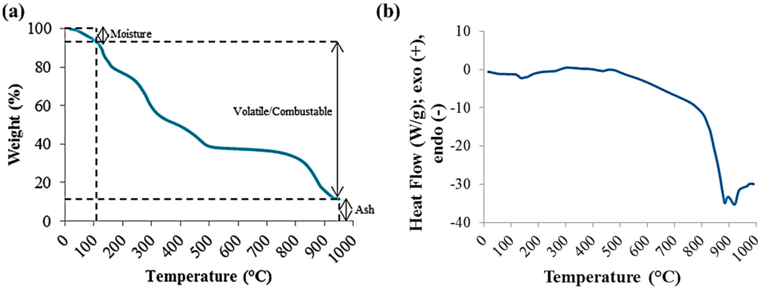
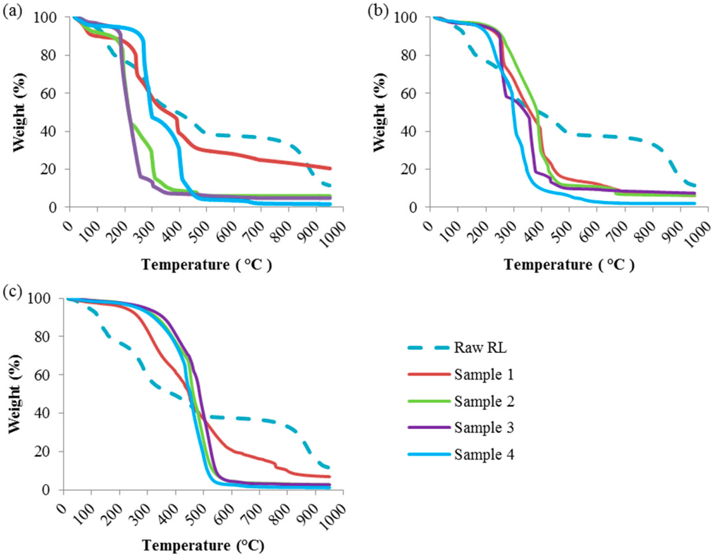
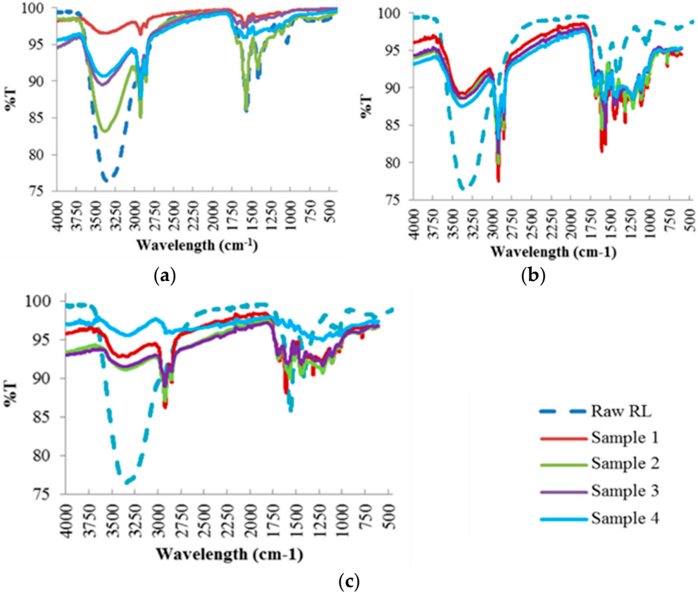
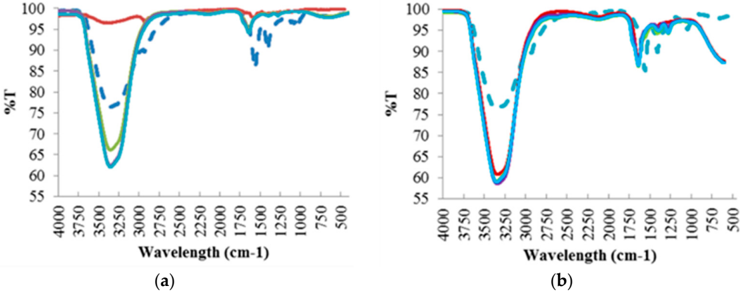
Hydrochar was produced from neutral sulfite semi-chemical (NSSC) red liquor as a possible bio-based solid fuel for use in power generation facilities. Hydrothermal conversion (HTC) experiments were conducted using a fixed liquor-to-water volume ratio of 1:8 and reaction time of 3 h. Solutions were processed using different chemical additives, pH and temperature conditions to determine the optimum conditions required for producing a high energy content solid fuel. The hydrochar samples produced were analyzed by ultimate, thermogravimetric (TGA) and Fourier transform infrared spectroscopy (FTIR) analyses to determine physicochemical properties that are important for utilization as a fuel. The residual process liquids were also analyzed to better understand the effect of HTC process conditions on their properties. It was determined that the optimum conditions for producing a solid fuel was at a reaction temperature of 250 °C, in the presence of acetic acid at pH 3. The maximum energy content (HHV) of the hydrochar produced from red liquor at this condition was 29.87 MJ/kg, and its ash content was 1.12 wt.%.
Overview
CoChat Summary
TL;DR
This study used hydrothermal carbonization (HTC) to convert neutral sulfite semi-chemical red liquor into hydrochar and found that higher reaction severity produced a more coal-like fuel. The best reported condition was 250 °C with acetic acid at pH 3, yielding hydrochar with 29.87 MJ/kg HHV, 73.62 wt.% carbon, and 1.12 wt.% ash.
Key findings
- Carbon content increased with HTC severity, from 28.95 wt.% in raw red liquor to 73.62 wt.% in the best-performing hydrochar (sample 4 at 250 °C, acetic acid, pH 3).
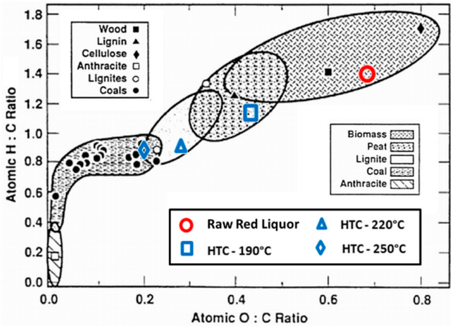
- HHV also increased with HTC severity; the maximum reported HHV was 29.87 MJ/kg at 250 °C for samples 3 and 4, close to bituminous coal at 32.32 MJ/kg.
- Ash content dropped strongly with temperature; the lowest reported ash content was 1.12 wt.% (sample 4 at 250 °C), compared with 10.39 wt.% for raw red liquor.
- Mass yield decreased as temperature increased, with reported yields in the 45%–75% range; the maximum yield was 75% for sample 1 at 190 °C.
Methods
- Batch HTC experiments were run in a 1 L Parr reactor using NSSC red liquor and deionized water at a liquor-to-water ratio of 1:8, for 3 h, at 190 °C, 220 °C, and 250 °C.
- Four reaction media were tested: water only (pH 6.75), acetic acid to pH 4, ethanol plus acetic acid to pH 4, and acetic acid to pH 3.
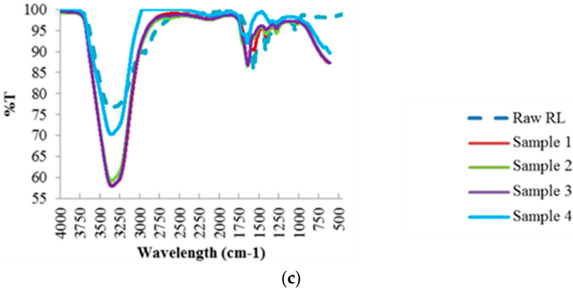
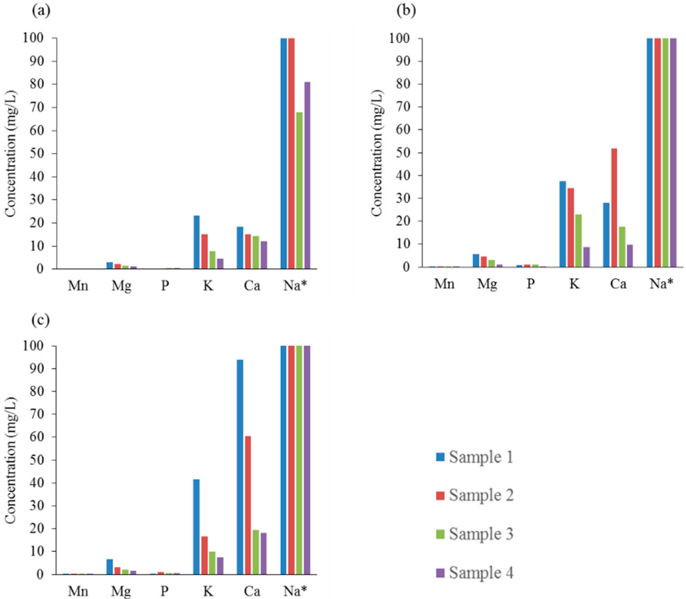
- Hydrochars were characterized by ultimate analysis, TGA/thermal analysis, bomb calorimetry for HHV, FTIR, and inorganic metal analysis of the residual process liquid.
Limitations
- The paper does not report a full scale-up, combustion, or power-plant performance test; this is evident from the text because the conclusions are based on lab-scale characterization only.
- The study only varies a limited set of conditions and reports a small number of samples; this is evident from the text because only four media conditions and three temperatures are described.
- The text gives no explicit limitation section or quantitative uncertainty analysis beyond the reported measurement values; this is not stated in the paper.
Model-written summary. Check it against the paper before relying on it.
Integrity signals
Registry
Cites
Statistics
Figures
Verification
Claims the paper makes
0 Valid · 1 Not valid · 29 Not checked · 163 Own results and interpretations
The cited sources that could be checked couldn’t confirm or dispute this claim.
In the paper
“The inorganic elements in lignocellulosic biomass are generally held in hemicellulose and soluble extractives [22].”
What the sources say
- Could not verifycites [22] 22. Simanjuntak, W.; Sembiring, S.; Zakaria, W.A.; Pandiangan, K.D. The Use of Carbon Dioxide Released from Coconut Shell Combustion to Produce Na2CO3. Makara J. Sci. 2014 , 18 . [CrossRef] sourceExperimental — accuracy not yet measured
Our copy of Simanjuntak/Sembiring et al. (2014) contains only the Abstract (p. 1, on producing Na2CO3 by reacting coconut-shell-combustion CO2 with 6.5–8.0 M NaOH, characterized by FTIR/XRD/SEM-EDS and DTA/TGA), the References list (pp. n/a, entries [1]–[23], where [22] is Cullity & Stock's Elements of X-ray Diffraction), and repository/metadata boilerplate. Searches for 'inorganic elements in lignocellulosic biomass hemicellulose soluble extractives', 'coconut shell ash inorganic minerals composition', 'hemicellulose cellulose lignin extractives ash content', and 'sodium potassium calcium magnesium inorganic elements in biomass feedstock' returned no passage discussing where inorganic elements reside in biomass. No body text on biomass ash chemistry is present in our copy, so the claim can be neither supported nor contradicted. (LLM, conf=0.68)
plainstates an association- Asserted: passes — The authors put it forward as true.
- Checkable: passes — It can be checked against evidence.
- Load-bearing: passes — The paper’s conclusions depend on it.
- Based: passes — The paper gives a reason why it holds.
- Could not verify
A result the paper reports from its own data — it cites no other source for it, so there is none to check. The quote shows it is in the paper.
In the paper
“hemicellulose and cellulose contents”
plainstates a cause- Asserted: passes — The authors put it forward as true.
- Checkable: passes — It can be checked against evidence.
- Load-bearing: passes — The paper’s conclusions depend on it.
- Based: passes — The paper gives a reason why it holds.
A result the paper reports from its own data — it cites no other source for it, so there is none to check. The quote shows it is in the paper.
In the paper
“The increase of HTC temperature significantly reduces the ash content of the hydrochar”
plainstates a cause- Asserted: passes — The authors put it forward as true.
- Checkable: passes — It can be checked against evidence.
- Load-bearing: passes — The paper’s conclusions depend on it.
- Based: passes — The paper gives a reason why it holds.
A result the paper reports from its own data — it cites no other source for it, so there is none to check. The quote shows it is in the paper.
In the paper
“The maximum energy content (HHV) of the hydrochar produced from red liquor at this condition was 29.87 MJ/kg”
plain- Asserted: passes — The authors put it forward as true.
- Checkable: passes — It can be checked against evidence.
- Load-bearing: passes — The paper’s conclusions depend on it.
- Based: passes — The paper gives a reason why it holds.
A result the paper reports from its own data — it cites no other source for it, so there is none to check. The quote shows it is in the paper.
In the paper
“It was determined that the optimum conditions for producing a solid fuel was at a reaction temperature of 250 C, in the presence of acetic acid at pH 3.”
plainstates a cause- Asserted: passes — The authors put it forward as true.
- Checkable: passes — It can be checked against evidence.
- Load-bearing: passes — The paper’s conclusions depend on it.
- Based: passes — The paper gives a reason why it holds.
122 more claims
Create a free account to see all 193 claims and to verify the 4 references still open.
- It may state two separate claims as one. 44
- Probably not a substantial claim. 29
- The quote only partly states this claim. 2
Citations
Cites
An overview of the chemical composition of biomass
Vassilev, S. V., Baxter, D., Andersen, L. K., & Vassileva, C. G. (2010) · Fuel · doi:10.1016/j.fuel.2009.10.022 · Cited by 2,519
The production of carbon materials by hydrothermal carbonization of cellulose
Sevilla, M., & Fuertes, A. B. (2009) · Carbon · doi:10.1016/j.carbon.2009.04.026 · Cited by 2,021
Libra, J. A., Ro, K. S., Kammann, C., Funke, A., Berge, N. D., Neubauer, Y., Titirici, M.-M., Fühner, C., Bens, O., Kern, J., et al. (2011) · Biofuels · doi:10.4155/bfs.10.81 · Cited by 1,756
Hydrothermal processing of lignocellulosic materials
Garrote, G., Domínguez, H., & Parajó, J. C. (1999) · Holz als Roh- und Werkstoff · doi:10.1007/s001070050039 · Cited by 880
Kumar, R., Mago, G., Balan, V., & Wyman, C. E. (2009) · Bioresource Technology · doi:10.1016/j.biortech.2009.01.075 · Cited by 876
Hydrothermal Carbonization (HTC) of Lignocellulosic Biomass
Hoekman, S. K., Broch, A., & Robbins, C. (2011) · Energy & Fuels · doi:10.1021/ef101745n · Cited by 726
The behavior of inorganic material in biomass-fired power boilers: field and laboratory experiences
Baxter, L. L., Miles, T. R., Miles, T. R., Jenkins, B. M., Milne, T., Dayton, D., Bryers, R. W., & Oden, L. L. (1998) · Fuel Processing Technology · doi:10.1016/s0378-3820(97)00060-x · Cited by 669
Meyer, S., Glaser, B., & Quicker, P. (2011) · Environmental Science & Technology · doi:10.1021/es201792c · Cited by 660
Kabyemela, B. M., Adschiri, T., Malaluan, R. M., & Arai, K. (1999) · Industrial & Engineering Chemistry Research · doi:10.1021/ie9806390 · Cited by 592
Acid-Catalyzed Production of 5-Hydroxymethyl Furfural from d-Fructose in Subcritical Water
Salak Asghari, F., & Yoshida, H. (2006) · Industrial & Engineering Chemistry Research · doi:10.1021/ie051088y · Cited by 500
Research works printed but not linked: 2
- 4. Kappejan, J.; Van Loo, S. Biomass fuel properties and basic principles of biomass combustion. In The Handbook of Biomass Combustion and Co-Firing , 2nd ed.; Earthscan: London, UK, 2008; Volume 1, pp. 7-34.
- 27. Perry, R.H. Energy Resources, Conversation, and Utilization. In Chemical Engineering Handbook , 6th ed.; McGraw Hill: New York, NY, USA, 1984; Volume 1, pp. 3-21, 3-22, 3-38.
Cited by
Minireview of potential applications of hydrochar derived from hydrothermal carbonization of biomass
Fang, J., Zhan, L., Ok, Y. S., & Gao, B. (2018) · Journal of Industrial and Engineering Chemistry · doi:10.1016/j.jiec.2017.08.026 · Cited by 600
Heidari, M., Dutta, A., Acharya, B., & Mahmud, S. (2019) · Journal of the Energy Institute · doi:10.1016/j.joei.2018.12.003 · Cited by 464
Self-citationLucian, M., & Fiori, L. (2017) · Energies · doi:10.3390/en10020211 · Cited by 316
Hydrothermal Carbonization of Fruit Wastes: A Promising Technique for Generating Hydrochar
Zhang, B., Heidari, M., Regmi, B., Salaudeen, S., Arku, P., Thimmannagari, M., & Dutta, A. (2018) · Energies · doi:10.3390/en11082022 · Cited by 131
Self-citationZhang, T., Wu, X., Shaheen, S. M., Zhao, Q. R., Liu, X., Rinklebe, J., & Ren, H. (2019) · Chemical Engineering Journal · doi:10.1016/j.cej.2019.122254 · Cited by 128
Metadata
- Authors
- Gamgoum, R., Dutta, A., Santos, R., & Chiang, Y.
- Affiliations
- University of Guelph (CA)
- School of Applied Chemical and Environmental Sciences, Sheridan Institute of Technology, 7899 McLaughlin Road, Brampton, ON L6Y 5H9, Canada
- Corresponding author
- Chiang, Yi
- Venue
- Energies
- Publisher
- MDPI AG
- Published
- 2016-06-03
- Volume
- 9
- Issue
- 6
- Pages
- 435
- ISSN
- 1996-1073 (ISSN-L)
- OpenAlex
- W2409245633
- Cited by
- 41
- References
- 35
- Citations by year
- 2026: 4 · 2025: 2 · 2024: 6 · 2023: 3 · 2022: 3 · 2021: 4 · 2020: 5 · 2019: 5 · 2018: 6 · 2017: 3
- FWCI
- 2.25
- Type
- journal article
- Language
- en
- Open access
- gold
- doi.org
- Licence
- Locations
- Energies (publishedVersion, cc-by)
- TSpace (University of Toronto) (submittedVersion, cc-by)
- RePEc: Research Papers in Economics (submittedVersion)
- DOAJ (DOAJ: Directory of Open Access Journals) (submittedVersion, cc-by-sa)
- SOURCE Sheridan's Institutional Repository (Sheridan College) (submittedVersion, cc-by-nc-nd)
- Funders
- University of Guelph
- Topics
- Physical Sciences › Energy › Fuel Technology › Thermochemical Biomass Conversion Processes
- Physical Sciences › Engineering › Mechanical Engineering › Coal Combustion and Slurry Processing
- Physical Sciences › Energy › Renewable Energy, Sustainability and the Environment › Anaerobic Digestion and Biogas Production
- Keywords
- hydrochar, hydrothermal conversion, pulp mill effluent, chemical additives, acetic acid, reaction temperature, ash content, higher heating value, lignin, hemicellulose, cellulose, adsorbed water
About these checks
Registry, retraction, Cites and statistics results are computed, not judged, with one exception: a printed reference that no index lists is read once by a model before it counts as a citation error. Claims are extracted by a model and kept only when their quote appears verbatim in the text; each cited source is then checked, with a model’s help, for whether it says what the claim relies on. Those verdicts can be wrong — read the claim’s quote and the cited source before relying on one.
The claim verdicts this report counts are experimental: their accuracy is not yet measured.
A language model drew the claims from the paper on 2026-10-10, under version 3 of the claim definition (model deepseek-v4.1-flash, prompt extract-v3).
A second model labelled each claim on 2026-10-10 (model jev-1.13-20260917, definition revision gold-guideline-v0.2).
Cited sources are checked with a language model’s help (qwen3.8-omni-flash).
Statistics and arithmetic are recomputed, not judged.
Confidence bands are shown only for fields calibrated on our annotated test set. None is calibrated yet, so no band is shown.
What counts as a claim ›How we measure confidence ›How we check this ›
Are you an author, or do you see a problem with this page? Request a review
Data sources
Bibliographic data: Semantic Scholar, OpenAlex, Crossref.
Contains information from the Semantic Scholar Academic Graph Datasets, made available under the ODC Attribution License (ODC-BY 1.0).
Semantic Scholar’s data is described in: Kinney, R., et al. (2023). The Semantic Scholar Open Data Platform. arXiv:2301.10140.
