

Comparative Profiling of Hot and Cold Brew Coffee Flavor Using Chromatographic and Sensory Approaches
Open accessThe DOI matches its Crossref record; 49 of the 50 references it cites were found in a registry or an index; 4 of the 19 sources its claims cite were checked for support.
Abstract
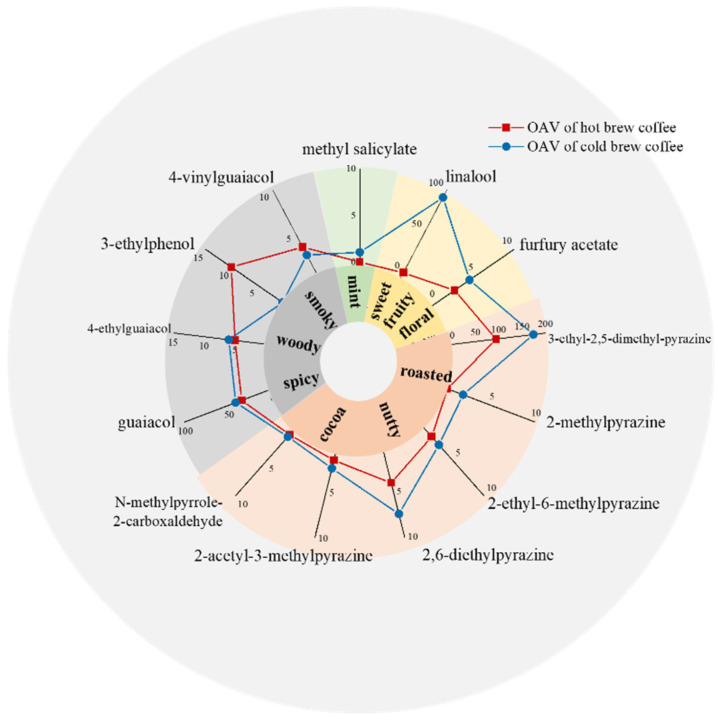
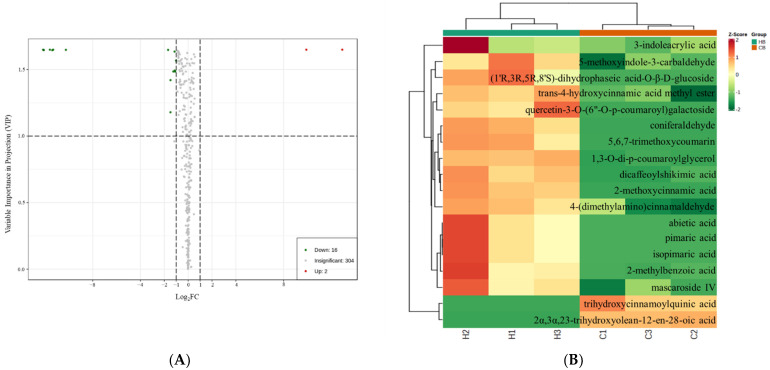
Coffee brewing is a complex process from roasted coffee bean to beverage, playing an important role in coffee flavor quality. In this study, the effects of hot and cold brewing on the flavor profile of coffee were comprehensively investigated on the basis of chromatographic and sensory approaches. By applying gas chromatography-mass spectrometry and odor activity value calculation, most pyrazines showed higher contribution to the aroma profile of cold brew coffee over hot brew coffee. Using liquid chromatography, 18 differential non-volatiles were identified, most of which possessed lower levels in cold brew coffee than hot brew coffee. The sensory evaluation found higher fruitiness and lower bitterness and astringent notes in cold brew coffee than hot brew coffee, which was attributed by linalool, furfural acetate, and quercetin-3-O-(6″-O-p-coumaroyl) galactoside. This work suggested coffee brewing significantly affected its flavor profile and sensory properties.
Overview
CoChat Summary
## TL;DR
This study compared hot and cold brew coffee made from the same Arabica bean batch using GC-MS, LC-based profiling, color measurement, and sensory testing. It found 13 aroma-active compounds and 18 differential non-volatiles that separated the brews, with cold brew linked to more fruity/sweet aroma and hot brew to more bitterness/astringency.
## Key findings
- 40 volatile compounds were identified; 13 had OAV > 1 and were considered major aroma contributors.
- Cold brew had higher aroma contribution from pyrazines: the paper states pyrazines’ OAV contribution in cold brew was almost twice that of hot brew, and 2-methylpyrazine was detected only in cold brew.
- 18 differential non-volatiles were identified by UPLC-MS/MS and multivariate analysis: 8 phenolic acids, 5 terpenoids, 3 alkaloids, 1 flavonoid, and 1 coumarin; 16 of 18 were higher in hot brew.
- Sensory testing found cold brew had higher fruitiness and sweetness, and lower bitterness and astringency than hot brew; the triangle test had 25 correct identifications versus a critical value of 23 at α = 0.05.
- Color differed substantially: hot brew had L* 29.76 ± 1.70, a* 23.21 ± 0.61, b* 38.57 ± 2.43; cold brew had L* 38.79 ± 0.78, a* 19.14 ± 0.91, b* 50.19 ± 3.95; ΔE = 15.27.
## Methods
- Design/sample: Comparative study of hot vs cold brew coffee made from the same commercial batch of medium-dark roasted Arabica beans blended from Costa Rica, Colombia, and Indonesia; preparations were done in three replicates and standardized to 2% total dissolved solids.
- Chemical analysis: Volatiles were measured by SPME-GC-MS with OAV calculation; non-volatiles were measured by ion chromatography for sugars/organic acids and UPLC-MS/MS for broader profiling.
- Statistical/sensory analysis: Used PCA, HCA, OPLS-DA, heatmaps, and Student’s t-tests; sensory testing included a triangle test with 48 students and QDA with 7 trained students.
## Limitations
- The paper states that the identified flavor markers and their sensory roles “would need further verification” and calls for larger-scale production studies involving more general coffee consumers.
- It also notes that the role of quercetin-3-O-(6″-O-p-coumaroyl) galactoside in bitterness/astringency needs further study; this is an explicit limitation of interpretation.
- Evident from the text: the sensory panel was small and narrow (7 trained panelists for QDA; 48 university students for the triangle test), so generalizability is limited.
Model-written summary. Check it against the paper before relying on it.
Integrity signals
Registry
Cites
Statistics
Figures
Verification
Claims the paper makes
2 Valid · 1 Not valid · 10 Not checked · 36 Own results and interpretations
The cited sources that could be checked couldn’t confirm or dispute this claim.
In the paper
“the high temperature increased the saturated vapor pressure, thereby adding the losses of volatile compounds [26].”
§ Comparative Profiling of Hot and Cold Brew Coffee Flavor Using Chromatographic and Sensory Approaches > 3. Results and Discussion > 3.1. Volatile Compound Profile
What the sources say
- Could not verifycites [26] López J.A.S. Wellinger M. Gloess A.N. Zimmermann R. Yeretzian C. Extraction kinetics of coffee aroma compounds using a semi-automatic machine: On-line analysis by PTR-ToF-MS Int. J. Mass Spectrom. 2016 401 22 30 10.1016/j.ijms.2016.02.015 sourceExperimental — accuracy not yet measured
Section 3.3.2 (page unavailable) reports that higher brewing temperatures increased measured VOC intensity and discusses solubility and extraction of coffee oils as possible explanations. Our copy lists vapor pressures at 25°C in Table 1, but the passages found do not address whether high temperature raises saturated vapor pressure or causes greater volatile-compound losses (searched: saturated vapor pressure, evaporation, and losses). (LLM, conf=0.72)
plainstates a cause- Asserted: passes — The authors put it forward as true.
- Checkable: passes — It can be checked against evidence.
- Load-bearing: passes — The paper’s conclusions depend on it.
- Based: passes — The paper gives a reason why it holds.
- Could not verify
A result the paper reports from its own data — it cites no other source for it, so there is none to check. The quote shows it is in the paper.
In the paper
“a total of 40 volatile compounds were identified, including 12 pyrazines, 9 phenols, 7 furans, 4 aldehydes, 3 ketones, and others.”
§ Comparative Profiling of Hot and Cold Brew Coffee Flavor Using Chromatographic and Sensory Approaches > 3. Results and Discussion > 3.1. Volatile Compound Profile
plain- Asserted: passes — The authors put it forward as true.
- Checkable: passes — It can be checked against evidence.
- Load-bearing: passes — The paper’s conclusions depend on it.
- Based: passes — The paper gives a reason why it holds.
A result the paper reports from its own data — it cites no other source for it, so there is none to check. The quote shows it is in the paper.
In the paper
“quercetin-3-O-(6″-O-p-coumaroyl) galactoside was identified to be the differential non-volatile compound with a higher abundance found in hot brew coffee.”
§ Comparative Profiling of Hot and Cold Brew Coffee Flavor Using Chromatographic and Sensory Approaches > 3. Results and Discussion > 3.4. Sensory Evaluation and Differential Flavor Markers
plainstates an association- Asserted: passes — The authors put it forward as true.
- Checkable: passes — It can be checked against evidence.
- Load-bearing: passes — The paper’s conclusions depend on it.
- Based: passes — The paper gives a reason why it holds.
A result the paper reports from its own data — it cites no other source for it, so there is none to check. The quote shows it is in the paper.
In the paper
“the content of N-methylpyrrole-2-carboxaldehyde in cold brew coffee was significantly higher than hot brew (Table 1).”
§ Comparative Profiling of Hot and Cold Brew Coffee Flavor Using Chromatographic and Sensory Approaches > 3. Results and Discussion > 3.1. Volatile Compound Profile
plainstates an association- Asserted: passes — The authors put it forward as true.
- Checkable: passes — It can be checked against evidence.
- Load-bearing: unclear — It is unclear whether the paper’s conclusions depend on it.
- Based: passes — The paper gives a reason why it holds.
A result the paper reports from its own data — it cites no other source for it, so there is none to check. The quote shows it is in the paper.
In the paper
“Using liquid chromatography, 18 differential non-volatiles were identified, most of which possessed lower levels in cold brew coffee than hot brew coffee.”
- Also stated in: § 3.2. Differential Non-Volatiles Identified in Hot and Cold Brew Coffee · plain
“Hot and cold brew coffee were discriminated by 18 differential non-volatiles, including 8 phenolic acids, 5 terpenoids, 3 alkaloids, 1 flavonoid, and 1 coumarin.”
§ Comparative Profiling of Hot and Cold Brew Coffee Flavor Using Chromatographic and Sensory Approaches > Abstract
plain- Asserted: passes — The authors put it forward as true.
- Checkable: passes — It can be checked against evidence.
- Load-bearing: passes — The paper’s conclusions depend on it.
- Based: passes — The paper gives a reason why it holds.
- Also stated in: § 3.2. Differential Non-Volatiles Identified in Hot and Cold Brew Coffee · plain
25 more claims
Create a free account to see all 49 claims and every source verdict.
- Probably not a substantial claim. 8
- It may state two separate claims as one. 13
- The quote only partly states this claim. 1
Citations
Cites
Sensory Evaluation by Quantitative Descriptive Analysis
Stone, H., Sidel, J., Oliver, S., Woolsey, A., & Singleton, R. C. (2004) · Descriptive Sensory Analysis in Practice · doi:10.1002/9780470385036.ch1c · Cited by 1,190 · cited 1×
“Consistent with other sensory quantitative descriptive analysis [22], the panel was asked to evaluate coffee visual appearance and gave a score for color under the natural lighting condition, then took a deep smell of the coffee to evaluate the intensity of aroma before drinking it to evaluate its taste.”
Czerny, M., Christlbauer, M., Christlbauer, M., Fischer, A., Granvogl, M., Hammer, M., Hartl, C., Hernandez, N. M., & Schieberle, P. (2008) · European Food Research and Technology · doi:10.1007/s00217-008-0931-x · Cited by 720 · cited 4×
“3-Ethylphenol 620-17-7 leather, ink [34] 1.”
InfluentialComplexity of coffee flavor: A compositional and sensory perspective
Sunarharum, W. B., Williams, D. J., & Smyth, H. E. (2014) · Food Research International · doi:10.1016/j.foodres.2014.02.030 · Cited by 620 · cited 8×
“chlorogenic acids during green coffee bean roasting [3].”
BackgroundResultInfluentialScharbert, S., & Hofmann, T. (2005) · Journal of Agricultural and Food Chemistry · doi:10.1021/jf050294d · Cited by 600 · cited 1×
“Flavonol-3-glycosides were reported to induce a velvety and mouth-coating sensation with low thresholds, which contributed to astringency in tea and red wine [47,48], although without bitterness on their own, flavonol-3-glycosides were found to amply the bitter taste of caffeine in tea [47].”
BackgroundExploring the impacts of postharvest processing on the aroma formation of coffee beans—A review
de Melo Pereira, G. V., de Carvalho Neto, D. P., Magalhães Júnior, A. I., Vásquez, Z. S., Medeiros, A. B. P., Vandenberghe, L. P. S., & Soccol, C. R. (2019) · Food Chemistry · doi:10.1016/j.foodchem.2018.08.061 · Cited by 345
Comparison of nine common coffee extraction methods: Instrumental and sensory analysis
Gloess, A. N., Schönbächler, B., Klopprogge, B., D`Ambrosio, L., Chatelain, K., Bongartz, A., Strittmatter, A., Rast, M., & Yeretzian, C. (2013) · European Food Research and Technology · doi:10.1007/s00217-013-1917-x · Cited by 311 · cited 1×
“As reported by most sensory studies, cold brew coffee has been considered as fruity, floral, and sweet [5,6], while hot brew coffee possesses signature roasted and smoky-like smells [7].”
BackgroundCaporaso, N., Whitworth, M. B., Cui, C., & Fisk, I. D. (2018) · Food Research International · doi:10.1016/j.foodres.2018.03.077 · Cited by 298 · cited 10×
“78 2,5-Dimethyl pyrazine 123-32-0 cocoa, roasted, nuts [30] 2600 [31] 32.”
InfluentialThe impact of climate change and variability on coffee production: a systematic review
Pham, Y., Reardon-Smith, K., Mushtaq, S., & Cockfield, G. (2019) · Climatic Change · doi:10.1007/s10584-019-02538-y · Cited by 298 · cited 1×
“) is the second most globally traded commodity after petroleum [1] and accounts for broad market and high economic values.”
BackgroundCordoba, N., Fernandez-Alduenda, M., Moreno, F. L., & Ruiz, Y. (2020) · Trends in Food Science & Technology · doi:10.1016/j.tifs.2019.12.004 · Cited by 271 · cited 4×
“[4] reported that over 80% of soluble materials”
BackgroundInfluentialPotent odorants of raw Arabica coffee. Their changes during roasting
Czerny, M., & Grosch, W. (2000) · Journal of Agricultural and Food Chemistry · doi:10.1021/jf990609n · Cited by 232 · cited 2×
“Odor activity value (OAV) was the ratio of concentration to odor threshold [16].”
BackgroundResultFerrer-Gallego, R., Hernández-Hierro, J. M., Rivas-Gonzalo, J. C., & Escribano-Bailón, M. T. (2014) · Food Research International · doi:10.1016/j.foodres.2014.05.049 · Cited by 203 · cited 1×
“In addition to non-volatile compounds, 4-ethylphenol and 4-ethylguaiacol were reported to increase the intensity and persistence of astringency of the flavanol solutions in the wine system [49].”
BackgroundSteinhaus, M., & Schieberle, P. (2000) · Journal of Agricultural and Food Chemistry · doi:10.1021/jf990514l · Cited by 184
Fuller, M., & Rao, N. Z. (2017) · Scientific Reports · doi:10.1038/s41598-017-18247-4 · Cited by 180 · cited 3×
“As for cold brew coffee, concentrations of 3caffeoylquinic acid and caffeine were described to be stable after 400 min [13].”
BackgroundMethodResultNeapolitan coffee brew chemical analysis in comparison to espresso, moka and American brews
Caporaso, N., Genovese, A., Canela, M. D., Civitella, A., & Sacchi, R. (2014) · Food Research International · doi:10.1016/j.foodres.2014.01.020 · Cited by 140
Development of a “living” lexicon for descriptive sensory analysis of brewed coffee
Chambers, E., Sanchez, K., Phan, U. X. T., Miller, R., Civille, G. V., & Di Donfrancesco, B. (2016) · Journal of Sensory Studies · doi:10.1111/joss.12237 · Cited by 137 · cited 1×
“To train panelists to understand sensory attributes of coffee, description vocabulary and their intensity scoring standards of coffee sensory evaluation were as shown in Table S1 [5,21].”
MethodKey aroma-active compounds in brown sugar and their influence on sweetness
Liu, J., Wan, P., Xie, C., & Chen, D. (2020) · Food Chemistry · doi:10.1016/j.foodchem.2020.128826 · Cited by 128 · cited 1×
“65 * 2-Furanmethanol 98-00-0 sweet, creamy, vanilla [35] 2000 [32] 242.”
Rao, N. Z., Fuller, M., & Grim, M. D. (2020) · Foods · doi:10.3390/foods9070902 · Cited by 113
Sensory analysis. Methodology. Triangle test
(2021) · doi:10.3403/30382880 · Cited by 113
Yu, H., Xie, T., Xie, J., Chen, C., Ai, L., & Tian, H. (2020) · Food Research International · doi:10.1016/j.foodres.2019.108808 · Cited by 104 · cited 1×
“[53] reported that benzaldehyde and furfural increased the intensity of sweet aroma perception in Huangjiu even with OAVs < 1.”
BackgroundAmanpour, A., & Selli, S. (2016) · Journal of Food Processing and Preservation · doi:10.1111/jfpp.12692 · Cited by 101 · cited 5×
“59 4-Ethylguaiacol 2785-89-9 spicy, smoky, bacon [24] 16 [34] 81.”
BackgroundResultInfluentialCórdoba, N., Moreno, F. L., Osorio, C., Velásquez, S., & Ruiz, Y. (2021) · Food Research International · doi:10.1016/j.foodres.2021.110141 · Cited by 101 · cited 3×
“pounds in cold brew coffee, which was consistent with previous studies [9].”
MethodResultInfluentialBarba, C., Beno, N., Guichard, E., & Thomas-Danguin, T. (2018) · Food Chemistry · doi:10.1016/j.foodchem.2018.02.152 · Cited by 99 · cited 1×
“[52] have reported that linalool in fruit could significantly improve the sweet flavor perception of fruit juice.”
BackgroundHeo, J., Adhikari, K., Choi, K. S., & Lee, J. (2020) · Foods · doi:10.3390/foods9121746 · Cited by 93 · cited 2×
“On the basis of previous studies with some modifications [13,14], a coffee machine (NC-F400, Panasonic, Tokyo, Japan) was used for hot brewing with a waterto-powder ratio of 10:1 (w/w).”
MethodPu, D., Zhang, Y., Zhang, H., Sun, B., Ren, F., Chen, H., & Tang, Y. (2020) · Foods · doi:10.3390/foods9040413 · Cited by 87
Lee, L. W., Tay, G. Y., Cheong, M. W., Curran, P., Yu, B., & Liu, S. Q. (2017) · LWT · doi:10.1016/j.lwt.2016.11.047 · Cited by 84 · cited 2×
“coffee beans, linalool and methyl salicylate can be produced by various microorganisms [27],”
BackgroundPiccino, S., Boulanger, R., Descroix, F., & Sing, A. S. C. (2013) · Food Research International · doi:10.1016/j.foodres.2013.07.034 · Cited by 82 · cited 3×
“46 Phenol 108-95-2 phenolic, plastic rubber [30] 2400 [23] 49.”
BackgroundLi, J., Zhao, W., Pan, X. Y., Lao, F., Liao, X., Shi, Y., & Wu, J. (2022) · Food Chemistry X · doi:10.1016/j.fochx.2022.100214 · Cited by 71 · cited 1×
“[19], with slight modification, non-volatile analysis of hot and cold brew coffee was carried out on a UPLC-MS/MS system consisting of a Nexera X2 UPLC system (Shimadzu, Kyoto, Japan), connected to a 4500 QTRAP mass system (Applied Biosystems, Waltham, MA) equipped with an electrospray ion source (ESI).”
MethodSelf-citationRoast level and brew temperature significantly affect the color of brewed coffee
Yeager, S. E., Batali, M. E., Lim, L. X., Liang, J., Han, J., Thompson, A. N., Guinard, J., & Ristenpart, W. D. (2022) · Journal of Food Science · doi:10.1111/1750-3841.16089 · Cited by 71 · cited 1×
“To be more specific, hot brew coffee presented darker lightness and redder tone, while cold brew coffee appeared lighter and yellower, which was also observed in medium-roasted coffee brews originating from El Salvador [45].”
BackgroundPan, X., Wu, J., Zhang, W., Liu, J., Yang, X., Liao, X., Hu, X., & Lao, F. (2021) · Food Chemistry · doi:10.1016/j.foodchem.2020.128117 · Cited by 68
Self-citationSánchez López, J. A., Wellinger, M., Gloess, A. N., Zimmermann, R., & Yeretzian, C. (2016) · International Journal of Mass Spectrometry · doi:10.1016/j.ijms.2016.02.015 · Cited by 63
Córdoba, N., Moreno, F. L., Osorio, C., Velásquez, S., Fernandez-Alduenda, M., & Ruiz-Pardo, Y. (2021) · LWT · doi:10.1016/j.lwt.2021.111363 · Cited by 62 · cited 2×
“Interestingly, the hot brew coffee exhibited significantly higher bitterness and astringency over cold brew coffee [11], but no significant difference was detected in the quantities of a few common compounds associated with coffee bitterness, such as total caffeoylquinic acids, caffeine, and trigonelline [11,12].”
BackgroundResultXu, L., Lao, F., Xu, Z., Wang, X., Chen, F., Liao, X., Chen, A., & Yang, S. (2019) · Food Chemistry · doi:10.1016/j.foodchem.2019.01.154 · Cited by 60 · cited 1×
“As for non-volatiles, our previous study reported that the contents of physiologically functional norhorman and harman were richer in hot brew coffee with pour-over and boiled methods than cold brew coffee using liquid chromatography quadrupole time-of-flight mass spectrometry [10].”
MethodSelf-citationFarrell, T. L., Gomez‐Juaristi, M., Poquet, L., Redeuil, K., Nagy, K., Renouf, M., & Williamson, G. (2012) · Molecular Nutrition & Food Research · doi:10.1002/mnfr.201200021 · Cited by 58 · cited 2×
“[43] reported that levels of overall amino acids dropped to about 1% of green coffee beans after roasting, which made limited contribution to non-volatile profile of coffee.”
BackgroundLiu, Y., Song, H., & Luo, H. (2018) · Food Research International · doi:10.1016/j.foodres.2018.06.033 · Cited by 51 · cited 1×
“07 2,3-Dihydrobenzofuran 496-16-2 floral [36] 5.”
Coffee cell walls—composition, influence on cup quality and opportunities for coffee improvements
Li, Z., Zhang, C., Zhang, Y., Zeng, W., & Cesarino, I. (2021) · Food Quality and Safety · doi:10.1093/fqsafe/fyab012 · Cited by 50 · cited 1×
“00022 [44] 2-Methylbenzoic acid 118-90-1 C8H8O2 136.”
Insights on the chemical basis of the astringency of Spanish red wines
Sáenz-Navajas, M.-P., Avizcuri, J.-M., Ferreira, V., & Fernández-Zurbano, P. (2012) · Food Chemistry · doi:10.1016/j.foodchem.2012.03.060 · Cited by 47 · cited 1×
“Flavonol-3-glycosides were reported to induce a velvety and mouth-coating sensation with low thresholds, which contributed to astringency in tea and red wine [47,48], although without bitterness on their own, flavonol-3-glycosides were found to amply the bitter taste of caffeine in tea [47].”
BackgroundInvestigation on the extractability of melanoidins in portioned espresso coffee
Bartel, C., Mesías, M., & Morales, F. J. (2014) · Food Research International · doi:10.1016/j.foodres.2014.11.053 · Cited by 45 · cited 1×
“The brown color of coffee is related to melanoidins, a class of high-molecular-weight products originating from the Maillard reaction [46].”
BackgroundOak Wood Volatiles Impact on Red Wine Fruity Aroma Perception in Various Matrices
Cameleyre, M., Lytra, G., Schütte, L., Vicard, J.-C., & Barbe, J.-C. (2020) · Journal of Agricultural and Food Chemistry · doi:10.1021/acs.jafc.0c00583 · Cited by 38 · cited 1×
“Coniferaldehyde, as an identified key non-volatile in hot brew coffee, was reported to attenuate the fruity perception in red wine, even with concentrations lower than the threshold [50].”
BackgroundBatali, M. E., Lim, L. X., Liang, J., Yeager, S. E., Thompson, A. N., Han, J., Ristenpart, W. D., & Guinard, J.-X. (2022) · Foods · doi:10.3390/foods11162440 · Cited by 37 · cited 2×
“processing, hot and cold brew coffee were diluted to standardize to 2% total dissolved solids (TDS) for sensory and subsequential instrumental analysis, which was consistent with previous studies [6,12].”
BackgroundResultde Aquino, F. J. T., Augusti, R., Alves, J. D. O., et al. (2014) · Microchemical Journal · doi:10.1016/j.microc.2014.06.016 · Cited by 36 · cited 2×
“Consistent with other research, sucrose accounted for the majority of the coffee sweet non-volatiles in coffee beans [41].”
ResultKang, D.-E., Lee, H.-U., Davaatseren, M., & Chung, M. (2019) · Food Science and Biotechnology · doi:10.1007/s10068-019-00644-2 · Cited by 35 · cited 1×
“Maltol 118-71-8 sweet, caramel, cotton candy [38] 5800 [23] 29.”
The sensory properties and consumer acceptance of cold brew coffee
McCain‐Keefer, H. R., Meals, S., & Drake, M. (2020) · Journal of Sensory Studies · doi:10.1111/joss.12604 · Cited by 31 · cited 4×
“As reported by most sensory studies, cold brew coffee has been considered as fruity, floral, and sweet [5,6], while hot brew coffee possesses signature roasted and smoky-like smells [7].”
BackgroundMethodInfluentialMalfondet, N., Gourrat, K., Brunerie, P., & Quéré, J. L. (2016) · Flavour and Fragrance Journal · doi:10.1002/ffj.3325 · Cited by 29 · cited 1×
“4-Hydroxy-3methylacetophenone 876-02-8 meidical, smoky [40] 10.”
Wang, B., Wang, X., Bei, J., et al. (2021) · Food Analytical Methods · doi:10.1007/s12161-021-01964-y · Cited by 23 · cited 1×
“According to previous reports [17,18] with some modification, the supernatant was passed through a 0.”
MethodSelf-citationSynthesis of alkyl polyglycosides: Effect of catalyst-type on reaction rate and product composition
Böge, K., & Tietze, L. F. (1998) · Fette Seifen Anstrichmittel · doi:10.1002/(sici)1521-4133(199802)100:2<51::aid-lipi51>3.0.co;2-w · Cited by 15
Al‐Dalali, S., Zheng, F., Sun, B., Chen, F., Wang, P., & Wang, W. (2019) · Journal of Food Measurement & Characterization · doi:10.1007/s11694-019-00298-y · Cited by 15
Hou, H., Chen, Q., Bi, J., Bhandari, B., Wu, X., Jin, X., Shi, Y., Qiao, Y., Gou, M., & Shi, J. (2021) · Food Chemistry · doi:10.1016/j.foodchem.2021.129935 · Cited by 15 · cited 1×
“According to previous reports [17,18] with some modification, the supernatant was passed through a 0.”
Methoddos Santos, F. K. F., Cavalcante, S. F. D. A., Rezende, C. M., et al. (2021) · Journal of Food Composition and Analysis · doi:10.1016/j.jfca.2021.104142 · Cited by 9
Wang, Y., Liu, T., Chen, F., Wang, X., & Zhang, F. (2020) · Food Additives & Contaminants Part A · doi:10.1080/19440049.2020.1831081 · Cited by 2 · cited 2×
“As an endogenous component in coffee, however, N-methylpyrrole-2-carboxaldehyde was potentially hazardous, which needs to be avoided during coffee preparation [29].”
Background
Research works printed but not linked: 1
- Mestdagh F. Glabasnia A. Giuliano P. The Brew-Extracting for Excellence The Craft and Science of Coffee Folmer B. Academic Press London, United Kingdom 2017 355 380
Cited by
Wang, H., Chen, X., Sun, J., Chen, H., & Sun, B. (2025) · Food Chemistry · doi:10.1016/j.foodchem.2025.145853 · Cited by 43
Zhang, D., Gao, M., Cai, Y., Wu, J., & Lao, F. (2024) · Journal of the Science of Food and Agriculture · doi:10.1002/jsfa.13437 · Cited by 17
Self-citationWang, Y., Wang, W., Zhou, Q., Cheng, C., Xing, Z., Zhou, Y., Liu, X., Hua, S., Wei, W., Tan, J., et al. (2024) · LWT · doi:10.1016/j.lwt.2024.115919 · Cited by 16
Han, S., & Kim, D.-K. (2025) · International Journal of Food Microbiology · doi:10.1016/j.ijfoodmicro.2024.111051 · Cited by 15
Lee, Y., & Lee, K. (2025) · Ultrasonics Sonochemistry · doi:10.1016/j.ultsonch.2025.107401 · Cited by 12
“The qualitative analysis results for volatile compounds in ultrasound-treated cold brew coffee are shown in Table S4 , with retention index and odour descriptions for individual volatile compounds taken from various studies [33 34 35].”
Metadata
- Authors
- Cai, Y., Xu, Z., Pan, X., Gao, M., Wu, M., Wu, J., & Lao, F.
- Affiliations
- Ministry of Agriculture and Rural Affairs (CN)
- Chinese Academy of Agricultural Sciences (CN)
- Corresponding author
- Lao, Fei
- Venue
- Foods
- Publisher
- MDPI AG
- Published
- 2022-09-22
- Volume
- 11
- Issue
- 19
- Pages
- 2968
- ISSN
- 2304-8158 (ISSN-L)
- PMC
- PMC9562860
- OpenAlex
- W4296992910
- Semantic Scholar
- 32b8e5e4fee80dcbf619abf507e0ed797827961c
- Cited by
- 31
- References
- 50
- Citations by year
- 2026: 12 · 2025: 12 · 2024: 7
- FWCI
- 2.84
- Type
- journal article
- Language
- en
- Open access
- gold
- doi.org
- Licence
- Locations
- Foods (publishedVersion, cc-by)
- PubMed Central (publishedVersion, cc-by)
- PubMed (publishedVersion)
- DOAJ (DOAJ: Directory of Open Access Journals) (submittedVersion, cc-by-sa)
- Funders
- China Agricultural University
- Topics
- Health Sciences › Medicine › Pharmacology (medical) › Coffee research and impacts
- Life Sciences › Agricultural and Biological Sciences › Food Science › Food Chemistry and Fat Analysis
- Life Sciences › Agricultural and Biological Sciences › Food Science › Fermentation and Sensory Analysis
- Keywords
- coffee brewing, cold brew coffee, pyrazine, odor activity value, volatile compounds, non-volatile compounds, sensory evaluation, linalool, bitterness, astringency, fruitiness
About these checks
Registry, retraction, Cites and statistics results are computed, not judged, with one exception: a printed reference that no index lists is read once by a model before it counts as a citation error. Claims are extracted by a model and kept only when their quote appears verbatim in the text; each cited source is then checked, with a model’s help, for whether it says what the claim relies on. Those verdicts can be wrong — read the claim’s quote and the cited source before relying on one.
The claim verdicts this report counts are experimental: their accuracy is not yet measured.
A language model drew the claims from the paper on 2026-10-10, under version 3 of the claim definition (model deepseek-v4.1-flash, prompt extract-v3).
A second model labelled each claim on 2026-10-10 (model jev-1.13-20260917, definition revision gold-guideline-v0.2).
Cited sources are checked with a language model’s help (gpt-6-sol).
Statistics and arithmetic are recomputed, not judged.
Confidence bands are shown only for fields calibrated on our annotated test set. None is calibrated yet, so no band is shown.
What counts as a claim ›How we measure confidence ›How we check this ›
Are you an author, or do you see a problem with this page? Request a review
Data sources
Bibliographic data: Semantic Scholar, OpenAlex, Crossref.
Contains information from the Semantic Scholar Academic Graph Datasets, made available under the ODC Attribution License (ODC-BY 1.0).
Semantic Scholar’s data is described in: Kinney, R., et al. (2023). The Semantic Scholar Open Data Platform. arXiv:2301.10140.
