

Chemical and Nutritional Characterization of Seed Oil from Cucurbita maxima L. (var. Berrettina) Pumpkin
Open accessThe DOI matches its Crossref record; 52 of the 52 references it cites were found in a registry or an index.
Abstract
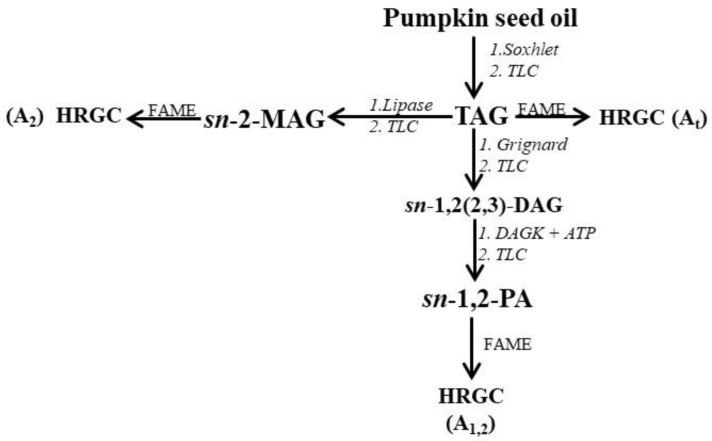
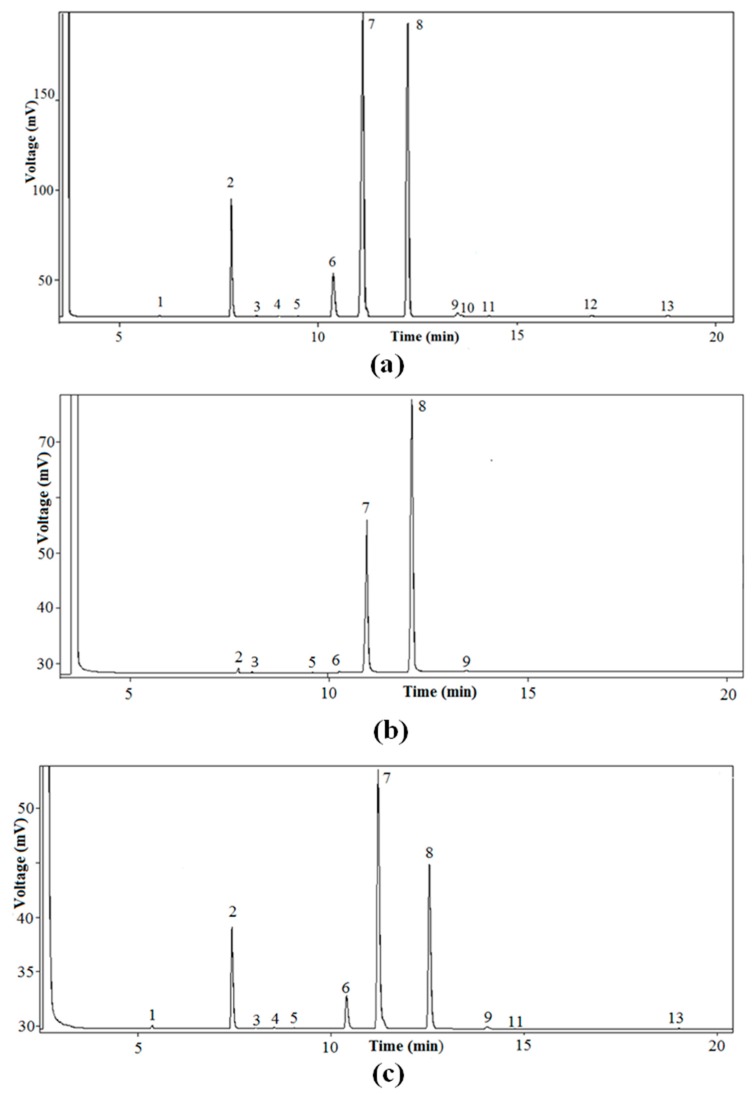
Pumpkin (Cucurbita spp.) has received considerable attention in recent years because of the nutritional and health-protective value of seed oil. The nutritional composition of pumpkin native to central Italy, locally known as “Berrettina” (Cucurbita maxima L.), was evaluated. In particular, the lipid fraction of seed oil was characterized, and the triacylglycerol (TAG) was thoroughly studied by using a stereospecific procedure to obtain the intrapositional fatty acid composition of the three sn-positions of the glycerol backbone of TAG. Moreover, alkaline hydrolysis was carried out to study the main components of the unsaponifiable fraction, i.e., sterols and alcohols. It was observed that monounsaturated fatty acids and polyunsaturated fatty acids were the most abundant (41.7% and 37.2%, respectively) in Berrettina pumpkin seed oil, with high content of oleic and linoleic acid (41.4% and 37.0%, respectively). The main sterols of Berrettina pumpkin seed oil were Δ7,22,25-stigmastatrienol, Δ7,25-stigmastadienol, and spinasterol; with regard to the alcoholic fraction, triterpenic compounds were more abundant than aliphatic compounds (63.2% vs. 36.8%). The obtained data are useful to evaluate pumpkin seed oil from a nutritional point of view. The oil obtained from the seed could be used as a preservative and as a functional ingredient in different areas, e.g., cosmetics, foods, and nutraceuticals.
Overview
The claims and statistics of this paper haven’t been checked yet.
Free: it reads the open-access text and checks the first 5 claims that cite a source we can check. Create a free account to check every claim.
Integrity signals
Registry
Cites
Statistics
Figures
Verification
Claims the paper makes
The claims and statistics of this paper haven’t been checked yet.
Free: it reads the open-access text and checks the first 5 claims that cite a source we can check. Create a free account to check every claim.
Claims other papers make about this one
Each is checked against this paper’s own text: does it say what the citing paper says it does?
The cited source says what the claim attributes to it.
In the citing paper
“Montesano et al. [53] found that the most prevalent fractions were polyunsaturated fatty acids and monounsaturated fatty acids (37.2% and 41.7%, respectively).”
From Pumpkin and Pumpkin By-Products: A Comprehensive Overview of Phytochemicals, Extraction, Health Benefits, and Food Applications (2024) · cites this paper as [53]
The cited source says what the claim attributes to it.
In the citing paper
“The fatty acids that were most abundant were oleic and linoleic acids.”
From Pumpkin and Pumpkin By-Products: A Comprehensive Overview of Phytochemicals, Extraction, Health Benefits, and Food Applications (2024) · cites this paper as [53]
Self-check
Percentages, sums and reported differences re-computed from the paper’s own numbers.
The self-check needs the paper’s full text.
Citations
Cites
1 retracted
Bardaa, S., Ben Halima, N., Aloui, F., Ben Mansour, R., Jabeur, H., Bouaziz, M., & Sahnoun, Z. (2016) · Lipids in Health and Disease · doi:10.1186/s12944-016-0237-0 · Cited by 206
Retracted(1971) · Soil Science Society of America Journal · doi:10.2136/sssaj1971.03615995003500050003x · Cited by 6,358
Coronary heart disease: seven dietary factors
Ulbricht, T. L. V., & Southgate, D. A. T. (1991) · The Lancet · doi:10.1016/0140-6736(91)91846-m · Cited by 3,623 · cited 2×
“that some FA can help to prevent or promote coronary thrombosis and atherosclerosis based on their effects on LDL concentration and serum cholesterol [41].”
BackgroundRAO, A., & RAO, L. (2007) · Pharmacological Research · doi:10.1016/j.phrs.2007.01.012 · Cited by 2,011
USDA National Nutrient Database for Standard Reference, Release 22
(2018) · Cited by 1,285
Orsavova, J., Misurcova, L., Ambrozova, J., Vicha, R., & Mlcek, J. (2015) · International Journal of Molecular Sciences · doi:10.3390/ijms160612871 · Cited by 1,034 · cited 3×
“SFA with carbon chains shorter than 14 carbon atoms, called short- and medium-chain FA, was not found in pumpkin seed oil, as confirmed in other papers [14,20,37,38].”
BackgroundResultBioactivity and protective effects of natural carotenoids
Stahl, W., & Sies, H. (2005) · Biochimica et Biophysica Acta (BBA) - Molecular Basis of Disease · doi:10.1016/j.bbadis.2004.12.006 · Cited by 898
Essential fatty acids as functional components of foods- a review
Kaur, N., Chugh, V., & Gupta, A. K. (2014) · Journal of Food Science and Technology · doi:10.1007/s13197-012-0677-0 · Cited by 490 · cited 2×
“In addition, several studies [39] have positively correlated EFA intake with reduction of”
BackgroundOil and Tocopherol Content and Composition of Pumpkin Seed Oil in 12 Cultivars
Stevenson, D. G., Eller, F. J., Wang, L., Jane, J.-L., Wang, T., & Inglett, G. E. (2007) · Journal of Agricultural and Food Chemistry · doi:10.1021/jf0706979 · Cited by 428 · cited 4×
“SFA with carbon chains shorter than 14 carbon atoms, called short- and medium-chain FA, was not found in pumpkin seed oil, as confirmed in other papers [14,20,37,38].”
BackgroundResultInfluentialPlant sterols: factors affecting their efficacy and safety as functional food ingredients.
Berger, A., Jones, P. J. H., & AbuMweis, S. S. (2004) · Lipids in Health and Disease · doi:10.1186/1476-511x-3-5 · Cited by 402
Research works printed but not linked: 1
- Blessing A.C. Ifeanyi U.M. Chijioke O.B. Nutritional evaluation of some Nigerian pumpkins (Cucurbita spp.) Fruit Veg. Cereal Sci. Biotechnol. 2012 5 64 71
Cited by
The potential of pumpkin seeds as a functional food ingredient: A review
Dotto, J. M., & Chacha, J. S. (2020) · Scientific African · doi:10.1016/j.sciaf.2020.e00575 · Cited by 217
Hussain, A., Kausar, T., Sehar, S., Sarwar, A., Ashraf, A. H., Jamil, M. A., Noreen, S., Rafique, A., Iftikhar, K., Quddoos, M. Y., et al. (2022) · Food Chemistry Advances · doi:10.1016/j.focha.2022.100067 · Cited by 200
An overview of herbal alternatives in androgenetic alopecia
Dhariwala, M. Y., & Ravikumar, P. (2019) · Journal of Cosmetic Dermatology · doi:10.1111/jocd.12930 · Cited by 126
Ratusz, K., Symoniuk, E., Wroniak, M., & Rudzińska, M. (2018) · Applied Sciences · doi:10.3390/app8122606 · Cited by 134
Carotenoid Content and Profiles of Pumpkin Products and By-Products
Grassino, A. N., Brnčić, S. R., Sabolović, M. B., Žlabur, J. Š., Marović, R., & Brnčić, M. (2023) · Molecules · doi:10.3390/molecules28020858 · Cited by 133
Future trends of processed meat products concerning perceived healthiness: A review
Badar, I. H., Liu, H., Chen, Q., Xia, X., & Kong, B. (2021) · Comprehensive Reviews in Food Science and Food Safety · doi:10.1111/1541-4337.12813 · Cited by 123
Vieira, R., Severino, P. B., Nalone, L. A., Souto, S. B., Silva, A. M., Lucarini, M., Durazzo, A., Santini, A., & Souto, E. B. (2020) · Molecules · doi:10.3390/molecules25030685 · Cited by 110
Self-citationA Review: The Emerging Nutraceutical Potential of Pumpkin Seeds
Lestari, B., & Meiyanto, E. (2018) · Indonesian Journal of Cancer Chemoprevention · doi:10.14499/indonesianjcanchemoprev9iss2pp92-101 · Cited by 96
“Berrettina and found that the major fatty acids were oleic acids and the highest components was sterols (Montesano, et al. , 2018).”
BackgroundŠamec, D., Loizzo, M. R., Gortzi, O., Çankaya, İ. İ. T., Tundis, R., Süntar, I. P., Shirooie, S., Zengin, G., Devkota, H. P., Reboredo‐Rodríguez, P., et al. (2022) · Comprehensive Reviews in Food Science and Food Safety · doi:10.1111/1541-4337.13013 · Cited by 126
Gavril (Rațu), R. N., Stoica, F., Lipșa, F. D., Constantin, O. E., Stănciuc, N., Aprodu, I., & Râpeanu, G. (2024) · Foods · doi:10.3390/foods13172694 · Cited by 97
“Pumpkin seeds include peptides that are naturally associated with zinc, which are excellent minerals for promoting a healthy immune system [57,58].”
BackgroundBread Enrichment with Oilseeds. A Review
de Lamo, B., & Gómez, M. (2018) · Foods · doi:10.3390/foods7110191 · Cited by 122
Wei, W., Sun, C., Jiang, W., Zhang, X., Hong, Y., Jin, Q., Tao, G., Wang, X., & Yang, Z. (2019) · LWT · doi:10.1016/j.lwt.2019.108261 · Cited by 81
Valdez-Arjona, L. P., & Ramírez-Mella, M. (2019) · Animals · doi:10.3390/ani9100769 · Cited by 84
Kulczyński, B., Gramza‐Michałowska, A., & Królczyk, J. B. (2020) · Sustainability · doi:10.3390/su12041305 · Cited by 80
Singh, A., & Kumar, V. (2023) · Food Chemistry Advances · doi:10.1016/j.focha.2023.100211 · Cited by 76
Prommaban, A., Kuanchoom, R., Seepuan, N., & Chaiyana, W. (2021) · Plants · doi:10.3390/plants10081582 · Cited by 79
Ramos-Escudero, F., Casimiro-Gonzales, S., Fernández‐Prior, Á., Chávez, K. C., Gómez-Mendoza, J., Canseco, L. D. L. F. D. D., & Muñoz, A. M. (2021) · LWT · doi:10.1016/j.lwt.2021.111629 · Cited by 66
Hussain, A., Kausar, T., Sehar, S., Sarwar, A., Quddoos, M. Y., Aslam, J., Liaqat, A., Siddique, T., An, Q. U., Kauser, S., et al. (2023) · Food Production, Processing and Nutrition · doi:10.1186/s43014-023-00138-z · Cited by 61
Pereira, J. A. M., Berenguer, C. V., Andrade, C. F. P., & Câmara, J. S. (2022) · Applied Sciences · doi:10.3390/app12052747 · Cited by 63
Ashique, S., Sandhu, N. K., Haque, S. N., & Koley, K. (2020) · Natural Products and Bioprospecting · doi:10.1007/s13659-020-00267-9 · Cited by 63
Montesano, D., Rocchetti, G., Cossignani, L., Senizza, B., Pollini, L., Lucini, L., & Blasi, F. (2019) · Foods · doi:10.3390/foods8060179 · Cited by 49
Self-citationVarietal Authentication of Extra Virgin Olive Oils by Triacylglycerols and Volatiles Analysis
Blasi, F., Pollini, L., & Cossignani, L. (2019) · Foods · doi:10.3390/foods8020058 · Cited by 46
Self-citationCossignani, L., Pollini, L., & Blasi, F. (2019) · Journal of Dairy Science · doi:10.3168/jds.2019-16318 · Cited by 51
Self-citationStructures and physicochemical characterization of enzyme extracted oil bodies from rice bran
Xu, D., Gao, Q., Ma, N., Hao, J., Yuan, Y., Zhang, M., Cao, Y., & Ho, C. (2020) · LWT · doi:10.1016/j.lwt.2020.109982 · Cited by 47
Sumara, A., Stachniuk, A., Montowska, M., Kotecka‐Majchrzak, K., Grywalska, E., Mitura, P., Martinović, L. S., Pavelić, S. K., & Fornal, E. (2022) · Food Reviews International · doi:10.1080/87559129.2022.2067560 · Cited by 45
Biochemical Composition of Pumpkin Seeds and Seed By-Products
Polyzos, N., Fernandes, Â. S. F., Calhelha, R. C., Petrović, J. D., Sokóvić, M., Ferreira, I. C. F. R., Barros, L., & Petropoulos, S. A. (2024) · Plants · doi:10.3390/plants13172395 · Cited by 46
“…and linoleic acid in the seed oil of C. pepo sbsp. pepo var. syriaca seeds grown in Iran, while Rezig et al. [30], Nyam et al. [42] and Montesano et al. [43] recorded a higher content of oleic compared to linoleic acid in pumpkin seed oils ( C. pepo plants cultivated in Malaysia and C. maxima var.”
BackgroundChemical and nutritional composition of some selected lesser known legumes indigenous to Nigeria
James, S., Nwabueze, T. U., Onwuka, G. I., Ndife, J., & Usman, M. A. (2020) · Heliyon · doi:10.1016/j.heliyon.2020.e05497 · Cited by 37
Cittadini, A., Munekata, P. E. S., Pateiro, M., Sarriés, M. V., Domínguez, R., & Lorenzo, J. M. (2021) · International Journal of Food Science & Technology · doi:10.1111/ijfs.15087 · Cited by 35
Use of oil mixture emulsion hydrogels as partial animal fat replacers in dry-fermented foal sausages
Cittadini, A., Domínguez, R., Munekata, P. E. S., Pateiro, M., Sarriés, M. V., & Lorenzo, J. M. (2022) · Food Research International · doi:10.1016/j.foodres.2022.111881 · Cited by 35
Effect of pumpkin seed oil on cholesterol fractions and systolic/diastolic blood pressure
MAJID, A. K., AHMED, Z., & KHAN, R. (2020) · Food Science and Technology · doi:10.1590/fst.03720 · Cited by 34
Fatty Acids and Triacylglycerols Profiles from Sicilian (Cold Pressed vs. Soxhlet) Grape Seed Oils
Stefano, V. A. D., Bongiorno, D., Buzzanca, C., Indelicato, S., Santini, A., Lucarini, M., Fabbrizio, A., Mauro, M., Vazzana, M., Arizza, V., et al. (2021) · Sustainability · doi:10.3390/su132313038 · Cited by 39
Self-citationAhmed, O. A. A., Fahmy, U. A., Bakhaidar, R. B., El‐Moselhy, M. A., Alfaleh, M. A., Ahmed, A. F., Hammad, A. S. A., Aldawsari, H. M., & Alhakamy, N. A. (2020) · International Journal of Nanomedicine · doi:10.2147/ijn.s247252 · Cited by 32
RetractedKang, X., Chen, T., Zhou, J., Shen, P., Dai, S., Gao, C., Zhang, J.-Y., Xiong, X., & Liu, D. (2021) · Food & Nutrition Research · doi:10.29219/fnr.v65.7537 · Cited by 27
Golimowski, W., Teleszko, M., Zając, A., Kmiecik, D., & Grygier, A. (2023) · Molecules · doi:10.3390/molecules28020769 · Cited by 27
Pumpkin Bio-Wastes as Source of Functional Ingredients
Ezzat, S. M., Adel, R., & Abdel-Sattar, E. A. (2022) · Springer eBooks · doi:10.1007/978-3-030-84436-3_29 · Cited by 40
Baldim, I., Rosa, D. M., Souza, C. R. F., da Ana, R., Durazzo, A., Lucarini, M., Santini, A., Souto, E. B., & OLIVEIRA, W. P. D. (2020) · Biomolecules · doi:10.3390/biom10050693 · Cited by 26
Self-citationGade, S. R., Meghwal, M., Prabhakar, P. K., & Giuffrè, A. M. (2022) · Agronomy · doi:10.3390/agronomy12102242 · Cited by 24
Grajzer, M., Kozłowska, W., Zalewski, I., Matkowski, A., Wiland‐Szymańska, J., Rękoś, M., & Prescha, A. (2025) · Foods · doi:10.3390/foods14030354 · Cited by 29
Pușcaș, A., Mureşan, A. E., Ranga, F., Fetea, F., MUSTE, S., Socaciu, C., & Mureşan, V. (2020) · Processes · doi:10.3390/pr8111412 · Cited by 23
Czwartkowski, K., Wierzbic, A., & Golimowski, W. (2022) · Sustainability · doi:10.3390/su14031846 · Cited by 23
Irnawati, I., Riyanto, S., Martono, S., Windarsih, A., & Abdul, R. (2022) · Journal of Applied Pharmaceutical Science · doi:10.7324/japs.2022.120312 · Cited by 29
“Once the Soxhlet extraction was complete, n-hexane was evaporated at 50°C using a rotary evaporator (IKA-Werke KRV06-ML, Germany).”
BackgroundInfluentialHundie, K. B. (2022) · Journal of Chemistry · doi:10.1155/2022/8516163 · Cited by 23
“The fruits of Cucurbita maxima are extensive weighing 8−10 kg, sometimes up to 20 kg, and the medium-sized fruit “weighs 2−3 kg and has orange color flesh [12].”
BackgroundIrnawati, I., Riyanto, S., Martono, S., & Rohman, A. (2019) · Food Research · doi:10.26656/fr.2017.4(1).198 · Cited by 27
“In Indonesia, pumpkin is one of the popular vegetables consumed as considered as a functional food due to the extraordinary rich sources of bioactive compounds having beneficial health effects (Montesano et al., 2018).”
BackgroundUlrich, H. G., Ezin, V., & Adam, A. (2022) · African Journal of Plant Science · doi:10.5897/ajps2021.2202 · Cited by 24
“maxima seeds could be potentially utilized as a preservative and functional ingredient in foods and cosmetics (Montesano et al., 2018).”
BackgroundThe composition and anti-inflammatory properties of pumpkin seeds
Dong, X.-J., Chen, J.-Y., Chen, S., Li, Y., & Zhao, X.-J. G. (2021) · Journal of Food Measurement & Characterization · doi:10.1007/s11694-020-00783-9 · Cited by 26
Effect of Hemp Seed Oil Addition on the Rheological Properties of Dough and Bread
Ropciuc, S., Apostol, L. C., Damian, C., & Prisacaru, A. E. (2022) · Applied Sciences · doi:10.3390/app12062764 · Cited by 20
Influence of Different Drying Processes on the Chemical and Texture Profile of Cucurbita maxima Pulp
Grassino, A. N., Karlović, S., Šošo, L., Dujmić, F., Sabolović, M. B., Marelja, M., & Brnčić, M. (2024) · Foods · doi:10.3390/foods13040520 · Cited by 19
Sayehban, P., Seidavi, A., Dadashbeiki, M., Ghorbani, A., de Araújo, W. A. G., Durazzo, A., Lucarini, M., Gabrielli, P., Omri, B., Albino, L. F. T., et al. (2020) · Agriculture · doi:10.3390/agriculture10080359 · Cited by 19
Self-citationSouto, E. B., Severino, P. B., Marques, C., Andrade, L. N., Durazzo, A., Lucarini, M., Atanasov, A. G., el Maimouni, S., Novellino, E., & Santini, A. (2020) · Sustainability · doi:10.3390/su12187697 · Cited by 22
Self-citationValue-Added Products from Pumpkin Wastes: A Review
Noh, N. A. N. M., Karim, L., & Omar, S. R. (2022) · Malaysian Journal of Science Health & Technology · doi:10.33102/mjosht.v8i1.231 · Cited by 18
Comprehensive Evaluation of the Nutritional Quality of Stored Watermelon Seed Oils
Siol, M., Witkowska, B., Mańko-Jurkowska, D., Makouie, S., & Bryś, J. (2025) · Applied Sciences · doi:10.3390/app15020830 · Cited by 17
Rohman, A., & Irnawati, I. (2019) · Food Research · doi:10.26656/fr.2017.4(3).242 · Cited by 22
Pumpkin seed oil components and biological activities
Gedi, M. A. (2022) · Elsevier eBooks · doi:10.1016/b978-0-12-824135-6.00030-1 · Cited by 20
Fiore, E., Blasi, F., Morgante, M., Cossignani, L., Badon, T., Gianesella, M., Contiero, B., & Berlanda, M. (2020) · Journal of Pharmaceutical and Biomedical Analysis · doi:10.1016/j.jpba.2020.113372 · Cited by 17
Self-citationPumpkin Seeds (Cucurbita spp.) as a Nutraceutical Used In Various Lifestyle Disorders
Wal, A., Singh, M. R., Gupta, A., Rathore, S., Rout, R. R., & Wal, P. (2023) · The Natural Products Journal · doi:10.2174/2210315513666230516120756 · Cited by 23
Characterization of the Triacylglycerol Fraction of Italian and Extra-European Hemp Seed Oil
Tringaniello, C., Cossignani, L., & Blasi, F. (2021) · Foods · doi:10.3390/foods10050916 · Cited by 14
Self-citationCan-Cauich, C. A., Sauri‐Duch, E., Cuevas‐Glory, L., Betancur‐Ancona, D., Ortíz‐Vázquez, E., Ríos‐Soberanis, C. R., Chel‐Guerrero, L., Aguilar, G. A. G., & Moo‐Huchin, V. M. (2021) · International Food Research Journal · doi:10.47836/ifrj.28.1.15 · Cited by 16
“Carotenoid extraction was performed following the method described by Moo-Huchin et al. (2017) with some adaptations.”
MethodШеленга, Т. В., Пискунова, Т. М., Malyshev, L. L., Тайпакова, А. А., & Solovyеvа, A. E. (2020) · Agronomy · doi:10.3390/agronomy10101491 · Cited by 13
Martins-Noguerol, R., Pérez-Ramos, I. M., Matías, L., Moreira, X., Francisco, M., García-González, A., Troncoso-Ponce, M. A., Thomasset, B., Martínez‐Force, E., Moreno‐Pérez, A. J., et al. (2022) · Journal of Food Composition and Analysis · doi:10.1016/j.jfca.2022.104413 · Cited by 13
“These AI and TI values were lower than those previously reported for seeds bearing edible oil like pumpkin seeds (AI, 0.19; TI, 0.50) (Montesano et al., 2018).”
ResultInfluentialde Melo, F. A. B. R., Galvão, M. B. F., da Costa, A. F., da Silva, C. F., Guerra, J. M. C., & Stamford, T. C. M. (2024) · Foods · doi:10.3390/foods13111702 · Cited by 12
“Cucurbita moschata L. has great economic and social relevance, being a widely consumed fruit, with great acceptance for its sensorial and nutritional characteristics [1].”
BackgroundResultInfluentialAssessment of the Stability and Nutritional Quality of Hemp Oil and Pumpkin Seed Oil Blends
Siol, M., Chołuj, N., Mańko-Jurkowska, D., & Bryś, J. (2024) · Foods · doi:10.3390/foods13233813 · Cited by 12
“Its antioxidant properties may improve fertility, prevent atherosclerosis, and stimulate fat metabolism [13,14,17].”
InfluentialLesten, E. C. C., & Kingsley, M. (2019) · Journal of Agricultural Biotechnology and Sustainable Development · doi:10.5897/jabsd2019.0354 · Cited by 12
Ogrodowska, D., Konopka, I., Tańska, M., Brandt, W., & Piłat, B. (2021) · Applied Sciences · doi:10.3390/app12010033 · Cited by 13
Phytochemical screening and nutraceutical potential of sandbox tree (Hura crepitans L.) seed oil
Ajani, O. O., Owoeye, T. F., Owolabi, F. E., Akinlabu, D. K., & Audu, O. Y. (2019) · Foods and raw materials · doi:10.21603/2308-4057-2019-1-143-150 · Cited by 11
Fast non-invasive screening to detect fraud in oil capsules
Leme, L. M., Nakamura, F., Tanamati, A. A. C., Valderrama, P., & Março, P. H. (2019) · LWT · doi:10.1016/j.lwt.2019.03.088 · Cited by 14
Nwoke, S. I., Okechukwu, Q. N., Ugwuona, F. U., Ojukwu, M., Skendrović, H., Juchniewicz, S., Leicht, K., Okpala, C. O. R., & Korzeniowska, M. (2023) · PLoS ONE · doi:10.1371/journal.pone.0282974 · Cited by 9
“The high content of linoleic acid and linolenic acid provides this oil an important nutritional status [38].”
BackgroundNutrient content and toxicity of pumpkin seed flour
Syam, A., Zainal, Z., Wahiduddin, W., Cangara, M. H., Kurniati, Y., & Hasfiah, N. A. (2023) · Food Research · doi:10.26656/fr.2017.7(6).069 · Cited by 9
Kim, D. H., Enkhtaivan, G., Saini, R. K., Keum, Y., Kang, K. W., & Sivanesan, I. (2019) · Industrial Crops and Products · doi:10.1016/j.indcrop.2019.111491 · Cited by 10
Valorization of seeds of the genera Cucumis, Citrullus, and Cucurbita
Nunes, P. A., & Bhat, R. (2021) · Elsevier eBooks · doi:10.1016/b978-0-12-824044-1.00016-7 · Cited by 10
de Moraes, M. S., Queiroz, A. J. D. M., de Figueirêdo, R. M. F., de Matos, J. D. P., da Silva, L. P. F. R., Silva, S. D. N., & Vieira, A. F. (2021) · Journal of Food Process Engineering · doi:10.1111/jfpe.13865 · Cited by 9
Edible seeds with potential anti-obesity impact: A Review
Hosny, H., Omran, N., & Handoussa, H. (2022) · International Journal of Plant Based Pharmaceuticals · doi:10.62313/ijpbp.2022.17 · Cited by 10
Charaya, A., Chawla, N., Dhatt, A. S., Sharma, M., Sharma, S., & Kaur, I. (2023) · Heliyon · doi:10.1016/j.heliyon.2023.e12995 · Cited by 10
Kuete, V. (2022) · Advances in botanical research · doi:10.1016/bs.abr.2022.08.022 · Cited by 10
Evaluation of Some Quality Parameters of Pumpkin Seeds and Oil After Roasting with Marjoram
Kozłowska, M., Ziarno, M., Zawada, K. D., Kowalska, H., Derewiaka, D., Chobot, M., & Ścibisz, I. (2025) · Foods · doi:10.3390/foods14020172 · Cited by 8
Ayuob, N. N., Ali, S. S., Hawuit, E., Al-Abbas, N. S., Shaer, N. A., Jaouni, S. K. A., & Mahdi, M. R. (2021) · Oxidative Medicine and Cellular Longevity · doi:10.1155/2021/6662649 · Cited by 9
Pușcaș, A., Mureşan, A. E., Socaci, S., Dulf, F. V., MUSTE, S., Fetea, F., Semeniuc, C. A., Bunea, A., Mureşan, V., & Pintea, A. (2022) · Journal of the Science of Food and Agriculture · doi:10.1002/jsfa.12180 · Cited by 8
Sensory Characteristics and Nutrient Content of Food Bar with Flour and Pumpkin Seed Substitution
Amalia, M. R., Nuryani, N., & Santoso, B. (2022) · Jurnal Ilmiah Kesehatan (JIKA) · doi:10.36590/jika.v4i1.271 · Cited by 7
“Penelitian yang dilakukan oleh Montesano et al. (2018) pada biji labu menunjukkan kandungan lemak yang rendah yaitu 0,08 g/100 g sampel kandungan karbohidrat sederhana mencapai 0,82 gr/100 gr sampel.”
BackgroundMallick, S., Nag, M., Bhattacharya, D., Tandi, A., Chakraborty, B., Rao, A., Dutta, B., & Ray, R. R. (2024) · Biocatalysis and Agricultural Biotechnology · doi:10.1016/j.bcab.2024.103091 · Cited by 9
Boujemaa, I., Bernoussi, S. E., Idrissi, Z. L. E., Idrissi, Y. E., Guezzane, C. E., Lee, L., Ullah, R., Bari, A., Bouyahya, A., Harhar, H., et al. (2024) · Biochemical Systematics and Ecology · doi:10.1016/j.bse.2024.104835 · Cited by 7
Ropelewska, E., Popińska, W., Sabancı, K., & Aslan, M. F. (2021) · European Food Research and Technology · doi:10.1007/s00217-021-03935-3 · Cited by 7
“Also seeds of pumpkin have high nutritional value and they may be used, for example, to produce cold pressed oils [7, 8].”
BackgroundMicroencapsulated Healthy Oil Mixtures to Enhance the Quality of Foal Pâtés
Cittadini, A., Munekata, P. E. S., Pateiro, M., Sarriés, M. V., Domínguez, R., & Lorenzo, J. M. (2022) · Foods · doi:10.3390/foods11213342 · Cited by 7
COMPOSIÇÃO E PROPRIEDADES DA SEMENTE DE ABÓBORA
do Vale, C. P., Loquete, F. C. C., Zago, M. G., Chiella, P. V., & Bernardi, D. M. (2019) · FAG JOURNAL OF HEALTH (FJH) · doi:10.35984/fjh.v1i4.95 · Cited by 7
Grassino, A. N., Karlović, S., Dujmić, F., Brnčić, S. R., Sabolović, M. B., & Brnčić, M. (2024) · Foods · doi:10.3390/foods14010057 · Cited by 6
“These results are in line with other studies that emphasize pumpkin as a nutrient-rich crop with a high content of polyunsaturated and monounsaturated fatty acids [10,17,18,36–54].”
InfluentialLeichtweis, M. G., Molina, A. K., Carocho, M., Pires, T. C. S. P., Heleno, S. A., Ferreira, I. C. F. R., Pavli, O. I., Petropoulos, S. A., Ribeiro, L. R., Oliveira, M. B. P. P., et al. (2026) · Food Chemistry · doi:10.1016/j.foodchem.2026.149235 · Cited by 6
Laaraj, S., Ouahidi, I., Moudani, N. A., Allali, M., & Aarab, L. (2024) · The Open Public Health Journal · doi:10.2174/0118749445274775231204095205 · Cited by 9
Pinna, N., Blasi, F., Ricci, M., & Schoubben, A. (2025) · Applied Food Research · doi:10.1016/j.afres.2025.100799 · Cited by 6
Self-citationNouisse, A. A., Belmallam, R., Bouzid, H. A., Ibourki, M., Giuffrè, A. M., Devkota, K. P., Majourhat, K., Sakar, E. H., & Gharby, S. (2025) · International Agrophysics · doi:10.31545/intagr/207209 · Cited by 5
“L. siceraria has an OC of 31.30 ± 0.62 g 100 g -1 , which is lower than the value report-ed by Abd El-Rahman et al. (2022) (2018) in Italy (29.0 ± 0.9 g 100 g -1 ).”
InfluentialPrzybylska‐Balcerek, A., Kurasiak‐Popowska, D., Graczyk, M., Szczepańska-Álvarez, A., Rzyska-Szczupak, K., & Stuper‐Szablewska, K. (2024) · Chemistry & Biodiversity · doi:10.1002/cbdv.202400523 · Cited by 6
Wang, W., Liu, Z., & Rochfort, S. J. (2024) · Journal of Food Composition and Analysis · doi:10.1016/j.jfca.2024.106602 · Cited by 5
Massironi, A., Fonzo, A. D., Bassanini, I., Ferrandi, E. E., Marzorati, S., Monti, D., & Verotta, L. (2022) · Molecules · doi:10.3390/molecules27154783 · Cited by 6
Investigation of Pumpkin Seed as a Potential Coagulant for Drinking Water Treatment
Gatew, Y., & Worku, A. (2023) · Water Conservation Science and Engineering · doi:10.1007/s41101-023-00208-w · Cited by 5
Mallqui, L. A., Canchumanya, M. L. B., Papa, H. A. R., & Rodríguez, G. (2023) · Biotecnología en el Sector Agropecuario y Agroindustrial · doi:10.18684/rbsaa.v21.n2.2023.2087 · Cited by 5
Fats Extracted from Oil Press Cakes, Fish Meat, and Chicken Hearts as Potential CoQ10 Supplements
Semeniuc, C. A., Mandrioli, M., Podar, A. S., Ranga, F., Socaciu, M., Ionescu, S. R., Fogarasi, M., Fărcaș, A. C., Toschi, T. G., Vodnar, D. C., et al. (2024) · Waste and Biomass Valorization · doi:10.1007/s12649-024-02449-9 · Cited by 5
“Szabo et al. [58] reported comparable UI values in rapeseed (129.5) and sunflower (149.1) oils, Montesano et al. [59] in pumpkin oil (116.3), and Zuk et al. [60] in linseed oil (161.8–204.2).”
InfluentialCharacterization of Edible Oils from Different Varieties of African Oil Bean Seeds
Onwuzuruike, U. A., Inyang, U. E., Peter, E.-N., Solomon, A., Iguh, B., & Ihemeje, C. (2024) · Asian Science Bulletin · doi:10.3923/asb.2024.361.374 · Cited by 4
Bhtoya, R., Dobhal, A., Joshi, S., & Kaur, R. (2025) · Food Chemistry X · doi:10.1016/j.fochx.2025.102582 · Cited by 4
“…acid exhibits some antioxidant properties, its high concentrations are generally considered undesirable due to its ability to chelate essential minerals such as iron, calcium, and zinc, forming insoluble complexes that limit their bioavailability (Montesano et al., 2018; Pruksasri et al., 2018).”
Haščík, P., Čech, M., Čuboň, J., Bobko, M., Kačániová, M., & Arpášová, H. (2022) · doi:10.15414/2022.9788088279150 · Cited by 4
Use of culinary ingredients as protective components during thermal heating of pumpkin oil
Flores, M., Vergara, C., Ortíz, J., Prieto, J., & Concha‐Meyer, A. A. (2025) · Food Chemistry X · doi:10.1016/j.fochx.2025.102272 · Cited by 4
“As can be seen in Table 1, the UPO profile does not present the so-called short-chain (4 – 6 carbon atoms) and medium-chain (6 to 12 carbon atoms) fatty acids, as reported in previous research (Montesano, Blasi, Simonetti, Santini, & Cossignani, 2018).”
Ramjane, H., Bahorun, T., Ramasawmy, B., Ramful‐Baboolall, D., Boodia, N., Aruoma, O. I., & Neergheen, V. S. (2021) · American Journal of Biopharmacy and Pharmaceutical Sciences · doi:10.25259/ajbps_3_2021 · Cited by 6
Jahromi, S. M., & jahromi, S. N. (2020) · Iranian Red Crescent Medical Journal · doi:10.5812/ircmj.98864 · Cited by 5
Penić, M., Dent, M., Krištafor, N., Ivanić, M., Fiket, Ž., & Grassino, A. N. (2026) · Foods · doi:10.3390/foods15040781 · Cited by 3
“…in orange, mandarin and clementine peels, the following indices were calculated according to the formulas of Chen et al. [24] and Montesano et al. [25], i.e., PUFA/SFA, PUFA/MUFA, MUFA/SFA, omega-3/omega 6, and omega-6/omega-3, where each of the abbreviations refers to the total amounts of…”
Metadata
- Authors
- Montesano, D., Blasi, F., Simonetti, M., Santini, A., & Cossignani, L.
- Affiliations
- University of Perugia (IT)
- University of Naples Federico II (IT)
- Corresponding author
- Santini, Antonello
- Venue
- Foods
- Publisher
- MDPI AG
- Published
- 2018-03-01
- Volume
- 7
- Issue
- 3
- Pages
- 30
- ISSN
- 2304-8158 (ISSN-L)
- PMC
- PMC5867545
- OpenAlex
- W2792074374
- Cited by
- 139
- References
- 52
- Citations by year
- 2026: 12 · 2025: 13 · 2024: 17 · 2023: 15 · 2022: 26 · 2021: 24 · 2020: 17 · 2019: 13 · 2018: 2
- FWCI
- 5.74
- Type
- journal article
- Language
- en
- Open access
- gold
- doi.org
- Licence
- Locations
- Foods (publishedVersion, cc-by)
- Europe PMC (PubMed Central) (publishedVersion, cc-by)
- PubMed Central (publishedVersion, cc-by)
- PubMed (publishedVersion)
- DOAJ (DOAJ: Directory of Open Access Journals) (submittedVersion, cc-by-sa)
- Topics
- Physical Sciences › Chemistry › Organic Chemistry › Edible Oils Quality and Analysis
- Life Sciences › Agricultural and Biological Sciences › Food Science › Food Nutrient Composition and Product Development
- Life Sciences › Agricultural and Biological Sciences › Food Science › Food Chemistry and Fat Analysis
- Keywords
- Cucurbita maxima, pumpkin seed oil, triacylglycerol composition, unsaponifiable matter, sterols, triterpenic alcohols, oleic acid, linoleic acid, monounsaturated fatty acids, polyunsaturated fatty acids, nutritional composition, functional food ingredients
About these checks
Registry, retraction, Cites and statistics results are computed, not judged, with one exception: a printed reference that no index lists is read once by a model before it counts as a citation error. Claims are extracted by a model and kept only when their quote appears verbatim in the text; each cited source is then checked, with a model’s help, for whether it says what the claim relies on. Those verdicts can be wrong — read the claim’s quote and the cited source before relying on one.
Statistics and arithmetic are recomputed, not judged.
Confidence bands are shown only for fields calibrated on our annotated test set. None is calibrated yet, so no band is shown.
What counts as a claim ›How we measure confidence ›How we check this ›
Are you an author, or do you see a problem with this page? Request a review
Data sources
Bibliographic data: Semantic Scholar, OpenAlex, Crossref.
Contains information from the Semantic Scholar Academic Graph Datasets, made available under the ODC Attribution License (ODC-BY 1.0).
Semantic Scholar’s data is described in: Kinney, R., et al. (2023). The Semantic Scholar Open Data Platform. arXiv:2301.10140.
