

A review on biochemical constituents of pumpkin and their role as pharma foods; a key strategy to improve health in post COVID 19 period
Open accessThe DOI matches its Crossref record; 110 of the 112 references it cites were found in a registry or an index.
Abstract
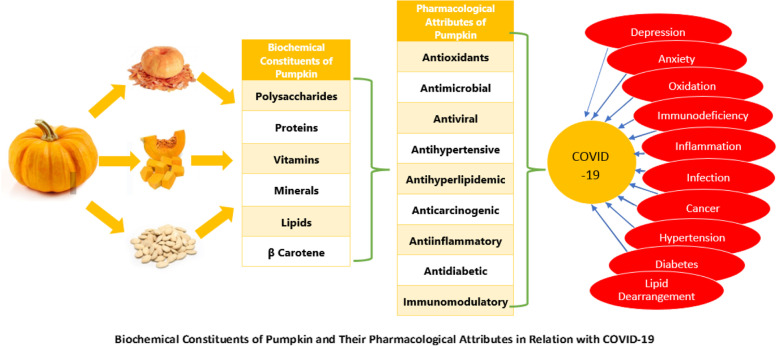
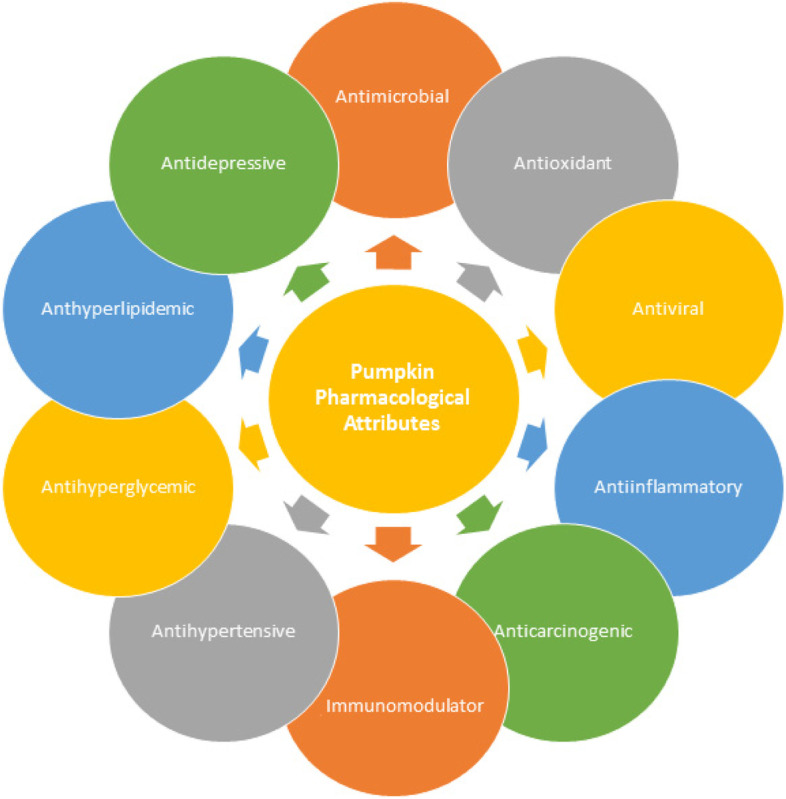
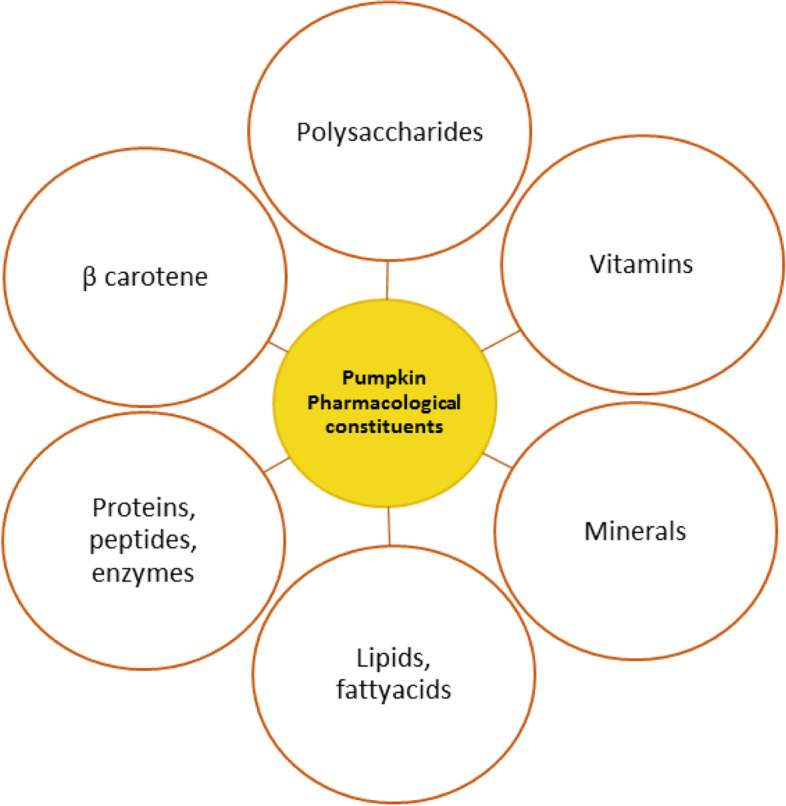
Progression of today’s world has been given setback due to the adversity of a novel, viral, deadly outbreak COVID 19, which raised the concerns of the scientists, researchers and health related officials about the inherent and adaptive immune system of the living body and its relation with healthy diet balanced with pharma foods. Now world is coming out of the destructive pandemic era, the choice of right food can help to build and boost adaptive immunity and pumpkin due to excellent profile of functional and nutraceutical constituents could be the part of both infected and non-infected person’s daily diet. Vitamins like A, C and E, minerals like zinc, iron and selenium, essential oils, peptides, carotenoids and polysaccharides present in pumpkin could accommodate the prevailing deficiencies in the body to fought against the viral pathogens. In current post COVID 19 scenario adequate supply of healthy diet, balanced with pharma foods could play a basic role in boosting immune system of the populations. This review covers the pharmacological activities of pumpkin functional constituents in relation with COVID 19 pandemic. Pumpkins are well equipped with nutraceuticals and functional bioactives like tocopherols, polyphenols, terpenoids and lutein therefore, consumption and processing of this remarkable vegetable could be encouraged as pharma food due to its antihyperlipidemic, antiviral, anti-inflammatory, antihyperglycemic, immunomodulatory, antihypertensive, antimicrobial and antioxidant potential. Need of healthy eating in current post COVID 19 period is very crucial for healthy population, and medicinal foods like pumpkin could play a vital role in developing a healthy community around the globe. Graphical Abstract
Overview
The claims and statistics of this paper haven’t been checked yet.
Free: it reads the open-access text and checks the first 5 claims that cite a source we can check. Create a free account to check every claim.
Integrity signals
Registry
Cites
Statistics
Figures
Verification
Claims the paper makes
The claims and statistics of this paper haven’t been checked yet.
Free: it reads the open-access text and checks the first 5 claims that cite a source we can check. Create a free account to check every claim.
Claims other papers make about this one
Each is checked against this paper’s own text: does it say what the citing paper says it does?
The cited source says what the claim attributes to it.
In the citing paper
“Pumpkin seeds include peptides that are naturally associated with zinc, which are excellent minerals for promoting a healthy immune system [57,58].”
From Pumpkin and Pumpkin By-Products: A Comprehensive Overview of Phytochemicals, Extraction, Health Benefits, and Food Applications (2024) · cites this paper as [57]
Self-check
Percentages, sums and reported differences re-computed from the paper’s own numbers.
The self-check needs the paper’s full text.
Citations
Cites
1 retracted
RETRACTED: Coronavirus disease (COVID‐19) and immunity booster green foods: A mini review
Arshad, M. S., Khan, U., Sadiq, A., Khalid, W., Hussain, M., Yasmeen, A., Asghar, Z., & Rehana, H. (2020) · Food Science & Nutrition · doi:10.1002/fsn3.1719 · Cited by 161
RetractedAfrican Journal of Biotechnology
(2026) · AFRICAN JOURNAL OF BIOTECHNOLOGY · doi:10.5897/ajb · Cited by 4,539
Asia Pacific Journal of Clinical Nutrition
(2010) · Asia Pacific Journal of Clinical Nutrition · doi:10.1111/(issn)1440-6047 · Cited by 1,851
Pakistan Journal of Pharmaceutical Sciences
(2019) · Pakistan Journal of Pharmaceutical Sciences · doi:10.36721/pjps · Cited by 1,091
European Journal of Molecular & Clinical Medicine
Madhu, M., & singh, N. (2020) · Zenodo (CERN European Organization for Nuclear Research) · doi:10.5281/zenodo.7107137 · Cited by 600
Screening of antioxidant activity and antioxidant compounds of some edible plants of Thailand
Chanwitheesuk, A., Teerawutgulrag, A., & Rakariyatham, N. (2005) · Food Chemistry · doi:10.1016/j.foodchem.2004.07.035 · Cited by 545
Nutritional recommendations for CoVID-19 quarantine
Muscogiuri, G., Barrea, L., Savastano, S., & Colao, A. (2020) · European Journal of Clinical Nutrition · doi:10.1038/s41430-020-0635-2 · Cited by 545
Obesity and diabetes as high‐risk factors for severe coronavirus disease 2019 (Covid‐19)
Zhou, Y., Chi, J., Lv, W., & Wang, Y. (2021) · Diabetes/Metabolism Research and Reviews · doi:10.1002/dmrr.3377 · Cited by 490
A Review on Pharmacological Activities and Utilization Technologies of Pumpkin
CAILI, F., HUAN, S., & QUANHONG, L. (2006) · Plant Foods for Human Nutrition · doi:10.1007/s11130-006-0016-6 · Cited by 463
Carotenoids and the Immune Response
Bendich, A. (1989) · The Journal of Nutrition · doi:10.1093/jn/119.1.112 · Cited by 462
Research works printed but not linked: 5
- Ardabili, A. G., Farhoosh, R., & Khodaparast, M. H. (2011). Chemical composition and physicochemical properties of pumpkin seeds (Cucurbita pepo Subsp. pepo Var. Styriaka) grown in Iran. Journal of Agriculture Science and Technology, 13, 1053–1063.
- EI-Aziz, A. B., EI-Kalek, H. A., & City, N. (2011). Antimicrobial proteins and oil seeds from pumpkin (Cucurbita moschata). Nature and Science, 9 (3), 105–119.
- Guo-hua, X., Zhi-hong, H., & Yong-fangl, W. (2000). A study of the possible anti-tumour effect and immunompetence of pumpkin polysaccharide. Journal of Wuhan Professional Medical College, 28 (4), 1–4.
- Surya, S., Rizal, R., Putri, L. E., & Kamal, S. (2021). Formulation of Yellow Pumpkin Powder as an Instant Drink to Enhance Body Health. Budapest International Research and Critics Institute (BIRCI-Journal): Humanities and Social Sciences, 4(4). 10.33258/birci.v4i4.3328. · doi:10.33258/birci.v4i4.3328
- Xie, J. M. (2004). Induced polarization effect of pumpkin protein on B16 cell. Fujian Med Univ Acta, 38 (4), 394–395.
Cited by
Kauser, S., Hussain, A., Ashraf, S., Fatima, G., Ambreen, A., Javaria, S., Abideen, Z. U., Kabir, K., Yaqub, S., Akram, S., et al. (2023) · Food Chemistry Advances · doi:10.1016/j.focha.2023.100573 · Cited by 115
Self-citationKauser, S., Murtaza, M. A., Hussain, A., Imran, M., Kabir, K., Najam, A., An, Q. U., Akram, S., Fatima, H., Batool, S. A., et al. (2023) · Food Chemistry Advances · doi:10.1016/j.focha.2023.100598 · Cited by 109
Self-citationGavril (Rațu), R. N., Stoica, F., Lipșa, F. D., Constantin, O. E., Stănciuc, N., Aprodu, I., & Râpeanu, G. (2024) · Foods · doi:10.3390/foods13172694 · Cited by 97
“…riboflavin, niacin, and pantothenic acid were found in pumpkin seeds, in addition to, tocopherol or vitamin E [60,61]. δ -tocopherol, which made up about 42.2% of all the tocopherols in the Bejaoui variety’s seed oil, was the primary component, followed by α -tocopherol, γ -tocopherol [62].”
BackgroundInfluentialFood 2050 concept: the trends that shape the future of our food
Hamad, A. M. A., & Tayel, A. (2025) · Journal of Future Foods · doi:10.1016/j.jfutfo.2025.03.003 · Cited by 71
Phytochemical Potential and Biological Activity of Pumpkin: A Review
Altaf, A., Sharma, H., Dar, A. H., Dash, K. K., Pandey, V. K., & Manzoor, M. (2025) · Food Safety and Health · doi:10.1002/fsh3.70001 · Cited by 40
Metadata
- Authors
- Hussain, A., Kausar, T., Sehar, S., Sarwar, A., Quddoos, M. Y., Aslam, J., Liaqat, A., Siddique, T., An, Q. U., Kauser, S., Rehman, A., & Nisar, R.
- Affiliations
- University of Sargodha (PK)
- University of Lahore (PK)
- Khwaja Fareed University of Engineering and Information Technology (PK)
- Corresponding author
- Hussain, Ashiq
- ORCID
- Venue
- Food Production, Processing and Nutrition
- Published
- 2023-03-22
- Volume
- 5
- Issue
- 1
- Pages
- 22-22
- ISSN
- 2661-8974 (ISSN-L)
- PMC
- PMC10030350
- OpenAlex
- W4328052555
- Cited by
- 61
- References
- 112
- Citations by year
- 2026: 9 · 2025: 19 · 2024: 21 · 2023: 12
- FWCI
- 1.46
- Type
- journal article
- Language
- en
- Open access
- gold
- doi.org
- Licence
- cc-by
- creativecommons.org/licenses/by/4.0 (tdm)
- creativecommons.org/licenses/by/4.0 (vor)
- Locations
- Food Production Processing and Nutrition (publishedVersion, cc-by)
- PubMed Central (publishedVersion, cc-by)
- PubMed (publishedVersion)
- DOAJ (DOAJ: Directory of Open Access Journals) (submittedVersion, cc-by-sa)
- Topics
- Life Sciences › Agricultural and Biological Sciences › Plant Science › Medicinal Plant Research
- Life Sciences › Biochemistry, Genetics and Molecular Biology › Genetics › Advances in Cucurbitaceae Research
- Health Sciences › Nursing › Nutrition and Dietetics › Food Science and Nutritional Studies
- Keywords
- pumpkin, nutraceuticals, COVID-19 pandemic, immune system, vitamin A, vitamin C, vitamin E, carotenoids, tocopherols, polyphenols, terpenoids, lutein, polysaccharides, essential oils, antiviral activity, antioxidant activity, immunomodulation, post-COVID-19 health
About these checks
Registry, retraction, Cites and statistics results are computed, not judged, with one exception: a printed reference that no index lists is read once by a model before it counts as a citation error. Claims are extracted by a model and kept only when their quote appears verbatim in the text; each cited source is then checked, with a model’s help, for whether it says what the claim relies on. Those verdicts can be wrong — read the claim’s quote and the cited source before relying on one.
Statistics and arithmetic are recomputed, not judged.
Confidence bands are shown only for fields calibrated on our annotated test set. None is calibrated yet, so no band is shown.
What counts as a claim ›How we measure confidence ›How we check this ›
Are you an author, or do you see a problem with this page? Request a review
How to cite
Cite CoChat for the checks on this page, and the paper for its own findings.
- This page
- CoChat. (2026). Citation check: A review on biochemical constituents of pumpkin and their role as pharma foods; a key strategy to improve health in post COVID 19 period. https://app.cochat.ai/papers/10.1186/s43014-023-00138-z
- The paper
- Hussain, A., Kausar, T., Sehar, S., Sarwar, A., Quddoos, M. Y., Aslam, J., Liaqat, A., Siddique, T., An, Q. U., Kauser, S., Rehman, A., & Nisar, R. (2023). A review on biochemical constituents of pumpkin and their role as pharma foods; a key strategy to improve health in post COVID 19 period. Food Production, Processing and Nutrition. https://doi.org/10.1186/s43014-023-00138-z
Data sources
Bibliographic data: Semantic Scholar, OpenAlex, Crossref.
Contains information from the Semantic Scholar Academic Graph Datasets, made available under the ODC Attribution License (ODC-BY 1.0).
Semantic Scholar’s data is described in: Kinney, R., et al. (2023). The Semantic Scholar Open Data Platform. arXiv:2301.10140.
