

The DOI matches its Crossref record.
Comparative Study on Gluten Protein Composition of Ancient (Einkorn, Emmer and Spelt) and Modern Wheat Species (Durum and Common Wheat)
Open accessAbstract
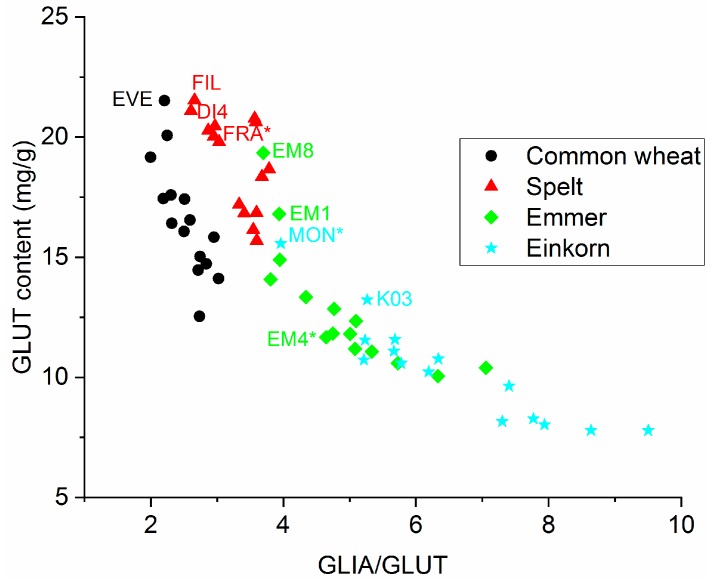
The spectrophotometric Bradford assay was adapted for the analysis of gluten protein contents (gliadins and glutenins) of spelt, durum wheat, emmer and einkorn. The assay was applied to a set of 300 samples, including 15 cultivars each of common wheat, spelt, durum wheat, emmer and einkorn cultivated at four locations in Germany in the same year. The total protein content was equally influenced by location and wheat species, however, gliadin, glutenin and gluten contents were influenced more strongly by wheat species than location. Einkorn, emmer and spelt had higher protein and gluten contents than common wheat at all four locations. However, common wheat had higher glutenin contents than einkorn, emmer and spelt resulting in increasing ratios of gliadins to glutenins from common wheat (< 3.8) to spelt, emmer and einkorn (up to 12.1). With the knowledge that glutenin contents are suitable predictors for high baking volume, cultivars of einkorn, emmer and spelt with good predicted baking performance were identified. Finally, spelt, emmer and einkorn were found to have a higher nitrogen partial factor productivity than common and durum wheat making them promising crops for a more sustainable agriculture.
Overview
The claims and statistics of this paper haven’t been checked yet.
Run the check — free, no account needed. It reads the open-access text and checks the sources it cites.
Integrity signals
Registry
Cites
Statistics
Figures
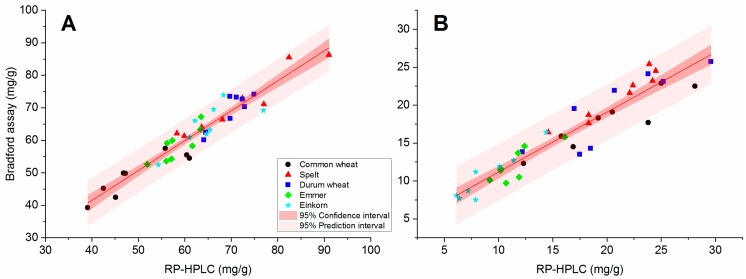
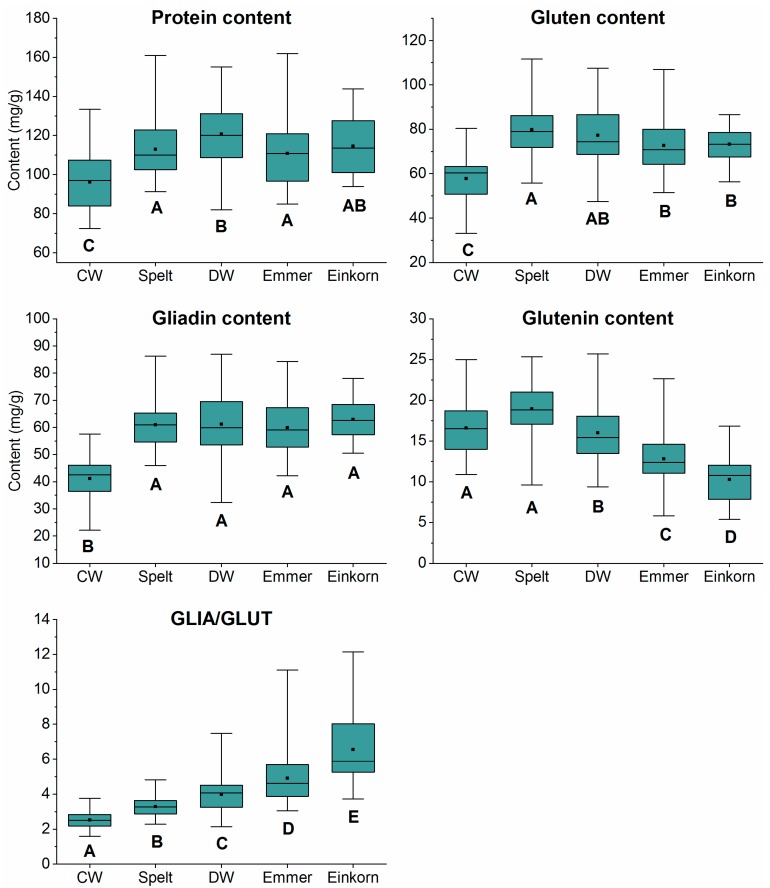
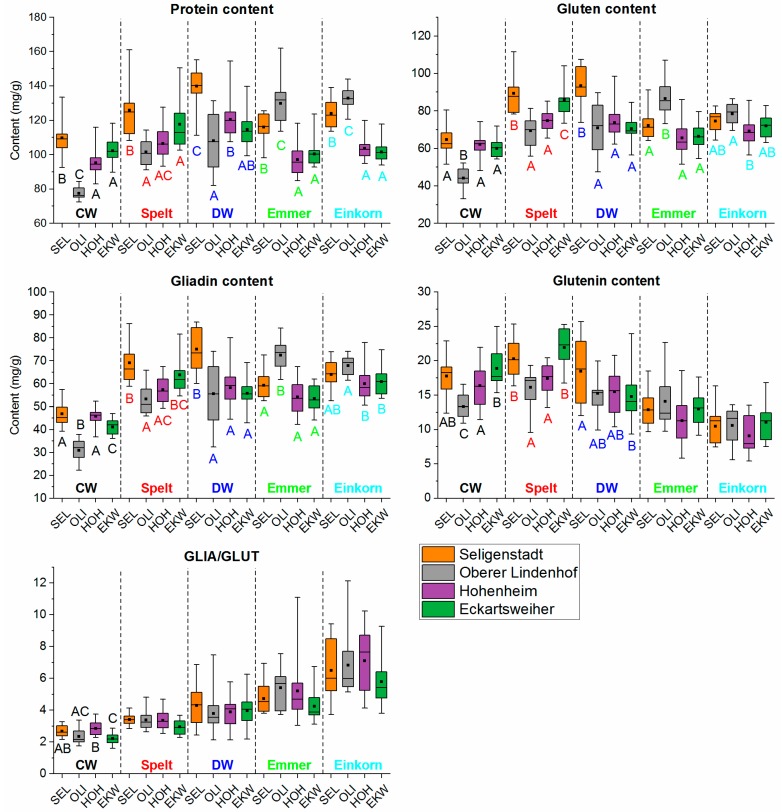
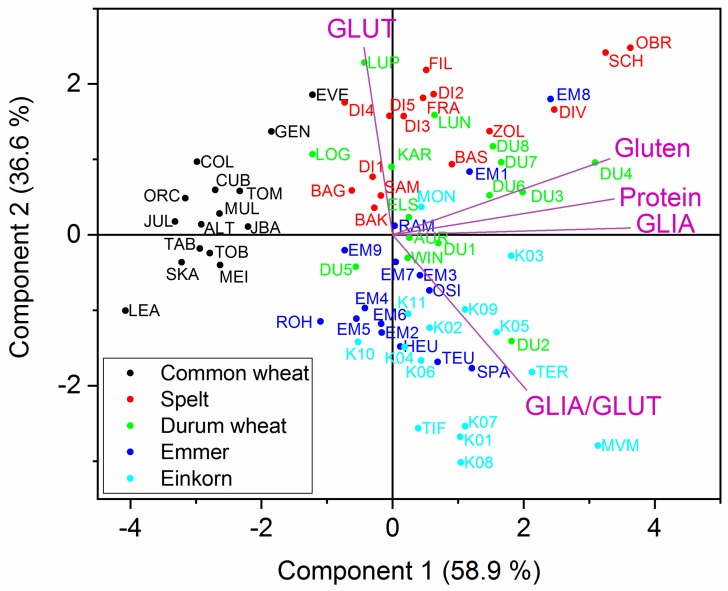
Verification
Claims the paper makes
The claims and statistics of this paper haven’t been checked yet.
Run the check — free, no account needed. It reads the open-access text and checks the sources it cites.
Claims other papers make about this one
Each is checked against this paper’s own text: does it say what the citing paper says it does?
The cited source says what the claim attributes to it.
In the citing paper
“As a curiosity, the topic of whether 'ancient' wheat varieties could potentially have lower proportions of gluten has been a subject of discussion. However, recent research has refuted this belief (28).”
Self-check
Percentages, sums and reported differences re-computed from the paper’s own numbers.
The self-check needs the paper’s full text.
Citations
Cites
Still being checked.
Research works printed but not linked: 24
- Longin, 2015, Comparative study of hulled (einkorn, emmer, and spelt) and naked wheats (durum and bread wheat): Agronomic performance and quality traits, Crop. Sci., 56, 302, 10.2135/cropsci2015.04.0242 · DOI
- Shewry, 2015, Do “ancient” wheat species differ from modern bread wheat in their contents of bioactive components?, J. Cereal Sci., 65, 236, 10.1016/j.jcs.2015.07.014 · DOI
- Li, 2008, Phenolic acids in wheat varieties in the HEALTHGRAIN diversity screen, J. Agric. Food Chem., 56, 9732, 10.1021/jf801069s · DOI
- Lampi, 2008, Tocopherols and tocotrienols in wheat genotypes in the HEALTHGRAIN diversity screen, J. Agric. Food Chem., 56, 9716, 10.1021/jf801092a · DOI
- Ziegler, 2015, Alkylresorcinol composition allows the differentiation of Triticum spp. having different degrees of ploidy, J. Cereal Sci., 65, 244, 10.1016/j.jcs.2015.07.013 · DOI
- Piironen, 2008, Folate in wheat genotypes in the HEALTHGRAIN diversity screen, J. Agric. Food Chem., 56, 9726, 10.1021/jf801066j · DOI
- Ziegler, 2015, Lutein and lutein esters in whole grain flours made from 75 genotypes of 5 Triticum species grown at multiple sites, J. Agric. Food Chem., 63, 5061, 10.1021/acs.jafc.5b01477 · DOI
- Shewry, 2018, Do ancient types of wheat have health benefits compared with modern bread wheat?, J. Cereal Sci., 79, 469, 10.1016/j.jcs.2017.11.010 · DOI
- Sobczyk, 2017, Evaluation of the rheological properties of dough and quality of bread made with the flour obtained from old cultivars and modern breeding lines of spelt (Triticum aestivum ssp. spelta), J. Cereal Sci., 77, 35, 10.1016/j.jcs.2017.07.013 · DOI
- Wieser, 2009, Studies on the protein composition and baking quality of einkorn lines, Eur. Food Res. Technol., 229, 523, 10.1007/s00217-009-1081-5 · DOI
- Geisslitz, 2018, Gluten protein composition and aggregation properties as predictors for bread volume of common wheat, spelt, durum wheat, emmer and einkorn, J. Cereal Sci., 83, 204, 10.1016/j.jcs.2018.08.012 · DOI
- Wieser, 1998, Quantitative determination of gluten protein types in wheat flour by reversed-phase high-performance liquid chromatography, Cereal Chem., 75, 644, 10.1094/CCHEM.1998.75.5.644 · DOI
- Thanhaeuser, 2015, Spectrophotometric and fluorimetric quantitation of quality-related protein fractions of wheat flour, J. Cereal Sci., 62, 58, 10.1016/j.jcs.2014.12.010 · DOI
- Visioli, 2018, Variations in yield and gluten proteins in durum wheat varieties under late-season foliar versus soil application of nitrogen fertilizer in a northern Mediterranean environment, J. Sci. Food Agric., 98, 2360, 10.1002/jsfa.8727 · DOI
- Mæhre, H.K., Dalheim, L., Edvinsen, G.K., Elvevoll, E.O., and Jensen, I.-J. (2018). Protein determination—Method matters. Foods, 7. · DOI
- Cullis, 2006, On the design of early generation variety trials with correlated data, J. Agric. Biol. Environ. Stat., 11, 381, 10.1198/108571106X154443 · DOI
- Piepho, 2007, Computing heritability and selection response from unbalanced plant breeding trials, Genetics, 177, 1881, 10.1534/genetics.107.074229 · DOI
- Schopf, 2018, Wheat cultivar and species influence variability of gluten ELISA analyses based on polyclonal and monoclonal antibodies R5 and G12, J. Cereal Sci., 83, 32, 10.1016/j.jcs.2018.07.005 · DOI
- Shewry, 2010, The HEALTHGRAIN wheat diversity screen: Effects of genotype and environment on phytochemicals and dietary fiber components, J. Agric. Food Chem., 58, 9291, 10.1021/jf100039b · DOI
- Dupont, 2003, Molecular and biochemical impacts of environmental factors on wheat grain development and protein synthesis, J. Cereal Sci., 38, 133, 10.1016/S0733-5210(03)00030-4 · DOI
- Chope, 2014, Effects of genotype, season, and nitrogen nutrition on gene expression and protein accumulation in wheat grain, J. Agric. Food Chem., 62, 4399, 10.1021/jf500625c · DOI
- Triboi, 2000, Environmental effects on the quality of two wheat genotypes: 1. quantitative and qualitative variation of storage proteins, Eur. J. Agron., 13, 47, 10.1016/S1161-0301(00)00059-9 · DOI
- Rossmann, 2019, Foliar N application at anthesis alters grain protein composition and enhances baking quality in winter wheat only under a low N fertiliser regimen, Eur. J. Agron., 109, 125909, 10.1016/j.eja.2019.04.004 · DOI
- Koenig, 2015, Classification of spelt cultivars based on differences in storage protein compositions from wheat, Food Chem., 168, 176, 10.1016/j.foodchem.2014.07.040 · DOI
Cited by
Sorted by citations
Luque, V., Crespo‐Escobar, P., Hård af Segerstad, E. M., Koltai, T., Norsa, L., Roman, E., Vreugdenhil, A., Fueyo‐Díaz, R., & Ribes‐Koninckx, C. (2024) · Journal of Pediatric Gastroenterology and Nutrition · doi:10.1002/jpn3.12079 · Cited by 44
Metadata
- Authors
- Geisslitz, S., Longin, C. F. H., Scherf, K. A., & Koehler, P.
- Affiliations
- Leibniz-Institute for Food Systems Biology at the Technical University of Munich (DE)
- University of Hohenheim (DE)
- Karlsruhe Institute of Technology (DE)
- biotask AG, Schelztorstrasse 54-56, 73728 Esslingen am Neckar, Germany
- Corresponding author
- Scherf, Katharina A.
- Venue
- Foods
- Publisher
- MDPI AG
- Published
- 2019-09-12
- Volume
- 8
- Issue
- 9
- Pages
- 409
- ISSN
- 2304-8158 (ISSN-L)
- PMC
- PMC6769531
- OpenAlex
- W2973117793
- Cited by
- 149
- References
- 0
- Citations by year
- 2026: 19 · 2025: 22 · 2024: 25 · 2023: 28 · 2022: 24 · 2021: 18 · 2020: 12 · 2019: 1
- FWCI
- 10.14
- Type
- journal article
- Language
- en
- Open access
- gold
- dx.doi.org
- Licence
- Locations
- Foods (publishedVersion, cc-by)
- Europe PMC (PubMed Central) (publishedVersion, cc-by)
- PubMed Central (publishedVersion, cc-by)
- PubMed (publishedVersion)
- Repository KITopen (Karlsruhe Institute of Technology) (submittedVersion, cc-by)
- DOAJ (DOAJ: Directory of Open Access Journals) (submittedVersion, cc-by-sa)
- KITopen (cc-by)
- Funders
- Forschungskreis der Ernährungsindustrie (AiF 18355 N)
- Topics
- Life Sciences › Agricultural and Biological Sciences › Plant Science › Wheat and Barley Genetics and Pathology
- Health Sciences › Nursing › Nutrition and Dietetics › Food composition and properties
- Health Sciences › Medicine › Gastroenterology › Celiac Disease Research and Management
- Keywords
- gliadin, glutenin, Triticum monococcum, emmer wheat, spelt wheat, durum wheat, wheat, total protein, baking performance, partial factor productivity of nitrogen, cultivar comparison
About these checks
Registry, retraction, Cites and statistics results are computed, not judged, with one exception: a printed reference that no index lists is read once by a model before it counts as a citation error. Claims are extracted by a model and kept only when their quote appears verbatim in the text; each cited source is then checked, with a model’s help, for whether it says what the claim relies on. Those verdicts can be wrong — read the claim’s quote and the cited source before relying on one.
Statistics and arithmetic are recomputed, not judged.
Confidence bands are shown only for fields calibrated on our annotated test set. None is calibrated yet, so no band is shown.
What counts as a claim ›How we measure confidence ›How we check this ›
Are you an author, or do you see a problem with this page? Request a review
How to cite
Cite CoChat for the checks on this page, and the paper for its own findings.
- This page
- CoChat. (2026). Citation check: Comparative Study on Gluten Protein Composition of Ancient (Einkorn, Emmer and Spelt) and Modern Wheat Species (Durum and Common Wheat). https://app.cochat.ai/papers/10.3390/foods8090409
- The paper
- Geisslitz, S., Longin, C. F. H., Scherf, K. A., & Koehler, P. (2019). Comparative Study on Gluten Protein Composition of Ancient (Einkorn, Emmer and Spelt) and Modern Wheat Species (Durum and Common Wheat). Foods. https://doi.org/10.3390/foods8090409
