

Variable Response in Alpine Tree-Ring Stable Isotopes Following Volcanic Eruptions in the Tropics and Iceland
Open accessThe DOI matches its Crossref record; 79 of the 79 references it cites were found in a registry or an index.
Abstract
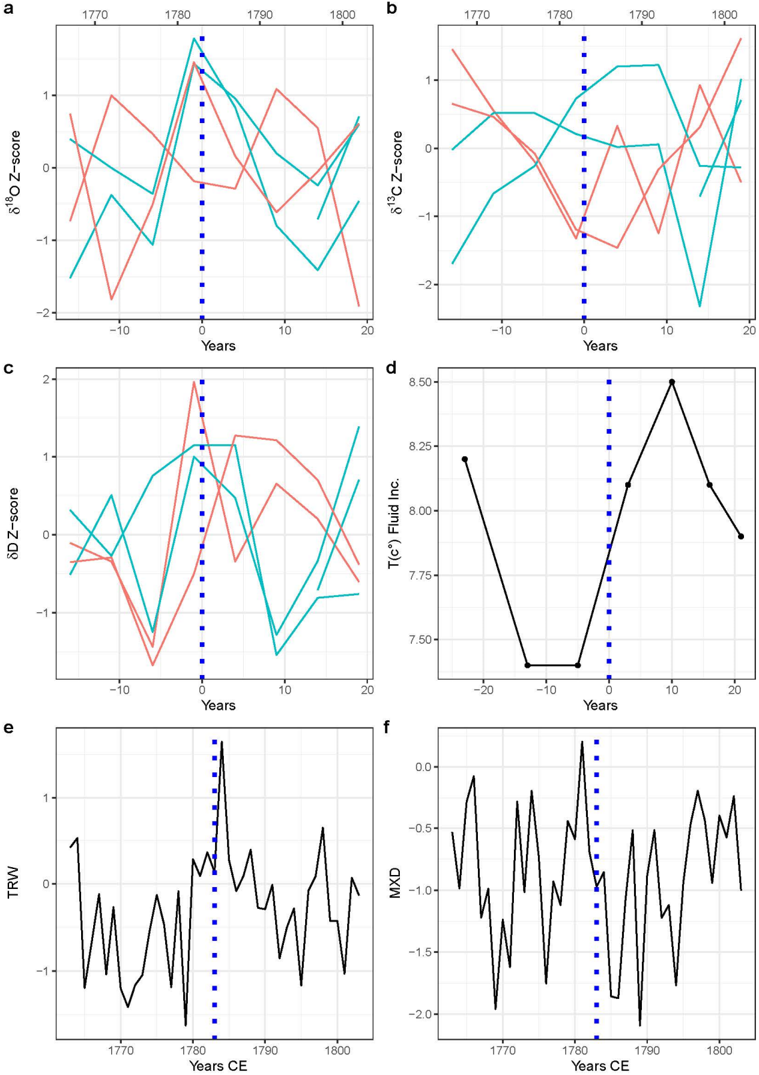
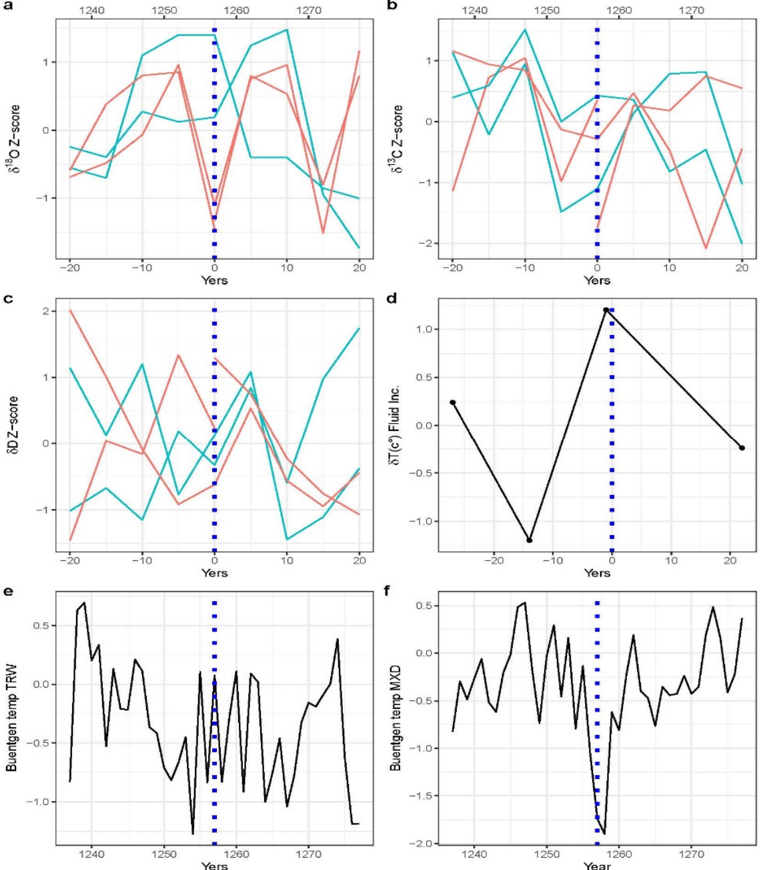
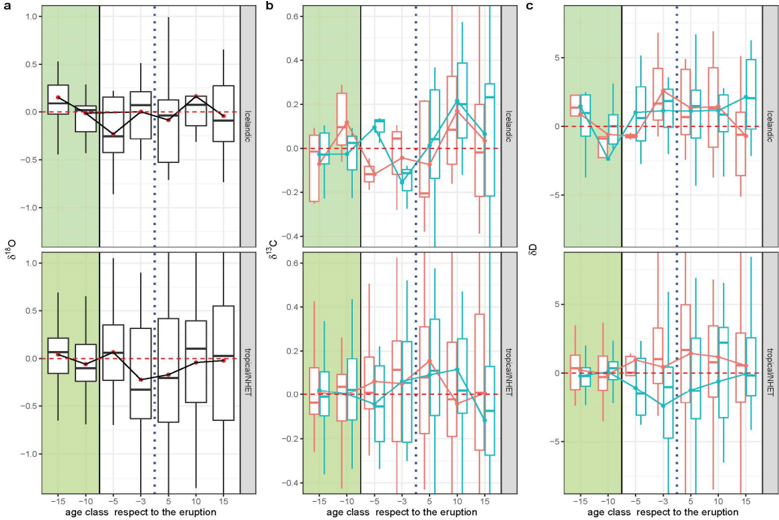
The importance of the stable isotopes in tree rings for the study of the climate variations caused by volcanic eruptions is still unclear. We studied δ18O, δD, δ13C stable isotopes of larch and cembran pine cellulose around four major eruptions with annual resolution, along with a superposed epoch analysis of 34 eruptions with 5-year resolution. Initial analysis of the tropical Tambora (1815 CE) and Samalas (1257 CE) eruptions showed a post-eruption decrease in δ18O values attributed to post-volcanic cooling and increased summer precipitation in Southern Europe, as documented by observations and climate simulations. The post-volcanic cooling was captured by the δD of speleothem fluid inclusion. The δ18O decrease was also observed in the analysis of 34 major tropical eruptions over the last 2000 years. In contrast, the eruptions of c. 750, 756, and 764 CE attributed to Icelandic volcanoes left no significant responses in the cellulose isotopes. Further analysis of all major Icelandic eruptions in the last 2000 years showed no consistent isotopic fingerprints, with the exception of lower post-volcanic δ13C values in larch. In summary, the δ18O values of cellulose can provide relevant information on climatic and hydroclimatic variations following major tropical volcanic eruptions, even when using the 5-year resolution wood samples of the Alpine Tree-Ring Isotope Record database.
Overview
The claims and statistics of this paper haven’t been checked yet.
Free: it reads the open-access text and checks the first 5 claims that cite a source we can check. Create a free account to check every claim.
Integrity signals
Registry
Cites
Statistics
Figures
![Figure 5 Comparison between the trend of the oxygen isotope series and those of oth proxies in mid-8th-century eruptions attributed to Icelandic volcanoes: ( a ) Average series values of the two trees with annual resolution. ( b ) Temperature from the speleothem fl sions from Milandre Cave. ( c ) Reconstructed temperature evolution based on TRW by [6 constructed summer temperature based on MDX by [70]. Figure 5. Comparison between the trend of the oxygen isotope series and those of other climate proxies in mid-8th-century eruptions attributed to Icelandic volcanoes: ( a ) Average series of the δ 18 O values of the two trees with annual resolution. ( b ) Temperature from the speleothem fluid inclusions from Milandre Cave. ( c ) Reconstructed temperature evolution based on TRW by [69] ( d ) Reconstructed summer temperature based on MDX by [70].](https://figures.cochat.ai/paper-figures/a92c9b3487b0440a8b4a85a1f22014ba/variable-response-in-alpine-tree-ring-stable-isotopes-following-volcanic-figure-5.png)
Verification
Claims the paper makes
The claims and statistics of this paper haven’t been checked yet.
Free: it reads the open-access text and checks the first 5 claims that cite a source we can check. Create a free account to check every claim.
Claims other papers make about this one
Each is checked against this paper’s own text: does it say what the citing paper says it does?
The source backs part of the claim, not all of it — or backs it for a different population, condition or comparison.
In the citing paper
“In contrast to many historic large eruptions, no major summer cooling anomaly is recorded in Northern Hemisphere tree-ring reconstructions in the year following the explosive stratospheric end-phase of the Hrafnkatla episode (i.e., 764 CE) [78][79][80] .”
From Decadal-to-centennial increases of volcanic aerosols from Iceland challenge the concept of a Medieval Quiet Period (2024) · cites this paper as [80]
Experimental — accuracy not yet measured
Self-check
Percentages, sums and reported differences re-computed from the paper’s own numbers.
The self-check needs the paper’s full text.
Citations
Cites
Volcanic eruptions and climate
Robock, A. (2000) · Reviews of Geophysics · doi:10.1029/1998rg000054 · Cited by 2,806 · cited 3×
“The solid ash particles have a residence time of a few months, but the volcanic gases—especially SO2 and H2S—produce much more significant effects, as they reach global coverage in the troposphere and form sulphuric acid (H2SO4) aerosols with a residence time of 1–3 years [1].”
BackgroundInfluentialMcCarroll, D., & Loader, N. J. (2004) · Quaternary Science Reviews · doi:10.1016/j.quascirev.2003.06.017 · Cited by 1,817 · cited 2×
“Thus, the δ18O data are of sufficient robustness for climatic investigation, in agreement with [28], and represent a better climate proxy than the other cellulose isotopes [77].”
BackgroundMethod2500 Years of European Climate Variability and Human Susceptibility
Büntgen, U., Tegel, W., Nicolussi, K., McCormick, M., Frank, D., Trouet, V., Kaplan, J. O., Herzig, F., Heussner, K.-U., Wanner, H., et al. (2011) · Science · doi:10.1126/science.1197175 · Cited by 1,451 · cited 8×
“It is worth noting that the isotopes of Central European oak and the δ 18 O of Siberian larch at high-and low-altitude sites were not affected by the Tambora eruption [31,69].”
BackgroundMethodResultInfluentialSelf-citationTiming and climate forcing of volcanic eruptions for the past 2,500 years
Sigl, M., Winstrup, M., McConnell, J. R., Welten, K. C., Plunkett, G., Ludlow, F., Büntgen, U., Caffee, M., Chellman, N., Dahl-Jensen, D., et al. (2015) · Nature · doi:10.1038/nature14565 · Cited by 1,325 · cited 9×
“Such eruptions can cause surface cooling on regional and global scales through stratospheric injection of aerosols and fine ash particles [2].”
BackgroundMethodResultInfluentialSelf-citationHISTALP—historical instrumental climatological surface time series of the Greater Alpine Region
Auer, I., Böhm, R., Jurkovic, A., Lipa, W., Orlik, A., Potzmann, R., Schöner, W., Ungersböck, M., Matulla, C., Briffa, K., et al. (2007) · International Journal of Climatology · doi:10.1002/joc.1377 · Cited by 1,133 · cited 16×
“They were collected from treeline sites in different parts of the European Alps covering a southwest – northeast transect with an elevation range between 1930 and 2400 m ( Figure 1).”
BackgroundMethodInfluentialReporting of stable hydrogen, carbon, and oxygen isotopic abundances (Technical Report)
Coplen, T. B. (1994) · Pure and Applied Chemistry · doi:10.1351/pac199466020273 · Cited by 856 · cited 1×
“The results are reported in parts per thousand (‰) relative to the Vienna Pee Dee Belemnite (VPDB) for carbon and to the Vienna Standard Mean Ocean Water (VSMOW) for hydrogen and oxygen [49].”
Radiocarbon Concentration in Modern Wood
SUESS, H. E. (1955) · Science · doi:10.1126/science.122.3166.415-a · Cited by 748 · cited 1×
“Fossil fuel burning and land-use changes in the Industrial Revolution from about 1850 onward led to a continuous increase in atmospheric carbon dioxide (CO2), which is depleted in δ13C [50]—known as the Suess effect [51].”
BackgroundCooling and societal change during the Late Antique Little Ice Age from 536 to around 660 AD
Büntgen, U., Myglan, V. S., Ljungqvist, F. C., McCormick, M., Di Cosmo, N., Sigl, M., Jungclaus, J., Wagner, S., Krusic, P. J., Esper, J., et al. (2016) · Nature Geoscience · doi:10.1038/ngeo2652 · Cited by 722 · cited 1×
“Moreover, observations, along with climate and glacier reconstructions, show a strong sensitivity of the alpine climate to volcanic forcing (e.g., [5,75,76]).”
BackgroundSelf-citationAtmospheric and environmental effects of the 1783–1784 Laki eruption: A review and reassessment
Thordarson, T., & Self, S. (2003) · Journal of Geophysical Research: Atmospheres · doi:10.1029/2001jd002042 · Cited by 569 · cited 1×
“0 °C, and to have caused winter cooling over a period of three years after the eruption [7,59].”
BackgroundOppenheimer, C. (2003) · Progress in Physical Geography: Earth and Environment · doi:10.1191/0309133303pp379ra · Cited by 514 · cited 1×
“Large socioeconomic impacts following widespread crop failures and subsequent famines in 1816 have been partially associated with the Tambora eruption [5,54].”
BackgroundA global multiproxy database for temperature reconstructions of the Common Era
PAGES2k Consortium, Emile-Geay, J., McKay, N. P., Kaufman, D. S., von Gunten, L., Wang, J., Anchukaitis, K. J., Abram, N. J., Addison, J. A., Curran, M. A. J., et al. (2017) · Scientific Data · doi:10.1038/sdata.2017.88 · Cited by 501
Self-citationSummer Temperature Variations in the European Alps, a.d. 755–2004
Büntgen, U., Frank, D. C., Nievergelt, D., & Esper, J. (2006) · Journal of Climate · doi:10.1175/jcli3917.1 · Cited by 438 · cited 5×
“Nevertheless, summer temperature reconstructions are available from MDX and TRW data [69,70].”
MethodInfluentialRecent European drought extremes beyond Common Era background variability
Büntgen, U., Urban, O., Krusic, P. J., Rybníček, M., Kolář, T., Kyncl, T., Ač, A., Koňasová, E., Čáslavský, J., Esper, J., et al. (2021) · Nature Geoscience · doi:10.1038/s41561-021-00698-0 · Cited by 435 · cited 8×
“It is worth noting that the isotopes of Central European oak and the δ 18 O of Siberian larch at high-and low-altitude sites were not affected by the Tambora eruption [31,69].”
BackgroundInfluentialEuropean summer temperatures since Roman times
Luterbacher, J., Werner, J. P., Smerdon, J. E., Fernández-Donado, L., González-Rouco, F. J., Barriopedro, D., Ljungqvist, F. C., Büntgen, U., Zorita, E., Wagner, S., et al. (2016) · Environmental Research Letters · doi:10.1088/1748-9326/11/2/024001 · Cited by 426
Volcanic stratospheric sulfur injections and aerosol optical depth from 500 BCE to 1900 CE
Toohey, M., & Sigl, M. (2017) · Earth System Science Data · doi:10.5194/essd-9-809-2017 · Cited by 344 · cited 2×
“We note that [66] assumed eruption latitudes of 45°N (CE 750 and 756) and 0° (CE 764) in their reconstruction of stratospheric aerosol optical depth (SAOD) from ice-core records.”
BackgroundMethodSelf-citationLavigne, F., Degeai, J.-P., Komorowski, J.-C., Guillet, S., Robert, V., Lahitte, P., Oppenheimer, C., Stoffel, M., Vidal, C. M., Surono, et al. (2013) · Proceedings of the National Academy of Sciences · doi:10.1073/pnas.1307520110 · Cited by 333 · cited 3×
“The global climatic impacts of some volcanic eruptions have left evident historical and environmental records, including the explosive eruptions of Tambora in 1815 CE [5] and Krakatau in 1883 CE [6] in Indonesia, as well as the long-lasting fissure eruption of Laki in 1783/84 [7,8] in Iceland.”
BackgroundEstimates of volcanic-induced cooling in the Northern Hemisphere over the past 1,500 years
Stoffel, M., Khodri, M., Corona, C., Guillet, S., Poulain, V., Bekki, S., Guiot, J., Luckman, B. H., Oppenheimer, C., Lebas, N., et al. (2015) · Nature Geoscience · doi:10.1038/ngeo2526 · Cited by 328
Tambora 1815 as a test case for high impact volcanic eruptions: Earth system effects
Raible, C. C., Brönnimann, S., Auchmann, R., Brohan, P., Frölicher, T. L., Graf, H., Jones, P., Luterbacher, J., Muthers, S., Neukom, R., et al. (2016) · WIREs Climate Change · doi:10.1002/wcc.407 · Cited by 259 · cited 4×
“In fact, the most anomalous cold summer temperatures were reported in Switzerland and eastern France, with a well-documented increase in summer precipitations over Southern–Central Europe in 1816 [9], while Russia and Ukraine reported only a milder summer [5].”
BackgroundInfluentialClimatic response to high‐latitude volcanic eruptions
Oman, L., Robock, A., Stenchikov, G., Schmidt, G. A., & Ruedy, R. (2005) · Journal of Geophysical Research: Atmospheres · doi:10.1029/2004jd005487 · Cited by 248 · cited 1×
“Those at low latitudes often produce global aerosol dispersion, whereas those in high-latitude areas, such as Iceland, typically disperse aerosols only in the hemisphere where they are located [3,4].”
BackgroundMulti-proxy dating the ‘Millennium Eruption’ of Changbaishan to late 946 CE
Oppenheimer, C., Wacker, L., Xu, J., Galván, J. D., Stoffel, M., Guillet, S., Corona, C., Sigl, M., Di Cosmo, N., Hajdas, I., et al. (2017) · Quaternary Science Reviews · doi:10.1016/j.quascirev.2016.12.024 · Cited by 213
Self-citationClimate response to the Samalas volcanic eruption in 1257 revealed by proxy records
Guillet, S., Corona, C., Stoffel, M., Khodri, M., Lavigne, F., Ortega, P., Eckert, N., Sielenou, P. D., Daux, V., Churakova (Sidorova), O. V., et al. (2017) · Nature Geoscience · doi:10.1038/ngeo2875 · Cited by 210 · cited 1×
“However, cooling in the Northern Hemisphere was spatially heterogeneous [57,58].”
BackgroundSignals and memory in tree-ring width and density data
Esper, J., Schneider, L., Smerdon, J. E., Schöne, B. R., & Büntgen, U. (2015) · Dendrochronologia · doi:10.1016/j.dendro.2015.07.001 · Cited by 189 · cited 2×
“This suggests the absence of biological memory in cellulose δ18O (as in MDX) that is present in TRW [27].”
BackgroundDisproportionately strong climate forcing from extratropical explosive volcanic eruptions
Toohey, M., Krüger, K., Schmidt, H., Timmreck, C., Sigl, M., Stoffel, M., & Wilson, R. (2019) · Nature Geoscience · doi:10.1038/s41561-018-0286-2 · Cited by 185 · cited 1×
“Those at low latitudes often produce global aerosol dispersion, whereas those in high-latitude areas, such as Iceland, typically disperse aerosols only in the hemisphere where they are located [3,4].”
BackgroundSelf-citationTree rings reveal globally coherent signature of cosmogenic radiocarbon events in 774 and 993 CE
Büntgen, U., Wacker, L., Galván, J. D., Arnold, S., Arseneault, D., Baillie, M., Beer, J., Bernabei, M., Bleicher, N., Boswijk, G., et al. (2018) · Nature Communications · doi:10.1038/s41467-018-06036-0 · Cited by 183 · cited 1×
“Tree rings are among the few paleoclimate proxies that provide continuous annual resolution [16] with high dating accuracy [17].”
BackgroundSelf-citationCole‐Dai, J., Ferris, D., Lanciki, A., Savarino, J., Baroni, M., & Thiemens, M. H. (2009) · Geophysical Research Letters · doi:10.1029/2009gl040882 · Cited by 181 · cited 1×
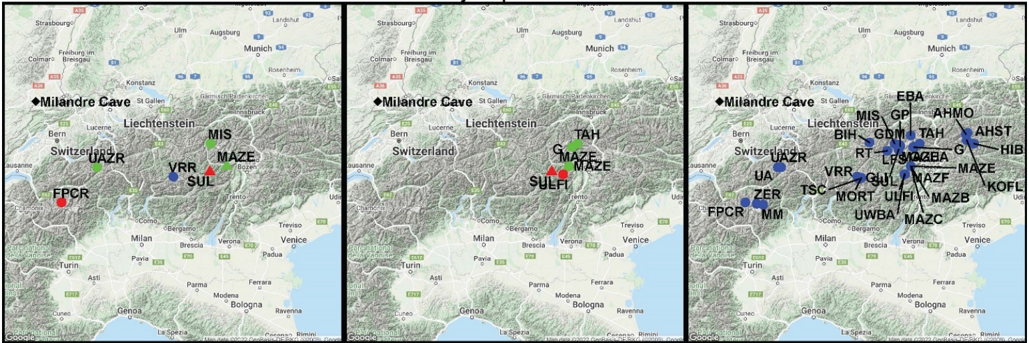
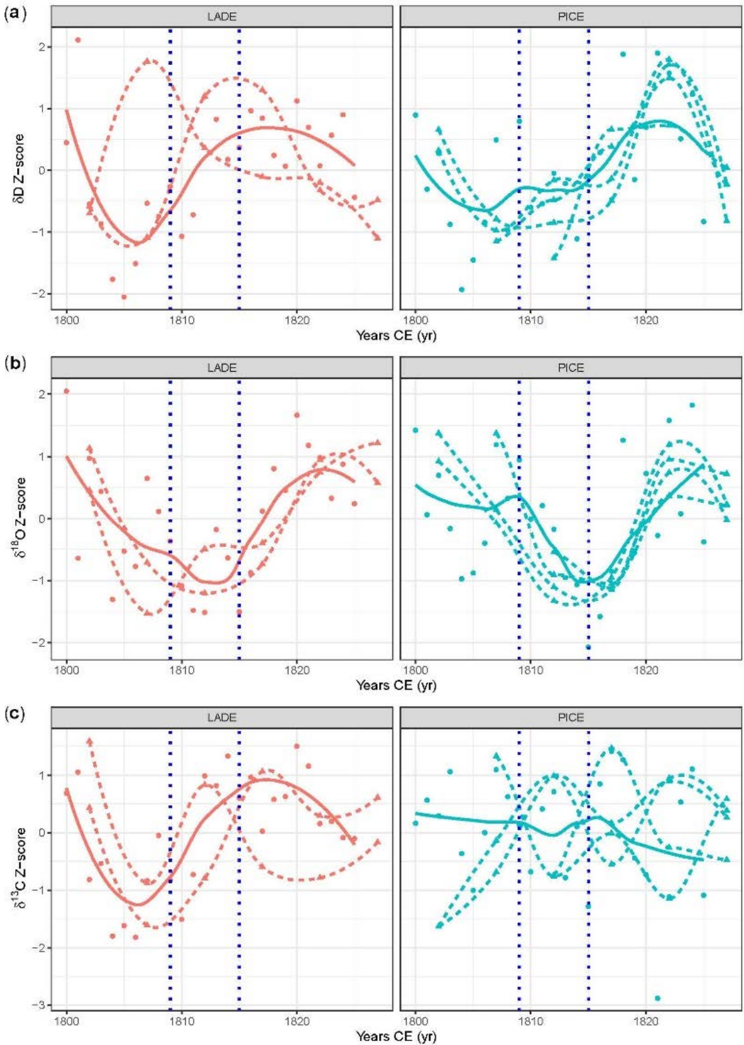
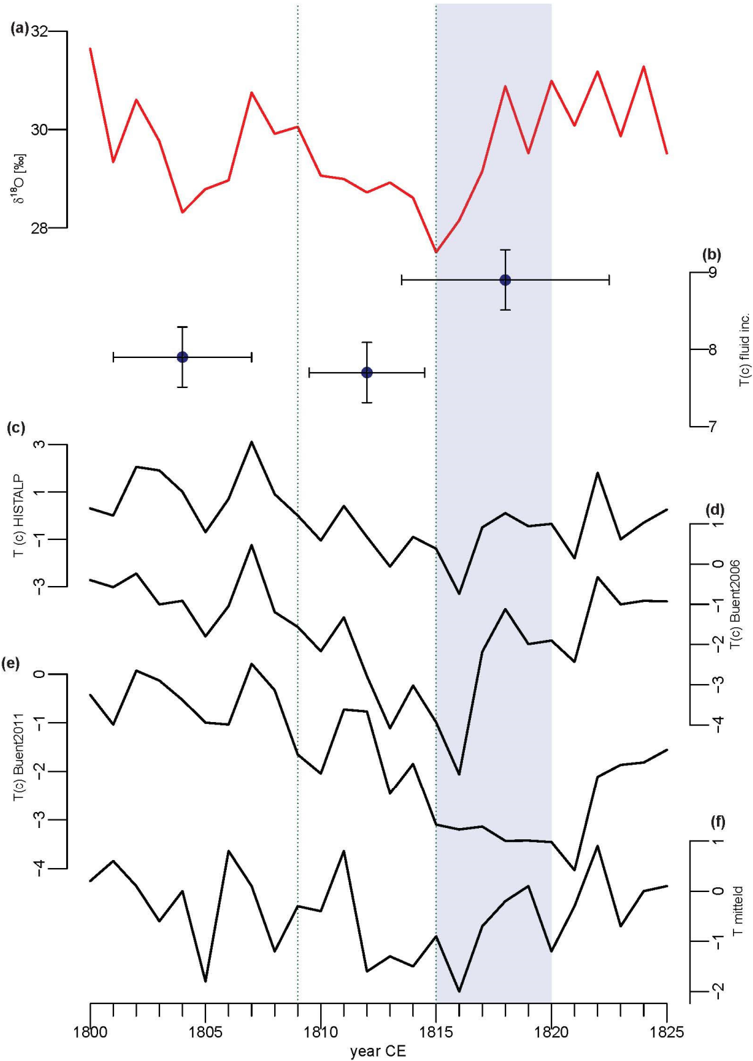
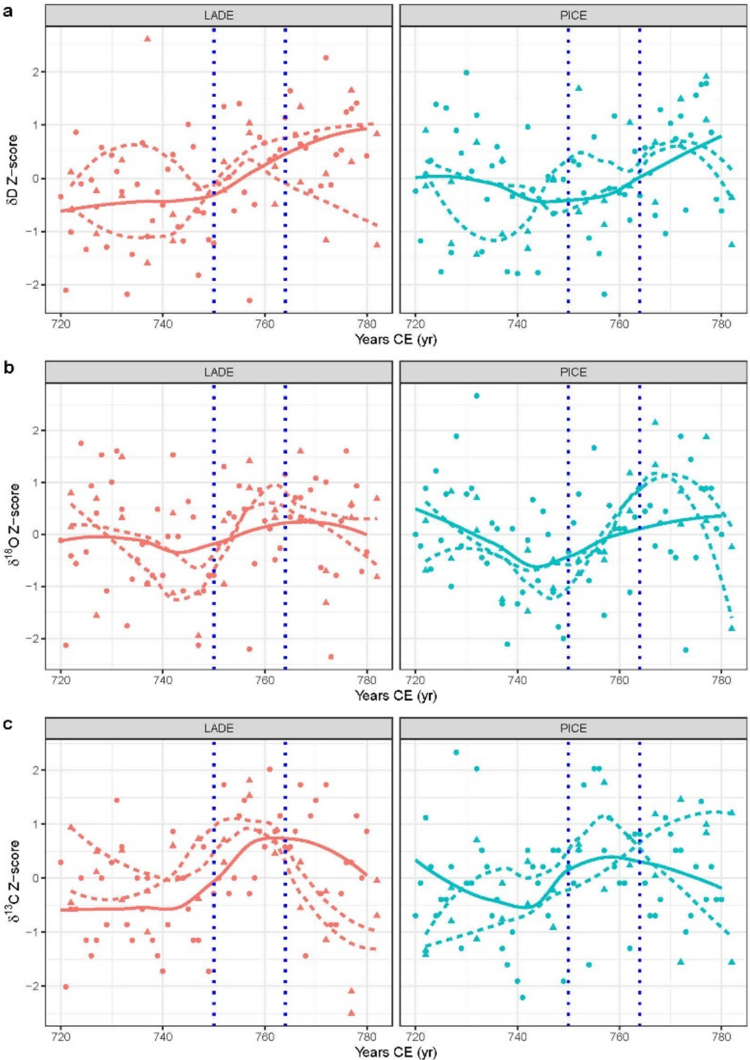
“…also analysed samples with annual resolution obtained from one cembran pine and one larch for the periods around 4 major eruptions: that of Tambora (1815), the preceding — yet unidentified — eruption [52,53] in 1809, and two mid-8th-century eruptions attributed to Icelandic volcanoes (750 and 764).”
BackgroundLast phase of the Little Ice Age forced by volcanic eruptions
Brönnimann, S., Franke, J., Nussbaumer, S. U., Zumbühl, H. J., Steiner, D., Trachsel, M., Hegerl, G. C., Schurer, A., Worni, M., Malik, A., et al. (2019) · Nature Geoscience · doi:10.1038/s41561-019-0402-y · Cited by 176 · cited 1×
“This database seems to be well-suited for this study, since models project that the climate at the sampling sites (in the Alps between 45° and 47° northern latitude) is strongly influenced by both tropical and Icelandic eruptions, e.g., [3,74].”
MethodÓladóttir, B. A., Sigmarsson, O., Larsen, G., & Thordarson, T. (2007) · Bulletin of Volcanology · doi:10.1007/s00445-007-0150-5 · Cited by 174
Cole‐Dai, J. (2010) · WIREs Climate Change · doi:10.1002/wcc.76 · Cited by 170
Tree rings and volcanic cooling
Anchukaitis, K. J., Breitenmoser, P., Briffa, K. R., Buchwal, A., Büntgen, U., Cook, E. R., D'Arrigo, R. D., Esper, J., Evans, M. N., Frank, D., et al. (2012) · Nature Geoscience · doi:10.1038/ngeo1645 · Cited by 168
The influence of decision-making in tree ring-based climate reconstructions
Büntgen, U., Allen, K., Anchukaitis, K. J., Arseneault, D., Boucher, É., Bräuning, A., Chatterjee, S., Cherubini, P., Churakova, O. V., Corona, C., et al. (2021) · Nature Communications · doi:10.1038/s41467-021-23627-6 · Cited by 164 · cited 1×
“However, they did not record tropical eruptions [33], while the TRWs of pines from different sites in the Northern Hemisphere were temperature-sensitive and showed post-eruption cold signals [34].”
BackgroundSelf-citationPrecise date for the Laacher See eruption synchronizes the Younger Dryas
Reinig, F., Wacker, L., Jöris, O., Oppenheimer, C., Guidobaldi, G., Nievergelt, D., Adolphi, F., Cherubini, P., Engels, S., Esper, J., et al. (2021) · Nature · doi:10.1038/s41586-021-03608-x · Cited by 157 · cited 1×
“Therefore, TRW has been used to date some eruptions [19 – 21] and to study their climatic impact [22 – 24].”
MethodSelf-citationEsper, J., Schneider, L., Krusic, P. J., Luterbacher, J., Büntgen, U., Timonen, M., Sirocko, F., & Zorita, E. (2013) · Bulletin of Volcanology · doi:10.1007/s00445-013-0736-z · Cited by 154 · cited 1×
“The post-eruption spring and summer cooling is a homogeneous response that occurs both regionally and globally [11 – 14], while the hydroclimatic response is much more spatially heterogeneous [15].”
BackgroundAffolter, S., Häuselmann, A., Fleitmann, D., Edwards, R. L., Cheng, H., & Leuenberger, M. (2019) · Science Advances · doi:10.1126/sciadv.aav3809 · Cited by 152 · cited 9×
“Additionally, the hydrogen isotope composition of fluid inclusion of speleothems (hereafter δDfi) records past climate variability—particularly temperature variability [42].”
BackgroundMethodResultInfluentialSelf-citationA 350 year drought reconstruction from Alpine tree ring stable isotopes
Kress, A., Saurer, M. M., SIEGWOLF, R. T. W., Frank, D., Esper, J., & Bugmann, H. K. M. (2010) · Global Biogeochemical Cycles · doi:10.1029/2009gb003613 · Cited by 143 · cited 3×
“They all also show the influence of an unidentified volcanic eruption in 1809, which caused a cooling phase in Europe [35].”
BackgroundVidal, C. M., Métrich, N., Komorowski, J.-C., Pratomo, I., Michel, A., Kartadinata, N., Robert, V., & Lavigne, F. (2016) · Scientific Reports · doi:10.1038/srep34868 · Cited by 140 · cited 2×
“We used the tree-ring isotope data with a 5-year resolution (AHTTRIR) to analyse the periods around 34 volcanic eruptions during the Common Era described in [2], including eruptions in both the extratropical Northern Hemisphere and the tropics.”
BackgroundSigl, M., Abram, N. J., Gabrieli, J., Jenk, T. M., Osmont, D., & Schwikowski, M. (2018) · The Cryosphere · doi:10.5194/tc-12-3311-2018 · Cited by 128 · cited 1×
“Moreover, observations, along with climate and glacier reconstructions, show a strong sensitivity of the alpine climate to volcanic forcing (e.g., [5,75,76]).”
BackgroundSelf-citationThe impact of volcanic forcing on tropical temperatures during the past four centuries
D'Arrigo, R. D., Wilson, R. J. S., & Tudhope, A. W. (2008) · Nature Geoscience · doi:10.1038/ngeo393 · Cited by 124 · cited 1×
“The post-eruption spring and summer cooling is a homogeneous response that occurs both regionally and globally [11 – 14], while the hydroclimatic response is much more spatially heterogeneous [15].”
BackgroundNicolussi, Kaufmann, M., Melvin, T. M., van der Plicht, J., Schießling, P., & Thurner, A. (2009) · The Holocene · doi:10.1177/0959683609336565 · Cited by 115 · cited 2×
“The wood sections were made available by the Department of Geography of the University of Innsbruck, where the Eastern Alpine Conifer Chronology (EACC) was compiled based on a calendar-dated tree-ring width series [43].”
BackgroundMethodGagen, M. H., McCarroll, D., & Édouard, J.-L. (2006) · Climatic Change · doi:10.1007/s10584-006-9097-3 · Cited by 104 · cited 1×
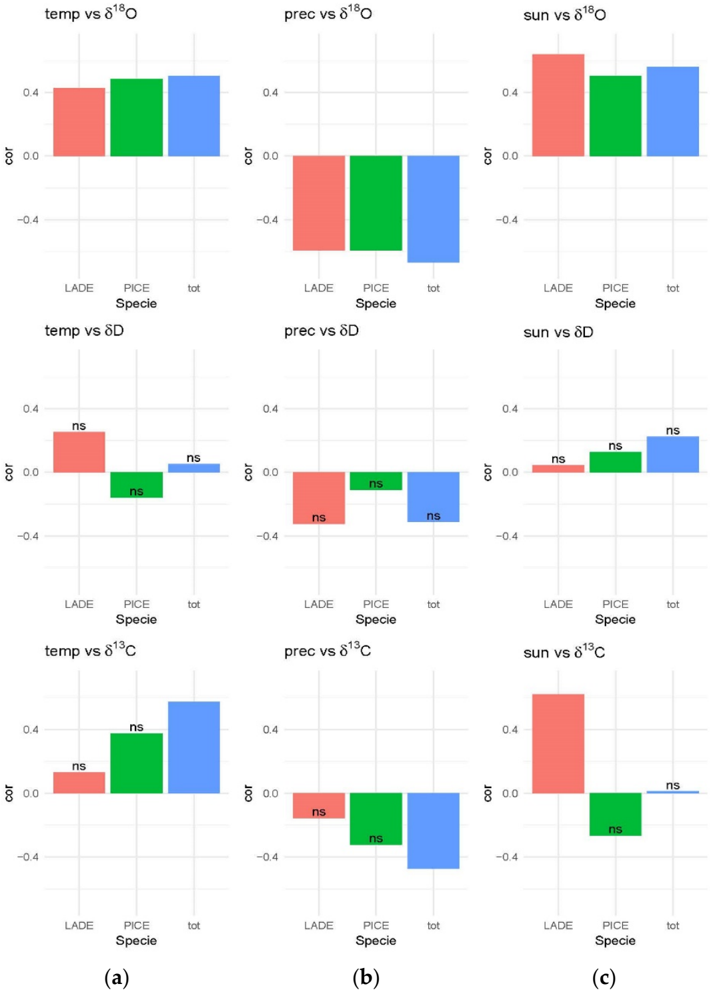
“Moreover, their δ13C values reflect local climatic conditions with species-specific signals [36,37] and can be linked to temperature and precipitation [35,38,39].”
BackgroundReynolds‐Henne, C. E., SIEGWOLF, R. T. W., Treydte, K. S., Esper, J., Henne, S., & Saurer, M. M. (2007) · Global Biogeochemical Cycles · doi:10.1029/2007gb002945 · Cited by 94 · cited 1×
“Moreover, their δ13C values reflect local climatic conditions with species-specific signals [36,37] and can be linked to temperature and precipitation [35,38,39].”
BackgroundWegmann, M., Brönnimann, S., Bhend, J., Franke, J., Folini, D., Wild, M., & Luterbacher, J. (2014) · Journal of Climate · doi:10.1175/jcli-d-13-00524.1 · Cited by 91 · cited 3×
“In fact, the most anomalous cold summer temperatures were reported in Switzerland and eastern France, with a well-documented increase in summer precipitations over Southern–Central Europe in 1816 [9], while Russia and Ukraine reported only a milder summer [5].”
BackgroundVolcanoes and the Climate Forcing of Carolingian Europe, A.D. 750-950
McCormick, M., Dutton, P. E., & Mayewski, P. A. (2007) · Speculum · doi:10.1017/s0038713400011325 · Cited by 86 · cited 1×
“The 750s–760s eruptions were mainly reported to cause winter cooling, and one European historical source describes the 763/64 winter as among the most outstanding cold episodes of the last 2000 years [78].”
BackgroundFilot, M. S., Leuenberger, M., Pazdur, A., & Boettger, T. (2006) · Rapid Communications in Mass Spectrometry · doi:10.1002/rcm.2743 · Cited by 83 · cited 1×
“This approach was extended to measure the exchangeable hydrogen of alpha-cellulose using the online equilibration method [47,48].”
MethodSelf-citationHelama, S., Arppe, L., Uusitalo, J., Holopainen, J., Mäkelä, H. M., Mäkinen, H. H., Mielikäinen, K., Nöjd, P., Sutinen, R., Taavitsainen, J., et al. (2018) · Scientific Reports · doi:10.1038/s41598-018-19760-w · Cited by 83 · cited 2×
“In Scandinavian pine trees at northern latitudes, δ13C values have lower posteruption values, likely related to changes in solar irradiance [30].”
BackgroundRao, M. P., Cook, B. I., Cook, E. R., D'Arrigo, R. D., Krusic, P. J., Anchukaitis, K. J., LeGrande, A. N., Buckley, B. M., Davi, N., Leland, C., et al. (2017) · Geophysical Research Letters · doi:10.1002/2017gl073057 · Cited by 81 · cited 1×
“The post-eruption spring and summer cooling is a homogeneous response that occurs both regionally and globally [11– 14], while the hydroclimatic response is much more spatially heterogeneous [15].”
BackgroundModeling the 1783–1784 Laki Eruption in Iceland: 2. Climate Impacts
Zambri, B., Robock, A., Mills, M. J., & Schmidt, A. (2019) · Journal of Geophysical Research: Atmospheres · doi:10.1029/2018jd029554 · Cited by 76 · cited 2×
“The global climatic impacts of some volcanic eruptions have left evident historical and environmental records, including the explosive eruptions of Tambora in 1815 CE [5] and Krakatau in 1883 CE [6] in Indonesia, as well as the longlasting fissure eruption of Laki in 1783/84 [7,8] in Iceland.”
BackgroundLeuenberger, M. (2007) · Elsevier eBooks · doi:10.1016/s1936-7961(07)01014-7 · Cited by 76 · cited 2×
“Fossil fuel burning and land-use changes in the Industrial Revolution from about 1850 onward led to a continuous increase in atmospheric carbon dioxide (CO 2 ), which is depleted in δ 13 C [50] — known as the Suess effect [51].”
BackgroundMethodSelf-citationEffects of Memory Biases on Variability of Temperature Reconstructions
Lücke, L. J., Hegerl, G. C., Schurer, A., & Wilson, R. J. S. (2019) · Journal of Climate · doi:10.1175/jcli-d-19-0184.1 · Cited by 73 · cited 1×
“However, TRW can overestimate the duration of volcanic cooling, since the strong climatic variation caused by the eruptions can have a long-lasting effect on the tree growth [25,26].”
BackgroundGudmundsdóttir, E. R., Larsen, G., & Eiríksson, J. (2012) · Boreas · doi:10.1111/j.1502-3885.2012.00258.x · Cited by 64
Simultaneous Determination of Stable Carbon, Oxygen, and Hydrogen Isotopes in Cellulose
Loader, N. J., Street‐Perrott, F. A., Daley, T. J., Hughes, P. D. M., Kimák, Á., Levanič, T., Mallon, G., Mauquoy, D., Robertson, I., Roland, T. P., et al. (2014) · Analytical Chemistry · doi:10.1021/ac502557x · Cited by 64 · cited 3×
“The cellulose extraction procedure, the determination of the cellulose content [46], and the δ13C, δD, and δ18O isotope analysis [47] have been described previously.”
MethodSelf-citationSchmidt, A., Thordarson, T., Oman, L. D., Robock, A., & Self, S. (2012) · Journal of Geophysical Research: Atmospheres · doi:10.1029/2012jd018414 · Cited by 54 · cited 1×
“Moreover, the positive δ18O peak fits with the very high summer temperature experienced in Western Europe in 1783, followed by a very cold winter [79].”
BackgroundBattipaglia, G., Cherubini, P., Saurer, M. M., SIEGWOLF, R. T. W., Strumia, S., & Cotrufo, M. F. (2007) · Global Change Biology · doi:10.1111/j.1365-2486.2007.01350.x · Cited by 50 · cited 1×
“For example, eco-physiological responses of δ13C and δ18O in European trees were reported following eruptions of volcanoes located at mid-latitudes [32] or at high latitudes [30].”
BackgroundLong-term summer temperature variations in the Pyrenees from detrended stable carbon isotopes
Esper, J., Konter, O., Krusic, P. J., Saurer, M. M., Holzkämper, S., & Büntgen, U. (2015) · Geochronometria · doi:10.1515/geochr-2015-0006 · Cited by 49 · cited 1×
“However, TRW can overestimate the duration of volcanic cooling, since the strong climatic variation caused by the eruptions can have a long-lasting effect on the tree growth [25,26].”
BackgroundKlesse, S., Weigt, R. B., Treydte, K. S., Saurer, M. M., Schmid, L., SIEGWOLF, R. T. W., & Frank, D. (2018) · Plant Cell & Environment · doi:10.1111/pce.13424 · Cited by 48 · cited 1×
“Thus, the δ18O data are of sufficient robustness for climatic investigation, in agreement with [28], and represent a better climate proxy than the other cellulose isotopes [77].”
BackgroundMulti-proxy dating of Iceland’s major pre-settlement Katla eruption to 822–823 CE
Büntgen, U., Eggertsson, Ó., Wacker, L., Sigl, M., Ljungqvist, F. C., Di Cosmo, N., Plunkett, G., Krusic, P. J., Newfield, T. P., Esper, J., et al. (2017) · Geology · doi:10.1130/g39269.1 · Cited by 45
Self-citationEdwards, J. A., Anchukaitis, K. J., Gunnarson, B. E., Pearson, C. L., Seftigen, K., von Arx, G., & Linderholm, H. W. (2022) · Paleoceanography and Paleoclimatology · doi:10.1029/2021pa004386 · Cited by 42
Churakova, O. V., Fonti, M. V., Saurer, M. M., Guillet, S., Corona, C., Fonti, P., Мыглан, В. С., Kirdyanov, A. V., Naumova, O. V., Ovchinnikov, D. V., et al. (2019) · Climate of the past · doi:10.5194/cp-15-685-2019 · Cited by 40 · cited 5×
“A multi-tree-ring study on volcanic eruptions showed a site-specific climate influence on Siberian larch, but with a general decrease in carbon and oxygen isotope ratios in the first five years after the eruption, along with a long-lasting sequence of small tree-ring width in the post-eruption period, reflecting chang…”
BackgroundResultInfluentialNo Age Trends in Oak Stable Isotopes
Büntgen, U., Kolář, T., Rybníček, M., Koňasová, E., Trnka, M., Ač, A., Krusic, P. J., Esper, J., Treydte, K. S., Reinig, F., et al. (2020) · Paleoceanography and Paleoclimatology · doi:10.1029/2019pa003831 · Cited by 40
The unknown third – Hydrogen isotopes in tree-ring cellulose across Europe
Vitali, V., Martínez‐Sancho, E., Treydte, K. S., Andreu‐Hayles, L., Dorado‐Liñán, I., Gutiérrez, E., Helle, G., Leuenberger, M., Loader, N. J., Rinne‐Garmston, K. T., et al. (2021) · The Science of The Total Environment · doi:10.1016/j.scitotenv.2021.152281 · Cited by 38 · cited 1×
“In contrast, their δD values have not been widely used for climate interpretation, as they contain strong biological signals that have not been fully elucidated [40,41].”
BackgroundSelf-citationLarge volcanic eruptions reduce landfalling tropical cyclone activity: Evidence from tree rings
Altman, J., Saurer, M. M., Doležal, J., Maredová, N., Song, J., Ho, C.-H., & Treydte, K. S. (2021) · The Science of The Total Environment · doi:10.1016/j.scitotenv.2021.145899 · Cited by 33 · cited 2×
“Therefore, TRW has been used to date some eruptions [19 – 21] and to study their climatic impact [22 – 24].”
MethodBüntgen, U., Smith, S., Wagner, S., Krusic, P. J., Esper, J., Piermattei, A., Crivellaro, A., Reinig, F., Tegel, W., Kirdyanov, A. V., et al. (2022) · Climate Dynamics · doi:10.1007/s00382-022-06141-3 · Cited by 33 · cited 1×
“However, cooling in the Northern Hemisphere was spatially heterogeneous [57,58].”
BackgroundWieloch, T., Grabner, M., Augusti, A., Serk, H., Ehlers, I., Yu, J., & Schleucher, J. (2022) · New Phytologist · doi:10.1111/nph.18014 · Cited by 33 · cited 1×
“In contrast, their δD values have not been widely used for climate interpretation, as they contain strong biological signals that have not been fully elucidated [40,41].”
BackgroundA cluster of stratospheric volcanic eruptions in the AD 530s recorded in Siberian tree rings
Churakova, O. V., Fonti, M. V., Saurer, M. M., Boettger, T., Naurzbaev, M. M., Мыглан, В. С., Vaganov, Е. А., Hughes, M. K., & SIEGWOLF, R. T. W. (2014) · Global and Planetary Change · doi:10.1016/j.gloplacha.2014.08.015 · Cited by 31
Grießinger, J., Bräuning, A., Helle, G., Schleser, G. H., Hochreuther, P., Meier, W. J.-H., & Zhu, H. (2019) · Geosciences · doi:10.3390/geosciences9040151 · Cited by 25 · cited 1×
“Moreover, their δ13C values reflect local climatic conditions with species-specific signals [36,37] and can be linked to temperature and precipitation [35,38,39].”
BackgroundArosio, T., Ziehmer, M. M., Nicolussi, K., Schlüchter, C., & Leuenberger, M. (2020) · Biogeosciences · doi:10.5194/bg-17-4871-2020 · Cited by 25
Self-citationArosio, T., Ziehmer, M. M., Nicolussi, K., Schlüchter, C., & Leuenberger, M. (2020) · Frontiers in Earth Science · doi:10.3389/feart.2020.523073 · Cited by 24 · cited 5×
“The δD trends were different for larch and cembran pine in the NHET + tropical eruptions, probably due to their different biological isotopic fractionation [67].”
BackgroundMethodInfluentialSelf-citationSavard, M. M., & Daux, V. (2020) · Climate of the past · doi:10.5194/cp-16-1223-2020 · Cited by 22
Leuenberger, M. (2007) · Elsevier eBooks · doi:10.1016/b978-012373627-7/50016-0 · Cited by 20
Self-citationZiehmer, M. M., Nicolussi, K., Schlüchter, C., & Leuenberger, M. (2018) · Biogeosciences · doi:10.5194/bg-15-1047-2018 · Cited by 19 · cited 2×
“The cellulose extraction procedure, the determination of the cellulose content [46], and the δ13C, δD, and δ18O isotope analysis [47] have been described previously.”
MethodSelf-citationAtmospheric effects in Scotland of the AD 1783–84 Laki eruption in Iceland
Dawson, A. G., Kirkbride, M. P., & Cole, H. S. (2021) · The Holocene · doi:10.1177/0959683620988052 · Cited by 17 · cited 1×
“The persistence of Laki sulphate aerosols in the atmosphere and their effects on regional climate are also uncertain, as are the magnitude and duration of volcano-induced radiative forcing of climate and its impacts (Supplementary; Figure S1b) [60].”
BackgroundThe Role of Samalas Mega Volcanic Eruption in European Summer Hydroclimate Change
Liu, B., Liu, J., Ning, L., Sun, W., Yan, M., Zhao, C., Chen, K., & Wang, X. (2020) · Atmosphere · doi:10.3390/atmos11111182 · Cited by 11 · cited 2×
“the global and regional temperatures, and they could also have effects on the hydrological cycle, changing the amounts of summer precipitation [9,10].”
BackgroundTephra productivity and eruption flux of the subglacial Katla volcano, Iceland
Óladóttir, B. A., Sigmarsson, O., & Larsen, G. (2018) · Bulletin of Volcanology · doi:10.1007/s00445-018-1236-y · Cited by 10
Volume estimates of nine prehistoric (~1860 BC – 870 AD) Katla tephra layers
Óladóttir, B. A., Larsen, G., & Sigmarsson, O. (2014) · doi:10.33799/jokull2014.64.023 · Cited by 10
Investigating Masking Effects of Age Trends on the Correlations among Tree Ring Proxies
Arosio, T., Ziehmer, M. M., Nicolussi, K., Schlüchter, C., & Leuenberger, M. (2021) · Forests · doi:10.3390/f12111523 · Cited by 8 · cited 1×
“In a previous work, we found that larch showed a higher correlation between oxygen and hydrogen isotope data than cembran pine [82].”
BackgroundSelf-citationKatla volcano in Iceland, potential hazards and risk assessment
Elíasson, J. (2014) · Natural Science · doi:10.4236/ns.2014.63014 · Cited by 6 · cited 1×
“With an average return interval of 50 years, Katla is Iceland’s most active volcanic system [61].”
BackgroundSalvador, I., Romano, M., & Avanzini, M. (2018) · Rendiconti online della Società Geologica Italiana · doi:10.3301/rol.2018.11 · Cited by 6 · cited 1×
“The Laki eruption caused cold winter temperatures and a warm and dry summer in Europe [80,81], explaining the positive peak in TRW δ 18 O and δD.”
BackgroundThe Enigmatic Northwestern North American Climate Response to the 1783 Laki Eruption
Edwards, J. A. (2020) · UA Campus Repository (The University of Arizona) · Cited by 1
The unidentified volcanic eruption of ~1809: why it remains a climatic cold case
Timmreck, C., Toohey, M., Zanchettin, D., Brönnimann, S., Lundstadt, E., & Wilson, R. J. S. (2021) · doi:10.5194/egusphere-egu21-5330 · Cited by 1
Speleothem fluid inclusion water isotopes and inferred temperatures from Milandre Cave, Switzerland
Affolter, S., Häuselmann, A. D., Fleitmann, D., et al. (2019) · Figshare · doi:10.1594/pangaea.904949
Self-citation
Research works printed but not linked: 4
- 6. Schaller, N.; Griesser, T.; Fischer, A.; STICK-LER, A.; Onnimann, S. Climate Effects of the 1883 Krakatoa Eruption: Historical and Present Perspectives. Vjschr. Natf. Ges. Zürich 2009 , 154 , 31-40.
- 16. Fritz, H. Tree Rings: Basics and Applications of Dendrochronology ; Springer Science & Business Media: Dordrecht, The Netherlands, 1976.
- 39. Treydte, K.; Schleser, G.H.; Schweingruber, F.H.; Winiger, M. The Climatic Significance of δ 13 C in Subalpine Spruces (Lötschental, Swiss Alps): A Case Study with Respect to Altitude, Exposure and Soil Moisture. Tellus B Chem. Phys. Meteorol. 2001 , 53 , 593-611. [CrossRef]
- 44. Arosio, T.; Ziehmer, M.; Nicolussi, K.; Schluechter, C.; Thurner, A.; Österreicher, A.; Nyfeler, P.; Leuenberger, M.C. Alpine Holocene Triple Tree Ring Isotope Record ; PANGAEA Publishing: Bremen, Germany, 2022. [CrossRef]
Cited by
Gabriel, I., Plunkett, G., Abbott, P. M., Behrens, M., Burke, A., Chellman, N., Cook, E., Fleitmann, D., Hörhold, M., Hutchison, W., et al. (2024) · Communications Earth & Environment · doi:10.1038/s43247-024-01350-6 · Cited by 26
“In contrasttomany historiclargeeruptions,no majorsummercooling anomaly is recorded in Northern Hemisphere tree-ring reconstructions in the year following the explosive stratospheric end-phase of the Hrafnkatla episode (i.e., 764 CE) 78 – 80 .”
BackgroundSelf-citationMethodological constrains of tree-ring stable isotope chronologies
Arosio, T., Torbenson, M. C. A., Bebchuk, T., Kirdyanov, A. V., Esper, J., Nakatsuka, T., Sano, M., Urban, O., Nicolussi, K., Leuenberger, M., et al. (2024) · Quaternary Science Reviews · doi:10.1016/j.quascirev.2024.108861 · Cited by 3
Self-citation
Metadata
- Authors
- Arosio, T., Affolter, S., Nicolussi, K., Sigl, M., Ziehmer-Wenz, M. M., Schlüchter, C., Schaad, E., Stähli, R., & Leuenberger, M. C.
- Affiliations
- University of Bern (CH)
- University of Basel (CH)
- Universität Innsbruck (AT)
- Climate and Environmental Physics, Physics Institute, University of Bern, 3012 Bern, Switzerland
- Corresponding author
- Arosio, Tito
- Leuenberger, Markus Christian
- ORCID
- Venue
- Geosciences
- Publisher
- MDPI AG
- Published
- 2022-10-08
- Volume
- 12
- Issue
- 10
- Pages
- 371
- ISSN
- 2076-3263 (ISSN-L)
- OpenAlex
- W4303685888
- Cited by
- 2
- References
- 79
- Citations by year
- 2024: 2
- FWCI
- 0.19
- Type
- journal article
- Language
- en
- Open access
- gold
- doi.org
- Licence
- Locations
- Geosciences (publishedVersion, cc-by)
- edoc (University of Basel) (acceptedVersion)
- Bern Open Repository and Information System (University of Bern) (submittedVersion, cc-by)
- DOAJ (DOAJ: Directory of Open Access Journals) (submittedVersion, cc-by-sa)
- Funders
- Swiss National Science Foundation (SNF 200021L_144255, SNF 200020_172550, I-265 1183-N19, CRSI22-132646, CRSII2_147674, 820047)
- Austrian Science Fund (SNF 200021L_144255, SNF 200020_172550, I-265 1183-N19, CRSI22-132646, CRSII2_147674, 820047)
- Oeschger Centre for Climate Change Research, University of Bern (SNF 200021L_144255, SNF 200020_172550, I-265 1183-N19, CRSI22-132646, CRSII2_147674, 820047)
- European Research Council Horizon 2020 Research and Innovation program (SNF 200021L_144255, SNF 200020_172550, I-265 1183-N19, CRSI22-132646, CRSII2_147674, 820047)
- Topics
- Physical Sciences › Earth and Planetary Sciences › Atmospheric Science › Tree-ring climate responses
- Physical Sciences › Earth and Planetary Sciences › Atmospheric Science › Geology and Paleoclimatology Research
- Social Sciences › Archeology › Archaeology and ancient environmental studies
- Keywords
- volcanic eruptions, tree-ring stable isotopes, tropical eruptions, Tambora eruption, Samalas eruption, larch, hydroclimatic variability, superposed epoch analysis
About these checks
Registry, retraction, Cites and statistics results are computed, not judged, with one exception: a printed reference that no index lists is read once by a model before it counts as a citation error. Claims are extracted by a model and kept only when their quote appears verbatim in the text; each cited source is then checked, with a model’s help, for whether it says what the claim relies on. Those verdicts can be wrong — read the claim’s quote and the cited source before relying on one.
Statistics and arithmetic are recomputed, not judged.
Confidence bands are shown only for fields calibrated on our annotated test set. None is calibrated yet, so no band is shown.
What counts as a claim ›How we measure confidence ›How we check this ›
Are you an author, or do you see a problem with this page? Request a review
Data sources
Bibliographic data: Semantic Scholar, OpenAlex, Crossref.
Contains information from the Semantic Scholar Academic Graph Datasets, made available under the ODC Attribution License (ODC-BY 1.0).
Semantic Scholar’s data is described in: Kinney, R., et al. (2023). The Semantic Scholar Open Data Platform. arXiv:2301.10140.
