

Online Health Information Seeking Behavior: A Systematic Review
Open accessThe DOI matches its Crossref record; 40 of the 40 references it cites were found in a registry or an index.
Abstract
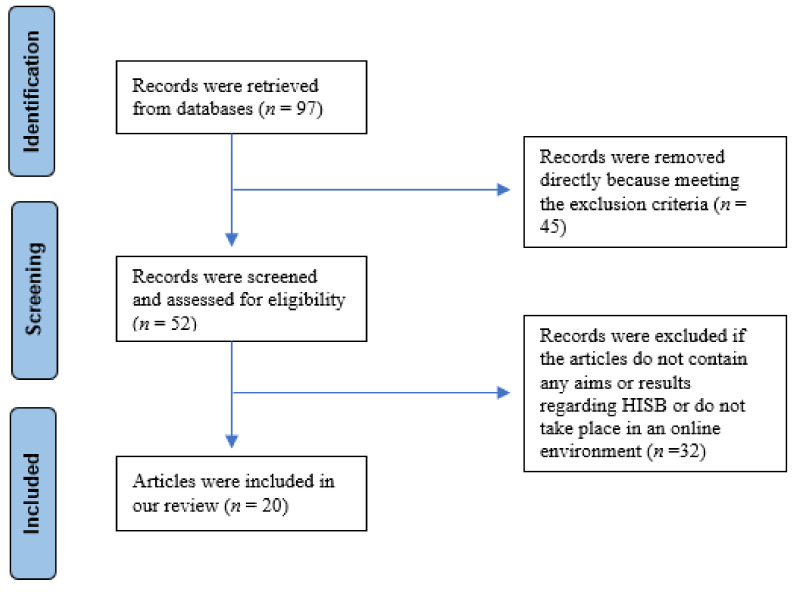
The last five years have seen a leap in the development of information technology and social media. Seeking health information online has become popular. It has been widely accepted that online health information seeking behavior has a positive impact on health information consumers. Due to its importance, online health information seeking behavior has been investigated from different aspects. However, there is lacking a systematic review that can integrate the findings of the most recent research work in online health information seeking, and provide guidance to governments, health organizations, and social media platforms on how to support and promote this seeking behavior, and improve the services of online health information access and provision. We therefore conduct this systematic review. The Google Scholar database was searched for existing research on online health information seeking behavior between 2016 and 2021 to obtain the most recent findings. Within the 97 papers searched, 20 met our inclusion criteria. Through a systematic review, this paper identifies general behavioral patterns, and influencing factors such as age, gender, income, employment status, literacy (or education) level, country of origin and places of residence, and caregiving role. Facilitators (i.e., the existence of online communities, the privacy feature, real-time interaction, and archived health information format), and barriers (i.e., low health literacy, limited accessibility and information retrieval skills, low reliable, deficient and elusive health information, platform censorship, and lack of misinformation checks) to online health information seeking behavior are also discovered.
Overview
The claims and statistics of this paper haven’t been checked yet.
Free: it reads the open-access text and checks the first 5 claims that cite a source we can check. Create a free account to check every claim.
Integrity signals
Registry
Cites
Statistics
Figures

Verification
Claims the paper makes
The claims and statistics of this paper haven’t been checked yet.
Free: it reads the open-access text and checks the first 5 claims that cite a source we can check. Create a free account to check every claim.
Claims other papers make about this one
Each is checked against this paper’s own text: does it say what the citing paper says it does?
The cited source says what the claim attributes to it.
In the citing paper
“This finding is consistent with current evidence demonstrating age-dependent differences in health information-seeking behavior [44].”
From Sociodemographic differences in dementia prevention knowledge in Germany: Implications for targeted health communication (2026) · cites this paper as [44]
Self-check
Percentages, sums and reported differences re-computed from the paper’s own numbers.
The self-check needs the paper’s full text.
Citations
Cites
Internet Health Information Seeking and the Patient-Physician Relationship: A Systematic Review
Tan, S. S.-L., & Goonawardene, N. (2017) · Journal of Medical Internet Research · doi:10.2196/jmir.5729 · Cited by 1,101
Health Information—Seeking Behavior
Lambert, S. D., & Loiselle, C. G. (2007) · Qualitative Health Research · doi:10.1177/1049732307305199 · Cited by 894 · cited 1×
“Seeking health information online allows health information consumers to obtain knowledge about their health issues, deal with health problems, and make health decisions, and have behavior change [11,12].”
BackgroundConsumer health information seeking in social media: a literature review
Zhao, Y., & Zhang, J. (2017) · Health Information & Libraries Journal · doi:10.1111/hir.12192 · Cited by 607 · cited 1×
“On the one hand, only involving papers published recently ensures that the findings integrated into our systematic review are up to date; on the other hand, it could avoid repetitive review work on online HISB [18,20].”
BackgroundPowell, J., Inglis, N., Ronnie, J., & Large, S. (2011) · Journal of Medical Internet Research · doi:10.2196/jmir.1600 · Cited by 493
Finney Rutten, L. J., Blake, K. D., Greenberg-Worisek, A. J., Allen, S. V., Moser, R. P., & Hesse, B. W. (2019) · Public Health Reports® · doi:10.1177/0033354919874074 · Cited by 426 · cited 1×
“A recent study indicated that in 2008, 61.2% of the population sought health information online first for their most recent search, while in 2017, the percentage had reached 74.4% [15].”
BackgroundInfluentialA Comprehensive Model of Cancer-Related Information Seeking Applied to Magazines
JOHNSON, J. D., & MEISCHKE, H. (1993) · Human Communication Research · doi:10.1111/j.1468-2958.1993.tb00305.x · Cited by 406 · cited 1×
“Four relevant models have been identified as follows: Comprehensive model of information seeking (CMIS) has been widely used to investigate factors determining individuals’ information seeking behavior [36–38].”
MethodOnline Health Information Seeking: A Review and Meta-Analysis
Wang, X., Shi, J., & Kong, H. (2021) · Health Communication · doi:10.1080/10410236.2020.1748829 · Cited by 370 · cited 1×
“For example, the percentages in mainland China, Philippines, Hong Kong, Indonesia and Vietnam are 79%, 80%, 85%, 85% and 86%, respectively [6,16].”
BackgroundWho Searches the Internet for Health Information?
Bundorf, M. K., Wagner, T. H., Singer, S. J., & Baker, L. C. (2006) · Health Services Research · doi:10.1111/j.1475-6773.2006.00510.x · Cited by 313
How, When and Why People Seek Health Information Online: Qualitative Study in Hong Kong
Chu, J. T., Wang, M. P., Shen, C., Viswanath, K., Lam, T. H., & Chan, S. S. C. (2017) · Interactive Journal of Medical Research · doi:10.2196/ijmr.7000 · Cited by 181 · cited 2×
“There has been a continuous increase in online health information seeking activities lately [6].”
BackgroundLongo, D. R. (2005) · Health Expectations · doi:10.1111/j.1369-7625.2005.00339.x · Cited by 180 · cited 1×
“Four relevant models have been identified as follows: Comprehensive model of information seeking (CMIS) has been widely used to investigate factors determining individuals’ information seeking behavior [36–38].”
MethodA Comprehensive Model of Information Seeking: Tests Focusing on a Technical Organization
JOHNSON, J. D., DONOHUE, W. A., ATKIN, C. K., & JOHNSON, S. (1995) · Science Communication · doi:10.1177/1075547095016003003 · Cited by 178
Manganello, J., Gerstner, G., Pergolino, K., Graham, Y., Falisi, A., & Strogatz, D. (2017) · Journal of Public Health Management and Practice · doi:10.1097/phh.0000000000000366 · Cited by 175
Lagoe, C., & Atkin, D. (2015) · Computers in Human Behavior · doi:10.1016/j.chb.2015.06.003 · Cited by 169 · cited 1×
“Recently, seeking health information online has become a preferred way due to its availability and coverage of information, the convenience of searching, affordability of access, interactivity and anonymity [5–8].”
BackgroundAsibey, B. O., Agyemang, S., & Dankwah, A. B. (2017) · International Journal of Telemedicine and Applications · doi:10.1155/2017/1756473 · Cited by 145
A review of theoretical models of health information seeking on the web
Marton, C., & Wei Choo, C. (2012) · Journal of Documentation · doi:10.1108/00220411211225575 · Cited by 144 · cited 1×
“On the one hand, only involving papers published recently ensures that the findings integrated into our systematic review are up to date; on the other hand, it could avoid repetitive review work on online HISB [18,20].”
BackgroundOnline health information-seeking behaviors and skills of Chinese college students
Zhang, D., Zhan, W., Zheng, C., Zhang, J., Huang, A., Hu, S., & Ba‐Thein, W. (2021) · BMC Public Health · doi:10.1186/s12889-021-10801-0 · Cited by 115 · cited 1×
“Online health information seeking behavior (HISB) has become a global trend [13].”
BackgroundLee, Y. J., Boden-Albala, B., Larson, E., Wilcox, A., & Bakken, S. (2014) · Journal of Medical Internet Research · doi:10.2196/jmir.3499 · Cited by 104
Renahy, E., Parizot, I., & Chauvin, P. (2010) · Informatics for Health and Social Care · doi:10.3109/17538150903358784 · Cited by 99
Impact of Smartphones on Quality of Life: A Health Information Behavior Perspective
Ghahramani, F., & Wang, J. (2019) · Information Systems Frontiers · doi:10.1007/s10796-019-09931-z · Cited by 89 · cited 12×
“Also, young adults were more likely to seek online health information than senior ones [4,11,25].”
BackgroundInfluentialOnline Transgender Health Information Seeking: Facilitators, Barriers, and Future Directions
Augustaitis, L., Merrill, L. A., Gamarel, K. E., & Haimson, O. L. (2021) · Proceedings of the 2021 CHI Conference on Human Factors in Computing Systems · doi:10.1145/3411764.3445091 · Cited by 82 · cited 10×
“In addition, lacking mechanisms of misinformation checks make it hard for health information consumers to distinguish credible information from incorrect knowledge [24].”
BackgroundInfluentialWhere people look for online health information
LaValley, S. A., Kiviniemi, M. T., & Gage‐Bouchard, E. A. (2017) · Health Information & Libraries Journal · doi:10.1111/hir.12143 · Cited by 81 · cited 7×
“, 2017 [30] 2017 Where people look for online health information Health Information & Libraries Journal Quantitative Survey n = 3959 American adults America Regression analysis”
BackgroundInfluentialNangsangna, R. D., & Vroom, F. B. D.-C. (2019) · Online Journal of Public Health Informatics · doi:10.5210/ojphi.v11i2.10141 · Cited by 72 · cited 8×
“According to our review, more women than men were found to seek online health information [4,17,25].”
BackgroundInfluentialRains, S. A., & Ruppel, E. K. (2016) · Communication Research · doi:10.1177/0093650213510939 · Cited by 69
Kim, H., Powell, M. P., & Bhuyan, S. S. (2017) · Journal of Medical Systems · doi:10.1007/s10916-017-0684-9 · Cited by 63 · cited 5×
“Online HISB among caregivers could even be used to predict the health of the family [33].”
BackgroundInfluentialOnline Health Information Seeking Behavior Pattern
Maon, S. N., Hassan, N. M., & Seman, S. A. A. (2017) · Advanced Science Letters · doi:10.1166/asl.2017.10107 · Cited by 63 · cited 10×
“As for the criteria for health websites, what the health information consumers valued the most included (i) accuracy, (ii) currency of information, and (iii) ease of understanding [4].”
BackgroundInfluentialHealth Information Seeking and Cancer Screening Adherence Rates
Shneyderman, Y., Rutten, L. J. F., Arheart, K. L., Byrne, M. M., Kornfeld, J., & Schwartz, S. J. (2015) · Journal of Cancer Education · doi:10.1007/s13187-015-0791-6 · Cited by 59 · cited 4×
“The subjects of most studies reviewed are general adults [4,11,24,25,30,31,35].”
BackgroundMethodResultInfluentialOnline Health Information Seeking Pattern Among Undergraduates in a Nigerian University
Obasola, O. I., & Agunbiade, O. M. (2016) · Sage Open · doi:10.1177/2158244016635255 · Cited by 55 · cited 4×
“As for the reliability of the online health information sources, only 40% of the surveyed health information consumers believed the online health information was reliable [34].”
BackgroundInfluentialSocio‐demographic characteristics affect health information seeking on the Internet in Turkey
Demirci, Ş., Uğurluoğlu, Ö., Konca, M., & Çakmak, C. (2021) · Health Information & Libraries Journal · doi:10.1111/hir.12358 · Cited by 49 · cited 10×
“Also, young adults were more likely to seek online health information than senior ones [4,11,25].”
BackgroundInfluentialHealth Information Seeking Behaviors and Source Preferences between Chinese and U.S. Populations
Lu, L., Liu, J., & Yu, Y. (2020) · Journal of Health Communication · doi:10.1080/10810730.2020.1806414 · Cited by 47
Özkan, S., Tüzün, H., Dikmen, A. U., Aksakal, F. N. B., Çalışkan, D., Taşçı, Ö., & Güneş, S. C. (2021) · HLRP Health Literacy Research and Practice · doi:10.3928/24748307-20210330-01 · Cited by 34 · cited 4×
“For example, some studies only surveyed the percentage of online HISB [23,26,30,34], only providing the general and superficial understanding of online HISB.”
BackgroundInfluentialZhang, R., Lu, X., Wu, W., & Shang, X. (2019) · BMC Health Services Research · doi:10.1186/s12913-019-4127-9 · Cited by 33 · cited 6×
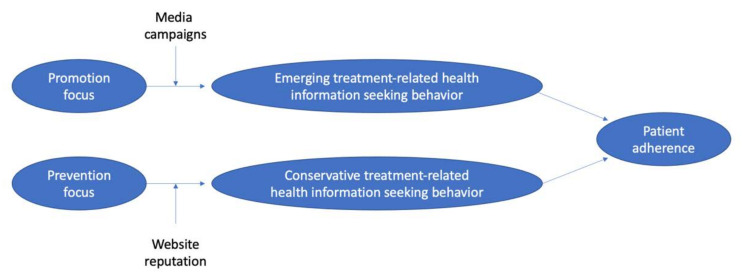
“[29] believe health information consumers in different focus states would seek different online health information.”
BackgroundMethodInfluentialCommunication About Health Information Technology Use Between Patients and Providers
Lee, J. L.-Y., Rawl, S. M., Dickinson, S., Teal, E. Y., Baker, L. B., Lyu, C., Tarver, W. L., & Haggstrom, D. A. (2020) · Journal of General Internal Medicine · doi:10.1007/s11606-020-05903-1 · Cited by 22 · cited 3×
“For example, some studies only surveyed the percentage of online HISB [23,26,30,34], only providing the general and superficial understanding of online HISB.”
BackgroundDiscovery of behavioral patterns in online social commerce practice
Jia, X., Wang, R., Liu, J. H.-F., & Jiang, C. (2021) · Wiley Interdisciplinary Reviews Data Mining and Knowledge Discovery · doi:10.1002/widm.1433 · Cited by 20 · cited 1×
“, observations) to counteract the disadvantages of the method used [40,41] when investigating online HISB.”
MethodSelf-citationBernadas, J. M. A. C., & Jiang, L. (2018) · Health and Technology · doi:10.1007/s12553-018-0251-5 · Cited by 17 · cited 4×
“Bernadas & Jiang, 2019 [28] 2019 Explaining online health information seeking of foreign domestic workers: a test of the comprehensive model of information seeking Health and Technology Quantitative Survey n = 300 Filipino female foreign domestic workers (WFDs) in HK Hong Kong Multiple OLS regression”
BackgroundMethodInfluentialBoyce, L., Harun, A., Prybutok, G. T., & Prybutok, V. R. (2021) · Health Promotion International · doi:10.1093/heapro/daab042 · Cited by 14 · cited 3×
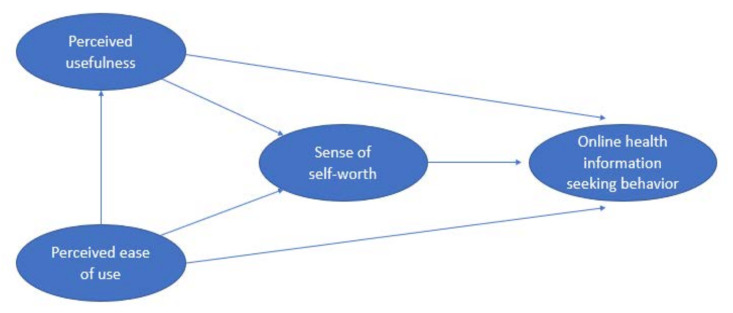
“[22] also proposed a research model (as shown in Figure 5) to explore the factors influencing online HISB.”
BackgroundMethodHEALTH INFORMATION SEEKING BEHAVIOR OF COLLEGE STUDENTS IN THE SULTANATE OF OMAN
Sultan, K., Joshua, V. R., & Misra, U. (2017) · Khyber Medical University Journal · Cited by 13
Jia, X., Wang, R., Liu, J. H.-F., & Xie, T. (2020) · Lecture notes in computer science · doi:10.1007/978-3-030-50341-3_29 · Cited by 13
Self-citationSocio-Cultural Determinants of Women’s Health Information Opportunities in Nsukka, Southeast Nigeria
Ukonu, M. O., & Ajaebili, N. C. (2021) · Asian Women · doi:10.14431/aw.2021.3.37.1.25 · Cited by 11 · cited 3×
“Social media were more likely to be searched and used to address stress-related issues [21].”
BackgroundWhich Individual Characteristics Influence Mothers' Health Information-seeking Behavior?
Lee, H. S. (2020) · Journal of the Korean Society for Library and Information Science · doi:10.4275/kslis.2020.54.1.343 · Cited by 2 · cited 5×
“In addition, literacy (or education) levels were believed to affect online HISB [17,25,27].”
BackgroundInfluentialElhadidi, M. A. F. (2014) · Cross-cultural communication · doi:10.3968/%x · cited 10×
“Barriers to seeking online health information in existing research have been analyzed from consumer factors, health information factors, and platform factors [9,24].”
BackgroundInfluential
Research works printed but not linked: 1
- Wei X. Du Z. Zhang S. Analysis of barriers to health information seeking and utilizing in patients with diabetes Cross-Cult. Commun. 2016 12 48 51
Cited by
Users’ experience with health-related content on YouTube: an exploratory study
Mohamed, F., & Shoufan, A. (2024) · BMC Public Health · doi:10.1186/s12889-023-17585-5 · Cited by 176
“Previous research has explored the influence of various demographic factors on online health information-seeking behavior [49–51].”
Kirkpatrick, C. E., & Lawrie, L. L. (2024) · JMIR Infodemiology · doi:10.2196/54663 · Cited by 165
“…indicating their level of agreement (ranging from 1= strongly disagree to 7= strongly agree ) with 10 different statements (eg, “I like to get health information from TikTok because it can help me to maintain a healthy lifestyle”) adapted from prior research [24-26] (refer to the Results section).”
MethodPracticing Information Sensibility: How Gen Z Engages with Online Information
Hassoun, A., Beacock, I., Consolvo, S., Goldberg, B., Kelley, P. G., & Russell, D. M. (2023) · CHI Conference on Human Factors in Computing Systems · doi:10.1145/3544548.3581328 · Cited by 154
“, health information [50, 57]) rather than interpretations or arguments, beliefs, and opinions.”
BackgroundMoe‐Byrne, T., Evans, E., Benhebil, N., & Knapp, P. (2022) · Frontiers in Digital Health · doi:10.3389/fdgth.2022.1010779 · Cited by 120
Ferraris, G., Monzani, D., Coppini, V., Conti, L., Pizzoli, S. F. M., Grasso, R., & Pravettoni, G. (2023) · Digital Health · doi:10.1177/20552076231210663 · Cited by 96
“Finally, the PICOS tool was implemented to highlight the aim of the current review, although it was not feasible to include the comparison element due to the objective of this review 27 (see supplementary material 2).”
BackgroundMethodInfluential
Metadata
- Authors
- Jia, X., Pang, Y., & Liu, L. S.
- Affiliations
- Foshan University (CN)
- Central South University of Forestry and Technology (CN)
- Massey University (NZ)
- Corresponding author
- Pang, Yan
- Venue
- Healthcare
- Publisher
- MDPI AG
- Published
- 2021-12-16
- Volume
- 9
- Issue
- 12
- Pages
- 1740
- ISSN
- 2227-9032 (ISSN-L)
- PMC
- PMC8701665
- OpenAlex
- W4200535791
- Cited by
- 547
- References
- 40
- Citations by year
- 2026: 149 · 2025: 162 · 2024: 140 · 2023: 74 · 2022: 22
- FWCI
- 12.20
- Type
- journal article
- Language
- en
- Open access
- gold
- doi.org
- Licence
- Locations
- Healthcare (publishedVersion, cc-by)
- PubMed Central (publishedVersion, cc-by)
- PubMed (publishedVersion)
- DOAJ (DOAJ: Directory of Open Access Journals) (submittedVersion)
- Massey Research Online (Massey University) (submittedVersion, cc-by)
- Funders
- Hunan Key Laboratory of Intelligent Logistics Technology (2019TP1015)
- Topics
- Health Sciences › Health Professions › General Health Professions › Health Literacy and Information Accessibility
- Physical Sciences › Computer Science › Information Systems › Information Retrieval and Search Behavior
- Social Sciences › Health › Social Media in Health Education
- Keywords
- online health information seeking, health information behavior, social media, health literacy, online communities, health misinformation, information search skills, caregiver role, online health information quality
About these checks
Registry, retraction, Cites and statistics results are computed, not judged, with one exception: a printed reference that no index lists is read once by a model before it counts as a citation error. Claims are extracted by a model and kept only when their quote appears verbatim in the text; each cited source is then checked, with a model’s help, for whether it says what the claim relies on. Those verdicts can be wrong — read the claim’s quote and the cited source before relying on one.
Statistics and arithmetic are recomputed, not judged.
Confidence bands are shown only for fields calibrated on our annotated test set. None is calibrated yet, so no band is shown.
What counts as a claim ›How we measure confidence ›How we check this ›
Are you an author, or do you see a problem with this page? Request a review
Data sources
Bibliographic data: Semantic Scholar, OpenAlex, Crossref.
Contains information from the Semantic Scholar Academic Graph Datasets, made available under the ODC Attribution License (ODC-BY 1.0).
Semantic Scholar’s data is described in: Kinney, R., et al. (2023). The Semantic Scholar Open Data Platform. arXiv:2301.10140.
