

The DOI matches its Crossref record; 42 of the 42 references it cites were found in a registry or an index.
Water-Borne Diseases and Extreme Weather Events in Cambodia: Review of Impacts and Implications of Climate Change
Open accessAbstract
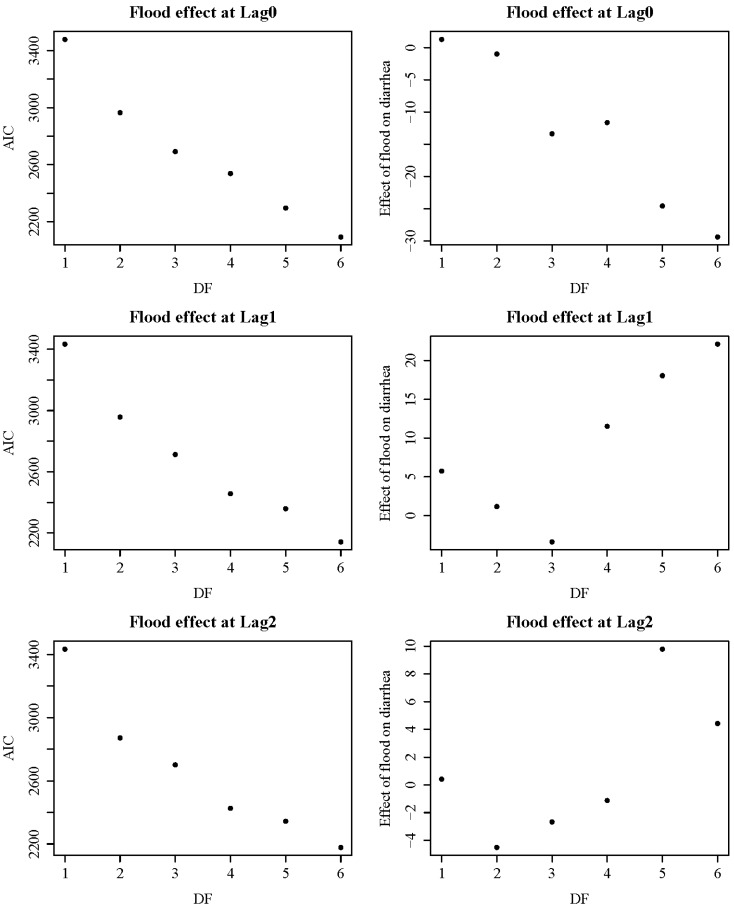
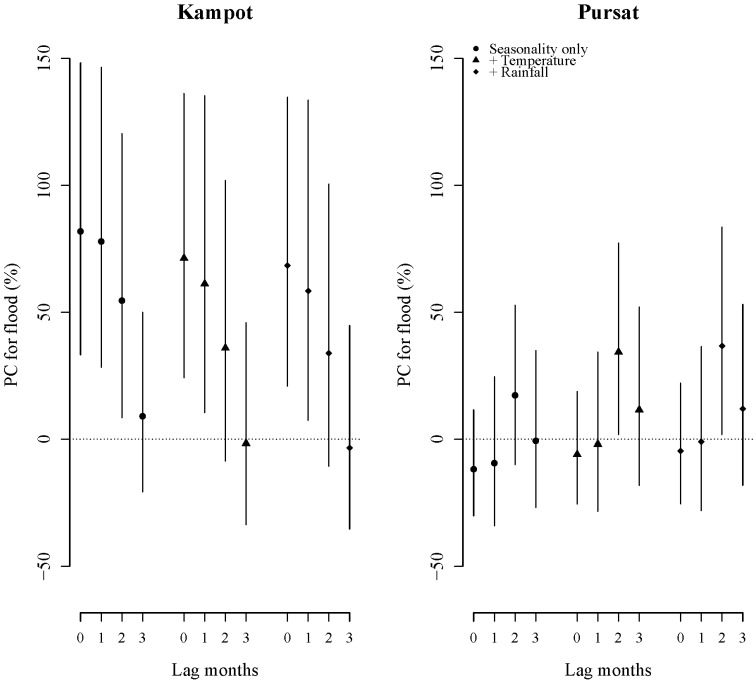
Cambodia is prone to extreme weather events, especially floods, droughts and typhoons. Climate change is predicted to increase the frequency and intensity of such events. The Cambodian population is highly vulnerable to the impacts of these events due to poverty; malnutrition; agricultural dependence; settlements in flood-prone areas, and public health, governance and technological limitations. Yet little is known about the health impacts of extreme weather events in Cambodia. Given the extremely low adaptive capacity of the population, this is a crucial knowledge gap. A literature review of the health impacts of floods, droughts and typhoons in Cambodia was conducted, with regional and global information reviewed where Cambodia-specific literature was lacking. Water-borne diseases are of particular concern in Cambodia, in the face of extreme weather events and climate change, due to, inter alia, a high pre-existing burden of diseases such as diarrhoeal illness and a lack of improved sanitation infrastructure in rural areas. A time-series analysis under quasi-Poisson distribution was used to evaluate the association between floods and diarrhoeal disease incidence in Cambodian children between 2001 and 2012 in 16 Cambodian provinces. Floods were significantly associated with increased diarrhoeal disease in two provinces, while the analysis conducted suggested a possible protective effect from toilets and piped water. Addressing the specific, local pre-existing vulnerabilities is vital to promoting population health resilience and strengthening adaptive capacity to extreme weather events and climate change in Cambodia.
Overview
The claims and statistics of this paper haven’t been checked yet.
Run the check — free, no account needed. It reads the open-access text and checks the sources it cites.
Integrity signals
Registry
Cites
Statistics
Figures
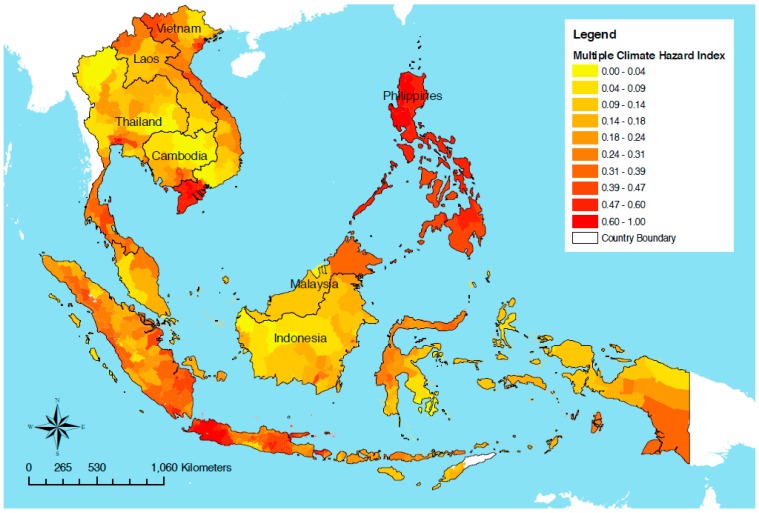
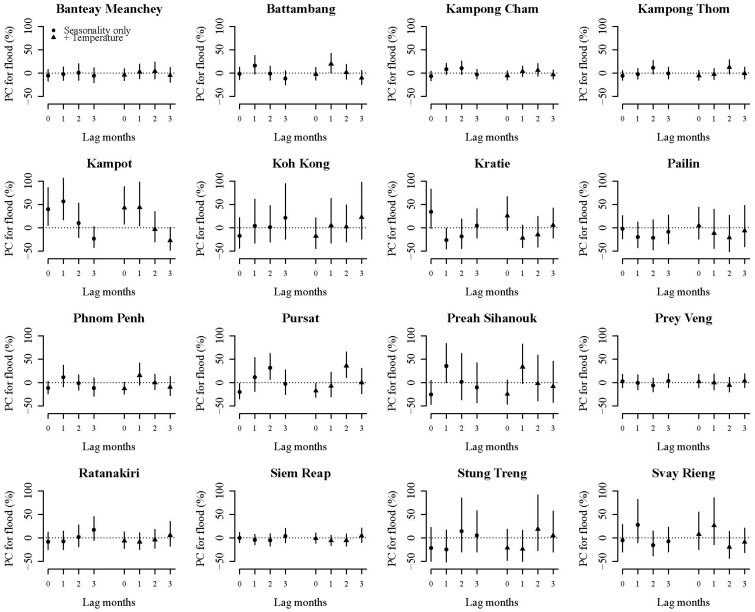
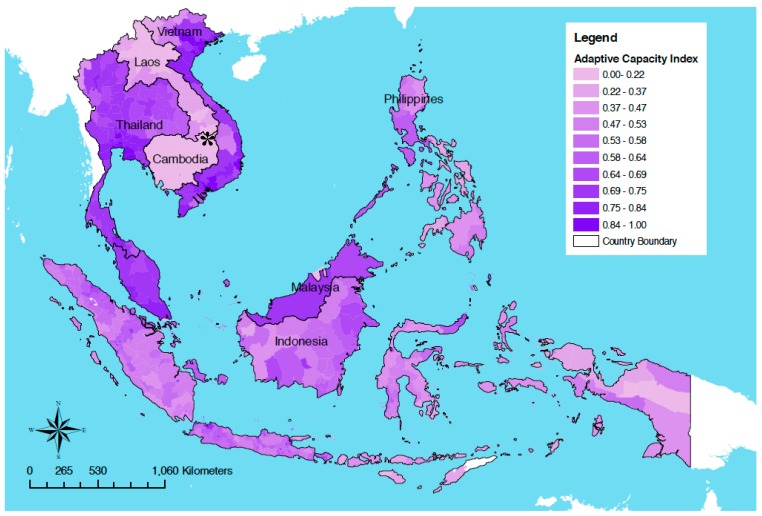
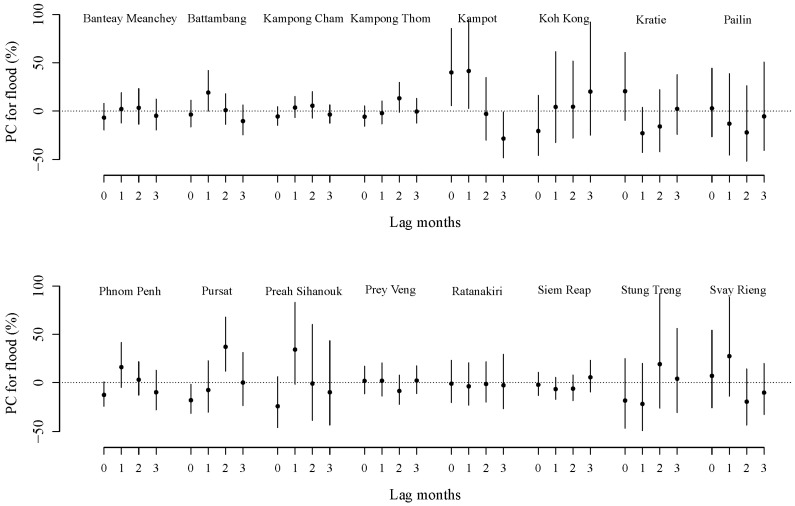
Verification
Claims the paper makes
The claims and statistics of this paper haven’t been checked yet.
Run the check — free, no account needed. It reads the open-access text and checks the sources it cites.
Claims other papers make about this one
Each is checked against this paper’s own text: does it say what the citing paper says it does?
In the citing paper
“Flood events and climate change increase the risk of water-borne-diseases [128], as they create isolated water bodies that are out of reach of fish, the natural predators of mosquito larvae.”
From Urban Stream and Wetland Restoration in the Global South—A DPSIR Analysis (2019) · cites this paper as [128]
Self-check
Percentages, sums and reported differences re-computed from the paper’s own numbers.
The self-check needs the paper’s full text.
Citations
Cites
Brown, R. A., Hastie, T. J., & Tibshirani, R. J. (1991) · Biometrics · doi:10.2307/2532174 · Cited by 8,263
Liu, L., Johnson, H. L., Cousens, S., Perin, J., Scott, S., Lawn, J. E., Rudan, I., Campbell, H., Cibulskis, R., Li, M., et al. (2012) · The Lancet · doi:10.1016/s0140-6736(12)60560-1 · Cited by 3,934
Hastie, T. J., & Tibshirani, R. J. (2014) · Wiley StatsRef: Statistics Reference Online · doi:10.1002/9781118445112.stat03141 · Cited by 3,156
Global, regional, and national causes of child mortality in 2008: a systematic analysis
Black, R. E., Cousens, S. N., Johnson, H. L., Lawn, J. E., Rudan, I., Bassani, D. G., Jha, P., Campbell, H. J., Walker, C. L. F., Cibulskis, R. E., et al. (2010) · The Lancet · doi:10.1016/s0140-6736(10)60549-1 · Cited by 3,062
Climate change and human health: Impacts, vulnerability and public health
Haines, A., Kovats, R. S., Campbell-Lendrum, D., & Corvalan, C. (2006) · Public Health · doi:10.1016/j.puhe.2006.01.002 · Cited by 1,041
Global Health Impacts of Floods: Epidemiologic Evidence
Ahern, M., Kovats, S. R., Wilkinson, P., Few, R., & Matthies, F. (2005) · Epidemiologic Reviews · doi:10.1093/epirev/mxi004 · Cited by 859
Floods and human health: A systematic review
Alderman, K. B., Turner, L., & Tong, S. (2012) · Environment International · doi:10.1016/j.envint.2012.06.003 · Cited by 849
(2014) · University of Canberra Research Portal · Cited by 538
Extreme water-related weather events and waterborne disease
Cann, K., Thomas, D. R., Salmon, R. L., Wyn-Jones, A. P., & Kay, D. (2012) · Epidemiology and Infection · doi:10.1017/s0950268812001653 · Cited by 486
Climate Change Vulnerability Mapping for Southeast AsiaPreprint
Yusuf, A. A., & Francisco, H. A. (2009) · RePEc: Research Papers in Economics · Cited by 284
Research works printed but not linked: 5
- Chinvanno, S. (2003, January 24–27). Results from regional climate modelling and their future use in analysis of hydrologic impacts in Mekong River Basin. Proceedings of the First AIACC Regional Workshop and Open Meeting for Asia-Pacific, Bangkok, Thiland.
- Communicable Disease Surveillance Centre, Public Health Wales (2011). Systematic Review of Waterborne Disease Outbreaks Following Extreme Weather Events, Public Health Wales.
- Asia (2014). Intergovernmental Panel on Climate Change (IPCC) WGII AR5, IPCC. Chapter 24.
- (2010). Floods in Pakistan-Health Cluster Bulletin No 12–16 August 2010, World Health Organisation.
- (2014). Intergovernmental Panel on Climate Change (IPCC) WGII AR5, IPCC. Chapter 11.
Cited by
Sorted by citations
Items 101–106 of 106
Climate change, pollution, urbanization, and pandemic in the context of hydrological extremes
Ibrahim, T. N. B. T., Ahmad, M. A., Kamaludin, N. H., Cheah, W. Y., Lim, F. L., Derahim, N., & Feisal, N. A. S. (2024) · Elsevier eBooks · doi:10.1016/b978-0-443-21499-8.00009-x
Monitoring and Analysis of Groundwater Recharge Dynamic
Jain, M., & Шарма, М. (2025) · Lecture notes in civil engineering · doi:10.1007/978-981-96-9841-7_8
Kreibich, H., Schröter, K., Di Baldassarre, G., Loon, A. F. V., Mazzoleni, M., Abeshu, G. W., Agafonova, S., AghaKouchak, A., Aksoy, H., Álvarez-Garretón, C., et al. (2023) · Publication Database GFZ (GFZ German Research Centre for Geosciences) · doi:10.5880/gfz.4.4.2023.001
Climate and relationality: Transforming gendered relations from vulnerability to resilience
Kan, W. S., Sander, N., Chau, C. C., & Lejano, R. P. (2026) · Progress in Disaster Science · doi:10.1016/j.pdisas.2026.100653
Lebu, S., Kowalski, C., Dalton, J., Gyimah, R. A. A., Cronk, R., & Manga, M. (2026) · Environmental Science Water Research & Technology · doi:10.1039/d6ew00658b
Health impacts and risks associated with climate change
Wright, C. Y., Kapwata, T., & Howlett-Downing, C. (2026) · Elsevier eBooks · doi:10.1016/b978-0-443-32834-3.00016-5
Metadata
- Authors
- Davies, G., McIver, L., Kim, Y., Hashizume, M., Iddings, S., & Chan, V.
- Affiliations
- Monash University (AU)
- Australian National University (AU)
- Nagasaki University (JP)
- World Health Organization (CH)
- Corresponding author
- McIver, Lachlan
- Venue
- International Journal of Environmental Research and Public Health
- Publisher
- MDPI AG
- Published
- 2014-12-23
- Volume
- 12
- Issue
- 1
- Pages
- 191-213
- ISSN
- 1660-4601 (ISSN-L)
- PMC
- PMC4306857
- OpenAlex
- W2163225196
- Cited by
- 106
- References
- 42
- Citations by year
- 2026: 4 · 2025: 13 · 2024: 17 · 2023: 9 · 2022: 10 · 2021: 14 · 2020: 2 · 2019: 10 · 2018: 11 · 2017: 8 · 2016: 7 · 2015: 1
- FWCI
- 3.50
- Type
- journal article
- Language
- en
- Open access
- gold
- dx.doi.org
- Licence
- Locations
- International Journal of Environmental Research and Public Health (publishedVersion, cc-by)
- Europe PMC (PubMed Central) (publishedVersion, cc-by)
- PubMed Central (publishedVersion, cc-by)
- PubMed (publishedVersion)
- ResearchOnline - JCU (James Cook University) (submittedVersion)
- RePEc: Research Papers in Economics (submittedVersion)
- DOAJ (DOAJ: Directory of Open Access Journals) (submittedVersion, cc-by-sa)
- Institutional Repositories DataBase (IRDB) (submittedVersion, cc-by-nc-nd)
- Nagasaki University's Academic Output SITE (Nagasaki University) (submittedVersion, cc-by-nc-nd)
- ANU Open Research (Australian National University) (submittedVersion, cc-by)
- Funders
- World Health Organization
- Topics
- Physical Sciences › Environmental Science › Health, Toxicology and Mutagenesis › Climate Change and Health Impacts
- Physical Sciences › Environmental Science › Health, Toxicology and Mutagenesis › Public Health and Environmental Issues
- Health Sciences › Health Professions › Emergency Medical Services › Disaster Response and Management
- Keywords
- waterborne diseases, extreme weather events, climate change, floods, drought, typhoons, diarrhoeal diseases, child health, sanitation, toilets, piped water, adaptive capacity, health resilience, poverty, Cambodia
- MeSH terms
- Adolescent, Cambodia, Child, Child, Preschool, Communicable Diseases, Diarrhea, Female, Humans, Infant, Male, Toilet Facilities, Weather, Cyclonic Storms, Floods, Climate Change, Drinking Water
About these checks
Registry, retraction, Cites and statistics results are computed, not judged, with one exception: a printed reference that no index lists is read once by a model before it counts as a citation error. Claims are extracted by a model and kept only when their quote appears verbatim in the text; each cited source is then checked, with a model’s help, for whether it says what the claim relies on. Those verdicts can be wrong — read the claim’s quote and the cited source before relying on one.
Statistics and arithmetic are recomputed, not judged.
Confidence bands are shown only for fields calibrated on our annotated test set. None is calibrated yet, so no band is shown.
What counts as a claim ›How we measure confidence ›How we check this ›
Are you an author, or do you see a problem with this page? Request a review
