

The DOI matches its Crossref record; 91 of the 91 references it cites were found in a registry or an index.
Association between Internet Gaming Disorder or Pathological Video-Game Use and Comorbid Psychopathology: A Comprehensive Review
Open accessAbstract
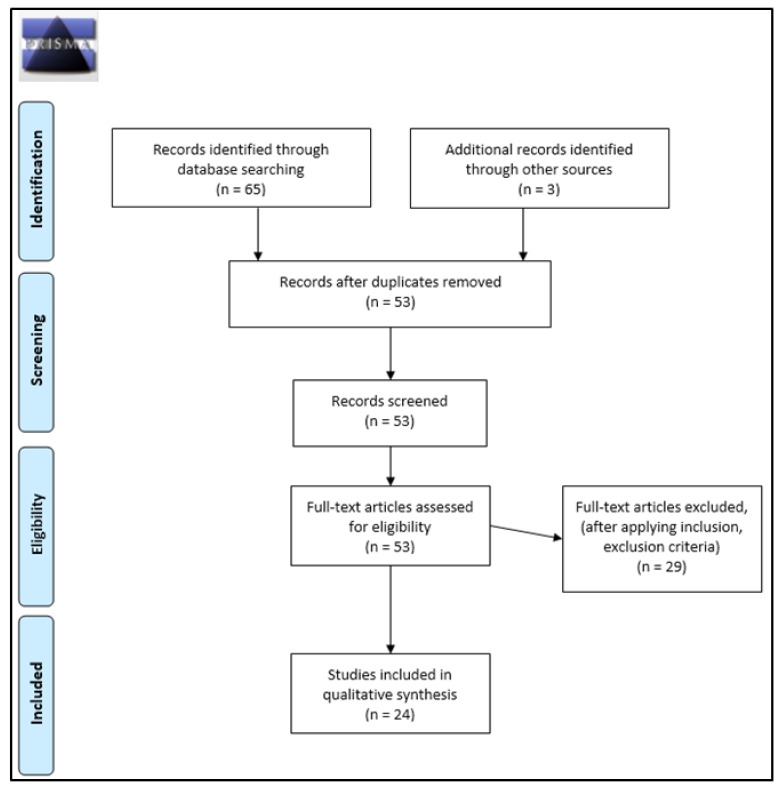
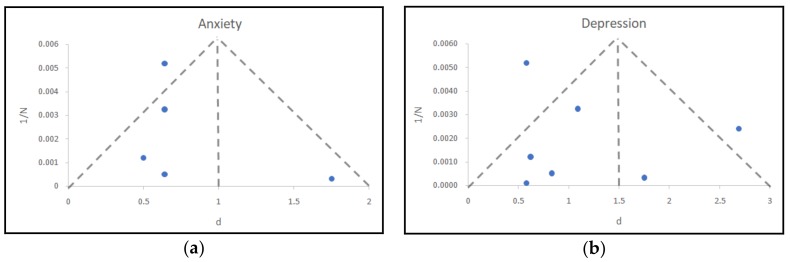
The addictive use of video games is recognized as a problem with clinical relevance and is included in international diagnostic manuals and classifications of diseases. The association between “Internet addiction” and mental health has been well documented across a range of investigations. However, a major drawback of these studies is that no controls have been placed on the type of Internet use investigated. The aim of this study is to review systematically the current literature in order to explore the association between Internet Gaming Disorder (IGD) and psychopathology. An electronic literature search was conducted using PubMed, PsychINFO, ScienceDirect, Web of Science and Google Scholar (r.n. CRD42018082398). The effect sizes for the observed correlations were identified or computed. Twenty-four articles met the eligibility criteria. The studies included comprised 21 cross-sectional and three prospective designs. Most of the research was conducted in Europe. The significant correlations reported comprised: 92% between IGD and anxiety, 89% with depression, 85% with symptoms of attention deficit hyperactivity disorder (ADHD), and 75% with social phobia/anxiety and obsessive-compulsive symptoms. Most of the studies reported higher rates of IGD in males. The lack of longitudinal studies and the contradictory results obtained prevent detection of the directionality of the associations and, furthermore, show the complex relationship between both phenomena.
Overview
The claims and statistics of this paper haven’t been checked yet.
Run the check — free, no account needed. It reads the open-access text and checks the sources it cites.
Integrity signals
Registry
Cites
Statistics
Figures
Verification
Claims the paper makes
The claims and statistics of this paper haven’t been checked yet.
Run the check — free, no account needed. It reads the open-access text and checks the sources it cites.
Claims other papers make about this one
Each is checked against this paper’s own text: does it say what the citing paper says it does?
The source backs part of the claim, not all of it — or backs it for a different population, condition or comparison.
In the citing paper
“Studies that include the administration of diagnostic interview schedules to identify co-occurring conditions have reported that individuals diagnosed with gaming disorder experienced negative consequences in multiple life areas 199,205-210 .”
From Emerging experience with selected new categories in the ICD‐11: complex PTSD, prolonged grief disorder, gaming disorder, and compulsive sexual behaviour disorder (2022) · cites this paper as [206]
Experimental — accuracy not yet measured
Self-check
Percentages, sums and reported differences re-computed from the paper’s own numbers.
The self-check needs the paper’s full text.
Citations
Cites
Diagnostic and Statistical Manual of Mental Disorders
American Psychiatric Association (2013) · doi:10.1176/appi.books.9780890425596 · Cited by 116,369
The Hospital Anxiety and Depression Scale
Zigmond, A. S., & Snaith, R. P. (1983) · Acta Psychiatrica Scandinavica · doi:10.1111/j.1600-0447.1983.tb09716.x · Cited by 47,139
An inventory for measuring depression
BECK, A. T. (1961) · Archives of General Psychiatry · doi:10.1001/archpsyc.1961.01710120031004 · Cited by 38,032
A Brief Measure for Assessing Generalized Anxiety Disorder: The GAD-7
Spitzer, R. L., Kroenke, K., Williams, J. B. W., & Löwe, B. (2006) · Archives of Internal Medicine · doi:10.1001/archinte.166.10.1092 · Cited by 31,765
PRISMA-P Group, Moher, D., Shamseer, L., Clarke, M., Ghersi, D., Liberati, A., Petticrew, M., Shekelle, P., & Stewart, L. A. (2015) · Systematic Reviews · doi:10.1186/2046-4053-4-1 · Cited by 26,223
The Strengths and Difficulties Questionnaire: A research note
Goodman, R. (1997) · Journal of Child Psychology and Psychiatry · doi:10.1111/j.1469-7610.1997.tb01545.x · Cited by 14,908
An inventory for measuring clinical anxiety: Psychometric properties.
Beck, A. T., Epstein, N., Brown, G., & Steer, R. A. (1988) · Journal of Consulting and Clinical Psychology · doi:10.1037/0022-006x.56.6.893 · Cited by 14,407
Depression and quality of life in older persons: A review
Sivertsen, H., Bjørkløf, G. H., Engedal, K., Selbæk, G., & Helvik, A.-S. (2015) · Dementia and Geriatric Cognitive Disorders · doi:10.1159/000437299 · Cited by 14,152
Spitzer, R. L. (1999) · JAMA · doi:10.1001/jama.282.18.1737 · Cited by 9,802
Selective Cortical Undercutting As a Means of Modifying and Studying Frontal Lobe Function in Man
Scoville, W. B. (1949) · Journal of neurosurgery · doi:10.3171/jns.1949.6.1.0065 · Cited by 7,374
Research works printed but not linked: 4
- Spielberger, C., Gorsuch, R.L., and Lushene, R.E. (1970). Manual for the State/Trait Anxiety Inventory, Consulting Psychologists Press.
- Sutton, A.J. (2000). Methods for Meta-Analysis in Medical Research, J. Wiley.
- Beutel, 2011, Clinical characteristics of computer game and internet addiction in persons seeking treatment in an outpatient clinic for computer game addiction, Z. Psychosom. Med. Psychother., 57, 77
- Benker, 2009, Computer game playing: Clinical characteristics of dependence and abuse among adolescents, Wien. Klin. Wochenschr., 121, 502
Cited by
Sorted by citations
Prevalence of gaming disorder: A meta-analysis
Kim, H. S., Son, G., Roh, E.-B., Ahn, W., Kim, J., Shin, S.-H., Chey, J., & Choi, K. (2021) · Addictive Behaviors · doi:10.1016/j.addbeh.2021.107183 · Cited by 328
Gupta, M., & Sharma, A. (2021) · World Journal of Clinical Cases · doi:10.12998/wjcc.v9.i19.4881 · Cited by 520
Teng, Z., Pontes, H. M., Nie, Q., Griffiths, M. D., & Guo, C. (2021) · Journal of Behavioral Addictions · doi:10.1556/2006.2021.00016 · Cited by 302
Ostinelli, E. G., Zangani, C., Giordano, B., Maestri, D., Gambini, O., D’Agostino, A., Furukawa, T. A., & Purgato, M. (2021) · Journal of Affective Disorders · doi:10.1016/j.jad.2021.02.014 · Cited by 275
Bonnaire, C., & Baptista, D. (2018) · Psychiatry Research · doi:10.1016/j.psychres.2018.12.158 · Cited by 229
Metadata
- Authors
- González-Bueso, V., Santamaría, J., Fernández, D., Merino, L., Montero, E., & Ribas, J.
- Affiliations
- Generalitat de Catalunya (ES)
- Victoria University of Wellington (NZ)
- Corresponding author
- Santamaría, Juan
- Venue
- International Journal of Environmental Research and Public Health
- Publisher
- MDPI AG
- Published
- 2018-04-03
- Volume
- 15
- Issue
- 4
- Pages
- 668
- ISSN
- 1660-4601 (ISSN-L)
- PMC
- PMC5923710
- OpenAlex
- W2796076872
- Cited by
- 487
- References
- 91
- Citations by year
- 2026: 51 · 2025: 61 · 2024: 63 · 2023: 68 · 2022: 70 · 2021: 70 · 2020: 56 · 2019: 41 · 2018: 6
- FWCI
- 15.49
- Type
- journal article
- Language
- en
- Open access
- gold
- doi.org
- Licence
- Locations
- International Journal of Environmental Research and Public Health (publishedVersion, cc-by)
- Europe PMC (PubMed Central) (publishedVersion, cc-by)
- PubMed Central (publishedVersion, cc-by)
- PubMed (publishedVersion)
- DOAJ (DOAJ: Directory of Open Access Journals) (submittedVersion)
- UPCommons institutional repository (Universitat Politècnica de Catalunya) (submittedVersion, cc-by)
- Funders
- Marsden grant (E2987-3648)
- AIS (Atención e Investigación en Socioaddiciones)
- Topics
- Social Sciences › Sociology and Political Science › Impact of Technology on Adolescents
- Social Sciences › Psychology › Clinical Psychology › Gambling Behavior and Treatments
- Social Sciences › Psychology › Clinical Psychology › Sexuality, Behavior, and Technology
- Keywords
- internet gaming disorder, internet addiction, comorbid psychopathology, anxiety, depression, attention deficit hyperactivity disorder, social anxiety disorder, obsessive-compulsive symptoms, sex differences
- MeSH terms
- Anxiety, Attention Deficit Disorder with Hyperactivity, Cross-Sectional Studies, Depression, Europe, Humans, Disruptive, Impulse Control, and Conduct Disorders, Mental Health, Prospective Studies, Comorbidity, Behavior, Addictive, Video Games, Internet
About these checks
Registry, retraction, Cites and statistics results are computed, not judged, with one exception: a printed reference that no index lists is read once by a model before it counts as a citation error. Claims are extracted by a model and kept only when their quote appears verbatim in the text; each cited source is then checked, with a model’s help, for whether it says what the claim relies on. Those verdicts can be wrong — read the claim’s quote and the cited source before relying on one.
Statistics and arithmetic are recomputed, not judged.
Confidence bands are shown only for fields calibrated on our annotated test set. None is calibrated yet, so no band is shown.
What counts as a claim ›How we measure confidence ›How we check this ›
Are you an author, or do you see a problem with this page? Request a review
