

Factors Affecting the Retention of Indigenous Australians in the Health Workforce: A Systematic Review
Open accessThe DOI matches its Crossref record; 43 of the 43 references it cites were found in a registry or an index.
Abstract
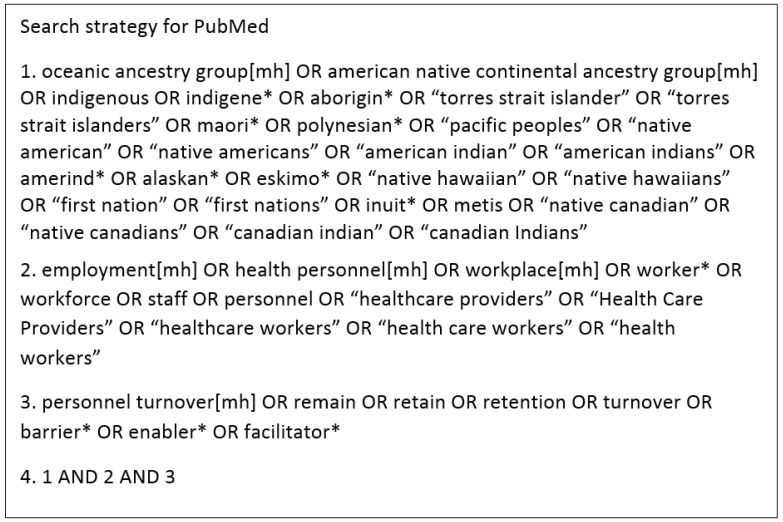
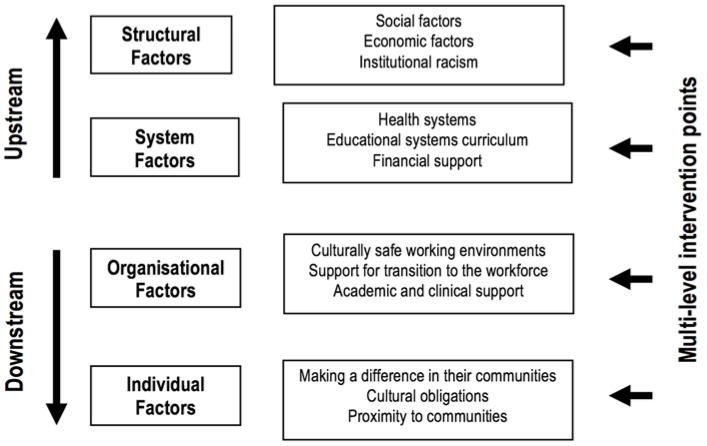
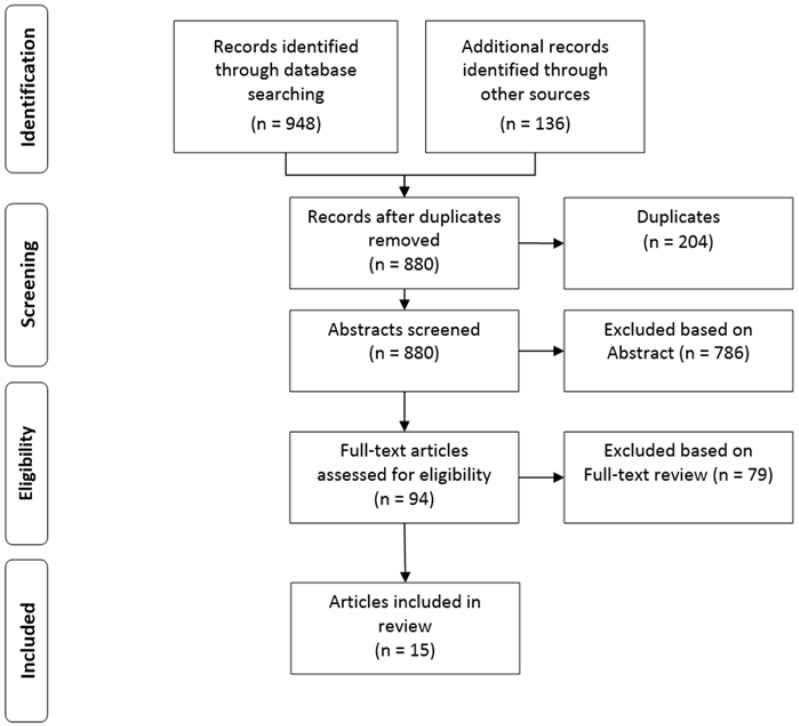
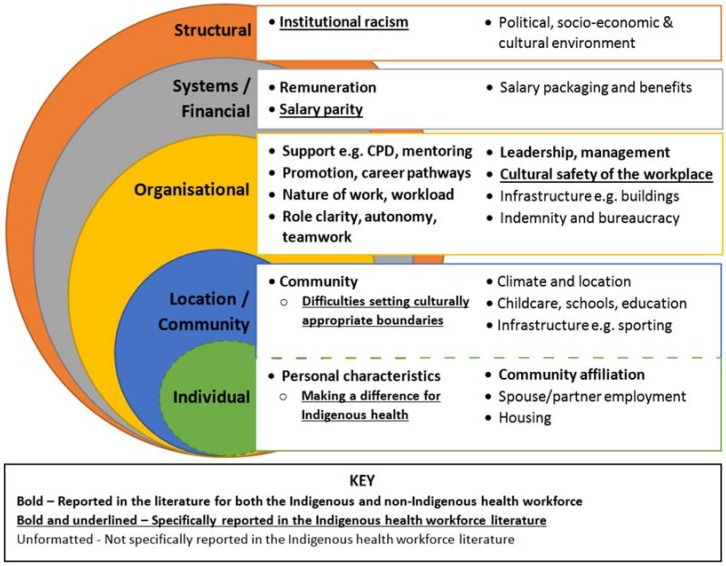
Indigenous Australians are under-represented in the health workforce. The shortfall in the Indigenous health workforce compounds the health disparities experienced by Indigenous Australians and places pressure on Indigenous health professionals. This systematic review aims to identify enablers and barriers to the retention of Indigenous Australians within the health workforce and to describe strategies to assist with development and retention of Indigenous health professionals after qualification. Four electronic databases were systematically searched in August 2017. Supplementary searches of relevant websites were also undertaken. Articles were screened for inclusion using pre-defined criteria and assessed for quality using the Mixed Methods Assessment Tool. Fifteen articles met the criteria for inclusion. Important factors affecting the retention of Indigenous health professionals included work environment, heavy workloads, poorly documented/understood roles and responsibilities, low salary and a perception of salary disparity, and the influence of community as both a strong personal motivator and source of stress when work/life boundaries could not be maintained. Evidence suggests that retention of Indigenous health professionals will be improved through building supportive and culturally safe workplaces; clearly documenting and communicating roles, scope of practice and responsibilities; and ensuring that employees are appropriately supported and remunerated. The absence of intervention studies highlights the need for deliberative interventions that rigorously evaluate all aspects of implementation of relevant workforce, health service policy, and practice change.
Overview
The claims and statistics of this paper haven’t been checked yet.
Free: it reads the open-access text and checks the first 5 claims that cite a source we can check. Create a free account to check every claim.
Integrity signals
Registry
Cites
Statistics
Figures
Verification
Claims the paper makes
The claims and statistics of this paper haven’t been checked yet.
Free: it reads the open-access text and checks the first 5 claims that cite a source we can check. Create a free account to check every claim.
Claims other papers make about this one
Each is checked against this paper’s own text: does it say what the citing paper says it does?
The cited source says what the claim attributes to it.
In the citing paper
“A search for systematic reviews published in the last 10 years examining turnover intention among HCWs on PubMed, PROSPERO and Google Scholar produced nine relevant systematic reviews [11–19]”
From A global overview of healthcare workers’ turnover intention amid COVID-19 pandemic: a systematic review with future directions (2022) · cites this paper as [14]
The cited source says what the claim attributes to it.
In the citing paper
“and many of which were known factors prior to the pandemic [11–19].”
From A global overview of healthcare workers’ turnover intention amid COVID-19 pandemic: a systematic review with future directions (2022) · cites this paper as [14]
Self-check
Percentages, sums and reported differences re-computed from the paper’s own numbers.
The self-check needs the paper’s full text.
Citations
Cites
Preferred Reporting Items for Systematic Reviews and Meta-Analyses: the PRISMA statement
Moher, D., Liberati, A., Tetzlaff, J., Altman, D. G., & for the PRISMA Group (2009) · BMJ · doi:10.1136/bmj.b2535 · Cited by 83,823
Preferred Reporting Items for Systematic Reviews and Meta-Analyses: The PRISMA Statement
Moher, D., Liberati, A., Tetzlaff, J., Altman, D. G., & The PRISMA Group (2009) · PLoS Medicine · doi:10.1371/journal.pmed.1000097 · Cited by 64,042 · cited 1×
“The Preferred Reporting Items for Systematic Review and Meta-Analysis (PRISMA) statement was used with the aim of minimising methodological bias and to meet standards for accurate and consistent reporting [29].”
MethodWang, G., Ma, R., Qiao, G., Wada, K., Aizawa, Y., & Satoh, T. (2015) · Integrative Medicine International · doi:10.1159/000368408 · Cited by 18,657
Pace, R., Pluye, P., Bartlett, G., Macaulay, A. C., Salsberg, J., Jagosh, J., & Seller, R. (2012) · International Journal of Nursing Studies · doi:10.1016/j.ijnurstu.2011.07.002 · Cited by 1,331 · cited 1×
“The MMAT critical appraisal tool was selected as it permits researchers to concomitantly review qualitative, quantitative and mixed methods studies (all of which were included in this review) and has been found to be efficient, reliable and has demonstrated content validity [31,32].”
MethodPluye, P., Gagnon, M.-P., Griffiths, F., & Johnson-Lafleur, J. (2009) · International Journal of Nursing Studies · doi:10.1016/j.ijnurstu.2009.01.009 · Cited by 1,119 · cited 1×
“The MMAT critical appraisal tool was selected as it permits researchers to concomitantly review qualitative, quantitative and mixed methods studies (all of which were included in this review) and has been found to be efficient, reliable and has demonstrated content validity [31,32].”
MethodNurse turnover: A literature review
Hayes, L. J., O’Brien-Pallas, L., Duffield, C., Shamian, J., Buchan, J., Hughes, F., Spence Laschinger, H. K., North, N., & Stone, P. W. (2006) · International Journal of Nursing Studies · doi:10.1016/j.ijnurstu.2005.02.007 · Cited by 873 · cited 1×
“This accords with the findings of a previous review on IHWs [49], as well as findings about the retention of Indigenous Australians in other sectors [50,51] and on retention of non-Indigenous health workers [52,53].”
ResultShields, M. A., & Ward, M. (2001) · Journal of Health Economics · doi:10.1016/s0167-6296(01)00092-3 · Cited by 623
Vos, T., Barker, B., Begg, S., Stanley, L., & Lopez, A. D. (2009) · International Journal of Epidemiology · doi:10.1093/ije/dyn240 · Cited by 593
Buykx, P., Humphreys, J., Wakerman, J., & Pashen, D. (2010) · Australian Journal of Rural Health · doi:10.1111/j.1440-1584.2010.01139.x · Cited by 358
Reducing the health disparities of Indigenous Australians: time to change focus
Durey, A., & Thompson, S. C. (2012) · BMC Health Services Research · doi:10.1186/1472-6963-12-151 · Cited by 319 · cited 1×
“To achieve supportive and culturally safe workplaces, cultural respect for Indigenous Australians must be embedded across the health system [54,55].”
BackgroundSelf-citation
Research works printed but not linked: 1
- Congress of Aboriginal and Torres Strait Islander Nurses and Midwives Catsinam Mentoring Program Review Report Available online: http://catsinam.org.au/static/uploads/files/mentoring-program-review-report-final-may-16-2014-wfvpiqvtkbhj.pdf (accessed on 3 August 2017)
Cited by
Poon, Y.-S. R., Lin, Y. P., Griffiths, P., Yong, K. K., Seah, B., & Liaw, S. Y. (2022) · Human Resources for Health · doi:10.1186/s12960-022-00764-7 · Cited by 394
Mackean, T., Withall, E., Dwyer, J., & Wilson, A. M. (2020) · Australian Health Review · doi:10.1071/ah19101 · Cited by 95
Taylor, E. V., Lyford, M., Parsons, L., Mason, T., Sabesan, S. S., & Thompson, S. (2020) · PLoS ONE · doi:10.1371/journal.pone.0239207 · Cited by 72
“This occurs through managing their workloads, clarifying employee, employer and community expectations, and encouraging productive working relationships, which in turn contribute positively to retention [30, 32, 57].”
BackgroundInfluentialSelf-citationWorking well: strategies to strengthen the workforce of the Indigenous primary healthcare sector
Jongen, C. S., McCalman, J., Campbell, S., & Fagan, R. (2019) · BMC Health Services Research · doi:10.1186/s12913-019-4750-5 · Cited by 69
Taylor, E. V., Lalović, A., & Thompson, S. (2019) · International Journal for Equity in Health · doi:10.1186/s12939-019-1038-7 · Cited by 67
Self-citationSetting priorities for rural allied health in Australia: a scoping review
O'Sullivan, B. G., & Worley, P. (2020) · Rural and Remote Health · doi:10.22605/rrh5719 · Cited by 65
Milligan, E., West, R., Saunders, V., Bialocerkowski, A., Creedy, D. K., Minniss, F. R., Hall, K., & Vervoort, S. (2021) · Australian Health Review · doi:10.1071/ah20215 · Cited by 49
Dudgeon, P., Alexi, J., Derry, K., Brideson, T., Calma, T., Darwin, L., Gray, P., Hirvonen, T., McPhee, R., Milroy, H., et al. (2021) · Australian Journal of Social Issues · doi:10.1002/ajs4.185 · Cited by 43
Caron, J., Asselin, H., Beaudoin, J.-M., & Muresanu, D. (2019) · Cross Cultural & Strategic Management · doi:10.1108/ccsm-02-2019-0031 · Cited by 45
Lal, A., Walsh, E., Wetherell, A., & Slimings, C. (2022) · Environmental Education Research · doi:10.1080/13504622.2022.2036325 · Cited by 31
Marcusson-Rababi, B., Anderson, K. M., Whop, L. J., Butler, T., Whitson, N., & Garvey, G. (2019) · BMC Health Services Research · doi:10.1186/s12913-019-4455-9 · Cited by 28
“This heavy case load reduces the capacity of ILOs to give sufficient to support to individuals and is a likely reason why many Indigenous patients do not receive a full range of information and support options they need [34].”
BackgroundGwynne, K. G., Rambaldini, B., Christie, V., Meharg, D. P., Gwynn, J., Dimitropoulos, Y., Parter, C., & Skinner, J. C. (2022) · Public Health Research & Practice · doi:10.17061/phrp3222215 · Cited by 27
Yadav, U. N., Davis, J. M., Bennett‐Brook, K., Coombes, J., Wyber, R., & Pearson, O. R. (2024) · Health Research Policy and Systems · doi:10.1186/s12961-024-01121-x · Cited by 27
Opportunities and challenges for physical rehabilitation with indigenous populations
Lin, I. B., Coffin, J., Bullen, J., & Barnabe, C. C. M. (2020) · PAIN Reports · doi:10.1097/pr9.0000000000000838 · Cited by 26
“examined factors that assisted retention of Indigenous Australians within the health workforce.(52) These factors can inform planning for an Indigenous physical rehabilitation workforce and”
BackgroundAddressing provider turnover to improve health outcomes in Nunavut
Cherba, M., Akearok, G. K. H., & Macdonald, W. A. (2019) · Canadian Medical Association Journal · doi:10.1503/cmaj.180908 · Cited by 24
Parmenter, J., & Barnes, R. (2020) · The Extractive Industries and Society · doi:10.1016/j.exis.2020.11.009 · Cited by 21
Predictors of turnover intention in the non-government alcohol and other drug sector
McEntee, A., ROCHE, A. M., Kostadinov, V., Hodge, S., & Chapman, J. (2020) · Drugs Education Prevention and Policy · doi:10.1080/09687637.2020.1759508 · Cited by 20
Jaenke, R., Butler, T., Condon, J. R., Garvey, G., Brotherton, J. M. L., Cunningham, J., Anderson, K. M., Tong, A., Moore, S., & Whop, L. J. (2021) · Australian and New Zealand Journal of Public Health · doi:10.1111/1753-6405.13084 · Cited by 18
Németh, Z., Deák, P., Szűcs, R., Makai, A., & Hock, M. (2024) · Scientific Reports · doi:10.1038/s41598-024-66671-0 · Cited by 21
Bearskin, L. B., Llucmetkwe, M., Melnyk, R., D’Souza, M. S., Sturm, J., Mooney, T., Hunter-Porter, N. R., Ward, A. E., & Bell, B. (2024) · Canadian Journal of Nursing Research · doi:10.1177/08445621241282784 · Cited by 18
“Additionally, the lack of adequate employee supports for retaining a suf fi cient Indigenous health workforce exacerbates these issues (Lai et al., 2018; Stout, et al. 2021).”
Iwu, C. G., Udekwe, E., de la Harpe, A. C., & Daramola, O. (2021) · International Journal of Research in Business and Social Science (2147-4478) · doi:10.20525/ijrbs.v10i5.1284 · Cited by 22
Job Satisfaction Among Public Sector Doctors and Nurses in India
Purohit, B., Lal, S., & Banopadhyay, T. (2021) · Journal of Health Management · doi:10.1177/09720634211050444 · Cited by 18
“Lastly, a systematic review identified poor work environments, heavy workloads and low salaries as key barriers to the retention of health workers (Lai et al., 2018).”
BackgroundBiles, J. M., Deravin, L. M., McMillan, F., Anderson, J., Sara, G. E., & Biles, B. J. (2023) · Contemporary Nurse · doi:10.1080/10376178.2023.2175700 · Cited by 15
“We know that nurses and midwives are under more stress than ever, and we also know that during “normal times” systems are not necessarily a safe place for Aboriginal and Torres Strait Islander patients and staff (Lai et al., 2018; Usher et al., 2005).”
BackgroundInfluentialRecruitment and retention of rural allied health professionals: a scoping review
Peterson, Nielsen, & Olson (2024) · Rural and Remote Health · doi:10.22605/rrh8374 · Cited by 14
Harfield, S. G., Davy, C. P., Dawson, A. P., Mulholland, E., Braunack‐Mayer, A., & Brown, A. D. H. (2021) · Primary Health Care Research & Development · doi:10.1017/s1463423621000554 · Cited by 14
Deroy, S., & Schütze, H. (2021) · Human Resources for Health · doi:10.1186/s12960-021-00557-4 · Cited by 12
“Overall the literature tends to focus on proposed strategies to increase staff retention in Aboriginal Health Services; however, there is limited information available showing what has actually worked [14, 15].”
BackgroundTurner, N., Taylor, J., Larkins, S., Clancy, K., Carlisle, K., Laurie, T., Vine, K., King, S., Redman-MacLaren, M. L., Felton‐Busch, C., et al. (2025) · First Nations Health and Wellbeing - The Lowitja Journal · doi:10.1016/j.fnhli.2025.100075 · Cited by 12
Racism, early psychosis and institutional contact: a qualitative study of Indigenous experiences
Manuel, J., Pitama, S. G., Clark, M. T. R., Crowe, M., Crengle, S. M., Cunningham, R., Gibb, S., der Deen, F. S. P., Porter, R., & Lacey, C. J. (2023) · International Review of Psychiatry · doi:10.1080/09540261.2023.2188074 · Cited by 12
“A systematic review of factors affecting the retention of Indigenous Australians in the health workforce found poorly understood roles, high workloads and culturally unsafe workplaces were important factors (Lai et al., 2018).”
BackgroundParmenter, J., Leroy-Dyer, S., & Holcombe, S. E. (2024) · The Extractive Industries and Society · doi:10.1016/j.exis.2024.101480 · Cited by 11
Salary Satisfaction of Employees at Workplace on a Large Area of Planted Land
Sun, Y., Ma, X., Liu, Y., & Meng, L. (2023) · Land · doi:10.3390/land12112075 · Cited by 11
“Salary dissatisfaction is evoked from the accumulation of negative emotions in association with job insecurity [52,53].”
BackgroundTerrill, K., Woodall, H., Evans, R., Gupta, T. S., Ward, R., & Brumpton, K. (2023) · Journal of Telemedicine and Telecare · doi:10.1177/1357633x231203874 · Cited by 17
“59 Technology has also been identi fi ed as a potential systemic challenge.”
Endris, Y., Selassie, M. W., Edmealem, A., Ademe, S., Yimam, W., & Zenebe, Y. (2022) · Journal of Multidisciplinary Healthcare · doi:10.2147/jmdh.s373599 · Cited by 14
“This might be due to a supportive working environment, salary, continuous professional development, and the existence of a conflict management system that is required to ensure professionals’ adequate collaboration.(28,31) Nurse–physician inter-professional collaboration factors were significantly influenced by reside…”
BackgroundCrooks, K., Taylor, K. A., Burns, K., Campbell, S., Degeling, C., Williams, J. H., Andrews, R. M., Massey, P., McVernon, J., & Miller, A. (2023) · BMC Public Health · doi:10.1186/s12889-023-17262-7 · Cited by 11
“Investing in good cultural governance, [36] and building a strong First Nations workforce can make health services a safer place [37], and for services and programs to be developed and implemented based on community needs and priorities [37, 38].”
BackgroundArmstrong, E., McAllister, M., Coffin, J., Robinson, M., Thompson, S., Katzenellenbogen, J. M., Colegate, K., Papertalk, L., Hersh, D., Ciccone, N., et al. (2022) · International Journal of Speech-Language Pathology · doi:10.1080/17549507.2022.2145356 · Cited by 10
Self-citationImproving Access to Cancer Treatment Services in Australia’s Northern Territory—History and Progress
Taylor, E. V., Thackrah, R. D., & Thompson, S. (2022) · International Journal of Environmental Research and Public Health · doi:10.3390/ijerph19137705 · Cited by 10
“Strategies recommended aim to address heavy workloads and burnout, support balancing work and community responsibilities, provide additional clinical and cultural mentoring and build supportive and culturally safe workplaces [52,88].”
BackgroundSelf-citationRacism, early psychosis, and institutional contact: A qualitative study of Indigenous experiences
Manuel, J., Pitama, S. G., Clark, M. T. R., Crowe, M., Crengle, S. M., Cunningham, R., Gibb, S., der Deen, F. S. P., Porter, R., & Lacey, C. J. (2023) · International Journal of Social Psychiatry · doi:10.1177/00207640231195297 · Cited by 9
“A systematic review of factors affecting the retention of Indigenous Australians in the health work-force, found poorly understood roles, high workloads and culturally unsafe workplaces were important factors (Lai et al., 2018).”
BackgroundMorin, A. J. S., Gillet, N., Chénard‐Poirier, L. A., Craven, R. G., Mooney, J., Magson, N. R., & Vallerand, R. J. (2023) · Australian Journal of Management · doi:10.1177/03128962231196325 · Cited by 9
“While this may indeed increase HP, along with it comes additional role pressures and feelings of personal responsibility, particularly in rural and remote settings where they frequently encounter their students, clients, and patients outside of the work setting (Lai et al., 2018).”
Bui, D. T., Barnett, T., Hoang, H., & Chinthammit, W. (2023) · JMIR Medical Education · doi:10.2196/47228 · Cited by 8
“Professional support refers to activities that create an environment where personal and professional growth may occur [3] and is an important factor in attracting and retaining health professionals in rural and remote areas [4-11].”
BackgroundCundale, K., McDonald, S. P., Irish, A. B., Jose, M., Diack, J., D’Antoine, M., Owen, K., & Hughes, J. T. (2023) · The Medical Journal of Australia · doi:10.5694/mja2.52099 · Cited by 9
Opie, C., Gibson-Thorpe, B., Lees, C., & Haines, H. M. (2019) · Human Resources for Health · doi:10.1186/s12960-019-0384-2 · Cited by 9
“community at large through enhancing the cultural safety of the organisation [15, 16].”
BackgroundElvidge, E., Taylor, S., Harvey, K., Thompson, Y., Armao, J., Rogers, G. B., Creighton, A., & Paradies, Y. (2025) · First Nations Health and Wellbeing - The Lowitja Journal · doi:10.1016/j.fnhli.2025.100061 · Cited by 8
Lewis, D., Mitchell, T., & Kowal, E. (2024) · International Journal for Equity in Health · doi:10.1186/s12939-024-02202-7 · Cited by 6
“A strengthened Indigenous Australian genomics workforce will allow for a greater voice and participation in the health system [39].”
BackgroundWatson, G., Rodger, R., Bühler, M., Tofi, U., Gauld, R. D. C., & Perry, M. (2025) · European Journal of Physiotherapy · doi:10.1080/21679169.2025.2469108 · Cited by 10
“A common focus of health workforce plans internationally is to address the underrepresentation of Indigenous, ethnically diverse, and disabled people within the AHP workforce [15,17,49–52].”
Taylor, E. V., Hall, L., Hoang, H., McVicar, A., Green, C., Sangelaji, B., Lethborg, C. E., & Thompson, S. (2025) · Healthcare · doi:10.3390/healthcare13151888 · Cited by 5
“A workplace that values Indigenous culture and offers access to clinical and cultural support is critical to job satisfaction and helping empower the Indigenous health workforce [12,15,59].”
InfluentialSelf-citationBiles, B. J., Christian, B., Marshall, C., McMillan, F., Sara, G. E., Anderson, J., Davies, N., Fealy, S. M., & Biles, J. M. (2024) · BMJ Open · doi:10.1136/bmjopen-2023-079416 · Cited by 5
Mahmoud, I., Sanjida, S., Schwenn, P., Hashem, M., Collin, H., Chu, K., Bainbridge, R. G., & Hou, X. (2023) · Journal of Racial and Ethnic Health Disparities · doi:10.1007/s40615-023-01786-0 · Cited by 5
Nepal, S., Bailey, S., Newman, J., Wright, L., Smith, N., Dickson, M., & Williamson, A. B. (2023) · International Journal of Environmental Research and Public Health · doi:10.3390/ijerph20126060 · Cited by 4
“This could be due to support from colleagues, positive mentorship, culturally safe workspaces, clinical and cultural supervision, and the ability to make a difference in their communities [25].”
BackgroundYadav, U. N., Thottunkal, S., Agostino, J., Sinka, V., Wyber, R., Hammond, B., Butler, D., Belfrage, M. K., Freeman, K., Passey, M. E., et al. (2025) · Health Research Policy and Systems · doi:10.1186/s12961-025-01325-9 · Cited by 4
“Evidence shows that retention of Aboriginal and Torres Strait Islander health professionals can help overcome key cultural and communication barriers and can improve the cultural competency of the non-Indigenous health workforce [48, 53, 54].”
Perdacher, E., Kavanagh, D. J., Sheffield, J. K., Dale, P., & Heffernan, E. (2024) · JMIR Mental Health · doi:10.2196/53280 · Cited by 4
“…and specialized supervision, difficulties with overlap between work and community and cultural obligations, the drive to make a positive difference for Indigenous clients, and a shared lived experience with clients; these factors were also linked to emotional fatigue and staff burnout [48,49].”
Lahn, J., Puszka, S., Lawton, P. D., Dinku, Y., Nichols, N., & Markham, F. (2020) · ANU Open Research (Australian National University) · doi:10.25911/5f88175975c5b · Cited by 4
“One recent study identified the need for ‘supportive and culturally safe workplaces’ to support future workforce growth (Lai et al., 2018).”
BackgroundWorkforce Development and Sustainability in Logistics: The Role of HR
Onifade, A. Y., Ogeawuchi, J. C., & Abayomi, A. A. (2025) · International Journal of Scientific Research in Computer Science Engineering and Information Technology · doi:10.32628/cseit2511321 · Cited by 5
Hills, D., Bradley, C., & Mehta, M. (2025) · Evaluation & the Health Professions · doi:10.1177/01632787251331713 · Cited by 3
“This will require attention to factors such as mentoring and support, culturally safe work environments, fl exible working arrangements, access to clinical and cultural supervision and professional development, adequate salary and job security (Lai et al., 2018).”
Sağlık Çalışanlarında İşten Ayrılma Niyeti: Bibliyometrik Bir Analiz
Buse, M. E. T. E. (2023) · MEYAD Akademi · doi:10.59007/meyadakademi.1272021 · Cited by 3
de Groot, A., Brown, B., Lindsay, D., Gall, A., Hewlett, N., Hickman, A., & Garvey, G. (2024) · International Journal of Environmental Research and Public Health · doi:10.3390/ijerph21060798 · Cited by 4
“Numerous factors contribute to the under-representation of First Nations healthcare professionals, including collective experiences of grief and loss, racism, heavy workloads, and lack of support and mentoring [10,55,56].”
BackgroundNurlinawati, I., Andayasari, L., & Syachroni, S. (2020) · Media Penelitian dan Pengembangan Kesehatan · doi:10.22435/mpk.v30i2.2674 · Cited by 3
Wise, E., Morgan, M. A., Biggs, E. D., Ellis, B. H., Joseph, M. C., Say, M. L., Yanitsas, L. T., Bullen, J., Conley, B., Lin, I. B., et al. (2024) · Australian Journal of Primary Health · doi:10.1071/py23167 · Cited by 3
“An increase in the number of AHWs, AHPs and ALOs are needed via system-level commitment to training and retention of these individuals (Lai et al .”
BackgroundUtilizing Aboriginal Participatory Action Research-Dadirri-Ganma to Co-Design the Deadly Dental Home
Stormon, N., Carr, D. S., Drahm, P., & Phillips, K. (2025) · Qualitative Health Research · doi:10.1177/10497323251335837 · Cited by 2
“Increased representation of Aboriginal and Torres Strait Islander practitioners is essential not only for delivering culturally competent services but also for building trust and engagement within First Nations peoples (Deroy & Schütze, 2019; Lai et al., 2018).”
Working without a treaty: Indigenous employment dynamics in the Côte-Nord mining sector
Caron, J., & Baril, D. (2026) · Resources Policy · doi:10.1016/j.resourpol.2026.105911 · Cited by 2
Burr, C., & Samardžić, T. (2021) · Springer series in emerging cultural perspectives in work, organizational, and personnel studies · doi:10.1007/978-3-030-56718-7_7 · Cited by 2
The experience of isolated practice for Indigenous mental health and addictions workers
McIntyre, M., Ehrlich, C., Barnett, L., & Kendall, E. A. (2021) · International Journal of Mental Health · doi:10.1080/00207411.2021.1984128 · Cited by 2
“Moreover, the need for formal government recognition of the cultural knowledge of IHWs, with concomitant remuneration frameworks have been called for (Deroy & Schutze, 2019; Lai et al., 2018).”
BackgroundResultInfluentialThe acceptability and utility of Indigenous youth health assessments: a narrative systematic review
Fraser, J., Askew, D. A., Mahoney, R., & Spurling, G. (2023) · Australian Journal of Primary Health · doi:10.1071/py22128 · Cited by 3
Rahimi, B., Seproo, F. G., Khalilnezhad, R., Khodadost, M., Kashkalani, T., Younesi, F., Tadayon, B., Samadpour, M., & Bayat, M. (2024) · BMC Health Services Research · doi:10.1186/s12913-024-11355-8 · Cited by 3
“…countries in the field of health sector workforce retention, the retention rate has been different, so this rate among nurses in 21 hospitals in Australia was 71.9% [24], in the Southwest of Ethi-opia in 5 years was 50% [25], 92% [26] in Niagara country, 67.2% retention of doctors in Japan [27].”
BackgroundInfluentialChando, S., Dickson, M., Howell, M., Tong, A., Craig, J. C., Slater, K., Smith, N., Nixon, J., Eades, S., & Howard, K. (2022) · Health Promotion Journal of Australia · doi:10.1002/hpja.624 · Cited by 2
“nal and Torres Strait Islander staff, the ability to do this is limited by the shortage of health workers and difficulty retaining staff.(30) Longterm programs to support and retain Aboriginal and Torres Strait”
BackgroundWilson, A. M., Mackean, T., Withall, L., Willis, E., Pearson, O. R., Hayes, C. A., O’Donnell, K., Kelly, J., Taylor, K. A., Dwyer, J., et al. (2022) · Journal of the Australian Indigenous HealthInfoNet · doi:10.14221/aihjournal.v3n1.2 · Cited by 3
Perspective des intervenants sur l’implantation initiale du programme Sage Usage
Alarie-Vézina, P., Plourde, C., Tremblay, J., Laventure, M., Beauregard, J., & Picard, B. (2024) · Drogues santé et société · doi:10.7202/1115693ar · Cited by 1
Talbot, F., Gilroy, J., Gwynn, J., Bulkeley, K., Alcorso, C., Gwynne, K. G., Heard, R., Peter, S., Haines, A., Lincoln, M., et al. (2025) · Australian Journal of Social Issues · doi:10.1002/ajs4.70071 · Cited by 1
Stephens, J. H., Manonmani, V., Machell, A., MacFarlane, P. L., Spurrier, N. J., & Quirino, L. (2026) · Australian Journal of Rural Health · doi:10.1111/ajr.70167 · Cited by 1
Beyond Allyship: Cultural Facilitation in Aboriginal Primary Healthcare Social Work
Hall, T., Whitehead, S., & Wepa, D. (2026) · Australian Social Work · doi:10.1080/0312407x.2026.2711804 · Cited by 1
“However, sustaining and retaining Aboriginal employees can be difficult, as many are highly mobile and have frequent alternative employment opportunities (Deroy & Schütze, 2019; Lai et al., 2018).”
Naqvi, A. M., Rani, S., Hasan, S. M., Soomro, S. H., Abro, A. S., Malik, E., & Khan, H. (2023) · The Professional Medical Journal · doi:10.29309/tpmj/2023.30.07.7353 · Cited by 1
An Australian National Survey of First Nations Careers in Health Services
Nathan, S., Meyer, L. D., Joseph, T., Blignault, I., Bailey, J., DeMasi, K., Newman, J., Briggs, N., Williams, M., & Fatt, E. L. (2023) · Health & Social Care in the Community · doi:10.1155/2023/6335382 · Cited by 1
Azzahra, Y., Kamil, H., & Saputra, I. (2024) · International Journal of Advanced Multidisciplinary Research and Studies · doi:10.62225/2583049x.2024.4.3.2887 · Cited by 1
Melnyk, R., & Llucmetkwe, M. (2025) · International Journal of Indigenous Health · doi:10.32799/ijih.v20i1.42481 · Cited by 1
Rotumah, D. (2023) · Cross Connect (Southern Cross University) · doi:10.25918/thesis.345 · Cited by 1
Australian Indigenous Communities: Efforts to Improve Cancer Care
Drosdowsky, A., Mathieson, J., & Milne, D. (2019) · Clinical journal of oncology nursing · doi:10.1188/19.cjon.443-446
ORGANIZATIONAL IMPROVEMENT PLAN
Morgan, J. (2018) · Scholarship@Western (Western University) · Cited by 1
Kisten, A. (2022) · DUT Open Scholar (Durban University of Technology) · doi:10.51415/10321/4511 · Cited by 1
Postma, H. G. (2023) · Carleton University's Institutional Repository (MacOdrum Library, Carleton University) · doi:10.22215/etd/2023-15693
Facteurs favorisant l’accessibilité des services sociaux et de santé pour les hommes anicinapek
Pourcelot, H., Labra, Ó., & Asselin, H. (2025) · Canadian social work review · doi:10.7202/1119016ar
Németh, Z. (2025) · Pécsi Egyetemi Archívum (University of Pécs) · doi:10.15170/pte.2025.012
Indigenous Work Across the Employment Cycle: A Content Analysis of the Empirical Literature
Murry, A. T., Sharma, S., Atay, E. J., Grier, M., Yuan, A., & Brozny, A. C. (2025) · Emerald Group Publishing Limited eBooks · doi:10.1108/978-1-80592-527-920251002 · Cited by 1
Poon, Y.-S. R., Lin, Y. P., Griffiths, P., Yong, K. K., Seah, B., & Liaw, S. Y. (2022) · Figshare · doi:10.6084/m9.figshare.21203352
Yadav, U., Davis, J. M., Bennett‐Brook, K., Coombes, J., Wyber, R., & Pearson, O. R. (2024) · Figshare · doi:10.6084/m9.figshare.26695794
Yadav, U., Davis, J. M., Bennett‐Brook, K., Coombes, J., Wyber, R., & Pearson, O. R. (2024) · Figshare · doi:10.6084/m9.figshare.26695797
Desroches, O.-A. (2024) · Papyrus : Institutional Repository (Université de Montréal) · doi:10.71781/1340
A Scoping Literature Review of Workforce Development Strategies to Increase Indigenous Birth Workers
Thies, D. A. (2023) · DigitalCommons@UNMC
Te Ara Whakamua: The Stasis of Māori Nursing over 4-Decades in Aotearoa: An Indigenous Case Study
Barton, P. (2025) · Tuwhera (Auckland University of Technology)
Curran, L., Stockdale, R., George, N. A., Cameron, L., & Taylor, P. (2026) · Health Promotion Journal of Australia · doi:10.1002/hpja.70175
Mathew, S., & Sunil, V. (2026) · Journal of Healthcare Administration · doi:10.33546/joha.4708 · Cited by 2
Improving health workforce retention in remote Australia: a best-worst scaling study
Budhathoki, N. K., Humphreys, J. S., Mathew, S., Cass, A., Watts, Y., Edelman, A., McCarthy, L., Menezes, L., Zhao, Y., Williams, R., et al. (2026) · BMC Health Services Research · doi:10.1186/s12913-026-15095-9
“…Nations leadership, training and education support and mentoring by the local First Nations people would strengthen the First Nations health workforce in remote communities, our research suggests that these initiatives are supported more strongly by First Nations than non-Indigenous staff [38, 39].”
Boyle, E., Laird, P. J., Leslie, G. D., Stokes, S., Andrew, J., Howard, J., Robinson, M., Harris, T., Garstone, M., Thompson, E., et al. (2026) · Journal of Child Health Care · doi:10.1177/13674935261469906
Envisaging better care for complex multimorbidity in Aotearoa, New Zealand
Askerud, A. (2023) · Otago University Research Archive (University of Otago)
Karimi, L., Vindigni, D., Hallam, K. T., El-Ansary, D., Collett, D. J., Xenos, S., & Callaghan, U. P. (2026) · Frontiers in Health Services · doi:10.3389/frhs.2026.1888055
Caron, J., L'Heureux, I., & Asselin, H. (2026) · Small Enterprise Research · doi:10.1080/13215906.2026.2718709
Carlson, B. L., & Farrelly, T. (2026) · Journal of Sociology · doi:10.1177/14407833261490175
Anderson, J., & Carroll, N. (2026) · Journal of the Australian Indigenous HealthInfoNet · doi:10.14221/2653-3219.1090
“IT HAS BEEN THE BEST THING AND THE WORST THING”
Elder, M., Fox, D., Barnes, P., Ditty, A., Lai, V., McLennan, H., Lessard, A., Turner, J., Bouzari, N., Czar, Z., et al. (2026) · Canadian journal of native studies · doi:10.63315/s3phqp40
Metadata
- Authors
- Lai, G. C., Taylor, E. V., Haigh, M. M., & Thompson, S. C.
- Affiliations
- The University of Western Australia (AU)
- Corresponding author
- Taylor, Emma V.
- Venue
- International Journal of Environmental Research and Public Health
- Publisher
- MDPI AG
- Published
- 2018-05-04
- Volume
- 15
- Issue
- 5
- Pages
- 914
- ISSN
- 1660-4601 (ISSN-L)
- PMC
- PMC5981953
- OpenAlex
- W2803070235
- Cited by
- 85
- References
- 43
- Citations by year
- 2026: 10 · 2025: 11 · 2024: 15 · 2023: 15 · 2022: 11 · 2021: 9 · 2020: 7 · 2019: 7
- FWCI
- 1.56
- Type
- journal article
- Language
- en
- Open access
- gold
- doi.org
- Licence
- Locations
- International Journal of Environmental Research and Public Health (publishedVersion, cc-by)
- Europe PMC (PubMed Central) (publishedVersion, other-oa)
- PubMed Central (publishedVersion, cc-by)
- PubMed (publishedVersion)
- UWA Profiles and Research Repository (University of Western Australia) (submittedVersion, other-oa)
- UWA Profiles and Research Repository (UWA) (submittedVersion, other-oa)
- DOAJ (DOAJ: Directory of Open Access Journals) (submittedVersion, cc-by-sa)
- Funders
- Australian Government
- Topics
- Health Sciences › Medicine › Public Health, Environmental and Occupational Health › Global Health Workforce Issues
- Social Sciences › Health › Indigenous Health, Education, and Rights
- Health Sciences › Health Professions › General Health Professions › Healthcare Systems and Challenges
- Keywords
- Indigenous health workforce, employee retention, Indigenous health professionals, health disparities, work environment, workload, wage differentials, work-life balance, scope of practice, Indigenous Australians
- MeSH terms
- Attitude of Health Personnel, Australia, Delivery of Health Care, Health Workforce, Health Personnel, Health Services, Indigenous, Humans, Workplace, Native Hawaiian or Other Pacific Islander, Culturally Competent Care
About these checks
Registry, retraction, Cites and statistics results are computed, not judged, with one exception: a printed reference that no index lists is read once by a model before it counts as a citation error. Claims are extracted by a model and kept only when their quote appears verbatim in the text; each cited source is then checked, with a model’s help, for whether it says what the claim relies on. Those verdicts can be wrong — read the claim’s quote and the cited source before relying on one.
Statistics and arithmetic are recomputed, not judged.
Confidence bands are shown only for fields calibrated on our annotated test set. None is calibrated yet, so no band is shown.
What counts as a claim ›How we measure confidence ›How we check this ›
Are you an author, or do you see a problem with this page? Request a review
Data sources
Bibliographic data: Semantic Scholar, OpenAlex, Crossref.
Contains information from the Semantic Scholar Academic Graph Datasets, made available under the ODC Attribution License (ODC-BY 1.0).
Semantic Scholar’s data is described in: Kinney, R., et al. (2023). The Semantic Scholar Open Data Platform. arXiv:2301.10140.
