

Effect of Social Media on Child Obesity: Application of Structural Equation Modeling with the Taguchi Method
Open accessThe DOI matches its Crossref record; 75 of the 75 references it cites were found in a registry or an index.
Abstract
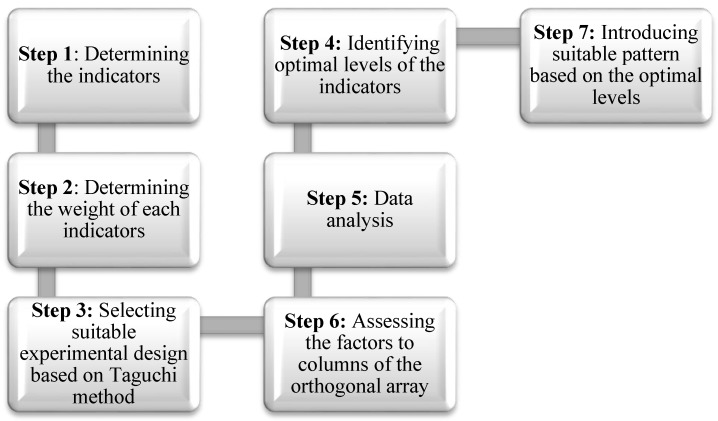
Through public health studies, specifically on child obesity modeling, research scholars have been attempting to identify the factors affecting obesity using suitable statistical techniques. In recent years, regression, structural equation modeling (SEM) and partial least squares (PLS) regression have been the most widely employed statistical modeling techniques in public health studies. The main objective of this study to apply the Taguchi method to introduce a new pattern rather than a model for analyzing the body mass index (BMI) of children as a representative of childhood obesity levels mainly related to social media use. The data analysis includes two main parts. The first part entails selecting significant indicators for the proposed framework by applying SEM for primary and high school students separately. The second part introduces the Taguchi method as a realistic and reliable approach to exploring which combination of significant variables leads to high obesity levels in children. AMOS software (IBM, Armonk, NY, USA) was applied in the first part of data analysis and MINITAB software (Minitab Inc., State College, PA, USA) was utilized for the Taguchi experimental analysis (second data analysis part). This study will help research scholars view the data and a pattern rather than a model, as a combination of different factor levels for target factor optimization.
Overview
The claims and statistics of this paper haven’t been checked yet.
Free: it reads the open-access text and checks the first 5 claims that cite a source we can check. Create a free account to check every claim.
Integrity signals
Registry
Cites
Statistics
Figures
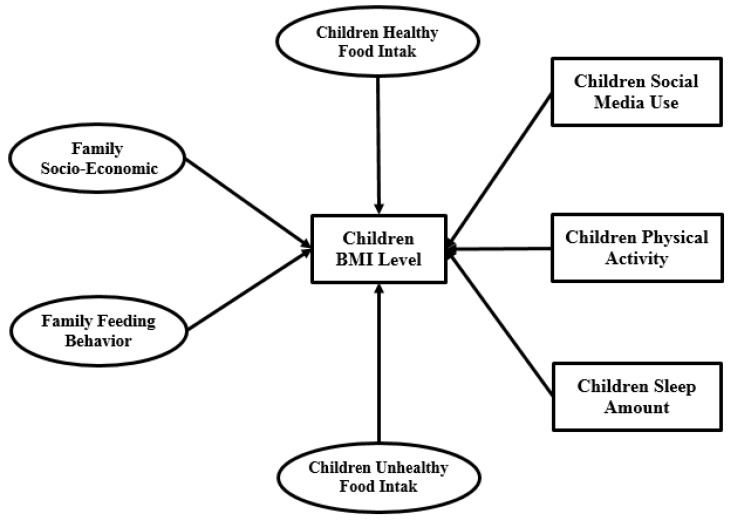
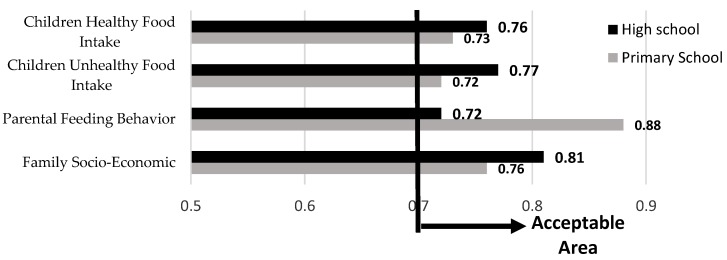
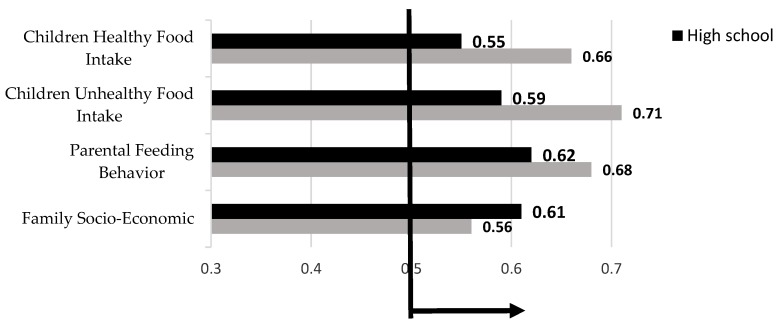
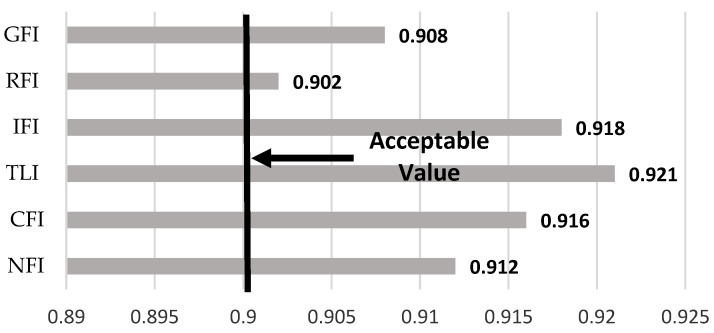
Verification
Claims the paper makes
The claims and statistics of this paper haven’t been checked yet.
Free: it reads the open-access text and checks the first 5 claims that cite a source we can check. Create a free account to check every claim.
Claims other papers make about this one
Each is checked against this paper’s own text: does it say what the citing paper says it does?
The cited source says what the claim attributes to it.
In the citing paper
“Social media is the first independent risk factor for obesity in primary school children and the second for high school students.”
From The Use of Social Media in Children and Adolescents: Scoping Review on the Potential Risks. (2022) · cites this paper as [42]
Self-check
Percentages, sums and reported differences re-computed from the paper’s own numbers.
The self-check needs the paper’s full text.
Citations
Cites
Evaluating Structural Equation Models with Unobservable Variables and Measurement Error
Fornell, C., & Larcker, D. F. (1981) · Journal of Marketing Research · doi:10.2307/3151312 · Cited by 109,314 · cited 3×
“SEM Analysis Validity and Reliability Fornell, Larcker [58] defined the following terms and conditions for the reliability and validity of a questionnaire: (a) Validity: for every latent variable the Cronbach’s alpha value must be equal to or higher than 0.7.”
BackgroundInfluentialEvaluating structural equation models with unobservable variables and measurement error
Fornell, C., & Larcker, D. F. (1981) · Journal of Marketing Research · doi:10.1177/002224378101800104 · Cited by 109,190
Structural Equation Modeling and Regression: Guidelines for Research Practice
Gefen, D., Straub, D., & Boudreau, M.-C. (2000) · Communications of the Association for Information Systems · doi:10.17705/1cais.00407 · Cited by 6,416 · cited 1×
“[76] believe that the most significant advantage of SEM technique is the ability to simultaneously model and examine the indirect and direct associations that exist among multiple independent and dependent variables.”
BackgroundTaheri, S., Lin, L., Austin, D., Young, T., & Mignot, E. (2004) · PLoS Medicine · doi:10.1371/journal.pmed.0010062 · Cited by 2,477 · cited 1×
“However, a study by Taheri, Lin [66] revealed that short sleep duration is related to alterations in metabolic hormones that promote energy intake.”
BackgroundSpiegel, K., Tasali, E., Penev, P., & Cauter, E. V. (2004) · Annals of Internal Medicine · doi:10.7326/0003-4819-141-11-200412070-00008 · Cited by 2,459 · cited 1×
“Another study by Spiegel, Tasali [67] confirmed that metabolic hormone alterations as a consequence of reduced amount of sleep is also associated with an increase in subjective hunger and appetite for unhealthy foods.”
BackgroundBirch, L. L., Fisher, J. O., Grimm-Thomas, K., Markey, C. N., Sawyer, R., & Johnson, S. L. (2001) · Appetite · doi:10.1006/appe.2001.0398 · Cited by 1,652 · cited 1×
“[54] designed the child feeding questionnaire (CFQ) for measuring family child-feeding behavior.”
MethodHesse, B. W., Nelson, D. E., Kreps, G. L., Croyle, R. T., Arora, N. K., Rimer, B. K., & Viswanath, K. (2005) · Archives of Internal Medicine · doi:10.1001/archinte.165.22.2618 · Cited by 1,523 · cited 1×
“The Internet, for instance, has long been the most extensive supply of health data [28].”
BackgroundLatent Variables in Psychology and the Social Sciences
Bollen, K. A. (2002) · Annual Review of Psychology · doi:10.1146/annurev.psych.53.100901.135239 · Cited by 1,130 · cited 2×
“’ According to Bollen [75], “latent variables provide a degree of abstraction that permits us to describe relations among a class of events or variables that share something in common.”
BackgroundDonnelly, J. E., Greene, J. L., Gibson, C. A., Smith, B. K., Washburn, R. A., Sullivan, D. K., DuBose, K., Mayo, M. S., Schmelzle, K. H., Ryan, J. J., et al. (2009) · Preventive Medicine · doi:10.1016/j.ypmed.2009.07.022 · Cited by 595
Social Media: A Critical Introduction
Bakić-Mirić, N. (2018) · European Journal of Communication · doi:10.1177/0267323117753746 · Cited by 515
Cited by
The Use of Social Media in Children and Adolescents: Scoping Review on the Potential Risks.
Bozzola, E., Spina, G., Agostiniani, R., Barni, S., Russo, R., Scarpato, E., Di Mauro, A., Di Stefano, A. V., Caruso, C., Corsello, G., et al. (2022) · International Journal of Environmental Research and Public Health · doi:10.3390/ijerph19169960 · Cited by 552
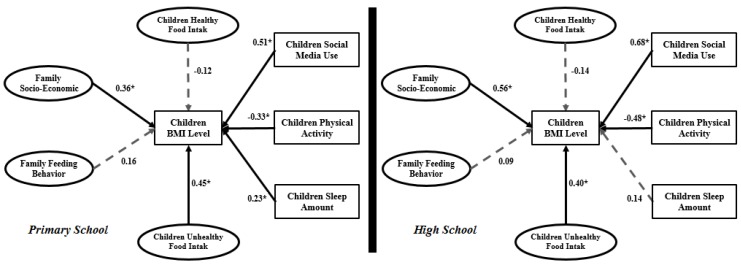
“In both primary school and high school models, children’s social media use has the highest impact on child’s BMI [42].”
BackgroundInfluentialScreen Time and Its Health Consequences in Children and Adolescents
Priftis, N., & Panagiotakos, D. (2023) · Children · doi:10.3390/children10101665 · Cited by 100
“The type of ST also plays an important role, as social media (SM) use has been described to be the most important risk factor (RF) for obesity in primary and secondary school children [12], while for video games (VGs), no such association could be found [13].”
BackgroundPlace branding and moderating role of social media
Ebrahimi, P., Hajmohammadi, A., & Khajeheian, D. (2019) · Current Issues in Tourism · doi:10.1080/13683500.2019.1658725 · Cited by 95
Self-citationA Conceptual Framework for Value Co-Creation in Service Enterprises (Case of Tourism Agencies)
Hamidi, F., Gharneh, N. S., & Khajeheian, D. (2019) · Sustainability · doi:10.3390/su12010213 · Cited by 96
Self-citationMoghadamzadeh, A., Ebrahimi, P., Radfard, S., Salamzadeh, A., & Khajeheian, D. (2020) · Sustainability · doi:10.3390/su12176926 · Cited by 86
Self-citationPostpartum depression symptoms in survey-based research: a structural equation analysis
Wan Mohamed Radzi, C. W. J. B., Salarzadeh Jenatabadi, H., & Samsudin, N. (2021) · BMC Public Health · doi:10.1186/s12889-020-09999-2 · Cited by 72
Social Media-Based Health Management Systems and Sustained Health Engagement: TPB Perspective
Gu, D., Guo, J., Liang, C., Lu, W., Zhao, S., Liu, B., & Long, T. (2019) · International Journal of Environmental Research and Public Health · doi:10.3390/ijerph16091495 · Cited by 74
“These social media-based systems have been widely used in registration [2], payment,”
MethodPENGARUH SOSIAL MEDIA TERHADAP KESEHATAN MENTAL DAN FISIK REMAJA: A SYSTEMATIC REVIEW
Yasin, R. A., Anjani, R. R. K. A., Salsabil, S., Rahmayanti, T., & Amalia, R. (2022) · Jurnal Kesehatan Tambusai · doi:10.31004/jkt.v3i2.4402 · Cited by 63
Children’s Safety on YouTube: A Systematic Review
Alqahtani, S. I., Yafooz, W. M. S., Alsaeedi, A., Syed, L., & Alluhaibi, R. (2023) · Applied Sciences · doi:10.3390/app13064044 · Cited by 68
Ragelienė, T., & Grønhøj, A. (2021) · Food Quality and Preference · doi:10.1016/j.foodqual.2021.104255 · Cited by 54
Purnama, S., Sukmasari, A., & Bhandari, R. (2021) · Aptisi Transactions on Management (ATM) · doi:10.33050/atm.v5i2.1532 · Cited by 43
“In accordance with the analysis tool that will be used, namely Structural Equation Model (SEM), the determination of the number of samples in sem provisions, at least 510 times the number of questionnaires [27].”
MethodModrzejewska, A., Czepczor‐Bernat, K., Modrzejewska, J., Roszkowska, A., Zembura, M., & Matusik, P. (2022) · Frontiers in Pediatrics · doi:10.3389/fped.2022.993460 · Cited by 39
“However, it is worth continuing research in this area to check how important social media in childhood are in shaping body image and eating patterns, especially given that (in general) children’s and adolescents’ use of social media has a significant impact on their body mass index (19).”
BackgroundInfluentialA community perspective of COVID-19 and obesity in children: Causes and consequences
Tsenoli, M., Smith, J. E. M., & Khan, M. A. (2021) · Obesity Medicine · doi:10.1016/j.obmed.2021.100327 · Cited by 30
Food and social media: a research stream analysis
García-León, R. A., & Teichert, T. (2023) · Management Review Quarterly · doi:10.1007/s11301-023-00330-y · Cited by 37
“…point out that the use of social media can be associated with an increase of unhealthy food intake and Body Mass Index (BMI) (Coates et al. 2019a; Khajeheian et al. 2018), other studies, as well as the OECD and the American Heart Association suggest that the use of social media could be used to…”
Identification of the opportunities and threats of using social media among Iranian adolescent girls
Abolfathi, M., Dehdari, T., Zamani‐Alavijeh, F., Taghdisi, M. H., Ashtarian, H., Rezaei, M., & Irandoost, S. F. (2022) · Heliyon · doi:10.1016/j.heliyon.2022.e09224 · Cited by 30
Jenatabadi, H. S., Radzi, C. W. J. W. M., & Samsudin, N. (2020) · International Journal of Environmental Research and Public Health · doi:10.3390/ijerph17145201 · Cited by 20
Self-citationAdaptive learning in bionics: transforming science education
Honke, N., & Becker, S. (2025) · Frontiers in Education · doi:10.3389/feduc.2025.1427083 · Cited by 18
Prasetya, M. R. A., & Chow, H.-W. (2023) · Indonesian Journal of Kinanthropology (IJOK) · doi:10.26740/ijok.v3n1.p28-34 · Cited by 15
Mahmoud, A. B., & Grigoriou, N. (2019) · Journal of Family Studies · doi:10.1080/13229400.2019.1682642 · Cited by 18
Foubister, C., Jago, R., Sharp, S. J., & van Sluijs, E. M. F. (2023) · Pediatric Obesity · doi:10.1111/ijpo.13017 · Cited by 16
“77]) in high school students (age 12–17 years) in Tehran; no sub-group analyses were performed by sex.(4)”
BackgroundKAVSARA, S. Ç., & Tanrıöver, Ö. (2022) · Journal of American College Health · doi:10.1080/07448481.2022.2034832 · Cited by 18
“23,24 It was observed that these studies generally evaluated the relationship between Internet usage time, Internet addiction, social media use, and BMI, and between social media addiction and BMI were limited.”
BackgroundHuella en Internet en la Web 3.0: Uso de redes sociales en el reclutamiento
Boudlaie, H., Nargesian, A., & Nik, B. K. (2019) · AD-minister · doi:10.17230/ad-minister.34.7 · Cited by 14
Adolescent Obesity Modeling: A Framework of Socio-Economic Analysis on Public Health
Jenatabadi, H. S., Shamsi, N. A., Ng, B., Abdullah, N. A., & Mentri, K. A. C. (2021) · Healthcare · doi:10.3390/healthcare9080925 · Cited by 11
“In previous literature on adolescent obesity modeling, these three variables were examined as the main research variables (independent and mediator) by Turel and Romashkin [62] and as control variables by Khajeheian and Colabi [63] and Huang and Radzi [27].”
MethodSelf-citationRole of Mass Media on Mankind: Time to Rethink
Jelly, P., Choudhary, S., Sharma, R., Mahala, P., & Aggarwal, P. (2021) · Pondicherry Journal of Nursing · doi:10.5005/jp-journals-10084-12167 · Cited by 7
Neighborhood Food Environment and Children’s BMI: A New Framework with Structural Equation Modeling
Abdumijit, T., Zhao, D., & Zhang, R. (2022) · Nutrients · doi:10.3390/nu14214631 · Cited by 7
“Previous studies on childhood obesity modeling have pointed out that parental feeding behaviors [7], parental socioeconomic status [8–10], and the child’s food intake [11,12] are considered vital and fundamental potential factors.”
BackgroundSaintila, J., Oblitas-Guerrero, S. M., Távara, G. L., de Maguiña, I. G. L., Bernal-Corrales, F. D. C., López-López, E., Calizaya-Milla, Y. E., Serpa‐Barrientos, A., & Ramos‐Vera, C. (2024) · Frontiers in Public Health · doi:10.3389/fpubh.2024.1261133 · Cited by 5
Weight excess among high-school students: Relation with mental health and sociodemographic factors
Ouni, F., Ghammam, R., Benfredj, S., Zammit, N., Echi, I. E., Chelly, S., Kalboussi, H., Maatoug, J., Harrabi, I., & Ghannem, H. (2024) · La Tunisie Médicale · doi:10.62438/tunismed.v102i3.4802 · Cited by 4
“Faced with likely dissatisfaction with their body image, overweight adolescents may avoid posting photos on Facebook (selfies) and consequently use Facebook less(38).”
BackgroundFilaili, L. N., Rosyita, H., & Handayani, P. R. (2021) · Jurnal Teknologi Informasi · doi:10.52643/jti.v7i2.1905 · Cited by 4
Hoertel, N., Olfson, M., Blanco, C., Biscond, M., Limosin, F., Rico, M. S., Blachier, M., & Leleu, H. (2025) · PLoS Medicine · doi:10.1371/journal.pmed.1004737 · Cited by 3
“Indeed, other factors such as physical inactivity [38], obesity [39,40], exposure to cyberbullying, and engagement to environments in which SM are used [32,41] could confound this association.”
OBEZİTELİ BİREYLERİN GÖZÜNDEN TÜRKİYE’DE MEDYADA OBEZİTE
Sezgin, D., & YILDIRIM, İ. E. (2022) · TOBIDER - International Journal of Social Sciences · doi:10.30830/tobider.sayi.11.2 · Cited by 3
Xiaocui, H., Shengyao, Y., Samsudin, N., Li, K., & Xuefen, L. (2025) · BMC Women s Health · doi:10.1186/s12905-025-03907-9 · Cited by 3
“The lifestyle variable in this study was assessed using indicators originally validated by Khajeheian et al. [36].”
Use of Social Media and its Effects in School Going Adolescents
Sahithi, A. (2020) · Indian Journal of Youth and Adolescent Health · doi:10.24321/2349.2880.201910 · Cited by 3
Mohamed, N. A., Alanzi, A. R. A., Azizan, N. A., Azizan, S. A., Samsudin, N., & Jenatabadi, H. S. (2023) · Frontiers in Psychology · doi:10.3389/fpsyg.2023.1060963 · Cited by 5
“According to the previous studies, the average screen time used and sleeping hours were retained in the analysis (Khajeheian et al., 2018).”
ResultSelf-citationFaktor Risiko Penggunaan Media Sosial pada Obesitas
Gharrieni, R. H. A., Angraini, D. I., & Rahmayani, F. (2023) · Medical Profession Journal of Lampung · doi:10.53089/medula.v13i1.571 · Cited by 5
Assessment of the Relationship Between Social Media Addiction and Quality of Life in Adolescents
Coskun, T., Tapci, A. E., & Saç, R. Ü. (2024) · Eurasian Journal of Family Medicine · doi:10.33880/ejfm.2024130202 · Cited by 2
EDUKASI KESEHATAN MENTAL REMAJA DI ERA DIGITAL
Siregar, W. H., Zulfa, N., Syafrida, N., Izzati, N., Pratama, B., Hafish, A. A., Parmohonan, S., Bagus, D., & Tri, D. (2025) · Bida Jurnal Pengabdian Kepada Masyarakat · doi:10.34307/bida.v2i1.19 · Cited by 2
Musculoskeletal workload assessment Index development for body workload evaluation
Kwak, W.-T., Kim, J. H., Park, J. H., & Lee, K. (2025) · Work · doi:10.1177/10519815251320260 · Cited by 1
Culinary innovation: navigating challenges and embracing future opportunities
Tiwari, M., Bhuyan, D. J., Barooah, M. S., & Bordoloi, P. L. (2025) · Elsevier eBooks · doi:10.1016/b978-0-443-33345-3.00037-7 · Cited by 1
Safari, M., Ghahroodian, S., Abyarazimi, M. V., Rahmaniyan, S., Heydaryan, F., Rezaei, M., & Yakhchali, B. (2025) · Microbiology Spectrum · doi:10.1128/spectrum.02892-24 · Cited by 1
“Also, statistical software, such as Design-Expert 6.0.6 (130) and MINITAB (131), was employed to analyze the experimental data.”
Influential(2024) · Frontiers research topics · doi:10.3389/978-2-8325-5842-3 · Cited by 1
TÜRKİYE’DEKİ ÜNİVERSİTE ÖĞRENCİLERİNİN ENDÜSTRİ 4.0 BİLGİ DÜZEYLERİNİN BELİRLENMESİ
Özenç, S. C. Y., & Fırat, S. Ü. O. (2020) · Endüstri Mühendisliği · Cited by 14
Rosyita, H., & Putra, S. A. G. (2022) · Jurnal Manajemen dan Administrasi Rumah Sakit Indonesia (MARSI) · doi:10.52643/marsi.v6i1.2161 · Cited by 1
The intervening role of mHealth apps in postpartum obesity and mental health (Preprint)Preprint
Radzi, C. W. J. W. M., Jenatabadi, H. S., & Samsudin, N. (2019) · doi:10.2196/preprints.14152
Self-citationΠανίδου, Σ. Ι., & Παπαγιάννη, Π. Ν. (2025) · University of Thessaly Institutional Repository (University of Thessaly)
Saputra, Y. O., Rusmono, D. O., & Iswahyudi, A. F. (2026) · Jurnal Pengabdian Masyarakat dan Riset Pendidikan · doi:10.31004/jerkin.v4i3.4922
“Sejalan dengan penelitian tersebut, Khajeheian et al. (2018) menunjukkan bahwa durasi penggunaan media sosial mempengaruhi aktivitas fisik seseorang.”
Metadata
- Authors
- Khajeheian, D., Colabi, A., Ahmad Kharman Shah, N., Bt Wan Mohamed Radzi, C., & Jenatabadi, H.
- Affiliations
- University of Tehran (IR)
- Tarbiat Modares University (IR)
- Department of Library and Information Science, Faculty of Computer Science & Information Technology, University of Malaya, Kuala Lumpur 50603, Malaysia
- Department of Science and Technology Studies, Faculty of Science, University of Malaya, Kuala Lumpur 50603, Malaysia
- University of Malaya (MY)
- Corresponding author
- Khajeheian, Datis
- Venue
- International Journal of Environmental Research and Public Health
- Publisher
- MDPI AG
- Published
- 2018-06-26
- Volume
- 15
- Issue
- 7
- Pages
- 1343
- ISSN
- 1660-4601 (ISSN-L)
- PMC
- PMC6069160
- OpenAlex
- W2811440261
- Cited by
- 40
- References
- 75
- Citations by year
- 2025: 6 · 2024: 4 · 2023: 7 · 2022: 7 · 2021: 7 · 2020: 3 · 2019: 6
- FWCI
- 3.81
- Type
- journal article
- Language
- en
- Open access
- gold
- dx.doi.org
- Licence
- Locations
- International Journal of Environmental Research and Public Health (publishedVersion, cc-by)
- Europe PMC (PubMed Central) (publishedVersion, other-oa)
- PubMed Central (publishedVersion, cc-by)
- PubMed (publishedVersion)
- The University of Malaya Research Repository (University of Malaya) (submittedVersion)
- RePEc: Research Papers in Economics (submittedVersion)
- DOAJ (DOAJ: Directory of Open Access Journals) (submittedVersion)
- Funders
- Universiti Malaya (BK043-2016 and GC002C-17HNE)
- Topics
- Health Sciences › Medicine › Public Health, Environmental and Occupational Health › Obesity, Physical Activity, Diet
- Social Sciences › Sociology and Political Science › Impact of Technology on Adolescents
- Health Sciences › Nursing › Nutrition and Dietetics › Nutrition, Health and Food Behavior
- Keywords
- childhood obesity, social media use, body mass index, Taguchi method, structural equation modeling, obesity risk factors
- MeSH terms
- Latent Class Analysis, Adolescent, Adult, Child, Cross-Sectional Studies, Female, Humans, Iran, Male, Middle Aged, Obesity, Models, Statistical, Body Mass Index, Social Media, Pediatric Obesity
About these checks
Registry, retraction, Cites and statistics results are computed, not judged, with one exception: a printed reference that no index lists is read once by a model before it counts as a citation error. Claims are extracted by a model and kept only when their quote appears verbatim in the text; each cited source is then checked, with a model’s help, for whether it says what the claim relies on. Those verdicts can be wrong — read the claim’s quote and the cited source before relying on one.
Statistics and arithmetic are recomputed, not judged.
Confidence bands are shown only for fields calibrated on our annotated test set. None is calibrated yet, so no band is shown.
What counts as a claim ›How we measure confidence ›How we check this ›
Are you an author, or do you see a problem with this page? Request a review
Data sources
Bibliographic data: Semantic Scholar, OpenAlex, Crossref.
Contains information from the Semantic Scholar Academic Graph Datasets, made available under the ODC Attribution License (ODC-BY 1.0).
Semantic Scholar’s data is described in: Kinney, R., et al. (2023). The Semantic Scholar Open Data Platform. arXiv:2301.10140.
