

Exercise-Based Interventions to Enhance Long-Term Sustainability of Physical Activity in Older Adults: A Systematic Review and Meta-Analysis of Randomized Clinical Trials
Open accessThe DOI matches its Crossref record; 66 of the 67 references it cites were found in a registry or an index.
Abstract
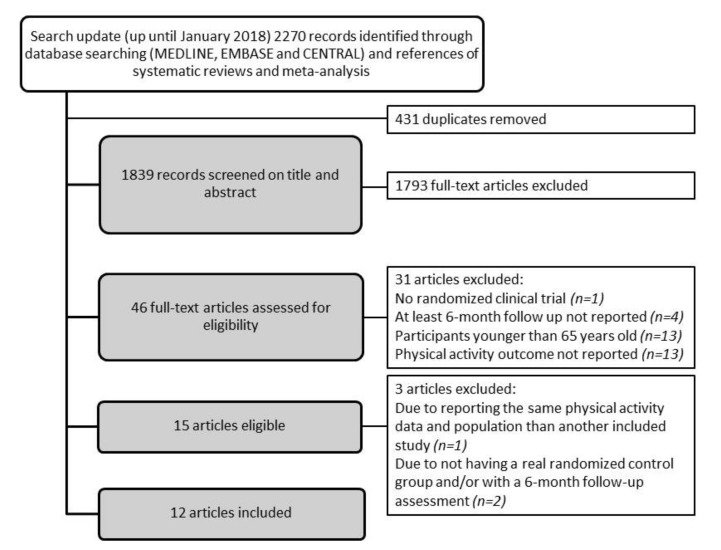
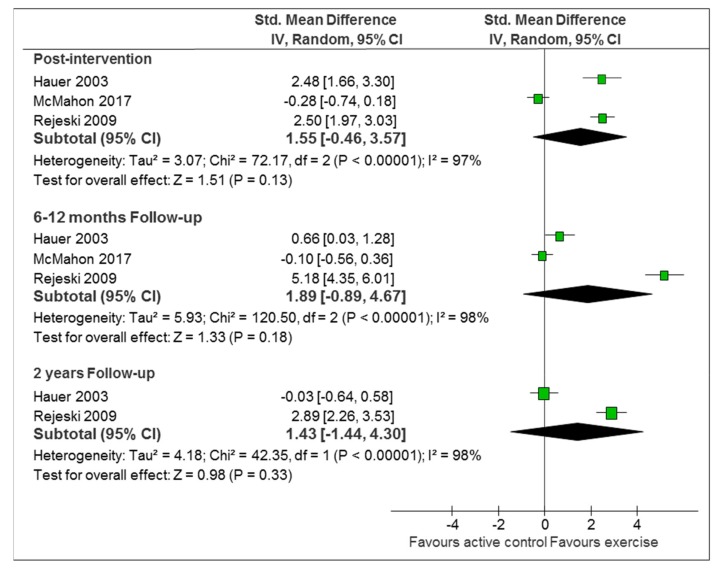
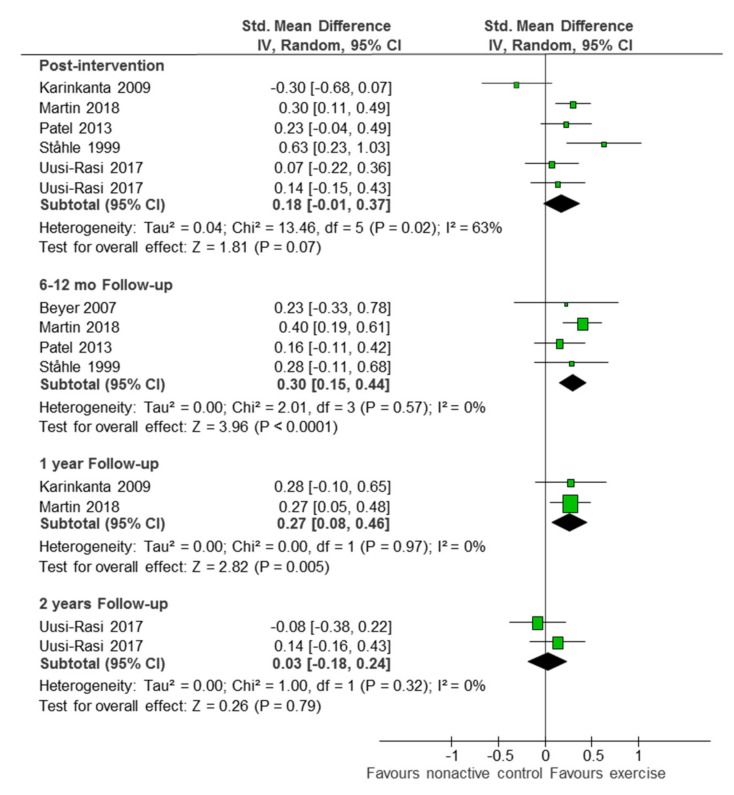
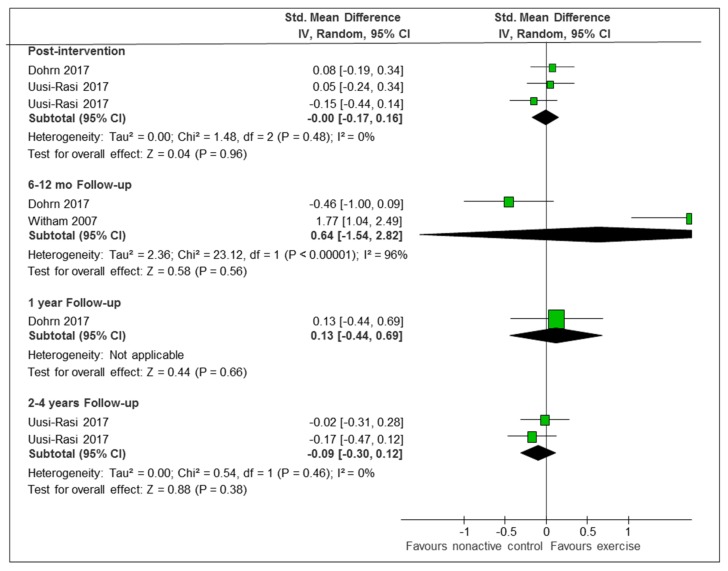
Exercise is a form of physical activity (PA). PA is an important marker of health and quality of life in older adults. The purpose of this study was to conduct a systematic review of the literature to assess the effect of exercise-based interventions on an at least six-month follow up PA measure, and to describe the specific strategies implemented during the intervention to strengthen the sustainability of PA in community-dwelling 65+ year-old adults. We registered and conducted a systematic review and meta-analysis (PROSPERO: CRD42017070892) of randomized clinical trials (RCT). We searched three electronic databases during January 2018 to identify RCT assessing any type of exercise-based intervention. Studies had to report a pre-, post-, and at least 6-month post-intervention follow-up. To be included, at least one PA outcome had to be assessed. The effect of exercise-based interventions was assessed compared to active (e.g., a low-intensity type of exercise, such as stretching or toning activities) and non-active (e.g., usual care) control interventions at several time points. Secondary analyses were conducted, restricted to studies that reported specific strategies to enhance the sustainability of PA. The intervention effect was measured on self-reported and objective measures of time spent in PA, by means of standardized mean differences. Standardized mean differences of PA level were pooled. Pooled estimates of effect were computed with the DerSimonian–Laird method, applying a random effects model. The risk of bias was also assessed. We included 12 studies, comparing 18 exercise intervention groups to four active and nine non-active control groups. Nine studies reported specific strategies to enhance the long-term sustainability of PA. The strategies were mostly related to the self-efficacy, self-control, and behavior capability principles based on the social cognitive theory. Exercise interventions compared to active control showed inconclusive and heterogeneous results. When compared to non-active control, exercise interventions improved PA time at the six-months follow up (standardized mean difference (SMD) 0.30; 95%CI 0.15 to 0.44; four studies; 724 participants; I2 0%), but not at the one- or two-years follow-ups. No data were available on the mid- and long-term effect of adding strategies to enhance the sustainability of PA. Exercise interventions have small clinical benefits on PA levels in community-dwelling older adults, with a decline in the observed improvement after six months of the intervention cessation.
Overview
The claims and statistics of this paper haven’t been checked yet.
Free: it reads the open-access text and checks the first 5 claims that cite a source we can check. Create a free account to check every claim.
Integrity signals
Registry
Cites
Statistics
Figures
Verification
Claims the paper makes
The claims and statistics of this paper haven’t been checked yet.
Free: it reads the open-access text and checks the first 5 claims that cite a source we can check. Create a free account to check every claim.
Claims other papers make about this one
Each is checked against this paper’s own text: does it say what the citing paper says it does?
The source backs part of the claim, not all of it — or backs it for a different population, condition or comparison.
In the citing paper
“These studies are heterogeneous regarding duration, physical activity intervention, degree of supervision, and study population.”
From Healthy weight loss maintenance with exercise, GLP-1 receptor agonist, or both combined followed by one year without treatment: a post-treatment analysis of a randomised placebo-controlled trial (2024) · cites this paper as [21]
Experimental — accuracy not yet measuredThe source backs part of the claim, not all of it — or backs it for a different population, condition or comparison.
In the citing paper
“Most, but not all, studies on physical activity treatment programs have reported small, sustained increases in physical activity levels after termination of the supervised program.20, 21, 22, 23, 24”
From Healthy weight loss maintenance with exercise, GLP-1 receptor agonist, or both combined followed by one year without treatment: a post-treatment analysis of a randomised placebo-controlled trial (2024) · cites this paper as [21]
Experimental — accuracy not yet measuredThe cited source says what the claim attributes to it.
In the citing paper
“In adults aged +65 years, exercise-based interventions led to sustained increases in physical activity six months after interventions, but not after one year.21”
Self-check
Percentages, sums and reported differences re-computed from the paper’s own numbers.
The self-check needs the paper’s full text.
Citations
Cites
Preferred Reporting Items for Systematic Reviews and Meta-Analyses: the PRISMA statement
Moher, D., Liberati, A., Tetzlaff, J., Altman, D. G., & for the PRISMA Group (2009) · BMJ · doi:10.1136/bmj.b2535 · Cited by 83,823
Preferred reporting items for systematic reviews and meta-analyses: the PRISMA Statement.
(2009) · PubMed Central · Cited by 44,859
Preferred reporting items for systematic reviews and meta-analyses: The PRISMA statement
Moher, D., Liberati, A., Tetzlaff, J., Altman, D. G., & the PRISMA Group* (2009) · Annals of Internal Medicine · doi:10.7326/0003-4819-151-4-200908180-00135 · Cited by 37,554
Social Cognitive Theory: An Agentic Perspective
Bandura, A. (2001) · Annual Review of Psychology · doi:10.1146/annurev.psych.52.1.1 · Cited by 15,510
The Transtheoretical Model of Health Behavior Change.
Prochaska, J. O., & Velicer, W. F. (1997) · American Journal of Health Promotion · doi:10.4278/0890-1171-12.1.38 · Cited by 7,782 · cited 1×
“Some of the most used theories in health behavior change include psychological theories, such as the transtheoretical model [29] and the social cognitive theory (SCT) [30].”
MethodCochrane Handbook for Systematic Reviews of Interventions Version 5.0.1. The Cochrane Collaboration
Higgins, J. P. T., Green, S. R., & Higgins, J. P. T. (2008) · Cited by 7,247
Nutbeam, D. (2000) · Health Promotion International · doi:10.1093/heapro/15.3.259 · Cited by 5,286 · cited 1×
“Some of the most cited strategies used in the included studies were education [55], self-monitoring [56], and action planning [57].”
MethodEffective techniques in healthy eating and physical activity interventions: A meta-regression.
Michie, S., Abraham, C., Whittington, C., McAteer, J., & Gupta, S. (2009) · Health Psychology · doi:10.1037/a0016136 · Cited by 2,229
The burden of disease in older people and implications for health policy and practice
Prince, M. J., Wu, F., Guo, Y., Gutierrez Robledo, L. M., O'Donnell, M., Sullivan, R., & Yusuf, S. (2015) · The Lancet · doi:10.1016/s0140-6736(14)61347-7 · Cited by 1,989 · cited 1×
“The incidence rate of many chronic diseases increases with age [5,6].”
BackgroundExercise as a treatment for depression: a meta-analysis adjusting for publication bias
Schuch, F. B., Vancampfort, D., Richards, J., Rosenbaum, S., Ward, P. B., & Stubbs, B. (2016) · Journal of Psychiatric Research · doi:10.1016/j.jpsychires.2016.02.023 · Cited by 1,529
Research works printed but not linked: 2
- Greenhalgh T. How to Spread Good Ideas: A Systematic Review of the Literature on Diffusion, Dissemination, and Sustainability of Innovations in Health Service Delivery and Organization Report for the National Coordinating Centre for NHS Service Delivery and Organisation R & D (NCCSDO) London University College London, UK 2004 362
- Finegood D. Johnston L. Steinberg M. Matteson C.L. Deck P. Complexity, systems thinking, and health behavior change Health Behavior Change in Populations Kahan S. Gielen A.C. Fagan P.J. Lawrence W.G. Oxford University Press New York, NY, USA 2011 208 236
Cited by
Psychological Health and Physical Activity Levels during the COVID-19 Pandemic: A Systematic Review
Violant-Holz, V., Gallego-Jiménez, M. G., González-González, C. S., Muñoz-Violant, S., Rodríguez, M. J., Sansano-Nadal, O., & Guerra-Balic, M. (2020) · International Journal of Environmental Research and Public Health · doi:10.3390/ijerph17249419 · Cited by 348
“In one PA intervention, the observed improvement had faded six months after the intervention ended [54], and authors of another study identified no clinical benefits from PA interventions for older adults [26].”
BackgroundSelf-citationRamsey, K. A., Rojer, A. G. M., D’Andrea, L., Otten, R. H. J., Heymans, M. W., Trappenburg, M. C., Verlaan, S., Whittaker, A. C., Meskers, C. G. M., & Maier, A. B. (2021) · Ageing Research Reviews · doi:10.1016/j.arr.2021.101266 · Cited by 293
“However, integrating exercise into lifestyle post-intervention remains a challenge and, subsequently, improvements in PA are often not sustained (McEwan et al., 2020; Sansano-Nadal et al., 2019).”
BackgroundThe effects of physical activity on cortisol and sleep: A systematic review and meta-analysis.
De Nys, L., Anderson, K., Ofosu, E. F., Ryde, G. C., Connelly, J., & Whittaker, A. C. (2022) · Psychoneuroendocrinology · doi:10.1016/j.psyneuen.2022.105843 · Cited by 279
Exercise interventions for older adults: A systematic review of meta-analyses
Di Lorito, C., Long, A., Byrne, A., Harwood, R. H., Gladman, J. R. F., Schneider, S., Logan, P., Bosco, A., & van der Wardt, V. (2021) · Journal of Sport and Health Science · doi:10.1016/j.jshs.2020.06.003 · Cited by 264
“05).(70) However, long-term effects at the 1-year follow-up (SMD = 0.”
BackgroundJensen, S. B. K., Blond, M. B., Sandsdal, R. M., Olsen, L. M., Juhl, C. R., Lundgren, J. R., Janus, C., Stallknecht, B. M., Holst, J. J., Madsbad, S., et al. (2024) · eClinicalMedicine · doi:10.1016/j.eclinm.2024.102475 · Cited by 207
“21 Thus, increases in physical activity may persist after controlled exercise interventions.”
BackgroundA scoping review of physical activity interventions for older adults
Taylor, J., Walsh, S. K., Kwok, W. S., Pinheiro, M. B., Oliveira, J. S., Hassett, L. M., Bauman, A. E., Bull, F., Tiedemann, A., & Sherrington, C. (2021) · International Journal of Behavioral Nutrition and Physical Activity · doi:10.1186/s12966-021-01140-9 · Cited by 136
“Active People and most assessed physical activity programmes [32, 38, 44, 55] for older adults with some attention to health promotion/coaching [37, 52] and health professional education/referral [30, 56].”
BackgroundInterventions for reducing sedentary behaviour in community-dwelling older adults
CHASTIN, S. F. M., Gardiner, P. A., Harvey, J., Leask, C. F., Jerez‐Roig, J., Rosenberg, D. E., Ashe, M. C., Helbostad, J. L., & Skelton, D. A. (2021) · Cochrane Database of Systematic Reviews · doi:10.1002/14651858.cd012784.pub2 · Cited by 117
Self-citationFranke, T., Sims‐Gould, J., Nettlefold, L., Ottoni, C. A., & McKay, H. A. (2021) · BMC Public Health · doi:10.1186/s12889-021-10363-1 · Cited by 105
Parra-Rizo, M. A., & Sanchís-Soler, G. (2020) · International Journal of Environmental Research and Public Health · doi:10.3390/ijerph17041299 · Cited by 101
Sustainability-Sport-Physical Activity
Bába, É. B., Ráthonyi, G., Pfau, C. S., Müller, A., Szabados, G. N., & Harangi–Rákos, M. (2021) · International Journal of Environmental Research and Public Health · doi:10.3390/ijerph18041455 · Cited by 72
“[141] focus on the sustainability of changes in physFigure 1.”
BackgroundLevinger, P., Panisset, M. G., Dunn, J., Haines, T. P., Dow, B., Batchelor, F., Biddle, S., Duque, G., & Hill, K. (2020) · BMC Geriatrics · doi:10.1186/s12877-020-01824-0 · Cited by 70
Kleis, R. R., Hoch, M. C., Hogg‐Graham, R., & Hoch, J. M. (2020) · Journal of Physical Activity and Health · doi:10.1123/jpah.2020-0334 · Cited by 51
Mansoor, M. A., Ibrahim, A., Hamide, A., Tran, T., Candreva, E., & Baltaji, J. (2025) · Physiologia · doi:10.3390/physiologia5020013 · Cited by 44
“Behavioral economic approaches, including commitment devices, social incentives, and immediate rewards, show promise for increasing exercise adherence [299].”
Barbosa, A., Brito, J., Costa, J. A., Figueiredo, P., Seabra, A., & Mendes, R. (2020) · Progress in Cardiovascular Diseases · doi:10.1016/j.pcad.2020.06.014 · Cited by 41
Crist, K., Full, K. M., Linke, S., Tuz‐Zahra, F., Bolling, K., Lewars, B., Liu, C., Shi, Y., Rosenberg, D. E., Jankowska, M. M., et al. (2022) · International Journal of Behavioral Nutrition and Physical Activity · doi:10.1186/s12966-022-01309-w · Cited by 41
Intzandt, B., Vrinceanu, T., Huck, J., Vincent, T. L., Montero‐Odasso, M., Gauthier, C. J., & Bherer, L. (2021) · Neuroscience & Biobehavioral Reviews · doi:10.1016/j.neubiorev.2021.07.003 · Cited by 39
Hassen, H. Y., Ndejjo, R., Musinguzi, G., Geertruyden, J. V., Abrams, S., & Bastiaens, H. (2021) · Preventive Medicine · doi:10.1016/j.ypmed.2021.106797 · Cited by 38
Mashhadi, S. F., Hisam, A., Sikander, S., Rathore, M. A., Rifaq, F., Khan, S. A., & Hafeez, A. (2021) · International Journal of Environmental Research and Public Health · doi:10.3390/ijerph181910442 · Cited by 36
“This systematic review was conducted following PRISMA (preferred reporting items for systematic reviews and meta-analyses) guidelines [21,22].”
MethodBarrett, S., Begg, S. J., O’Halloran, P., Howlett, O., Lawrence, J., & Kingsley, M. (2021) · International Journal of Behavioral Nutrition and Physical Activity · doi:10.1186/s12966-020-01076-6 · Cited by 34
“These strategies are all acknowledged as important theoretical constructs for successful behaviour change [69]; however, very few of the included studies clearly demarcated the use of strategies for PA maintenance, which could have impacted the effect size over the longer term follow-up.”
BackgroundGiné‐Garriga, M., Dall, P., Sandlund, M., Jerez‐Roig, J., CHASTIN, S. F. M., & Skelton, D. A. (2020) · International Journal of Environmental Research and Public Health · doi:10.3390/ijerph17082866 · Cited by 33
Self-citationVilla‐García, L., Davey, V., Pérez, L. M., Soto-Bagaria, L., Risco, E., Díaz, P., Kuluski, K., Giné‐Garriga, M., Castellano‐Tejedor, C., & Inzitari, M. (2023) · Frontiers in Public Health · doi:10.3389/fpubh.2023.1062843 · Cited by 30
Self-citationMotl, R. W., Casey, B., Learmonth, Y. C., Latimer‐Cheung, A. E., Kinnett-Hopkins, D., Marck, C. H., Carl, J., Pfeifer, K., Riemann-Lorenz, K., Heesen, C., et al. (2023) · Multiple Sclerosis Journal · doi:10.1177/13524585231204446 · Cited by 29
“There may be characteristics of individuals (e.g. language, race and culture) that present challenges for research and hence our knowledge of exercise adherence, compliance and sustainability in MS. 10.”
BackgroundWang, H., Pei, Z., & Liu, Y. (2024) · BMC Geriatrics · doi:10.1186/s12877-024-04714-x · Cited by 28
“In addition, exercise is an important lifestyle factor for maintaining the health of elderly individuals [11] and plays a crucial role in improving the health and quality of life of these individuals as well as enabling engagement in social activities [12, 13].”
BackgroundMotivating older adults through immersive virtual exercise (MOTIVE): A randomized pilot study
Drazich, B. F., Anokye, D., Zhu, S., Teleb, J., Galik, E. M., Colloca, L., & Resnick, B. M. (2023) · Geriatric Nursing · doi:10.1016/j.gerinurse.2023.09.019 · Cited by 23
Arigo, D., Brown, M. M., Pasko, K., Ainsworth, M. C., Travers, L., Gupta, A. K., Downs, D. S., & Smyth, J. M. (2020) · JMIR Research Protocols · doi:10.2196/19044 · Cited by 22
“PA promotion work focused on addressing barriers such as lack of time and motivation (both among midlife women and in other populations) has generated meaningful insights but has not yet led to large PA increases that are sustained over time [25,26].”
BackgroundAlessy, S. A., Malkin, J. D., Finkelstein, E. A., AlAhmed, R. S., Baattaiah, B. A., Evenson, K. R., Rakić, S., Çetinkaya, V., Herbst, C. H., Al-Hazzaa, H. M., et al. (2023) · Journal of Epidemiology and Global Health · doi:10.1007/s44197-023-00111-6 · Cited by 20
O’Connor, D., Brown, M., Eatock, M. M., Turkington, R. C., & Prue, G. (2021) · BMC Cancer · doi:10.1186/s12885-020-07733-0 · Cited by 21
Savikangas, T., Törmäkangas, T., Tirkkonen, A., Alén, M., Fielding, R. A., Kivipelto, M., Rantalainen, T., Neely, A. S., & Sipilä, S. (2021) · PLoS ONE · doi:10.1371/journal.pone.0258559 · Cited by 21
Edmunds, K., Reeves, P., Scuffham, P., Galvao, D. A., Newton, R. U., Jones, M. A., Spry, N. A., Taaffe, D. R., Joseph, D. J., Chambers, S. K., et al. (2020) · Applied Health Economics and Health Policy · doi:10.1007/s40258-020-00564-x · Cited by 21
“ence and sustainability is a recognized problem in exercise interventions for older community-dwelling adults [24].”
BackgroundAshe, M. C., dos Santos, Í. K., Erome, J., Grant, J., Mollins, J., & Soh, S. (2024) · PLOS Digital Health · doi:10.1371/journal.pdig.0000579 · Cited by 19
McMahon, S., Lewis, B. A., Guan, W., Wang, Q., Hayes, S. M., Wyman, J. F., & Rothman, A. J. (2024) · JAMA Network Open · doi:10.1001/jamanetworkopen.2024.0298 · Cited by 18
Huffman, M. K., Christ, S. L., Ferraro, K. F., Klenosky, D. B., Marceau, K., & Amireault, S. (2021) · Innovation in Aging · doi:10.1093/geroni/igab041 · Cited by 18
Hopstock, L. A., Deraas, T., Henriksen, A., Martiny-Huenger, T., & Grimsgaard, S. (2021) · PLoS ONE · doi:10.1371/journal.pone.0256631 · Cited by 19
Graf, A. S., Cohn, T. J., & Syme, M. L. (2020) · Clinical Gerontologist · doi:10.1080/07317115.2020.1825584 · Cited by 17
“Much of the application of SCT to OAs, has focused on increasing physical activity/exercise (Sansano-Nadal et al., 2019), disease prevention (Winett et al.”
BackgroundIrvine, K. N., Fisher, D., Currie, M. J. B., Colley, K., & Warber, S. L. (2024) · International Journal of Environmental Research and Public Health · doi:10.3390/ijerph21070843 · Cited by 17
“Numerous non-pharmacologic interventions (NPIs) seek to promote physical activity [9,10], yet all face the challenge of promoting engagement with the intervention and determining whether the intervention affects the behaviour of interest.”
Wang, H., King, B., & Yang, R. (2022) · The Gerontologist · doi:10.1093/geront/gnac176 · Cited by 15
Camp, N., Ramos, A. C. F., Hunter, K. A., Boat, R., & Magistro, D. (2022) · Aging & Mental Health · doi:10.1080/13607863.2022.2046691 · Cited by 15
Coogan, S. M., Dhokai, N., Baraniecki‐Zwil, G., Glass, E., & Ambegaonkar, J. P. (2021) · Journal of Dance Education · doi:10.1080/15290824.2021.1896720 · Cited by 14
Liddle, J., Stowell, M., Ali, M., Warwick, S., Thompson, A., Brittain, K., Brougham, A., & Hanratty, B. (2024) · BMC Geriatrics · doi:10.1186/s12877-024-05604-y · Cited by 13
“Whilst evidence in support of physical activity interventions for older adults is growing [57], more evidence is needed to understand the mechanisms underpinning long-term sustainability of interventions and physical and social activity levels [58].”
Yin, Z., Martinez, C. E., Li, S., Martinez, M. L., Peng, K., Land, W. M., Ullevig, S. L., Cantu, A. G., Falk, S., Hernández, A. E., et al. (2021) · JMIR Aging · doi:10.2196/29188 · Cited by 13
“Ongoing efforts have considered the health conditions, previous PA habits and experiences, cultural preferences, social support, convenience, accessibility, and use of mobile health (mHealth) technologies to promote PA in community-dwelling older adults [8,9], with mixed results [10].”
BackgroundDeraas, T., Hopstock, L. A., Henriksen, A., Morseth, B., Sand, A.-S., Njølstad, I., Pedersen, S., Sagelv, E. H., Johansson, J., & Grimsgaard, S. (2021) · Pilot and Feasibility Studies · doi:10.1186/s40814-021-00921-0 · Cited by 13
Savikangas, T., Savolainen, T., Tirkkonen, A., Alén, M., Hautala, A. J., Laukkanen, J. A., Rantalainen, T., Törmäkangas, T., & Sipilä, S. (2023) · Journal of Aging and Physical Activity · doi:10.1123/japa.2022-0397 · Cited by 12
Ratz, T., Pischke, C. R., Voelcker‐Rehage, C., & Lippke, S. (2022) · European Review of Aging and Physical Activity · doi:10.1186/s11556-021-00281-x · Cited by 12
“fective [7, 8], but evidence regarding their effectiveness”
Olsen, P. Ø., Tully, M. A., Cruz, B. D. P., Wegner, M., & Caserotti, P. (2022) · Age and Ageing · doi:10.1093/ageing/afac137 · Cited by 11
Wang, X., Hunter, D. J., Robbins, S. R., Capistrano, S., Duong, V., Melo, L., Harris, A., & Ferreira, M. L. (2021) · BMJ Open · doi:10.1136/bmjopen-2020-041328 · Cited by 11
Americans Aging with Disabilities Are More Likely to Have Multiple Chronic Conditions
Brucker, D. L., Lauer, E. A., & Boege, S. (2022) · Journal of Disability Policy Studies · doi:10.1177/10442073221107079 · Cited by 10
“…are more likely to exhibit health behaviors that contribute to the development of certain chronic conditions, with higher rates of obesity and smoking than nondisabled adults (Lauer & Houtenville, 2019) and lower rates of physical activity (Hollis et al., 2017; Sansano-Nadal et al., 2019).”
BackgroundWu, S., Li, G., Shi, B., Ge, H., Chen, S., Zhang, X., & He, Q. (2024) · Digital Health · doi:10.1177/20552076241239182 · Cited by 10
“Our research includes comprehensive physical activity results, including daily steps, MVPA, and sedentary time.”
MethodJamrasi, P., Li, X., Sung, Y., Kim, D., Ahn, S. H., Kang, Y. S., & Song, W. J. (2024) · Journal of Exercise Science & Fitness · doi:10.1016/j.jesf.2024.07.002 · Cited by 10
“14 In this study we aimed to compare the effects of walking, combined exercise (resistance + walking) and active control on functional and cognitive performance over a 12-week period in older adults.”
BackgroundSong, D., Liu, Y., Lai, C. K. Y., & Li, Y. (2023) · Frontiers in Psychology · doi:10.3389/fpsyg.2023.1102019 · Cited by 10
“However, among cancer survivors, their physical activity compliance is low due to limited knowledge of the disease, lack of social support, and poor mental status (Tang et al., 2017; Sansano-Nadal et al., 2019).”
BackgroundPowell, A. J., & Thomas, S. (2022) · Health Promotion Practice · doi:10.1177/15248399221081832 · Cited by 9
“McHugh et al. (2018) identified the BCTs and linked intervention functions to characterize a multilevel implementation strategy for a fall prevention program, and reported that the process was useful for describing the intervention’s components and highlighting gaps that can be addressed to maximize Powell and Thomas…”
BackgroundInfluentialNicol, J. L., Woodrow, C., Cunningham, B. J., Mollee, P. N., Weber, N., Smith, M. D., Nicol, A. J., Gordon, L. G., Hill, M. M. C., & Skinner, T. L. (2022) · Current Oncology · doi:10.3390/curroncol29020077 · Cited by 9
“A recent systematic review showed that the increases in physical activity during exercise interventions are not maintained six months after intervention cessation in community-dwelling older adults [36].”
BackgroundVlietstra, L., Fordyce, A. M., Costa, E. C., Coffey, S., Walker, X. J., WHALLEY, G. A., & Waters, D. L. (2025) · Ageing Research Reviews · doi:10.1016/j.arr.2025.102714 · Cited by 8
Machacova, K., Polanská, H., Šteffl, M., Bártová, A., Novotná, B., & Holmerová, I. (2025) · Clinical Interventions in Aging · doi:10.2147/cia.s530709 · Cited by 8
“13 Notably, only one study has demonstrated a stable, positive long-term trajectory.”
InfluentialSustained physical activity offers benefits beyond activity volume in chronic disease prevention
Fang, Z., Wang, P., ROSNER, B. A., Giovannucci, E. L., & Song, M. (2026) · Nature Communications · doi:10.1038/s41467-026-69552-4 · Cited by 8
“In randomized trials, it is dif fi cult to maintain compliance with exercise interventions for a suf fi ciently long period to assess the incidence of chronic disease among the general population 21 .”
Uemura, K., Kamitani, T., Watanabe, A., Okamoto, H., Saho, K., & Yamada, M. (2024) · Journal of Aging and Physical Activity · doi:10.1123/japa.2023-0180 · Cited by 8
Readiness of Village Human Resources in Implementing The Red and White Cooperative
Rahmi, R., Azhari, A., & Jamaludin, J. (2025) · International Journal of Accounting and Economics Studies · doi:10.14419/bfp4bp88 · Cited by 8
Vanderlinden, J., Biddle, G. J. H., Boen, F., & van Uffelen, J. G. Z. (2020) · International Journal of Environmental Research and Public Health · doi:10.3390/ijerph17249579 · Cited by 8
“, 60 min) to integrate in daily life situations, which is critical to sustain behaviour change in the long run [39,91,92].”
BackgroundGelfo, F., Petrosini, L., Mandolesi, L., Landolfo, E., Caruso, G., Balsamo, F., Bonarota, S., Bozzali, M., Caltagirone, C., & Serra, L. (2024) · Journal of Alzheimer s Disease · doi:10.3233/jad-231279 · Cited by 8
Beliefs and interests in physical activity programs of cancer survivors and their romantic partners
Ulrich, G. R., Callan, S., & Ranby, K. W. (2021) · Journal of Cancer Survivorship · doi:10.1007/s11764-021-00996-x · Cited by 8
Powell, A. J., & Thomas, S. (2021) · Public Health in Practice · doi:10.1016/j.puhip.2021.100164 · Cited by 8
Railey, A. F., Muller, C. J., Noonan, C., Schmitter‐Edgecombe, M., Sinclair, K., Kim, C., Look, M. A., & Kaholokula, J. K. (2021) · PharmacoEconomics - Open · doi:10.1007/s41669-021-00291-6 · Cited by 8
Contemporary Advances in Sports Science
Taïar, R. (2021) · IntechOpen eBooks · doi:10.5772/intechopen.93203 · Cited by 8
Health Behavior Change to Mitigate Dementia Risk: An Updated Review
Sanborn, V. E., Davis, J. D., & Korthauer, L. E. (2024) · Current Geriatrics Reports · doi:10.1007/s13670-024-00421-y · Cited by 7
“This is important to note since length of time engaged in PA post-intervention can be short, and even when enhanced with behavioral change strategies (i.e., boosting self-regulation skills), behavior change typically lasts only about 6 months after intervention [59].”
Shahid, W., & Noor, R. (2025) · Scientific Reports · doi:10.1038/s41598-025-00599-x · Cited by 7
Fournier, B., Nicolas‐Virelizier, E., Russo, C., Pérol, O., Millet, G. Y., Maire, A., Delrieu, L., Michallet, A., Assaad, S., Belhabri, A., et al. (2021) · BMJ Open · doi:10.1136/bmjopen-2020-046409 · Cited by 7
Rocha, S. V., dos Santos, C. A., Conceição, A. F., Ferreira, B. M. P., Morais, D. B., Chavane, F. S., Dias, C. R. C., Bachi, A. L. L., Mendes, R., Brito‐Costa, S., et al. (2024) · Contemporary Clinical Trials Communications · doi:10.1016/j.conctc.2024.101311 · Cited by 7
Andrews, S. C., Parekh, D., Brady, B., Delbaere, K., Huque, M. H., Killcross, S., & Anstey, K. J. (2021) · Journal of Aging and Physical Activity · doi:10.1123/japa.2021-0284 · Cited by 7
Schumacher, A., Krumpolt, M., Sannemann, L., & Witte, K. (2024) · Prävention und Gesundheitsförderung · doi:10.1007/s11553-024-01108-0 · Cited by 6
Barriers and Predictors of Long-Term Physical Activity Maintenance: The STRRIDE I Reunion Cohort
Collins, K. A., Ross, L. M., Johnson, J. L., Slentz, C. A., Huffman, K. M., & Kraus, W. E. (2024) · Translational Journal of the American College of Sports Medicine · doi:10.1249/tjx.0000000000000276 · Cited by 6
Loh, D. A., Hairi, N. N., Hairi, F. M., Peramalah, D., Kandiben, S., Hamid, M. A. I. A., Bulgiba, A. M., Salam, M. M., Said, M. A., Rizal, H., et al. (2022) · Journal of Aging and Physical Activity · doi:10.1123/japa.2022-0047 · Cited by 6
Physical activity interventions for older adults – an overview of systematic reviews
Canneaux, J., Sharpe, R. A., Orr, N., Smith, J. R., Bethel, A., Phoenix, C., Goodwin, V. A., Lang, I., & Garside, R. (2026) · BMC Public Health · doi:10.1186/s12889-025-25002-2 · Cited by 5
“When considering intervention follow up, Sansano-Nadal et a [64] reported a small, significant effect on PA at six-months compared with non-active controls (SMD 0.30, CI 0.15 to 0.44), but no significant effect with active controls (SMD 1.89, CI −0.89 to 4.67), and no significant effect at 2 years…”
InfluentialKarlsson, E., Hanafi, R., Brisby, H., Fors, A., Kemani, M. K., Hedman, H., Nijs, J., & Lundberg, M. (2024) · Pilot and Feasibility Studies · doi:10.1186/s40814-023-01433-9 · Cited by 5
“Examples of out-of-session tasks: – Self-monitoring [45] steps per day as a behaviour reinforcement tool [48, 49].”
BackgroundMethodThiamwong, L. (2020) · Journal of Aging and Physical Activity · doi:10.1123/japa.2019-0422 · Cited by 5
Hasnaoui, S., Hoye, A. V., Soudant, M., Rotonda, C., de Freitas, A. C., Peiffert, D., Delattre, C., Raft, J., Temperelli, M., Allado, E., et al. (2024) · Frontiers in Oncology · doi:10.3389/fonc.2024.1335442 · Cited by 5
Davila, V. S., Conroy, D. E., & Danilovich, M. (2021) · Journal of Aging and Physical Activity · doi:10.1123/japa.2020-0279 · Cited by 5
Moeini, B., Barati, M., Heidarimoghadam, R., Tapak, L., & Parsamajd, S. (2023) · Ageing International · doi:10.1007/s12126-023-09529-6 · Cited by 5
“The capability of predicting PA in older adults by SCT has been proven (Abdi et al., 2015; Hazavehei et al., 2014; Sansano-Nadal et al., 2019; Sharma, 2016) and the main constructs of the theory are self-efficacy (Chase, 2013; Notthoff et al., 2017 ; Sansano-Nadal et al., 2019),…”
InfluentialHornbuckle, L. M., Barroso, C. S., Rauer, A., Jones, C. S., & Winters‐Stone, K. M. (2021) · BMC Public Health · doi:10.1186/s12889-021-10659-2 · Cited by 5
“Evidence related to exercise interventions in older adults suggests that these and other strategies can be successful in enhancing exercise sustainability, however more long-term research is needed in this area [37].”
Oliveira, D., Knight, H., Jones, K. A., Ogollah, R. O., & Orrell, M. W. (2021) · Aging & Mental Health · doi:10.1080/13607863.2021.1984393 · Cited by 5
“Moreover, brief interventions can elicit short-term change in physical activity levels, however evidence for long-term maintenance of increased physical activity levels, particularly in older adults, is limited (Sansano-Nadal et al., 2019).”
BackgroundColl‐Planas, L., Fuente-Vidal, A., Jerez‐Roig, J., Karkauskienė, E., Romero-Mas, M., González, A. I., Caserotti, P., Skjødt, M., Dallmeier, D., Lefebvre, G., et al. (2024) · BMJ Open · doi:10.1136/bmjopen-2023-083291 · Cited by 4
“16 Furthermore, those programmes struggle to reach those with low functional and cognitive abilities, as well as ethnical minorities and individuals from low socioeconomic backgrounds.”
BackgroundSelf-citationThe characteristics of organized sport and physical activity initiatives for older adults in Sweden
Ericson, H., & Geidne, S. (2023) · Frontiers in Sports and Active Living · doi:10.3389/fspor.2023.1168312 · Cited by 4
Amireault, S., & Huffman, M. K. (2023) · Journal of Aging and Physical Activity · doi:10.1123/japa.2022-0323 · Cited by 4
Zwingmann, K., Schlesinger, T., & Müller, K. (2024) · Sports · doi:10.3390/sports12020049 · Cited by 4
“Previous health-promoting programmes that have intended to increase the level of regular physical activity among OA have mostly achieved only limited success [47,48].”
BackgroundFrazier, M. C., Balis, L. E., Armbruster, S. D., Estabrooks, P. A., & Harden, S. M. (2023) · Translational Behavioral Medicine · doi:10.1093/tbm/ibad052 · Cited by 4
Xu, Z., Moro, F., Baldoni, N., Mauro, M., Marini, S., Bragonzoni, L., Dallolio, L., Pinelli, E., Zinno, R., Astorino, G., et al. (2025) · Urban Science · doi:10.3390/urbansci9060192 · Cited by 3
“Evidence suggests that the psychological benefits of physical activity often require sustained engagement over several months or longer, particularly when aiming to influence general well-being rather than immediate mood states [59–61].”
Mouton, A., Weerts, J.-P., & Carl, J. (2025) · BMC Sports Science Medicine and Rehabilitation · doi:10.1186/s13102-025-01175-6 · Cited by 3
Bowes, E., Burke, T., Faires, M., Jones, G., Machaczek, K. K., Quirk, H., Traviss‐Turner, G., Beeken, R. J., & Peckham, E. J. (2025) · Mental health and physical activity · doi:10.1016/j.mhpa.2025.100717 · Cited by 3
4Active Intervention for Promoting Physical Activity and Cognitive Flexibility Among Older Adults
Chen, W., Zhang, Z., Giordani, B., & Larson, J. L. (2022) · OBM Geriatrics · doi:10.21926/obm.geriatr.2204218 · Cited by 3
Mitochondrial Fitness Science Communication for Aging Adults: Prospective Formative Pilot Study
Maxwell, C. A., Grubbs, B. F., Dietrich, M. S., Boon, J. T., Dunavan, J., Knickerbocker, K. J., & Patel, M. R. (2024) · JMIR Formative Research · doi:10.2196/64437 · Cited by 3
Mellow, M. L., Blake, H. T., Ferguson, T., Robins, B., Dumuid, D., Olds, T., Stanford, T., Laver, K., Keage, H. A. D., Coates, A. M., et al. (2025) · BMJ Open · doi:10.1136/bmjopen-2025-105643 · Cited by 3
Rodrigues, R. N., Furtado, G. E., Carballeira, E., Sánchez‐Sánchez, J. L., Herrero, Á. C., Silva, F. M., Abreu, C., & Teixeira, A. M. (2024) · Journal of Bodywork and Movement Therapies · doi:10.1016/j.jbmt.2024.11.022 · Cited by 3
Igwe, C. F., Ogunlewe, O., Omileye, A. I., Ademoyegun, A. B., Gebrye, T., Faronbi, J. O., Fatoye, F., & Mbada, C. E. (2025) · Advances in Rehabilitation · doi:10.5114/areh.2025.147353 · Cited by 3
“Indeed, systematic reviews indicate that effective exercise-based interventions to enhance physical activity in older adults can range from eight weeks to 24 months 53 .”
Matsumura, M., Fujita, K., Matsunaga‐Myoji, Y., Motomura, G., Hamai, S., & Nakashima, Y. (2025) · Nursing and Health Sciences · doi:10.1111/nhs.70111 · Cited by 3
“Enhancing individuals' self-efficacy for physical activity and exercise can elevate their overall levels of physical activity (Sansano-Nadal et al. 2019), as observed in several studies (Hisham et al. 2022; Hatef et al. 2020).”
Design Thinking Applications in Physical Activity and Exercise Literacy
Georgiadis, E. M. (2021) · IntechOpen eBooks · doi:10.5772/intechopen.97479 · Cited by 3
Campelo, A. M. (2020) · doi:10.11575/prism/38331 · Cited by 3
Tang, L., Pieper, C. F., Pendergast, J., Hansen, E., Nardi, M. I., & D’Agostino, E. (2025) · The International Journal of Aging and Human Development · doi:10.1177/00914150241301014 · Cited by 2
“…prior research shows that the positive impacts of community-based exercise interventions on physical activity levels decline after 6 months of intervention cessation, and limited work has addressed strategies for enhancing sustained physical activity participation (Sansano-Nadal et al., 2019).”
Role of physical activity in GLP-1 receptor agonist therapy for obesity treatment
Zdziebkowski, Ł., Wilska, H., Szatkowska, D., Ziętara, D., Kmieć, K. K., Topolska, A., Komorowski, M., Janiszewski, M., Surosz, N., Grochowalski, M., et al. (2025) · Quality in Sport · doi:10.12775/qs.2025.43.62342 · Cited by 2
“Although GLP-1 RA has impressive effects on body mass reduction after termination of pharmacotherapy weight regain appears and if no behavioural habits were implemented [27, 28].”
Intradialytic exercise: a controlled nationwide effectiveness-implementation study
Martins, P. M., Leal, D. V., Ferreira, A., Wilund, K. R., & Viana, J. L. (2025) · Clinical Kidney Journal · doi:10.1093/ckj/sfaf361 · Cited by 2
“Strategies to enhance long-term sustainability of exercise interventions are described for older adults [29 ] and could be valuable for HD patients as well.”
Streetman, A. E., Walden, R. L., Orr, C. J., & Heerman, W. J. (2025) · International Journal of Behavioral Nutrition and Physical Activity · doi:10.1186/s12966-025-01859-9 · Cited by 2
“Evidence supports that physical activity gains decline after six months, making it a critical point for assessing maintenance [22, 86, 87]. are ideal for providing further insight into long-term adherence, the six-month mark offers a practical and evidence-based interval for detecting physical…”
Collins‐Bennett, K. A., Ross, L. M., Sudnick, A. M., Johnson, J. L., Belski, K. B., Bennett, W. C., Connelly, M. A., Siegler, I. C., Kraus, W. E., Bales, C. W., et al. (2025) · ACR Open Rheumatology · doi:10.1002/acr2.70148 · Cited by 2
“…behavioral capability strategies were associated with greater PA maintenance — which likely can translate to maintenance of other health behaviors beyond PA. 26 32 SWET-RA Reunion participants self-reported sustained aerobic exercise and self-monitoring steps two years following the intervention.”
Ding, K., Xiao, H., Li, X., Ma, Y., Fan, S., Liu, Y., & Chen, D. (2026) · Age and Ageing · doi:10.1093/ageing/afag041 · Cited by 2
Metadata
- Authors
- Sansano-Nadal, O., Giné-Garriga, M., Brach, J. S., Wert, D. M., Jerez-Roig, J., Guerra-Balic, M., Oviedo, G., Fortuño, J., Gómara-Toldrà, N., Soto-Bagaria, L., Pérez, L. M., Inzitari, M., Solà, I., Martin-Borràs, C., & Roqué, M.
- Affiliations
- Universitat Ramon Llull (ES)
- Department of Physical Activity and Sport Sciences, Faculty of Psychology, Education and Sport Sciences (FPCEE) Blanquerna, Ramon Llull University, Císter 34, 08022 Barcelona, Spain
- University of Pittsburgh (US)
- Universitat de Vic - Universitat Central de Catalunya (ES)
- Intermediate Care Hospital, Parc Sanitari Pere Virgili, Avinguda de Vallcarca 169-205, 08023 Barcelona, Spain
- Vall d'Hebron Institut de Recerca (ES)
- Universitat Autònoma de Barcelona (ES)
- Iberoamerican Cochrane Centre, Institute of Biomedical Research Sant Pau (IIB-Sant Pau), Sant Antoni Marià Claret 167, pavilion 18, 08025 Barcelona, Spain
- ORCID
- Venue
- International Journal of Environmental Research and Public Health
- Publisher
- MDPI AG
- Published
- 2019-07-15
- Volume
- 16
- Issue
- 14
- Pages
- 2527
- ISSN
- 1660-4601 (ISSN-L)
- PMC
- PMC6678490
- OpenAlex
- W2957454043
- Cited by
- 142
- References
- 67
- Citations by year
- 2026: 19 · 2025: 20 · 2024: 24 · 2023: 11 · 2022: 22 · 2021: 32 · 2020: 13 · 2019: 1
- FWCI
- 2.00
- Type
- journal article
- Language
- en
- Open access
- gold
- dx.doi.org
- Licence
- Locations
- International Journal of Environmental Research and Public Health (publishedVersion, cc-by)
- Europe PMC (PubMed Central) (publishedVersion, cc-by)
- PubMed Central (publishedVersion, cc-by)
- PubMed (publishedVersion)
- D-Scholarship@Pitt (University of Pittsburgh) (acceptedVersion)
- Dipòsit Digital de Documents de la UAB (Universitat Autònoma de Barcelona) (submittedVersion, cc-by)
- ResearchOnline (submittedVersion, cc-by)
- RePEc: Research Papers in Economics (submittedVersion)
- LA Referencia (Red Federada de Repositorios Institucionales de Publicaciones Científicas) (submittedVersion, cc-by)
- DOAJ (DOAJ: Directory of Open Access Journals) (submittedVersion)
- RECERCAT (Consorci de Serveis Universitaris de Catalunya) (submittedVersion, cc-by)
- ResearchOnline (Glasgow Caledonian University) (submittedVersion, cc-by)
- Funders
- National Institute on Aging (K24AG057728, P30AG024827)
- Topics
- Health Sciences › Medicine › Public Health, Environmental and Occupational Health › Physical Activity and Health
- Health Sciences › Medicine › Physiology (medical) › Cardiovascular and exercise physiology
- Health Sciences › Health Professions › Physical Therapy, Sports Therapy and Rehabilitation › Balance, Gait, and Falls Prevention
- Keywords
- exercise-based interventions, older adults, community-dwelling older adults, long-term follow-up, social cognitive theory, self-efficacy, self-control, behavior change strategies, exercise adherence, physical activity maintenance, low-intensity exercise, risk of bias, quality of life, quality of life in old age
- MeSH terms
- Aged, Aging, Health Promotion, Humans, Quality of Life, Models, Statistical, Exercise, Randomized Controlled Trials as Topic, Independent Living
About these checks
Registry, retraction, Cites and statistics results are computed, not judged, with one exception: a printed reference that no index lists is read once by a model before it counts as a citation error. Claims are extracted by a model and kept only when their quote appears verbatim in the text; each cited source is then checked, with a model’s help, for whether it says what the claim relies on. Those verdicts can be wrong — read the claim’s quote and the cited source before relying on one.
Statistics and arithmetic are recomputed, not judged.
Confidence bands are shown only for fields calibrated on our annotated test set. None is calibrated yet, so no band is shown.
What counts as a claim ›How we measure confidence ›How we check this ›
Are you an author, or do you see a problem with this page? Request a review
Data sources
Bibliographic data: Semantic Scholar, OpenAlex, Crossref.
Contains information from the Semantic Scholar Academic Graph Datasets, made available under the ODC Attribution License (ODC-BY 1.0).
Semantic Scholar’s data is described in: Kinney, R., et al. (2023). The Semantic Scholar Open Data Platform. arXiv:2301.10140.
