

Effectiveness of an Online CBT-I Intervention and a Face-to-Face Treatment for Shift Work Sleep Disorder: A Comparison of Sleep Diary Data
Open accessPublished version of a preprint
The DOI matches its Crossref record; 50 of the 51 references it cites were found in a registry or an index.
Abstract
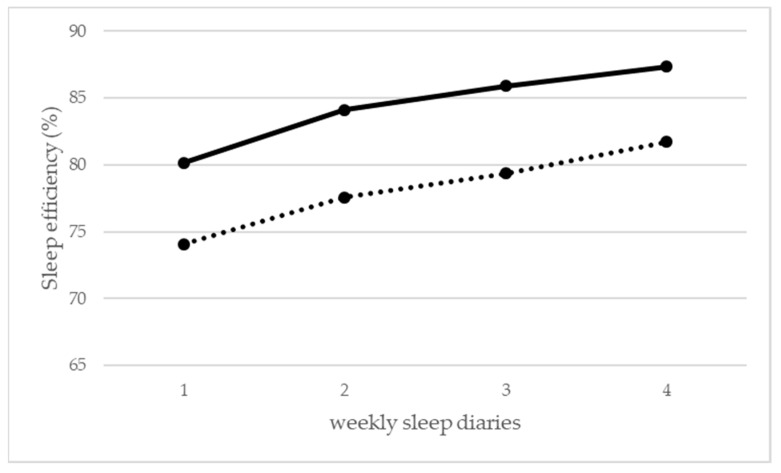
In western societies, about one in six employees works in shifts. Shiftwork is associated with a number of poor somatic and psychological health outcomes, especially sleep issues. Higher rates of absenteeism and accidents in the workplace are possible consequences. Still, prevention programs and treatment options that are specifically tailored to shift-workers’ needs are rare. We devised a 4-week online cognitive behavioral therapy for insomnia (CBT-I) intervention (n = 21) and compared sleep outcomes to a face-to-face outpatient treatment for shift-workers (n = 12) using a sleep diary and the Epworth Sleepiness Scale (ESS). In the online sample, measures also included the World Health Organization wellbeing questionnaire (WHO-5) and the Insomnia Severity Index (ISI). In the outpatient sample, the Beck Depression Inventory (BDI-II), the Montgomery–Åsberg Depression Rating Scale (MADRS), and the Pittsburgh Sleep Quality Index (PSQI) were administered. Results showed significant improvements in sleep efficiency by 7.2% in the online sample and 7.7% in the outpatient sample. However, no significant difference was found in the rate of improvement in sleep efficiency across four weeks of treatment between the samples. In the online sample, the wellbeing (WHO-5) and insomnia symptoms (ISI) scores were significantly improved following the CBT-I intervention (p < 0.004 and p < 0.002 respectively). In the outpatient sample, symptoms of depression (BDI-II and MADRS scores) and insomnia symptoms (PSQI scores) improved significantly following the CBT-I intervention. In summary, CBT-I significantly improved sleep efficiency in both the online and outpatient samples, in addition to wellbeing, symptoms of insomnia, and depression. The findings of this study demonstrate online CBT-I as a feasible approach for treating insomnia in shift-workers. Future randomized controlled trials are needed.
Overview
The claims and statistics of this paper haven’t been checked yet.
Free: it reads the open-access text and checks the first 5 claims that cite a source we can check. Create a free account to check every claim.
Integrity signals
Registry
Cites
Statistics
Figures
Verification
Claims the paper makes
The claims and statistics of this paper haven’t been checked yet.
Free: it reads the open-access text and checks the first 5 claims that cite a source we can check. Create a free account to check every claim.
Claims other papers make about this one
Each is checked against this paper’s own text: does it say what the citing paper says it does?
The source backs part of the claim, not all of it — or backs it for a different population, condition or comparison.
In the citing paper
“For example, Peter and colleagues56 found that an online, 4-week intervention using cognitive behavioral therapy for insomnia reduced depression and insomnia ratings at levels comparable to traditional face-to-face interventions.”
From Brain health consequences of digital technology use (2020) · cites this paper as [56]
Experimental — accuracy not yet measured
Self-check
Percentages, sums and reported differences re-computed from the paper’s own numbers.
The self-check needs the paper’s full text.
Citations
Cites
The Pittsburgh Sleep Quality Index: a new instrument for psychiatric practice and research
Buysse, D. J., Reynolds, C. F., Monk, T. H., Berman, S. R., & Kupfer, D. J. (1989) · Psychiatry Research · doi:10.1016/0165-1781(89)90047-4 · Cited by 35,234 · cited 6×
“Following the CBT-I intervention, scores on the BDI-II (p = 0.007), MADRS (p 0.001), and PSQI (p = 0.007) improved in the outpatient sample (see Table 3).”
BackgroundMethodInfluentialA New Method for Measuring Daytime Sleepiness: The Epworth Sleepiness Scale
Johns, M. W. (1991) · Sleep · doi:10.1093/sleep/14.6.540 · Cited by 17,364 · cited 13×
“Upon registration on the online platform, using the access code, participants received a welcome message containing sociodemographic questions and were administered three questionnaires for evaluating the effectiveness of the CBT-I intervention (WHO-5, ISI, ESS), in addition to a sleep diary (see below).”
BackgroundMethodInfluentialA new depression scale designed to be sensitive to change
Montgomery, S. A., & Åsberg, M. (1979) · British Journal of Psychiatry · doi:10.1192/bjp.134.4.382 · Cited by 13,962 · cited 6×
“Following the CBT-I intervention, scores on the BDI-II (p = 0.007), MADRS (p 0.001), and PSQI (p = 0.007) improved in the outpatient sample (see Table 3).”
MethodInfluentialJob Demands, Job Decision Latitude, and Mental Strain: Implications for Job Redesign
Karasek, R. A. (1979) · Administrative Science Quarterly · doi:10.2307/2392498 · Cited by 12,597 · cited 1×
“These factors can be interpreted as reduced job control [9] and as an effort–reward imbalance [10]; both models have been used in the past to causally connect poor working conditions with cardiovascular risk factors such as hypertension or atherosclerosis [6,11].”
MethodValidation of the Insomnia Severity Index as an outcome measure for insomnia research
Bastien, C. (2001) · Sleep Medicine · doi:10.1016/s1389-9457(00)00065-4 · Cited by 8,067 · cited 3×
“Pre- Post- p-Value (One-Tailed) Online sample (n = 21) World Health Organization wellbeing questionnaire (WHO-5) 10.9 ± 3.8 13.9 ± 4.2 0.004 Insomnia Severity Index (ISI) 13.9 ± 3.8 10.6 ± 5.6 0.002 Epworth Sleepiness Scale (ESS) 9.1 ± 3.7 8.2 ± 3.7 0.109 Total sleep time 386.1 ± 58.6 395.1 ± 76.1 0.195 Total bed time…”
BackgroundMethodInfluentialBeck, A. T., Steer, R. A., & Brown, G. (2011) · PsycTESTS Dataset · doi:10.1037/t00742-000 · Cited by 7,535
The measurement of effort–reward imbalance at work: European comparisons
Siegrist, J., Starke, D., Chandola, T., Godin, I., Marmot, M., Niedhammer, I., & Peter, R. (2004) · Social Science & Medicine · doi:10.1016/s0277-9536(03)00351-4 · Cited by 2,268 · cited 1×
“These factors can be interpreted as reduced job control [9] and as an effort–reward imbalance [10]; both models have been used in the past to causally connect poor working conditions with cardiovascular risk factors such as hypertension or atherosclerosis [6,11].”
MethodShift Work Sleep Disorder: Prevalence and Consequences Beyond that of Symptomatic Day Workers
Drake, C. L., Roehrs, T., Richardson, G., Walsh, J. K., & Roth, T. (2004) · Sleep · doi:10.1093/sleep/27.8.1453 · Cited by 860
An American Academy of Sleep Medicine Report, Morgenthaler, T., Kramer, M., Alessi, C., Friedman, L., Boehlecke, B., Brown, T., Coleman, J., Kapur, V., Lee-Chiong, T., et al. (2006) · Sleep · doi:10.1093/sleep/29.11.1415 · Cited by 835
Exposure to Bright Light and Darkness to Treat Physiologic Maladaptation to Night Work
Czeisler, C. A., Johnson, M. P., Duffy, J. F., Brown, E. N., Ronda, J. M., & Kronauer, R. E. (1990) · New England Journal of Medicine · doi:10.1056/nejm199005033221801 · Cited by 580 · cited 1×
“There is some evidence that the application of bright artificial light between 7000 and 12,000 Lux during night-shifts and wearing sunglasses on the morning commute home might improve circadian adaptation and wakefulness at work [15,22,23].”
Research works printed but not linked: 1
- Fisher E. Farina A. Attitudes toward seeking professional psychological help: Development and research utility of an attitude scale J. Coll. Stud. Dev. 1995 36 368 373
Cited by
The European Insomnia Guideline: An update on the diagnosis and treatment of insomnia 2023
Riemann, D., Espie, C. A., Altena, E., Arnardottir, E. S., Baglioni, C., Bassetti, C. L. A., Bastien, C., Berzina, N., Bjorvatn, B., Dikeos, D., et al. (2023) · Journal of Sleep Research · doi:10.1111/jsr.14035 · Cited by 834
Brain health consequences of digital technology use
Small, G. W., Lee, J., Kaufman, A., Jalil, J., Siddarth, P., Gaddipati, H., Moody, T. D., & Bookheimer, S. Y. (2020) · Dialogues in Clinical Neuroscience · doi:10.31887/dcns.2020.22.2/gsmall · Cited by 491
Sleep Disorders in Cancer—A Systematic Review
Büttner-Teleagă, A., Kim, Y.-T., Osel, T., & Richter, K. (2021) · International Journal of Environmental Research and Public Health · doi:10.3390/ijerph182111696 · Cited by 186
“Peronalized medical services for cancer patients should include integrated coaching or the early treatment of the most common sleep disorders and web-based telehealth programs [92] to reduce the preservation and/or aggravation of cancer an/or serious implications, including increased cerebrovascular, cardiovascular an…”
BackgroundSelf-citationDigital biomarkers: 3PM approach revolutionizing chronic disease management — EPMA 2024 position
Smokovski, I., Steinle, N., Behnke, A., Bhaskar, S. M. M., Grech, G., Richter, K., Niklewski, G., Birkenbihl, C., Parini, P., Andrews, R. J., et al. (2024) · The EPMA Journal · doi:10.1007/s13167-024-00364-6 · Cited by 88
“Continuous monitoring of the day-night activity is decisive for detecting sleep–wake irregularities in shift workers and sleep disorders in blind people [27, 28, 33, 35] Abnormal light exposure Light exposure plays a key role in sleep–wake disorders and seasonal depression.”
BackgroundSelf-citationZhao, X., Zhang, T., Li, B., Yu, X., Ma, Z., Cao, L., Gu, Q., Dong, C., Yun-hua, J., Fan, J., et al. (2020) · Sleep Medicine · doi:10.1016/j.sleep.2020.07.027 · Cited by 59
“A clear understanding of the relationships between these factors and sleep disorders would be helpful for taking precautions or providing relatively inexpensive and easily accessible therapy [eg, self-help sleep treatment such as online cognitive behavioral therapy (CBT)] to build an effective workforce [12].”
Sleep and Wellbeing, Now and in the Future
Chow, C. M. (2020) · International Journal of Environmental Research and Public Health · doi:10.3390/ijerph17082883 · Cited by 55
“Nevertheless, the online platforms of mHealth [33] and cognitive behavioural therapy for insomnia (CBTi) [34] are resourceful, easily accessible materials for shift workers.”
BackgroundShriane, A. E., Rigney, G., Ferguson, S. A., Bin, Y. S., & Vincent, G. E. (2023) · SLEEP · doi:10.1093/sleep/zsad182 · Cited by 59
The Efficacy of a Smartphone-Based App on Stress Reduction: Randomized Controlled Trial
Hwang, H., Kim, S. M., Netterstrøm, B., & Han, D. H. (2022) · Journal of Medical Internet Research · doi:10.2196/28703 · Cited by 47
“Such online CBTs have demonstrated efficacy in several areas, including the reduction of stress [12], depression, anxiety [13], and insomnia [14].”
Reynolds, A. C., Sweetman, A., Crowther, M. E., Paterson, J. L., Scott, H., Lechat, B., Wanstall, S. E., Brown, B. W., Lovato, N., Adams, R. J., et al. (2023) · Sleep Medicine Reviews · doi:10.1016/j.smrv.2022.101716 · Cited by 43
Järnefelt, H., Härmä, M., Sallinen, M., Virkkala, J., Paajanen, T., Martimo, K.-P., & Hublin, C. (2020) · International Archives of Occupational and Environmental Health · doi:10.1007/s00420-019-01504-6 · Cited by 35
Richter, K., Kellner, S., Hillemacher, T., & Golubnitschaja, O. (2021) · The EPMA Journal · doi:10.1007/s13167-021-00245-2 · Cited by 40
Self-citationKalkanis, A., Demolder, S., Papadopoulos, D., Testelmans, D., & Buyse, B. (2023) · Frontiers in Neurology · doi:10.3389/fneur.2023.1270043 · Cited by 43
Du, C., Wang, W., Hsiao, P. Y., Ludy, M., & Tucker, R. M. (2021) · Behavioral Sciences · doi:10.3390/bs11050069 · Cited by 39
“Further, one systematic review noted that CBTi was the most effective strategy for sleep improvement compared to other strategies [76], and its online delivery has also been shown to be effective [79].”
BackgroundGkintoni, E., Vassilopoulos, S. P., Nikolaou, G., & Boutsinas, B. (2025) · Journal of Clinical Medicine · doi:10.3390/jcm14072265 · Cited by 34
Analysis of Sociodemographic and Psychological Variables Involved in Sleep Quality in Nurses
Fuentes, M. D. C. P., Jurado, M. D. M. M., Márquez, M. D. M. S., & Linares, J. J. G. (2019) · International Journal of Environmental Research and Public Health · doi:10.3390/ijerph16203846 · Cited by 39
“Shift work has been linked to a series of negative consequences, such as the alteration of the circadian rhythm, the decrease in sleep hours, as well as the increase in fatigue [12] All of this can increase the risk of mistakes and accidents that may affect patient safety [13].”
BackgroundEll, J., Brückner, H. A., Johann, A. F., Steinmetz, L., Güth, L. J., Feige, B., Järnefelt, H., Vallières, A., Frase, L., Domschke, K., et al. (2024) · Journal of Sleep Research · doi:10.1111/jsr.14193 · Cited by 27
Haskell, B., Eiler, A., & Essien, H. (2025) · Arthroscopy Sports Medicine and Rehabilitation · doi:10.1016/j.asmr.2025.101077 · Cited by 30
“55 The patient is then instructed to select a bedtime that is that amount of hours before their desired waketime.”
Semsarian, C. R., Rigney, G., Cistulli, P. A., & Bin, Y. S. (2021) · International Journal of Environmental Research and Public Health · doi:10.3390/ijerph181910180 · Cited by 27
Brooks, A. T., Raju, S., Barb, J. J., Kazmi, N., Chakravorty, S., Krumlauf, M., & Wallen, G. R. (2020) · International Journal of Environmental Research and Public Health · doi:10.3390/ijerph17010331 · Cited by 26
Ito-Masui, A., Sakamoto, R., Matsuo, E., Kawamoto, E., Motomura, E., Tanii, H., Yu, H., Sano, A., Imai, H., & Shimaoka, M. (2023) · Journal of Medical Internet Research · doi:10.2196/45834 · Cited by 20
“The CBT elements for the web-based groups included sleep restriction, sleep hygiene education, and relaxation techniques and were provided by semistandardized emails [21].”
Hinterberger, A., Eigl, E., Schwemlein, R. N., Topalidis, P. I., & Schabus, M. (2023) · Journal of Sleep Research · doi:10.1111/jsr.14136 · Cited by 22
“Nine participants dropped out during the study, resulting in a dropout rate of 13.6%, which is significantly less than in similar studies investigating the effects of digital programmes for insomnia in outpatients (40% in Peter et al., 2019; 34.4% in Yeung et al., 2015).”
InfluentialTout, A. F., Tang, N. K. Y., Sletten, T. L., Toro, C. T., Kershaw, C., Meyer, C., Rajaratnam, S. M. W., & Moukhtarian, T. R. (2024) · Frontiers in Sleep · doi:10.3389/frsle.2024.1343393 · Cited by 24
Vallières, A., Pappathomas, A., Garnier, S. D. B., Mérette, C., Carrier, J., Paquette, T., & Bastien, C. H. (2024) · Journal of Sleep Research · doi:10.1111/jsr.14162 · Cited by 19
Semantic Segmentation of Periocular Near-Infra-Red Eye Images Under Alcohol Effects
Tapia, J. E., Droguett, E. L., Valenzuela, A., Benalcazar, D., Causa, L., & Busch, C. (2021) · IEEE Access · doi:10.1109/access.2021.3101256 · Cited by 21
“In state of the art, various performance tests have been proposed as FFD, including psycho-motor tasks, temperature sensor, electroencephalography, finger tapping, smart band wrist, in-cab monitoring, among others [7], [8].”
BackgroundCrowther, M. E., Saunders, W. J., Sletten, T. L., Drummond, S. P. A., & Bei, B. (2023) · Journal of Sleep Research · doi:10.1111/jsr.14023 · Cited by 21
“Bright light therapy was used in conjunction with CBT-I when treating individuals with comorbid circadian disorders (Gradisar et al., 2011; Peter et al., 2019), bipolar disorders (Harvey et al., 2015; Kaplan et al., 2018; Steinan et al., 2014), and substance use disorders (Britton et al., 2010).”
MethodShift work sleep disorder in nurses: a concept analysis
Yu, L., Zhou, H., Li, J., & Yu, X. (2025) · BMC Nursing · doi:10.1186/s12912-024-02651-z · Cited by 26
“This highlights the importance of interventions like Cognitive Behavioral Therapy for Insomnia (CBT-I) and improved sleep hygiene practices [51, 52].”
Assessing Sleep Quality Using Mobile EMAs: Opportunities, Practical Consideration, and Challenges
Lim, J., Jeong, C. Y., Lim, J. M., Chung, S., Kim, G., Noh, K. J., & Jeong, H. (2022) · IEEE Access · doi:10.1109/access.2021.3140074 · Cited by 19
“However, such diaries generally report on a very limited set of items related to sleep hygiene, such as nap times and the timing of alcohol intake prior to sleeping, therefore sleep diaries alone are limited in their ability to provide sufficient information that causes sleep disturbance [4].”
BackgroundChao, L. L., Kanady, J. C., Crocker, N., Straus, L. D., Hlavin, J., Metzler, T. J., Maguen, S., & Neylan, T. C. (2021) · Life Sciences · doi:10.1016/j.lfs.2021.119147 · Cited by 17
Guo, W., Nazari, N., & Sadeghi, M. (2024) · PeerJ · doi:10.7717/peerj.17491 · Cited by 15
“Research indicates that MBIs can enhance sleep quality in various clinical populations with sleep disturbances ( Adler et al., 2017 ; Garland et al., 2014 ; Gross et al., 2011 ; Ong et al., 2018 ; Peter et al., 2019 ) 2021 ; Querstret, Cropley & Fife-Schaw, 2018 ; Kennett, Bei & Jackson, 2021 ).”
BackgroundSleep disorders in cancer: interactions and intrinsic links
Han, C., Li, N., Wang, X., Zhuang, Z., Cao, Q., & Wang, S. (2025) · Frontiers in Oncology · doi:10.3389/fonc.2025.1535442 · Cited by 18
Causa, L., Tapia, J. E., Valenzuela, A., Benalcazar, D., Droguett, E. L., & Busch, C. (2023) · Expert Systems with Applications · doi:10.1016/j.eswa.2023.122808 · Cited by 15
Fink, A. M. (2024) · Policy Politics & Nursing Practice · doi:10.1177/15271544241238752 · Cited by 13
“…Rating Scale) in the outpatient sample; depressive symptoms were not measured in the cohort receiving CBT instruction online, although the online program was associated with signi fi cantly increased mental well-being scores on the World Health Organization-5 Well-being Index (Peter et al., 2019).”
BackgroundMethodInfluentialRetzer, L., Feil, M., Reindl, R., Richter, K., Lehmann, R., Stemmler, M., & Graessel, E. (2021) · Trials · doi:10.1186/s13063-021-05437-9 · Cited by 13
Self-citationNon-guided, mobile, CBT-I-based sleep intervention in War-torn Ukraine: A feasibility study
Kurapov, A., Blechert, J., Hinterberger, A., Topalidis, P. I., & Schabus, M. (2025) · PLoS ONE · doi:10.1371/journal.pone.0310070 · Cited by 11
Hung, H., Kuo, P., Lee, C. S., & Chen, C. (2022) · Health Care For Women International · doi:10.1080/07399332.2022.2141744 · Cited by 12
“…have used cognitive-behavioral therapy strategies such as sleep restrictions, stimulus control, cognitive restructuring, sleep hygiene, and relapse prevention in interventions targeting patients with cancer (e.g., Ritterband et al., 2012) and shiftwork sleep disorder (e.g., Peter et al., 2019).”
MethodStapel, B., Alvarenga, M. E., & Kahl, K. G. (2025) · Frontiers in Psychiatry · doi:10.3389/fpsyt.2025.1490585 · Cited by 8
Wang, D., Lin, B., Du, J., Liu, W., Sun, T., Li, Q., & Xiao, L. (2025) · International Journal of Clinical and Health Psychology · doi:10.1016/j.ijchp.2025.100543 · Cited by 11
“Internet-delivered interventions offer flexibility and have proven effective in improving sleep and well-being among shift workers (Newby et al., 2021; Peter et al., 2019).”
Scott, J. L., Vedaa, Ø., Sivertsen, B., Langsrud, K., & Kallestad, H. (2022) · Journal of Psychiatric Research · doi:10.1016/j.jpsychires.2022.01.054 · Cited by 10
„Coronasomnia“ – Resilienzförderung durch Insomniebehandlung
Richter, K., & Kellner, S. (2021) · Somnologie - Schlafforschung und Schlafmedizin · doi:10.1007/s11818-021-00322-8 · Cited by 7
“Für dasmedizinischePersonal, das auch vor der COVID-19-Pandemie eine Risikogruppe für Schlafstörungen war, empfehlen wir ein breites Präventionsprogramm in allen Krankenhäusern für ein adäquates Schlafmanagement und für die Prävention vonSchlafstörungen[3,25,31].”
BackgroundSelf-citationInternetbasierte kognitive Verhaltenstherapie der Insomnie und Albtraumstörung
Frase, L., Duss, S. B., Gieselmann, A., Penzel, T., Wetter, T. C., & Pollmächer, T. (2019) · Der Nervenarzt · doi:10.1007/s00115-019-00803-0 · Cited by 6
Treatment of insomnia in elderly patients
Kneginja, R., Kellner, S., Lenche, M., & Helmut, F. (2020) · Journal for ReAttach Therapy and Developmental Diversities · doi:10.26407/2019jrtdd.1.25 · Cited by 7
“In the course of the digitalisation and virtualisation of therapeutic measures in the field of insomnia through virtual coaches (Peter et al. 2019), online treatment and online-guided interventions, the effectiveness of such measures must also be examined here.”
BackgroundCBT‐I Protocols for Shift Workers and Health Operators
Järnefelt, H., & Spiegelhalder, K. (2022) · Wiley eBooks · doi:10.1002/9781119891192.ch10 · Cited by 7
Yu, Y. K., Chen, Y., Ma, L., Qu, Y.-Y., Li, Y., Peng, Y., Zhu, Y., He, J., Gou, H.-Y., & Zhu, Y. (2022) · Behavioral Sleep Medicine · doi:10.1080/15402002.2022.2136178 · Cited by 5
Anttilainen, J., Haukka, E., Järnefelt, H., & Pehkonen, I. (2025) · Ergonomics · doi:10.1080/00140139.2025.2509610 · Cited by 4
“Web-based tools are cost-effective and adaptable to various workplaces due to their flexibility (Peter et al. 2019). in successful workplaces of this study, mental health promotion was integrated into the organisations’ strategy.”
Factors facilitating and hindering the implementation of digital sleep coaching for bus drivers
Järnefelt, H., Anttilainen, J., Karhula, K., Hublin, C., Pehkonen, I., & Sallinen, M. (2024) · Applied Ergonomics · doi:10.1016/j.apergo.2024.104356 · Cited by 5
Härmä, M., Karhula, K., & Työterveyslaitos (2020) · STM:n Hallinnonalan avoin julkaisuarkisto (Julkari) · Cited by 40
Vpliv izmenskega dela na spanje in duševno zdravje – pregled literature in pogled naprej
Lavrič, M., & Štukovnik, V. (2021) · Psihološka obzorja · doi:10.20419/2021.30.541 · Cited by 10
Li, Y., Nazari, N., & Sadeghi, M. (2022) · Trials · doi:10.1186/s13063-022-06986-3 · Cited by 4
“Compared with traditional face-to-face interventions, internet-delivered interventions provide widespread access and dissemination and increase costeffectiveness [69, 70].”
BackgroundYuska, T., DeVries, A., Kanelos, M., Delphus, D., Toperzer, K., O'Malley, K., Katerji, S., Desai, P., Pedrigal, K., Thach, R., et al. (2025) · Cureus · doi:10.7759/cureus.85086 · Cited by 4
Batterham, P. J., Thorndike, F. P., Gerwien, R. W., Botbyl, J. D., Ritterband, L. M., Maricich, Y. A., & Christensen, H. M. (2023) · Behavioral Sleep Medicine · doi:10.1080/15402002.2023.2285799 · Cited by 4
“…that this mode of delivering CBT-I may be an important approach for scaling up treatment for insomnia in the community (Zachariae et al., 2016) and for providing a transdiagnostic approach to reducing symptoms of common mental disorders (Harvey, 2008; Peter et al., 2019, Cliffe et al., 2020).”
BackgroundHinterberger, A., Eigl, E., Topalidis, P. I., & Schabus, M. (2025) · Nature and Science of Sleep · doi:10.2147/nss.s501633 · Cited by 4
Sakai, S., Nagata, M., Nagata, T., & Mori, K. (2021) · Journal of UOEH · doi:10.7888/juoeh.43.15 · Cited by 5
Effect of digital technology on our brain health
Singh, P., Das, J., & Das, Z. J. (2022) · International journal of applied research · doi:10.22271/allresearch.2022.v8.i2e.9472 · Cited by 3
Ramos-Álvarez, R., Sánchez-Martín, M., Rodríguez-Ruiz, M.-M., & Fausor, R. (2023) · Anales de Psicología · doi:10.6018/analesps.441181 · Cited by 2
“For instance, studying effectivity of online versus face-to-face interventions (Mallen, Day & Green, 2003; Spijker-man, Pots & Bohlmeijer, 2016; Peter et al., 2019), studies indicate that there are generally not differences, and that in some cases online interventions are more effective (Wechsler…”
BackgroundPredictive, Preventive, and Personalized Approach in Sleep Medicine
Richter, K., Gjorgov, N., & Bajraktarov, S. (2023) · Advances in predictive, preventive and personalised medicine · doi:10.1007/978-3-031-34884-6_14 · Cited by 2
Self-citationTapia, J. E., Benalcazar, D., Valenzuela, A., Causa, L., Droguett, E. L., & Busch, C. (2025) · Expert Systems with Applications · doi:10.1016/j.eswa.2025.126511 · Cited by 2
Telepsychiatry: What you need to know
Frank, B. L., Peterson, T. R., Gupta, S., & Peterson, T. (2020) · Current Psychiatry · doi:10.12788/cp.0001 · Cited by 3
Chronobiologische Aspekte der Insomnie
Ell, J., Benz, F., Walter, N., Steinmetz, L., Brückner, H., Lehr, D., Riemann, D. W., & Spiegelhalder, K. (2021) · Somnologie - Schlafforschung und Schlafmedizin · doi:10.1007/s11818-021-00295-8 · Cited by 2
Retzer, L., Reindl, R., Zauter, S., & Richter, K. (2021) · Somnologie - Schlafforschung und Schlafmedizin · doi:10.1007/s11818-020-00292-3 · Cited by 2
Self-citationMDLNN Approach for Alcohol Detection using IRIS
Reddy, A. V., Kumar, P. S., Khan, P. A., Karumudi, V. S. R., Pradeepini, G., & Imambi, S. S. (2023) · International Conference on Electronics and Renewable Systems (ICEARS) · doi:10.1109/icears56392.2023.10085257 · Cited by 2
“However, in unbalanced datasets like this one, where records for unfit people make up around 13% of the total, RF, GBM, and MLP are extensively used algorithms.”
MethodInfluentialSleep health interventions for managing mental health in shift workers: A systematic reviewPreprint
Bragge, P., Burns, J., Kellner, P., Allen, M., Fitzgerlad, D., Grundy, E. A. C., Lennox, A., Moukhtarian, T. R., Rajaratnam, S. M. W., & Sletten, T. L. (2025) · medRxiv · doi:10.1101/2025.07.28.25331984 · Cited by 3
Shen, Y., Olivier, A. C., Yu, H., Ito-Masui, A., Sakamoto, R., Shimaoka, M., & Sano, A. (2025) · JMIR Formative Research · doi:10.2196/65000 · Cited by 1
“…to shift workers, but time commitment for weekly sessions was still necessary and likely contributed to the considerable dropout rates, and the interventions either required human input for professional feedback or only resembled a web-based learning module without any personalization [15,16].”
InfluentialCognitive factors increase the risk of shift work disorder through insomnia symptoms
Harris, R., Drummond, S. P. A., Sletten, T. L., & Wolkow, A. P. (2025) · Sleep Medicine · doi:10.1016/j.sleep.2025.106806 · Cited by 2
Wang, S., Zhang, C., Huang, J., Liu, T., & Xu, W. (2025) · Behavioral Science · doi:10.3390/bs15111554 · Cited by 1
“One of the most widely discussed interventions for depression and sleep quality is cognitive behavioral therapy (CBT)-based approaches, such as the MoodGYM program (Christensen et al., 2004) for depression and cognitive behavioral therapy for insomnia (CBT-I; Peter et al., 2019; Ren et al., 2016).”
Wright, K. P., Abbott, S. M., Ashbrook, L. H., Drake, C. L., Flynn‐Evans, E. E., Framnes‐DeBoer, S. N., Kazmi, U., Keeler, K., McCall, C., Morgan, R. L., et al. (2026) · Journal of Clinical Sleep Medicine · doi:10.1007/s44470-026-00076-w · Cited by 1
Ahmeti, B., Murati, V., & Morina, F. (2025) · Journal Human Research in Rehabilitation · doi:10.21554/hrr.042519 · Cited by 1
“Another study Peter et al. (2019) conducted in Australia found that although employees experienced high levels of burnout and engagement, they still reported high levels of job satisfaction and that job resources (e.g., social support and autonomy) played a role in this relationship.”
Boivin, D. B., & Boudreau, P. (2025) · Oxford University Press eBooks · doi:10.1093/oxfordhb/9780197602751.013.44 · Cited by 1
Eigl, E., Hinterberger, A., Topalidis, P. I., & Schabus, M. (2023) · Research Square · doi:10.21203/rs.3.rs-3218498/v1 · Cited by 1
Kanady, J. C., Luik, A. I., & Espie, C. A. (2021) · Elsevier eBooks · doi:10.1016/b978-0-12-822963-7.00027-x
Using Digital Interventions for Occupational Mental Health Problems: A Scoping Review
Aavik, K. (2021) · Theseus (Ammattikorkeakoulujen)
Особенности строительства берегозащитных сооружений в городе
Новиков, В. Ю. (2014) · Интернет-журнал Науковедение
Shift work disorder and treatment
Sagong, C., Cheng, P., & Drake, C. L. (2022) · Elsevier eBooks · doi:10.1016/b978-0-12-822963-7.00267-x · Cited by 1
Sun, J., Wang, X., Jian, L., & Dong, B. (2023) · American Journal of Health Behavior · doi:10.5993/ajhb.47.4.7 · Cited by 1
(2024) · Frontiers research topics · doi:10.3389/978-2-8325-4873-8
Priya, S., Rajini, G., & Karthikeyan, V. S. (2025) · IGI Global eBooks · doi:10.4018/979-8-3693-4014-1.ch006
Zhou, Y., & Xue, F. (2025) · Work · doi:10.1177/10519815241303345
“31 Each tool has unique characteristics and application scenarios, impacting results differently.”
Li, Y., Nazari, N., & Sadeghi, M. (2024) · Figshare · doi:10.6084/m9.figshare.26555171
Li, Y., Nazari, N., & Sadeghi, M. (2024) · Figshare · doi:10.6084/m9.figshare.26555168
The Reproductive Health Experienced by Female Shift Workers in the United States
Parsons, J. (2023) · ScholarWorks (Walden University) · Cited by 1
Järnefelt, H., Karhula, K., Anttilainen, J., Gluschkoff, K., Pehkonen, I., Ylisassi, H., Nykänen, M., Hublin, C., & Sallinen, M. (2023) · STM:n Hallinnonalan avoin julkaisuarkisto (Julkari)
Navade, povezane s spanjem med zaposlenimi v socialnovarstvenih zavodih
Kurinčič, K. (2024) · Repository of the University of Primorsk (University of Primorska)
Douma, M. (2023) · UvA-DARE (University of Amsterdam)
Individual and occupational predictors of CBT-I response patterns among shift-working firefighters
Song, Y. M., Jeon, S., Cho, A., Chung, S., Ahn, Y. S., Suh, S. A., & Kim, J. K. (2026) · Journal of Behavioral and Cognitive Therapy · doi:10.1016/j.jbct.2026.100605
Peter, L., Graessel, E., Feil, M., Lehmann, R., Stemmler, M., & Richter, K. (2026) · Scientific Reports · doi:10.1038/s41598-026-64210-7
“The lack of improvement regarding daytime sleepiness, while not expected, sits well with other findings in the field 28 , including our own pilot study 10 .”
InfluentialSelf-citation成人期における不眠の社会的要因――社会経済的要因および職業関連要因を中心に――
森本, 帆., 下田, 真., & 滝沢, 龍. (2026) · Institutional Repositories DataBase (IRDB) · doi:10.15083/0002015256
Insomnia treatment preferences of older adults and people living with dementia: A qualitative study
McEvoy, A. M., Reeve, E., Ride, J., Langford, A. V., Lee, K. M. K., Loh, S., & Turner, J. P. (2026) · Journal of Alzheimer s Disease · doi:10.1177/13872877261487350
“55,56 These forms of access may prove relevant for increasing acceptability in this population.”
Treatment of insomnia with non-pharmacological methods in wellbeing services counties in Finland
Kemppainen, T. (2024) · UEF eRepo (University of Eastern Finland)
Management of shift work disorder: an American Academy of Sleep Medicine clinical practice guideline
Wright, K. P., Abbott, S. M., Ashbrook, L. H., Drake, C. L., Flynn‐Evans, E. E., Framnes‐DeBoer, S. N., Kazmi, U., Keeler, K., McCall, C., Morgan, R. L., et al. (2026) · Journal of Clinical Sleep Medicine · doi:10.1007/s44470-026-00084-w
“Peter et al. [24] modified their protocol for shift workers to report daytime sleep, and their outpatient protocol included bright light treatment between two of the sessions.”
Metadata
- Authors
- Peter, L., Reindl, R., Zauter, S., Hillemacher, T., & Richter, K.
- Affiliations
- Georg Simon Ohm University of Applied Sciences Nuremberg (DE)
- Paracelsus Medizinische Privatuniversität (DE)
- Corresponding author
- Peter, Lukas
- Venue
- International Journal of Environmental Research and Public Health
- Publisher
- MDPI AG
- Published
- 2019-08-24
- Volume
- 16
- Issue
- 17
- Pages
- 3081
- ISSN
- 1660-4601 (ISSN-L)
- PMC
- PMC6747089
- OpenAlex
- W2969474132
- Cited by
- 83
- References
- 51
- Citations by year
- 2026: 5 · 2025: 19 · 2024: 11 · 2023: 14 · 2022: 11 · 2021: 14 · 2020: 5 · 2019: 3
- FWCI
- 9.69
- Type
- journal article
- Language
- en
- Open access
- gold
- dx.doi.org
- Licence
- Locations
- International Journal of Environmental Research and Public Health (publishedVersion, cc-by)
- Preprints.org (acceptedVersion, cc-by)
- PubMed Central (publishedVersion, cc-by)
- PubMed (publishedVersion)
- RePEc: Research Papers in Economics (submittedVersion)
- DOAJ (DOAJ: Directory of Open Access Journals) (submittedVersion)
- OHMdok (Technische Hochschule Nürnberg) (submittedVersion, cc-by)
- Funders
- Staedtler Stiftung (WW/eh 19/16)
- Topics
- Social Sciences › Psychology › Experimental and Cognitive Psychology › Sleep and related disorders
- Social Sciences › Psychology › Experimental and Cognitive Psychology › Sleep and Work-Related Fatigue
- Life Sciences › Neuroscience › Endocrine and Autonomic Systems › Circadian rhythm and melatonin
- Keywords
- shift work disorder, cognitive behavioral therapy for insomnia, online intervention, shift workers, insomnia, sleep efficiency, depression, well-being, sleep quality, Epworth Sleepiness Scale, Insomnia Severity Index
- MeSH terms
- Adult, Female, Humans, Sleep Initiation and Maintenance Disorders, Male, Middle Aged, Outpatients, Surveys and Questionnaires, Sleep, Work Schedule Tolerance, Cognitive Behavioral Therapy, Treatment Outcome, Telemedicine, Sleep Disorders, Circadian Rhythm
About these checks
Registry, retraction, Cites and statistics results are computed, not judged, with one exception: a printed reference that no index lists is read once by a model before it counts as a citation error. Claims are extracted by a model and kept only when their quote appears verbatim in the text; each cited source is then checked, with a model’s help, for whether it says what the claim relies on. Those verdicts can be wrong — read the claim’s quote and the cited source before relying on one.
Statistics and arithmetic are recomputed, not judged.
Confidence bands are shown only for fields calibrated on our annotated test set. None is calibrated yet, so no band is shown.
What counts as a claim ›How we measure confidence ›How we check this ›
Are you an author, or do you see a problem with this page? Request a review
Data sources
Bibliographic data: Semantic Scholar, OpenAlex, Crossref.
Contains information from the Semantic Scholar Academic Graph Datasets, made available under the ODC Attribution License (ODC-BY 1.0).
Semantic Scholar’s data is described in: Kinney, R., et al. (2023). The Semantic Scholar Open Data Platform. arXiv:2301.10140.
