

The Current and Retrospective Intentional Nature Exposure Scales: Development and Factorial Validity
Open accessThe DOI matches its Crossref record; 30 of the 31 references it cites were found in a registry or an index.
Abstract
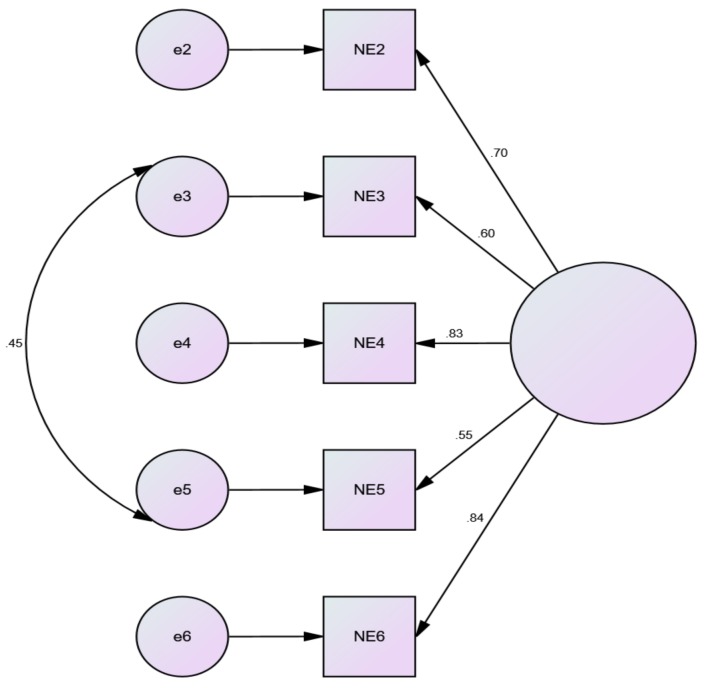
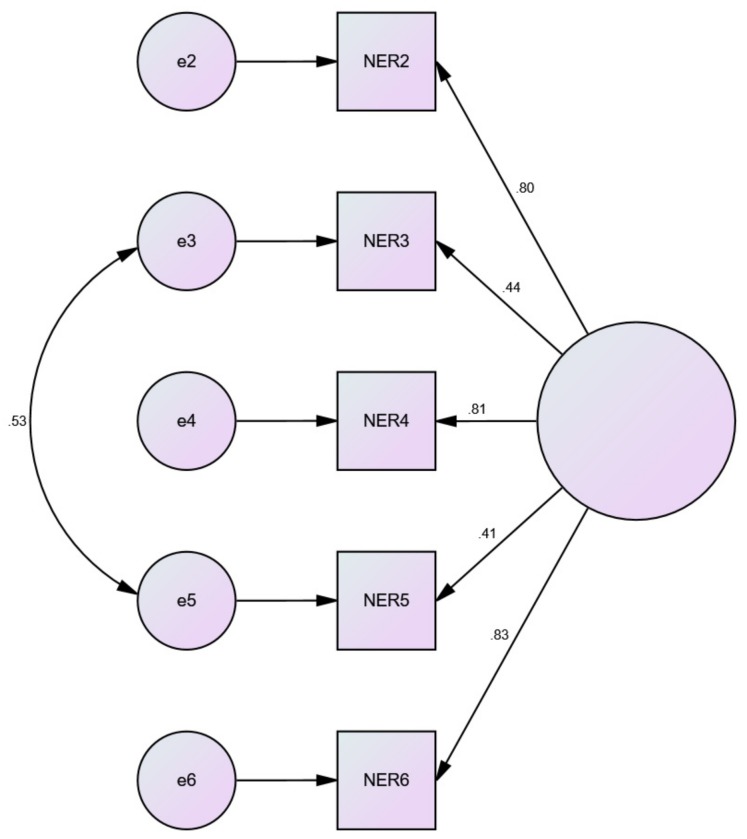
Both nature exposure and green exercise (GE) can improve health. However, there are no scales examining frequency of engagement; or that consider interaction with nature. There are also no scales assessing these variables during childhood. The aim of this study was to develop a modified (NES-II) and retrospective (RNES-II) version of the Nature Exposure Scale to incorporate GE and to examine their factor structure and reliability. Exploratory factor analysis (EFA) explored the factor structure of the scales; followed by confirmatory factor analysis to confirm the model fit. Fit indices for the one factor five item NES-II and RNES-II models identified by EFA were poor. Use of modification indices resulted in a good model fit; NES-II: χ(5, n = 385) = 2.638; χnormed = 0.879; CFI= 1.000; RMSEA < 0.001 with 90%CI = 0.000–0.082; SRMR = 0.009; AIC = 36.638. RNES-II: χ(2, n = 385) = 7.149; χnormed = 3.574; CFI = 0.995; RMSEA = 0.082 with 90%CI = 0.023–0.151; SRMR = 0.015; AIC = 43.149. Both models demonstrated very good reliability (α = 0.84; 89 respectively). These findings indicate that the scales can be used to assess current and retrospective nature exposure. However, due to the removal of item one, the authors recommend that the scales be named the ‘intentional nature exposure scale’ and ‘retrospective intentional nature exposure scale’.
Overview
The claims and statistics of this paper haven’t been checked yet.
Free: it reads the open-access text and checks the first 5 claims that cite a source we can check. Create a free account to check every claim.
Integrity signals
Registry
Cites
Statistics
Figures
Verification
Claims the paper makes
The claims and statistics of this paper haven’t been checked yet.
Free: it reads the open-access text and checks the first 5 claims that cite a source we can check. Create a free account to check every claim.
Claims other papers make about this one
Each is checked against this paper’s own text: does it say what the citing paper says it does?
The source backs part of the claim, not all of it — or backs it for a different population, condition or comparison.
In the citing paper
“All the measurement tools used in this study were based on widely validated scales that have demonstrated good reliability and validity, ensuring accurate assessment of the core characteristics of the relevant variables.”
From The impact mechanism of green exercise on college students' suicidal ideation: a mediation analysis based on entrance anxiety (2026) · cites this paper as Wood et al., 2019
Experimental — accuracy not yet measuredThe check wasn’t confident either way, so it gives no verdict — never disputed.
In the citing paper
“This scale has demonstrated good reliability and validity across different cultural contexts and populations (Cronbach's α > 0.80).”
From The impact mechanism of green exercise on college students' suicidal ideation: a mediation analysis based on entrance anxiety (2026) · cites this paper as Wood et al., 2019
Experimental — accuracy not yet measured
Self-check
Percentages, sums and reported differences re-computed from the paper’s own numbers.
The self-check needs the paper’s full text.
Citations
Cites
Hu, L., & Bentler, P. M. (1999) · Structural Equation Modeling A Multidisciplinary Journal · doi:10.1080/10705519909540118 · Cited by 108,788 · cited 2×
“08 recommended by Hu and Bentler [34] was used for this statistic.”
MethodInfluentialSociety and the Adolescent Self-Image
Rosenberg, M. (1965) · doi:10.1515/9781400876136 · Cited by 30,126
Constructing validity: Basic issues in objective scale development.
Clark, L. A., & Watson, D. (1995) · Psychological Assessment · doi:10.1037/1040-3590.7.3.309 · Cited by 6,567 · cited 1×
“Following standard guidelines [28], items were submitted to EFA if they passed standard criteria for item distribution (kurtosis values < 10), average correlation with the other items (items < 0.”
MethodHenry, J. D., & Crawford, J. R. (2005) · British Journal of Clinical Psychology · doi:10.1348/014466505x29657 · Cited by 5,801
The Warwick-Edinburgh Mental Well-being Scale (WEMWBS): development and UK validation
Tennant, R., Hiller, L., Fishwick, R., Platt, S., Joseph, S., Weich, S., Parkinson, J., Secker, J., & Stewart-Brown, S. (2007) · Health and Quality of Life Outcomes · doi:10.1186/1477-7525-5-63 · Cited by 5,031
The connectedness to nature scale: A measure of individuals’ feeling in community with nature
Mayer, F. S., & Frantz, C. M. (2004) · Journal of Environmental Psychology · doi:10.1016/j.jenvp.2004.10.001 · Cited by 3,037
A Note on the Multiplying Factors for Various χ2 Approximations
Bartlett, M. S. (1954) · Journal of the Royal Statistical Society Series B: Statistical Methodology · doi:10.1111/j.2517-6161.1954.tb00174.x · Cited by 2,875
Tracking restoration in natural and urban field settings
Hartig, T., Evans, G. W., Jamner, L. D., Davis, D. S., & Gärling, T. (2003) · Journal of Environmental Psychology · doi:10.1016/s0272-4944(02)00109-3 · Cited by 2,118 · cited 1×
“Nature exposure also has a beneficial impact on physical activity (PA), promoting participation in and higher intensities of exercise [6,7].”
BackgroundEffect of exposure to natural environment on health inequalities: an observational population study
Mitchell, R., & Popham, F. (2008) · The Lancet · doi:10.1016/s0140-6736(08)61689-x · Cited by 2,099
Barton, J., & Pretty, J. (2010) · Environmental Science & Technology · doi:10.1021/es903183r · Cited by 1,592 · cited 3×
“GE can reduce stress and blood pressure, increase self-esteem, mood, and improve heart rate variability [8,10,11].”
Background
Research works printed but not linked: 2
- Nunnally J.C. Psychometric Theory 2nd ed. McGraw-Hill New York, NY, USA 1978
- Tabachnick B.G. Fidell L.S. Using Multivariate Statistics 6th ed. Pearson Education Boston, MA, USA 2013
Cited by
Kalantari, S., Xu, T. B., Mostafavi, A., Lee, A., Barankevich, R., Boot, W. R., & Czaja, S. J. (2022) · Innovation in Aging · doi:10.1093/geroni/igac015 · Cited by 107
“The instruments used in the study were the Nature Exposure Scale II (Wood et al., 2019), the Center for Epidemiologic Studies Depression Scale (Hann et al.”
MethodIrvine, K. N., Fisher, J. C., Bentley, P. R., Nawrath, M., Dallimer, M., Austen, G. E., Fish, R. D., & Davies, Z. G. (2022) · Journal of Environmental Psychology · doi:10.1016/j.jenvp.2022.101921 · Cited by 55
Swami, V., White, M. P., Voracek, M., Tran, U. S., Aavik, T., Ranjbar, H. A., Adebayo, S. O., Afhami, R., Ahmed, O., Aimé, A., et al. (2024) · Journal of Environmental Psychology · doi:10.1016/j.jenvp.2024.102432 · Cited by 55
Self-citationJavelle, F., Laborde, S., Hosang, T. J., Metcalfe, A. J., & Zimmer, P. (2021) · Frontiers in Psychology · doi:10.3389/fpsyg.2021.623946 · Cited by 25
Li, H., Browning, M. H. E. M., Cao, Y., & Zhang, G. (2022) · Behavioral Sciences · doi:10.3390/bs12030084 · Cited by 23
“We investigated nature exposure during childhood within a predefined timeframe [49], which aligns with the age between 5 and 10 years old.”
BackgroundKoivisto, M., & Grassini, S. (2022) · Journal of Environmental Psychology · doi:10.1016/j.jenvp.2022.101840 · Cited by 19
Deng, L., & Lee, C. (2025) · Journal of Environmental Psychology · doi:10.1016/j.jenvp.2025.102808 · Cited by 14
Swami, V., Robinson, C., & Furnham, A. F. (2022) · Ecopsychology · doi:10.1089/eco.2021.0029 · Cited by 12
Greenspaces and Human Well-Being: Perspectives from a Rapidly Urbanising Low-Income Country
Nawrath, M., Elsey, H., Rijal, M. L., & Dallimer, M. (2022) · Environments · doi:10.3390/environments9120148 · Cited by 11
The effect of the visual exercise environment on the response to psychological stress: a pilot study
Wood, C., Flynn, M., Law, R. J., Naufahu, J., & Smyth, N. (2020) · Anxiety Stress & Coping · doi:10.1080/10615806.2020.1770231 · Cited by 10
“Intentional Nature Exposure Scale The Intentional Nature Exposure Scale is a five-item scale which assesses overall exposure to nature and GE, including every day and non-everyday environments (Wood et al., 2019).”
BackgroundResultInfluentialSelf-citationSprague, N. L., Sachs, A. L., & Ekenga, C. C. (2022) · Sustainability · doi:10.3390/su141912600 · Cited by 9
“We chose the NES II to measure participant’s nature exposure as the validation study found this measure to have a very good reliability ( α = 0.84) [54].”
InfluentialPicanço, A., Arroz, A. M. M., Tsafack, N., Sánchez, A. F., Pereira, E., Benedictis, M. D., Amorim, I. R., Melo, M. D. L., & Gabriel, R. M. D. A. (2024) · Frontiers in Psychology · doi:10.3389/fpsyg.2024.1290066 · Cited by 7
Liu, T., Peng, B., Chen, W., Ren, Y., & Hu, H. (2026) · Frontiers in Psychology · doi:10.3389/fpsyg.2025.1735287 · Cited by 9
Hefti, M., Fleury‐Bahi, G., & Navarro, Ó. (2025) · PsyEcology Bilingual Journal of Environmental Psychology · doi:10.1177/21711976241308423 · Cited by 5
“La Escala de Exposición Intencional a la Naturaleza ( Intentional Nature Exposure Scale , INES) (Wood et al., 2019) se tra-dujo al francés y se utilizó para medir la exposi-ción voluntaria a la naturaleza.”
InfluentialImage Segmentation and Emotional Analysis of Virtual and Augmented Reality Urban Scenes
Stancato, G., & Piga, B. E. A. (2023) · Digital innovations in architecture, engineering and construction · doi:10.1007/978-3-031-36155-5_28 · Cited by 3
Manchón, F. D. A. M., González, P. V., Martín, M., & Šimunić, A. (2023) · REVISTA DE EDUCACIÓN AMBIENTAL Y SOSTENIBILIDAD · doi:10.25267/rev_educ_ambient_sostenibilidad.2022.v5.i2.2102 · Cited by 3
Krumrei-Mancuso, E. J., Trammell, J. P., Harriger, J. A., & Evans, J. A. (2025) · International Journal of Clinical and Health Psychology · doi:10.1016/j.ijchp.2025.100566 · Cited by 3
“The Nature Exposure Scale II assessed participants ’ intentional direct physical and/or sensory contact with the natural environment (Wood et al., 2019).”
Szitás, D., Halamová, J., & Pichler, V. (2025) · Scientific Reports · doi:10.1038/s41598-025-15009-5 · Cited by 5
“The original NES 26 showed moderate reliability (Cronbach’s α = 0.69), and the RNES-II 27 demonstrated good reliability (α = 0.85).”
InfluentialBerretta, E., Rizzuti, M., Petrosini, L., & Gelfo, F. (2026) · Brain Sciences · doi:10.3390/brainsci16020221 · Cited by 3
“Moreover, some authors have suggested expanding the traditional retrospective assessments of PCEs and BCEs by incorporating complementary measures of physical activity in nature [68] and general nature exposure [43,69].”
Branching Out: The Nonwork Nature and Employee Outcomes (NEO) Model
Brossoit, R. M., & Leslie, J. J. (2024) · Occupational Health Science · doi:10.1007/s41542-024-00203-0 · Cited by 3
“Nature exposure is defined as direct physical and/or sensory experiences with the natural environment (e.g., Kamitsis & Francis, 2013; Wood et al., 2019).”
Suko, Y., Kankaanpää, R., & Grassini, S. (2025) · Journal of Environmental Psychology · doi:10.1016/j.jenvp.2025.102652 · Cited by 2
Local people’s preferences for housing development-associated Biodiversity Net Gain in England
Butler, A., Groom, B., & Milner‐Gulland, E. J. (2025) · Land Use Policy · doi:10.1016/j.landusepol.2025.107758 · Cited by 3
Zero‐Sum Beliefs Between Nature and Humanity: The Relationship With Life Satisfaction
Engwerda, J., & Pensini, P. (2025) · Scandinavian Journal of Psychology · doi:10.1111/sjop.70032 · Cited by 2
Growing Green: The Case for Nature Exposure as a Positive Childhood Experience
Ravi, K. E. (2025) · Journal of Evidence-Based Social Work · doi:10.1080/26408066.2025.2560661 · Cited by 2
Montiel, C., Comtois-Cabana, D., Bélanger, M. F., & Doré, I. (2025) · Journal of Physical Activity and Health · doi:10.1123/jpah.2025-0349 · Cited by 1
Green exercise and kinesiophobia among Chinese adolescents: the mediating role of self-efficacy
Kong, M., Ren, Y., Liu, T., & Yin, Z. (2026) · Frontiers in Psychology · doi:10.3389/fpsyg.2026.1743182 · Cited by 1
Kong, M., Peng, B., Chen, W., Liu, T., & Yin, Z. (2026) · Frontiers in Psychology · doi:10.3389/fpsyg.2026.1735347
“The detailed information on the measurement tools is as follows: Green exercise: green exercise was assessed using the green exercise scale developed by Wood et al. (2019).”
Sia, S. K., & Nishma, V. M. (2025) · Springer eBooks · doi:10.1007/978-981-96-0108-0_18
Endurnærandi áhrif náttúrunnar á sálræna vellíðan fullorðinna Íslendinga: Þversniðsrannsókn
Viðarsdóttir, V. S. (2023) · Skemman
Aikaa luonnolle : luontoaltistus sosiaalisessa kuntoutuksessa
Levantin-Kuusilehto, M. (2025) · Theseus (Ammattikorkeakoulujen)
Tornquist, M., & Johnson, T. (2026) · International Journal of Wellbeing · doi:10.5502/ijw.v16i1.5183 · Cited by 2
Effect of indoor plants on interior preferences
Vlahoviček, L. (2024) · ODRAZ (University of Zagreb Faculty of Humanities and SocialSciences)
Hefti, M. (2024) · theses.fr (ABES) · doi:10.70675/c103b009zd80bz4255zbdf9zeec1fd1782cd
Arroz, A. M. M., Picanço, A., Pereira, E., & Gabriel, R. (2026) · Sustainability · doi:10.3390/su18083926
Suko, Y., & Korpela, K. M. (2026) · Journal of Environmental Psychology · doi:10.1016/j.jenvp.2026.103091
Theriault, R., Mesia, F., Sullivan, C., Rojas-Rincón, J., Chang, R., & Porras-García, B. (2026) · Lecture notes in computer science · doi:10.1007/978-3-032-31421-5_25
Poznansky, F., Ferguson, M., Elliott, L. R., Garrett, J. K., Lovell, R., Phillips, B. B., & Gaston, K. J. (2026) · People and Nature · doi:10.1002/pan3.70389
“These factors, as well as diversity, are commonly included individually or collectively in indices designed to measure a person's interactions with nature, for example, nature exposure (Pensini et al., 2016 ; Wood et al., 2019 ) and nature dose (Shanahan et al., 2016 ).”
Shen, K., Li, Y., Tang, J., & Chen, G. (2026) · Frontiers in Psychology · doi:10.3389/fpsyg.2026.1876698
“This study employed the Intentional Nature Exposure Scale (INES) validated by Wood et al. (2019) to assess individuals’ participation in green exercise.”
Cipriani, E., Menicucci, D., & Grassini, S. (2026) · Current Psychology · doi:10.1007/s12144-026-09915-8
“Each is composed of six items with similar wording (Wood et al., 2019).”
Alpine vacations and their associations with self-reported health parameters
Hösl, B., Niedermeier, M., Kopp, M., & Schnitzer, M. (2026) · World Leisure Journal · doi:10.1080/16078055.2026.2757064
Aw, J. Y., & Yang, H. (2026) · Journal of Environmental Psychology · doi:10.1016/j.jenvp.2026.103274
Metadata
- Authors
- Wood, C., Barron, D., & Smyth, N.
- Affiliations
- University of Westminster (GB)
- Perdana University (MY)
- Corresponding author
- Wood, Carly
- Venue
- International Journal of Environmental Research and Public Health
- Publisher
- MDPI AG
- Published
- 2019-11-12
- Volume
- 16
- Issue
- 22
- Pages
- 4443
- ISSN
- 1660-4601 (ISSN-L)
- PMC
- PMC6888483
- OpenAlex
- W2984387791
- Cited by
- 36
- References
- 31
- Citations by year
- 2026: 10 · 2025: 10 · 2024: 4 · 2023: 3 · 2022: 7 · 2021: 1 · 2020: 1
- FWCI
- 0.97
- Type
- journal article
- Language
- en
- Open access
- gold
- dx.doi.org
- Licence
- Locations
- International Journal of Environmental Research and Public Health (publishedVersion, cc-by)
- PubMed Central (publishedVersion, cc-by)
- PubMed (publishedVersion)
- Open Access at Essex (University of Essex) (acceptedVersion)
- WestminsterResearch (University of Westminster) (acceptedVersion, cc-by)
- RePEc: Research Papers in Economics (submittedVersion)
- Topics
- Social Sciences › Urban Studies › Urban Green Space and Health
- Social Sciences › Education › Outdoor and Experiential Education
- Social Sciences › Business, Management and Accounting › Tourism, Leisure and Hospitality Management › Recreation, Leisure, Wilderness Management
- Keywords
- nature exposure, green exercise, scale development, factor structure, reliability statistics, interaction with nature
- MeSH terms
- Child, City Planning, Factor Analysis, Statistical, Female, Humans, Male, Models, Theoretical, Psychometrics, Surveys and Questionnaires, Retrospective Studies, Reproducibility of Results, Exercise
About these checks
Registry, retraction, Cites and statistics results are computed, not judged, with one exception: a printed reference that no index lists is read once by a model before it counts as a citation error. Claims are extracted by a model and kept only when their quote appears verbatim in the text; each cited source is then checked, with a model’s help, for whether it says what the claim relies on. Those verdicts can be wrong — read the claim’s quote and the cited source before relying on one.
Statistics and arithmetic are recomputed, not judged.
Confidence bands are shown only for fields calibrated on our annotated test set. None is calibrated yet, so no band is shown.
What counts as a claim ›How we measure confidence ›How we check this ›
Are you an author, or do you see a problem with this page? Request a review
Data sources
Bibliographic data: Semantic Scholar, OpenAlex, Crossref.
Contains information from the Semantic Scholar Academic Graph Datasets, made available under the ODC Attribution License (ODC-BY 1.0).
Semantic Scholar’s data is described in: Kinney, R., et al. (2023). The Semantic Scholar Open Data Platform. arXiv:2301.10140.
