

Mindfulness-Based Interventions for People with Schizophrenia: A Systematic Review and Meta-Analysis
Open accessThe DOI matches its Crossref record; 60 of the 60 references it cites were found in a registry or an index; 7 of the 54 sources its claims cite were checked for support.
Abstract
(1) Background: There is increasing interest in the practice of mindfulness-based interventions (MBIs) to treat people with schizophrenia, as evidenced by the publication of different randomized controlled trials (RCTs). However, no meta-analysis of RCTs has been carried out to date with the exclusive inclusion of this type of interventions. (2) Objective: To analyze empirical evidence regarding the effectiveness of MBIs for the improvement of clinical parameters associated with schizophrenia. Method: A systematic review and meta-analysis was conducted of RCTs published in the databases PsycINFO, PubMed, WOS, and Cochrane Library. (3) Results: A total of 10 articles (n = 1094) fulfilled the criteria for inclusion in the review. The analysis of these studies suggests that MBIs combined with standard interventions are able to generate significant improvements in a variety of clinical schizophrenia-related parameters, such as the intensity of overall symptomatology (g = 0.72), positive symptoms (g = 0.32), negative symptoms (g = 0.40), functioning level (g = 1.28), and awareness of illness (g = 0.65). (4) Conclusions: There is evidence that supports the effectiveness and safety of MBIs for the treatment of people with schizophrenia. The results obtained by MBIs are comparable to those obtained by cognitive-behavioral therapy for psychosis. However, given the heterogeneity of the applied interventions and the methodological limitations found in the reviewed trials, the results should be interpreted with caution.
Overview
CoChat Summary
TL;DR
This systematic review and meta-analysis of 10 RCTs (n = 1094) found that mindfulness-based interventions (MBIs) added to treatment as usual produced significant improvements in schizophrenia-related clinical parameters, with moderate-to-large effects on overall symptomatology and small-to-moderate effects on positive and negative symptoms. The authors conclude MBIs are effective and safe for people with schizophrenia, but caution that heterogeneity and methodological limitations require cautious interpretation.
Key findings
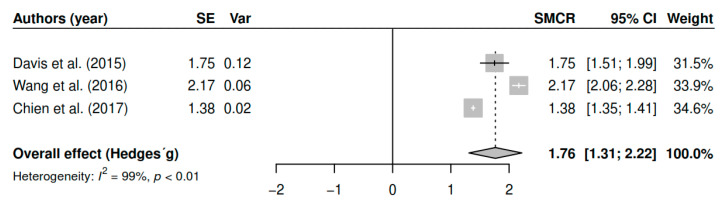
- Across 10 RCTs (n = 1094; 420 participants, 38.4%, received an MBI), MBIs plus standard interventions significantly improved overall symptomatology at posttest (k = 9; n = 726; g = 0.72, p < 0.01) and at 6-month follow-up (k = 3; n = 344; g = 1.76, p < 0.01).
- Significant posttest effects were also reported for positive symptoms (k = 5; n = 506; g = 0.32, p = 0.03), negative symptoms (k = 5; n = 506; g = 0.40, p < 0.01), mindfulness abilities (k = 4; n = 178; g = 1.48, p = 0.01), functioning (k = 4; n = 493; g = −1.28, p < 0.01), and awareness of illness (k = 4; n = 493; g = −0.65, p < 0.01).
- Heterogeneity was high for all analyzed outcomes (e.g., overall symptomatology posttest I² = 99.60; positive symptoms I² = 99.20; negative symptoms I² = 82.50).
- No reviewed study reported harmful effects related to MBIs; average dropout rate in MBIs was 15.6%, and the authors state MBI results were comparable to those obtained by cognitive-behavioral therapy for psychosis.
Methods
- Systematic review and meta-analysis of RCTs published up to 25 March 2020, searched in PsycINFO, PubMed, WOS, and Cochrane Library; protocol registered in PROSPERO (CRD42019128466).
- Inclusion criteria: adults diagnosed with schizophrenia or related disorders (schizophrenia, schizoaffective, or delusional disorder per DSM/ICD); intervention group received an MBI similar to MBSR or MBCT; control group was waitlist or treatment as usual; outcomes were psychological variables related to schizophrenia.
- Effect sizes were calculated using standardized mean change with raw score standardization (SMCR), with bias correction; random-effects models used restricted maximum likelihood (REML); heterogeneity assessed with Cochran’s Q and I²; meta-regression, sensitivity analyses, and publication-bias assessments (funnel plots, Egger’s test, trim-and-fill) were conducted where sufficient studies were available.
Limitations
- Stated by the authors: five of the ten studies had methodological quality issues that threaten validity; high heterogeneity was found and may relate to differences in MBI protocols, psychoeducational contents, geographic locations, and ethnic backgrounds; four studies used samples exclusively of recently diagnosed volunteers, limiting generalizability.
- Stated by the authors: psychoeducational contents in the MBIs are active ingredients, so results cannot be attributed to mindfulness with absolute certainty.
- Evident from the text: several outcomes were based on few studies (k = 3–5), and heterogeneity was very high (I² often > 95%), which limits confidence in pooled estimates; the authors also note that empirical evidence is still scarce and further methodologically rigorous studies are needed.
Model-written summary. Check it against the paper before relying on it.
Integrity signals
Registry
Cites
Statistics
Figures




Verification
Claims the paper makes
5 Valid · 0 Not valid · 25 Not checked · 50 Own results and interpretations
None of the sources cited for this claim have been checked yet.
In the paper
“The results obtained with these three methods lead to similar results in all the variables analyzed.”
§ Mindfulness-Based Interventions for People with Schizophrenia: A Systematic Review and Meta-Analysis > 3. Results > 3.8. Additional Analyses
What the sources say
- Could not verifycites [40] Veroniki A.A. Jackson D. Viechtbauer W. Bender R. Bowden J. Knapp G. Kuss O. Higgins J.P.T. Langan D. Salanti G. Methods to estimate the between-study variance and its uncertainty in meta-analysis Res. Synth. Methods 2016 7 55 79 10.1002/jrsm.1164 26332144 PMC4950030 sourceExperimental — accuracy not yet measured
Our copy of Veroniki et al. (2016) is a review of 16 estimators of the between-study variance (tau2) plus seven ways to quantify its uncertainty; nowhere does it describe 'three robust methods of effect size estimation' or report that such methods agreed across analysed variables (searched: robust methods of effect size estimation, similar results across variables/outcomes, illustrative examples). Its Illustrative examples section applies many tau2 estimators to four meta-analyses that all concern the same outcome (overall survival, log hazard ratio), not several variables, and its Comparative evaluation opening states the opposite tendency — that 'the different estimators can provide noticeably different or even conflicting results'. The similarity claim therefore cannot be checked against this source; it appears to be the citing authors' own analysis result. (LLM, conf=0.72)
- Not checked yetcites [44] Ausina J.B. Meca J.S. Meta-Análisis en Ciencias Sociales y de la Salud Síntesis Madrid, Spain 2015 978-84-9077-124-2
plain- Asserted: passes — The authors put it forward as true.
- Checkable: passes — It can be checked against evidence.
- Load-bearing: unclear — It is unclear whether the paper’s conclusions depend on it.
- Based: passes — The paper gives a reason why it holds.
- Could not verify
The sources with a verdict support this claim; the rest weren’t checked yet, have no full text we could read, or their verdicts aren’t rated yet.
In the paper
“However, it is relevant to note that the four meta-analyses cited included in their analyses both MBI’s and acceptance-based approaches (ACT or DBT), which, as mentioned, have significant differences between them.”
§ Mindfulness-Based Interventions for People with Schizophrenia: A Systematic Review and Meta-Analysis > 1. Introduction
What the sources say
- Not checked yetcites [27] Khoury B. Lecomte T. Gaudiano B.A. Paquin K. Mindfulness interventions for psychosis: A meta-analysis Schizophr. Res. 2013 150 176 184 10.1016/j.schres.2013.07.055 23954146 source
- Supportedcites [28] Cramer H. Lauche R. Haller H. Langhorst J. Dobos G. Mindfulness-and acceptance-based interventions for psychosis: A systematic review and meta-analysis Glob. Adv. Health Med. 2016 5 30 43 10.7453/gahmj.2015.083 26937312 PMC4756771 source
The Methods (Eligibility Criteria; page unavailable) allow both mindfulness-based interventions and acceptance-based approaches such as ACT. The Results (Study Characteristics; page unavailable) report four RCTs of each type, confirming that this cited meta-analysis included both. (LLM, conf=0.92)
- Not checked yetcites [29] Louise S. Fitzpatrick M. Strauss C. Rossell S.L. Thomas N. Mindfulness- and acceptance-based interventions for psychosis: Our current understanding and a meta-analysis Schizophr. Res. 2018 192 57 63 10.1016/j.schres.2017.05.023 28545945 source
plain- Asserted: passes — The authors put it forward as true.
- Checkable: passes — It can be checked against evidence.
- Load-bearing: passes — The paper’s conclusions depend on it.
- Based: passes — The paper gives a reason why it holds.
The sources with a verdict support this claim; the rest weren’t checked yet, have no full text we could read, or their verdicts aren’t rated yet.
In the paper
“They all included studies in which participants had psychotic symptoms but not necessarily a diagnosis of schizophrenia spectrum disorder (e.g., major depression with psychotic symptoms).”
§ Mindfulness-Based Interventions for People with Schizophrenia: A Systematic Review and Meta-Analysis > 1. Introduction
What the sources say
- Not checked yetcites [27] Khoury B. Lecomte T. Gaudiano B.A. Paquin K. Mindfulness interventions for psychosis: A meta-analysis Schizophr. Res. 2013 150 176 184 10.1016/j.schres.2013.07.055 23954146 source
- Supportedcites [28] Cramer H. Lauche R. Haller H. Langhorst J. Dobos G. Mindfulness-and acceptance-based interventions for psychosis: A systematic review and meta-analysis Glob. Adv. Health Med. 2016 5 30 43 10.7453/gahmj.2015.083 26937312 PMC4756771 source
The Results (Study Characteristics) show that this meta-analysis included patients with an affective disorder with psychotic symptoms, not only patients diagnosed with schizophrenia-spectrum disorders. Table 1 specifically lists a mood disorder with psychotic features among the diagnoses in an included study. This confirms the claim as it applies to this cited meta-analysis; the paper does not establish the inclusion criteria of the other three. (LLM, conf=0.91)
- Not checked yetcites [29] Louise S. Fitzpatrick M. Strauss C. Rossell S.L. Thomas N. Mindfulness- and acceptance-based interventions for psychosis: Our current understanding and a meta-analysis Schizophr. Res. 2018 192 57 63 10.1016/j.schres.2017.05.023 28545945 source
plain- Asserted: passes — The authors put it forward as true.
- Checkable: passes — It can be checked against evidence.
- Load-bearing: passes — The paper’s conclusions depend on it.
- Based: passes — The paper gives a reason why it holds.
The cited sources support only part of this claim — read each source’s verdict below.
In the paper
“The effects obtained from MBIs in this review were comparable to those obtained in meta-analytic studies regarding the effectiveness of CBT in the reduction of positive and negative symptoms [23,66,67].”
§ Mindfulness-Based Interventions for People with Schizophrenia: A Systematic Review and Meta-Analysis > 4. Discussion
What the sources say
- Supportedcites [23] Hazell C.M. Hayward M. Cavanagh K. Strauss C. A systematic review and meta-analysis of low intensity CBT for psychosis Clin. Psychol. Rev. 2016 45 183 192 10.1016/j.cpr.2016.03.004 27048980 source
Section 4.1, “Effects on psychosis,” compares this meta-analysis’s CBTp effect with reported meta-analytic effects for positive and negative symptoms and describes them as consistent. It cautions that comparability between low- and high-intensity CBTp would require a direct comparison. The citing authors’ MBI results are their own comparison, not a finding attributed to this source. (LLM, conf=0.93)
- Not checked yetcites [66] Jauhar S. McKenna P.J. Radua J. Fung E. Salvador R. Laws K.R. Cognitive–behavioural therapy for the symptoms of schizophrenia: Systematic review and meta-analysis with examination of potential bias Br. J. Psychiatry 2014 204 20 29 10.1192/bjp.bp.112.116285 24385461 source
- Partly supportedcites [67] Lutgens D. Gariepy G. Malla A. Psychological and psychosocial interventions for negative symptoms in psychosis: Systematic review and meta-analysis Br. J. Psychiatry 2017 210 324 332 10.1192/bjp.bp.116.197103 28302699 sourceExperimental — accuracy not yet measured
The Cognitive-behavioural therapies (CBT) section reports a pooled benefit of CBT for negative symptoms in psychosis. This paper does not establish CBT’s effectiveness for positive symptoms. The comparison with MBI effects is the citing authors’ own conclusion, not a finding attributed to this source. (LLM, conf=0.86)
plain- Asserted: passes — The authors put it forward as true.
- Checkable: passes — It can be checked against evidence.
- Load-bearing: passes — The paper’s conclusions depend on it.
- Based: passes — The paper gives a reason why it holds.
- Supported
The sources with a verdict support this claim; the rest weren’t checked yet, have no full text we could read, or their verdicts aren’t rated yet.
In the paper
“This is possibly partly due to a cautious reaction to a few early research papers, which found a relationship between meditation practice and the emergence of psychotic-type symptoms [14,15].”
§ Mindfulness-Based Interventions for People with Schizophrenia: A Systematic Review and Meta-Analysis > 1. Introduction
What the sources say
- Not checked yetcites [14] Epstein M.D. Lieff J.D. Psychiatric complications of meditation practice J. Transpers. Psychol. 1981 13 137 147
- Supportedcites [15] Walsh R. Roche L. Precipitation of acute psychotic episodes by intensive meditation in individuals with a history of schizophrenia Am. J. Psychiatry 1979 136 1085 1086 10.1176/ajp.136.8.1085 380368 source
Walsh & Roche (1979) is exactly one of the early papers reporting such a relationship: its case reports (p. 2-3) describe three acute schizophrenic/psychotic episodes arising during intensive meditation retreats, and the Discussion (p. 3) concludes that 'the combination of intensive meditation, fasting, sleep deprivation, a history of schizophrenia... can be hazardous.' The introduction (p. 2) also reviews 'several reports of adverse meditation effects, including depersonalization, altered reality testing.' The claim asserts only a relationship (not causation, and at the same hedged level as the source), so it is supported; the source's population is narrower (individuals with a history of schizophrenia, with fasting/sleep deprivation), which the citing sentence does not carry as a qualifier. (LLM, conf=0.85)
plainstates an association- Asserted: passes — The authors put it forward as true.
- Checkable: passes — It can be checked against evidence.
- Load-bearing: unclear — It is unclear whether the paper’s conclusions depend on it.
- Based: passes — The paper gives a reason why it holds.
36 more claims · 1 with their cited sources checked
Create a free account to see all 80 claims and to verify the 47 references still open.
- The quote only partly states this claim. 8
- It may state two separate claims as one. 26
- Probably not a substantial claim. 15
Claims other papers make about this one
Each is checked against this paper’s own text: does it say what the citing paper says it does?
The source backs part of the claim, not all of it — or backs it for a different population, condition or comparison.
In the citing paper
“Recent randomised control studies and meta-analyses showed that mindfulness-based interventions significantly improved DM, negative emotions, positive symptoms and negative symptoms compared with control groups.43–49”
From Dispositional Mindfulness and Psychotic Symptoms in Schizophrenia Spectrum Disorders: The Mediating Roles of Rumination and Negative Emotion (2022) · cites this paper as [48]
Experimental — accuracy not yet measuredThe cited source says what the claim attributes to it.
In the citing paper
“Systematic reviews and meta-analyses of mindfulness-based programs for psychosis have found a range of improvements for psychotic symptoms, with larger improvements for functioning and illness awareness and smaller improvements for the positive symptoms, such as delusions and hallucinations (Yip et al., 2024; Hodann-Caudevilla et al., 2020).”
From “I was trying to save the world”: delusion-like ideation and associated impacts reported by Western practitioners of Buddhist meditation (2025) · cites this paper as Hodann-Caudevilla et al., 2020
The cited source says what the claim attributes to it.
In the citing paper
“The low dropout rate of 6%, compared to the 15.6% average found in a systematic review of MBIs for SSD supports the intervention’s acceptability.53”
Statistics recomputed
Every reported test result, recomputed from its test statistic and degrees of freedom. A result shows as not adding up only once an independent check has confirmed it.
- ConsistentQ(8) = 1910.8reported p < .01 · recomputed p < .001
“Q (8) = 1910.8, p < .01”
- ConsistentQ(2) = 187.72reported p < .01 · recomputed p < .001
“Q (2) = 187.72, p < .01”
- ConsistentQ(4) = 484.1reported p < .01 · recomputed p < .001
“Q (4) = 484.10, p < .01”
- ConsistentQ(4) = 22.8reported p < .01 · recomputed p < .001
“Q (4) = 22.80, p < .01”
- ConsistentQ(3) = 220.19reported p < .01 · recomputed p < .001
“Q (3) = 220.19, p < .01”
5 more recomputed tests
Create a free account to see every test the Stats check recomputed.
Self-check
Percentages, sums and reported differences re-computed from the paper’s own numbers.
Each contradiction between two passages listed here was confirmed by an independent check.
Rated major: it would touch a result — a value a result rests on, reported and recomputed p-values on opposite sides of the significance level, two passages that conflict with no sign which is right, or a cited work retracted before this paper was published.
In the paper
§ Mindfulness-Based Interventions for People with Schizophrenia: A Systematic Review and Meta-Analysis > 2. Method > 2.2. Selection Criteria
“(4) the control group consisted of a waitlist or treatment as usual (TAU);”
§ Mindfulness-Based Interventions for People with Schizophrenia: A Systematic Review and Meta-Analysis > 3. Results > 3.3. Design of the Studies
“Two different types of control conditions were identified: (a) active treatments of a psychological type: psychoeducational or social support interventions (n = 272) and (b) non-psychological standard interventions (treatment as usual, TAU): medical-pharmacological treatments (n = 402).”
Rated minor: it would not touch a result — a value no result rests on, a p-value that stays on the same side of the significance level, or a conflict that is clerical, resolved elsewhere in the paper, or outside its own findings.
In the paper
§ Mindfulness-Based Interventions for People with Schizophrenia: A Systematic Review and Meta-Analysis > 1. Introduction
“Thus, only one reported large effects on overall symptomology [30], and two reported small effects [28,29].”
§ Mindfulness-Based Interventions for People with Schizophrenia: A Systematic Review and Meta-Analysis > 4. Discussion
“In the reviews by Cramer et al. [28], Louise et al., [29] and Jansen et al. [30], treatments produced small to moderate effects on overall symptomatology, which is in line with our findings;”
Citations
Cites
Diagnostic and Statistical Manual of Mental Disorders
American Psychiatric Association (2013) · doi:10.1176/appi.books.9780890425596 · Cited by 116,369
Measuring inconsistency in meta-analyses
Higgins, J. P. T., Thompson, S. G., Deeks, J. J., & Altman, D. G. (2003) · BMJ · doi:10.1136/bmj.327.7414.557 · Cited by 63,139 · cited 2×
“This procedure allows the generalization of the findings, considering the individual studies as a random sample of the population [41].”
MethodBias in meta-analysis detected by a simple, graphical test
Egger, M., Smith, G. D., Schneider, M., & Minder, C. (1997) · BMJ · doi:10.1136/bmj.315.7109.629 · Cited by 56,722 · cited 1×
“The publication bias was assessed when there were five or more studies, through the inspection of funnel plots, together with Egger’s test [45].”
MethodLiberati, A., Altman, D. G., Tetzlaff, J., Mulrow, C., Gøtzsche, P. C., Ioannidis, J. P. A., Clarke, M., Devereaux, P. J., Kleijnen, J., & Moher, D. (2009) · PLoS Medicine · doi:10.1371/journal.pmed.1000100 · Cited by 28,164 · cited 1×
“The bibliographic search was conducted according to the protocol guidelines of the Preferred Reporting Items for Systematic Reviews and Meta-Analyses (PRISMA) [31].”
MethodBorenstein, M., Hedges, L. V., Higgins, J. P. T., & Rothstein, H. R. (2009) · doi:10.1002/9780470743386 · Cited by 14,225
Duval, S., & Tweedie, R. (2000) · Biometrics · doi:10.1111/j.0006-341x.2000.00455.x · Cited by 14,099 · cited 1×
“In the cases were previous appraisals had detected publication bias, it was corrected employing the trim-and-fill method (TaF) [46].”
MethodStatistical Methods for Meta-Analysis
Wasserman, S., Hedges, L. V., & Olkin, I. (1988) · Journal of Educational Statistics · doi:10.2307/1164953 · Cited by 10,326
Borenstein, M., Hedges, L. V., Higgins, J. P. T., & Rothstein, H. R. (2021) · doi:10.1002/9781119558378 · Cited by 9,799
Mindfulness-based interventions in context: Past, present, and future
Kabat-Zinn, J. (2003) · Clinical Psychology: Science and Practice · doi:10.1093/clipsy.bpg016 · Cited by 8,615 · cited 1×
“However, all MBIs have, as a common point, the systematic training in meditation practices for the development of mindfulness, which is at the heart of the intervention [8].”
BackgroundMindfulness-based interventions in context: Past, present, and future.
Kabat-Zinn, J. (2003) · Clinical Psychology: Science and Practice · doi:10.1093/clipsy/bpg016 · Cited by 8,612
Research works printed but not linked: 5
- Hanh T.N. Kornfield J. Being Peace 2nd ed. Parallax Press Berkeley, CA, USA 2005 978-1-888375-40-4
- Segal Z.V. Mark G.W. John D.T. Mindfulness-Based Cognitive Therapy for Depression: A New Approach to Preventing Relapse 2nd ed. Guilford Press New York, NY, USA 2012 978-1-4625-0750-4
- Linehan M. Cognitive-Behavioral Treatment of Borderline Personality Disorder 1st ed. The Guilford Press New York, NY, USA 1993 978-0-89862-183-9
- Cohen J. Statistical Power Analysis for the Behavioral Sciences 2nd ed. Routledge Hillsdale, NJ, USA 1988 978-0-8058-0283-2
- Schwarzer G. Meta: An R package for meta-analysis R News 2007 7 40 45
Cited by
Evidence-based psychosocial interventions in schizophrenia: a critical review
Barlati, S., Nibbio, G., & Vita, A. (2024) · Current Opinion in Psychiatry · doi:10.1097/yco.0000000000000925 · Cited by 116
Yao, B., & Thakkar, K. (2022) · Neuroscience & Biobehavioral Reviews · doi:10.1016/j.neubiorev.2021.11.016 · Cited by 69
“Under the influence of the strong prior that “something is in the air,” noisy exteroceptive signals may be unduly influenced by this prior, resulting in an expectancy that engenders hallucinations (Corlett et al., 2019; Hoffman, 2010; Leptourgos and Corlett, 2020).”
BackgroundCella, M., Roberts, S., Pillny, M., Riehle, M., O'Donoghue, B. N., Lyne, J., Tomlin, P., Valmaggia, L., & Preti, A. (2023) · The British Journal of Psychiatry · doi:10.1192/bjp.2023.21 · Cited by 86
“Four of these found significant small-to-moderate effects for reducing negative symptoms when comparing mindfulness-based therapies with TAU with 39,65 and without an active control condition.”
Leucht, S., Siafis, S., McGrath, J. J., McGorry, P. D., Howes, O. D., Tamminga, C. A., Carr, R., Bighelli, I., Schneider‐Thoma, J., Priller, J., et al. (2025) · Nature Reviews Disease Primers · doi:10.1038/s41572-025-00667-6 · Cited by 82
“Mindfulness has also shown encouraging results for multiple outcomes 228 .”
Aberrant Interoceptive Accuracy in Patients With Schizophrenia Performing a Heartbeat Counting Task
Koreki, A., Funayama, M., Terasawa, Y., Onaya, M., & Mimura, M. (2020) · Schizophrenia Bulletin Open · doi:10.1093/schizbullopen/sgaa067 · Cited by 56
“73,74”
Özdemir, A. A., & Kavak Budak, F. (2022) · Clinical Nursing Research · doi:10.1177/10547738211039069 · Cited by 32
Shen, H., Zhang, L., Li, Y., Zheng, D., Du, L., Xu, F., Xu, C., Liu, Y., Shen, J., Li, Z., et al. (2021) · Psychological Medicine · doi:10.1017/s0033291721002944 · Cited by 37
“…current new forms of CBT include various mindfulness-based interventions (MBIs), including MBCT, MBSR, ACT, and DBT (Feliu-Soler et al., 2018), which have been initially applied in patients with schizophrenia and have obtained positive results (Hodann-Caudevilla et al., 2020; Jansen et al., 2020).”
Mindfulness and Eating Disorders: A Network Analysis
Sala, M., Vanzhula, I. A., Roos, C. R., & Levinson, C. A. (2021) · Behavior Therapy · doi:10.1016/j.beth.2021.07.002 · Cited by 36
Sabé, M., Kohler, R., Perez, N., Sauvain-Sabé, M., Sentissi, O., Jermann, F., Prada, P., Perroud, N., & Böge, K. (2024) · Schizophrenia Research · doi:10.1016/j.schres.2023.12.011 · Cited by 29
Qin, K., Yu, Y., Cai, H., Li, J., Zeng, J., & Liang, H. (2024) · Psychiatry Research · doi:10.1016/j.psychres.2024.115808 · Cited by 24
Contemplative sciences: A future beyond mindfulness
García‐Campayo, J., del Hoyo, Y. L., & Navarro‐Gil, M. (2021) · World Journal of Psychiatry · doi:10.5498/wjp.v11.i4.87 · Cited by 24
Mindfulness for psychosis: current evidence, unanswered questions and future directions
Ellett, L. (2024) · Psychology and Psychotherapy Theory Research and Practice · doi:10.1111/papt.12480 · Cited by 19
Plencler, I., Kruk, D., Daren, A., Stankiewicz, P., Nowak, A., Radoń, S., Chrobak, A. A., Cechnicki, A., & Siwek, M. (2022) · Psychiatria Polska · doi:10.12740/pp/onlinefirst/154033 · Cited by 19
“…the literature analyzing the impact of mindfulness interventions in the population of people with psychotic disorder on individual symptomatic domains, the impact on the level of perceived stress was not discussed, but rather the impact on the psychopathology typical of this disorder [40, 41, 47].”
Kim, A. S., Jang, M. H., & Sun, M. J. (2021) · International Journal of Environmental Research and Public Health · doi:10.3390/ijerph182211871 · Cited by 20
“Recent systematic reviews and meta-analyses of randomized controlled trials have found that MBIs reduced psychotic symptoms, positive symptoms, negative symptoms, depressive symptoms, and duration of rehospitalization among people with schizophrenia, as well as improving their level of function and awareness of illnes…”
BackgroundResultEffects of Mindfulness on Stimulating Hope and Recovery among People with Schizophrenia
Astuti, H. W. Y., Agustin, M., Sari, S. P., Wijayanti, D. Y., Sarjana, W., & Locsin, R. C. (2020) · Nurse Media Journal of Nursing · doi:10.14710/nmjn.v10i2.28775 · Cited by 20
Ellett, L., Dannahy, L., & Chadwick, P. (2022) · Psychology and Psychotherapy Theory Research and Practice · doi:10.1111/papt.12382 · Cited by 18
“…in 2020 of 10 studies ( n = 1094) of mindfulness-based interventions (MBIs) concluded that MBIs combined with treatment as usual (TAU) are effective for the treatment of schizophrenia when compared with both TAU control groups and active treatment control groups (Hodann-Caudevilla et al., 2020).”
InfluentialChai, J., Xiao, X., An, N., Liu, F., Liu, S., Hu, N., Yang, Y., Cui, Y., & Li, Y. (2022) · Mindfulness · doi:10.1007/s12671-022-01942-3 · Cited by 18
“In the present study, we define an MBI as a loose concept that includes both MBIs (such as MBSR or MBCT) and MBTs (such as ACT).”
BackgroundInfluentialHalverson, T. F., Meyer-Kalos, P., Perkins, D. O., Gaylord, S. A., Palsson, O. S., Nye, L., Algoe, S. B., Grewen, K., & Penn, D. L. (2021) · Schizophrenia Research · doi:10.1016/j.schres.2021.07.022 · Cited by 18
Lam, A. H. Y., Cheung, Y. T. D., Wong, K. H., Leung, S. F., & Chien, W. T. (2022) · Neuropsychiatric Disease and Treatment · doi:10.2147/ndt.s338133 · Cited by 13
Reangsing, C., Wongsuraprakit, S., Punsuwun, S., & Oerther, S. E. (2024) · Psychiatry Research · doi:10.1016/j.psychres.2024.116272 · Cited by 11
Kaya, S., Açık, M., Coşkun, A. B., & Yılmaz, F. Ç. (2024) · Revista de Nutrição · doi:10.1590/1678-9865202437e230084 · Cited by 10
Meinhart, A., Schmueser, A., Moritz, S., & Böge, K. (2025) · Schizophrenia Research · doi:10.1016/j.schres.2025.03.040 · Cited by 10
Bodily Self-Disturbances and Hallucinations in Schizophrenia
Giersch, A., Ferri, F., Park, S., Thompson, J. L., & Humpston, C. S. (2025) · Schizophrenia Bulletin · doi:10.1093/schbul/sbaf063 · Cited by 10
Longden, E., Branitsky, A., Sheaves, B., Chauhan, N., & Morrison, A. P. (2023) · Psychosis · doi:10.1080/17522439.2023.2215298 · Cited by 10
“…and “power” between hearer and voice (Hayward et al., 2017; Jansen et al., 2020); and targeted techniques comprising elements of mindfulness training (Hodann-Caudevilla et al., 2020), compassion-focused strategies (Heriot-Maitland et al., 2019), and techniques derived from acceptance and…”
BackgroundZheng, S., Zhang, H., Zhang, M.-H., Li, X., Chang, K., & Yang, F.-C. (2022) · BMC Psychology · doi:10.1186/s40359-022-00919-0 · Cited by 11
“This is consistent with findings from previous systematic studies [16, 18].”
BackgroundResultZheng, S., Zhang, H., Zhang, M.-H., Li, X., Chang, K., & Yang, F.-C. (2023) · Technology and Health Care · doi:10.3233/thc-220904 · Cited by 8
“Studies have revealed that community-based group rehabilitation activities can improve patients’ symptoms [5], improve medication compliance [10], reduce stigma, improve self-esteem [11], and improve social functioning and quality of life [7,12].”
Differential relationship between meditation methods and psychotic-like and mystical experiences
Palmer, T. N., Kadri, K., Fakra, É., Scholl, J., & Fouragnan, E. F. (2024) · PLoS ONE · doi:10.1371/journal.pone.0309357 · Cited by 7
Plencler, I., Cechnicki, A., Stankiewicz, P., Krupa, A. J., Gorostowicz, A., Kalisz, A., Błądziński, P., Żwirska, M., & Siwek, M. (2025) · Mindfulness · doi:10.1007/s12671-025-02565-0 · Cited by 6
“Furthermore, several new studies have recently been published (Ellett, 2024; Hodann-Caudevilla et al., 2020; Lazzari et al., 2022), providing a rationale for a new updated review.”
Friis-Healy, E. A., Farber, E. W., Cook, S. C., Cullum, K. A., Gillespie, C. F., Marshall-Lee, E. D., Upshaw, N. C., White, D. T., Zhang, S., & Kaslow, N. J. (2022) · Psychological Services · doi:10.1037/ser0000594 · Cited by 7
Hahne, I., Segerer, J., Zierhut, M. M., Bergmann, N., Ta, T. M. T., Hahn, E. W., & Böge, K. (2025) · Scientific Reports · doi:10.1038/s41598-025-03380-2 · Cited by 5
“Some meta-analyses [11, 12, 14, 15] report signi�cant small effects on positive symptoms (Hedge’s g = 0.32–0.48), while others did not �nd these effects [10, 13].”
InfluentialCempa, K., Jurys, T., Kluczyński, S., & Andreew-Gamza, M. (2022) · Psychiatria Polska · doi:10.12740/pp/140053 · Cited by 5
“…an intervention based on mindfulness (related to the improvement of clinical parameters in the course of schizophrenia, increasing motivation) [16] or positive psychotherapy of psychosis (a new method based on the “subjectivity of the human individual” – creating and living in symbiosis with…”
Hahne, I., Zierhut, M., Bergmann, N., Hahn, E., Ta, T. M. T., Calvano, C., Bajbouj, M., & Böge, K. (2026) · Schizophrenia Bulletin · doi:10.1093/schbul/sbae198 · Cited by 4
Haudrich, E. A., Burns, E. K., Gupta, T., Haas, G. L., & Horton, L. E. (2024) · Schizophrenia Research · doi:10.1016/j.schres.2024.10.024 · Cited by 4
Adesão ao Tratamento em Esquizofrenia e as Terapias Comportamentais Contextuais
Araújo, D. D. F. (2022) · Contextos Clínicos · doi:10.4013/ctc.2022.151.13 · Cited by 5
Mindfulness-Based Interventions for SchizophreniaPreprint
Hodann-Caudevilla, R. M., Díaz‐Silveira, C., Burgos-Julián, F. A., & Germán, M. Á. S. (2020) · doi:10.32545/encyclopedia202007.0017.v2 · Cited by 4
Self-citationCechnicki, A., Chrobak, A. A., Plencler, I., Stankiewicz, P., Kalisz, A., Błądziński, P., Kruk, D., Radoń, S., Szewczyk, B., Faron‐Górecka, A., et al. (2025) · Annals of General Psychiatry · doi:10.1186/s12991-025-00587-5 · Cited by 3
“…a sought-after effect size f = 0.25 (based on the lowest effect sizes for measured parameters in the meta-analyses of Khoury [17] and Hodan-Caudevilla [19]) will achieve a test power of 0.99, which will also be maintained if up to 25% of participants in each subgroup would drop out of the study.”
InfluentialMadani, M., Sabet, F. H., & Borjali, A. (2023) · Iranian Journal of Psychiatry · doi:10.18502/ijps.v18i2.12361 · Cited by 6
Estudio de la cientificidad y la efectividad de la técnica Mindfulness.
Villavicencio, E. I. G., & Ortiz, G. G. R. (2023) · MQRInvestigar · doi:10.56048/mqr20225.7.4.2023.879-896 · Cited by 3
Disturbances of Interoception in Schizophrenia – Focus on Neuroimaging
Kandilarova, S. (2024) · Journal of Psychophysiology · doi:10.1027/0269-8803/a000335 · Cited by 3
Refining targets for urban remediation in early psychosis
Empson, L. A., Golay, P., Baumann, P. S., Favrod, J., Söderström, D., Codeluppi, Z., & Conus, P. (2025) · Schizophrenia Research · doi:10.1016/j.schres.2025.07.028 · Cited by 2
A Survey of Engagement with Mindfulness and Brain Training Apps
Syed, M., Byrne, L. K., Lum, J. A. G., & Skvarc, D. (2025) · Journal of Cognitive Enhancement · doi:10.1007/s41465-025-00324-6 · Cited by 2
“Studies have shown that mindfulness-based interventions are effective in treating clinical conditions that involve working memory deficits (Hodann-Caudevilla et al., 2020; Blanck et al., 2018; Chimiklis et al., 2018; Niraj et al., 2020).”
Ko, J. K., & Kim, J. Y. (2023) · Journal of Korean Academy of Psychiatric and Mental Health Nursing · doi:10.12934/jkpmhn.2023.32.3.259 · Cited by 2
Mindfulness-Based Interventions using Artificial Intelligence: A Systematic Review ProtocolPreprint
Shankar, R., Devi, F., & Xu, Q. (2025) · medRxiv · doi:10.1101/2025.06.20.25329981 · Cited by 2
Solomonova, E., Lindahl, J. R., Gold, I., Cooper, D. J., Little, C., Arteca, D., Cao, C., & Britton, W. B. (2025) · Frontiers in Psychology · doi:10.3389/fpsyg.2025.1644684 · Cited by 1
Kuzminova, M. V., Semina, E. V., & Chaika, Y. A. (2025) · Сибирский вестник психиатрии и наркологии · doi:10.26617/1810-3111-2025-1(126)-88-97 · Cited by 1
Zajkowska, I., Niczyporuk, P., Giba, A., Iłendo, K., Królikiewicz, W., Marecki, R., & Kicman, A. (2025) · Quality in Sport · doi:10.12775/qs.2025.41.59834 · Cited by 1
“…a meta-analysis conducted by Hodann-Caudevilla et al. revealed that the incorporation of MBIs alongside standard treatments led to significant improvements in both positive and negative symptom domains, as well as overall functioning and illness insight among patients with schizophrenia (43) .”
(Etiopia), F. U. I., & Becerril, I. M. (2020) · MLS Psychology Research · doi:10.33000/mlspr.v3i2.571
“Dolce far niente” and mindfulness
Dhillon, H., Sasidharan, S., Dhillon, G. K., & Manalikuzhiyil, B. (2022) · MRIMS Journal of Health Sciences · doi:10.4103/mjhs.mjhs_46_21
Schizophrenia Spectrum and Other Psychotic Disorders: Third Wave Case Conceptualization
Ellenberg, S., & Gaudiano, B. A. (2022) · Springer eBooks · doi:10.1007/978-3-031-11677-3_22
Tang, Q., Zhou, W., Zheng, T., Ye, D., Cao, W., Huang, F., He, X., Peng, M., Huang, X., & Yang, S. (2024) · Research Square · doi:10.21203/rs.3.rs-5365042/v1
Overcoming Barriers to Connection Between People with Schizophrenia and Their Caregivers
Fernández, S. G. (2025) · Digital Commons - DU (University of Denver) · doi:10.56902/etdcrp.2025.31
A Systematic Review of Mindfulness Network Analysis Studies
Kahn, D. L., Martin, A., Morris, C., & Sala, M. (2025) · Mindfulness · doi:10.1007/s12671-025-02722-5
“…anxiety (Evans et al., 2008; Vøllestad et al., 2011), substance use disorders (Goldberg et al., 2018; Grant et al., 2017; Li et al., 2017), eating disorders (Barney et al., 2019; Godfrey et al., 2015; Turgon et al., 2019), and schizophrenia (Goldberg et al., 2018; Hodann-Caudevilla et al., 2020).”
Eidenmueller, K. (2023) · heiDOK (Heidelberg University) · doi:10.11588/heidok.00033884
Haudrich, E. A. (2024) · D-Scholarship@Pitt (University of Pittsburgh)
Meditation Techniques and Their Relationship to Psychotic-Like and Mystical Experiences
Palmer, T. N. (2025) · PEARL (University of Plymouth) · doi:10.24382/ft5k-0r41
Clinical practice guidelines for management of schizophrenia in India: A comprehensive overview
Sahoo, S., Sreeraj, V. S., Gopalakrishnan, G., Ameen, S., Cholera, R. M., Venkatasubramanian, G., & Malhotra, S. (2026) · Indian Journal of Psychiatry · doi:10.4103/indianjpsychiatry_1341_25
“Mindfulness-based interventions [120] Anxiety and distress Mindful awareness and acceptance Anxiety reduction, improved coping, emotion regulation Low (emerging) Physical Exercise and Lifestyle Interventions [121] Sedentary lifestyle, cardiometabolic risk, medication side effects, negative and…”
Zierhut, M. M., Hartter, N., von Eisenhart-Rothe, V., Hahne, I., Bergmann, N., Kraft, J., Braun, A., Bayer, M., Ta, T. M. T., Ripke, S., et al. (2026) · Ecopsychology · doi:10.1177/19429347261419214
“This aligns with MBGT ’ s known effects on stress reduction in both healthy individuals and in SSD (Bellosta Batalla et al., 2020; Engert, Kok, Papassotiriou, Chrousos, and Singer, 2017; Hodann-Caudevilla et al., 2020; Schumer, Lindsay, and Creswell, 2018).”
Kaçan, H. S., & Yeyit, Ş. (2026) · Journal of Psychosocial Nursing and Mental Health Services · doi:10.3928/02793695-20260710-02
Eweida, R. S. (2026) · Archives of Psychiatric Nursing · doi:10.1016/j.apnu.2026.152203
Akinniyi, R. J., Ishola, A., Osinowo, H., & Falade, J. (2021) · Journal of Professional Counselling and Psychotherapy Research
Nandarathana, N., & Ranjan, J. K. (2026) · Mental Health Religion & Culture · doi:10.1080/13674676.2026.2691447
Metadata
- Authors
- Hodann-Caudevilla, R. M., Díaz-Silveira, C., Burgos-Julián, F. A., & Santed, M. A.
- Affiliations
- San Juan de Dios Hospital, 28350 Ciempozuelos, Spain
- Psychology Department, Rey Juan Carlos University, 28922 Madrid, Spain
- Universidad Rey Juan Carlos (ES)
- Personality, Psychological Assessment and Treatment Department, Faculty of Psychology, Universidad Nacional de Educación a Distancia (UNED), 28040 Madrid, Spain
- Corresponding author
- Hodann-Caudevilla, Ricardo M.
- Venue
- International Journal of Environmental Research and Public Health
- Publisher
- MDPI AG
- Published
- 2020-06-30
- Volume
- 17
- Issue
- 13
- Pages
- 4690
- ISSN
- 1660-4601 (ISSN-L)
- PMC
- PMC7369977
- OpenAlex
- W3037642386
- Cited by
- 60
- References
- 60
- Citations by year
- 2026: 5 · 2025: 14 · 2024: 9 · 2023: 8 · 2022: 10 · 2021: 9 · 2020: 5
- FWCI
- 0.63
- Type
- journal article
- Language
- en
- Open access
- gold
- dx.doi.org
- Licence
- Locations
- International Journal of Environmental Research and Public Health (publishedVersion, cc-by)
- PubMed Central (publishedVersion, cc-by)
- PubMed (publishedVersion)
- RePEc: Research Papers in Economics (submittedVersion)
- BURJC Digital (King Juan Carlos University) (submittedVersion, cc-by)
- DOAJ (DOAJ: Directory of Open Access Journals) (submittedVersion, cc-by-sa)
- Hispana (submittedVersion, cc-by)
- Topics
- Social Sciences › Psychology › Clinical Psychology › Mindfulness and Compassion Interventions
- Health Sciences › Medicine › Psychiatry and Mental health › Schizophrenia research and treatment
- Social Sciences › Psychology › Clinical Psychology › Psychotherapy Techniques and Applications
- Keywords
- mindfulness-based interventions, schizophrenia, symptom severity, positive symptoms, negative symptoms, functioning, disease awareness, cognitive behavioural therapy for psychosis, treatment effectiveness
- MeSH terms
- Humans, Psychotic Disorders, Schizophrenia, Cognitive Behavioral Therapy, Mindfulness
About these checks
Registry, retraction, Cites and statistics results are computed, not judged, with one exception: a printed reference that no index lists is read once by a model before it counts as a citation error. Claims are extracted by a model and kept only when their quote appears verbatim in the text; each cited source is then checked, with a model’s help, for whether it says what the claim relies on. Those verdicts can be wrong — read the claim’s quote and the cited source before relying on one.
The claim verdicts this report counts are experimental: their accuracy is not yet measured.
A language model drew the claims from the paper on 2026-10-07, under version 3 of the claim definition (model deepseek-v4.1-flash, prompt extract-v3).
A second model labelled each claim on 2026-10-07 (model jev-1.13-20260917, definition revision gold-guideline-v0.2).
Cited sources are checked with a language model’s help (qwen3.8-omni-flash and gpt-6-sol).
Statistics and arithmetic are recomputed, not judged.
Confidence bands are shown only for fields calibrated on our annotated test set. None is calibrated yet, so no band is shown.
What counts as a claim ›How we measure confidence ›How we check this ›
Are you an author, or do you see a problem with this page? Request a review
Data sources
Bibliographic data: Semantic Scholar, OpenAlex, Crossref.
Contains information from the Semantic Scholar Academic Graph Datasets, made available under the ODC Attribution License (ODC-BY 1.0).
Semantic Scholar’s data is described in: Kinney, R., et al. (2023). The Semantic Scholar Open Data Platform. arXiv:2301.10140.
