

COVID-19 Pandemic as a Traumatic Event and Its Associations with Fear and Mental Health: A Cognitive-Activation Approach
Open accessThe DOI matches its Crossref record; 48 of the 49 references it cites were found in a registry or an index.
Abstract
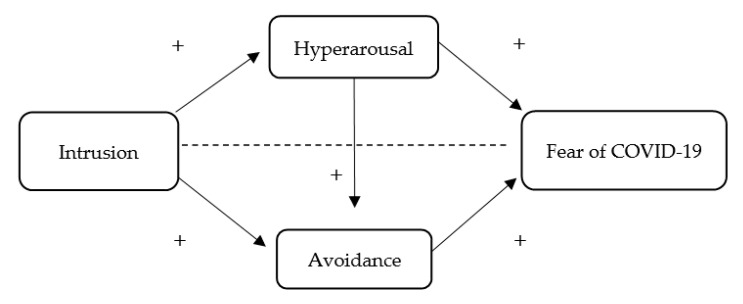
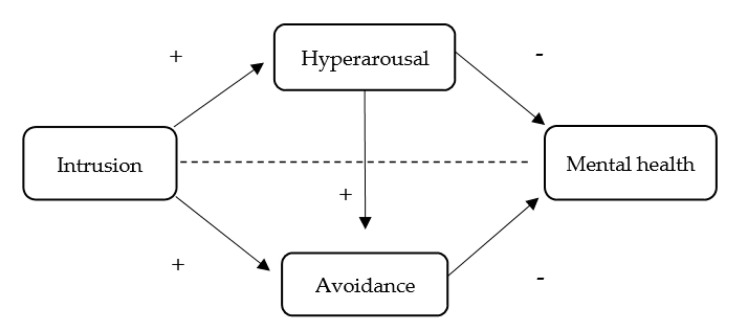
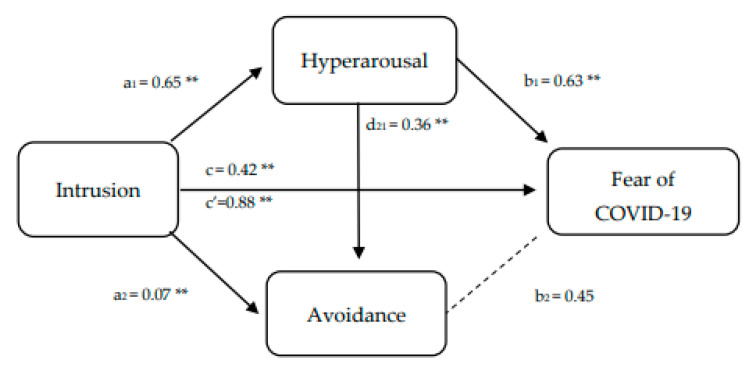
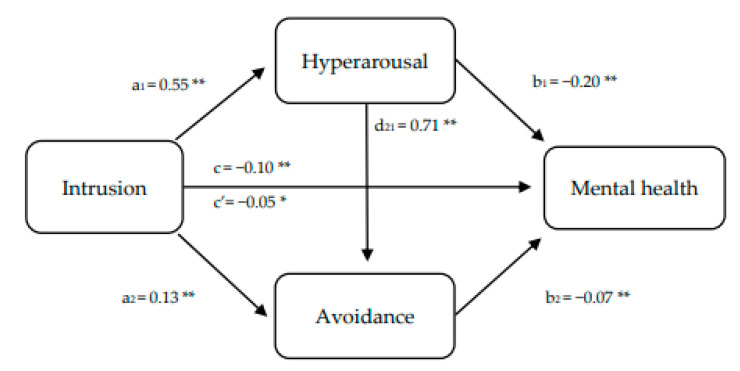
The COVID-19 global pandemic still represents a major threat with detrimental health consequences. Analyzing the psychological outcomes, COVID-19 could be interpreted as a collective traumatic event that can generate symptoms related to post-traumatic stress disorder (PTSD). Considering this, the purpose of this paper is twofold: first, to investigate the relationship between intrusive thoughts and fear related to the COVID-19 pandemic and between intrusive thoughts and mental health; second, to test the mediating role of hyperarousal and avoidance in these two relationships. In order to reach these aims, the present study investigated these relationships and tested a mediation model in two cross-sectional studies in Italy. Altogether, 627 individuals and 495 workers completed an online survey for study 1 and study 2, respectively. Mediation analyses were performed via the SPSS macro PROCESS; the significance of total, direct, and indirect effect was tested via bootstrapping. The results showed that within the PTSD framework, hyperarousal compared with avoidance mediated the relationship between intrusion and the analyzed outcomes. In conclusion, the present study provided empirical evidence for the influence of hyperarousal on individual consequences such as fear of COVID-19 and mental health. Research, as well as theoretical and practical implications, are discussed.
Overview
The claims and statistics of this paper haven’t been checked yet.
Free: it reads the open-access text and checks the first 5 claims that cite a source we can check. Create a free account to check every claim.
Integrity signals
Registry
Cites
Statistics
Figures
Verification
Claims the paper makes
The claims and statistics of this paper haven’t been checked yet.
Free: it reads the open-access text and checks the first 5 claims that cite a source we can check. Create a free account to check every claim.
Claims other papers make about this one
Each is checked against this paper’s own text: does it say what the citing paper says it does?
The cited source says what the claim attributes to it.
In the citing paper
“the COVID-19 pandemic has been referred to as a collective traumatic event (Sanchez-Gomez, et al., 2021)”
From Using network analysis to examine connections between Acceptance and Commitment Therapy (ACT) processes, internalizing symptoms, and well-being in a sample of undergraduates (2023) · cites this paper as Sanchez-Gomez, et al., 2021
Self-check
Percentages, sums and reported differences re-computed from the paper’s own numbers.
The self-check needs the paper’s full text.
Citations
Cites
Diagnostic and Statistical Manual of Mental Disorders
American Psychiatric Association (2013) · doi:10.1176/appi.books.9780890425596 · Cited by 116,369
Baron, R. M., & Kenny, D. A. (1986) · Journal of Personality and Social Psychology · doi:10.1037/0022-3514.51.6.1173 · Cited by 91,532 · cited 1×
“In this regard, we are aware that the model tested via a cross-sectional study is not the best way to examine a mediation effects [39].”
Wang, C., Pan, R., Wan, X., Tan, Y., Xu, L., Ho, C. S., & Ho, R. C. (2020) · International Journal of Environmental Research and Public Health · doi:10.3390/ijerph17051729 · Cited by 9,923 · cited 2×
“These symptoms were reported in the first studies conducted on the COVID-19 emergency in China and Italy [7,10,11].”
BackgroundImpact of Event Scale: A Measure of Subjective Stress
Horowitz, M., Wilner, N., & Alvarez, W. (1979) · Psychosomatic Medicine · doi:10.1097/00006842-197905000-00004 · Cited by 7,813 · cited 1×
“Despite the fact that intrusive symptoms can generate higher levels of avoidance, this study highlighted the prevalence of hyperarousal over it [38].”
BackgroundThe Fear of COVID-19 Scale: Development and Initial Validation
Ahorsu, D. K., Lin, C.-Y., Imani, V., Saffari, M., Griffiths, M. D., & Pakpour, A. H. (2022) · International Journal of Mental Health and Addiction · doi:10.1007/s11469-020-00270-8 · Cited by 4,332 · cited 1×
“Specifically, anxiety is due to two reasons; fear of infection and the symptomatic consequences that may result from it [21,22].”
BackgroundThe outbreak of COVID-19 coronavirus and its impact on global mental health
Torales, J., O’Higgins, M., Castaldelli-Maia, J. M., & Ventriglio, A. (2020) · International Journal of Social Psychiatry · doi:10.1177/0020764020915212 · Cited by 3,013 · cited 1×
“Several studies carried out during the pandemic testify to the significant impact COVID-19 pandemic has had on the mental health of individuals, causing stress, anxiety, depressive symptoms, insomnia, denial, anger, and fear [1].”
BackgroundThe Impact of Event Scale: Revised
Weiss, D. S. (2007) · International and Cultural Psychology Series · doi:10.1007/978-0-387-70990-1_10 · Cited by 2,996
Posttraumatic stress disorder: the burden to the individual and to society.
Kessler, R. C. (2000) · PubMed · Cited by 1,714
A qualitative study on the psychological experience of caregivers of COVID-19 patients
Sun, N., Wei, L., Shi, S., Jiao, D., Song, R., Ma, L., Wang, H., Wang, C., Wang, Z., You, Y., et al. (2020) · American Journal of Infection Control · doi:10.1016/j.ajic.2020.03.018 · Cited by 1,287 · cited 2×
“These symptoms were reported in the first studies conducted on the COVID-19 emergency in China and Italy [7,10,11].”
BackgroundSuicide mortality and coronavirus disease 2019—a perfect storm?
Reger, M. A., Stanley, I. H., & Joiner, T. E. (2020) · JAMA Psychiatry · doi:10.1001/jamapsychiatry.2020.1060 · Cited by 1,026 · cited 1×
“The quarantine status led to negative psychological consequences like health anxiety, financial worry, and loneliness [2].”
Background
Research works printed but not linked: 1
- Hayes A.F. Introduction to Mediation, Moderation, and Conditional Process Analysis: A Regression-Based Approach 2nd ed. Methodology in the social sciences Guilford Press New York, NY, USA 2018 978-1-4625-3465-4
Cited by
Finstad, G. L., Giorgi, G., Lulli, L. G., Pandolfi, C., Foti, G., León-Perez, J. M., Cantero-Sánchez, F. J., & Mucci, N. (2021) · International Journal of Environmental Research and Public Health · doi:10.3390/ijerph18189453 · Cited by 273
“Since the beginning of the COVID-19 pandemic, scholars have collected substantial evidence regarding the tremendous impact of this situation on the workforce, especially in the case of healthcare workers dealing directly with the disease [8,78,79].”
BackgroundSelf-citationDonati, S., Viola, G., Toscano, F., & Zappalà, S. (2021) · International Journal of Environmental Research and Public Health · doi:10.3390/ijerph182212095 · Cited by 116
“[13] highlight that Coronavirus pandemic was appraised by workers as a stressful event hindering their mental health.”
BackgroundChen, C.-C., Lan, Y. L., Chiou, S.-L., & Lin, Y.-C. (2022) · Healthcare · doi:10.3390/healthcare11010104 · Cited by 114
“Therefore, the psychological and physical effects of COVID-19 on medical personnel have been the focus of attention [6].”
BackgroundŚniadach, J., Szymkowiak, S., Osip, P., & Waszkiewicz, N. (2021) · Life · doi:10.3390/life11111188 · Cited by 88
“From this perspective, research and clinical practice have shown that trauma per se is a powerful risk factor for mental disorders including post-traumatic stress disorder (PTSD) [7,8].”
BackgroundCapone, V., Borrelli, R., Marino, L., & Schettino, G. (2022) · International Journal of Environmental Research and Public Health · doi:10.3390/ijerph19063734 · Cited by 91
“During the first phases of the pandemic, physicians worked long hours and were exposed to fatigue and other stressors such as fear of infection, putting their well-being at risk [5].”
BackgroundLulli, L. G., Giorgi, G., Pandolfi, C., Foti, G., Finstad, G. L., Arcangeli, G., & Mucci, N. (2021) · Sustainability · doi:10.3390/su132413869 · Cited by 74
“Anxiety, depression, burnout, post-traumatic syndrome disorder (PTSD) and overall poor mental outcomes have been identified in HCWs dealing with the emergency [1,6,7].”
BackgroundSelf-citationAli, A. M., Al-Amer, R. M., Kunugi, H., Stănculescu, E., Taha, S. M., Saleh, M., Alkhamees, A. A., & Hendawy, A. O. (2022) · Journal of Personalized Medicine · doi:10.3390/jpm12050681 · Cited by 44
“In consistence with an existing Italian study [7], intrusion was associated with hyperarousal in all the samples (Figure 2), and both factors directly and indirectly predicted avoidance,”
BackgroundGómez, M. S., Sadovyy, M., & Bresó, E. (2021) · Journal of Clinical Medicine · doi:10.3390/jcm10184077 · Cited by 52
“Thenceforth, an attempt is undertaken in the present paper to provide visibility to front-line health-care workers in their struggle to safeguard our lives by endangering theirs, as well as to reveal the critical issues for enhancing public mental health resources through the identification of core components that can…”
BackgroundImpacts of COVID-19 on the Education, Life and Mental Health of Students in Bangladesh
Piya, F. L., Amin, S., Das, A., & Kabir, M. A. (2022) · International Journal of Environmental Research and Public Health · doi:10.3390/ijerph19020785 · Cited by 39
“The COVID-19 pandemic is linked to exceptionally high levels of psychological distress among students [14,15], and it can also create symptoms similar to those seen in posttraumatic stress disorder (PTSD) [16].”
BackgroundMental health and well-being of LGBTQ+ people during the COVID-19 pandemic
Sampogna, G., Ventriglio, A., Vincenzo, M. D., Vecchio, V. D., Giallonardo, V., Bianchini, V., & Fiorillo, A. (2021) · International Review of Psychiatry · doi:10.1080/09540261.2021.2019686 · Cited by 29
“The pandemic can be considered a new type of traumatic event, being unexpected, causing a severe disruption of daily routine life (Sanchez-Gomez et al., 2021) due to the containment measures issued worldwide for reducing the spread of the disease.”
BackgroundOrfei, M. D., Bossi, F., D'Arcangelo, S., Maggi, F., Lattanzi, N., Malizia, A. P., & Ricciardi, E. (2022) · Acta Psychologica · doi:10.1016/j.actpsy.2022.103555 · Cited by 23
“Another study (Sanchez-Gomez et al., 2021) focused on the relevance of PTSD symptoms due to the Covid pandemic even after the lockdown.”
BackgroundCoping and Post-traumatic Growth Among COVID-19 Patients: A Qualitative Study
Gökalp, Z. Ş., Koç, H., & Kozan, H. İ. Ö. (2022) · Journal of Adult Development · doi:10.1007/s10804-022-09398-4 · Cited by 27
“One of the difficult living conditions is a pandemic disease (Bridgland et al., 2021; Sanchez-Gomez et al., 2021; Yan et al., 2021).”
BackgroundMao, W., Eboreime, E., Shalaby, R., Nkire, N., Agyapong, B., Pazderka, H., Obuobi-Donkor, G., Adu, M. K., Owusu, E., Oluwasina, F., et al. (2022) · Behavioral Sciences · doi:10.3390/bs12030069 · Cited by 21
“The COVID-19 pandemic may profoundly affect an individual’s physical and mental health [27,28].”
BackgroundEadeh, H.-M., Adamowicz, J. L., Markon, K., & Thomas, E. B. K. (2023) · Journal of Affective Disorders · doi:10.1016/j.jad.2022.10.004 · Cited by 18
Căliman-Sturdza, O. A., Gheorghita, R. E., & Lobiuc, A. (2025) · Life · doi:10.3390/life15030439 · Cited by 37
“It may also cause them to be afraid of reinfection or lead to trouble interacting with other people or leaving home [245].”
Yuan, M., Chen, H.-F., Yang, C., Chow, T.-H., & Hsu, C.-H. (2022) · International Journal of Environmental Research and Public Health · doi:10.3390/ijerph19106186 · Cited by 23
“[4] used a post-traumatic stress disorder (PTSD) framework to analyze the fears brought about by COVID-19 and the impact on physical health.”
MethodRenzi, A., Conte, G., & Tambelli, R. (2022) · Healthcare · doi:10.3390/healthcare10112171 · Cited by 17
The impact of events scale-revised (IES-R): Validation of the Ukrainian version
Krupelnytska, L., Yatsenko, N., Keller, V., & Morozova-Larina, O. (2025) · Comprehensive Psychiatry · doi:10.1016/j.comppsych.2025.152593 · Cited by 21
False memory and COVID-19: How people fall for fake news about COVID-19 in digital contexts
Mangiulli, I., Battista, F., Kafi, N. A., Coveliers, E., Webster, T. C., Curci, A., & Otgaar, H. (2022) · Frontiers in Psychology · doi:10.3389/fpsyg.2022.972004 · Cited by 12
“This pandemic is now noted as a traumatic event, leading people to experience negative and unpleasant emotions that could exert a downside influence on their mental health (Canet-Juric et al., 2020; Sanchez-Gomez et al., 2021).”
BackgroundExploration of California School Nurse perspectives on the impact of COVID‐19
Best, N. C., Donahue, E., Agran, P. F., Munk, K., Rochelle, N. F., & Billimek, J. (2023) · Public Health Nursing · doi:10.1111/phn.13182 · Cited by 12
Foti, G., Bondanini, G., Finstad, G. L., Alessio, F., & Giorgi, G. (2023) · Administrative Sciences · doi:10.3390/admsci13040116 · Cited by 14
“In addition, the results showed that hyperarousal plays a mediating role in the relationship between intrusive thoughts and individual outcomes, such as fear of COVID-19 and mental health (Sanchez-Gomez et al. 2021).”
Self-citationSzepietowska, E. M., Zawadzka, E., & Filipiak, S. (2022) · International Journal of Environmental Research and Public Health · doi:10.3390/ijerph19063504 · Cited by 14
“Similar findings were reported by studies that involved individuals experiencing the Ebola epidemic [77] and the current pandemic [78].”
BackgroundResultPan, W., Zhou, W., Wu, J., Huang, Z., Ding, L.-J., Guo, L., Hang, B., & Li, X. (2023) · Journal of Affective Disorders · doi:10.1016/j.jad.2023.05.062 · Cited by 11
“People tend to take a position of hypervigilance rather than avoidance when they are influenced by such a pervasive and specific mass traumatic event (Sanchez-Gomez et al., 2021).”
Nowrouzi‐Kia, B., Dong, J., Gohar, B., & Hoad, M. (2022) · Frontiers in Public Health · doi:10.3389/fpubh.2022.876883 · Cited by 13
“Several studies discuss the significant impact of COVID19 pandemic on the mental health of individuals, causing stress, anxiety, depressive symptoms, insomnia, denial, anger, and fear (16, 17).”
BackgroundPovero, M., Turco, P., & Negro, R. W. D. (2022) · Children · doi:10.3390/children9010059 · Cited by 11
“, intrusion, hyperarousal, and avoidance) and the fear of COVID-19 and mental health [39].”
BackgroundWork-Related Traumatic Stress Response in Nurses Employed in COVID-19 Settings
Karanikola, M. N. K., Mpouzika, M. D. A., Papathanassoglou, E. D. E., Kaikoushi, K., Hatzioannou, A., Leontiou, I., Livadiotis, C., Christophorou, N., & Chatzittofis, A. (2022) · International Journal of Environmental Research and Public Health · doi:10.3390/ijerph191711049 · Cited by 17
“Based on this criterion, it is clear that PTSD encompasses both direct and indirect exposure to traumatic events, as well as the vicarious (secondary) trauma.”
BackgroundInfluentialThe examination of stress symptoms and posttraumatic growth in the patients diagnosed with Covid-19
Özgüç, S., Tanrıverdi, D., Güner, M., & Kaplan, S. N. (2022) · Intensive and Critical Care Nursing · doi:10.1016/j.iccn.2022.103274 · Cited by 11
“stated that overstimulation has an impact on individual outcomes such as fear of COVID-19 and mental health (Sanchez-Gomez et al., 2021).”
Jin, X., Dong, Y., & Du, W. (2022) · Sustainability · doi:10.3390/su14127202 · Cited by 8
Finstad, G. L., Panno, A., & Giorgi, G. (2023) · Human Resource Development International · doi:10.1080/13678868.2023.2253703 · Cited by 10
“Even in the context of the COVID-19 pandemic, research shows that PTSD symptoms may be associated with lower levels of mental health (Sanchez-Gomez et al. 2021).”
Self-citationThe Relationship Between Cognitive Intrusion of Pain, Fear of Surgery, and Comfort
Kılıç, H. S., & Mercan, N. (2024) · Pain Management Nursing · doi:10.1016/j.pmn.2024.04.001 · Cited by 5
Vitorino, C., Canavarro, M. C., & Carona, C. (2023) · Journal of Human Behavior in the Social Environment · doi:10.1080/10911359.2023.2200407 · Cited by 7
“…social restrictions, reporting increased levels of post-traumatic stress, anxiety and depressive symptoms, insomnia, and the heightened experience of negative emotions (e.g., denial, anger, and fear) for the general population (Ding et al., 2021; Mahamid et al., 2021; Sanchez-Gomez et al., 2021).”
BackgroundMeneguzzo, P., Ceccato, E., Sala, A., & Santonastaso, P. (2023) · Archives of Women s Mental Health · doi:10.1007/s00737-023-01398-x · Cited by 5
“Interestingly, HS reported reduced concerns about body image and hypera-rousal, two constructs related in the general population to fear of COVID-19 and its consequences on people’s lives (Sanchez-Gomez et al. 2021; Snuggs and McGregor 2021).”
BackgroundJin, J., Yuan, G. F., An, Y., & Li, X. S. (2024) · Child Psychiatry & Human Development · doi:10.1007/s10578-023-01650-6 · Cited by 6
“This world-wide outbreak has become a new type of collective traumatic event, which not only posed a direct threat to people’s physical health, but also increased people’s psychological pressure because of the long-term prevention process and frequent media reports [59].”
Rikos, N., Mema, E., Triantafyllou, C., Kleftonikolou, H., Mazaraki, E., Gounelas, G., & Kourlaba, G. (2024) · Work · doi:10.3233/wor-230386 · Cited by 11
“This finding suggests that the burden of caring for patients exposed to or experiencing traumatic events, such as COVID-19 infection [42, 43], can significantly impact health-care professionals’ relationships and psychological well-being.”
Rombaoa, J. P., Heshmati, S., Owen, T., & Rodriguez, M. A. (2023) · PsyArXiv (OSF Preprints) · doi:10.31234/osf.io/7gxta · Cited by 6
Rombaoa, J. P., Heshmati, S., Owen, T., & Rodriguez, M. A. (2025) · Emerging Adulthood · doi:10.1177/21676968251333833 · Cited by 5
“Collective traumatic events like the COVID-19 pandemic inevitably amplify negative emotions (e.g., uncertainty, stress, fear, irritability; Sanchez-Gomez et al., 2021), but evidence has shown that individuals who can effectively regulate emotions after a major event have improved long-term…”
Are Attitudes towards COVID-19 Pandemic Related to Subjective Physical and Mental Health?
Khachatryan, K., Beutel, M. E., Stöbel‐Richter, Y., Zenger, M., Berth, H., Brähler, E., & Schmidt, P. S. (2022) · International Journal of Environmental Research and Public Health · doi:10.3390/ijerph192114538 · Cited by 4
“Our results show that strategies such as avoidance or suppression are more likely to be used by people with higher levels of distress (similar results in [16,51]), although they did already exhibit this psychological burden before the pandemic.”
BackgroundResultIordanou, C., & Turner, E. (2024) · Psychology Health & Medicine · doi:10.1080/13548506.2024.2439065 · Cited by 4
Koja, G., & Abazaj, E. (2023) · Environment and Social Psychology · doi:10.54517/esp.v8i3.1988 · Cited by 3
“Two studies conducted by Gao et al. [20] and Xiong et al. [21] reported in their study that the COVID-19 pandemic corresponds with exceptionally high levels of psychological distress in students, and it can produce symptoms resembling those of post-traumatic stress disorder (PTSD) [22] .”
BackgroundFoláyan, M. O., Zúñiga, R. A. A., Ezechi, O., Aly, N. M., Lusher, J. M., Nguyen, A. L., & Tantawi, M. E. (2023) · BioMed · doi:10.3390/biomed3010010 · Cited by 3
“The present study was based on the cognitive models of psychopathology that assume that cognitive phenomena mediate the relationships between events and experiences and their subsequent emotional responses [20].”
Molina-Oliva, M., Martín-Sánchez, R., Pastor-Benito, E., Cámara, R. S., García, R. M. C., Thuissard, I. J., Fernández-Domínguez, J. J., Matellán‐Hernández, M. P., Pascual, S. N., & Sánchez, A. M. (2023) · International Journal of Environmental Research and Public Health · doi:10.3390/ijerph20043574 · Cited by 7
“In this regard, the COVID-19 pandemic is considered an event that favours the occurrence of post-traumatic stress symptoms among HCWs [14].”
BackgroundJohnson, S. T., Dadi, D., Friedman, J., Hanson, S., Emery, R. L., & Mason, S. M. (2023) · Psychological Trauma Theory Research Practice and Policy · doi:10.1037/tra0001541 · Cited by 3
Gouzman, J., Soskolne, V., & Dekel, R. (2023) · Journal of Intellectual Disabilities · doi:10.1177/17446295231196207 · Cited by 3
“The COVID-19 pandemic could be seen as a traumatic event, given the acute and chronic threats it has posed (Sanchez-Gomez et al., 2021).”
BackgroundThe Role and Implications of Shamanism in Korean Disaster Management
Ha, K. (2023) · Psychological Studies · doi:10.1007/s12646-023-00760-4 · Cited by 4
“Psychological impact mitigation is somewhat different from other standard mental health approaches (Sanchez-Gomez et al., 2021).”
Karlsson, A., Sundström, M., Backman, A., & Edberg, A. (2025) · Scandinavian Journal of Caring Sciences · doi:10.1111/scs.70049 · Cited by 2
Emerging Issues in Occupational Health Psychology
Pérez, J., Shoss, M. K., Ferreira, A. I., & Giorgi, G. (2021) · International Journal of Environmental Research and Public Health · doi:10.3390/ijerph182111621 · Cited by 3
“Similarly, Martin Sanchez-Gomez and colleagues considered that the COVID-19 pandemic is a traumatic event that is associated with feelings of fear and impaired mental health [3].”
BackgroundSelf-citationNikolaidou, E., Tsatali, M. S., Eleftheriou, M., Wang, H., Karagiozi, K., Margaritidou, P., & Tsolaki, M. (2022) · Brain Sciences · doi:10.3390/brainsci12040459 · Cited by 3
“[4] also noted signs of hyperarousal and intrusive thoughts, as well as symptoms of post-traumatic stress, noting that hypervigilance appeared to be the most prevalent response to the pandemic rather than avoidance.”
BackgroundGaldikiene, L., Jaraitė, J., & Kajackaite, A. (2024) · Journal of Behavioral and Experimental Economics · doi:10.1016/j.socec.2024.102246 · Cited by 5
Gargurevich, R., Campodónico, V., & Matos, L. (2025) · Frontiers in Psychology · doi:10.3389/fpsyg.2024.1440001 · Cited by 3
Hassett-Walker, C. (2025) · Public Health in Practice · doi:10.1016/j.puhip.2025.100599 · Cited by 2
Szepietowska, E. M., Zawadzka, E., & Filipiak, S. (2023) · Current Psychology · doi:10.1007/s12144-023-04929-y · Cited by 3
“The high intensity intrusive thoughts, hypervigilance and tendency to avoid risky situations may adversely affect life satisfaction and general well-being, and lead to disruptions in mental health (Finstad et al., 2021; Sanchez-Gomez et al., 2021).”
Kowalczuk, K., Tomaszewska, K., Chilińska, J., Krajewska-Kułak, E., Sobolewski, M., & Hermanowicz, J. M. (2023) · Frontiers in Psychiatry · doi:10.3389/fpsyt.2023.1301113 · Cited by 3
Forte, G., Favieri, F., Corbo, I., Troisi, G., Marselli, G., Blasutto, B., Ponce, R., Pace, E. D., Langher, V., Tambelli, R., et al. (2024) · Brain Sciences · doi:10.3390/brainsci14070711 · Cited by 2
“Also, Holmes et al. [48] highlighted that the pervasive sense of threat and uncertainty during the pandemic heightened alertness and fear [49–51].”
BackgroundFoti, G., Merlo, L., Finstad, G. L., & Giorgi, G. (2024) · Healthcare · doi:10.3390/healthcare12141403 · Cited by 1
“COVID-19-related fear was measured using the PSI-4 scale ([9], p. 202) evaluated on a 5-point Likert scale.”
BackgroundMethodSelf-citationJungmann, S. M., & Dietl, L. (2025) · Journal of Child and Family Studies · doi:10.1007/s10826-025-03011-4 · Cited by 1
“We may have found slightly lower values because the questionnaire used here (PTSD Screening) does not ask about intrusive experiences, which are also described during the COVID-19 pandemic (Sanchez-Gomez et al., 2021).”
Xia, L., Yang, C. Z., Wang, J., Liu, L., Tian, Y., Tang, Y., Jiang, F., & Liu, H. (2022) · International Journal of Environmental Research and Public Health · doi:10.3390/ijerph191811400 · Cited by 2
“Studies suggested that COVID-19 can be interpreted as a collective traumatic event that may lead to mental health symptoms and PTSS [33].”
BackgroundAn investigation into employee and organisational dynamics in a flexible work framework
Heerden, R. V., & Naicker, V. (2024) · EUREKA Social and Humanities · doi:10.21303/2504-5571.2024.003307 · Cited by 2
Kalaitzaki, A. E., Tamiolaki, A., & Tsouvelas, G. (2024) · Psychology the Journal of the Hellenic Psychological Society · doi:10.12681/psy_hps.39621 · Cited by 2
Jin, J., An, Y., Li, X., & An, D. (2025) · Journal of Clinical Psychology · doi:10.1002/jclp.23787 · Cited by 1
Wilson, B. C. (2022) · Advances in early childhood and K-12 education · doi:10.4018/978-1-7998-9785-9.ch006 · Cited by 1
Emerging Issues in Occupational Health Psychology
León-Pérez, J. M., Shoss, M., Ferreira, A. I., & Giorgi, G. (2021) · MDPI eBooks · doi:10.3390/books978-3-0365-2480-1
Self-citationExperiencing the COVID-19 Emergency: Age-Related Disequilibrating Event for Identity
Palma, T. D., Fusco, L., Sica, L. S., & Sestito, L. A. (2022) · International Journal of Environmental Research and Public Health · doi:10.3390/ijerph192315708
“Additional psychological symptoms found by other researchers are distress [9,11] and mistrust of others [9,12] (cited by Kharshiing et al.”
BackgroundGrundschulkinder in der COVID-19-Pandemie
Wenter, A., Hartl, S., Sevecke, K., Juen, B. H., & Exenberger, S. (2023) · Kindheit und Entwicklung · doi:10.1026/0942-5403/a000410
Goes, V., dos Santos, A. M., Guimarães, A. D. O., de Souza, G. B. V., Nascimento, A. L. D., Sena, L. E. O. D. J., Estácio, R. C. C. M., Gomes, M. V., Almeida, L. V. A., & Schneider, F. M. (2024) · Revista Eletrônica Acervo Saúde · doi:10.25248/reas.e14677.2024
“Nesse contexto, a pandemia da COVID-19 foi um evento potencialmente traumático (SANCHEZ GM, et al., 2021).”
BackgroundAhmed Saadawi’s Frankenstein in Baghdad in the Time of the COVID-19: A Postmodern Reading
Awajan, N. W. (2024) · Theory and Practice in Language Studies · doi:10.17507/tpls.1404.33
Insights into Positive Mental Health Amid the COVID-19 Pandemic: Evidence from a Study in Croatia
Jovanović, Ž., Spevan, M., Boskovic, S., Švaljug, D., & Miletić, B. (2024) · COVID · doi:10.3390/covid4070069
“In the work of Sanchez-Gomez and colleagues, COVID-19 is understood as a collective traumatic event that can generate symptoms related to post-traumatic stress disorder during the pandemic [40].”
BackgroundPešout, O., Tomášková, H., Juríková, L., Šimsa, B., & Kågström, A. (2024) · International Journal of School & Educational Psychology · doi:10.1080/21683603.2024.2376228
“Other reactions such as headline stress, characterized by strong emotional responses to media reports accompanied with physical symptoms, were observed during the pandemic (Horesh & Brown, 2020; Sanchez-Gomez et al., 2021).”
Hassett-Walker, C. (2024) · Substance Use Research and Treatment · doi:10.1177/29768357241287405 · Cited by 1
Peres, R. S., & Cortêz, P. A. (2024) · International Journal of Environmental Research and Public Health · doi:10.3390/ijerph22010027 · Cited by 3
“This suggests that obsessive thoughts in this group may act as a transient response to the external crisis, modulating emotional states like fear without necessarily leading to broader psychosocial dysfunctions, as indicated by previous research [50–52].”
Fantin, R., Porras, C., Raventós, H., Calderón, A., Aparicio, A., Alba, N., Loría, V., Hildesheim, A., Herrero, R., Barboza‐Solís, C., et al. (2025) · Public Health · doi:10.1016/j.puhe.2025.01.017
Alahmadi, T. J., Khan, A. R., Ali, H. S., Alghofaily, B., Alghanim, A. G., & Ayesha, N. (2025) · The Open Biomedical Engineering Journal · doi:10.2174/0118741207333407241002063548
Skrzelinska, J., Ferreira, J. A., Linharelhos, M., Aguiar, E., & Matos, M. (2025) · British Journal of Guidance and Counselling · doi:10.1080/03069885.2025.2511624
“All the psychological symptoms, associated with the COVID-19 pandemic and safety measures introduced on a massive scale, including lockdown and social distancing, might have generated symptoms of post-traumatic stress disorder (Sanchez-Gomez et al., 2021).”
Involuntary Memories and Future Thoughts During the Covid-19 Pandemic
Allé, M. C., & Berntsen, D. (2025) · Springer eBooks · doi:10.1007/978-3-032-03895-1_4
COVID-19 Impact on the Lives of Youth Experiencing Homelessness: A Concurrent Mixed Methods Study
Fernández-Sánchez, H., Lightfoot, M. A., Nyamathi, A., Paul, M., Quadri, Y., Padhye, N., Jones, J., Sun, H., & Maria, D. S. (2026) · SAGE Open · doi:10.1177/21582440261442626
“Moreover, it has been suggested that the pandemic could be interpreted as a traumatic event, resulting in post-traumatic stress disorder symptoms, which may increase fear and negatively impact mental health (Sanchez-Gomez et al., 2021).”
Choi, J., Williams, D., Wizentier, M. M., Goodman, M. S., Guilamo‐Ramos, V., & Hagan, H. (2026) · Journal of Affective Disorders · doi:10.1016/j.jad.2026.121950 · Cited by 1
Bunge, M., Voss, T., Richter, D., Kunter, M., & Klusmann, U. (2026) · Teaching and Teacher Education · doi:10.1016/j.tate.2026.105667
Metadata
- Authors
- Sanchez-Gomez, M., Giorgi, G., Finstad, G. L., Urbini, F., Foti, G., Mucci, N., Zaffina, S., & León-Perez, J. M.
- Affiliations
- Department of Evolutionary, Educational, Social Psychology and Methodology, Universitat Jaume I, 12071 Castellón de la Plana, Spain
- European University of Rome (IT)
- University of Florence (IT)
- Bambino Gesù Children's Hospital (IT)
- Department of Social Psychology, Universidad de Sevilla, 41004 Sevilla, Spain
- ORCID
- Venue
- International Journal of Environmental Research and Public Health
- Publisher
- MDPI AG
- Published
- 2021-07-12
- Volume
- 18
- Issue
- 14
- Pages
- 7422
- ISSN
- 1660-4601 (ISSN-L)
- PMC
- PMC8303753
- OpenAlex
- W3180971235
- Cited by
- 75
- References
- 49
- Citations by year
- 2026: 3 · 2025: 12 · 2024: 15 · 2023: 16 · 2022: 21 · 2021: 8
- FWCI
- 10.23
- Type
- journal article
- Language
- en
- Open access
- gold
- doi.org
- Licence
- Locations
- International Journal of Environmental Research and Public Health (publishedVersion, cc-by)
- PubMed Central (publishedVersion, cc-by)
- PubMed (publishedVersion)
- Florence Research (University of Florence) (submittedVersion, other-oa)
- RePEc: Research Papers in Economics (submittedVersion)
- DOAJ (DOAJ: Directory of Open Access Journals) (submittedVersion, cc-by-sa)
- Deposito de Investigacion Universidad de Sevilla (University of Seville) (submittedVersion, cc-by-nc-nd)
- Repositori UJI (Universitat Jaume I) (submittedVersion, cc-by-sa)
- Funders
- American Concrete Institute Foundation
- Generalitat Valenciana (ACIF/2017/201)
- European Social Fund (ACIF/2017/201)
- Topics
- Social Sciences › Psychology › Clinical Psychology › COVID-19 and Mental Health
- Social Sciences › Psychology › Clinical Psychology › Posttraumatic Stress Disorder Research
- Social Sciences › Psychology › Experimental and Cognitive Psychology › Anxiety, Depression, Psychometrics, Treatment, Cognitive Processes
- Keywords
- COVID-19 pandemic, collective trauma, post-traumatic stress disorder, intrusive thoughts, fear of COVID-19, mental health, hyperarousal, avoidance, mediation, workers
- MeSH terms
- COVID-19, SARS-CoV-2, Cognition, Cross-Sectional Studies, Fear, Humans, Italy, Mental Health, Stress Disorders, Post-Traumatic, Pandemics
About these checks
Registry, retraction, Cites and statistics results are computed, not judged, with one exception: a printed reference that no index lists is read once by a model before it counts as a citation error. Claims are extracted by a model and kept only when their quote appears verbatim in the text; each cited source is then checked, with a model’s help, for whether it says what the claim relies on. Those verdicts can be wrong — read the claim’s quote and the cited source before relying on one.
Statistics and arithmetic are recomputed, not judged.
Confidence bands are shown only for fields calibrated on our annotated test set. None is calibrated yet, so no band is shown.
What counts as a claim ›How we measure confidence ›How we check this ›
Are you an author, or do you see a problem with this page? Request a review
Data sources
Bibliographic data: Semantic Scholar, OpenAlex, Crossref.
Contains information from the Semantic Scholar Academic Graph Datasets, made available under the ODC Attribution License (ODC-BY 1.0).
Semantic Scholar’s data is described in: Kinney, R., et al. (2023). The Semantic Scholar Open Data Platform. arXiv:2301.10140.
