

A Scoping Review of Interventions for the Treatment of Eco-Anxiety
Open accessThe DOI matches its Crossref record; 33 of the 34 references it cites were found in a registry or an index.
Abstract
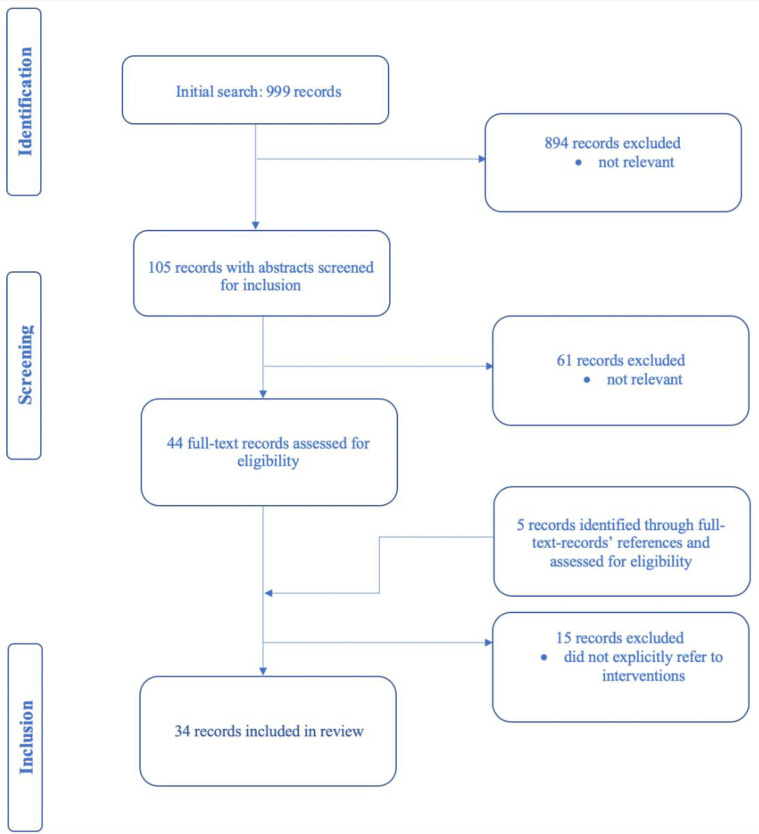
As climate change worsens and public awareness of its grave impact increases, individuals are increasingly experiencing distressing mental health symptoms which are often grouped under the umbrella term of eco-anxiety. Clear guidance is needed to enable mental health professionals to make informed choices of appropriate interventions and approaches in their eco-anxiety treatment plans. A scoping review was conducted to examine the current understanding of eco-anxiety and related intervention options and recommendations. The review included 34 records, 13 of which reflected specific psychological approaches. A thematic analysis of the content of the selected records yielded five major themes across interventions for individual and group treatment of eco-anxiety: practitioners’ inner work and education, fostering clients’ inner resilience, encouraging clients to take action, helping clients find social connection and emotional support by joining groups, and connecting clients with nature. Recommendations for treatment plans are to focus on holistic, multi-pronged, and grief-informed approaches that include eco-anxiety focused group work.
Overview
The claims and statistics of this paper haven’t been checked yet.
Free: it reads the open-access text and checks the first 5 claims that cite a source we can check. Create a free account to check every claim.
Integrity signals
Registry
Cites
Statistics
Figures
Verification
Claims the paper makes
The claims and statistics of this paper haven’t been checked yet.
Free: it reads the open-access text and checks the first 5 claims that cite a source we can check. Create a free account to check every claim.
Claims other papers make about this one
Each is checked against this paper’s own text: does it say what the citing paper says it does?
The source backs part of the claim, not all of it — or backs it for a different population, condition or comparison.
In the citing paper
“addressing ways the client can participate in meaningful eco-friendly action can mitigate hopelessness and anxiety [59,60], and enhance community participation, self-efficacy, and competence [6,20,57].”
From Climate Distress: A Review of Current Psychological Research and Practice (2023) · cites this paper as [57]
Experimental — accuracy not yet measuredThe source backs part of the claim, not all of it — or backs it for a different population, condition or comparison.
In the citing paper
“Psychological adaptation requires an acknowledgement of the threats, coping strategies to manage feelings and thoughts related to the climate crisis, as well as behavioural and psychological engagement to reduce the threat and protect themselves [57,60].”
From Climate Distress: A Review of Current Psychological Research and Practice (2023) · cites this paper as [57]
Experimental — accuracy not yet measuredThe source backs part of the claim, not all of it — or backs it for a different population, condition or comparison.
In the citing paper
“Practitioners should be prepared to discuss the many ramifications of climate change on the ecosystem and society, as service users may feel uncomfortable exploring the extent of the impact of climate change if they sense their clinician does not have a full understanding [56,57].”
From Climate Distress: A Review of Current Psychological Research and Practice (2023) · cites this paper as [57]
Experimental — accuracy not yet measuredThe source backs part of the claim, not all of it — or backs it for a different population, condition or comparison.
In the citing paper
“Clinicians must ensure they do not minimise or question feelings of climate distress, as this can discourage meaningful exploration of the topic, hinder healthy coping strategies, and harm the therapeutic alliance [56,57,59].”
From Climate Distress: A Review of Current Psychological Research and Practice (2023) · cites this paper as [57]
Experimental — accuracy not yet measuredThe source backs part of the claim, not all of it — or backs it for a different population, condition or comparison.
In the citing paper
“Group action or therapy results in a sense of common purpose, fostering relatedness, peer interactions and social connection [20,57,59].”
From Climate Distress: A Review of Current Psychological Research and Practice (2023) · cites this paper as [57]
Experimental — accuracy not yet measured
6 more claims about this paper
Create a free account to see every claim other papers make about this one.
Self-check
Percentages, sums and reported differences re-computed from the paper’s own numbers.
The self-check needs the paper’s full text.
Citations
Cites
Using thematic analysis in psychology
Braun, V., & Clarke, V. (2006) · Qualitative Research in Psychology · doi:10.1191/1478088706qp063oa · Cited by 194,414 · cited 3×
“Central themes were identified during data analysis using Braun and Clarke’s [29]”
MethodInfluentialScoping studies: towards a methodological framework
Arksey, H., & O'Malley, L. (2005) · International Journal of Social Research Methodology · doi:10.1080/1364557032000119616 · Cited by 36,742 · cited 2×
“Although only Burke’s [28] article delved specifically into the collective actions a client might engage with, many records stressed that practitioners could recommend that clients generally join groups focused on active climate change mitigation and adaptation plans.”
BackgroundMethodHealth and climate change: policy responses to protect public health
Watts, N., Adger, W. N., Agnolucci, P., Blackstock, J., Byass, P., Cai, W., Chaytor, S., Colbourn, T., Collins, M., Cooper, A., et al. (2015) · The Lancet · doi:10.1016/s0140-6736(15)60854-6 · Cited by 2,055
Solastalgia: The Distress Caused by Environmental Change
Albrecht, G., Sartore, G.-M., Connor, L., Higginbotham, N., Freeman, S., Kelly, B., Stain, H., Tonna, A., & Pollard, G. (2007) · Australasian Psychiatry · doi:10.1080/10398560701701288 · Cited by 1,369 · cited 3×
“Psychologist Renee Lertzman refers to the experience as “environmental melancholia- a combined sense of primal loss and paralyzing powerlessness” (as quoted by Dockett [16], (p. 11)) while environmental philosopher and professor of sustainability Glenn Albrecht [17] categorizes it as a form of “psychoterratic illness…”
BackgroundThe psychological impacts of global climate change
Doherty, T. J., & Clayton, S. (2011) · American Psychologist · doi:10.1037/a0023141 · Cited by 894 · cited 10×
“These records also reflected on the ability of group processes to offer an emotional container and safe space that galvanizes participants into action [33,39,41,44].”
BackgroundInfluentialClimate change and mental health: risks, impacts and priority actions
Hayes, K., Blashki, G., Wiseman, J., Burke, S., & Reifels, L. (2018) · International Journal of Mental Health Systems · doi:10.1186/s13033-018-0210-6 · Cited by 746 · cited 3×
“Hayes [12] * Not identified Fostering clients’ inner resilience: cognitive interventions, interventions connecting clients with their lyrical self—interventions focused on creative expression and the arts.”
BackgroundHope, despair and transformation: Climate change and the promotion of mental health and wellbeing
Fritze, J. G., Blashki, G. A., Burke, S., & Wiseman, J. (2008) · International Journal of Mental Health Systems · doi:10.1186/1752-4458-2-13 · Cited by 602
Successful Adaptation to Climate Change
(2013) · Routledge eBooks · doi:10.4324/9780203593882 · Cited by 289
Loss and Climate Change: The Cost of Parallel Narratives
Randall, R. (2009) · Ecopsychology · doi:10.1089/eco.2009.0034 · Cited by 268 · cited 15×
“Clients could also be encouraged to relate to their eco-anxiety as a form of anticipatory loss [32].”
BackgroundInfluential
Research works printed but not linked: 11
- Jackman K.P. Uznanski W. McDermott-Levy R. Cook C. Climate change: Preparing the nurses of the future Dean Notes 2018 39 1 3
- Clayton S. Manning C.M. Krygsman K. Speiser M. Mental Health and Our Changing Climate: Impacts, Implications, and Guidance American Psychological Association, and ecoAmerica Washington, DC, USA 2017 Available online: https://www.apa.org/news/press/releases/2017/03/mental-health-climate.pdf (accessed on 23 May 2020)
- Dockett L. The rise of eco-anxiety Psychother. Netw. Mag. 2019 43 11 14
- Seaman E.B. Climate Change on the Therapist’s Couch: How Mental Health Clinicians Receive and Respond to Indirect Psychological Impacts of Climate Change in the Therapeutic Setting Master’s Thesis Smith College for Social Work Northampton, MA, USA 2016 Available online: https://scholarworks.smith.edu/theses/1736 (accessed on 22 February 2020)
- Lewis J. In the room with climate anxiety: Part 1 Psychiatric Times 2018 35 1 2
- Ojala M. Eco-anxiety RSA J. 2018 4 10 15
- Conyer M. Climate justice and mental health–think globally, panic internally, act locally Psychother. Counsell. Today 2019 1 5 12
- Jaramillo J.C. I just see nature collapsing around me Therapy Today 2019 30 38
- Shaffer D.K. Ecophobia: Keeping hope afloat Alive Can. Nat. Health Wellness Mag. 2017 421 109 113
- Bednarek S. Is there a therapy for climate-change anxiety? Ther. Today 2019 30 36 39
- Stewart A.E. Individual psychology and environmental psychology J. Ind. Psychol. 2007 63 67 85
Cited by
Items 101–200 of 270
Climate Change and Heat: Challenges for Child Health Outcomes and Inequities
Zhang, A. Y., Bennett, M. B., Martin, S., & Grow, H. M. (2024) · Current Pediatrics Reports · doi:10.1007/s40124-024-00314-w · Cited by 9
Resurrecting Gaia: harnessing the Free Energy Principle to preserve life as we know it
Montgomery, C., & Hipólito, I. (2023) · Frontiers in Psychology · doi:10.3389/fpsyg.2023.1206963 · Cited by 8
“the educational priorities towards sustainable behaviour not only acts as a perturbation to the biophilia deficiency syndrome but also addresses the raising eco-anxiety symptoms reported by young generations (Pihkala, 2020; Baudon and Jachens, 2021; Gunasiri et al., 2022).”
BackgroundEco-anxiety: An adaptive behavior or a mental disorder? Results of a psychometric study
Micoulaud‐Franchi, J., Coelho, J., Geoffroy, P. A., Vecchierini, M., Poirot, I., Royant‐Parola, S., Hartley, S., Cugy, D., Gronfier, C., Gauld, C., et al. (2024) · L Encéphale · doi:10.1016/j.encep.2023.08.009 · Cited by 9
The Effect of Subjective Social Disconnectedness on Climate Change AnxietyPreprint
Card, K. G., Marshall, C., Aran, N., Bratu, A., Closson, K., Martin, G., Logi, C., Gislason, M., Kennedy, A. M., Takaro, T. K., et al. (2022) · SSRN Electronic Journal · doi:10.2139/ssrn.4097132 · Cited by 8
Pitron, V., Lemogne, C., Clayton, S., Léger, D., den Bergh, O. V., & Witthöft, M. (2024) · Journal of Psychosomatic Research · doi:10.1016/j.jpsychores.2024.111937 · Cited by 9
Climate change distress and impairment among adolescents in Germany
König, L., Schröder, R., Breves, P. L., Linnemann, G. A., Hamer, T., & Suhr, R. (2025) · Frontiers in Climate · doi:10.3389/fclim.2025.1568676 · Cited by 8
Vidal, C., & Latkin, C. A. (2024) · Academic Psychiatry · doi:10.1007/s40596-024-01987-7 · Cited by 8
“Most of the research conducted on psychological interventions to treat eco-anxiety evaluates psychodynamic interventions, followed by eco-therapy or eco-psychology [14].”
Klimakrise, Natur und Psychotherapie
Pfeifer, E. (2024) · Psychotherapie-Wissenschaft · doi:10.30820/1664-9583-2024-2-39 · Cited by 5
Bdier, D., Veronese, G., & Mahamid, F. (2024) · Cambridge Prisms Global Mental Health · doi:10.1017/gmh.2024.40 · Cited by 8
Palmer, H. C. (2022) · Murmurations Journal of Transformative Systemic Practice · doi:10.28963/5.2.3 · Cited by 9
Pretraumatic Climate Stress in Psychotherapy: An Integrated Case Illustration
Babbott, M. (2023) · Ecopsychology · doi:10.1089/eco.2022.0076 · Cited by 10
“Seeking social connection is a frequent treatment recommendation (Baudon & Jachens, 2021).”
Sippel, M. (2023) · International Journal of Sustainability in Higher Education · doi:10.1108/ijshe-07-2022-0208 · Cited by 9
Climate Change Psychological Distress: An Underdiagnosed Cause of Mental Health Disturbances
de Jarnette, J. (2024) · The Journal of the American Board of Family Medicine · doi:10.3122/jabfm.2023.230169r1 · Cited by 6
Assessing Eco-Anxiety with a mixed method: Creation and Validation of a three dimensions scale.Preprint
Jalin, H., Chandès, C., Boudoukha, A. H., Jacob, A., Poinsot, R., & congard (2023) · doi:10.31219/osf.io/wnrjx · Cited by 6
Wullenkord, M. C., Schulz, J., & Geiger, S. M. (2025) · Journal of Environmental Psychology · doi:10.1016/j.jenvp.2025.102664 · Cited by 9
Maral, S., Bilmez, H., & Satıcı, S. A. (2025) · Psychiatric Quarterly · doi:10.1007/s11126-025-10184-0 · Cited by 13
“According to Baudon and Jachens [7], eco-anxiety represents distressing mental health symptoms that fall within the larger framework of climate change.”
The Language of Soil: Learning the Lessons From Climate Change
Trdlicova, K., & Neilson, R. (2025) · European Journal of Soil Science · doi:10.1111/ejss.70188 · Cited by 5
Carone, N., Tracchegiani, J., & Cruciani, G. (2026) · Psychology and Psychotherapy Theory Research and Practice · doi:10.1111/papt.70083 · Cited by 8
Ogunbode, C. A., Salmela‐Aro, K., Maran, D. A., van den Broek, K. L., Doran, R., Lins, S., Torres‐Marín, J., Navarro‐Carrillo, G., Rocchi, G., & Schermer, J. A. (2024) · Journal of Affective Disorders · doi:10.1016/j.jad.2024.08.018 · Cited by 10
The role of eco-anxiety in the presentation of bulimia nervosa: a case report
Runfola, C. D., & Safer, D. L. (2024) · Journal of Eating Disorders · doi:10.1186/s40337-024-01118-5 · Cited by 7
“These interventions are consistent with those identified by systematic and scoping reviews of interventions targeting eco-anxiety [28, 29].”
BackgroundAssessing Eco-Anxiety with a mixed method: Creation and Validation of a three dimensions scale.
Jalin, H., Chandès, C., Boudoukha, A. H., Jacob, A., Poinsot, R., & Congard, A. (2023) · European Review of Applied Psychology · doi:10.1016/j.erap.2024.101010 · Cited by 17
A Global Perspective on Climate Change and Mental Health
Clayton, S., Aruta, J. J. B. R., Aylward, B., Cunsolo, A., Harper, S. L., & Berry, H. L. (2024) · Springer eBooks · doi:10.1007/978-3-031-56736-0_1 · Cited by 7
Labarthe, M. I. Z., & Marks, E. M. (2024) · The Cognitive Behaviour Therapist · doi:10.1017/s1754470x23000284 · Cited by 8
“Researchers and mental health professionals must urgently learn to better understand this experience (Dodds, 2021), to respond with appropriate support (Baudon and Jachens, 2021), both individually and collectively (Bailey et al ., 2021).”
Gebhardt, N., Saur, C., Herrmann, B., Friederich, H., & Nikendei, C. (2023) · Die Psychotherapie · doi:10.1007/s00278-023-00683-5 · Cited by 4
Zhou, C., Zhang, Z., Wilson, A., Xu, H., Xie, Z., & Wang, Y. (2025) · Journal of Psychosomatic Research · doi:10.1016/j.jpsychores.2025.112109 · Cited by 4
Selçuk, K. T., Güler, B., Doğan, N., Arslan, S., & YILMAZ, H. Ö. (2026) · Nutrire · doi:10.1186/s41110-026-00418-x · Cited by 5
“Individuals with ecological anxiety experience various negative emotional reactions such as fear, anger, exhaustion, powerlessness, fealing of loss, helplessness, and phobia and despair [6].”
Applying Emotional Regulation Strategies to Manage Climate Distress
Ibrahim, M. (2024) · IntechOpen eBooks · doi:10.5772/intechopen.1007813 · Cited by 10
da Silva, R. R. (2025) · International Journal of Sustainability in Higher Education · doi:10.1108/ijshe-09-2024-0602 · Cited by 4
Pitt, C., & Norris, K. (2024) · Australian Psychologist · doi:10.1080/00050067.2024.2379938 · Cited by 7
“It is argued that confronting their own climate emotions is important for them to feel comfortable and capable of addressing this area of concern with clients (Baudon & Jachens, 2021; Gillespie et al., 2023; Lewis et al., 2020; Silva & Coburn, 2022; Wortzel, Lee, et al., 2022).”
Validation of the Arabic-language version of the Eating-Related Eco Concern (EREC) scalePreprint
Zouki, C.-J. E., Obeïd, S., Malaeb, D. N., Sakr, F., Dabbous, M., Khatib, S. E., Hallit, S. R., & Fekih‐Romdhane, F. (2024) · Research Square · doi:10.21203/rs.3.rs-3987459/v1 · Cited by 5
Levesque, A., & Rocque, R. (2024) · Environmental Education Research · doi:10.1080/13504622.2024.2431197 · Cited by 7
“In parallel, scholars in mental health fields are also beginning to acknowledge and respond to the demand for climate emotion therapies (Baudon and Jachens 2021; Pitt, Norris, and Pecl 2023, 2024).”
Hoffmann, T. (2025) · SciComm Report · doi:10.32457/scr.v4i1.2812 · Cited by 18
Strus, J. A., Sankam, J., Green, S., Piper, M., Richards, S., Knowles, K., North, K., & Solomonian, L. (2025) · The Journal of Climate Change and Health · doi:10.1016/j.joclim.2025.100440 · Cited by 5
“Four papers focused on clinical strategies to address mental well-being speci fi cally [70 − 73].”
McCollum, A., Stevenson, K. T., Tayne, K., DeMattia, E. A., Jeffs, P., & Busch, K. C. (2025) · Journal of Environmental Studies and Sciences · doi:10.1007/s13412-025-01034-3 · Cited by 4
Innocenti, M., Comerci, C., Dockerty, G., Grassi, G., Santarelli, G., & Cadeddu, C. (2025) · The Journal of Climate Change and Health · doi:10.1016/j.joclim.2025.100585 · Cited by 5
“Within the context of this case study, a treatment plan was developed, and based on previous literature insight [19], an effort was put into formulating a holistic and grief informed model.”
Using contemplative nature engagement practices to address ecological distress
Macaulay, R., Joyce, C., Johnson, K. A., Vella‐Brodrick, D., Walker, I. A., & Williams, K. J. H. (2025) · People and Nature · doi:10.1002/pan3.70172 · Cited by 3
“By ‘holistic’, we refer to interventions that intentionally balance attention between self, community and the natural world (Baudon & Jachens, 2021), designing practices that engage attentional/affective, relational and place-based processes.”
Léger‐Goodes, T., Herba, C. M., Piché, J., Smith, J., Éthier, M., Lefrançois, D., & Malboeuf‐Hurtubise, C. (2025) · BMC Psychology · doi:10.1186/s40359-025-03589-w · Cited by 7
“As a previous scoping review of treatments for eco-anxiety highlighted, having others express a lived experience similar to one’s own can have beneficial, normalizing, therapeutic effects and reduce feelings of solitude [31].”
Özer, D., Kurulur, H. S., Bir, E. F., & Yaş, Ş. (2026) · Public Health Nursing · doi:10.1111/phn.70079 · Cited by 3
“Eco-anxiety is defined as an intense state of worry and concern regarding the potential catastrophic consequences of the climate crisis (Baudon and Jachens 2021 ).”
Interventions for the Treatment of Eco-anxiety
Turğut, F. S., & Öztürk, M. (2025) · Psikiyatride Guncel Yaklasimlar - Current Approaches in Psychiatry · doi:10.18863/pgy.1508265 · Cited by 11
The spirit in social work: ecospirituality, holistic and sustainable social work practice
Hanrahan, C. (2025) · Journal of Religion & Spirituality in Social Work Social Thought · doi:10.1080/15426432.2025.2513192 · Cited by 6
Les enjeux de l’éco-anxiété et de la résilience sur la santé mentale
Brasil, P. T. (2023) · Cortica · doi:10.26034/cortica.2023.4163 · Cited by 2
Les jeunes générations atteintes d’éco-anxiété : que faire ?
Jehel, L., & Guidère, M. (2024) · Médecine de Catastrophe - Urgences Collectives · doi:10.1016/j.pxur.2024.03.001 · Cited by 3
Detecting climate anxiety in therapy through natural language processing
Bahar, L., Rego, S. A., & Sadeh‐Sharvit, S. (2024) · Scientific Reports · doi:10.1038/s41598-024-75269-5 · Cited by 7
Climate Change and Youth: Fast-Tracking Mental Health Solutions
Gao, C. X., Fava, N., Browne, V., Patrick, R., Gunasiri, H., & Menssink, J. M. (2025) · Journal of Applied Youth Studies · doi:10.1007/s43151-025-00174-1 · Cited by 5
“These initiatives may range from incorporating resilience and coping skills workshops into education on climate change in schools (Newberry Le Vay et al. 2023) to green social prescribing (Baudon and Jachens 2021).”
Mental Health Risks Due to Climate Change
Bhaskaran, A., & Muralidharan, S. (2024) · Advances in healthcare information systems and administration book series · doi:10.4018/979-8-3693-4183-4.ch003 · Cited by 4
Exploring Eco-Grief, Transformative Learning, and Action in Environmental Observers
Zurba, M., Baum-Talmor, P., Park, A., Rudenko, K., Mendritzki, E., Woodgate, R. L., Binkley, L., & Busolo, D. S. (2025) · Human Ecology · doi:10.1007/s10745-025-00580-2 · Cited by 4
“…type of collective guilt in terms of sharing its heavy burden and coping with individual eco-grief prompted by feelings of guilt for the actions of humanity (Baudon & Jachens, 2021 ; Randall, 2005 ). noted that most of her organization’s work as a Team Lead was centred on education and research.”
Orthorexia nervosa: nosographic category or not?
Bacchini, F., & Bossini, E. (2025) · Metamedicine · doi:10.1007/s11017-025-09722-5 · Cited by 2
“Eco-anxiety is not listed in the DSM-5 as a mental disorder and yet is a condition rapidly spreading among people [44].”
Moving while facing climate change: a literature review of dance movement therapy and eco-anxiety
Ariza, C. G., & Bräuninger, I. (2025) · Body Movement and Dance in Psychotherapy · doi:10.1080/17432979.2025.2595111 · Cited by 2
“Certain interventions proposed in the articles appear in Baudon and Jachens (2021) scoping review of interventions for eco-anxiety.”
InfluentialGalway, L. P. (2025) · People and Nature · doi:10.1002/pan3.70220 · Cited by 2
“…as others argue in relation to climate and eco-anxiety specifically, fostering meaningful and place-specific connections with nature serves to support coping and ‘… harness the adaptive potential of various emotions’ (e.g. Baudon & Jachens, 2021; Grénman et al., 2025 : 1745; Pihkala, 2020 ).”
InfluentialEco-anxiety in the times of climate crisis: a grounded theory inquiry
Aston, N., Tribe, R., Narvaez, J. C. D. M., & Moura, H. F. (2026) · Geopsychiatry · doi:10.1016/j.geopsy.2026.100051 · Cited by 3
Disentangling the association between climate emotions and mental health outcomes
Deneault, A., Lorteau, S., Neville, R. D., & Stern, J. A. (2026) · Journal of Affective Disorders · doi:10.1016/j.jad.2026.121697 · Cited by 4
Understanding Eco-Anxiety and Eco-Grief: A Comprehensive Review
Rai, A. (2023) · International Journal of Research Publication and Reviews · doi:10.55248/gengpi.4.823.50353 · Cited by 4
Mocatta, G., & Harris, R. M. B. (2023) · Education for sustainability · doi:10.1007/978-981-99-3802-5_15 · Cited by 1
Sippel, M. (2024) · Theorie und Praxis der Nachhaltigkeit · doi:10.1007/978-3-662-67740-7_7 · Cited by 5
Competency-Based Climate Change and Mental Health Education: An Emerging Paradigm
Seritan, A. L. (2024) · Academic Psychiatry · doi:10.1007/s40596-024-02013-6 · Cited by 2
“In contrast, therapeutic approaches to address climate anxiety and mental health difficulties that occur in the aftermath of natural disasters have been developed and are specific to these contexts [3, 24–26].”
Kanwal, P., Mittal, S., & Wijethilaka, H. P. G. D. (2024) · Advances in environmental engineering and green technologies book series · doi:10.4018/979-8-3693-5792-7.ch004 · Cited by 3
Willsher, C., & Freeston, M. H. (2024) · The Cognitive Behaviour Therapist · doi:10.1017/s1754470x24000199 · Cited by 3
“First, Baudon and Jachens (2021) conducted a scoping review of interventions for eco-anxiety and identified 34 sources, of which 13 describe specific psychological approaches.”
Lindhe, N., Berg, M., Andersson, K., & Andersson, G. (2024) · BMC Psychiatry · doi:10.1186/s12888-024-06212-1 · Cited by 4
“While a scoping review on eco-anxiety interventions identified several papers discussing how mental health practitioners can support clients in developing constructive coping strategies [11], empirical research assessing the effectiveness of such interventions is scarce.”
BackgroundThe Influence of Ecotherapy Training on the Professional Identity of New Counselors
Delaney, M. E., Rian, S. W., Sacco, E., & Boren, C. (2024) · Ecopsychology · doi:10.1089/eco.2024.0030 · Cited by 4
“Specifically, there is very little awareness, let alone targeted interventions to address eco-anxiety, despite the increased prevalence and demand for mental or emotional support in coping with these fears about the state of the earth and its longevity (Baudon & Jachens, 2021).”
Cosh, S., Bartik, W. J., Ryan, R., Jefferys, A., Fallander, K., Tully, P. J., & Lykins, A. D. (2025) · JMIR Research Protocols · doi:10.2196/69005 · Cited by 3
“The intervention is designed to be run in a group setting in order to normalize climate change–related emotions and foster social support [31].”
InfluentialCorona-Depression, Eco-Angst, Stress, Resignation und Resilienz
Spitzer, M. (2022) · Nervenheilkunde · doi:10.1055/a-1650-1998 · Cited by 2
Confronting the nexus of climate change
Kumari, S., & Garg, M. C. (2024) · Elsevier eBooks · doi:10.1016/b978-0-443-23788-1.00003-8 · Cited by 3
Mclean, L. (2023) · Open Access Victoria University of Wellington | Te Herenga Waka (Figshare) · doi:10.26686/wgtn.22065410 · Cited by 5
Sarsour, A., Nagabhatla, N., & Okamoto, S. (2023) · Preprints.org · doi:10.20944/preprints202309.0425.v1 · Cited by 1
Climate Change and Challenges for Individuals with Disability
Lippke, S., & Rinn, R. (2024) · Springer eBooks · doi:10.1007/978-3-031-40858-8_265-1 · Cited by 3
Building bridges towards an eco-drama therapy
Bleuer, J., Gersie, A., & Sajnani, N. L. (2025) · Drama Therapy Review · doi:10.1386/dtr_00168_2 · Cited by 2
Gebhardt, N., Sutcliffe, M., Schultz, J.-H., Friedrich, H.-C., & Nikendei, C. (2025) · German Medical Science GMS Publishing House · doi:10.3205/zma001776 · Cited by 1
“…durch die praktischen Erfahrungen des Forschungsteams als Psychotherapeut*innen, die Arbeit einer der Forscherin-nen (N.G.) als Beraterin für Klimaaktivisten und die wis-senschaftliche Literatur über die Natur von Eco-Emotionen und ihre Auswirkungen auf die Psychotherapie [24], [25], [27], [36].”
InfluentialThe Psychosocial Impact of Climate Change: A Recent Overview
Arneaud, G. J. (2025) · Springer eBooks · doi:10.1007/978-3-031-83037-2_3 · Cited by 2
Mishu, M. P., Rabbani, M. M. G., Vereeken, S., Tkach, E., Martin-Kerry, J., Chowdhury, T. F., Wahab, A., Mashreky, S. R., Huque, R., & Friend, R. (2025) · International Journal of Environmental Health Research · doi:10.1080/09603123.2025.2568035 · Cited by 2
“However, there is a lack of evidence on interventions for eco-anxiety (Baudon and Jachens 2021).”
Jalin, H., Sapin, A., Congard, A., & Boudoukha, A. H. (2025) · Journal of Environmental Psychology · doi:10.1016/j.jenvp.2025.102805 · Cited by 1
College Students’ Perceptions and Emotions Related to Climate Change and Government Climate Action
McLeod, A. B., & Coates, E. E. (2025) · Youth · doi:10.3390/youth5040118 · Cited by 1
“These interventions may be able to address unproductive forms of anxiety and promote collective efficacy as a means of counteracting low individual efficacy (Baudon & Jachens, 2021; Doherty, 2018).”
Cabaços, C., Macedo, A., Baptista, M., & Pereira, A. T. (2026) · Sustainability · doi:10.3390/su18031501 · Cited by 2
Morgan, J. L., Gregory, J. D., & Williams, M. O. (2026) · Psychology and Psychotherapy Theory Research and Practice · doi:10.1111/papt.70052 · Cited by 1
“Interventions to support those experiencing CD are under-developed and under-researched, and professionals report feeling unprepared to respond (Baudon & Jachens, 2021; Hickman et al., 2021; Williams et al., 2024).”
Arpacı, R., & KABAKOĞLU, H. (2026) · BMC Psychology · doi:10.1186/s40359-026-04465-x · Cited by 1
“Such psychosocial interventions may help survivors establish a healthy connection with nature, enhance environmental awareness at the community level, and contribute to the strengthening of mental health [20].”
Jampel, S. M., Borck, D., Meader, H., Parnes, M. F., Atkinson, J. W., Kramer, C. B., & Acolin, J. (2026) · PLOS Climate · doi:10.1371/journal.pclm.0000833 · Cited by 1
“Over 60% of youth worldwide experience climate distress [3], and between 5–27% of individuals with climate distress [8–10] experience adverse psychiatric symptoms such as impaired sleep or intrusive thoughts [11].”
Léger‐Goodes, T., Herba, C. M., Smith, J., Lefrançois, D., Éthier, M., Piché, J., & Malboeuf‐Hurtubise, C. (2026) · Chronic Stress · doi:10.1177/24705470261442334 · Cited by 1
“20,21 An integrative literature review of eco-anxiety inyouthalsohighlightstheimportanceofpromotinghope,using emotional validation, questioning binary thinking patterns, and creating meaning with this population.”
Samarawickrama, S. K., Richmond, S., Kirk, H., & Freeman, N. C. (2026) · Environmental Education Research · doi:10.1080/13504622.2026.2660132 · Cited by 4
Daily triggers of climate distress and coping strategies in Quebec youth: A photovoice study
Kim‐Shin, C., Dubé, L., Guay, L., Bouamoucha, R., Lorteau, S., Bureau, J., Racine, N., & Deneault, A. (2026) · Environmental Psychology Research · doi:10.1002/epr2.70008 · Cited by 1
Nallajerla, M., & Engstrom, S. (2026) · Frontiers in Conservation Science · doi:10.3389/fcosc.2026.1870224 · Cited by 2
Canbulat, N., & Dursun, A. (2026) · Current Psychology · doi:10.1007/s12144-026-09931-8 · Cited by 1
“…is eco-anxiety, recent studies show that psychological responses to the climate crisis are not limited to anxiety; they also encompass different eco-emotions such as grief, guilt, anger, and helplessness (Baudon & Jachens, 2021 ; Ojala et al., 2021 ; Qiu & Qiu, 2024 ; Zeier & Wessa, 2024).”
Learning to Live with Emotions for Transition
Verzat, C., & Lecoq, J. (2023) · Anthropocene - humanities and social sciences · doi:10.1007/978-3-031-39366-2_6 · Cited by 1
Conceptual Foundations of Climate Distress in Young People
Haase, E., & Hudson, K. (2024) · Cambridge University Press eBooks · doi:10.1017/9781009252904.001 · Cited by 1
Ist BNE im Geographieunterricht zukunftsweisend?
Ammoneit, R., & Reudenbach, C. (2024) · GW-Unterricht · doi:10.1553/gw-unterricht174s43 · Cited by 5
“…persönliches Engagement gegen die Erderwärmung im globalen Norden mit einer hohen Selbstwirksam-keitserwartung verbunden ist (vgl. Ojala et al. 2021 Da die Stressoren die gesamte Gesellschaft und die junge Generation betreffen, müssen neue Wege be-schritten werden (vgl. Baudon & Jachens 2021).”
BackgroundEthical Anxiety in Global Politics
Steele, B. J. (2024) · Oxford University Press eBooks · doi:10.1093/oxfordhb/9780197698532.013.6 · Cited by 1
Rohn, N., Barke, A., & Forkmann, T. (2025) · Verhaltenstherapie · doi:10.1159/000541505 · Cited by 1
Klimawandel und psychische Gesundheit
Brandt, L., & Hasan, A. (2025) · InFo Neurologie + Psychiatrie · doi:10.1007/s15005-025-4278-7 · Cited by 1
“Im Zusammenhang mit dem Klimawandel werden psychische Konzepte wie Eco-Anxiety (Angst vor den Folgen des Klimawandels) diskutiert [42, 43].”
Ziter, C. D., & Buxton, R. T. (2025) · Environmental Research Ecology · doi:10.1088/2752-664x/addd27 · Cited by 4
“These articles highlight that stewards are motivated by the desire to take action, which some evidence suggests may help combat feelings of eco-anxiety or climate grief (Hayes et al 2018, Baudon and Jachens 2021, Lukacs et al 2023).”
Éco-anxiété, notre rôle de soignant
Lodovico, L. D. (2023) · Soins Psychiatrie · doi:10.1016/j.spsy.2023.01.001
Resurrecting Gaia: Harnessing the Free Energy Principle to Preserve Life as We Know ItPreprint
Montgomery, C., & Hipólito, I. (2023) · doi:10.31234/osf.io/5tm9w
Teaching for a Habitable Future with Octavia Butler’sParable of the Sower
Katopodis, C. (2023) · English Language Notes · doi:10.1215/00138282-10293184 · Cited by 1
Bystron, J. M., Dziekiewicz, A., Kobiałka, J., & Giordano, U. (2023) · Environmental Medicine · doi:10.26444/ms/170262
“Climate-related topics should be integrated into education at all levels, while also offering emotional processing opportunities, coping strategies, and opportunities for relevant climate engagement [26, 56].”
BackgroundCervellione, B., Cannavò, M., & Davì, D. (2023) · QUADERNI DI GESTALT · doi:10.3280/gest2023-001005 · Cited by 1
Sordi, C. (2023) · Estudos Históricos (Rio de Janeiro) · doi:10.1590/s2178-149420230308 · Cited by 1
Ogunbode, C. A., Salmela‐Aro, K., Maran, D. A., van den Broek, K. L., Doran, R., Lins, S., Torres‐Marín, J., Navarro‐Carrillo, G., Rocchi, G., & Schermer, J. A. (2023) · doi:10.31234/osf.io/fg2h3
Exploring Eco-Anxiety and Eco-Coping in Young Adults in IndiaPreprint
Jain, V., Jose, A., Eldhose, N. J., & John, D. (2024) · Research Square · doi:10.21203/rs.3.rs-4371214/v1 · Cited by 3
Narratives of Hope: Teachers' and Students' Roles in Climate Justice Activism
Gruber, S. (2024) · Advances in environmental engineering and green technologies book series · doi:10.4018/979-8-3693-2577-3.ch013 · Cited by 1
A Research Agenda for Young People’s Psychological Response to Climate Change
Wortzel, J. R. (2024) · Cambridge University Press eBooks · doi:10.1017/9781009252904.010
Building Climate Resilience: How Climate Groups Can Channel Anxiety and Grief into Action
Lemke, M. J. (2024) · PDXScholar (Portland State University) · doi:10.15760/honors.1530
Faith in Equity, Equity in Faith: Insights about Care for Climate-Related Mental Health Issues
Gore, K., Neidhardt, J., & Roessel, M. H. (2024) · Springer eBooks · doi:10.1007/978-3-031-56736-0_20
Metadata
- Authors
- Baudon, P., & Jachens, L.
- Affiliations
- Webster University Geneva (CH)
- Corresponding author
- Jachens, Liza
- ORCID
- Jachens, Liza
- Venue
- International Journal of Environmental Research and Public Health
- Publisher
- MDPI AG
- Published
- 2021-09-13
- Volume
- 18
- Issue
- 18
- Pages
- 9636
- ISSN
- 1660-4601 (ISSN-L)
- PMC
- PMC8464837
- OpenAlex
- W3199289078
- Semantic Scholar
- a92d5ba1763da872d79b513c95992c9643e7e9b6
- Cited by
- 269
- References
- 34
- Citations by year
- 2026: 52 · 2025: 68 · 2024: 74 · 2023: 46 · 2022: 26 · 2021: 3
- FWCI
- 7.13
- Type
- journal article
- Language
- en
- Open access
- gold
- doi.org
- Licence
- Locations
- International Journal of Environmental Research and Public Health (publishedVersion, cc-by)
- Europe PMC (PubMed Central) (publishedVersion, other-oa)
- PubMed Central (publishedVersion, cc-by)
- PubMed (publishedVersion)
- DOAJ (DOAJ: Directory of Open Access Journals) (submittedVersion, cc-by-sa)
- Topics
- Social Sciences › Sociology and Political Science › Climate Change Communication and Perception
- Social Sciences › Psychology › Clinical Psychology › COVID-19 and Mental Health
- Health Sciences › Medicine › Psychiatry and Mental health › Mental Health Treatment and Access
- Keywords
- climate anxiety, psychological intervention, group therapy, resilience, nature connection, social support, climate change and mental health, holistic medicine
- MeSH terms
- Anxiety, Anxiety Disorders, Counseling, Health Personnel, Humans, Mental Health
About these checks
Registry, retraction, Cites and statistics results are computed, not judged, with one exception: a printed reference that no index lists is read once by a model before it counts as a citation error. Claims are extracted by a model and kept only when their quote appears verbatim in the text; each cited source is then checked, with a model’s help, for whether it says what the claim relies on. Those verdicts can be wrong — read the claim’s quote and the cited source before relying on one.
Statistics and arithmetic are recomputed, not judged.
Confidence bands are shown only for fields calibrated on our annotated test set. None is calibrated yet, so no band is shown.
What counts as a claim ›How we measure confidence ›How we check this ›
Are you an author, or do you see a problem with this page? Request a review
Data sources
Bibliographic data: Semantic Scholar, OpenAlex, Crossref.
Contains information from the Semantic Scholar Academic Graph Datasets, made available under the ODC Attribution License (ODC-BY 1.0).
Semantic Scholar’s data is described in: Kinney, R., et al. (2023). The Semantic Scholar Open Data Platform. arXiv:2301.10140.
