

A Scoping Review of Interventions for the Treatment of Eco-Anxiety
Open accessThe DOI matches its Crossref record; 33 of the 34 references it cites were found in a registry or an index.
Abstract
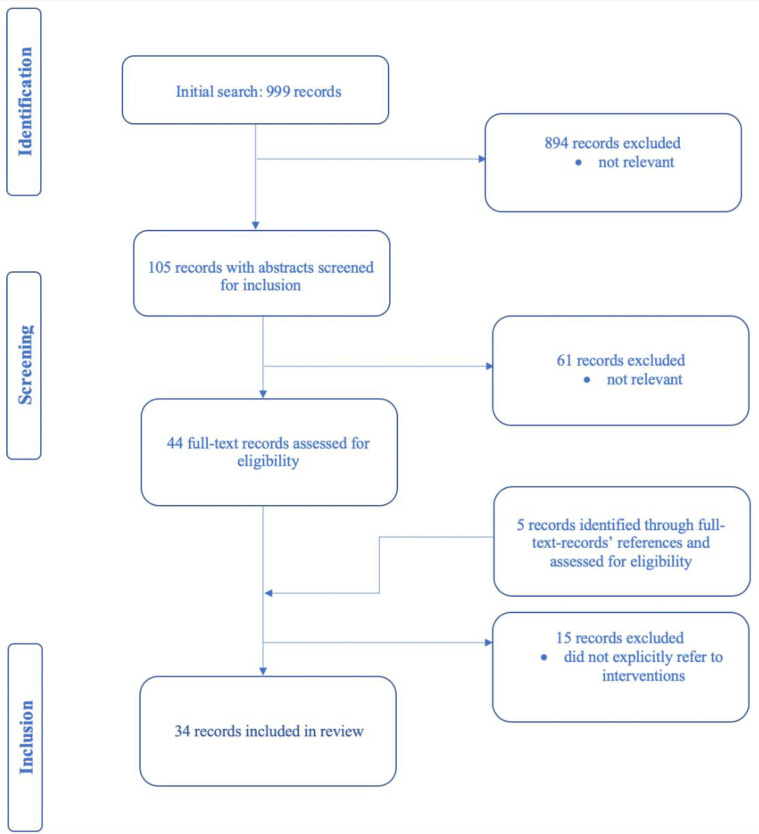
As climate change worsens and public awareness of its grave impact increases, individuals are increasingly experiencing distressing mental health symptoms which are often grouped under the umbrella term of eco-anxiety. Clear guidance is needed to enable mental health professionals to make informed choices of appropriate interventions and approaches in their eco-anxiety treatment plans. A scoping review was conducted to examine the current understanding of eco-anxiety and related intervention options and recommendations. The review included 34 records, 13 of which reflected specific psychological approaches. A thematic analysis of the content of the selected records yielded five major themes across interventions for individual and group treatment of eco-anxiety: practitioners’ inner work and education, fostering clients’ inner resilience, encouraging clients to take action, helping clients find social connection and emotional support by joining groups, and connecting clients with nature. Recommendations for treatment plans are to focus on holistic, multi-pronged, and grief-informed approaches that include eco-anxiety focused group work.
Overview
The claims and statistics of this paper haven’t been checked yet.
Free: it reads the open-access text and checks the first 5 claims that cite a source we can check. Create a free account to check every claim.
Integrity signals
Registry
Cites
Statistics
Figures
Verification
Claims the paper makes
The claims and statistics of this paper haven’t been checked yet.
Free: it reads the open-access text and checks the first 5 claims that cite a source we can check. Create a free account to check every claim.
Claims other papers make about this one
Each is checked against this paper’s own text: does it say what the citing paper says it does?
The source backs part of the claim, not all of it — or backs it for a different population, condition or comparison.
In the citing paper
“addressing ways the client can participate in meaningful eco-friendly action can mitigate hopelessness and anxiety [59,60], and enhance community participation, self-efficacy, and competence [6,20,57].”
From Climate Distress: A Review of Current Psychological Research and Practice (2023) · cites this paper as [57]
Experimental — accuracy not yet measuredThe source backs part of the claim, not all of it — or backs it for a different population, condition or comparison.
In the citing paper
“Psychological adaptation requires an acknowledgement of the threats, coping strategies to manage feelings and thoughts related to the climate crisis, as well as behavioural and psychological engagement to reduce the threat and protect themselves [57,60].”
From Climate Distress: A Review of Current Psychological Research and Practice (2023) · cites this paper as [57]
Experimental — accuracy not yet measuredThe source backs part of the claim, not all of it — or backs it for a different population, condition or comparison.
In the citing paper
“Practitioners should be prepared to discuss the many ramifications of climate change on the ecosystem and society, as service users may feel uncomfortable exploring the extent of the impact of climate change if they sense their clinician does not have a full understanding [56,57].”
From Climate Distress: A Review of Current Psychological Research and Practice (2023) · cites this paper as [57]
Experimental — accuracy not yet measuredThe source backs part of the claim, not all of it — or backs it for a different population, condition or comparison.
In the citing paper
“Clinicians must ensure they do not minimise or question feelings of climate distress, as this can discourage meaningful exploration of the topic, hinder healthy coping strategies, and harm the therapeutic alliance [56,57,59].”
From Climate Distress: A Review of Current Psychological Research and Practice (2023) · cites this paper as [57]
Experimental — accuracy not yet measuredThe source backs part of the claim, not all of it — or backs it for a different population, condition or comparison.
In the citing paper
“Group action or therapy results in a sense of common purpose, fostering relatedness, peer interactions and social connection [20,57,59].”
From Climate Distress: A Review of Current Psychological Research and Practice (2023) · cites this paper as [57]
Experimental — accuracy not yet measured
6 more claims about this paper
Create a free account to see every claim other papers make about this one.
Self-check
Percentages, sums and reported differences re-computed from the paper’s own numbers.
The self-check needs the paper’s full text.
Citations
Cites
Using thematic analysis in psychology
Braun, V., & Clarke, V. (2006) · Qualitative Research in Psychology · doi:10.1191/1478088706qp063oa · Cited by 194,414 · cited 3×
“Central themes were identified during data analysis using Braun and Clarke’s [29]”
MethodInfluentialScoping studies: towards a methodological framework
Arksey, H., & O'Malley, L. (2005) · International Journal of Social Research Methodology · doi:10.1080/1364557032000119616 · Cited by 36,742 · cited 2×
“Although only Burke’s [28] article delved specifically into the collective actions a client might engage with, many records stressed that practitioners could recommend that clients generally join groups focused on active climate change mitigation and adaptation plans.”
BackgroundMethodHealth and climate change: policy responses to protect public health
Watts, N., Adger, W. N., Agnolucci, P., Blackstock, J., Byass, P., Cai, W., Chaytor, S., Colbourn, T., Collins, M., Cooper, A., et al. (2015) · The Lancet · doi:10.1016/s0140-6736(15)60854-6 · Cited by 2,055
Solastalgia: The Distress Caused by Environmental Change
Albrecht, G., Sartore, G.-M., Connor, L., Higginbotham, N., Freeman, S., Kelly, B., Stain, H., Tonna, A., & Pollard, G. (2007) · Australasian Psychiatry · doi:10.1080/10398560701701288 · Cited by 1,369 · cited 3×
“Psychologist Renee Lertzman refers to the experience as “environmental melancholia- a combined sense of primal loss and paralyzing powerlessness” (as quoted by Dockett [16], (p. 11)) while environmental philosopher and professor of sustainability Glenn Albrecht [17] categorizes it as a form of “psychoterratic illness…”
BackgroundThe psychological impacts of global climate change
Doherty, T. J., & Clayton, S. (2011) · American Psychologist · doi:10.1037/a0023141 · Cited by 894 · cited 10×
“These records also reflected on the ability of group processes to offer an emotional container and safe space that galvanizes participants into action [33,39,41,44].”
BackgroundInfluentialClimate change and mental health: risks, impacts and priority actions
Hayes, K., Blashki, G., Wiseman, J., Burke, S., & Reifels, L. (2018) · International Journal of Mental Health Systems · doi:10.1186/s13033-018-0210-6 · Cited by 746 · cited 3×
“Hayes [12] * Not identified Fostering clients’ inner resilience: cognitive interventions, interventions connecting clients with their lyrical self—interventions focused on creative expression and the arts.”
BackgroundHope, despair and transformation: Climate change and the promotion of mental health and wellbeing
Fritze, J. G., Blashki, G. A., Burke, S., & Wiseman, J. (2008) · International Journal of Mental Health Systems · doi:10.1186/1752-4458-2-13 · Cited by 602
Successful Adaptation to Climate Change
(2013) · Routledge eBooks · doi:10.4324/9780203593882 · Cited by 289
Loss and Climate Change: The Cost of Parallel Narratives
Randall, R. (2009) · Ecopsychology · doi:10.1089/eco.2009.0034 · Cited by 268 · cited 15×
“Clients could also be encouraged to relate to their eco-anxiety as a form of anticipatory loss [32].”
BackgroundInfluential
Research works printed but not linked: 11
- Jackman K.P. Uznanski W. McDermott-Levy R. Cook C. Climate change: Preparing the nurses of the future Dean Notes 2018 39 1 3
- Clayton S. Manning C.M. Krygsman K. Speiser M. Mental Health and Our Changing Climate: Impacts, Implications, and Guidance American Psychological Association, and ecoAmerica Washington, DC, USA 2017 Available online: https://www.apa.org/news/press/releases/2017/03/mental-health-climate.pdf (accessed on 23 May 2020)
- Dockett L. The rise of eco-anxiety Psychother. Netw. Mag. 2019 43 11 14
- Seaman E.B. Climate Change on the Therapist’s Couch: How Mental Health Clinicians Receive and Respond to Indirect Psychological Impacts of Climate Change in the Therapeutic Setting Master’s Thesis Smith College for Social Work Northampton, MA, USA 2016 Available online: https://scholarworks.smith.edu/theses/1736 (accessed on 22 February 2020)
- Lewis J. In the room with climate anxiety: Part 1 Psychiatric Times 2018 35 1 2
- Ojala M. Eco-anxiety RSA J. 2018 4 10 15
- Conyer M. Climate justice and mental health–think globally, panic internally, act locally Psychother. Counsell. Today 2019 1 5 12
- Jaramillo J.C. I just see nature collapsing around me Therapy Today 2019 30 38
- Shaffer D.K. Ecophobia: Keeping hope afloat Alive Can. Nat. Health Wellness Mag. 2017 421 109 113
- Bednarek S. Is there a therapy for climate-change anxiety? Ther. Today 2019 30 36 39
- Stewart A.E. Individual psychology and environmental psychology J. Ind. Psychol. 2007 63 67 85
Cited by
Items 201–270 of 270
To the Issue of Studying Ecological Emotional Experiences
Baranov, V. (2023) · Visnyk of V N Karazin Kharkiv National University A Series of Psychology · doi:10.26565/2225-7756-2023-75-08 · Cited by 1
“Baudon & Jachens (2021, p. 6-8) analyzed the literature on existing approaches to the treatment of ecological anxiety and highlighted the following: 1) counseling, narrative therapy – interventions related to, for example, meanings, optimism, self-expression; 2) conservation psychology – mostly…”
InfluentialCwikel, J. (2025) · Cogent Social Sciences · doi:10.1080/23311886.2024.2444469 · Cited by 3
“…termed ‘pre-traumatic stress disorder’, based on worry over the future inhabitability of their environment specifically and planet earth in general (Baudon & Jachens, 2021; Kaplan, 2020). engstrom has used the term ‘eco-grief’ which combines the feelings of loss and helpless-ness,…”
InfluentialCevallos, M. P. C., Tito, K. S. S., Gutiérrez, H., & Mena, C. E. V. (2025) · Journal of Lifestyle and SDGs Review · doi:10.47172/2965-730x.sdgsreview.v5.n02.pe04011 · Cited by 1
A Journey Through Earth Grief to the Solidarity Economy: A Relational and Regenerative Path Forward
Matthew, R. A. (2025) · Ecopsychology · doi:10.1089/eco.2024.0069
“Do we view them in terms of psychopathology, thus requiring diagnosis and intervention to alleviate or cope with them (Baudon and Jachens, 2021; Cianconi et al., 2023; Clayton, Manning, Krygsman, & Speiser, 2017)?”
Écouter l’Éco-Anxiété ou comment accompagner l’incertitude en thérapie
Schoutheete, L. D., Marina, M. S., & Dellucci, H. (2025) · Cahiers critiques de thérapie familiale et de pratiques de réseaux · doi:10.3917/ctf.074.0039
L’éco-anxiété : maladie ou symptômes sociétaux ?
Paillé, F. (2025) · HEGEL - HEpato-GastroEntérologie Libérale · doi:10.3917/heg.151.0009
Factor Structure of the Climate Change Anxiety Scale: An Individual Participant Data Meta-AnalysisPreprint
Morris, S., Gago, T., & Milfont, T. L. (2025) · SSRN Electronic Journal · doi:10.2139/ssrn.5239544
De l’écoanxiété aux émotions climatiques : état des lieux des interventions psychosociales
Gauthier, A., & Plusquellec, P. (2025) · Revue de psychoéducation · doi:10.7202/1117796ar
Climate Change Awareness, Attitude, and its Influence towards Eco-Anxiety among High School Students
Embate, M. J. (2025) · Psychology and Education A Multidisciplinary Journal · doi:10.70838/pemj.400806 · Cited by 2
Climate Change Anxiety in Adults with Schizophrenia: a Descriptive Study
Lim, C., Freudenreich, S., McKowen, J., MacLaurin, S. A., & Freudenreich, O. (2025) · Community Mental Health Journal · doi:10.1007/s10597-025-01485-6
“Given heightened vulnerability to extreme weather in people with schizophrenia, psychiatric care should incorporate climate-related education (Baudon & Jachens, 2021), including guidance on recognizing environmental risks and accessing resources such as cooling centers during heat-waves and…”
Okoljska kriza: Izzivi in priložnosti za krepitev odpornosti
Rutar, M., Plohl, N., Horvat, M., Tement, S., Musil, B., & Bakračevič, K. (2025) · doi:10.18690/um.ff.6.2025.2 · Cited by 1
Climate change and extreme heat are making us more anxious
Card, K. G. (2022) · doi:10.64628/aam.vctnrtkqe
Exploring support systems for young people with climate anxiety: Suggestions from Brazil
Frota, M. A., Cardoso, M. C. V., Fernandes, M. N., Schor, M., Clayton, S., & Surkan, P. J. (2025) · Annals of the New York Academy of Sciences · doi:10.1111/nyas.70047 · Cited by 1
“18 This is particularly beneficial for children and adolescents since it can promote an understanding of the problem and increase their ability to act toward sustainable solutions.”
Nature et santé mentale : perspectives pour les soins psychiatriques
Haesebaert, F., & Haesebaert, J. (2025) · Encyclopédie médico-chirurgicale. Psychiatrie · doi:10.1016/s0246-1072(25)49265-7
Mclean, L. (2025) · Community psychology · doi:10.1007/978-3-031-99223-0_10
Shah, N. S. (2025) · Rheumatic Disease Clinics of North America · doi:10.1016/j.rdc.2025.09.005 · Cited by 1
O’Keeffe, D. J., Thomson, D. S., Fernie, S., & Ahmed, W. (2025) · Springer eBooks · doi:10.1007/978-3-031-89195-3_24
Can emotional intelligence and social innovation influence intention toward sustainability?
Margaça, C., Cardella, G. M., Sánchez-García, J. C., & Hernández-Sánchez, B. R. (2025) · International Journal of Sustainability in Higher Education · doi:10.1108/ijshe-05-2024-0317
Pfeifer, E., Stolterfoth, C., Aigner, S. E., & Ostermann, T. (2025) · Research Square · doi:10.21203/rs.3.rs-7779906/v1
Besser übers Klima reden – 10 Tipps, wie das geht und 2 konkrete Anwendungsbeispiele vor Ort
Sippel, M. (2025) · Springer eBooks · doi:10.1007/978-3-658-47910-7_6
Training clinicians for climate-informed mental healthcare
Williamson, R. E., Ruzek, J. I., Jiaqing, O., Wray, B., Safer, D. L., Punski‐Hoogervorst, J. L., Robohm, J. S., & Hyun, J. (2025) · Nature Mental Health · doi:10.1038/s44220-025-00530-3 · Cited by 2
“…five themes emerged regarding general intervention strategies: the education and reflection of the clinician, helping clients build resilience, encouraging clients to engage in climate action, helping clients build social connections and support, and encouraging clients’ connection with nature 38 .”
Drolet, M.-J., & Falardeau, M. (2025) · Canadian Journal of Occupational Therapy · doi:10.1177/00084174251398278
Sampaio, F., Costa, T. F. O., Teixeira-Santos, L., de Pinho, L. G., Sequeira, C., Luís, S., Loureiro, A., Soro, J. C., Roldán-Merino, J. F., Moreno‐Poyato, A. R., et al. (2024) · Figshare · doi:10.6084/m9.figshare.26622046
Sampaio, F., Costa, T. F. O., Teixeira-Santos, L., de Pinho, L. G., Sequeira, C., Luís, S., Loureiro, A., Soro, J. C., Roldán-Merino, J. F., Moreno‐Poyato, A. R., et al. (2024) · Figshare · doi:10.6084/m9.figshare.26622049
Awan, M., Gul, I., Aleem, S., & Ahmed, M. (2025) · Advances in global change research · doi:10.1007/978-3-032-04141-8_16
Gebhardt, N., Sutcliffe, M., Friederich, H., & Nikendei, C. (2025) · Journal of Mental Health · doi:10.1080/09638237.2025.2607984
“Previous theory-based research also suggests relying on the principles of the Acceptance and Commitment Therapy to support patients experiencing eco-distress (Baudon & Jachens, 2021; Pitt et al., 2024).”
Yong, M., Xu, Y., von Hagen, A., & Ho, S. S. (2025) · JBI Evidence Synthesis · doi:10.11124/jbies-25-00107
(2025) · Presses universitaires de Vincennes eBooks · doi:10.3917/puv.agulh.2025.01.0205
Eco-anxiété, changement climatique et santé mentale
Heeren, A. (2024) · Carrefour des psychothérapies · doi:10.3917/dbu.heere.2024.01.0201
Lay, S. L. (2026) · Bulletin de psychologie · doi:10.3917/bupsy.591.0019
Émergence de l’écoanxiété : implications dans les organisations
Remy, M., & Levesque-Côté, J. (2025) · Revue québécoise de psychologie · doi:10.7202/1122703ar
From Anger to Adaptation: The Process of Eco-anxiety in Young Australians
Panditha, A., Harris, N., Wiseman, N., & Sofija, E. (2026) · Young · doi:10.1177/11033088261418378
Lackner, Z., Carré, A., & Graton, A. (2026) · Motivation and Emotion · doi:10.1007/s11031-026-10207-8
“This finding is important given that current approaches to reduce the severity of eco-anxiety and impairment-based climate anxiety tend to promote pro-environmental behaviors (Baudon & Jachens, 2021).”
Une typologie pour comprendre 10 écoémotions
Drolet, M.-J. (2025) · Santé mentale au Québec · doi:10.7202/1123613ar
Soron, D. (2025) · Emerald Group Publishing Limited eBooks · doi:10.1108/978-1-83549-400-420251006
Şeker, S., ÖZŞENLER, S. D., Kardaş, B., Bilginer, Y., & Yavuz, A. D. (2026) · Uluslararası Sosyal Bilimler Akademi Dergisi · doi:10.47994/usbad.1796068 · Cited by 1
Appolloni, S., Furlong, M., Harley, A., Scharper, N., & Zhang, C. (2026) · Journal of Environmental Studies and Sciences · doi:10.1007/s13412-026-01107-x · Cited by 1
The Ungovernability of the Climate-Migration-Health Nexus?
Kelman, I. (2026) · United Nations University series on regionalism · doi:10.1007/978-3-032-10550-9_15
Sarsour, A., Nagabhatla, N., & Okamoto, S. (2026) · United Nations University series on regionalism · doi:10.1007/978-3-032-10550-9_8
Factor structure of the Climate Change Anxiety Scale: An individual participant data meta-analysis
Morris, S., Gago, T., & Milfont, T. L. (2026) · Personality and Individual Differences · doi:10.1016/j.paid.2026.113795
Climate anxiety among nursing students: a scoping review
wuyaqi, Wan, H., Zhao, L., Liu, J., Zhang, L., Mao, J., Sun, H., Zhao, Z., (91924), X. W., & Jing, X. (2026) · BMC Nursing · doi:10.1186/s12912-026-04656-2
“Several psychological interventions may prove beneficial in addressing climate anxiety among nursing students [59].”
Wiedebusch, S., & Rietmann, S. (2026) · Kontext · doi:10.13109/kont.2026.57.1.25
Nature‐Based and Community‐Level Responses to Climate Distress in Young People: A Systematic Review
Bhupati, M., Alexander, N., Perry, Y., & Farrugia, J. (2026) · Journal of Adolescence · doi:10.1002/jad.70171
“Emerging research also points to the benefits of climate‐informed nature engagement, such as reciprocal restoration and social prescribing, for mental health (Baudon and Jachens 2021; Darcy et al. 2025; Thomas et al. 2022).”
The role of gender and environmental beliefs in shaping sustainable behavior in university students
Barón, W. S., Calderón, T. D., Lozano, L. I. P., Falla-Tapias, S., & Garavito, L. N. C. (2026) · Discover Psychology · doi:10.1007/s44202-026-00690-y
“In light of these challenges, educating adolescents and young people is essential to promoting sustainable development and caring for the environment [20–24].”
Psychophysiological responses to immersive clean and polluted urban scenarios
Cappi, G. R., Mazza, A., Francesco, L. D., Raiano, P., Chiesa, F., Cena, F., Soccini, A. M., & Monte, O. D. (2026) · Brain and Environment · doi:10.1016/j.braen.2026.100021
Simmons, B. A. (2026) · People and Nature · doi:10.1002/pan3.70365
“…(Buckley et al., 2018 ; Burls, 2007 ; Summers & Vivian, 2018 ), and several scholars believe that increasing one's physical engagement and exposure to nature could help build their emotional resilience to feelings of eco-anxiety (Baudon & Jachens, 2021 ; Jarrett et al., 2024; Pihkala, 2020 ).”
InfluentialYu, Z., Wang, D., Luo, M., Wang, Z., Fan, Y., Ma, Z., & Fan, F. (2026) · Journal of Environmental Psychology · doi:10.1016/j.jenvp.2026.103118
Sánchez, E., Ferrer‐Fons, M., Serral, G., Lopez-Muley, C., Santiá, P., Pérez, K., López, M. J., & Oliveras, L. (2026) · The Journal of Climate Change and Health · doi:10.1016/j.joclim.2026.100676
“Conversely, such concern can also motivate pro-environmental behaviours at both individual and collective levels, which can enhance social cohesion and empowerment, potentially mitigating distress [42].”
Çevresel Kaygıdan Eyleme: Eko-Anksiyete’nin Sürdürülebilir Tüketimle İlişkisi
TEMİZ, S. (2026) · Özgür Yayınları eBooks · doi:10.58830/ozgur.pub1338.c5385
Scoping review: climate change-related anxiety and worry in children, adolescents, and young adults
Rodney-Wolf, K., Eisenschmidt, P., & Schmitz, J. (2026) · European Child & Adolescent Psychiatry · doi:10.1007/s00787-026-03026-2 · Cited by 1
“Current expert opinions and reviews identified key elements of such interventions, such as building personal resilience, enhancing emotion management, encouraging meaning-and problem-focussed coping, fostering social connection, and strengthening relationships with nature [123–125].”
Ijaz, F., & Maqsood, A. (2026) · European Journal of Psychology Open · doi:10.1024/2673-8627/a000107
van Beynen, J., & Lindsay, N. M. (2026) · Ecopsychology · doi:10.1177/19429347261465512
“With the mental health impacts of climate change only expected to grow (Doppelt, 2023), there is an increasing need for clinicians to be familiar with this experience (Baudon & Jachens, 2021; Crandon et al., 2022; Li et al., 2022).”
InfluentialPfeifer, E., Stolterfoth, C., Aigner, S. E., & Ostermann, T. (2026) · Discover Psychology · doi:10.1007/s44202-026-00803-7 · Cited by 1
“This may differ from previous research in that only a few investigations (see, for example, [2, 57]) focus on the potentials of therapeutic approaches, such as nature-assisted psychotherapy, arts therapy, or ecotherapy, whereas there seems to be a larger amount that points at challenges and…”
Becoming With the Blitz: Turning and Returning as Fuel for Climate Therapy
Lewis, J. L. (2026) · American Journal of Geriatric Psychiatry · doi:10.1016/j.jagp.2026.06.018
Eco-Anxiety in Emerging Adulthood: Search for Well-Being in Complex Global Contexts
Hoffmann, T. (2026) · Springer eBooks · doi:10.1007/978-3-032-20072-3_23
Küplen, F., Somogyi, A., Podstawski, R., Bulğay, C., & Szabó, A. (2026) · Frontiers in Psychology · doi:10.3389/fpsyg.2026.1889006 · Cited by 1
“…were not associated with behavioral outcomes in the present study—may need to be clearly distinguished from behavior-change approaches, recognizing that the relief of climate anxiety distress does not automatically translate into greater environmental engagement (Baudon and Jachens, 2021).”
Watson, D., Hogg, T. L., Balogun, A., Joshi, L., Mugo, D., Musarurwa, P., Olude, A., Warner, A., Wray, B., & Lawrance, E. L. (2026) · Research Square · doi:10.21203/rs.3.rs-9979005/v1
Tekdal, D., Koçoğlu, E., Yaşaroğlu, C., Avcu, K. M., Ekici, Ö., Yunus Emre, A. V. C. I., Yumak, Y., & Demir, R. Z. (2026) · Sustainability · doi:10.3390/su18157928
Galway, L. P., Hunt, S., Baba-Zada, M., Field, E., & Beery, T. H. (2026) · The Journal of Climate Change and Health · doi:10.1016/j.joclim.2026.100722 · Cited by 3
“Data were coded deductively and inductively; an a priori coding scheme was developed based on coping practices and interventions outlined in Bauden and Jachens [31] and Galway and Field [2].”
Bekker, J., Gorniak, A. N., Ahlstrom, M. K., Klingonsmith, B., & Warren, J. S. (2026) · Journal of Contextual Behavioral Science · doi:10.1016/j.jcbs.2026.101023
Güllü, A., Aloğlu, N., & Aslan, S. (2026) · Hemşirelik Bilimi Dergisi · doi:10.54189/hbd.1705769
Climate change awareness, eco-anxiety, and associated factors among adolescents
Kayan, S., ERBAY, E., & Bilgili, N. (2026) · Children and Youth Services Review · doi:10.1016/j.childyouth.2026.109249
Sharma, A., Takaro, T. K., Logie, C. H., Ibrahim, M., & Card, K. G. (2026) · Chronic Stress · doi:10.1177/24705470261472655
Aslan, A. M., Koç, H., & Gökalp, Z. Ş. (2026) · Current Psychology · doi:10.1007/s12144-026-10089-6
Raile, P. (2026) · Frontiers in Cognition · doi:10.3389/fcogn.2026.1927324
Interventions for eco-anxiety: A systematic review of design, implementation and effectiveness
Vargas, C., Mammone, C., Coffey, Y., & Allender, S. (2026) · Cambridge Prisms Global Mental Health · doi:10.1017/gmh.2026.10313
“The review was also designed to capture heterogeneity in terminology and intervention format, allowing inclusion of a broad range of approaches across therapeutic, educational, community and nature-based domains (Baudon and Jachens, 2021; Coffey et al., 2021).”
InfluentialNature Mental Health Earth–Brain–Health Commission
Schumann, G., Luterbacher, J., Marquand, A. F., Groß, C., Hunt, X., Stahl, B. C., Brandt, L., Чэн, Б., Damodharan, D., Ji, J. S., et al. (2026) · Nature Mental Health · doi:10.1038/s44220-026-00737-y
Eco-anxiety and perception of environmental threats: case study of Czech adolescents
Mičulka, M., Pilná, M., Gergely, O., Kupka, M., & Charvát, M. (2026) · Frontiers in Climate · doi:10.3389/fclim.2026.1904322
Teaching About Death, Grief and Bereavement
Thompson, N., & Cox, G. R. (2026) · Psychologia Wychowawcza · doi:10.71358/pw.2274
“…fluid process that is far from linear in its nature (Koblenz, 2015) and for lacking an adequate consideration of wider cultural and social factors (Baudon & Jachens, 2021; Enright & marwit, 2001). more contemporary approaches, such as the dual process model (Stroebe & Schut, 1999), continuing…”
Scagliarini, G., & Cicognani, E. (2026) · PSICOLOGIA DI COMUNITA · doi:10.3280/psc2026oa23861
Metadata
- Authors
- Baudon, P., & Jachens, L.
- Affiliations
- Webster University Geneva (CH)
- Corresponding author
- Jachens, Liza
- ORCID
- Jachens, Liza
- Venue
- International Journal of Environmental Research and Public Health
- Publisher
- MDPI AG
- Published
- 2021-09-13
- Volume
- 18
- Issue
- 18
- Pages
- 9636
- ISSN
- 1660-4601 (ISSN-L)
- PMC
- PMC8464837
- OpenAlex
- W3199289078
- Semantic Scholar
- a92d5ba1763da872d79b513c95992c9643e7e9b6
- Cited by
- 269
- References
- 34
- Citations by year
- 2026: 52 · 2025: 68 · 2024: 74 · 2023: 46 · 2022: 26 · 2021: 3
- FWCI
- 7.13
- Type
- journal article
- Language
- en
- Open access
- gold
- doi.org
- Licence
- Locations
- International Journal of Environmental Research and Public Health (publishedVersion, cc-by)
- Europe PMC (PubMed Central) (publishedVersion, other-oa)
- PubMed Central (publishedVersion, cc-by)
- PubMed (publishedVersion)
- DOAJ (DOAJ: Directory of Open Access Journals) (submittedVersion, cc-by-sa)
- Topics
- Social Sciences › Sociology and Political Science › Climate Change Communication and Perception
- Social Sciences › Psychology › Clinical Psychology › COVID-19 and Mental Health
- Health Sciences › Medicine › Psychiatry and Mental health › Mental Health Treatment and Access
- Keywords
- climate anxiety, psychological intervention, group therapy, resilience, nature connection, social support, climate change and mental health, holistic medicine
- MeSH terms
- Anxiety, Anxiety Disorders, Counseling, Health Personnel, Humans, Mental Health
About these checks
Registry, retraction, Cites and statistics results are computed, not judged, with one exception: a printed reference that no index lists is read once by a model before it counts as a citation error. Claims are extracted by a model and kept only when their quote appears verbatim in the text; each cited source is then checked, with a model’s help, for whether it says what the claim relies on. Those verdicts can be wrong — read the claim’s quote and the cited source before relying on one.
Statistics and arithmetic are recomputed, not judged.
Confidence bands are shown only for fields calibrated on our annotated test set. None is calibrated yet, so no band is shown.
What counts as a claim ›How we measure confidence ›How we check this ›
Are you an author, or do you see a problem with this page? Request a review
Data sources
Bibliographic data: Semantic Scholar, OpenAlex, Crossref.
Contains information from the Semantic Scholar Academic Graph Datasets, made available under the ODC Attribution License (ODC-BY 1.0).
Semantic Scholar’s data is described in: Kinney, R., et al. (2023). The Semantic Scholar Open Data Platform. arXiv:2301.10140.
