

Virtual Reality in the Treatment of Adults with Chronic Low Back Pain: A Systematic Review and Meta-Analysis of Randomized Clinical Trials
Open accessThe DOI matches its Crossref record; 55 of the 56 references it cites were found in a registry or an index.
Abstract
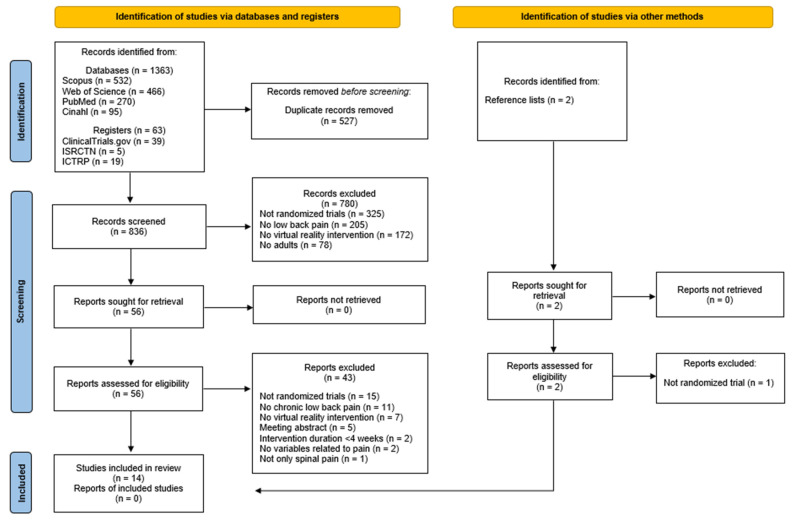
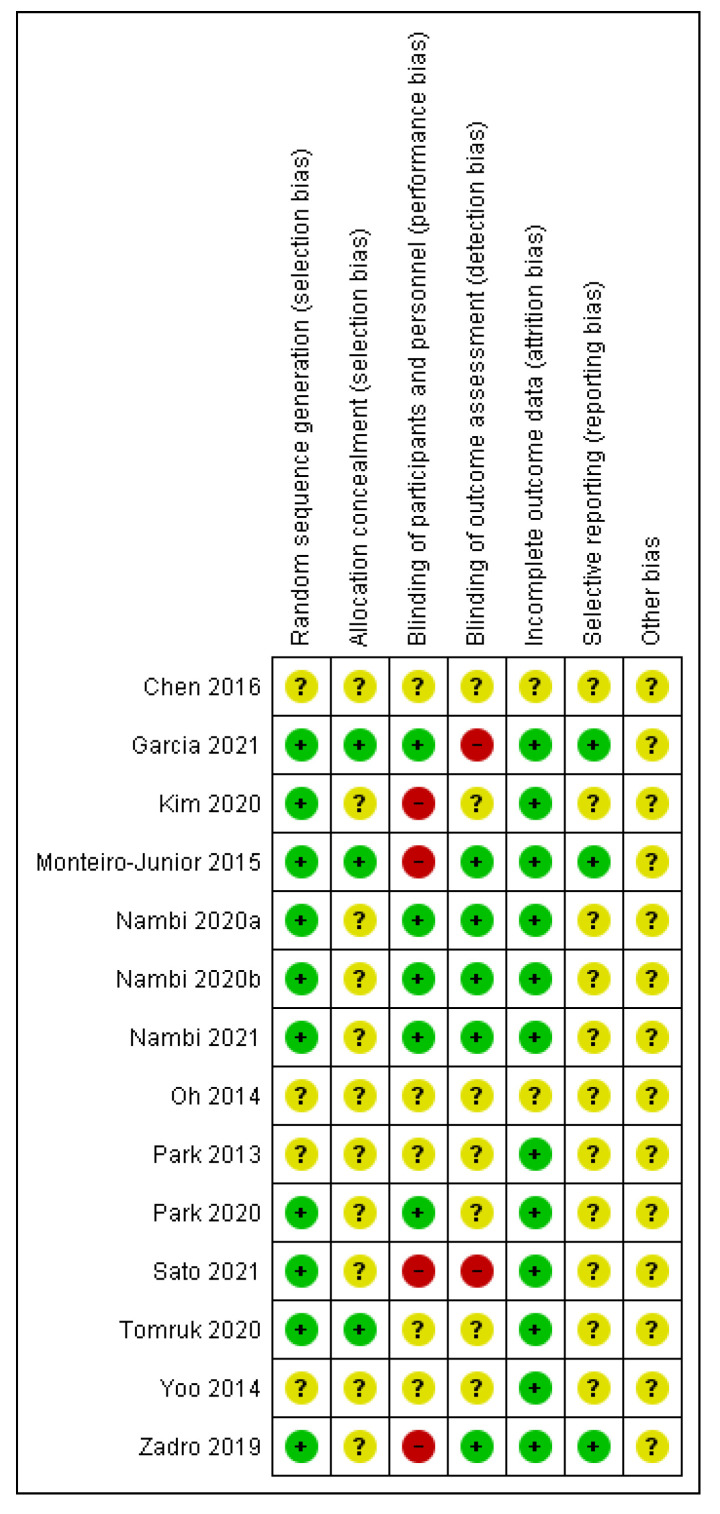
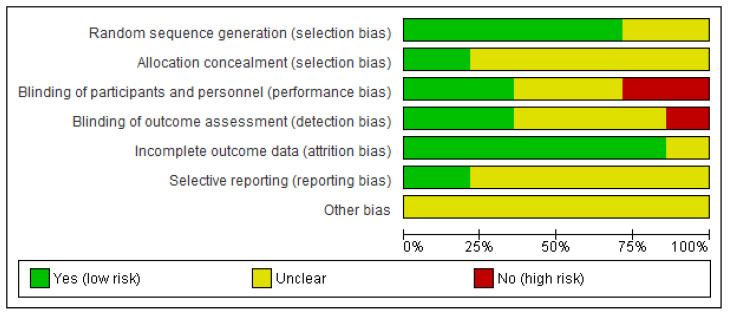
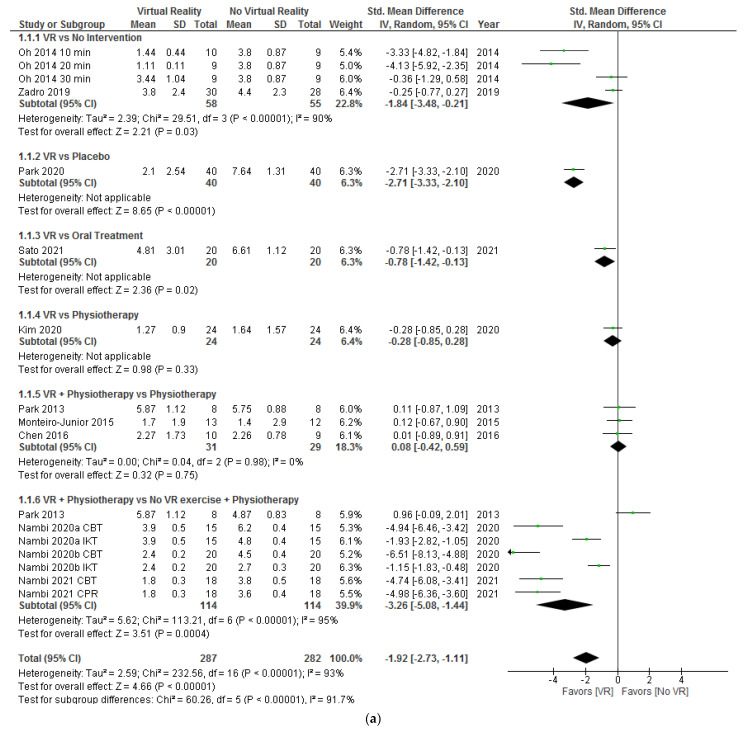
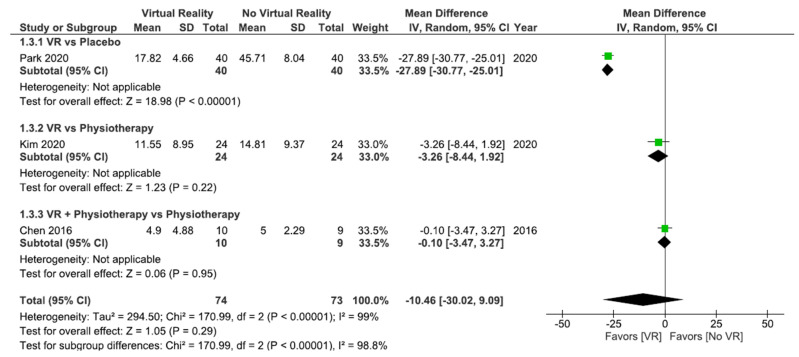
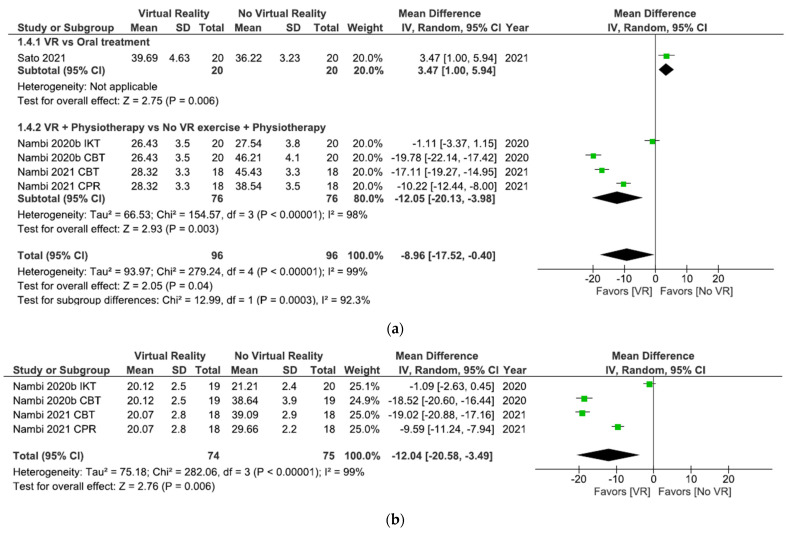
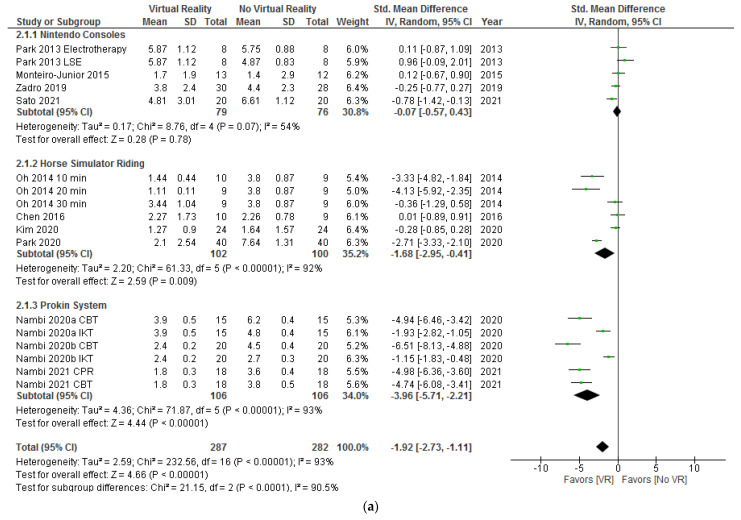
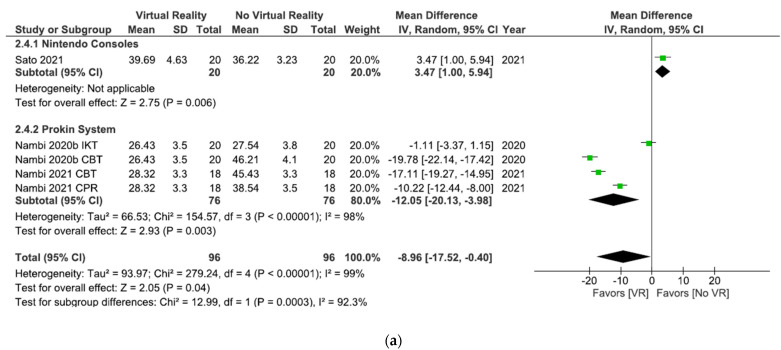
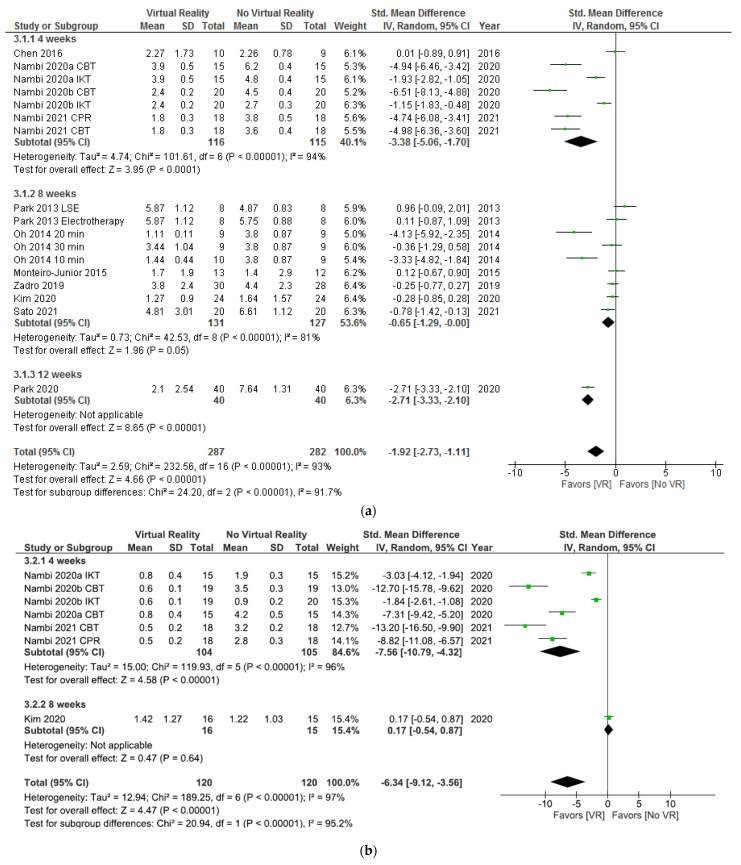
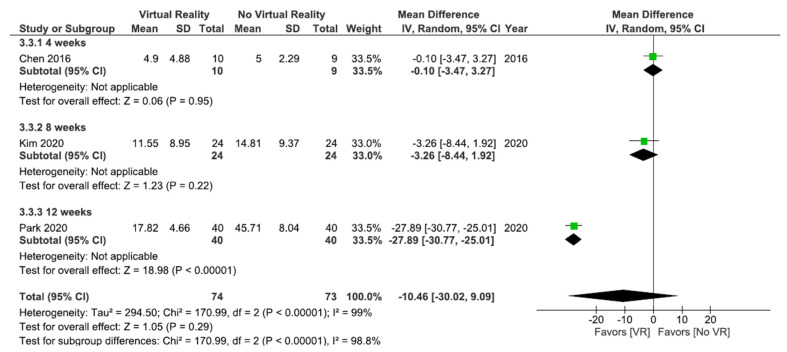
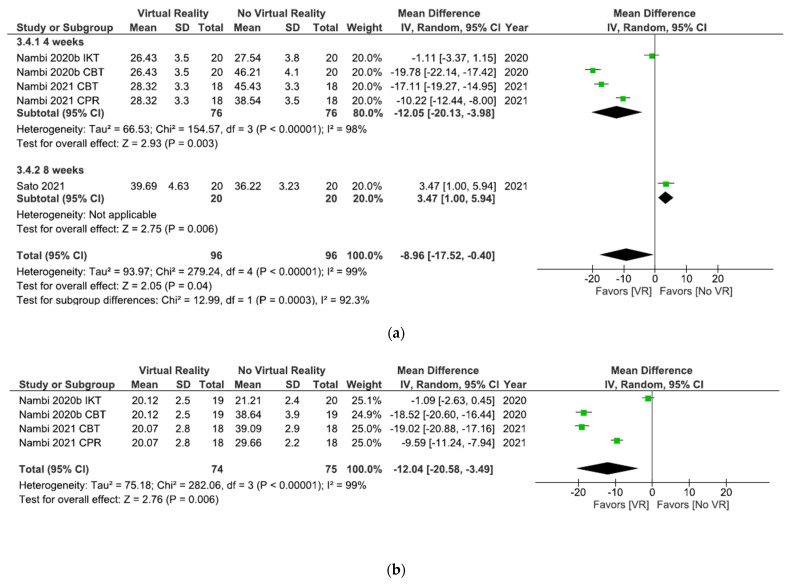
Virtual reality (VR) can present advantages in the treatment of chronic low back pain. The objective of this systematic review and meta-analysis was to analyze the effectiveness of VR in chronic low back pain. This review was designed according to PRISMA and registered in PROSPERO (CRD42020222129). Four databases (PubMed, Cinahl, Scopus, Web of Science) were searched up to August 2021. Inclusion criteria were defined following PICOS recommendations. Methodological quality was assessed with the Downs and Black scale and the risk of bias with the Cochrane Risk of Bias Assessment Tool. Fourteen studies were included in the systematic review and eleven in the meta-analysis. Significant differences were found in favor of VR compared to no VR in pain intensity postintervention (11 trials; n = 569; SMD = −1.92; 95% CI = −2.73, −1.11; p < 0.00001) and followup (4 trials; n = 240; SDM = −6.34; 95% CI = −9.12, −3.56; p < 0.00001); and kinesiophobia postintervention (3 trials; n = 192; MD = −8.96; 95% CI = −17.52, −0.40; p = 0.04) and followup (2 trials; n = 149; MD = −12.04; 95% CI = −20.58, −3.49; p = 0.006). No significant differences were found in disability. In conclusion, VR can significantly reduce pain intensity and kinesiophobia in patients with chronic low back pain after the intervention and at followup. However, high heterogeneity exists and can influence the consistency of the results.
Overview
The claims and statistics of this paper haven’t been checked yet.
Free: it reads the open-access text and checks the first 5 claims that cite a source we can check. Create a free account to check every claim.
Integrity signals
Registry
Cites
Statistics
Figures

Verification
Claims the paper makes
The claims and statistics of this paper haven’t been checked yet.
Free: it reads the open-access text and checks the first 5 claims that cite a source we can check. Create a free account to check every claim.
Claims other papers make about this one
Each is checked against this paper’s own text: does it say what the citing paper says it does?
The source backs part of the claim, not all of it — or backs it for a different population, condition or comparison.
In the citing paper
“The evidence on the potential effectiveness of virtual reality–based training for chronic low back pain is still controversial and deficient.”
From Virtual Reality–Based Training in Chronic Low Back Pain: Systematic Review and Meta-Analysis of Randomized Controlled Trials (2024) · cites this paper as [31]
Experimental — accuracy not yet measuredThe cited source says what the claim attributes to it.
In the citing paper
“Two systematic reviews suggested that virtual reality–based training had a positive effect on improving pain intensity [30] and fear avoidance [31] in people with low back pain”
From Virtual Reality–Based Training in Chronic Low Back Pain: Systematic Review and Meta-Analysis of Randomized Controlled Trials (2024) · cites this paper as [31]
Self-check
Percentages, sums and reported differences re-computed from the paper’s own numbers.
The self-check needs the paper’s full text.
Citations
Cites
The PRISMA 2020 statement: An updated guideline for reporting systematic reviews
Page, M. J., McKenzie, J. E., Bossuyt, P. M., Boutron, I., Hoffmann, T. C., Mulrow, C. D., Shamseer, L., Tetzlaff, J. M., Akl, E. A., Brennan, S. E., et al. (2021) · BMJ · doi:10.1136/bmj.n71 · Cited by 108,283
The Cochrane Collaboration's tool for assessing risk of bias in randomised trials
Higgins, J. P. T., Altman, D. G., Gotzsche, P. C., Juni, P., Moher, D., Oxman, A. D., Savovic, J., Schulz, K. F., Weeks, L., Sterne, J. A. C., et al. (2011) · BMJ · doi:10.1136/bmj.d5928 · Cited by 33,817
Dermyshi, E., Wang, Y., Yan, C., Hong, W., Qiu, G., Gong, X., & Zhang, T. (2017) · Neonatology · doi:10.1159/000454668 · Cited by 24,451
Downs, S. H., & Black, N. (1998) · Journal of Epidemiology and Community Health · doi:10.1136/jech.52.6.377 · Cited by 8,252 · cited 3×
“The assessment of methodological quality was carried out with the Downs and Black scale [19], one of the six best scales of methodological quality [21].”
MethodVos, T., Allen, C., Arora, M., Barber, R. M., Bhutta, Z. A., Brown, A., Carter, A., Casey, D. C., Charlson, F. J., Chen, A. Z., et al. (2016) · The Lancet · doi:10.1016/s0140-6736(16)31678-6 · Cited by 7,253
What low back pain is and why we need to pay attention
Hartvigsen, J., Hancock, M. J., Kongsted, A., Louw, Q., Ferreira, M. L., Genevay, S., Hoy, D., Karppinen, J., Pransky, G., Sieper, J., et al. (2018) · The Lancet · doi:10.1016/s0140-6736(18)30480-x · Cited by 4,652 · cited 2×
“Chronic low back pain (CLBP) is one of the main causes of pain, dysfunction, and disability [1,2].”
BackgroundA systematic review of the global prevalence of low back pain
Hoy, D., Bain, C., Williams, G., March, L., Brooks, P., Blyth, F., Woolf, A., Vos, T., & Buchbinder, R. (2012) · Arthritis & Rheumatism · doi:10.1002/art.34347 · Cited by 3,005 · cited 1×
“Chronic low back pain (CLBP) is one of the main causes of pain, dysfunction, and disability [1,2].”
BackgroundEvaluating non-randomised intervention studies
Deeks, J., Dinnes, J., D'Amico, R., Sowden, A., Sakarovitch, C., Song, F., Petticrew, M., & Altman, D. (2003) · Health Technology Assessment · doi:10.3310/hta7270 · Cited by 2,907
Chou, R., Qaseem, A., Snow, V., Casey, D., Cross, J. T., Shekelle, P., Owens, D. K., & for the Clinical Efficacy Assessment Subcommittee of the American College of Physicians and the American College of Physicians/American Pain Society Low Back Pain Guidelines Panel* (2007) · Annals of Internal Medicine · doi:10.7326/0003-4819-147-7-200710020-00006 · Cited by 2,718
The epidemiology of low back pain
Hoy, D., Brooks, P., Blyth, F., & Buchbinder, R. (2010) · Best Practice & Research Clinical Rheumatology · doi:10.1016/j.berh.2010.10.002 · Cited by 2,037 · cited 1×
“It is one of the most common reasons for which patients require medical attention [3].”
Background
Cited by
Unraveling Negative Expectations and Nocebo-Related Effects in Musculoskeletal Pain
Rossettini, G., Colombi, A., Carlino, E., Manoni, M., Mirandola, M., Polli, A., Camerone, E. M., & Testa, M. (2022) · Frontiers in Psychology · doi:10.3389/fpsyg.2022.789377 · Cited by 268
Multimodal non-invasive non-pharmacological therapies for chronic pain: mechanisms and progress
Shi, Y., & Wu, W. (2023) · BMC Medicine · doi:10.1186/s12916-023-03076-2 · Cited by 223
“VR integrated into physiotherapy yields greater improvements in function compared to individual therapies for chronic low back pain [321].”
BackgroundRobinson, C. L., D'Souza, R. S., Yazdi, C., Diejomaoh, E. M., Schatman, M. E., Emerick, T. D., & Orhurhu, V. (2024) · Journal of Pain Research · doi:10.2147/jpr.s439452 · Cited by 70
Alshahrani, M. S., & Reddy, R. S. (2022) · International Journal of Environmental Research and Public Health · doi:10.3390/ijerph19052792 · Cited by 75
Guo, Q., Zhang, L., Gui, C., Chen, G., Chen, Y., Tan, H., Su, W., Zhang, R., & Gao, Q. (2023) · Journal of Medical Internet Research · doi:10.2196/38256 · Cited by 72
“Our conclusions are consistent with those of earlier studies [33,52].”
Chen, Y., Cao, L., Xu, Y., Zhu, M., Guan, B., & Ming, W. (2022) · International Journal of Nursing Studies · doi:10.1016/j.ijnurstu.2022.104323 · Cited by 62
Li, R., Li, Y., Kong, Y., Li, H., Hu, D., Fu, C., & Wei, Q. (2024) · Journal of Medical Internet Research · doi:10.2196/45406 · Cited by 48
“Two systematic reviews suggested that virtual reality–based training had a positive effect on improving pain intensity [30] and fear avoidance [31] in people with low back pain, while other systematic reviews indicated that the effectiveness of virtual reality–based training was inconclusive…”
Denche-Zamorano, Á. M., Rodríguez-Redondo, Y., Barrios-Fernández, S., Mendoza-Muñoz, M., Castillo-Paredes, A., Rojo-Ramos, J., García-Gordillo, M. Á., & Adsuar, J. C. (2023) · Sensors · doi:10.3390/s23062987 · Cited by 56
Lo, H. H. M., Zhu, M., Zou, Z., Wong, C. L., Lo, S. H. S., Chung, V. C., Wong, S. Y. S., & Sit, R. W. S. (2024) · Journal of Medical Internet Research · doi:10.2196/48787 · Cited by 57
“Brea-Gómez et al [75] conducted a comprehensive review of studies on chronic back pain; 14 studies were included in the systematic review and 11 in the meta-analysis.”
InfluentialVirtual Reality Rehabilitation Systems for Cancer Survivors: A Narrative Review of the Literature
Melillo, A., Chirico, A., Pietro, G. D., Gallo, L., Caggianese, G., Barone, D., Laurentiis, M. D., & Giordano, A. (2022) · Cancers · doi:10.3390/cancers14133163 · Cited by 46
Garcia, L., Birckhead, B. J., Krishnamurthy, P., Mackey, I. G., Sackman, J., Salmasi, V., Louis, R. G., Castro, C., Maddox, R., Maddox, T., et al. (2022) · Journal of Medical Internet Research · doi:10.2196/37480 · Cited by 57
“Many VR treatments for CLBP involve rehabilitation exercise and require therapist guidance [5].”
BackgroundWei, W., Tang, H., Luo, Y., Yan, S., Ji, Q., Liu, Z., Li, H., Wu, F., Yang, S., & Yang, X. (2024) · Frontiers in Physiology · doi:10.3389/fphys.2024.1424815 · Cited by 36
Clinical Applications of Virtual Reality in Musculoskeletal Rehabilitation: A Scoping Review
Chaplin, E., Karatzios, C., & Benaïm, C. (2023) · Healthcare · doi:10.3390/healthcare11243178 · Cited by 41
“Nevertheless, high heterogeneity, lack of VR intervention design consistency (objective outcome measures, follow-up reporting, and large sample sizes) make it difficult to propose specific protocols [57,58].”
BackgroundRole of Immersive Virtual Reality in Motor Behaviour Decision-Making in Chronic Pain Patients
Guerra-Armas, J., Flores-Cortés, M., Galán, C. P., Luque-Suárez, A., & Touche, R. L. (2023) · Brain Sciences · doi:10.3390/brainsci13040617 · Cited by 30
“[147] Analyze the effectiveness of VR in chronic low back pain.”
BackgroundZhang, T., Li, X., Zhou, X., Zhan, L., Wu, F., Huang, Z., Sun, Y., Feng, Y., & Du, Q. (2024) · JMIR Serious Games · doi:10.2196/50089 · Cited by 26
“A systematic review and meta-analysis reported that VR therapy enhances spinal ROM and physical functioning in patients with CNP [26].”
BackgroundHenríquez-Jurado, J. M., Osuna‐Pérez, M. C., García‐López, H., Lomas‐Vega, R., López‐Ruiz, M. D. C., Obrero‐Gaitán, E., & Cortés‐Pérez, I. (2024) · EFORT Open Reviews · doi:10.1530/eor-23-0197 · Cited by 23
“Our findings contrast with the reviews of Brea-Gómez (35) and Grassini (36), who did not find differences between VRBT and comparators for low back disability.”
BackgroundResultInfluentialMorone, G., Papaioannou, F., Alberti, A., Ciancarelli, I., Bonanno, M., & Calabrò, R. S. (2024) · Sensors · doi:10.3390/s24196269 · Cited by 28
“Therefore, these authors [8] found that VR approaches can reduce pain intensity and kinesiophobia in patients with CLBP after the intervention and at the 6-month follow-up.”
BackgroundHin-Man, L. H., Ng, M. S. N., Fong, H. P.-Y., Lai, H. H. K., Wang, B., Wong, S. Y. S., & Sit, R. W. S. (2024) · JMIR Serious Games · doi:10.2196/52563 · Cited by 26
“Numerous studies have supported VR-assisted physical therapy in reducing pain and improving function in low back pain and neck pain [19-21].”
BackgroundGarcía-Sánchez, M., García‐Robles, P., Osuna‐Pérez, M. C., Lomas‐Vega, R., Obrero‐Gaitán, E., & Cortés‐Pérez, I. (2023) · Applied Sciences · doi:10.3390/app13074597 · Cited by 25
Naqvi, W. M., Naqvi, I. W., Mishra, G., & Vardhan, V. D. (2024) · Cureus · doi:10.7759/cureus.56724 · Cited by 29
“The benefits of gamification in clinical practice for patients with traumatic brain injuries, lower limb amputation, cerebral palsy, and chronic low back pain have been demonstrated in recent literature [34-36].”
Backgroundvan Os, W. K. M., Álvarez-Jiménez, R., Cohen, S. P., Stojanovic, M. P., Ruiz‐Lopez, R., Zundert, J. H. M. V., & Kallewaard, J. W. (2025) · Pain Practice · doi:10.1111/papr.70062 · Cited by 23
Ma, Y., Li, Y., Wang, C., Zhang, Y., Wang, L., Hu, R., Yin, Y., & He, F. (2024) · Nursing Open · doi:10.1002/nop2.2107 · Cited by 20
Extended Reality (XR) in Pediatric Acute and Chronic Pain: Systematic Review and Evidence Gap Map
Hess, C. W., Rosenbloom, B. N., Mesaroli, G., Lopez, C., Ngo, N. H., Cohen, E., Ouellette, C., Gold, J. I., Logan, D. E., Simons, L. E., et al. (2025) · JMIR Pediatrics and Parenting · doi:10.2196/63854 · Cited by 19
“Among adults, XR has also been used commonly to manage chronic pain such as low back pain or fibromyalgia [18,19].”
Brea-Gómez, B., Laguna-González, A., Pérez-Gisbert, L., Valenza, M. C., & Torres‐Sánchez, I. (2024) · Virtual Reality · doi:10.1007/s10055-024-00979-0 · Cited by 12
“In the current review, the meta-analysis showed significant differences in favour of VRBR in disability, also at short-term follow-up, but for CLBP no significant differences were found.”
InfluentialSelf-citationSarkhosh, S. S., Khanmohammadi, R., & Shiravi, Z. (2024) · PLoS ONE · doi:10.1371/journal.pone.0314686 · Cited by 14
“Additionally, another meta-analysis in 2021 revealed that virtual reality was effective in improving fear of movement at post-treatment and 6-month follow-up in people with low back pain [65].”
Kammler-Sücker, K. I., Löffler, A., & Flor, H. (2023) · Virtual Reality · doi:10.1007/s10055-023-00800-4 · Cited by 10
“…to improve symptoms of CBP in athletes (Nambi et al. 2021), and meta-analyses of non-immersive and immersive VR training treatments of CBP reveal promising results (Brea-Gómez et al. 2021), although the comparison to other treatments such as physical exercise is still inconclusive (Grassini 2022).”
ResultBrea-Gómez, B., Pérez-Gisbert, L., Fernández-Castro, I., Valenza, M. C., & Torres‐Sánchez, I. (2025) · Games for Health Journal · doi:10.1089/g4h.2023.0193 · Cited by 12
“Nevertheless, due to the differences in these parameters, it is dif fi cult to draw solid conclusions, although considering other pain disorders, 49,50 FMS programs are the longest, which may explain the good results obtained.”
Self-citationGamification in Therapeutic Rehabilitation of Distal Radial and Ulnar Fracture: A Case Report
Naqvi, W. M., & Qureshi, M. I. (2022) · Cureus · doi:10.7759/cureus.28586 · Cited by 10
“Serious games are being employed in non-traumatic conditions like non-significant chronic low back ache, in which a significant reduction in the intensity of pain and kinesiophobia had been observed [10].”
BackgroundGamification for Distal Radius Fracture Rehabilitation: A Randomized Controlled Pilot Study
Naqvi, W. M., Qureshi, M. I., Nimbulkar, G. C., & Umate, L. (2022) · Cureus · doi:10.7759/cureus.29333 · Cited by 9
“It has been shown to have a positive effect in patients with chronic lower back pain [2], lower limb amputation [3], traumatic shoulder stiffness [4], cerebral palsy [5], traumatic brain injury [6], and other musculoskeletal disorders [7].”
BackgroundFavre, J., Cantaloube, A., & Jolles, B. M. (2023) · Journal of Clinical Medicine · doi:10.3390/jcm12165310 · Cited by 17
“Furthermore, pain reductions have been reported in patients with acute burns [25,26], and in patients with chronic musculoskeletal disorders [27,28].”
BackgroundSakuma, S., Kimpara, K., Kawai, Y., Yanagita, Y., Tanaka, N., Tawara, Y., Matsui, G., Terada, K., & Arizono, S. (2025) · Cureus · doi:10.7759/cureus.79551 · Cited by 16
“Additionally, a previous systematic review has shown that VR significantly diminishes pain intensity and pain-related fear of movement in patients with chronic low back pain [7].”
Effectiveness of Virtual Reality on Rehabilitation of Chronic Non-Specific Low Back Pain Patients
Hussein, H. M., Atteya, M. R., & Kamel, E. (2024) · Healthcare · doi:10.3390/healthcare12131312 · Cited by 10
“Various studies have discussed the efficacy of gaming and VR in the treatment of LBP [16,17], but still, there is controversy on its short-term effects.”
BackgroundPontes‐Silva, A., Dibai‐Filho, A. V., de Jesus, S. F. C., de Oliveira, L. A. S., Dibai, D. B., Gomes, C. A. F. D. P., & Ávila, M. A. (2022) · Clinical Rehabilitation · doi:10.1177/02692155221128829 · Cited by 8
“Among the possibilities of instruments to measure kinesiophobia, the Tampa Scale for Kinesiophobia is one of the most used instruments for those patients,(3) in private/public practices, clinical trials and reported in systematic reviews.(4) TheTampaScale forKinesiophobiawas created in English and designed with 1 doma…”
MethodPotential of the omnidirectional walking platform with virtual reality as a rehabilitation tool
Soon, B., Lee, N., Lau, J., Tan, N., & Cai, C. (2023) · Journal of Rehabilitation and Assistive Technologies Engineering · doi:10.1177/20556683231161574 · Cited by 13
The Role of Virtual Reality in the Management of Irritable Bowel Syndrome
Suchak, K. K., Almario, C. V., Liran, O., Chernoff, R. A., & Spiegel, B. M. R. (2024) · Current Gastroenterology Reports · doi:10.1007/s11894-024-00940-w · Cited by 13
Pérez, S. E. M., Canosa, C. P., Aguiar, I. P., Rodríguez, A. M. M., & Pérez, I. M. M. (2025) · Osteology · doi:10.3390/osteology5010008 · Cited by 9
Carvajal-Parodi, C., Rossel, P. O., Rodríguez-Alvarado, A., Guede-Rojas, F., & Ponce‐González, J. G. (2025) · Journal of Clinical Medicine · doi:10.3390/jcm14113782 · Cited by 11
“Additionally, VR reduces the need for opioids and enhances psycho-cognitive outcomes, such as anxiety and depression, and quality of life [19,20,26,57–60].”
A Review of Chronic Pain and Device Interventions: Benefits and Future Directions
Stark, C. W., Isaamullah, M., Hassan, S. S., Dyara, O., & Abd-Elsayed, A. A. (2022) · Pain and Therapy · doi:10.1007/s40122-022-00470-1 · Cited by 10
Virtual reality training for management of chronic neck pain: a systematic review with meta-analysis
Opara, M., & Kozinc, Ž. (2023) · European Journal of Physiotherapy · doi:10.1080/21679169.2023.2215831 · Cited by 10
Zou, J., Chen, Q., Wang, J., Gu, M., Jiang, X., & Mao, M. (2023) · BMJ Open · doi:10.1136/bmjopen-2023-073660 · Cited by 9
Opara, M., Kozinc, Ž., & Manojlović, D. (2024) · Physiotherapy Practice and Research · doi:10.3233/ppr-230835 · Cited by 11
Effectiveness of Virtual Reality in Reducing Kinesiophobia. A Systematic Review
Coja, D. M., Talaghir, L.-G., Georgescu, L., & Codreanu, C. M. (2023) · Balneo and PRM Research Journal · doi:10.12680/balneo.2023.629 · Cited by 9
Conen, R., Mueller, S., & Tibubos, A. N. (2025) · Interactive Journal of Medical Research · doi:10.2196/59611 · Cited by 9
Chen, Q., Wang, Z., & Zhang, S. (2023) · Medicine · doi:10.1097/md.0000000000034961 · Cited by 5
“[68] Numerous studies have demonstrated that virtual reality technology can simulate various environments, alleviate patients anxiety, eliminate emotional influences, and significantly reduce the level of pain experienced by patients with low back pain.[69,70] The integration of virtual technology with NM allows patie…”
BackgroundHsieh, R., Chen, Y.-R., & Lee, W.-C. (2024) · Musculoskeletal Science and Practice · doi:10.1016/j.msksp.2024.103248 · Cited by 7
Viderman, D., Kalikanov, S., Myrkhiyeva, Z., Alisherov, S., Dossov, M., Seitenov, S., & Abdildin, Y. G. (2025) · Journal of Clinical Medicine · doi:10.3390/jcm14175942 · Cited by 11
“For instance, a recent systematic review and meta-analysis of 14 randomized trials found that VR significantly reduced pain intensity in chronic spinal pain conditions, including low back pain [101].”
The Benefits and challenges of virtual reality application in rehabilitation for chronic conditions
Kraśnik, W., Jankowska, O., Kurzeja, J., Piotrowicz, K., Piotrowicz, H., Bajkacz, A., Rogala, A., & Osmólska, J. (2024) · Journal of Education Health and Sport · doi:10.12775/jehs.2024.75.56379 · Cited by 7
Alotibi, F. S., Mohammed, W., Hendrick, P., & Moffatt, F. (2025) · Health Science Reports · doi:10.1002/hsr2.71163 · Cited by 4
Spiegel, B. M. R., Eberlein, S. A., Persky, S., ISHIMORI, M. L., Venuturupalli, S., Tu, J., Alhatem, F. J., Vijjeswarapu, M. A., Krut, Z., Norris, T., et al. (2026) · npj Digital Medicine · doi:10.1038/s41746-026-02437-4 · Cited by 4
Lucena-Antón, D., Romero, J. G. D., Chacon-Barba, J. C., Santi-Cano, M. J., Luque-Moreno, C., & Moral-Muñoz, J. A. (2025) · Digital Health · doi:10.1177/20552076241297043 · Cited by 4
“Brea-Gómez et al. 56 determined that VR intervention reduces the level of pain and kinesiophobia in patients with chronic low back pain in the short term and after six months of follow-up.”
Carvajal-Parodi, C., Arias-Álvarez, G., Ulloa-Díaz, D., Romero-Vera, L., Andrades-Ramírez, O., Guede-Rojas, F., & Ponce‐González, J. G. (2025) · Applied Sciences · doi:10.3390/app15115956 · Cited by 6
Telerehabilitation for a Non-specific Low Back Pain: A Case Report
Mehendale, P., Iyenagar, M., Bhatt, G. D., & Kothary, K. (2023) · Cureus · doi:10.7759/cureus.47854 · Cited by 4
Development of Serious Games for the Rehabilitation of the Human Vertebral Spine for Home Care
Gonçalves, R. S., Prado, R. A., Ladeira, G. M. V., & Gasparini, A. L. P. (2023) · Robotics · doi:10.3390/robotics12020058 · Cited by 4
Slatman, S., Groenveld, T. D., Ostelo, R., van Goor, H., Staal, J. B., & Knoop, J. (2024) · Journal of Medical Extended Reality · doi:10.1089/jmxr.2023.0002 · Cited by 10
“43,46 There are various opinions on using either specifi-cally designed VR applications or commercially available applications.”
BackgroundInfluentialVirtual reality for the management of musculoskeletal pain: an umbrella review
Kalikanov, S., Baizhanova, A., Tungushpayev, M., & Viderman, D. (2025) · Frontiers in Medicine · doi:10.3389/fmed.2025.1572464 · Cited by 5
Therapeutic effects of virtual reality technology on chronic low back pain
Huang, G., & Chen, W. (2025) · Medicine · doi:10.1097/md.0000000000045867 · Cited by 3
Ummels, D., Cnockaert, E., Timmers, I., den Hollander, M., & Smeets, R. (2023) · JMIR Rehabilitation and Assistive Technologies · doi:10.2196/47541 · Cited by 5
“Several articles and systematic reviews have been conducted on clinical VR studies, showing that VR reduces experienced acute and chronic pain and kinesiophobia and enhances patient satisfaction and general health status [8-13].”
BackgroundHepke, N., Scherer, M., Lohscheller, J., Müller, S., & Weyers, B. (2024) · ACM Symposium on Virtual Reality Software and Technology (VRST) · doi:10.1145/3641825.3687746 · Cited by 5
Mortazavi, H. (2022) · The Korean journal of pain · doi:10.3344/kjp.2022.35.3.353 · Cited by 5
“Although some published reviews and meta-analysis found good evidence of the potential efficacy of VR for managing CLBP in adults [11,12], only one recently published study has evaluated the efficacy of four-week VR therapy in 22 older adults with CLBP.”
Naqvi, W. M., & Qureshi, M. I. (2022) · Cureus · doi:10.7759/cureus.29382 · Cited by 3
“Recent literature has illustrated the positive impact of the integration of gamification into clinical practice in patients with chronic low back pain [5], lower limb amputation [6], cerebral palsy [7], and traumatic brain injuries [8]; however, its efficacy in post-traumatic fracture rehabilitation is yet to be explo…”
BackgroundШепель, А. І., & Horoshko, V. I. (2023) · Реабілітаційні та фізкультурно-рекреаційні аспекти розвитку людини (Rehabilitation & recreation) · doi:10.32782/2522-1795.2023.17.18 · Cited by 3
Extended Reality Analgesia Evidence Reviews Often Lack Sufficient Intervention Detail
Persky, S., & Jiao, M. G. (2024) · Journal of Medical Extended Reality · doi:10.1089/jmxr.2024.0043 · Cited by 4
Wu, L., Liu, X., Yin, Q. R., Yao, T., & Li, Y. (2026) · Journal of Medical Internet Research · doi:10.2196/90289 · Cited by 3
“Brea-Gómez et al [11] conducted a meta-analysis stratified by VR devices.”
InfluentialEnhancing Well-Being: Exploring the Impact of Augmented Reality and Virtual Reality
Singha, R., & Singha, S. (2024) · Advances in medical technologies and clinical practice book series · doi:10.4018/979-8-3693-1123-3.ch004 · Cited by 5
Upper Limb Motion Analysis During a Virtual Reality Fitness Game
Stoia, D. I., Galescu-Blidariu, M., Stoia, A., & Totorean, A. F. (2024) · Springer proceedings in physics · doi:10.1007/978-3-031-48087-4_16 · Cited by 2
Diallo, S., Marchand, S., Dumais, A., & Potvin, S. (2024) · Frontiers in Pain Research · doi:10.3389/fpain.2024.1366892 · Cited by 3
de la Casa-Marín, A., Zambom-Ferraresi, F., Ferrara, M. C., Ollo-Martínez, I., Galbete, A., Glaría, B. G., Moral-Cuesta, D., Marín‐Epelde, I., Chenhuichen, C., Escudero, M. L., et al. (2024) · BMC Geriatrics · doi:10.1186/s12877-024-05516-x · Cited by 3
Slatman, S., Staal, J. B., & Knoop, J. (2024) · European Spine Journal · doi:10.1007/s00586-024-08166-0 · Cited by 2
Applications of Virtual Reality
Burdea, G. C., & Coiffet, P. (2024) · Wiley eBooks · doi:10.1002/9781119512608.ch9
The use of the computer assisted rehabilitation environment in assessment and rehabilitation
Abdelmegeed, M. A., & Elkhawaga, H. (2023) · Health sport rehabilitation · doi:10.34142/hsr.2023.09.02.09 · Cited by 1
“Moreover, several systematic reviews have suggested the use of virtual reality in rehabilitation of different conditions, such as Parkinson's disease [8,9], multiple sclerosis [10,11], burn [12], low back pain [13], total knee arthroplasty [14,15], functional ankle instability [16] and breast cancer [17].”
BackgroundLo, H. H. M., Ng, M. S. N., Fong, H. P.-Y., Lai, H. H. K., Wang, B., Wong, S. Y. S., & Sit, R. W. S. (2023) · doi:10.2196/preprints.52563
Will Public Health be Able to Meet the New Challenges of a Changing World?
Chossegros, P. (2023) · Medical Research Archives · doi:10.18103/mra.v11i9.4446
Korištenje videoigara kao distraktora kod djece i adolescenata
Novak, V., & Šimić, J. (2024) · Sestrinski glasnik · doi:10.11608/sgnj.29.1.8 · Cited by 1
“Dosad se korište-nje virtualne stvarnosti pokazalo uspješnim u postizanju bolje posture tijela [46], u rehabilitaciji bolesnika s bolovi-ma u leđima [47], rehabilitaciji bolesnika s neurološkim de-generativnim bolestima [48], nakon cerebrovaskularnog in-zulta [49], terapiji kognitivnih oštećenja,…”
BackgroundLundström, A., Björnfot, P., Sahlin, W., Herath, H., Berglund, L., & Strömbäck, E. (2024) · Proceedings of DRS · doi:10.21606/drs.2024.1297 · Cited by 1
AnReal: Towards an extended reality, low-cost system for kinesiophobiaPreprint
Herskovic, V., Arredondo, D., Torres, G., Vidal, C., & Campos, M. (2024) · Research Square · doi:10.21203/rs.3.rs-4697453/v1
Shorter, K. A., Benson, A. C., Brown, A., Tissera, K., Zwack, C. C., Fluke, C. J., Vincs, K., Lambert, G. W., & McDonald, R. L. (2024) · doi:10.2196/preprints.68063
Pauline, Z. (2024) · i-manager s Journal on Augmented & Virtual Reality · doi:10.26634/javr.2.2.21649
AlSadiq, A. I., Abdulla, F. A., & Alshami, A. M. (2025) · Journal of Clinical Medicine · doi:10.3390/jcm14207247 · Cited by 2
“New technologies, such as virtual reality (VR), have demonstrated improvements in pain intensity, pain-related fear [9,10], and disability [11] in patients with CLBP. Preliminary systematic reviews have also suggested that VR could have positive effects on balance and gait in healthy older adults…”
Torres‐Sánchez, I., Tejada-Vega, O., Rebollo-Segovia, G., López‐López, L., & Díaz-Mohedo, E. (2025) · Healthcare · doi:10.3390/healthcare13212665
Self-citationTiase, V. L., Fritz, J. M., Ferraro, J., Bayles, G., Alsaleem, A., Fiol, G. D., Kawamoto, K., Brodke, D. S., Martin, B. I., & Altizer, R. (2025) · JMIR Formative Research · doi:10.2196/73783 · Cited by 1
“Recently, multiple studies have demonstrated that VR movements can improve motor function outcomes, significantly reducing pain intensity in patients with low back pain [17-19].”
A Chinese Guideline for the Diagnosis and Treatment of Chronic LOW Back Pain (2024 Edition)
Cheng, Z.-X., Liu, X.-G., Lu, Y., Ma, K., Dong, H., Liu, Q., Yang, X., Lu, L.-J., Liu, T.-H., Wang, L., et al. (2025) · International Journal of Pain Research · doi:10.11648/j.ijpr.20250104.14 · Cited by 1
Ghozali, M. T. (2025) · Research Journal of Pharmacy and Technology · doi:10.52711/0974-360x.2025.00824
van der Veen, S. M., Stamenkovic, A., France, C. R., Robinson, A. E. R., Sabo, R., Abtahi, F., & Thomas, J. S. (2026) · Healthcare · doi:10.3390/healthcare14020142
“Where previous VR treatment studies showed initial improvement post-treatment, they did not show improvements in pain and disability beyond 6 months, indicating that the VR was helpful in distracting from the pain [11,13] but not in treating the underling mechanisms.”
Wang, I., Lu, F., Chiu, C.-H., Su, Y., Tao, H., & Lai, C. (2026) · BMC Sports Science Medicine and Rehabilitation · doi:10.1186/s13102-025-01516-5
Refaey, M. M., Mousa, N. M., Saleh, O. E., & Abdelmohsen, A. M. (2026) · Bulletin of Faculty of Physical Therapy · doi:10.1186/s43161-026-00338-x
“Many studies also have small sample sizes and potential risk of bias [25, 26].”
Son, Е. А., & Isaikin, A. I. (2026) · Реабилитология. · doi:10.17749/2949-5873/rehabil.2025.44
Denouël, L., Ménard, M., Olivier, A., & Bilhaut, A. (2026) · Journal of Bodywork and Movement Therapies · doi:10.1016/j.jbmt.2026.03.009
Occupational low back pain and job satisfaction among taxi drivers in Cameroon
Ghassi, H. T., Womsi, R. T., Buh, F. C., Siewe, J. R., NNouka, C. P. P. A., & Douryang, M. (2026) · Work · doi:10.1177/10519815261424806
Rani, V. I., Jha, V. K., Padma, V., Rengaramanujam, K., Mahapatra, A. P. K., & Prabha, K. S. (2026) · Physiotherapy Quarterly · doi:10.5114/pq/211756
“It ensures that outcome differences arise from the intervention itself rather than confounders like age, sex, prior treatments, or comorbidities [32].”
Conen, R., Hepke, N., Lohscheller, J., Mueller, S., & Tibubos, A. N. (2026) · Cognitive Therapy and Research · doi:10.1007/s10608-026-10752-z
Liu, H.-W., & Tsai, T. (2026) · American Journal of Physical Medicine & Rehabilitation · doi:10.1097/phm.0000000000002914 · Cited by 1
Virtual reality for chronic primary low back pain in adults: systematic review protocol
Schäfer, A. G. M., Kaiser, U., Elser, A., Kopkow, C., & Elsner, B. (2026) · Systematic Reviews · doi:10.1186/s13643-026-03307-6
“…evaluation of quality of evidence across outcomes following the GRADE framework [16, 17, 20, 24] • Number of databases searched is limited [16] • Restriction to English language [17, 20, 21, 24] As VR is a rapidly developing technology, we also expect that new studies have been published…”
InfluentialThe Use and Effectiveness of Virtual Reality in Orthopedic Rehabilitation
Youssef, A. R., & Gumaa, M. (2026) · Springer eBooks · doi:10.1007/978-981-96-7448-0_21-1
AnReal: An extended reality, low cost system for simulated movement
Arredondo, D., Herskovic, V., Torres, G., Vidal, C., & Campos, M. (2026) · SoftwareX · doi:10.1016/j.softx.2026.102988
Cardellat‐González, M., Moral-Muñoz, J. A., Cuevas‐Moreno, A., González‐Gómez, L., Blanco-Heras, L., & Rodríguez‐Domínguez, Á. (2026) · European Spine Journal · doi:10.1007/s00586-026-10365-w · Cited by 1
Nartea, R., GHIORGHIU, I., PENTIUC, M., Lili, M. E. I. U., Avramescu, D., & Gheorghievici, G. L. (2026) · Romanian Journal of Medical Rehabilitation Physical Medicine and Balneoclimatology · doi:10.59277/rjmrpmb.2025.3.09
Peralta‐Álvarez, J., Nieto-Escámez, F. A., López‐Liria, R., González-Gerez, J. J., Benzo‐Iglesias, M. J., & Pérez, P. R. (2026) · Physiotherapy Research International · doi:10.1002/pri.70354
“Our findings align with previous research supporting VR's potential effectiveness in managing chronic pain (Goudman et al. 2022; Mallari et al. 2019), particularly for spinal conditions in the short and medium term (Brea‐Gómez et al. 2021; Hao et al. 2024; R. Li et al. 2024).”
Metadata
- Authors
- Brea-Gómez, B., Torres-Sánchez, I., Ortiz-Rubio, A., Calvache-Mateo, A., Cabrera-Martos, I., López-López, L., & Valenza, M. C.
- Affiliations
- Universidad de Granada (ES)
- Physical Therapy Department, Faculty of Health Sciences, University of Granada, 18016 Granada, Spain
- Venue
- International Journal of Environmental Research and Public Health
- Publisher
- MDPI AG
- Published
- 2021-11-11
- Volume
- 18
- Issue
- 22
- Pages
- 11806
- ISSN
- 1660-4601 (ISSN-L)
- PMC
- PMC8621053
- OpenAlex
- W3211537060
- Cited by
- 98
- References
- 56
- Citations by year
- 2026: 17 · 2025: 18 · 2024: 31 · 2023: 20 · 2022: 12
- FWCI
- 1.99
- Type
- journal article
- Language
- en
- Open access
- gold
- doi.org
- Licence
- Locations
- International Journal of Environmental Research and Public Health (publishedVersion, cc-by)
- PubMed Central (publishedVersion, cc-by)
- PubMed (publishedVersion)
- RePEc: Research Papers in Economics (submittedVersion)
- Institutional Repository of the University of Granada (University of Granada) (submittedVersion, cc-by)
- DOAJ (DOAJ: Directory of Open Access Journals) (submittedVersion, cc-by-sa)
- Topics
- Health Sciences › Health Professions › Physical Therapy, Sports Therapy and Rehabilitation › Musculoskeletal pain and rehabilitation
- Physical Sciences › Computer Science › Human-Computer Interaction › Virtual Reality Applications and Impacts
- Health Sciences › Medicine › Anesthesiology and Pain Medicine › Pain Management and Treatment
- Keywords
- virtual reality, chronic low back pain, pain intensity, kinesiophobia, disability, pain management
- MeSH terms
- Virtual Reality, Adult, Persons with Disabilities, Disabled Persons, Humans, Randomized Controlled Trials as Topic, Low Back Pain
About these checks
Registry, retraction, Cites and statistics results are computed, not judged, with one exception: a printed reference that no index lists is read once by a model before it counts as a citation error. Claims are extracted by a model and kept only when their quote appears verbatim in the text; each cited source is then checked, with a model’s help, for whether it says what the claim relies on. Those verdicts can be wrong — read the claim’s quote and the cited source before relying on one.
Statistics and arithmetic are recomputed, not judged.
Confidence bands are shown only for fields calibrated on our annotated test set. None is calibrated yet, so no band is shown.
What counts as a claim ›How we measure confidence ›How we check this ›
Are you an author, or do you see a problem with this page? Request a review
Data sources
Bibliographic data: Semantic Scholar, OpenAlex, Crossref.
Contains information from the Semantic Scholar Academic Graph Datasets, made available under the ODC Attribution License (ODC-BY 1.0).
Semantic Scholar’s data is described in: Kinney, R., et al. (2023). The Semantic Scholar Open Data Platform. arXiv:2301.10140.
