

Virtual Reality in the Treatment of Adults with Chronic Low Back Pain: A Systematic Review and Meta-Analysis of Randomized Clinical Trials
Open accessThe DOI matches its Crossref record; 55 of the 56 references it cites were found in a registry or an index.
Abstract
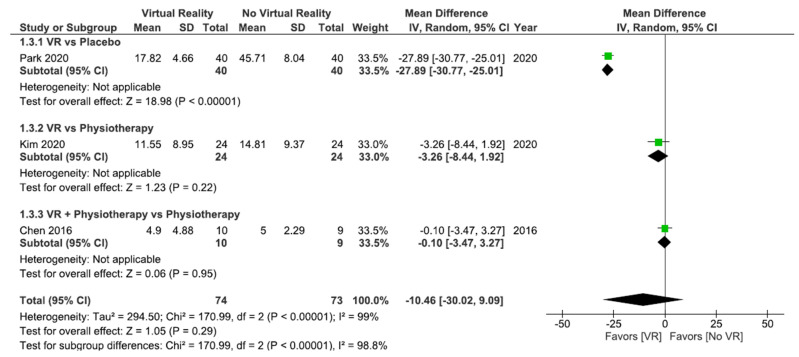
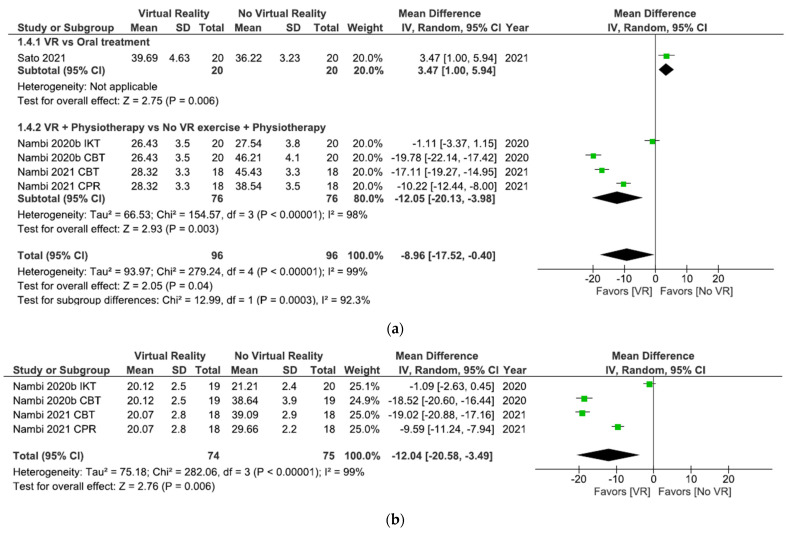
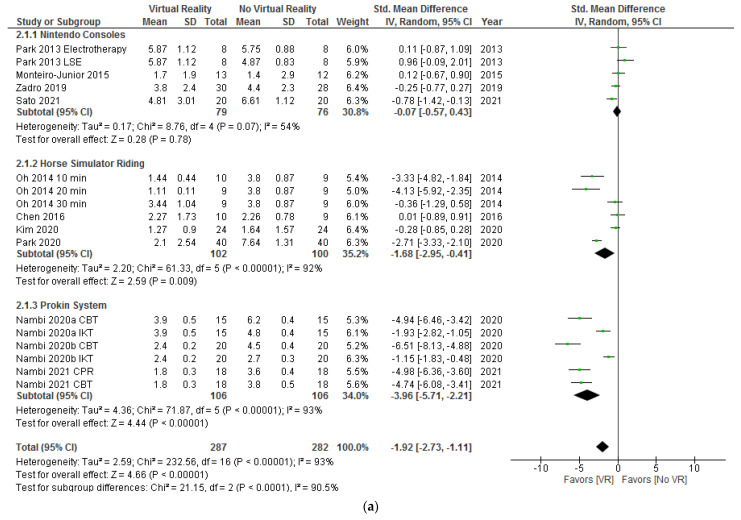
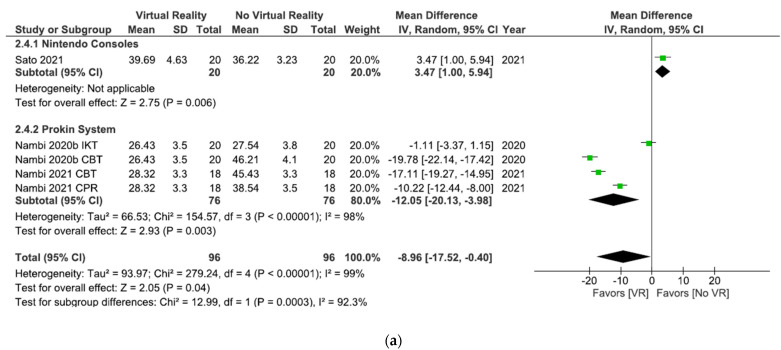
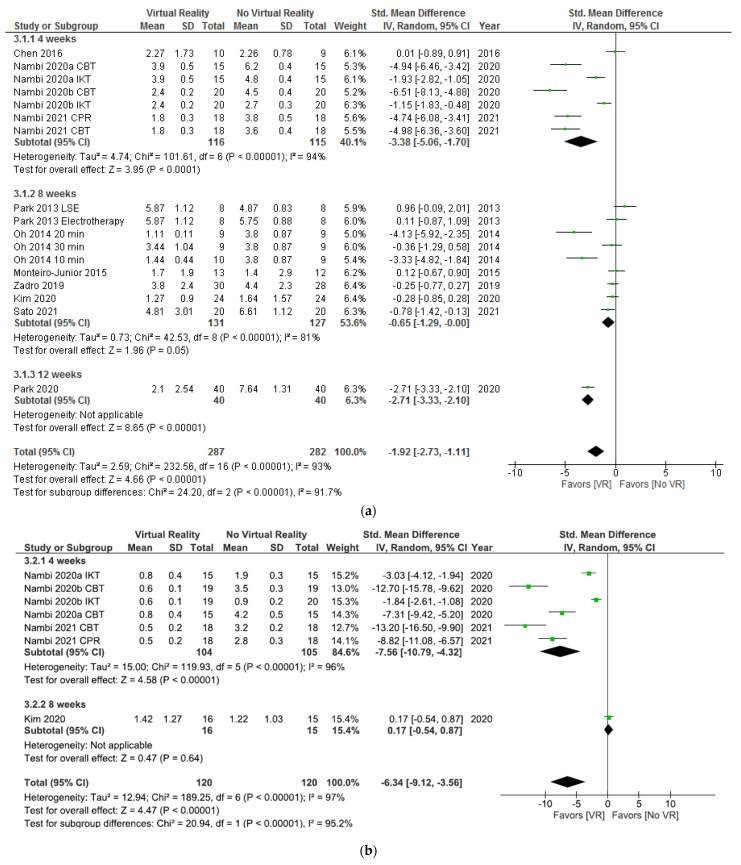
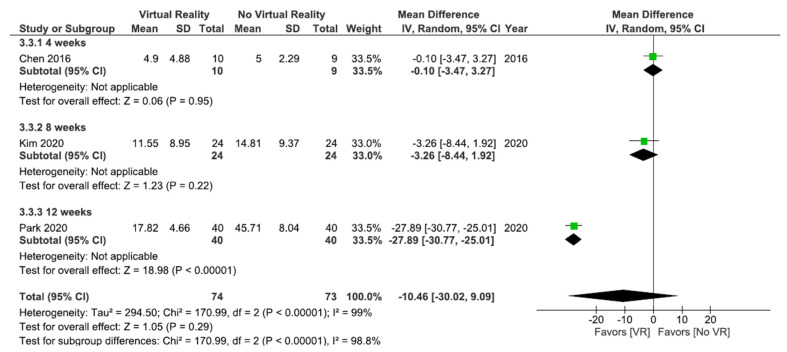
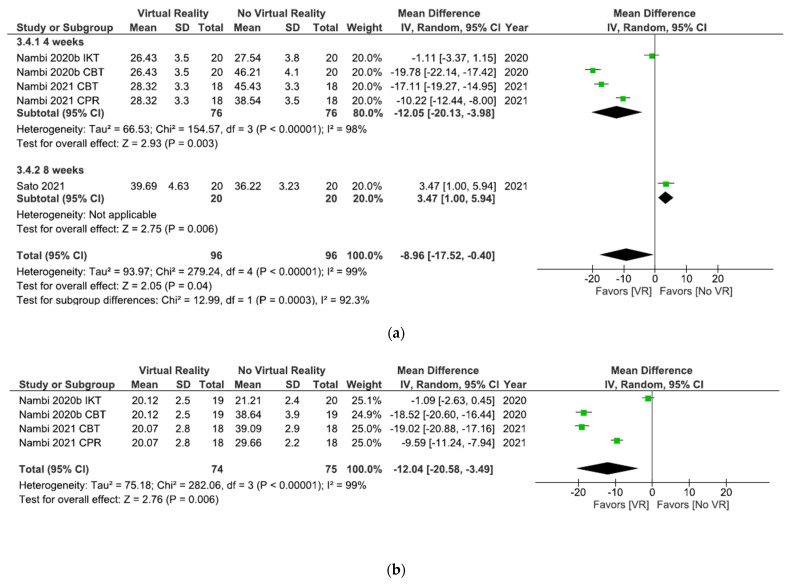
Virtual reality (VR) can present advantages in the treatment of chronic low back pain. The objective of this systematic review and meta-analysis was to analyze the effectiveness of VR in chronic low back pain. This review was designed according to PRISMA and registered in PROSPERO (CRD42020222129). Four databases (PubMed, Cinahl, Scopus, Web of Science) were searched up to August 2021. Inclusion criteria were defined following PICOS recommendations. Methodological quality was assessed with the Downs and Black scale and the risk of bias with the Cochrane Risk of Bias Assessment Tool. Fourteen studies were included in the systematic review and eleven in the meta-analysis. Significant differences were found in favor of VR compared to no VR in pain intensity postintervention (11 trials; n = 569; SMD = −1.92; 95% CI = −2.73, −1.11; p < 0.00001) and followup (4 trials; n = 240; SDM = −6.34; 95% CI = −9.12, −3.56; p < 0.00001); and kinesiophobia postintervention (3 trials; n = 192; MD = −8.96; 95% CI = −17.52, −0.40; p = 0.04) and followup (2 trials; n = 149; MD = −12.04; 95% CI = −20.58, −3.49; p = 0.006). No significant differences were found in disability. In conclusion, VR can significantly reduce pain intensity and kinesiophobia in patients with chronic low back pain after the intervention and at followup. However, high heterogeneity exists and can influence the consistency of the results.
Overview
The claims and statistics of this paper haven’t been checked yet.
Free: it reads the open-access text and checks the first 5 claims that cite a source we can check. Create a free account to check every claim.
Integrity signals
Registry
Cites
Statistics
Figures
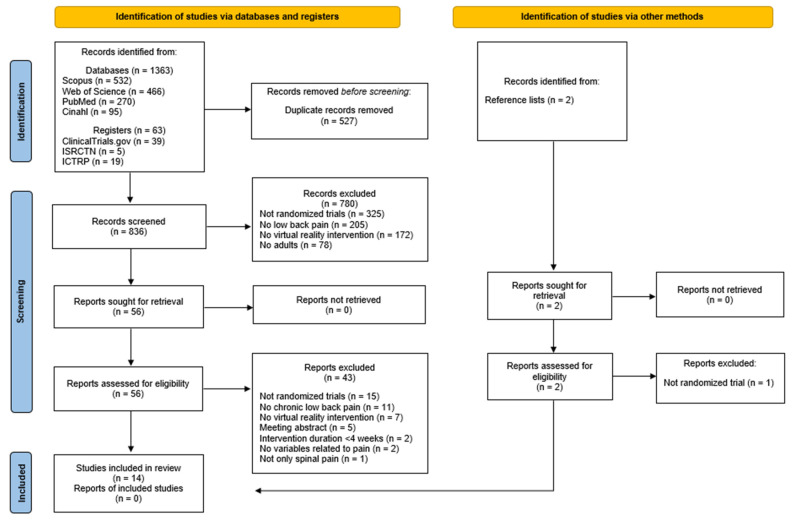
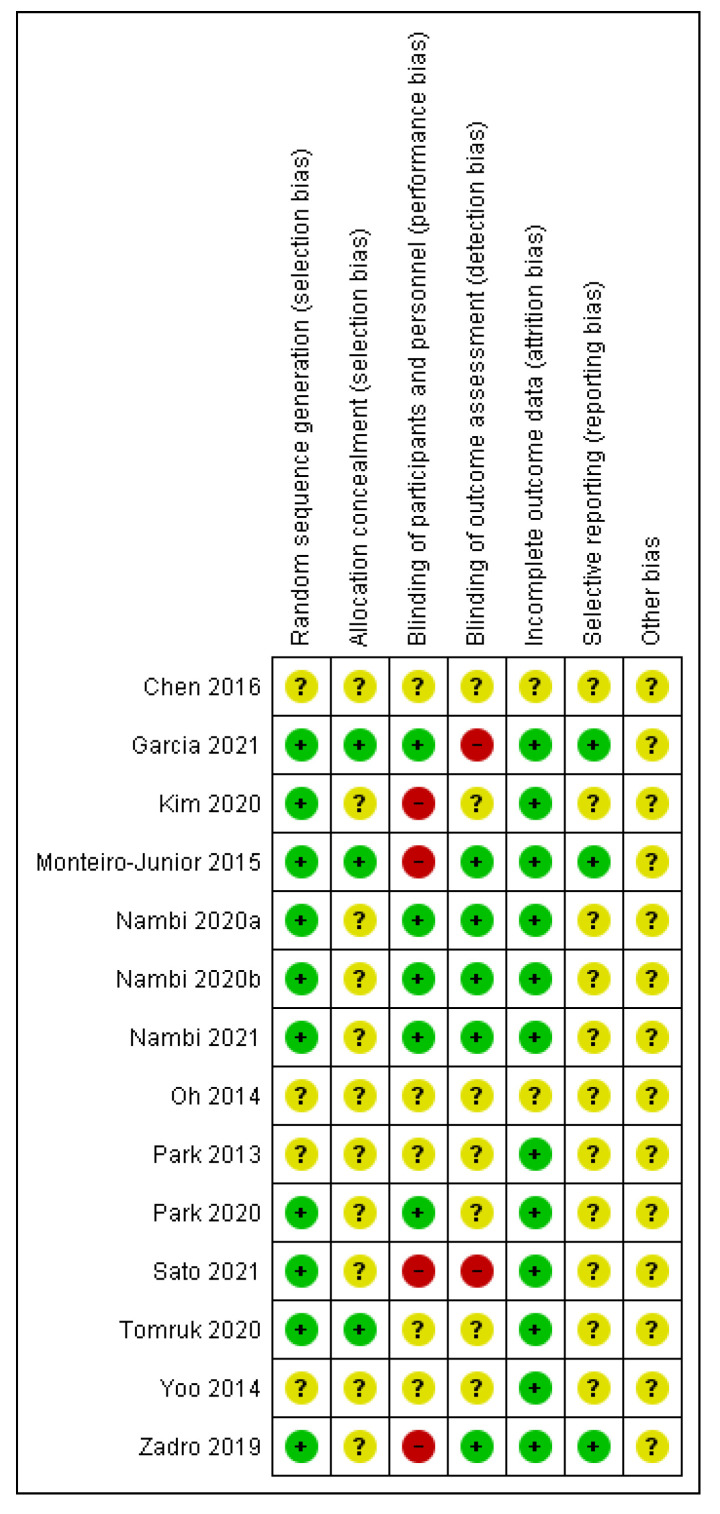
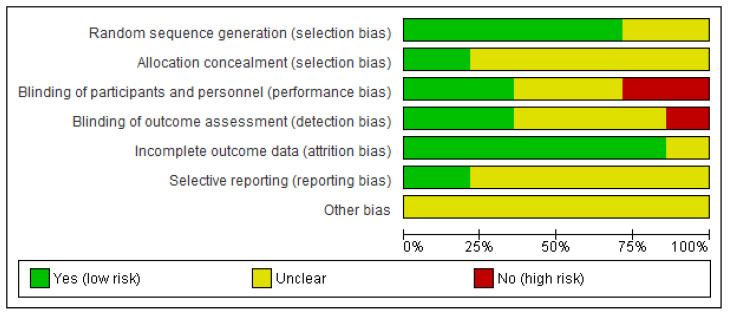
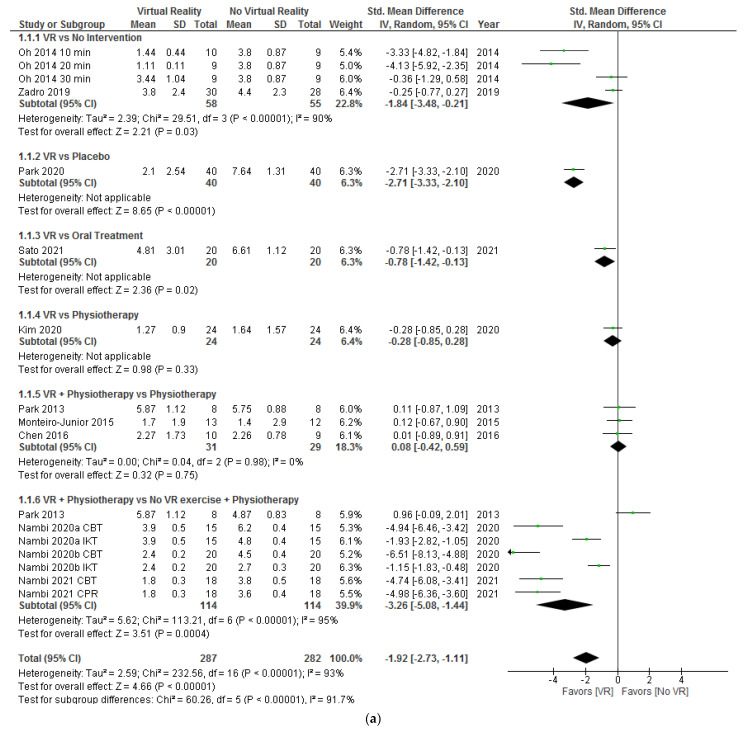

Verification
Claims the paper makes
The claims and statistics of this paper haven’t been checked yet.
Free: it reads the open-access text and checks the first 5 claims that cite a source we can check. Create a free account to check every claim.
Claims other papers make about this one
Each is checked against this paper’s own text: does it say what the citing paper says it does?
The source backs part of the claim, not all of it — or backs it for a different population, condition or comparison.
In the citing paper
“The evidence on the potential effectiveness of virtual reality–based training for chronic low back pain is still controversial and deficient.”
From Virtual Reality–Based Training in Chronic Low Back Pain: Systematic Review and Meta-Analysis of Randomized Controlled Trials (2024) · cites this paper as [31]
Experimental — accuracy not yet measuredThe cited source says what the claim attributes to it.
In the citing paper
“Two systematic reviews suggested that virtual reality–based training had a positive effect on improving pain intensity [30] and fear avoidance [31] in people with low back pain”
From Virtual Reality–Based Training in Chronic Low Back Pain: Systematic Review and Meta-Analysis of Randomized Controlled Trials (2024) · cites this paper as [31]
Self-check
Percentages, sums and reported differences re-computed from the paper’s own numbers.
The self-check needs the paper’s full text.
Citations
Cites
The PRISMA 2020 statement: An updated guideline for reporting systematic reviews
Page, M. J., McKenzie, J. E., Bossuyt, P. M., Boutron, I., Hoffmann, T. C., Mulrow, C. D., Shamseer, L., Tetzlaff, J. M., Akl, E. A., Brennan, S. E., et al. (2021) · BMJ · doi:10.1136/bmj.n71 · Cited by 108,283
The Cochrane Collaboration's tool for assessing risk of bias in randomised trials
Higgins, J. P. T., Altman, D. G., Gotzsche, P. C., Juni, P., Moher, D., Oxman, A. D., Savovic, J., Schulz, K. F., Weeks, L., Sterne, J. A. C., et al. (2011) · BMJ · doi:10.1136/bmj.d5928 · Cited by 33,817
Dermyshi, E., Wang, Y., Yan, C., Hong, W., Qiu, G., Gong, X., & Zhang, T. (2017) · Neonatology · doi:10.1159/000454668 · Cited by 24,451
Downs, S. H., & Black, N. (1998) · Journal of Epidemiology and Community Health · doi:10.1136/jech.52.6.377 · Cited by 8,252 · cited 3×
“The assessment of methodological quality was carried out with the Downs and Black scale [19], one of the six best scales of methodological quality [21].”
MethodVos, T., Allen, C., Arora, M., Barber, R. M., Bhutta, Z. A., Brown, A., Carter, A., Casey, D. C., Charlson, F. J., Chen, A. Z., et al. (2016) · The Lancet · doi:10.1016/s0140-6736(16)31678-6 · Cited by 7,253
What low back pain is and why we need to pay attention
Hartvigsen, J., Hancock, M. J., Kongsted, A., Louw, Q., Ferreira, M. L., Genevay, S., Hoy, D., Karppinen, J., Pransky, G., Sieper, J., et al. (2018) · The Lancet · doi:10.1016/s0140-6736(18)30480-x · Cited by 4,652 · cited 2×
“Chronic low back pain (CLBP) is one of the main causes of pain, dysfunction, and disability [1,2].”
BackgroundA systematic review of the global prevalence of low back pain
Hoy, D., Bain, C., Williams, G., March, L., Brooks, P., Blyth, F., Woolf, A., Vos, T., & Buchbinder, R. (2012) · Arthritis & Rheumatism · doi:10.1002/art.34347 · Cited by 3,005 · cited 1×
“Chronic low back pain (CLBP) is one of the main causes of pain, dysfunction, and disability [1,2].”
BackgroundEvaluating non-randomised intervention studies
Deeks, J., Dinnes, J., D'Amico, R., Sowden, A., Sakarovitch, C., Song, F., Petticrew, M., & Altman, D. (2003) · Health Technology Assessment · doi:10.3310/hta7270 · Cited by 2,907
Chou, R., Qaseem, A., Snow, V., Casey, D., Cross, J. T., Shekelle, P., Owens, D. K., & for the Clinical Efficacy Assessment Subcommittee of the American College of Physicians and the American College of Physicians/American Pain Society Low Back Pain Guidelines Panel* (2007) · Annals of Internal Medicine · doi:10.7326/0003-4819-147-7-200710020-00006 · Cited by 2,718
The epidemiology of low back pain
Hoy, D., Brooks, P., Blyth, F., & Buchbinder, R. (2010) · Best Practice & Research Clinical Rheumatology · doi:10.1016/j.berh.2010.10.002 · Cited by 2,037 · cited 1×
“It is one of the most common reasons for which patients require medical attention [3].”
BackgroundFear-avoidance model of chronic musculoskeletal pain: 12 years on
Vlaeyen, J. W. S., & Linton, S. J. (2012) · Pain · doi:10.1016/j.pain.2011.12.009 · Cited by 1,281 · cited 1×
“Negative thoughts and beliefs about pain experienced by some patients can lead to pain avoidance behaviors, causing inactivity, and preventing recovery and pain reduction [11].”
BackgroundDelitto, A., George, S. Z., Van Dillen, L., Whitman, J. M., Sowa, G., Shekelle, P., Denninger, T. R., & Godges, J. J. (2012) · Journal of Orthopaedic & Sports Physical Therapy · doi:10.2519/jospt.2012.42.4.a1 · Cited by 919
2015 Updated Method Guideline for Systematic Reviews in the Cochrane Back and Neck Group
Furlan, A. D., Malmivaara, A., Chou, R., Maher, C. G., Deyo, R. A., Schoene, M., Bronfort, G., & van Tulder, M. W. (2015) · Spine · doi:10.1097/brs.0000000000001061 · Cited by 704 · cited 1×
“The selection of studies was conducted systematically based on the prespecified PICOS (participants, interventions, comparisons, outcome, and study design) eligibility criteria: (1) Participants: adults (≥18 years) with CLBP (12 weeks or more) [18]; (2) Interventions: interventions based on VR; length of intervention…”
MethodApplication of virtual reality technology in clinical medicine.
Li, L., Yu, F., Shi, D., Shi, J., Tian, Z., Yang, J., Wang, X., & Jiang, Q. (2017) · Europe PMC (PubMed Central) · Cited by 597
Video Games in Health Care: Closing the Gap
Kato, P. M. (2010) · Review of General Psychology · doi:10.1037/a0019441 · Cited by 502 · cited 1×
“contributes the motivational component and interactivity to the treatment [8].”
BackgroundAge-related macular degeneration and low-vision rehabilitation: a systematic review
Hooper, P., Jutai, J. W., Strong, G., & Russell-Minda, E. (2008) · Canadian Journal of Ophthalmology · doi:10.3129/i08-001 · Cited by 491
Garcia, L. M., Birckhead, B. J., Krishnamurthy, P., Sackman, J., Mackey, I. G., Louis, R. G., Salmasi, V., Maddox, T., & Darnall, B. D. (2021) · Journal of Medical Internet Research · doi:10.2196/26292 · Cited by 218 · cited 12×
“Regarding the interventions, three studies c mpared VR with no intervention [7,27,28], two studies with a place o [31,33], and other study with oral treatment (Nonsteroidal Anti-Inflammatory Drugs (NSAIDs), tramadol, and duloxetine) [38].”
BackgroundMethodInfluentialBahat, H. S., Takasaki, H., Chen, X., Bet-Or, Y., & Treleaven, J. M. (2014) · Manual Therapy · doi:10.1016/j.math.2014.06.008 · Cited by 179 · cited 1×
“No significant differences were found between VR + physiotherapy versus physiotherapy in pain intensity postintervention [41], which coincides with our review.”
ResultPazzaglia, C., Imbimbo, I., Tranchita, E., Minganti, C., Ricciardi, D., Lo Monaco, R., Parisi, A., & Padua, L. (2020) · Physiotherapy · doi:10.1016/j.physio.2019.12.007 · Cited by 173 · cited 1×
“Regarding neurological pathologies, such as Parkinson’s disease, VR rehabilitation showed better results in overall improvement than conventional rehabilitation [46].”
BackgroundIs Virtual Reality Effective in Orthopedic Rehabilitation? A Systematic Review and Meta-Analysis
Gumaa, M., & Rehan Youssef, A. (2019) · Physical Therapy · doi:10.1093/ptj/pzz093 · Cited by 157 · cited 2×
“[14] explored VR effectiveness in orthopedic rehabilitation, showing inconclusive results in low back pain.”
BackgroundResultApplication of AR and VR in hand rehabilitation: A systematic review
Pereira, M. F., Prahm, C., Kolbenschlag, J., Oliveira, E., & Rodrigues, N. F. (2020) · Journal of Biomedical Informatics · doi:10.1016/j.jbi.2020.103584 · Cited by 157 · cited 2×
“VR treatment is a powerful pain distraction mechanism by focusing on an external stimulus and not on body movement, reducing attention to pain by dividing attention tasks [9,12].”
BackgroundRemote kinematic training for patients with chronic neck pain: a randomised controlled trial
Bahat, H. S., Croft, K., Carter, C., Hoddinott, A., Sprecher, E., & Treleaven, J. M. (2017) · European Spine Journal · doi:10.1007/s00586-017-5323-0 · Cited by 145 · cited 2×
“In similar chronic pathologies, for example chronic neck pain, VR showed significant differences compared with no VR in pain intensity postintervention, which is in line with our results [39,40].”
ResultSilverman, S. R., Schertz, L., Yuen, H. K., Lowman, J. D., & Bickel, C. S. (2012) · Spinal Cord · doi:10.1038/sc.2012.78 · Cited by 132
Matheve, T., Bogaerts, K., & Timmermans, A. (2020) · Journal of NeuroEngineering and Rehabilitation · doi:10.1186/s12984-020-00688-0 · Cited by 118 · cited 1×
“VR treatment is a powerful pain distraction mechanism by focusing on an external stimulus and not on body movement, reducing attention to pain by dividing attention tasks [9,12].”
BackgroundAssessing the Methodological Quality of Nonrandomized Intervention Studies
Saunders, L. D., Soomro, G. M., Buckingham, J., Jamtvedt, G., & Raina, P. (2003) · Western Journal of Nursing Research · doi:10.1177/0193945902250039 · Cited by 112 · cited 1×
“The assessment of methodological quality was carried out with the Downs and Black scale [19], one of the six best scales of methodological quality [21].”
MethodAhern, M. M., Dean, L. V., Stoddard, C. C., Agrawal, A., Kim, K., Cook, C. E., & Narciso Garcia, A. (2020) · Pain Practice · doi:10.1111/papr.12885 · Cited by 108 · cited 2×
“[15] concluded that higher quality studies were necessary.”
BackgroundThomas, J. S., France, C. R., Applegate, M. E., Leitkam, S. T., & Walkowski, S. (2016) · The Journal of Pain · doi:10.1016/j.jpain.2016.08.011 · Cited by 107 · cited 1×
“It should be noted that in one of the studies there was an intervention, since there was electrotherapy [26], and another had a short intervention [51] compared to the others, so we did not consider it comparable.”
ResultMarqués‐Sulé, E., Arnal‐Gómez, A., Buitrago-Jiménez, G., Suso‐Martí, L., Cuenca‐Martínez, F., & Espí‐López, G. V. (2021) · Journal of the American Medical Directors Association · doi:10.1016/j.jamda.2021.01.076 · Cited by 104
McSherry, T., Atterbury, M., Gartner, S., Helmold, E., Searles, D. M., & Schulman, C. (2017) · Journal of Burn Care & Research · doi:10.1097/bcr.0000000000000589 · Cited by 102 · cited 2×
“In addition, it can reduce the use of medication [45].”
Backgrounddos Santos, P. A., Machado, T., dos Santos, L. R. A., Ribeiro, N. M. D. S., & Melo, A. D. S. (2019) · Neurorehabilitation · doi:10.3233/nre-192771 · Cited by 101 · cited 1×
“However, in another study, VR combined with exercises was statistically as effective as each intervention alone [47].”
BackgroundPark, Y. S., An, C.-S., & Lim, C. (2021) · International Journal of Environmental Research and Public Health · doi:10.3390/ijerph18115524 · Cited by 96
Zadro, J. R., Shirley, D., Simic, M., Mousavi, S. J., Ceprnja, D., Maka, K., Sung, J., & Ferreira, P. (2019) · Physical Therapy · doi:10.1093/ptj/pzy112 · Cited by 94 · cited 7×
“Four studies measured disability associated with low back pain using the Oswestry Disability Index (ODI) [29–31,37], four studies measured kinesiophobia using the 17-item Tampa Scale of Kinesiophobia (17-TSK) [7,35,36,38], and four studies measured body composition using bioelectrical impedance analysis method [27,28,…”
BackgroundMethodInfluentialThe Use of Virtual Reality in Back Pain Rehabilitation: A Systematic Review and Meta-Analysis
Bordeleau, M., Stamenkovic, A., Tardif, P.-A., & Thomas, J. (2022) · The Journal of Pain · doi:10.1016/j.jpain.2021.08.001 · Cited by 86 · cited 7×
“[16] did not observe significant differences between horse simulator riding and interventions without VR, whereas in our meta-analysis significant differences in favor of horse simulator riding were obtained in pain intensity postintervention.”
BackgroundResultInfluentialGülşen, Ç., Söke, F., Eldemir, K., Apaydın, Y., Özkul, Ç., Guclu‐Gunduz, A., & Akçalı, D. T. (2020) · Assistive Technology · doi:10.1080/10400435.2020.1772900 · Cited by 80 · cited 1×
“However, in patients with fibromyalgia, VR combined with exercises showed significant improvement compared to exercises [42,43], although, results in pain intensity are not always conclusive [42].”
ResultPark, J.-H., Lee, S.-H., & Ko, D.-S. (2013) · Journal of Physical Therapy Science · doi:10.1589/jpts.25.985 · Cited by 70 · cited 16×
“1 2 3 4 5 6 7 8 9 10 11 12 13 14 15 16 17 18 19 20 21 22 23 24 25 26 27 Total Quality Park et al. (2013) [26] 1 1 1 1 2 1 1 0 1 0 0 0 0 0 0 1 1 1 1 1 1 0 1 0 0 0 0 16 FAIR Oh et al. (2014) [27] 1 1 1 1 2 1 0 0 0 1 1 0 0 0 0 1 1 1 0 1 1 0 1 0 0 0 0 15 FAIR Yoo et al. (2014) [28] 1 1 1 1 2 1 0 0 1 1…”
BackgroundMethodResultInfluentialSato, T., Shimizu, K., Shiko, Y., Kawasaki, Y., Orita, S., Inage, K., Shiga, Y., Suzuki, M., Sato, M., Enomoto, K., et al. (2021) · Games for Health Journal · doi:10.1089/g4h.2020.0180 · Cited by 67 · cited 9×
“Four studies measured disability associated with low back pain using the Oswestry Disability Index (ODI) [29–31,37], four studies measured kinesiophobia using the 17-item Tampa Scale of Kinesiophobia (17-TSK) [7,35,36,38], and four studies measured body composition using bioelectrical impedance analysis method [27,28,…”
BackgroundMethodInfluentialPolat, M., Kahveci, A., Muci, B., Günendi, Z., & Karataş, G. K. (2021) · Games for Health Journal · doi:10.1089/g4h.2020.0162 · Cited by 62 · cited 1×
“However, in patients with fibromyalgia, VR combined with exercises showed significant improvement compared to exercises [42,43], although, results in pain intensity are not always conclusive [42].”
ResultSaeedi, S., Ghazisaeedi, M., & Rezayi, S. (2021) · Journal of Healthcare Engineering · doi:10.1155/2021/9928509 · Cited by 59
De Miguel-Rubio, A., Rubio, M. D., Alba-Rueda, A., Salazar, A., Moral-Munoz, J. A., & Lucena-Anton, D. (2020) · JMIR mHealth and uHealth · doi:10.2196/22537 · Cited by 58 · cited 1×
“The patient is involved in their recovery in a fun and attractive way and the interactive elements and feedback offered by the virtual environment can increase adherence to the exercises [9,10].”
BackgroundNambi, G., Abdelbasset, W. K., Elsayed, S. H., Alrawaili, S. M., Abodonya, A. M., Saleh, A. K., & Elnegamy, T. E. (2020) · Evidence-Based Complementary and Alternative Medicine · doi:10.1155/2020/2981273 · Cited by 55 · cited 13×
“Interventions Session Duration Frequency Program Duration Supervision Adverse Events Park et al. (2013) [26] EG1: Physical therapy (50 min) + Nintendo Wii exercises (30 min) Game: Nintendo Wii sports.”
BackgroundMethodInfluentialNambi, G., Abdelbasset, W. K., Alrawaili, S. M., Alsubaie, S. F., Abodonya, A. M., & Saleh, A. K. (2021) · Technology and Health Care · doi:10.3233/thc-202301 · Cited by 51 · cited 9×
“Interventions Session Duration Frequency Program Duration Supervision Adverse Events Park et al. (2013) [26] EG1: Physical therapy (50 min) + Nintendo Wii exercises (30 min) Game: Nintendo Wii sports.”
BackgroundInfluentialYoo, J.-H., Kim, S.-E., Lee, M.-G., Jin, J.-J., Hong, J., Choi, Y.-T., Kim, M.-H., & Jee, Y.-S. (2014) · International Journal of Clinical Practice · doi:10.1111/ijcp.12414 · Cited by 49 · cited 14×
“…and ABD/ADD VAS Bioelectrical impedance analysis method and anthropometer Isokinetic dynamometer Isokinetic dynamometer Pre-intervention Post-intervention 15 Yoo et al. (2014) [28] South Korea n = 47 EG: 24 CG: 23 EG: 20.44 ± 1.33 CG: 20.70 ± 1.45 100 Pain intensity Body…”
BackgroundMethodResultInfluentialMonteiro-Junior, R., de Souza, C., Lattari, E., Rocha, N., Mura, G., Machado, S., & da Silva, E. (2015) · CNS & Neurological Disorders - Drug Targets · doi:10.2174/1871527315666151111120131 · Cited by 46 · cited 13×
“(2015) [32] EG: Core exercises and strength training + 8 Wii Fit Plus workout VR system: Nintendo Wii Motion and Wii Balance Board Games.”
BackgroundMethodInfluentialPark, S., Park, S., Min, S.-K., Kim, C., & Jee, Y. (2020) · Medicina · doi:10.3390/medicina56110610 · Cited by 38 · cited 11×
“25 min Park et al. (2020) [31] EG: Equine riding simulator VR system: Horse simulator (FORTIS 101, Daewon, Corp., Seoul, Korea).”
BackgroundMethodInfluentialCollado‐Mateo, D., Pérez, A. M. L., García, J. P. F., García-Gordillo, M. Á., & Villafaina, S. (2020) · Medicina · doi:10.3390/medicina56090444 · Cited by 36 · cited 1×
“[52] concluded that horse-riding simulators are a promising tool to reduce pain intensity in low back patients, but the interpretation of the results must be performed with extreme caution due to the large heterogeneity, the low number of studies, and the potential risk of bias.”
BackgroundNambi, G., Abdelbasset, W. K., Alsubaie, S. F., Saleh, A. K., Verma, A., Abdelaziz, M. A., & Alkathiry, A. A. (2021) · Journal of Sport Rehabilitation · doi:10.1123/jsr.2020-0075 · Cited by 34 · cited 18×
“Although these articles had a good methodological quality, they only included young athletic men and their results cannot be generalized [35,36].”
BackgroundMethodInfluentialRezaei, I., Razeghi, M., Ebrahimi, S., Kayedi, S., & Rezaeian Zadeh, A. (2018) · Journal of Biomedical Physics and Engineering · doi:10.31661/jbpe.v0i0.556 · Cited by 32 · cited 2×
“In similar chronic pathologies, for example chronic neck pain, VR showed significant differences compared with no VR in pain intensity postintervention, which is in line with our results [39,40].”
ResultJoo, Y. J., Kim, E.-K., Song, H.-G., Jung, H., Park, H., & Moon, J. Y. (2021) · The Korean journal of pain · doi:10.3344/kjp.2021.34.3.304 · Cited by 28 · cited 1×
“In acute pain pathologies, VR has proven to be an adjuvant tool that can reduce procedural pain [44], burn pain, and anxiety [45].”
BackgroundKim, T., Lee, J., Oh, S., Kim, S., & Yoon, B. (2020) · Journal of Sport Rehabilitation · doi:10.1123/jsr.2018-0252 · Cited by 27 · cited 12×
“It was measured using VAS in nine studies [26–29,31,34–36,38], 11-point Numeric Pain Rating Scale (11-NPRS) in four studies [7,30,32,37], and The Defense and Veterans Pain Rating Scale (DVPRS) in one study [33].”
BackgroundMethodInfluentialVideogames in the Treatment of Obstructive Respiratory Diseases: A Systematic Review
Torres‐Sánchez, I., Salmerón, Y. M., López, L. L., Ortíz‐Rubio, A., Rodríguez‐Torres, J., & Valenza, M. C. (2019) · Games for Health Journal · doi:10.1089/g4h.2018.0062 · Cited by 25 · cited 1×
“Therefore, the scores range from 0 to 28 and the higher ones indicate a better methodological quality of the study [22,23].”
BackgroundSelf-citationOh, H.-W., Lee, M.-G., Jang, J.-Y., Jin, J.-J., Cha, J.-Y., Jin, Y.-Y., & Jee, Y.-S. (2014) · Isokinetics and Exercise Science · doi:10.3233/ies-140533 · Cited by 18 · cited 13×
“(2014) [27] EG1: Horse simulator riding (10 min) VR system: Horse simulator machine (HJL Co.”
BackgroundMethodInfluentialRezaei, I., Razeghi, M., Ebrahimi, S., Kayedi, S., & Zadeh, A. R. (2019) · Journal of Biomedical Physics and Engineering · doi:10.31661/jbpe.v9i3jun.556 · Cited by 18
Horse‐riding simulators in treatment of chronic low back pain: A meta‐analysis
Ren, C., Liu, T., & Zhang, J. (2021) · International Journal of Clinical Practice · doi:10.1111/ijcp.14198 · Cited by 13 · cited 1×
“[53] also found significant differences in favor of horse simulator riding compared with control in pain intensity postintervention and severity of disability in people with CLBP.”
BackgroundChen, S.-Y., Kim, S., Kim, K. H., Lee, I.-S., & Hwangbo, G. (2016) · Journal of the Korean Society of Physical Medicine · doi:10.13066/kspm.2016.11.4.79 · Cited by 12 · cited 16×
“Interventions Session Duration Frequency Program Duration Supervision Adverse Events Park et al. (2013) [26] EG1: Physical therapy (50 min) + Nintendo Wii exercises (30 min) Game: Nintendo Wii sports.”
BackgroundMethodResultInfluentialTomruk, M. S., Kara, B., & Erbayraktar, S. (2020) · Journal of Basic and Clinical Health Sciences · doi:10.30621/jbachs.2020.1150 · Cited by 8 · cited 11×
“30 min 3 sessions per week 12 weeks Supervised by researcher - CG: Watching video Participants sat on the horse and watched the video from the monitor Tomruk et al. (2020) [37] EG: Computer-based stability training VR system: Biodex Balance System.”
BackgroundMethodResultInfluential
Cited by
Unraveling Negative Expectations and Nocebo-Related Effects in Musculoskeletal Pain
Rossettini, G., Colombi, A., Carlino, E., Manoni, M., Mirandola, M., Polli, A., Camerone, E. M., & Testa, M. (2022) · Frontiers in Psychology · doi:10.3389/fpsyg.2022.789377 · Cited by 268
Multimodal non-invasive non-pharmacological therapies for chronic pain: mechanisms and progress
Shi, Y., & Wu, W. (2023) · BMC Medicine · doi:10.1186/s12916-023-03076-2 · Cited by 223
“VR integrated into physiotherapy yields greater improvements in function compared to individual therapies for chronic low back pain [321].”
BackgroundRobinson, C. L., D'Souza, R. S., Yazdi, C., Diejomaoh, E. M., Schatman, M. E., Emerick, T. D., & Orhurhu, V. (2024) · Journal of Pain Research · doi:10.2147/jpr.s439452 · Cited by 70
Alshahrani, M. S., & Reddy, R. S. (2022) · International Journal of Environmental Research and Public Health · doi:10.3390/ijerph19052792 · Cited by 75
Guo, Q., Zhang, L., Gui, C., Chen, G., Chen, Y., Tan, H., Su, W., Zhang, R., & Gao, Q. (2023) · Journal of Medical Internet Research · doi:10.2196/38256 · Cited by 72
“Our conclusions are consistent with those of earlier studies [33,52].”
Metadata
- Authors
- Brea-Gómez, B., Torres-Sánchez, I., Ortiz-Rubio, A., Calvache-Mateo, A., Cabrera-Martos, I., López-López, L., & Valenza, M. C.
- Affiliations
- Universidad de Granada (ES)
- Physical Therapy Department, Faculty of Health Sciences, University of Granada, 18016 Granada, Spain
- Venue
- International Journal of Environmental Research and Public Health
- Publisher
- MDPI AG
- Published
- 2021-11-11
- Volume
- 18
- Issue
- 22
- Pages
- 11806
- ISSN
- 1660-4601 (ISSN-L)
- PMC
- PMC8621053
- OpenAlex
- W3211537060
- Cited by
- 98
- References
- 56
- Citations by year
- 2026: 17 · 2025: 18 · 2024: 31 · 2023: 20 · 2022: 12
- FWCI
- 1.99
- Type
- journal article
- Language
- en
- Open access
- gold
- doi.org
- Licence
- Locations
- International Journal of Environmental Research and Public Health (publishedVersion, cc-by)
- PubMed Central (publishedVersion, cc-by)
- PubMed (publishedVersion)
- RePEc: Research Papers in Economics (submittedVersion)
- Institutional Repository of the University of Granada (University of Granada) (submittedVersion, cc-by)
- DOAJ (DOAJ: Directory of Open Access Journals) (submittedVersion, cc-by-sa)
- Topics
- Health Sciences › Health Professions › Physical Therapy, Sports Therapy and Rehabilitation › Musculoskeletal pain and rehabilitation
- Physical Sciences › Computer Science › Human-Computer Interaction › Virtual Reality Applications and Impacts
- Health Sciences › Medicine › Anesthesiology and Pain Medicine › Pain Management and Treatment
- Keywords
- virtual reality, chronic low back pain, pain intensity, kinesiophobia, disability, pain management
- MeSH terms
- Virtual Reality, Adult, Persons with Disabilities, Disabled Persons, Humans, Randomized Controlled Trials as Topic, Low Back Pain
About these checks
Registry, retraction, Cites and statistics results are computed, not judged, with one exception: a printed reference that no index lists is read once by a model before it counts as a citation error. Claims are extracted by a model and kept only when their quote appears verbatim in the text; each cited source is then checked, with a model’s help, for whether it says what the claim relies on. Those verdicts can be wrong — read the claim’s quote and the cited source before relying on one.
Statistics and arithmetic are recomputed, not judged.
Confidence bands are shown only for fields calibrated on our annotated test set. None is calibrated yet, so no band is shown.
What counts as a claim ›How we measure confidence ›How we check this ›
Are you an author, or do you see a problem with this page? Request a review
Data sources
Bibliographic data: Semantic Scholar, OpenAlex, Crossref.
Contains information from the Semantic Scholar Academic Graph Datasets, made available under the ODC Attribution License (ODC-BY 1.0).
Semantic Scholar’s data is described in: Kinney, R., et al. (2023). The Semantic Scholar Open Data Platform. arXiv:2301.10140.
